
1. Introduction
Nanotechnology is one of the fastest-growing scientific disciplines in the twenty-first century. Its products, nanomaterials, are gaining significance in microbiology. Nanostructures, defined as objects that at least in one dimension have a size ranging from 1-100 nm (in some sources extended to 1000 nm), including nanoparticles, nanocomposites, and nanohybrids, often display antimicrobial properties (Mondal et al. 2024). These materials are frequently presented as potential aid in combating multidrug-resistant (MDR) bacteria. Nanomaterials are sometimes proposed for use in combination with antibiotics, based on the promising results of in vitro tests. Silver nanoparticles (AgNPs) can serve as an exemplary material that forms complexes with common antibiotics (β-lactams, quinolones, aminoglycosides, and polyketides) and provide synergistic activity of these factors when joined together (Deng et al. 2016). The literature widely discusses these effects and their mechanisms of action. Depending on their size, shape, electric charge, and dispersion, nanomaterials can cause various deleterious effects on bacterial cells (Nawrotek and Augustyniak, 2015). Commonly, antimicrobial effects of nanomaterials are based on mechanical interaction with cells, generation of reactive oxygen species, or release of ions (Beer et al. 2012; Lemire et al. 2013; Palmieri et al. 2017). Figure 1 presents the most predominant effects described in the literature.
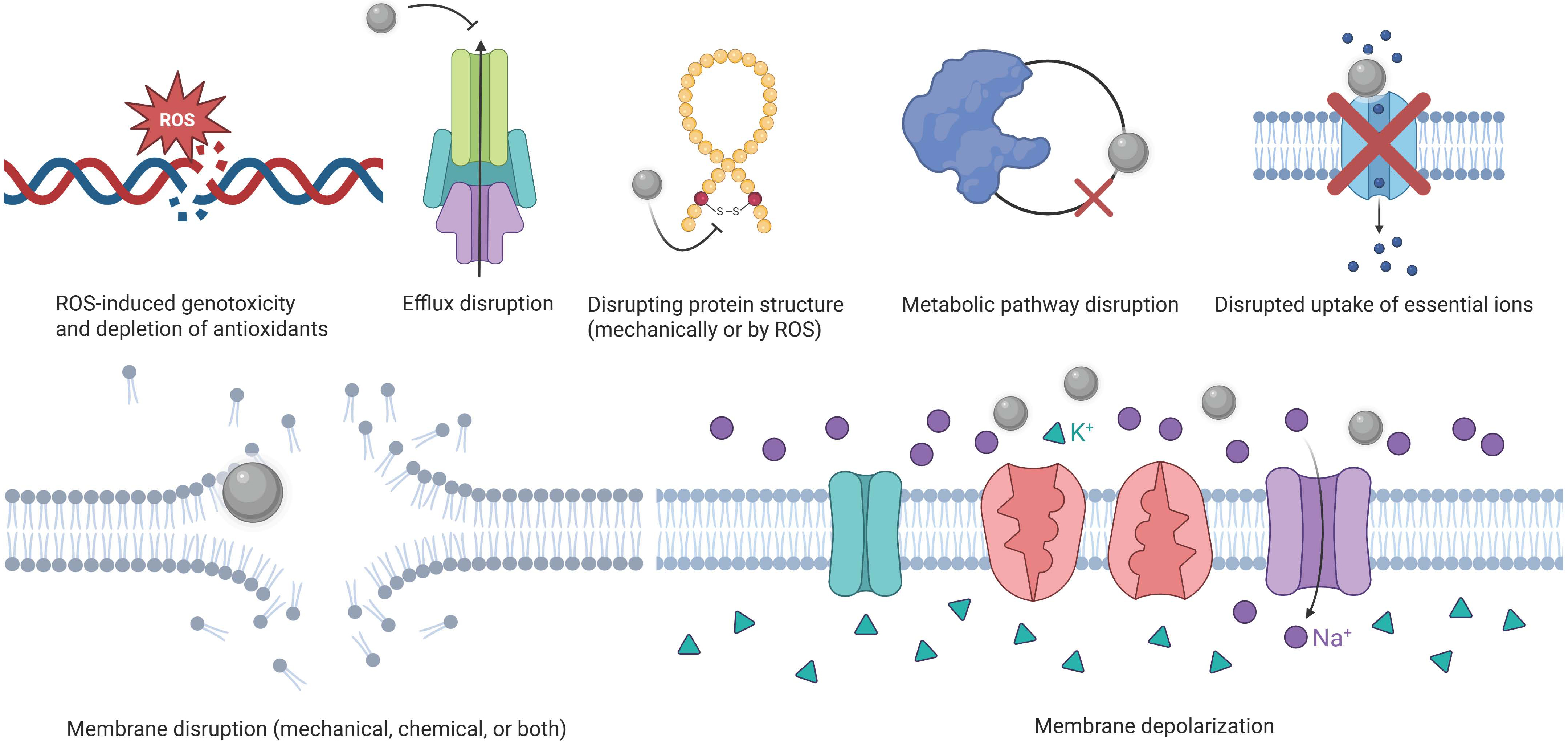
Fig. 1.
Molecular effects caused by nanomaterials on bacterial cells; inspired by (Lemire et al., 2013), Created in Biorender, Augustyniak, A. (2025) https://BioRender.com/h02f263
However, little is known about the effects of sublethal (or sub-inhibitory) concentrations of nanomaterials on bacterial cells. This is clear from the data stored in the Scopus database. Over the past ten years, 4363 articles have been published that include the words “bacteria” and “nanomaterials” in the title, abstract, or keywords. When the search was narrowed to “nanomaterial” and “antibacterial”, the results showed 3663 papers, confirming that antibacterial activity is the most studied aspect of nanomaterial-bacteria interactions. Conversely, the search engine identified 760 articles containing the terms “nanomaterial” and “stimulation”, while only 40 articles included the words “bacteria”, “nanomaterial”, and “stimulation”. This highlights the underrepresentation of nanomaterial-based stimulatory effects in bacteriology. These findings are shown in Fig. 2. It is important to note that keyword-based searches have limitations and may miss publications that use different keywords. Nevertheless, the significant gap between manuscripts describing antibacterial effects and those on stimulatory properties underscores this discrepancy.
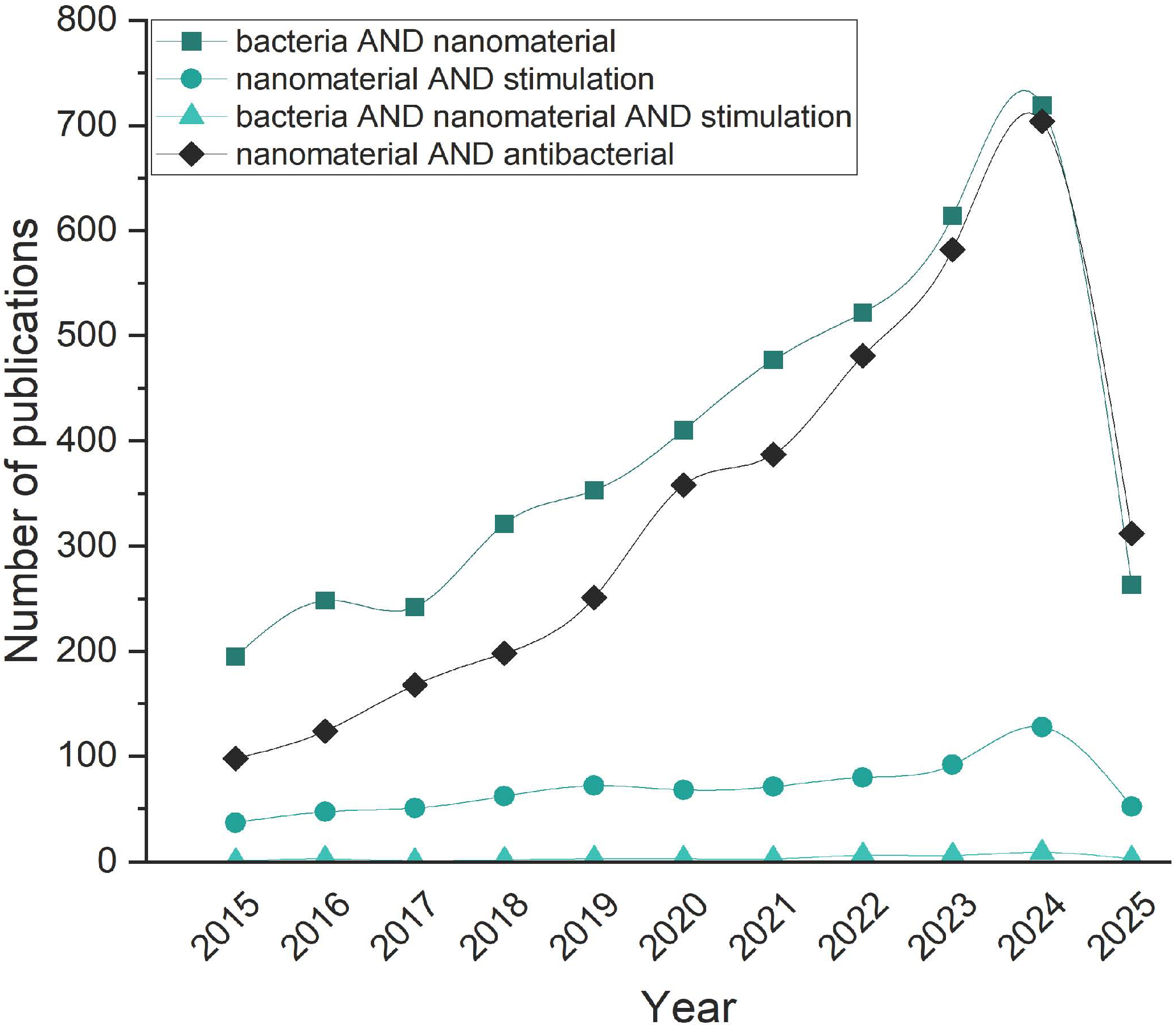
Fig. 2.
Results of Scopus database search showing the number of publications associated with nanomaterials in the years 2015-2024 and until May 2025
Although the stimulatory effects are often overlooked in the literature, research shows that nanomaterials can activate primary and secondary metabolism in bacteria, causing physiological changes that influence cell aggregation, biofilm development, and the secretion of pigments or polymeric substances (Augustyniak et al., 2016, 2020, 2022). Therefore, this mini-review aims to briefly summarize the stimulatory effects of selected nanomaterials on bacteria, discuss their applications in biotechnology, and outline potential associated risks. The choice of the specific nanomaterial-bacteria interactions discussed was based on the co-authors’ previous empirical experience. As a result, this review does not cover organic particles such as liposomes (Panthi et al., 2024) or nanoplastics (Krysiak-Smułek et al. 2025), as these topics fall outside the current scope of this work.
2. Stimulatory properties of nanomaterials
Achieving antimicrobial activity of nanomaterials is critically dependent on their dispersion. The aggregation of nanoparticles can significantly reduce their antimicrobial activity, providing an opportunity for cells to counterattack. When the available concentration of nanoparticles drops, and the material reaches a sublethal dose, the population can not only survive but also adapt to the harmful factor. This effect was demonstrated in E. coli, S. aureus, and P. aeruginosa that were exposed to metal oxide nanoparticles applied to the culture, like how these materials would be used in industry, i.e., without additional dispersion steps. Moreover, two minimal genome strains of E. coli were used in the same study and showed varied responses to the tested nanoparticles, showing that the reaction may be strain-specific (Sikora et al., 2018).
Another bacterial response to exposure to nanomaterials is cell agglomeration. Nanomaterials may specifically interact with cells through hydrophobic-hydrophilic and electrostatic interactions, facilitating the formation of microcolonies or biofilms, which vary between Gram-negative and Gram-positive bacteria (You et al. 2025). For example, the agglomeration of P. aeruginosa cells can be triggered by mesoporous silica nanospheres functionalized with titanium dioxide, with the effect intensifying as the concentration of the nanomaterial increases. The rest of the bacterial population thrives once the nanomaterial is fully clustered with cells. The same study reported a slight increase in the expression of the mex A gene, which encodes a component of the RND-type efflux pump in P. aeruginosa (Augustyniak et al. 2020). Cell-to-cell agglomeration may lead to the formation of microcolonies, which can develop into a biofilm. For example, zinc oxide nanoparticles can promote biofilm formation in P. putida, serving as a defense mechanism against nanoparticles (Ouyang et al. 2020). A similar phenomenon has been observed after treating P aeruginosa PAO1 with sublethal concentrations of AgNPs, specifically 10.8 and 21.6 μg/L. The sugar and protein contents of biofilms increased by approximately 55% and 114%, respectively, which may reduce the permeability of this structure to antimicrobials (Yang and Alvarez 2015). Some nanomaterial effects may alter the availability of other substances. Aggregated cells in the form of microcolonies may physiologically resemble biofilms, which can restrict the influx of toxicants (and nutrients) to the cells (Flemming et al. 2016; Augustyniak et al, 2021). From a biotechnological perspective, this presents opportunities to harness these limitations to manipulate bacterial physiology. For example, phosphate limitation may switch between four known quorum-sensing systems in P. aeruginosa (Rhl, Las PQS, and IQS) (Raya et al. 2025). Uncovering these interconnected systems could benefit biotechnological production, but it will require a systems biology approach to succeed.
Nanoparticles, for example, based on titanium dioxide or zinc oxide, can directly interact with cells. It has been shown that TiO2 nanoparticles (TiO2 NPs) can interact with volutin (polyphosphate globules) in the cells of streptomycetes that were exposed to mesoporous silica nanospheres functionalized with TiO2 NPs (Augustyniak et al. 2016). The wild strain of Streptomyces sp. not only adsorbed these NPs in the volutin-occupied area of the cells, but also produced increased amounts of brown pigment (probably of antioxidative properties) and a polymeric material that was found in the medium. The exact molecular mechanism of interaction between polyphosphate and metals was not described in detail, although its involvement in heavy metal sequestration (as a defense mechanism) has been confirmed (Kulakovskaya 2018). Exposing bacterial cells to nanomaterials causes a two-way interaction. Not only may nanoparticles influence bacteria, but bacterial cells can also affect the nanomaterial, often leading to its biotransformation. Ti3C2Tx nanosheets were shown to be oxidized by reactive oxygen species (ROS) produced by E. coli, Shewanella oneidensis, and Bacillus subtilis. Such interaction may trigger a specific redox state that stimulates the respiratory chain and increases the generation of O2·– radicals. Multiple defense mechanisms have been described to protect cells from metals released from NPs, including reduced uptake, chemical transformation, efflux, by-passing affected metabolic routes, intra- and extracellular sequestration, and repair of DNA and enzymes (Lemire et al. 2013). All these mechanisms are intertwined with a network of metabolic fluxes that may stimulate various responses, leading to changes in respiration, pigment production, and quorum-sensing regulation (Augustyniak et al. 2022; Hu et al. 2024).
Nanomaterials used as nanodrugs may also have stimulatory effects on the intestinal microbiota. Although this domain has been poorly studied so far, an example exists showing that silver and hyaluronic acid-coated gold nanoparticles may modulate the metabolism of the probiotic Lactobacillus casei. Depending on the nanomaterial, immunoprotective effects, i.e., a positive interaction with Caco-2 cells (colon tissue cells derived from a patient with colorectal adenocarcinoma), were observed, where the expression of factors indicating inflammation (TNF-α, PTGS2) was downregulated despite exposure to bacterial lipopolysaccharide (LPS). However, this effect came at the cost of lower expression of bacteriocins, which might weaken the bacterium’s competitiveness in the microbiota (Huang et al. 2022). Additionally, it is worth noting that this study was conducted on a single bacterial strain. Therefore, these effects should be further investigated, including the intestinal microbiota, to be confirmed.
To date, mainly observational data have been produced, where stimulatory responses are recorded by tracking changes in the physiological characteristics of the bacterial population. These include cell and population morphology, biofilm characteristics, pigmentation, and redox potential, and are highlighted in Fig. 3.
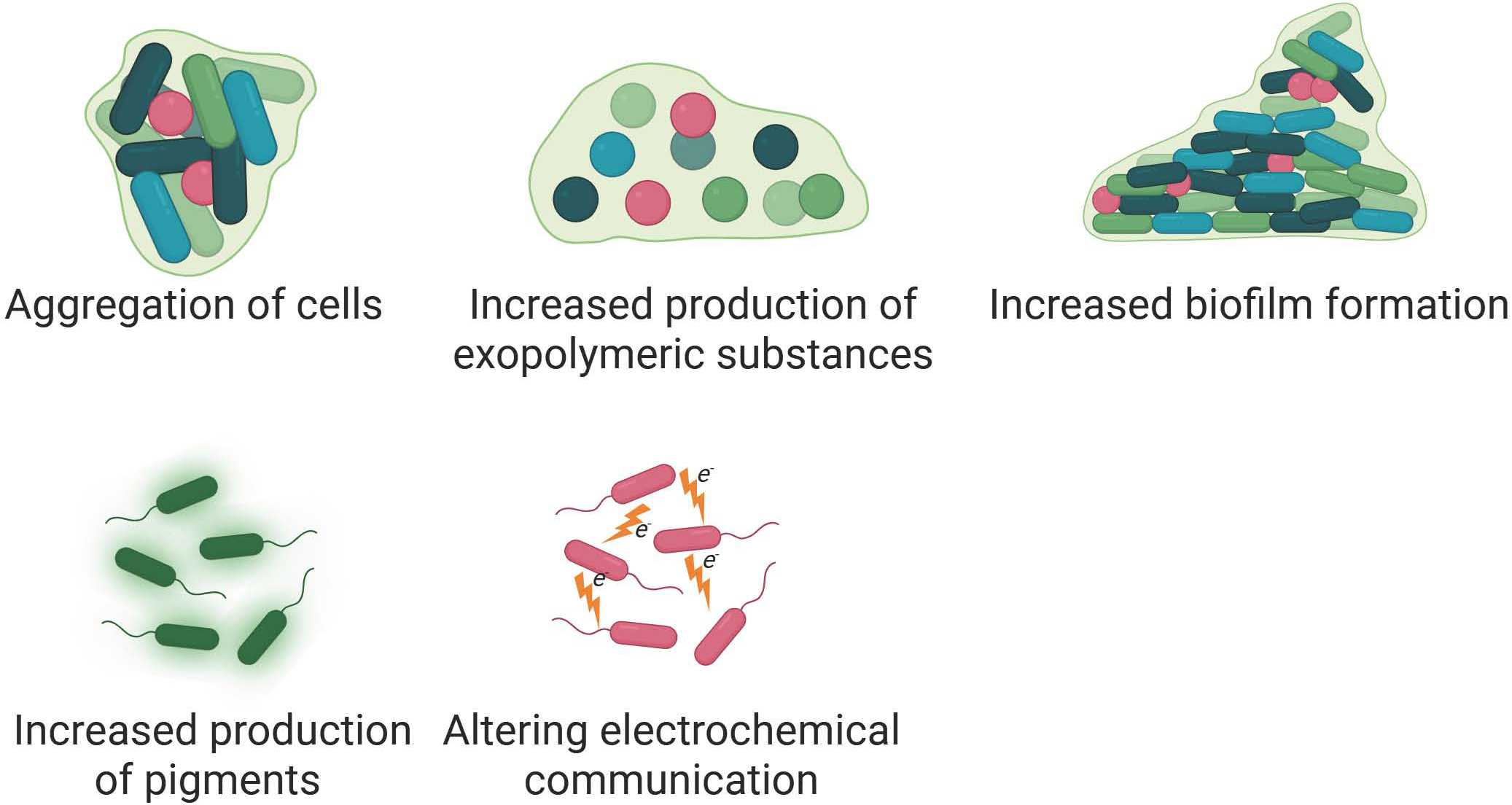
Fig. 3.
Common physiological alterations in bacterial populations treated with sublethal doses of nanomaterials; Created in BioRender Augustyniak, A. (2025) https://BioRender.com/90q8rev
Still, there are gaps in knowledge about the molecular effects of nanomaterials on cells, particularly regarding their influence on gene expression. One of the scarce manuscripts in that matter describes the transcriptomic impact of multiwalled carbon nanotubes (MWCNTs) on Pseudomonas aeruginosa (Mortimer et al. 2018). The authors confirmed that tested nanomaterials could alter bacterial physiology and metabolism. Moreover, MWCNTs had the most substantial effect among the tested nanostructures (i.e., carbon nanotubes, graphene, carbon black, and boron nitride). Among the observed impacts, increased susceptibility to antibiotics was the most pronounced.
Furthermore, MWCNTs downregulated genes responsible for virulence, nitrogen metabolism, or membrane proteins and upregulated sulfur metabolism and general stress response. Nevertheless, these changes in gene expression have not been later verified in qPCR gene expression analyses, except for three genes involved in antibiotic resistance. Also, no flow cytometry was performed to study membrane stability, where only spectrophotometry was employed. Finally, the exposure to nanomaterials lasted, in this case, only up to 10 hours. Despite these limitations, ‘omic’ techniques bring valuable information and confirm multiple stimulatory mechanisms, particularly at sub-inhibitory and stimulatory levels of nanomaterials under prolonged exposure time. Current data indicate that materials used in these non-killing doses primarily regulate signal transduction, transcription, and protein folding, sorting, and degradation. Similarly, bacterial motility and quorum sensing are also affected (Mortimer et al. 2021). However, without more extensive transcriptomic and metabolomic data, the molecular mechanisms underlying the stimulation of bacteria with nanomaterials remain poorly understood.
3. Biotechnological applications of stimulatory potential
Interactions between bacteria and nanomaterials can be utilized in biotechnology to produce valuable metabolites or enhance the efficiency of existing biotechnological processes. For example, carbon-based nanomaterials may serve as interesting targets for bioprocess engineering. At least two types of these materials, i.e., multi-walled carbon nanotubes (MWCNTs) and graphene oxide flakes (GO), have been shown to stimulate bacterial metabolism. One of these metabolites, pyocyanin, a phenazine produced by P. aeruginosa and P. paraeruginosa (sp. nov.), could be induced by MWCNTs when 500 μg/mL of this material was added. The interest in this molecule (apart from it being a virulence factor) has risen in recent years. It is fueled by multiple potential applications of this phenazine in agriculture, medicine, and electronics (Jabłońska et al. 2023). Pyocyanin (PYO) production stimulated by MWCNTs was enhanced when the nanomaterial was more efficiently dispersed (using alginic acid) (Jabłońska et al. 2022). Moreover, the stimulative properties of MWCNTs could be mathematically optimized. A recent study has shown that the optimal concentration for improved production of pyocyanin lies between 600 and 800 μg/mL. What was also interesting was that MWCNTs served as a scaffold for cell aggregation. Bacteria that were aggregated on this nanomaterial also produced more proteins than observed in the control sample in confocal microscopy. Carbon nanotubes were also shown to adsorb pyocyanin, which could potentially hinder the signaling properties of this molecule and lead to PYO overproduction (Honselmann genannt Humme et al. 2025). The exact mechanisms of this phenomenon, such as the involvement of autoinducers in stimulation via exposure to carbon nanotubes, are still unknown.
An interesting use of another carbon-based material (graphene oxide) was proposed in microbial fuel cells (MFCs), devices that utilize microorganisms attached to the anode to generate an electrical output. In the described case, graphene oxide was used to create a self-assembling electroactive biofilm on the anode. Flavin-producing Shewanella oneidensis was utilized to develop a Shewanella-reduced graphene oxide (rGO) biohybrid material that leveraged the redox transformations of flavins and the high electrical conductivity of graphene. The experimental setup achieved a maximum inward current density of 18.78 A/m2, while the output power density reached 2.63 W/m2. This was the highest recorded power density output among Shewanella-based MFCs, according to the authors of this publication (Lin et al. 2018).
Cadmium sulfide nanoparticles (CdS NPs) have also been shown to modulate the electrical properties of E. coli under visible light. Surprisingly, light-activated CdS NPs stimulated carbon metabolism and led to higher biomass growth. Upregulated enzymatic activity was recorded by the higher turnover of substrates by pyruvate kinase, phosphofructokinase (higher value, but not statistically significant), NADP-dependent malate dehydrogenase (NADP-MDH), and NADP-dependent isocitrate dehydrogenase (NADP-IDH). In this case, light-activated nanoparticles acted as electron donors, enhancing ATP synthesis and increasing the reducing power in cells, as evident in enzymatic assays (Yang et al. 2024). These experiments have demonstrated that light-assisted nanotechnologies may have potential in stimulating biomass production, thereby creating a vast field for optimization studies in bioprocess engineering.
Metal oxide nanoparticles also have the potential to stimulate the production of metabolites in P. aeruginosa. Honselmann et al. (Honselmann genannt Humme et al. 2024) investigated the influence of zinc oxide nanoparticles on pyocyanin production by P. aeruginosa ATCC 27853. The effect depended on the concentration and could be optimized using a mathematical approach, such as the design of experiments methodology. High concentrations of NPs (275.75 μg/mL) inhibited pigment production but induced the formation of biomass embedded in large amounts of polymeric material. On the other hand, low amounts of NPs (6.06 μg/mL) stimulated pyocyanin production. Most likely, nanoparticles induced oxidative stress in the cells, as indicated by increased superoxide dismutase activity and overall reactive oxygen species (ROS) levels in the cells, as measured using the DCFH-DA assay.
Furthermore, NPs were altering the polarization of cell membranes, and zinc-removing efflux pumps were significantly overexpressed in the bacterial population. Gene expression studies also showed that antioxidant depletion was occurring, as indicated by the increased level of glutathione peroxidase. These studies confirmed that oxidative stress induced by NPs could be used to stimulate pyocyanin production. Additionally, this study demonstrated that the concentration of NPs used can be adjusted to achieve different physiological effects (such as pigment or biomass production), depending on the desired outcome. Moreover, stimulating the production of biofilm components, as exemplified by AgNPs (Yang and Alvarez 2015), could potentially be useful in the cosmetic industry, which utilizes exopolymeric substances (EPS) in formulations (Gupta et al. 2019). However, this approach requires further research.
4. Health and environmental risks
Generating oxidative stress in bacteria is one of the most commonly observed effects of nanomaterials. Apart from damaging cells and depleting antioxidants (such as thioredoxin and glutathione) (Zou et al. 2018), this type of stress may induce prophages that remain dormant in the bacterial genome. It has been shown that AgNPs may induce prophages in pathogens representing the ESKAPE group (Enterococcus faecium, Staphylococcus aureus, Klebsiella pneumoniae, Acinetobacter baumannii, Pseudomonas aeruginosa, and Enterobacter spp.). This aspect should be taken into consideration when nanoparticles are intended to aid conventional treatments, because prophage induction increases the risk of spreading resistance to antibiotics between bacterial cells and, in some cases, leads to the release of toxins, as in the case of Shiga toxin-converting lambdoid prophages carried by enterohaemorrhagic strains of E. coli (Struk et al. 2017).
Carbon nanomaterials, such as multi-walled carbon nanotubes (MWCNTs), can affect individual bacterial populations and multispecies communities, such as those found in wastewater treatment plants. Wang et al. indicated that these materials may generate free radicals when NaClO is present and can sensitize bacteria to chlorination (Wang et al. 2022). MWCNTs have been reported to be toxic to both Gram-positive and Gram-negative bacteria (Selvakumar et al. 2023). However, other studies suggest that these nanostructures exhibit limited overall toxicity. For instance, a nitrogen-fixing bacterium, Azotobacter chroococcum, showed some resistance to MWCNTs, and these materials were only mildly toxic to it (Ouyang et al. 2021). These differences may depend on how well the nanomaterial is dispersed. P aeruginosa can survive even relatively high doses of carbon nanotubes, exceeding 500 μg/mL. Still, the low toxicity level significantly affected bacterial physiology, leading to increased pyocyanin production. In the medical context, this means bacteria exposed to MWCNTs actively overproduce a virulence factor (Jabłońska et al. 2023). Interestingly, lower doses of dispersed nanomaterials were required to produce the same effect as high doses of pristine material, implying that the nanomaterial’s state is a key factor in this phenomenon (Jabłońska et al. 2022).
Aside from the examples mentioned above, little is known about how nanomaterials influence the induction of virulence factors in bacteria. Studies have shown that at least two virulence factors of P. aeruginosa (pyoverdine and pyocyanin) are overproduced (Augustyniak et al. 2022; Jabłońska et al. 2022). Similarly, the induction of biofilm-forming capabilities can be considered a risk factor in medicine, as biofilms are much more difficult to treat with antibiotics. This was confirmed in the case of P. aeruginosa PAO1, which was treated with sublethal concentrations of silver nanoparticles (Yang and Alvarez 2015). Other metallic particles have also been found to promote biofilm formation. A low concentration of ZnO NPs (0.5-30 mg/L) promoted biofilm growth in P. putida, while higher doses (250 mg/L) inhibited it. The authors of this research noted that uncontrolled release of these particles might lead to the formation of unwanted biofilms in crops and increased resistance to antibiotics, posing environmental hazards that are not well understood (Ouyang et al. 2020).
Treating another representative of pseudomonads – P. aeruginosa with high doses of ZnO NPs has resulted in more spectacular changes in bacterial physiology. The population entered a state of hyperproduction of biomass, characterized by high amounts of extracellular polymers and increased fluorescence of the culture, indicating higher pyoverdine production. The consequences of this transition in terms of responding to antibiotic treatment are currently unknown and require further studies. However, the same research has shown that under a low concentration of ZnO NPs optimized for pyocyanin production, the inhibition zone of piperacillin combined with tazobactam was smaller, indicating slightly higher resistance in the disk diffusion test (Honselmann genannt Humme et al. 2024). There is a discrepancy between the results obtained from different research groups, and the impact of nanoparticles on the transfer of genes responsible for antibiotic resistance remains a topic of scientific debate (Xu et al. 2023). The cause behind these contradictions may stem from the variety of nanomaterials and methodologies used to study this phenomenon.
Additionally, complexes of nanoparticles and antibiotics may have a significant impact on environmental microbiota. The adverse effects of these complexes are more fatal than those of either factor alone, which was shown in two biorecycling bacteria, i.e., B. subtilis and P. fluorescens (Khurana et al. 2016). Nevertheless, there is still a space for more in-depth studies, particularly involving transcriptomic and metabolomic approaches, that will tackle the complexity between microbiota and its nanomaterial-contaminated environment. Thanks to studies tracking the antimicrobial activity of nanomaterials, it is suspected that various nanoparticles may harm environmental microorganisms present in rhizobiota (e.g., P. fluorescens, B. subtilis, B. brevis, and nitrogen-fixing bacteria) (Khanna et al. 2021). On the other hand, current data still provide little information on taxa that can be directly stimulated to profit from the inhibition of different bacteria ecologically. In the current literature, there are examples of certain groups of microorganisms (e.g., nitrogen-fixing bacteria) that can benefit from interactions between microbiota and nanoparticles, possibly by limiting the growth of other taxa. Nevertheless, the underlying mechanisms remain unknown (Verma et al. 2024). These stimulatory phenomena could provide more insight into the consequences associated with the activity of nanostructures, elucidating both risks and opportunities.
5. Summary and Directions for Future Research
Nanomaterials can influence the physiology of bacteria, including stimulating their primary and secondary metabolism. Still, this area of study is underrepresented in comparison to publications tracing the antimicrobial activity of nanostructures. Table 1 below presents examples of the main physiological and stimulatory effects of nanomaterials or metal ions that they can release, graphically illustrated in Figs. 1 and 3, along with literature sources.
Table 1.
Harmful and stimulatory physiological effects of selected nanomaterials or ions on bacteria
| Effect | Nanomaterial/Ion | Microorganism | Reference |
|---|---|---|---|
| ROS-induced genotoxicity | Bismuth (Bi), Antimony (Sn) ions | Salmonella Typhimurium TA100, TA1535, TA98, TA1537, E. coli WP2uvrA/pKM101 | (Asakura et al., 2009) |
| Efflux disruption | AgNPs | S. aureus ATCC 29231 | (Attallah et al., 2022) |
| Protein structure disruption | Gold-functionalized magnetic nanoparticles (Fe3O4@Au) | P aeruginosa (strain undisclosed) | (Niemirowicz et al., 2014) |
| Metabolic pathway disruption | Cadmium (Cd) ions | Bacillus subtilis TTL1 | (Li et al., 2021) |
| Disrupted uptake of essential ions | Zinc (Zn), Iron (Fe), Manganese (Mg) ions | Bacillus subtilis (multiple strains) | (Chandrangsu et al., 2017) |
| Membrane disruption | ZnO NPs and copper nanoparticles (Cu-NPs) | E. coli ATCC 25922, Bacillus cereus ATCC 11778, Staphylococcus epidermidis ATCC 12228 | (Metryka et al., 2023) |
| Membrane depolarization | ZnO NPs | P. aeruginosa ATCC 27853 | (Honselmann genannt Humme et al., 2024) |
| Aggregation of cells | Silica/titania nanotubes | P. aeruginosa PAO1 | (Augustyniak et al., 2020) |
| Increased production of exopolymeric substances | ZnO NPs | P. aeruginosa ATCC 27853 | (Honselmann genannt Humme et al., 2024) |
| Increased biofilm formation | AgNPs | P. aeruginosa PAO1 | (Yang and Alvarez, 2015) |
| Increased production of pigments | MWCNTs | P. aeruginosa ATCC 27853 | (Honselmann genannt Humme et al., 2025) |
| Altering electrochemical communication | Shewanella-reduced Graphene oxide | Shewanella oneidensis (strain undisclosed) | (Lin et al., 2018) |
Although many effects were observed, including stimulation of biomass production, altered biofilm formation potential, and increased secretion of antioxidants or pigments, the underlying molecular mechanisms remain largely unknown. This could be improved by collecting and analyzing transcriptomic or metabolomic data. A deeper understanding of the mechanisms underlying physiological responses could be further utilized in optimizing biotechnological processes and provide additional data for the safety evaluation of nanomaterials.
Acknowledgements
This work was supported by the National Centre for Research and Development (Poland) under the LIDER Programme (LID-ER14/0169/2023) granted to Adrian Augustyniak.
Notes
[1] Conflicts of interest Conflict of interest
The authors do not report any financial or personal connections with other persons or organizations, which might negatively affect the contents of this publication and/or claim authorship rights to this publication.