
Table 1.
Median and mean AT2R antibody
| Median AT2R antibody levels (U/mL) | Mean AT2R antibody levels (U/mL) | |
|---|---|---|
| Systemic lupus erythematosus (Group 3) | 80.8 (range: 6.3–84.2) | 64.12 ± 26.95 |
| p-ANCA vasculitis (Group 8) | 8.55 (range: 3.3–57.6) | 12.28 ± 13.48 |
| c-ANCA vasculitis (Group 7) | 5.7 (range: 1.8–56.3) | 7.83 ± 8.70 |
| Mesangial proliferative (non-IgA) glomerulonephritis (Group 5) | 5.6 (range: 1.7–60.6) | 13.95 ± 22.93 |
| IgA nephropathy (Group 4) | 4.65 (range: 2–17.9) | 6.26 ± 4.39 |
| Membranous glomerulonephritis (Group 1) | 4.55 (range: 1.1–11) | 5.05 ± 2.95 |
| Focal segmental glomerulosclerosis (Group 2) | 4.5 (range: 1.3–16.4) | 5.71 ± 4.28 |
| Control group (Group 6) | 5.9 (range: 2.7–45.5) | 9.72 ± 11.88 |
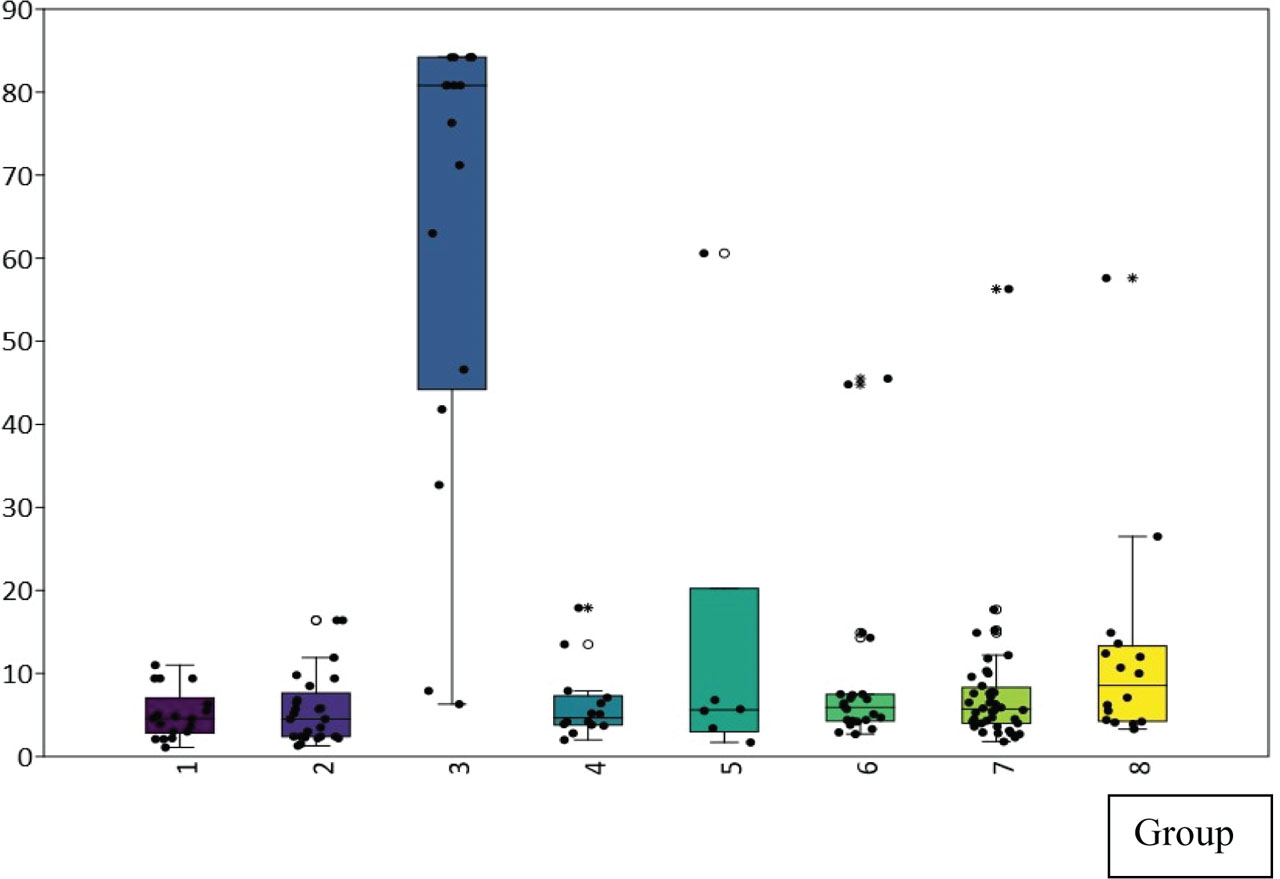
Fig 1.
AT2R antibody values in specific groups of patients, axis y: AT2R antibody concentration (U/mL), axis x: particular groups of patients: 1 – membranous nephropathy, 2 – focal and segmental glomerulosclerosis, 3 – lupus nephritis, 4 – IgA nephropathy, 5 – mesangialproliferative (non-IgA) glomerulonephritis, 6 – control group, 7 – c-ANCA vasculitis, and 8 – p-ANCA vasculitis. AT2R, angiotensin II type 2 receptor; c-ANCA, antineutrophil cytoplasmic antibodies.
Table 2.
Mean values of specific clinical parameters in the assessed patient groups
| Creatinine (mg/dL) | Proteinuria (g/24 h) | Total protein (g/dL) | Total albumin (g/dL) | Age (years) | |
|---|---|---|---|---|---|
| Membranous glomerulonephritis | 1.37 ± 0.57 | 4.23 ± 4.58 | 4.81 ± 0.70 | 2.79 ± 0.64 | 52.00 ± 12.00 |
| Focal segmental glomerulosclerosis | 1.32 ± 0.53 | 3.17 ± 3.11 | 5.20 ± 1.16 | 2.99 ± 0.91 | 46.36 ± 15.00 |
| Systemic lupus erythematosus | 1.21 ± 0.42 | 1.85 ± 1.70 | 5.60 ± 0.84 | 3.18 ± 0.59 | 37.82 ± 13.00 |
| IgA nephropathy | 1.19 ± 0.34 | 1.44 ± 1.29 | 5.57 ± 0.77 | 3.32 ± 0.64 | 43.86 ± 15.00 |
| Mesangial proliferative glomerulonephritis without IgA deposits | 1.01 ± 0.36 | 3.16 ± 2.54 | 4.68 ± 0.51 | 2.54 ± 0.61 | 31.50 ± 13.00 |
| c-ANCA vasculitis | 2.07 ± 1.54 | 1.72 ± 3.61 | 6.29 ± 0.44 | 3.63 ± 0.46 | 55.00 ± 18.00 |
| p-ANCA vasculitis | 3.93 ± 2.39 | 2.46 ± 3.08 | 6.09 ± 0.85 | 3.53 ± 0.42 | 62.00 ± 12.00 |
| Control group | 1.1 ± 0.25 | 0.00 ± 0.00 | 7.45 ± 0.85 | 4.40 ± 0.90 | 46.00 ± 13.00 |
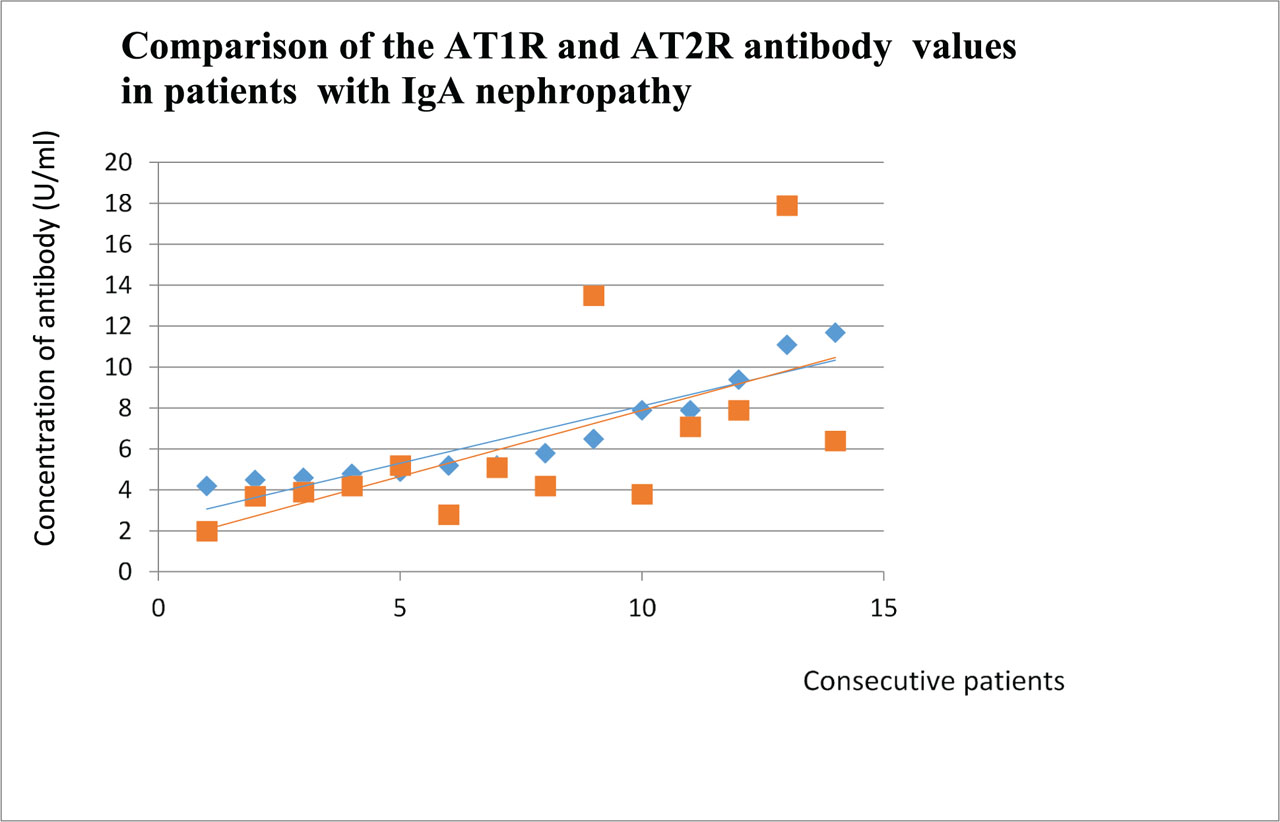
Fig 2.
Comparison of the AT1R and AT2R antibody values in patients with IgA nephropathy. Patients are segregated according to the growing level of AT1R antibody. Blue dots represent values of AT1R antibody and red dots represent values of AT2R antibody. Blue line – trend line for the AT1R antibody and red line – trend line for the AT2R antibody. AT1R, angiotensin II type 1 receptor; AT2R, angiotensin II type 2 receptor.
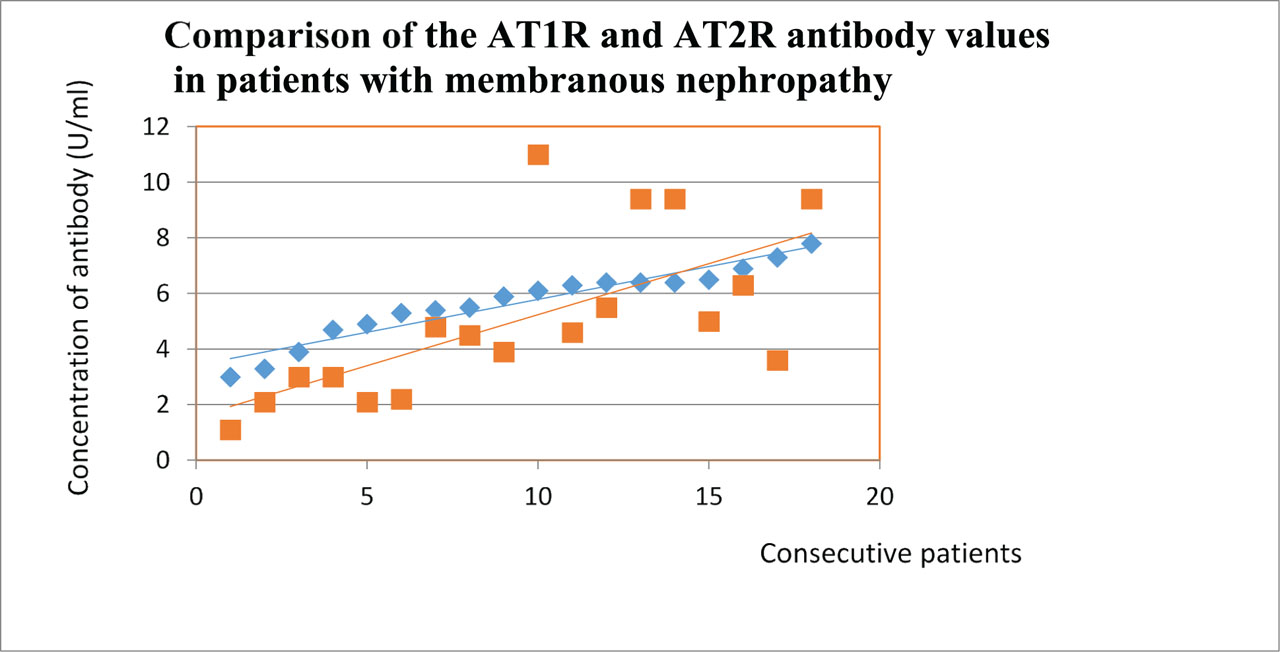
Fig 3.
Comparison of the AT1R and AT2R antibody values in patients with membranous nephropathy. Patients are segregated according to the growing level of AT1R antibody. Blue dots represent values of AT1R antibody and red dots represent values of AT2R antibody. Blue line –trend line for the AT1R antibody and red line – trend line for the AT2R antibody. AT1R, angiotensin II type 1 receptor; AT2R, angiotensin II type 2 receptor.
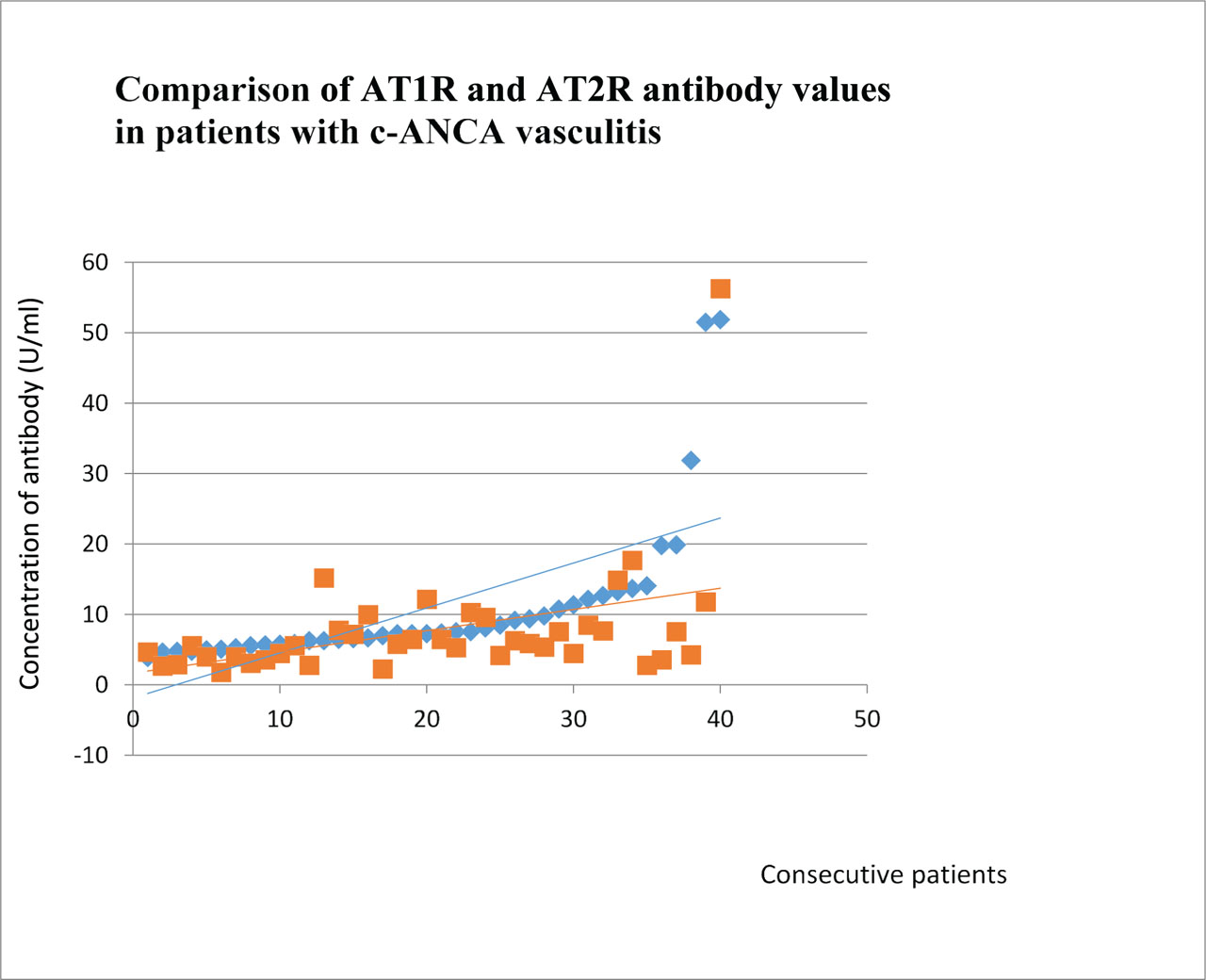
Fig 4.
Comparison of the AT1R and AT2R antibody values in patients with c-ANCA vasculitis. Patients are segregated according to the growing level of AT1R antibody. Blue dots represent values of AT1R antibody and red dots represent values of AT2R antibody. Blue line –trend line for the AT1R antibody and red line – trend line for the AT2R antibody. AT1R, angiotensin II type 1 receptor; AT2R, angiotensin II type 2 receptor; c-ANCA, antineutrophil cytoplasmic antibodies.