
1. Introduction
After carbon, hydrogen, nitrogen, oxygen, and phosphorus, sulfur is the seventh most abundant element in living organisms [1, 2]. Animals are dependent on sulfur compounds in food to fulfill their sulfur needs.
Sulfur-containing amino acids, such as methionine, L-cysteine, L-homocysteine, L-cystine, taurine, and vitamins, such as thiamine and biotin, as well as organosulfur compounds contained in Brassicaceae (e.g., cabbage, broccoli, cauliflower) and Amaryllidaceae (e.g., garlic, onion, chives) are the most common sulfur compounds found in the animal and human diet [3] (Figure 1). In humans, methionine is an essential amino acid that cannot be synthesized, contrary to nonessential L-cysteine. Both amino acids are incorporated into proteins but are not stored in the body.
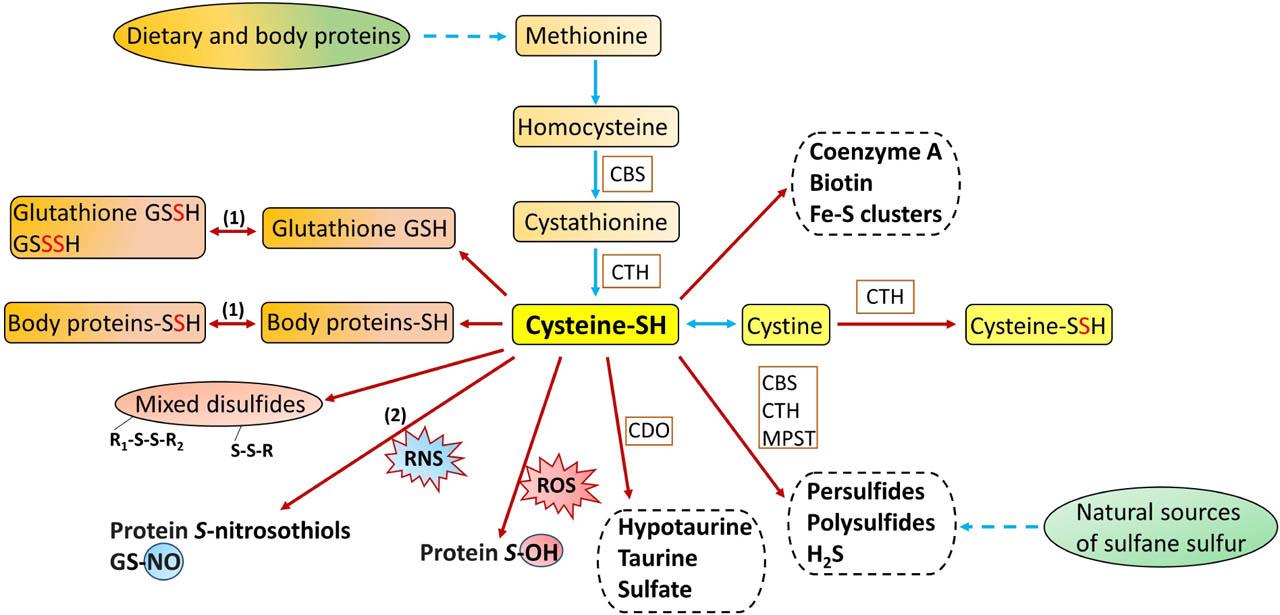
Figure 1.
Synthesis and transformation of sulfane sulfur in biological systems
Abbreviations: S - sulfane sulfur atom (marked in red); (1) - S-sulfuration reaction; (2) - S-nitrosylation reaction; CBS - cystathionine β-synthase; CTH - cystathionine γ-lyase; MPST - 3-mercaptopyruvate sulfurtransferase; CDO - cysteine dioxygenase; RNS - reactive nitrogen species; ROS - reactive oxygen species
L-cysteine can be obtained from diet or synthesized de novo via the transsulfuration pathway [4,5]. It is necessary in many processes, for example, the synthesis of reduced glutathione (GSH, endogenous antioxidant) [6], body proteins, as well as the formation of Fe-S clusters, coenzyme A, and biotin [5, 7]. L-cysteine can be readily oxidized to L-cystine, which is enzymatically cleaved to thiocysteine (CysSSH), pyruvate, and ammonia [4] (Figure 1). At physiological pH cysteine thiolate anions are modified in various ways in proteins (e.g., sulfuration S-SH, nitrosylation S-NO, glutathionylation S-SG, sulfenylation S-SOH, cysteinylation S-Cys, disulfide formation S-S) [7,8,9,10]. The chemical interactions of hydrogen sulfide (H2S) and nitric oxide (NO) result in nitrosopersulfide (SSNO−), polysulfides (H2Sn), dinitrososulfite (N-nitrosohydroxylamine-N-sulfonate, SULFI/NO), nitroxyl (HNO), and thionitrous acid (HSNO) formation [11, 12]. Moustafa and Habara [13] reported that polysulfide and H2S donors increase the intracellular NO levels. Hydrogen sulfide can regulate NO synthesis, and NO can affect the production of H2S [11, 12]. Hydrogen sulfide can modulate the expression/activity of nitric oxide synthase, as well as heme oxygenase-1. In turn, NO influences changes in the expression/activity of enzymes directly involved in H2S production. Both NO and H2S are also endogenous epigenetic regulatory molecules [12].
L-cysteine can be metabolized during the oxidative pathway to hypotaurine, taurine or sulfate [14]. This amino acid is also the substrate for the generation of the H2S, and sulfane sulfur-containing compounds during non-oxidative (desulfurative) transformations (Figure 1) [15, 16].
Sulfane sulfur atom with six valence electrons, with no charge, bound covalently to other sulfur atoms, can be present in biological systems as elemental sulfur (S8), in persulfides (RSSH), polysulfides (RSSSH or RSSSR), and thiosulfate (S2O32−) [17]. It can be reversibly transferred to other sulfur atoms [15] to form the corresponding persulfide/polysulfide species (Figure 1). Enzymatic proteins, such as cystathionine γ-lyase (CSE) [18], 3-mercaptopyruvate sulfurtransferase (3MST) [19], and rhodanese [20], are known to carry sulfane sulfur atom, which can be released as H2S/HS− [21, 22]. Sulfide: quinone oxidoreductase oxidizes the released H2S to sulfane sulfur containing glutathione persulfide [23]. The chemical properties of sulfur and its high reactivity result in its involvement in redox reactions and electron transfer processes [24, 25]. The sulfane sulfur pool can be regarded as a form of sulfide storage and transport, as well as promoting signaling distinct from that associated with H2S alone [26].
A huge amount of research confirms the important role of reactive sulfane sulfur atoms in protein structure and function, cellular redox status, and signaling. Many different methods for detecting the level of sulfane sulfur used in scientific research do not fully allow for comparing the results. The aim of this publication is to compare the level of sulfane sulfur in various tissues and cell cultures of humans and animals. Our intention was also to analyze the impact of various physiological and environmental conditions on this level. Only the Wood method [27] results expressed as the amount of sulfane sulfur calculated per mg of protein were taken into account — this makes it possible to compare and draw conclusions regarding the role of this form of sulfur in all tested biological systems, as well as its stability.
2. Sulfane sulfur detection
2.1. The method of Wood [27] published in 1987
2.1.1. Chemical basis of the determination
In the Wood method, sulfane sulfur is identified by its susceptibility to cyanolysis. Quantitative determination is carried out using a reaction of cold cyanolysis. Persulfides, polysulfides, thiosulfonates, and polythionates react quantitatively with cyanide anion in an alkaline solution at room temperature to form thiocyanate ion, which is detected following a reaction with ferric nitrate to form a red-colored ferric thiocyanate complex. Its absorbance is measured at a wavelength λ = 460 nm [27, 28]. The level of sulfane sulfur is expressed as nmoles of SCN− per 1 mg of protein [29].
2.1.2. Limitations
The cold cyanolysis method cannot be used for the identification of the type of sulfane sulfur species because of its poor selectivity and specificity [30]. The method based on cyanolysis cannot be adapted to thiosulfate and polythionate sulfane sulfur determination [27].
2.2. Recent papers related to sulfane sulfur detection
The evident role of sulfane sulfur species in many physiological processes has recently led to the rapid development of its more precise detection methods. In the last few years some general reviews have been published on sulfane sulfur detection/determination in biological systems [30], methods in sulfide and persulfide research [31], recent advances in detection, isolation, and imaging techniques for sulfane sulfur-containing biomolecules [32] and on sulfane sulfur in toxicology: a novel defense system against electrophilic stress [33]. Tag-switch techniques were developed and published using for example organelle-targeted fluorescent probes for sulfane sulfur species [34], methods for quantitative determination of the total and reactive polysulfides in vegetables [35], high-precision a new specific probe for trapping reactive sulfur species [36], a red fluorescent protein-based probe for detection of intracellular reactive sulfane sulfur [37], a highly selective probe for ratiometric imaging of H2Sn and revealing its signaling pathway in fatty liver disease [38] and for inorganic hydrogen polysulfides detection [39]. At the same time the other methods were introduced — for example for optimization of a method for detecting intracellular sulfane sulfur levels and evaluation of reagents that affect the levels in Escherichia coli [40], sensitive method for reliable quantification of sulfane sulfur in biological samples [41] and a smartphone based device for the detection of sulfane sulfur in biological systems [42].
3. The level of cyanolizable sulfane sulfur in biological systems
Sulfane sulfur level (amount) in tissue and cell homogenates can be expressed as the amount of SCN− ion (nmol or μmol) per mg of protein or gram of fresh tissue or millions of cells. For comparison purposes, it seems most appropriate to express the amount of SCN− per mg of protein (with the same method of protein determination). In this way, we ignore differences in different types of cells or differences in the content of water, fat, carbohydrates, and other components in tissues. Thus, all the tables and graphs presented in the work are based on data expressed in the amount of SCN− calculated per mg of protein determined in each case by the method of Lowry [43].
3.1. Human and animal tissues
Table 1 shows human and animal tissues in which the level of sulfane sulfur was detected, and it was presented as the number of nmoles per 1 mg of protein.
Table 1.
The list of human and animal tissues in which the level of sulfane sulfur was determined by the method of Wood. The given tissue and the reference referring to it are marked with the same number of asterisks
| Tissues | References |
|---|---|
| Human Liver, Brain | [44] |
| Rat Liver*, Heart and Kidney** | *[45], *[46], **[47] |
| Guinea pig Liver | [45] |
| Mouse Liver*,****, Kidney**,****, Heart****, Spleen****, Brain stem and cortex*** | *[48], **[49], ***[50], ****[51] |
| Rana temporaria Liver, Kidney, Gonads, Brain, Heart | [52] |
| Rana ridibunda Liver, Kidney, Brain, Heart, Testes, Skeletal muscles | [53], [54], [55] |
As Figure 2 shows, the values of sulfane sulfur level in tissue homogenates of animals listed in Table 1 range between 60 and 400 nmol per mg of protein. It does not differ significantly in the tissues of quite distant evolutionary species, such as Pelophylax ridibundus brain and human liver.
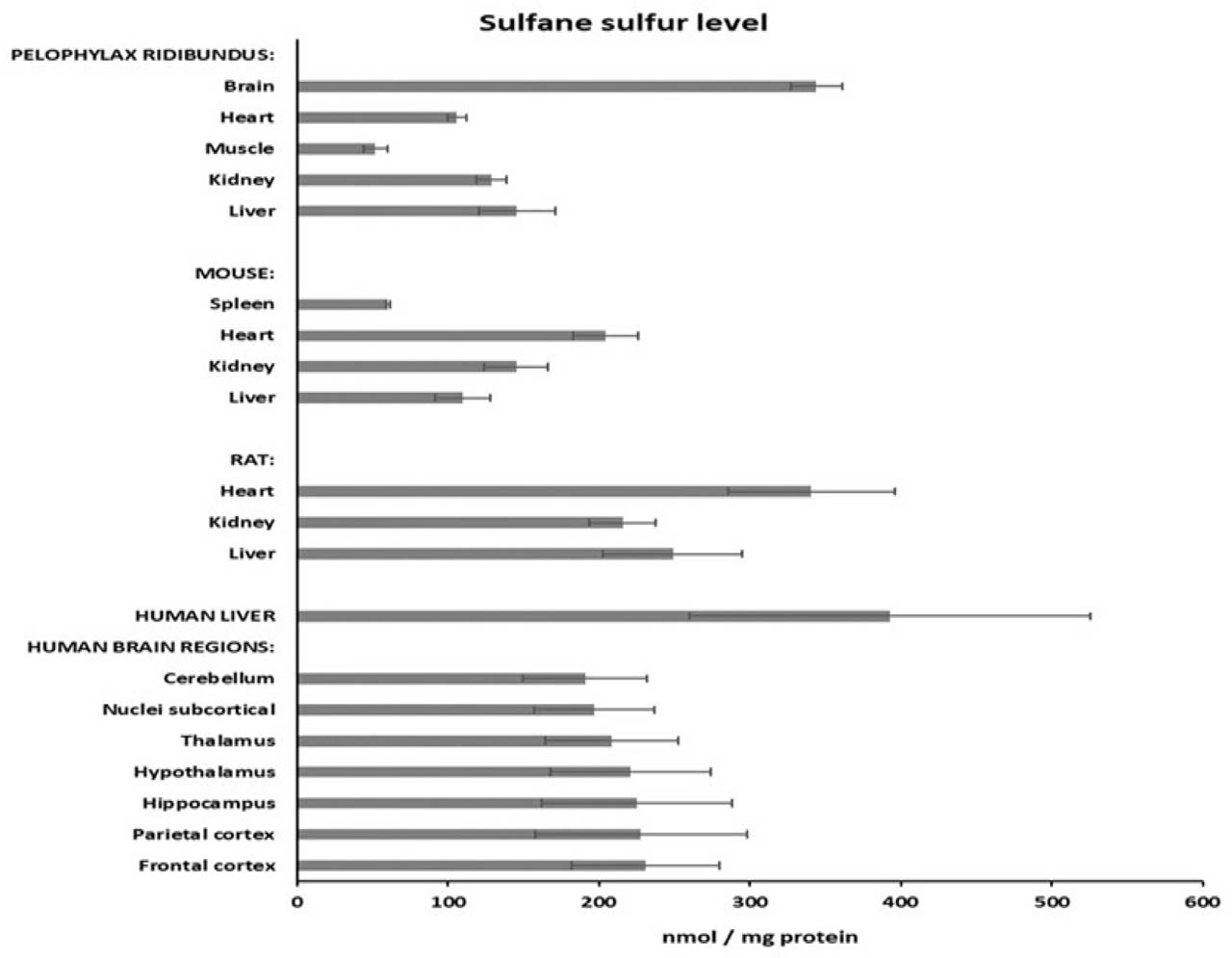
Figure 2.
The level of sulfane sulfur in human and animal tissues. Data from published experimental works cited in Table 1 were used in Figure 2. The bars correspond to the mean value ± SD (
 standard deviation) of sulfane sulfur level expressed in nmoles of SCN− per mg of protein, from three or more determinations in at least three repetitions
3.2. Human and animal cell cultures
The level of sulfane sulfur was also determined in numerous cell cultures. Table 2 shows only those in which the level of sulfane sulfur was presented in nmol per mg of protein.
Table 2.
Human and animal cells in which the level of sulfane sulfur was determined by the method of Wood
| Cells | References |
|---|---|
| Mouse astrocytes | [56] |
| Mouse cell lines | [57] |
| [58] |
| J774A.1 | [59] |
| Rat cell line | |
| H9c2 | [57] |
| Human cell lines | |
| [57] |
| [60] |
| MCF-7 | [61] |
As Figure 3 shows, the level of sulfane sulfur does not differ significantly between various cell homogenates. The values of sulfane sulfur levels in homogenates of cells listed in Table 2 ranged between about 70 and 200 nmol per mg of protein.
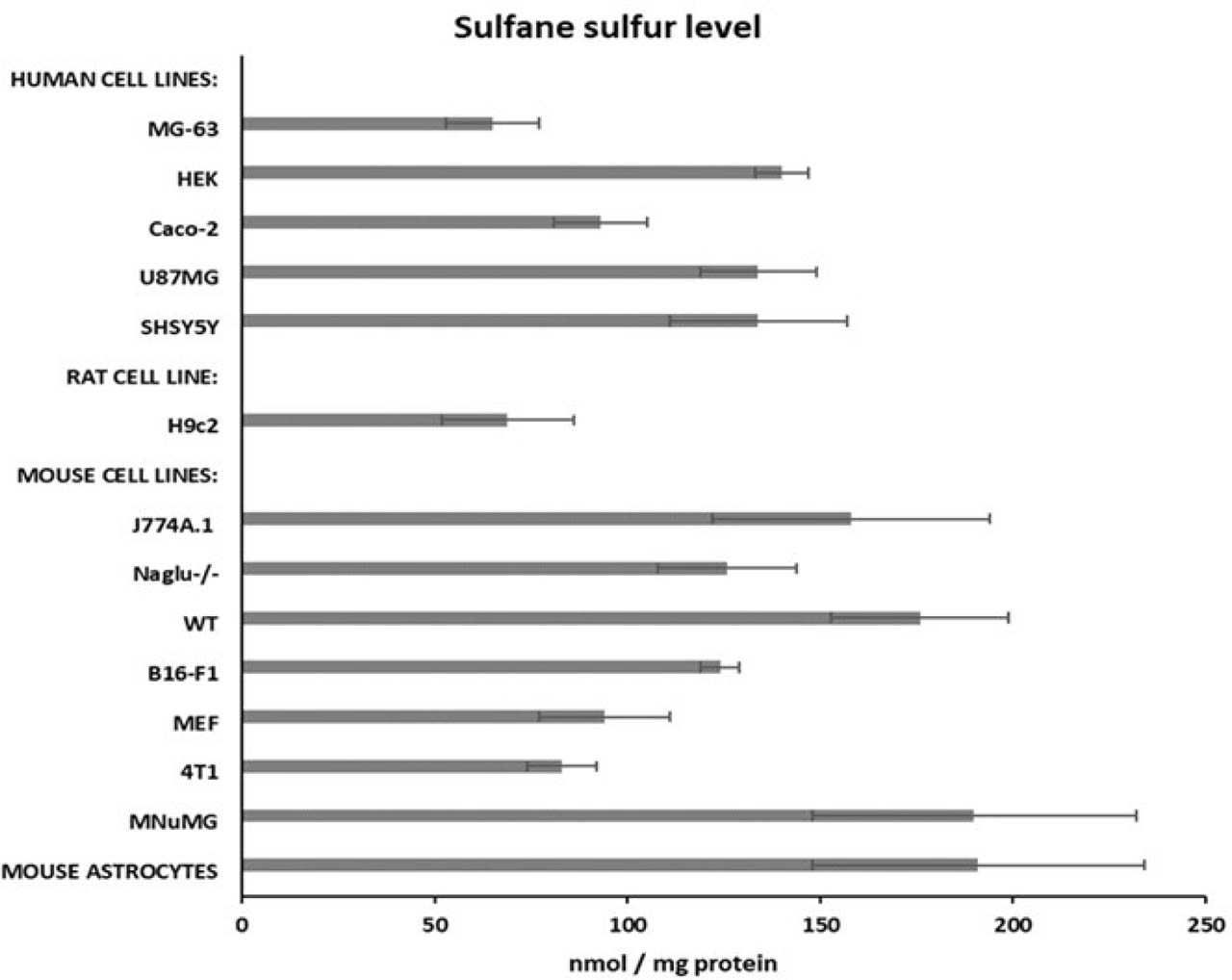
Figure 3.
The level of sulfane sulfur in human and animal cell cultures. Data from published experimental works cited in Table 2 were used in Figure 3. The bars correspond to the mean value ± SD (
standard deviation) of sulfane sulfur level in a particular cell culture, expressed in nmoles of SCN− per mg of protein, from at least three independent experiments, with three or more determinations in each
4. Effect of different physiological and environmental factors on the level of sulfane sulfur
4.1. Effect of the season of the year on the level of sulfane sulfur in animal tissues
The levels of sulfane sulfur in tissues of Rana ridibunda are season dependent. During spring, sulfane sulfur levels are highest in the kidneys, while in the fall, levels are highest in the liver. These sulfane sulfur levels were detected in homogenates of Rana ridibunda in the liver, kidney, brain, heart, testes, and skeletal muscles (Figure 4) and ranged from about 66 nmol in skeletal muscles in the fall [53] to 402 nmol per mg of protein in kidneys during the spring [54]. In frog testes and brain, sulfane sulfur levels are comparable with the levels observed in the liver and kidneys (sulfane sulfur levels are higher in the spring as compared to the fall season).
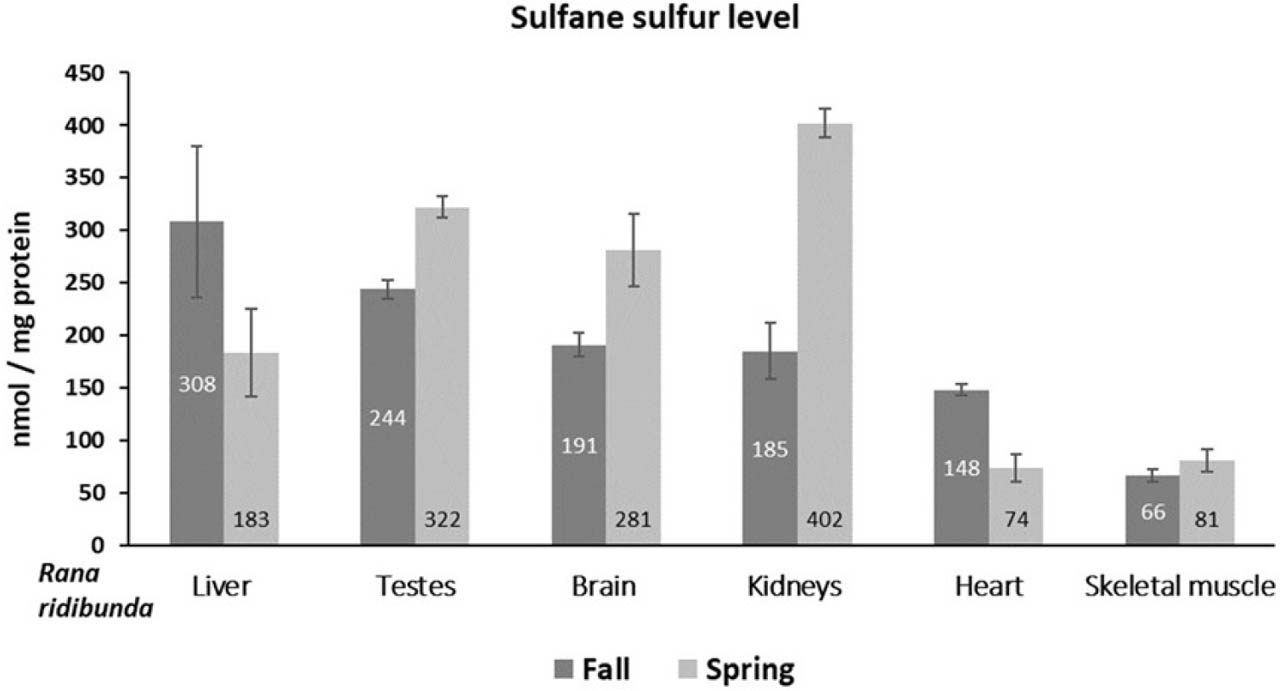
Figure 4.
The level of sulfane sulfur in Rana ridibunda tissues in the fall and spring seasons. Data from published experimental works [53, 54] were used in Figure 4. The bars correspond to the mean value ± SD (
standard deviation) of sulfane sulfur level expressed in nmoles of SCN− per mg of protein, from three or more determinations in at least three repetitions
4.2. Effect of the animal sex on sulfane sulfur in tissues
The level of sulfane sulfur in mouse tissues is not sex-dependent (Figure 5) [51]. In female and male mice C57BL/6 wild type strain, almost the same level of sulfane sulfur was determined in the liver, kidney, and heart (between 110–205 nmol/mg protein), but in the spleens, it was lower (77 nmol/mg protein for the female mice and 60 nmol/mg protein for the male mice).
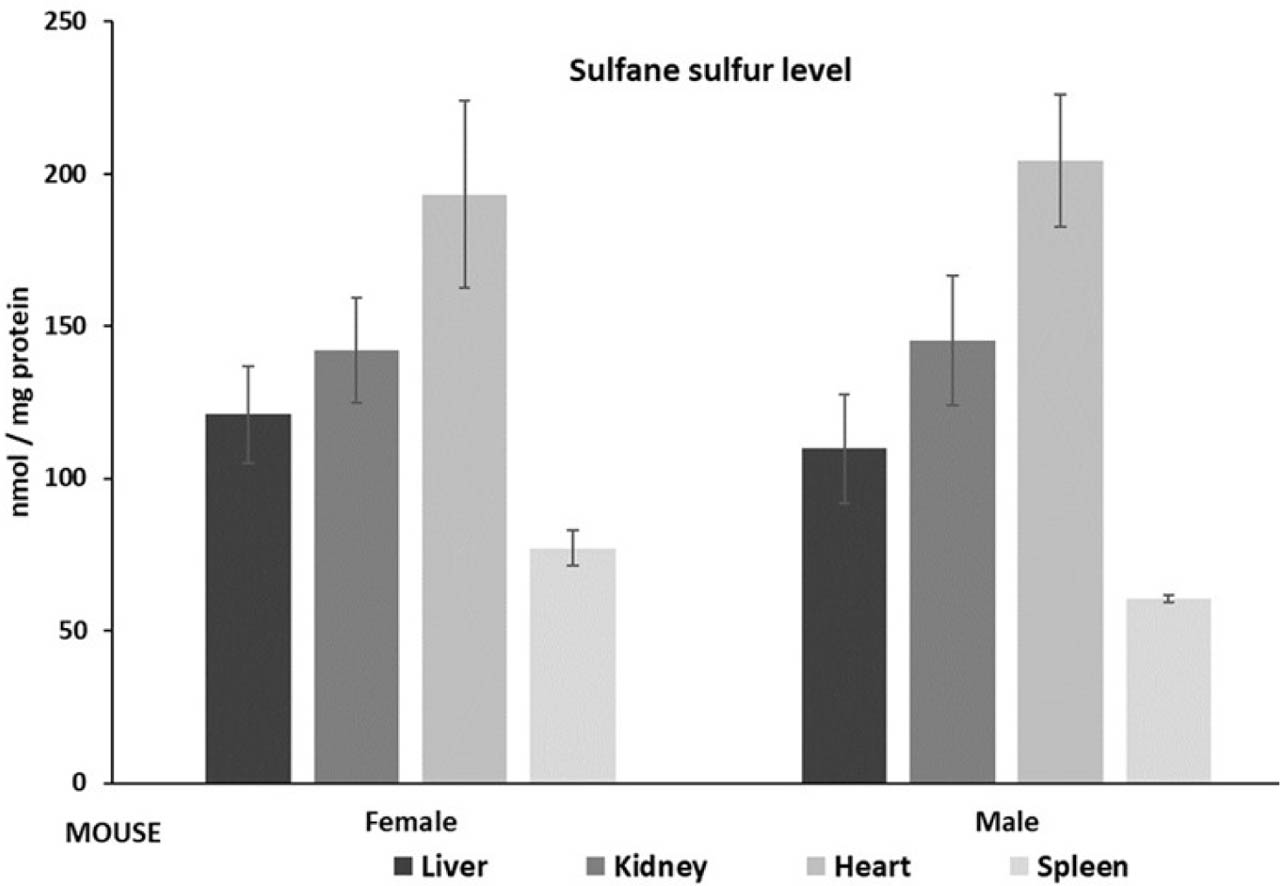
Figure 5.
The level of sulfane sulfur in selected tissues of male and female mice. Data from published experimental work [51] were used in Figure 5. The bars correspond to the mean value ± SD (
standard deviation) of sulfane sulfur level expressed in nmoles of SCN− per mg of protein, from three or more determinations in at least three repetitions
4.3. Effect of the environmental heavy metal stress on the level of sulfane sulfur
The great importance of sulfane sulfur in cellular metabolism and the tendency to maintain its level under the influence of stress caused by heavy metal ions is confirmed by relatively small changes in this level, not more than fifty percent, compared to the control, when exposed to these ions under specific experimental conditions [55]. In frogs Pelophylax ridibundus, Xenopus laevis, and Xenopus tropicalis the heavy metal ions-induced stress (Pb2+, Cd2+, and Hg2+) caused a statistically significant increase in the levels of sulfane sulfur in the brain (Pb2+, Cd2+, Hg2+), kidney (Pb2+, Cd2+), skeletal muscle (Hg2+) and testes (Hg2+) [55]. The opposite effect - a decrease in sulfane sulfur level can be observed in the liver (Pb2+, Cd2+, Hg2+), kidney (Hg2+), and testes (Cd2+) (Table 3).
Table 3.
The level of sulfane sulfur in various frog tissues exposed to heavy metal ions in water — based on results published in [55]
| SULFANE SULFUR % of control | |||
|---|---|---|---|
| Pb2+ | Cd2+ | Hg2+ | |
| Brain | 151.1 | 137.3 | 117.3 |
| Liver | 91.5 | 86.8 | 94.7 |
| Kidney | 133.2 | 109.5 | 91.7 |
| Heart | Not changed | Not changed | Not changed |
| Skeletal muscle | Not changed | Not changed | 120.3 |
| Testes | Not changed | 88.5 | 114.6 |
4.4. Effect of cyanide intoxication on the level of sulfane sulfur
In the tissues of mice exposed to cyanide, the level of sulfane sulfur, the direct source of sulfur for converting CN− ion to SCN− ion, was stable [62]. In the liver, kidneys, and various parts of the brain, telencephalon, diencephalon, midbrain, and rombencephalon of mice exposed to cyanide poisoning, significant changes in the activity of enzymes involved in the formation and transformation of sulfane sulfur (rhodanese, 3-mercaptopyruvate sulfurtransferase and gamma-cystathionase) were observed. These changes were not accompanied by significant changes in the levels of sulfane sulfur measured 30 minutes and 2 hours after cyanide administration (telencephalon, midbrain, and rhombrain) or in the liver 30 minutes after administration, in which the level was lowered, but after 2 hours it returned to control values. In the kidneys, the level was unchanged after 30 minutes of administration, and a decrease was observed only after 2 hours [62].
4.5. Effect of the oxidative stress on the level of sulfane sulfur
An adaptive response of U373 cells (human astrocytoma) to oxidative stress due to menadione presence was associated with a decreased level of sulfane sulfur, which can result from simultaneously decreased 3-mercaptopyruvate sulfurtransferase activity responsible for L-cysteine conversion to sulfane sulfur [63]. An increased level of this enzyme activity after 5 hours of incubation, as compared with 1 hour, was correlated with sulfane sulfur restoration to the control value. It is very important because, as previously found [64] a lowered level of sulfane sulfur is correlated with an increased rate of cell proliferation.
A homeostasis of the level of sulfane sulfur was observed in J774A.1 cell after 24 hours and 48 hours of stimulation with lipopolysaccharide (LPS), a pro-inflammatory agent — it remains unchanged independently of the compound used and time of the incubation [59].
4.6. Effect of mutations and growth condition on the level of sulfane sulfur
The cellular homeostasis of sulfane sulfur points to its vital importance for the cell. Aspergillus nidulans strains were used to examine the effects of mutations and growth conditions affecting sulfur amino acid metabolism on the cellular level of sulfane sulfur [65]. In the studied strains, despite significant differences in the level of L-cysteine, cystathionine, or glutathione, the level of sulfane sulfur was quite stable, which confirms the important role of sulfane sulfur in cellular metabolism.
5. Pathologies associated with changed level of sulfur-containing compounds
Sulfur containing compounds including amino acids and proteins, glutathione, various sulfane sulfur-containing compounds including hydrogen sulfide, can maintain redox state in cells and participate in detoxification of xenobiotics, free radicals and reactive oxygen and nitrogen species, thus contributing substantially to the wholeness of cellular systems. It has been concluded that the relationship between oxidative stress and aging may be in great part associated with a deficit of L-cysteine and that some of the effects of protein deficiency are in fact due to a lack of some sulfur-containing intermediates [66, 67]. Many pathologies are associated with sulfur dietary deficiencies or its changed metabolism due to disease [68] e.g: Down syndrome [69]. Sulfane sulfur increased levels were found in gliomas with the highest grade of malignancy [44]. The elevated levels of Cys-SSH and glutathione polysulfide was confirmed in the aqueous and vitreous humors of patients with diabetic retinopathy compared with healthy patients [70], while in the lungs of patients with chronic obstructive pulmonary disease reduced levels of GSSH and Cys-SSH were found [71]. Hydrogen sulfide and sulfane sulfur are now recognized as central players in various physiological processes: metabolism and signaling [72, 73], cardiovascular function [74], adipose tissue physiology and pathology [75], renal physiology and disease [76], toxicology [33, 77], cancer biology [78] and hypoxia [79]. Dysregulation of the production and transformation pathways of compounds containing sulfane sulfur, including the gaseous H2S molecule, can be observed in many diseases, from cancer including breast, prostate, lung, pancreatic and gastrointestinal [80] to neurological disorders [81, 82]. Elevated levels of acid labile and total sulfide have been observed in Alzheimer's related dementia [83] or Schizophrenia [84].
6. Conclusions
Sulfur is essential for life — no animal or human tissue was found without detectable levels of sulfane sulfur. The level of sulfane sulfur is different in particular animal tissue and can change depending on some physiological or environmental conditions, for example the season of the year.
The environmental heavy metal stress, oxidative stress caused by menadione, murine macrophages stimulation with lipopolysaccharide or cyanide intoxication result in relatively small changes in the level of sulfane sulfur which were usually restored to control levels over time. In view of the multiple roles sulfane sulfur plays in cell metabolism, its level requires stabilization that is consistent with its role as a fine-tuning regulator of cellular metabolism. This was especially visible in Aspergillus nidulans strains, in which independently of significantly varying levels of sulfur-containing amino acids caused by mutations in the level of sulfane sulfur was quite stable, which confirms the important role of sulfane sulfur in the cellular metabolism.
There are many aspects that need to be considered that affect the level of sulfane sulfur/H2S, but still little is known about the regulation of cellular levels of sulfane sulfur. The important question is how much sulfur in our diet is sufficient to maintain the level of sulfane sulfur in cells/tissues, which remains unanswered.
Abbreviations
- 4T1
mouse breast cancer cell line (stage IV human equivalent)
- B16-F1
murine melanoma
- Caco-2
human colorectal adenocarcinoma
- CBS
cystathionine β synthase
- CDO
cysteine dioxygenase
- CTH
cystathionine γ lyase
- GSH
reduced glutathione
- H2S
hydrogen sulfide
- H9c2
rat cardiomyoblast cell line
- HEK
human embryonic kidney cell line
- J774A.1
mouse macrophage cell line
- LPS
lipopolysaccharide
- MCF-7
human breast cancer cell line
- MEF
mouse embryonic fibroblasts
- MG-63
fibroblast-like human osteosarcoma
- MPST
3-mercaptopyruvate sulfurtransferase
- Naglu−/−
murine dermal fibroblasts with Naglu knockout
- NMuMG
epithelial-like cells from the mouse mammary gland
- NO
nitric oxide
- RNS
reactive nitrogen species
- ROS
reactive oxygen species
- SHSY5Y
human neuroblastoma
- U87MG
human glioblastoma
- WT
wild type