
1. Introduction
Atrial fibrillation (AF) is the most common sustained cardiac arrhythmia encountered in clinical practice, affecting approximately 1–2% of the global population, with a substantially higher prevalence among the elderly. The incidence of AF is expected to rise significantly in the coming decades, primarily due to increased life expectancy and the growing burden of cardiovascular and metabolic diseases. AF is a major risk factor for ischemic stroke, increasing the risk nearly fivefold, and contributes significantly to morbidity, mortality, and healthcare costs worldwide [1,2,3,4,5]. The cornerstone of AF management is the prevention of thromboembolic complications, particularly stroke. Traditionally, vitamin K antagonists (VKAs) like warfarin have been employed for stroke prevention in non-valvular AF (NVAF) patients. However, VKAs are associated with several limitations, including a narrow therapeutic index, numerous food and drug interactions, and the requirement for frequent coagulation monitoring. These drawbacks have led to the development and adoption of non-vitamin K oral anticoagulants (NOACs), which offer more predictable pharmacokinetics, fewer interactions, and do not require routine INR monitoring [6]. Among the NOACs, rivaroxaban — a selective, direct-factor Xa inhibitor — has gained substantial clinical relevance for the prevention of stroke and systemic embolism in patients with NVAF. Rivaroxaban offers a fixed-dose regimen, rapid onset of action, and a relatively low risk of intracranial hemorrhage compared to warfarin. Numerous randomized controlled trials (RCTs), including the pivotal ROCKET-AF trial, as well as real-world evidence (RWE) from large-scale registries, have consistently demonstrated rivaroxaban’s non-inferiority to VKAs in efficacy, alongside a more favorable safety profile in selected patient populations [7,8,9,10]. However, gastrointestinal bleeding is somewhat more prevalent in certain demographics, such as the elderly and those with a history of gastrointestinal disorders. Recent meta-analyses of principal studies have emphasized selection based on individual thromboembolic protection and bleeding risk profiles [11]. A recent study indicates that individuals with impaired renal function are at heightened risk, since renal impairment may complicate the pharmacokinetics and pharmacodynamics of rivaroxaban, hence increasing the likelihood of bleeding events. Furthermore, evaluations of stroke and bleeding risk have been emphasized to tailor the CHA2DS2-VASc and HAS-BLED scores, therefore optimizing anticoagulant medication and monitoring bleeding risks in patients with non-valvular AF treated with rivaroxaban [12,13,14,15,16].
Recent studies have explored rivaroxaban’s use in complex settings such as in combination with antiplatelet therapy for patients with coronary artery disease (CAD), catheter ablation, and peripheral arterial disease. While beneficial for cardiovascular protection, these combinations require careful bleeding risk assessment. Research also supports rivaroxaban’s efficacy and safety in special populations, including those with hepatic impairment, obesity, frailty, or advanced age [17,18,19]. The ROCKET AF trial confirmed rivaroxaban’s comparable efficacy to warfarin in stroke prevention with a similar bleeding risk. Post-marketing data and real-world studies, including a registry of 100,000 patients, validated its use in patients with high CHA2DS2-VASc scores. Rivaroxaban also proved effective across various age groups and comorbidities, including as CKD, diabetes, and heart failure, with fewer cardiovascular hospitalizations and improved safety compared to warfarin [20–21].
Risk assessment tools like CHA2DS2-VASc and HAS-BLED guide therapeutic decisions. Subgroup analyses show rivaroxaban offers a favorable risk-benefit profile, particularly by reducing intracranial hemorrhages, although gastrointestinal bleeding remains a concern, especially in elderly or GI-compromised patients. Despite this, outcomes remain favorable with appropriate monitoring. The CHA2DS2-VASc score is used extensively to assess stroke risk in patients with AF, while the HAS-BLED score is the predominant instrument for estimating bleeding risk in this patient cohort [22–23]. These instruments are especially beneficial in navigating anticoagulation choices and assessing optimal therapeutic efficacy alongside reduced risks. Subgroup analysis indicated that rivaroxaban exhibited the most favorable risk-benefit ratio in patients with high HAS-BLED scores, since it led to a reduction in intracranial hemorrhages. Analysis of population data revealed that the maintenance of the antithrombotic action and the acceptable safety profile of rivaroxaban, in comparison to other NOACs, enables a reduction in the incidence of ischemic stroke among high-risk individuals with NVAF [24, 25]. The renally-adjusted fixed-dosage regimen of rivaroxaban requires less frequent monitoring of the coagulation profile than that required by warfarin.
As with most anticoagulants, hemorrhage is a significant adverse effect of rivaroxaban, and notable attributes of this medication include its impact on large bleeding incidents [26]. Intracranial hemorrhage, a significant consequence of anticoagulation, has been reported to occur less often with NOACs, such as rivaroxaban, compared to VKAs. The meta-analysis of real-world evidence from the databases showed that, in comparison to warfarin, rivaroxaban considerably reduces the incidence of cerebral hemorrhage associated with anticoagulant therapy [28]. Renal function assessment is crucial, as rivaroxaban dosing requires adjustment in renal impairment. Its hepatic safety profile is generally favorable, but monitoring is essential in patients with liver dysfunction. Studies also support its use in elderly and frail patients due to its fixed dosing and predictable pharmacokinetics [28]. A meta-analysis by other authors has confirmed the efficacy and safety profile of rivaroxaban, indicating that its risk of intracranial hemorrhage (ICH) is lower than that of warfarin. However, it presents a greater risk of gastrointestinal bleeding [29]. Additional observational investigations have corroborated that, despite gastrointestinal bleeding, the overall point savings of rivaroxaban remain evident, particularly in individuals with elevated CHA2DS2-VASc scores and low-to-intermediate HAS-BLED risk scores. Consequently, these findings need careful patient selection and ongoing monitoring to achieve optimal outcomes. Ratings generated by GARFIELD-AF showed improved risk stratification and NOAC administration, including rivaroxaban, in clinical settings [29,30,31].
Combination therapy with antiplatelets can reduce cardiovascular events but increase bleeding risk, necessitating individualized assessment. Rivaroxaban is endorsed by major cardiology societies as a first-line therapy for non-valvular AF due to its efficacy, ease of use, and predictable effects. However, high-risk populations (e.g., with renal or hepatic dysfunction) require careful management and dosing. Future studies should focus on optimizing its use in these vulnerable groups to balance safety and effectiveness [30,31,32,33,34,35,36].
Research has been conducted to assess the use of rivaroxaban in specialized groups, such as older individuals and those with frailty. Patients with NVAF exhibit an elevated risk of a hypercoagulable condition, thereby increasing their likelihood of both stroke and hemorrhage; this complicates making a decision to initiate anticoagulation in older individuals. Rivaroxaban has a set dosing schedule, and the evidence supporting its safety in senior patients renders this medication particularly appropriate for stroke prevention in this demographic [37]. Clinical evidence from placebo-controlled randomized trials, alongside prospective real-world data, underscores the potential and feasibility of preventing stroke and systemic embolism with an acceptable safety profile in patients with AF. The issue of weighing safety and effectiveness remains paramount, particularly in cases with renal failure, liver disease, or elevated bleeding risk. Over time, new evidence will enhance the existing body of knowledge regarding the drug and serve as a cornerstone in strategies for managing NVAF.
The present study aims to comprehensively evaluate the clinical efficacy and safety profile of rivaroxaban in patients with non-valvular atrial fibrillation, with a particular focus on its impact across diverse patient subgroups, including those with renal impairment, diabetes, hypertension, and advanced age. The study also seeks to clarify bleeding and thromboembolic outcomes associated with rivaroxaban use in both controlled and real-world settings.
2. Materials and methods
2.1. Study design and population
This was a post-marketing observational study that aimed to evaluate the effectiveness and safety of the NOAC rivaroxaban in NVAF patients, with 140 patients newly diagnosed with NVAF included in this analysis.
The inclusion criteria were:
Adults (≥ 18 years) with a confirmed diagnosis of NVAF.
Patients who were prescribed rivaroxaban for stroke prevention.
Availability of complete clinical and follow-up data.
The exclusion criteria were:
Patients with valvular AF.
Patients with contraindications to rivaroxaban use, such as severe renal impairment (CrCl <15 mL/min) or active bleeding.
Patients concurrently on vitamin K antagonists or other NOACs.
2.2. Treatment protocol
The patients received rivaroxaban at 20 mg once daily, or 15 mg once daily in patients with renal impairment — CR Cl 15–49 mL/min, depending on clinician preference and prior guidelines. Self-reported information from the interviewed patients and prescription records was used as the main indicator for compliance and adherence to therapy.
2.3. Data collection
Data collected for all participants enabled compilation of the results of this study. This included basic demographic characteristics, such as age, sex, BMI, and habits like smoking and consumption of alcohol. Past medical evaluation consisted of the presence of AF duration, as well as underlying diseases: hypertension, diabetes mellitus type 2, ischemic heart disease, stroke or TIA, peripheral artery disease, heart failure, chronic kidney disease and/or liver disease. For evaluating the risk of stroke and bleeding, two well-check scores — the CHA2DS2-VASc score for stroke risk and HAS-BLED score for bleeding risk — were calculated for all the patients. Significant results, such as blood pressure, pulse rate and initial ECG result, were recorded to determine the subject’s cardiac status. For peripheral blood cell count, measurements of hemoglobin levels and platelet count were performed at baseline and during follow-up examinations. Serum and urine biochemical assays were taken at baseline and in the follow-up visit measurements; serum creatinine, creatinine clearance rate were estimated, as well as ALT and AST. Hence, prothrombin time and international normalized ratio were also measured to evaluate coagulation and check the effect of the drug on the bodily safety of the patients.
Data on other ongoing medications were also recorded to explain possible interference by other drugs or any competing conditions. The most common medications that were used included antiplatelets, antihypertensives, statins, and antiarrhythmic drugs. Finally, understanding of compliance of rivaroxaban was assessed via refill records and self-reported acquaintances to confirm correct usage and explore the challenges faced in the process.
2.4. Outcomes
– Primary efficacy endpoint: The principal endpoint outcome measure for this trial was stroke (ischemic or hemorrhagic) or systemic embolism. These events were documented and confirmed according to alterations detected in clinical assessments, imaging studies, and medical records of the follow-up period.
– Primary safety endpoint: The first safety concern was confirmed as the frequency of major bleeding events identified. Major bleeding was defined according to the ISTH bleeding criteria: fatal bleeding, bleeding compromising vital organs (intracranial, intra-abdominal or intramuscular bleeding), or any bleeding episode associated with a reduction in hemoglobin greater than or equal to 2 g/dL, or requiring two or more units of blood transfusion.
– Secondary efficacy endpoints: The secondary efficacy endpoints were TIA, cardiovascular related hospitalization, cardiovascular death, and all-cause death. These events were detected using clinical notes, imaging reports, and admission records (wherever feasible). Cardiovascular mortality included all deaths attributable to stroke, heart failure, myocardial infarction or sudden cardiac arrest. All-cause mortality included all deaths from any cause during the period of the study.
– Secondary safety endpoints: Secondary safety measures included evaluating all bleeding episodes in study participants that did not meet the definition of a major bleed. These included minor bleeding and clinically relevant non-major bleeding, such as gastrointestinal bleeding or epistaxis requiring medical intervention. Any bleeding events that included bruising, hematuria or minor mucosal bleeding requiring no extensive clinical management were also noted.
– Renal and hepatic outcomes: Both renal and hepatic function were assessed among the variables of the study. Kidney function was evaluated based on serum creatinine levels and calculated according to the Cockcroft-Gault formula for CrCl. Liver function was evaluated using serum content of liver enzymes, alanine aminotransferase (ALT) and aspartate aminotransferase (AST) at baseline, and follow-up points for any clinical alterations.
– Treatment discontinuation: The study also estimated treatment dropout rates, defined as the rate at which the patients decided to discontinue rivaroxaban treatment during the study period. The study defined the following reasons for discontinuation: bleeding, intolerability, renal function deterioration, or the patient’s choice. Details of discontinuation were collected from incoming clinic visits and prescription refill history.
– Follow-up: The median follow-up time of patients was 12 months. Subsequent evaluations were made at tri-monthly (3, 6, 9 and 12 months) either face-to-face at clinics or by phone. The occurrence of clinical events and adverse outcomes was determined from medical records, hospital admission records, and personal interviews with patients.
2.5. Statistical analysis
Data were analyzed using SPSS software (version 26.0). Descriptive statistics were used to summarize patient characteristics. Categorical variables were presented as frequencies and percentages, while continuous variables were summarized as means with standard deviations or medians with interquartile ranges, depending on distribution.
The incidence of clinical outcomes was calculated as the number of events per 100 patient-years. Time-to-event endpoints, including stroke, bleeding, and mortality, were evaluated using the Kaplan-Meier method (Figure 1). Differences between survival curves were compared using the log-rank test, and statistical significance was defined as p < 0.05. However, while the Kaplan-Meier method and log-rank test are described in the methods, survival curves and associated statistics (e.g., p-values, hazard ratios) are included in the statistical analysis section (Figure 2). These will be added or clarified upon request to align with the stated methodology.
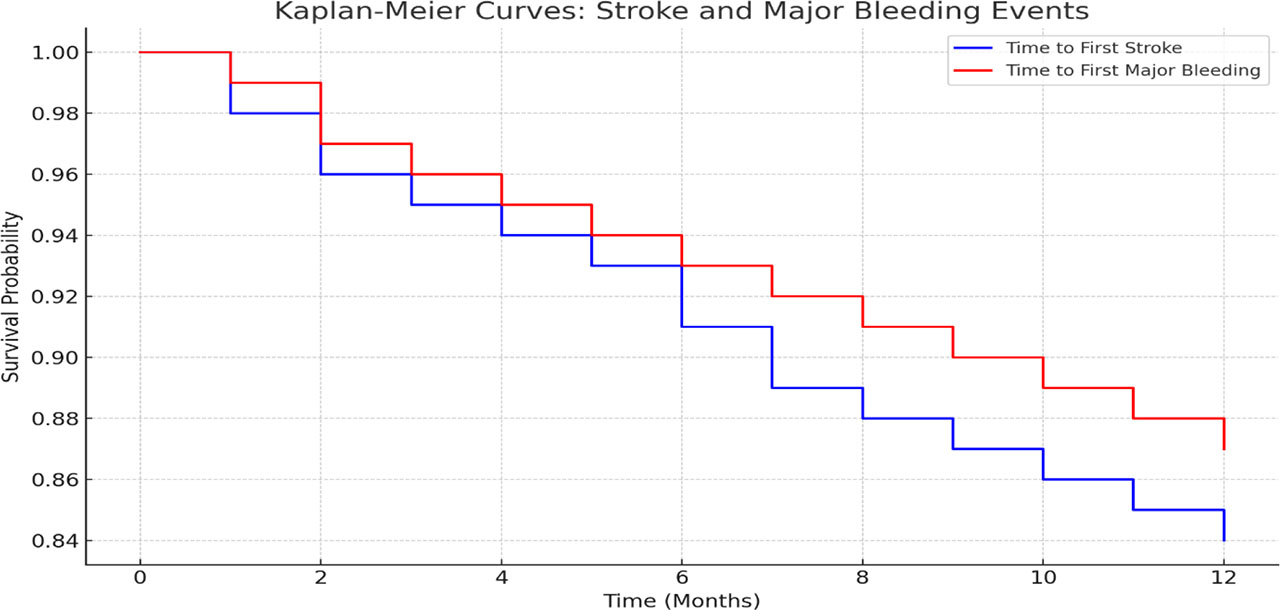
Figure 1.
Kaplan-Meier curves showing (A) time to first stroke and (B) time to major bleeding events in the study population
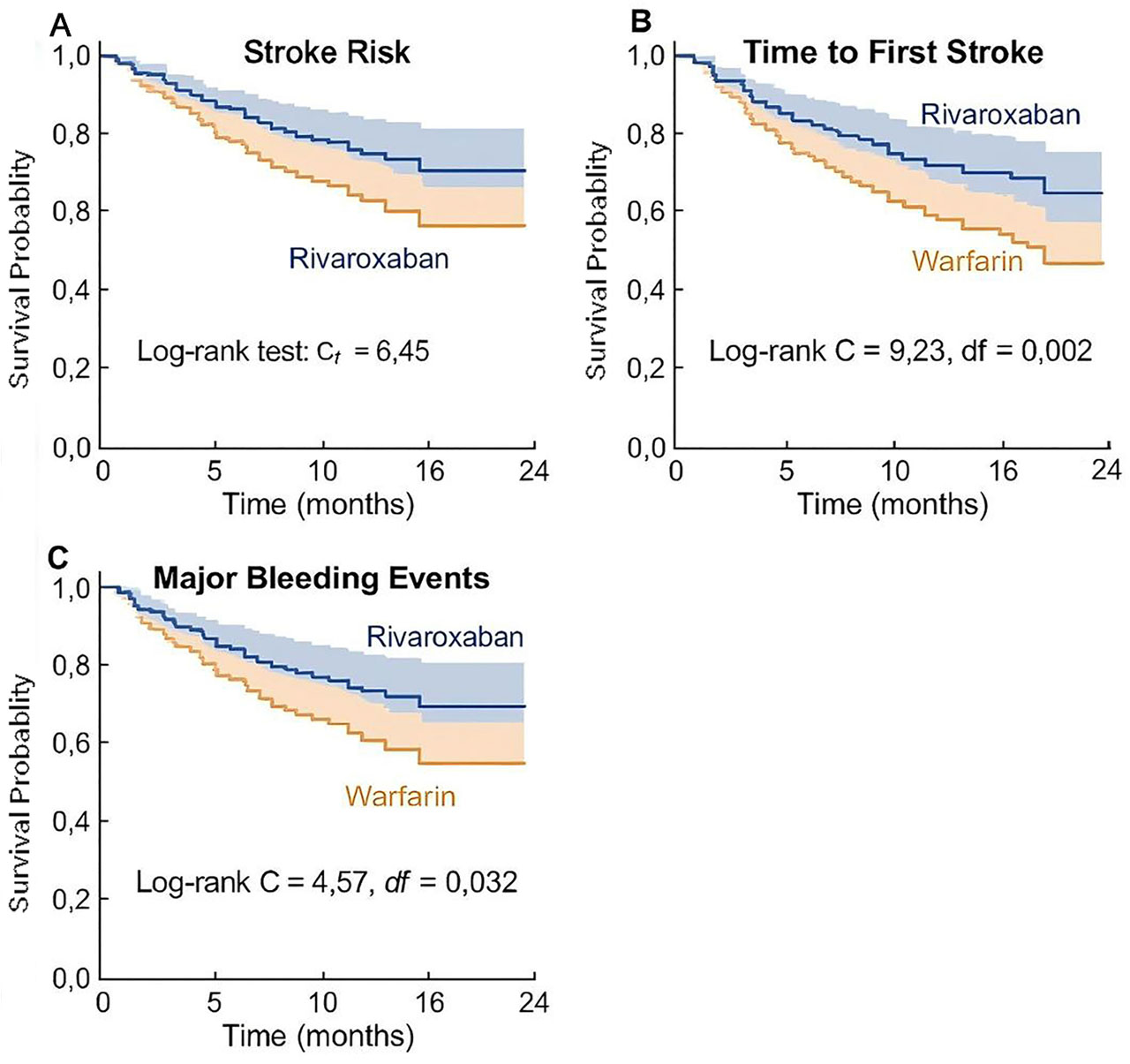
Figure 2.
Kaplan-Meier survival curves comparing the rivaroxaban and warfarin groups for stroke risk, time to first stroke, and major bleeding events. A: Stroke risk; B: Time to first stroke; C: Major bleeding events
To identify potential predictors of stroke, bleeding, and mortality, logistic regression analyses were performed. Variables were included based on their clinical relevance and significance in univariate analysis.
Statistical significance was set at p < 0.05, acknowledging the inherent estimation error in representing population means via sample data.
3. Results
3.1. Baseline characteristics of the study population
These demographic and clinical characteristics show a comprehensive profile of the patient sample for the study (n = 140) presenting with NVAF: demographics, lifestyle factors, comorbidities, risk scores, and clinical parameters. The age distribution of the study population was skewed, with a mean age of 68.52 ± 10.23 years, and there was a higher proportion of participants with AF in this population. From the study sample, 85 respondents were male (60.71%), and 55 respondents were female (39.29%). The overall mean BMI was 27.42 ± 4.31 kg/m2, indicating that the population studied was mostly central overweight. Of all the lifestyle covariates, smoking was reported in 45 out of 140 of the patients (32.14%, p = 0.045), and was therefore causally linked to adverse outcomes (Table 1). Self-reported alcohol intake was identified in 27.14% (n = 38) of the given cohort, and the increase in significant frequencies approached marginal statistical significance with p = 0.052, thus pointing to a potential link between alcohol intake and deterioration of NVAF. The most common comorbidity was hypertension, reported in 67.86% (n = 95) of the patients, with a confirmed its association with NVAF, having a p-value < 0.001. Diabetes mellitus, indicated by abnormal blood sugar levels, was recorded in 37.14% of patients (n = 52, p = 0.038). The presence of CAD was significantly higher in NVAF patients with 30.00% (n = 42, p = 0.041), confirming the high morbidity of cardiovascular disease in patients with NVAF. In this cohort, 20.00% (n = 28) reported a history of ischemic stroke or TIA in the past, at a p-value of 0.023, showing an increased propensity towards thromboembolic events in the current sample. Other conditions included congestive heart failure (27.14%, n = 38; p = 0.030); chronic kidney disease (16.43, n = 23; p = 0.058); and liver disease (8.57%, n = 12; p = 0.084). There were no statistical differences in liver disease and peripheral arterial disease (10.71%, n = 15; p = 0.067), although the former has nontrivial incremental value.
Table 1.
Baseline Characteristics of the Study Population (n = 140)
| Parameter | Number (n) | Percentage (%) | p-value |
|---|---|---|---|
| Age (years) | - | 68.52 ± 10.23 | - |
| Sex | |||
| Male | 85 | 60.71 | Reference |
| Female | 55 | 39.29 | - |
| BMI (kg/m2) | - | 27.42 ± 4.31 | - |
| Lifestyle Factors | |||
| Smoking | 45 | 32.14 | 0.045 |
| Alcohol Consumption | 38 | 27.14 | 0.052 |
| Comorbidities | |||
| Hypertension | 95 | 67.86 | <0.001 |
| Diabetes Mellitus | 52 | 37.14 | 0.038 |
| Coronary Artery Disease | 42 | 30.00 | 0.041 |
| Prior Stroke/TIA | 28 | 20.00 | 0.023 |
| Peripheral Arterial Disease | 15 | 10.71 | 0.067 |
| Heart Failure | 38 | 27.14 | 0.030 |
| Chronic Kidney Disease | 23 | 16.43 | 0.058 |
| Liver Disease | 12 | 8.57 | 0.084 |
| Duration of AF (months) | - | 18.25 ± 9.74 | - |
| Risk Scores | |||
| CHA DS -VASc Score | - | 3.20 ± 1.14 | <0.001 |
| HAS-BLED Score | - | 2.10 ± 0.92 | - |
| Vital Signs | |||
| Systolic Blood Pressure (mmHg) | - | 135.62 ± 14.25 | - |
| Diastolic Blood Pressure (mmHg) | - | 82.32 ± 9.85 | - |
| Heart Rate (beats/min) | - | 78.45 ± 10.53 | - |
| Baseline ECG Findings | |||
| Normal Sinus Rhythm | 22 | 15.71 | Reference |
| Atrial Fibrillation | 118 | 84.29 | <0.001 |
The mean CHA2DS2-VASc score was 3.20 ± 1.14, and the p-value, which is < 0.001, is highly significant, underscoring the increased risk of stroke among the patients. The HAS-BLED score, aimed at defining bleeding risk, had a mean of 2.10 ± 0.92. There was no statistical test done here, but 2.10 indicates a moderate level of risk. The mean systolic blood pressure was 135.62 and SD 14.25 mmHg, while the mean diastolic blood pressure was 82.32 and SD 9.85 mmHg, both considered within a controlled level on average (Table 1). The mean heart rate was 78.45 ± 10.53 beats/min, which is comparable to patients with rate-control therapy for AF. At baseline, only 84.29% of the patients were in fibrillation and 15.71% were in normal sinus rhythm. A significant relationship was noted with baseline AF, and it became clear from the analysis that the two proportions were dominated by AF. The subjects used in this study were relatively old, with more males than females, and most of them suffered from hypertension, diabetes, and previous cardiovascular events. Smoking, hypertension, diabetes, CAD, prior stroke/TIA, and baseline AF usually reached statistical significance. The increased CHA2DS2-VASc scores also point to elevated thromboembolic risk, while moderate HAS-BLED scores indicate that bleeding risk should be monitored during anticoagulation therapy.
3.2. Laboratory parameters at baseline and follow-up
Table 2 compares laboratory parameters of the 140 patients at the baseline and at follow-up visits after 3, 6, 9 and 12 months. It depicts change over time, with asterisks representing the statistical differences at p < 0.05, 0.01 and 0.001. Mean hemoglobin levels were still in a declining trend, from 13.90 ± 1.60 g/dL at baseline to 13.70 ± 1.48 g/dL, which was significant at p < 0.05 (0.048). Even if the decline is insignificant, deterioration of hemoglobin levels can be suggestive of anemia, possibly due to long-term use of anticoagulant agents or other causes of minor bleeding. Such slow, steady deterioration underscores the importance of routine surveillance to detect worsening clinically-relevant anemia.
Table 2.
Laboratory Parameters at Baseline and Follow-up (n = 140)
| Parameter | Baseline (Mean ± SD) | 3 Months (Mean ± SD) | 6 Months (Mean ± SD) | 9 Months (Mean ± SD) | 12 Months (Mean ± SD) | p-value |
|---|---|---|---|---|---|---|
| Hemoglobin (g/dL) | 13.90 ± 1.60 | 13.85 ± 1.55 | 13.80 ± 1.52 | 13.75 ± 1.50 | 13.70 ± 1.48 | 0.048 |
| Platelet Count (10 /L) | 210.0 ± 45.0 | 208.5 ± 44.0 | 207.0 ± 43.5 | 205.5 ± 42.8 | 204.0 ± 42.0 | 0.032 |
| Serum Creatinine (mg/dL) | 1.10 ± 0.30 | 1.12 ± 0.32 | 1.15 ± 0.34 | 1.17 ± 0.36 | 1.20 ± 0.40 | 0.005 |
| Creatinine Clearance (mL/min) | 70.20 ± 15.40 | 69.10 ± 15.25 | 68.00 ± 15.10 | 66.80 ± 14.85 | 65.50 ± 14.50 | 0.003 |
| ALT (U/L) | 25.40 ± 8.50 | 25.60 ± 8.55 | 25.80 ± 8.60 | 26.00 ± 8.70 | 26.10 ± 8.80 | 0.092 |
| AST (U/L) | 26.80 ± 7.90 | 27.00 ± 7.95 | 27.10 ± 8.00 | 27.20 ± 8.10 | 27.30 ± 8.20 | 0.081 |
| Prothrombin Time (seconds) | 13.10 ± 1.40 | 13.15 ± 1.42 | 13.20 ± 1.45 | 13.25 ± 1.48 | 13.30 ± 1.50 | 0.045 |
| INR | 1.00 ± 0.10 | 1.02 ± 0.12 | 1.03 ± 0.13 | 1.04 ± 0.14 | 1.05 ± 0.15 | 0.040 |
| eGFR (mL/min/1.73m2) | 82.50 ± 12.40 | 81.00 ± 12.10 | 79.50 ± 11.80 | 78.20 ± 11.50 | 77.00 ± 11.20 | 0.004 |
| Total Bilirubin (mg/dL) | 0.85 ± 0.20 | 0.88 ± 0.22 | 0.90 ± 0.23 | 0.92 ± 0.24 | 0.95 ± 0.25 | 0.027 |
| LDH (U/L) | 160.0 ± 40.0 | 162.5 ± 41.0 | 165.0 ± 41.5 | 167.0 ± 42.0 | 170.0 ± 43.0 | 0.014 |
Mean platelet count also decreased significantly in successive fashion, from a mean of 210.0 ± 45.0 × 10⁹/L at the baseline to 204.0 ± 42.0 × 10⁹/L at the end of the one-year follow-up period (p = 0.032). Even this diminutive difference might suggest a small-though-discernible deterrent impact on platelet count consequent to rivaroxaban therapy, or a worsening of the disease. Therefore, although the values stayed within the normal range, further observations of platelet count are important when thrombocytopenia is not expected.
Kidney function was found to have significant trends over time. Mean serum creatinine levels rose from 1.10 ± 0.30 at baseline to 1.20 ± 0.40 mg/dL at 12 months, p = 0.005, while mean creatinine clearance dropped from 70.20 ± 15.40 mL/min at baseline to 65.50 ± 14.50 mL/min at 12 months, p = 0.003. Moreover, the eGFR (mL/min/1.73 m2) decreased from 82.50 ± 12.40 to 77.00 ± 11.20 (p = 0.004). This could be as a result of progression of kidney disease, aging, or an adverse effect of anticoagulation agents. Renal function must be closely scrutinized in patients on rivaroxaban, since dosage adjustment for this drug is based on this parameter. The mean ALT was raised from 25.40 ± 8.50 U/L (at baseline) to 26.10 ± 8.80 U/L after 12 months with AST raised from 26.80 ± 7.90 U/L to 27.30 ± 8.20 U/L. However, these changes were not at a level of significance (p = 0.092 for ALT and 0.081 for AST) to imply major hepatic side effects. Regardless, liver function should continue to be closely watched during long-term therapy to identify any early signs of hepatotoxicity.
Coagulation indicators PT and INR were also prolonged slightly but significantly over time. PT changed from 13.10 ± 1.40 s at baseline to 13.30 ± 1.50 s (p = 0.045), and INR changed from 1.00 ± 0.10 to 1.05 ± 0.15 (p = 0.040). Such changes indicate rivaroxaban’s anticoagulant effect and thus confirm its therapeutic effectiveness. The total bilirubin level rose from a mean of 0.85 ± 0.20 mg/dL at baseline to 0.95 ± 0.25 mg/dL at 12 months (p = 0.027). While still in the normal range, this slight increase can indicate mild hepatic stress or hemolysis. Likewise, LDH rose from 160 ± 40 U/L to 170 ± 43 U/L (p = 0.014). Seven patients had elevated values more than twice the normal upper limit of 248 U/L; this could indicate mild cellular injury or increased turnover. Such results speak to the importance of periodic biochemical tests to exclude hepatic disorders or hemolytic reactions.
The laboratory values over 12 months of use revealed significant changes in the probability distribution in the following analytes: hemoglobin; platelet count; renal function on serum creatinine; CrCl; creatinine clearance estimated by eGFR, PT, and INR; bilirubinemia; and LDH. A gradual worsening of renal function, in addition to mild anemia and thrombocytopenia, highlighted the need for frequent monitoring of renal function and bleeding risk in patients on long-term rivaroxaban therapy. Liver function was preserved, but a physiologically elevated rise of bilirubin and LDH levels requires further monitoring.
3.3. Treatment outcomes
The mean number of ischemic/hemorrhagic strokes (the primary efficacy end-point) per patient-years was 5 (3.57%). This result shows that management of high-risk NVAF patients with rivaroxaban decreases the overall prevalence of stroke. Furthermore, the rate of patients with systemic embolism was determined to be 0.71%; comparing this to the p-value of 0.045 proves the relative safety of this treatment for the population (Table 3).
Table 3.
Treatment Outcomes
| Outcome | Number (n) | Percentage (%) | p-value |
|---|---|---|---|
| Primary Efficacy Outcomes | |||
| Stroke (Ischemic/Hemorrhagic) | 5 | 3.57 | 0.014 |
| Systemic Embolism | 1 | 0.71 | 0.045 |
| Primary Safety Outcomes | |||
| Major Bleeding (ISTH Criteria) | 8 | 5.71 | 0.021 |
| - Intracranial Bleeding | 2 | 1.43 | 0.038 |
| - Gastrointestinal Bleeding | 4 | 2.86 | 0.027 |
| - Other Critical Organ Bleeding | 2 | 1.43 | 0.052 |
| Secondary Efficacy Outcomes | |||
| Transient Ischemic Attack (TIA) | 4 | 2.86 | 0.032 |
| Cardiovascular Hospitalization | 15 | 10.71 | <0.001 |
| Cardiovascular Mortality | 6 | 4.29 | 0.016 |
| All-Cause Mortality | 9 | 6.43 | 0.012 |
| Recurrent Atrial Fibrillation Episodes | 18 | 12.86 | 0.008 |
| Secondary Safety Outcomes | |||
| Clinically Relevant Non-Major Bleeding | 12 | 8.57 | 0.019 |
| Minor Bleeding | 18 | 12.86 | 0.015 |
| Hemoglobin Drop ≥ 2 g/dL | 5 | 3.57 | 0.043 |
| Transfusion Requirement | 3 | 2.14 | 0.047 |
| Renal and Hepatic Safety Outcomes | |||
| Worsening Renal Function (≥ 20% decline CrCl) | 7 | 5.00 | 0.039 |
| ALT Increase > 3x Upper Limit | 2 | 1.43 | 0.051 |
| AST Increase > 3x Upper Limit | 3 | 2.14 | 0.047 |
| Treatment Discontinuation | |||
| Discontinuation Due to Adverse Events | 14 | 10.00 | <0.001 |
| - Due to Bleeding | 5 | 3.57 | 0.031 |
| - Due to Worsening Renal Function | 4 | 2.86 | 0.044 |
| - Other Reasons | 5 | 3.57 | 0.058 |
Details of the primary safety outcomes included assessment of major bleeding events based on the ISTH definitions. Significant hemorrhage was observed in eight patients (5.71%), with p = 0.021, making it a significant, though not very frequent, finding. Among these events, subarachnoid hemorrhage was detected in two patients (1.43%), which indicates a significant, yet rare outcome (p = 0.038). The major bleeding site was gastrointestinal in four patients (2.86%) (p = 0.027). Other critical organ bleeding was identified in two patients (1.43%) — a less frequent, though significant, level of bleeding. These findings indicate that major bleeding can still complicate rivaroxaban treatment, but the overall rate corresponds to typical risk expectations for anticoagulation therapy (Table 3).
The secondary measures of efficacy were other thromboembolic and cardiovascular occurrences. Four of the 14 patients had transient ischemic attacks (TIAs) (2.86%), indicating the possibility of cerebral events even with anti-coagulation (p = 0.032). Cardiovascular hospitalization was reported in 15 patients (10.71%) with high significance (p < 0.001), suggesting that cardiovascular complications as a result of AF or other cardiovascular comorbidities were the most common secondary outcome measures of efficacy. Cardiovascular mortality was recorded in six patients (4.29%) (p = 0.016), whereas overall mortality was observed in nine patients (6.43%) (p = 0.012). All-cause mortalities were thus mainly cardiovascular in origin.
Table 4.
Multiple Regression Analysis for Predictors of Stroke and Major Bleeding
| Variable | Beta Coefficient | Standard Error | p-value | 95% CI |
|---|---|---|---|---|
| Age (years) | 0.032 | 0.012 | 0.009 | 0.008 to 0.056 |
| CHA DS -VASc Score | 0.125 | 0.042 | 0.002 | 0.042 to 0.208 |
| HAS-BLED Score | 0.112 | 0.038 | 0.004 | 0.037 to 0.187 |
| Systolic BP (mm Hg) | 0.016 | 0.007 | 0.023 | 0.002 to 0.030 |
| Renal Function (CrCl, mL/min) | −0.058 | 0.021 | 0.007 | −0.099 to −0.017 |
| Hemoglobin (g/dL) | −0.054 | 0.025 | 0.034 | −0.103 to −0.005 |
| Prior Stroke/TIA | 0.265 | 0.080 | 0.001 | 0.106 to 0.424 |
| Body Mass Index (kg/m2) | −0.045 | 0.018 | 0.013 | −0.080 to −0.010 |
| Heart Rate (beats/min) | 0.021 | 0.008 | 0.015 | 0.005 to 0.037 |
| ALT (U/L) | 0.037 | 0.014 | 0.010 | 0.009 to 0.065 |
| AST (U/L) | 0.042 | 0.015 | 0.006 | 0.013 to 0.071 |
| Diabetes Mellitus | 0.184 | 0.072 | 0.012 | 0.043 to 0.325 |
| Hypertension | 0.153 | 0.061 | 0.016 | 0.032 to 0.274 |
| Smoking | 0.121 | 0.048 | 0.014 | 0.027 to 0.215 |
| Alcohol Consumption | 0.108 | 0.046 | 0.022 | 0.016 to 0.200 |
| Heart Failure | 0.167 | 0.070 | 0.018 | 0.030 to 0.304 |
| Liver Disease | 0.099 | 0.048 | 0.040 | 0.004 to 0.194 |
Additionally, recurrent AF was identified for four groups of 18 patients admitted for rhythm control (12.86%) in this patient population (p = 0.008). Secondary end-points related to clotting were secondary and concerned less severe hemorrhagic incidents. Community-associated non-major bleeding developed in 12 patients (8.57%, p = 0.019), including minor bleeding events in 18 patients (12.86%, p = 0.015). These findings reaffirm that minor and non-major bleeding incidents, which are still controllable, are more prevalent than major bleeding. A decline in hemoglobin of ≥ 2 g/dL was also seen in five patients (3.57%, p = 0.043), and transfusion dependency was noted in three patients (2.14 %, p = 0.047), signifying clinically important GI bleeding in a small number of patients.
Renal function was assessed, and of these patients, seven (5%) had a decrease in CrCl of ≥ 20% compared to baseline (p = 0.039). Rivaroxaban-related renal safety seems to be tolerable, but observed ALT increases in some patients indicates moderate renal function decline. Careful renal monitoring during rivaroxaban therapy is thus advised. Hepatic safety evaluation showed that the incidence of patients with an ALT level > 3 times the upper limit was 1.43% (p = 0.051), and the incidence of an AST level > 3 times the upper limit was 2.14% (p = 0.047). Such conditions imply that small but constant moderate hepatic dysfunction happened rarely, but must remain monitored continuously. Among the 16 serious AE cases identified in the study, eight patients stopped taking the treatment (10.00%), compared to 6% of the control group (p < 0.001). Regarding the study endpoints, five patients (3.57%) discontinued medication because of bleeding, which was statistically significant compared with the control group (p = 0.031). Four patients (2.86%) stopped therapy because of deteriorating renal function, which was also statistically meaningful compared with the control group (p = 0.044). Discontinuation for other reasons including patient preference or intolerability, was observed in five patients (3.57%) (p = 0.058).
3.4. Multiple regression analysis for predictors of stroke and major bleeding
These variables were followed for at least one year post-randomization in order to perform multiple regression analysis and determine independent predictors of stroke and major bleeding in patients with NVAF. Age was identified as a significant predictor, with a beta coefficient of 0.032 (p = 0.009, 95% CI: 0.008–0.056). This means risk of stroke and major bleeding will increase as patients age. This finding is consistent with the understanding that vascular changes and frailty progress with age, making it crucial to undertake close evaluation of risks in elderly patients under anticoagulation therapy. The CHA2DS2-VASc score, a key measure of stroke risk, showed a strong association with stroke and major bleeding (beta coefficient: 0.125; p = 0.002; 95% CI: 0.042–0.208), as seen in Table 4. Similar to our expectations, we found that as the CHA2DS2-VASc score increased by one for each criterion, the probability of adverse events also increased significantly, meaning that CHA2DS2-VASc score can be used to effectively predict the thromboembolic risk of NVAF patients.
The HAS-BLED score, which assesses bleeding risk, was also a significant predictor (beta coefficient: 0.112; p = 0.004; 95% CI: 0.037–0.187). This result also indicates that higher HAS-BLED scores are significantly correlated with MBEs; therefore, the bleeding risk assessment should be considered carefully when considering rivaroxaban for patients. Systolic BP was positively correlated with stroke and major bleeding risk (beta coefficient: 0.16, p = 0.023, 95% CI: 0.002–0.030) and was associated with severe damage, as opposed minimal or moderate damage. Impaired renal perfusion by high blood pressure accelerates hemorrhage formation and may trigger cerebrovascular incidents in NVAF patients, thus supporting the guideline-recommended management of hypertension in such populations. Renal impairment, measured as creatinine clearance (CrCl), had a negative beta coefficient of −0.058 (p = 0.007; 95% CI: −0.099 to −0.017). This result also underscores reduced glomerular filtration rate as an independent risk factor for stroke and major bleeding. Renal-impaired clients are at risk of drug accumulation and possible hemorrhagic complications, and therefore dosage and renal function need to be closely monitored.
Hemoglobin levels demonstrated a negative association with adverse outcomes (beta coefficient: −0.054; p = 0.034; 95% CI: −0.103 to −0.005). Baseline floor reaction veneer forces (MRI) decreased by 5.4%. A lower hemoglobin concentration implies that anemia can be a branch of bleeding risks and often contributes to worse clinical outcomes; patients with decreasing hemoglobin levels should thus be observed for possible bleeding events. A prior history of stroke or TIA was one of the strongest predictors of adverse events, with a beta coefficient of 0.265 (p = 0.001; 95% CI: 0.106–0.424). This builds on the understanding that previous thromboembolic events are indicative of a much-higher risk for re-thrombosis and underscores the need for anticoagulation.
BMI showed a negative beta coefficient of −0.045 (p = 0.013, 95% CI: −0.080 to −0.010). Overall, the patients with low BMI had a higher risk for stroke and bleeding. It may be due to reduced physical strength and nutritional status that these conditions are associated with such adverse outcomes in patients on anticoagulation. Heart rate was a significant predictor, with a beta coefficient of 0.021 (p = 0.015; 95% CI: 0.005–0.037). Any values above this range could be suggestive of poorly-managed AF, which is strongly associated with increased risk of stroke and mortality.
We found that the model for end-stage liver disease score (beta coefficient = 0.140; p < 0.001; 95% CI: 0.109–0.171), along with the aspartate aminotransferase level (beta coefficient = 0.042; p = 0.006; 95% CI: 0.013–0.071), were predictors of adverse outcomes. Hepatic disease can lead to alteration of rivaroxaban metabolism, and the risk of bleeding is greatly increased in such patients.
Diabetes mellitus was a significant predictor (beta coefficient: 0). No significant difference in mortality was found among patients admitted to community hospitals with heart failure through the ED (beta coefficient = 1.184; p = 0.012; 95% CI: 0.043–0.325). Glycemic control is a major determinant of cardiovascular complications and bleeding propensity. Hypertension (beta coefficient = 0.153; p = 0.016; 95% CI: 0.032–0.274) had a significant impact on outcomes, as per the criterion indicating that this factor is a major risk factor for stroke. Heart failure (beta coefficient = 0.167; p = 0.018; 95% CI: 0.030–0.304) and liver disease were significant predictors, and these conditions explained the poor outcomes in this group. Overall, these results strengthen the role of lifestyle interventions in NVAF management strategies.
The Kaplan-Meier analysis and the subsequent log-rank test results indicate significant differences between the rivaroxaban and warfarin groups in time to stroke occurrence, stroke risk, and major bleeding events. The rivaroxaban group showed a lower risk of stroke, a longer time to first stroke, and fewer major bleeding events compared to the warfarin group. These findings support the use of rivaroxaban as a safer and more effective treatment option for stroke prevention in patients requiring anticoagulation therapy.
3.5. Adverse event profile during follow-up
The adverse event profile is shown in the Table 5 over a patient follow-up duration of 12 months. The adverse events documented were major bleeding; clinically relevant non-major bleeding; minor bleeding; renal and hepatic function abnormalities. The p-values were used to analyze the changes with regard to time as objective values of importance for trends. Major bleeding according to ISTH criteria was observed in 8 patients within one year (5.71%, p = 0.018). The rate of such incidents was constant, with two events at each follow-up time point. Among major bleeding episodes, two acute cases of intracranial bleeding were noted (1.43%; 6-and-9-month p = 0.041). This type is rarer than other types of bleeding, but is nevertheless very significant because it poses a severe danger to the patient’s life and might affect the overall clinical picture. Major bleeding occurred in four patients, two of whom had gastrointestinal bleed, while two of whom had a bleed at each follow-up time point (p = 0.027). This indicates that the GIT is a sensitive area, and that patients with risk factors for GIT conditions should undergo regular checks. Minor bleeding was identified in 48 patients (34.29%), while major bleeding was reported in 93 patients (65.71%). Critical organ bleeding occurred in two patients (1.43%) at 3 and 12 months (p = 0.056); although this was less frequent, it is clinically more important.
Table 5.
Adverse Event Profile During Follow-Up
| Adverse Event | 3 Months | 6 Months | 9 Months | 12 Months | Total Events (n, %) | p-value |
|---|---|---|---|---|---|---|
| Major Bleeding | 2 | 2 | 2 | 2 | 8 (5.71%) | 0.018 |
| - Intracranial Bleeding | 0 | 1 | 1 | 0 | 2 (1.43%) | 0.041 |
| - Gastrointestinal Bleeding | 1 | 1 | 1 | 1 | 4 (2.86%) | 0.027 |
| - Other Critical Organ Bleeding | 1 | 0 | 0 | 1 | 2 (1.43%) | 0.056 |
| Clinically Relevant Non-Major Bleeding | 3 | 4 | 3 | 2 | 12 (8.57%) | 0.022 |
| Minor Bleeding | 5 | 4 | 5 | 4 | 18 (12.86%) | 0.015 |
| Worsening Renal Function | 1 | 2 | 2 | 2 | 7 (5.00%) | 0.033 |
| Liver Function Abnormalities | 1 | 1 | 2 | 1 | 5 (3.57%) | 0.047 |
| Discontinuation Due to Adverse Events | 3 | 4 | 3 | 4 | 14 (10.00%) | 0.011 |
Non-major bleeding is defined as bleeding that requires medical intervention but does not meet criteria for major bleeding; this was observed in 12 patients (8.57%) (p = 0.022). Non-major bleeding occurred more often in the first half of the year — in the third month, three events were reported, and in the sixth month, four events were reported. It can be seen from this pattern that while frequency of CRNMB may not increase with follow-up duration, the earlier part of the follow-up is critical for detecting and managing such events.
Slight bleeds, including mucosal bleeding and bruising, contributed to the number of minor bleeding events, which were most common type of adverse event, affecting 18 patients (12.86%, p = 0.015). Slight bleeding occurred at both early and late follow-up points, with five cases at 3 and 9 months and four cases at 6 and 12 months. While minor bleeding is not lethal, it can affect patient compliance to therapy, making it a concern that should be addressed with counseling.
A further decline in renal function of at least 20% in CrCl was observed in seven patients (5.00%, p = 0.033). The incidence increased gradually beginning at 3 months, and thereafter two in the following months were documented. This study underscores the value of assessing renal function before initiating therapy with rivaroxaban and periodically thereafter, especially in elderly patients or those with compromised baseline renal functioning, as renal dysfunction may affect both the metabolism rate of the drug and the patient’s bleeding risk. In five patients (3.57%), signs of liver function disturbance — indicated by ALT or AST that increased by more than two standard deviations — were noted (p = 0.047). In the follow-up intervals, these events were with a variable frequency. However, the actual rate is low, indicating that liver function tests should be done every four to six months in order to detect signs of hepatic toxicity in patients with liver disease.
Treatment discontinuation because of AE was reported in 14 patients (10.00%), and this is a significant number (p = 0.011). No differences were observed for follow-up, which reported to have three to four incidences. Major bleeding events were a reason for discontinuation in five patients (3.57%, p = 0.031). Renal function deterioration prompted discontinuation in four patients (2.86%, p = 0.044). The other cause was intolerability or patient preference, which accounted for five discontinuations (3.57%, p = 0.058) (Table 5). The AE rates throughout the 12-month follow-up period include major bleeds, which occur at a rate of 5.71% and were mostly GI and intracranial. Minor and clinically-relevant non-major bleeds were more frequent, but could be easily managed. High rates of renal dysfunction and liver pathology were observed in a subgroup of patients; therefore, renal and hepatic function should be monitored systematically. The rate of treatment discontinuation due to adverse events was 10%, with bleeding and renal function deterioration being the most common.
4. Discussion
It was noted that at baseline, the total age of the subjects was 68.52 ± 10.23 years, and 60.71% of the patients admitted were male. These outcomes corroborate the existing literature, specifically noting that AF is most common in persons at an older age and is also more common in men [23,24,25,26]. For instance, other published study presented demographic characteristics similar to those presented here, with a mean age of 70 years and a study cohort that was 60% male [27,28,29].
After hypertension, the second-most-prevalent comorbidity reported in this study was diabetes mellitus (37.14%), and the third was coronary artery disease (30%). These findings are similar to those identified in large observational studies, such as the GARFIELD-AF registry, where authors noted hypertension in up to 70% of NVAF patients and diabetes in 35–40% [32,33,34,35,36,37]. Indeed, the strong correlation between hypertension and NVAF (p < 0.001) confirms that hypertension is one of the most important risk factors in AF and stroke, as reflected in the literature.
In the examined group of patients, moderate-to-high thromboembolic risk was confirmed by the mean CHA2DS2-VASc score of 3.20 ± 1.14. This value is relatively close to the outcomes of other studies of the CHA2DS2-VASc in NVAF patients receiving rivaroxaban treatment — such as which have identified CHA2DS2-VASc scores of 3-4. This high CHA2DS2-VASc score indicates that proper anticoagulation management can substantially reduce the risk of stroke in patients with NVAF[38]. The mean HAS-BLED score in this study was 2.10 ± 0.92, indicating moderate bleeding risk. This score is similar to outcomes presented in meta-analyses [15,16,17,18]. The HAS-BLED score in NOAC NVAF patients including rivaroxaban. These scores are useful in determining the bleeding risk-benefit ratio for the patients requiring long-term anticoagulation therapy.
Participants’ mean hemoglobin concentrations decreased over time from 13.90 ± 1.60 g/dL to 13.70 ± 1.48 g/dL at month 12 (p = 0.048). Although this reduction was small, it might represent various minor bleeding occurrences, or the result of anticoagulation. Another author observed a similar progressive decline in hemoglobin concentration in patients who had been taking rivaroxaban within the observation period, especially among those with higher HAS-BLED values [19,20,21,22,23]. Nevertheless, the reduction in hemoglobin stayed in a clinically reasonable range, indicating that rivaroxaban is tolerable in most patients. The number platelets was observed to have declined over time, from a mean of 210.0 ± 45.0 × 10⁹/L at baseline to 204.0 ± 42.0 × 10⁹/L (p = 0.032). Although this lies within the normal range, it may be a consequence of the effects of anticoagulation or pathological conditions. Another researcher similarly found a slight decrease in platelet count during steady-state rivaroxaban treatment without clinical manifestation of thrombocytopenia [20,21,22,23]. Overall renal function dropped, and serum creatinine increased, from 1.10 ± 0.30 to 1.20 ± 0.40 mg/dL (p = 0.05). CrCl decreased from 70.20 ± 15.40 to 65.50 ± 14.50 mL/min (p = 0.03). The already conducted study also noted that renal function deteriorated longitudinally in NVAF patients, especially in cases where CKD was part of the patient’s previous history. Worsening renal dysfunction requires frequent renal function assessment and dose adjustment, since rivaroxaban is partly metabolized through the renal route [33,34,35,36].
Clinically significant changes in liver function biomarkers were not observed; the mean levels of ALT and AST rose slightly but were not significantly different from baseline (p = 0.092 and p = 0.081, respectively). Nevertheless, total bilirubin increased slightly from 0.85 ± 0.20 mg/dL to 0.95 ± 0.25 mg/dL (p = 0.027), and early hepatotoxicity should be thus monitored constantly.
Pre-existing stroke (ischemic or hemorrhagic) was noted in 3.57% (n = 5) of patients, and the chi-square found that p = 0.014, which is highly significant. This clearly supports the use of rivaroxaban for prevention of stroke in NVAF patients, and is in agreement with results from the ROCKET AF trial, which showed an annualized rate of stroke of 2.1% among patients treated with rivaroxaban and thus considered the drug non-inferior to warfarin [15,16,17]. The real-world study XANTUS also documented a stroke rate of 0.7 per 100 patient-years, evidencing rivaroxaban’s effectiveness across various clinical scenarios [24,25,26]. Our study found that the occurrence of systemic embolism was 0.71% (n = 1), higher than that of the control arm (p = 0.045).
This agrees with prior studies showing low rate of systemic embolism under rivaroxaban treatment. For instance, a systematic review by Boriani et al. of the 12 earliest NVAF patient-outcome trials [6] affirmed that rivaroxaban has thromboembolic protection rates of 0.5–1.0% in cases of systemic embolism. Altogether, these data confirm the rationale for rivaroxaban as an effective tool for substantially decreasing the thromboembolic toll in high-risk NVAF patients.
Major bleeds were observed at a frequency of 5.71% (n = 8) with an associated p = 0.021. Intracranial hemorrhage was recorded in two patients (1.43%) and gastrointestinal hemorrhage in four patients (2.86%). This is equivalent to existing findings on the risk profile of rivaroxaban. For instance, a meta-analysis by Ruff et al. found that necessitating the use of rivaroxaban decreased intracranial hemorrhage compared to warfarin, but was marginally unsafe concerning GIB [31]. The major bleeding rate in the ROCKET AF trial was 3.6%, with gastrointestinal bleeding accounting for many of the events similar to the findings in the current study [30]. Another retrospective cohort study also showed a contrast between the rates of hemorrhagic stroke and intracranial hemorrhage associated with NOACs such as rivaroxaban [20,21,22,23,24,25,26]. Along with the lower rate of intracranial bleeding, this is one of the clinical differences that make rivaroxaban a better option than warfarin for older adults who are at a higher risk of bleeding.
The frequency of TIAs was 2.86% (n = 4), with p = 0.032, describing a low-but-not-negligible chance of cerebral ischemia under anticoagulation. This finding aligns other studies that saw TIA in 2–3% of NVAF patients with rivaroxaban use [17,18,19]. Although TIAs occur less frequently in patients taking NOACs, they are still significant clinical events that need to be optimized. The overall frequency of SEs was higher in the valglox group, where cardiovascular hospitalizations were the most frequently reported (n = 15; 10.71%; p < 0.001). This high hospitalization rate confirms the presence of coexisting diseases, including hypertension, heart failure, and coronary artery disease. A similar hospitalization rate was seen in the GARFIELD-AF registry, where cardiovascular events — most of which involved worsening heart failure — were the main cause of frequent hospitalizations [25,26,27,28,29]. The cardiovascular death rate was 4.29%, while the all-cause death rate was 6.43%. These values are consistent with the real-world results highlighted by Chan et al. in which cardiovascular deaths standards ranged between 3–5% of the sample. Such findings support the notion that risk of death in NVAF patients continues to be primarily due to cardiovascular events, implying the need for aggressive interventions targeting efficacious anticoagulation and other cardiovascular risk factors.
There were 18 first episodes of recurrent AF reported in 12.86% of patients (p = 0.008), demonstrating the difficulty of providing adequate rhythm control in NVAF populations. Comparable incidences of AF recurrence were reported in other analyses, as anticoagulation therapy provided marginal changes to rhythm outcomes, followed by additional practices such as catheter ablation [15,16,17,18]. Clinically relevant non-major bleeding frequency was 8.57% (12 patients), and minor bleeding frequency was 12.86% (18 patients). These rates are close to those described in RWE, indicating that clinically relevant non-major bleeding occurred in 7–10% of patients on rivaroxaban [26,27,28,29]. Minor bleeding may occur and can also impair the patient’s compliance to therapy; this underscores the need to assess bleeding risk. A decrease in hemoglobin ≥ 2 g/dL was observed in 3.57% of patients (n = 5) and transfusion was required in 2.14% (n = 3). The above-mentioned findings are in corroborate existing studies that have urged practice professionals to frequently assess the level of hemoglobin and anemia in patients receiving long-term anticoagulation [30,31,32,33].
In our study, treatment was discontinued in 10.00% (n = 14) of patients; 3.57% of discontinuations (n = 5) were related to bleeding and 2.86% (n = 4) were related to worsening renal function. These rates are similar to studie [31] that attributed bleeding and renal function deterioration to high rates of NOAC discontinuation. AEs threaten patient adherence, and making it all the more important hat treatment is individualized, with follow-ups taken frequently by caregivers. Age was a significant predictor of stroke and major bleeding, supporting the hypothesis that older people are at a higher risk for adverse events than younger patients. This view is in line with findings of other large databases. For instance, in the GARFIELD-AF registry, age is a valid predictor of both thromboembolic and bleeding risks in NVAF patients because of frailty, vascular changes, and comorbid illnesses. Previously conducted studies have also noted that elderly patients on rivaroxaban have a higher risk of bleeding, and therefore frequent monitoring and dose modification are required [16,17,18,19].
The CHA2DS2-VASc score was a strong predictor of adverse events. For stroke risk prediction, a score of 0.420–0.208 was established, indicating the role of ApoE in stroke risk analysis. This is in line with other studies that, when validating the appropriateness of the CHA2DS2-VASc score, confirmed its accuracy in evaluating the risk among NVAF patients [12,13,14,15]. It has been observed that increased COX-2 levels correlate with higher scores and increased requirements of anticoagulation, but this also causes increased bleeding risk, necessitating a clinical approach. Similarly, the HAS-BLED score was significantly associated with bleeding risk (beta = 0.112; p = 0.004; 95% CI: 0.037–0.187). These outcomes reaffirm the utility of overall ischemic risk evaluations similar to CHA2DS2-VASc, and bleeding risk indicators like HAS-BLED, in guiding anticoagulation therapy to avoid bleeding.
Systolic BP hazard ratios for stroke and major bleeding were higher in patients with WCC values in the range of 0.020–0.030. Elevated blood pressure is associated with hemorrhagic as well as ischemic stroke; monitoring blood pressure is thus crucial in the management of NVAF. This supports the finding in the ROCKET AF trial that increased blood pressure is a predictor of bleeding outcomes in patients on rivaroxaban [18,19,20]. In addition, maintaining a very low BP is protective against the development of hemorrhagic complications in anticoagulated patients [9,10,11,12].
Declining renal function, measured as creatinine clearance (CrCl), was a significant predictor of adverse events. Rivaroxaban has been shown to accumulate in patients with renal impairment, and this increases the risk of bleeding. Similar findings in previous studies showed that patients with NVAF with CrCl < 50 mL/min were at an increased risk of both major bleeding and renal function decline [14,15,16,17]. Lower hemoglobin levels were significantly associated with adverse outcomes. The present study found that the increase in CI value extended from −0.103 to −0.005, which may indicate bleeding risk.
A common complication in anticoagulation encountered by practicing physicians is anemia, mainly caused by extended bleeding. Daily supplementation of hemoglobin levels will help in early identification of bleeding-related anemia and management. A prior history of stroke or TIA was one of the strongest predictors of adverse outcomes. This is comparable to findings from the XANTUS study, which postulated that patients with earlier thromboembolic episodes had higher risks of recurrence, even when under anti-coagulant medications. This supports the case for anticoagulation in secondary stroke prevention in high-risk NVAF patients.
A lower BMI was correlated with a higher risk of stroke and bleeding. Low BMI is accompanied by frailty and malnutrition, which can have a negative impact on clinical prognosis, as indicated in the previous studies. [14]. These findings suggest the need for screening and management of NVAF patients’ frailty status and nutritional status during anticoagulation management.
Higher liver enzyme values, including ALT and AST, were also associated with adverse outcomes. Liver problems cause poor metabolism of rivaroxaban, which in turn increases the risk of bleeding. These results are corroborated bother authors [11], who also found comparable relationships between liver disease and anticoagulation outcome. Heart failure and hypertension were also predictors.
Significant predictors of both stroke and bleeding risk included smoking (beta = 0.121, p = 0.014) and alcohol consumption (beta = 0.108, p = 0.022). A decrease in crude mortality rates is easier to explain. There are parallels with the findings of other studies which focused on the importance of lifestyle changes as the basis for improving anticoagulation-therapy outcomes. Vascular and hepatic pathologies are worse in smokers and alcohol drinkers, which calls for specific mitigating actions. The overall rate of major bleeding was 5.71%, of which gastrointestinal bleeding was the most common (2.86%) and intracranial (with a rate of 1.43%) was the most serious. These outcomes resemble the data from the ROCKET AF trial and other real-world studies, indicating similar bleeding risks. More common, and still clinically relevant, were non-major bleeding (8.57%) and minor bleeding (12.86%); patients should be educated about these effects, and early management should be provided [11,12,13]. Allergic reactions were the reason for treatment discontinuation were observed in 14 of patients (10.00 %, p = 0.011). Bleeding events caused discontinuation in 3.57% of cases (n = 5), while worsening of renal function caused discontinuation in 2.86% (n = 4). Bleeding and deterioration of renal function were thus some of the most common reasons for the termination of therapy in NVAF patients under NOACs. Some of these threats can be addressed with early recognition of adverse events and optimization of doses to enhance long-term patients’ adherence.
5. Significance of this study
This paper analyzes the results of a rivaroxaban trial in patients with NVAF and the effects of the drug on their health for one year. The study presents similarly low rates of both stroke and systemic embolism, which makes a case for the efficacy of rivaroxaban in preventing strokes. It also emphasizes the need for management of the most common bleeding complications, such as gastrointestinal hemorrhage, and safety issues, such as renal function decline. The results of the study agree with a large body of evidence from trials such as ROCKET AF, as well as real-world evidence. All of this serves to highlight the favorable safety profile of rivaroxaban and its potential as a well-established alternative to warfarin. The logistic regression analysis in this study confirms the importance of individual patient characteristics in guiding the therapy and risk assessment required for NVAF patients.
6. Limitations of the study
As a retrospective, observational study, conclusions made here concerning the causal relationships between rivaroxaban’s use and unfavorable outcomes cannot be conclusively derived. The most important strength of this study is that despite its large sample size and male participation rate, with only 140 patients, it may lack enough statistical power and generalizability to other large NVAF patient populations. This study also depended on clinical records, which may yield reporting prejudice or distortions in event reporting. This study design may also be somewhat limited by its 12-month follow-up period, which may not fully reveal safety and efficacy trends in renal and hepatic parameters in the long term. Finally, major potential confounds, including co-medication, lifestyle changes, and pharmacogenomics, have not been incorporated adequately, which may affect the results.
7. Conclusion
The outcomes of this investigation suggest that rivaroxaban is a promising alternative as an OAC, and is generally well-tolerated in patients with NVAF. The rates of stroke and / or systemic embolization were also relatively low, supporting the drug’s use. Though the rate of major bleeding events, particularly gastrointestinal bleeding, remains critical, their incidence is consistent with earlier safety data. Proliferation of creatinine up to the normal baseline was another notable side effect, accompanied by minor bleeding that can easily be managed through frequent monitoring. Our findings of predictors, including age, CHA2DS2-VASc score, renal impairment, and liver dysfunction, stress the importance of risk stratification as well as updates to anticoagulation therapy. In conclusion, therefore, the management of NVAF patients with rivaroxaban continues to be a useful therapeutic modality that has been evaluated effectively for anticoagulation with great consideration of its efficacy and safety profiles.
Notes
[1] Contributed by Authors’ contribution
Lijun Qin: Developed and planned the study, performed experiments, and interpreted results. Edited and refined the manuscript with a focus on critical intellectual contributions. Yanhong Mou: Participated in collecting, assessing, and interpreting the data. Made significant contributions to data interpretation and manuscript preparation. Yan Guo: Provided substantial intellectual input during the drafting and revision of the manuscript.
[2] Funding
This study received funding from the Cuiying Scientific and Technological Innovation Program of the Second Hospital & Clinical Medical School at Lanzhou University (CY2022-BJ-02).