
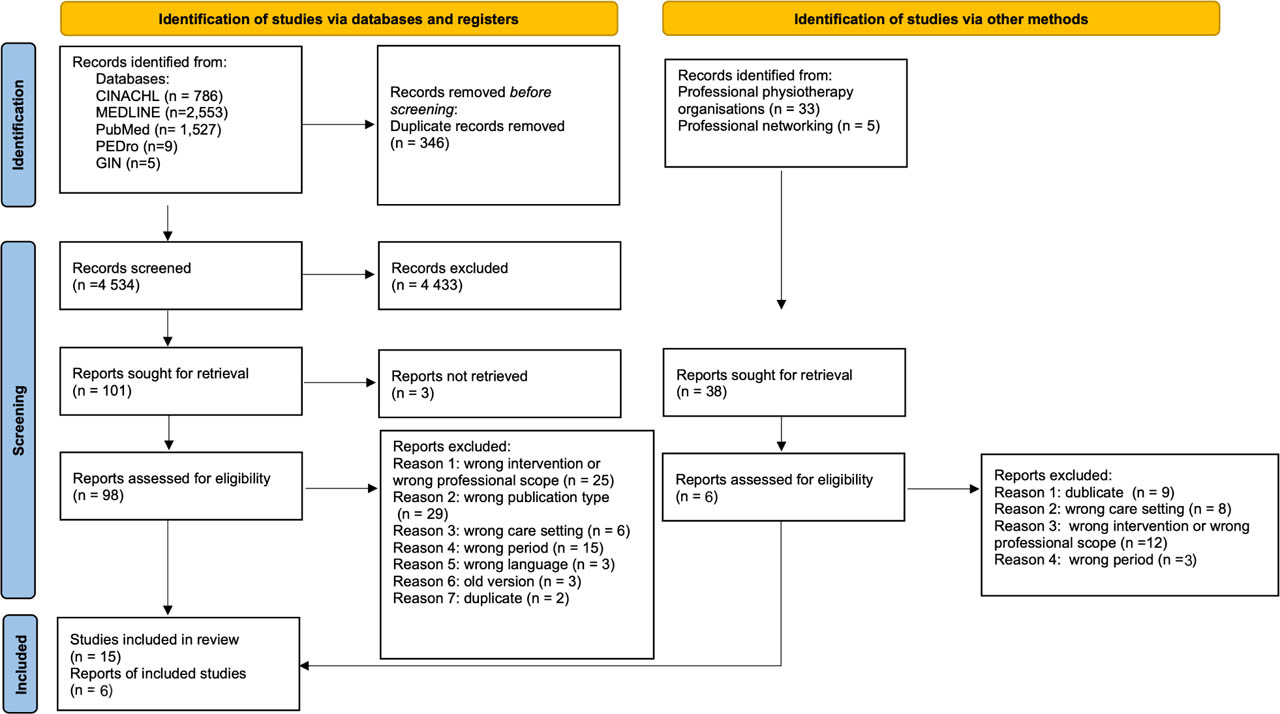
Figure 1.
PRISMA 2020 flow diagram of sources included in the scoping review. GIN - Guidelines International Network, PRISMA - Preferred Reporting Items for Systematic Reviews and Meta-Analyses
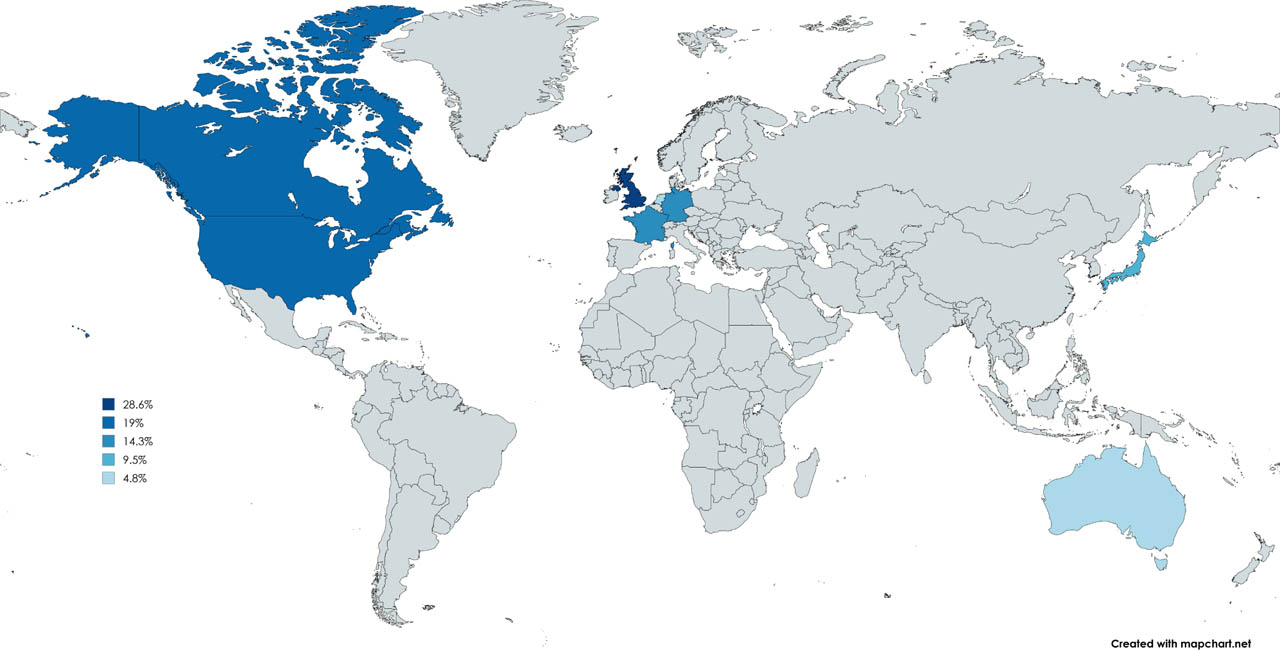
Figure 2.
Geographic distribution of guidance documents included in the scoping review. Note: Shades of blue indicate the number of documents included in the review by country, with darker shades representing a greater number of documents. The map includes France, the Netherlands, Germany, the United Kingdom, the United States, Canada, Australia, New Zealand and Japan. The international document is not shown because it was not attributable to a single country
Table 1.
Characteristics of the clinical guidance documents included in the scoping review
| No. | Author, year | Country | Organisation | Document type | ICU setting |
|---|---|---|---|---|---|
| 1 | Van der Lee, 202430 | Australia (international panel) | Chartered Society of Physiotherapy (CSP) | Clinical practice guideline | General |
| 2 | Schmidt, 201731 | USA | American Thoracic Society (ATS); American College of Chest Physicians (CHEST) | Executive summary of a clinical practice guideline | General |
| 3 | Mertes, 202232 | France | Société Française d'Anesthésie et de Réanimation (SFAR); Société Française de Chirurgie Thoracique et Cardio-Vasculaire (SFCTCV) | Clinical practice guideline | Cardiac surgery |
| 4 | Quintard, 201733 | France | Société Française d'Anesthésie et de Réanimation (SFAR); Société de Réanimation de Langue Française (SRLF) | Clinical practice guideline/Consensus recommendations | General |
| 5 | Helms, 202434 | France | SRLF; Société Française de Médecine d'Urgence (SFMU) | Clinical practice guideline/Consensus recommendations | General |
| 6 | Cartotto, 202335 | USA, Canada | American Burn Association (ABA) | Clinical practice guideline | Burn |
| 7 | Sommers, 201536 | Netherlands | — | Evidence-based, expert-driven practical statement and rehabilitation recommendations | General |
| 8 | Platz, 202337 | Germany | German Society for Neurorehabilitation (DGNR) and collaborating societies | Consensus-based guideline (S2k) with practice recommendations | General |
| 9 | Unoki, 202338 | Japan | Japanese Society of Intensive Care Medicine (JSICM) | Clinical practice guideline | General |
| 10 | Bein, 201539 | Germany | German Society of Anaesthesiology and Intensive Care Medicine (DGAI) | Clinical practice guideline | General |
| 11 | Lewis, 202540 | USA, Canada | Society of Critical Care Medicine (SCCM) | Clinical practice guideline | General |
| 12 | Tasaka, 202241 | Japan | Japanese Respiratory Society; JSICM; Japanese Society of Respiratory Care Medicine | Clinical practice guideline | General |
| 13 | Girard, 201742 | USA | American Thoracic Society (ATS); American College of Chest Physicians (CHEST) | Clinical practice guideline | General |
| 14 | Schönhofer, 202043 | Germany | German Respiratory Society | Clinical practice guideline | General |
| 15 | Ramsey, 202444 | International panel | Extracorporeal Life Support Organization (ELSO) | Clinical practice guideline | General; Cardiac surgery |
| 16 | NICE QS158, 201745 | United Kingdom | National Institute for Health and Care Excellence (NICE) | Clinical practice guideline | General |
| Local clinical documents | |||||
| 17 | 202546 | United Kingdom | Bwrdd lechyd Prifysgol Bae Abertawe Swansea Bay University Health Board | Standard operating procedure | General |
| 18 | 202547 | United Kingdom | Bwrdd lechyd Prifysgol Bae Abertawe Swansea Bay University Health Board | Guideline | General |
| 19 | 202248 | United Kingdom | University Hospitals Coventry & Warwickshire NHS Trust | Clinical guideline | General |
| 20 | 202549 | United Kingdom | University Hospitals Coventry & Warwickshire NHS Trust | Local guideline | General |
| 21 | 202450 | United Kingdom | University Hospitals Coventry & Warwickshire NHS Trust | Competency document | General |
[i] ABA - American Burn Association, ANZICS - Australian and New Zealand Intensive Care Society, ATS - American Thoracic Society, CHEST - American College of Chest Physicians, CSP - Chartered Society of Physiotherapy, ELSO - Extracorporeal Life Support Organization, ICU - intensive care unit, JSICM - Japanese Society of Intensive Care Medicine, NICE - National Institute for Health and Care Excellence, SCCM - Society of Critical Care Medicine, SFAR - Société Française d'Anesthésie et de Réanimation, SFCTCV - Société Française de Chirurgie Thoracique et Cardio-Vasculaire, SFMU - Société Française de Médecine d'Urgence, SRLF - Société de Réanimation de Langue Française.
Table 2.
Summary of clinical guidance documents containing physiotherapy and/or respiratory physiotherapy recommendations across different ICU settings
| General/medical ICUs | |||
|---|---|---|---|
| No. | Author, year | Physiotherapy scope | Summary |
| 1 | Sommers, 201536 | Physiotherapy | Provides recommendations for physiotherapy assessment and interventions. |
| 2 | Unoki, 202338 | Physiotherapy | Provides general recommendations for early rehabilitation and specific recommendations for physiotherapy interventions. |
| 3 | NICE (QS158), 201745 | Physiotherapy | Provides general recommendations only. |
| 4 | Van der Lee, 202430 | Respiratory physiotherapy | Provides recommendations for respiratory physiotherapy assessment and interventions. |
| Local clinical documents | |||
|---|---|---|---|
| No. | Author | Physiotherapy scope | Summary |
| 5 | Swansea Bay University Health Board, 202546 | Respiratory physiotherapy | Provides detailed protocols for respiratory physiotherapy interventions and airway suctioning procedures. |
| 6 | Swansea Bay University Health Board, 202547 | Respiratory physiotherapy | Provides detailed guidance on mechanical insuffiation–exsuffiation (MI:E) in adult ICU patients. |
| 7 | University Hospitals Coventry & Warwickshire NHS Trust, 202248 | Respiratory physiotherapy | Provides recommendations for the use of one-way valves in tracheostomised patients receiving critical care. |
| 8 | University Hospitals Coventry & Warwickshire NHS Trust, 202549 | Respiratory physiotherapy | Provides guidance on respiratory management and ventilator weaning for adult patients with spinal cord injury receiving critical care. |
| 9 | University Hospitals Coventry & Warwickshire NHS Trust, 202450 | Respiratory physiotherapy | Provides competency standards for healthcare professionals delivering acute non-invasive ventilation (NIV) in adult critical care. |
| Burn ICUs | |||
|---|---|---|---|
| No. | Author | Physiotherapy scope | Summary |
| 10 | Cartotto, 202335 | Physiotherapy | Provides conditional recommendations for early mobilisation based on low or very low certainty of evidence. |
| Cardiac surgery ICUs | |||
|---|---|---|---|
| No eligible documents identified. | |||
| No. | Author | Physiotherapy scope | Summary |
| 11 | Ramsey, 202444 | Physiotherapy and respiratory physiotherapy | Provides recommendations for physiotherapy assessment and specific physiotherapy and respiratory physiotherapy interventions for patients receiving ECMO. |
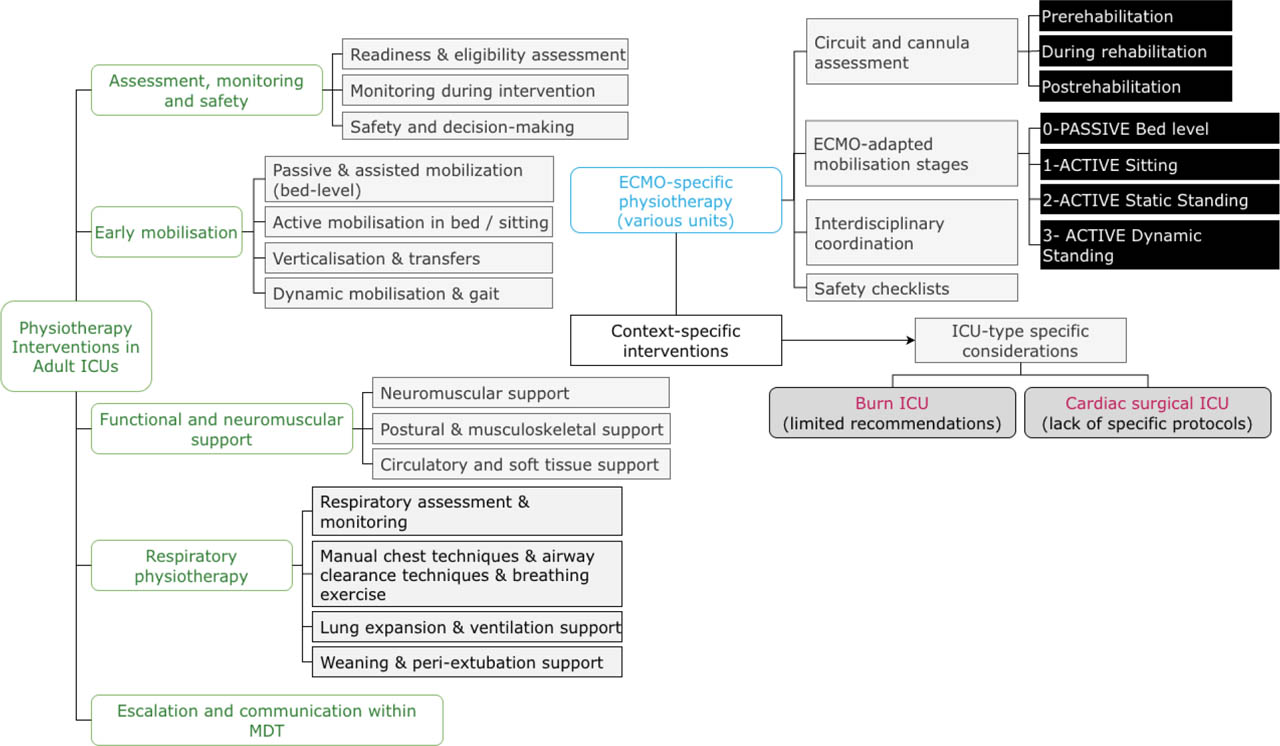
Figure 3.
Scope and level of physiotherapy recommendations across different ICU settings. ECMO - extracorporeal membrane oxygenation, ICUs - intensive care units, MDT - multidisciplinary team
Supplementary File 1.
Database Search Strategy and Search Results
| Database | Search strategy | Filters/Limiters | Records identified (n) |
|---|---|---|---|
| CINAHL | (“critical care” OR “intensive care” OR ICU OR ITU) AND (physiotherap* OR “physical therap*” OR physio OR rehabilitat* OR rehab OR exercis*) AND (guideline OR statement OR recommendation OR protocol OR procedure OR policy OR guidance) | Publication date: 1 January 2015–31 December 2025; English language | 786 |
| MEDLINE (via PubMed) | (“critical care” OR “intensive care” OR ICU OR ITU) AND (physiotherap* OR “physical therap*” OR physio OR rehabilitat* OR rehab OR exercis*) AND (guideline OR statement OR recommendation OR protocol OR procedure OR policy OR guidance) | Adults (≥19 years); Publication date: 1 January 2015–31 December 2025 | 2,553 |
| PEDro | Intensive care unit AND practice guideline | Publication year: 2015–2025 | 9 |
| PubMed | (“critical care” OR “intensive care” OR ICU OR ITU) AND (physiotherap* OR “physical therap*” OR physio OR rehabilitat* OR rehab OR exercis*) AND (guideline OR statement OR recommendation OR protocol OR procedure OR policy OR guidance) | Last 10 years; Full text; Practice Guideline; Guideline; English; Adults (≥19 years); Exclude preprints | 1,527 |
| Guidelines International Network (GIN) | Intensive care | English | 5 |
| Total | 4880 |
Supplementary File 2.
Search Strategy and Results for Professional Organisation Websites
| Source | Search strategy/Filters | Records identified (n) |
|---|---|---|
| National Institute for Health and Care Excellence (NICE) | Search term: Intensive care unit | 6 |
| European Society of Intensive Care Medicine (ESICM) | Guidelines & Consensus Statements; Publication period: 2014–2015; Last update: 29 April 2025 | 7 |
| European Respiratory Society (ERS) | Guidelines; Disease area: Respiratory Critical Care; Document type: All; Publication period: 2014–2015 | 3 |
| World Physiotherapy (WP) | Cardiorespiratory and Critical Care; Document types: Policy Statements, Guidelines, Endorsements; English language | 0 |
| Society of Critical Care Medicine (SCCM) | Clinical Practice Guidelines | 5 |
| World Federation of Societies of Intensive and Critical Care Medicine (WFSICCM) | Website search | 0 |
| Australian and New Zealand Intensive Care Society (ANZICS) | Education resources | 1 |
| Indian Society of Critical Care Medicine (ISCCM) | Website search | 2 |
| American Thoracic Society (ATS) | Clinical Practice Guidelines, Statements and Reports; Critical Care | 1 |
| Intensive Care Society (ICS) | Guidance | 8 |
| Local clinical documents | Local clinical guidelines, protocols and competency documents identified through professional networking and targeted website searches | 5 |
| Total | 38 |
Supplementary File 3.
Summary of Physiotherapy Assessment, Monitoring and Interventions Identified Across Included Clinical Guidance Documents
| Domain | Category | Recommendations identified |
|---|---|---|
| Physiotherapy assessment | Current neurological function | Richmond Agitation–Sedation Scale (RASS); sedative medication and dosage; Glasgow Coma Scale (GCS); Standardised Five Questions (S5Q) for assessing patients’ ability to cooperate. |
| Current musculoskeletal function | Goniometry for measuring range of joint motion (ROM); Medical Research Council Sum Score (MRC) for assessing localised and total muscle strength; hand-held dynamometry (HHD) for measuring localised muscle strength in muscles with MRC >3; Modified Ashworth Scale (MAS) for assessing muscle tone; Modified Nottingham Sensory Assessment (NSA) for evaluating sensory function. | |
| Current cardiovascular stability | Arterial blood pressure (BP); mean arterial pressure (MAP); heart rate (HR); basic ECG rhythm; rate and dosage of inotropic and vasoactive medications. | |
| Current respiratory function | Ventilation settings: ventilation mode, respiratory rate, tidal volume, spontaneous/mandatory/assisted breaths, PEEP, pressure support, peak pressure, airway pressure, plateau airway pressure and lung compliance. Gas exchange: arterial blood gases (ABG), FiO2 and SpO2. Work of breathing: minute ventilation, respiratory rate, respiratory pattern and ventilator synchrony. Signs of atelectasis: chest X-ray (CXR) interpretation, auscultation and chest expansion. Signs of secretion retention: CXR interpretation, auscultation, tactile fremitus, inspiratory capacity and cough quality and effectiveness. Premorbid status: respiratory disease, respiratory medication use, functional ability and smoking history. | |
| Functional ability | De Morton Mobility Index (DEMMI) for assessing functional ability, including transfers, standing balance and walking; Borg Rating of Perceived Exertion for monitoring exertion during exercise in conscious patients. | |
| Interprofessional considerations | Interprofessional communication among physiotherapists, nurses and physicians regarding patient assessment and rehabilitation planning. | |
| Monitoring | Vital parameters | Heart rate; blood pressure; arterial oxygen saturation. |
| Monitoring in ventilated patients | Tidal volume; inspiratory pressure; respiratory rate; respiratory minute volume; capnography in invasively ventilated patients. | |
| Respiratory status and deterioration before respiratory failure | Peak cough flow, particularly post-weaning/extubation; single-breath count; forced vital capacity when weaning is not progressing as expected; incentive spirometry to monitor volumes; blood gas trends; auscultation; patient feedback; clarity and volume of speech. | |
| Early mobilisation-adapted symptom monitoring | Pain; fear; agitation; delirium; daily assessment of spontaneous breathing. | |
| Physiotherapy interventions | Passive exercise | Stretching; passive cycling; neuromuscular electrical stimulation (NMES); continuous passive motion (CPM); in-bed cycle ergometer; splinting. |
| Active exercise | Activities of daily living (ADL) training, including balance, standing and walking. | |
| Respiratory physiotherapy interventions | Airway suctioning, including nasopharyngeal (NP), oropharyngeal (OP) and endotracheal tube/tracheostomy aseptic non-touch technique (ANTT) open-circuit suction; humidification; patient positioning, including side-lying/lateral position, multiple positions, head-down tilt, prone position, continuous lateral rotation therapy (CLRT), backrest elevation, Trendelenburg position and flat supine position when required for specific medical or nursing procedures and limited to a brief period; hyperinflation techniques; manual chest wall techniques, including percussion, chest wall vibrations and expiratory rib cage compressions; normal saline instillation when secretions are very tenacious and cannot be cleared using other respiratory physiotherapy techniques; deep breathing exercises; active cycle of breathing techniques (ACBT); forced expiratory technique (FET); mechanical insuffiation–exsuffiation (MI:E/cough assist); manually assisted cough; breath stacking; intermittent positive pressure breathing (IPPB); non-invasive ventilation (NIV). | |
| ECMO-specific recommendations | Patient assessment before each rehabilitation session | ECMO circuit: review of ECMO cannulation strategy, blood flow rate, blender fraction of delivered oxygen (FdO2), sweep gas flow (SGF) rate and circuit function. Medical history: relevant history and preadmission frailty, including disability, exercise tolerance and use of assistive devices. Imaging: assessment of cannula and device position, including the cannula tip for displacement, kinking or perforation. Haemodynamics and vital signs: blood pressure, heart rate, respiratory rate, arterial and venous oxygen saturation, central venous pressure, pulmonary artery pressure, arterial blood gas parameters and anticoagulant levels. Medications: review of medications for adjustment, patient engagement, safety and pain management44. |
| Pre-mobilisation assessment | Review of the mobilisation checklist, including cannula insertion-site integrity, blood supply to the limbs, neurocognitive function, haemodynamic stability and circuit performance; assessment of cannula stability in patients with groin cannulation; securing the cannula during upright positioning or mobilisation in patients with neck cannulation; cognitive screening using RASS, GCS, alertness and orientation questions, CAM-ICU and MMSE; assessment of circuit blood flow velocity, SGF flow, circuit pressure, membrane lung function and integrity of tubes, sutures and fastenings; consideration of additional ECMO or mechanical ventilation support where clinically indicated; explanation of the rehabilitation plan and verbal informed consent44. | |
| During rehabilitation or mobilisation | Regular assessment of cannula security during rehabilitation and after changes in position; monitoring of distal perfusion catheters (DPCs), including blood flow and vascular status; regular assessment of patient tolerance and physiological response; adjustment of ECMO blood flow and artificial haemodiluent administration where required; progression towards the highest level of functional mobility safely tolerated, with suspension and reassessment if tolerance deteriorates44. | |
| Post-rehabilitation or mobilisation assessment | Completion of the pre-rehabilitation assessment checklist; reassessment of patient condition and tolerance; consideration of prolonged periods out of bed when the patient can comfortably sit at the edge of the bed and has progressed to passive or active mobility outside the bed44. | |
| ECMO rehabilitation progression | Stage 0 – Passive bed level: bed-level AAROM/PROM, rolling, limb positioning, extremity oedema control, long sitting, dependent transfer to a seated surface, passive standing on a tilt bed/table. Stage 1 – Active sitting: sitting at the edge of the bed/dangling, upper- and lower-extremity exercises, sitting balance, breathing mechanics, postural re-education, dependent transfer to a seated surface. Stage 2 – Active static standing: functional sit-to-stand transfer, static standing balance, squat/stand-pivot transfer to bedside chair, breathing mechanics and postural re-education. Stage 3 – Active dynamic standing: transfer training, pre-gait activities, dynamic standing balance, standing upper-and lower-extremity exercises at the edge of the bed or using a tilt/standing table, bed-to-chair transfer, breathing mechanics, postural re-education and standing assistive devices. Stage 4 – Active ambulation: gait training, dynamic standing balance, standing upper- and lower-extremity exercises, and progression from tilt/standing table to gait training44. |