
INTRODUCTION
An intensive care unit (ICU) is a specialised healthcare environment that delivers comprehensive medical and nursing care, continuous physiological monitoring and advanced organ support for critically ill patients experiencing life-threatening organ dysfunction1.
Critical care imposes a substantial financial burden on both patients and healthcare systems worldwide, with invasive mechanical ventilation accounting for a significant proportion of these costs2. ICU admission also has a considerable impact on patients' ability to return to work and increases the need for ongoing medical, social and financial support3,4. During the first 3 months following ICU discharge, approximately two-thirds of patients are unable to return to work, and only 68% return to employment within 5 years5. The consequences of critical illness and ICU admission may persist for years after hospital discharge. Post-intensive care syndrome affects more than half of patients discharged from ICUs6,7.
In many high-income countries, physiotherapy is routinely integrated into intensive care practice and constitutes an essential component of multidisciplinary care for critically ill patients8,9. Systematic reviews and clinical studies have demonstrated that early mobilisation and rehabilitation in the ICU are safe, feasible and associated with a low incidence of adverse events8,10. Early mobilisation and rehabilitation can reduce the duration of mechanical ventilation and are associated with a lower incidence of complications, including ventilator-associated pneumonia, among ICU patients11. Early mobilisation may partially mitigate ICU-acquired weakness (ICU-AW) and help prevent musculoskeletal and neurological complications7,12,13. In addition, physiotherapy may improve cognitive function and contribute to the prevention of delirium and the reduction of its severity14. Collectively, these interventions may contribute to shorter ICU and hospital stays, lower healthcare costs and improved short- and long-term quality of life among critically ill patients7,15.
Despite these potential benefits, the implementation of physiotherapy and early mobilisation in ICUs remains challenging. Barriers include limited resources, inadequate staffing, insufficient interdisciplinary collaboration, the complexity and clinical instability of critically ill patients, and limited awareness among healthcare professionals of the benefits of early mobilisation7,16. These challenges highlight the importance of clear, evidence-informed recommendations that define the scope, timing, safety considerations, assessment, monitoring and progression of physiotherapy interventions in critical care.
In Ukraine, the rapid development of rehabilitation services since 2022 has been driven by the war with Russia, which has resulted in a substantial increase in the number of patients with severe injuries and complex trauma among both civilians and military personnel17. However, the provision of physiotherapy services in ICUs remains challenging owing to limitations in the regulatory framework and gaps in professional education and training18,19. Although recent legislative reforms have strengthened the development of rehabilitation services in Ukraine, critical care physiotherapy is not currently recognised as a distinct professional specialisation, and no dedicated educational pathway for physiotherapists working in ICUs has been established. Consequently, opportunities for specialised training and competency development in the management of critically ill patients remain limited.
Currently, physiotherapy practice in ICUs varies considerably across countries and ICU settings, reflecting substantial heterogeneity in clinical practice guidelines, recommendations and models of care20. Under these circumstances, a scoping review represents the most appropriate methodological approach, as it enables the systematic mapping of the available evidence, the synthesis of clinical practice guidelines, consensus statements, practical statements, clinical recommendations and local clinical documents, the comparison of practices across different ICU settings and the identification of gaps in the existing evidence base. Unlike systematic reviews, which address narrowly focused clinical questions regarding the effectiveness of specific interventions, scoping reviews provide a comprehensive overview of current clinical practice and identify areas requiring further research.
To date, only a limited number of scoping reviews have examined physiotherapy practice in ICUs, and these have primarily synthesised evidence from primary clinical studies evaluating physiotherapy intervention, with a particular emphasis on early mobilisation21,22. One review included literature published up to 201621. These reviews have made an important contribution to the understanding and systematising of physiotherapy practice in ICUs.
However, in contrast, the present review analyses clinical practice guidelines, consensus-based guidelines, practical statements and local clinical documents published between 2015 and 2025, encompassing different ICU settings, including general, burn and cardiac surgery ICUs. By synthesising contemporary clinical practice guidelines, the present review provides a comprehensive overview of current physiotherapy practice in ICUs and identifies areas where further guideline development and research are needed.
The objectives of this scoping review were to (1) identify, map and synthesise available guidance documents on physiotherapy practice in adult ICUs; (2) compare recommendations across different ICU settings; and (3) identify gaps in the available recommendations. The findings may provide a foundation for improving physiotherapy education, supporting the professional development of physiotherapists, informing the development of professional and regulatory frameworks in Ukraine, and supporting the adaptation and development of guidance documents for physiotherapy practice in ICUs that are appropriate to the Ukrainian healthcare context. In turn, these efforts may contribute to the delivery of safe, evidence-based and high-quality physiotherapy practice in ICUs.
METHODS
The aim of this scoping review was to systematically identify and synthesise international, national and local clinical guidance documents describing physiotherapy practice in adult ICUs and to identify gaps in the available recommendations. For the purposes of this review, the term ‘clinical guidance documents’ was used as an umbrella term encompassing clinical practice guidelines, executive summaries of clinical practice guidelines, consensus-based guidelines, consensus recommendations, practical statements, standard operating procedures, guidelines, clinical guidelines, local guidelines and competency documents. The findings may serve as a foundation for the development of evidence-based physiotherapy practice in Ukraine and inform the development of national clinical practice guidelines, educational programmes and professional standards.
The search strategy was developed in collaboration with a health sciences librarian experienced in systematic and scoping reviews. During this process, relevant bibliographic databases were identified, and the search strategy underwent pilot testing to ensure its comprehensiveness and appropriateness before the formal search was conducted.
The review question was formulated using the Population–Concept–Context framework recommended by the Joanna Briggs Institute (JBI) for scoping reviews23. The population comprised adult patients receiving care in ICUs. The concept focused on physiotherapy practice, including patient assessment and physiotherapy interventions. The context encompassed adult ICU settings. The review included clinical guidance documents relevant to physiotherapy practice in adult ICUs.
This scoping review focuses on secondary data and was conducted in accordance with the preferred reporting items for systematic reviews and meta-analyses extension for scoping reviews reporting guideline24. The review protocol was preregistered in the Open Science Framework (OSF) on 4 March 2025 (registration details blinded for peer review).
The term physiotherapy, commonly used in the United Kingdom, Australia and many European countries, is broadly equivalent to the term physical therapy used in Ukraine and several other countries. Therefore, both terms were used interchangeably in the literature search to ensure comprehensive retrieval of relevant documents, although the scope of professional practice may differ between healthcare systems.
Search strategy
The search strategy, including all relevant keywords and medical subject headings terms, was developed in collaboration with a health sciences librarian and adapted for each database and data source. Searches were conducted in electronic databases and digital libraries, including PubMed (via MEDLINE), CINAHL, PEDro and the Guidelines International Network. In addition, the websites of relevant professional organisations involved in intensive care and rehabilitation were searched, including the National Institute for Health and Care Excellence, the European Society of Intensive Care Medicine, the European Respiratory Society, World Physiotherapy, the Society of Critical Care Medicine (SCCM), the World Federation of Societies of Intensive and Critical Care Medicine, the Australian and New Zealand Intensive Care Society, the Indian Society of Critical Care Medicine, the American Thoracic Society and the Intensive Care Society. Professional networking was also used to identify additional relevant national and local clinical guidance documents, including protocols and clinical guidelines. The reference lists of all included sources were screened to identify additional relevant documents. The grey literature search was conducted independently by two reviewers through a targeted search of predefined websites of international professional organizations in intensive care, respiratory medicine and physiotherapy. These organizations were selected according to the scope of the review and their role in the development of clinical practice guidelines. To identify additional national and local clinical guidance documents, a snowballing approach was also applied23,25. These complementary search approaches were used to minimise the risk of missing relevant clinical guidance documents. The search was considered complete after all predefined sources had been reviewed and the snowballing process yielded no further relevant clinical guidance documents meeting the eligibility criteria.
Only English-language sources published between January 2015 and January 2025 were included. Sources related to COVID-19 were restricted to those published between 2022 and 2025 because systematic reviews published during the early stages of the pandemic were generally of limited methodological quality, with most being rated as having critically low confidence according to AMSTAR 226. Although the registered OSF protocol specified a search period of 2021–2025 for COVID-19-related literature, the final selection was restricted to publications from 2022 onwards. This modification was made because systematic reviews published during 2020–2021 were considered to provide limited methodological value. Consequently, the search was restricted to studies published from 2022 onwards to ensure the inclusion of higher-quality evidence.
Although the registered OSF protocol specified the inclusion of the Embase database, it was not searched because institutional access was unavailable at the universities affiliated with the authors. Despite findings from an internal university study indicating that official clinical practice guidelines, protocols and position statements relating to physiotherapy are predominantly indexed in PubMed/MEDLINE27, the exclusion of Embase represents a limitation of this review. It may have reduced the completeness of the evidence identified.
Study screening and selection
Records identified through database searches were imported into Rayyan, and duplicate records were removed. Before the screening process, the reviewers were familiarised with the study selection procedure and the use of the Rayyan platform, which was employed to facilitate independent screening, record reviewer conflicts, document reasons for exclusion and enhance the transparency and reproducibility of the selection process. Titles and abstracts were independently screened by two reviewers (non-blinded), followed by full-text assessment of potentially eligible articles against the predefined inclusion criteria. Records identified through grey literature searches, including documents retrieved from professional organisations and local sources, were assessed independently by the same two reviewers outside the Rayyan platform using the same eligibility criteria. Any disagreements were resolved through discussion or, where necessary, consultation with a third reviewer.
Eligibility criteria
Clinical guidance documents related to physiotherapy and/or rehabilitation for adult patients (>18 years) admitted to general (medical), burn and cardiac surgery ICUs were eligible for inclusion. Eligible document types included clinical practice guidelines, executive summaries of clinical practice guidelines, consensus-based guidelines, consensus recommendations, practical statements, standard operating procedures, guidelines, clinical guidelines, local guidelines and competency documents.
Exclusion criteria
Publications in languages other than English; publications published before January 2015; medical guidelines that did not address physiotherapy; documents relating exclusively to occupational therapy, speech and language therapy, or nutrition; and guidelines focusing on paediatric populations, pregnant women or transplant recipients were excluded.
Data extraction
Data were extracted using a structured data extraction form developed in accordance with the JBI methodology for scoping reviews23. The form was designed to capture information on clinical guidance documents and their specific document types, including clinical practice guidelines, consensus statements, practical statements, local clinical documents and other relevant standards relating to physiotherapy practice in ICUs.
The following data were extracted from each included clinical guidance document: year of publication and update status (where multiple versions of the same document were available, only the most recent version was included in the analysis); country and organisation responsible for issuing the document; document type as reported by the issuing organisation; methodological framework reported in the document for guideline development (e.g. GRADE, expert consensus, or other approaches); and the clinical context, including the type of ICU.
To support the mapping of physiotherapy practice in adult ICUs, all included clinical guidance documents were additionally examined for the presence and extent of content relating to physiotherapy and/or respiratory physiotherapy. The extracted variables included whether the recommendations were specifically intended for physiotherapists or incorporated within broader multidisciplinary clinical guidance documents; the domains of physiotherapy practice addressed (e.g. early mobilisation, respiratory physiotherapy and functional rehabilitation); and the level of detail provided regarding physiotherapy assessment, monitoring and interventions. The template for intervention description and replication (TIDieR) checklist was not used to evaluate the recommendations because clinical guidance documents often do not provide the detailed descriptions of interventions required for TIDieR reporting28. Furthermore, the purpose of this scoping review was to map and synthesise the available evidence rather than to assess the quality or effectiveness of interventions.
Assessment of methodological characteristics
The methodological characteristics of the included clinical guidance documents were examined using a descriptive approach. Specifically, it was assessed whether the documents reported using systematic literature searches, established evidence appraisal frameworks (e.g., GRADE), structured consensus development processes and explicit methods for formulating recommendations.
This descriptive assessment characterised the methodological information reported in the included documents and did not constitute an independent assessment of methodological quality by the review team. It provided an overview of the methodological transparency and evidence base underpinning current recommendations for physiotherapy practice in adult ICUs. Local clinical documents were analysed separately.
All assessments of evidence, ratings of certainty, strength of recommendations and levels of consensus were based on the information provided in the original clinical guidance documents, with references provided to the respective sources. The review team did not independently verify or re-evaluate these ratings, compare the validity of different rating systems or conduct a formal appraisal using AGREE II or AGREE-REX. Accordingly, these descriptors reflect the classifications reported by the original source documents and do not represent an independent assessment by the authors of this review.
Data analysis and presentation
All extracted data were summarised descriptively and presented in summary tables and narrative summaries to illustrate patterns, common characteristics and gaps in the existing recommendations for physiotherapy practice across different ICU settings. Descriptive counts and proportions were used to summarise the distribution of clinical guidance documents and recommendation domains.
RESULTS
The database search, conducted between 5 March 2025 and 12 March 2025, combined three main concepts—population/condition, intervention/specialist and document type/evidence—using the Boolean operator OR within each concept to incorporate synonyms and AND between concepts to retrieve records addressing all three concepts. A total of 4880 records were identified across all databases. The complete search strategies, including database-specific search terms and filters, are provided in Supplementary File 1. Following title and abstract screening, 101 records were selected for full-text assessment; of these, 15 met the eligibility criteria and were included in the review.
Searches of the websites of relevant professional organisations were conducted between 6 March 2025 and 6 June 2025. In addition, local clinical protocols from Swansea Bay University Health Board (UK) and Coventry and Warwickshire University Hospitals NHS Trust (UK) were identified and included. A total of 38 records were retrieved from these sources (see Supplementary File 2). Following screening, six documents met the eligibility criteria and were included in the review.
Overall, 21 clinical guidance documents (100%) were included in the analysis. Of these, 15 (71.4%) were identified through database searching and 6 (28.6%) through grey literature searching, including 1 document (4.8%) identified through professional organisation websites and targeted internet searches and 5 local clinical documents (23.8%) obtained from healthcare institutions in the United Kingdom. The overall process of study identification, screening, eligibility assessment and inclusion is presented in the Preferred Reporting Items for Systematic Reviews and Meta-Analyses 2020 flow diagram29 (Figure 1).
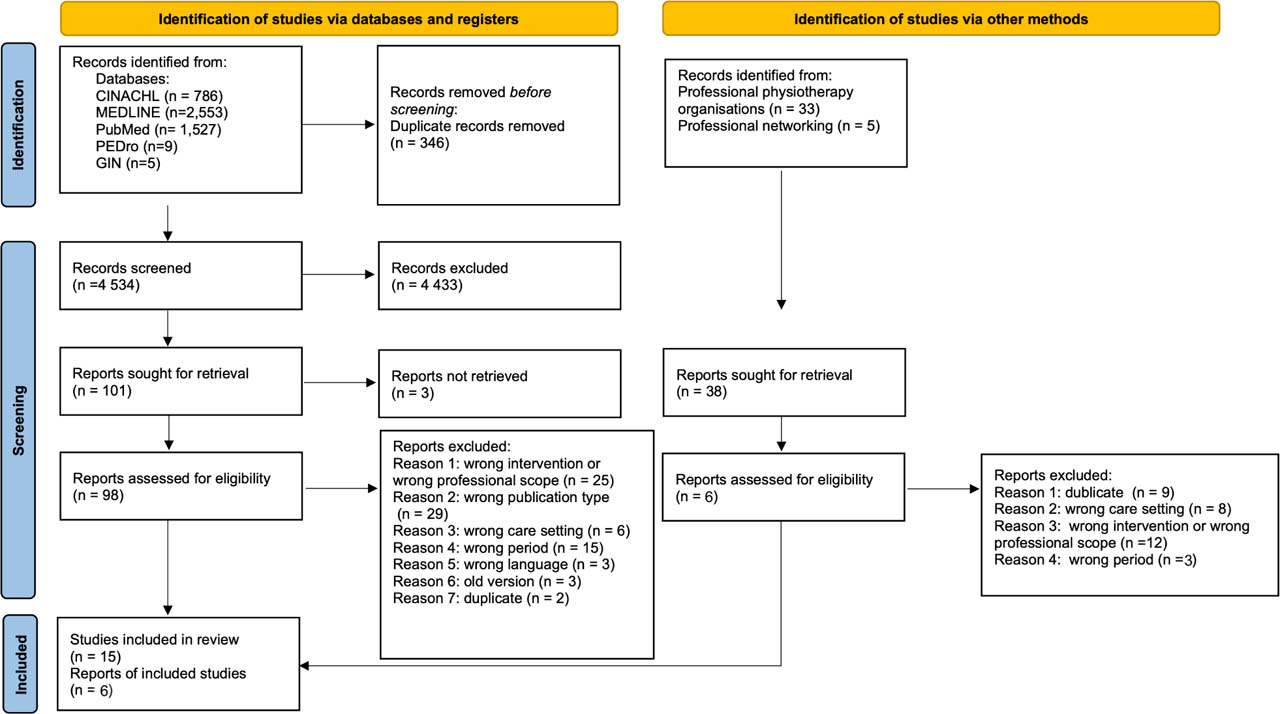
Figure 1.
PRISMA 2020 flow diagram of sources included in the scoping review. GIN - Guidelines International Network, PRISMA - Preferred Reporting Items for Systematic Reviews and Meta-Analyses
An analysis of the included clinical guidance documents demonstrated that the vast majority originated from high-income countries with well-established healthcare and rehabilitation systems, primarily in Western Europe, North America and English-speaking countries. By contrast, contributions from other regions were limited (Figure 2). A similar geographical distribution has been reported in previous studies, indicating that both the evidence base and the implementation of physiotherapy in intensive care are concentrated predominantly in high-income countries with well-developed healthcare and rehabilitation systems20.
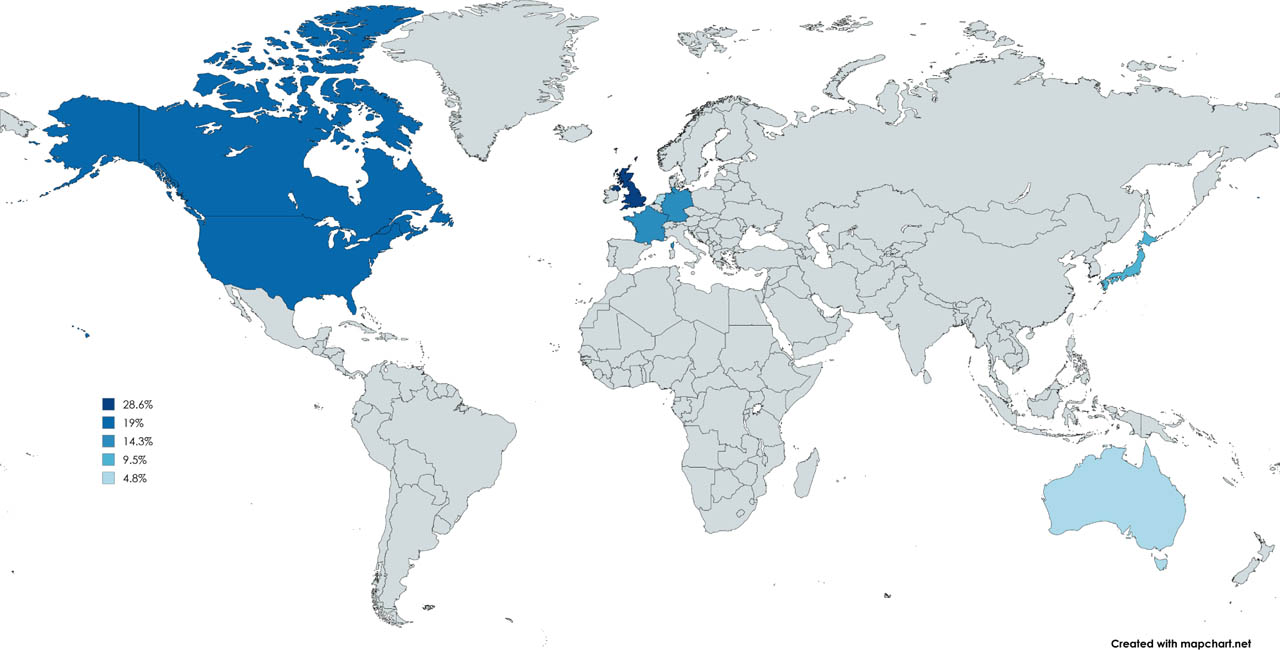
Figure 2.
Geographic distribution of guidance documents included in the scoping review. Note: Shades of blue indicate the number of documents included in the review by country, with darker shades representing a greater number of documents. The map includes France, the Netherlands, Germany, the United Kingdom, the United States, Canada, Australia, New Zealand and Japan. The international document is not shown because it was not attributable to a single country
A total of 21 clinical guidance documents (100%) were included in the review, comprising 1 international document (4.8%), 15 national documents (71.4%) and 5 local clinical documents (23.8%). Their characteristics and document types are summarised in Table 1.
Table 1.
Characteristics of the clinical guidance documents included in the scoping review
| No. | Author, year | Country | Organisation | Document type | ICU setting |
|---|---|---|---|---|---|
| 1 | Van der Lee, 202430 | Australia (international panel) | Chartered Society of Physiotherapy (CSP) | Clinical practice guideline | General |
| 2 | Schmidt, 201731 | USA | American Thoracic Society (ATS); American College of Chest Physicians (CHEST) | Executive summary of a clinical practice guideline | General |
| 3 | Mertes, 202232 | France | Société Française d'Anesthésie et de Réanimation (SFAR); Société Française de Chirurgie Thoracique et Cardio-Vasculaire (SFCTCV) | Clinical practice guideline | Cardiac surgery |
| 4 | Quintard, 201733 | France | Société Française d'Anesthésie et de Réanimation (SFAR); Société de Réanimation de Langue Française (SRLF) | Clinical practice guideline/Consensus recommendations | General |
| 5 | Helms, 202434 | France | SRLF; Société Française de Médecine d'Urgence (SFMU) | Clinical practice guideline/Consensus recommendations | General |
| 6 | Cartotto, 202335 | USA, Canada | American Burn Association (ABA) | Clinical practice guideline | Burn |
| 7 | Sommers, 201536 | Netherlands | — | Evidence-based, expert-driven practical statement and rehabilitation recommendations | General |
| 8 | Platz, 202337 | Germany | German Society for Neurorehabilitation (DGNR) and collaborating societies | Consensus-based guideline (S2k) with practice recommendations | General |
| 9 | Unoki, 202338 | Japan | Japanese Society of Intensive Care Medicine (JSICM) | Clinical practice guideline | General |
| 10 | Bein, 201539 | Germany | German Society of Anaesthesiology and Intensive Care Medicine (DGAI) | Clinical practice guideline | General |
| 11 | Lewis, 202540 | USA, Canada | Society of Critical Care Medicine (SCCM) | Clinical practice guideline | General |
| 12 | Tasaka, 202241 | Japan | Japanese Respiratory Society; JSICM; Japanese Society of Respiratory Care Medicine | Clinical practice guideline | General |
| 13 | Girard, 201742 | USA | American Thoracic Society (ATS); American College of Chest Physicians (CHEST) | Clinical practice guideline | General |
| 14 | Schönhofer, 202043 | Germany | German Respiratory Society | Clinical practice guideline | General |
| 15 | Ramsey, 202444 | International panel | Extracorporeal Life Support Organization (ELSO) | Clinical practice guideline | General; Cardiac surgery |
| 16 | NICE QS158, 201745 | United Kingdom | National Institute for Health and Care Excellence (NICE) | Clinical practice guideline | General |
| Local clinical documents | |||||
| 17 | 202546 | United Kingdom | Bwrdd lechyd Prifysgol Bae Abertawe Swansea Bay University Health Board | Standard operating procedure | General |
| 18 | 202547 | United Kingdom | Bwrdd lechyd Prifysgol Bae Abertawe Swansea Bay University Health Board | Guideline | General |
| 19 | 202248 | United Kingdom | University Hospitals Coventry & Warwickshire NHS Trust | Clinical guideline | General |
| 20 | 202549 | United Kingdom | University Hospitals Coventry & Warwickshire NHS Trust | Local guideline | General |
| 21 | 202450 | United Kingdom | University Hospitals Coventry & Warwickshire NHS Trust | Competency document | General |
[i] ABA - American Burn Association, ANZICS - Australian and New Zealand Intensive Care Society, ATS - American Thoracic Society, CHEST - American College of Chest Physicians, CSP - Chartered Society of Physiotherapy, ELSO - Extracorporeal Life Support Organization, ICU - intensive care unit, JSICM - Japanese Society of Intensive Care Medicine, NICE - National Institute for Health and Care Excellence, SCCM - Society of Critical Care Medicine, SFAR - Société Française d'Anesthésie et de Réanimation, SFCTCV - Société Française de Chirurgie Thoracique et Cardio-Vasculaire, SFMU - Société Française de Médecine d'Urgence, SRLF - Société de Réanimation de Langue Française.
Quantitative characteristics of the included documents
Overall, a total of 21 clinical guidance documents (100%) were included in the review. The documents comprised 11 clinical practice guidelines (52.4%), 1 executive summary of a clinical practice guideline (4.8%), 2 documents combining clinical practice guidelines and consensus recommendations (9.5%), 1 evidence-based, expert-driven practical statement (4.8%), 1 consensus-based guideline (S2k) with practice recommendations (4.8%) and 5 local clinical documents (23.8%). The five local clinical documents comprised one standard operating procedure (4.8%), one guideline (4.8%), one clinical guideline (4.8%), one local guideline (4.8%) and one competency document (4.8%).
The included clinical guidance documents originated from international and national professional organisations across Europe, North America, Japan, Australia and New Zealand, as well as local healthcare institutions in the United Kingdom. Most documents addressed general adult ICU populations. One document specifically addressed burn ICUs (4.5%). No physiotherapy-specific guidance document for cardiac surgery ICUs was identified. One multidisciplinary ICU guidance document (4.5%) provided general recommendation on physiotherapy following cardiac surgery. One extracorporeal membrane oxygenation (ECMO) guidance document (4.5%) may be applicable across ICU settings where ECMO is provided, including general, burn and cardiac surgery ICUs.
Among the 22 clinical guidance documents (100%), 7 reported development primarily through expert consensus (32%), 5 used the GRADE approach combined with expert consensus (23%) and 5 used the GRADE methodology (23%). Only 11 (50%) of the 22 (100%) included clinical guidance documents provided specific recommendations relating to physiotherapy and/or respiratory physiotherapy in ICUs. These methodological approaches and evidence classifications reflect information reported in the original documents and were not independently assessed by the review authors.
Types of ICU settings
General/medical ICUs
Nine clinical guidance documents (42.9%) addressed physiotherapy practice in general/medical ICUs. Of these, two documents (9.5%)36,38 provided both general and specific recommendations for physiotherapy assessment and interventions, whereas one document (4.8%) contained only general recommendations45. One document (4.8%) focused exclusively on respiratory physiotherapy assessment and interventions30. In addition, five local clinical documents (23.8%) from two healthcare institutions in the United Kingdom described detailed protocols and guidance for specialised respiratory physiotherapy interventions in ICU patients 46,47,48,49,50.
Burn ICUs
Only one clinical guidance document (4.8%) addressed physiotherapy practice in burn ICUs. It recommended early mobilisation to prevent ICU-acquired weakness (ICU-AW) and reduce the incidence of delirium in critically ill patients; both recommendations were conditional35.
Cardiac surgery ICUs
No eligible clinical guidance document providing specific physiotherapy or respiratory physiotherapy recommendations for cardiac surgery ICUs was identified.
ICUs providing ECMO
One clinical guidance document (4.8%) provided comprehensive recommendations for physiotherapy and respiratory physiotherapy in patients receiving ECMO. Although not specific to a single ICU setting, these recommendations are applicable to all ICUs providing ECMO support44.
A structured summary of the clinical guidance documents containing physiotherapy and/or respiratory physiotherapy recommendations across different ICU settings is presented in Table 2.
Table 2.
Summary of clinical guidance documents containing physiotherapy and/or respiratory physiotherapy recommendations across different ICU settings
| General/medical ICUs | |||
|---|---|---|---|
| No. | Author, year | Physiotherapy scope | Summary |
| 1 | Sommers, 201536 | Physiotherapy | Provides recommendations for physiotherapy assessment and interventions. |
| 2 | Unoki, 202338 | Physiotherapy | Provides general recommendations for early rehabilitation and specific recommendations for physiotherapy interventions. |
| 3 | NICE (QS158), 201745 | Physiotherapy | Provides general recommendations only. |
| 4 | Van der Lee, 202430 | Respiratory physiotherapy | Provides recommendations for respiratory physiotherapy assessment and interventions. |
| Local clinical documents | |||
|---|---|---|---|
| No. | Author | Physiotherapy scope | Summary |
| 5 | Swansea Bay University Health Board, 202546 | Respiratory physiotherapy | Provides detailed protocols for respiratory physiotherapy interventions and airway suctioning procedures. |
| 6 | Swansea Bay University Health Board, 202547 | Respiratory physiotherapy | Provides detailed guidance on mechanical insuffiation–exsuffiation (MI:E) in adult ICU patients. |
| 7 | University Hospitals Coventry & Warwickshire NHS Trust, 202248 | Respiratory physiotherapy | Provides recommendations for the use of one-way valves in tracheostomised patients receiving critical care. |
| 8 | University Hospitals Coventry & Warwickshire NHS Trust, 202549 | Respiratory physiotherapy | Provides guidance on respiratory management and ventilator weaning for adult patients with spinal cord injury receiving critical care. |
| 9 | University Hospitals Coventry & Warwickshire NHS Trust, 202450 | Respiratory physiotherapy | Provides competency standards for healthcare professionals delivering acute non-invasive ventilation (NIV) in adult critical care. |
| Burn ICUs | |||
|---|---|---|---|
| No. | Author | Physiotherapy scope | Summary |
| 10 | Cartotto, 202335 | Physiotherapy | Provides conditional recommendations for early mobilisation based on low or very low certainty of evidence. |
| Cardiac surgery ICUs | |||
|---|---|---|---|
| No eligible documents identified. | |||
| No. | Author | Physiotherapy scope | Summary |
| 11 | Ramsey, 202444 | Physiotherapy and respiratory physiotherapy | Provides recommendations for physiotherapy assessment and specific physiotherapy and respiratory physiotherapy interventions for patients receiving ECMO. |
General recommendation for physiotherapy in ICUs
Of the 21 clinical guidance documents (100%), 11 contained recommendations specifically addressing physiotherapy and/or respiratory physiotherapy (52.4%), whereas the remaining 10 incorporated physiotherapy within broader multidisciplinary recommendations rather than providing discipline-specific guidance (47.6%). Based on the analysis of all 21 included documents, both general and discipline-specific recommendations for physiotherapy practice in ICUs were identified.
General physiotherapy recommendations across the included clinical guidance documents
Early mobilisation
Several recommendations relating to the early mobilisation of critically ill patients were identified. One clinical practice guideline recommended initiating physiotherapy within 72 hours of ICU admission, with treatment delivered twice daily for at least 20 minutes throughout the patient's ICU stay (evidence level 3, recommendation grade B)39. Another clinical practice guideline suggested delivering rehabilitation two or more times daily for critically ill patients (GRADE 2D; very low certainty of evidence)38.
Early rehabilitation within the first 72 hours of ICU admission was also recommended for adult patients with acute respiratory distress syndrome, although this recommendation was based on low-certainty evidence41.
A conditional positive recommendation was identified for the early mobilisation of patients following cardiac surgery to reduce postoperative complications and the length of stay in both the ICU and the hospital, with a high level of expert agreement (Grade 2+, strong agreement)32.
Respiratory physiotherapy
One recommendation supported performing a respiratory physiotherapy assessment within 24 hours of intubation to establish baseline disease severity and identify rehabilitation needs (strong level of evidence: 5b (1 − 5); Grade certainty of evidence: very low)30.
Two recommendations supported early rehabilitation protocols for patients who have undergone mechanical ventilation for >24 hours (conditional recommendation, low certainty in the evidence)36. At the same time, it is noted that the available evidence is insufficient to recommend any specific rehabilitation protocol over others42.
One conditional recommendation supported physiotherapy before and after endotracheal extubation following mechanical ventilation lasting more than 48 hours to reduce weaning duration and the risk of extubation failure (Grade 2+)33.
Another conditional recommendation supported the involvement of a physiotherapist during the peri-extubation period in order to limit immediate complications, particularly bronchial obstruction, in patients at high risk of extubation failure (Grade 2+)33.
One recommendation emphasised that routine airway suctioning performed by healthcare professionals should not be considered a substitute for respiratory physiotherapy. Changes in a patient's respiratory status may necessitate more intensive respiratory physiotherapy; therefore, physiotherapists should perform regular assessments (at least once daily) and communicate their findings and recommendations to nursing staff (strong level of evidence 5b (1), grade certainty of evidence: very low)30.
One recommendation also suggested providing rehabilitation interventions targeting swallowing function in critically ill patients (GRADE 2C; low certainty of evidence)38.
Detailed recommendations on intervention dosage and progression were limited. The analysis demonstrated that detailed physiotherapy interventions were systematically described only for general ICU and ECMO settings, where structured mobility protocols ranging from Stage 0 (passive mobilisation) to Stage 4 (ambulation) were presented44.
Compared with the guidance documents, local clinical documents provided more detailed, procedure-specific guidance, particularly for respiratory physiotherapy interventions, including mechanical insuffiation–exsuffiation, non-invasive ventilation, one-way speaking valves, airway suctioning and ventilator weaning.
By contrast, recommendations for cardiac surgery and burn ICUs were limited to general statements without detailed descriptions of physiotherapy interventions. A general overview of the scope of physiotherapy practice across different ICU settings is presented in Figure 3, while a complete list and description of the identified interventions are provided in Supplementary File 3.
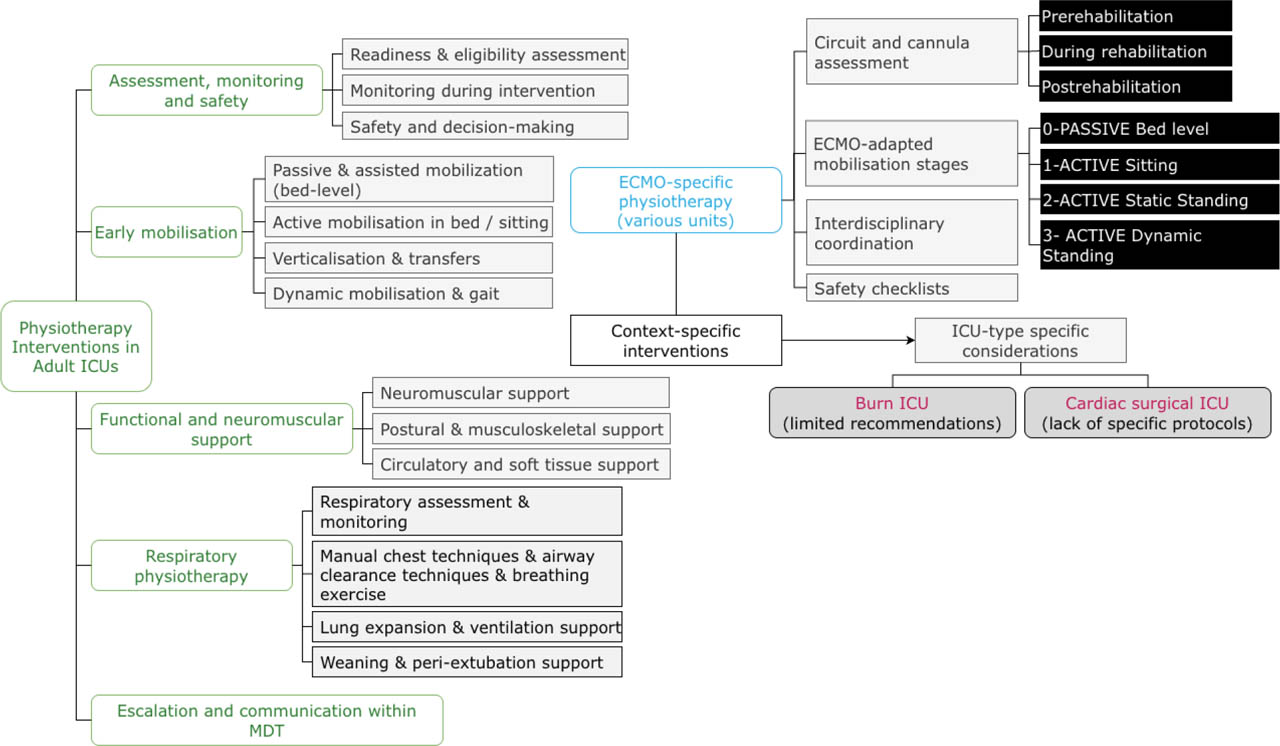
Figure 3.
Scope and level of physiotherapy recommendations across different ICU settings. ECMO - extracorporeal membrane oxygenation, ICUs - intensive care units, MDT - multidisciplinary team
DISCUSSION
This scoping review mapped recommendations relevant to physiotherapy across international, national and local clinical guidance documents for adult intensive care. The findings provide an overview of the available clinical guidance documents and identify important gaps in the scope, detail and standardisation of physiotherapy recommendations across ICU settings. Overall, physiotherapy was consistently recognised as an integral component of multidisciplinary intensive care, with early mobilisation and respiratory physiotherapy representing the principal areas addressed. Nevertheless, substantial variation was observed in the scope and level of detail of recommendations across document types and ICU settings.
Although substantial evidence supports the effectiveness and safety of physiotherapy in ICUs, much of the available evidence base and clinical guidance originates from high-income countries. This finding highlights a pronounced geographical imbalance in the development of the evidence base and clinical guidance. Furthermore, even within these healthcare systems, physiotherapy practice remains heterogeneous, with inconsistent definitions of the professional scope of physiotherapy and considerable variation in the organisation and delivery of interventions20,51,52.
Early mobilisation was the most consistently recommended physiotherapy intervention across the included clinical guidance documents. Recommendations generally supported early initiation of rehabilitation and regular rehabilitation during the ICU stay38,39. Implementation generally followed a phased and individualised approach, progressing from passive movement to functional mobility activities according to the patient's clinical condition. This progressive approach was described most comprehensively in the clinical guidance document for patients receiving ECMO44.
Nevertheless, relatively few clinical guidance documents specified treatment parameters such as frequency, duration, intensity or minimum therapeutic dose. Where evidence certainty or recommendation strength was reported, these classifications reflected the approaches used in the original documents and were not independently assessed by the review team. Even the updated SCCM PADIS 2025 clinical practice guideline recommended enhanced mobilisation and rehabilitation over usual care based on moderate-certainty evidence40. These findings suggest that, although early mobilisation is widely recognised as a fundamental component of ICU rehabilitation, recommendations for its implementation remain insufficiently standardised. Standardised reporting of physiotherapy interventions, including frequency, duration, intensity and other treatment parameters, is therefore needed to facilitate consistent implementation and comparison across clinical settings.
The included documents also consistently addressed respiratory physiotherapy, particularly in relation to patients receiving mechanical ventilation30,31,42,43. However, recommendations were generally less detailed than would be required to support consistent implementation, with limited specification of treatment parameters, dosage and clinical indications. Although several international documents included recommendations for protocol-based rehabilitation, few provided sufficiently detailed protocols or explicit criteria to support their routine implementation31,42. This limited level of specification may contribute to variation in clinical practice and highlights the need for more standardised approaches to respiratory physiotherapy in critical care.
Only 11 of the 21 included clinical guidance documents (52.4%) provided recommendations specifically addressing physiotherapy and/or respiratory physiotherapy, while the remainder included physiotherapy-related recommendations within broader multidisciplinary ICU guidance. This distinction is important because broader multidisciplinary guidance may recognise the role of physiotherapy without providing the physiotherapy-specific detail required to guide assessment, intervention selection, dosage, progression and monitoring. By contrast, local clinical documents generally provided more operational and procedure-specific guidance, which may reflect their purpose of translating broader recommendations into procedures adapted to specific organisational and resource contexts. Although local clinical documents may therefore complement international and national clinical guidance, they should not be regarded as equivalent to clinical practice guidelines in terms of scope or methodological status.
The review also identified important gaps across ICU settings and physiotherapy domains. General ICU and ECMO-related guidance covered a broader range of physiotherapy recommendations, whereas guidance for burn ICUs was limited and no physiotherapy-specific clinical guidance document was identified for cardiac surgery ICUs. Recommendations addressing intervention dosage and progression, dysphagia and delirium were also comparatively limited. Similar gaps in the detail and standardisation of physiotherapy recommendations have been reported in previous scoping reviews21,22. However, these reviews primarily synthesised evidence from primary studies and focused predominantly on early mobilisation interventions. By contrast, the present review synthesised clinical guidance documents across international, national and local levels, enabling a broader assessment of the scope and standardisation of physiotherapy and respiratory physiotherapy recommendations in ICUs.
Taken together, the findings indicate that the available clinical guidance provides relatively consistent support for early mobilisation and respiratory physiotherapy but less consistent guidance on intervention dosage and progression, dysphagia, delirium and specific ICU populations. General ICU and ECMO-related clinical guidance documents covered a broader range of physiotherapy recommendations, whereas recommendations for burn ICUs were limited and no physiotherapy-specific clinical guidance document for cardiac surgery ICUs was identified.
Despite these gaps, most of the included documents recognised physiotherapists as integral members of multidisciplinary ICU teams. This finding reinforces the essential role of physiotherapy in intensive care and highlights the need for context-specific standardisation of clinical practice, together with the development of educational and professional training frameworks for physiotherapists working in critical care.
LIMITATIONS
This scoping review has several methodological limitations inherent to the chosen study design.
Although a previous internal university analysis demonstrated that the majority of official clinical practice guidelines, protocols and position statements related to physiotherapy are indexed in PubMed/MEDLINE27. The complementary search approaches described in the Search strategy, including screening of reference lists, snowballing and consultation with professional contacts, were used to reduce the risk of missing relevant clinical guidance documents but could not fully compensate for the absence of Embase.
The search for COVID-19-related documents was restricted to publications from 2022 to 2025, as reviews published during the early stages of the pandemic were generally characterised by lower methodological quality26. Nevertheless, it is possible that some relevant clinical guidance documents published in 2020–2021 were not identified.
The methodological quality of the included clinical guidance documents was not independently appraised by the review team using AGREE II or AGREE-REX, as this was beyond the scope of the present scoping review. Where evidence certainty, recommendation strength or methodological characteristics were reported, these were described as reported in the original documents and were not independently assessed in this review.
The primary aim of this scoping review was to map and synthesise the available evidence rather than to compare or critically evaluate individual recommendations. In addition, restricting the review to English-language publications and the limited availability of full-text documents may have resulted in the incomplete identification of national and local clinical guidance documents, particularly from low- and middle-income countries.
Also, the search did not include additional bibliographic databases or formal forward citation tracking, which may have resulted in the omission of some relevant clinical guidance documents. Accordingly, the findings should be interpreted in the context of the sources and search approaches employed and should not be regarded as an exhaustive inventory of all potentially available clinical guidance documents.
The included clinical guidance documents were heterogeneous in document type, scope, ICU setting, clinical context and level of detail. Differences in their development methodologies, approaches to evidence appraisal and methods of formulating recommendations may have limited direct comparison across documents. Local clinical documents were particularly context-specific and may therefore have limited transferability to other healthcare settings. Most documents also lacked sufficiently detailed descriptions of physiotherapy interventions, which limited the extent to which intervention characteristics and treatment parameters could be synthesised across the evidence base.
Despite these limitations, the findings are of considerable clinical and scientific relevance. They highlight the need for further research aimed at developing, standardising and evaluating physiotherapy interventions in ICUs, as well as investigating the implementation of existing recommendations across different healthcare systems.
The findings of this scoping review are particularly relevant to the Ukrainian healthcare context, where ICU physiotherapy is undergoing rapid development and integration into routine clinical practice. The absence of national clinical practice guidelines and professional standards for physiotherapy in ICUs highlights the need to systematically synthesise international evidence and adapt it to the Ukrainian healthcare system.
The Ukrainian regulatory framework has undergone substantial development in recent years, reflecting intensified efforts to adapt and localise international rehabilitation standards across different areas of practice while also strengthening the organisational framework for intensive care services53. These developments create favourable conditions for the standardisation of physiotherapy practice and the further development of rehabilitation services in ICUs. At the same time, the interpretation and implementation of these recommendations should be considered within the context of individual healthcare systems, as this may substantially influence their feasibility in clinical practice. Barriers such as regulatory and legislative constraints, funding limitations, equipment shortages and insufficient clinical space are not unique to Ukraine but have been widely reported internationally, particularly in low- and middle-income countries54,55,.
Against this background, the findings of this scoping review provide a foundation for further professional discussion. They may support advocacy for the systematic implementation of international best practices in ICU physiotherapy while taking national healthcare contexts into account.
Furthermore, the synthesis of contemporary approaches presented in international, national and local clinical guidance documents may serve as a foundation for the development of Ukrainian standards for physiotherapy in ICUs, educational programmes and models of interdisciplinary collaboration adapted to the resource, organisational and workforce characteristics of the Ukrainian healthcare system.
CONCLUSIONS
The evidence base most consistently supported early mobilisation and respiratory physiotherapy, whereas guidance on intervention dosage and progression, and specific ICU settings remained limited. General ICU and ECMO clinical guidance documents covered a broader range of physiotherapy recommendations. International and national clinical guidance documents primarily provided broader evidence-based recommendations, whereas local clinical documents offered more operational, context-specific guidance, including detailed descriptions of clinical procedures.
Among the main gaps identified were the limited availability of physiotherapy recommendations for burn ICUs, the absence of physiotherapy-specific recommendations for cardiac surgery ICUs and the overall scarcity of clinical guidance documents specifically addressing physiotherapy. Only half of the included clinical guidance documents provided recommendations specifically related to physiotherapy or respiratory physiotherapy, whereas the remainder addressed physiotherapy within broader multidisciplinary ICU guidance.
These findings support the adaptation of relevant international and national clinical guidance to the Ukrainian healthcare context and may inform the development of physiotherapy-specific guidance for ICU practice.
Notes
[3] Financial disclosure FUNDING
Official Development Assistance (ODA) funding through Coventry University was awarded to support the visiting scholar's (OD) travel to conduct this literature review.
[4] Contributed by AUTHORS' CONTRIBUTIONS
Conceptualisation & Methodology: All authors. Data Curation & Formal Analysis: Dub O., Tymruk-Skoropad K., Lewko A. Writing – Original Draft: Dub O. Writing – Review & Editing: Tymruk-Skoropad K., Lewko A. All authors have read and agreed to the published version of the manuscript.
A – Research concept and design.
B – Collection and/or assembly of data.
C – Data analysis and interpretation.
D – Writing the article.
E – Critical revision of the article.
F – Final approval of article.
Notes
Supplementary File 1.
Database Search Strategy and Search Results
| Database | Search strategy | Filters/Limiters | Records identified (n) |
|---|---|---|---|
| CINAHL | (“critical care” OR “intensive care” OR ICU OR ITU) AND (physiotherap* OR “physical therap*” OR physio OR rehabilitat* OR rehab OR exercis*) AND (guideline OR statement OR recommendation OR protocol OR procedure OR policy OR guidance) | Publication date: 1 January 2015–31 December 2025; English language | 786 |
| MEDLINE (via PubMed) | (“critical care” OR “intensive care” OR ICU OR ITU) AND (physiotherap* OR “physical therap*” OR physio OR rehabilitat* OR rehab OR exercis*) AND (guideline OR statement OR recommendation OR protocol OR procedure OR policy OR guidance) | Adults (≥19 years); Publication date: 1 January 2015–31 December 2025 | 2,553 |
| PEDro | Intensive care unit AND practice guideline | Publication year: 2015–2025 | 9 |
| PubMed | (“critical care” OR “intensive care” OR ICU OR ITU) AND (physiotherap* OR “physical therap*” OR physio OR rehabilitat* OR rehab OR exercis*) AND (guideline OR statement OR recommendation OR protocol OR procedure OR policy OR guidance) | Last 10 years; Full text; Practice Guideline; Guideline; English; Adults (≥19 years); Exclude preprints | 1,527 |
| Guidelines International Network (GIN) | Intensive care | English | 5 |
| Total | 4880 |
Supplementary File 2.
Search Strategy and Results for Professional Organisation Websites
| Source | Search strategy/Filters | Records identified (n) |
|---|---|---|
| National Institute for Health and Care Excellence (NICE) | Search term: Intensive care unit | 6 |
| European Society of Intensive Care Medicine (ESICM) | Guidelines & Consensus Statements; Publication period: 2014–2015; Last update: 29 April 2025 | 7 |
| European Respiratory Society (ERS) | Guidelines; Disease area: Respiratory Critical Care; Document type: All; Publication period: 2014–2015 | 3 |
| World Physiotherapy (WP) | Cardiorespiratory and Critical Care; Document types: Policy Statements, Guidelines, Endorsements; English language | 0 |
| Society of Critical Care Medicine (SCCM) | Clinical Practice Guidelines | 5 |
| World Federation of Societies of Intensive and Critical Care Medicine (WFSICCM) | Website search | 0 |
| Australian and New Zealand Intensive Care Society (ANZICS) | Education resources | 1 |
| Indian Society of Critical Care Medicine (ISCCM) | Website search | 2 |
| American Thoracic Society (ATS) | Clinical Practice Guidelines, Statements and Reports; Critical Care | 1 |
| Intensive Care Society (ICS) | Guidance | 8 |
| Local clinical documents | Local clinical guidelines, protocols and competency documents identified through professional networking and targeted website searches | 5 |
| Total | 38 |
Supplementary File 3.
Summary of Physiotherapy Assessment, Monitoring and Interventions Identified Across Included Clinical Guidance Documents
| Domain | Category | Recommendations identified |
|---|---|---|
| Physiotherapy assessment | Current neurological function | Richmond Agitation–Sedation Scale (RASS); sedative medication and dosage; Glasgow Coma Scale (GCS); Standardised Five Questions (S5Q) for assessing patients’ ability to cooperate. |
| Current musculoskeletal function | Goniometry for measuring range of joint motion (ROM); Medical Research Council Sum Score (MRC) for assessing localised and total muscle strength; hand-held dynamometry (HHD) for measuring localised muscle strength in muscles with MRC >3; Modified Ashworth Scale (MAS) for assessing muscle tone; Modified Nottingham Sensory Assessment (NSA) for evaluating sensory function. | |
| Current cardiovascular stability | Arterial blood pressure (BP); mean arterial pressure (MAP); heart rate (HR); basic ECG rhythm; rate and dosage of inotropic and vasoactive medications. | |
| Current respiratory function | Ventilation settings: ventilation mode, respiratory rate, tidal volume, spontaneous/mandatory/assisted breaths, PEEP, pressure support, peak pressure, airway pressure, plateau airway pressure and lung compliance. Gas exchange: arterial blood gases (ABG), FiO2 and SpO2. Work of breathing: minute ventilation, respiratory rate, respiratory pattern and ventilator synchrony. Signs of atelectasis: chest X-ray (CXR) interpretation, auscultation and chest expansion. Signs of secretion retention: CXR interpretation, auscultation, tactile fremitus, inspiratory capacity and cough quality and effectiveness. Premorbid status: respiratory disease, respiratory medication use, functional ability and smoking history. | |
| Functional ability | De Morton Mobility Index (DEMMI) for assessing functional ability, including transfers, standing balance and walking; Borg Rating of Perceived Exertion for monitoring exertion during exercise in conscious patients. | |
| Interprofessional considerations | Interprofessional communication among physiotherapists, nurses and physicians regarding patient assessment and rehabilitation planning. | |
| Monitoring | Vital parameters | Heart rate; blood pressure; arterial oxygen saturation. |
| Monitoring in ventilated patients | Tidal volume; inspiratory pressure; respiratory rate; respiratory minute volume; capnography in invasively ventilated patients. | |
| Respiratory status and deterioration before respiratory failure | Peak cough flow, particularly post-weaning/extubation; single-breath count; forced vital capacity when weaning is not progressing as expected; incentive spirometry to monitor volumes; blood gas trends; auscultation; patient feedback; clarity and volume of speech. | |
| Early mobilisation-adapted symptom monitoring | Pain; fear; agitation; delirium; daily assessment of spontaneous breathing. | |
| Physiotherapy interventions | Passive exercise | Stretching; passive cycling; neuromuscular electrical stimulation (NMES); continuous passive motion (CPM); in-bed cycle ergometer; splinting. |
| Active exercise | Activities of daily living (ADL) training, including balance, standing and walking. | |
| Respiratory physiotherapy interventions | Airway suctioning, including nasopharyngeal (NP), oropharyngeal (OP) and endotracheal tube/tracheostomy aseptic non-touch technique (ANTT) open-circuit suction; humidification; patient positioning, including side-lying/lateral position, multiple positions, head-down tilt, prone position, continuous lateral rotation therapy (CLRT), backrest elevation, Trendelenburg position and flat supine position when required for specific medical or nursing procedures and limited to a brief period; hyperinflation techniques; manual chest wall techniques, including percussion, chest wall vibrations and expiratory rib cage compressions; normal saline instillation when secretions are very tenacious and cannot be cleared using other respiratory physiotherapy techniques; deep breathing exercises; active cycle of breathing techniques (ACBT); forced expiratory technique (FET); mechanical insuffiation–exsuffiation (MI:E/cough assist); manually assisted cough; breath stacking; intermittent positive pressure breathing (IPPB); non-invasive ventilation (NIV). | |
| ECMO-specific recommendations | Patient assessment before each rehabilitation session | ECMO circuit: review of ECMO cannulation strategy, blood flow rate, blender fraction of delivered oxygen (FdO2), sweep gas flow (SGF) rate and circuit function. Medical history: relevant history and preadmission frailty, including disability, exercise tolerance and use of assistive devices. Imaging: assessment of cannula and device position, including the cannula tip for displacement, kinking or perforation. Haemodynamics and vital signs: blood pressure, heart rate, respiratory rate, arterial and venous oxygen saturation, central venous pressure, pulmonary artery pressure, arterial blood gas parameters and anticoagulant levels. Medications: review of medications for adjustment, patient engagement, safety and pain management44. |
| Pre-mobilisation assessment | Review of the mobilisation checklist, including cannula insertion-site integrity, blood supply to the limbs, neurocognitive function, haemodynamic stability and circuit performance; assessment of cannula stability in patients with groin cannulation; securing the cannula during upright positioning or mobilisation in patients with neck cannulation; cognitive screening using RASS, GCS, alertness and orientation questions, CAM-ICU and MMSE; assessment of circuit blood flow velocity, SGF flow, circuit pressure, membrane lung function and integrity of tubes, sutures and fastenings; consideration of additional ECMO or mechanical ventilation support where clinically indicated; explanation of the rehabilitation plan and verbal informed consent44. | |
| During rehabilitation or mobilisation | Regular assessment of cannula security during rehabilitation and after changes in position; monitoring of distal perfusion catheters (DPCs), including blood flow and vascular status; regular assessment of patient tolerance and physiological response; adjustment of ECMO blood flow and artificial haemodiluent administration where required; progression towards the highest level of functional mobility safely tolerated, with suspension and reassessment if tolerance deteriorates44. | |
| Post-rehabilitation or mobilisation assessment | Completion of the pre-rehabilitation assessment checklist; reassessment of patient condition and tolerance; consideration of prolonged periods out of bed when the patient can comfortably sit at the edge of the bed and has progressed to passive or active mobility outside the bed44. | |
| ECMO rehabilitation progression | Stage 0 – Passive bed level: bed-level AAROM/PROM, rolling, limb positioning, extremity oedema control, long sitting, dependent transfer to a seated surface, passive standing on a tilt bed/table. Stage 1 – Active sitting: sitting at the edge of the bed/dangling, upper- and lower-extremity exercises, sitting balance, breathing mechanics, postural re-education, dependent transfer to a seated surface. Stage 2 – Active static standing: functional sit-to-stand transfer, static standing balance, squat/stand-pivot transfer to bedside chair, breathing mechanics and postural re-education. Stage 3 – Active dynamic standing: transfer training, pre-gait activities, dynamic standing balance, standing upper-and lower-extremity exercises at the edge of the bed or using a tilt/standing table, bed-to-chair transfer, breathing mechanics, postural re-education and standing assistive devices. Stage 4 – Active ambulation: gait training, dynamic standing balance, standing upper- and lower-extremity exercises, and progression from tilt/standing table to gait training44. |