
Table 1.
Scoping review eligibility criteria
| Criterion | Inclusion | Exclusion |
|---|---|---|
| Population | Adults aged 18 and over with motor skill disorders secondary to neurodegenerative diseases | Children under age 18, animals (e.g., mice and rats), or adults without motor skill disorders secondary to neurodegenerative diseases (e.g., just language disorders, just cognitive disorders, motor skills disorders not due to neurodegenerative diseases) |
| Intervention/Exposure | Video games, low-tech games, tabletop/board games, gamified interventions, and exergames | Non-gamified low-tech interventions (e.g., non-game pen-and-paper interventions), non-gamified hi-tech interventions (e.g., non-game virtual or augmented reality, non-game apps or computer programs, non-game robotics or prosthetics), or assessments without mention of treatment administered |
| Outcome | Gross motor symptom management (e.g., walking and posture), fine motor symptom management (e.g., handwriting and grasping things with hands), and motor speech symptom management (e.g., dysarthria management) | Non-motor symptom management (e.g., mental health symptom management, management of only cognitive symptoms, and management of only language symptoms) |
| Study Characteristics | Published in English and presenting new or original data (i.e., non-review) | Not published in English or reviews (e.g., systematic/scoping reviews, metaanalyses, short reviews, or perspective papers) |
Table 2.
Data item descriptions and rationales
| Data item | Description | Rationale |
|---|---|---|
| Study details | Title, authors, publication year, DOI, & country | To identify each study and to contextualize study findings |
| Rehabilitation discipline | Examples: PT, OT, SLP | To identify any patterns in game-based approaches across motor rehabilitation disciplines |
| Study aim(s) | The stated aim(s) of each study | To characterize the general purpose of each study and aid in the determination of relevance to the aim of this scoping review |
| Study design | The study design employed in each study | To gain insight into the type(s) of studies conducted thus far concerning serious game use for motor rehabilitation in neurodegenerative populations |
| Participant demographics | Age, sex, neurological diagnosis, & disease stage | To characterize study findings and identify patterns across participant demographics |
| Recruitment method | Examples: Clinic patients, voluntary, not stated | To identify any patterns in how participants were recruited for enhanced contextualization and characterization of study findings |
| Number of participants | Number of participants receiving game-based intervention versus control or no intervention (as applicable) | To gain insight into statistical power and generalizability relative to reported study outcomes |
| Participant mortality | Number of participants who withdrew or discontinued study participation | To gain insight into participant adherence and the feasibility of the administered intervention |
| Game technology (devices & systems) | Devices (e.g., computer, tablet, sensor) and systems (e.g., Nintendo, Microsoft, Unity) used for game-based intervention | To characterize the game-based interventions employed and gain an understanding of any patterns in devices/systems employed |
| Intervention protocol | Examples: Frequency, duration, medication state, setting where intervention was completed, games used, game targets | To identify and characterize the specific protocols administered and identify any patterns in administered protocols |
| Primary & secondary study outcomes | Outcomes relative to primary study aim(s) and any secondary outcomes reported | To gain insight into game-based intervention efficacy/effectiveness and identify any patterns across outcomes for administered interventions |
| Qualitative study outcomes (as applicable) | Qualitative participant perspectives regarding game design, interface, protocol, feasibility, usability, etc., for game-based intervention administered | To gain insight into participant experiences and perspectives regarding game-based interventions |
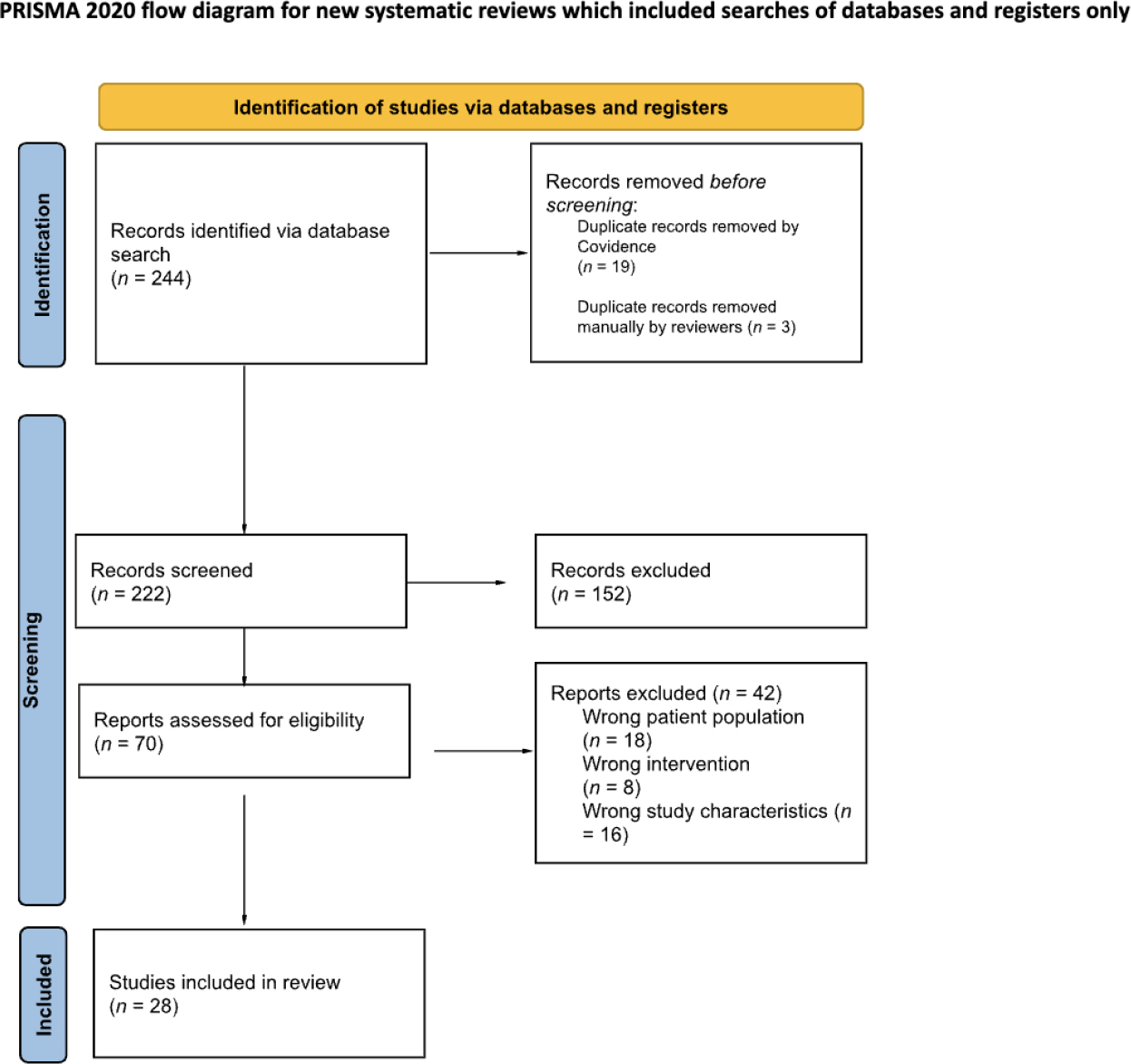
Figure 1.
PRISMA 2020 flow diagram. PRISMA 2020 flow diagram52 showing study selection and screening processes
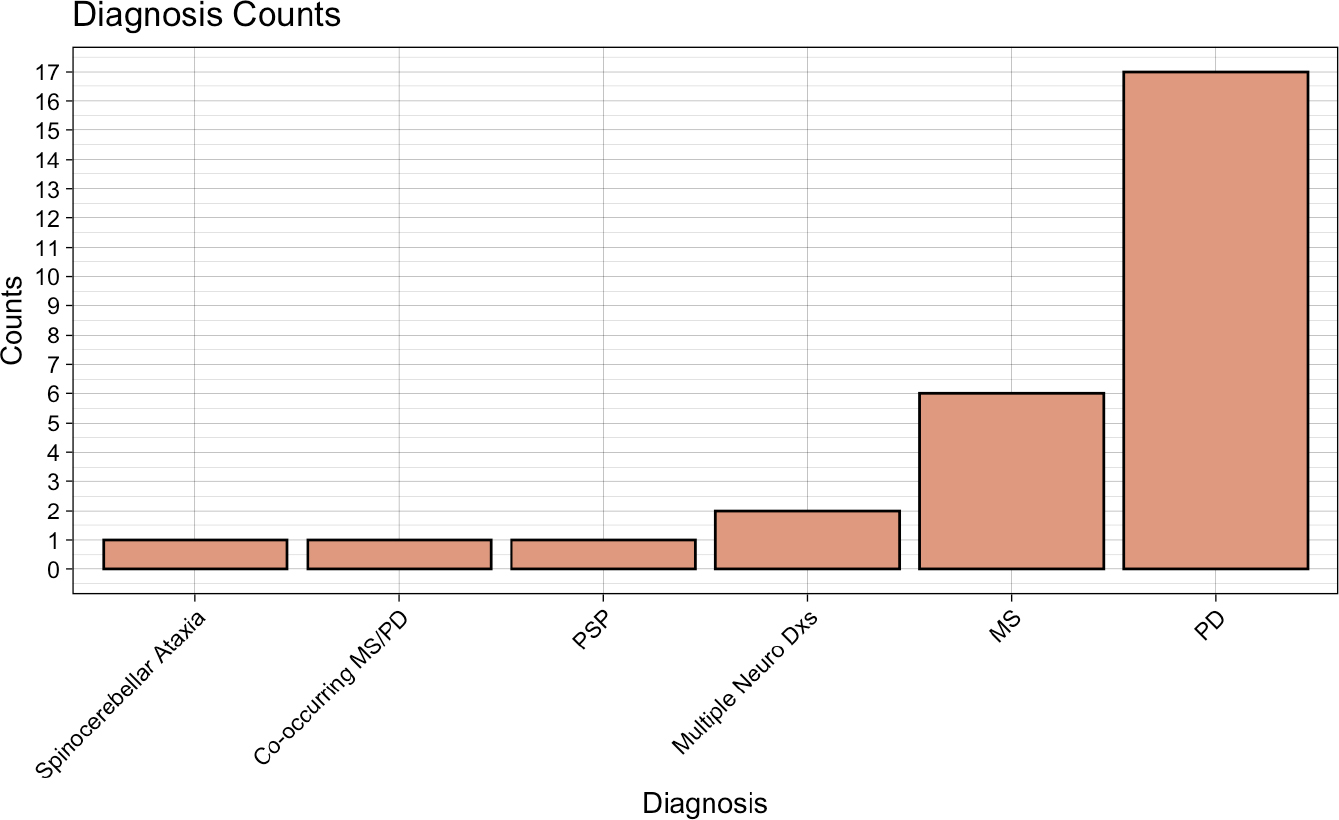
Figure 2.
Participant diagnoses. Participant diagnosis counts across the 28 articles included in this review. These included spinocerebellar ataxia, co-occurring MS and PD, PSP, multiple neurological diagnoses (‘Multiple Neuro Dxs’), MS, and PD. MS - multiple sclerosis, PD - Parkinson’s disease, PSP - progressive supranuclear palsy
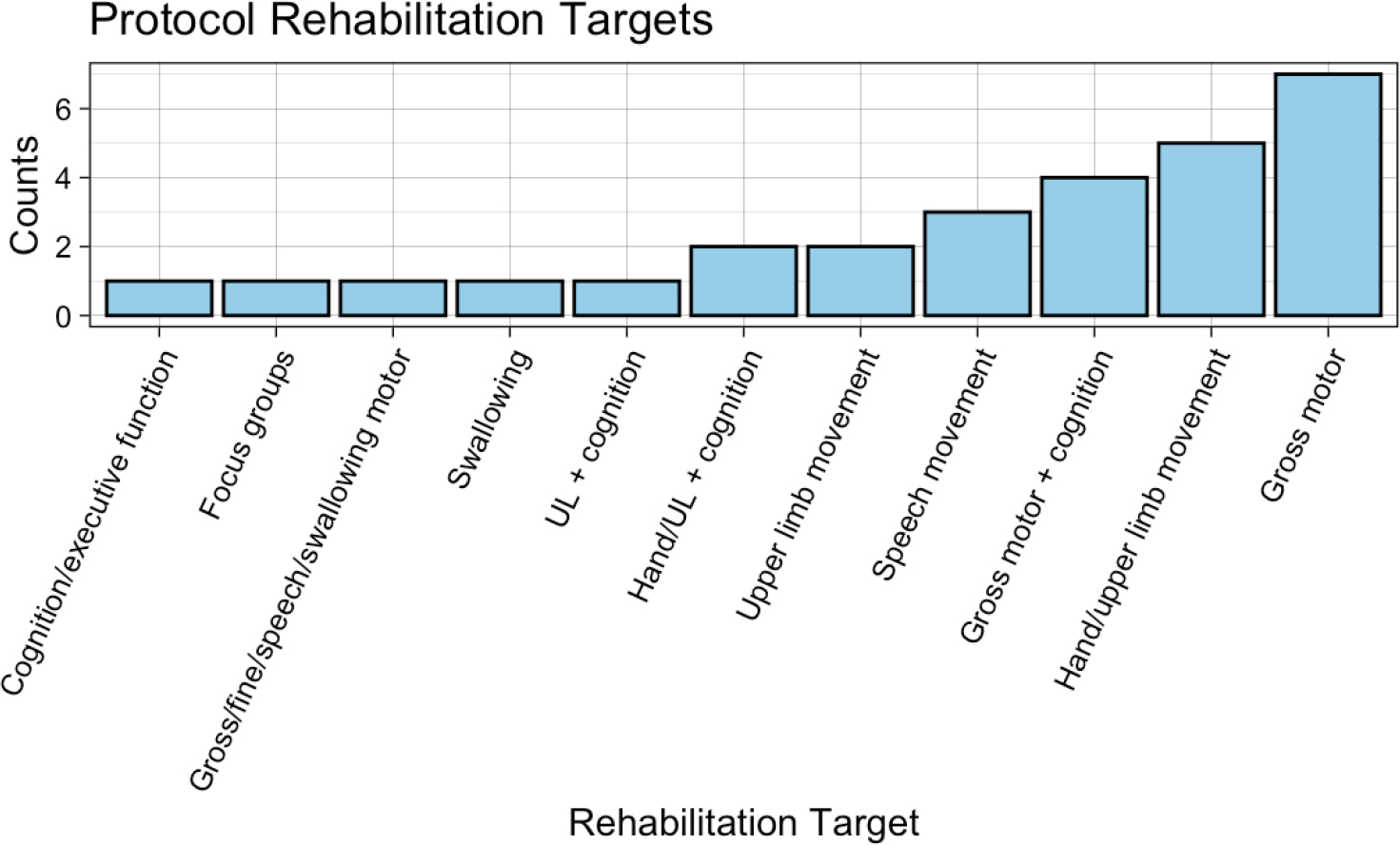
Figure 3.
Protocol rehabilitation targets. Bar plot showing counts for the protocol rehabilitation targets across the 28 studies. ‘UL’ abbreviation used below represents ‘upper limb’ (rehabilitation target)
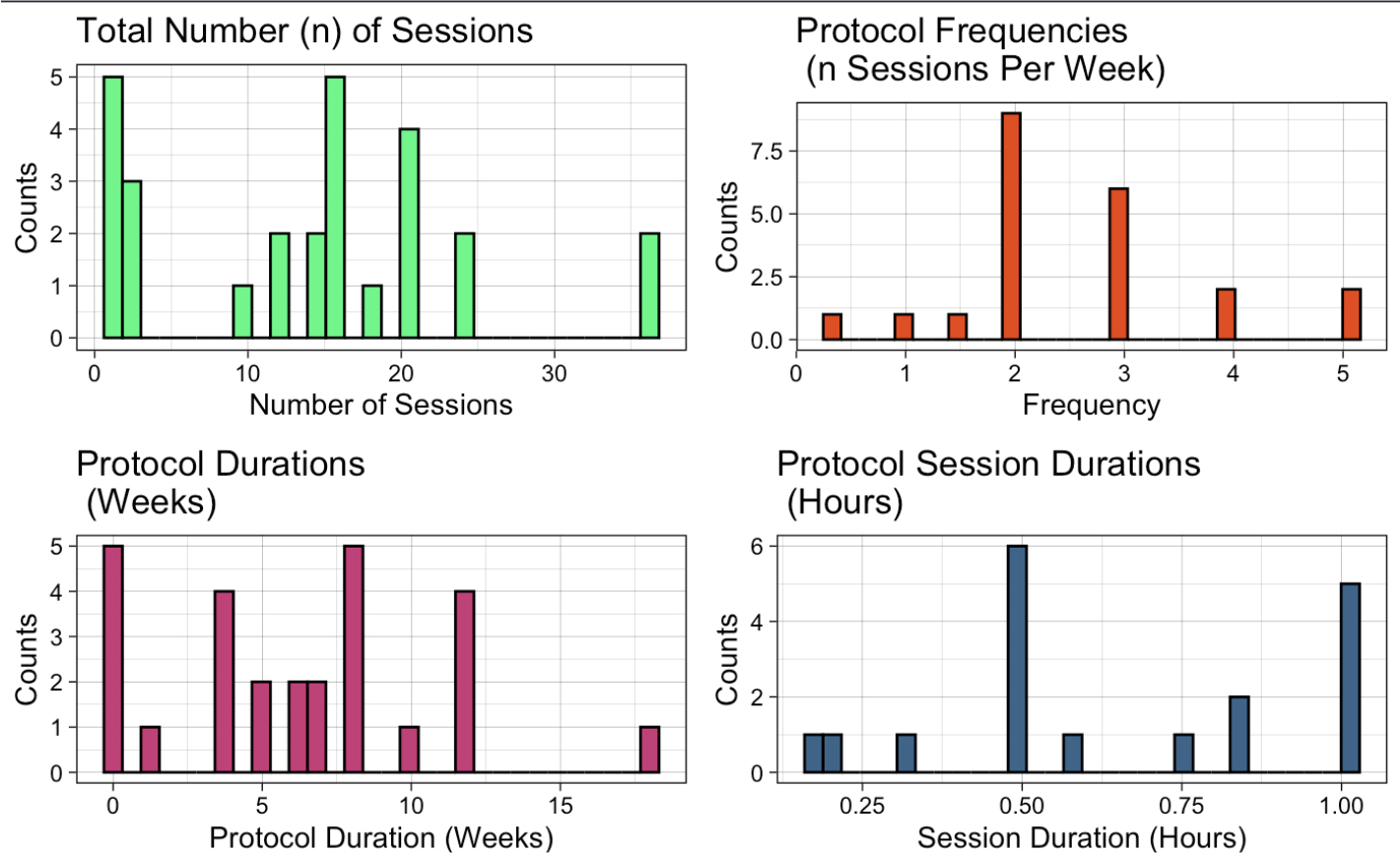
Figure 4.
Protocol total n sessions, frequency (n sessions per week), total protocol duration (weeks), and protocol session duration (hours). Four bar plots showing counts for the total number of sessions, session frequencies (per week), protocol durations (weeks), and session durations (hours) reported across the 28 studies in this review
Table 3.
Summary of intervention dosage across included studies
| Parameter | Reported range | Most common pattern (n&%) |
|---|---|---|
| Session frequency | 0.25–5 sessions per week | 2–3 sessions per week (n = 15/28, 53.6%) |
| Session duration | 10–60 minutes | 30–60 minutes (n = 15/28, 53.6%) |
| Protocol (i.e., intervention) duration | Single session-18 weeks | 10 weeks or fewer (n = 21/28, 75.0%) |
| Total number of sessions | 1–36 sessions | 25 or fewer (n = 24/28, 85.7%) |
S1.
Search Terms. Search terms used in this scoping review.
| Database | Search Terms |
|---|---|
| PubMed | (((((((game*[Title/Abstract]) OR (gami*[Title/Abstract])) OR ((„gamification”[Title/Abstract]))) OR („Gamification”[MeSH])) OR („exergaming”[Title/Abstract])) OR („Exergaming”[MeSH])) AND ((((neurol*[Title/Abstract]) OR (neurodegen*[Title/Abstract])) OR („Nervous System” [Title/Abstract])) OR („Neurodegenerative diseases”[MeSH]))) AND ((„motor function”[Title/Abstract]) OR („motor learning”[Title/Abstract]) OR („Motor Skills Disorders”[MeSH]) OR („motor rehabilitation”[Title/Abstract]) OR („speech”[Title/Abstract]) OR („voice” [Title/Abstract]) OR (dysph*[Title/Abstract]) OR (swallow*[Title/ Abstract])) |
| CINAHL | (“Games” OR „Exergames” OR “Gamification”) AND („Neurodegenerative Diseases” OR „Nervous System Physiology”) AND (motor* OR „Rehabilitation” OR „Motor Skills Disorders” OR “speech” OR „voice” OR dysph* OR swallow*) |
| Scopus | (gamif* OR „games” OR „exergame”) AND („Neurodegenerative diseases” OR “Nervous system”) AND (motor* OR „Rehabilitation” OR „Motor Skills Disorders” OR “speech” OR „voice” OR dysph* OR swallow*) |