
INTRODUCTION
Background
Neurodegenerative disorders are a group of disorders characterized primarily by progressive neuronal degeneration in the nervous system, including Parkinson’s disease (PD), multiple sclerosis (MS), and Alzheimer’s disease1. For neurodegenerative diseases impacting motor function, symptoms typically involve progressively worsening motor skills disorders1,2. Guided by motor learning theory3, motor rehabilitation interventions can help mitigate motor symptoms and promote enriched well-being throughout disease progression.
Motor learning and rehabilitation
Motor learning refers to the process by which individuals acquire motor patterns for skilled movements3. The principles of motor learning are relevant to the physical therapy (PT), occupational therapy (OT), and speech-language pathology (SLP), as they underlie the acquisition of gross, fine, and speech-related motor skills3–5. These disciplines aim to foster motor learning for optimal retention and transfer. Retention refers to the ability to continue performing a target skill over time after practice (i.e., one’s ability to retain the target skill), whereas transfer (i.e., generalization) refers to the ability to apply the learned skill to novel or untrained contexts5.
The structure of therapeutic tasks and protocols, when guided by the principles of motor learning, can strengthen the retention and transfer of acquired motor skills3–7. Retention may be enhanced through large practice amounts, distributed practice opportunities, variable practice targets and/or contexts, randomized practice schedules, external attentional focus, and more complex targets3–7. It can also be supported by delayed, low-frequency knowledge of results feedback structures5. In accordance with motor learning principles, standard motor rehabilitation interventions for neurodegenerative diseases generally involve high-frequency and high-intensity treatment protocols designed to foster an optimal challenge level, thereby maximizing skill maintenance, retention, and transfer5,6,8,9.
Overview of game-based approaches
The authors of this scoping review use the term game-based approaches as a broad term to describe interventions grounded in game design principles, encompassing both gamified interventions (i.e., interventions that have game elements such as points or rewards, but are not formal games) and serious games (i.e., games whose purpose extends beyond pure entertainment)10. Serious games may be played in a low-tech, tabletop game format, such as card games11 or board games12. They may also be played on a computer13, mobile device, or tablet14, or other gaming system such as a Nintendo (Nintendo Co., Ltd., Kyoto, Japan) Wii15,16 or Xbox 360 (Microsoft Corp., Redmond, WA, USA)17,18. Unlike gamified interventions, serious games include at least one pathway for the player or players to win the game. Some clear examples of this pathway to winning are found in commercially available games; for instance, in Scrabble® (Hasbro, Inc., Pawtucket, RI, USA)19, players strategically place letter tiles to form words with higher point values, and the player with the most points at the end of the game wins. Exergames, a subcategory of serious games, require players to engage their upper or lower body to participate20. Clinicians employing game-based approaches may utilize either gamified approaches or serious games to achieve target outcomes.
Clinical applications of game-based approaches
The use of game-based approaches in clinical rehabilitation has increased in recent years, partly as a strategy to enhance treatment motivation, improve adherence, and ultimately strengthen treatment outcomes. Serious games have demonstrated effectiveness in improving cognitive skills among adults with neurodegenerative diseases, including Alzheimer’s disease21–24, and MS25. They are also common in the education sector, where they have been employed to promote and enhance learning in children26,27 and to support cognition and language skills in healthy older adults28–30.
Progress in motor rehabilitation is often attenuated when patients fail to adhere to treatment recommendations, including completion of home exercise programs31–36. For optimal motor skill learning, retention, and transfer to occur, patients must be sufficiently motivated to regularly practice their prescribed exercises. Game-based learning refers to an approach in which games or game elements are leveraged to achieve specific learning objectives10,37. In this review, the term game-based treatment approaches (i.e., game-based approaches) is used broadly to describe interventions involving gamification or serious games; this terminology is discussed in more detail below. Gamification describes approaches that incorporate game elements (e.g., points or other extrinsic rewards) into non-game activities, whereas serious games are games designed with purposes beyond entertainment10. While gamified activities do not necessarily include a component of ‘winning’ or ‘losing’, serious games typically do, though this distinction remains a topic of debate38.
Serious games have been used to address motor impairments secondary to a variety of neurological pathologies, including cerebrovascular accidents (CVAs)39, traumatic brain injuries40, and neurodegenerative pathologies, such as PD41,42 and MS43. Serious games targeting symptoms of neurodegenerative diseases span multiple rehabilitation disciplines, including interventions for gross motor symptoms44, fine motor symptoms45, voice and speech symptoms46, and swallowing difficulties47.
Gaps in the current literature
Despite the growing evidence base supporting the use of serious games for motor rehabilitation in neurodegenerative disorders44–47, there remains a lack of research integrating findings across PT, OT, and SLP disciplines. There is also a critical need to systematically synthesize key intervention features, such as dosage, feedback, and technology (i.e., technology used for game-based approaches). Furthermore, prior work has not compared motor outcomes across domains and neurodegenerative conditions, leaving important gaps in clinical interpretation.
Purpose
This scoping review, therefore, aims to characterize how serious games are leveraged for motor rehabilitation in neurodegenerative disease by identifying: (1) the range of target populations, interventions, and study procedures involving serious games and (2) the range and types of serious games reported in this literature. The findings of this review may inform the development of optimized protocols for serious game administration for motor rehabilitation in the setting of neurodegenerative disorders, thereby enhancing treatment outcomes.
MATERIALS AND METHODS
This scoping review followed the Preferred Reporting Items for Systematic reviews and Meta-Analyses extension for Scoping Reviews (PRISMA-ScR) guidelines48; the PRISMA-ScR checklist will be used to report the results of this review. Fidelity to the methodology determined a priori was maintained by all authors. Searches were conducted in PubMed, CINAHL, and Scopus. The review protocol is available in the Open Science Framework (OSF) repository (http://doi.org/10.17605/OSF.IO/NX7AY).
The electronic search strategy employed in this review is detailed below. To ensure a maximally comprehensive scoping review, no filters were applied to the database queries (e.g., a variety of publication types, including articles, conference papers, etc.). Searches of the three databases were conducted in January 2024, and the results were imported into Covidence (Veritas Health Innovation, Melbourne, Australia)49. An updated search was performed in September 2025, with results presented in aggregate below.
Eligibility criteria
Inclusion criteria were English-language studies involving adults (≥18 years old) that examined the use of serious games or gamification for motor rehabilitation in neurodegenerative diseases. Studies not meeting these criteria were excluded, as were review articles and perspective papers. Preliminary studies (e.g., pilot studies) were included to more comprehensively characterize the current state of the literature. See Table 1 for a summary of eligibility criteria.
Table 1.
Scoping review eligibility criteria
| Criterion | Inclusion | Exclusion |
|---|---|---|
| Population | Adults aged 18 and over with motor skill disorders secondary to neurodegenerative diseases | Children under age 18, animals (e.g., mice and rats), or adults without motor skill disorders secondary to neurodegenerative diseases (e.g., just language disorders, just cognitive disorders, motor skills disorders not due to neurodegenerative diseases) |
| Intervention/Exposure | Video games, low-tech games, tabletop/board games, gamified interventions, and exergames | Non-gamified low-tech interventions (e.g., non-game pen-and-paper interventions), non-gamified hi-tech interventions (e.g., non-game virtual or augmented reality, non-game apps or computer programs, non-game robotics or prosthetics), or assessments without mention of treatment administered |
| Outcome | Gross motor symptom management (e.g., walking and posture), fine motor symptom management (e.g., handwriting and grasping things with hands), and motor speech symptom management (e.g., dysarthria management) | Non-motor symptom management (e.g., mental health symptom management, management of only cognitive symptoms, and management of only language symptoms) |
| Study Characteristics | Published in English and presenting new or original data (i.e., non-review) | Not published in English or reviews (e.g., systematic/scoping reviews, metaanalyses, short reviews, or perspective papers) |
Information sources and search strategy
The search strategy was developed collaboratively by M.P. and T.K., with consultation from a Michigan State University Communicative Sciences and Disorders librarian. Queries were iteratively refined over approximately 4 months to maximize consistency across databases while accounting for database-specific syntax. Initial searches using broad motor rehabilitation terms yielded limited representation of SLP outcomes. Final queries were therefore expanded to include targeted terms related to speech, voice, and swallowing. The final search was conducted in PubMed, CINAHL, and Scopus in September 2025 by M.P. The search strategy is summarized as follows, and the final search syntax for each database appears in the Supplementary Materials (see S1. Search Terms).
Game-based terminology (e.g., game*, gamif*, exergaming) AND
Neurological disorder terminology (e.g., neurol*, neurodegen*) AND
Motor rehabilitation terminology (e.g., motor rehabilitation, motor skills, speech/voice/swallowing specific terminology)
The results of these queries were exported to Covidence for screening, review, and extraction.
Study selection and screening
For both the initial and updated searches, as well as duplicate removal, two blinded reviewers conducted title and abstract screening in Covidence, followed by full-text review. Blinding, facilitated via Covidence, was used to mitigate potential reviewer biases. All conflicts were resolved via consensus meetings, during which reviewers discussed voting discrepancies, explained the rationale behind their initial votes, and jointly reached final decisions.
Data charting/collection/extraction
An informal data extraction template was collaboratively developed by M.P. and T.K. to guide the data extraction process, which subsequently informed the final template used in Covidence. Extracted data items included general study information (e.g., title, authors, study location, and publication year), study design, rehabilitation discipline (e.g., SLP, OT, and PT), participant demographics, game devices and systems used, therapeutic intervention details, outcomes, and key findings. After data were extracted from all eligible studies in Covidence, results were exported into a single spreadsheet for analysis. See Table 2 for data item descriptions and rationales.
Table 2.
Data item descriptions and rationales
| Data item | Description | Rationale |
|---|---|---|
| Study details | Title, authors, publication year, DOI, & country | To identify each study and to contextualize study findings |
| Rehabilitation discipline | Examples: PT, OT, SLP | To identify any patterns in game-based approaches across motor rehabilitation disciplines |
| Study aim(s) | The stated aim(s) of each study | To characterize the general purpose of each study and aid in the determination of relevance to the aim of this scoping review |
| Study design | The study design employed in each study | To gain insight into the type(s) of studies conducted thus far concerning serious game use for motor rehabilitation in neurodegenerative populations |
| Participant demographics | Age, sex, neurological diagnosis, & disease stage | To characterize study findings and identify patterns across participant demographics |
| Recruitment method | Examples: Clinic patients, voluntary, not stated | To identify any patterns in how participants were recruited for enhanced contextualization and characterization of study findings |
| Number of participants | Number of participants receiving game-based intervention versus control or no intervention (as applicable) | To gain insight into statistical power and generalizability relative to reported study outcomes |
| Participant mortality | Number of participants who withdrew or discontinued study participation | To gain insight into participant adherence and the feasibility of the administered intervention |
| Game technology (devices & systems) | Devices (e.g., computer, tablet, sensor) and systems (e.g., Nintendo, Microsoft, Unity) used for game-based intervention | To characterize the game-based interventions employed and gain an understanding of any patterns in devices/systems employed |
| Intervention protocol | Examples: Frequency, duration, medication state, setting where intervention was completed, games used, game targets | To identify and characterize the specific protocols administered and identify any patterns in administered protocols |
| Primary & secondary study outcomes | Outcomes relative to primary study aim(s) and any secondary outcomes reported | To gain insight into game-based intervention efficacy/effectiveness and identify any patterns across outcomes for administered interventions |
| Qualitative study outcomes (as applicable) | Qualitative participant perspectives regarding game design, interface, protocol, feasibility, usability, etc., for game-based intervention administered | To gain insight into participant experiences and perspectives regarding game-based interventions |
Data synthesis and analysis
Data synthesis and analysis procedures followed established recommendations for scoping reviews48,50. Data exported from Covidence were imported into R (version 4.5.2; R Foundation for Statistical Computing, Vienna, Austria)51 for synthesis and analysis. Descriptive numerical summaries were used to characterize quantitative study characteristics (e.g., participant age), while frequencies and proportions summarized categorical variables (e.g., rehabilitation targets). For qualitative synthesis, a narrative approach was used to summarize and interpret extracted data. Study findings were reviewed iteratively to identify recurring concepts, which were subsequently organized into descriptive categories. Patterns across studies and categories were refined through team discussions to ensure a comprehensive summary of the available evidence.
RESULTS
Search and selection
The results are presented as a descriptive mapping of the literature, organized by study characteristics, participant characteristics, intervention characteristics, and intervention outcomes. The initial search, conducted on 24 January 2024, revealed 23 articles meeting eligibility criteria. An updated search conducted on 21 September 2025 revealed 5 additional articles meeting eligibility criteria. In total, 28 articles were included in the final analysis and are discussed below.
The full search yielded 244 articles. Following the automatic removal of 19 duplicates by Covidence and the manual removal of 3 duplicates, 222 studies were included in the title and abstract screening. Of the 70 articles that proceeded to full-text screening, 42 articles were excluded due to wrong patient population (n = 18/42), wrong intervention (n = 8/42), and wrong study characteristics (n = 16/42). The remaining 28 articles met eligibility criteria and underwent data analysis. Please see Figure 1 for the full PRISMA flow diagram52 showing study selection & screening processes.
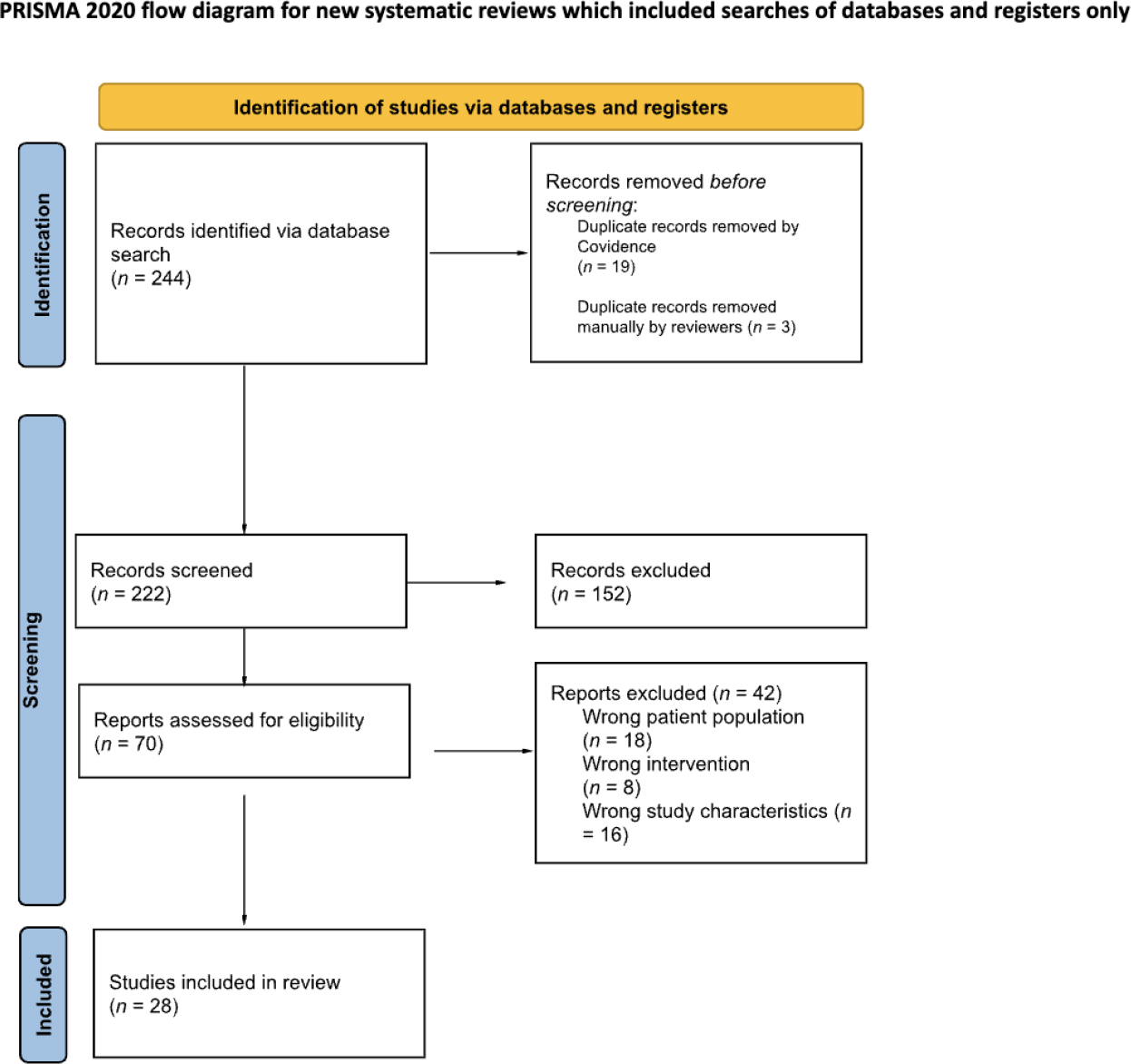
Figure 1.
PRISMA 2020 flow diagram. PRISMA 2020 flow diagram52 showing study selection and screening processes
For the initial search, the two reviewers agreed on 84.9% of articles during title and abstract screening (n = 146 out of 172) and formed a consensus on the remaining 26. Agreement during full-text screening in the initial search was 74.1% (n = 43 out of 58), with consensus formed on the remaining 15 articles.
For the updated search, the two reviewers agreed on 88% of articles during title and abstract screening (n = 44 out of 50) and formed consensus on the remaining six. Agreement during full-text screening in the updated search was 100% (n = 12 out of 12).
Study characteristics
Country of research
Most studies were conducted in Italy (n = 4/28, 14.3%)47,53–55, Spain (n = 4/28, 14.3%)45,56–58, and Brazil (n = 4/28, 14.3%)59–62, followed by the United States (n = 3/28, 10.7%)42,63,64. The remaining studies were conducted in Australia (n = 2, 7.1%)65,66, Canada (n = 1, 3.6%)46, Greece (n = 1, 3.6%)67, Israel (n = 1, 3.6%)68, Turkey (n = 1, 3.6%)69, or were multisite studies across two or more countries (n = 3, 10.7%)70–72. Four studies (14.3%)73–76 did not specify where the research was conducted.
Publication date
Studies included in this review were published between 2012 and 2025. Just over half of the studies (n = 17/28, 60.7%) were published in the last 5 years. Of these studies, five (17.9%) were published in 202255,57,63,71,73 and five (17.9%) were published between 2024 and 202553,56,59–61. Please see the supplemental materials for a bar graph of publication dates.
Study design
The majority of included studies used non-randomized experimental designs (n = 15/28, 53.6%), including studies using case series47, A-B-A single-subject42, and longitudinal controlled clinical designs76, as well as mixed-methods45, uncontrolled clinical trial61, within subject comparison54, case report64,69, and qualitative71,72 study designs. Within this group, pilot studies (n = 7/28) accounted for 25.0% of observed study designs. One pilot study46 (3.6%) utilized an A-B-A design to evaluate change in articulatory working space (AWS), and another pilot study53 (3.6%) included an additional focus on technical feasibility. For randomized study designs, five studies (17.9%) followed a randomized control trial design, three studies (10.7%) followed a randomized clinical trial design59,60,62, and one study (3.6%) employed a crosssectional study design with randomization and double-blinding74.
Study groups and sample sizes
In 88.9% of studies, experimental groups included 30 or fewer participants (n = 26/28), with 50.0% of these (i.e., n = 13 out of 26 total studies with experimental groups ≤ 30) involving between 5 and 15 participants. Overall, experimental group sizes ranged from 1 participant (n = 2/28, 7.1%)64,69 to 56 participants (n = 1/28, 3.6%)60. Control groups were included in 35.7% (n = 10/28) of studies in this review Control group sizes ranged from 6 participants (n = 1/28, 3.6%)59 to 29 participants (n = 1/28, 3.6%)74, with 70.0% of these (i.e., n = 7 out of 10 total studies with control groups) reporting control groups with <20 participants. Reported participant attrition ranged from 0 (n = 1/28, 3.6%)65 to 7 participants (n = 1/28, 3.6%)62, though 11 studies (39.3%) did not explicitly report attrition information.
Participant characteristics
General age and sex characteristics
Studies differed in how they reported participant ages. Notably, 25 studies (89.3%) reported descriptive statistics (mean and standard deviation) for participant ages. These studies reported means ranging from 28.0 years to 75.7 years and reported standard deviations ranging from 2.0559 to 11.1074. Roughly half of the mean age values across the 20 studies fell between ages 60 and 70 (n = 13/28, 46.4%). Two studies (7.1%) were case studies whose participants were aged 5869 and 6564, respectively. Please see the supplemental materials for a bar graph of mean participant ages across studies.
Of the 28 studies, 21 (75.0%) reported participant sex demographics, while seven (25.0%) did not. One study (3.6%) included only male participants42, and none (0%) had exclusively female participants. Two studies (7.1%) were case studies with a single female participant64,69. The reported number of male participants ranged from 358 to 63 participants62, with eight studies (28.6%) reporting between 5 and 10 male participants. The number of female participants ranged from 042 to 6460, with six studies (21.4%; excludes case studies described above) reporting between one and five female participants. Additionally, none of the studies (0%) included in this scoping review discussed how reported sex corresponded to either gender or sex assigned at birth.
PD participant characteristics
The majority of studies in this scoping review investigated serious game effects on motor rehabilitation in patients with PD; n = 17/28, 60.7%, with two of these studies specifically investigating differences in people with PD versus healthy controls63,76, while the remainder focused on PD alone. One case study (3.6%) followed a participant with progressive supranuclear palsy (PSP)64, a form of atypical Parkinsonism. Although initial data extraction items did not include items specific to PD, when PD emerged as a prominent diagnosis result, Hoehn and Yahr Scale77 and medication state data items were added in order to characterize PD-specific findings in greater detail.
The Hoehn and Yahr (HY) Scale77 is commonly used to describe the progression of PD symptoms. The scale values range from I to V, with I describing a milder unilateral motor impairment and V describing those with severe motor impairments who require wheelchairs and maximal assistance to support mobility77,78. 12 studies (i.e., 42.9% of all 28 included in the review and 66.7% of all 18 PD-specific studies) reported data regarding participants’ Hoehn and Yahr stages. 8 out of these 12 studies (i.e., 66.7%, or 44.4% of the 18 PD-specific studies) specifically described the number of participants in each HY stage, revealing that studies tended to include more participants in HY stages I through III. One study (5.6% of the 18 PD-specific studies) reported a mean HY stage of 3 and a range of HY stage 1.5 through stage 347. Another study (5.6% of the 18 PD-specific studies) reported only a mean HY stage of 1.6768. Two studies (11.1% of the 18 PD-specific studies) reported only that participant HY stages spanned stages 2–458,65, and one case study (5.6% of the 18 PD-specific studies) reported that the participant was at HY stage 569. Excluding this case study, the reported numbers of participants in each stage ranged from 0–5 for HY stage 1, 0–14 for HY stage 1.5, 0–7 for both HY stages 2 and 2.5, and 0–8 for HY stage 3. Across all 8 studies that described the number of participants in each HY stage, there were 11 participants reported for HY stage 1, 13 participants reported for HY stage 1.5, 32 participants reported for HY stage 2, 8 participants reported for HY stage 2.5, and 16 participants reported for HY stage 3. Regarding more general stage reports, one study (5.6% of the 18 PD-specific studies) detailed participant counts for ‘early’ (n = 2), ‘mid-stage’ (n = 9), and ‘advanced’ progressions (n = 7)67. 10 (55.6% of the 18 PD-specific studies) studies did not report stage data.
For people with PD who take dopaminergic medications, the term on state describes the time period of active pharmacological symptom management (i.e., improved symptoms), whereas the term off state describes the time during which the dopaminergic medication has worn off, and symptoms re-emerge79. Of the 10 studies (55.6% of the PD-specific studies) that reported medication state information, nine of them (90% of studies that reported medication state, 50.0% of the 18 PD-specific studies) indicated that participants completed the serious gameplay in the ‘on’ medication state. Only one study (10% of studies that reported medication state) reported that participants were in an ‘off’ medication state during gameplay; however, this study involved participants with MS55 (i.e., not PD).
MS participant characteristics
Another case study (3.6%) followed a participant with co-occurring relapsingremitting MS and PD69. Given that this particular case study additionally included an MS diagnosis, it is counted separately from the PD and MS studies reported in this review (i.e., not included in the aforementioned 16 PD study count) to clearly characterize the co-occurring MS and PD rehabilitation considerations for this case study. Altogether, six studies (21.4%) investigated the effects of serious games on motor rehabilitation in MS. One of these studies investigated differences in people with MS versus healthy controls, and another one of these specifically included participants with secondary progressive MS (n = 3), relapsing-remitting MS (n = 3), and primary progressive MS (n = 1)57.
Participant characteristics for other diagnoses
Two studies (7.1%) investigated game-based approaches across a variety of neurological diagnoses. One study investigated serious game effects on motor rehabilitation in participants with a variety of neurological diagnoses, including CVAs, PD, MS, tick-borne encephalitis, lumbar spinal stenosis with hip flexor paresis, structural epilepsy, polytrauma, spinal disk herniation, polyarthrosis, osteochondrosis with vertigo, and multimorbidity71. Another study in this scoping review (3.6%) similarly investigated game effects across a variety of neurological diagnoses, including hemiplegia, MS, and PD70. Finally, one study61 investigated a game-based virtual reality (VR) intervention in participants with spinocerebellar ataxia. Please see Figure 2 for a detailed representation of participant diagnoses.
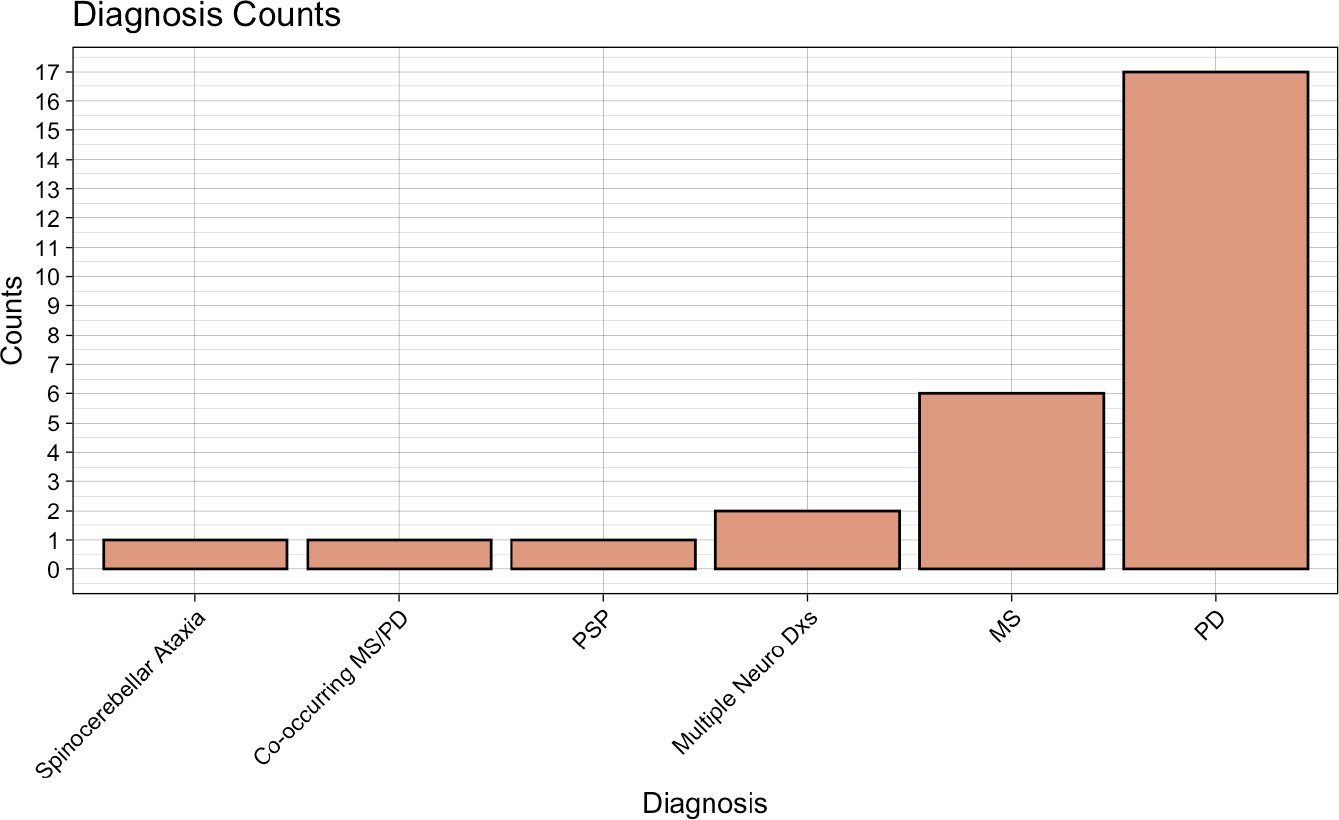
Figure 2.
Participant diagnoses. Participant diagnosis counts across the 28 articles included in this review. These included spinocerebellar ataxia, co-occurring MS and PD, PSP, multiple neurological diagnoses (‘Multiple Neuro Dxs’), MS, and PD. MS - multiple sclerosis, PD - Parkinson’s disease, PSP - progressive supranuclear palsy
Intervention characteristics
Rehabilitation discipline
More than half of the studies in this scoping review targeted skills solely within the PT discipline (n = 15/28, 53.6%). Seven studies (25%) targeted skills in both the PT and OT disciplines, and one study (3.6%) targeted skills spanning the PT, OT, and SLP disciplines72. The remaining studies targeted skills in either the OT (OT-only, n = 1/28, 3.6%)66 or SLP (SLP-only, n = 4/28, 14.3%)42,46,47,73 disciplines.
Rehabilitation targets
Altogether, 11 studies (39.2%) investigated game-based approaches targeting gross motor skills. Three studies (10.7%) specifically focused on upper limb (UL) movements54,59,69, and seven studies (25.0%) focused on hand/UL movements. Among these, two UL studies45,54, four gross motor studies62,63,65,76, and the one fine/gross motor study58 additionally targeted cognitive/executive function skills as part of the approach to motor rehabilitation. Of note, one study (3.6%) targeted cognition/executive function to investigate the effects of this approach on motor rehabilitation68.
For the remaining studies, one study (3.6%)47 targeted swallowing motor rehabilitation, and four studies42,46,72,73 targeted voice and speech skills. Of these four studies, one investigated a suite of serious games whose rehabilitation targets included gross motor, fine motor, speech motor, and cognitive/executive functioning skills72. Finally, one qualitative study conducted focus groups to investigate participants’ perspectives of game-based motor rehabilitation71. Please see Figure 3 for a detailed representation of protocol rehabilitation targets.
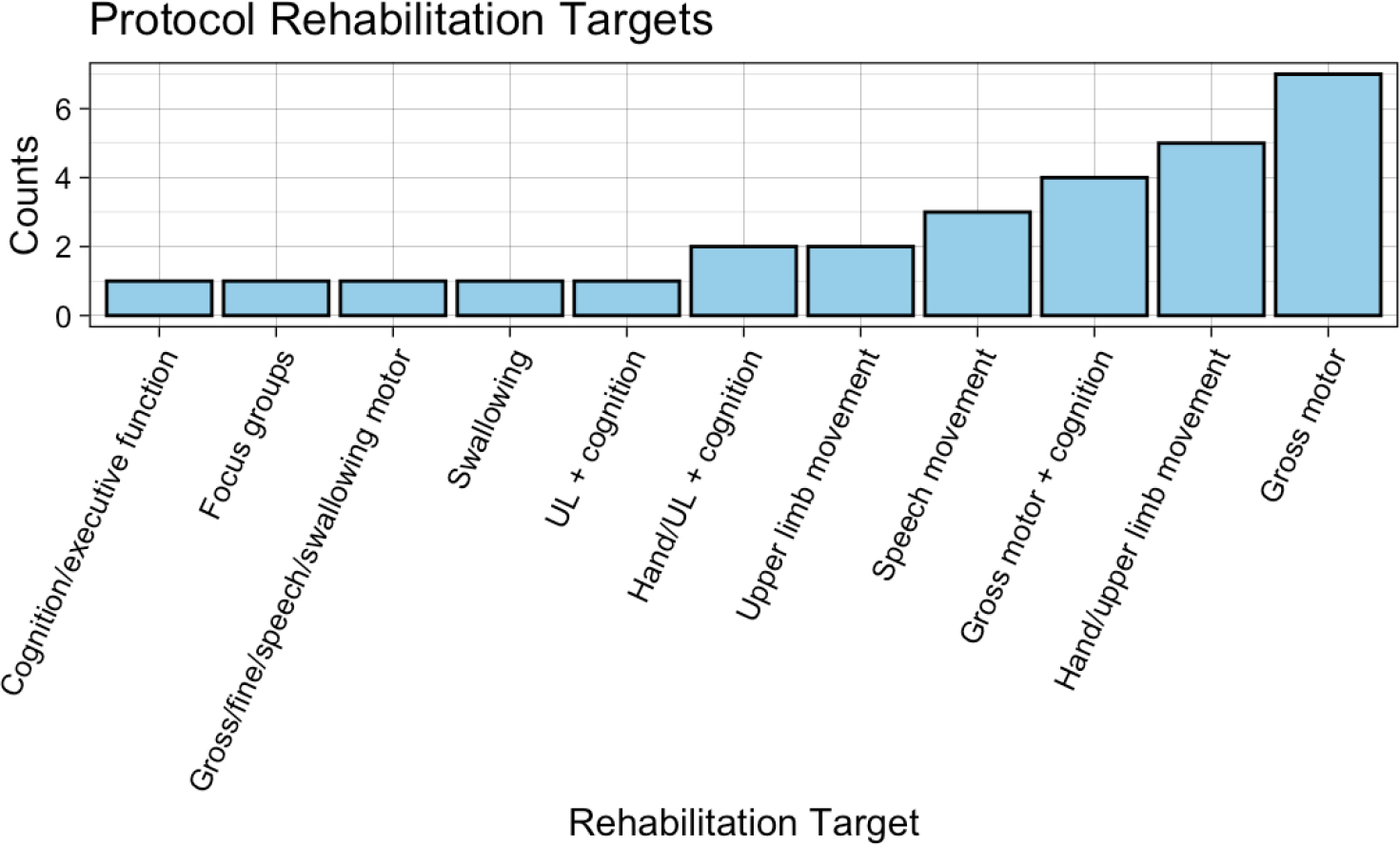
Figure 3.
Protocol rehabilitation targets. Bar plot showing counts for the protocol rehabilitation targets across the 28 studies. ‘UL’ abbreviation used below represents ‘upper limb’ (rehabilitation target)
Protocol frequencies, durations, session lengths, and session totals
Session frequencies ranged from 1 session per month (0.25 sessions per week)72 to 5 sessions per week47,55, with 15 studies (53.6%) administering sessions two to three times per week. Session lengths ranged from 10 minutes56 to 1 hour (n = 5/28, 17.9%)47,55,62,64,69, with the majority of the reported session lengths being between 30 minutes and 60 minutes (n = 15/28, 53.6%). Protocol durations ranged from one single session (n = 4/28, 14.3%)54,60,70,74 to 18 weeks (n = 1/28, 3.6%)64, with 21 studies (75%) employing protocol durations of 10 weeks or less. The majority of studies (n = 24/28, 85.7%) involved 25 or fewer sessions. Please see Table 3 and Figure 4 for a summary of these findings.
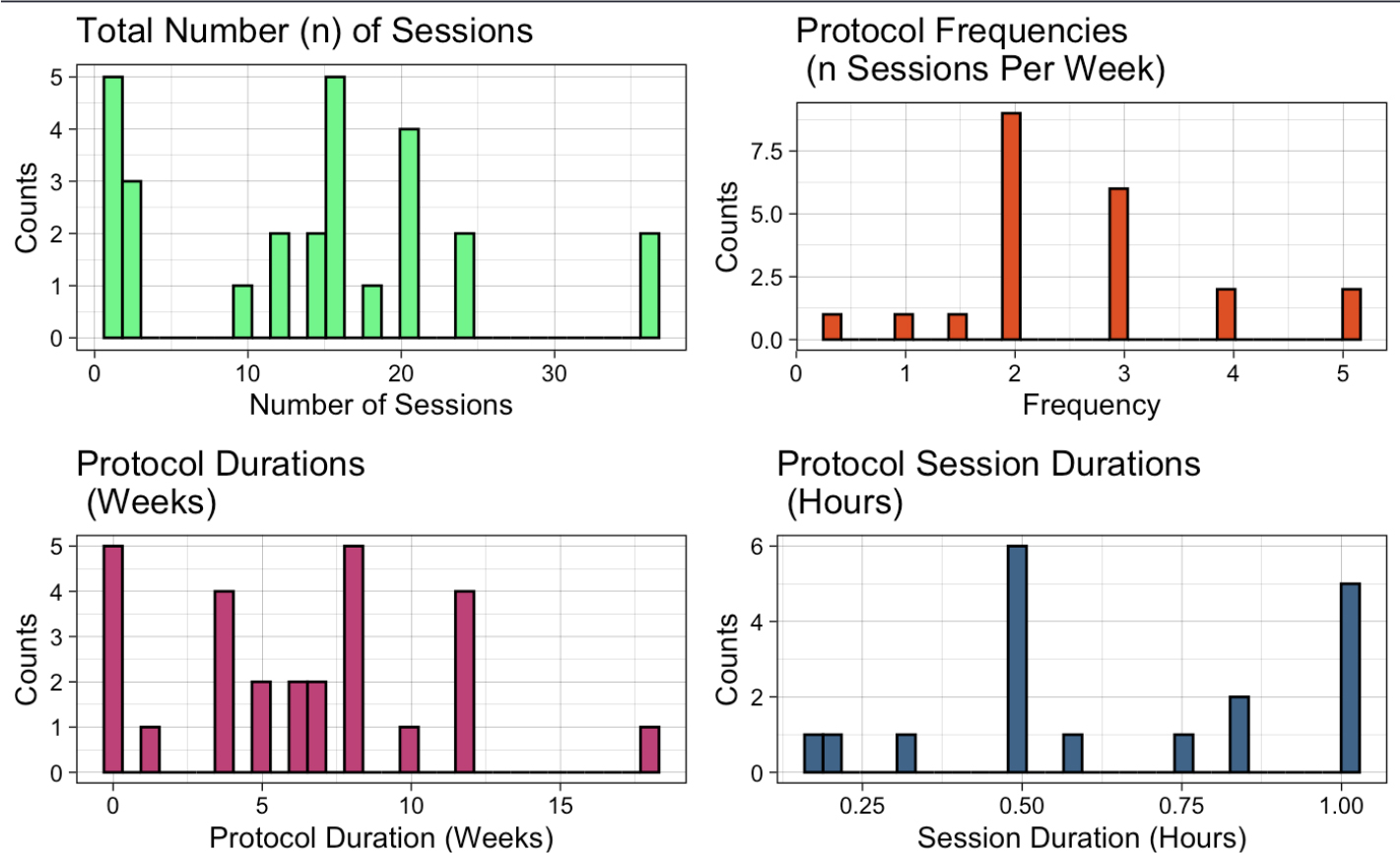
Figure 4.
Protocol total n sessions, frequency (n sessions per week), total protocol duration (weeks), and protocol session duration (hours). Four bar plots showing counts for the total number of sessions, session frequencies (per week), protocol durations (weeks), and session durations (hours) reported across the 28 studies in this review
Table 3.
Summary of intervention dosage across included studies
| Parameter | Reported range | Most common pattern (n&%) |
|---|---|---|
| Session frequency | 0.25–5 sessions per week | 2–3 sessions per week (n = 15/28, 53.6%) |
| Session duration | 10–60 minutes | 30–60 minutes (n = 15/28, 53.6%) |
| Protocol (i.e., intervention) duration | Single session-18 weeks | 10 weeks or fewer (n = 21/28, 75.0%) |
| Total number of sessions | 1–36 sessions | 25 or fewer (n = 24/28, 85.7%) |
Game characteristics
All 28 studies (100.0%) included in this review investigated games with at least one digitized component (e.g., playing video games displayed on a screen, moving sensors that adjust the on-screen game environment accordingly). 17 studies (60.7%) administered interventions comprised of more than one game (e.g., two game options, a suite with multiple mini-games), whereas 10 studies (38.5%) investigated the therapeutic effects of a single serious game. Of note, one study (3.6%) by Ringgenberg et al.71 conducted focus groups to more broadly investigate how older adults perceive exergames for motor rehabilitation71.
Game technology
All of the serious games in this review (100%) had one or more digital components. However, a variety of game devices and systems were identified, with some studies reporting the use of multiple devices or systems for one intervention. To accurately represent the frequencies of game technologies observed, the counts in this section reflect how many times each device or system was mentioned across all 28 studies. This means that, if a device or system appeared in more than one study, it was counted each time. Additionally, in studies where more than one device or system was used, each was counted individually. The rationale for this was to more readily discern any patterns in game-based intervention technologies.
Regarding devices (i.e., hardware) used for game-based interventions, 12 studies (42.9%) reported using a computer (e.g., desktop, laptop) for gameplay, and eight studies (30.4%) reported using an external screen (e.g., TV screen and projector screen) to display gameplay. Five studies (17.9%) administered serious games for tablets or mobile devices (e.g., smartphones, smartwatches, tablets). Seven studies (25.0%) used a Microsoft Kinect sensor80. Four studies (14.3%) used Nintendo Wii81 devices and systems for serious gameplay. Two studies (7.1%) used a Leap Motion Controller82. Four studies (14.3%) used VR headsets (Meta Quest 383, n = 1; Meta Quest 284, n = 1; Oculus Rift S85, n = 1; Sennheiser PC 3 Chat86, n = 1).
In terms of systems (i.e., software) used for game-based interventions, six studies (21.4%) used serious games that were developed in the Unity game development engine87. The remaining 21 systems included both proprietary systems that were specifically focused on rehabilitation and commercially available systems that are primarily purposed for entertainment (e.g., Nintendo Wii). In total, 12 of the 28 total studies (42.9%) used proprietary systems, while 10 (35.7%) studies used commercially available systems.
Games with biofeedback
Some of the studies administered serious game interventions with biofeedback components as well. Three studies (10.7%)42,47,57 employed surface electromyography (sEMG) sensors along with computer-based serious games. One study (3.6%) investigated performance outcomes in biofeedback off versus biofeedback on conditions, finding that providing heart rate biofeedback immediately after ingame actions were taken enhanced participants’ engagement during serious gameplay54. One study (3.6%) used a pulse oximeter to measure participant oxygen levels during gameplay but had only preliminary results to report at the time of publication, finding that the UL movement game ‘Grab Your Can’ (i.e., grabbing and moving cans in the virtual game environment via UL movements) was most tiring for players, as evidenced by pulse oximeter data and by participant reports70.
Games accompanying existing therapy technology
Two studies (7.1%)65,74 investigated the effects of simultaneous transcranial direct current stimulation (tDCS) and serious gameplay on motor rehabilitation; thus, these studies included equipment specifically designed to administer this intervention. Additionally, one study (3.6%) evaluated a serious game designed to be played while walking on a split-belt treadmill63.
Motor rehabilitation outcomes by domain
Data were collected regarding primary treatment outcomes (i.e., rehabilitation outcomes relative to the study aims), secondary treatment outcomes (i.e., additional rehabilitation outcomes reported), and qualitative study findings when applicable. More than half of the studies (n = 16, 57.1%) reported improved motor skills in one or more domains (e.g., gross motor, fine motor, speech/swallowing motor) after participants completed the respective game-based interventions. Results are organized here in terms of motor rehabilitation outcomes by domain (i.e., gross, fine, voice/speech, and swallowing motor outcomes) and qualitative perspectives of the game-based intervention.
Gross and fine motor rehabilitation outcomes
Seven studies (25.0%) focusing solely on gross motor targets reported improvements in motor outcomes and rehabilitation outcomes, including gains in balance, gait, and postural control following game-based interventions53,55,61–64,75. Three studies (10.7%) reported improvements in standardized clinical measures (e.g., UPDRS-III88, Mini-BESTest89, and TUG90)53,62,63, while two studies (7.1%) noted mixed or limited effects, such as improved gait speed without corresponding balance gains or unclear attribution of improvements due to concurrent therapies.63,64
Nine studies (32.1%) reported on fine motor rehabilitation outcomes (32.1%), with improvements in manual dexterity, coordination, and grip strength observed in interventions using motion-tracking, sensor-based, and VR technologies45,57–60,66,67,70. Within this group, three studies (10.7%) reported mixed findings, including improvements in some dexterity measures but not others57 or increased movement speed with reduced accuracy66, and one study (3.6%) reported outcomes comparable to conventional therapy rather than superior effects59.
Voice/speech and swallowing motor rehabilitation outcomes
Voice/speech and swallowing outcomes were reported in four studies (14.3%), including three studies (10.7%) targeting speech motor function and one study (3.6%) targeting swallowing. Speech-focused interventions demonstrated increased articulatory movement amplitude and improved intelligibility, particularly when augmented visual feedback was incorporated41,46,73, while the swallowing study reported improved oral intake and reduced residue following biofeedback-based intervention47.
Other rehabilitation outcomes
One study (n = 1/28, 3.6%) evaluated a suite of game-based interventions, targeting gross motor, handwriting (i.e., fine motor), and voice/speech motor skills72. Participants viewed the prototype positively, and, though interface fine-tuning was needed, most found the design attractive and accessible72. Despite targets focused on motor rehabilitation, additional outcomes beyond motor performance were reported in five studies (17.9%), including improvements in cognitive performance (e.g., attention, executive function, dual-task ability) following combined cognitive-motor training54,63,68,72. Two studies (7.1%) reported evidence of motor learning and transfer across tasks or modalities60,76, and two studies (7.1%) indicated potential additive or interactive effects when game-based approaches were combined with other interventions, such as transcranial stimulation or exercise62,74.
Qualitative outcomes
15 studies (53.6%) analyzed qualitative perspectives regarding the serious game interventions, while the remaining 13 studies (46.4%) did not include this information. Of note, two studies71,72 were exclusively qualitative in their design and analyses. One of these studies (3.6%) by Ringgenberg et al.71 investigated perceptions of an exergame training for older adults. This study found that participants desired serious games that had multiple difficulty levels within the game, realistic games that align with goals for participating autonomously in everyday life, high-score boards to motivate players, a simple harness application for easy use during gameplay, in-game goals that are small and achievable, and provided lots of feedback for increased motivation71.
For the 13 studies (46.4%) that reported qualitative participant perspectives in addition to game-based intervention outcomes, the reported findings were generally positive (n = 12, 42.9%)47,53,54,57,58,64–66,68,75, with 1 study finding more varied perspectives45. Reported factors influencing qualitative perspectives included preference for certain game mechanics (n = 1, 3.6%73, technology acceptance (n = 1, 3.6%)58, desired usability enhancements (n = 2, 7.1%)57,58, and perceived value (i.e., perceived rehabilitation potential) of the administered intervention (n = 2, 7.1%)45,71.
DISCUSSION
This scoping review sought to identify (1) the range of target populations, interventions, and study procedures and (2) the range and types of serious games reported in the literature on motor rehabilitation for individuals with neurodegenerative disorders. The initial search yielded 244 articles, with 28 articles ultimately meeting the criteria for inclusion (See Figure 1 for PRISMA flow diagram). The included studies primarily involved small samples, with most study groups consisting of 30 or fewer participants (i.e., 26 out of 28 [92.9%] studies that reported group/sample size values). Additionally, over half of the 28 total studies included in this scoping review were published after the year 2019, with five of the included studies (17.9%) published between 2024 and 2025 alone. These findings underscore the limited and preliminary nature of the current evidence base for game-based motor rehabilitation interventions in people with neurodegenerative diseases. A discussion of the findings is provided below.
PD prominence is reflected in participant characteristics
Overall, the general tendency for studies to include older adults is consistent with expectations, given the elevated prevalence of most neurodegenerative diseases in older adults91. Since PD emerged as the most common participant diagnosis (n = 17/28, 60.7%) across the included studies, and PD most frequently manifests in individuals over 6092, participant demographics largely aligned with expectations for PD-prominent populations. Just under half of the studies reported mean ages between 60 years and 70 years of age (n = 13/28, 46.4%), illustrating the relative prominence of older versus younger adults across the included studies. Notably, the prominence of studies focused on PD and older adult populations may limit generalizability to other neurodegenerative diagnoses and other age groups.
In terms of PD-specific participant demographics, most participants were recruited with mild-to-moderate severity (Hoehn and Yahr stage I to III) and completed the game-based motor rehabilitation protocol in an ‘on’-medication state. People in the ‘on’ state typically experience reduced motor symptom severity79. Having participants complete game-based interventions in the ‘on’ state therefore aligns with the specificity principle of neuroplasticity93 in that it enables participants to train a specific motor pattern (i.e., train a motor pattern that more closely approximates a target motor pattern), which in turn may enhance motor learning, retention, and transfer to novel contexts3–7.
While it exceeds the scope of this review to concretely identify the dopaminergic processes involved in game-based intervention completion, there is room for speculation regarding the relationships between dopaminergic processes, PD neuropathophysiology, and motivation. Findings in the literature indicate associations between dopamine and gameplay94,95, as well as between the progressive reduction in dopaminergic cells and symptoms of demotivation seen in PD96. Consequently, these authors speculate that game-based interventions may address therapeutic considerations unique to PD populations due to the overlapping considerations regarding dopaminergic processes in PD and gameplay. However, additional research is needed to more clearly discern the exact relationships between dopaminergic processes during game-based motor rehabilitation activities in individuals with PD. Furthermore, these findings may not directly apply to other neurodegenerative diseases beyond PD.
Other condition-specific trends in participant characteristics
A number of studies investigated game-based rehabilitation directed towards MS, a disease with symptom onset typically between 20 years and 40 years of age97. Contrasting the PD-specific findings, studies involving participants with MS tended to have lower mean participant ages, with six studies (21.4%) reporting mean ages of <51 years54–56,58–60. These findings are consistent with population demographics. Furthermore, three out of the total five studies identified in the updated review focused on participants with MS56,59,60, indicating that this is a potentially growing area of game-based intervention research for individuals with neurodegenerative diseases.
Participant sex demographics similarly reflected condition-specific trends. The elevated numbers of male participants relative to female participants in the identified PD-focused studies is consistent with existing prevalence data for PD92,98. Notably, the study with the greatest number of female participants (i.e., 64) focused exclusively on MS60, whereas the only study with zero female participants42 focused exclusively on people with PD. None of the studies (0%) included in this scoping review discussed how reported sex corresponded to either gender or sex assigned at birth, limiting the generalizability of findings beyond cisgender populations.
Rehabilitation targets span multiple disciplines
The rehabilitation targets for game-based interventions identified in this scoping review reflected the gross, fine, voice/speech, and swallowing motor skills that may progressively worsen in people with neurodegenerative diseases1,2. Rehabilitation targets spanned the PT, OT, and SLP disciplines, highlighting the cross-disciplinary impacts neurodegenerative diseases may have on motor skills and functioning. Game-based approaches targeting fine and gross motor skills within the collective PT and OT disciplines were most common (n = 24/28, 85.7%), with 10 studies (35.7%) targeting hand/UL movements. Targets within the SLP scope of practice, including voice/speech and swallowing (n = 5/28, 17.9%)42,46,47,72,73 were less common, indicating that the current literature for game-based approaches in SLP-specific motor rehabilitation is much more limited than in the PT and OT disciplines. The inclusion of cognitive targets alongside motor rehabilitation in several studies further suggests that game-based approaches may support multidimensional rehabilitation goals57,62,64–66,68,73,76. Overall, the identified motor rehabilitation targets span multiple rehabilitation disciplines, suggesting that game-based approaches can be leveraged and adapted to address a range of motor rehabilitation needs in individuals with neurodegenerative diseases.
Game-based intervention protocols align with motor learning theory
Game-based intervention protocols spanned a variety of session frequencies, durations, lengths, and total session numbers. While variation in administered treatment protocols is expected, given the range of disorders within the neurodegenerative disease category and the specific support needs for each diagnosis, the findings of this scoping review generally align with the principles of motor learning3–5. Most protocols involved moderate dosing (e.g., 2–3 sessions per week, 30–60 minutes per session) that were generally consistent with standardized rehabilitation programs for people with neurodegenerative disorders, such as LSVT LOUD® and LSVT BIG® (LSVT Global, Inc., Tucson, AZ, USA) programs (i.e., four 1-hour sessions per week for 4 weeks, up to 16 sessions)9, SPEAK OUT!® (Parkinson Voice Project, Dallas, TX, USA) (i.e., two to three 30-40-minute sessions per week for 4 weeks, 8–12 sessions;)8, and Pitch-Limiting Voice Treatment (PLVT; one to two 45-60-minute sessions per week for 6-12 weeks)99. These findings suggest that game-based approaches may be feasibly integrated into existing clinical workflows. Furthermore, the protocol dosage trends identified in this review are largely consistent with practices known to support motor learning, retention, and transfer3–7.
Game-based intervention outcomes
Although over half of the studies in this review (n = 16, 57.1%) improved motor skills in one or more domains (e.g., gross motor, fine motor, speech/swallowing motor) after participants completed the respective game-based interventions, findings varied and should be interpreted with caution, given the predominance of non-randomized study designs. The most frequently reported factors influencing treatment outcomes were treatment intensity and feedback42,46,47,54,55,73. These findings are consistent with motor learning theory, which emphasizes the role of practice intensity and feedback type in promoting skill acquisition and retention. In particular, interventions that provide knowledge of performance feedback (e.g., to raise an arm even higher) may enhance motor skill acquisition, whereas providing knowledge of results feedback (e.g., indicating target versus non-target motor skill performance) may enhance motor skill retention5,100.
Qualitative findings suggest that individual perspectives of motivation, engagement, and usability may influence intervention outcomes. Two studies offered qualitative insights into participant perspectives of feedback, with one study indicating that participants enjoyed how feedback motivated them to beat their previous scores66 and the other revealing that target users desired feedback to maintain high motivation71. Additional factors influencing qualitative perspectives included a preference for certain game mechanics (n = 1, 3.6%)73, technology acceptance (n = 1, 3.6%)58, desired usability enhancements (n = 2, 7.1%)57,58, and perceived value (i.e., perceived rehabilitation potential) of the administered intervention (n = 2, 7.1%)45,71. These findings underscore the relationship between an individual’s perspective of a given intervention and the outcomes of that intervention.
Regarding feature preferences, Ringgenberg et al.71 investigated older adults’ perceptions of an exergame intervention. Aligning with the tenets of Self-Determination Theory101, Expectancy-Value Theory102, and Uses and Gratifications Theory103, findings indicated that participants wanted games with multiple difficulty levels, realistic scenarios that help them achieve everyday goals independently, high-score boards for motivation, easy-to-use harnesses, small and achievable ingame goals, and plenty of feedback to keep them motivated71. Overall, the findings of this scoping review support the assertion that game-based interventions should be evidence-based, should incorporate key stakeholder perspectives (e.g., family, caregivers, providers) into the design process for optimal intervention outcomes.
Technology trends and considerations
All of the game-based interventions in this review had one or more digital technologies, such as computers, tablets, and motion sensors. It exceeds the scope of this review to definitively determine the rationale underlying this pattern. However, digital game-based intervention systems can generally be reprogrammed and adapted to meet target users’ needs, whereas static game-based interventions (e.g., physical tabletop board games) may require additional resources to be updated (e.g., additional materials for fabricating and distributing physical game materials, such as game boards and pieces). Moreover, universal design principles104 advocate for ‘equitable use’, ‘flexibility in use’, ‘simple and intuitive use’, ‘perceptible information’, ‘tolerance for error’, ‘low physical effort’, and ‘size and space for approach and use’ may be integrated into digital systems.104,105 Digital systems may enhance healthcare accessibility,106 particularly if the digital system’s design aligns with the principles of universal design.107,108 This may explain, at least in part, why the articles in this review employed game-based interventions with at least one digital component.
The observed use of digital elements across all 28 studies is reasonable given that digital systems may be designed and adjusted to accommodate personspecific support needs.109,110 This is particularly relevant to individuals with neurodegenerative diseases for whom motor skill degeneration may pose a barrier to game-based intervention accessibility (e.g., ability to type on tablets or mobile devices).111 Personalizing these systems aligns with expectancy-value102 and uses and gratifications103 theories of motivation in that it creates a game environment wherein the user is less likely to experience accessibility-related barriers to success, thereby bolstering motivation to engage with a given game-based intervention. It additionally aligns with self-determination theory98, as administering more user-accessible interventions can amplify autonomy, thereby enhancing intrinsic motivation. Future research investigating how the presence or absence of accessibility features in game-based intervention technologies may offer more insight into how accessibility influences treatment outcomes for individuals with neurodegenerative diseases.
Reliance on digital devices and systems, however, may introduce additional barriers to optimal motor rehabilitation interventions and outcomes. In particular, cost-related barriers may impede the feasibility of game-based approaches that require digital elements. Even for interventions using ‘low-cost’ systems33, costs may still present barriers to access or long-term adherence, particularly in chronic conditions. Future research should explicitly examine the impact of cost and technology access on implementation and outcomes.
Limitations
While this scoping review provides insight into the present uses of serious games to facilitate motor symptom management in individuals with neurodegenerative disorders, several limitations are discussed. Consistent with established PRISMA-Scr guidelines48,50, no formal critical appraisal was conducted; however, study designs were extracted and synthesized. Most of the included studies involved small sample sizes or non-randomized experimental study designs, whereas randomized experimental study designs were less common. The elevated proportion of studies with a lower level of evidence, alongside the growing number of publications in this area throughout the last 5 years, highlights the emerging and preliminary nature of the current evidence base. Findings should consequently be interpreted with caution, and future reviews incorporating quality appraisal are needed to support more robust and actionable conclusions.
This review did not examine game-based interventions targeting non-motor outcomes (e.g., cognition) or pediatric populations. Future research should explore these areas to better inform intervention use across a broader range of clinical contexts. The databases included in this review (i.e., PubMed, CINAHL, and Scopus) were selected due to their relative emphasis on healthcare outcomes, which align with the clinical focus of this review; however, this approach may have limited the inclusion of studies emphasizing technological development or engineeringbased outcomes. Additionally, only studies published in English were included, as all reviewers were monolingual English speakers and therefore unable to reliably interpret studies published in other languages. Accordingly, future reviews may benefit from incorporating additional interdisciplinary databases and multilingual screening procedures to capture a broader range of game-based intervention research.
Additionally, all included studies utilized interventions with at least one digital component, highlighting a need for research comparing digital and analog (i.e., low-tech, non-digital) game-based approaches. Because this review focused on motor rehabilitation outcomes, game design features such as genre, rules, and mechanics were not analyzed. Future studies should examine these design elements to improve understanding of how serious games are developed and applied in rehabilitation, and to inform the design of more effective, user-centered interventions for individuals with neurodegenerative diseases.
CONCLUSIONS
Findings from this scoping review suggest a growing research interest in the use of game-based interventions to support motor rehabilitation in individuals with neurodegenerative diseases. Studies across the OT, PT, and speech therapy disciplines have explored game-based interventions as a feasible intervention option. However, the current evidence base remains preliminary and is characterized by small sample sizes, heterogeneous study designs, and variability in intervention protocols, which limits generalizability across populations and settings. Evidence is most prevalent for individuals with PD, with a smaller but emerging body of work examining applications for individuals with MS. Consequently, findings should be interpreted cautiously and may not generalize beyond PD to individuals with other types of neurodegenerative diseases.
Game-based interventions were frequently associated with improvements in motor, speech, and swallowing outcomes in some studies, although results were inconsistent and often influenced by factors such as intervention intensity, feedback features, and concurrent therapies. Additionally, barriers to implementation, including cost, access to technology, and usability considerations, may impact the feasibility and scalability of these interventions in clinical rehabilitation settings.
Future research should prioritize more rigorous and adequately powered study designs, with a focus on evaluating long-term effects, quality of life outcomes, and adherence to intervention protocols. Greater standardization of outcome measures and intervention reporting is also needed to support comparison across studies and to better determine the clinical utility of game-based rehabilitation approaches.
ACKNOWLEDGEMENTS
We would like to thank Jessica Sender, Michigan State University Communicative Sciences and Disorders Librarian, for her insights and guidance during the search strategy formulation.
Notes
[6] Conflicts of interest CONFLICTS OF INTEREST
The authors declare no conflict of interest.
SUPPLEMENTARY MATERIAL
S1.
Search Terms. Search terms used in this scoping review.
| Database | Search Terms |
|---|---|
| PubMed | (((((((game*[Title/Abstract]) OR (gami*[Title/Abstract])) OR ((„gamification”[Title/Abstract]))) OR („Gamification”[MeSH])) OR („exergaming”[Title/Abstract])) OR („Exergaming”[MeSH])) AND ((((neurol*[Title/Abstract]) OR (neurodegen*[Title/Abstract])) OR („Nervous System” [Title/Abstract])) OR („Neurodegenerative diseases”[MeSH]))) AND ((„motor function”[Title/Abstract]) OR („motor learning”[Title/Abstract]) OR („Motor Skills Disorders”[MeSH]) OR („motor rehabilitation”[Title/Abstract]) OR („speech”[Title/Abstract]) OR („voice” [Title/Abstract]) OR (dysph*[Title/Abstract]) OR (swallow*[Title/ Abstract])) |
| CINAHL | (“Games” OR „Exergames” OR “Gamification”) AND („Neurodegenerative Diseases” OR „Nervous System Physiology”) AND (motor* OR „Rehabilitation” OR „Motor Skills Disorders” OR “speech” OR „voice” OR dysph* OR swallow*) |
| Scopus | (gamif* OR „games” OR „exergame”) AND („Neurodegenerative diseases” OR “Nervous system”) AND (motor* OR „Rehabilitation” OR „Motor Skills Disorders” OR “speech” OR „voice” OR dysph* OR swallow*) |