
Table 1.
Keywords and search terms used in the search strategy
| Category | Search terms |
|---|---|
| Oriented Physical Activity | Surf OR Surfing OR Surfboarding OR Surf riding OR Adaptive Surf OR Adaptive Surfing OR Adapted Surf OR Adapted Surfing OR Para-surf OR para-surfing OR surf therapy |
| AND | |
| Disabilities | Disability OR Physical Disability OR Sensory Disability OR Wheelchair OR Wheelchair user OR Disabled OR cerebral palsy OR deaf OR hearing impairment OR visual impairment OR blind people OR epilepsy OR diabetes OR restricted growth OR short stature OR speech disability OR spinal cord injury OR amputee OR extremities loss OR hearing loss OR traumatic brain injury OR vision loss |
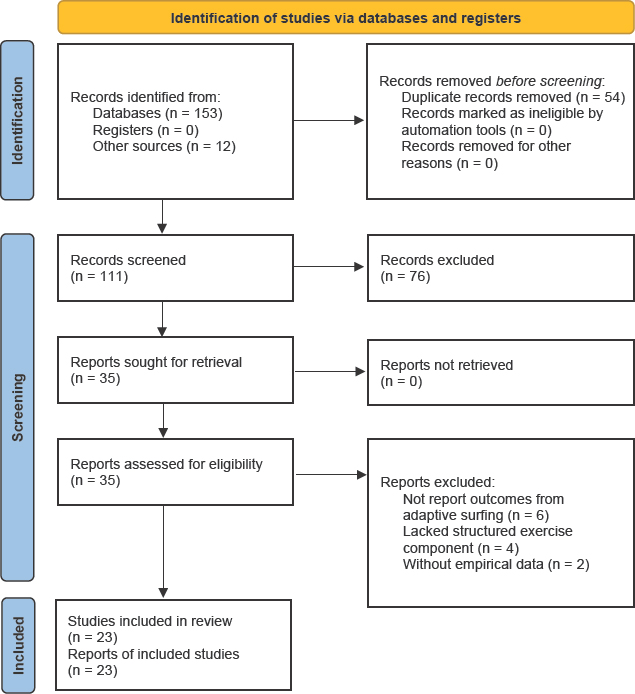
Figure 1.
PRISMA-ScR flow diagram of study selection
Table 2.
Summary of studies on adaptive surfing interventions
| Intervention focus | Authors | Population | Key intervention, core outcomes & recommendations |
|---|---|---|---|
| Physical Health & Functional Outcomes | Fleischmann et al.28; Armitano et al.27; Clapham et al.14; Silva et al.31; Denneman et al.32; Cruz et al.16 | Participants with physical or intellectual disabilities and individuals with brain injury | Structured surf programmes (weekly sessions, 5 days–6 months) improved strength, balance, endurance, flexibility and coordination. Surfing was feasible and motivating; recommended for rehabilitation and long-term functional recovery. |
| Psychological & Mental Health Outcomes | Walter et al.40,41; Marshall et al.17; Chevrier et al.42 | Military personnel, adults with psychiatric disorders, or youth with mental health risks | Surf therapy programmes (1.5–4 hours, single to multi-week) led to decreased anxiety, depression, PTSD symptoms, and increased mood, resilience, self-esteem and mindfulness. Suggested inclusion of control groups and longitudinal follow-up to strengthen evidence. |
| Social Inclusion & Empowerment | Lopes33; Lopes et al.34; Schmid et al.35; Gibbs et al.36; Wilkie et al.37; Silva et al.30 | Children, youth and adults with various disabilities | Inclusive surf activities (weekly sessions, 4–12 weeks) promoted social connection, empowerment, autonomy and community participation. Emphasised peer support, accessibility and sustained programme opportunities. |
| Adaptive Surfing Techniques & Accessibility | Schvirtz et al.38; Santana-Santana et al.39 | Individuals with limb amputations or mobility limitations | Development of adapted surf prostheses and accessible beaches facilitated participation, reduced pain and anxiety and enhanced confidence. Recommended continuous innovation in adaptive equipment and inclusive infrastructure. |
| Reviews/Theoretical/Programme Mapping | Lemarchand43; Ponting44; Moreton et al.45; Brennan et al.19 | Populations with physical, cognitive and mental disabilities; programme overview studies | Narrative and theoretical analyses highlighted the physical, psychological and social benefits of adaptive surfing. Recommended establishing standard protocols, cross-sector collaboration and expanded research to define mechanisms of benefit. |
Table 3.
Health outcomes identified in a review of adaptive surfing studies
| Physical health | Education + learning | Mental + psychological well-being | Social (cohesion + connection) | Other outcomes |
|---|---|---|---|---|
| + Improved: balance proprioception coordination muscle tone core strength upper and lower body strength cardiorespiratory fitness motor coordination flexibility active lifestyles prevention of sedentary behaviours physical function Body composition (reduced body fat and increased muscle mass) Motivation for physical activity. | Highly sensory experience – facilitating learning. + Enhanced: Surfing and water safety skills Resilience Teamwork. Environmental awareness and stewardship Development of adaptive surfing equipment and techniques Knowledge-sharing on best practices. | + Improved: Quality of life. General mood Self-esteem. Positive emotions e.g., pleasure, joy and happiness. Autonomy Feeling of freedom often repressed by disability. Problem-solving. Reduced anxiety. Less stress. Decreased depression symptoms. Attention and focus Emotional regulations (applicable in other life areas) Revitalising – sense of being alive Sense of achievement and purpose. | + Social inclusion facilitator: Opportunities to travel and meet people. Enhanced social connection between diverse groups Increased verbalisation. Improved family connection/interaction. Reduced social stigma. Social recognition and admiration. Feeling part of a community. Formation of meaningful social ties Increased sense of belonging. | Greater awareness of the need for improved access to beaches, etc. Status and recognition in a community (e.g. surfing and/or Para surfing) Transformational life experience. Overcoming perceived ‘barrier’ of disability. Increased connection to nature Promotion of a biopsychosocial ecological approach to well-being. |