
INTRODUCTION
Anterior cruciate ligament (ACL) injuries are among the most prevalent and severe knee injuries that occur during sports activities and are recognised as a significant public health problem worldwide1,2. It is estimated that 100,000–200,000 primary ACL injuries occur annually in the United States, with direct medical costs associated with these injuries and subsequent reconstructions reaching several billion dollars3–5. Beyond the economic impact, ACL injuries lead to persistent pain, knee instability and long-term risks such as osteoarthritis, with only about 50% of patients returning to their pre-injury sports level6,7.
In an effort to prevent ACL injuries, numerous studies have attempted to identify the risk factors for such injuries over the past several decades. At present, the known risk factors for ACL injuries can be divided into two categories: intrinsic and extrinsic factors8,9. Key intrinsic risk factors, as identified in recent review articles, include female sex (with a 2–8 times higher risk), diminished neuromuscular control and anatomical variations such as increased Q-angle or narrow intercondylar notch10,11. Extrinsic risk factors encompass the nature of the sport (i.e. sports involving frequent changes of direction and jumping, such as soccer, basketball and handball), the characteristics of the footwear and the friction thereof, and the playing surface characteristics12.
Recent studies have indicated a possible association between patellar height – an anatomical risk factor – and ACL injury13,14. The patella facilitates the knee extension mechanism by acting as a mechanical lever that redirects quadriceps force to the tibia via the patellar tendon15. Patellar height, defined as the relative position of the patella to the femur, is traditionally measured on lateral radiographs using indices such as the Insall-Salvati Index (ISI), Caton-Deschamps Index or Blackburne-Peel Index16,17. A normal ISI range is between 0.8 and 1.2, with values above 1.2 classified as patella alta (high patella) and below 0.8 as patella baja (low patella)16. Abnormal patellar height, particularly patella alta, alters the patellofemoral joint contact point and reduces lever arm efficiency during knee motion, which is closely linked to joint instability, patellofemoral pain syndrome and dislocations18,19.
Biomechanical hypotheses have been proposed to establish a correlation between patellar height and ACL injury. Ward et al.18 reported that patella alta decreases the contact area of the patellofemoral joint, which subsequently increases the load on the patellar tendon. Theoretically, this finding suggests that patella alta has the potential to modify the extension mechanism of the quadriceps femoris, thereby increasing the anterior tibial translation force and the resultant load on the ACL during knee flexion20,21. Furthermore, an increased relative length of the patellar tendon associated with patella alta may diminish the dynamic stability of the knee. It has also been suggested that patella alta might alter the Q-angle of the quadriceps femoris, potentially leading to an increased knee valgus moment – a primary mechanism contributing to ACL injury22. However, these biomechanical mechanisms remain largely theoretical and lack consistent validation in clinical studies.
A number of observational studies have been conducted that have compared patellar height between patients with ACL injury and healthy controls. However, the results of these studies have been inconsistent23–26. A body of research has identified a conspicuously elevated ISI in patients with ACL injury. Conversely, other studies have reported no significant difference, or even contradictory results. These discrepancies may be attributed to various factors, including differences in study design, participant selection criteria, measurement methods and sample size limitations. Although individual studies have yielded conflicting results due to small sample sizes or varied protocols, no systematic review or meta-analysis has yet synthesised this evidence. This study provides the first quantitative synthesis to resolve these discrepancies.
The objective of this study was to investigate the association between patellar height discrepancies and ACL injury. Given the limited prospective evidence, this systematic review and meta-analysis aimed to explore patellar height as a potential associated factor, providing a foundational basis for future screening and injury prevention strategies. Subgroup analyses were performed based on age, measurement method and measurement time point to address potential biomechanical variations. The primary outcome was to evaluate the structural relationship between patellar height and ACL injury associate in an exploratory context.
MATERIAL AND METHODS
The study protocol adheres to the guidelines outlined in the preferred reporting items for systematic reviews and meta-analysis protocols (PRISMA-P) statement. The protocol for this systematic review and meta-analysis was registered with PROSPERO (Registration No.: CRD420251154474), the international prospective register of systematic reviews. As this study involved analyses of previously published and de-identified data, formal ethics approval was not required. Instead, a comprehensive research exemption certificate covering all aspects of this systematic review and meta-analysis was obtained from the K University Institutional Review Board (Exemption Confirmation No.: KW-2025-E-10).
Search strategy
A comprehensive search was conducted across seven electronic databases (i.e. PubMed, Embase, Cochrane Library, CINAHL, Scopus, SPORTDiscus and Web of Science) up to 31 October 2025. The search strategy employed a combination of three fundamental concepts, utilising Boolean operators (AND/OR), to refine the search parameters. Detailed search strategies for each database are presented in Appendix 1. No additional search methods, such as reference list checking, citation tracking or grey literature searching, were performed. This decision was based on our focus on peer-reviewed, high-quality observational studies to ensure the reliability and methodological rigour of the synthesised evidence.
Eligibility criteria
Observational studies (cohort, case–control and cross-sectional) comparing patellar height measurements between patients with ACL injury and healthy controls were included in the analysis. Eligibility was confirmed if patellar height was measured before ACL surgery or at the time of injury using validated radiographic indices (ISI, Blackburne–Peel ratio, Caton–Deschamps index). Studies involving cadavers, studies including participants who had previously undergone ACL reconstruction and studies using only qualitative assessments of patellar position were excluded from the analysis. Studies were also excluded if they met any of the following criteria: (1) published in languages other than English, (2) case reports or review articles and (3) conference abstracts without available full texts. To ensure consistency with the subsequent meta-analysis, age groups were strictly categorised into adolescents (≤16 years) and adults (>16 years) and patellar height was analysed specifically based on validated radiographic indices such as the ISI.
Study selection
Duplicate records were initially identified and removed using the automated ‘Find Duplicates’ function in EndNote, followed by a manual side-by-side comparison to ensure accuracy. The titles and abstracts of the remaining articles were then independently screened by two reviewers (MBK, KRK) against the predefined inclusion criteria. Subsequently, the full texts of all potentially eligible studies were retrieved and independently reviewed for final inclusion. Disagreements were resolved through discussion or consultation with a third reviewer (HJS). The study selection process was documented in accordance with the PRISMA 2020 flow diagram (Figure 1).
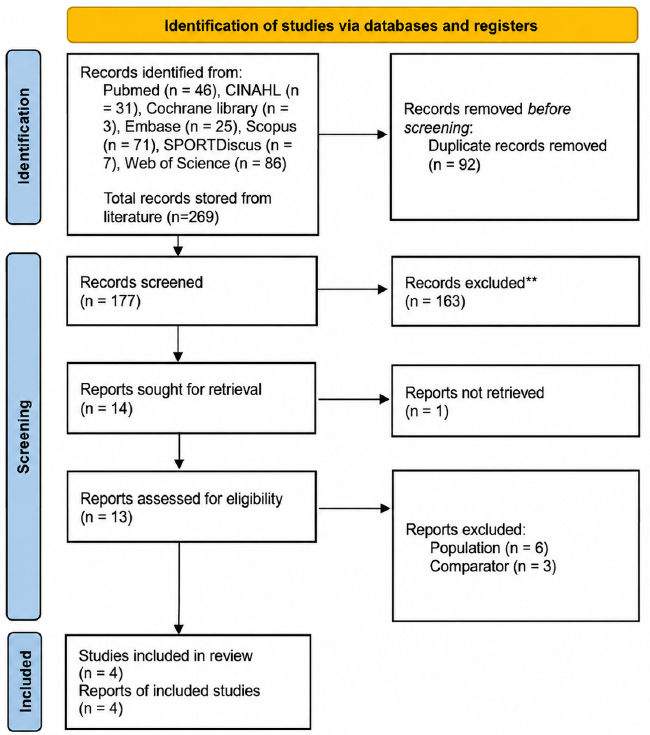
Figure 1.
PRISMA flow diagram. PRISMA, preferred reporting items for systematic reviews and meta-analysis
Data extraction
Two authors (MBK, KRK) independently extracted data from each study using a predefined, standardised data extraction template. The extracted information included study-specific characteristics, such as authors, publication year, country and study design. Participant-related data, including sample size, age, sex and sport type, were also recorded. Furthermore, patellar height measurement methods and outcomes, specifically the mean and standard deviation (SD) for both the ACL injury and control groups, were meticulously documented. Any discrepancies between the two reviewers during the extraction process were resolved through discussion or, if necessary, by consulting a third reviewer (HJS). In cases where data were missing or statistical values were incomplete, the corresponding authors were contacted for clarification. Following these procedures, the finalised data were consolidated into a consensus table (Table 1).
Table 1.
Characteristics of studies included in the systematic review and meta-analysis
| Study | Country | Study design | Sample size (ACL/Control) | Age(years) Mean ± SD | Sex (% Male) | Sport/activity | ISI measurement method | Measurement timing | ISI Mean ± SD (ACL/control) | Followup duration |
|---|---|---|---|---|---|---|---|---|---|---|
| Degnan et al.23 | USA | Case-control | 70 (34/36) | ACL: 12.4 ± 1.4 Control: 12.8 ± 2.1 | ACL: 73.5% Control: 80.6% | Youth athletes | Traditional ISI (MRI sagittal PD) | After ACL tear | ACL: 1.16 ± 0.16 Control: 0.99 ± 0.14 | N/A |
| Kwak et al. 24 | South Korea | Prospective cohort | 231 (116/115) | ACL: 14 ± 3.7 Control: 14.2 ± 3.6 | 100% | Soccer | Traditional ISI (MRI sagittal PD) | Before ACL tear | ACL: 0.90 ± 0.20 Control: 1.00 ± 0.20 | N/A |
| Güven et al.25 | Turkey | Prospective cohort | 210 (120/90) | ACL: 29.1. ± 8.2 Control: 31.8 ± 9.8 | 100% | Not specified | Traditional ISI (MRI sagittal PD) | Before ACL tear | ACL: 1.01 ± 0.15 Control: 0.96 ± 0.14 | 2014–2020 |
| Lin et al. 26 | China | Prospective | 380 (190/190) | ACL: 27.72 ± 7.55 Control: 30.30 ± 6.62 | ACL: 75.3% Control: 63.2% | Not specified | Modified ISI (MRI sagittal PD/T2) | Before ACL tear | ACL: 1.74 ± 0.23 Control: 1.64 ± 0.15 | 2019–2023 |
Quality assessment
The methodological quality of each included study was independently assessed by two reviewers (MBK, KRK) using the Newcastle–Ottawa Scale (NOS) (Table 2). The NOS evaluates three domains: selection, comparability and outcome assessment. Each study was categorised based on its total score, with scores of 7–9 points representing high quality, 4–6 points indicating medium quality and 0–3 points signifying low quality. Disagreements among reviewers were resolved through discussion or, if necessary, by consulting a third reviewer (HJS).
Outcome measurement
The primary outcome measure was the difference in patellar height measurements between patients with ACL injury and healthy controls, analysed as a continuous variable using the standardised mean difference (SMD). SMD was selected as the effect size measure to account for variations in radiographic indices across the included studies. Secondary outcomes encompassed subgroup analyses based on age (≤16 years vs >16 years), measurement method and measurement time point to ensure consistency with the predefined eligibility criteria.
Statistical analysis
Statistical heterogeneity among the included studies was assessed using the I2 statistic and Cochran’s Q test. A random-effects model was employed as the default approach for the meta-analysis to account for potential clinical and methodological heterogeneity across studies. SMDs and 95% confidence intervals (CIs) were calculated for continuous outcomes using the inverse variance method. SMD was chosen over mean difference to allow for the synthesis of data from various radiographic indices. A common-effects model was considered only if low heterogeneity was indicated (I2 < 50% and Cochran’s Q test p > 0.10); otherwise, a random-effects model using the REML method was applied. Statistical significance was set at p < 0.05. Preplanned subgroup analyses were performed by age group (≤16 years vs >16 years), measurement method (traditional ISI vs modified ISI) and measurement time point. Subgroup differences were assessed using the chi-square test (Q statistic). Furthermore, a sensitivity analysis was conducted through a leave-one-out approach to evaluate the impact of individual studies on the overall effect size. Meta-regression and publication bias analyses were not conducted due to the limited number of included studies (<10), as these methods lack sufficient statistical power and reliability with small sample sizes. All statistical analyses, including forest plots and sensitivity analyses, were performed in R software (version 4.5.2; R Core Team, R Foundation for Statistical Computing, Vienna, Austria). The meta package was used for the primary meta-analysis, while the metafor package was utilised for advanced modelling and leave-one-out analysis to ensure reproducibility.
RESULTS
Study characteristics
Four studies (three prospective cohorts and one case–control study) involving 891 participants (460 ACL injuries and 431 controls) were included in this meta-analysis (Table 1)23–26. The participant ages ranged from a mean of 12.4 to –31.8 years, and the proportion of male participants across the studies varied from 73.5% to 100%.
Primary outcome
Pooled analysis showed a significantly higher ISI in the ACL injury group compared with healthy controls under the common-effects model (SMD = 0.250; 95% CI: 0.116, 0.384; Figure 2). However, substantial statistical heterogeneity was observed across the included studies (I2 = 93.9%, p < 0.0001; Figure 2). By contrast, the random-effects model yielded a non-significant effect (SMD = 0.350; 95% CI: −0.291, 0.991), primarily due to the considerable variability in effect sizes among the studies – most notably the contradictory findings from Kwak et al.24 compared with the other three studies (Figure 2). To account for this high heterogeneity and to estimate the distribution of true effects in future clinical settings, a 95% prediction interval (PI) was calculated. The 95% PI was wide and crossed zero, ranging from −1.92 to 2.62. This broad interval suggests that the true effect size may vary substantially depending on specific contexts, which warranted further investigation through subgroup analyses to identify potential sources of variance.
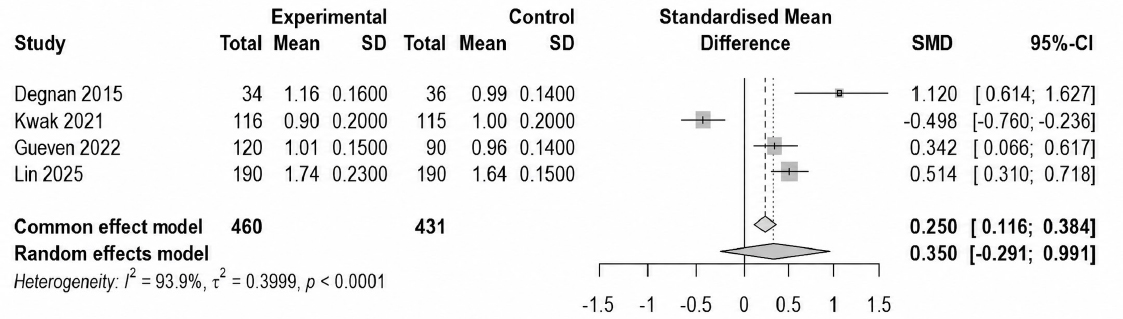
Figure 2.
Forest plot of the ISI in ACL - injured patients and controls. ACL - anterior cruciate ligament, CI - confidence intervals, ISI - Insall-Salvati index, PI - prediction interval, SD - standard deviation, SMD - standardised mean differences
Subgroup analyses
Age stratification revealed significant differences in the association between patellar height and ACL injury (Figure 3). In participants aged ≤16 years, no significant association was found, and heterogeneity remained very high (I2 = 96.8%). Conversely, participants >16 years demonstrated a consistently significant positive association with no heterogeneity (I2 = 0%), suggesting that patellar height may be a more reliable indicator in adults than in adolescents. Measurement methodology also influenced the results (Figure 4). Studies employing the traditional ISI, which measures the ratio of patellar tendon length to the greatest diagonal length of the patella, showed no significant effect with high heterogeneity. By contrast, the modified ISI (MIS) method, which utilises the length of the posterior articular surface of the patella instead of the total patellar length, demonstrated a significant positive association. Furthermore, measurement timing significantly affected the association (Figure 5). ISI measured after ACL rupture showed a large effect size. By contrast, pre-injury measurements demonstrated only modest effects accompanied by substantial heterogeneity.
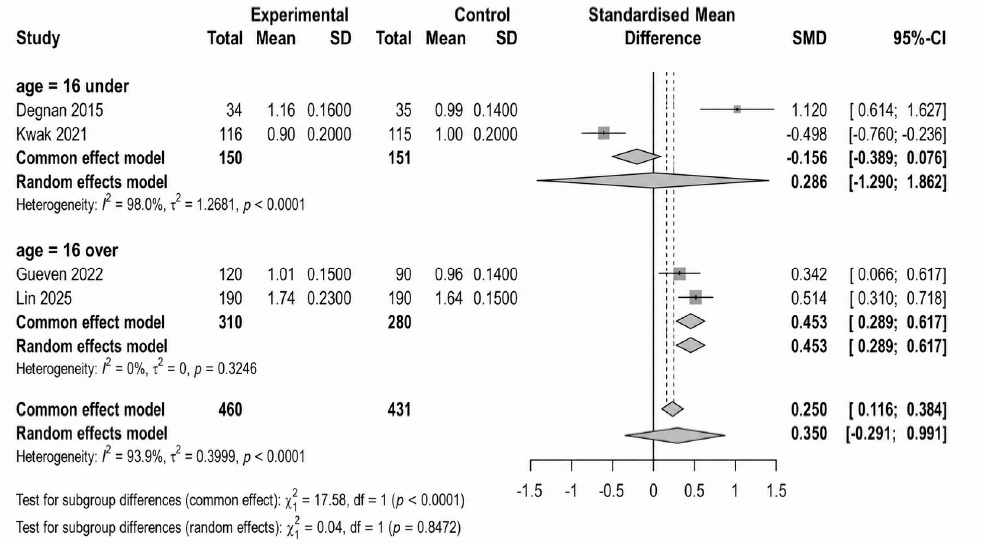
Figure 3.
Subgroup analysis by age group. CI - confidence intervals, SD - standard deviation, SMD - standardised mean differences
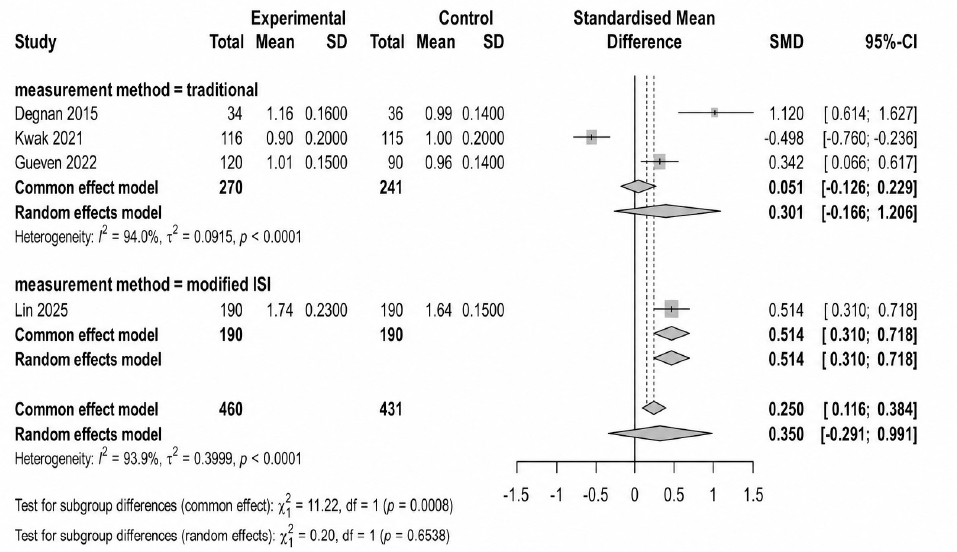
Figure 4.
Subgroup analysis by measurement method. CI - confidence intervals, SD - standard deviation, SMD - standardised mean differences
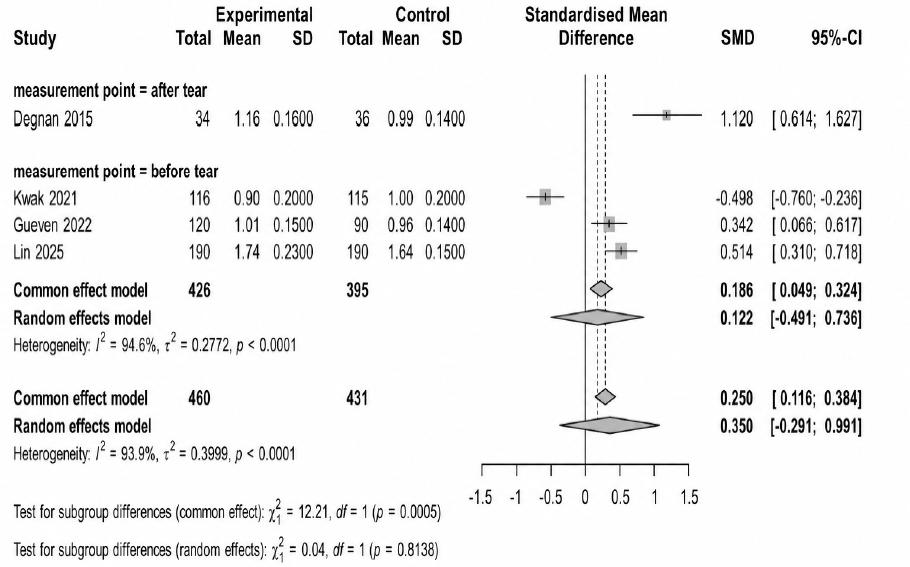
Figure 5.
Subgroup analysis by measurement timing. CI - confidence intervals, SD - standard deviation, SMD - standardised mean differences
Sensitivity analyses
Leave-one-out sensitivity analysis was performed to assess the robustness of the pooled effect estimate (Figure 6). While the common-effects model remained consistent regardless of study exclusion, the random-effects model exhibited substantial alterations in both effect size and heterogeneity. Notably, the exclusion of individual studies had varying impacts, with the studies by Kwak et al.24 and Lin et al.26 contributing most significantly to the overall heterogeneity and pooled estimate. Specifically, removing the study by Kwak et al.24 resulted in the most marked increase in effect size alongside a reduction in heterogeneity, whereas the exclusion of other studies produced only moderate shifts in the results.
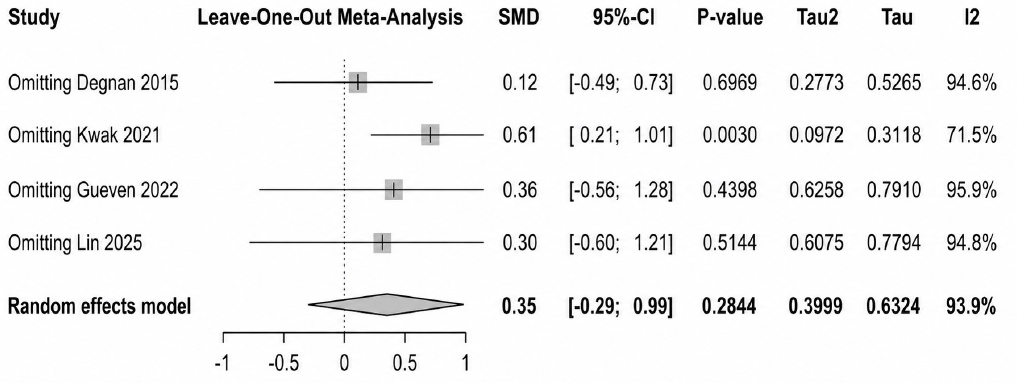
Figure 6.
Forest plot of the leave-one-out sensitivity analysis. CI - confidence intervals, SMD - standardised mean differences
Meta-regression and publication bias assessment
Due to the limited number of included studies (n < 10), formal meta-regression and publication bias assessments, such as Egger’s regression test and funnel plot analysis, were not performed. These statistical techniques generally lack sufficient power and reliability when applied to small sample sizes, potentially leading to misleading results. Consequently, the influence of study-level covariates on heterogeneity and the presence of publication bias remain uncertain. These findings should therefore be interpreted with caution, highlighting the need for future large-scale primary studies to facilitate a more comprehensive evaluation of these factors.
Risk of bias assessment
The methodological quality of the included studies was assessed using the NOS (Table 2). All four studies received scores indicating high quality (7–9 points). Specifically, two studies (Güven et al.25 and Lin et al.26) achieved a maximum score of 9, while the remaining studies scored 8 and 7, respectively (Table 2). All studies demonstrated adequate participant selection and outcome assessment. However, the domains of comparability varied across the studies, particularly regarding the statistical adjustment for key confounding variables such as age, sex and activity level (Table 2).
Certainty of the evidence
The certainty of the evidence was assessed using the GRADE approach (Table 3). The evidence for the overall ISI difference was evaluated as very low quality due to very serious inconsistency (indicated by high heterogeneity, I2 = 93.9%) and serious imprecision (reflected by a wide CI crossing the null). For the subgroup of participants aged >16 years, the evidence was rated as low quality; while inconsistency and imprecision were not serious, the rating was limited by the inherent risk of bias in the non-randomised study designs. For participants aged ≤16 years, the certainty was downgraded to very low quality due to very serious inconsistency (I2 = 96.8%) and very serious imprecision resulting from a small combined sample size. Overall, the certainty of the evidence across most outcomes is low to very low, highlighting the need for further high-quality, large-scale studies to confirm these associations.
Table 3.
GRADE Summary of findings for the association between patellar height (ISI) and ACL injury
| Certainty assessment | No of patients | Effect | Certainty | Importance | ||||||||
|---|---|---|---|---|---|---|---|---|---|---|---|---|
| No. of studies | Study design | Risk of bias | Inconsistency | Indirectness | Imprecision | Other considerations | ACL injury | Non--ACL injury | Relative (95% CI) | Absolute (95% CI) | ||
| Outcome 1: ISI difference (overall) (assessed with: [ISI]; Scale from: 0 to 3) | ||||||||||||
| 4 | Non-ran-domised studies | Not serious | Very seriousa | not serious | seriousb | none | 460 | 431 | - | SMD 0.35 SD higher (0.291 lower to 0.991 higher) | ⴲⵔⵔⵔ Very lowa,b | CRITICAL |
| Outcome 2: ISI difference (age > 16 years) (assessed with: [ISI]; Scale from: 0 to 3) | ||||||||||||
| 2 | Non-ran-domised studies | Not serious | Not serious | not serious | not serious | none | 310 | 280 | - | SMD 0.453 SD higher (0.289 higher to 0.617 higher) | ⴲⴲⵔⵔ Low | CRITICAL |
| Outcome 3: ISI difference (age ≤ 16 years) (assessed with: [ISI]; Scale from: 0 to 3) | ||||||||||||
| 2 | Non-ran-domised studies | Not serious | Very seriousc | not serious | very seriousd | none | 150 | 151 | - | 0.296 higher (1.29 higher to 1.882 higher) | ⴲⵔⵔⵔ Very lowc,d | IMPORTANT |
| Outcome 4: ISI difference (measurement timing – before tear) (assessed with: [ISI] – prospective measurement) | ||||||||||||
| 3 | Non-ran-domised studies | Not serious | Very seriouse | not serious | seriousf | none | 426 | 395 | - | SMD 0.122 SD higher (0.491 lower to 0.735 higher) | ⴲⵔⵔⵔ Very lowee,f | IMPORTANT |
| Outcome 6: ISI difference (traditional measurement method) (assessed with: Traditional ISI [patellar tendon/patella length ratio]) | ||||||||||||
| 3 | Non-ran-domised studies | Not serious | Very seriousg | not serious | serioush | none | 270 | 241 | - | SMD 0.301 SD higher (0.605 lower to 1.208 higher) | ⴲⵔⵔⵔ Very lowgg,h | IMPOR-TANTlea |
1a Very high heterogeneity (I2 = 93.9%, p < 0.0001) with unexplained variation in effect sizes across studies
1c Very high heterogeneity (I2 = 96.8%, p < 0.0001) with large variation in effect estimates between two studies
1e Very high heterogeneity (I2 = 94.6%, p < 0.0001) with the opposite direction of effect in one study (Kwak 2021: SMD −0.498)
DISCUSSION
This systematic review and meta-analysis synthesised data from four international observational studies conducted across the United States, Korea, Turkey and China23–26. Patella alta, as measured by the ISI, is often associated with patellar instability and compensatory quadriceps overactivity27. Such neuromuscular imbalances, including an altered hamstring-to-quadriceps ratio, are recognised contributors to increased ACL loading28,29. While our random-effects metaanalysis revealed a moderately positive effect size in ISI between the ACL-injured and control groups, the overall association was not statistically significant and was characterised by substantial heterogeneity. Subgroup analyses further clarified that age, measurement methodology and timing were critical moderators influencing these findings.
Age-stratified subgroup analyses revealed distinct clinical patterns. While no clear association was found in adolescents (≤16 years), a consistent and significant positive association was observed in adults (>16 years). This suggests that patellar height is a more reliable indicator of ACL injury in adults. In the skeletally mature population, patellar height remains stable, allowing patella alta to exert a persistent impact on knee biomechanics. This stable structural state can lead to chronically reduced patellofemoral contact area and increased patellar tendon loading30. Furthermore, correlated factors such as trochlear abnormalities or lateral tibial tilt may further predispose adults to exceeding critical ACL loading thresholds31,32.
By contrast, adolescents undergo continuous skeletal growth, where differing growth rates of the patella and tibial tuberosity can modify patellar tendon length33. Consequently, single-point ISI measurements in adolescents may be less reliable due to transient fluctuations during growth spurts34. For this population, longitudinal observations may offer more meaningful insights than cross-sectional assessments.
It is important to note that patellar height measurement is not recommended as a sole predictor of ACL injury and must be evaluated comprehensively alongside other established associate factors. While ISI measurement has been proposed as a potential component of pre-participation screening for adult athletes in high-demand sports like soccer, basketball and handball, such applications require significant caution26. This necessity for clinical prudence is underscored by the low certainty of the current evidence (ⴲⴲⵔⵔ) which limits the strength of any definitive screening recommendations. Consequently, clinicians should integrate patellar height data within a broader multifactorial assessment rather than relying on it as a primary diagnostic tool.
Subgroup analysis was performed to determine if the choice of measurement method – conventional versus MIS – contributed to the observed heterogeneity. Conventional ISI methods showed no significant effect overall, while the single study using the MIS reported a strong positive association. The primary technical difference is that the conventional ISI measures the diagonal length of the patellar articular surface, whereas the MIS utilises the entire posterior length of the patella35,36. Due to only one study employing the modified ISI, conclusions regarding the contribution of measurement methods to overall heterogeneity are limited. Consequently, while these methodological differences exist, they do not fully elucidate the substantial variance observed across the included studies.
Measurement timing significantly influenced our findings, raising the possibility of reverse causality bias. While most studies performed assessments pre-injury, Degnan et al.23 measured patellar height after ACL rupture (mean interval: 10.9 days) and reported a disproportionately large effect size compared with pre-injury studies. This discrepancy suggests that acute post-injury changes may transiently alter patellar position. Specifically, factors precipitated by acute ACL injury that could affect ISI measurements include37 joint swelling and intra-articular bleeding, pain-avoidance posturing, compensatory increases in quadriceps tension, as well as altered quadriceps activation and suppression patterns. These transient alterations likely contributed to the substantial effect size observed in the post-injury group, necessitating caution when interpreting ISI data collected in the acute phase.
Leave-one-out sensitivity analysis revealed that exclusion of the study by Kwak et al.24 led to a moderate positive association and a notable reduction in heterogeneity (I2 = 71.5%), suggesting that this study contributed disproportionately to overall heterogeneity. Unlike other included studies, Kwak et al.24 reported a negative effect size among youth athletes. Our subgroup analysis suggests that this disparity was likely influenced by measurement timing (pre-injury vs post-injury) rather than the specific characteristics of the youth population. However, due to the limited number of studies and very low certainty of evidence (ⴲⵔⵔⵔ) these findings must be interpreted with high caution.
Limitations and future directions
Several limitations should be considered when interpreting our findings, particularly given the low to very low certainty of the current evidence. First, the inclusion of only four studies precluded formal statistical assessments of publication bias and the execution of meta-regression analysis. Furthermore, our search strategy was restricted to English-language publications and excluded the grey literature, which inherently introduces the risk of selection bias. Given this limited number of included studies, there is a substantial likelihood of small-study effects and selective reporting, where studies reporting statistically significant or larger effect sizes are more likely to be published. These factors could potentially inflate the observed association between patellar height and ACL injury. Second, substantial statistical variance was observed across the studies, necessitating a cautious interpretation of the pooled effect sizes. Third, most primary studies did not account for concurrent anatomical or neuromuscular associate factors that may influence ACL injury. Finally, the inclusion of a study evaluating post-injury measurements limits our ability to establish a clear temporal sequence, as post-injury patellar height assessments likely reflect secondary, injury-induced biomechanical changes (such as joint effusion or compensatory muscle guarding) rather than the patient’s preexisting baseline anatomy.
Future research should prioritise large-scale prospective cohort studies that explore the multifaceted interactions between patellar height and other anatomical associate factors. In this regard, several directions are warranted. Establishing a universal protocol for ISI or MIS is essential to reduce methodological variance. Implementing long-term follow-up, especially in adolescents, is necessary to account for skeletal growth and patellar height stabilisation. Additionally, developing evidence-based frameworks for incorporating patellar height assessment into comprehensive ACL injury prevention programmes remains a critical priority.
CONCLUSIONS
Our findings indicate that while individuals with ACL injuries may exhibit slightly higher ISIs compared with the controls, this association is small and remains inconsistent across the available literature. The lack of statistical significance in the random-effects model, coupled with substantial heterogeneity, underscores that patellar height should not be viewed as a definitive or standalone predictor of ACL injury. Given the current evidence of low certainty, any observed differences in patellar height must be interpreted with significant caution. Future research with standardised protocols and longitudinal designs is essential to clarify the true clinical relevance of patellar height in ACL injury prevention.
Subgroup analyses suggested a positive association between patellar height and ACL injury in adults (>16 years) and in studies employing the MIS method. However, these findings are based on a limited number of studies and should be interpreted as hypothesis-generating rather than confirmatory. No clear association was identified in adolescents (≤16 years).
From a clinical perspective, while patellar height is a possible associate factor for ACL injury in sports-active adults, its definitive clinical utility remains uncertain. Consequently, patellar height is inadequate as a standalone screening tool and must be evaluated within a comprehensive framework that includes concomitant anatomic and neuromuscular associate factors.
Future research requires large-scale prospective cohort studies with standardised measurement protocols to investigate how patellar height influences knee biomechanics. Additionally, exploring interactions with other anatomical factors and conducting randomised controlled trials will be essential to evaluate the effectiveness of targeted preventive interventions for high-associate individuals.
ACKNOWLEDGEMENTS
The authors have no acknowledgements to declare.
Notes
[11] Conflicts of interest CONFLICTS OF INTEREST
The authors declare no conflicts of interest.