
Introduction
The COVID-19 pandemic, which emerged in 2019, has profoundly altered daily life across the globe, catalyzing the rise of new work modalities such as telecommuting and virtual meetings. In tandem with these changes, the widespread quarantine and lockdown measures introduced to curb the virus’s transmission have also had far-reaching consequences on the global economy. In multiple dimensions, the COVID-19 pandemic has instigated a transformation in personal lifestyles and professional practices, reconfiguring the very fabric of daily existence and commercial activity in unprecedented ways.
At the onset of the pandemic, various media outlets speculated that the extended periods couples were forced to spend together due to lockdown measures might lead to a surge in births, a phenomenon often referred to as the “COVID-19 baby boom.” However, historical data from previous economic crises and health emergencies consistently shows that such external shocks tend to prompt a postponement in childbearing intentions. Increased uncertainty, financial strain, and the strain on healthcare systems typically discourage family expansion during times of crisis (Sobotka et al., 2011). An early-pandemic survey that investigated the reproductive aspirations of young adults revealed that a significant number of families opted to delay or even forgo their plans to have children. This mirrors broader patterns observed during previous periods of economic uncertainty, where the priority shifts to securing financial stability and job security over starting or expanding a family.
Data from the United Nations indicates that Europe’s overall fertility rate declined after the onset of the COVID-19 pandemic in 2020, though there have been signs of gradual recovery by 2021. However, it is important to recognize that the United Nations’ fertility data is derived from annual figures, which may mask more immediate, monthly fluctuations influenced by the pandemic’s successive waves. The pandemic has been characterized by recurrent outbreaks and varying degrees of lockdown, meaning fertility rates during these periods are likely to exhibit significant short-term volatility. A more granular, monthly analysis of fertility data is therefore crucial to more accurately capture the impact of these fluctuations and assess the pandemic’s precise influence on fertility trends.
When examining birth rate changes resulting from external shocks, a key question arises: are these changes short-term fluctuations, or do they signify long-term shifts? As previously mentioned, families often delay fertility decisions in response to heightened uncertainty, and once external conditions stabilize or improve, fertility rates tend to recover, at least in part. However, if an external shock leads to lasting changes in societal behavior or individual lifestyle choices, the recovery of birth rates may be significantly delayed or, in some cases, may never fully return to pre-crisis levels. Research suggests that short-term, non-continuous shocks typically result in a quick rebound of the birth rate to pre-crisis levels. For instance, during China’s Great Leap Forward (1958-1960), fertility rates declined sharply, but began to recover in 1962, returning to pre-crisis levels by 1964 (Peng, 1987). In contrast, more profound and prolonged disruptions, such as political or economic transformations, can result in sustained shifts in fertility trends. The collapse of the Soviet Union, for example, triggered a long-term decline in fertility rates across Central and Eastern Europe. Recovery was slow, beginning only in the 2000s, and even then, fertility rates have remained lower than pre-crisis levels (Sobotka, 2011).
Given these dynamics, the extent to which fertility rates will recover after the COVID-19 pandemic - and whether they will fully compensate for the decline experienced during the crisis - remains highly uncertain. While it is plausible that fertility rates will partially recover once external conditions stabilize, the continued uncertainty surrounding the course of the pandemic, along with periodic new outbreaks, may impede a full recovery of fertility rates in the short term. Additionally, the long-term economic consequences of the pandemic - ranging from job insecurity to the strain on healthcare systems - could continue to influence family planning decisions for years to come.
Existing studies on crises and fertility have primarily focused on economic recessions (e.g., Matysiak et al., 2021) or historical pandemics (e.g., Mamelund, 2004). However, limited research has analyzed the short-term, monthly fluctuations in fertility rates during a modern global pandemic, particularly in the context of EU countries with diverse welfare systems. This gap is critical, as previous crises lacked the synchronous global scale of COVID-19. While prior research highlights the role of uncertainty and welfare systems in fertility decisions, few studies have quantitatively disentangled pandemic-specific effects from pre-existing trends using high-frequency data. This paper addresses this gap by analyzing monthly fertility rates in 17 EU countries, providing granular insights into how crises interact with institutional frameworks to shape reproductive behavior.
This study analyzes monthly fertility data from 17 EU countries, capturing short-term pandemic-induced fluctuations undetectable in annual datasets. By linking fertility trends to welfare system strength (e.g., Nordic vs. Southern Europe), it provides new insights into how institutional buffers mitigate crisis impacts. The use of a seasonal ARIMA model isolates pandemic effects from pre-existing downward trends, advancing causal inference in fertility research.
The research question of this study is How did the COVID-19 pandemic alter fertility trends in EU countries? Specifically, this paper focuses on the European Union and aims to answer how the COVID-9 pandemic has affected fertility rates in EU countries in the short - term, and whether these effects will lead to long - term changes. This paper, therefore, seeks to investigate the pathways through which the COVID-19 pandemic has impacted family fertility decisions, considering both the immediate disruptions and the longer-term shifts in societal norms and economic conditions. 17 EU countries (excluding the UK) are analyzed using monthly TFR and live births data from the Human Fertility Database (HFD) from October 2020 to June 2022. A seasonal ARIMA model isolates pandemic-induced fluctuations from pre-existing downward trends in fertility. By analyzing short-term fertility data, particularly monthly fluctuations, in major European countries since the pandemic’s onset, this research aims to provide a clearer picture of how external shocks like the COVID-19 pandemic influence reproductive behaviors and fertility trends over time.
Literature Review
Shocks Affecting the Fertility Rate
According to previous research, three primary types of external shocks - economic crises, health crises, and political turmoil - can significantly influence fertility rates. Each type of shock exerts its effects through different mechanisms, whether directly, by altering individual behavior and social conditions, or indirectly, by reshaping broader economic and political landscapes.
First, economic downturns, driven by economic crises, are particularly effective in suppressing fertility rates. These crises lead to increased unemployment, job instability, and financial insecurity, all of which undermine the willingness of families to expand their households. Goldstein et al. (2013) used a fixed-effects model to demonstrate a strong correlation between changes in unemployment rates and fertility rates, revealing that periods of high unemployment often coincide with lower fertility. Similarly, Adsera (2011) observed that countries in Europe with persistently high unemployment rates during the 1980s and 1990s experienced delayed first births, indicating that economic instability prolongs family formation. In addition, Matysiak et al. (2021) analyzed regional data from Europe during the 2002-2014 economic recession and found that the deterioration of economic conditions during the recession was associated with a notable decline in fertility rates. Importantly, this decline was more pronounced among individuals in specific stages of childbearing, particularly among younger and older women, suggesting that economic crises impact different demographics in varying ways.
The economic pressure to delay or forgo childbearing is not only rooted in individual financial insecurity but also in the long-term uncertainty about the future. When families face uncertainty about their economic prospects - whether due to rising unemployment, reduced job opportunities, or a lack of government support - childbearing decisions are postponed or abandoned. This phenomenon is not confined to a single region or period; rather, it is a global pattern, with economic recessions around the world consistently linked to declining birth rates.
Second, health crises, such as pandemics, can also severely affect fertility rates, both directly and indirectly. Direct impacts include physiological factors such as increased rates of miscarriages, reduced fertility due to illness, and a reduction in the childbearing population, particularly if the crisis disproportionately affects women of reproductive age. Indirectly, pandemics can lead to reduced social mobility and increased fear of infection, which in turn decreases sexual activity and, consequently, fertility. Empirical evidence from past pandemics supports the hypothesis that health crises lead to a sharp decline in fertility rates. Mamelund (2004), in his analysis of the 1918 Spanish flu, found that regions with higher mortality rates during the flu outbreak experienced more substantial declines in conception rates. Similarly, Chandra et al. (2018) studied the 1918-1920 Spanish flu pandemic across 19 U.S. states and found that the pandemic’s impact on fertility was mainly mediated by impaired conception, with elevated rates of preterm births and higher maternal and fetal mortality occurring during the peak of the epidemic.
The Zika virus outbreak provides another contemporary example of how health crises can shape fertility trends. Marteleto et al. (2020) analyzed monthly live birth data from Brazil during the Zika virus epidemic (2014-2016) and discovered that once the link between Zika and microcephaly was confirmed, and government officials advised women to delay pregnancy, the national live birth rate in Brazil began to decline significantly. This decline was particularly noticeable about nine months after the advisory, reflecting the significant role that government health recommendations play in shaping reproductive behavior during a crisis. Notably, the indirect effects of pandemics on fertility often stem from a combination of public health advice, social fear, and a breakdown of regular health services, all of which discourage family planning during times of health uncertainty.
Finally, political instability, regime changes, and significant policy disruptions also play a pivotal role in influencing fertility decisions. According to Caldwell (2006), political turmoil and the resulting uncertainty can lead to a long-term decline in fertility rates, as individuals and families navigate the unpredictability of political regimes, economic policies, and societal structures. Changes in political systems, especially those involving the collapse of regimes or significant social upheaval, introduce a level of instability that discourages family formation. The effects of political turmoil on fertility are typically prolonged, as individuals and societies take years, or even decades, to adjust to new political environments.
For example, the collapse of the Soviet Union in 1991 had profound and lasting effects on fertility in Central and Eastern Europe. After the disintegration of the Soviet state, many countries in the region faced economic collapse, political instability, and social uncertainty, all of which contributed to a sharp decline in fertility rates. Research shows that the fertility rates in these countries did not return to pre-crisis levels until the 2000s, and even then, the recovery was slow and incomplete (Sobotka, 2011). This case highlights how political changes can have long-lasting effects on fertility, particularly in the context of economic disruptions and societal shifts.
The Mechanism of the COVID-19 Pandemic on Fertility Rates
The COVID-19 pandemic has significantly influenced birth rates through five key pathways: heightened uncertainty about the future, disruption of daily life, changes in access to contraception and reproductive health services, the regulatory role of social welfare systems and trust, and individual-level demographic differences.
Increased uncertainty about the future
The COVID-19 pandemic exacerbated widespread uncertainty, which significantly influenced individuals’ fertility plans. The combination of potential economic recession, rising unemployment risks, and the health crisis triggered by the pandemic created an atmosphere of unpredictability, leading many individuals to delay or modify their reproductive intentions. The heightened uncertainty was compounded by factors such as unknown virus transmission patterns, high mortality rates, fluctuating economic policies, and the unpredictability of government responses. These factors fostered a sense of fear and insecurity, particularly among younger generations who were most vulnerable to labor market disruptions and health risks. From a psychological standpoint, Luppi et al. (2020) found that young people, who faced the highest degree of future uncertainty, were more likely to alter their fertility plans, with many opting to delay childbirth due to fears about their economic and social security. The fear of an uncertain future, coupled with health risks, made it difficult for individuals to feel confident in bringing new life into the world.
Previous studies have demonstrated the strong link between uncertainty about the future and reduced fertility intentions. Research by Kreyenfeld (2015), Hofmann and Hohmeyer (2013), and Comolli (2017) highlights how economic uncertainty, especially regarding employment prospects, directly impacts reproductive decision-making. Vignoli et al. (2020) further stress how media coverage, often sensationalized and panic-inducing, amplifies these concerns, heightening the sense of uncertainty. At the onset of the pandemic, when the virus was largely unknown and economic stability was precarious, many individuals, particularly young people, felt forced to reevaluate their life plans, which included postponing or forgoing childbearing.
However, from a long-term perspective, this heightened uncertainty can also have counterintuitive effects on fertility patterns. While short-term responses may include the delay or cancellation of fertility plans, uncertainty can also prompt individuals to re-evaluate their priorities. According to Rotkirch (2020), major crises, such as the COVID-19 pandemic, have the potential to shift individuals’ focus back to the family. This shift often leads people to place a higher value on close relationships, family bonds, and childbearing, especially as a coping mechanism in times of crisis. These changes in priorities can, over time, lead to an increase in fertility rates as individuals seek emotional security through family formation.
This theory is further supported by uncertainty reduction theory, which suggests that during times of intense crisis, individuals may turn toward attachment behaviors as a means of coping with existential uncertainty. As a result, couples may experience increased fertility desires. Historical evidence from the aftermath of Hurricane Hugo in 1989 illustrates this phenomenon, where affected counties in the United States saw not only increased marriage rates but also a rise in birth rates and a decrease in divorce rates. Cohan and Cole (2002) found that the intense suffering and hardship caused by the hurricane prompted individuals to seek emotional refuge in family life, thus reinforcing their desire to form or expand their families.
Disruption of life caused by COVID-19 prevention and control measures
The COVID-19 pandemic brought about widespread disruptions, particularly through the implementation of lockdown measures and heightened economic uncertainty, which collectively led to significant changes in reproductive behavior and, ultimately, fertility rates.
Firstly, lockdown measures and the broader social restrictions caused by the pandemic greatly diminished social interactions, reducing opportunities for individuals to engage in family formation behaviors. Berrington et al. (2022) noted that the enforced social distancing and limitations on social gatherings significantly decreased social activities, particularly among younger individuals who were at a key life stage for family planning. With the reduction of face-to-face interactions, the likelihood of meeting potential partners or even engaging in fertility-related conversations was diminished, leading to delayed or postponed family plans.
Secondly, the pandemic triggered shifts in reproductive behavior, contributing to a decrease in birth rates. Research has shown that during the COVID-19 lockdowns, marriages were delayed, and sexual activity between couples declined. This phenomenon was particularly pronounced among couples who lived apart, as they were forced to adjust their relationships to virtual forms of connection. Lehmiller et al. (2021), Ballester-Arnal et al. (2021), and Herbenick et al. (2022) found that not only did sexual activity decrease, but psychological stressors such as depression, anxiety, and pregnancy-related concerns also increased. The disruption of daily life, the psychological toll of the pandemic, and the fear of a highly contagious disease likely made family expansion seem less viable or desirable.
Furthermore, the pandemic introduced a distinct fear of infection, particularly related to childbirth and hospital settings. Even though the primary childbearing age group was not directly impacted by COVID-19 mortality or miscarriage risks, concerns about the health and safety of pregnant individuals - especially in hospitals where COVID-19 cases were concentrated - undoubtedly influenced fertility decisions. The apprehension surrounding the potential for infection during childbirth or prenatal visits deterred many prospective parents from pursuing pregnancy during the pandemic.
Another significant factor contributing to reduced fertility was the strain on healthcare systems. As hospitals were overwhelmed by the urgent need to treat COVID-19 patients, essential healthcare services for pregnant and postpartum women were reduced. Prenatal care and childbirth services, which are critical for ensuring the health of both mothers and infants, faced delays or cancellations due to limited medical resources. The increasing number of medical professionals contracting COVID-19 further exacerbated this issue, reducing the overall availability of healthcare services for individuals in need of reproductive care. Consequently, the lack of access to essential medical services contributed to a decline in fertility rates during the pandemic.
Economic factors also played a critical role in shaping fertility behaviors during the pandemic. The economic downturn and the rise in unemployment triggered by COVID-19 measures put significant financial strain on families, making it more challenging for individuals to commit to having children. The shift to remote work and the closure of schools, coupled with the increasing burden on families to manage childcare at home, further increased the difficulty of balancing work and family responsibilities. Families with children faced an unprecedented level of stress as they navigated the challenges of home-office work, virtual schooling, and childcare, making family life more difficult and less conducive to expanding the household.
However, another mechanism emerged during the lockdown, suggesting that the pandemic may have led to a temporary increase in fertility in some cases. As many couples spent more time together at home, particularly those whose employment status was affected by the recession, the opportunity cost of having another child decreased. With fewer financial and career-related pressures, the economic recession inadvertently created a more favorable environment for parenting. Unemployment and the suspension of other activities offered unemployed individuals more time to care for children, making the prospect of expanding the family more feasible, especially for couples who might otherwise have postponed childbearing due to work-related commitments. This phenomenon was observed historically after the 1977 contraceptive pill scare, where a temporary drop in contraceptive use led to an increase in birth rates, demonstrating how periods of crisis can alter reproductive decision-making in unexpected ways.
Disruption of contraception, abortion, and reproductive assistance
The COVID-19 pandemic not only had profound effects on fertility rates but also on the accessibility and provision of reproductive health services, such as contraception, abortion, and prenatal care. Early in the pandemic, governments worldwide implemented strict isolation and lockdown measures to curb the virus’s spread, significantly restricting individual mobility. These restrictions disrupted the routine access to reproductive health services, particularly in low- and middle-income countries, where such services are already limited.
Riley et al. (2020) used mathematical models to estimate the pandemic’s impact on reproductive health, revealing alarming projections. A 10% reduction in access to short- and long-acting contraceptive methods, as a result of these mobility restrictions, would lead to an additional 59 million women in low- and middle-income countries experiencing unmet contraceptive needs. This shortage in access to contraception could lead to unintended pregnancies, further straining already fragile healthcare systems. Women who become pregnant during this time face an elevated risk of severe complications due to the overwhelming pressure on hospitals and the limited availability of specialized care. These complications, which would normally be addressed by routine prenatal services, may go untreated or inadequately managed, leading to increased maternal and infant morbidity.
The strain on hospitals, which were overwhelmed with COVID-19 cases, caused a reduction in the availability of pregnancy-related and neonatal medical care. Riley et al. (2020) predicted that even a 10% reduction in these critical services would have catastrophic consequences for both women and their newborns. The limited availability of resources - ranging from medical staff to equipment and facilities - resulted in prioritization of COVID-19 cases over other health services, which left reproductive health needs unmet. This situation worsened as medical resources were diverted, leading to a dangerous environment for women needing reproductive care, particularly in areas where health systems were already fragile or underdeveloped.
Another key issue exacerbating this situation was the disruption in the global supply chain of contraceptive methods and devices, a problem that disproportionately affected developing countries. Aly et al. (2020) highlighted how international supply chains were severely disrupted due to the pandemic. India, one of the largest exporters of progesterone for contraceptive pills and intrauterine devices (IUDs), faced risks of export delays and shortages due to COVID-19-related restrictions. Similarly, Karex Bhd, the world’s largest condom manufacturer, had to shut down production facilities during the pandemic, creating a global shortage in condom availability. Such disruptions had a direct impact on global contraceptive access, further exacerbating unmet needs, especially in regions where alternatives were not readily available.
Compounding these issues was the reduced provision of contraceptive services in hospitals, which prioritized COVID-19 patients. Hospitals were forced to reallocate resources to fight the pandemic, leaving fewer resources available for reproductive health services. Many clinics reduced or suspended family planning services, and even where services were available, women faced significant challenges in accessing them due to transportation barriers and restrictions on movement. For instance, women who had to travel long distances to reach family planning clinics found it difficult to access services due to lockdown measures, which limited public transport options and increased the risk of exposure to the virus.
This disruption in reproductive health services has had both immediate and long-term consequences. In the short term, the lack of access to contraception and abortion services may have led to unintended pregnancies, further stressing health systems that were already at capacity. In the long term, these disruptions could lead to an increase in maternal and infant mortality, especially in countries with already underfunded health systems. Moreover, the inability to access reproductive care during the pandemic can contribute to long-lasting psychological distress, particularly for women who faced unwanted pregnancies or complications that could not be adequately managed.
Regulatory role of social security systems and social trust levels
While the impact of economic downturns, increased uncertainty, and pandemic-related disruptions on birth rates is undeniable, the degree of this impact is significantly influenced by the strength of a country’s social security system and the level of social trust within its population. Social welfare systems act as essential safety nets during times of economic stress, mitigating some of the negative consequences of crises like the COVID-19 pandemic. A well-designed and generous social security system, alongside more equal income distribution, a stable economy, and a robust labor market, can act as buffers, protecting individuals and families from the worst effects of a pandemic and potentially fostering a more favorable environment for childbearing.
Studies have shown that the availability of strong social welfare benefits can have a direct impact on fertility decisions. Berrington et al. (2022) point out that working from home, a major shift during the COVID-19 pandemic, can reduce work-related stress, providing a more balanced environment for many families. When paired with financial security - such as paid leave, childcare allowances, and unemployment benefits - this balance can create an environment in which individuals are more willing to have children. The Norwegian case is particularly illustrative in this regard. Lappegård et al. (2022) highlighted that Norway’s birth rate did not decrease but actually increased during the pandemic, which was largely due to the country’s extensive economic compensation packages and the population’s high trust in the government’s welfare system. These measures provided financial security to families, enabling them to face the uncertainties brought by the pandemic with greater confidence, which in turn positively influenced their decisions regarding childbearing.
Moreover, social trust plays an equally crucial role in shaping birth rates, especially during periods of economic uncertainty. Aassve et al. (2021) found a strong and significant positive relationship between social trust and birth rates, with this effect being particularly pronounced in times of economic downturn. Social trust, which refers to the confidence that individuals have in the reliability and fairness of others and institutions, helps individuals feel secure in making long-term commitments like having children, despite broader economic challenges. Trust in institutions, particularly in the government’s ability to manage crises, can provide people with a sense of stability that encourages childbearing.
Interestingly, the relationship between social trust and fertility is not uniform. Aassve et al. (2021) further observed that while social trust promotes higher birth rates, this effect diminishes when public childcare services are readily available. This suggests that in societies with lower social trust, where individuals may feel more uncertain about their futures, government policies - such as robust public childcare systems - can help mitigate the lack of trust and provide stability. This highlights the role of public policy in shaping fertility trends, especially in contexts where social trust is lower.
Additionally, social trust is vital in the context of pandemic prevention and control. Countries with higher levels of social trust tend to experience better compliance with government policies, such as lockdowns, social distancing, and vaccination campaigns. Residents of these countries are more likely to trust government recommendations and participate in collective health measures, such as vaccination, which can significantly influence the course of the pandemic. Devine et al. (2021) found that high levels of social trust were associated with greater adherence to pandemic prevention guidelines and higher vaccine coverage, both of which contributed to mitigating the public health crisis more effectively. This trust, in turn, alleviates some of the anxiety and uncertainty surrounding the pandemic, which could positively influence individuals’ attitudes toward having children during uncertain times.
Micro-individual differences
The impact of the COVID-19 pandemic on birth rates is far from uniform, with variations arising from micro-level individual differences, including factors such as age, education level, and family composition. These differences highlight how personal circumstances intersect with broader societal disruptions to influence reproductive behavior. Lappegård et al. (2024) found that during the pandemic, the birth rate in Norway saw the most significant increase among women who were economically secure, highly educated, within the prime childbearing age group (28-35 years), had at least one child, and worked in the public administration sector. This group was more likely to maintain or even accelerate their fertility plans, likely due to a combination of stable financial conditions, work-life balance, and a strong sense of preparedness for expanding their families.
Based on the analysis above, 2 hypotheses are presented:
H1: The COVID-19 pandemic caused a significant short-term fluctuation in fertility rates across EU countries.
H2: Countries with robust social welfare systems (e.g., Nordic countries) experienced smaller declines in fertility rates compared to those with weaker systems (e.g., Southern Europe).
Empirical Analysis
Data Selection
To examine the potential impact of the COVID-19 pandemic on fertility rates, this study utilizes data from the Human Fertility Database (HFD), specifically the Short-Term Fertility Fluctuations (STFF) dataset1. The STFF dataset is particularly useful for this analysis as it provides up-to-date monthly fertility indicators from various countries, making it well-suited to study the effects of exogenous shocks like the pandemic on fertility trends. The dataset includes two main types of data: actual live births and total fertility rates (TFR), as well as seasonally adjusted births and TFR. While the actual live births data are subject to seasonal fluctuations, which complicate cross-country and cross-temporal comparisons, the seasonally adjusted data offer a more stable basis for comparison, as they account for these seasonal variations. For the purposes of this paper, we focus on the seasonally adjusted births and TFR as the primary indicators to assess fertility levels across countries.
Given the typical 9-month gestation period, this study examines data from October 2020 onwards, which is 10 months after the initial outbreak of COVID-19, with the latest available data from the STFF dataset extending up to June 2022. This period allows us to analyze the fertility responses to the pandemic, excluding the initial disruptions and focusing on the longer-term effects of the crisis. To ensure a more homogenous analysis, the United Kingdom is excluded from the target countries, as its exit from the European Union introduces additional socio-political factors that may confound the results. Therefore, the study focuses on the 17 EU countries included in the STFF dataset, which allows for a more consistent comparison of fertility trends within a shared political and economic context during the pandemic.
By selecting the seasonally adjusted TFR data, this study minimizes the influence of seasonal fertility fluctuations, ensuring that the observed trends reflect genuine changes in fertility behavior rather than seasonal patterns. This approach is particularly important for understanding the short-term effects of a global crisis like the COVID-19 pandemic, which could cause shifts in fertility decisions. The selected time frame also captures changes in fertility behavior that may result from the different stages of the pandemic, including the initial lockdowns, subsequent waves of infections, and the easing of restrictions in various countries. This allows for a comprehensive understanding of how fertility decisions were affected over time.
Results Analysis
(1) Monthly Trends in Births and Fertility Rates
Due to the inherent seasonality of fertility rates, direct month-to-month comparisons are not feasible. To account for this, this analysis focuses on comparing birth data across the same months before and during the COVID-19 pandemic. Given the typical gestation period, October 2020 is treated as the first month in which births were influenced by the pandemic. This approach involves comparing birth data from October 2020 to September 2021 with that from October 2019 to September 2020, and from October 2021 to June 2022 with October 2019 to June 2020, in order to calculate the rate of change in the number of newborns for each country (see Figure 1). It is important to note that a country’s fertility rate is often affected by changes in the population’s age and gender structure - such as fluctuations in the number of women in their childbearing years. However, the time span of this dataset (2019-2022) is relatively short, and significant demographic shifts are unlikely to have occurred during this period. Consequently, changes in population structure are not considered a major factor in the analysis, allowing us to isolate the impact of the pandemic on fertility rates.
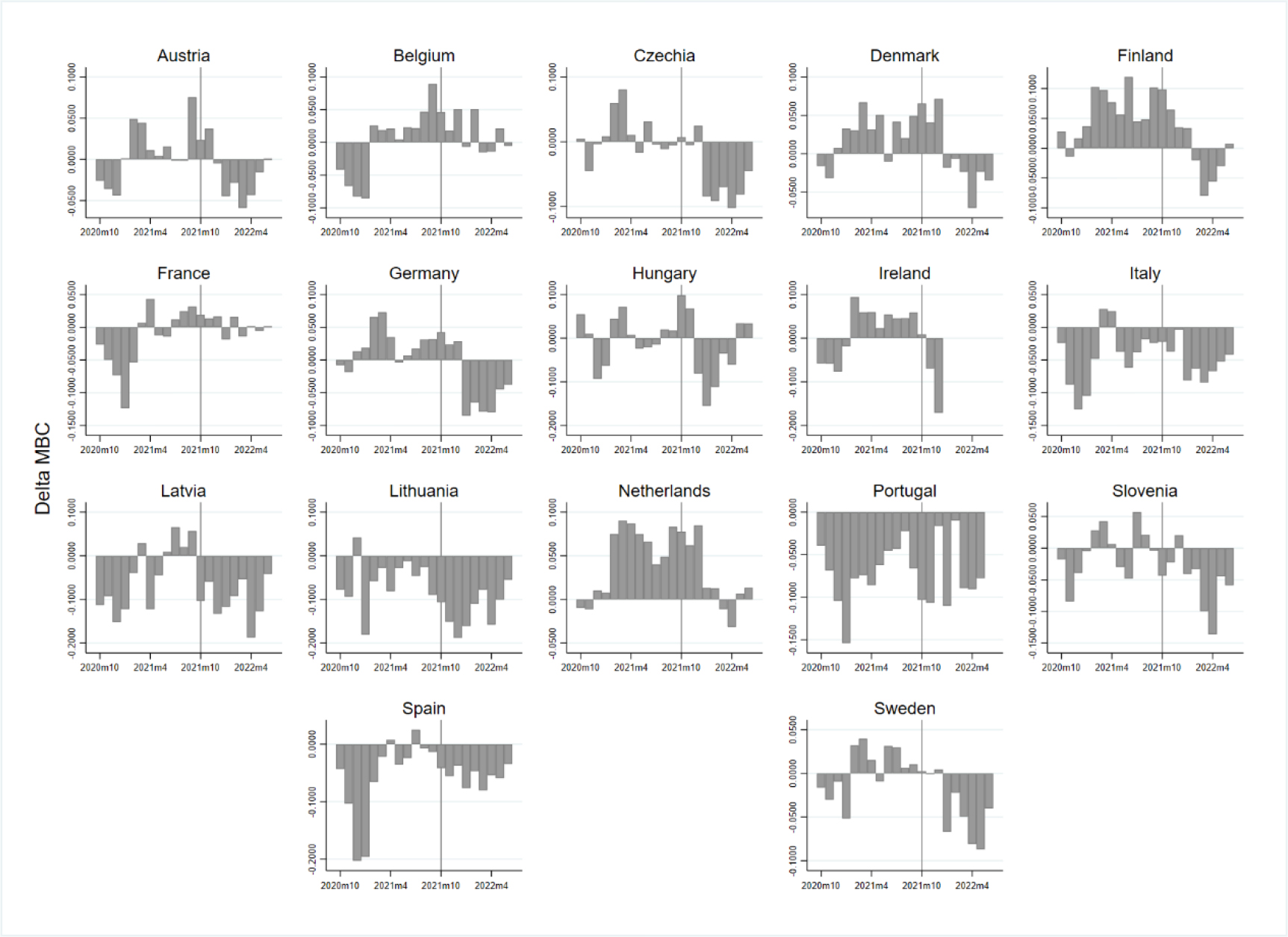
Figure 1.
Monthly Changes in the Number of Newborns in EU Countries from October 2020 to June 2022, Compared with the Same Months Before the COVID-19 Pandemic
Source: HFD, Short-Term Fertility Fluctuations,https://www.humanfertility.org/Data/STFF Created by the author.
Notes: The vertical lines in the chart represent the first year of births influenced by the COVID-19 pandemic, i.e., October 2021.
From Figure 1, it is evident that the changes in the number of newborns across EU countries during the COVID-19 pandemic varied significantly. In the first month of births influenced by the pandemic, almost all EU countries experienced a decrease in the number of newborns when compared to the same month in 2019. The most substantial drop occurred between November 2020 and January 2021, when the EU saw an average decrease of about 7% in the number of newborns. This decline aligns with early predictions made at the outset of the pandemic, which suggested a reduction in conception rates due to heightened uncertainty and lockdown measures. However, starting in June 2021, a notable rebound in the number of newborns occurred across most EU countries, marking what can be described as a small “baby boom.” This resurgence is likely linked to the easing of pandemic restrictions and the reduction in COVID-19 severity in the summer of 2020, which may have prompted a delayed fertility response.
By October 2021, the first year of pandemic-induced births had passed, and regional differences in fertility trends became more apparent. Southern European countries like Italy and Portugal continued to experience a downward trend in birth rates, while Northern European countries such as Finland saw sustained increases. Most European Union countries, including France and Germany, experienced more fluctuations, with birth numbers reflecting the cyclical nature of the pandemic’s impact. For instance, Spain saw a more than 20% decline in newborns in December 2020, while Finland reached a 12% increase in births in June 2021, reflecting a distinct fertility rebound. This is consistent with existing research, which suggests that well-developed social security systems can help mitigate the uncertainty caused by the pandemic, potentially supporting higher fertility rates. Interestingly, Finland’s consistent upward trend in births - especially from November to December 2021 - coincided with the winter lockdown in 2020, further suggesting that temporary reductions in social restrictions may have encouraged higher fertility during periods of relative stability.
In contrast, the second year of the pandemic (from October 2021 onwards) saw a reversal of the previous recovery trend. Most countries experienced a significant decrease in the number of newborns, signaling a “baby bust.” For example, Germany observed an 8.5% drop in births, and even Finland, which had maintained an upward trajectory throughout much of the pandemic, recorded an 8% decline in the second birth year. This decline is likely linked to the resurgence of COVID-19 infections across Europe and the subsequent re-imposition of lockdown measures, which may have again disrupted reproductive behavior.
Looking at the EU-wide trend (Figure 2, left), we see that after the outbreak of the COVID-19 pandemic, the number of newborns initially dropped, followed by a gradual recovery. However, by the second birth year of the pandemic, a sharp reversal occurred, with the number of births declining once again. This pattern mirrors the cyclical nature of fertility trends observed in many individual countries, emphasizing how the timing and severity of the pandemic’s waves influenced reproductive behavior. Similarly, the average total fertility rate (TFR) in the EU, as shown in Figure 2, right, followed a comparable pattern to the number of newborns. The TFR declined in the first months of the pandemic, reflecting the initial shock to fertility rates, before showing a slight recovery starting in mid-2021. However, by the second year, the TFR followed the same downward trend as the number of births, underscoring the broader demographic shifts induced by the pandemic’s ongoing disruptions.
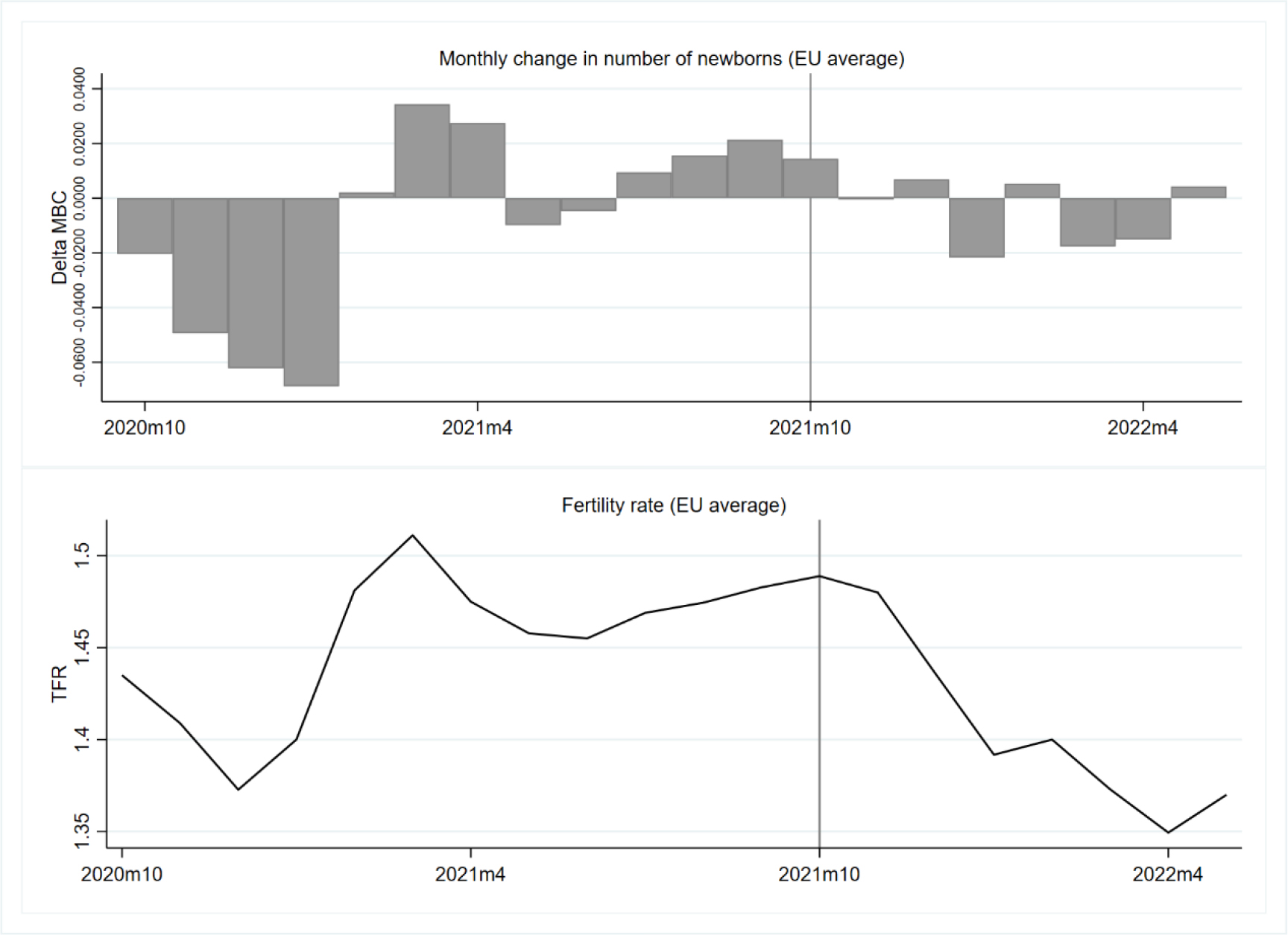
Figure 2.
Monthly Changes in the Average Number of Newborns and Fertility Rates in EU Countries from October 2020 to June 2022, Compared with the Same Months Before the COVID-19 Pandemic
Source: HFD, Short-Term Fertility Fluctuations,https://www.humanfertility.org/Data/STFF Created by the author.
Notes: The vertical lines in the chart represent the first year of births influenced by the COVID-19 pandemic, i.e., October 2021.
In summary, while the pandemic initially caused a sharp decline in births across EU countries, the situation evolved in a complex and regionally differentiated manner. A brief rebound in fertility occurred during periods of relative stability, particularly in countries with strong social support systems. However, the subsequent “baby bust” observed in 2021 highlights the ongoing uncertainties and economic challenges posed by the pandemic, suggesting that long-term shifts in fertility patterns are still unfolding. The interplay between social policy, economic security, and the cyclical nature of the pandemic will likely continue to shape fertility trends in the years to come.
(2) Analysis of Fertility Rates Beyond Trends
It is important to recognize that fertility rates naturally fluctuate over time, even in the absence of external shocks such as the COVID-19 pandemic. Furthermore, with the ongoing aging of the population and changes in gender structure, there has been a general downward trend in fertility rates across EU countries, driven by a shrinking population of women in childbearing years. However, the key question for this analysis is whether the observed decline in fertility rates during the pandemic aligns with or deviates from the pre-existing downward trend in EU fertility rates.
To address this, this paper employs a seasonal ARIMA model to estimate expected fertility rate trends during the pandemic, based on data from the period before the COVID-19 crisis. These predictions are then compared to actual fertility rate data observed during the pandemic, enabling a clearer understanding of how the pandemic itself influenced fertility trends, independent of the ongoing structural decline. By analyzing monthly changes in the number of newborns, the fertility trends in European countries during the pandemic can be broadly categorized into three patterns: a sustained increase in fertility in Northern Europe, a sustained decrease in Southern Europe, and a fluctuating decrease in Western Europe. To illustrate these patterns, the seasonal ARIMA model is applied to three representative countries: Finland (Northern Europe), Portugal (Southern Europe), and France (Western Europe).
Figure 3 presents the fertility rates and the forecasted fertility rates for Finland, Portugal, France, and the EU average, from January 2012 to June 2022. The seasonal ARIMA model’s predictions for Finland indicate that, following the onset of the pandemic, the fertility rate experienced a significant drop, suggesting a substantial immediate impact of the pandemic. However, despite this decline in 2022, Finland’s overall trend during the pandemic was one of increase, signaling a gradual return to the normal fertility rate trajectory. The fact that Finland’s fertility rate did not experience a sustained decline but instead showed an upward trend during the pandemic underscores the importance of comprehensive welfare policies, which may have mitigated pandemic-related uncertainties and bolstered confidence in family planning. This finding highlights how social security systems and supportive policy environments can play a critical role in sustaining fertility rates during periods of crisis.
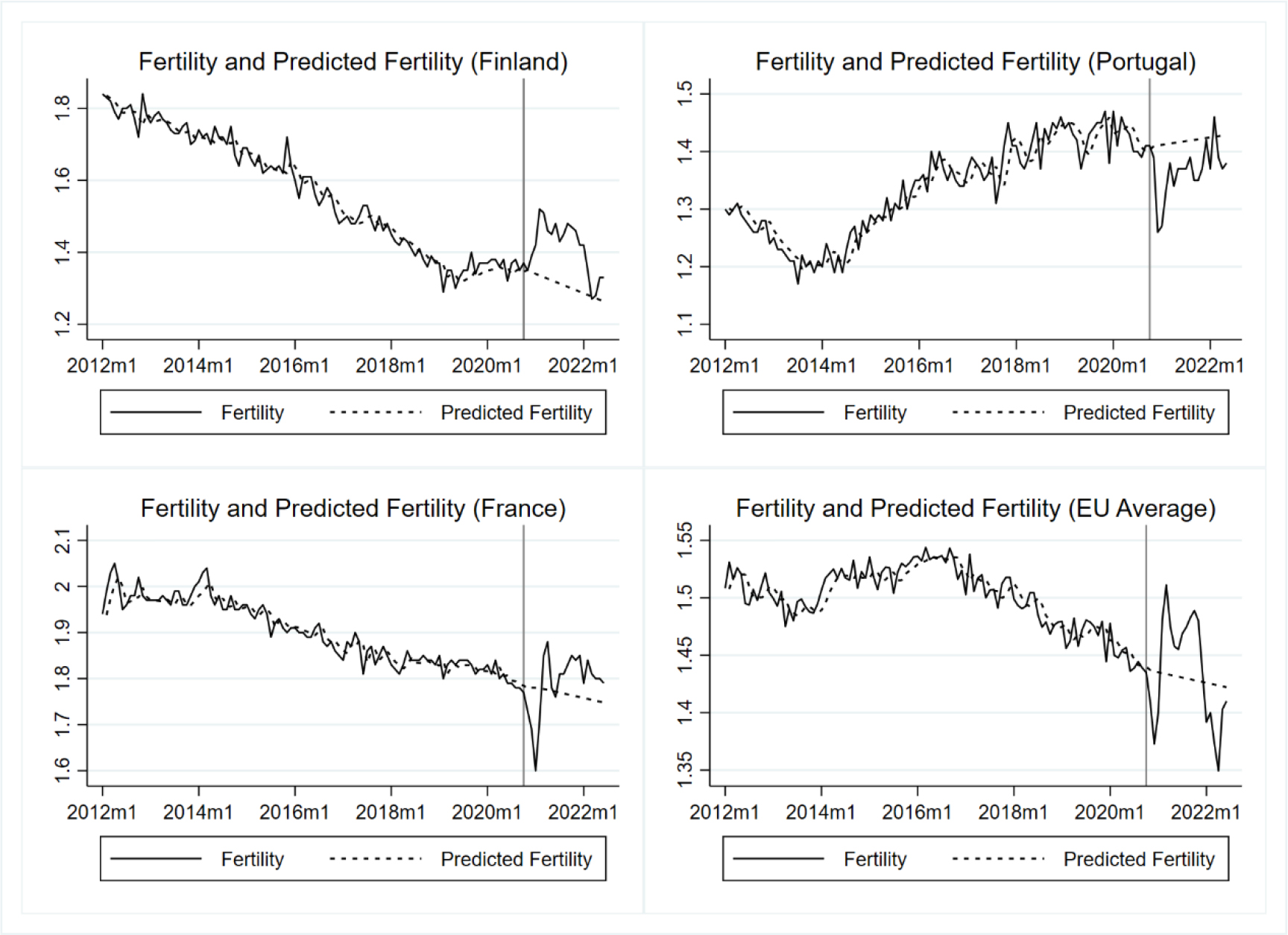
Figure 3.
Fertility Rates and Forecasted Fertility Rates in Finland, Portugal, France, and the EU Average from January 2012 to June 2022
Source: HFD, Short-Term Fertility Fluctuations,https://www.humanfertility.org/Data/STFF Created by the author.
Notes: The vertical lines in the chart represent the first year of births influenced by the COVID-19 pandemic, i.e., October 2021.
In contrast, the fertility rate in Portugal was significantly lower than the predicted rate based on pre-pandemic data, reflecting a marked negative impact of the pandemic. This drop took Portugal’s fertility rate to a level far below the typical trajectory, suggesting that the pandemic-induced uncertainties, including economic disruption and social isolation, may have led to a postponement or reduction in family formation. Interestingly, despite the initial downturn, Portugal’s fertility rate gradually approached the predicted level over time, indicating a potential rebound as the country adjusted to the new normal, albeit at a slower pace compared to other regions. This delayed recovery suggests that the pandemic’s effects on fertility in Portugal were more persistent, possibly due to the country’s more limited social welfare provisions compared to other EU nations.
France presents a more complex case. The actual fertility rate fluctuated around the predicted rate, reflecting the cyclical nature of the pandemic’s impact. Initially, the fertility rate in France was significantly lower than expected, likely due to strict government lockdown measures, increased uncertainty, and disruptions to daily life. However, as pandemic restrictions eased, the fertility rate began to trend higher than predicted, signaling a “COVID baby boom.” This suggests that early in the pandemic, many French individuals postponed or curtailed their plans to conceive due to the heightened uncertainty and social restrictions. As the situation improved, however, those delayed fertility plans were “released”, leading to a temporary uptick in births. Over time, however, the recurring nature of the pandemic, including subsequent waves and renewed lockdowns, caused many new fertility plans to be postponed once again, resulting in a partial decrease in birth rates. Ultimately, France’s fertility rate showed signs of returning to the predicted level, reflecting the country’s ability to weather the pandemic’s impacts, but with lingering fluctuations.
The EU average fertility rate displayed a similar pattern to France’s, fluctuating around the predicted rate. During the initial phase of the pandemic, fertility rates were lower than expected, but in the later stages, as the pandemic subsided somewhat, fertility rates began to recover, eventually aligning with pre-pandemic projections. This trend suggests that while the pandemic initially caused a significant disruption to fertility patterns across the EU, the longer-term effects were less severe, with most countries gradually returning to their pre-pandemic trajectories.
In summary, the analysis reveals that the COVID-19 pandemic had a significant and distinct impact on fertility rates in EU countries, deviating from the typical fluctuations observed in previous years. The extent and direction of this impact varied across regions: while Northern Europe (e.g., Finland) saw a sustained increase in fertility, Southern Europe (e.g., Portugal) experienced a sustained decline, and Western Europe (e.g., France) exhibited more cyclical patterns, with temporary “baby booms” followed by declines. Over time, the influence of the pandemic on fertility rates in most countries decreased, with fertility rates gradually returning to normal levels. However, the lingering effects of the pandemic - especially in countries with weaker social safety nets - highlight the continued importance of policy responses in shaping fertility outcomes in times of crisis.
Conclusion and Discussion
Overall, while the COVID-19 pandemic has profoundly impacted daily habits and work styles, its influence on birth rates in EU countries has been relatively short-lived. Contrary to some early expectations, the pandemic did not result in a significant “COVID baby boom” or “COVID baby bust” across the EU. However, it is important to recognize that the pandemic did have notable short-term effects on fertility, with regional variations in how these impacts manifested. This research contributes to understanding how external shocks like pandemics interact with institutional frameworks to drive short-term demographic shifts, offering insights for policymakers aiming to stabilize fertility during crises. This research challenges the assumption that pandemics universally depress fertility. It demonstrates that robust social welfare systems can stabilize fertility during crises, offering actionable insights for policymakers.
Regional Variations in Fertility Trends
In Nordic countries, where strong social welfare systems and high levels of social trust are in place, the pandemic did not lead to a substantial decline in fertility rates. Instead, the uncertainty and economic recession brought about by the pandemic were mitigated by comprehensive welfare policies. In fact, for many couples, the lockdown period offered an unexpected opportunity to spend more time together, which may have encouraged family planning and contributed to an increase in fertility rates. This finding is consistent with existing literature, which highlights the role of social security and government support in buffering the negative effects of crises on fertility decisions.
In contrast, Southern European countries, which have relatively weaker social welfare systems and less resilient labor markets, experienced a more pronounced decline in fertility rates. The pandemic-induced economic recession, along with lockdown policies and increased uncertainty, caused many young adults to delay or revise their fertility plans. These countries saw a temporary drop in birth rates, as couples, especially those with precarious economic situations, postponed having children in the face of financial and social instability. The pattern observed in Southern Europe reflects the existing research that links economic insecurity and limited welfare support with delayed family formation, particularly in countries like Italy, Spain, and Portugal.
Western European countries, with intermediate levels of social welfare, exhibited a more fluctuating pattern in their fertility rates. Initially, the pandemic’s uncertainty, coupled with the economic downturn, led to a temporary decrease in births. However, as the pandemic situation eased and restrictions were lifted, fertility rates began to recover, demonstrating the cyclical nature of the pandemic’s impact. Countries like France and Germany saw fertility rates initially dip, but they gradually returned to expected levels as social and economic conditions improved. These fluctuations in Western Europe further underscore the complex relationship between economic and social factors and fertility decisions during times of crisis.
Short-term Fertility Fluctuations
While the pandemic did not lead to long-term changes in fertility rates, the short-term fluctuations are evident. Using monthly data, this paper has illustrated how fertility rates initially declined across most EU countries at the onset of the pandemic. However, as pandemic containment measures began to ease in the second half of 2021, fertility rates started to rise. This “bounce-back” effect may reflect a delayed response to the earlier decline in conceptions, with couples resuming their family planning as uncertainty lessened and the economic outlook improved. By 2022, however, many countries began to show a new round of declines in fertility rates, possibly due to the ongoing uncertainty created by successive waves of the pandemic and the geopolitical tensions resulting from the Russia-Ukraine conflict.
Limitations and Directions for Future Research
One important limitation of this study is its focus on identifying the short-term fluctuations in fertility rates without conducting a rigorous causal analysis of the factors driving these changes. While the pandemic clearly influenced fertility patterns, a more detailed analysis is needed to quantify the specific factors at play. Existing research suggests that factors such as economic conditions, uncertainty, disruptions to contraceptive access, social welfare systems, and levels of social trust are all key determinants of fertility rates. Future work should aim to disentangle these various influences and assess how they interact to shape fertility decisions during times of crisis. A more comprehensive causal inference model could help clarify the relative weight of each factor in driving the observed fluctuations in birth rates.
Looking ahead, the economic and social impacts of the COVID-19 pandemic are still unfolding. As the EU continues to recover from the economic disruptions caused by the pandemic, it must also navigate new challenges, including the 2022 Russia-Ukraine conflict, which has triggered an energy crisis and inflation, further complicating the region’s economic outlook. These geopolitical and economic uncertainties may continue to affect fertility decisions, potentially leading to another period of sharp fluctuations in birth rates.
Given the ongoing challenges, it is crucial to understand how EU fertility rates will evolve in the coming years. Will the region experience further volatility in fertility patterns, similar to what was observed during the pandemic? Or will birth rates stabilize as the long-term effects of the pandemic subside? Moreover, how can policymakers ensure that fertility rates remain stable and resilient, even in the face of external shocks? Ensuring access to strong social welfare systems, economic security, and family support policies will be critical in maintaining stability in fertility rates, particularly during times of crisis. This remains an important area for further investigation and policy development.
Notes
[1] HFD, Short-Term Fertility Fluctuations, https://www.humanfertility.org/Data/STFF