
Table 1
| Concept | Core argument | Level of cognitive impact | Modern acceptance |
|---|---|---|---|
| Linguistic Determinism (Strong Version) | Language completely determines thought and perception; concepts lacking linguistic equivalents cannot be conceived | Rigid and restrictive; language is viewed as a mental prison | Largely rejected by modern linguistics; counters that translation is possible |
| Linguistic Relativism (Weak Version) | Language exerts a degree of influence and creates tendencies in perception and cognition; it directs attention to specific aspects | Flexible and directive; language functions as a set of habits | Widely accepted in cognitive sciences and anthropology; supported by empirical data |
Source: data from Wolter (2026), Rigas (2026), Kte’pi (2024).
Table 2
Comparison of allocentric and egocentric approaches [15]
| Strategy | Definition | Architectural benefit | Drawing accuracy |
|---|---|---|---|
| Allocentric | Positioning objects relative to each other and the environment | Holistic spatial understanding, hierarchical organization | Higher (21.5% increase) |
| Egocentric | Positioning objects relative to one’s own body | Sequential memory (step-by-step description), detail orientation | Lower (global errors present) |
Source: data from Papaz, D., & Ilić, M. (2025).
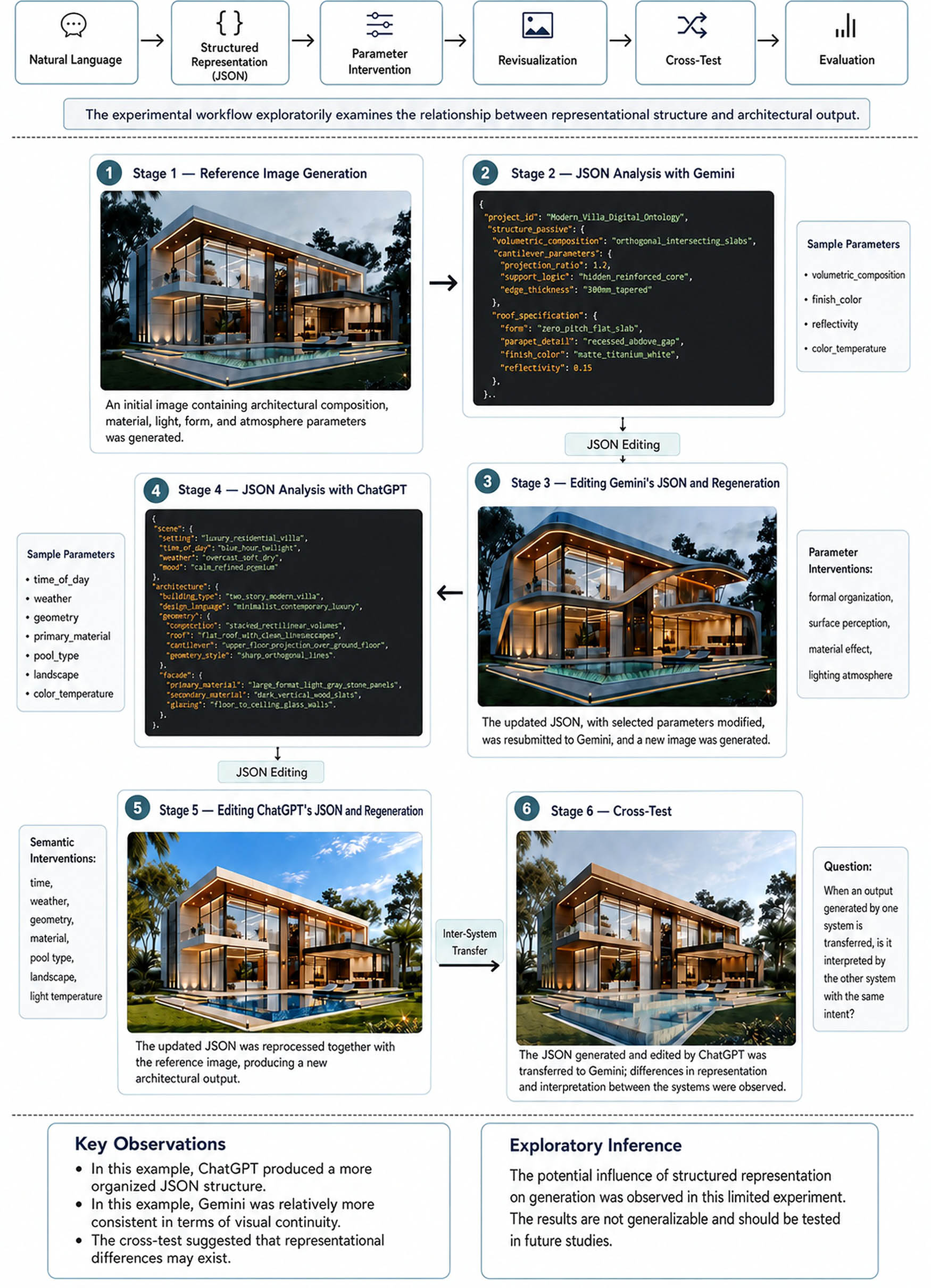
Figure 1
Workflow visual of the research.
Source: Author’s contribution.

Figure 2
Experimental image.
Source: Authors’ contribution.
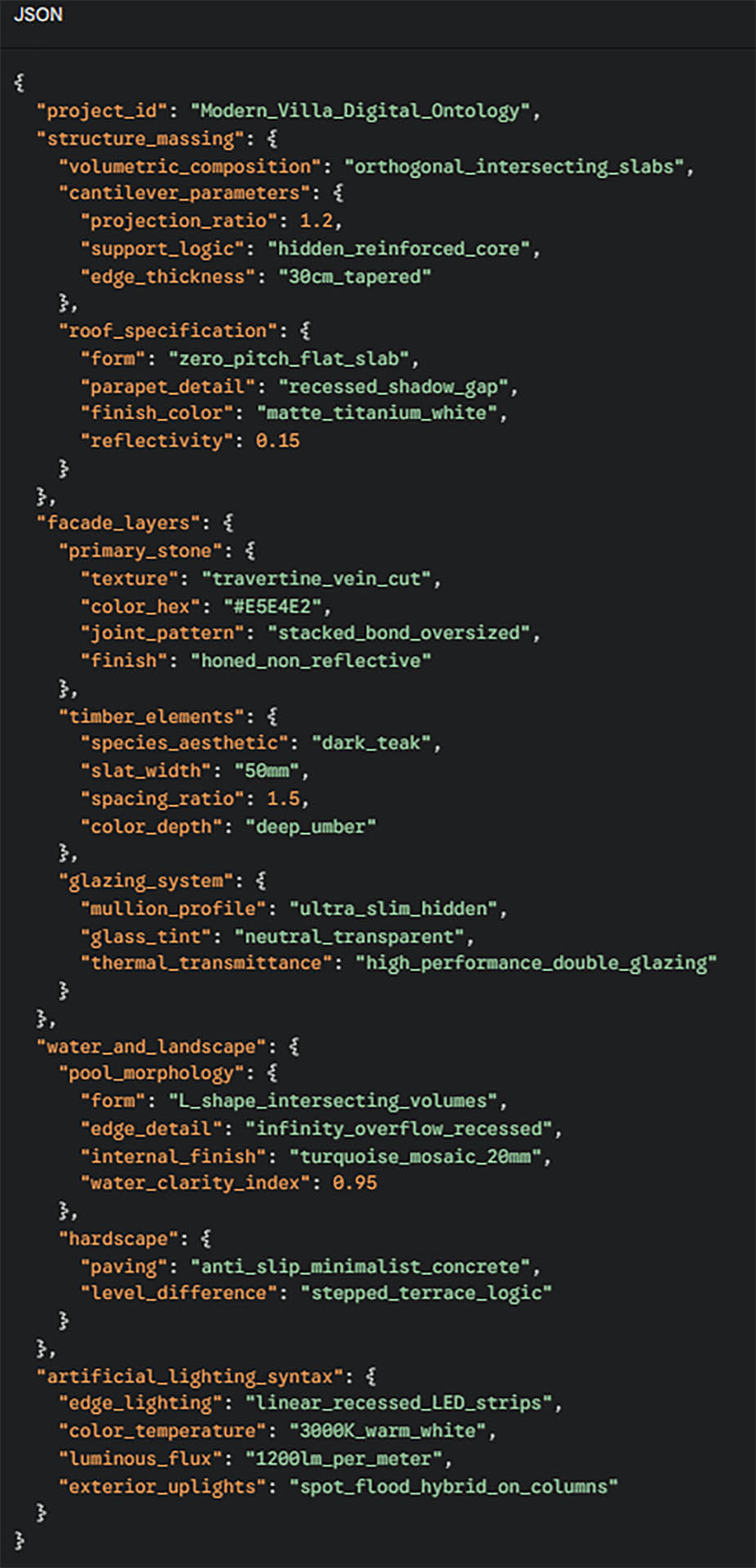
Figure 3
JSON Definition by the Gemini 3.1 Pro model.
Source: Authors’ contribution.

Figure 4
Resulting image (Nano Banana 2).
Source: Authors’ contribution.
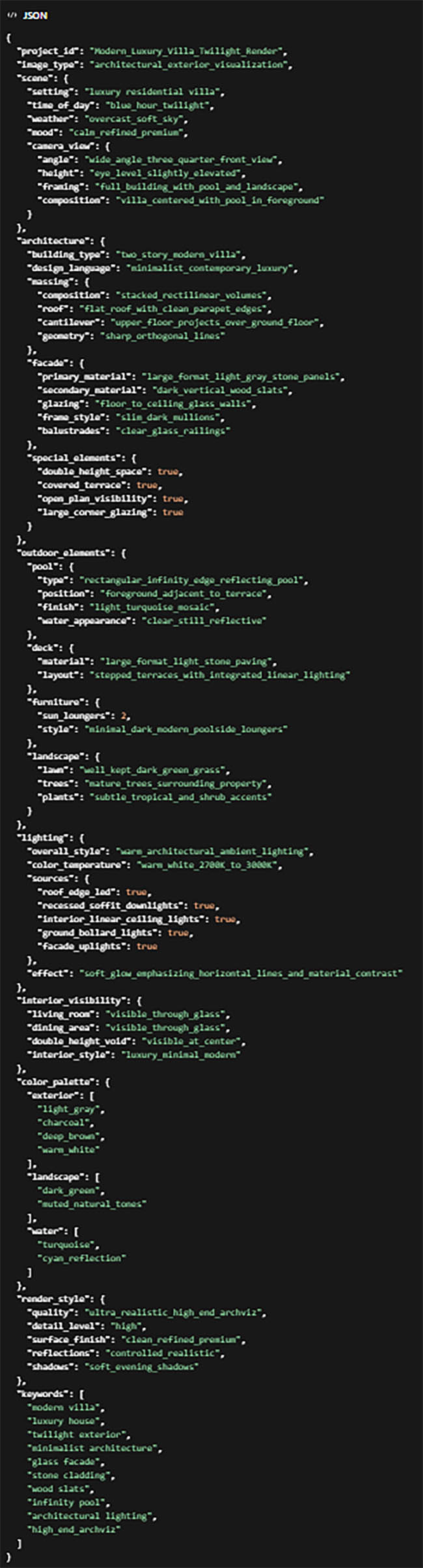
Figure 5
JSON Prompt by the ChatGPT 5.5 model.
Source: Authors’ contribution.

Figure 6
Resulting image (ChatGPT Image 2.0).
Source: Authors’ contribution.

Figure 7
JSON Prompt (ChatGPT 5.5), Image (Nano Banana 2).
Source: Authors’ contribution.
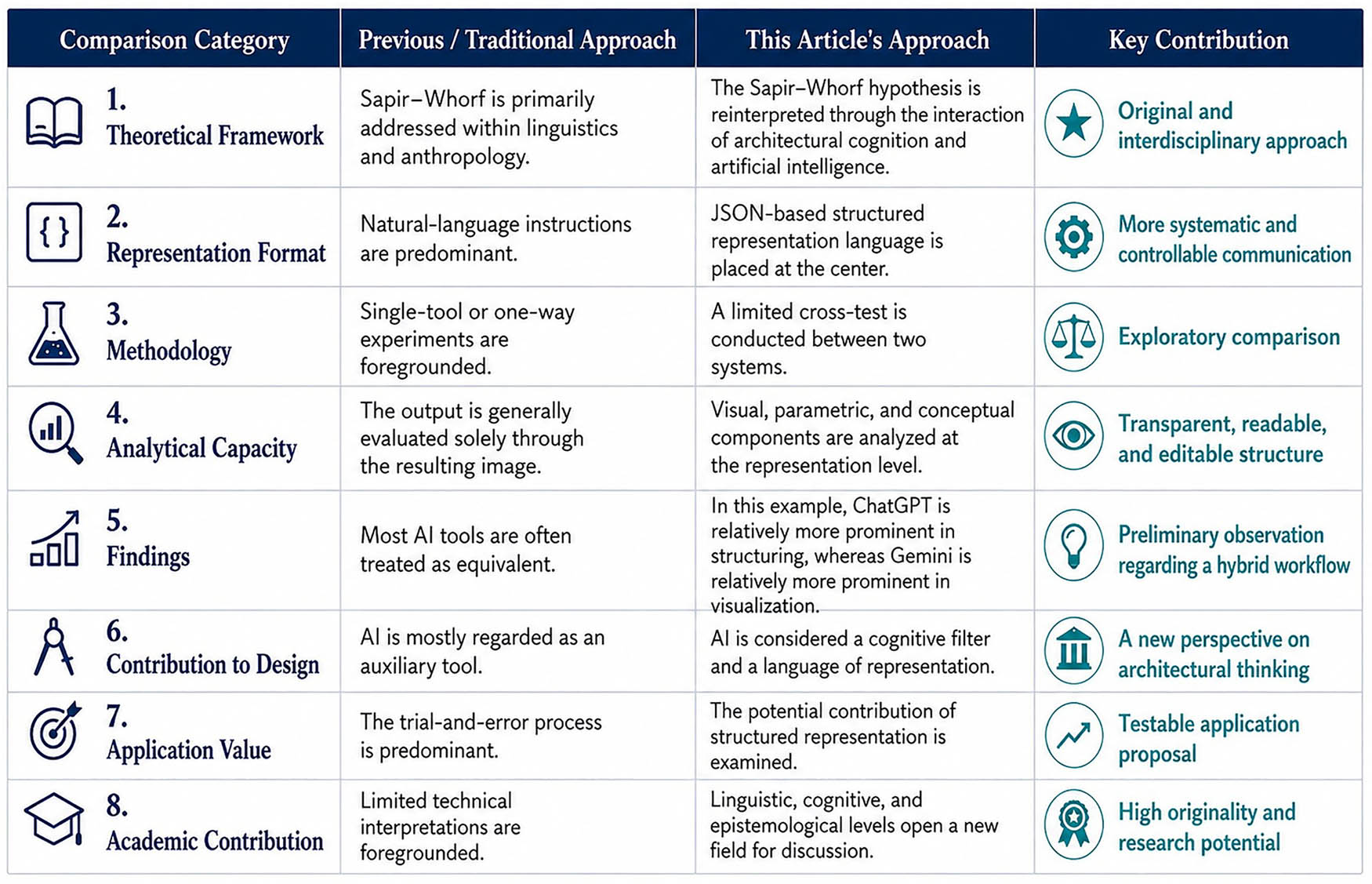
Figure 8
Strengths of the study.
Source: Authors’ contribution.