
1. INTRODUCTION
As urbanisation increases around the world, cities are progressively facing a range of environmental challenges, including climate change, air pollution, flooding and biodiversity loss. Nature-based Solutions (NbS) hold promise as a way for mitigating and adapting to the negative impacts of climate change, maintaining advantages over engineered solutions with relatively low implementation costs [1–4].
NbS is a broad concept that includes numerous ideas incorporating different types of solutions. These include Ecosystem-based Adaptation (EbA), green infrastructure, blue infrastructure, ecological engineering, sustainable urban drainage systems, and ecosystem services [5]. NbS harnesses the power of natural environmental processes and resources, such as vegetation, soil or water, among others, to alleviate the effects of various hazards and enhance the quality of urban space, taking into account the needs of its users [1,5,6]. Climate change adaptation, climate mitigation, enhancing urban resilience, and enhancing biodiversity have long been directly related to the impact of introducing NbS into urban spaces [7,8]. The implementation of NbS in urban public spaces enhances urban resilience, introduces ecosystem services, and creates attractive, supportive environments for good health for residents [5, 9–11].
Despite the numerous potential benefits of NbS, there are several challenges to the effective planning and implementation of these solutions in urban environments. As cities continue to grow and face increasing environmental pressures, it is important to note the need for more effective and diverse tools to support the introduction of NbS into urban spaces and the integration of these activities into urban planning and policy [12–15]. The tools examined in this study can be defined as developed, widely accessible resources that enable the effective implementation of NbS in cities at every stage of the implementation process, with the aim of preventing the negative impacts of climate change. The stages of this process include a wide range of actions: from delimiting areas requiring intervention through the use of NbS, to broad urban planning, diagnosing the spatial and organisational needs and capacities of the city or site, identifying the demand for specific ecosystem services, selecting suitable solutions, and moving on to design, stakeholder collaboration practices, methods of obtaining financial resources for implementation, and direct application. This multifaceted process, rooted in adaptive spatial and strategic planning, serves to ensure the effective implementation of NbS in cities facing the negative consequences of climate change, particularly rising temperatures, sudden urban flooding, air pollution, and the formation of urban heat islands. The tools referred to here may include, among others: methods, databases, collections of best practices, web applications, publications, indicators, digital platforms, and municipal documents. The subject of this study includes all of the above tools, with a focus on their classification, accessibility, forms, typologies, and the benefits and challenges arising from their use. The research highlights a significant diversity in terminology, classification, and typologies of tools. Therefore, the first step in organising and analysing these tools is to examine the existing and commonly used methods of categorisation. What connects all the tools under study is their shared purpose: climate change adaptation and mitigation through NbS in urban areas. It is in this context that they are analysed in this article. At the same time, these tools are directed toward a variety of social groups that are potential beneficiaries of climate change adaptation: planners, designers, city authorities, residents, and non-governmental organisations. All adaptation activities require a systemic approach and city-level governance; hence, their implementation relies on effective strategic, spatial, and operational planning. Most tools ultimately support effective urban planning using participatory methods, followed by implementation in cooperation with the community, as well as management and monitoring of effectiveness. Research projects, such as NATURE4CITIES, note the division of tools into those offering knowledge and best practices, decision support to implement best-fit tools, and those proposing a framework for NbS assessment [16]. Given that decision-support tools for the implementation of NbS in urban spaces can be in both textual and interactive digital form, this article understands the tools to be in the form of: knowledge (i.e. documents such as guides, guidelines, catalogues, methodologies and others) or digital support (including applications, software, plugins, interactive websites and others) for use at different stages of solution implementation.
The challenges of implementing NbS in urban environments are multifaceted. One key issue is the lack of standardised, accessible tools that can be easily applied by urban planners, urban decision-makers and local communities [6,17]. While there is a growing body of research on this topic, those conducted to date indicate that many of the tools currently available may not be user-friendly or address the specific needs of local contexts [12,18–20]. Tools developed for one geographical region or climate zone may not be applicable in another due to the data ranges they contain, leading to gaps in the usability and effectiveness of tools when applied in different urban areas. For this reason, the need arises to group tools and indicate their applicability in specific urban contexts [20]. Furthermore, the sheer number of tools and frameworks can be problematic for stakeholders when selecting the most appropriate ones for their specific needs [18,20].
Another challenge is the dynamic development of research and knowledge in the context of NbS. As this progresses, new tools are emerging: methodologies, case studies, applications, software and artificial intelligence [18,21,22]. For this reason, the society faces the prospect of continually updating publicly available tool inventories or creating further data repositories with information on recommended tools. The lack of continuous updating runs the risk that potential users may rely on outdated or incomplete information, which would hinder the successful implementation of NbS. It is also a barrier to practitioners seeking the most up-to-date and effective resources for NbS implementation. Numerous research projects have developed tools to support the planning, implementation or design of NbS in public spaces [15,23,24]. The process of organising the tools and attempting to categorise them has been undertaken by various research initiatives financed by European funds, such as the Adaptive Cities Through integrated Nature Based Solutions (ACT on NBS) project [25], REACHOUT shaping climate resilient cities project [26], Ecosystem-based Adaptation Tools Navigator hosted by Friends of EbA (FEBA) [27], and more. One step in these research processes has been to create typologies that help users understand the variety of resources available. These typologies group tools based on their specific characteristics: function, target group and domain of application, which can range from flood management to biodiversity improvement. The authors emphasised the importance of tools that are easy to use, tailored to the context, integrated into urban planning processes and easy to update as new knowledge emerges.
In response to the identified challenges in the context of the need to organise, create new and use existing NbS tools in an effective and site-specific manner, we conducted a comprehensive review of tool inventories. The research aimed to assess the availability and functionality of the tools in the context of Polish cities, in particular the GZM Metropolis (the GZM – Górnośląsko-Zagłębiowska Metropolis). We also verified the inventories in terms of their relevance and usefulness for users.
The GZM Metropolis is a legally constituted metropolitan union comprising 41 contiguous municipalities in southern Poland, in Silesian Voivodeship. With a population of over 2 million and a total area of 2,500 km2, it is one of the most urbanised and densely populated regions in Central Europe [28]. The territory is characterised by a polycentric structure, post-industrial legacy, high levels of air pollution and increasing exposure to climate risks such as urban heat islands and flash flooding [29]. To address these challenges, GZM has adopted a metropolitan development strategy (2022–2027 with a perspective to 2035), which prioritises sustainable land-use transformation, post-industrial revitalisation, and climate resilience. The strategy explicitly acknowledges the role of Nature-based Solutions (NbS) as tools to enhance urban quality of life and ecological performance [30]. Given the diversity of urban forms, socioeconomic disparities, and region-specific environmental pressures, the GZM Metropolis offers a valuable case study for evaluating the availability, transferability, and contextual fit of NbS tools in postsocialist, polycentric urban areas [31].
To guide this study, we identified key research questions: (1) what typologies of NbS tools are most commonly used and do they have common elements; (2) are the existing inventories comprehensive and up-to-date; (3) do the inventories replicate the elements contained in them; (4) what proportion of the tools can be applied to areas located in Poland and in the cities of the GZM? The result of this research is the database ‘Tools for introducing Nature-based Solutions into urban spaces: a preliminary set’, which provides a comprehensive register of 674 tools, together with detailed information about them. The aim was also to develop a decision-making scheme to help users choose the most appropriate tools based on their specific needs and objectives. The study is part of a work on how to implement NbS in cities belonging to the GZM.
This study contributes to the knowledge of tools supporting the implementation of NbS in urban public spaces. The analysis and verification of the inventories is intended to support researchers in their research work on new and existing solutions, and the decision-making scheme created identifies the most important elements that should guide users in selecting the best tool for their needs. The structuring, inventory, and presentation of existing classifications provided by this study contribute to filling knowledge gaps and offer tangible support for planners and other potential beneficiaries of climate change adaptation. This is a step towards supporting innovation in urban resilience planning and encouraging the widespread use of NbS for more sustainable, resilient and liveable urban environments.
2. MATERIALS AND METHODS
2.1. Stages and scope of research
The research consisted of several stages in which we used either quantitative or qualitative methods (Figure 1).
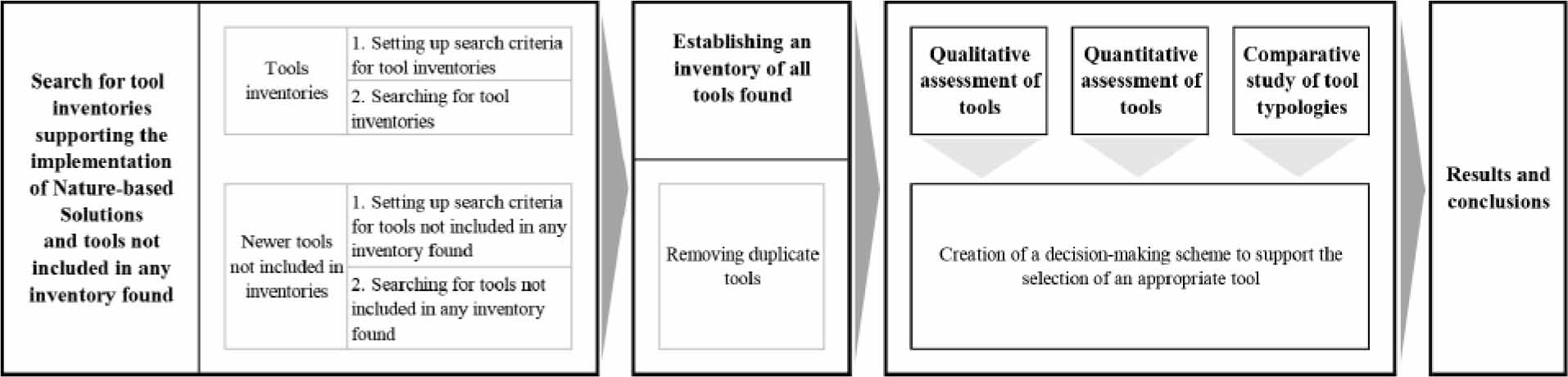
Figure 1.
Research methodology diagram
This included:
Search for tool inventories supporting the implementation of Nature-based Solutions tools not included in any inventory found;
Establishing an inventory of all tools found;
Qualitative assessment of tools;
Quantitative assessment of tools;
Comparative study of tool typologies;
Creation of a decision-making scheme to support the selection of an appropriate tool.
First, we searched for available tool inventories. We then carried out an analysis of all the items in the inventories according to the established criteria, followed by statistical analyses. The research included: available tool inventories in any form (documents, spreadsheets, websites) that contain tools in the broader NbS theme; and also available tools created after 2010 for use by users of selected European cities, including Poland, that are not included in the inventories found. Particular attention was paid to the analysis of application tools.
We also made sure that the inventories we found contained tools mainly aimed at European countries or that they were global in scope. An exception was the Nature-Based Solutions Resource Guide created in 2022 by the White House Council on Environmental Quality, White House Office of Science and Technology Policy, White House Office of Domestic Climate Policy [32]. The document is a collection of tools serving areas located in the United States, but we undertook its analysis because of the possibility that the resources in the form of knowledge would be universal and applicable to European countries as well, including Poland and the GZM. However, we note that an updated and more comprehensive resource is the second version of this inventory, “Nature-Based Solutions Resource Guide 2.0”, published in 2023 [33]. It contains 279 sources recommended by the authors, dozens more than in the first version of this document. However, we aimed to analyse tools aimed mainly at Europe. As version two of the document would have dominated our results based on US resources, we decided to analyse in detail the first version of this inventory, containing 177 tools. This expanded our case study, but enabled us to maintain the consistency in the scope of the research.
2.2. Search for tool inventories supporting the implementation of nature-based solutions tools not included in any inventory found
We began with a two-stage procedure designed to ensure both a comprehensive and up-to-date overview of available tools for implementing NbS in urban areas (Figure 1). In the first stage, we reviewed existing inventories and databases compiled through major European and international research projects. These inventories provided foundational knowledge on the types, classifications, and scope of tools currently in use. The second stage focused on identifying newer tools that were not included in those inventories. This involved targeted keyword searches, literature reviews, and exploration of platforms hosting emerging digital tools, methodologies, and guidelines relevant to urban NbS implementation.
The rationale for this two-stage approach was to combine a structured overview of established resources with a proactive effort to capture recent developments. This method allowed us to address potential gaps in older inventories and offer a more complete, up-to-date set of tools tailored to current urban planning challenges in the context of climate change adaptation and mitigation.
The initial approach was the methodology used in the process of creating the NBS Tools Catalogue under the Adaptive Cities Through Integrated Nature-Based Solutions (ACT on NbS) project carried out between 2019 and 2021 [18]. Before searching for inventories to be analysed, we established criteria to which the results should correspond:
An inventory is understood as a list, collection, catalogue, database, record, navigator, or other related;
Inventories can be presented in any form: text document, spreadsheet, web page, or other;
The inventory must include some typology/classification of tools, so that in the next stage of the research, we can make a thorough analysis of what tool typologies exist;
The inventory must be in English, but the tools included can be in any languages;
The inventory should include tools in the broad NbS theme: Ecosystem-based Adaptation, green infrastructure, blue infrastructure, ecological engineering, sustainable urban drainage systems, ecosystem services;
The inventories do not have to be under the name “Nature-based Solutions”, but should address topics such as climate change adaptation, climate mitigation, enhancing urban resilience, and enhancing biodiversity.
Based on the criteria listed, we composed numerous list search terms consisting of: Nature-based Solutions, NbS, Ecosystem-based Adaptation, EbA, green infrastructure, blue infrastructure, ecological engineering, sustainable urban drainage systems, ecosystem services “AND” tools “AND” list, collection, catalogue, database, registry, navigator. Searches were carried out in the available search engines: Google, Google Scholar, Scopus from 23 October to 8 December 2023. A large number of different query combinations were used in the search. The idea behind creating these queries is illustrated in Figure 2.
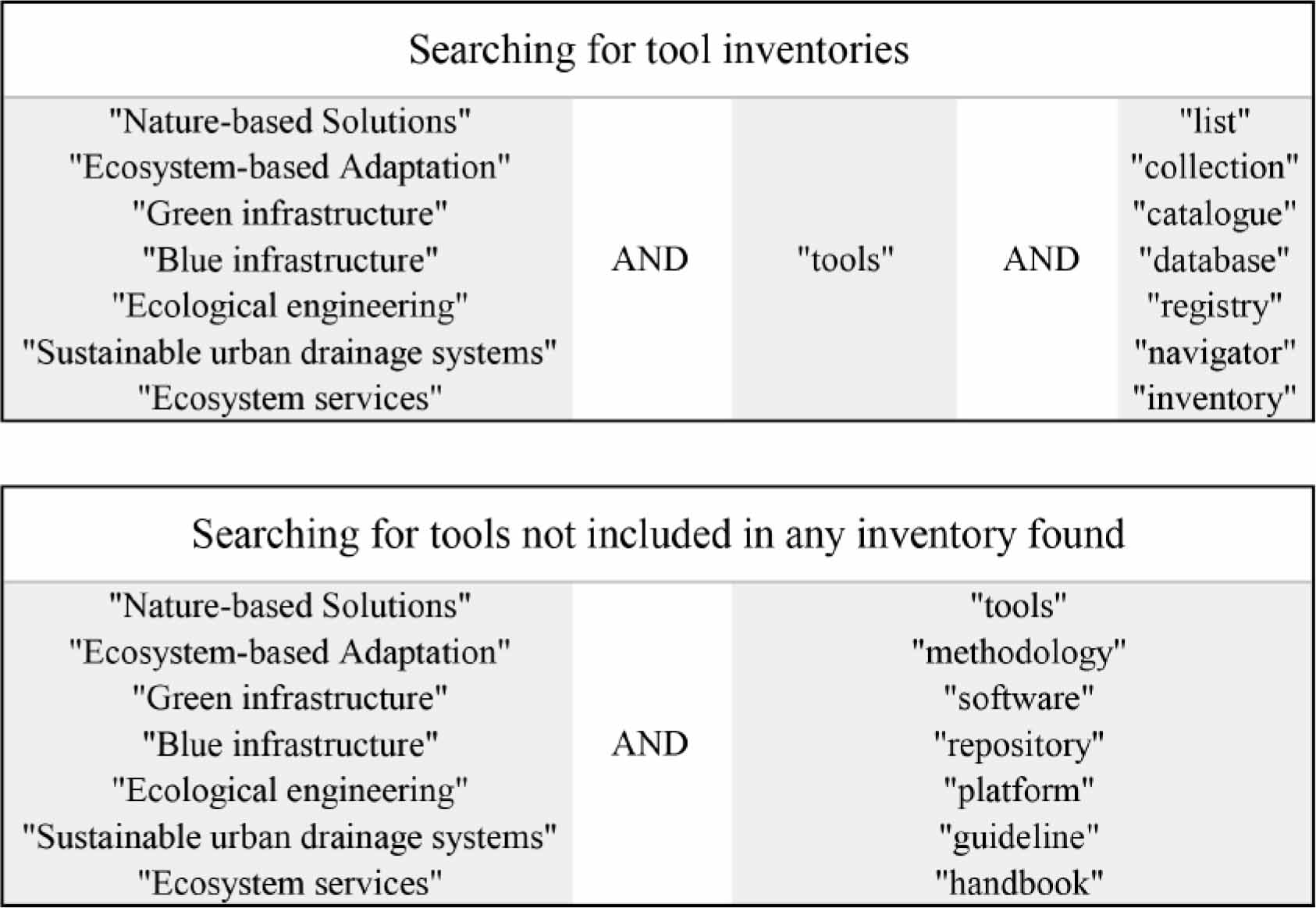
Figure 2.
Scheme for creating query combinations
Based on the search results, we created a database – preliminary set – containing all tools from the inventories found. The database was filtered for duplicates in order to remove them.
The preliminary set was then supplemented with tools that were not found in any inventory, searched through the following keywords: Nature-based Solutions, NbS, Ecosystem-based Adaptation, EbA, green infrastructure, blue infrastructure, ecological engineering, sustainable urban drainage systems, ecosystem services “AND” tools, methodology, software, repository, platform, guideline or handbook (Figure 2). At this stage, the focus was on finding application tools that meet the following criteria:
An application tool is understood as: software, an application, a plug-in to a publicly available (free) programme, an e-platform, a website.
The tool can be used for areas located in European cities.
2.3. Tools and inventories analysis – qualitative and quantitative assessment
The next stage of the research was establishing an inventory of all tools found and conducting detailed qualitative and quantitative analysis. All tools were described in terms of: which source inventory they were from, tool name, acronym (if any), authors, type (provided from the source inventory), language, geographical coverage, (current) website and description. In addition, all resources were analysed in terms of:
a) whether the tool is only in the form of “knowledge” – that is, in the form of any documents/guidelines or other guides that present knowledge and methodologies to support the process of introducing NbS into urban spaces at different stages of design and implementation; application tools were excluded from this category, even if they had a guide section;
b) whether the tool is in the form of a digital tool – taking into account multi-interactive tools, e.g. in the form of knowledge platforms that have both a guidance and an application part;
c) whether the tool can be used in Poland – we did not take into account application tools that did not include Poland in their geographical scope, and tools in the form of knowledge that presented information inadequate for Poland due to strong legal, economic or climate discrepancies. Knowledge resources that present, for example, NbS solution studies, implementation methodologies by different individuals or organisations, or guides that can inspire action, were included in the category of resources that can be used in Poland because of the potential to be inspired by them and the easy adaptation of this knowledge to surrounding conditions;
d) whether the tool can be used in the cities of the GZM in Poland – i.e. whether they are usable at the local, city, and/or regional (voivodeship) level. We have excluded from this category resources that cannot be used for sites in Poland through strong discrepancies and lack of simple adaptation to local conditions; tools that strongly deviate in their specification from the GZM (for example, proposing coastal NbS when the GZM is landlocked); and those that can only be used at the national level;
e) whether the tool can only be used at the national level (for the whole country);
f) whether the tool works – whether it is possible to get the application tools up and running, and whether resources in the form of knowledge are still available on the internet;
g) that the link (from the source inventory) redirecting to the website with the tool is up to date – as at 31.12.2024.
All of the above categories were the starting point for the quantitative research, within which we established the main research questions:
How many tools continue to work despite the passage of time?
How many tools have up-to-date websites?
How many are application tools?
How many tools are in the form of knowledge?
How many tools are for use not only in English?
How many tools can be used for areas located in Poland?
How many tools can be used in the cities of the GZM Metropolis?
2.4. Comparative study of tool typologies and creation of a decision-making scheme
The next was a comparative study – analysing the typology of resources from all the inventories found and comparing them with each other. The next step was to identify commonalities between all typologies despite differences in the nomenclature used in the inventories. This contributed to the creation of the decision-making scheme dissected in detail in the results subsection 3.7 Decision-making scheme based on typologies of tools.
3. RESULTS
3.1. Tool inventories to support the introduction of Nature-based Solutions
We found 9 inventories with different main themes (Table 1): Nature-based Solutions (3 inventories), Ecosystem-based Adaptation (2), green infrastructure (2), urban resilience (1), urban biodiversity (1). They were produced at similar times as part of different initiatives or research projects: 7 of them have been published between 2019 and 2023. One inventory – Ecosystem-based Adaptation Tools Navigator: A searchable database of tools and methods relevant to EbA – has been published in two forms: as an Excel database in 2019 [34] and as a website with a request form to the authors of the inventory to add new tools in the EbA theme [27]. REACHOUT shaping climate resilient cities, on the other hand, is a project that, at the time of our research, was not completed and was scheduled to end in 2025 [26].
Table 1.
Information on tool inventories to support the introduction of the NbS, own study [25, 26, 32, 34–39]
| No. | Inventory name | Source link | Main theme | Form | Languages | Source of origin | Geographic scope | Numb er of tools | Year of completion |
|---|---|---|---|---|---|---|---|---|---|
| 1 | NbS Tools Catalogue | https://doi.org/10.5281/zenodo.5541252 | Nature-based Solutions | Excel database | English | Netherlands | Europe | 70 | 2020 |
| 2 | Nature-based Solutions Resource Guide Compendium of federal examples, guidance, resource documents, tools, and technical assistance | https://www.preventionweb.net/media/85702/download?startDownload=20250901 | Naturebased Solutions | Document pdf | English | USA | Worldwide | 177 | 2022 |
| 3 | Accelerating Climate Ambition and Impact: Toolkit for mainstreaming Nature Based Solutions into Nationally Determined Contributions | https://climatepromise.undp.org/sites/default/files/research_report_document/Toolkt_for_Mainstreaming_Nature-based_Solutions_into_Nationally_DeterminedContributions.pdf | Naturebased Solutions | Document pdf | English | USA | Worldwide | 114 | 2019 |
| 4 | REACHOUT shaping climate resilient cities | https://reachout-cities.eu/ | Urban resilience | Website | English, Greek, Italian, Norwegian, Spanish, Polish | European Union | European Union | 18 | 2025 |
| 5 | Ecosystem-based Adaptation Tools Navigator: A searchable database of tools and methods relevant to EbA | https://www.adaptationcommunity.net/publications/neweba-tools-navigator-in-english-spanish-and-french/ | Ecosystembased Adaptati on | Excel database and website | English | Germany | Worldwide | 245 | 2019 |
| 6 | Research on Ecosystem-based Adaptation (EbA): A reference guide | https://www.preventionweb.net/publication/research-ecosystem-based-adaptation-eba-reference-guide | Ecosystembased Adaptati on | Document pdf | English | Germany | Worldwide | 12 | 2019 |
| 7 | Tools for developing Green Infrastructure Networks | https://webassets.eurac.edu/31538/1661510195-d-t1-1-2_tools-for-developing-green-infrastructure-networks.pdf | Green infrastructure | Document pdf | English | Italy | European Union | 20 | 2020 |
| 8 | Guidance for Greater Manchester – Embedding Green Infrastructure Principles | https://greatermanchesterca.gov.uk/GMCAFiles/PFE/Supporting% 20documents/07%20Greener%20Places/07.01.02%20Guidance%20for%20Greater%20Manchester%20-%20Embedding%20Green%20Infrastructure%20 Principles.pdf | Green infrastructure | Document pdf | English | United Kingdom | United Kingdom | 15 | 2019 |
| 9 | IUCN Urban Toolbox: A catalogue of knowledge products on urban biodiversity | https://iucn.org/sites/default/files/2023-11/iucn-urban-tool-box_final_compressed-compresso_0.pdf | Urban biodiversity | Document pdf | English | Switzerland | Worldwide | 11 | 2023 |
Each inventory contains a different number of tools, which totalled 682. We created a collection of all of them in the form of a database, filtered the results and removed 27 duplicates. This left 655 resources. In addition to this, we obtained statistical results on each inventory analysed. We later supplemented our preliminary set of tools with 19 new tools that were not in any of the inventories found, making a total of 674.
3.2. Usability and timeliness of tools
Quantitative testing showed that 637 tools (97.2%) were still usable. Only a small proportion – 18 tools (2.8%) – were found to be inactive, either because the technical support period of the research projects under which the tools were developed had ended, or because the URL links were no longer available and the tools themselves were not made available anywhere else, among other reasons. For the tool websites, we found that 497 were operational (75.9%) and 158 URL links (24.1%) were no longer active. For the 148 resources where an inactive web source was listed, we were able to find another working URL link.
The inventories that contained the highest number of resources encompassing websites with expired URL links were Ecosystem-based Adaptation Tools Navigator (83), Accelerating Climate Ambition and Impact (30), and NbS Tools Catalogue (20) (Figure 3). This is because these are the inventories containing the most tools, so they were most likely to contain websites with expired URL links. Upon tracing the source sites, we found that only the 2021 NbS Tools Catalogue stood out among the others for the percentage of non-functioning content – 11 tools among the 70 in the inventory (Figure 4).
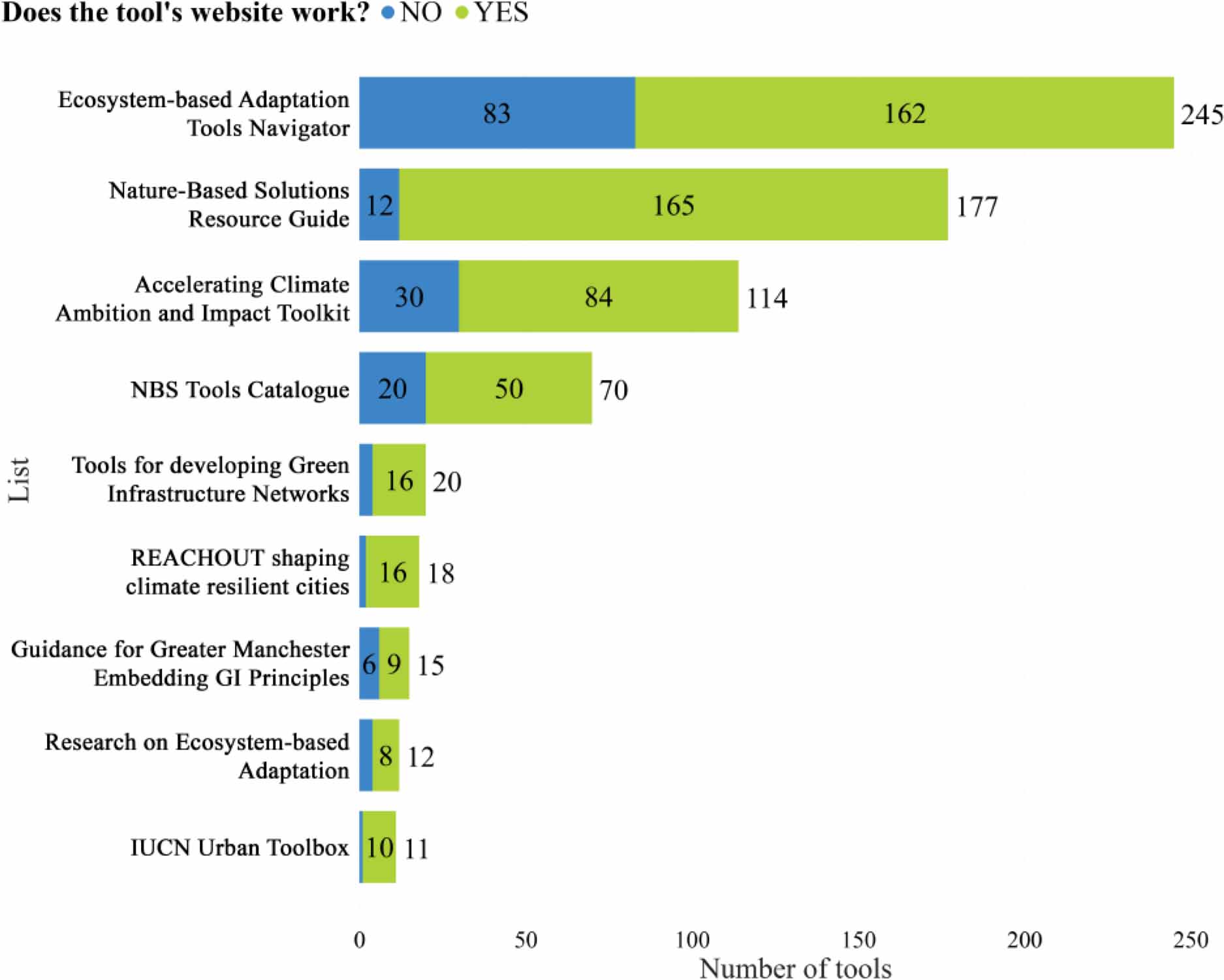
Figure 3.
Number of tools containing websites with expired URL links in the inventories, own study
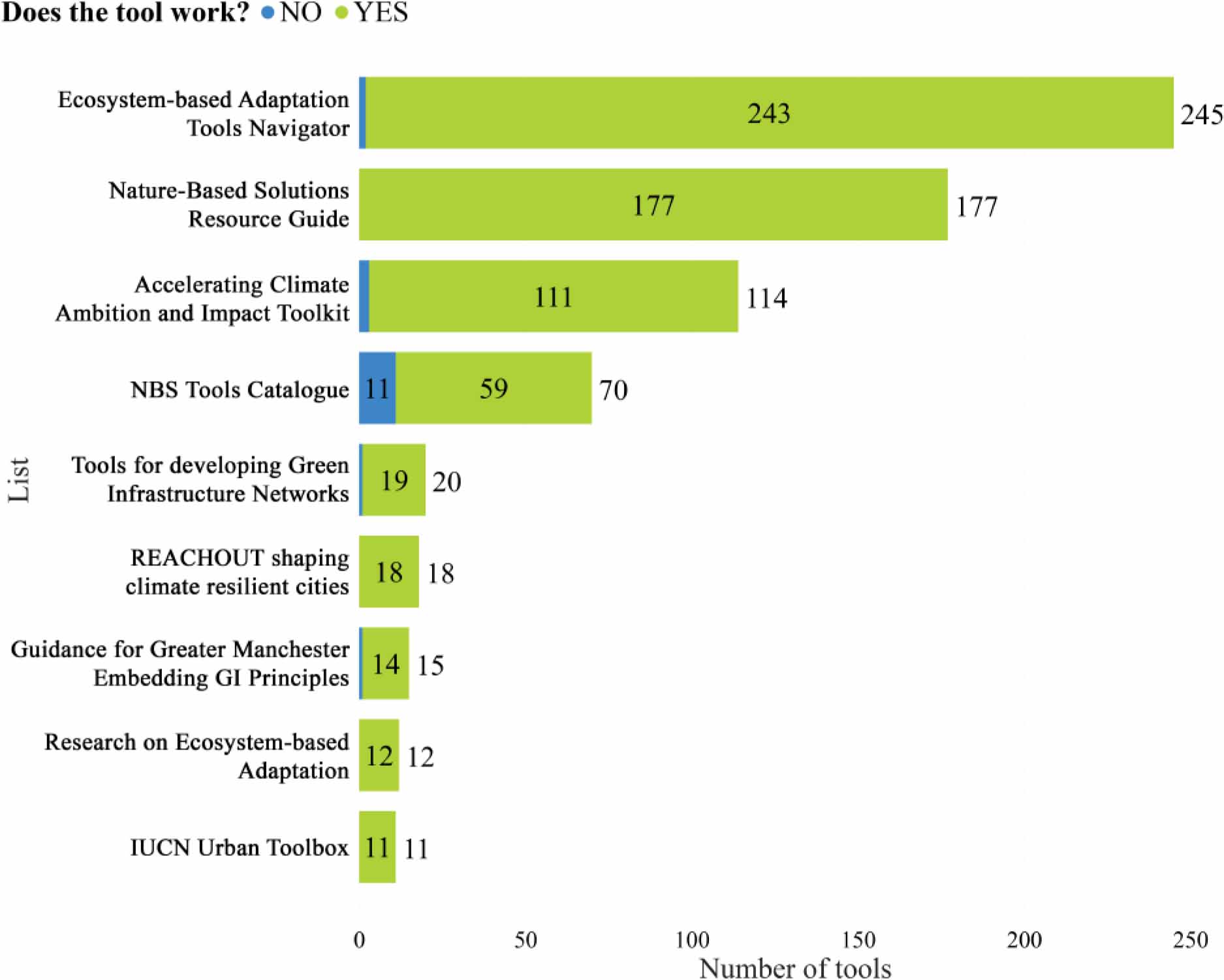
Figure 4.
Number of non-functioning tools in the inventories, own study
3.3. Types of tool forms
Most of the tools analysed are in the form of text documents. Among the working tools: 195 (30.6%) are interactive, and 442 (69.4%) are in various forms of knowledge: documents, guides, catalogues, e-learning platforms and others (Figure 5). The largest number of digital resources is included in the Ecosystembased Adaptation Tools Navigator (65), Naturebased Solutions Resource Guide (44) and Accelerating Climate Ambition and Impact (35), respectively, which is due to the overall largest number of tools in these inventories.
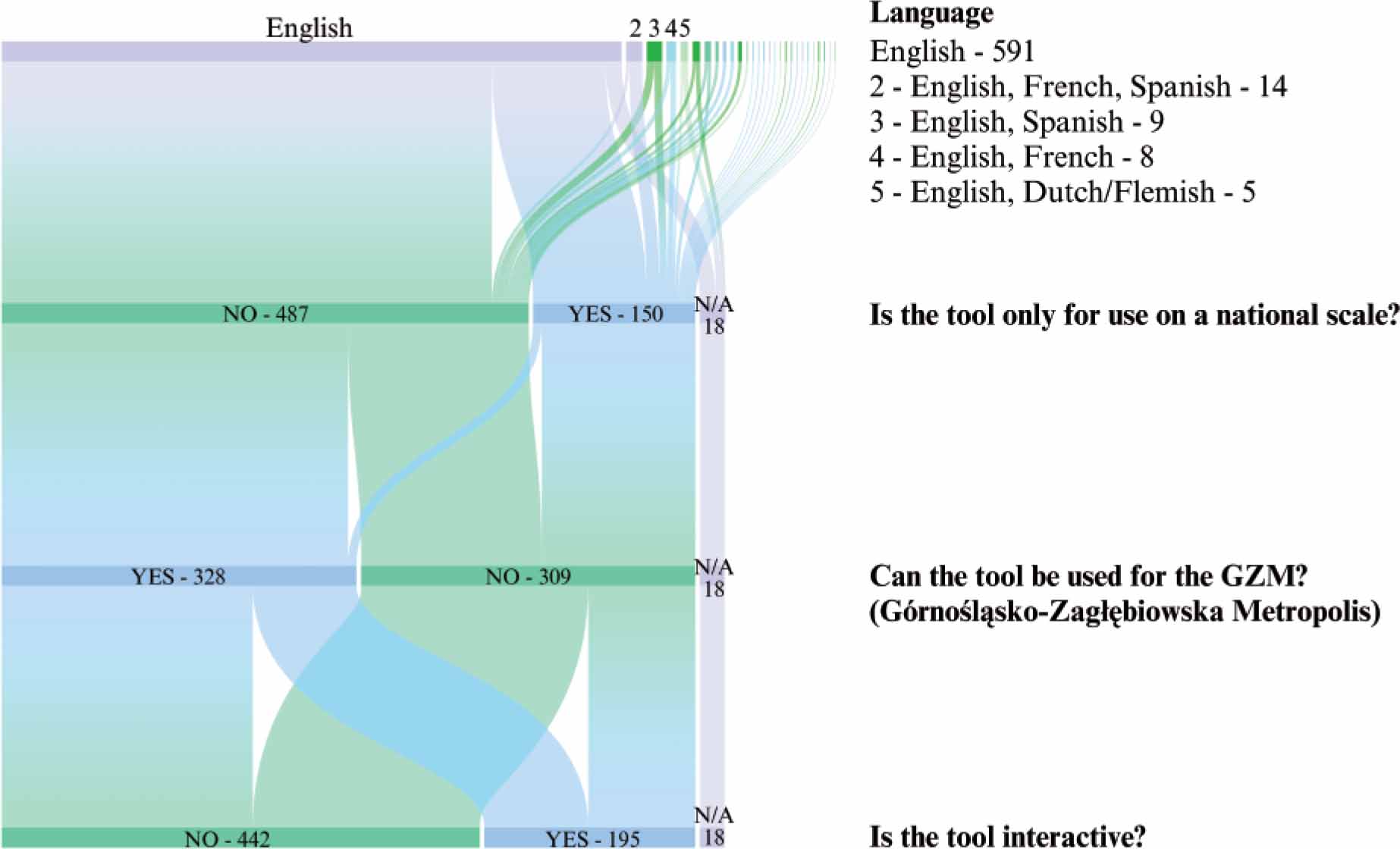
Figure 5.
Number of tools in each category and their links, own study
The small percentage of application tools is a considerable research gap that could be filled by contemporary projects creating interactive digital tools that would be tailored for use in given cities or geographical regions. This also applies to the cities of the GZM, as the analysis of the relationship shows that for these areas, interactive tools account for 17.7 %, even though almost half of all resources cannot be used in these areas (Figure 5).
3.4. Tool languages
Almost all tools (629 tools – 98.7%) functioned in English, of which 575 (90.3%) were only available in English (Figure 6). 54 tools were in different languages, i.e. English together with others (8.5%), of which the largest number of tools were available in 3 language versions: English, French and Spanish (14 tools - 2.2%). Only 8 tools (1.3%) were exclusively in languages other than English: 5 in Dutch, 2 in Spanish and 1 in Italian.
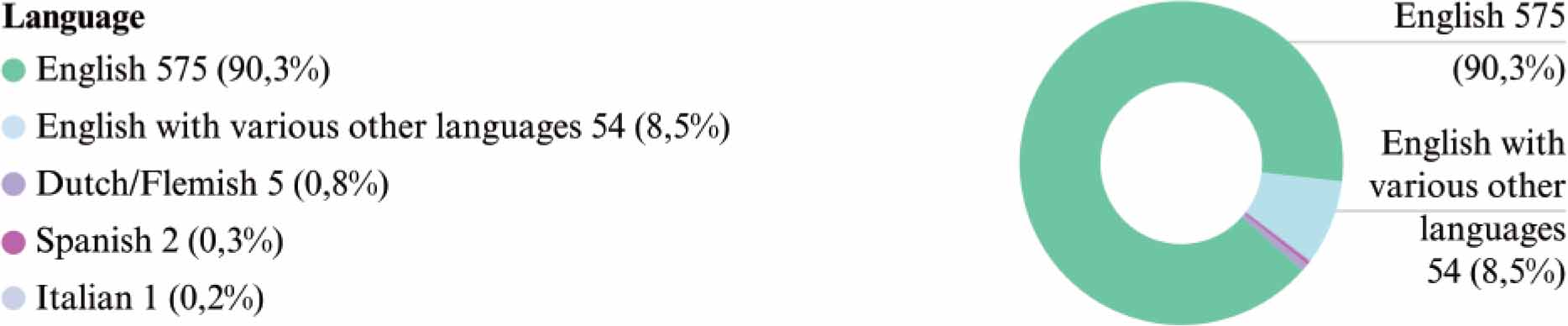
Figure 6.
Number of language versions of tools, own study
3.5. Tools for Poland and the GZM Metropolis
We analysed the feasibility of using the tools in areas located in Poland and in the cities of the GZM (Figure 7). More than half of the tools can be used in Poland (416 tools – 65.3%). Only one tool can be used for certain areas located in Poland. The most useful examples of tools for Poland are, e.g. “Climate Resilient City Tool (CRCTool)” thanks to easy accessibility, interactivity and operation within Poland, and Climate Adaptation Workshops helping to educate and expand knowledge about the use of NBS (both from “REACHOUT shaping climate resilient cities” inventory).
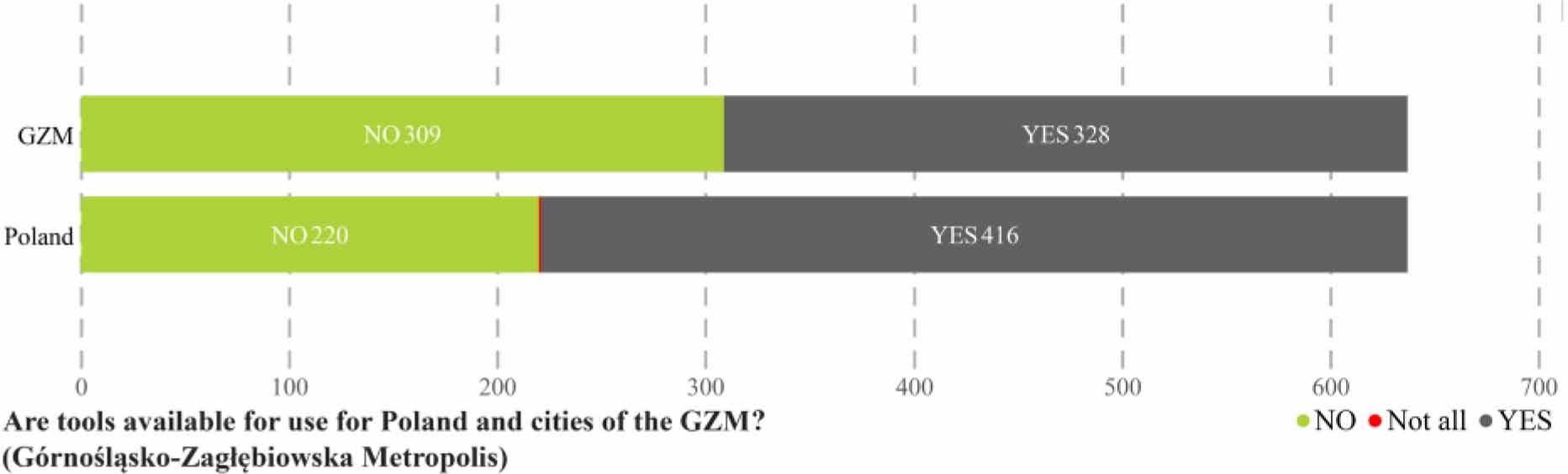
Figure 7.
Number of tools possible to use for areas in Poland and in the cities of the GZM Metropolis, own study
The analysis showed that 400 tools among those that can be used for Poland are not aimed directly at that country, but are, e.g. global in scope. From this, there may be a risk of the tool being inaccurate when used for specific areas. Nevertheless, the indicated pool of resources may provide a starting point for stakeholders developing resources aimed at Polish users. It is also possible that some application tools could have updated datasets suitable for Polish conditions.
More than half of the tools (51.5%) can be used for cities in the GZM (Figure 7). This is 88 resources less than the tools for all areas of Poland. This may be due not only to the fact that the GZM is a highly urbanised, post-industrial polycentric agglomeration located in the south of the country, where some tools could not be used (e.g. coastal, for use in Baltic cities). Some of the tools (23.5%) are for use only at the national level (Figure 5). This means that it is not possible for them to be applied at the local, municipal or metropolitan government level.
3.6. Typologies of tools
Each inventory contains a different classification of tools, with a different number of possible categories to assign. Despite the divergent nomenclature in the inventories, Table 2, as a matrix, shows the most common categories under which the developers classified or described the tools. Some inventories contained more categories, but only those in a minimum of 2 inventories appear in the table.
Table 2.
Overview of the main tools classifications, own study
| No. | Inventory | Type of tool/Type of resource | Phase/Stages/Needs | Objective/Adaptation challenges | Climate hazards | Themes/Benefits addressed | Spatial scale | Target group (users) |
|---|---|---|---|---|---|---|---|---|
| 1 | NbS Tools Catalogue | |||||||
| 2 | Nature-based Solutions Resource Guide | |||||||
| 3 | Accelerating Climate Ambition and Impact | |||||||
| 4 | REACHOUT shaping climate resilient cities | |||||||
| 5 | Ecosystem-based Adaptation Tools Navigator | |||||||
| 6 | Research on Ecosystem-based Adaptation | |||||||
| 7 | Tools for developing Green Infrastructure Networks | |||||||
| 8 | Guidance for Greater Manchester | |||||||
| 9 | IUCN Urban Toolbox |
The authors of inventories most often classified the tools according to which phase of the NbS implementation process the tool could help. Immediately after that, the most relevant was the type of resource, i.e. in what form (for example, as guidelines, methodologies, softwares, and more), and the purpose related to climate change adaptation. The authors of the 3 inventories also included information on what scale of area the tool serves and which users.
3.7. Decision-making scheme based on typologies of tools
The results supported the identification of the most relevant features of the tools in the context in which users decide to use them. On this basis, we created a decision-making scheme to support the selection of an appropriate tool by dividing the tools into relevant categories (Figure 8). We defined 3 main steps and a breakdown of tool types/forms (split into digital and knowledge-based tools). One of the most important objectives was to develop a decision-making framework that helps in selecting the right tools for incorporating NbS into urban planning.
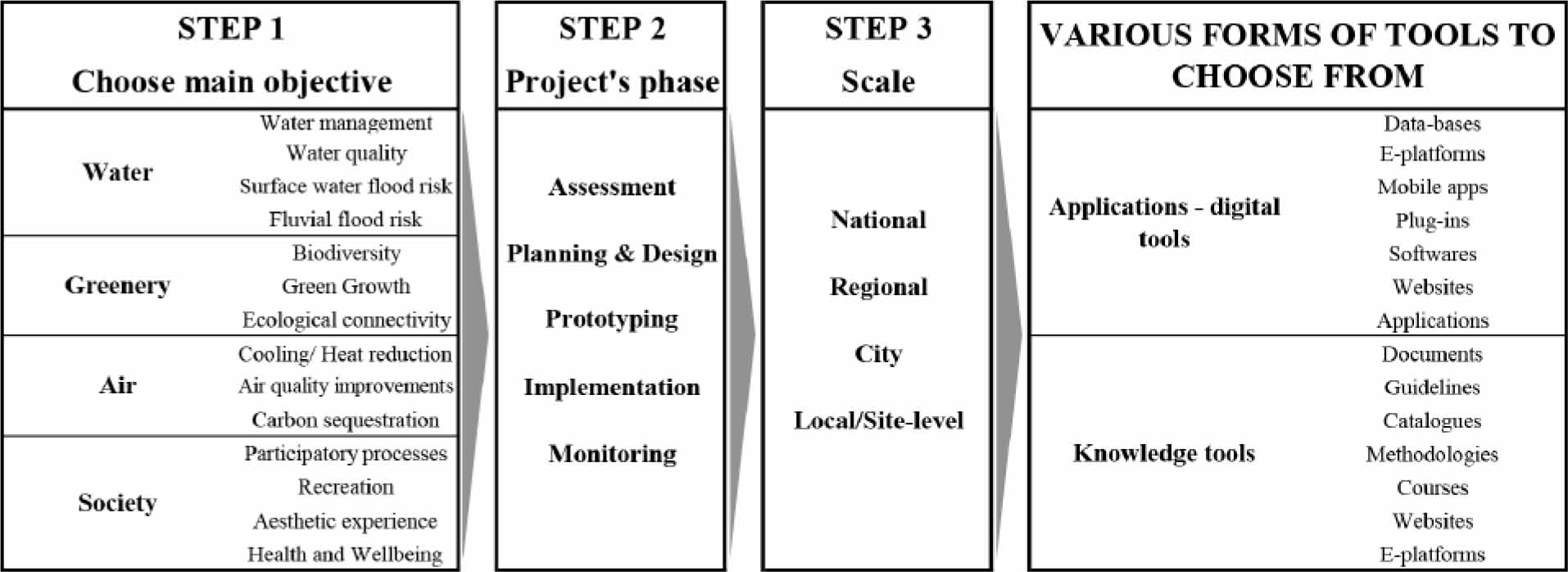
Figure 8.
Decision-making scheme to support the selection of an appropriate tool, own study
This decision tree presents the path from defining the main project objective, through its implementation phase, to the scale at which the tool will be used. The selection of tools starts with defining the overarching project objectives. They may be concerned with improving water management or quality, reducing flood risk, protecting biodiversity, developing green infrastructure or reducing the thermal effect in cities. Other objectives may include improving air quality, carbon sequestration, participatory processes, recreation, aesthetics of public spaces and health and wellbeing of residents. Another aspect is matching the tool to the stage of project implementation, such as assessment, planning and design, prototyping, implementation, and monitoring of effects. The third step is determining the scale at which the tool will be used. This may include the national, regional, city or local level.
The framework also includes various forms of tools available to users, such as application resources (databases, e-platforms, mobile applications, plugins, softwares) and information resources (courses, documents and websites). These tools are diverse and tailored to the specific needs of projects, enabling effective support in achieving the goals of NbS. Thanks to its clear structure, the framework allows for systematic matching of tools to specific goals, project stages and scale of operation. It is intended to support users – such as urban planners, spatial management institutions, and others – in making informed decisions that contribute to the effective implementation of NbS, taking into account diverse environmental, social and technical needs, contexts and challenges.
4. DISCUSSION
The dynamic development of research and the wide range of implementations and good practices that fall within the definition of NbS have led to interest in various types of tools that integrate and use scientific knowledge, combining it with practice. Tools facilitate the application of a wide range of NbS solutions in a variety of urban contexts and their appropriate selection, which is key to achieving effective solutions [40]. However, the multiplicity of tools developed according to diverse methodologies and the lack of a coherent NbS knowledge base hinder the accurate selection of tools and may discourage their use or lead to implementations inappropriate to the context. The need to organise and classify tools has been recognised by many researchers who have undertaken grouping and building inventories of available tools [25–27]. Far fewer studies have taken up the theme of collective comparative assessment of tool suitability. Among other things, tools have been assessed in terms of their ability to address NbS implementation challenges such as lack of knowledge, limited financial resources and difficulties in collaboration between stakeholders [18]. There is also research on reviewing and evaluating current NbS implementation tools, supporting specific concepts, e.g. Sustainable Circular Cities [41] or on narrow thematic strands, e.g. edible NbS [42]. This article, based on our research, describes the process of creating the database on the basis of the available, already created tool inventories. We also evaluated these tools, but we considered the fit to the local context of Polish conditions, and in particular of the cities of the GZM, as key evaluation criteria.
Both the work of Voskamp et al. (2021) and other researchers, including Katsou et al. (2020), produced general conclusions and recommendations for the creation of new tools, which we confirmed and supplemented with our own research. One of these is the need and problem of embedding NbS tools in different geographical and cultural contexts. Tools developed for specific regions, such as Western European countries, may not take into account the specific needs of areas such as the GZM Metropolis in Poland. Adapting NbS tools to local contexts requires taking into account factors such as climate specificities, legal conditions or the needs of local communities. In the process of developing new tools, it is therefore worth considering increasing their flexibility, for example, by adding the possibility of modification (especially in applications), depending on user requirements and urban data availability. We agree with Volk et al. (2022) that the availability of urban data and its exchange between cities and countries play an important role in this case.
Another aspect is the role of language and the accessibility or fit with the audience groups using the NbS tools. Our research has shown that more than 90% of the tools available on the inventories analysed operate in English only. For users from Poland, but also from other countries who may not speak specialised and industry-specific English on environmental and urban planning topics, this can be a serious barrier to use. It is worth considering translating popular and particularly universal tools such as InVEST or i-Tree, and B£ST (Benefits EStimation Tool) or a later version of this tool ciriabest (CIRIA's Benefits Estimation Tool) into other languages, including Polish. Multilingualism could significantly increase the accessibility and effectiveness of the use of these resources. Such solutions could be supported by automatic translations in digital tools.
The importance of keeping NbS tools up to date and available online is also important. Today's tools are often dependent on online resources such as websites and databases. The termination of the project under which the tool was developed, or other reasons preventing further technical support of the tool, results in the loss of access to valuable resources. Examples of initiatives such as FEBA Friends of Ecosystembased Adaptation [27], which enable the introduction of new tools, show that regular updating of tools and their platforms can significantly increase their sustainability. It is also crucial to provide open access to the tools, which enables their continuous development and updating. At the same time, practice shows that the use of relatively ‘persistent’ formats such as PDF (Portable Document Format) does not sufficiently address the problem of limited availability and lack of updates. The publication of several versions of inventories produced at different times can lead to confusion for potential users when searching for sources - collections of tools they could use. For example, the inventory ‘White House Council on Environmental Quality, White House Office of Science and Technology Policy, & White House Office of Domestic Climate Policy Nature-based Solutions Resource Guide, Washington, D.C.’ (2022) was updated with version 2.0 issued in 2023 [33]. Both inventories are available as a PDF document, but the 2.0 version contains 77 more new resources, for a total of 279 tools. The 1.0 version was developed specifically for tools focusing on coastal flood risk. Version 2.0 supplements the earlier tools with those focusing on the introduction of NbS with benefits in fire and heat risk reduction, jobs and equity [33].
Another challenge identified is the need for integration and unification of the NbS tool typology. An analysis of the available tool inventories showed considerable diversity in classification and nomenclature. Each inventory applied different subdivision criteria, which can lead to confusion for users. As a solution to this complex problem, we proposed the use of a decision-making scheme that could help to standardise the approach to classification, taking into account the different stages of the process and the varying objectives of NbS implementation. The introduction of standardised categories, such as the form of the tool (application, information), spatial scale or subject matter of the resource, could simplify the selection process.
The decision-making scheme proposed in the article is an important step towards making NbS tools more accessible and effective. It allows users to more easily adapt the tools to their needs and site conditions. A similar approach was used by Voskamp et al. (2021) for the NbS Tools Catalogue and by UNEP-WCMC, IIED, IUCN, and GIZ for the Ecosystem-based Adaptation Tools Navigator [25, 27]. Both inventories created by the indicated studies allow the results to be filtered in spreadsheets. However, the Ecosystembased Adaptation Tools Navigator only focuses on this specific issue, leaving out the broader context of NbS. Thus, users may be missing a broader perspective, as many of the concepts that fall under the NbS framework - such as green infrastructure, blue infrastructure, ecological engineering, sustainable urban drainage systems or ecosystem services - interrelate and create comprehensive tools that cover a variety of issues. Among the resources on this inventory, for example, Ciriabest (CIRIA's Benefits Estimation Tool) on BGI, the Climate Resilient City Tool (from Deltares) supporting water retention design, QUICKScan (Wageningen University & Research centre) supporting participatory environmental problem solving, and Oppla, one of the largest platforms gathering knowledge on NbS and environmental management, were not included. Therefore, limiting the inventory to EbA only may lead to the exclusion of some important elements that, although not strictly related to EbA, fall within the scope of NbS. A comprehensive inventory covering all of NbS would have the advantage of taking into account the full range of solutions and facilitating their consistent and more universal application. The dissemination of databases with a clear and simple structure for resource selection can help to make NbS tools more popular and facilitate their implementation in cities around the world.
5. CONCLUSIONS
In this study, we have used quantitative and qualitative methods to perform a comprehensive review of the available tool inventories supporting the implementation of NbS in urban public spaces, with a particular focus on the specific characteristics of Poland and the GZM Metropolis in Poland. As a result of the research, we formulated the following answers to the key research questions. Firstly, typologies of NbS tools are most often classified according to the phases of implementation - from initial assessment, planning, design, implementation, to monitoring of effects - and by form, which divides resources into knowledge documents (such as guides, guidelines, methodologies) and digital tools (which include applications, interactive platforms or software plugins). A common element shown in all the inventories analysed is also the inclusion of the main objectives of NbS implementation, such as climate change adaptation, biodiversity protection, improved water management and reduction of the urban heat island effect. Secondly, the research confirmed that the existing tool inventories are relatively comprehensive and up-to-date - as many as 97.2% of the identified tools remain functional, although around 24% of the websites show signs of being out of date, indicating the need for systematic updating of resources. Thirdly, 27 duplicates were removed during the analysis process, which is a small part of the 682 resources collected. This indicates the large number of existing tools supporting the implementation of the NbS and the need for stakeholders to carry out detailed research to find the tools that work best and are appropriate for the given objectives. Fourthly, the analysis of adaptability showed that approximately 65.3% of the tools can be applied within Poland, while their usability for cities in the GZM Metropolis is 51.5%. For some resources, it is necessary to adapt the data to specific local conditions, such as climatic, legal or economic factors. Based on all observations, we have developed a decision-making scheme to support the optimal selection of tools, which is crucial to avoid user disorientation and the selection of inappropriate solutions.
We also applied a critical analysis, which indicated that the large amount of NbS information available and the lack of a single, consistent database can lead to user confusion and, in the worst case, to the selection of an inappropriate tool. The findings suggest that text documents, data sheets and off-the-shelf software provide a more durable medium for information than websites or databases requiring dedicated servers, which can prolong the life of a tool. We also highlighted the language barrier - although English is universal, using it as the sole language of the tools can make them difficult to use for users who are not fluent in specialist terminology.
The research carried out answered the formulated research questions concerning the typology of NbS tools, the comprehensiveness and topicality of the existing inventories, the degree of duplication of the elements included in them and the applicability of the tools in Poland and the cities of the GZM. Taking into account the problem of tools available via websites, it is worth implementing mechanisms for automatic monitoring of the functioning of the websites - which would allow for quick notice when a tool stops working. Continuous technical support could also be provided, which would make it possible to respond to problems on an ongoing basis and keep the tools operational. A further step that would ensure better accessibility of the tools could be to create clear descriptions and search engine positioning, so that practitioners can more quickly identify which listings are relevant to them and which do not meet their expectations. This approach would avoid reviewing outdated or inappropriate resources for their purposes. The proposed decision-making scheme, based on project objectives, implementation stages and scale of application, supports the appropriate selection of solutions, which can contribute to the creation of more sustainable, resilient and liveable urban spaces at both national and local levels, including in the GZM metropolis.
Acknowledgment
This research received no specific grant from any funding agency in the public, commercial, or not-for-profit sectors. Open Access will be funded by the authors' own institutions' funds for publications.
Notes
[1] DECLARATION OF INTEREST STATEMENT
The authors report that there are no competing interests to declare.