
1. INTRODUCTION
The identification of spatial features in selected inclusive primary schools with a high level of inclusion of individuals with diverse needs into mainstream educational environments, tailored to meet the needs of all students. In the social aspect, this includes respecting the individual needs of students; in the pedagogical aspect, adapting curricula and teaching methods to diverse student needs; and in the architectural aspect, implementing design principles that address not only the elimination of spatial barriers but also sensory barriers. The aim of the study was to define the problems related to the functioning of individuals with autism in schools that can be addressed through design, as well as to identify the criteria that a school environment should meet to support their integration.
2. STATE OF RESEARCH
2.1. Problems of children with autism
The challenges associated with autism were defined based on a widely accepted developmental framework used in the diagnosis of children, following the criteria outlined in the DSM-V and ICD-11. According to these classifications, Autism Spectrum Disorder (ASD) is primarily characterized by persistent deficits in the ability to initiate and maintain social interactions, as well as restricted, repetitive, and inflexible patterns of behavior, interests, or activities. These patterns often appear atypical or disproportionately intense relative to the individual’s age and socio-cultural context.
For children with Autism Spectrum Disorder (ASD) who do not exhibit intellectual developmental delays, challenges in social adaptation outside the home may only become evident during the school years or adolescence. Autism Spectrum Disorder is primarily characterized by persistent deficits in the ability to initiate and sustain social interactions, alongside restricted, repetitive, and inflexible patterns of behavior, interests, or activities. These patterns often appear atypical or disproportionately intense relative to the individual's age and socio-cultural context [1]. Children often respond noticeably to even minor changes in their daily routine. At this stage of development, symptoms of anxiety may also emerge, related to instability or unpredictable situations in their environment [2].
2.2. Design solutions to support students with autism in school
A literature review was conducted to identify spatial features that should be used in schools designed for students with autism. The selected features were organized according to the specific challenges they aim to address.
Following the scoping review methodology by Arksey and O’Malley, a search was conducted in the Web of Science, Scopus, and ScienceDirect databases using the keywords “autism, design, environment”. This process initially identified 2,033 articles. After applying additional inclusion criteria focused on primary school design theories, the selection was narrowed down to thirteen peer-reviewed studies.
Sensory sensitivities
Sensory hypersensitivity can limit a child’s ability to engage in daily activities, including learning, play, and social interaction [3]. Unusual sensory responses to stimuli are common among children with autism, with 90% exhibiting hypersensitivity or hyposensitivity [3, 4]. Children may seek or avoid certain sensory stimuli [3, 5, 6]. The physical properties of spaces should be designed to avoid unwanted sensory stimulation that could lead to sensory overload or anxiety [6, 7, 8]. Key considerations include reducing glare, echo, light effects (reflections), spatial overcrowding, and using colors with low saturation. Spaces should be evenly lit with natural light to minimize sharp shadow edges [7].
Sensory integration and spatial orientation
Difficulties with sensory integration, including proprioception, may manifest as challenges in spatial orientation, navigating large areas, and understanding spatial relationships between objects [3, 4, 6, 7, 8]. Solutions include clear spatial organization, appropriately scaled rooms for their function, and visual identification of spaces. Functional divisions should clearly define how spaces are used [3, 4, 6, 7, 9, 10].
Adapting to new experiences
Children with autism often struggle with adapting to new experiences and circumstances, reacting intensely to changes, which can drastically alter their behavior. Design responses could include creating zones with varying sensory exposure to support calming and sensory recalibration. Functional and visual consistency in room design, as well as the use of repetitive elements in spaces, can help minimize disruptions [7, 8, 9, 10, 11].
Ritualized behaviors
Persistent, ritualized behavior patterns can be supported by predictable spatial organization. Design strategies may include zoning spaces by activity type and assigning consistent functions to each zone. Clearly marking zones and defining their boundaries within the environment is also critical [6, 8, 9].
Reactivity to unforeseen events
Excessive responses to unexpected events are linked to the need for predictability in using spaces and spatial overcrowding. Emotional regulation can be facilitated through the inclusion of sensory calibration zones; quiet areas with varied sensory exposure [11, 12]. These zones allow students to decompress in stressful situations, such as transitions or sensory overload. Spatial zones should not be rigidly divided, allowing for fluid transitions [3, 4, 6, 8, 12, 13, 14].
Design criteria have been formulated to support therapeutic processes. These criteria focus on minimizing factors that may potentially disrupt these processes. Existing research highlights the importance of implementing specific design strategies, such as zoning spaces based on sensory exposure levels; delimiting integration and activity zones, ensuring clarity in spatial function; Sequencing functional zones for smooth transitions.
2.3. Unexplored areas
A review of the literature indicates that the topic of school design in relation to the challenges faced by individuals with autism remains insufficiently explored. In particular, research on the practical implementation of architectural solutions within mainstream schools is notably limited. In line with the objectives of this study, an attempt has been made to link spatial characteristics identified in the literature with the challenges experienced by autistic students in school environments.
3. SCOPE OF THE RESEARCH
3.1. Methods
A multiple case study approach was conducted, focusing on carefully selected facilities based on predefined criteria, which could be supplemented during the research in accordance with grounded theory. These criteria were expertly selected to reflect the researcher’s professional approach. Within the comparative analysis, selected facilities were examined considering the identified criteria, using research techniques such as document analysis, description, explanation, and interpretation [16].
3.2. Research goal
Designing dynamic educational environments requires synthesizing evidence from various disciplines, such as environmental psychology, developmental psychology, architecture, and education. Integrating these perspectives enables the development of a coherent framework that facilitates the design of spaces positively influencing the learning process. The objective of this study is to identify challenges related to the functioning of individuals with autism in schools that can be addressed through architectural design. The analysis focuses on identifying selected design criteria in highly inclusive schools located in countries with a high standard of living.
3.3. Geographical scope of the study
The territorial scope of the study was limited to countries belonging to the European Union. To ensure the comparability of results, only countries characterized by a similar level of social and economic development and quality of life were included. Therefore, countries with a high quality-of-life index were selected, as improving the quality of life constitutes a key goal of every society. In this context, according to the adopted indicators:
Human Development Index (HDI) above 0.90 [17],
Gross Domestic Product per capita (GDP) average value above 48.69 [18],
Regional Well-Being Indicator, monitored by the Organisation for Economic Co-operation and Development (OECD), the indicator value exceeding 7.5–8.5 [19].
The inclusion criteria were met for three countries: Sweden (HDI = 0.937, GDP = 51.53, Q = 8.04), Denmark (HDI = 0.930, GDP = 59.49, Q = 8.04), and the Netherlands
(HDI = 0.933, GDP = 53.76, Q = 7.46). For the purposes of this study, schools in the country with one of the highest development and quality-of-life indices, as well as the highest number of autism spectrum disorder diagnoses, were selected for analysis (Fig. 1).
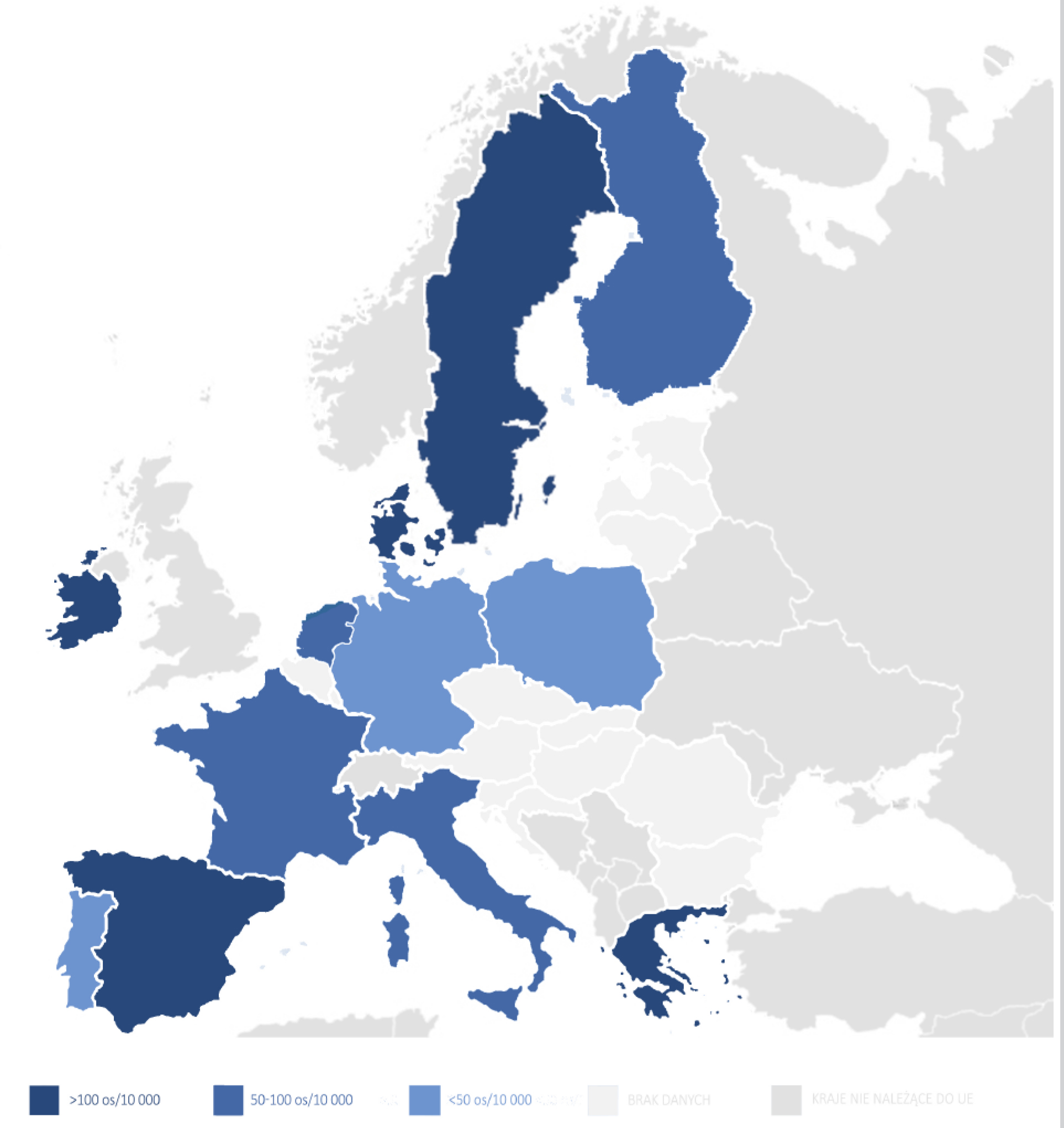
Figure 1.
The map illustrates the prevalence of Autism Spectrum Disorder (ASD) per 10,000 inhabitants in countries belonging to the European Union, developed by the author based on source material [20]
3.4. Selection criteria for research buildings
For the study, general-profile primary schools, attended by students aged 7–15 years, were selected from the Swedish education system, which is known for its high inclusion rate of students with special educational needs (SEN), including those with autism. General information regarding the schools was verified using data provided by Skolverket (The Swedish National Agency for Education) [21].
In the first stage, schools that met the specified criteria and were endorsed by Forum Bygga Skola were identified. This organization, founded in 2016 by Magnus Anclair, supports the exchange of experiences, innovation, and research in the design of educational spaces [22]. In the second stage, only those schools that could form a representative sample, expected to yield comparable research outcomes, were included in the study.
4. RESULTS
4.1. Inclusive education in Sweden
According to data from the European Agency for Special Needs and Inclusive Education (EASIE), in Sweden, 85.53% of children diagnosed with special educational needs (SEN), including individuals on the autism spectrum, attend inclusive schools [23] to which 90.8% of all children attend.
In Swedish schools, key actions are focused on balancing the educational curriculum, developing the competencies of school staff, and improving the physical environment of the school [24]. Actions are being taken to make the school environment more inclusive, particularly for groups of individuals whose needs are often marginalized [25]. Of particular importance is the implementation of the principles of Universal Design (UD) and Inclusive Design (ID), both of which are rooted in the concept of creating spaces that accommodate all user groups. Their shared goal is to develop fair and accessible environments. Universal Design focuses on removing barriers by employing strategies that ensure buildings meet the functional needs of users of all abilities and ages, offering practical solutions and improved accessibility [26]. Inclusive design involves understanding how people behave, socialize, live, and interact with spaces [27]. It also encompasses design strategies that consider the psychological and emotional impact on individuals [28]. The design of inclusive environments is a key element of national policy. This is evidenced by the agreement signed between the Swedish research institute RISE (Research Institutes of Sweden) and UCL’s (University College London) Faculty of Brain Sciences and The Bartlett Faculty of the Built Environment [29]. International and interdisciplinary collaboration in the field of neuroarchitecture, a research domain focusing on the neurobiological foundations of aesthetic experience, is gaining prominence. It emphasizes the creation of spaces tailored to the specific needs of users, with a strong focus on enhancing their well-being. A key element of this approach is the use of advanced research technologies, such as the simulation of real-world environments in the PEARL (Person Environment Activity Research Laboratory) and mobile brain activity recording [30, 31].
In the future the knowledge gained through these methods can lead to more effective shaping of educational spaces, where the well-being of all users, including those with special needs, remains the ultimate priority.
4.2. Application of identified design strategies in the inclusive mainstreem schools Brogårdaskolan, Bjuv [A]
The school was designed by the architectural firm Codesign and commissioned in 2019, the 13,800 m2 facility provides a conducive learning environment for 340 students.
The building consists of several interconnected volumes, each with its own separate entrance. The southern-facing section houses the kindergarten, thematic classrooms, and administrative offices. Meanwhile, the northern part comprises three volumes dedicated to classroom clusters. The classrooms are oriented to the east, west, and north, each with direct access to a small courtyard. Each cluster has its own entrance with an adjacent cloakroom, accessible from outside the building. From there, one transitions into a shared space that seamlessly connects all functional areas of the building. Each cluster consists of six classrooms arranged around a central communal area, which is divided into smaller sections using built-in furniture. Every classroom has direct access to a quiet room, designed as a space for individual work or relaxation (Fig. 2).
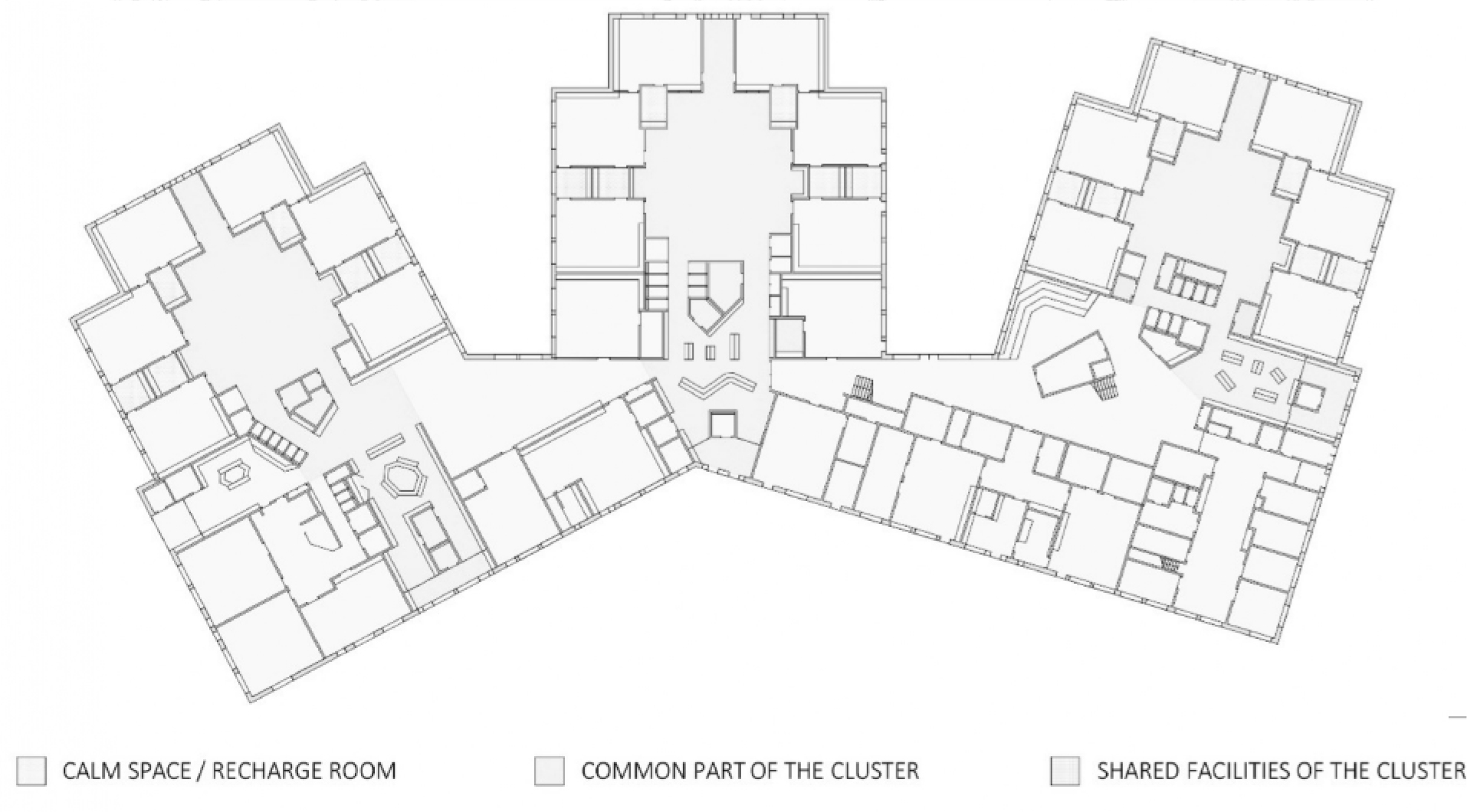
Figure 2.
Ground floor plan of Brogårdaskolan, Bjuv: Typical classroom clusters, own elaboration based on architects’ materials. Glömstaskolan, Huddinge [B]
The school was designed by Origo Arkitekt and completed in 2016. The building covers approximately 9,400 m2 and offers modern learning spaces for 710 students.
The functional and spatial structure of the school is centered around a circular atrium, encircled by a corridor and staircases. These elements form the focal point of the entrance area and serve as the main circulation core of the entire building. The educational clusters and other functional spaces on the upper floors are arranged concentrically around this central atrium. Each educational cluster has its own dedicated entrance with an adjacent cloakroom. Shared spaces between the clusters include restrooms and a multifunctional hall, providing essential common facilities. Each cluster comprises three classrooms. Two full-sized classrooms, each with direct access to quiet rooms designed for individual study or small group work. One smaller classroom, always positioned next to a designated amphitheater-style space within the cluster zone, with quiet rooms accessible directly from the cluster’s shared space (Fig. 3).
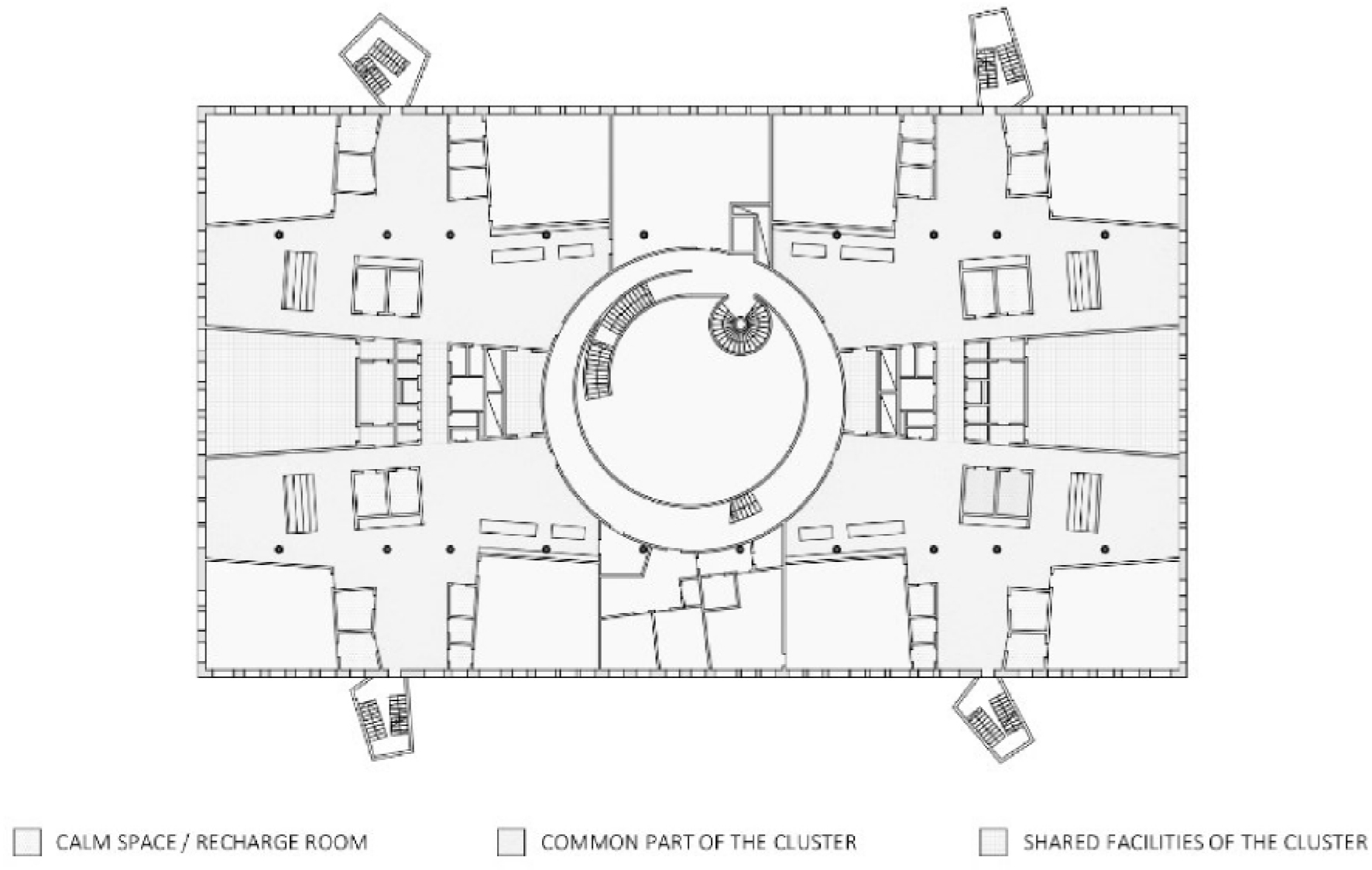
Figure 3.
Floor Plan of the Third Level of Glömstaskolan, Huddinge:Typical classroom clusters, own elaboration based on architects’ materials. Floraskolan, Skellefteå [C]
The architectural project by MAF was realized in 2017. Covering an area of 14,600 m2, the institution ensures optimal learning conditions for 590 students. The building consists of four volumetric structures interconnected by communication spaces. At the junction of these structures is the main entrance to the building. On the second and third floors, typical educational clusters are located in two opposing wings of the building. At the intersection of the central volumes and the wings, there is an entrance area with cloakrooms, which consistently serves two designated educational clusters. These clusters share common spaces, including an amphitheater, a practical activity room, and restrooms. Each educational cluster comprises two primary classrooms, which are directly connected to small, quiet rooms intended for individual work or relaxation. Additionally, each cluster includes two medium-sized group workrooms. The quiet rooms, attached to the classrooms, are also accessible from the corridor (Fig. 4).
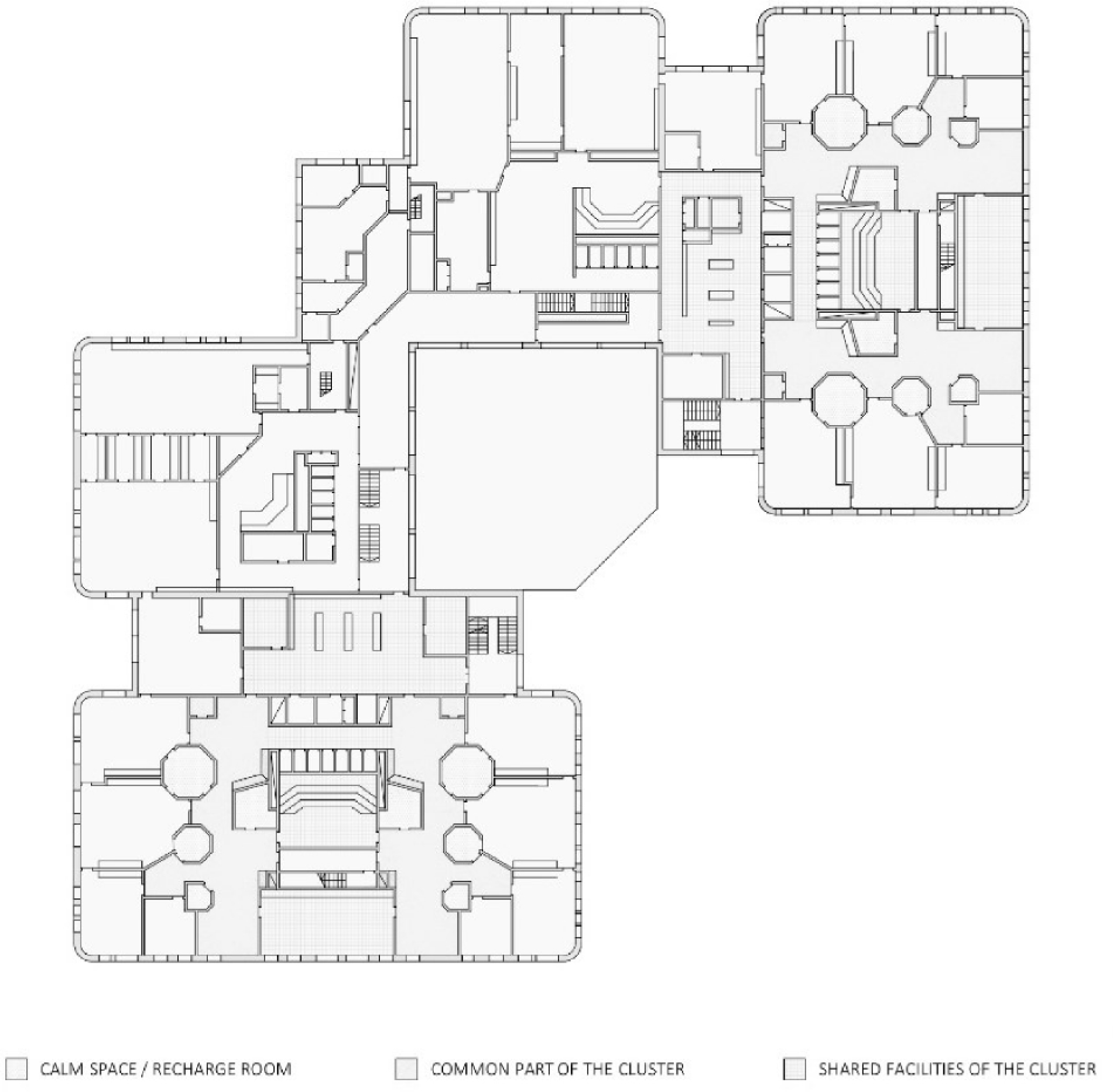
Figure 4.
Floor Plan of the Third Level of Floraskolan, Skellefteå: Typical classroom clusters highlighted, own elaboration based on architects’ materials
4.3. Comparative analysis of the implementation of design solutions that may support individuals with autism in selected schools
Zoning Spaces Based on Sensory Stimuli Exposure
Considering the adopted layout of the entrance zone to educational clusters, the lowest exposure to uncontrolled external stimuli is observed in Building A. A key factor is the division of the entrance space into smaller zones and the inclusion of areas with reduced exposure to sensory stimuli. This solution minimizes the concentration of large groups of students in a single zone at the same time, while the reduced-stimuli areas allow individuals to escape from the sensory intensity present in the space. The highest sensory exposure in entrance zones to clusters may occur in School B. Access to each educational cluster is from a single central staircase, which is connected to a single entrance. However, the clusters in School B are more intimate, with the highest ratio of shared space per student.
Delimitation of Integration and Activity Zones
All selected schools exhibit distinct zones for activities. Educational clusters are clearly defined and separated spaces. There is no flow of individuals not associated with the specific zones. Classrooms are physically separated within the clusters by solid walls. Each classroom is functionally connected to a space with lower sensory exposure—dedicated to individual or group work. In Schools B and C, zones with reduced sensory exposure are also clearly marked within the shared cluster spaces. In School A, while such areas are present, they are not enclosed rooms but integrated into the open-plan cluster layout. Divisions between high- and low-stimuli zones are clearly defined, often using fixed niches or partitions. Schools B and C also feature semi-open spaces, such as amphitheaters, as part of their clusters. In contrast, School A offers a wide variety of activity options, but the cluster spaces are open-plan in design.
Sequencing Functional Zones. The functional layout of the buildings reflects a clear sequence of zones, with a hierarchy ranging from the most public to the most private, visual connections between adjacent zones, and gradations in sensory stimuli intensity. This sequential arrangement is consistent across all schools. Classroom clusters are directly connected to their respective coatrooms. The distance between the main entrance zone and the cluster entrance zones varies. In School A, this distance is shortest. In School B, the entrance zone connects to an open staircase providing access to all clusters. In School C, the pathways to clusters are corridor-like. The shared space in the clusters of School C has an irregular shape, with no single point providing visibility to all classroom entrances. This design can reduce visual clutter but may also hinder navigation. In contrast, in Schools A and B, all classroom entrances are visible from the cluster’s shared entry space.
5. SUMMARY
In accordance with the relevant literature describing the challenges faced by individuals with autism that can be addressed through architectural design, specific design solutions have been adopted to: minimize sensory stimuli, clearly define activity zones, and sequence spatial arrangements. These measures are intended to address the challenges faced by individuals with autism as classified under ICD-11 and DSM-5, including sensory sensitivities, sensory integration, spatial orientation, adaptation to new experiences, ritualized behaviors, and reactivity to unforeseen events. The selected design solutions are implemented in educational spaces of schools recognized as representative. Their implementation is interpreted by the author as follows:
Minimization of Sensory Stimuli
Spatial zones are arranged in accordance with the principle of gradual zoning, transitioning from loud, publicly accessible areas (such as entrance zones) to quiet, private spaces (such as sensory rooms). Additionally, within spaces of specific sensory exposure, low-stimulation zones are introduced, such as individual and group workrooms, which are accessible both from the shared cluster space and directly from classrooms.
Delimitation of Zones
The introduction of conventional spatial codes enhances the recognizability of different zones, ranging from the macro scale – the segmentation of the school structure – to the micro scale, where activity areas are delineated by various types of partitions, either fixed or symbolic. These partitions influence the way a child integrates with their surroundings: Opaque partitions provide privacy and visual isolation, reducing exposure to external stimuli and enclosing spaces with lower sensory intensity. Semi-transparent partitions enable visual connections between zones, which can facilitate integration and observation while maintaining a level of separation, making them particularly effective in areas with moderate sensory exposure.
Spatial Sequencing
The arrangement of functional zones follows a structured sequence in alignment with usage schedules, minimizing disruptions and ensuring smooth transitions between activities. The school layout is divided into clearly designated zones, with clusters incorporating essential components such as: cloakrooms, restrooms, sensory rooms accessible from the shared cluster area, individual workspaces accessible both from the classroom and the shared cluster area, varied learning and recreational spaces. To ensure fluid and intuitive navigation, spatial design incorporates elements that facilitate natural movement and orientation within the environment. Sightlines direct users toward the next zone, ensuring that key areas, such as classroom entrances, are visible from the main entry points of the cluster. Navigation nodes serve as wayfinding hubs, naturally prompting users to pause while directing their attention to visual cues.
In the selected Swedish schools, the implementation of inclusive environments is the result of the synergy between infrastructure, organization, and education. Architectural solutions focus not only on eliminating spatial barriers but also on addressing psychophysical accessibility. Combating social exclusion requires ensuring equal access to designed spaces for all individuals. Importantly, the designed space is not intended exclusively for a specific group but is developed to accommodate diverse needs, improving the functioning and well-being of all students within the school environment.
6. CONCLUSIONS
In the Swedish schools examined, design strategies are systematically applied to reduce sensory stimuli, clearly define activity zones, and establish a structured spatial sequence. The implementation of these solutions within the school environment may facilitate the reduction of sensory overload, enhance emotional regulation, and improve navigation within the building.
The gradation of zones based on the intensity of sensory stimuli and the clear designation of low-stimulation areas within the space can help minimize the impact of undesirable sensory input on children. The delimitation of zones using partitions with varying degrees of transparency regulates visual isolation, either fostering integration or ensuring privacy. Zones are distinctly defined according to activity types, enhancing spatial orientation and predictability. Arranging functional areas in alignment with the schedule – following the principle of spatial sequencing – reduces disorientation and facilitates smooth transitions between activities. Key functions are logically distributed, while sightlines and navigational landmarks intuitively guide users through the environment.
Limitation of this study lies in the relatively small number of schools analyzed. Expanding the research to include schools from other countries would provide a broader comparative perspective on spatial organization in the context of inclusivity. Such an approach would allow for more refined and well-grounded design recommendations.