
1. INTRODUCTION
The topic of wall connections remains relatively unexplored. A literature review presented in [1] indicates that the issue of inter-wall connections is still not well understood, and the results of the few existing analyses are not comparable due to differing experimental standards. For this reason, this subject has been undertaken, and comprehensive research on wall connections using various types of connecting elements (mechanical connectors) is being conducted at the Laboratory of the Faculty of Civil Engineering at the Silesian University of Technology.
So far, studies have focused on wall connections subjected to pure shear loads [1, 2, 3]. These studies presented theoretical foundations, experimental results, and an attempt to describe the behavior of both traditional and reinforced autoclaved aerated concrete (AAC) connections under pure shear. Given the complexity of structural behavior, wall connections are subjected not only to pure shear but also to bending and compression. Therefore, comprehensive research is being conducted at the Faculty of Civil Engineering Laboratory to analyze wall connections under various loading conditions using different types of connectors.
2. THEORETICAL FOUNDATIONS
The location and positioning of the force acting on the connection have a significant impact on the distribution and progression of stresses in the connected walls. In cases where the load is applied in the immediate vicinity of the connection [1, 2], the situation can be described as pure shear or shear with a residual bending effect. However, when the force acts eccentrically on the connection, the stress distribution changes. In this case, the cross-section is subjected not only to shear but also to bending. A schematic representation of the loading method and its influence on the distribution of normal and shear stresses is illustrated in Figure 1.
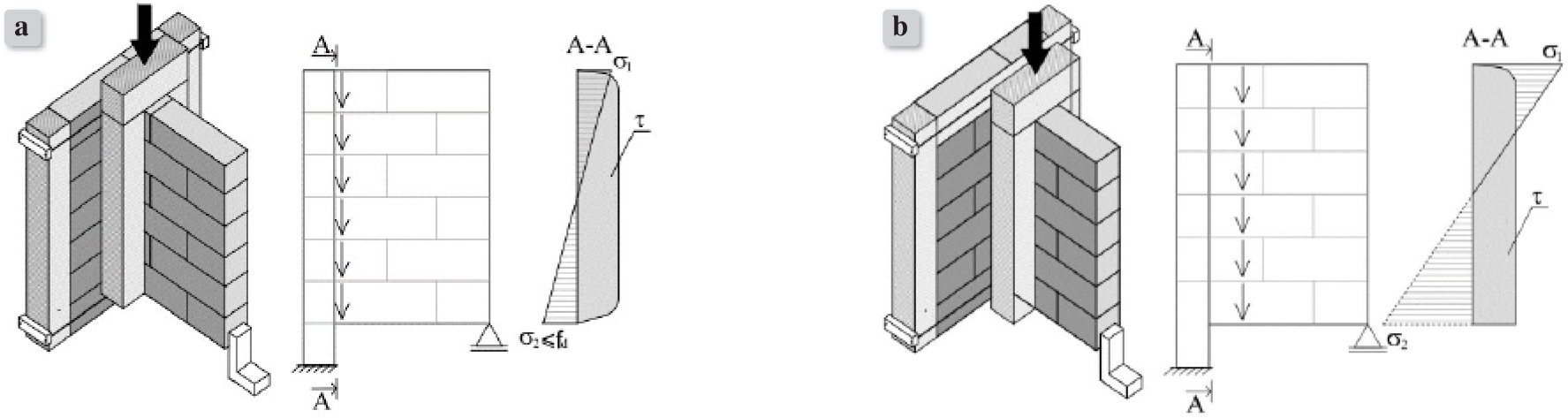
Figure 1.
Test scheme and distribution of normal and shear stresses at wall conection, a) unreinforced and reinforced shear stress before cracking, b) reinforced shear stress with bending after cracking
3. TYPES OF CONNECTORS USED IN POLAND IN CONSTRUCTION OF AAC WALL JOINTS
Depending on the intended use and specific requirements, connectors can either be rigid or allow for relative displacements between walls. In some cases, a complete restraint of the walls can be achieved, requiring connectors capable of transferring a specified pair of forces. All types of connectors – such as anchors and reinforcement – must meet the standards outlined in PN-EN 845-1 [4] and PN-EN 845-3 [5], ensuring compliance with load-bearing capacity, dimensional tolerances, and anti-corrosion protection. Table 1 provides a comprehensive overview of the elements used in Poland for wall connections.
Table 1.
Assortment of connectors used for wall joints
| Name and photo | Notes |
|---|---|
punched flat profile 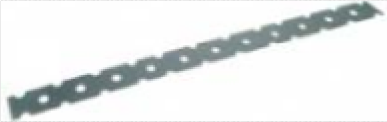 | Element used in joints of walls made of the units of the same height. Replaces masonry bond. Can be used with traditional or adhesive mortars. |
Winding flat profile 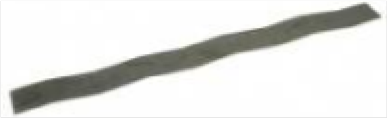 | Element replacing masonry bond in the walls with thin bed joints. |
Punched L-shape profile 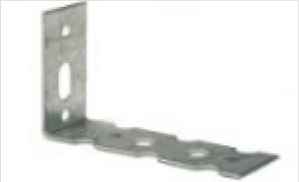 | Element for joints of masonry walls with reinforced concrete structure as well as for joints in walls made of the units of different heights. |
Two-arm L-shaped profile 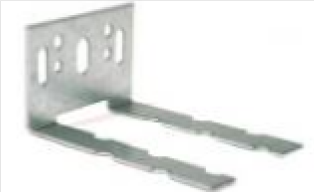 | Element for joints of masonry walls with reinforced concrete structure or existing masonry walls, as well as for joints in walls made of the units of different heights. |
Punched flat movement profile 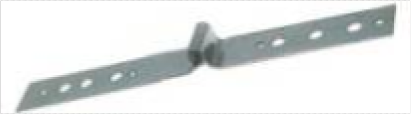 | Equivalent of the punched flat profile used in the locations where expansion joint must be introduced between the connected elements. |
Punched L-shape movement profile 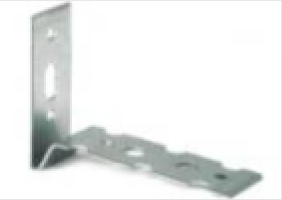 | Equivalent of the punched L-shape profile used in the locations where expansion joint must be introduced between the connected elements. |
Two-arm L-shaped movement profile 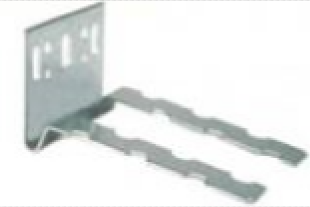 | Equivalent of the two-arm punched L-shape profile used in the locations where expansion joint must be introduced between the connected elements. |
truss 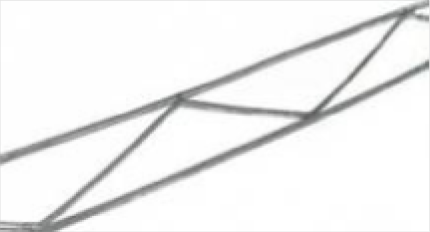 | Prefabricated reinforcing beams composed of two parallel flat profiles connected with the sine-shaped rod. |
Steel bars  | Bar of the appropriate length assembled in the previously drilled hole. |
4. TESTING PROGRAM AND METHODOLOGY
Four series of tests were conducted and examined, comprising a total of 24 test models with identical shapes and dimensions. The models were monosymmetric, featuring a T-shaped cross-section, where both the web and the flange measured approximately 89 cm in length. A vertical connection was formed between the loaded and unloaded walls, with its construction deliberately varied. The testing program is summarized in Table 2.
Table 2.
Testing program
| Series name | Connection type | Photo of the connector | Number of research items in the series |
|---|---|---|---|
| bP | traditional masonry bond | - | 6 |
| bB10 | punched flat profile | 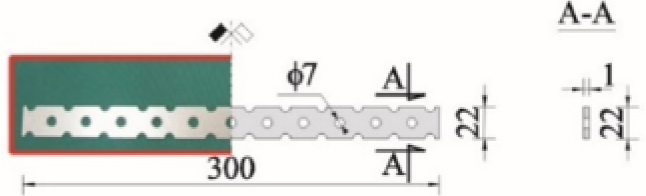 | 6 |
| bBP10 | widened punched flat profile | 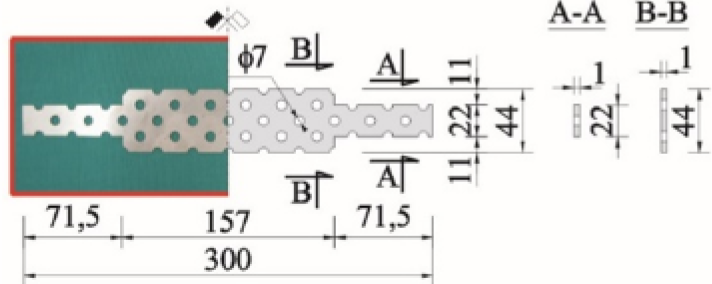 | 6 |
| bT | truss Murfor® EFS/Z 140 | 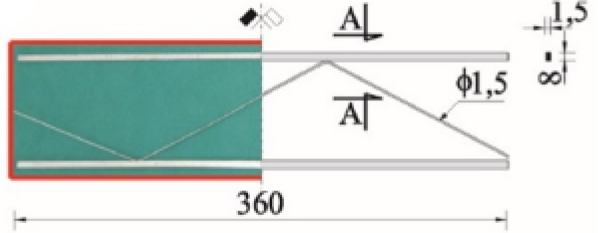 | 6 |
In the test model series conventionally labeled as bP, a traditional masonry bond was used between the flange and the web (Figures 2a, 2c). These elements were treated as reference models. In the remaining three series, the connection between the flange and the web of the test model was established using connectors (wall geometry shown in Figure 2b).
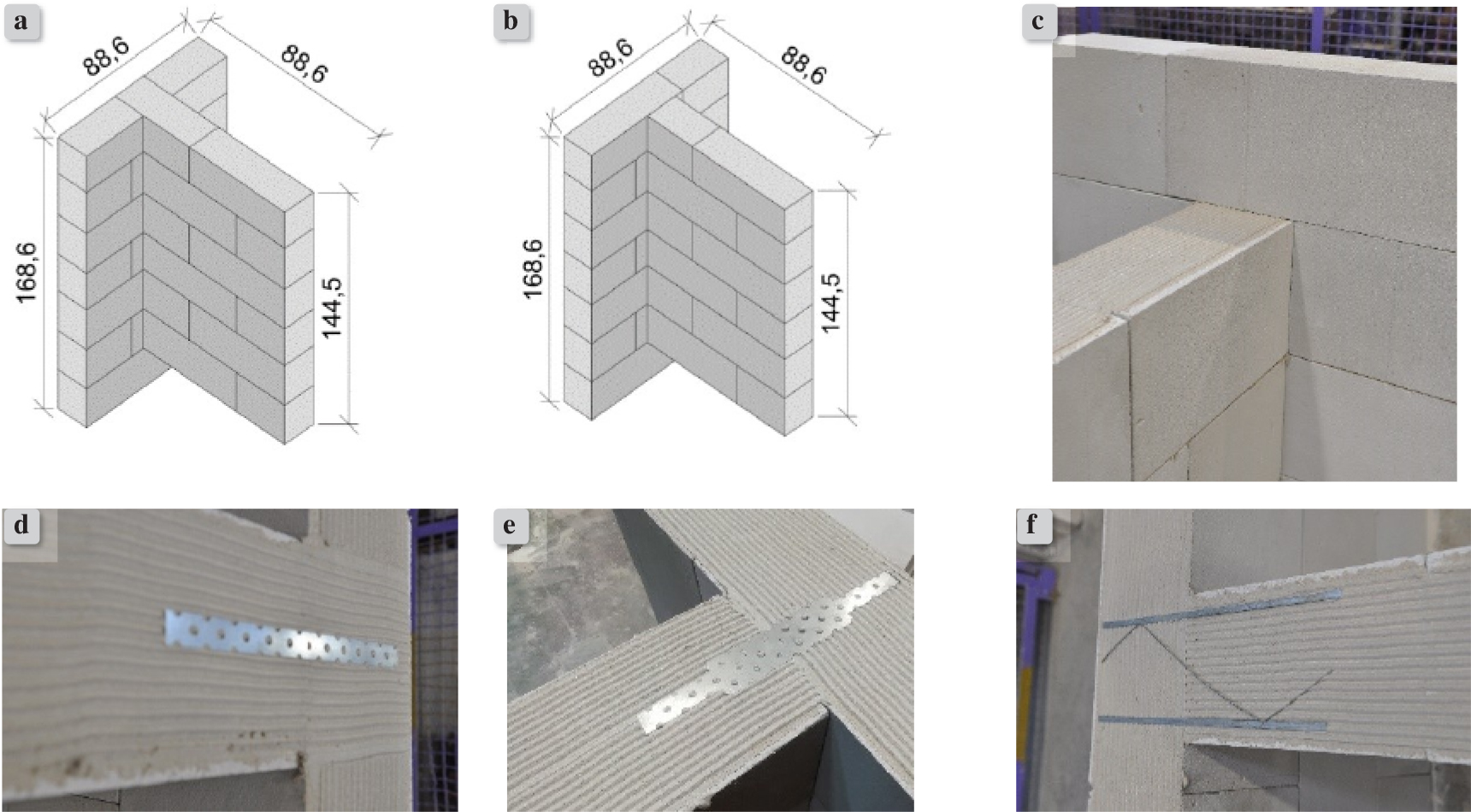
Figure 2.
Geometry and details of the research models: a) classical masonry bond (series bP), b) walls with steel connectors (series bB10, bBP10, bT), c) connection method using a classical bond (series bP), d) connection method using a perforated flat bar (series bB10), e) connection method using a widened perforated flat bar (series bBP10), f) connection using a steel truss (series bT) [dimensions given in cm]
In the bB10 series, the connection was made using single punched flat profile (Figure 2d). The punched flat profile used for the bB10 model is made of steel sheet, with a width of 22 mm, a thickness of 1 mm, and holes with a diameter of 7 mm. The cross-sectional area of a single punched flat profile is Abrutto = 22 mm2.
The next series, bPB10 (Figure 2e), consisted of walls connected using a custom-designed and patented widened punched flat profile, developed by the authors of this study along with their research team [6]. This flat profile is made of steel sheet, with a width of 44 mm, a thickness of 1 mm, and holes with a diameter of 7 mm. The cross-sectional area of a single widened punched flat profile is Abrutto = 44 mm2.
In the final bT reinforced series, the connection was realized using reinforcement for bed joints in the form of Murfor EFS/Z 140 truss-type reinforcement [7]. These trusses consisted of chords made from flat bars with a 1.5×8 mm cross-section, while the diagonals were made from smooth bars with a 1.2 mm diameter. In the cross-section of the masonry, the total cross-sectional area of the reinforcement in a single bed joint was As = 26,5 mm2. The 36 cm-long trusses were symmetrically placed within the connection (18 cm on each side) (Figure 2f).
The tests were conducted on SOLBET OPTIMAL autoclaved aerated concrete (AAC) blocks with a thickness of 180 mm. According to the manufacturer, the declared density class of the masonry elements is ρ = 600 kg/m3 and the average compressive strength is fb = 4 MPa. Independent material tests were performed on masonry elements subjected to compression in accordance with the standard [8], yielding an average compressive strength of 4,53 N/mm2 with a coefficient of variation of 7,2%.
The flexural and compressive strength tests of the hardened mortar were conducted in accordance with the standard [9]. Laboratory tests were performed on samples taken during the preparation of the test elements. The average flexural tensile strength was 2,96 MPa, and the average compressive strength was 13,92 MPa, with a coefficient of variation of 5%. The tests were conducted on models made of AAC masonry units using a thin-layer system mortar, without filling the head joints.
According to PN-EN 1052-1:2000 [10] and as presented in [11], the compressive strength of the masonry was fc = 2,97 MPa, while the modulus of elasticity was Em = 2040 MPa. Additionally, the initial shear strength, determined in accordance with PN-EN 1052-3:2004 [12], was fvo = 0,31 MPa.
The connectors were also subjected to testing. Steel reinforcement samples from the trusses (series bT) were tested according to the requirements of standard [13]. The yield strength for the chords of the truss was fy = 685 MPa, while the tensile strength was ft = 716 MPa. For the diagonal bars, the yield strength was fy = 821 MPa, and the tensile strength was ft = 856 MPa.
Steel flat bars (bB10 type) were tested in accordance with standard [14], resulting in a yield strength of fy = 236 MPa and a tensile strength of ft = 408 MPa. For widened punched flat profile (series bBP10) the yield strength was fy = 207 MPa, and the tensile strength was ft = 345 MPa.
The selection of these reinforcement types was based on practical considerations. The steel truss reinforcement is currently the only legally approved and standard-recommended type of structural reinforcement for bed joints in the country [4]. Meanwhile, flat bar reinforcement is recommended for cavity wall connections according to standard [5]. In all reinforced models, both trusses and flat bars were placed in each bed joint, with a vertical spacing of 243 mm.
The research was conducted using a custom-designed test setup shown in Fig. 3a. The test model consisted of two interconnected wall segments (1a, 1b) equipped with restraining elements (3) and placed on a high-capacity loading plate beneath a steel frame (8). The shear force acting on the connection was applied using a hydraulic actuator (5) and recorded with a strain gauge load cell. The structural response was measured using an inductive force transducer with a capacity of 250 kN and (measurement class ±1%). To stabilize the test element, an initial compressive stress of 0,1 MPa was introduced in section 1b using reinforced concrete elements (3) and steel tendons (7). The models were loaded in a single cycle until failure. The vertical load generating shear and bending was applied uniformly along the entire wall height via reinforced concrete elements (2), ensuring stress uniformity in the connection. The actuator generating the load was positioned 28 cm from the wall junction. The static scheme of the test setup is shown in Fig. 3b.
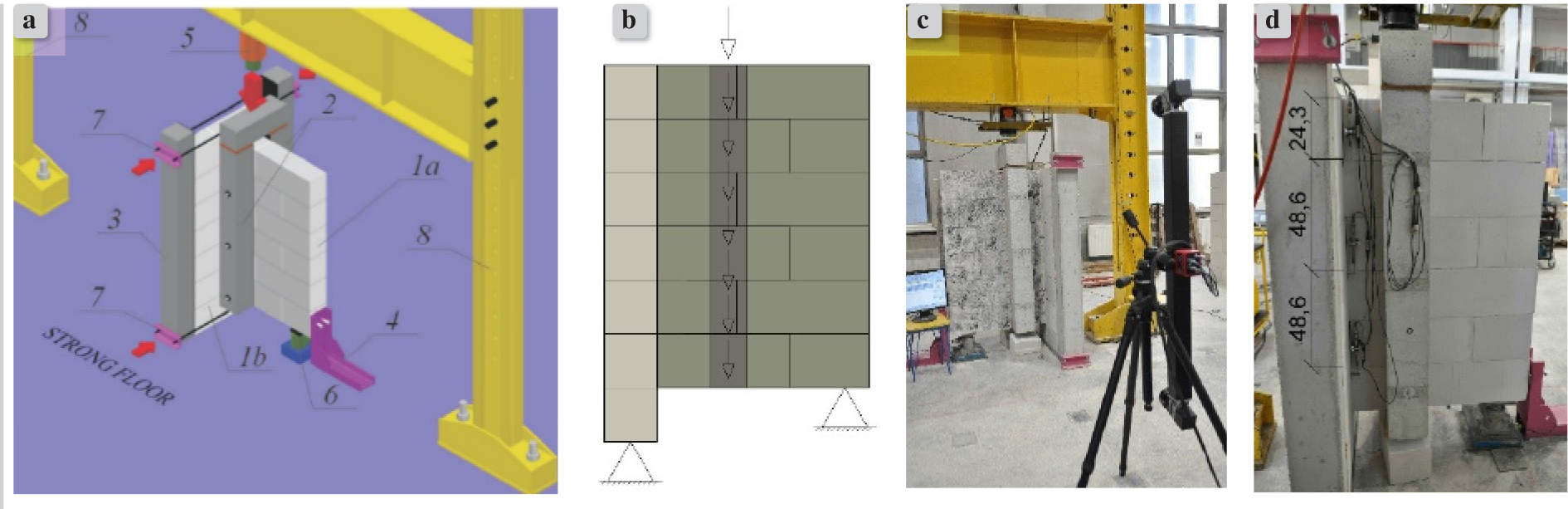
Figure 3.
View and details of the test setup: a) 1a - longitudinal wall, 1b - transverse wall, 2 - reinforced concrete column transferring the shear load, 3 - reinforced concrete pillars limiting the horizontal deformation, 4 - horizontal support, 5 - system of the hydraulic cylinder and the force gauge used to induce shear stress, 6 - force gauge, vertical reaction, 7 - horizontal tie, 8 - steel frame, b) diagram of the static scheme, c) test setup with a visible optical displacement recorder, d) inductive displacement transducers mounted on the test model
Throughout the tests, continuous recording of the load and displacement of the loaded wall relative to the unloaded wall was performed. The data was recorded using two independent systems. One side of the test model was monitored using an ARAMIS optical displacement recorder (Fig. 3c). The other side was monitored using three PJX-10 inductive displacement transducers with a 10 mm (measurement class ±0,5%) (Fig. 3d).
5. TEST RESULTS
Series bP – traditional masonry bond
The behavior of all reference elements was similar. In the initial loading phase, no cracking sounds were heard, and no visible cracks were observed. Optical displacement measurements revealed only a slight delamination of the masonry layers at the bed joints near the connection (Fig. 4a). This phase lasted until the first diagonal cracks appeared, running from the connection to the load-transferring column (Fig. 4b). Further load increase caused a significant development of the existing cracks (Fig. 4c). The maximum recorded force was observed in this phase. As the loading continued, relative displacements increased significantly. After failure, the test setup and the test model were dismantled. Numerous cracks were found in the plane of the load-transferring column. The behavior of the connection under loading was reflected in the load-displacement (N–u) graphs for the connected walls (Fig. 4d).
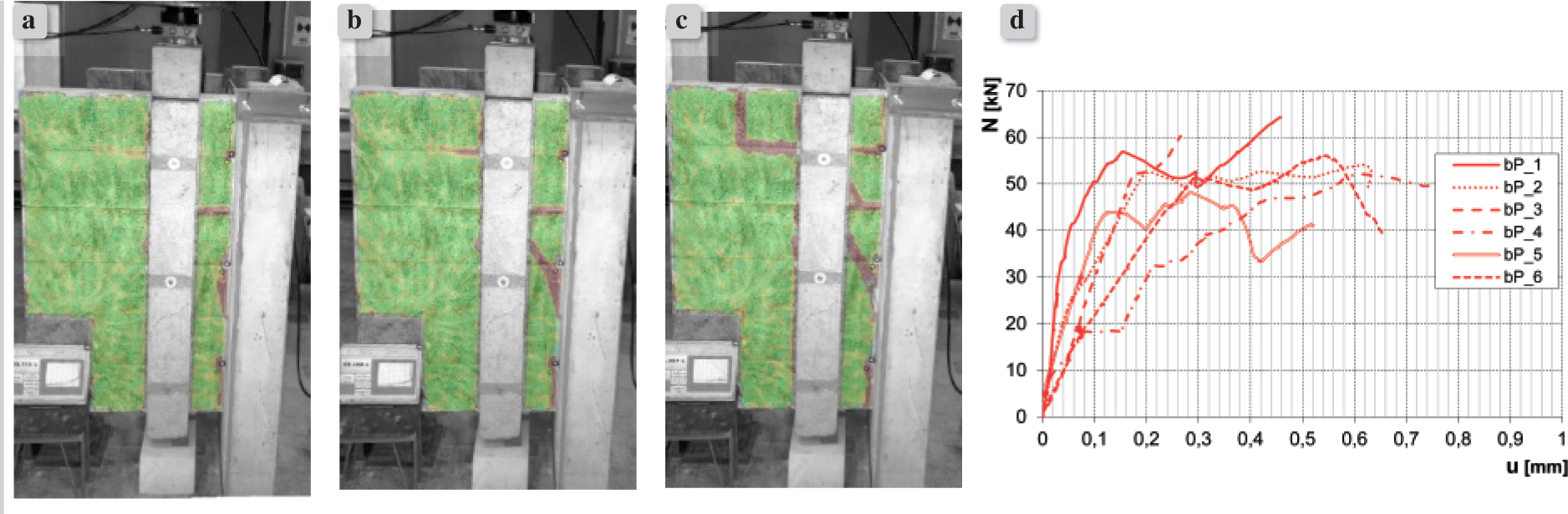
Figure 4.
Test results of reference masonry walls: a) initial cracking at the bed joint (bP_1), b) first diagonal cracks (bP_1), c) crack development in the final testing phase (bP_1), d) N-u relationship
Before diagonal cracking, which occurred at a load of Ncr = 31 – 56 kN, the relative displacements u increased almost proportionally. After cracking, the connection continued to transfer the load while experiencing increased displacements. This phase ended at a maximum load of Nu = 48 – 64 kN. Further loading attempts led to a noticeable decrease in the recorded forces, accompanied by increased relative displacements. A summary of the recorded forces and corresponding displacements for all series is presented in Table 3.
Table 3.
Research results – forces and displacements
| Name of the tested element | Cracking force | Maximum force | Displacement at cracking | Displacement at maximum force | Comparis | ||||
|---|---|---|---|---|---|---|---|---|---|
| Ncr | Ncr,mv | Nmax | Nmax,mv | ucr | ucr,mv | umax | umax,mv | Nmax,mv(i)/Nmax,mv(bP) | |
| kN | kN | kN | kN | mm | mm | mm | mm | ||
| bP_1 | 56,5 | 47,1 | 64,2 | 55,6 | 0,15 | 0,18 | 0,45 | 0,46 | - |
| bP_2 | 49,6 | 53,9 | 0,16 | 0,62 | |||||
| bP_3 | 51,6 | 59,2 | 0,17 | 0,25 | |||||
| bP_4 | 30,8 | 52,1 | 0,20 | 0,61 | |||||
| bP_5 | 43,8 | 48,3 | 0,13 | 0,27 | |||||
| bP_6 | 50,3 | 55,9 | 0,28 | 0,54 | |||||
| bB10_1 | 5,4 | 6,4 | 9,9 | 9,0 | 2,10 | 3,77 | 9,90 | 9,00 | 0,16 |
| bB10_2 | 5,7 | 12,3 | 5,40 | 9,70 | |||||
| bB10_3 | 8,3 | 8,3 | 5,60 | 5,60 | |||||
| bB10_4 | 7,0 | 7,3 | 4,20 | 8,70 | |||||
| bB10_5 | 5,5 | 7,7 | 2,10 | 10,30 | |||||
| bB10_6 | 6,5 | 8,2 | 3,20 | 9,80 | |||||
| bBP10_1 | 5,6 | 7,9 | 16,4 | 17,8 | 1,10 | 1,88 | 4,50 | 6,62 | 0,32 |
| bBP10_2 | 5,3 | 14,2 | 1,30 | 8,30 | |||||
| bBP10_3 | 9,9 | 19,0 | 1,90 | 7,90 | |||||
| bBP10_4 | 9,7 | 21,5 | 1,70 | 5,80 | |||||
| bBP10_5 | 10,8 | 14,4 | 4,40 | 7,90 | |||||
| bBP10_6 | 6,1 | 21,2 | 0,90 | 5,30 | |||||
| bT_1 | 15,8 | 13,9 | 22,3 | 23,5 | 4,30 | 3,10 | 26,70 | 17,55 | 0,42 |
| bT_2 | 18,7 | 22,8 | 4,10 | 11,40 | |||||
| bT_3 | 20,2 | 22,1 | 4,70 | 16,90 | |||||
| bT_4 | 10,3 | 23,6 | 2,00 | 7,60 | |||||
| bT_5 | 8,5 | 27,9 | 1,60 | 16,00 | |||||
| bT_6 | 10,1 | 22,2 | 1,90 | 26,70 | |||||
Series bB10 – connection using a perfor punched flat profile
In the models reinforced with perforated steel flat profiles, no diagonal cracks were observed, unlike in the unreinforced models. At approximately 40% of the failure load, delamination at the bed joints became visible. As the load increased, cracks began to appear in the unfilled vertical joints, and further loading caused these cracks to expand (Fig. 5a). The longitudinal wall displaced approximately 15 mm relative to the transverse wall (Fig. 5b). Failure occurred due to the plastic deformation of the steel connectors and the failure of the longitudinal (loaded) wall. A graphical interpretation of the behavior of the reinforced connection under bending load is presented below (Fig. 5c).From the beginning of the loading process, a parabolic N-u curve was observed. After exceeding a force of 7–12 kN, which caused the flat profile to yield, a sudden increase in displacements occurred, leading to the failure of the test model.
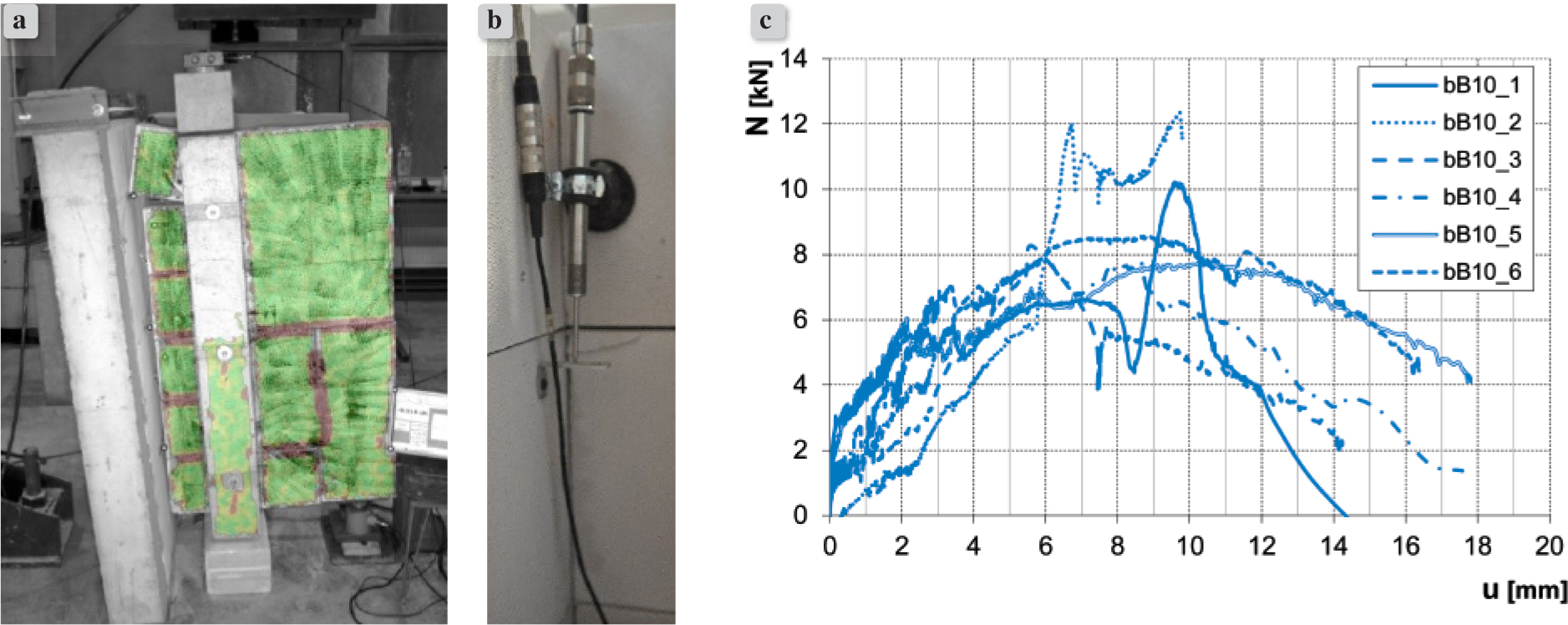
Figure 5.
Test results of masonry walls in series bB10: a) failure pattern of model bB10_1, b) displacement of the loaded wall relative to the unloaded wall (bB10_2), c) N-u relationship
Series bBP10 – connection using a widened perforated flat profile
The first cracks in masonry walls reinforced with widened flat profiles (series bBP10) were observed as delaminations at the bed joints (Fig. 6a) at a force of Ncr = 5 – 10 kN. Further loading of the model caused separation of small masonry elements in the unfilled vertical joints and the formation of diagonal cracks propagating from the load-transferring column (Fig. 6b).
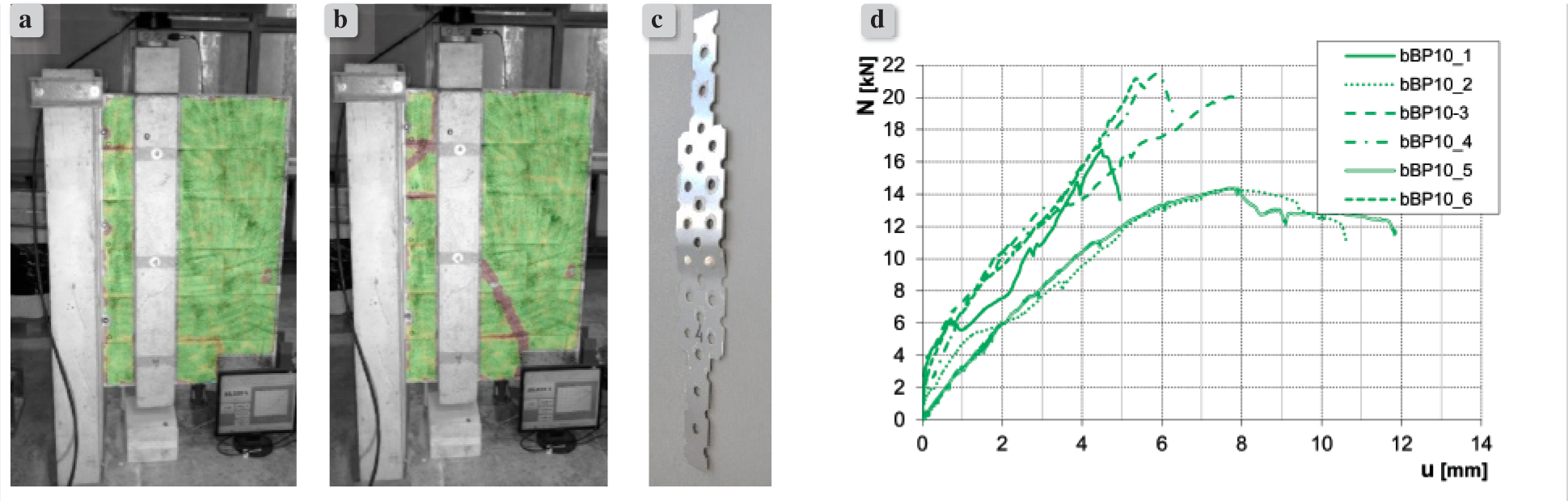
Figure 6.
Results of the wall tests for the bBP10 series: a) initial cracks in the bBP10_4 model, b) damage propagation in the bBP10_4 model, c) view of the connector after testing, d) N-u relationship
After the test, the model and the test setup were dismantled. Plastic deformation of the connector at the joint interface was observed (Fig. 6c), along with the detachment of individual masonry elements. Due to the perforations in the flat profile, no slippage of the connector within the mortar bed joints occurred. The mortar penetrating the perforations did not shear off but rather acted as a dowel, preventing displacement. The total force–average relative displacement relationship (Fig. 6d) illustrates that the connection behaved almost elastically until the connector yielded. After exceeding the maximum load (Nmax = 14 -1 kN), the test element was still capable of carrying some load, but with a significant increase in displacements.
Series bT – connection via a steel truss
Walls in which the connection was formed using a truss exhibited elastic behavior in the initial phase of testing. After exceeding the cracking force (Ncr = 8 – 20 kN) and the appearance of significant horizontal cracks (in bed joints and on small masonry elements – Fig. 7a), the connection was still able to transfer loads. However, even a small increase in bending force caused a significant increase in displacements between the walls. A graphical interpretation of the behavior of the truss-reinforced connection under load is presented below (Fig. 7b).
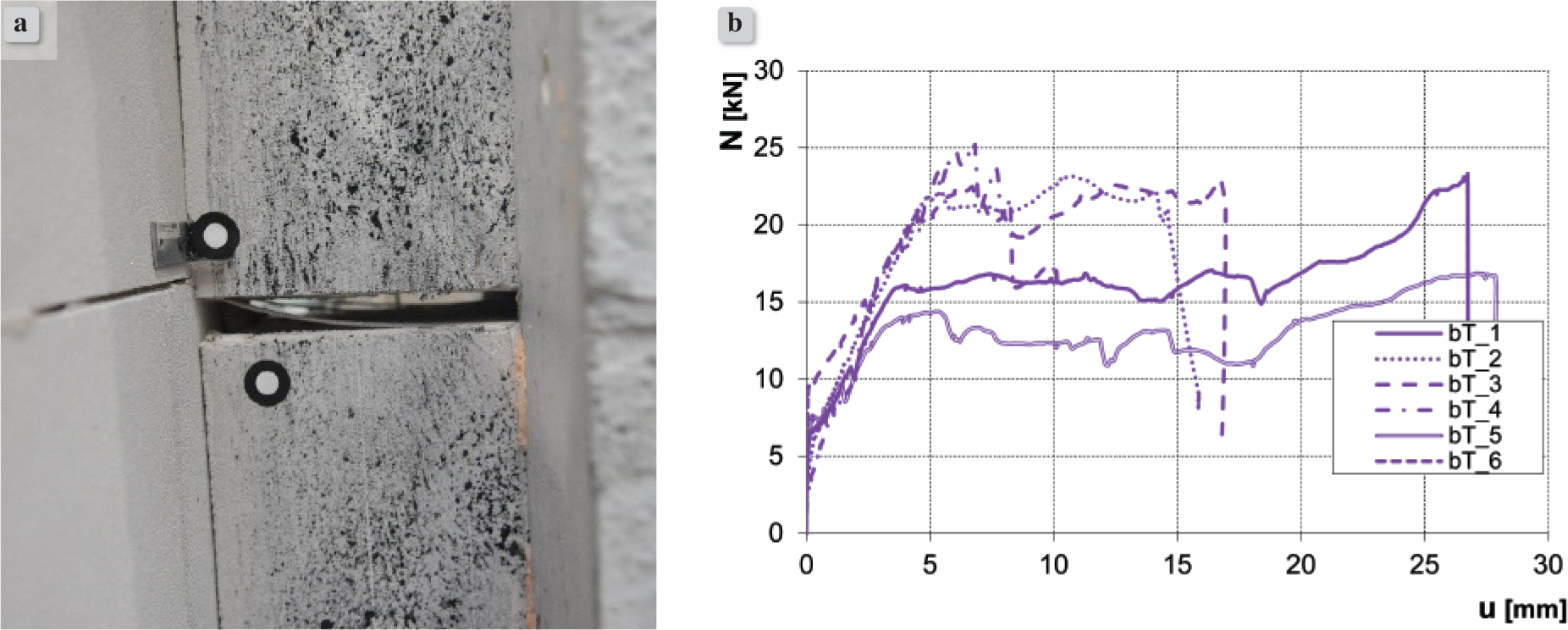
Figure 7.
Results of the wall tests for the bT series: a) delamination in the bed joint (bT_4), b) relationship between applied force and vertical relative displacement (N-u)
6. ANALYSIS AND COMPARISON OF THE OBTAINED RESULTS
The results of the research for all examined series have been collectively presented in Table 3. In addition to the numerical values obtained from the tests (characteristic force values and corresponding displacements), the last column of the table includes a comparison of the average maximum force value for a given series with the average maximum value of the reference walls.
Walls connected using a perforated flat profile (series bP10) demonstrated the lowest load-bearing capacity. The force required to destroy such a connection amounts to only 16% of the force needed to destroy a traditional masonry bond. Approximately 32% of the destructive force of the reference model is required to break the connection using an extended perforated flat profile (series bBP10). This value increases to 42% in the case of a connection using steel trusses (series bT).
Walls with a traditional masonry bond exhibited significantly lower displacements at maximum force compared to reinforced walls (15 times lower compared to walls in series bBP10 and 38 times lower compared to walls in series bT).
7. SUMMARY AND CONCLUSIONS
The conducted research was the first of its kind in Poland and one of the few worldwide. The failure process and crack development in the masonry with a traditional bond progressed gradually and relatively smoothly. Before failure, distinct cracks appeared in the masonry near the connection and at the column transferring the load. The cracking and failure process in models with steel elements was entirely different. Horizontal cracks in the bed joints were observed, and in the final phase of testing, a sudden increase in displacements occurred with only minor increases in load.
Different connection strengths were obtained in the tests for each series. The use of steel connectors in the form of perforated flat profiles resulted in significantly lower force values than in traditional masonry bonds. At the moment of cracking, the force values ranged from 13% (bB10) to 29% (bT) of the force obtained in tests of reference walls, while at maximum force, this ratio was 16% (bB10) to 42% (bT). Reinforced models exhibited significantly greater displacements. At the moment of cracking, displacement was observed to be 20 times greater (bB10), and at failure, it was 38 times greater (bT) compared to the results obtained from tests on reference walls.