
1. INTRODUCTION
Algae blooms are common in reservoirs. This process results in the potential deterioration of water quality, which causes depletion of oxygen, and reduction of water clarity and biodiversity in aquatic environments [1]. The consequences of these problems are the direct and indirect risks associated with the degradation of marine ecosystems [2]. To prevent serious consequences, mitigation and management techniques should be used, which have to be expanded through monitoring and modeling of algal blooms, based on the concentration of chlorophyll “a” [3]. Nowadays chlorophyll “a” is regarded as useful measuring quantity and variety of phytoplankton and/or algal biomass indicator. All photosynthetic algae contain chlorophyll “a”, therefore their blooms can be easily predicted by testing the concentration of chlorophyll “a” in reservoirs [3, 4]. Furthermore, this form of chlorophyll present in all photosynthetic organisms starting from bacteria, including cyanobacteria, by protists, to the plants [5].
Chlorophyll “a” is one of the most important indicators of surface water quality, because its concentration is an indicator of the development of phytoplankton biomass. Along with the enrichment of surface waters by nitrogen and phosphorus increases the level of biological productivity of aquatic ecosystems. Accordingly, the concentration of chlorophyll “a” is an important and useful indicator for assessing the level of trophic water in ecosystems [6, 7].
Chlorophyll “a” is built with five-ring porphyrin derivative. Four of the five rings are pyrroles, while fifth is formed only by carbon atoms. A single and double bonds between atoms comprise a system of close-coupled bonds. In the porphyrin center is placed a magnesium ion Mg2+, which connects to the nitrgen atoms of each ring. The presence of Mg2+ in the chlorophyll molecule facilitates their aggregation, which determines the energy excitation transfer between molecules. Usually such substituents connect through an ester bond with phytol. Phytol is alcohol with twenty carbon atoms in molecule. This creates a highly hydrophobic part of molecule and affects in chlorophyll fixing in protein-lipid membranes. To the porphyrin are attached supplemental groups at different locations. They have an impact on the change in absorption of light quantum by varius types of chlorophylls. Chlorophyll “a” contains a methyl group CH3 – in one of the pyrrole rings and chlorophyll “b” contains an aldehyde group – CHO. Chlorophyll “a” absorbs red light with a wavelength of 680 nm, violet light with a wavelength of 440 nm and reflects green light, which gives green color to the plants [8, 9].
In eukaryotes, chlorophyll “a” is a part of colour-protein complexes occured in chloroplasts, which are primarily present in the assimilation leaf and stem crumb. Located in the chloroplast thylakoid membrane contains pigments in the form of chlorophyll “a” and chlorophyll “b” and also auxiliary colorants such as carotene and xantophyll. These dyes are arranged in an orderly manner and formed in antenna systems, called photosystems. Chlorophyll “a” catches photons and replace the energy. Next the photosystem is followed by electrons ejection, which is consumed in the further stages of the photosynthesis process [8, 9].
The concentration of chlorophyll “a” is a direct indicator of algal biomass and also the trophic status of surface waters. Its concentration is used as evealuation parameter of trophy, which takes into account the amount of phytoplankton in the water [5]. Using chlorophyll “a” as indicator is sometimes burdened with a misake. It depends on the light conditions and the type of algae. Its content in the phytoplankton cells may vary. In direct sunlight the cells of some algae can contain less chlorophyll than in shaded areas [10]. Simultaneously were done markings of water quality indicator such as dissolved oxygen, pH and appropriate electrolytic conductivity. When the algae die, the water enriched with products of their decay, what results in decomposition of toxins and reductivity of the oxygen content in the water. Progressive changes associated with eutrophication, modify the balance of the production and distribution of organic matter, which is produced by algae. Disorders in the biotic balance lead to changes in the gas balance, which causes modification in the concentration of oxygen and carbon dioxide in the water. Changes in carbon dioxide has influence in pH value, this has impact on the carbonate balance, which is the state of a specific ratio between the bicarbonate ions [11].
2. MATERIALS AND METHODS
The research was conducted regularly once a month during the period from November 2021 to October 2022 based on water samples taken from the retention reservoir Siemiatycze, located in the Podlasie region in the Siemiatycze District in Siemiatycze. Reservoir was built in the seventies and egihties of the twentieth century. Facility was utilized in order to water retention, recreation and extensive fish farming and as an element of improving the attractiveness of the city. It consists of 3 nameless reservoirs which are connected together and treated as single water object [12]. The complex of water reservoirs was created by damming valleys of Kamionka and Mahomet riviers. From the west and south were constructed earth dams. Frontally located at a distance of 690 m from each other. From the east and north – east were used the natural terrain, ie. the slope of the upland [12, 13]. The bottom tank or otherwise known as the Ist Lagoon was created in 1973. It covers an area of 6.19 hectares, its bowl capacity is about 88 500 m3, filling lasts for 10 days at a flow of q = 103 l/s, the average depth is equal to 1.4 m and the damming height of 3.0 m. Ist Lagoon has a length of 400 m and a width of 150 m, maximum damming ordinate is equal to 134 m a.s.l. [13]. Upper reservoir consists of two reservoirs located above Ist Lagoon. Its construction started in 1978 and was put into use in 1983. The common area of IInd and IIIrd Lagon is about 27,4 ha, capacity of 548 000 m3, filling takes 20 days at flow rade of q = 31 l/s. The average depth of the upper tank is 1.92 m and the maximum is about 7 m, the damming height is 5.10 m. Both Lagoons: IInd and IIIrd, which are forming the upper reservoir, have the same ordinate of water surface, equal to 138.25 m a.s.l. The length of the upper reservoir is about 1.8 km and width of 0.18 km [19]. The upper reservoir has a front dam with a length of 800 m and a paved surface crown with a width of 7.8 m.
The slope of the vent escarpment is 1:3, drainage is 1:2 and the high of the vehicular part of the dam is about 5.10 m [13]. In 2003 in the history of the Siemiatycze water reservoir was recorded massive fish death, which resulted in an odor floating over the part of city. At that time from the Lagoons were fished out about 700 kg of dead fish. The reason of presented environmental disaster was the persistence of very long high temperatures and lack of rainfall, which led to long algae blooms. It was found out that water lagoons were dominated by cyanobacteria of the Synechocystis genus. It is a very rare phenomenon in this latitude. In addition, the study also showed the presence of plankton algae, such as cyanosis Microcystis wesenbergii. This type of algae are one of the most toxic which can occur in Polish waters During life and after death it emits endotoxins, which are dangerous and can cause death of aquatic organisms [14]. Both of these cyanobacteria species, with such huge density that occurred during the photosynthesis in Siemiatycze Reservoir, took high amount CO2 out of the water, it resulted in alkalization of the environment, from water pH of about 7 to pH equal up to 11. Such conditions can survive only a few species of fish. When the lagoons waters had exceed pH of 9.2 species such as pike, perch, ruff and eastern crayfish died. Decay processes occurring on the bottom of the tank, exhausted stocks of oxygen in the water followed by a complete deoxygenation, which enhanced the death of fish [14].
Siemiatycze reservoir catchment areas are in the north – eastern part of Poland, according to administrative division in the southern part of the Podlasie region, in the area of “Green Lungs of Poland”.
Within the direct basin is a city and municipality Siemiatycze. The city has about 15000 inhabitants, while the average population density is 408.8 inhabitant/km2 [15]. Catchment area of Siemiatycze reservoir is one of the best areas in the region in terms of soil quality. For this reason, it is subjected to intensive agricultural production. The bedrock are Quaternary soils developed in the form of clay, sand, dust, muds and peat. Dominant are sandy soils of different genetic types: podsolic, rust, acid brown. All of these types are present throughout the catchment, although their largest concentration is located in the north-eastern and southern parts. Areas with these types of soils are classified as V and VI quality class of agricultural land. Pseudopodsolic, leached brown and acid soils occur in the western and south – western part of Siemiatycze reservoir. The soils are made of clay sands and clay 0 silt, which are classified as good and medium, to IIIb and IVa land class.
In the valley of Kamionka River and its tributaries there are a silty-peat, muck-mineral and alluvial soils [16, 17]. In addition, the catchment area of Siemiatycze reservoirs is characterized by a low level of industrialization, the main area of the economy is agriculture. There dominate production of multidirectional farms. Farmland, such as arable land, orchards, meadows or pastures represent about 60.5% of the total catchment area, forest land and forests constitute 32%, remaining 7.5% are waste-land [18].
During the test were determined 7 measurement and control points, which were located in characteristic places of three reservoirs, forming Siemiatycze area. In Figure 2.1. is presented map, on which are marked water points. The selection of seven measurement points is not random, but dictated by the need to accurately capture the variability of parameters along the axis of the reservoir, taking into account its specifics. In choosing the measurement points, consideration was given to their location along the longitudinal axis of the reservoir. The measurement points were distributed along the longitudinal axis of the Siemiatycze reservoir, which includes three interconnected basins (I, II, and III). This allows for the monitoring of changes in chlorophyll “a” concentration as water flows through the entire system, from the sources to the outlet. These changes may be caused by various factors, such as differing intensities of eutrophication in different parts of the reservoir. Another factor contributing to the selection of measurement points was the representation of different zones of the reservoir: The locations of the points take into account the specifics of each part of the reservoir. The research points were placed in representative locations for various zones of the reservoir in order to provide a complete picture of the parameter diversity. Additionally, anthropogenic influences were considered: The locations of the measurement points take into account the impact of anthropogenic factors, especially near pollution sources, to assess their effect on water quality. In planning the placement of the measurement and control points, additional information about the topography of the area, the course of watercourses, etc., was also utilized, which was taken into consideration during the selection of measurement point locations. In summary, the selection of measurement points in the study was thoughtful and strategic. It aimed to achieve the most complete and reliable depiction of seasonal changes in chlorophyll “a” concentration in the Siemiatycze reservoir, accounting for its specifics as well as the influence of natural and anthropogenic factors.
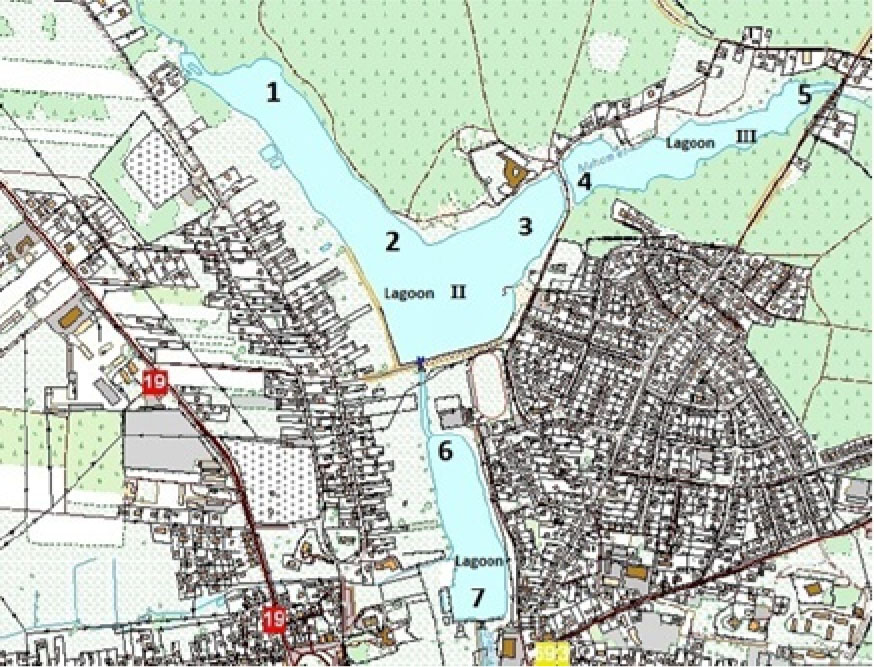
Figure 2.1.
Map with the location of measurement and control points [21]
Water form this points was measured by electronic meter and oxygen probe for such indicators as: dissolved oxygen, pH and electrolytic conductivity. There was also determined according to the ISO 10260:2002 standard concentrafion of chlorophyll “a” in water, it was done by using the spectrophotometric method in the range of 3–80 mg/dm3.
3. RESULTS
Results of markings of chlorophyll “a” in the waters of the reservoir Siemiatycze was assessed for seasonal changes, additionally correlated them with the results of parallel determinations carried out physico-chemical indicators. There was also carried out the trophic status based on the concentraction of chlorophyll “a”. Figures 3.1 to 3.4 present monthly results throughout the hydrological year under consideration. All results were averaged and are shown in the table 3.1. as the performance of the different seasons.
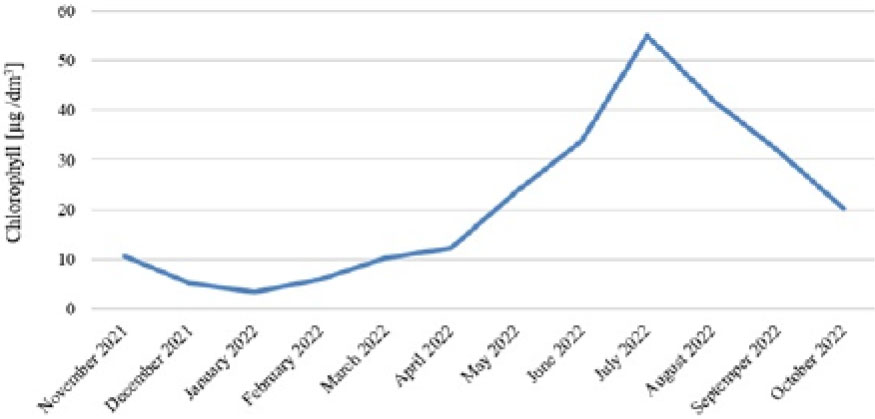
Figure 3.1.
Changes in chlorophyll a concentration in a given hydrological year
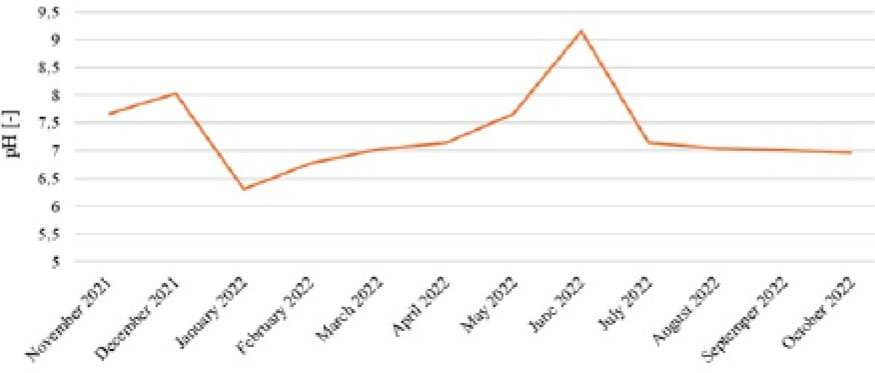
Figure 3.1.
Changes in chlorophyll a concentration in a given hydrological year
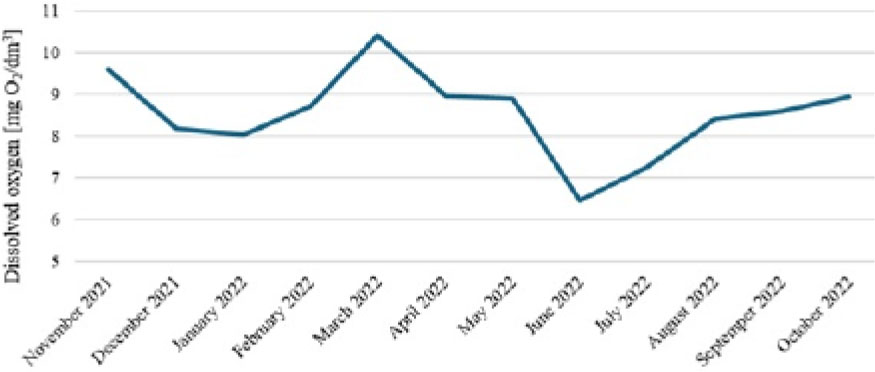
Figure 3.3.
Changes in dissolved oxygen concentration in a given hydrological year
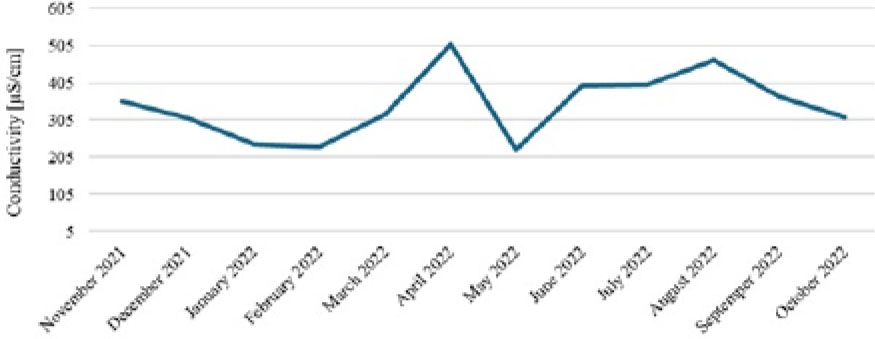
Figure 3.4.
Changes in conductivity in a given hydrological year
Observation of the chlorophyll “a” content in the waters of the Siemiatycze reservoir based on Table 3.1., determined seasonal variations in its contents presented at Figure 3.5. Higher concentrations occurred during the summer, it is associated with the start of the growing season. An intensive process of photosynthesis in the water depends on positive temperatures and sunlight increase. Typically, an increase in the concentration of chlorophyll “a” is followed in spring, although in 2021–2022 the winter and snow cover lingering persisted to the end of April, hence the shift of the growing season and a significant increase in the concentration of chlorophyll “a” in the summer months.
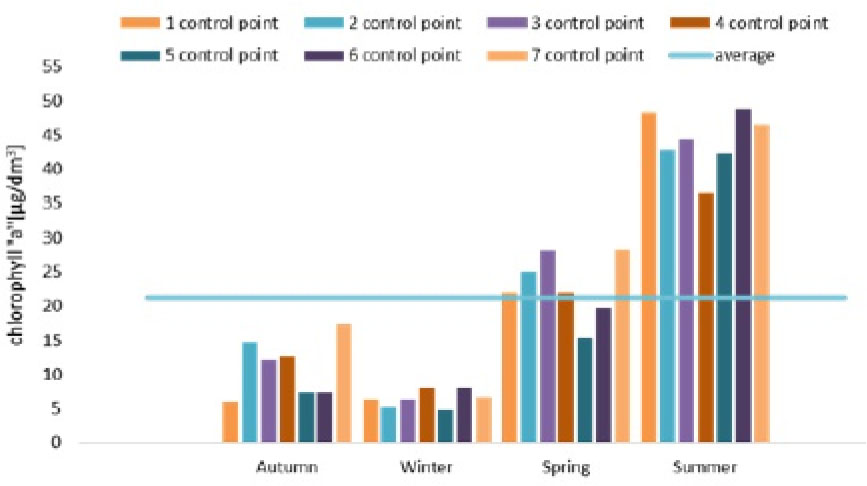
Figure 3.5.
Seasonal changes in the content of chlorophyll “a” in the water of the reservoir Siemiatycze
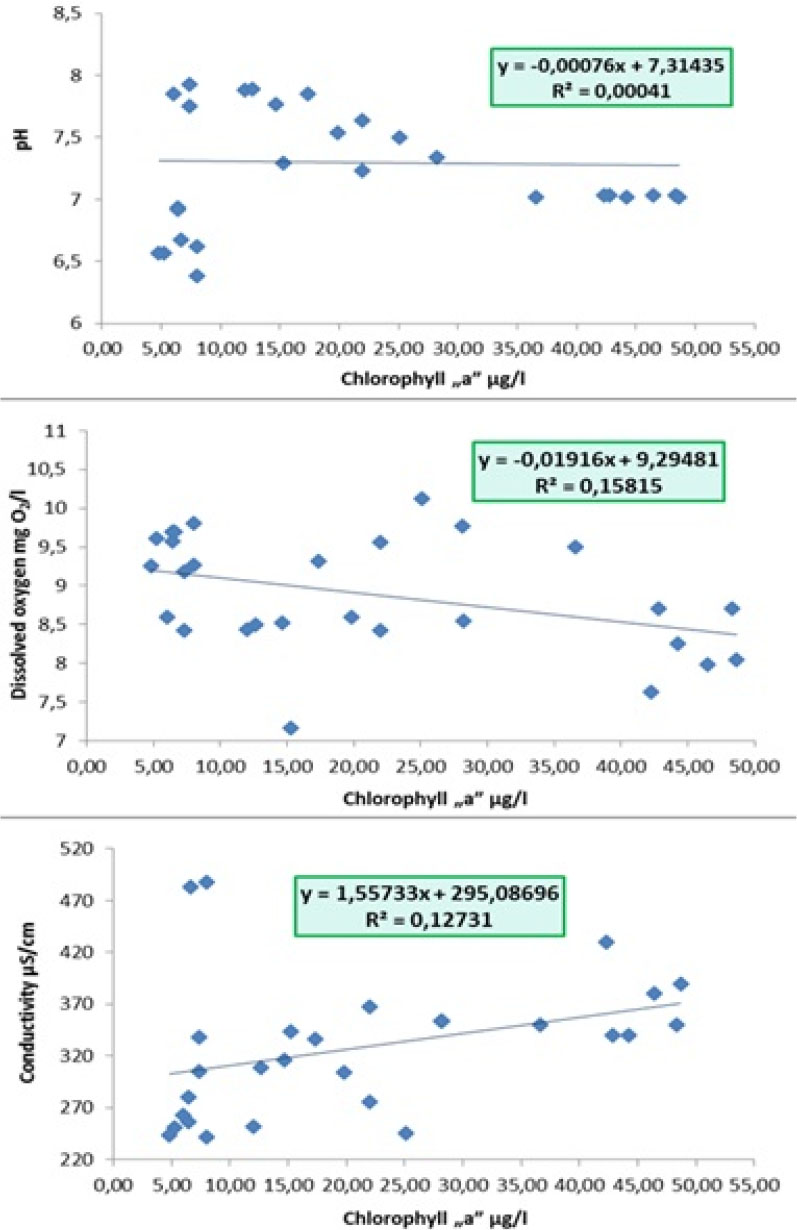
Figure 3.6.
Dependency of pH, dissolved oxygen and the concentration of the conductivity of chlorophyll “a”
Table 3.1.
The results of the markings in the Siemiatycze reservoir in ???
| Designation [unit] | Season | All measurement and control points | |||||
|---|---|---|---|---|---|---|---|
| Value | Median | Standard deviation | Statistical error | ||||
| minimum | average | maximum | |||||
| Chlorophyll [µg /dm3] | Autumn | 5.23 | 11.06 | 19.61 | 10.74 | 4.40 | 1.18 |
| Winter | 3.51 | 6.50 | 10.17 | 5.98 | 2.19 | 0.59 | |
| Spring | 12.21 | 22.92 | 33.87 | 23.63 | 5.72 | 1.53 | |
| Summer | 31.86 | 44.20 | 54.98 | 42.18 | 7.21 | 1.09 | |
| The entire research period | 3.51 | 21.17 | 54.98 | 16.23 | 15.57 | 2.08 | |
| The pH [pH] | Autumn | 7.67 | - | 8.03 | - | - | - |
| Winter | 6.30 | - | 7.03 | - | - | - | |
| Spring | 7.15 | - | 9.15 | - | - | - | |
| Summer | 6.96 | - | 7.11 | - | - | - | |
| The entire research period | 6.30 | - | 9.15 | - | - | - | |
| Dissolved oxygen [mg O2/dm3] | Autumn | 8.17 | 8.71 | 9.60 | 8.72 | 0.45 | 0.12 |
| Winter | 8.70 | 9.56 | 10.40 | 9.52 | 0.63 | 0.17 | |
| Spring | 6.44 | 8.88 | 6.44 | 8.96 | 1.35 | 0.36 | |
| Summer | 7.25 | 8.40 | 7.25 | 8.33 | 0.74 | 0.20 | |
| The entire research period | 6.44 | 8.89 | 11.14 | 8.83 | 0.94 | 0.13 | |
| Conductivity [µS/cm] | Autumn | 239.40 | 302.71 | 354.90 | 309.70 | 35.83 | 9.58 |
| Winter | 231.74 | 320.54 | 507.21 | 263.64 | 109.87 | 29.36 | |
| Spring | 225.86 | 320.39 | 396.79 | 325.13 | 51.86 | 13.86 | |
| Summer | 312.80 | 368.57 | 464.40 | 367.20 | 44.40 | 11.87 | |
| The entire research period | 225.86 | 328.05 | 507.21 | 321.55 | 69.78 | 9.32 | |
Table 3.2.
The values of the Pearson correlation coefficient (R) calculated for the examined indicators
| pH | Dissolved oxygen | Conductivity | Chlorophyll „a” | |
|---|---|---|---|---|
| pH | 1 | 0.0599 | 0.1001 | 0.0202 |
| Dissolved oxygen | 0.0599 | 1 | 0.1038 | 0.3977 |
| Conductivity | 0.1001 | 0.1038 | 1 | 0.3568 |
| Chlorophyll „a” | 0.0202 | 0.3977 | 0.3568 | 1 |
The concentration of chlorophyll “a” in the Siemiatycze reservoir ranged from the minimum value reached 3.51 in winter to 54.98 g/dm3 in the summer, the average value was 21.17 g/dm3. The median was equal to 16.23 g/dm3 and the standard deviation was 15.57 mg/dm3.
Results were subjected to the Pearson correlation. Table 3.6. shows calculated Pearsons correlation coefficients (R) between the studied indicators of water quality. Taken into particular consideration depending on pH, dissolved oxygen and conductivity relative to the concentration of chlorophyll “a” (Figure 3.5.). It was observed that between the majority of parameters there is no linear relationship or is very weak, not important. Only two pairs of correlation average: dissolved oxygen – chlorophyll “a” and electrolytic conductivity correct – chlorophyll “a”. The highest Pearsons correlation coefficient (0.3977) was characterized by a pair of dissolved oxygen - chlorophyll “a”. Table 3.3. presents the evaluation of the water trophy state of Siemiatycze reservoir on the basis of the limit values of chlorophyll “a” for the individual trophic levels proposed by the OECD organization, Nuremberg & Forsberg and Ryding. Year-round average of chlorophyll “a” concentration in lagoon waters classifies them as eutrophic in Siemiatycze. The concentration of chlorophyll “a” in the summer reached a value of 44.19 g/dm3 classifying Siemiatycze as hypertrophic reservoir, while in the spring and autumn concentration of chlorophyll “a” reached values corresponding to the trophy state. In the winter, the water basins of the reservoir were assigned it to mesotrophic. The reclassifications of the tank are based on ranges of concentrations of chlorophyll “a” to a particular trophic status dependend on the season. It is a characteristic phenomenon related to the processes of photosynthesis, which is carried by organisms which live in the waters.
Table 3.3.
Trophic status of water basins in Siemiatycze, based on limits of chlorophyll “a” concentration developed by the OECD, Nuremberg & Forsberg and Ryding [22, 23, 24]
| Period | Chlorophyll “a” - average [µg/dm3] | OECD | Forsberg and Ryding | Nürnberg |
|---|---|---|---|---|
| Spring | 22.92 | Eutrophy | Eutrophy | Eutrophy |
| Summer | 44.19 | Hipertrophy | Hipertrophy | Hipertrophy |
| Autumn | 11.06 | Eutrophy | Eutrophy | Eutrophy |
| Winter | 6.49 | Mezotrophy | Mezotrophy | Mezotrophy |
| Year | 21.17 | Eutrophy | Eutrophy | Eutrophy |
Analysis presented in Table 3.1. showed no significant variation in pH of water (Figure 3.7.) during the whole study period. There was no consistant trend of reduction or increase of pH. Value of pH ranged from 6.30 to 9.15. The difference between the minimum and maximum was as high as 2.85 pH units. In the summer it stated practically unchanged pH in each of the intake points. The reason could be caused by intake of water after rainfall. In the autumn parameter increased, it could be due to inflow of alkaline sewage or algae growth, which caused depletetion of carbon dioxide dissolved in water. That leads to changes in the metabolism of calcium carbonate and increase of the pH. In winter there can be observed a slight decrease in pH values compared to other seasons. Omitting the incidental pH value slightly exceeding pH = 9, which occurred in May in 3rd point. The high pH value may negatively affect in the diversity of fish species in the water basin, some species are sensitive to elevated pH.
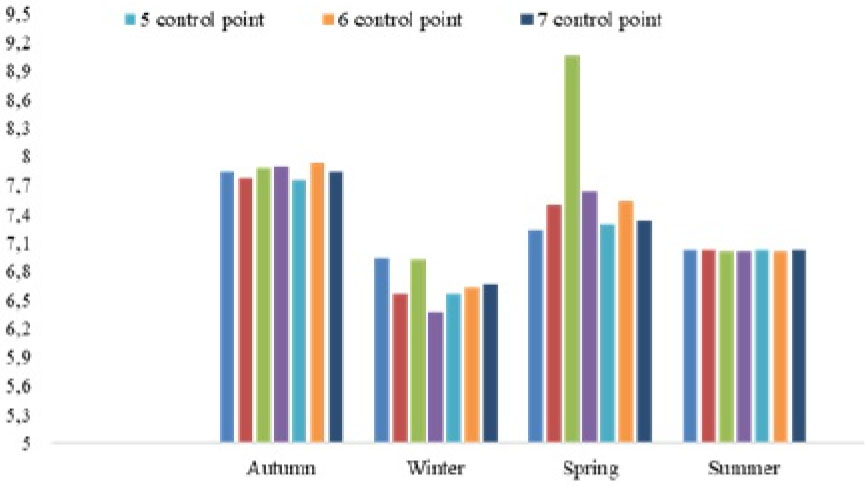
Figure 3.7.
Seasonal changes in pH in the water of Siemiatycze reservoir
The concentration of dissolved oxygen in Siemiatycze reservoir shows the seasonal variations (Table 3.1.). Water circulation is one of the main oxygen sources of water reservoir supply, therefore concentration of dissolved oxygen corresponded to the dynamics of water masses, which could be caused by variations in temperature between the air and the Siemiatycze reservoir [19]. In the spring and winter oxygen concentration was noticeably higher than in the summer and autumn (Figure 3.8.). The reduction of dissolved oxygen in the summer could be caused by high temperatures, which resulted in increased water temperature in the dam reservoir and influenced the decrease of oxygen solubility in water. The concentration of the soluble oxygen is directly related to the temperature, the higher water temperature the lower is the solubility of oxygen in water. To lower the concentration of oxygen in the water could have contributed to intensive growth of phytoplankton and duckweed, additionaly using dissolved oxygen in addition to the processes of photosynthesis. The oxygen content was in the range of 6.44 to 11.14 mg O2/dm3. The average concentration of oxygen during the entire study periodreached 8.89 mg O2/dm3, the median was equal to 8.83 mg O2/dm3 and the standard deviation was 0.93 mg O2/dm3. As for the artificial water reservoir oxygenation level is quite high compared with Rzeszów dam reservoir built in a similar period. Dissolved oxygen content on the basis of R. Gruca-Rokosz analysis of Rzeszów reservoir much lower [20]. According to our results it can be concluded that the dam reservoir water Siemiatycze for the content of oxygen in them meet the standards established for first quality class.
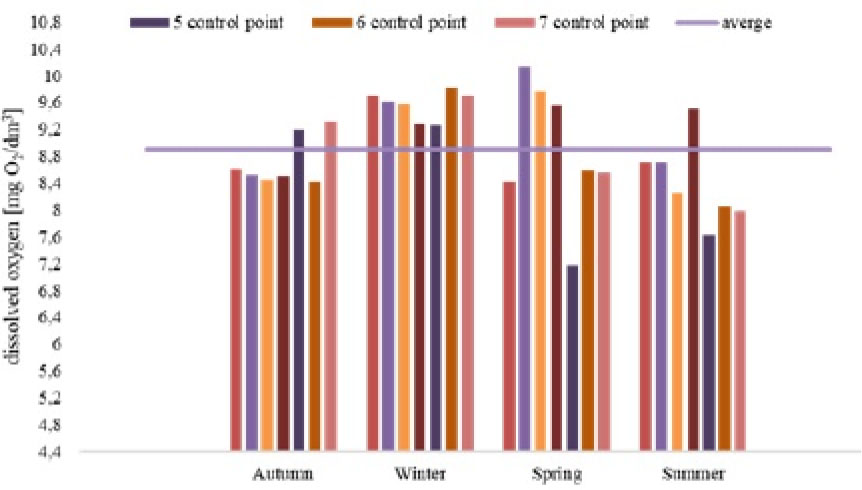
Figure 3.8.
Seasonal changes in the concentration of dissolved oxygen in the Siemiatycze reservoir
Analyzing the conductivity values (Table 3.1.) there have not been observed seasonal trends (Figure 3.9.). Throughout the research period conductivity values corresponded completely to the conditions of first water quality class in accordance with the Regulation. The values ranged from 225.86 µS/cm to 507.21 µS/cm. In none of the measurement-conductivity control points did not exceeded 1000 µS/cm. Only in December in the last two intake points 6 and 7 which are located in Ist Lagoon which is situated practically in the center of Siemiatycze. There was significantly increased conductivity value in relation to other points as well as for the entire study period. The cause of increased conductivity in the measuring points could be caused by containing salts runoff or inorganic substances from urban areas. The average value of conductivity was 328.05 µS/cm, the median was equal to 321.55 µS/cm, standard deviation amounted to 69.78 µS/cm. Analyzing the individual seasons between them can be seen in the increased conductivity in the summer at all points of measurement and – control of the entire study period. The reason for this could be a deterioration in water quality caused by the intensification of the eutrophication process.
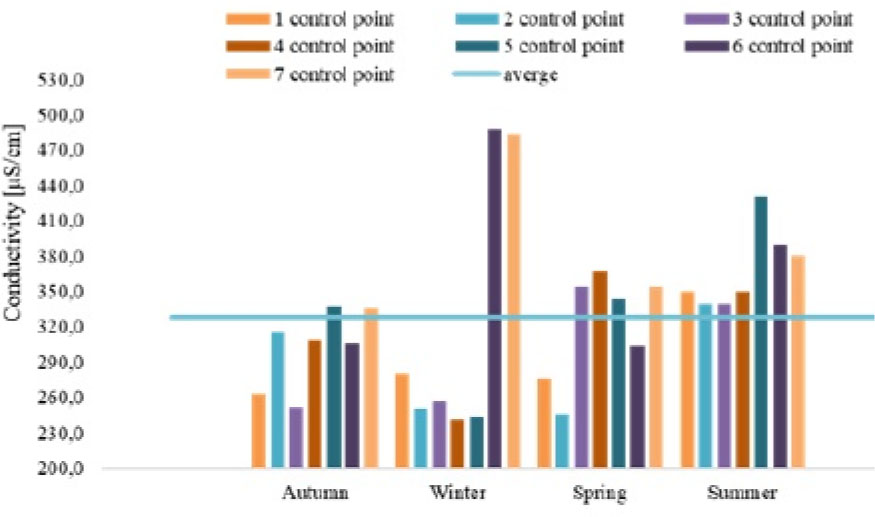
Figure 3.9.
Seasonal changes in conductivity in the Siemiatycze reservoir
4. DISCUSSION
The concentration of chlorophyll “a” in the water is an important water quality parameter and threats blooms, at the same time it informs about the primary production of biomass and abundance of nutrients in the water reservoir. This indicator is related to cause-effect dependencies with the concentration of dissolved oxygen, concentration of carbon dioxide, pH, water temperature, turbidity, insolation, as well as concentrations of bioavailable forms of nitrogen and phosphorus. In addition, the concentration of chlorophyll “a” is also a function of the number of phytoplankton in the water [25]. In the paper has been proven slight dependency between concentration of chlorophyll “a” and the dissolved oxygen and also between concentration of chlorophyll “a” and electrolytic conductivity.
During the entire study period values of analyzed parameters has been fluctuating. Research has shown significant seasonal variations in the concentration of chlorophyll “a” in the waters of the Siemiatycze reservoir. High concentrations during the summer probably denote increase of photosynthesis and intensive growth of autotrophic organisms. To the increase of phytoplankton conduct small depth of the dam reservoir. In addition, seasonal variations were also seen in the results of dissolved oxygen.
Trophic status of water basins of Siemiatycze was identified as eutrophic and used in this paper as classification provided as coherent outcome of the assessment. Interpretation of the trophic status of the Siemiatycze reservoir according to the criteria of concentration based on the concentration of chlorophyll “a” shows seasonal variations, while pointing at an advanced trophy. During the summer concentration of chlorophyll “a” classifies the basins of Siemiatycze to hypertrophic, whereas the year-round average concentration of chlorophyll “a” to eutrophic.
This confirms a thesis that Siemiatycze dam reservoir has low-class water quality. The possible impact on it may have been caused by current development of the catchment area, which over 60% is used for agricultural purposes. Surface runoffs provide to significant loads of nutrients in the form of plant fertilizers and plant protection products which contain busy forms of nitrogen and phosphorus [21], which contribute to the progressive eutrophication. Research of J. Szczykowska and A. Siemieniuk [26] proved that the development of agricultural basin drainage contributes to the deterioration of the trophic status of small water reservoirs.
Low efficiency of wastewater treatment discharged into the Kamionka river above the Siemiatycze reservoir suggests that this may be the reason of elevated concentrations of nutrients, causing a high concentration of chlorophyll “a” in the growing season and high trophic state. Similar conclusions were given by M. Frąk, A. Karczmarczyk, J. Nowosielski [12], who has analyzed the water from the upper reservoir in Siemiatycze in 2011. Algal blooms and high concentration of chlorophyll “a” are the result of the wealth of biogenic compounds in Siemiatycze reservoirs. The water in these extremely productive basins where the symptoms of advanced eutrophication are algae blooms loses its utility [27]. Therefore, it is recommended that after several years of putting reservoir into service to perform corrective and protective operations such as removeing sediments. Its acumulates biogenic compunds which stimulate excessive growth of phytoplankton, which causes high concentrations of chlorophyll “a”. I was confirmed by multi-annual research [28] that such treatment reduces the level of the reservoir trophy by reducing the concentrations of nutrients thereby restricting the growth of phytoplankton.
5. CONCLUSIONS
After analyzing the results of research and observation of seasonal changes have been put forward the following conclusions:
During the entire period of the study was noted high variability of the results of chlorophyll “a”, testifying to its concentration depending on the weather conditions, which is realted to its seasonality.
Concentration criteria are taking into account the content of chlorophyll “a” developed by the OECD, Nuremberg & Forsberg and Ryding determined the trophic state of Siemiatycze dam reservoir as eutrophic.
In order to protect the Siemiatycze reservoir against the ongoing eutrophication and algal blooms should be taken corrective action and protection.
Only two pairs of correlation average: dissolved oxygen – chlorophyll “a” and electrolytic conductivity correct – chlorophyll “a”. The highest Pearsons correlation coefficient (0.3977) was characterized by a pair of dissolved oxygen – chlorophyll “a”.