
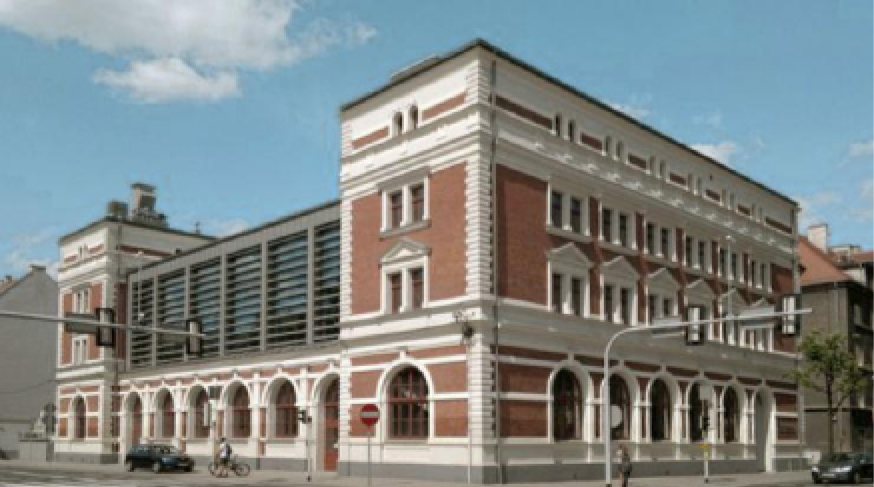
Figure 1.
View of the building from the intersection of Wrocławska Street and M. Strzoda Street
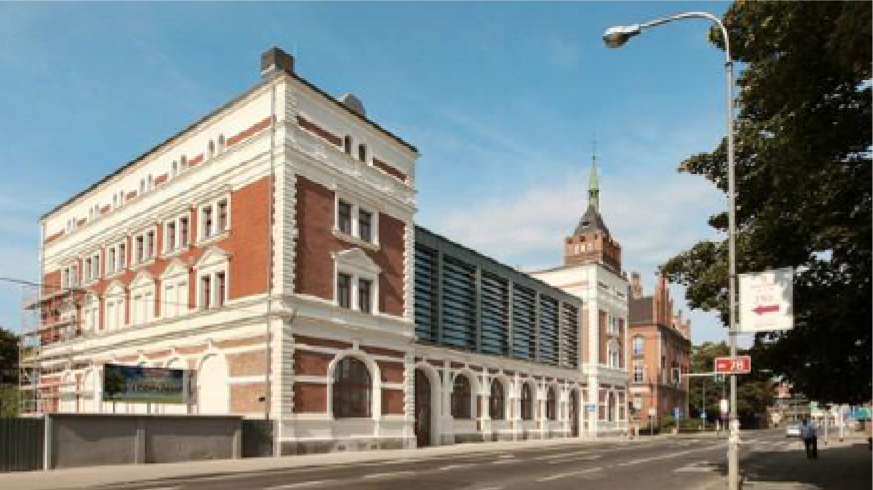
Figure 2.
View of the building from the Wrocławska Street
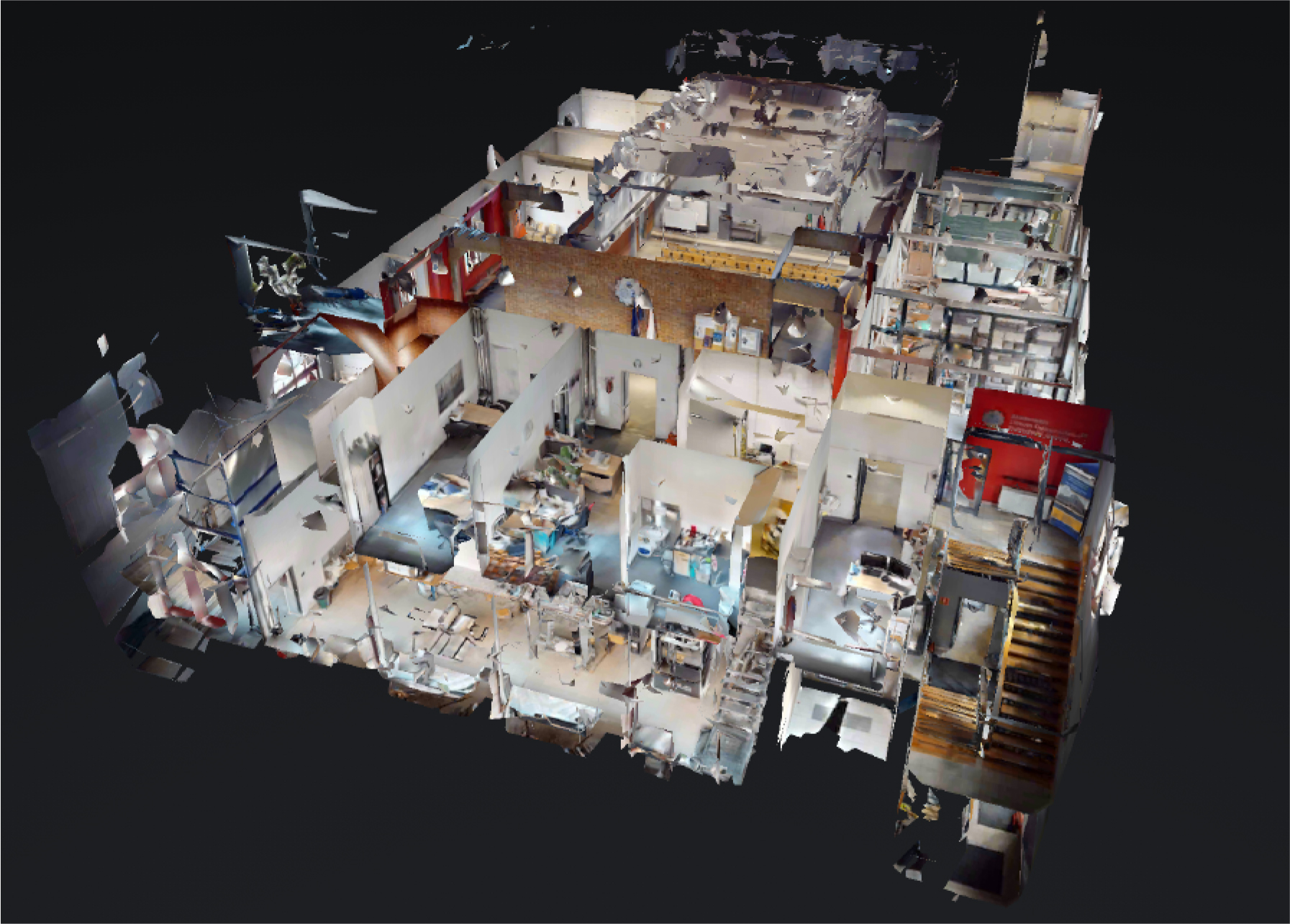
Figure 3.
3D model of the school building in Gliwice – view from M. Strzoda Street (Own work)
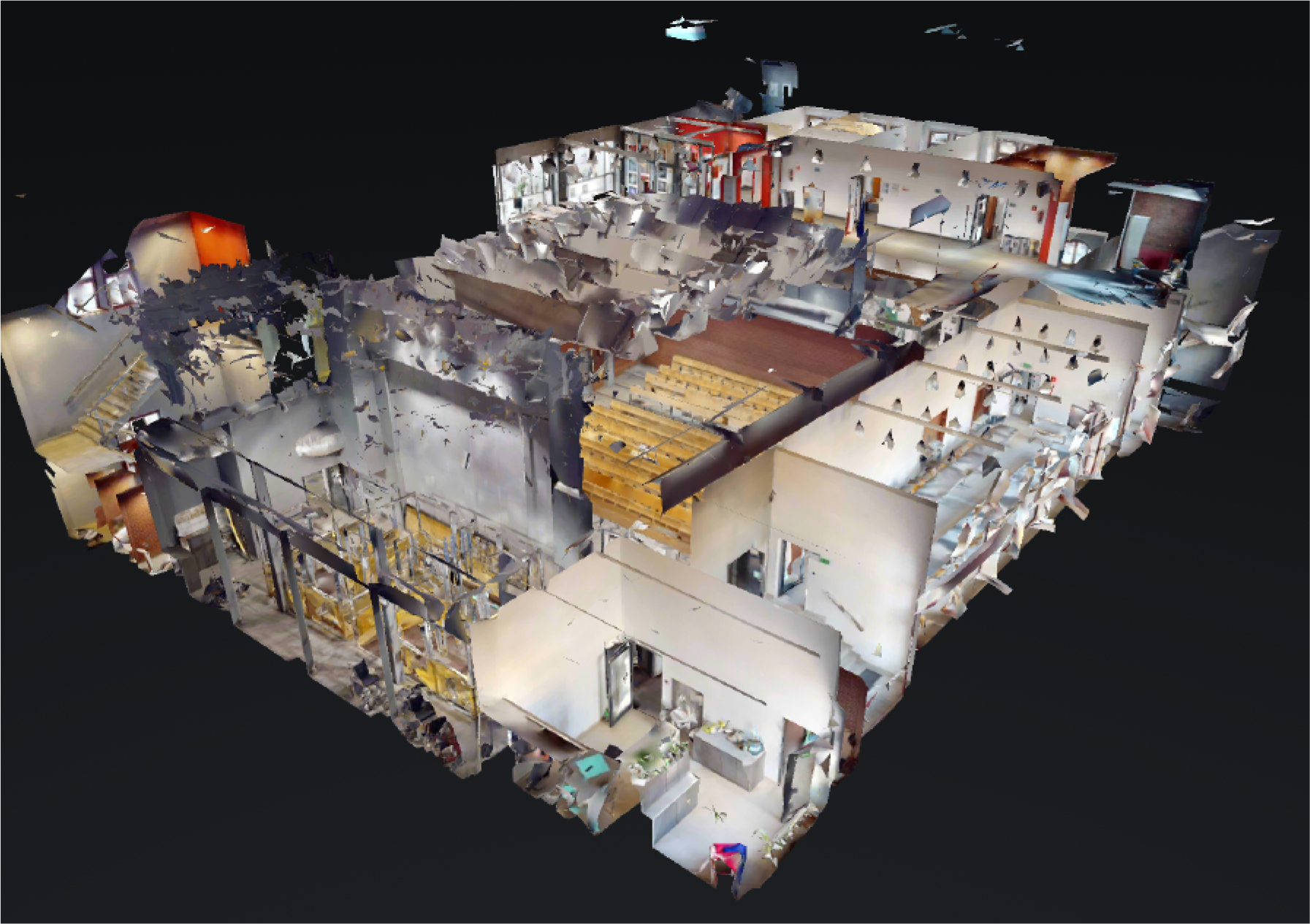
Figure 4.
3D model of the school building in Gliwice – view from Wrocławska Street (Own work)
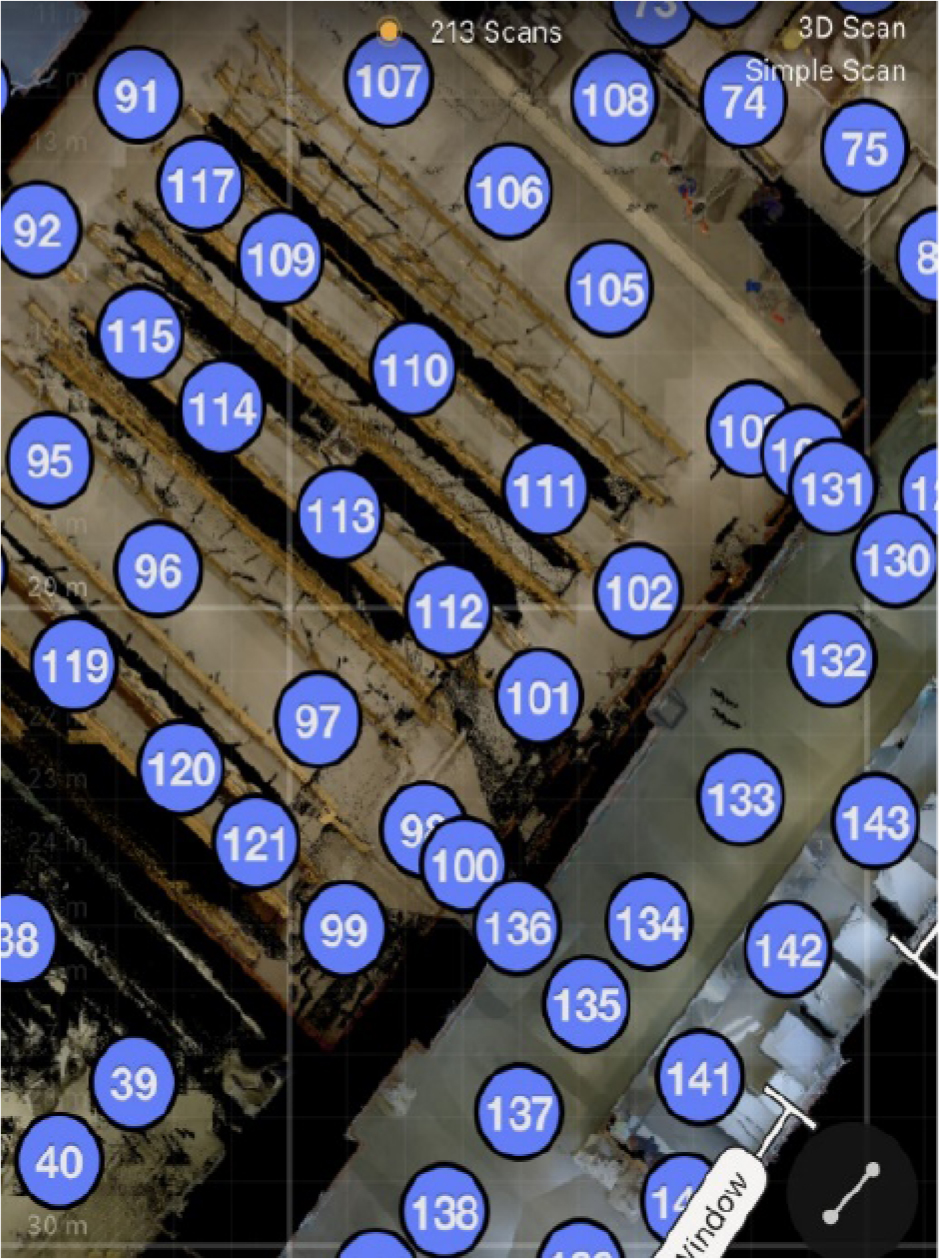
Figure 5.
Map of photogrammetric scan positions of selected functional zones on the ground floor of the school building in Gliwice. (Own work)
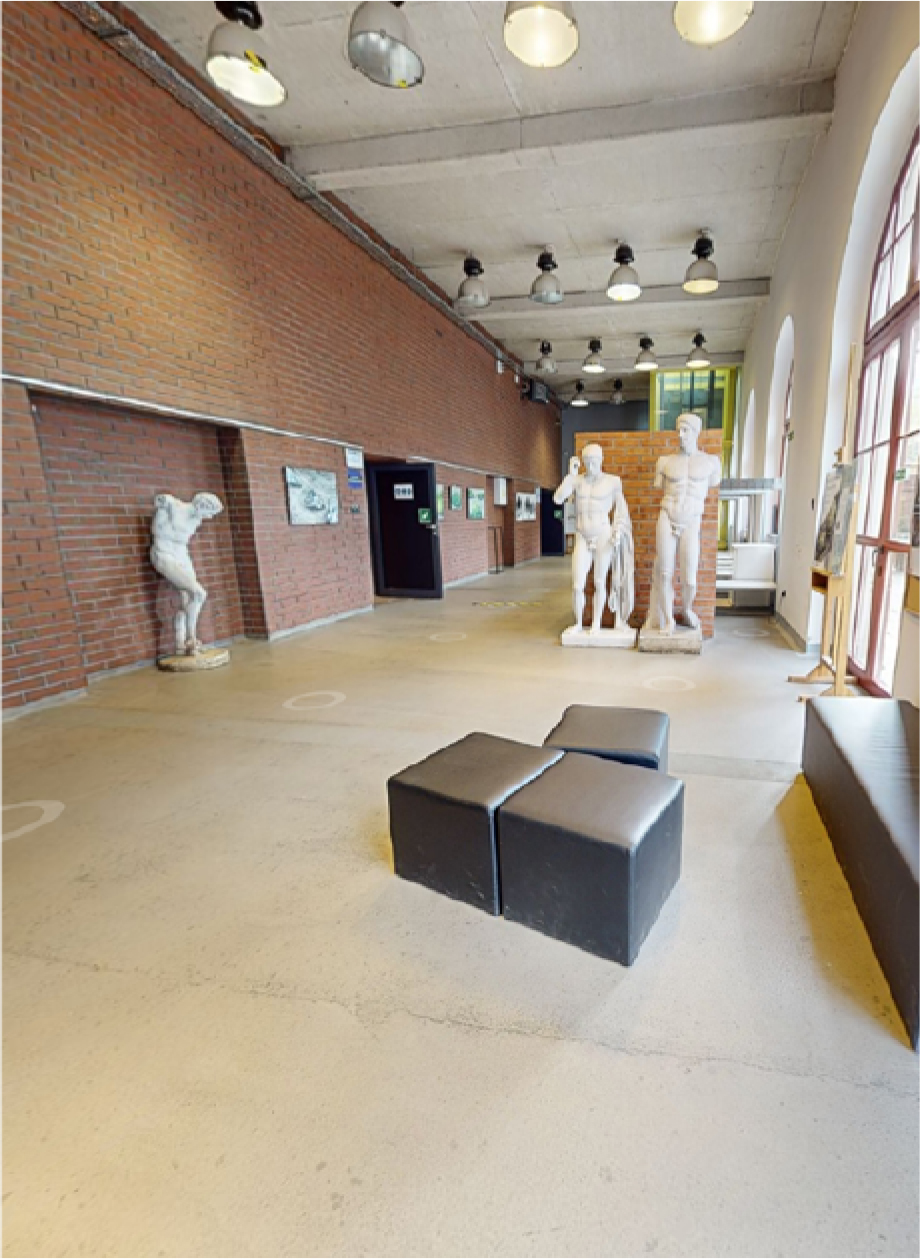
Figure 6.
Example measurement photo taken at station No. 147, depicting the shared area – main hall. (Own work)
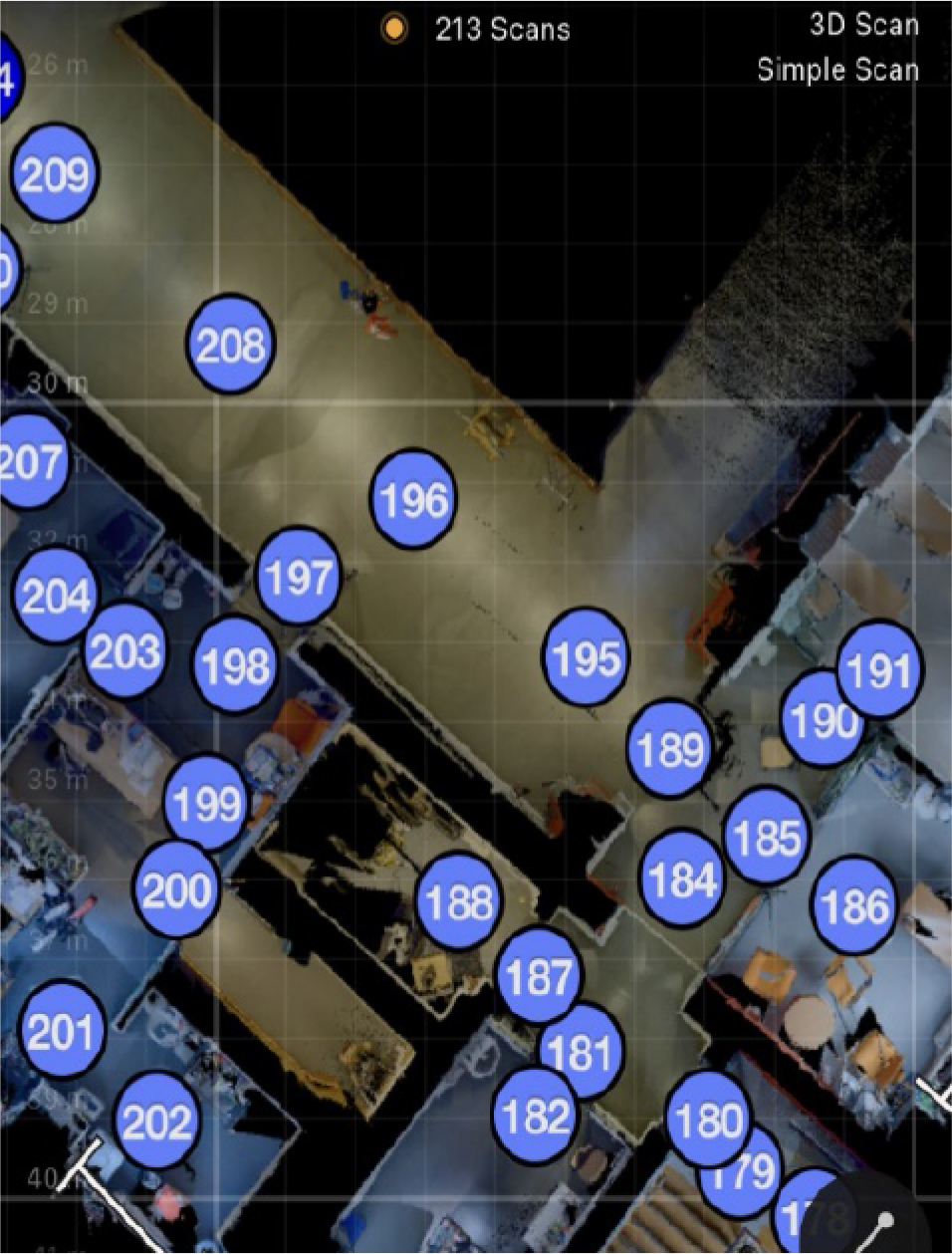
Figure 7.
Map of photogrammetric scan positions of selected functional zones on the first floor of the school building in Gliwice. (own work)
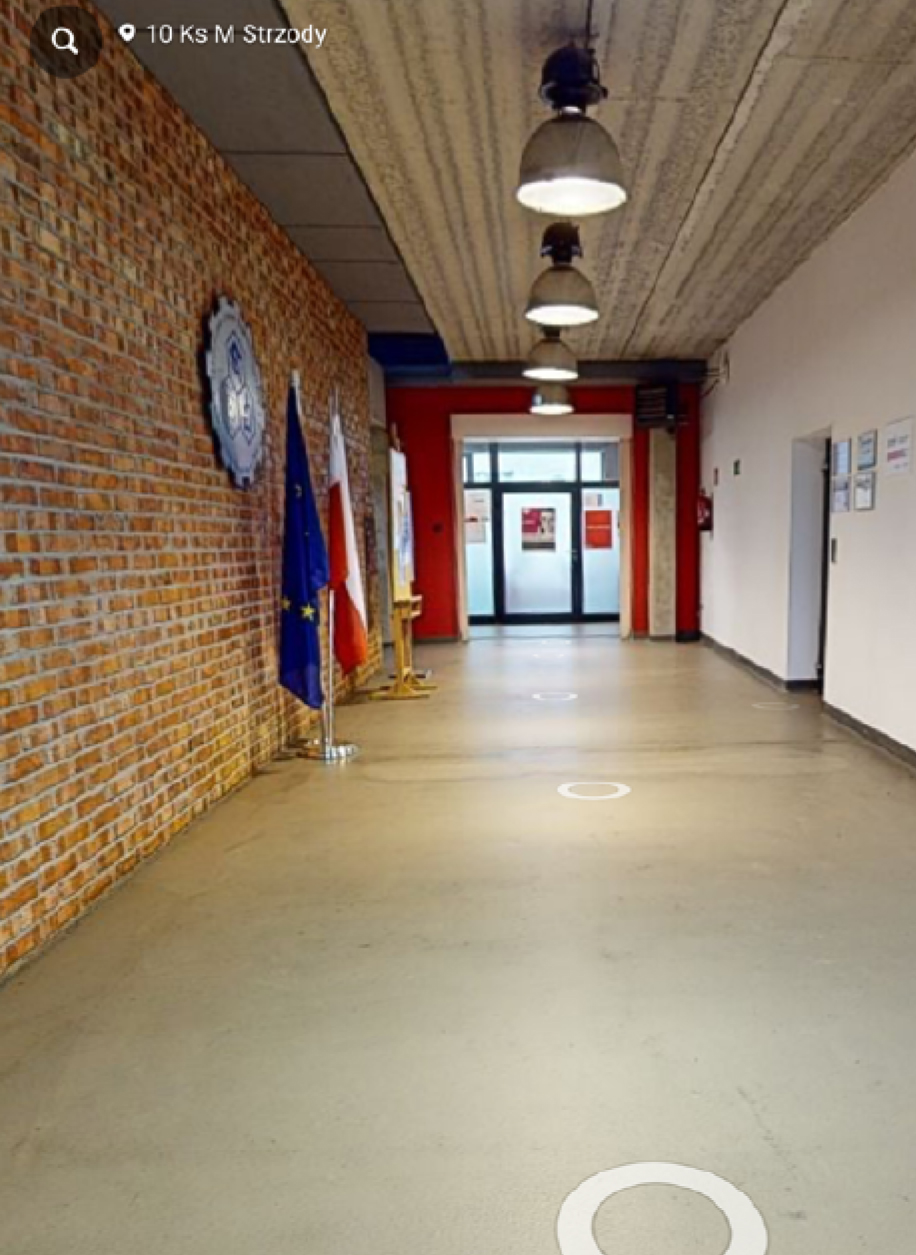
Figure 8.
Example measurement photo taken at station No. 209 depicting the shared area – corridor. (Own work)
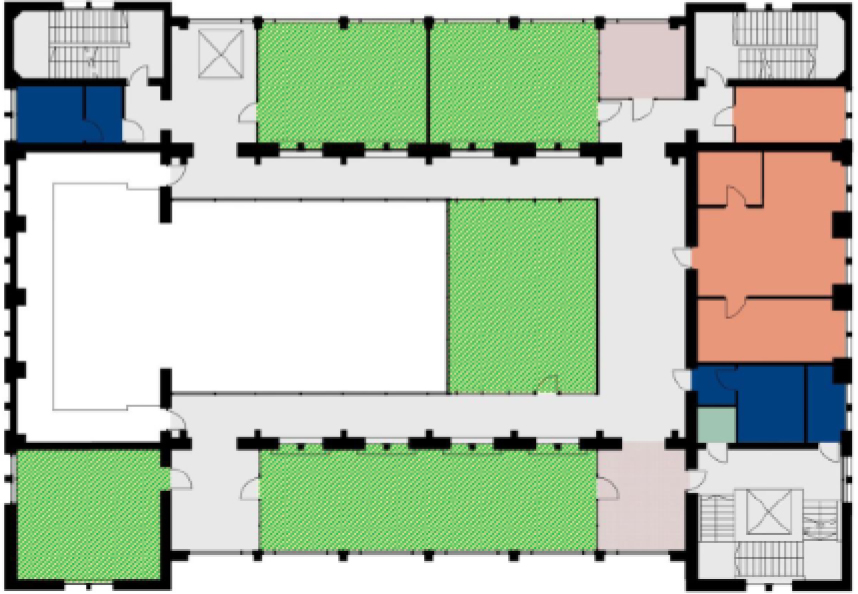
Figure 9.
Functional layout of the 1st Floor of the Academic Secondary School, in Gliwice (Own work)
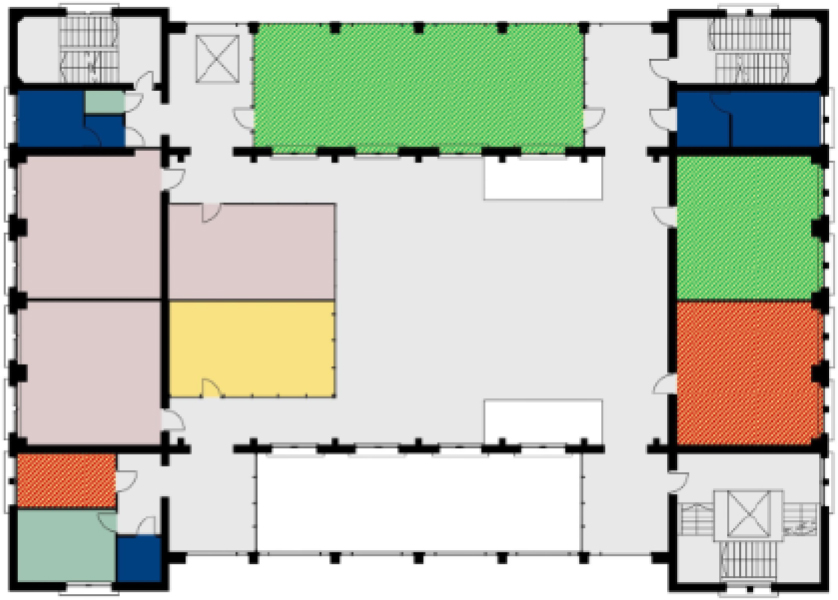
Figure 10.
Functional layout of the 2nd Floor of the Academic Secondary School, in Gliwice (Own work)
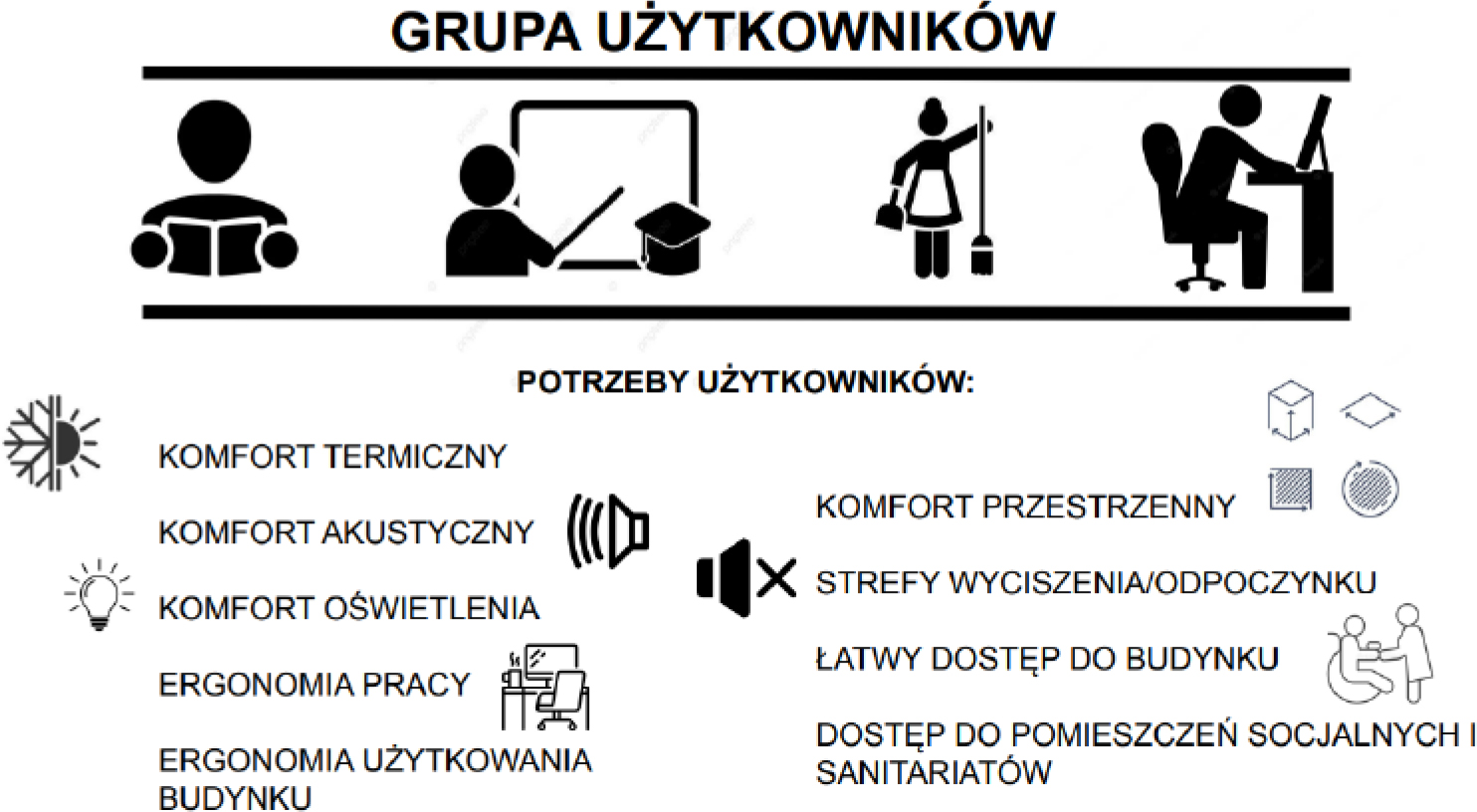
Figure 11.
Diagram of user groups of the school. (Own work)
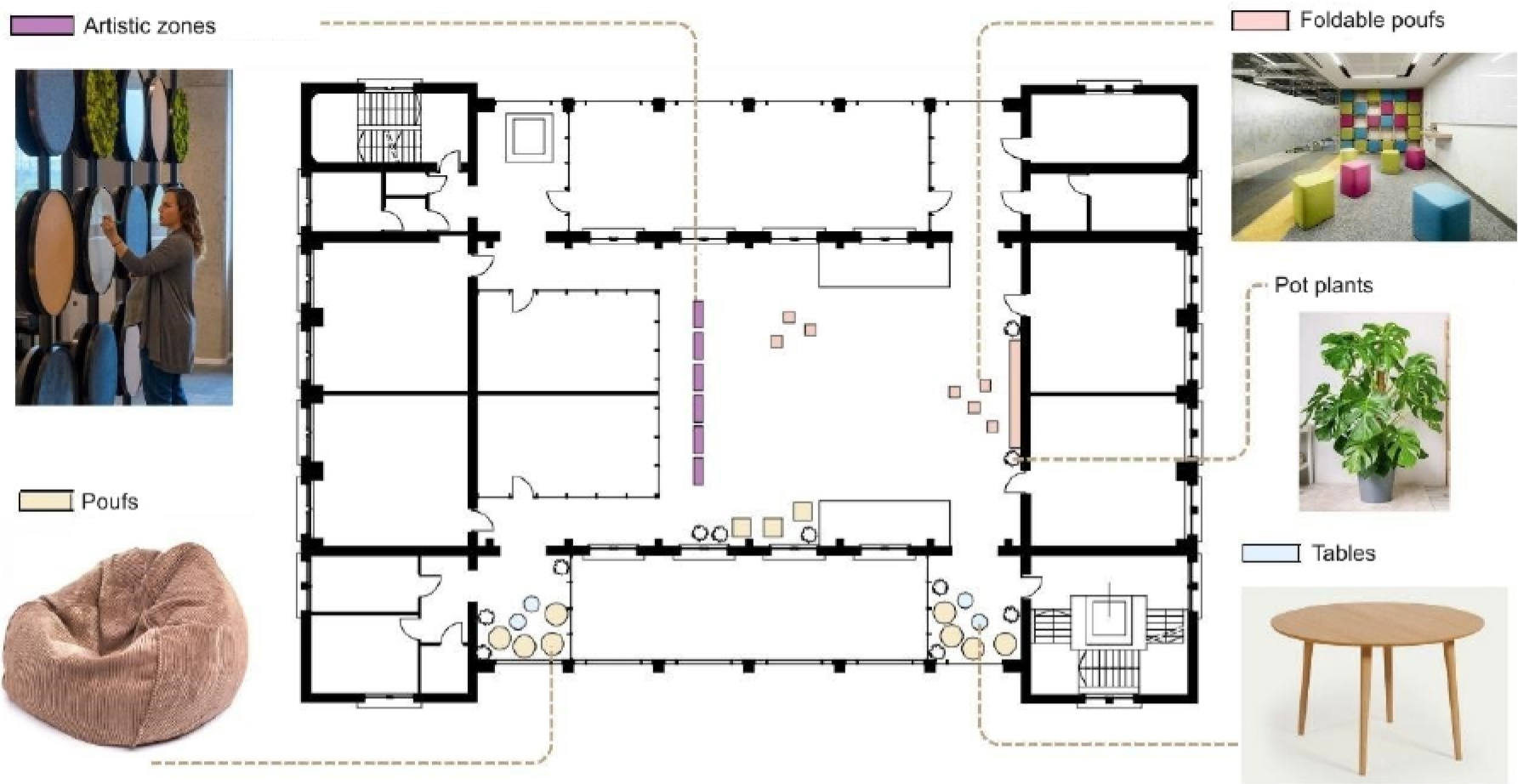
Figure 12.
Conceptual design of the common room area (lobby on the second floor) in the existing space designed as an artistic area, game corners and places for larger meetings for integration, conversation and other forms of relaxation. (Own work)
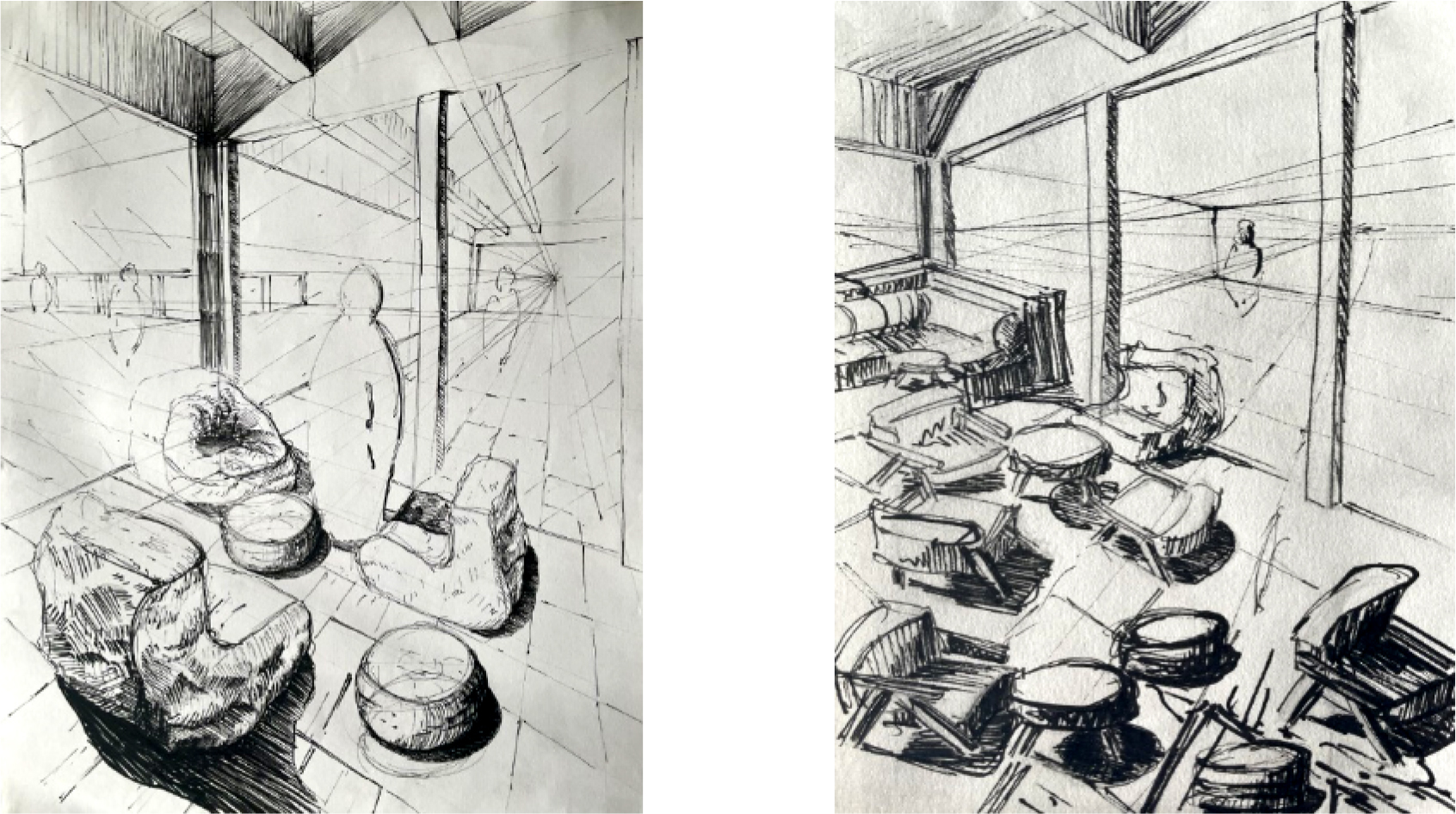
Figure 13, 14.
Conceptual design of an integration zone in the common space. The corner in the common room niche for conversation and integration (Own work)
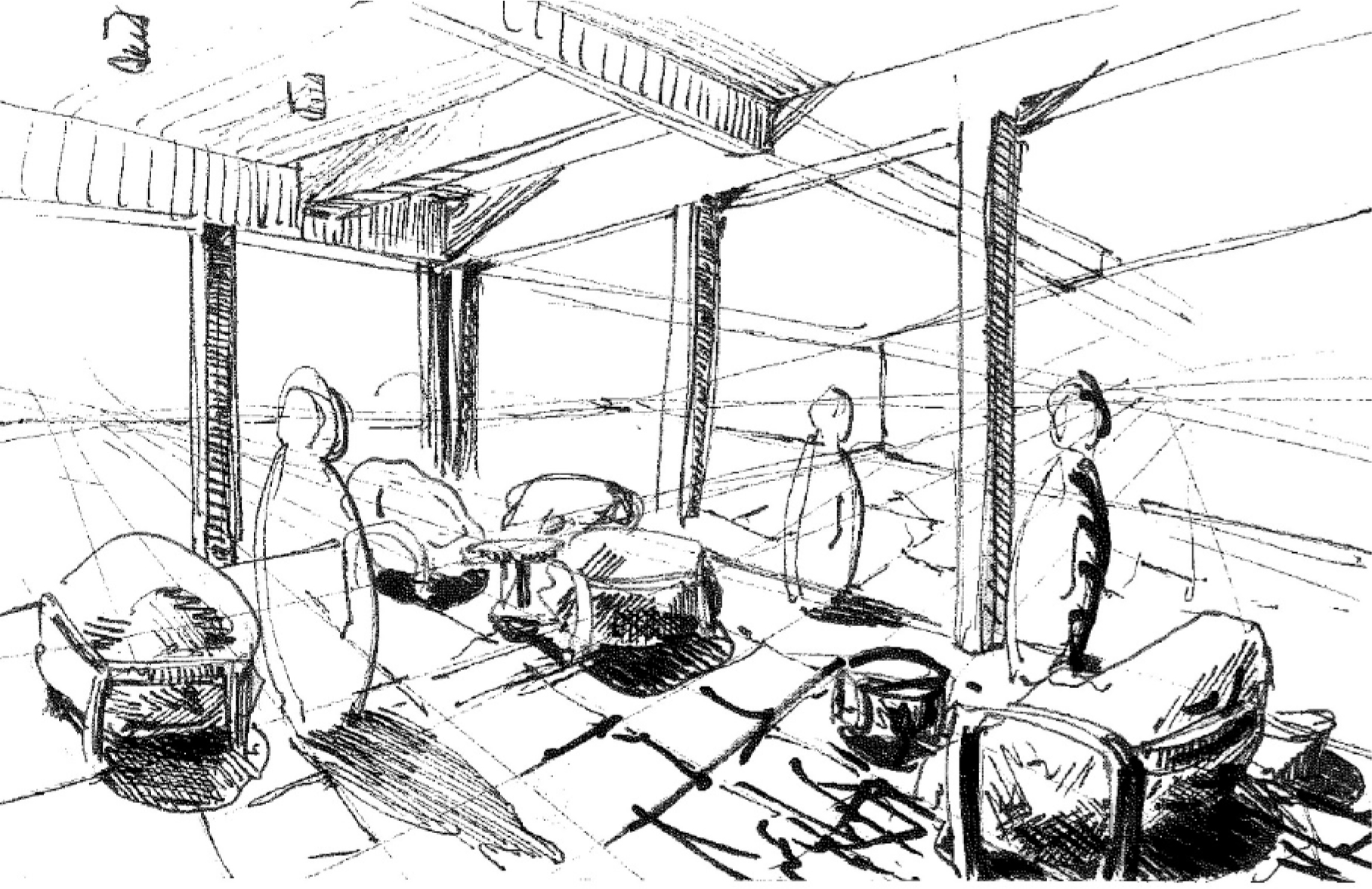
Figure 15.
Conceptual design of the integration zone in the common room space. The islands in the common room niche promote group work (Own work)
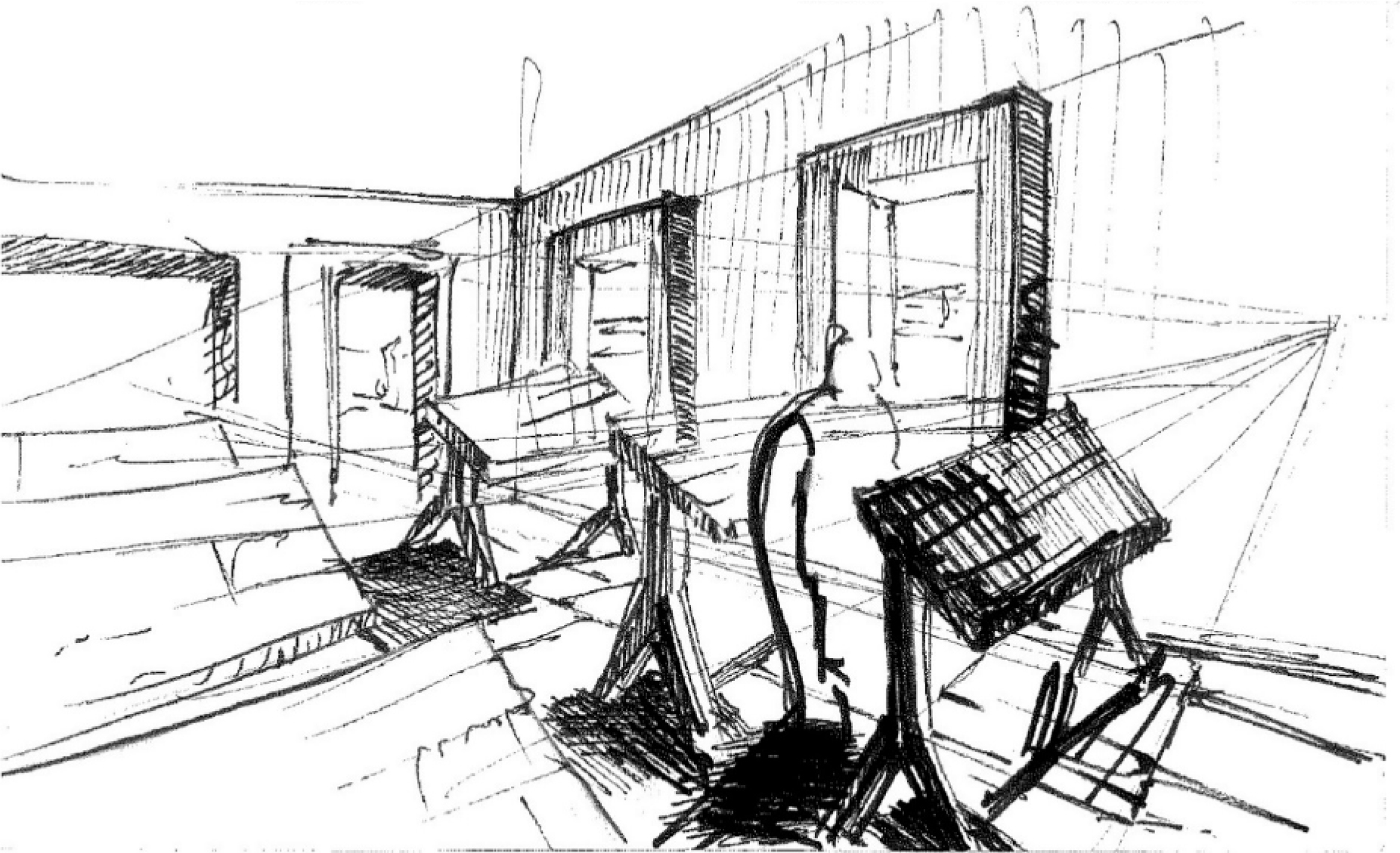
Figure 16.
Conceptual design of the art zone in the common room alcove space. The artistic zone in the common room niche is conducive to individual work, tranquillity and the development of manual skills (Own work)
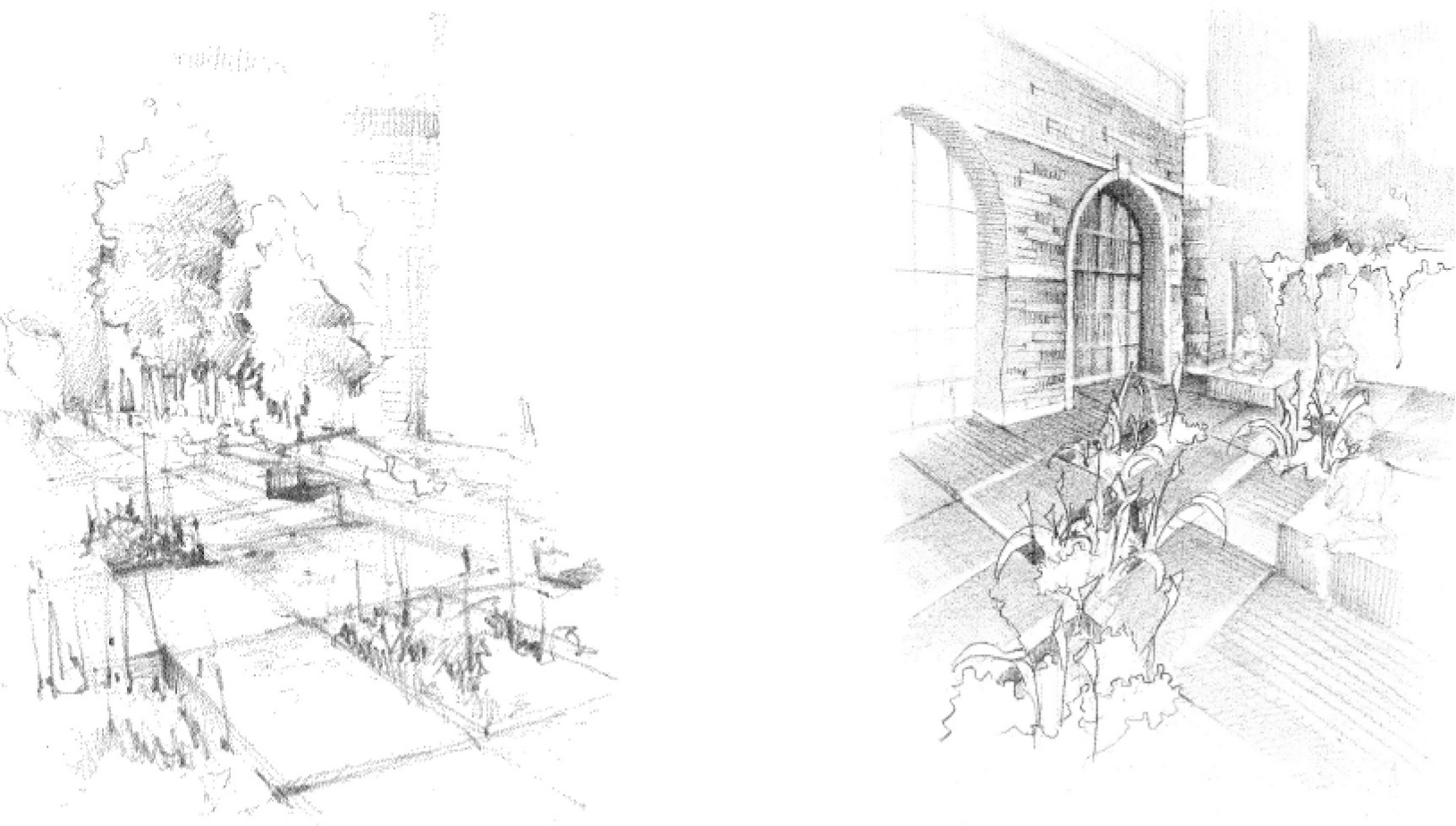
Figure 17, 18.
Conceptual design of ornamental greenery on the outdoor terrace. Conceptual sketch of the planting design (e.g. decorative grasses) in the areas where the paving slabs have been removed in the existing outdoor terrace (Own work)
Table 1.
Examples of reference object analyses based on the complex of Akademeia High School in Warsaw
| Object | Akademeia High School |
| Location | Polska, Warszawa |
| Designer | Medusa Group |
| Implementation | 2017 |
| Area | 4 198 m2 |
| Description | A horseshoe-shaped building with a green courtyard and a large outdoor stand. The layout of the rooms allows for individual educational strategies and the learning process resembles that at universities. “Most of the classes are conducted according to the American Herakness method, whereby students do not sit in desks, but work together with the educator at an oval table”. – words of deputy headmaster of the school Marcin Szala. Pupils work in an oval table system, teachers have no staff room, and permanently remain part of a compact educational ecosystem. This was the basis for the overall idea of creating a lifestyle atmosphere that encourages people to stay in school after school hours. The space in the middle of the school playground is ordered by a huge grandstand. A universal element, a meeting place to inspire students and teachers for unusual P.E., geography, biology or literature classes. The canteen is more like a restaurant than a traditional school canteen. It is a transfer of the modern living-room into the school. The venue is not only open at lunchtime, but is constantly changing its functions, from canteen to cafeteria with a reading room and live art studio. On the roof, there is a garden used for classes in biology, but also physics, astronomy or geography. During the summer season, beehives can be set up there or herbs can be grown for use in the school canteen. The hallway resembles no school corridors at all, but rather a scaly wooden hollow. The halls traditionally have chairs, but also multifunctional stands. When designing this venue, the architects were looking for ambiguous, multifunctional and inspiring spaces. |
| Source | https://www.archdaily.com/889061/akademeia-high-school-in-warsaw-medusagroup-studio |
Table 2.
Measurement data from photogrametric Matterport camera
| MEASUREMENT DATA Research instrument: Matterport PRO2 camera | |||
|---|---|---|---|
| Number of measurement sites | Measurement time per one site | Overall measurement time | Number of points in the cloud |
| 525 | 20 seconds | 175 minutes | 785 000 000 |
Tabela 3.
Overview of room temperature and humidity. (Own work)
| ROOM | temperature [°C] | air humidity [%] | CO2 concentration [ppm] |
|---|---|---|---|
| Corridor (1st floor) | 22.15 | 35.5 | 771 |
| Corridor (2nd floor) | 22.10 | 34.4 | 710 |
| Corridor (3rd floor) | 20.35 | 42.1 | 849 |
| Concierge | 21.80 | 32.3 | 553 |
| Assembly hall | 21.20 | 38.1 | 631 |
| Bathroom (ground floor) | 21.45 | 41.3 | 722 |
| Library | 21.60 | 38.2 | 761 |
| Teachers’ room | 22.20 | 39.6 | 844 |
| Quiet work room | 22.85 | 34.7 | 771 |
| Cloakroom | 21.25 | 37.4 | 715 |
| Room no 304 | 20.75 | 39.8 | 482 |
| CLASSROOMS | |||
| IT room | 23.30 | 34.6 | 989 |
| Room no 07 | 20.06 | 32.8 | 517 |
| Room no 107 | 21.20 | 28 | 507 |
| Room no 202 | 22.35 | 39.4 | 806 |
| Room no 202A | 24.60 | 41.5 | 1296 |
| Room no 206A | 24.40 | 47.9 | 2972 |
| Room no 210 | 22.20 | 34.9 | 812 |
| Room no 305 | 20.85 | 40.2 | 585 |
Table 4.
Types of organized recreational spaces in an educational facility
| Wall niches serving as common rooms – This larger open space allows for the organisation of workstations or reading areas. | 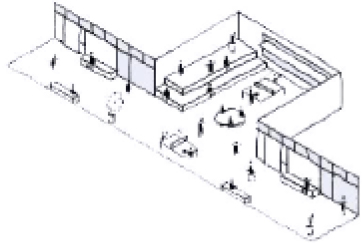 |
| Schoolyards – usually the most popular places visited by students. Typically organised outdoors, they allow students to engage in conversations, play games, and participate in dynamic relaxation activities such as table tennis. | 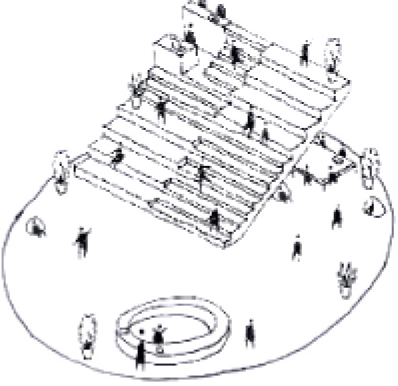 |
| Games area – It is a small space organised for plays and various games for a small number of students. | 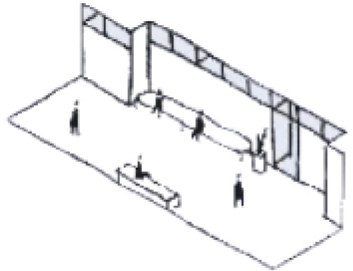 |
| Area in a wall niche – It is a small space designed for relaxation. Usually organised in a well-sunlit area and surrounded by greenery. | 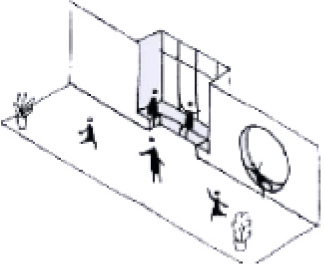 |
| Island – a large space (e.g., main hall or wide corridor) where furniture is arranged to facilitate larger gatherings. | 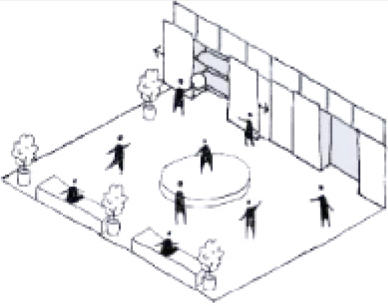 |
| Windowsills – these are places often used by students for individual work, equipped with power points allowing for laptop work and studying. | 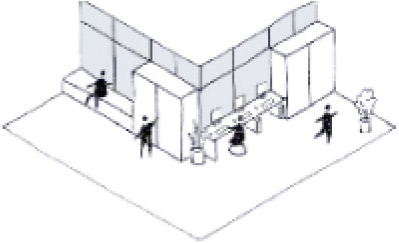 |
| Stairs – a popular choice among students for organising conversation spots and other activities. | 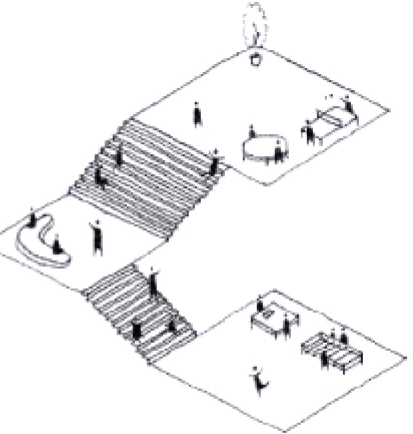 |