
1. INTRODUCTION
Autism Spectrum Disorder (ASD) refers to an accumulation of complicated neurodevelopmental deficiencies exhibiting a wide range of symptoms that can manifest in different forms and degrees, creating a continuous spectrum of conditions [1]. Well-established biochemical abnormalities such oxidative stress, redox imbalance, and related mitochondrial dysfunction are characteristics of autism [2]. Since children and newborns are high-risk demographic groups and more vulnerable to neurological abnormalities than adults, ASD is usually diagnosed during infancy [3]. Moreover, social impairments, communication challenges, and cognitive delays are among the signs of Autism Spectrum Disorder that appear in the first three years of life [4]. Autistic people have repetitive and stereotyped behaviors, as well as limited interests [5]. People with Asperger syndrome (also known as high-functioning autism) do not have significant delays or difficulties in language or cognitive development, but they may struggle with social skills, sensory input, and require rigid routines in which their environment is predictable and familiar [6].
According to the Centers for Disease Control and Prevention (CDC), the prevalence of Autism Spectrum Disorder (ASD) has continued to rise, with recent data indicating 1 in 36 children were diagnosed with ASD in 2023. While back in 2012, the ratio was 1 in 68 children. This shows how the number of diagnosed children increased exponentially within an 11-year period [7]. This significant increase in prevalence is due in part to increased awareness and the evolution of Diagnostic and Statistical Manual of Mental Disorders (DSM) criteria, from a childhood form of schizophrenia in 1952 to a core diagnosis covering a spectrum of disorders today [8]. The changing landscape of diagnostic variables makes it challenging to determine the real increase in prevalence.
Autism Spectrum Disorder affects all people regardless of race, ethnicities and across all financial backgrounds. But young men are more likely to develop ASD than young women, at ratio of 4.5 to 1. The symptoms and severity of ASD vary widely between individuals. While some people with ASD can participate in everyday activities on their own, others need significant help to perform essential tasks. ASD is typically diagnosed in children between the ages of 1 and 4 [9]. The exact cause of ASD remains unknown, though it is believed to be a result of a combination of genetic and environmental factors. Environmental toxicants, such as heavy metals, persistent organic pollutants, and emerging chemicals, have been proposed as contributing factors to the development of ASD in children [6]. Humans are more vulnerable to chemical exposure than ever before due to the increased use of chemicals in a variety of industries such as food preservation, agriculture, industrial production and so on. A variety of environmental agents have been proposed as contributing factors to ASD pathogenesis, including heavy metals (Hg and Pb), persistent organic pollutants (DDT, PBDEs, and PCBs), and new chemicals of concern (phthalates and BPA) [6]. These three major kinds of toxicants may be the cause of ASD in children.
The demand for schools that are specifically tailored to meet requirements of the needs of autism students has increased due to the rise in the number of children diagnosed. This includes not only providing education for the students, but it is also necessary to provide resources and support for their parents, teachers, school administrators and designers [9]. It has been proven that early intervention and preschool programs enhance the child’s social and cognitive abilities, therefore, it is crucial to provide support and assistance to a child with autism at an early age [10].
Schools that are not tailored to the unique needs of individuals with autism are not suitable for their learning and development. Every student, including those with autism, deserve access to education. It is important to create educational environments that cater to the needs of autistic students, allowing them to gain knowledge and develop essential social skills that will aid them in navigating the world and living a fulfilling life [11].
1.1. Aim of the Study
This study aims to assess the extent to which classroom designs in Turkey meet the specific needs of preschoolers with Autism Spectrum Disorder (ASD). The study compares the design strategies applied in Turkish schools to existing design criteria in the literature, providing recommendations to create more effective learning environments for children with ASD. The article outlines the unique requirements of children with autism in terms of classroom design, to create a positive and productive atmosphere that is conducive to their learning and development. The article provides insights and recommendations for classroom design that will meet the needs of preschoolers with autism between the ages of 4-8 years old.
The study poses the following research questions:
What are the unique requirements necessary for designing autism friendly classrooms?
How well do the current classrooms in Turkey align with autism-friendly design criteria?
How can the classrooms in Turkey be improved the advancement and enhancement of preschoolers with ASD?
2. LITERATURE REVIEW
2.1. User Needs
The requirements that individuals must effectively perform their tasks are referred to as the user’s needs. These needs are the essential elements of the environment that must be met for the user to be able to complete their activities efficiently. The user’s needs are determined by the physical, sensory, and perceptual characteristics of human beings [12].
User’s needs are grouped as
Physical needs
Psychosocial needs
2.1.1. Physical Needs
The user must have certain conditions in place to conduct their tasks without interruption from the surrounding environment. These conditions vary based on the number of users, the size of the individual user, and the space in relation to the equipment [12]. These physical needs include: Area, Thermal comfort, Auditory needs, Visual needs, Hygiene and Security.
Area (Needs Related to Space)
The area must conform to the static and dynamic measurements of the human body, known as anthropometrical dimensions, which are based on the skeletal and muscular structure of the individual [13]. Static anthropometrical dimensions are the measurements taken when the human body is motionless. That is, when the body is standing still or sitting still. For example, height of the body, eye level, width of the body, etc. [12]. Dynamic anthropometrical dimensions are measurements taken when the human body is in motion during an activity. These are the maximum reaching distances of the moving body horizontally and vertically and the dimensions while squatting stretching and crawling [12].
Thermal Comfort
The environment should be maintained with the appropriate levels of temperature, humidity, radiation, and air flow. The ideal room temperature for comfort is contingent upon the individual’s activity level and clothing choice, as well as the rate at which the air is circulating and the moisture content of the air [13].
Keeping the air clean and free from pollution by:
Controlling creation of foreign substance
Ventilating by bringing outdoor air through windows etc.
Use of air conditioning
Auditory Needs
The region must be properly insulated to control the way sound is reflected and spread. Excessive noise can cause harm to one’s hearing. On the other hand, low levels of noise can hinder verbal communication and create disturbance and irritation [12].
Visual Needs
This refers to the level of illumination in the area. Visual execution relies upon the entire acknowledgment of room. It incorporates nature of light as well as aggregate. This can be categorized as artificial lighting, use of florescent lights etc. and natural lighting, use of windows [12].
2.1.2. Psycho-Social Needs
These are the conditions necessary to avoid disruption psychologically while carrying out an activity. They are characteristics of social environment related to human behavior and the aesthetic conditions of space. Psycho-social needs include Privacy, Needs related to activity, Aesthetic needs, and social needs [12].
Privacy
This refers to the area being able to have auditory, visual, personal, and social secrecy. Need related to activity. This refers to the distance an individual needs during an activity [12].
Personal distance 45 cm
Distance between individuals is 45-120 cm
Distance within society is 120-360 cm
public spaces greater than 360 cm
Aesthetic Needs
This refers to the form, color, and texture of the area. Color in a building is a visual aid and is also used to create a pleasant and stimulating appearance. Good coloring and lighting are interdependent.
Texture/pattern
Building materials with large scale patterns have distinguishable elements. But materials with small scale patterns, there is a dominant color or element that stands out.
Social Needs
This refers to the social relations in the area or institution. The culture of the users varies, as well as their personal desire [13].
2.2. Autism-Spectrum Disorder (ASD)
There are numerous subgroups of autism that make up autism spectrum disorder (ASD). It is a chronic, multifaceted developmental disorder that is characterized by issues with social interaction, communication, and imagination [14]. The autism spectrum is broad, with individuals on one end known as high-functioning autism or Asperger’s syndrome. This group of people may have above average intelligence and specific interests. In the middle are those with average intelligence but may have difficulty learning new skills. At the far end are those with severe learning disabilities, who may require assistance in daily life. Therefore, the level of independence among individuals with ASD can vary, with some able to live independently while others may require ongoing support [10].
Individuals with ASD often have difficulty feeling comfortable in their surroundings. They may struggle with sensory issues such as sensitivity to visual, auditory, tactile, proprioceptive, gustatory, and olfactory stimuli [15]. The Center for Disease Control reported that between 2000 and 2010, there was a 220% increase in the number of children receiving an autism diagnosis. The rise in diagnosis can be attributed to a combination of factors, including increased awareness of autism, improved diagnostic methods, and changes in the definition of autism. Although the precise cause of autism is unknown, it is thought to be caused by [10]
Genetic issues
Significant brain infections
Exposure to toxic substances
2.3. Symptoms of ASD
The most results of outrageous introspection can be isolated into three classifications: challenges with social correspondence, lingo impedances, and dreary behaviorist. Additional related symptoms may include issues with sensation, emotions, and uneven cognitive abilities [10].
Social Communication Symptoms: These difficulties associated with extreme introverted Ness range clutter (ASD) are characterized by a variety of side effects, including unusual or incorrect use of body language, signals, and facial expressions, as well as difficulty with eye contact and communicating feelings that coordinate what is said. People with ASD may also be interested in collaborating with others or sharing their experience or accomplishments. They may look cautious and introverted, hesitant to approach others or initiate social connection, and prefer to remain alone. Translating other people’s sentiments, responses, and nonverbal signs can sometimes be difficult, as can reluctance to being touched. People with ASD may find it difficult or impossible to socialize with peers their own age. These symptoms were outlined in a study by [10]
Language Disability Symptoms: [10] identifies several ways in which language disability can present itself. These include delayed or absent speech development after the age of two, unusual speech patterns such as peculiar tone, rhythm or pitch, and repetitive use of words or phrases without any communicative intent. Additionally, people with language disabilities may have difficulty initiating or sustaining conversations, expressing their needs, or understanding basic statements or questions. Figurative language, such as humor, irony, or sarcasm, may also pose a challenge to individuals with language disabilities. Early detection and intervention are crucial to support communication skills development in people with language disabilities.
Repetitive Behavior Symptoms: Individuals with autism spectrum disorder often exhibit repetitive behavior symptoms, which can include engaging in repetitive physical actions such as spinning, rocking, and hand flapping. They may form intense connections to uncommon objects, such as keys, light switches, and rubber bands. Additionally, individuals with autism may become absorbed in a particular area of interest, which may involve numbers or symbols, such as license plates or maps. They may feel a strong need for consistency and sticking to routines and become agitated by changes in their surroundings or routine. They may besides show strange posture, awkwardness, or abnormal approaches to moving. Finally, individuals with outrageous contemplation might be enraptured by turning objects, complex components, or parts of toys, like the wheels on a race vehicle, rather than playing with the entire toy. These repetitive behavior symptoms associated with autism spectrum disorder can significantly impact an individual’s daily life and ability to function in social situations [10].
2.4. Design Principles from Previous Publications
2.4.1. Magda Mostafa’s Design Principles
Mostafa, an Associate Professor from the American University of Cairo, was responsible for creating the first autism education center in Egypt. She created the Sensory Design Theory, which suggests that adjustments to the sensory environment can have a positive impact on behavior among individuals with autism, specifically in educational settings [16] [17]. To develop this theory, she studied and evaluated the environmental factors that impact individuals with autism. Her design principles are organized under the acronym ASPECTSS, which stands for Acoustics, Spatial Sequencing, Escape spaces, Compartmentalization, Transition Zones, Sensory Zoning and Safety.
Acoustics: This guideline suggests that the sound environment should be managed to reduce the level of, echo, and background noise in areas used by people with autism spectrum disorder (ASD) to a minimum [16].
Spatial Sequencing: This standard is based on utilizing the tendency of people with autism to prefer a specific routine. Spatial Sequencing involves arranging spaces in a logical order, according to their usual usage. The spaces should transition smoothly from one activity to another through one-way traffic flow, when possible, with minimal interruption and distractions.
Escape Spaces: The goal of these types of spaces is to offer a break from the excessive stimulation that is often present in the surroundings for individuals with autism. These spaces may be a lightly partitioned area or a secluded spot in a quiet part of a classroom. They should have an unbiased material climate with irrelevant instigation that can be adjusted by the client to meet their unmistakable necessities.
Compartmentalization: The idea behind this approach is to coordinate homeroom into indisputable reaches with specific material circumstances for each activity. Each reach should have an unmistakable explanation and look at substantial quality. The limits between these zones can be developed through various suggestions like furniture circumstance, flooring, level changes, or lighting assortments. The substantial qualities of each zone should be used to recognize its explanation and separate it from the included locales. This influences supply clear material prompts for the client, decreasing perplexity and dubiousness.
Transition Zones: Transition zones aid users in adjusting their senses as they move between various levels of stimuli. These zones can come in various forms and can range from a simple marker indicating a change in circulation to a specialized room that enables users to adjust their material affectation some time as of late progressing from high-boost to low-improvement districts.
Sensory Zoning: This guideline suggests that when creating spaces for individuals with autism, the focus should be on the sensory qualities of the space rather than traditional functional zoning. The spaces are divided into two categories: “high-stimulus” and “low-stimulus” zones. High-stimulus areas may include those that require elevated levels of sharpness and actual development, for example, actual treatment and net motor capacity improvement spaces. Low-improvement reaches might integrate spaces for talk treatment, PC capacities, and libraries. Transition zones are also included to help individuals move between the different areas.
Safety: Considerations for safety must be made when designing learning environments, especially for children with autism who may have a different perception of their surroundings. This includes things like installing safety measures to prevent burns from boiling water and avoiding sharp edges and corners.
2.4.2. Humphreys
Humphreys suggests guidelines for creating buildings that are accommodating for individuals with autism, known as autism-friendly buildings: [18]
Calm, Order and Simplicity: The building should have a consistent feeling of serenity and minimalism, which should be reflected not only in the layout and design of the arrangement and segments, but too within the choice of materials utilized.
Minimal details: It’s best to avoid any irrelevant information. By minimizing background visual distractions, educators can provide tailored stimulation that meets the specific needs of each student.
Proportions: The author proposes the idea of incorporating balanced and pleasing proportions in structures and areas intended for individuals with autism.
Natural light: Utilizing natural light is essential, however, bright sunlight, dark shadows or sharp contrast can cause visual overstimulation. Skylights and windows located near the roof can be used to achieve diffused lighting.
Proxemics: Individuals on the autism spectrum may require additional room in their social connections
Containment: The idea being discussed is the importance of keeping a watchful eye on children with autism spectrum disorder and providing them with a secure environment where they can move around without restriction.
Observation: Supervision is necessary but should not impede the student’s autonomy.
Acoustics: Individuals with autism spectrum disorder (ASD) frequently struggle to distinguish sounds and are more susceptible to noise compared to those without the condition. Therefore, it is important to consider the acoustical quality of materials used.
2.4.3. Clare L. Vogel
Vogel interviewed a variety of individuals, including parents, teachers, therapists, and students with autism, to gather information for her study. Through these interviews, she developed eight design principles that should be incorporated into educational facilities for individuals with autism [19].
Flexible and Adaptable: The ability to adjust the classroom setting to accommodate the specific requirements of autistic students is crucial. This is because autism is a spectrum disorder, and each student experiences it differently. Therefore, teachers must have the flexibility to adapt the classroom to meet the person’s needs of each understudy.
Furniture, room layouts, and lighting options can all contribute to a design that makes it easier to modify programs to meet changing children’s needs. Spaces should be able to be divided and rearranged by students. Children engage in a variety of activities that support their development and learning, improve their physical competence, and foster their independence and self-confidence when given adaptable furniture and open-ended materials [20].
Non-threatening: The design of the area creates a warm and inviting atmosphere, giving a sense of belonging, and encouraging interaction and connections among those present. Utilize soft, sensory-rich elements like beanbag chairs, couches with stuffing, carpeting, swings, clay, and water. Avoiding wide open spaces is an innovative idea for kids who tend to orbit as a way of keeping their bodies under control because they can quickly become dead space.
Non distracting: An organized and clean classroom setting reduces the likelihood of overwhelming sensory input for students with ASD. Remove unnecessary visual elements like posters and disorganised signs and use screens and window treatments to block off transient distractions. Insufficient storage space, a common complaint among teachers, also contributes to a place’s unkempt appearance. Create storage areas outside and indoors that can also serve as a feature in the architecture or a piece of furniture [20]. Try lowering the intensity of lights by shifting to fewer bulbs, natural light, and cozier lamps for task lighting to prevent the flickering and humming from fluorescent lights. Finally, cover old heaters and fans with sound-absorbing carpeting, textiles, and furniture to muffle mechanical noises.
Predictable: An environment that reduces the likelihood of confusion by presenting limited amounts of information at once, as individuals with autism are heavily dependent on visual cues. Provide clear pathways (with colored tape or impression stickers), movement pockets (assigned regions with distinct workspaces), neighborhood-like setting (with named hallways or color-coded zones), distinct and distinct edges (with depictions, half-walls, or wall), and points of interest (a design, indoor plant, or aquarium). Use signage, numbering schemes, and clear views to create a feeling of continuity. Using the senses of smell, location, sound, and touch, customers may obtain comprehensive information while also being aware of strong dislikes for specific items. Extreme introverts frequently struggle with multitasking. They might not be able to perceive if they are paying close attention to anything, such as if one sense were dynamic at the same time.
Controllable: An environment that provides numerous opportunities for children to investigate how things relate to each other in space can boost their emotional stability and sense of power as they comprehend their surroundings better. Because autistic children have unique social obstacles Individual space may be more important than it is for a typically developing youngster. Classrooms that support these youngsters must include a variety of social intuitive as well as decision-making opportunities. Everyone feels more at ease and in control when there is a transition zone between private and open situations. A move zone, such as a nook or specialty corridor, separates the classroom from the main route, allowing fundamental natural facts to be delivered from a safe, protective location.
Sensory Motor Attuned: A setting that stimulates the senses, evokes a sense of wonder, prompts curiosity, and challenges the mind using diverse materials and activities. Children frequently disregard their visual environment and have perplexing sensory integration demands and issues. They might require assistance in learning to focus their attention on sensory information that will improve their ability to interact [21]. It is crucial to create and tailor the best environment for a kid’s sensory-motor demands because they might change with age, from person to person, and even from day to day within the same child.
Safe: A soothing atmosphere where it is improbable for injury or destruction in the classroom. It might be difficult to provide a secure environment for kids with autism. Physical risks (wires, open stairs, unscreened windows, free ground surface, toxic paints, and so forth.) furthermore, mental security and security are also basic examinations for originators and educators. Kids with ASD are as frequently as conceivable leaned to seizures and fits or “stimming”, which can bring about hurt to oneself or others.
Non institutional: Show the qualities of a home through furnishings, decor, and lighting to make a space that is inviting and comfortable for students with ASD, allowing them to relax and retain more information. Children will unwind and retain more knowledge if they feel completely at home in their surroundings. Catalog furniture typically results in bland or, conversely, overstimulating classroom designs. Students may also be too strongly reminded of clinical situations in medical offices in such circumstances. Even for storage cabinets and other useful equipment, adding softer lighting and house furnishings might help alleviate this sensation. Warmer hues, skin tones, and pastels, plush furnishings, intriguing textures, well positioned artwork, plants, and other natural elements may transform a typical classroom into a welcoming communal gathering spot.
3. METHODOLOGY
The article opted to collect data through the quantitative research approach which involves the use of questionnaires. Multiple schools in Turkey were contacted and asked if they would be willing to contribute to the study. The schools who responded positively were sent the questionnaires as google forms. The schools were contacted through emails and WhatsApp messenger. The target respondents were the teachers. Unfortunately, there were only fifty-seven responses collected from the questionnaire. This is due to the sensitivity of the topic. Quite a few schools refused to contribute to the study even after being assured of their privacy and the fact that the questions focused on the classroom characteristics and not their personal information.
3.1. Selection Criteria
Schools were selected based on their willingness to participate and their experience in teaching students with ASD. The selection criteria included school size, location, presence of designated classrooms for ASD students and the presence of students diagnosed with ASD. The participating schools represented a range of sizes, from small institutions with a single classroom that focused on 2-3 students to larger schools with designated ASD classrooms that had about 10 students.
Below are the case study areas.
Özel Kahramanmaraş Otizm Rehabilitasyon Merkezi, Kahramanmaraş
Özel Eğitim Uygulama, Izmir
Konak Moris Bencuya Otistik Çocuklar Özel Eğitim Uygulama Merkezi, İzmir
Özel Fatma Çiğdem Özel Eğitim Ve Rehabilitasyon Merkezi Izmir
Şehit Lütfü Gülşen Özel Eğitim Uygulama Okulu, Izmir
3.2. Survey Structure and Questionnaire Design
The questions were obtained through analyzing design criteria from previous published works. The researchers were Clare Vogel (2008) [19], Humphreys [19], and Magda Mostafa (2014) [16]. Their principles were summarized in the table below. Through the publication Llauradó et al., 2020 [22] a format was obtained, that was used as a guideline to create the questionnaire.
From the summary, design principles were chosen to assess the design criteria of the case study areas. Below are the design principles used to form the questionnaire.
Flexible and adaptable
Transition zone
Safety
Non distracting
Escape room
Non institutional
Acoustics
Compartmentalization
Proxemics
Natural Lighting
Table 1.
Summary of Design Principles from Previous Publications (Authors, 2023)
| Design Principles Criteria | ||
|---|---|---|
| Clare L. Vogel [19] | Humphreys [23] | Mostafa Magda [16] |
| Flexible and adaptable | Proportions | Compartmentalization |
| Non distractin | Calm order and simplicity | Transition zones |
| Safe | Observation | Safety |
| Predictable | Minimal details | Spatial sequencing |
| Non-threatening | Proxemics | Escape rooms |
| Sensory motor attuned | Containment | Sensory zoning |
| Non institutional | Acoustics | Acoustics |
| Controllable | Natural lighting | |
The questionnaire was grouped into two main sections:
3.2.1. Design Features
This section assessed physical layout, sensory considerations, and social needs in the classroom, focusing on the presence of group work zones, personal workspaces, quiet areas, and technology access (e.g., computer stations).
3.2.2. Teacher Perceptions
Teachers rated the effectiveness of their classrooms in meeting the needs of ASD students on a five-point Likert scale, with 1 representing “strongly disagree” and 5 representing “strongly agree.”
3.3. Measurement Scales
The questionnaire employed various scales to capture the different elements of classroom design. Binary yes/no scales were used for the presence of specific design features, while more nuanced items such as the implementation of visual timetables were measured on a three-point scale (Yes – fully implemented, No – not present and Maybe – partially implemented). This variation in scales was intended to reflect the different levels of integration of certain design elements.
3.4. Data Analysis
The summarized data from the collected responses was inputted into Microsoft Excel for analysis. Utilizing the various features and functions of Excel, the data was organized and processed to derive meaningful insights. Descriptive statistics, such as means and percentages, were used to summarize the data. Graphs were generated to visually represent the patterns and trends in the data, allowing for a comprehensive analysis of the classroom design features, avoiding redundancy and repetition, to present a concise summary of the collected responses.
4. RESULTS
The data obtained from the questionnaire was grouped under similar principles to have a general overview of the results. The results are organized based on classroom design criteria, identifying both common practices and gaps.
4.1. Layout of the ASD Classroom
The figure below represents the physical organization of the classroom and analyzes how classrooms are compartmentalized by separating each zone according to a specific function. Personal workspaces are separate from group stations as well as computer stations. From the data, 61.4% of the schools have set up personal spaces for students to work individually, which is important as it allows students to focus on their tasks and work at their own pace. However, only 43.9% of the schools had designated zones for group work, which is crucial for fostering social interaction and collaborative learning among autistic students. The lack of these spaces suggests a gap in meeting the social development needs of students with ASD.
A mere 3.5% of the schools provided dedicated computer stations. Given the increasing role of technology in education, the lack of access to computers represents a significant limitation for enhancing learning opportunities. Additionally, 82.5% of the classrooms did not have a designated quiet area. Aquiet space is crucial for students with autism who may require a calm environment to reduce sensory overload. Furthermore, 67.9% of the schools did not have an exclusive cloakroom for personal hygiene, which is vital for the overall wellbeing and comfort of the students.
4.1.1. Visual Cues
The researchers also examined the use of visual cues in classroom organization. In figure 2, we see how the classroom zones are separated by visual cues like differences in carpeting, floor levels, and ceiling heights. However, from figure 1, we learn that only 15.8% of the classrooms utilize these visual cues. Of these, 45% use different carpeting, 22% have a difference in floor level, and 11% use light partitions. Visual cues can be helpful for autistic students in understanding and navigating their environment, suggesting that increasing the use of such cues in classroom design could enhance the overall learning experience for autistic students.
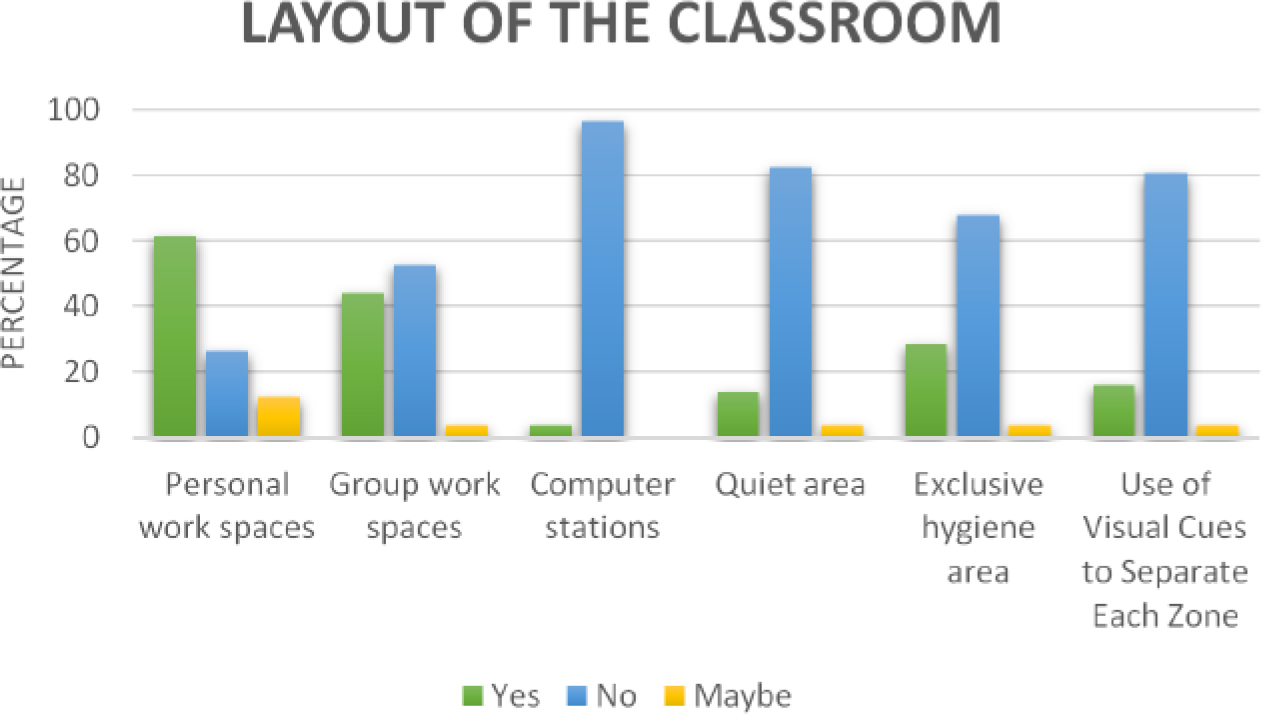
Figure 1.
Graph Showing Layout of The Classrooms (Authors, 2023)
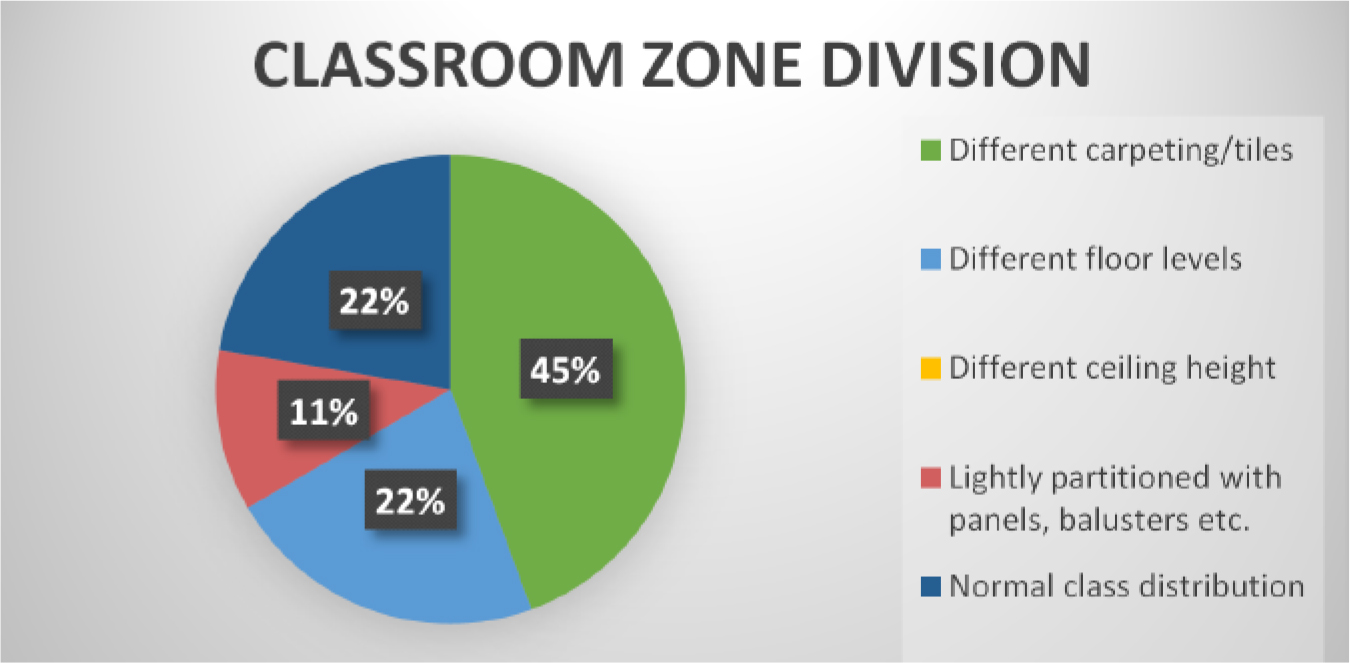
Figure 2.
Pie Chart Showing Classroom Zone Division (Authors, 2023)
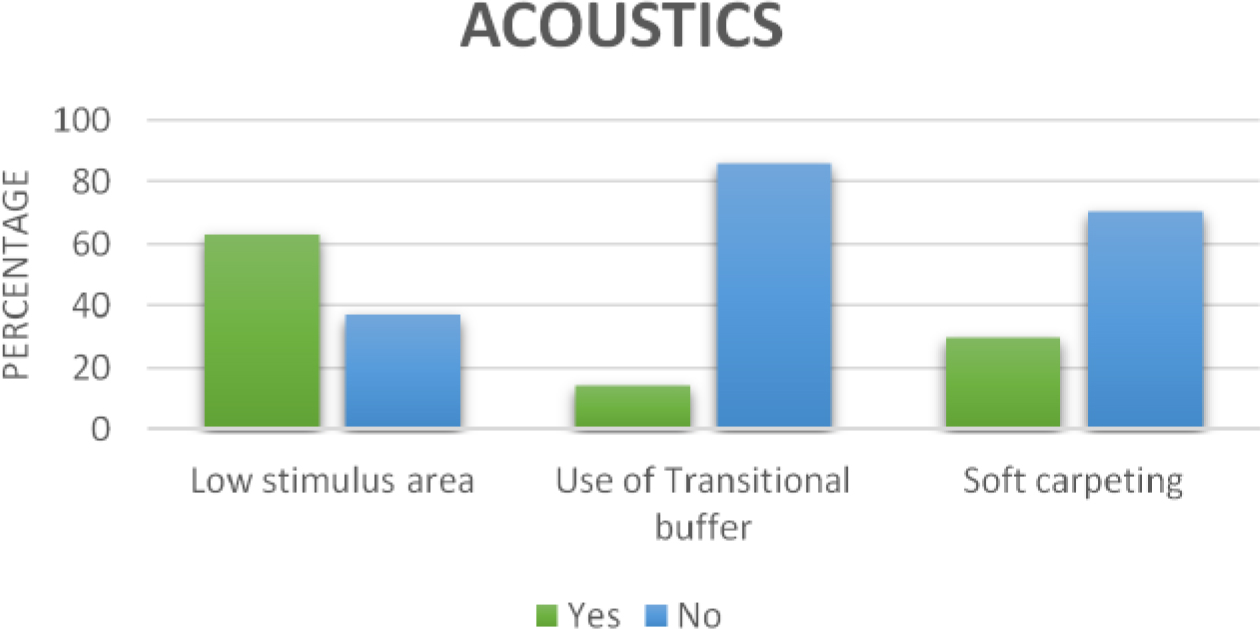
Figure 3.
Graph Showing Acoustical Quality of The Classroom (Authors, 2023)
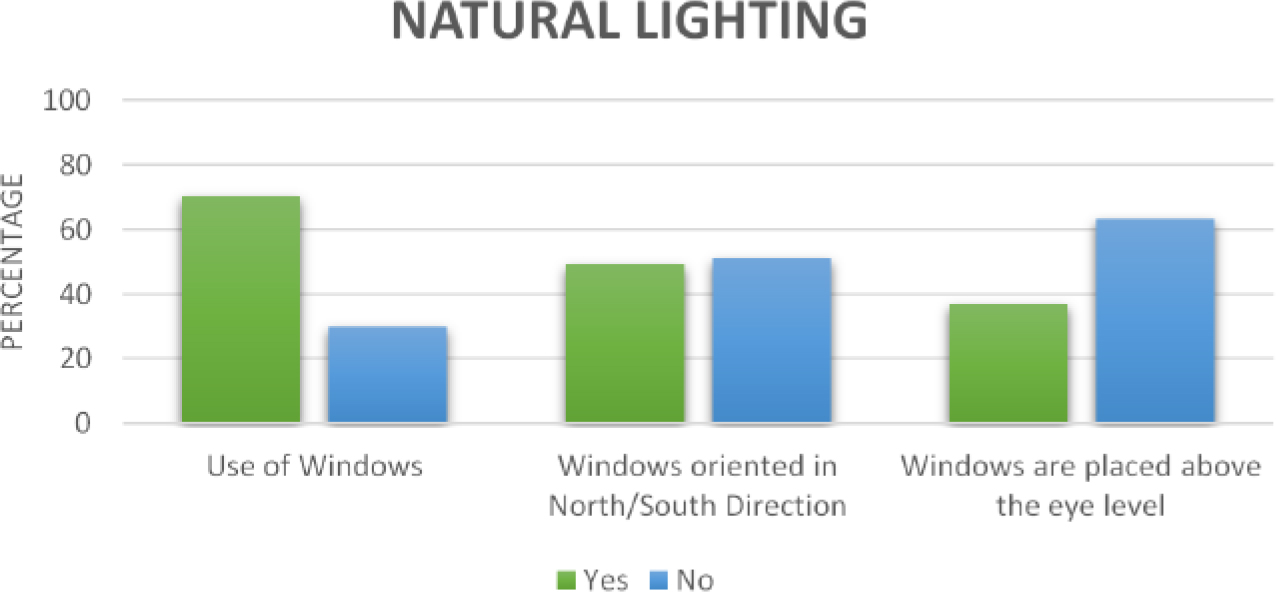
Figure 4.
Graph Showing Factors Affecting Natural Lighting (Authors, 2023)
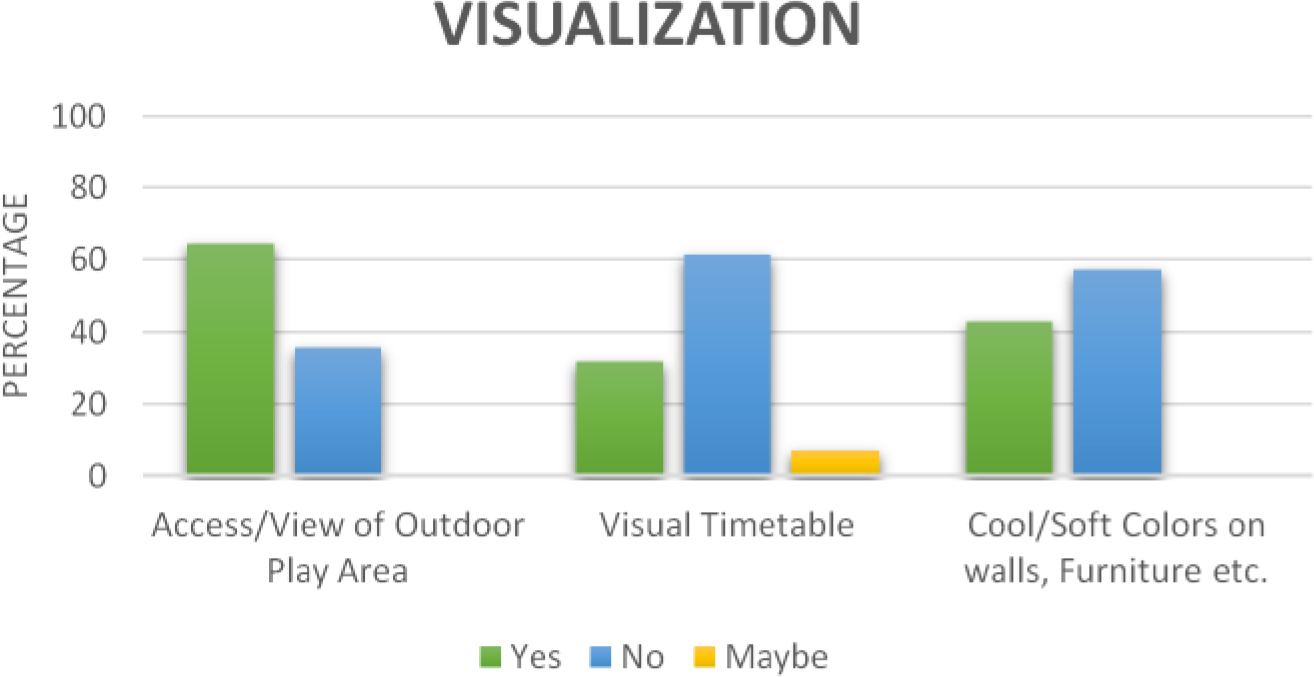
Figure 5.
Bar Graph Showing Visualization (Authors, 2023)
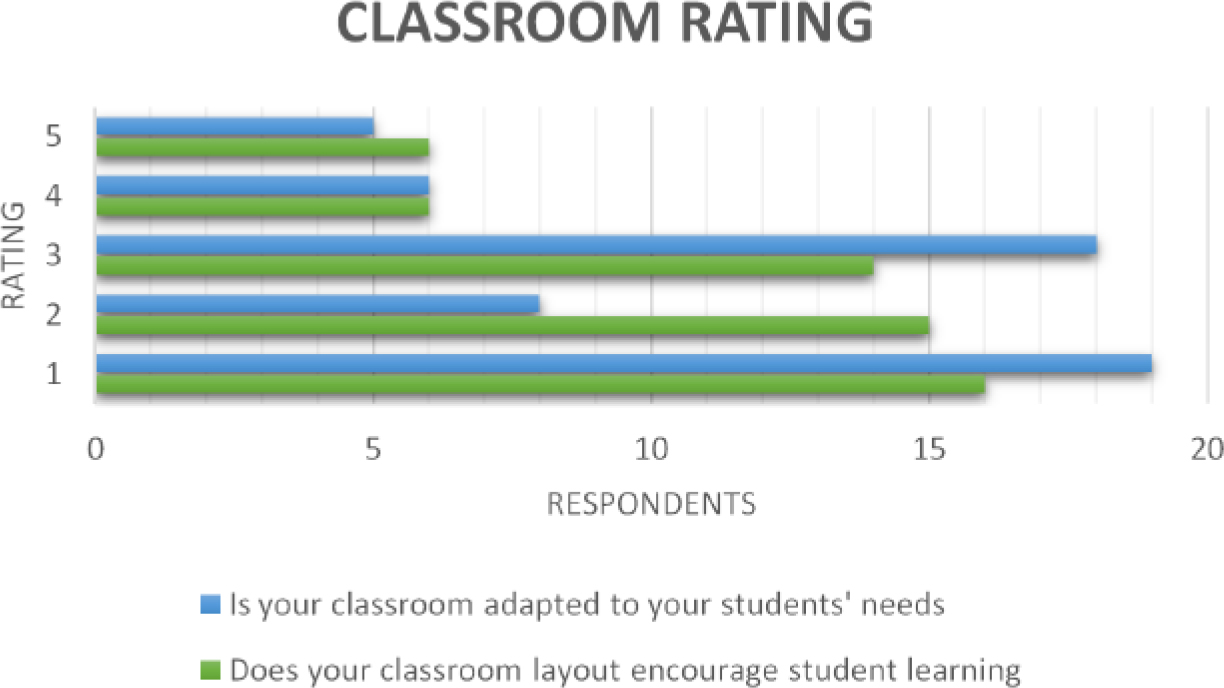
Figure 6.
Bar Graph Showing Teachers’ Ratings of Their Classroom (Authors, 2023)
4.1.2. Acoustics
In this section, we analyzed some of the features that improve the acoustical quality of the classroom. From the figure below, 63.2% of the classrooms are located in low stimulus areas, away from sources of background noise such as cafeterias or assembly halls. This is a positive aspect as it reduces potential distractions and contributes to a more conducive learning environment, particularly for autistic students who may be sensitive to noise. However, 86% of the classrooms do not have a transitional buffer at the entrance, such as a cloakroom or seated area that is lightly partitioned. This buffer could help maintain the calmness of the room by preparing students as they enter. Furthermore, only 29.6% of the classrooms used carpets and soft furniture to reduce echo and background noise, which are important acoustical considerations.
4.1.3. Natural Lighting
The figure below presents the quality of natural lighting in the classrooms. It was found that 70.2% of the classrooms relied on sunlight through windows, which is favorable as natural light has been associated with improved well-being and focus. Additionally, 49.1% of the classrooms had windows facing the north/south direction to prevent direct sun rays that could disrupt the students, ensuring a more comfortable learning environment. However, only 36.8% of the classrooms had windows placed above the students’ eye level, which can help optimize the distribution of natural light within the classroom and reduce distractions. These findings highlight the importance of incorporating natural lighting in classroom design to create a visually comfortable and stimulating environment for autistic students.
4.1.4. Visualization
This section focuses on visual characteristics that contribute to how students perceive their classroom. From the data, 64.3% of the classrooms have access to or a view of an outdoor play area, which helps motivate students by creating a fun and playful atmosphere. Additionally, 31.6% of the classrooms use visual timetables, aiding students in predicting and preparing for future activities, promoting structure and routine. However, 57.1% of the classrooms do not use cool/soft color paint on walls and furniture. The use of calming colors can create a more comfortable environment, making the classroom visually soothing for autistic students. Incorporating such visual elements can enhance their overall learning experience.
4.2. Classroom Rating
In this section, teachers were asked to rate the effectiveness of their classrooms in teaching autistic students using a linear scale of 1 to 5, where 1 represents “strongly disagree” and 5 represents “strongly agree”. The results show that a significant number of teachers rated their classrooms poorly. When asked if their classroom was well suited to their students’ needs, forty-five out of fifty-six respondents gave a rating of three or lower. Similarly, when asked about the suitability of the classroom layout for student learning, forty-five out of fifty-seven respondents also rated it three or lower. These findings indicate that many teachers are dissatisfied with the quality of their classrooms. Some respondents even called for financial support to equip their classrooms with necessary tools, such as computers, to improve their students’ learning experience. This underscores the critical need for adequate resources and support to enhance the design and functionality of ASD classrooms.
5. DISCUSSION
The findings of this study suggest that while some aspects of classroom design for preschoolers with Autism Spectrum Disorder (ASD) are being implemented in Turkey, significant gaps remain in addressing the full range of these students’ needs. Below is a detailed discussion of the results.
5.1. Prioritization of Classroom Design Improvements
The results of this study highlight the need to approach classroom design improvements strategically, focusing on areas that will have the most immediate and significant impact on the learning environment for preschoolers with Autism Spectrum Disorder (ASD). Addressing the most critical gaps first ensures that the fundamental needs of both students and teachers are met.
A hierarchy of priorities can be established based on the frequency and severity of the deficiencies observed. High priority improvements that directly influence the daily comfort, sensory regulation, and interaction opportunities for students should be addressed with urgency. These changes would help alleviate the most pressing challenges faced by teachers in delivering effective education and by students in navigating and engaging with their environment.
Once the most critical aspects have been addressed, moderate or secondary improvements that enhance the overall classroom experience should follow. These refinements will further optimize the learning environment but may not be as immediately essential to daily functioning. Finaly, more general and lower priority enhancements can be made to fine-tune the classroom environment, ensuring that it is as conducive as possible to both academic and developmental progress for children with ASD.
5.2. Gaps in Current Classroom Design
The absence of group work zones, quiet areas, and computer stations in over 90% of the classrooms points to critical deficiencies in promoting both social interaction and independent work for students with ASD. These features are essential for fostering a well-rounded learning experience. The lack of quiet spaces in over 80% of the classrooms is particularly concerning, given the sensory sensitivities common among children with autism. Without a designated area where students can retreat to calm down, sensory overload can significantly disrupt learning.
5.3. Visual Cues and Acoustic Design
Visual cues and acoustic considerations are critical for helping autistic students navigate their environments. However, the data show that more than 80% of the classrooms do not utilize visual cues to separate different zones, and 70% of the classrooms lack proper acoustic treatments such as carpets or soundabsorbing materials. The use of visual cues helps students understand the function of each area, while proper acoustics reduce distractions, both of which are necessary for creating a conducive learning environment. The limited use of these features suggests that more attention needs to be paid to incorporating them into classroom designs.
5.4. Natural Lighting
The results show that 70.2% of classrooms rely on natural sunlight, which is beneficial for the well-being and focus of students with ASD. Natural light has been associated with reducing stress levels and enhancing concentration, making it a positive feature in the majority of classrooms. However, only 49.1% of classrooms have windows positioned in a north/south orientation to prevent direct sun exposure, and about 60% of classrooms have not placed windows above students’ eye level, which could help optimize lighting and minimize distractions. While the general use of natural light is commendable, improvements in window placement could further enhance its benefits by reducing glare and distractions, creating a more comfortable and conducive learning environment for students with sensory sensitivities.
5.5. Correlation Between Design Features and Teacher Satisfaction
A significant interdependence was found between the presence of certain design features and teacher satisfaction. Classrooms with designated personal workspaces, natural lighting, and quiet areas received higher ratings from teachers, while those lacking group work zones and computer stations were rated poorly. This suggests that classrooms incorporating more ASD-friendly design principles tend to be more effective in supporting the needs of students with ASD. The dissatisfaction expressed by teachers underscores the need for increased investment in these critical areas.
6. CONCLUSION AND RECOMMENDATIONS
In conclusion, this study aimed to assess user needs in classroom design criteria for preschoolers with autism spectrum disorder (ASD) in Turkey, and highlight areas where improvements are needed to better support autistic students’ learning and well-being. The findings of the study show that the current classroom designs in Turkey do not sufficiently address the needs of children with strong ASD.
It is important to prioritize the layout of ASD classrooms, which plays a crucial role in facilitating both individual and group activities. Group work zones and designated computer stations, which promote social interaction and collaborative learning, were often lacking in many classrooms. This lack of resources significantly impacts autistic students’ ability to engage in both independent and social learning activities. These shortcomings suggest a high-priority need for schools to invest in technology and create inclusive workspaces.
Another high-priority issue is the absence of designated quiet areas and exclusive cloakrooms for personal hygiene. These features are critical for addressing the unique sensory and personal care needs of autistic students. Without these, students may struggle with concentration and comfort, which directly affects their ability to learn.
On a moderate level of importance, acoustic quality and natural lighting also showed significant gaps. Many classrooms lacked proper acoustic treatment, such as transitional buffers, carpets, and soft furniture, which could reduce echo and background noise. Additionally, while classrooms often relied on sunlight, the positioning of windows was suboptimal in most cases, affecting the lighting conditions that are essential for creating a calm and focused learning environment.
Additionally, the teachers’ dissatisfaction with classroom conditions reflects a broader systemic issue. Many classrooms were rated poorly by teachers in terms of suitability for autistic students’ needs, highlighting the need for financial support to improve classroom facilities. Addressing this gap through financial investments in classroom infrastructure should be seen as a key area of focus for educational policymakers.
It is essential to address the critical, moderate, and lower-priority gaps in classroom design to create environments where autistic children can thrive both academically and emotionally.
The following recommendations should be prioritized to ensure that classrooms meet the unique needs of students with ASD:
High Priority Needs
According to the findings, more than 90% o the classrooms that were assessed need to implement the following:
Increase group work zones and computer stations.
Provide quiet areas and exclusive cloakrooms for personal hygiene.
Increase financial support to equip classrooms with necessary learning tools, including computers.
Moderate Priority Needs
The data shows that about 80% of the classrooms need to establish the following:
Use visual cues to organize spaces and reduce sensory overload (e.g., by minimizing echo and background noise).
Optimize natural light sources by better positioning windows.
Lower priority but Necessary Needs
The results show that nearly 60% of the classrooms need the following recommendations:
Provide more access to outdoor play areas.
Place windows above the students’ eye level
Windows need to be placed in the north/south direction
By following this structured approach, schools and policymakers can allocate resources efficiently, prioritizing the most impactful changes first, which directly improves daily classroom function for both students and teachers. This ensures that immediate needs are addressed while laying the foundation for further enhancements as resources become available. Focusing on high-priority areas first allows for measurable progress, while moderate and lower-priority improvements can be implemented gradually, ensuring sustainable, long-term development of classroom environments that better support the needs of children with Autism Spectrum Disorder (ASD).