
1. Introduction
Professional titles do not make one a leader, but one’s actions do. Whether one is a nursing student or a nurse manager, they can both lead and create change in their ways. Northouse formally defines leadership as “a process whereby an individual influences a group of individuals to achieve a common goal”1 (p.3). Leaders play a vital role in shaping an institution’s culture, motivation, tolerance, values, and strategies.2 In this paper, the authors define a leader as an individual who significantly influences others to achieve shared goals, even in the absence of formal authority.1–3
Nurses in all roles are expected to demonstrate leadership behaviors as required by professional nursing standards.4 These leadership practices can be applied by nurses in contexts relating to their patients, colleagues, other members of the healthcare team, students, and mentees. The College of Registered Nurses of Alberta (CRNA) has outlined the competencies necessary for both entry-level and practicing registered nurses to achieve. As stated in the document, “Registered nurses are leaders who influence and inspire others to achieve optimal health outcomes for all”5 (p.11). Leadership is one of the competencies that will equip nurses to provide safe, competent, ethical, compassionate, and evidence-informed care in a variety of practice settings.
It has long been established that nursing leadership has profound impacts on healthcare organizations, workforce, and patients.6 Alloubani et al.2 found that a transformational nursing leadership style was positively correlated with better job satisfaction, nurses’ work enthusiasm, and quality of nursing care. Leadership practices that foster a healthy work environment for nurses can ultimately lead to improved patient experiences and outcomes.4 Even bedside nurses without formal leadership titles can directly impact patient outcomes by identifying areas for improvement in advocating for patients and families, encouraging their colleagues to act on patient care, and taking the lead in initiating change in their daily clinical practice.7,8
2. Methods
This study employed a qualitative, narrative-reflection approach to explore nursing students’ experiences in implementing the Registered Nurses’ Association of Ontario (RNAO) Best Practice Guidelines (BPGs) on Developing and Sustaining Nursing Leadership. Data were drawn from structured reflective narratives based on real clinical and academic activities, volunteered by senior nursing students in their final year of training.
In this paper, the authors reflect on their usage of the second edition of the RNAO BPG Developing and Sustaining Nursing Leadership. The guideline, which was first published in 2006 and later updated in July 2013, provides a comprehensive approach to leadership. It is one of the 9 BPGs under the healthy work environments category to provide the best available evidence to support the creation of healthy and thriving work environments for nurses.4 The purpose of this guideline is to assist nurses in performing both formal and informal leadership roles by identifying and describing evidencebased leadership practices that nurses can implement individually and collectively.
RNAO used the Conceptual Model for Developing and Sustaining Leadership (see Figure 1) as a guiding framework in the discussion of recommendations to help identify leadership practices and organizational and personal resources essential to healthy work environments. At the core of this model are 5 evidence-based “Transformational Leadership Practices” that can help pave the way for a healthy work environment. The other components of this model are the “Organizational Supports” and “Personal Supports,” which are key determinants to the successful implementation of leadership practices and fulfillment of leadership roles. Keeping this model in mind will facilitate the understanding and application of the guideline recommendations, which are in statement forms of what leaders do or how they behave in situations where leadership is applicable.4
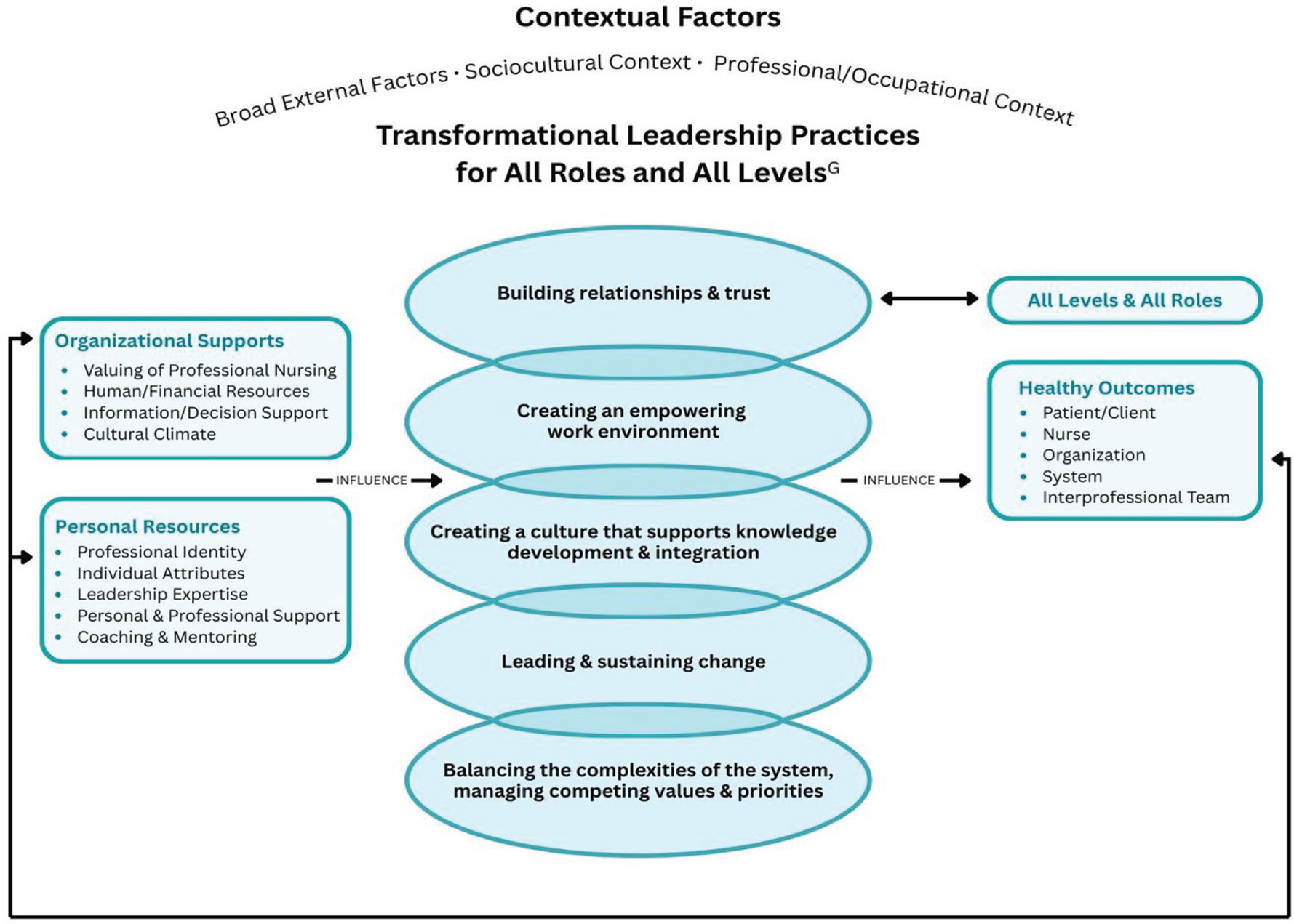
Figure 1.
Recreated version of the conceptual model for developing and sustaining leadership4 (p.16).
To ensure qualitative rigor, strategies such as member checking, triangulation across multiple reflections, and maintaining detailed audit trails were employed. Credibility was enhanced through peer debriefing and review by faculty mentors. Dependability and confirmability were ensured through transparent documentation of reflections and thematic validation achieved through consensus among the research team.
Ethical considerations were observed: reflections involved personal professional experiences without direct patient identifiers, thus formal ethics board approval was not required.
2.1. Theoretical framework
The leadership strategies applied in this study are grounded in transformational leadership theory, which emphasizes individualized consideration, inspirational motivation, intellectual stimulation, and idealized influence.9 Transformational leadership is highly aligned with the RNAO BPG’s focus on empowering nurses to lead change, foster healthy work environments, and inspire collaboration.
In addition, emotional intelligence theory plays a significant role, particularly in conflict resolution and trust-building processes described in the students’ reflections. Emotional intelligence, involving self-awareness, self-regulation, social skills, empathy, and motivation, is fundamental to effective nursing leadership and supports the BPG’s recommendations for fostering respectful, team-based environments.10
The RNAO BPG for Developing and Sustaining Nursing Leadership aligns closely with the International Council of Nurses (ICN) Nurse Leader Competencies. Both frameworks emphasize key leadership principles such as advocacy, ethical decision-making, and collaboration. For instance, both RNAO and ICN stress the importance of nurse leaders advocating for patients, colleagues, and profession. RNAO’s guidelines highlight the role of nurse leaders in promoting healthy work environments and patient outcomes.11 Similarly, ICN competencies underscore the need for nurse leaders to advocate for health policies that benefit patient care and the nursing profession.12 Ethical practice is another cornerstone of both RNAO and ICN guidelines. RNAO emphasizes evidence-based leadership practices that ensure ethical care delivery.11 ICN competencies also focus on ethical decision-making, requiring nurse leaders to uphold professional standards and integrity in their practice.12 Collaboration is another shared focus. RNAO guidelines advocate for teamwork and interprofessional collaboration to enhance patient care and work environments.11 ICN competencies similarly highlight the importance of collaborative leadership, encouraging nurse leaders to work effectively within multidisciplinary teams.12
Additionally, the RNAO BPGs are consistent with other global leadership frameworks. For example, the American Association of Colleges of Nursing (AACN) Essentials (2021) prioritize competencies in communication, systems leadership, and interprofessional collaboration, underscoring the broader relevance of leadership development strategies outlined in the RNAO guideline.13 By situating the RNAO BPG within these established leadership frameworks, the study strengthens its theoretical grounding and highlights the international applicability of its findings to diverse educational and clinical contexts.
The effectiveness of the RNAO’s Best Practice Guidelines (BPGs) in educational and clinical practice settings has been demonstrated through various evaluations. A case study by Lefebre, et al.14 illustrated how the implementation of the RNAO’s Developing and Sustaining Nursing Leadership guideline led to measurable positive outcomes within a community healthcare organization. Specifically, 100% of supervisors who participated in a transformational leadership workshop based on the guideline reported that the information was useful, relevant, and applicable to their workplace practices. Additionally, organizational assessments showed improvements in perceived management support, employee engagement, and the creation of a stronger learning environment. These successes contributed to the organization being recognized as one of the 50 Best Employers in Canada. This evidence supports the view that RNAO’s BPGs are effective tools for enhancing leadership competencies, promoting healthy work environments, and fostering sustainable improvements in healthcare education and practice settings.14
One limitation of this study is the potential bias introduced by conducting research within a single institution. This can lead to findings that are not fully representative of broader nursing education and practice environments. Single-institutional studies may reflect specific organizational cultures, policies, and practices that are unique to that institution.15 This can limit the generalizability of the results to other settings, where different factors may influence the implementation and effectiveness of leadership guidelines.16 To enhance the generalizability of the findings, future research should consider multicenter studies. Multicenter trials involve multiple institutions, providing a more diverse participant pool and a broader range of data.17 This approach can help mitigate the bias associated with single-institution studies and offer more robust, widely applicable insights into the effectiveness of RNAO BPGs in various educational and clinical settings.17 By acknowledging these limitations and suggesting multicenter studies, the research can provide a more comprehensive understanding of the applicability and impact of RNAO guidelines across different contexts.
3. Results
The following section presents 3 case summaries that describe how the authors applied the recommendations from the RNAO BPG Developing and Sustaining Nursing Leadership to real-life examples. The first case overview consists of a personal narrative by one of the authors based on her experience in the clinical setting. The second case overview details the collaborative insights that the authors gained from their involvement in the RNAO Inaugural Student-Led Academic Best Practice Spotlight Organization (BPSO) Conference. The third and last case overview presents a personal reflection from one of the authors that demonstrated her application of the RNAO BPG on Breastfeeding in a clinical setting.
3.1. Case overview 1
A specific instance during one of the author’s clinical rotations at the maternity unit highlights the practical application of the RNAO BPG in overcoming workplace challenges and fostering a healthy work environment. During the maternity rotation, she encountered difficulties with a nurse who refused to allow her to participate in clinical tasks, leaving her feeling vulnerable and unsupported. After requesting a change to another nurse, the charge nurse reported to her clinical instructor that the author or nursing student was behaving rudely, which escalated tensions in the unit. She has encountered constant criticism in front of colleagues and patients for minor mistakes. For example, the nursing student unintentionally left a hospital stethoscope in a patient’s room, which led her buddy nurse to react harshly, resulting in a heated confrontation.
Additionally, the author experienced instances of bullying when she sought clarification on patient care matters, leaving her feeling undermined and questioning her knowledge and abilities. Seeking guidance, the nursing student consulted her professors, who suggested apologizing and avoiding further escalation. However, feeling unconvinced, she turned to the RNAO BPGs for evidence-based approaches to conflict resolution and leadership behaviors. These guidelines emphasized the importance of building trust and fostering relationships in the workplace. Specifically, they highlighted strategies for acknowledging and addressing broken trust, which resonated with the author’s situation.
Following these recommendations, she approached the nurse to discuss the incident, expressing her perspective and seeking to understand the nurse’s concerns. Through this conversation, the nursing student discovered that the nurse’s reaction stemmed from personal stress and feelings of inadequacy when the nursing student was reassigned to another nurse. Acknowledging the mutual mistakes and openly communicating allowed them to resolve the tension and rebuild a professional relationship. Additionally, the author adopted conflict management practices outlined in the BPGs, such as exploring alternative solutions, practicing effective dialogue, and building resilience. This experience demonstrated how RNAO’s leadership-related BPGs can empower nursing students to navigate challenging interpersonal dynamics, transform negative situations, and contribute to a healthier work environment.
3.1.1. Key approaches and frameworks utilized in clinical practice
The evidence-based leadership frameworks in clinical practice that were adopted in the previous reflection navigate interpersonal and professional challenges, particularly focusing on fostering trust and repairing it when broken. One of the resources relevant to this reflection is a structured table from RNAO BPG4 that outlines the dynamics of trust, including how it can be lost and the steps to rebuild it effectively (p.30). This tool has been instrumental in helping to understand the nuances of trust and implement actionable strategies in real-life scenarios.
3.1.2. Applying trust-building recommendations
To address situations where trust has been compromised, several key recommendations from the conceptual model for developing and sustaining leadership,4 were implemented (p.30). These include as follows:
Acknowledging the Breach: Recognizing and openly addressing a breach of trust is a crucial first step. For example, in a specific situation, formal communication was initiated with the nurse to express concerns about the lack of support and the resulting impact on the professional relationship within the unit.
Identifying Root Causes: The author reflected on the specific circumstances that led to the breach of trust and sought to understand the underlying causes. This included considering the author’s contributions to the situation, acknowledging that she might have made mistakes, and reframing these as opportunities for growth and learning.
Demonstrating Accountability and Transparency: Despite her efforts to approach the issue constructively, the nursing student encountered public criticism and felt attacked, which further strained the professional relationship. However, she remained committed to fostering a culture of openness and mutual understanding by continuing to seek solutions collaboratively.
3.1.3. Practical application of a core competency
In addition to trust-building strategies, specific behaviors aligned with leadership core competency (1.1.2) were also applied in practice4 (p.32). For example:
Seeking and Acknowledging Multiple Perspectives and Opinions: An intentional effort was made to engage with various team members to gain a broader understanding of the situation and ensure that all voices were heard. Instructors were also included to provide additional insight into the situation. This approach demonstrated respect for diverse viewpoints and promoted collaborative problem-solving.
Sharing Knowledge of System Issues and Problems Openly and Honestly: The nursing student consistently communicated the systemic challenges and barriers that may have contributed to the issue, fostering an environment where team members could discuss these openly without fear of judgment. While this approach has the potential to either escalate or de-escalate tensions, in the author’s situation, it fostered a culture of learning and accountability. This outcome was largely due to the application of conflict management strategies recommended in the RNAO BPGs.
3.1.4. Applying conflict management strategies
Effective conflict management is a critical leadership skill for nursing students, particularly when faced with challenging situations such as workplace bullying or consistent criticism. Drawing on strategies from the RNAO BPGs, specifically from the conceptual model for developing and sustaining leadership,4 the author has applied a structured approach to de-escalate conflict and promote a positive, collaborative working environment (p.36):
Encouraging Open Dialog and Exchange of Ideas: To address the situation, the nursing student initiated a professional, private discussion with the nurses involved. This created an opportunity for open dialog by expressing her concerns calmly and respectfully. Also, this approach allowed the student to share her feelings about the constant criticism and its impact on her performance while also giving the nurses an opportunity to express their perspectives. By fostering an environment where ideas and feelings could be exchanged freely, a cultivated mutual understanding and trust was achieved.
Practicing Skills of Dialog: During these discussions, the nursing student employed active listening and clear, non-defensive communication techniques. For instance, when she received public criticism, she responded with, “I appreciate your feedback, and I am committed to improving. Could we discuss specific ways I can enhance my practice in a supportive manner?” This approach demonstrated emotional intelligence and accountability while encouraging constructive feedback rather than public confrontation.
Seeking Support and Alternative Resolutions: When the situation persisted, the nursing student recognized the importance of seeking guidance from trusted mentors and clinical instructors. Their external perspectives provided her with tools to navigate the situation objectively and reinforced strategies for conflict resolution. By involving outside sources, when necessary, it was ensured that the issue was addressed in a supportive and professional manner.
3.1.5. Impact and outcomes
The professional growth the author has experienced extended far beyond mastering clinical skills; it encompassed the development of essential leadership competencies that have had a profound impact on both her practice and the unit environment. These leadership skills have led to several key positive outcomes:
Improved Relationships and Team Dynamics: By addressing conflict proactively and respectfully, the author observed a noticeable improvement in my relationships with other nurses at the unit. Open communication helped break down barriers, reduced tension, and created a more collaborative and supportive work culture where she personally felt heard and valued.
Enhanced Communication Skills: The author gained confidence in expressing her thoughts, concerns, and perspectives in a professional and constructive manner. This improvement not only helped resolve conflicts but also enhanced her ability to advocate for herself, patients, and the team.
Personal Resilience and Emotional Intelligence: Navigating these challenges helped the author develop greater emotional intelligence and resilience. She learned to manage her own emotions, respond to criticism objectively, and remain composed under pressure, skills that are essential for professional growth and future leadership roles.
Leadership Skills Applicable Beyond Clinical Setting: The leadership abilities that the author developed such as conflict resolution, active listening, and accountability extend far beyond the clinical environment, proving invaluable in various professional and interpersonal contexts. These experiences have strengthened her confidence and adaptability, and they will continue to shape her career as a champion in the implementation of leadership-focused BPGs.
3.1.6. Reflections on lessons learned
This experience provided valuable insights into the complexities of interpersonal dynamics within the clinical setting and highlighted the importance of leadership in fostering a positive, respectful environment. One key lesson identified was that conflict, when approached constructively, can serve as a catalyst for growth, improved communication, and stronger professional relationships. The importance of proactive communication and addressing issues early before they escalate was also recognized. Delaying conversations or avoiding difficult topics can often intensify conflict. Moving forward, the author or nursing student plans to prioritize open, timely communication as a core strategy to maintain healthy team dynamics and prevent misunderstandings. Additionally, the nursing student learned that self-awareness and emotional regulation are crucial in conflict management. Reflecting on her own reactions allowed her to remain calm and focused on solutions rather than becoming defensive. In the future, the nursing student will continue to build on these skills by practicing mindfulness and active listening during challenging interactions.
Another significant insight was the need to balance accountability with compassion when providing and receiving feedback. While constructive criticism is vital for growth, delivering it in a supportive, private, and solution-focused manner is equally important to maintain trust and morale. The author will recommend this approach to colleagues and practice it consistently when engaging with peers or team members. Furthermore, the realization of the value of seeking mentorship and guidance when faced with situations is beyond a nursing student’s immediate experience. Consulting clinical educators, preceptors, or trusted colleagues provided the student with fresh perspectives and actionable strategies. Moving forward, the student will continue to lean on these resources to navigate professional challenges more effectively. While clinical skills are extensively taught and supported through a variety of resources, the development of soft skills such as emotional intelligence and effective communication often receives less attention. The nursing student has come to appreciate that while clinical competencies can be refined over time, leadership skills require early development and consistent practice to truly flourish. Building these skills early is essential, as they are integral to navigating complex healthcare environments and fostering collaborative relationships. Mastering leadership abilities equips nursing students to grow holistically, empowering them to become well-rounded and effective healthcare professionals capable of driving positive changes in their future roles.
3.2. Case overview 2
Nursing leadership can come in many forms. Even as a student, one can begin to cultivate leadership qualities that will enable them to lead as future nurses. One example where the authors exemplified the leadership recommendations in the RNAO BPG is through their participation in the RNAO Inaugural Student-Led Academic BPSO Conference held on November 18, 2024. The conference was held virtually and was open for all international nursing students, faculty, working nurses, and academic advisors to join. The event featured participation from 10 countries including Canada, Chile, China, Colombia, Jamaica, Mexico, Philippines, Portugal, Qatar, and Spain. The goal of the conference was to enhance participants’ knowledge of providing safe, competent, compassionate, and evidence-based care with the help of RNAO BPGs. The key themes explored included (1) leadership roles for students within academic settings and professional practice, (2) understanding and application of BPGs, (3) the principles of patient-centered care, and (4) cultural safety in a global context.
3.2.1. Practical application of core competencies
The following examples describe how the authors applied the core competencies aligned with Leadership Practice Recommendation (1.3):
1) Core competency (1.3.3) states that “Nurse leaders create environments where communication is open, and teamwork and the contribution of others’ knowledge is valued”4 (p.45). One of the authors was able to demonstrate this competency as a member of the student planning committee and the co-lead for the marketing team. Through her experience of working with an international group of nursing students, she utilized leadership practices and skills that helped promote equity, diversity, and inclusion (EDI) in the group by taking into consideration the multilingual diversity of the participants, respecting personal and cultural preferences, and advocating for a conference that is free and accessible for all.
2) Core competency (1.3.1) states that “Nurse leaders foster norms and practices that support broad participation in knowledge development, sharing, and dissemination”4 (p.44). This was exemplified by 2 of the authors when they presented about: “The Impact of Best Practice Guidelines on Nursing Student Success.” They provided unique insights as student representatives from Qatar when they led the discussion on the challenges being faced by new graduate nurses in transitioning to the nursing profession and how to apply leadership-related BPGs to clinical practice. The context of their presentation focused on the benefits and critical role of RNAO BPGs in enhancing nursing practice and patient care. The presentation aimed to address the challenges faced by new graduate nurses, particularly the transition shock resulting from the gap between academic preparation and real-world clinical practice. By emphasizing the application of BPGs, the discussion highlighted how these guidelines help nurses build a strong foundation in evidence-based practices, ensuring consistent, high-quality care, reducing errors, and improving patient outcomes. Additionally, the presentation explores the impact of leadership-related BPGs in empowering nursing students to adopt evidencebased leadership behaviors, creating healthier work environments, building trust, improving productivity, and effectively managing workplace conflicts. The audience included nursing students from diverse countries, educators, and advocates for evidencebased practices, making the presentation highly relevant as it shares actionable strategies, real-world examples, and recommendations to encourage the adoption of RNAO BPGs, ultimately aligning nursing practices with high standards for safer and more effective care.
3.3. Case overview 3
This section presents a personal reflection from one of the authors, demonstrating the application of the RNAO BPG on Breastfeeding—Promoting and Supporting the Initiation, Exclusivity, and Continuation of Breastfeeding in Newborns, Infants, and Young Children in a clinical setting.18 This experience highlights how nurse leaders embody professional identity through evidence-based decision-making and patient advocacy.
Effective nursing leadership extends beyond formal roles and titles; it involves initiative, informed decisionmaking, and empowering both patients and colleagues. During a clinical encounter, a first-time mother struggling with breastfeeding was discharged the following day, limiting her access to breastfeeding support services. With unit nurses occupied, proactive intervention was necessary to address the mother’s concerns.
3.3.1. Application of personal recommendation (2.1)
Applying RNAO BPG recommendations, evidencebased techniques were implemented, including skin-to-skin contact, proper positioning, and colostrum expression methods.18 A key moment arose when the mother expressed a misconception, believing that covering the baby’s mouth with a tissue would prevent gas buildup. Additionally, concerns about the thick yellow color of colostrum highlighted the need for patient education. By clarifying these misconceptions, confidence was restored, and successful breastfeeding initiation was achieved.
This experience highlighted the importance of self-reliance, adaptability, and resourcefulness in nursing leadership. Relying on evidence-based guidelines as a nursing student instead of delaying for lactation consultant support ensured timely and effective patient-centered care. This proactive approach enhanced clinical efficiency, reinforced confidence in applying theoretical knowledge, and demonstrated how BPGs serve as a foundation for high-quality nursing practice.
Nursing leadership is not just about managing teams, it involves stepping up to deliver patient-centered care in challenging situations. By integrating evidence-based practice into real-world decision-making, this experience exemplifies how nurses drive quality care, strengthen professional autonomy, and advance best practices in healthcare.
3.4. Strategies to facilitate the application of the BPG into practice
The authors employed strategies that allowed them to better apply the recommendations of the BPG and laid the foundation for them to become effective nursing leaders. The strategies include the following:
1) Utilizing a patient-centered approach: To implement the BPG effectively, one of the authors adopted a patient-centered approach, assessing the mother’s understanding and tailoring the education to her concerns. By combining evidencebased information from the BPG with her theoretical knowledge and skills, she ensured the information was presented clearly and practically.
2) Mentorship: The authors actively sought guidance from experienced nursing leaders, professors, or preceptors who modeled leadership behaviors and provided them with constructive feedback. By consulting with mentors, they were able to gain much needed encouragement to take on leadership roles (both formal and informal) and guidance in honing their leadership skills.
3) Peer Collaboration: The authors also worked collaboratively with their peers and colleagues in their university, in clinical, and throughout the BPSO conference. This enabled them to build a strong support network that fostered leadership development and knowledge and experience exchange.
4) Education and Reflection: As nursing students, the authors understood the significance of reflective practice in strengthening their leadership competencies. They also engaged in continuous learning, including reading the literature and relevant resources on nursing leadership and joining upskilling and educational seminars (e.g., interprofessional education activities), which were integral to their personal and professional growth.
3.5. Challenges faced
When applying the recommendations of the RNAO BPG for Developing and Sustaining Nursing Leadership, the authors faced a variety of challenges. These challenges were related to personal, professional, or organizational factors. Below are some of the key challenges:
Limited Scope of Practice: One significant barrier was the difficulty of applying certain recommendations due to policy restrictions or the limitations of a nursing student’s scope of practice. For example, while the authors could provide education and hands-on support to the patient, interventions requiring specialized authorization were beyond their scope.
Resistance to Change: The authors encountered some resistance to leadership strategies and changes from fellow students, preceptors, and those in formal leadership roles (e.g., charge nurse, head nurse, clinical nurse leaders, nurse managers) who are used to existing practices. Oftentimes, they felt that their voices were not being heard and that their opinion did not matter. This type of environment can hinder both organizational and personal growth, innovation, and improvement.
Limited Understanding of the Broader Organizational Context: The BPG emphasizes understanding the organizational structure, culture, and systems within healthcare settings. As students, the authors still lacked experience and the knowledge to understand how their actions as leaders fit into the larger organizational framework. Their limited understanding led them to feel as though the education, organization policy, and structural recommendations under the BPG on Leadership were not relevant and applicable to their case.
Cultural and Structural Barriers: Institutional hierarchies, cultural norms, language barriers, and power dynamics also became significant barriers for the authors to apply their leadership skills into practice. In some clinical settings, the authors faced challenges in asserting themselves as leaders and in promoting collaborative team environments. These barriers hindered the authors’ opportunities to lead effectively and to challenge the status quo.
3.6. Successful outcomes
Despite the challenges faced by the authors in applying the BPG into practice, they were able to witness successes that were a testament to their commitment to fostering leadership abilities. These successful outcomes include as follows:
1) Provision of High-Quality Patient Care: In one specific instance, utilizing the guidelines not only improved the mother’s breastfeeding experience but also reinforced the student’s confidence in decision-making. By addressing misconceptions and providing clear, evidence-based guidance, the student was able to deliver high-quality care tailored to the patient’s needs.
2) Personal and Professional Growth: The students’ successful implementation of the BPG demonstrates the importance of resourcefulness and critical thinking in overcoming challenges. The authors independently researched and applied specific recommendations from the BPG at the right time. Quick access to the BPG and the opportunity to review its detailed theoretical knowledge were instrumental in building their confidence and ensuring accuracy in information and approach.
3) Promotion of the Use of Evidence-Based Guidelines: In the BPSO conference, the authors took on roles (i.e., planning committee members and presenters) that enabled them to promote and support the use of BPGs. As a planning committee member, one of the authors was able to facilitate the execution of the conference plan. Two of the authors were presenters and were able to foster an insightful discussion on the use of Leadership BPGs. Overall, the authors played an instrumental role in the achievement of the conference’s aim, which was to enhance participants’ knowledge of providing the best patient care using RNAO BPGs.
3.7. Recommendations to promote sustainability of leadership practices
The authors suggest incorporating evidence-based guidelines into the nursing curriculum to equip students with strategies for managing conflicts, fostering trust, and promoting healthy team dynamics. Providing real-life case studies and simulations based on these guidelines can enhance students’ understanding and application of the concepts. Rather than solely providing students with readily available BPGs, it is essential to equip them with the skills to independently search for and access these resources. Teaching nursing students how to locate, interpret, and apply evidence-based guidelines empowers them to become self-sufficient and proactive in addressing professional challenges. By integrating resource navigation into nursing education, students can develop lifelong learning habits and critical thinking skills necessary for evidence-based practice. For example, clinical educators can guide students on how to search for BPGs through platforms like the RNAO website, academic databases, and institutional resources. Another example is to have students participate in leadership simulations and role-playing exercises to build their confidence and develop leadership skills in a safe environment before applying them in real-world scenarios.
Table 1 summarizes the major themes identified through reflective narratives.
Table 1.
Major themes.
| Theme | Description |
|---|---|
| Trust-building | Strategies to repair broken trust and foster professional relationships |
| Conflict management | Skills for resolving workplace tensions through dialog and emotional intelligence |
| Leadership competency development | Building skills in communication, advocacy, and collaboration |
| Patient-centered practice | Promoting evidence-based, individualized care through leadership actions |
| Barriers and challenges | Scope limitations, resistance to change, cultural and systemic barriers |
4. Discussion
While the reflections offer deep insights, they are based on self-reported experiences and are subject to potential bias. The subjective nature of reflective writing may introduce personal biases related to memory, perception, and self-presentation. Readers should interpret the findings with an understanding of these limitations. The authors acknowledge that individual interpretation may have influenced the presentation of challenges and successes.
Additionally, although the study focuses on RNAO BPGs, the leadership principles discussed are consistent with broader international frameworks, including the ICN Nurse Leader Competencies. The alignment with these global standards emphasizes the broader relevance of the study findings across different healthcare systems, cultures, and educational contexts. This alignment suggests the relevance and adaptability of the findings to international nursing education and clinical practice contexts. To enhance generalizability, future research should incorporate multicenter studies across diverse cultural and healthcare settings.
4.1. BPG implementation among nursing students
Studies looking into the experiences of undergraduate nursing students in implementing RNAO BPGs into clinical practice are limited. The authors identified a mixed-methods study conducted with undergraduate nursing students at the University of Calgary in Qatar, which explored the students’ perceptions, knowledge, and attitudes toward RNAO BPGs. Hasnani-Samnani’s19 study revealed that only 28.2% of student participants were aware of the BPG on Developing and Sustaining Nursing Leadership. The findings also showed that less than half of the student participants were able to incorporate BPG guideline recommendations in making the care plan for their patients, which indicates that while students may have the knowledge of the BPGs, they may find it challenging to implement it in clinical practice. Barriers to using RNAO BPGs included guideline-related challenges such as the length of the document and the time it takes to read and obtain relevant information. The study participants also reported a lack of knowledge and motivation to access and navigate the guidelines. The results also revealed that the students were concerned with the applicability of some recommendations in the Middle Eastern context due to the difference in cultural practices and perspectives, specifically those related to gender norms. The research findings suggest that although students acknowledge the importance of evidence-based practice guidelines, there are barriers that must be overcome to enable them to effectively apply the BPG recommendations in their nursing practice.
4.2. Evidence supporting BPG implementation
Research indicates that implementing leadership-focused BPGs leads to measurable improvements in nursing practices. For example, a 10-year study demonstrated how sustained application of these guidelines resulted in better adherence to evidence-based practices, improved patient outcomes, and enhanced organizational efficiency.20 RNAO’s framework, complemented by tools like the Nursing Quality Indicators for Reporting and Evaluation® (NQuIRE®), provides a robust mechanism for evaluating the impact of BPGs on leadership sustainability.4 Key themes from the literature highlight the significance of stakeholder engagement, capacity building, and fostering an evidence-based culture as essential elements for the successful implementation and sustainability of guidelines.21
4.3. Trust-building
Fostering trust between leaders and nurses and providing support have been shown to positively influence nurses’ growth. In a qualitative study by Wei et al. that aimed to identify nurse leaders’ strategies to cultivate nurse resilience, the authors interviewed nurse leaders about their experiences when it came to nurturing nurses.22 Among the results of the interview, it was mentioned that nurse managers who had a caring attitude and valued building trusting relationships among their staff created a supportive environment that was conducive to nurses’ growth. Building a trusting environment has also been linked to better patient safety outcomes. Flynn et al. sought to understand the relationship of the nursing practice environment and error interception practices among nurses in acute care hospitals in the United States. The researchers found that a trusting and supportive practice environment enhanced nurses’ error interception practices, which led to reduced medication error rates.23 These studies further reinforce the importance of trust in forming a supportive and safe culture both for the nurses and their patients.
4.4. Conflict resolution
A qualitative study done by Aydogdu and Disbudak on nursing students in Turkey aimed to thoroughly investigate the students’ perspectives on conflict management in the clinical setting.24 The common causes of conflict among healthcare workers as perceived by the students include ineffective communication, absence of shared goals, role confusion, and lack of professionalism. Unresolved conflicts can negatively impact the work environment, and the healthcare professionals involved. To address these situations, staff nurses and nurse leaders employed various conflict resolution techniques, such as listening to all concerned parties and establishing a common ground. The study highlights the importance of equipping nurses with conflict resolution skills and recommends incorporating practical education on conflict management into the nursing curricula.
4.5. Strengthening leadership skills
Fostering leadership skills is central to the learning development of nursing students. This is evidenced by the results of a mixed-methods study done by Alilyyani et al. that aimed to explore the impact of nursing experience on leadership skills among staff nurses and intern nursing students in Saudi Arabia.25 The study participants mentioned that both education and experience are necessary for effective leadership. Strategies such as enhancing the nursing curriculum, conducting training, reviewing literature on leadership, and providing hands-on opportunities to lead were most useful in enhancing their leadership skills. The findings of the study also shed light on the barriers that staff nurses and nursing students may face in developing their leadership skills. These include work pressure due to staff shortages and increased workload, an unsupportive work environment, and ineffective communication.
In a cross-sectional study by Zaghini et al. the researchers analyzed the relationship between nurse managers’ leadership style, quality of working environment, and the patient’s perception of the quality of care provided by the nurses using their hypothesized model.26 Based on the study’s results, staff nurses had reduced feelings of burnout, less strained interpersonal relationships, and were less likely to misbehave when they were satisfied with the leadership. These contributed to increased patient satisfaction with the quality of care being provided for them by the nurses. The authors further stressed the need to invest in enhancing the leadership quality of nurse managers, as this could indirectly but significantly impact the provision of safe and quality patient care.
4.6. Leadership challenges in clinical practice
Leadership plays a vital role in delivering high-quality healthcare, and nursing students are uniquely positioned to grow into future leaders of the profession. However, the implementation of leadership-focused guidelines in clinical practice often faces significant challenges. These obstacles can be particularly impactful for nursing students as they transition from education to practice, shaping their development and confidence as leaders.
Workplace cultures may undervalue nursing students’ contributions or reinforce traditional hierarchies, making it difficult for them to see themselves as capable leaders. The hierarchical nature of healthcare settings often results in physicians being perceived as primary decision-makers, while nurses are relegated to subordinate roles. This imbalance in power dynamics can suppress the voice and contributions of nursing leaders, creating a culture of compliance rather than collaboration.20 Moreover, resistance to change within entrenched workplace cultures exacerbates the difficulty of implementing leadership-focused BPGs. Nurses aspiring to leadership roles may face skepticism or lack support from peers and superiors, further hindering progress. Cultivating a culture that values shared governance, and interdisciplinary collaboration is essential to overcoming these barriers.21 Promoting leadership champions and integrating leadership training into team-building efforts can mitigate these challenges, fostering a culture that supports innovation and shared decision-making.
Nursing students also often encounter systems that prioritize short-term outcomes, such as patient throughput, over long-term investments in leadership development. This misalignment stems from the focus on immediate, quantifiable outcomes over the long-term benefits of strong leadership. For instance, organizations may lack formalized leadership pathways or mentorship programs for nurses, limiting opportunities for skill development and role advancement.21 Additionally, bureaucracy within healthcare systems can delay or restrict the adoption of evidence-based leadership practices, creating a gap between policy and practice.4 To tackle these systemic issues, it is essential to align leadership development goals with organizational priorities, creating an environment that views leadership as a key factor in achieving operational success.
Financial and time resources are critical enablers of leadership development, yet they are frequently limited in healthcare institutions. Budget constraints often lead to the prioritization of immediate patient care needs over leadership training programs, resulting in inadequate opportunities for nurses to develop and refine leadership competencies.4 Time constraints compound this issue, as nurses balancing clinical duties with professional development may find it challenging to participate in training sessions or leadership initiatives. A study by Aloisio et al.21 highlights the importance of organizational investment in leadership-specific resources, including accessible online modules, mentorship programs, and protected time for leadership activities. Without such investments, nursing leadership potential remains underutilized, affecting both individual career trajectories and broader organizational outcomes.
4.7. Implications for nursing education and practice
Healthcare professionals each have their own distinct methods and shortcuts for completing tasks. While these approaches may be effective for them, they can be perplexing for learners. A student may learn a skill one way in one clinical setting, only to find it performed differently in another. This inconsistency can leave students feeling uncertain and hesitant, especially when trying to meet the expectations of different preceptors or team members. Additionally, if every nurse continues to follow their own style instead of adhering to standardized BPGs, it can disrupt patient care. Adherence to BPGs ensures uniformity in care delivery, which is crucial for minimizing variations and enhancing patient outcomes.22 Research has shown that evidence-based nursing practices not only improve patient safety but also provide a positive return on investment for healthcare systems.23 By consistently adhering to leadership-focused BPGs, future nurses will contribute to a culture of safe, evidence-based patient care. Over time, this commitment will strengthen team dynamics, reduce errors, and promote a more reliable and collaborative healthcare environment.
5. Conclusions
The implementation of the RNAO BPG has provided valuable insights into improving nursing practices, fostering evidence-based care, and enhancing patient outcomes. Through this journey, the authors have recognized the critical role of leadership, collaboration, and continuous education in driving meaningful changes within clinical settings. They encourage all healthcare professionals, especially nursing leaders and frontline staff, to actively embrace and implement leadership-focused BPGs. By doing so, each one can collectively contribute to creating a culture of excellence, innovation, and accountability in healthcare delivery. Future efforts should focus on expanding research into their long-term effects, promoting cross-disciplinary collaboration, and developing innovative tools for monitoring and evaluating outcomes.
Acknowledgments
The authors sincerely thank their mentors and colleagues for their invaluable contributions and feedback. Special appreciation goes to Professor Elham Al Omari for her unwavering support and guidance. They also acknowledge Ms. Grace Nolan, Dr. Shifa Zuhara, Ms. Sumayya Ansar, and Ms. Lulu Jalal from the UCQ Learning Commons Team for their assistance in academic writing. Also, to Dr. Mohammed Al-Hassan for his guidance in writing this manuscript. Lastly, they extend their heartfelt gratitude to the nurses, patients, and healthcare workers who have inspired and strengthened their commitment to the nursing profession.
Notes
[1] Scope statement
The authors aim to share their first-hand insights and personal experiences in applying the RNAO Best Practice Guideline (BPG) for Developing and Sustaining Nursing Leadership in their student journey. They also aim to discuss the practical strategies and challenges they encountered in the process. The paper will focus on the authors’ reflections, literature review, and shared experiences without primary data collection. First, they will be sharing their insights and experiences of applying the recommendations of the RNAO BPG Developing and Sustaining Nursing Leadership into their practice as nursing students. Second, they will be highlighting the significance of nursing leadership, strategies, challenges, and successes in implementing the BPG recommendations, and suggestions for embedding BPG principles into long-term nursing practice. Through this paper, the authors, who are nursing students themselves, hope to inspire and empower the next generation of nursing leaders to drive the profession forward.
[2] Ethical approval
Ethical issues are not involved in this paper.
[3] Conflicts of interest Conflicts of interest
All contributing authors declare no conflicts of interest.