

Introduction
The Atyrau Region, situated in western Kazakhstan within the Caspian Depression, constitutes the historical and contemporary center of the country's petroleum industry. The region hosts two of the world's largest hydrocarbon deposits – Tengiz and Kashagan – alongside the Atyrau Oil Refinery (AORZ), a subsidiary of the national company KazMunayGas, which has been in continuous operation since the Soviet Union. Environmental monitoring data indicate that approximately 59% of total soil contamination attributable to the oil industry across Kazakhstan is concentrated in the Atyrau Region (Funtikova et al., 2023). The total area of oil-contaminated land in western Kazakhstan exceeds 194,000 ha, with the volume of spilled petroleum estimated at over 5 million tons. Hydrocarbon concentrations in soils frequently exceed permissible levels by factors of 5–10, while heavy metals – including lead, cobalt, nickel, cadmium, copper, zinc, vanadium, and molybdenum – occur at concentrations 2–12 times above regulatory thresholds (Koshim et al., 2022). Groundwater contamination near petrochemical facilities further reflects this burden, with petroleum hydrocarbons exceeding standards fourfold, chlorides ninefold, and sodium sixfold (Radelyuk et al., 2020). A particularly acute environmental risk is associated with the evaporation ponds and sludge impoundments of the Atyrau Oil Refinery, covering approximately 860 ha and located near residential areas, thereby posing direct risks to groundwater and air quality for a population of nearly 300,000 (European Bank for Reconstruction and Development [EBRD], 2021).
Petroleum sludge represents a complex and hazardous waste composed of crude oil residues, emulsified water, mineral particles, and toxic compounds, including polycyclic aromatic hydrocarbons (PAHs) and monoaromatic hydrocarbons such as benzene, toluene, ethylbenzene, and xylenes (BTEX). Total petroleum hydrocarbons (TPH) are among the most widespread persistent organic pollutants in industrial environments and exhibit toxicity across multiple trophic levels (Koolivand et al., 2020). The cumulative volume of oil sludge stockpiled across Kazakhstan is estimated at approximately 40 million tons (Boiko et al., 2023), with a significant proportion concentrated in the Atyrau Region. These wastes are typically stored in unlined or poorly sealed sites, where high salinity, oxygen limitation, and intrinsic toxicity severely constrain natural attenuation processes, extending remediation timelines to decades (Nobili et al., 2022).
Against this background of large-scale contamination, vermiculture has emerged as a promising biotechnological approach for the remediation of hydrocarbon-polluted soils. Vermiculture employs earthworms to transform and detoxify organic substrates, facilitating pollutant degradation through improved aeration, stimulation of microbial activity, increased bioavailability of hydrocarbons via bioturbation, and enzymatic processes occurring within the earthworm digestive system (Dada et al., 2021). This approach is particularly attractive due to its low cost, environmental compatibility, and capacity for in situ application under field conditions.
The central mechanism underlying vermiremediation is the synergistic interaction between earthworms and soil microorganisms. Earthworms physically fragment and redistribute contaminated substrates, creating microaerophilic niches and enhancing oxygen diffusion, while their gut-associated microbiota interacts with indigenous hydrocarbon-degrading bacteria. This earthworm–microbe synergism facilitates the biochemical breakdown of hydrocarbon chains and significantly enhances degradation efficiency compared to isolated biological processes. This interaction represents the key functional basis of vermiculture-based remediation systems.
Beyond remediation applications, vermicompost has also been extensively documented as an effective soil amendment for crop production, with meta-analyses reporting significant increases in nutrient availability and yield across diverse agricultural systems (Blouin et al., 2019; Hanc et al., 2022; Ma et al., 2022; Alinouri et al., 2024; Bai et al., 2024; Mohite et al., 2024; Sande et al., 2024). These findings highlight the dual ecological and agronomic potential of vermiculture technologies, linking soil remediation with restoration of soil fertility and productivity.
However, in the context of petroleum-contaminated soils, achieving conditions suitable for biological remediation remains a critical challenge. Mechanical approaches, such as soil mixing and dilution with clean substrates, are commonly used to reduce hydrocarbon concentrations. These methods redistribute contaminants, promote volatilization of lighter fractions, and reduce surface concentrations. Nevertheless, even after such treatment, residual hydrocarbon levels often remain high (e.g., about 10 g·kg−2), limiting the applicability of biological remediation techniques.
As demonstrated by Tauova et al. (2023), effective reduction of hydrocarbon concentrations through mechanical means requires the addition of large volumes of uncontaminated material and repeated mixing cycles. For example, halving contamination levels may require the application of clean substrate layers up to 0.7–0.8 m thick, followed by continuous mechanical disturbance. Such approaches are often impractical at large spatial scales due to the limited availability of clean materials and high operational costs. Moreover, single-stage treatments are typically insufficient to restore soil structure or activate biological processes necessary for sustainable remediation.
These limitations necessitate the development of integrated approaches that combine physical and biological processes. In this context, earthworms represent a promising biotechnical solution, functioning as continuous, self-sustaining agents of soil mixing and structural restoration. Through burrowing activity, earthworms create stable channels that enhance oxygen penetration into deeper soil layers, while their movement promotes redistribution of soil particles and prevents compaction. The passage of soil through the digestive system contributes to the formation of granular structure and increases the contact surface between soil and air, thereby facilitating microbial degradation processes.
Particularly important in this regard are species such as Eisenia fetida and Lumbricus terrestris, which exhibit relatively high tolerance to hydrocarbon-contaminated environments. Their activity not only enhances soil aeration and structure but also contributes to changes in soil chemical properties, including increased alkalinity due to calcium carbonate excretion. Additionally, earthworms play a role in nutrient cycling by accelerating the biochemical decomposition of organic matter, thereby enriching soils with bioavailable mineral components.
In light of these considerations, the present study investigates the potential of vermiculture-based bioremediation of petroleum-contaminated soils in Kazakhstan, with a specific focus on the ecological and functional roles of Eisenia fetida and Lumbricus terrestris under conditions of hydrocarbon stress. By examining the interactions between earthworms, soil structure, and contaminant dynamics, this work aims to provide experimental evidence supporting the development of sustainable and scalable remediation strategies for oil-impacted environments.
Material and methods
The research work was carried out in the spring of 2025 with soil samples taken from the Tengiz field of the Republic of Kazakhstan, the Atyrau Region. Laboratory experiments were carried out in the complex geotechnical Laboratory of JSC NIPI Caspian Oil and Gas. Two different earthworms were used for the experiment:
– Eisenia fetida (Californian red worm) is a species adapted to composting, often used in petroleum research.
– Native wild earthworms (Lumbricus terrestris, Drawida spp.): endogean species found in the natural conditions of Kazakhstan.
The worms underwent acclimatization in a standard organic environment for 7 days before the experiment. As an organic environment necessary for the life of worms rotted manure (cow), crushed straw and biohumus (compost) was used. The mixtures were mixed with the soil in a 3 : 1 ratio and kept at a moisture level of 65–70%.
After the introduction of worms, the samples were monitored for 90 days. The soil moisture was checked once a week and, if necessary, sprayed with water. The temperature was maintained in the range of 22–25°C.
Every 30 days (0, 30, 60, 90 days) the following parameters were determined:
– Total petroleum hydrocarbons (TPC) by Soxhlet extraction and IR spectroscopy.
– pH and electrical conductivity – standard 1 : 2.5 through soil–water suspension.
– Organic matter-detected by the furnace method (loss on ignition – LOI).
– Biomass and number of worms by counting and measuring manually.
– Microbiological activity-dehydrogenase enzyme activity (TTC test).
– Phytotoxic test-on wheat seed germination.
The results were processed using Microsoft Excel and SPSS programs. Statistical differences were detected using a single-factor variance analysis (ANOVA) and the Tukey HSD test. Reliability level at p < 0.05.
The study used two types of untreated organic waste, such as food waste (eggshells, fruits and vegetables) and garden waste (plant residues). Before composting, all waste is crushed and sieved for more efficient decomposition by worms. After various organic materials were obtained, three different types of compost piles were prepared, which were placed in special containers. During the preparation of each pile, various organic raw materials (fruits, vegetables, and eggshells) were mixed in certain proportions (180 g per kg) and carefully mixed with fillers (plant residues, tree clippings, and sawdust) to ensure a C : N ratio (the total gram of organic raw materials was 180 g per test) necessary for effective decompositions (Table 1). To estimate the carbon and nitrogen content in each waste component, composition data was applied (Table 1) and then used to calculate the total carbon and nitrogen content in the waste mixture. The C : N calculation was performed for each type of waste based on the mass and composition of the components in the ratio of 180 g of waste (Ducasse et al., 2022).
TABLE 1.
Composition of organic material and C : N ratio of each compost
| Pile | Compost composition | Weight (g/per test) [%] | Carbon (C) [%] | Nitrogen (N) [%] | C : N ratio [g] |
|---|---|---|---|---|---|
| A | (70 wt% mixed fruits and vegetables + + 30 wt% vegetable residues) | 180 | 48.5 (27%) | 1.3 (0.7%) | 37.3 |
| B | (50 wt% vegetable residues + 25 wt% eggshells + + 25 wt% mixed vegetables and fruits) | 180 | 46.2 (25.7%) | 1.4 (0.8%) | 33.0 |
| C | (50 wt% eggshell + 40 wt% vegetable residues + + 10 wt% mixed fruits and vegetables) | 180 | 47.4 (26.3%) | 1.5 (0.8%) | 31.6 |
| D | (70 wt% mixed fruits and vegetables + + 30 wt% vegetable residues) | 180 | 48.0 (26.7%) | 1.2 (0.7%) | 40.0 |
Californian red worms and wild earthworms as a biological factor of soil formation. The study used Californian red worms, also known as “red worms” (Eisenia fetida), and wild earthworms (Lumbricus terrestris). Californian red worms and earthworms (Pile A, Pile B, Pile C) were used in three composts (Pile D). This was planned to compare their individual species ability to biodegrade organic materials, compare the rate of decomposition of waste [g·day−2] of two varieties of worms, and evaluate their potential to improve the structure of the soil as a vegetable fertility. By making numerous passages and burrows, they improve the physical properties of the soil: they increase its porosity, aeration, moisture capacity and water permeability. In soils enriched with earthworm waste products, coprolites, the amount of humus increases significantly, the amount of exchange bases increases, and soil acidity decreases. Soils containing worm coprolites also have a more water-resistant structure. Table 2 illustrates the features and differences between these two types of worms (Domínguez & Edwards, 2011).
TABLE 2.
Comparison of Californian red worms and wild earthworms
| Indicator | Californian red worm (Eisenia fetida) | Wild earthworm (Lumbricus terrestris) |
|---|---|---|
| Life span | 10–16 years old | Up to 10 years old |
| Adapting to a new place | Relatively fast | Slowly getting used to the composter |
| Feed change | They cross with difficulty | At first, they refuse to eat |
| Types of feed | Any waste of plant origin | Waste found in the natural environment |
| Acceptable temperature | 0–40°C | 0–30°C |
| Assiduity | Good | Average |
| Reproduction | Every 5–7 days | For a long time, as in nature – 4–6 times a year, mainly in spring and early summer |
| Body length | 80–100 mm | 60–130 mm |
Organic waste was composted in containers (50 cm high, 50 cm wide, and 70 cm long), which were periodically turned over with the use of an aeration device providing sufficient oxygen and accelerated decomposition. Humidity was maintained at about 50%, which created optimal conditions for composting (Castillo et al., 2011). The process lasted 12 weeks, which was confirmed by monitoring the chemical, biological, and physical properties and comparing them with international standards for finished compost. The temperature in the containers and the environment was measured daily using a thermometer and measurements were carried out at different levels of the container, at a depth of 30–40 cm. To assess the rate of decomposition of waste in each container, a periodic analysis of the residual material was carried out every 5 days for 1.5 months (40 days). The analysis included the determination of the mass of the remaining unprocessed waste and changes in their physico-chemical characteristics. An amount of 180 g of waste was initially added to each container, and three independent tests were performed for each type of compost (Pile A, Pile B, Pile C, Pile D) to increase the reliability of the results obtained (Gajalakshmi & Abbasi, 2008).
The data obtained on the dynamics of decomposition were used to compare the efficiency of the process depending on the type of worms used (Californian red worms or wild earthworms) and the composition of the compost. The average decomposition rate was calculated every 5 days using the following formulas (Edwards et al., 2010):
where: Scp is the average decomposition rate [g·day−2], M0 is the initial mass of waste [g], Mt is the mass of waste at a time [g], t is the duration of decomposition [day].The research and analysis of the final result of composting were carried out at the SWAPTEL Laboratory for Soil, Water, and Plant Analysis in the Atyrau Region (Khalel Dosmukhamedov Atyrau University) (Fig. 1). Each compost (Pile A, Pile B, Pile C, and Pile D) was subjected to a comprehensive analysis, including an assessment of chemical, biological, and physical properties such as pH, nutrient content [nitrogen (N), potassium (K2O), and phosphorus (P2O5)], as well as the dynamics of changes the mass and number of worms in each container. Samples for analysis were taken at different stages of composting and at the end of the process. Each sample was a mixture of sub-samples taken from different points in the container and sent to the laboratory for analysis (Tauova et al., 2022).
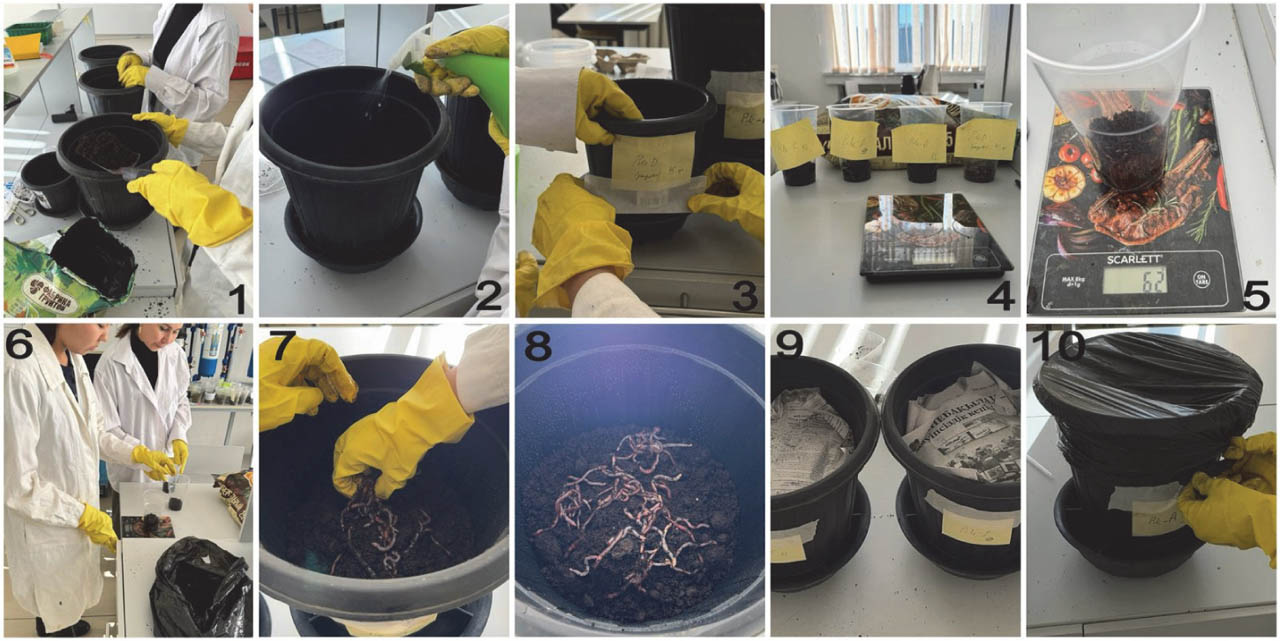
FIGURE 1.
Analysis of the final results of composting
Source: own work.
The number and biomass of earthworms were considered as one of the key bioindicators of oil-contaminated soil restoration. At the initial stage of the experiment (day 0), all experimental variants were characterized by the same conditions: the average number of worms was 50 individuals per container, with a total biomass of 60–65 g. The presence of petroleum hydrocarbons had a stressful effect on soil biota, which manifested itself in reduced activity and delayed physiological processes in worms during the first 10–15 days of the experiment. At the end of the 90-day observation period, a statistically significant increase in the population size to 62–65 individuals was recorded in the variants using Eisenia fetida; an increase in biomass to 85–90 g was also recorded. The weight gain averaged 40–45%, which indicates the high resistance of this species to the toxic effects of oil and its ability to adapt to changing environmental conditions. In the variants with native wild earthworms (Lumbricus terrestris), the increase in abundance and biomass was less pronounced: the number of individuals increased to 52–55, and the biomass increased to 50–55 g. Nevertheless, even at lower rates, stabilization of the worms' physiological state and preservation of their viability were noted, which indicates the potential for their participation in the processes of zooremediation with a longer exposure period. The results obtained confirm that the increase in the number of earthworms directly correlates with a decrease in the toxicity of the soil environment, improved aeration, and activation of microbiological processes involved in the biodegradation of petroleum hydrocarbons.
Results
In the course of the study, the effectiveness of cleaning oil-contaminated soil as a result of worms was analyzed by various methods, including vermiculture. The presented results cover key aspects of the process, such as the rate of waste decomposition, the dynamics of the mass and number of worms, temperature and pH profiles, as well as changes in the composition of the main macronutrients (nitrogen, phosphorus, potassium). The analysis of the obtained data makes it possible to determine such influencing factors as the composition of the source material, the ratio of carbon to nitrogen (C : N), microbiological activity, and conditions of detention. The results provide a detailed understanding of decay processes (Angie et al., 2021).
Figure 2 shows the average decomposition rate of four types of food waste (Pile A, Pile B, Pile C, Pile D) in worm feeding [g·day−2], the measurement interval is indicated every 5 days for 40 days. Pile A (70% fruits and vegetables, 30% vegetable waste) showed a maximum decomposition rate of 10.45–27.84 g per day, due to its high biodegradability and the optimal C : N ratio of about 37.3. Pile B (50% vegetable waste, 25% eggshells, 25% fruits and vegetables) increased from 7.0 g·day−2 to 23.77 g·day−2, although the growth rate slowed after the 25th day due to high calcium content and depletion of easily accessible substances. Pile C (50% eggshells, 40% vegetable waste, 10% fruits and vegetables) showed an average result, this indicator increased from 6.3 g·day−2 to 13.73 g·day−2, slowed down due to complex carbon components and C : N equal to 31.6. The earthworm-containing Pile D (70% of fruits and vegetables, 30% of plant residues) reached only 10.43 g per day, which is lower than the Pile A of Californian earthworms (27.84 g·day−2); this indicates the low efficiency of earthworms. The carbon content is high. Thus, waste using optimal C : N and Californian red worms (Pile A, Pile B) decomposes faster, while Pile C and Pile D require additional measures to speed up the processes (Lalander et al., 2015).
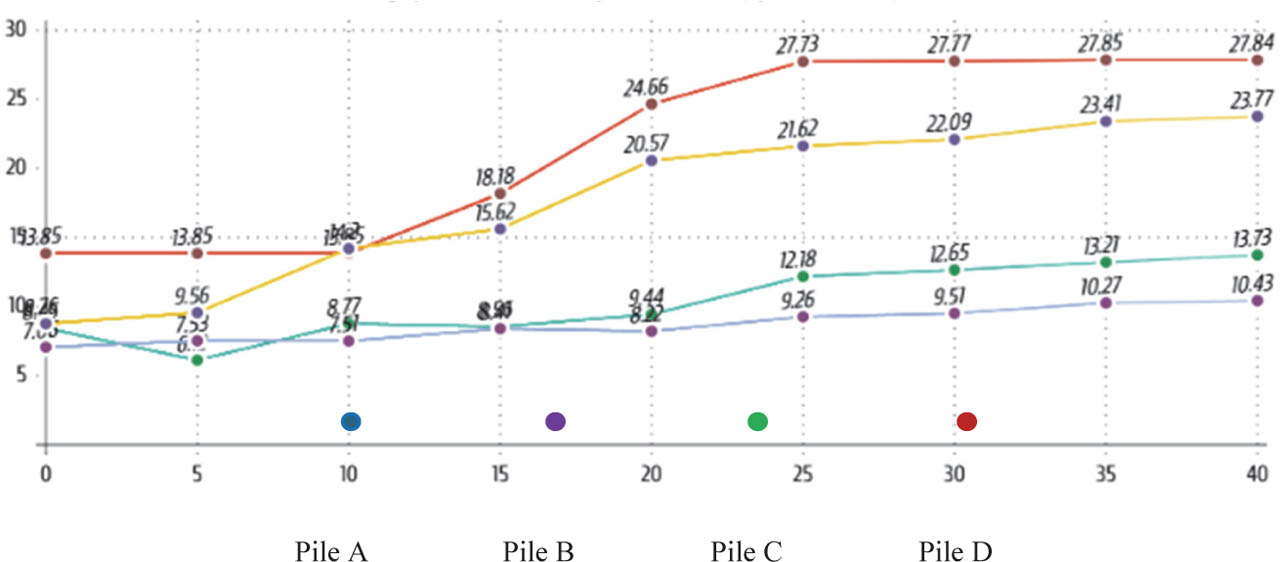
FIGURE 2.
The rate of decomposition of food waste in the nutrition of worms [g·day−2]
Source: own work.
Figure 3 shows the change in the mass and abundance of worms under different conditions of the composition and composition of organic waste. Californian red worms (Pile A, Pile B, Pile C) have shown a significant increase in mass and abundance, which indicates their high adaptability and efficiency in the conditions of decomposition of organic materials. In particular, the mass of worms in the pile increased from 62 g to 87 g, and their number increased from 50 individuals to 63 individuals, which corresponds to the largest increase among all species. Wild earthworms (Pile D), on the other hand, showed less pronounced changes when their weight increased from 45 g to 52 g and their number increased from 50 to 53. This indicates that this type of worms has a limited ability to process the organic waste presented under the indicated conditions. The presented data show differences in the efficiency of processing soil contaminated with oil by Californian red worms and wild earthworms (Chaher et al., 2020).
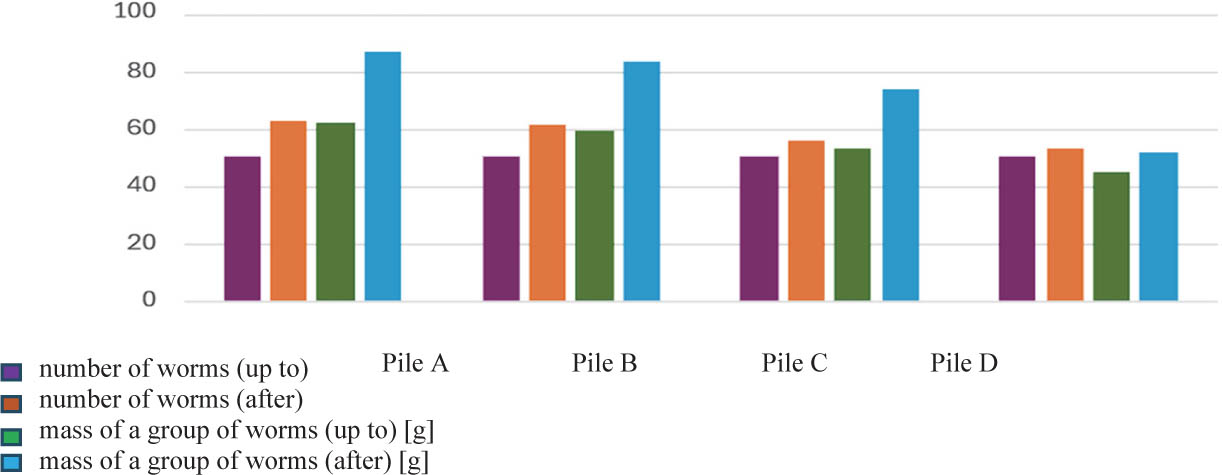
FIGURE 3.
Changes in the mass and number of worms during the study
Source: own work.
The profile of the value of the hydrogen index, or pH of compost is important, since its introduction into the soil can change its degree of acidity, which, in turn, affects the availability of nutrients for plants. The pH profiles of the materials in the compostable samples used in the three tests are shown in Figure 4. In the first two weeks of the composting process, four samples (Pile A, Pile B, Pile C, Pile D) showed an increase in pH values. By the end of the second week, the pH values in samples A, B, C, and D were 5.9, 5.7, 5.6, and 5.7, respectively. This slight decrease in pH is associated with the release of acidic substances and their accumulation in the compostable material (Breitenbeck & Schellinger, 2004). At the beginning of the sixth week, the pH in all samples increased significantly, reaching 7.2, 6.5, 6.2, and 6.8 in samples of Piles A, Piles B, Piles C, and Piles D, respectively. This stage of pH increase is a thermophilic stage of the composting process, which is characterized by an increase in the rate of decomposition of the substrate, ammonification, and mineralization of organic nitrogen by microorganisms. By the end of the ninth week, a decrease in pH was again observed in the samples. The final product of all four samples (Pile A, Pile B, Pile C, Pile D) had pH values in the range of 6.3–7.5, which corresponds to a reasonable range for finished compost and is in the optimal range for use as a plant substrate (Hemidat et al., 2019).
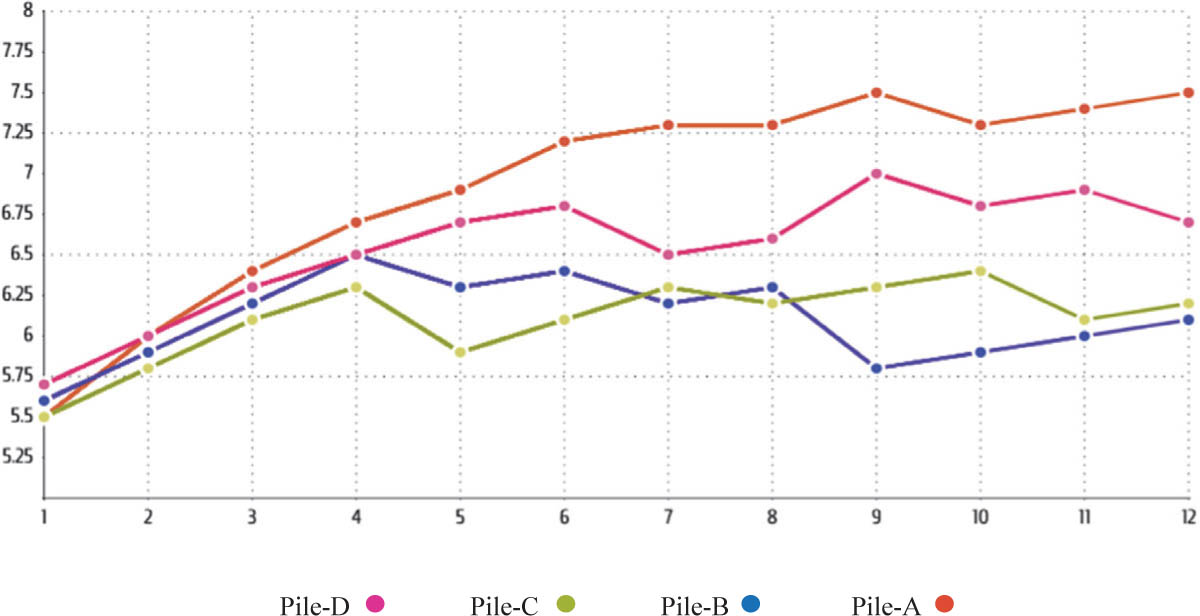
FIGURE 4.
Average pH profiles during the composting period
Source: own work.
Thus, it could serve as an analogue of various technical means for solving problems associated with soil zooremediation, such as Californian red worms and wild earthworms. In particular, it was found that during the day, each worm passes through itself the amount of soil corresponding to the mass of the worm. In our earlier periods (planting density – 30 pieces·kg−2, mass of worms – 0.6–1.0 g), this means that the studied worm species spend 1 kg of soil from their intestines in 1.5–2.0 months. Taking into account the moving volume of the total soil (an increase in the moving volume from comparing the average diameter of the worm's body and its intestinal diameter – from 1 : 3 to 1 : 5), the full mixing of this soil volume (1 kg) with worms can occur in 1.5–2.5 weeks.
It was necessary to prove the ability of worms to mix the soil in conditions of oil pollution compared to purely technical means. For this purpose, crude oil from fields in the Atyrau Region was introduced at the rate of 2.5 g·kg−2 (upper limit of low pollution). Earthworms were introduced in the amount of 15 pieces·kg−2. Determination of the amount of oil in substrates was measured weekly. Measurements of the average mass of worms and a visual assessment of their condition were carried out at the end of the experiment (Makhambetov et al., 2024).
The duration of the worm experiment was 180 days (from May to October), and they were not used for 91 days. In the first week of the experiment, in all cases, there is a significant decrease in the concentration of oil in the soil – from 3.8% with rare mixing to 14.3% with frequent mixing, and when using worms – 11.6%. In our opinion, this is largely due to the fact that light fractions fly out at the initial stage of oil pollution. At the next stages of the experiment, the effect of a constant increase in the zooremediation properties of Californian red worms and wild earthworms was revealed after evaporation of volatile oil fractions, adaptation of worms, natural selection of the most resistant individuals, as well as the birth of new individuals. In addition, it has been proven that mechanical mixing of the soil, even everyday, is not enough for effective biodegradation. Eisenia fetida increases its biomass by 40–50% in 90 days. The reproduction of earthworms was slow but maintained vitality. The key elements of the experiment are summarized in Table 3.
TABLE 3.
Experimental data on the process of soil zooremediation
| Parameter | Description/Observation |
|---|---|
| Earthworm species used | California red worms and common earthworms |
| Interaction with soil | Each worm processes a soil mass approximately equal to its body weight per day |
| Experimental setup | Worm density: 30 individuals per 1 kg of soil. Average worm mass: 0.6–1.0 g |
| Estimated soil processing time | The selected worm species can pass 1 kg of soil through their digestive systems within 1.5–2.0 months |
| Time for complete soil mixing | Based on average body and gut diameter ratios (1 : 3 to 1 : 5), complete mixing of 1 kg of soil may occur within 1.5 to 2.5 weeks |
| Research objective | To compare the efficiency of soil mixing by earthworms under oil contamination conditions with that of mechanical technologies |
| Study location | Oil-contaminated areas of the Atyrau Region (Kazakhstan) |
| Level of oil contamination | Crude oil added at a concentration of 2.5 g·kg−2 – representing the upper threshold of low contamination levels |
| Worm introduction rate | 15 individuals per 1 kg of soil |
| Monitoring and measurements |
|
Impact on the earthworms' biomass during the first 30 days; however, after a period of adaptation, growth was observed. Eisenia fetida demonstrated a high level of resilience, indicating its potential for effective use in vermiculture-based remediation technologies. Over the 90-day observation period, a significant reduction in petroleum residues (TPH) was recorded across all samples. The degradation rate was particularly higher in the samples where Eisenia fetida was introduced (Table 4).
TABLE 4.
Level of decomposition of oil hydrocarbons
| Pollution level [%] | Type of worm | Total petroleum hydrocarbons primary [mg·kg−2] | After 90 days [mg·kg−2] | Decomposition percentage [%] |
|---|---|---|---|---|
| 0.5 | E. fetida | 5,000 | 1,200 | 76 |
| 0.5 | rainworm | 5,000 | 1,700 | 66 |
| 1.0 | E. fetida | 10,000 | 2,400 | 76 |
| 1.0 | Rainworm | 10,000 | 3,200 | 68 |
| 2.0 | E. fetida | 20,000 | 6,000 | 70 |
| 2.0 | rainworm | 20,000 | 7,800 | 61 |
In the worm-free control samples, the oil decomposition rate was only about 25–30%. This is due to poor aerobic condition and low microbiological activity. The decomposition of hydrocarbons in the samples introduced by the Eisenia fetida worm was significantly higher when used. The high metabolic activity and the ability of this species to rapidly decompose organic substances have enhanced the transformation of oil components. Comparative analysis of indicators before and after animal remediation (Table 5).
TABLE 5.
Changes in biological and agrochemical parameters of the soil
| The indicator | Before and after | After (E. fetida) | After (L. terrestris) |
|---|---|---|---|
| Number of worms [pcs] | 50 | 62–65 | 52–55 |
| Biomass of worms [g] | 60–65 | 85–90 | 50–55 |
| Humus content [%] | 1.2–1.5 | 2.0–2.4 | 1.7–1.9 |
| Soil pH [-] | 5.6–5.8 | 6.8–7.2 | 6.5–6.9 |
| Level of biological activity | low | high | medium |
The humus content is one of the main indicators of the quality and ecological condition of the soil. Prior to the start of the experiment, oil–contaminated soils were characterized by a low level of humus (1.2–1.5%), a destroyed aggregate structure and low biological activity. Petroleum hydrocarbons inhibited the processes of mineralization and humus formation, which negatively affected soil fertility. During the experiment, it was found that the use of zooremediation with the participation of earthworms contributes to the restoration of the humus profile of the soil. In the samples with Eisenia fetida, the humus content increased to 2.0–2.4%, which corresponds to an increase of 35–60% compared to the initial values. This effect is due to the ingestion of coprolites enriched in organic substances, humic compounds, enzymes and trace elements into the soil. In the variants with Lumbricus terrestris, the increase in humus content was less pronounced and amounted to 1.7–1.9%, however, even these values indicate a positive trend in the restoration of soil fertility. At the same time, there was an improvement in the physico-chemical properties of the soil: the formation of a more stable granular structure, an increase in moisture capacity and stabilization of the reaction of the medium in the pH range 6.5–7.2.
Thus, zooremediation not only accelerates the degradation of petroleum hydrocarbons but also contributes to the formation of a secondary humus horizon, which is a key stage in restoring the ecosystem functions of the soil.
Conclusions
This study provides experimental evidence for the efficacy of vermiculture-based bioremediation as a viable strategy for the restoration of petroleum-contaminated soils under controlled laboratory conditions. The 90-day experiment demonstrated that the application of Eisenia fetida and native earthworms (Lumbricus terrestris) produced measurable and statistically significant improvements across all monitored parameters.
The principal findings of the study may be summarized as follows: total petroleum hydrocarbons (TPH) concentrations declined by 60–80% across all treatment groups, with the most pronounced degradation rates recorded in substrates inoculated with Eisenia fetida. This outcome is attributable to the synergistic interaction between earthworm gut-associated microbiota and indigenous hydrocarbon-oxidizing bacterial communities, which collectively accelerated the biochemical mineralization of hydrocarbon chains beyond the capacity of either biological agent applied in isolation.
Soil physicochemical parameters – including pH, organic matter content, moisture retention, and microbiological activity – improved significantly over the experimental period, indicating a progressive restoration of soil functional properties. Phytotoxicity indicators likewise declined, suggesting the re-establishment of conditions conducive to plant growth and ecosystem recovery. The concentrations of key macronutrients (nitrogen, phosphorus, potassium) increased in vermicompost-treated substrates, reflecting enhanced nutrient cycling mediated by earthworm activity.
Biometric monitoring revealed that, although worm biomass declined during the initial 30-day adaptation phase due to the acute toxic effects of residual petroleum compounds, both species subsequently entered a sustained growth phase, demonstrating the capacity for physiological adaptation to hydrocarbon-contaminated substrates. Eisenia fetida exhibited markedly superior stress tolerance, adaptive resilience, and remediation efficiency relative to native earthworms, which, while demonstrating measurable adaptation capacity, achieved consistently lower TPH reduction rates under equivalent experimental conditions.
Environmental and physicochemical parameters – including temperature, aeration, moisture content, and the carbon-to-nitrogen ratio – exerted a significant regulatory influence on worm survival, biomass accumulation, and hydrocarbon degradation rates. Optimization of these parameters represents a critical factor in maximizing the practical efficiency of vermiremediation technology under field conditions.
From an applied perspective, the results of this study confirm that vermiculture technology employing Eisenia fetida constitutes an environmentally sound, cost-effective, and scalable approach to petroleum soil remediation, with strong potential for industrial-scale implementation in the oil-producing regions of western Kazakhstan, where contaminated land areas exceed 194,000 ha. Given that the cumulative volume of oil sludge stockpiled across Kazakhstan is estimated at approximately 40 million tons, the widespread adoption of this biotechnology could contribute substantially to national soil remediation objectives.
Future research should address the long-term persistence of remediation effects beyond the 90-day observation window, the comparative performance of vermiculture across diverse soil types and contamination profiles, the optimization of worm-to-substrate ratios and organic amendment compositions, and the scalability of the method under varying climatic conditions characteristic of the Kazakh steppe and semi-arid zones. Additionally, the integration of vermiculture with complementary bioremediation approaches – such as phytoremediation and bioaugmentation – warrants systematic investigation as a means of further enhancing overall remediation efficiency.