

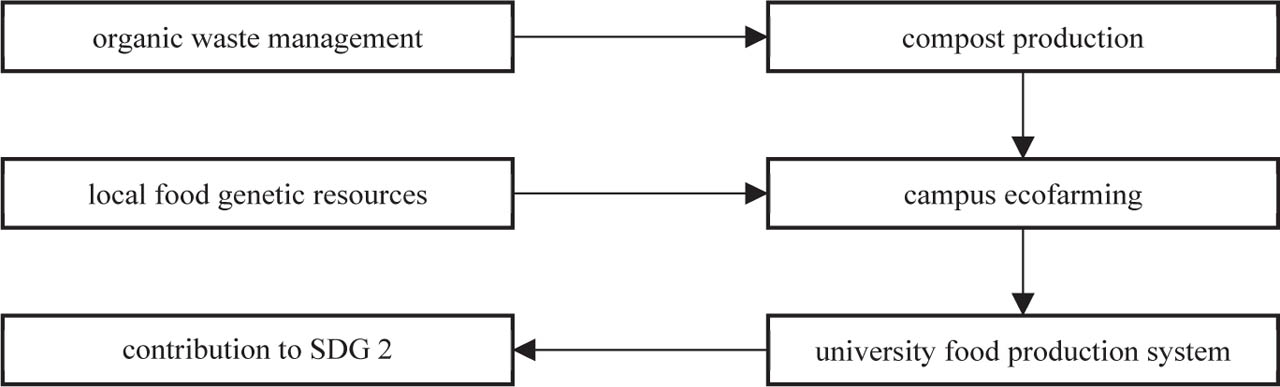
FIGURE 1.
Research novelty
Source: own work (2025).
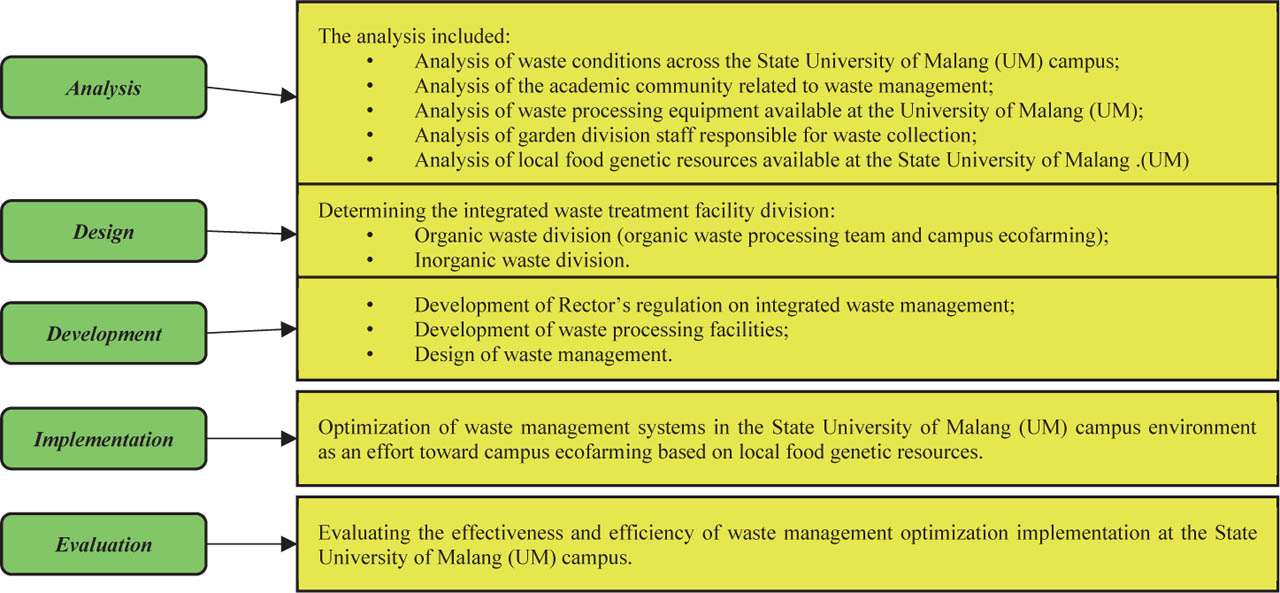
FIGURE 2.
Research and development (R&D) stages for integrated waste processing and ecofarming at the State University of Malang (UM)
Source: own work (2025).
TABLE 1.
Average daily amount of organic waste managed at the State University of Malang (UM)
| Type of organic waste | Amount | |||
|---|---|---|---|---|
| total [kg] | reused [kg] | up-cycled [kg] | share of the reused and up-cycled [%] | |
| Food waste | 375 | 150 | 75 | 60 |
| Green waste | 3.250 | 2.580 | 250 | 87 |
| Non-hazardous wood waste | 490 | 256 | 75 | 68 |
| Other | 225 | 147 | 59 | 91 |
| Total organic waste | 4.340 | 3.133 | 459 | 82 |
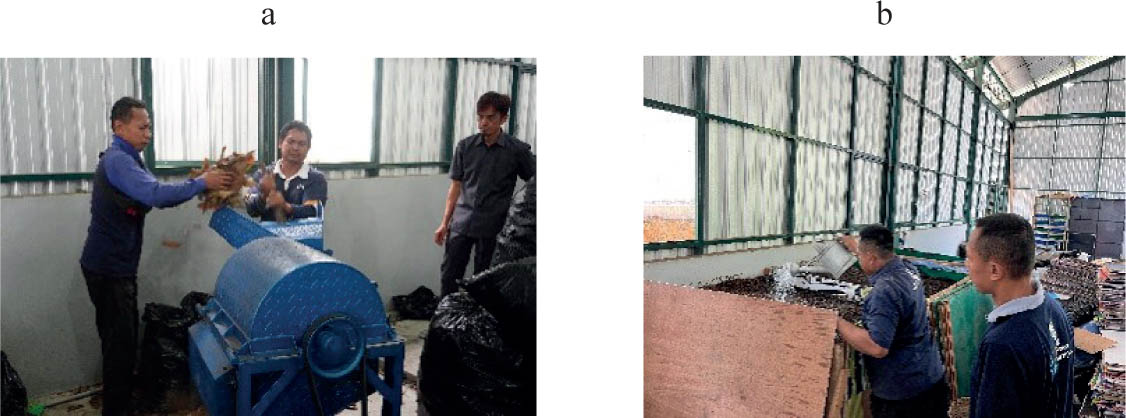
FIGURE 3.
Campus waste management system: (a) organic waste shredding; (b) compost fermentation
Source: own field documentation (2025).
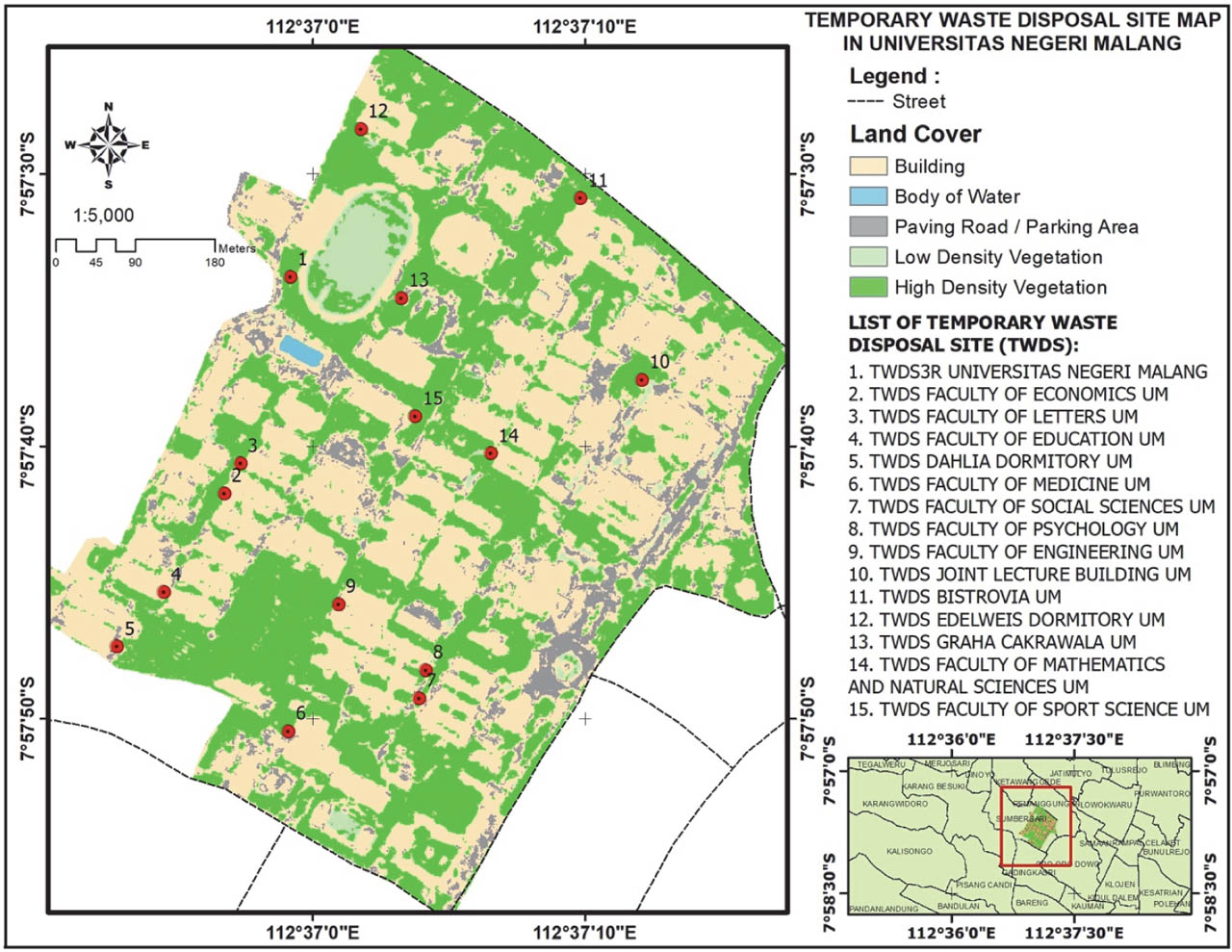
FIGURE 4.
Temporary waste disposal sites map at the University of Malang (UM)
Source: own documentation (2025).

FIGURE 5.
Plant diversification: (a) pumpkin plants, (b) tuber plants, (c) cavendish banana plant seedlings, (d) mixed plants of cassava, (e) breadfruit and mangosteen seedlings, (f) mature breadfruit trees
Source: own field documentation (2024).
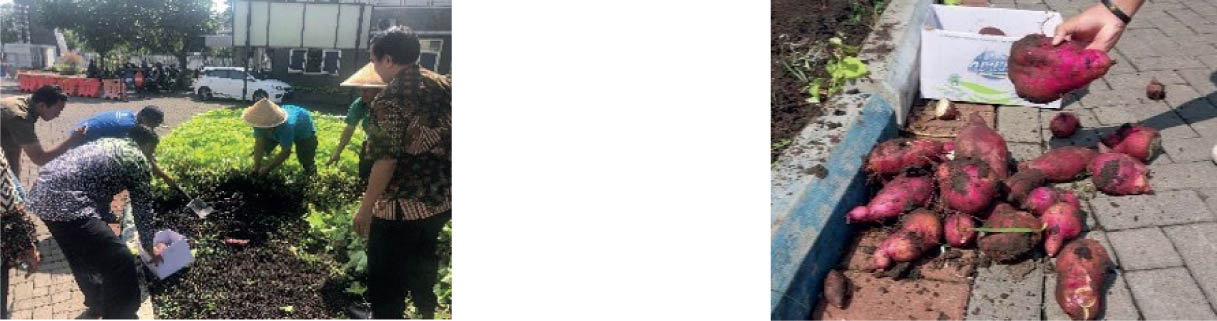
FIGURE 6.
Sweet potato harvesting process at the University of Malang (UM)
Source: own field documentation (2024).
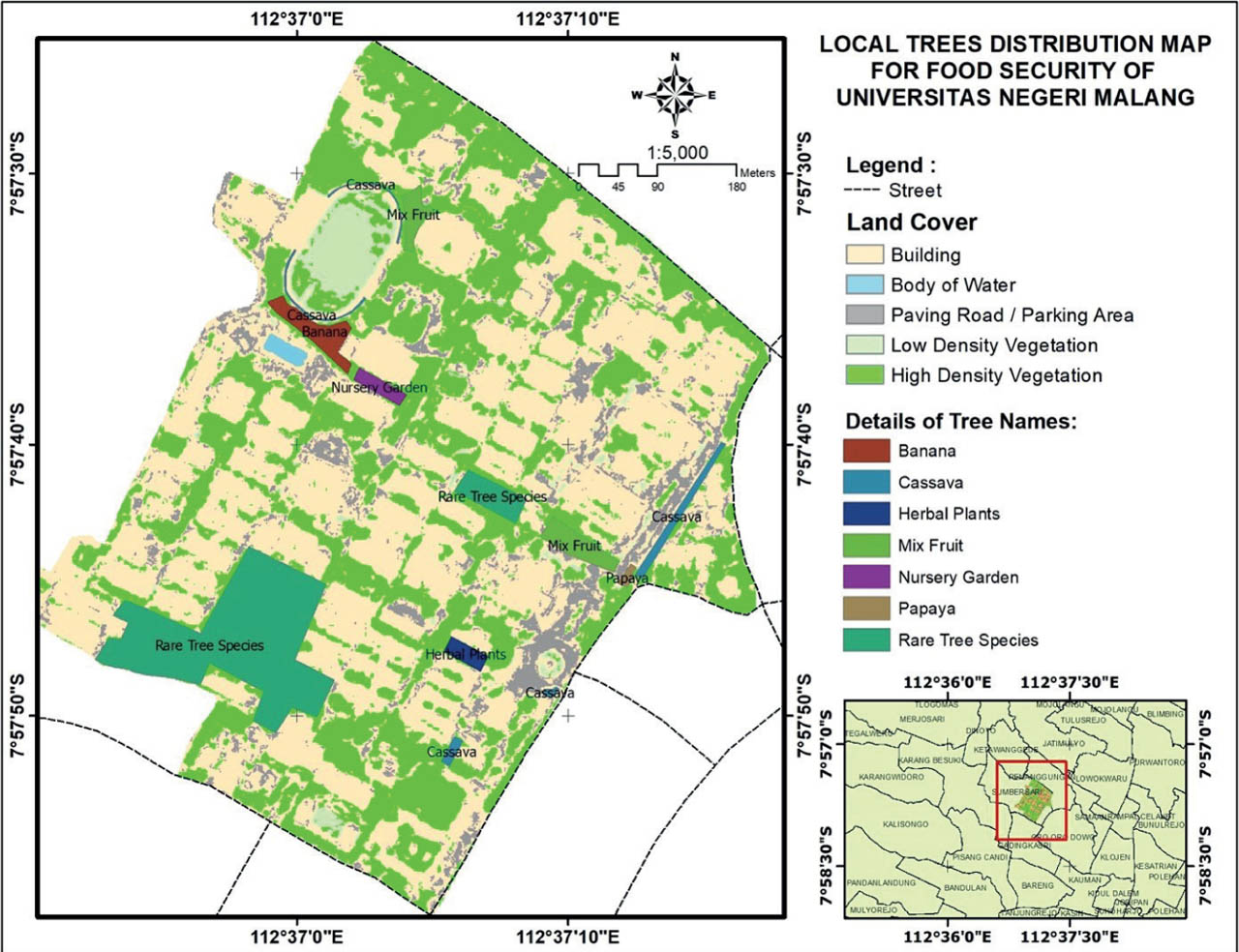
FIGURE 7.
Local food genetic resource planting distribution map
Source: own field documentation (2025).

FIGURE 8.
Circular resource system: (a) collection of organic waste (leaves) in campus areas, (b) staff conducting the grinding of organic waste, (c) results of the grinding process, (d) biomol production process for compost decomposition bacteria, (e) ground organic waste periodically watered with the biomol solution, and (f) organic compost products ready for use or marketing
Source: own field documentation (2025).
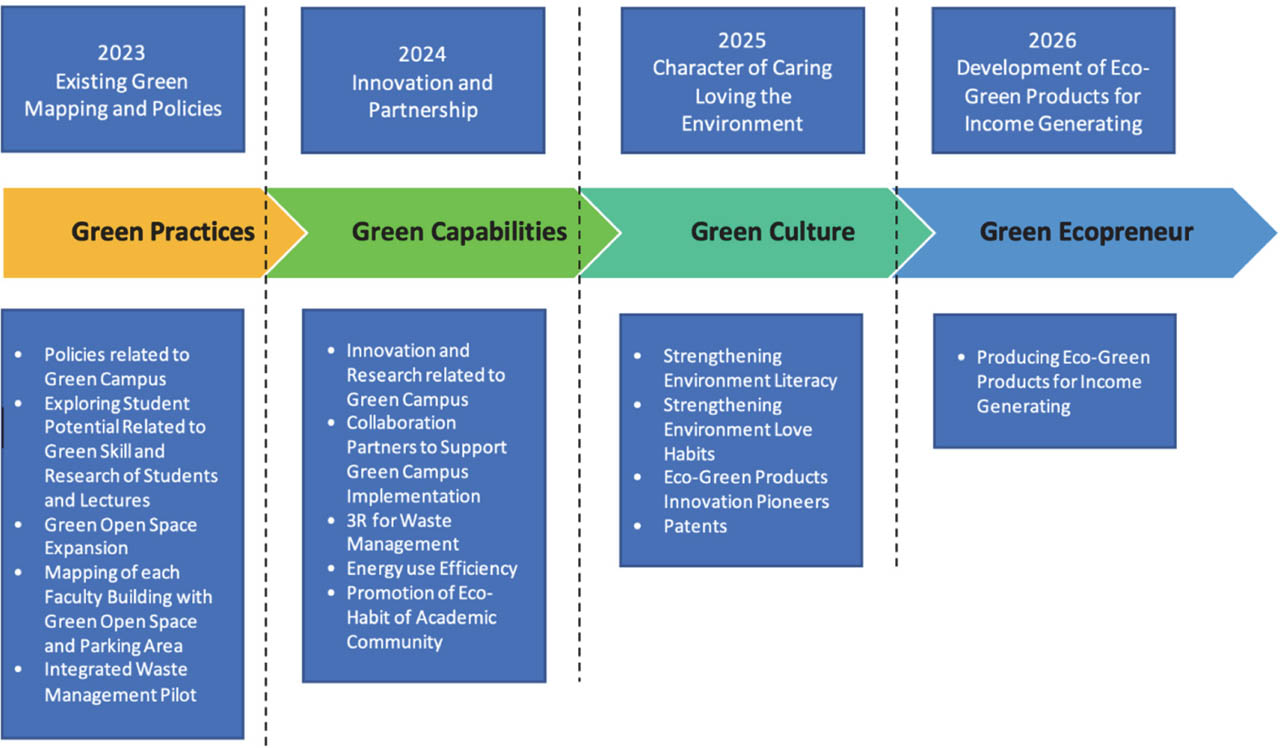
FIGURE 9.
Green campus roadmap of the State University of Malang (UM) in sustainable environmental management
Source: own work (2025).
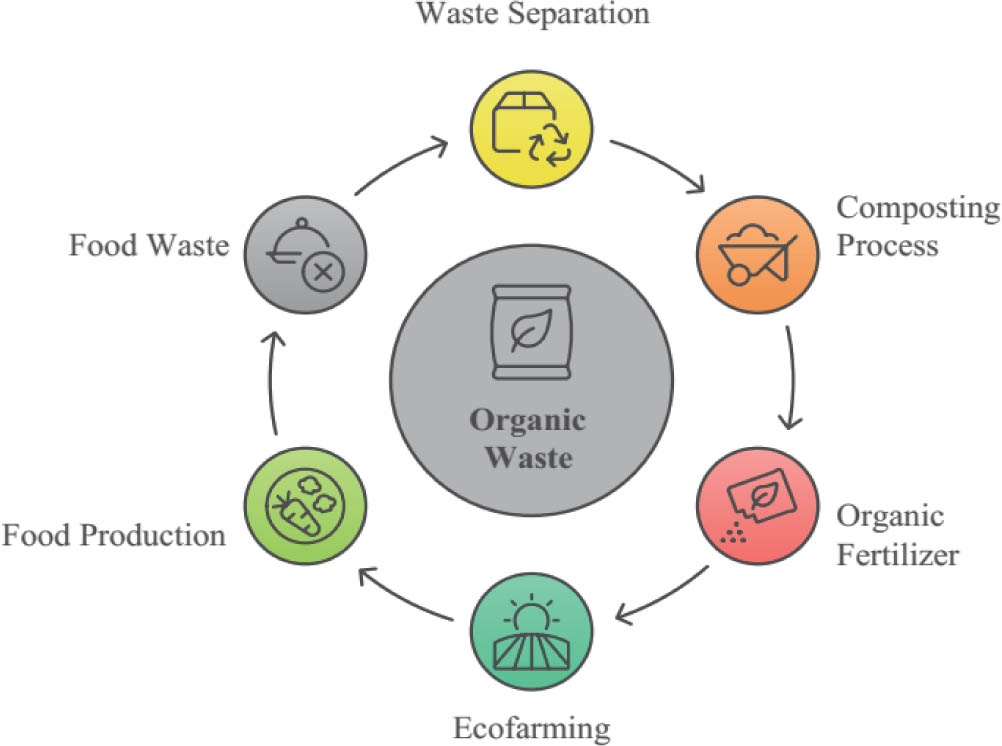
FIGURE 10.
Waste management optimization model toward campus ecofarming based on local food genetic resources
Source: own work (2025).