

Introduction
Achieving sustainable development in higher education institutions requires integrated environmental management strategies, particularly in waste management and resource utilization systems. In Indonesia, the Presidential Regulation No. 111 of 2022 on the implementation of sustainable development goals (SDGs) reinforces this national agenda by emphasizing environmental sustainability and community participation. Among current challenges, effective waste management remains critical due to limited facilities, weak partnerships, and low public awareness (Ministry of Environment and Forestry, Indonesia, 2020).
Although the reduce, reuse, and recycle (3R) movement has been promoted for over a decade, awareness of waste segregation and reuse practices remains insufficient (Suryani, 2014). Universities function as experimental environments where sustainable practices, such as waste recycling and ecofarming systems, can be implemented and evaluated. The establishment of integrated waste treatment facilities (IWTFs) on campus supports the 3R principles and operationalizes institutional responsibility in environmental management (Sumarmi et al., 2025). The Ministry of Environment and Forestry Regulation No. 14 of 2021 further provides incentives, such as training, financing, and recognition, for institutions implementing effective waste reduction initiatives.
The Universitas Indonesia Green Metric (2024) assessment identified strategic measures for the State University of Malang (UM), including the development of green open spaces, vertical gardens, biodiversity conservation, and integrated waste management systems. These recommendations align with broader efforts to transform campuses into ecologically resilient spaces through local biodiversity preservation and ecofarming practices (UI Green Metric, 2024).
Ecofarming represents an integrated agroecological approach that links organic waste recycling with local food production systems, enabling circular resource management within institutional environments. This approach contributes to environmental sustainability while supporting food security and local resource independence (Lin, 2022). Universities, as transformative institutions, play a pivotal role in modeling sustainability through education, research, and community service (Yi et al., 2026).
At the State University of Malang (UM), ecofarming initiatives are developed using local food genetic resources, emphasizing tubers, fruits, and other indigenous crops with strong adaptability and nutritional value. These local species, such as cassava, taro, canna, arrowroot, banana, and breadfruit, play a significant role in promoting food sovereignty and reducing reliance on imported products (Jung et al., 2020).
The integration of waste management and ecofarming not only minimizes organic waste but also generates compost and organic fertilizer to sustain agricultural activities. Furthermore, ecofarming serves as a medium for environmental education, reshaping students' ecological awareness (Gupta et al., 2024) and attitudes toward sustainability (Giannini, 2023).
This study addresses the strategic need for developing campus-based ecofarming integrated with waste management. The objectives are to: (1) identify the utilization of organic waste processing results on campus, (2) identify potential local food genetic resources, (3) optimize waste management for ecofarming based on local food potential, and (4) develop an optimization model that supports SDG 2 (Zero Hunger). This study develops an optimization model for waste management toward campus ecofarming based on local food genetic resources to support the achievement of SDG 2 (Zero Hunger). Unlike previous studies that tend to examine waste management, ecofarming, or local food systems in isolation, this research integrates these components into a unified circular system within a higher education context. The proposed model not only connects organic waste processing with sustainable food production but also incorporates local food genetic resources as a core element of system resilience and biodiversity conservation.
By integrating this approach into campus education, research, and participatory activities, this study proposes a framework that positions universities as functional microsystems of the circular economy and agroecological practices. Therefore, this study contributes by broadening the perspective of the circular economy and agroecology at the institutional level, while providing empirical evidence on how integrated campus-based models can effectively support sustainable waste management and local food production.
Literature review
Sustainable organic waste management
Inefficient waste management systems contribute significantly to greenhouse gas emissions, particularly through the decomposition of organic waste in landfills (Son et al., 2025), manifested through climate change (Evans, 2019), rising global temperatures (Wang et al., 2023), ozone depletion (Krupa & Groth, 2023), and the melting of Arctic ice (Schlegel et al., 2023). The rapid reduction of urban green spaces has further exacerbated these conditions by decreasing carbon absorption capacity and intensifying urban heat (Zhang et al., 2024). Green open areas, particularly those integrated with local food cultivation (Münderlein & Bruns, 2025), play a vital role in improving environmental quality and public health (Fadjarajani & As'ari, 2020).
In higher education, integrating composting within campus operations not only reduces greenhouse gas emissions but also serves as a medium of environmental education that strengthens ecological literacy and civic responsibility. Composting converts biodegradable waste into nutrient-rich soil amendments, thereby reducing the need for synthetic fertilizers and supporting sustainable agricultural practices (Nanda & Berruti, 2021). Therefore, waste management in universities must be understood not merely as a technical system but as an educational framework that internalizes sustainability values (Cox et al., 2021; Lucchetta et al., 2025; Gonzalez et al., 2026).
Agroecology and campus ecofarming
Agroecology provides a scientific foundation for sustainable agricultural systems, integrating ecological, social, and economic dimensions (Anderson et al., 2021). In a University setting, ecofarming embodies the application of agroecological principles through practices that link agricultural production with education, research, and community service. Lin (2022) explains that the success of campus ecofarming relies on four interrelated components: environmental education, sustainable agriculture, participatory engagement, and innovation-based research. These elements transform the campus into a living laboratory where sustainability is both practiced and studied (Lin, 2022; Aldogan Eklund, 2026).
Campus ecofarming further supports the green campus vision by combining energy efficiency, carbon reduction, and food production systems based on organic fertilizer derived from institutional waste. Such initiatives link waste management to food resilience and resource efficiency, directly advancing SDG 2 (Zero Hunger) and SDG 12 (Responsible Consumption and Production) (Hettiarachchi et al., 2020; Ingram, 2023).
Local food biodiversity
Local food genetic resources (LFGR) underpin both food system resilience and cultural sustainability. Overreliance on global staples increases vulnerability to market and climate fluctuations, while indigenous crops, such as cassava, taro, sweet potato, legumes, corn, and banana, offer nutritional diversity and ecological adaptability (Jacob et al., 2023). Integrating these crops into campus ecofarming systems contributes to in situ conservation and sustains agrobiodiversity (Agnoletti & Santoro, 2022; Tacconi et al., 2024).
Ecofarming based on LFGR enhances sustainability by employing native plants resistant to pests and drought, minimizing chemical inputs, and diversifying food sources (Cadena-Zamudio et al., 2024; Suwarno, 2024). By introducing biodiversity into higher education agricultural systems, campuses can educate students about food sovereignty, agrobiodiversity, and local resilience.
Impact on sustainable development goals for achieving SDG 2 (Zero Hunger)
The sustainable development goals (SDGs) provide a universal framework for balancing environmental integrity with social equity. SDG 2 specifically targets hunger eradication, food security, and sustainable agriculture (Food and Agriculture Organization of the United Nations [FAO], 2021). Campus-based ecofarming and waste recycling directly contribute to this agenda by producing food locally, conserving resources, and reducing carbon footprints (Pandey et al., 2025).
A synthesis of previous studies identifies three interconnected pillars of campus sustainability: sustainable waste management, ecofarming systems, and local food biodiversity. Their integration establishes a circular, low-waste model that transforms campuses into micro-laboratories for sustainable development (Debrah et al., 2021; Reijnders, 2024). Meanwhile many implementations remain fragmented due to limited participatory engagement and insufficient local resource utilization (Movilla-Pateiro et al., 2021; Stroparo & Floriani, 2024).
This research advances a holistic framework that unites those three pillars under a participatory and adaptive model, positioning the University as both an academic and ecological actor. Through this integrative perspective, higher education institutions can actively operationalize SDG 2 within localized governance systems and demonstrate measurable contributions to sustainability. The conceptual structure of the proposed innovation is illustrated in Figure 1, which highlights the integration between waste management, local food resource utilization, and their direct contribution to food security and SDG 2 achievement.
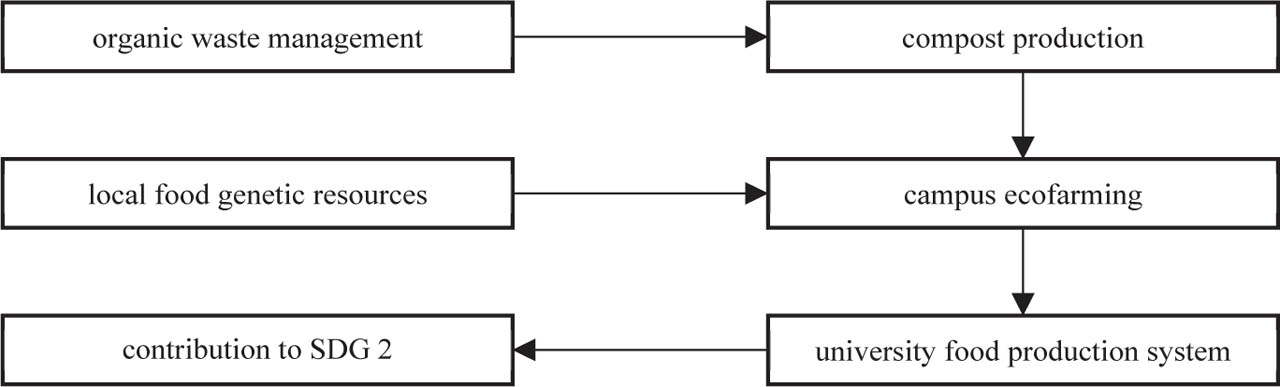
FIGURE 1.
Research novelty
Source: own work (2025).
Methods
Research design
This study employed a research and development (R&D) approach utilizing the ADDIE model: analysis, design, development, implementation, and evaluation (Abeysiriwardana et al., 2023). The ADDIE framework was selected for its systematic and iterative nature, allowing the integration of environmental education, media, and waste management processes within educational contexts (Wicaksono, 2024; Maulana et al., 2025). Furthermore, the ADDIE model has structured stages that can be tailored to the needs of the research (Bachri et al., 2024). Methodologically, the ADDIE model has effective stages based on instructional design principles, and all stages allow for accurate assessment (Sumarmi et al., 2024).
The research was conducted at the State University of Malang (UM), East Java, Indonesia, focusing on three primary sites: student cafeterias, organic waste processing units, and integrated ecofarming areas. The study adopted a sequential mixed-method design combining qualitative exploration for model construction and quantitative validation for model effectiveness testing (Zhou, 2019).
The development process followed these five ADDIE stages:
a) Analysis: Conducted through interviews, observations, and focus group discussions (FGDs) with cafeteria managers, gardeners, lecturers, and green campus teams to assess existing waste management practices and identify local food genetic resources;
b) Design: Formulated an integrated ecofarming model combining organic waste recycling, compost production, and local food cultivation layouts;
c) Development: Sorted and processed organic materials through chopping, fermentation, and drying to produce compost and liquid organic fertilizer;
d) Implementation: Applied the model on a pilot scale using compost and fertilizer in campus ecofarming plots under supervision of the green campus and garden divisions;
e) Evaluation: Conducted both formative (during implementation) and summative evaluation (through expert validation) involving specialists in environmental science, agriculture, and education.
Figure 2 illustrates the research and development stages of the integrated waste processing and ecofarming system at the State University of Malang (UM).
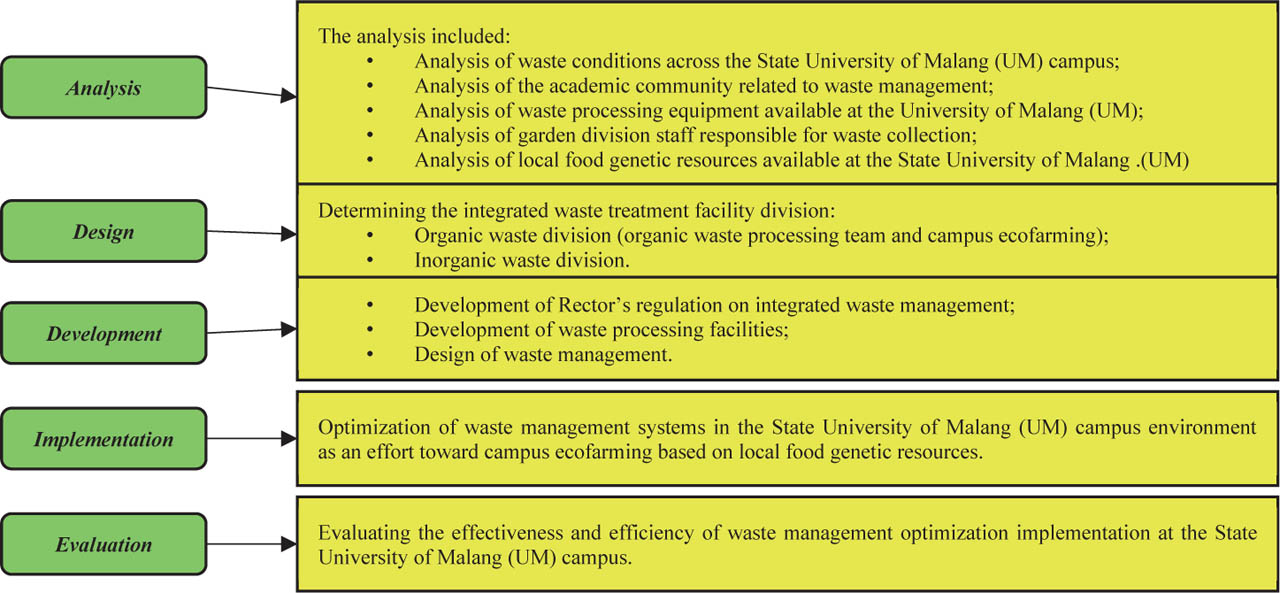
FIGURE 2.
Research and development (R&D) stages for integrated waste processing and ecofarming at the State University of Malang (UM)
Source: own work (2025).
Data collecting technique
Data collection was conducted over five working days and was intended to gather data from the integrated waste treatment facility (IWTF), the faculty, and the University. The allotted time for data collection was used to ensure that the data collection process was effective and comprehensive. Four primary data collection methods were employed: observation, interviews, documentation, and field implementation of waste management practices related to ecofarming. The University's IWTF consisted of two divisions: (1) organic waste recycling division, responsible for composting, maggot cultivation, and ecofarming activities; and (2) inorganic waste recycling division, focusing on sorting and repurposing non-organic waste to generate economic value through partnerships with local industries.
Quantitative data included: (1) the number of participating faculties/units, (2) volume of organic waste processed, and (3) ecofarming harvest yields. Purposive sampling served as the basis for selecting interview respondents. The selection of respondents was based on analyzing the organic waste recycling process, the inorganic waste recycling process, and identifying local food genetic resources. Two interview respondents were selected as key informants. Qualitative data derived from interviews with stakeholders regarding challenges, satisfaction, and potential for green entrepreneurship development within the State University of Malang (UM) community.
Data analysis
A mixed-methods analytical approach was applied to achieve a comprehensive understanding of both ecological and social dimensions (Creswell & Clark, 2017). Quantitative data were analyzed descriptively to identify patterns in waste generation, compost utilization, and local food resource development. Qualitative data from interviews and FGDs were analyzed using thematic analysis (Strauss & Corbin, 1998) to conceptualize participatory ecofarming models.
Social data were examined using Miles and Huberman's interactive model involving: (1) data collection, (2) data reduction, (3) data presentation/data display, (4) conclusion drawing and verification, while physical condition data (waste volume, compost yield, and fertilizer output) were processed using percentage tabulation (Miles et al., 2014).
The analysis produced an integrated framework linking organic waste management, compost production, and local food-based ecofarming, forming the empirical foundation for the optimization model described in subsequent sections.
Results and discussion
Utilization of organic waste processing products on campus
The University of Malang (UM) produces around 3 tons of waste every day which comes from cafeteria activities, academic activities, and maintenance of the campus's green open space. Of this amount, around 4,340 kg of organic waste is generated daily, consisting of food waste, green waste, non-hazardous wood waste, and other organic materials. Through the implementation of the IWTF, most of this organic waste is successfully reprocessed through sorting, chopping, fermentation, and drying processes to produce compost and liquid organic fertilizer. Data show that the total amount of organic waste produced each day is 4,340 kg. Of this amount, around 3,133 kg is reused and 459 kg is recycled, resulting in an organic waste utilization rate of around 82%. Data related to the daily total organic waste can be seen in Table 1.
TABLE 1.
Average daily amount of organic waste managed at the State University of Malang (UM)
| Type of organic waste | Amount | |||
|---|---|---|---|---|
| total [kg] | reused [kg] | up-cycled [kg] | share of the reused and up-cycled [%] | |
| Food waste | 375 | 150 | 75 | 60 |
| Green waste | 3.250 | 2.580 | 250 | 87 |
| Non-hazardous wood waste | 490 | 256 | 75 | 68 |
| Other | 225 | 147 | 59 | 91 |
| Total organic waste | 4.340 | 3.133 | 459 | 82 |
This utilization rate shows that the campus waste management system (Fig. 3) has a relatively high efficiency compared to the national average waste management. According to the Indonesian Ministry of Environment and Forestry, the waste processing rate in Indonesia is still below 40%, while most of the waste still ends up in landfills (Andriani & Atmaja, 2019; Romianingsih, 2023). Thus, the success of processing more than 80% of organic waste in the campus environment shows that an educational institution-based waste management system can be a model of best practice in waste reduction (Merchán-Sanmartín et al., 2022).
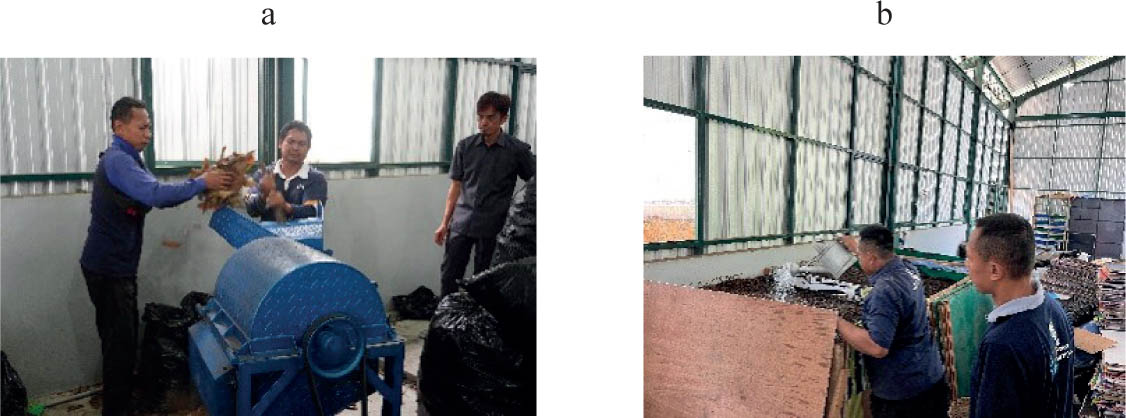
FIGURE 3.
Campus waste management system: (a) organic waste shredding; (b) compost fermentation
Source: own field documentation (2025).
This efficiency also has significant ecological implications. By processing more than 4 tons of organic waste every day, the volume of waste sent to landfills can be substantially reduced. This reduction not only lowers the cost of transporting waste but also reduces the potential for greenhouse gas emissions resulting from the decomposition of organic waste in landfills (Kiehbadroudinezhad et al., 2024). Previous research has shown that composting organic waste can significantly reduce methane emissions compared to conventional disposal methods (Li et al., 2023; Manea et al., 2024). Therefore, the waste treatment system implemented on campus not only improves the efficiency of waste management but also contributes to climate change mitigation and the improvement of the quality of the campus environment (Lee & Lee, 2021; Jakimiuk et al., 2023).
In addition, the existence of 15 temporary landfill points spread across various areas of the campus strengthens the waste sorting system at the source. The location of the temporary disposal site can be seen in Figure 4. This early-stage sorting is an important factor in determining the success of the recycling and composting process because the quality of the organic matter entering the processing facility affects the quality of the compost produced. Thus, the success of organic waste management on campus does not only depend on processing technology but also on the participation of the academic community in consistent waste sorting practices (Ojuri et al., 2024; Sumarmi et al., 2025a).
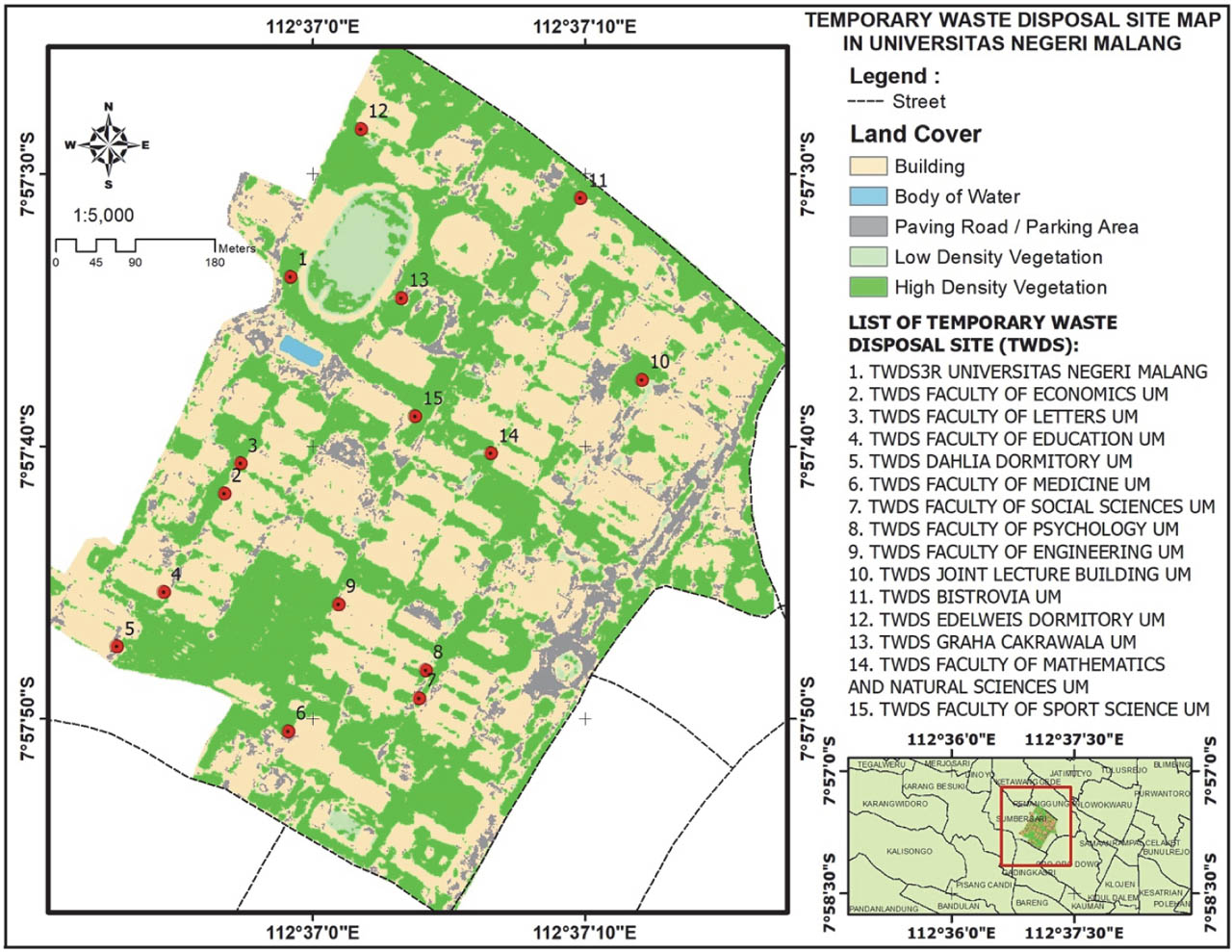
FIGURE 4.
Temporary waste disposal sites map at the University of Malang (UM)
Source: own documentation (2025).
The results of the study show that the compost produced from organic waste processing is used directly in campus ecofarming activities. The compost is used as the main fertilizer in various plant cultivation areas spread across several campus open space zones, such as fruit gardens, forest gardens, rare plant collection areas, and food security plots (Zapałowska & Jarecki, 2024). This integration between waste management and agricultural activities creates a circular system where organic waste generated by campus activities is reused as a source of nutrition for local food crops. This approach reflects the principles of a circular economy in resource management, where waste is no longer seen as a final product to be disposed of, but as a resource that can be reused in a sustainable production system. In this context, campus ecofarming serves as a mechanism that connects waste management with local food production and natural resource conservation. Organic compost-based farming systems not only improve soil fertility but also improve soil structure and increase water retention capacity (Blanco-Canqui et al., 2024; Abbasi, 2025).
In addition to ecological benefits, the integration of waste management with ecofarming also provides important educational value for the academic community. Students not only learn the concept of sustainability theoretically but also get directly involved in waste management practices and food production. Thus, campus ecofarming functions as a living laboratory that allows students to understand the relationship between human activities, resource management, and environmental sustainability (Lin, 2022; Nansen, 2024). This approach is in line with the concept of education for sustainable development which emphasizes the importance of experiential learning in shaping environmental awareness and sustainable behavior.
Local food genetic resources available at the University of Malang (UM)
The implementation of ecofarming at the University of Malang (UM) also utilizes local food genetic resources that have high ecological and cultural value. The results of the field identification showed that there were 12 types of local food crops cultivated in the campus ecofarming system, including cassava, taro, sweet potato, canna, arrowroot, banana, breadfruit, jackfruit, pumpkin, and spinach. These plants were chosen because they have high adaptability to local environmental conditions, good nutritional value, and the potential to support food diversification (FAO, 2021; Jacob et al., 2023). Plant diversification is displayed in Figure 5. One form of planting results that has been successful at the University of Malang (UM) shows Figure 6. In addition, the spatial distribution of local food genetic resources in six defined zones, such as fruit orchards, forest gardens, rare plant collections, ornamental gardens, food security plots, and green corridors, is visualized in Figure 7.

FIGURE 5.
Plant diversification: (a) pumpkin plants, (b) tuber plants, (c) cavendish banana plant seedlings, (d) mixed plants of cassava, (e) breadfruit and mangosteen seedlings, (f) mature breadfruit trees
Source: own field documentation (2024).
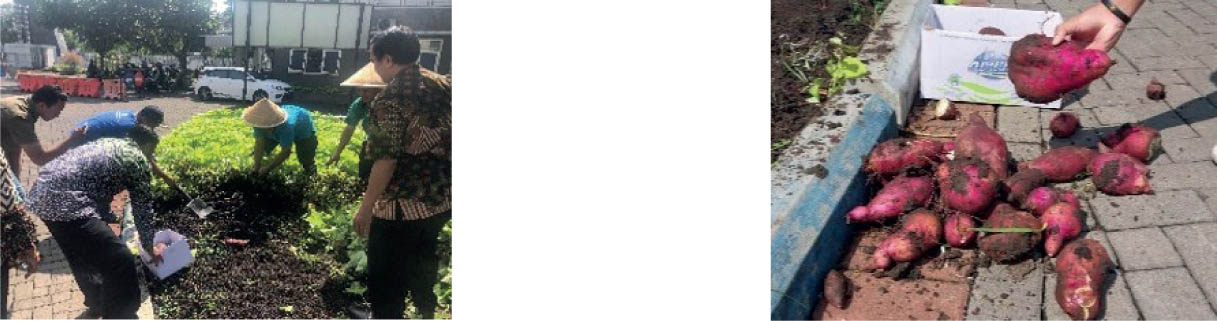
FIGURE 6.
Sweet potato harvesting process at the University of Malang (UM)
Source: own field documentation (2024).
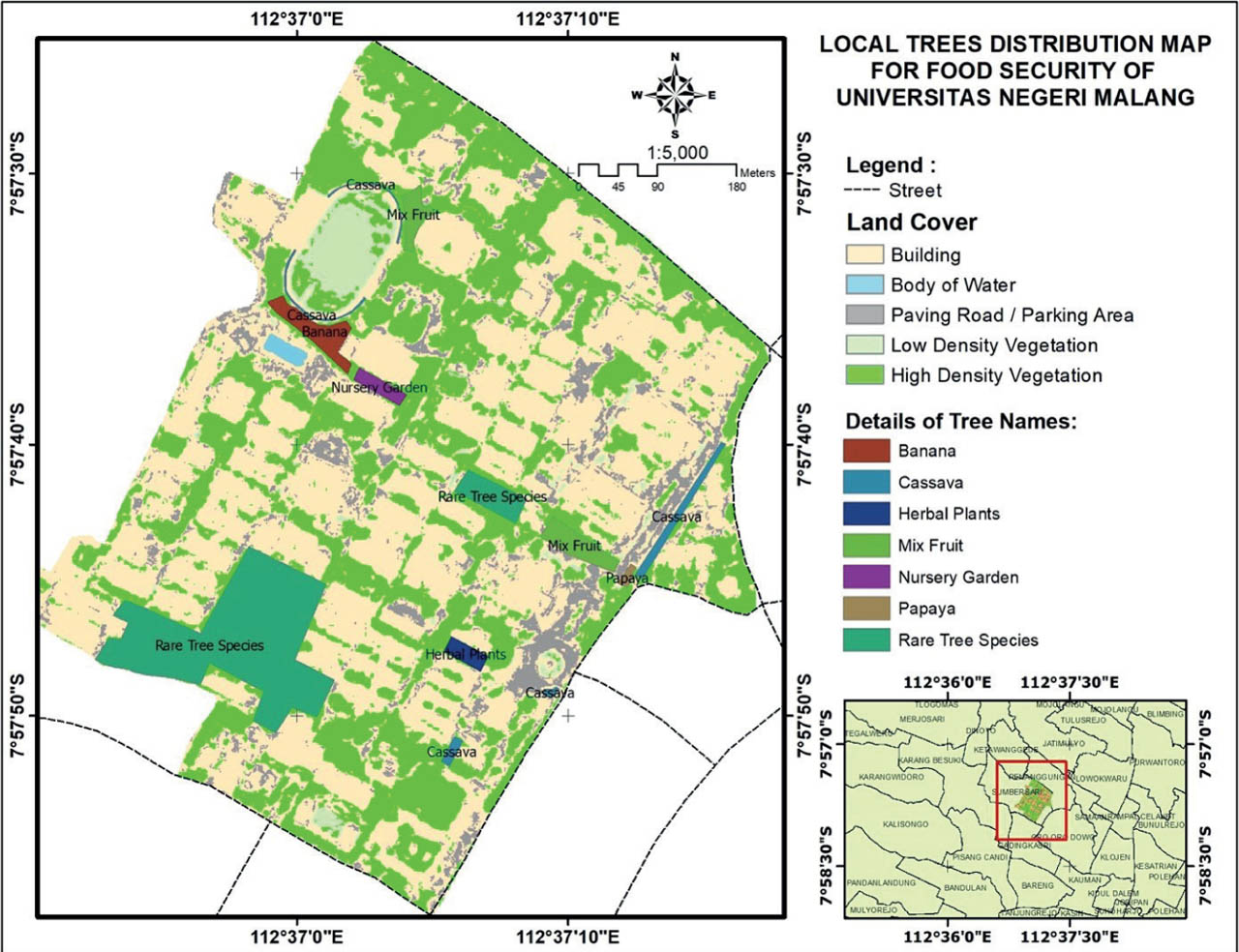
FIGURE 7.
Local food genetic resource planting distribution map
Source: own field documentation (2025).
The ecofarming program integrates twelve local food species, such as cassava, taro, yam, banana, breadfruit, and others, selected for their adaptability, nutritional value, and cultural significance (Fig. 5). Compost and liquid organic fertilizers produced on campus sustain these crops, while hydroponic trials further diversify production. Periodic harvests yield local food products, such as cassava fries and analog rice, supporting food resilience and entrepreneurship.
Harvesting activities conducted every four months, as shown in Figure 6, yield cassava and sweet potatoes that are processed into various food products, such as analog rice, fries, and pastries. These activities contribute to food self-sufficiency, entrepreneurial skill development, and student participation in sustainable agriculture.
The spatial distribution of local food genetic resources across six designated zones, such as fruit gardens, forest parks, rare plant collections, ornamental gardens, food-security plots, and green corridors, is visualized in Figure 7.
Over-reliance on some global food commodities can increase vulnerability to climate disruptions, price fluctuations, and supply chain disruptions. In contrast, food systems based on local plant diversity tend to be more resilient because they have a wider variety of food sources and better adaptability to environmental changes (Wood et al., 2023; Zuza et al., 2024). The use of local food genetic resources not only supports food production but also plays a role in biodiversity conservation. Local plants cultivated in various open space zones on campus help maintain the sustainability of local germplasm while reintroducing traditional plants to the younger generation. Thus, campus ecofarming functions as an in situ conservation medium for local food crops that have strategic value in a sustainable food system.
Waste management toward campus ecofarming based on local food genetic resources at the State University of Malang (UM)
The integration of waste management and ecofarming forms a circular resource system in which organic waste is transformed into compost and reused to support local food cultivation. Organic waste collected from faculties and cafeterias is shredded, mixed with bio-molasses (biomol), and fermented for approximately one month to produce high-quality compost. Figure 8 illustrates the main stages of this process: collection, shredding, fermentation, and packaging.

FIGURE 8.
Circular resource system: (a) collection of organic waste (leaves) in campus areas, (b) staff conducting the grinding of organic waste, (c) results of the grinding process, (d) biomol production process for compost decomposition bacteria, (e) ground organic waste periodically watered with the biomol solution, and (f) organic compost products ready for use or marketing
Source: own field documentation (2025).
The implementation of waste management models integrated with ecofarming shows a real contribution to the achievement of the SDGs, especially SDG 2 which targets the elimination of hunger, increasing food security, and developing sustainable agriculture. The implementation of waste management toward ecofarming and a campus based on local genetic power can be seen in the contribution of three main aspects. These contributions are reflected in three main areas, namely increasing local food production, diversifying the food system, and strengthening sustainable food literacy in the campus environment.
The use of organic compost as the main fertilizer in ecofarming allows for sustainable local food production without reliance on synthetic chemical fertilizers (Zapałowska & Jarecki, 2024). This system not only lowers production costs but also improves soil quality and the sustainability of agricultural ecosystems.
The cultivation of various types of local food crops increases the diversification of the food available in the campus environment. This diversification is an important component of a sustainable food system because it can increase food security against climate change and production disruptions (Cadavid et al., 2024).
Ecofarming activities provide students with hands-on experience in sustainable food production practices. Students are involved in various activities, such as planting, plant maintenance, and harvesting and processing of agricultural products. This engagement strengthens students' understanding of the importance of local food systems and environmental sustainability.
Thus, campus ecofarming not only functions as a food production system but also as an educational platform that integrates resource management, environmental conservation, and food security. This model shows that higher education institutions can play a strategic role in supporting the achievement of sustainable development goals through integration between research, education, and sustainability practices at the institutional level. This path is also supported by being inaugurated in the Rector's Regulation on integrated waste management, which is embedded in the green campus roadmap of the State University of Malang (UM) (Fig. 9).
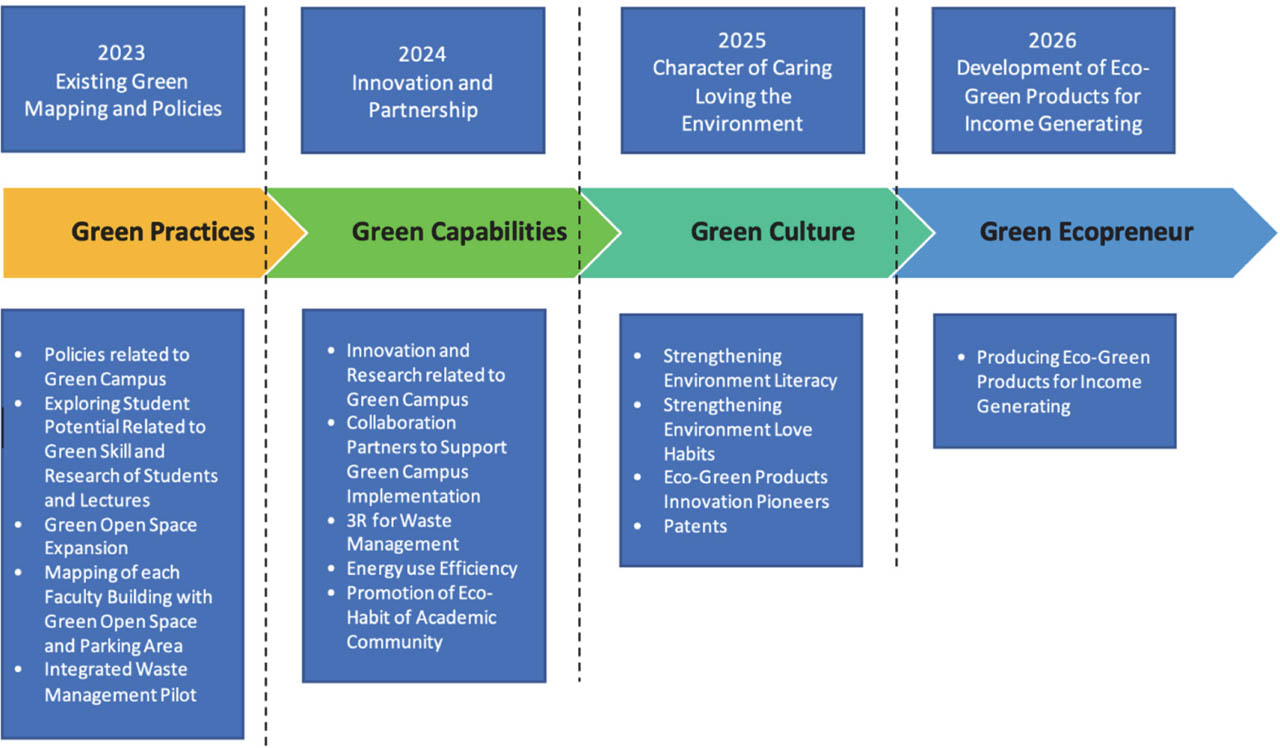
FIGURE 9.
Green campus roadmap of the State University of Malang (UM) in sustainable environmental management
Source: own work (2025).
Waste management optimization model toward campus ecofarming based on local food genetic resources to support SDG 2 (Zero Hunger) achievement
The synthesis of research findings shows that the integration of organic waste management with campus ecofarming forms a circular system that optimizes the use of resources while supporting sustainable food production. This model connects four main components, namely the separation of organic waste at the source, the production of organic compost and fertilizer, the use of compost for the cultivation of local food crops, and the integration of these activities in the campus education and research system. The integration creates a feedback mechanism that allows organic waste generated from campus activities to be reprocessed into productive inputs for the ecofarming system, thereby reducing the volume of waste while increasing the efficiency of environmental resource utilization.
From a sustainability system perspective, this model shows that waste management serves not only as a waste reduction strategy but also as a source of input for local food production. The compost produced from the organic waste processing process increases soil fertility and supports the growth of local food crops, such as cassava, taro, sweet potatoes, and bananas which have high ecological adaptability. The diversification of these crops strengthens local food security while supporting the conservation of food genetic resources. Thus, campus ecofarming not only contributes to waste reduction but also builds a resilient and sustainable local food system.
In addition to the ecological benefits, this model also has important social and educational dimensions. This approach shows that higher education institutions can play a strategic role in supporting the achievement of SDG 2 (Zero Hunger) through strengthening local food systems, diversifying food crops, and developing sustainable agricultural practices based on local resources. The following model strengthens the waste management optimization system for ecofarming. To strengthen the system analysis, the relationship between the components of waste management and ecofarming can be modeled as a simple optimization system, as shown in the following formula:
where: Z – optimal value of waste management system, C – amount of compost produced, F – local food production from ecofarming, W – amount of untreated organic waste.This model can be interpreted if the optimal system is achieved when compost and food production increases, while the amount of untreated waste decreases. The synthesis of findings produced a waste management optimization model, illustrated in Figure 10, which connects organic waste management, compost production, local food cultivation, and education. The model emphasizes a circular process where waste serves as an input for ecofarming, and the ecofarming outputs strengthen food resilience and learning outcomes.
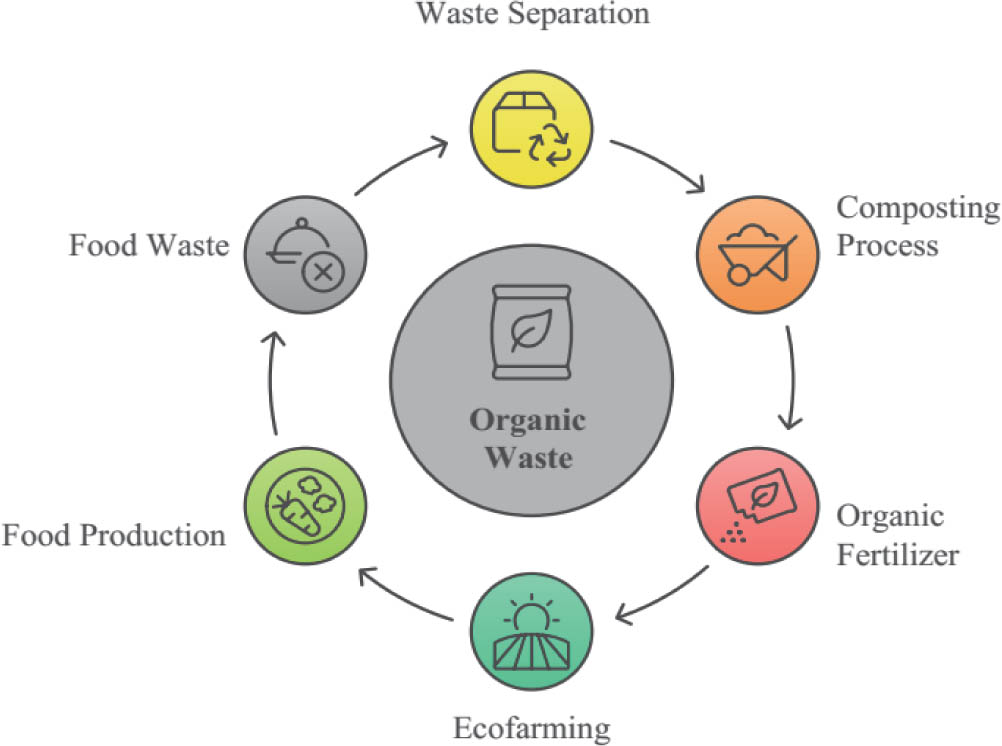
FIGURE 10.
Waste management optimization model toward campus ecofarming based on local food genetic resources
Source: own work (2025).
The model comprises four integrated elements: (1) organic waste reduction and segregation at the source (Erälinna & Szymoniuk, 2021); (2) compost and liquid fertilizer production from organic waste (Tittonell et al., 2022); (3) utilization of compost for cultivating local food crops, such as taro, cassava, and breadfruit (McKay et al., 2025); and (4) cross-disciplinary integration of education and research (Lin, 2022). These components form a continuous feedback system that minimizes waste and maximizes ecological benefits.
The circular system model illustrated in Figure 10 shows that campus-based organic waste management can serve as an integrative mechanism that connects waste management systems with sustainable food production. Through the stages of waste sorting, composting, use of organic fertilizers, and the implementation of ecofarming, organic waste is converted into productive resources that support local food production. This system creates a feedback cycle where food waste generated from consumption activities is re-entered into the waste management system to be processed into compost, thus forming a circular economy mechanism that minimizes waste and maximizes resource efficiency (Arthur et al., 2022; Cadavid et al., 2024).
This model shows that the integration between organic waste management and ecofarming not only produces ecological benefits in the form of waste reduction and increased soil fertility, but also contributes to local food security through food production based on local genetic resources. This approach strengthens the concept of campus sustainability system, where higher education institutions function as living laboratories that integrate environmental management, food production, and sustainability learning in one systemic framework. Thus, this optimization model makes an empirical contribution to the literature on circular waste management and campus agroecology, and shows that educational institution-based ecofarming can be an effective strategy to support the achievement of SDG 2 (Zero Hunger) through strengthening a sustainable, efficient, and participatory local food system.
In addition to making an empirical contribution to sustainable waste management practices in the university environment, this optimization model also has important theoretical and policy implications for the development of sustainable campus system. Theoretically, this model expands on agroecological and circular economy approaches by showing how the integration of organic waste management and local food production can form resilient microfood systems at the institutional level. From a policy perspective, the results of this study show that the development of integrated waste treatment facilities that are integrated with ecofarming activities can be an effective strategy for universities in improving the efficiency of waste management while supporting local food security. In addition, the systemic approach developed in this study has the potential to be replicated in a variety of other higher education institutions, especially those with open space resources and significant organic waste production. Thus, this model is not only relevant in the local context of the State University of Malang (UM) but also offers an adaptable conceptual framework to strengthen sustainability practices and the implementation of sustainable development goals on various campuses at the national and global levels.
Conclusions
The developed optimization model for waste management toward campus ecofarming based on local food genetic resources demonstrates that environmental sustainability can be achieved through integrated and participatory systems. The model has been successfully implemented at the State University of Malang (UM) and proven effective in reducing waste, producing compost and liquid fertilizer, and utilizing them for cultivating local food crops.
The integration of waste management with ecofarming activities contributes directly to the achievement of SDG 2 (Zero Hunger) by supporting food independence, biodiversity conservation, and sustainable agriculture. It also creates educational benefits through students' involvement in waste processing, planting, and harvesting activities, which strengthen their environmental awareness and responsibility.
The developed model links four key components: waste reduction and segregation, compost and fertilizer production, utilization for local food cultivation, and academic integration through education and research. This system reflects a circular and sustainable approach that transforms waste into valuable resources, while enhancing ecological and social resilience within the campus community.
The proposed model offers a structured framework for integrating organic waste processing, compost production, and local food cultivation within university sustainability programs. The results affirm that campuses can act as living laboratories for sustainability by combining scientific innovation, education, and community participation in a single operational model.
Acknowledgments
We extend our sincere gratitude for the research funding support provided by the Directorate General of Research and Development at the Ministry of Higher Education, Science, and Technology through the DPPM programs. We would also like to thank the Department of Research and Community Services (Lembaga Penelitian dan Pengabdian Masyarakat – LPPM) at the State University of Malang (Universitas Negeri Malang) for facilitating this research and we express our appreciation to all members of the research team. This research was conducted without any intentions or conflicts of interest involving individuals or groups.
Notes
[2] Data availability
Research data supporting the findings of this study are available from the corresponding author upon reasonable academic request.
[3] Competing interests declaration
The authors certify that no competing financial interests or personal relationships exist that could potentially have influenced the research outcomes reported herein. This research was reviewed by the Ethics Committee of the University of Malang (Universitas Negeri Malang), which confirmed that the study was exempt from ethical approval under Institutional Review Board Statement letter number 13.3.5/UN32.14/PB/2026.