

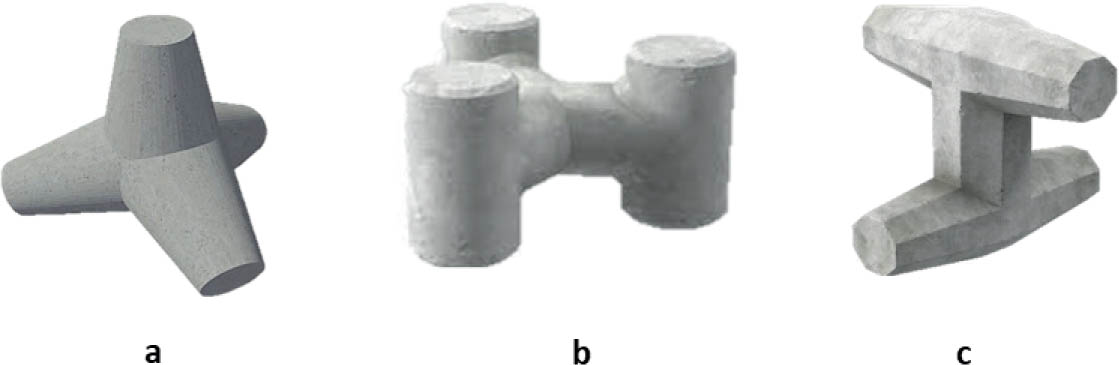
FIGURE 1.
Concrete armor units commonly used in rubble mound breakwaters: (a) tetrapod, (b) tribar, and (c) dolos
Source: own work.
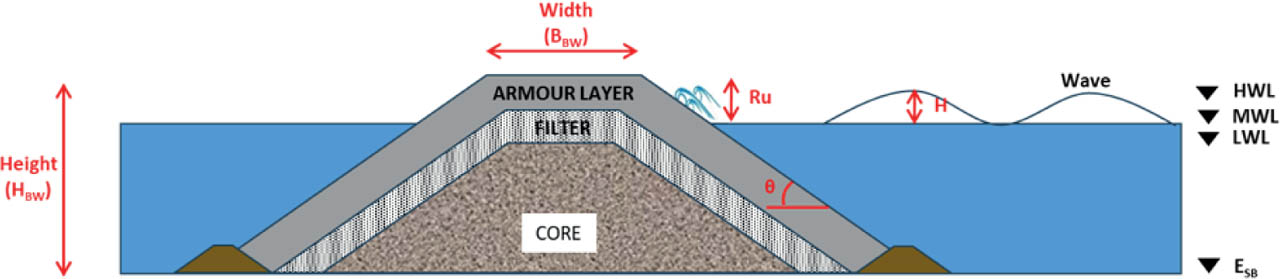
FIGURE 2.
Breakwater configuration used in this study
Source: own work.
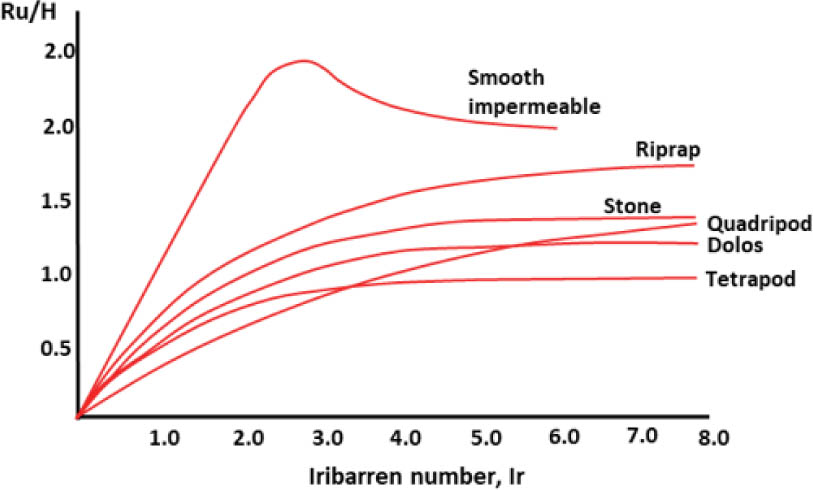
FIGURE 3.
Iribarren number (Ir) and relative wave run-up (Ru/H) curves for different types of armor
Source: Triatmodjo (2016).
TABLE 1.
Stability coefficient for different armor types
| Armor | Stability coefficient (KD) [-] | Layer coefficient (kΔ) [-] | Porosity (P) [%] |
|---|---|---|---|
| Tetrapod | 8.0 | 1.04 | 50 |
| Tribar | 10.0 | 1.13 | 54 |
| Dolos | 31.8 | 1.0 | 63 |
[i] Source: Triatmodjo (2016).
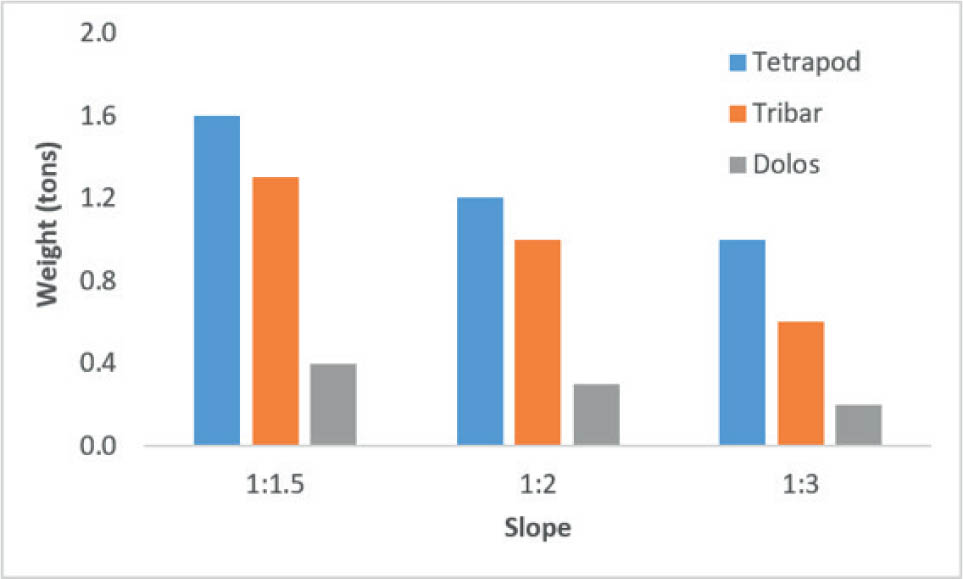
FIGURE 4.
Required armor unit weights for tetrapods, tribars, and dolos across different breakwater slope configurations
Source: own work.
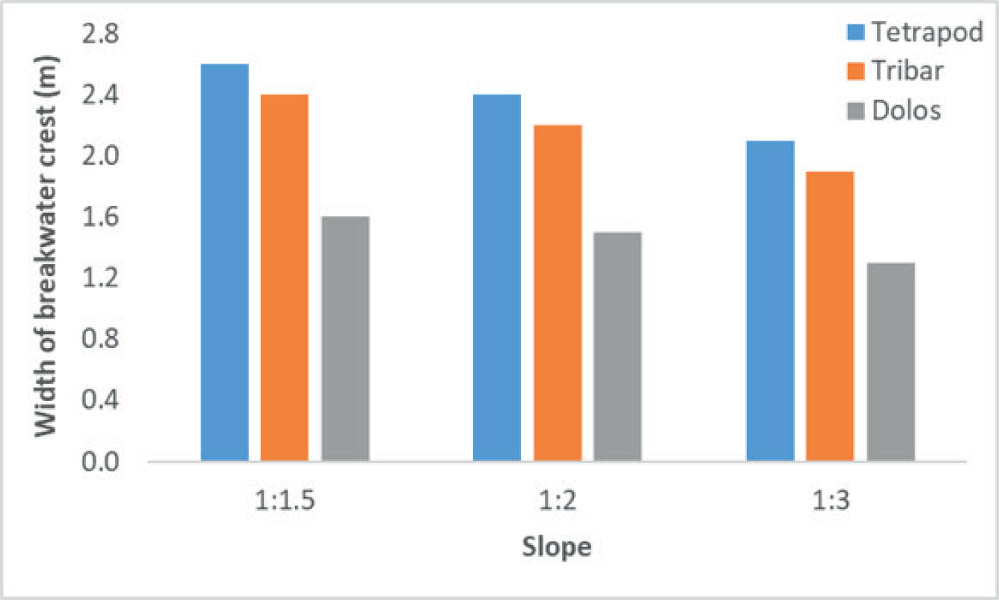
FIGURE 5.
Required breakwater crest widths for tetrapods, tribars, and dolos across different slope configurations
Source: own work.
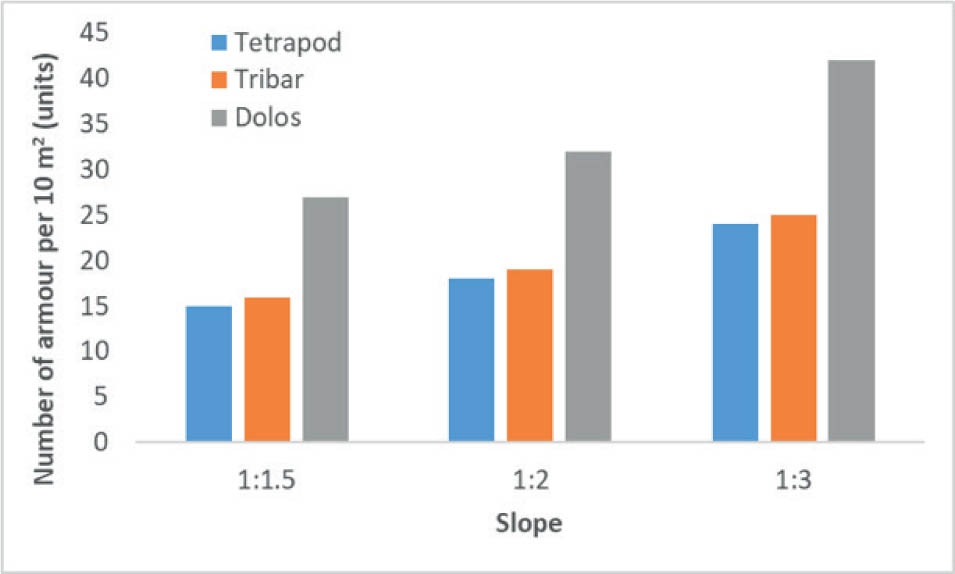
FIGURE 6.
Required number of armor units for tetrapods, tribars, and dolos across different slope configurations
Source: own work.
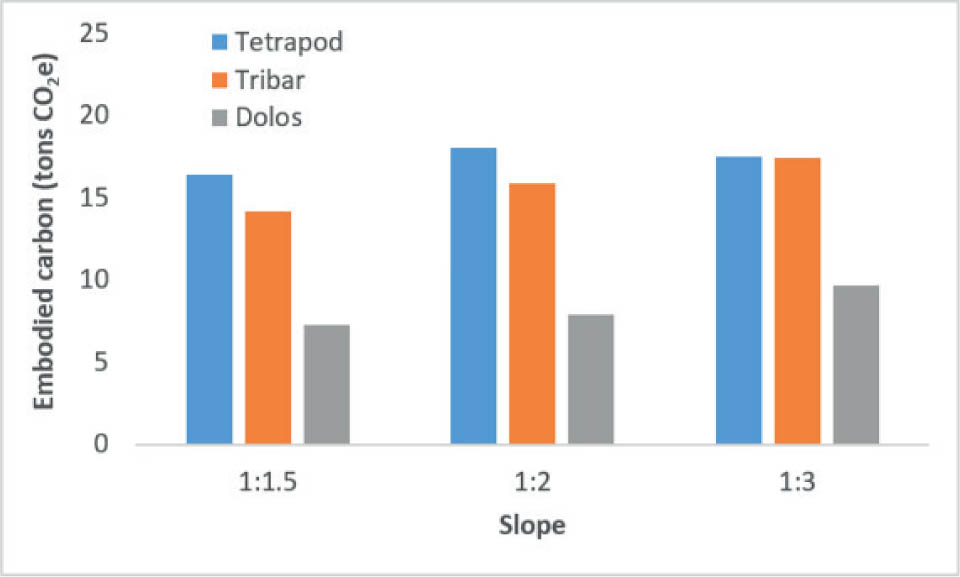
FIGURE 7.
Embodied carbon emissions per meter length of breakwater across different slope configurations
Source: own work.