

Introduction
Wastewater from the bottled water industry is a significant volume of liquid waste containing suspended solids, organic matter, and microbiological contaminants (Zahoor & Mushtaq, 2023). Although most mineral water plants have wastewater treatment plants (WWTPs), the effluent quality often still fails to meet reuse standards, particularly for sensitive applications such as fish farming (Ruan et al., 2019). Existing WWTP systems tend to rely on conventional, reactive approaches that are costly and difficult to adapt to specific needs (Bergamasco et al., 2011).
Suboptimal WWTP design – whether in filtration media setup, space use, or operational flexibility – frequently fails to achieve the target treated water quality (Loh et al., 2021). There is a need for innovation in wastewater treatment system design that prioritizes not only technical effectiveness but also efficiency, modularity, and adaptability for small- to medium-sized industries (Li et al., 2024).
This study highlights the design and optimization of a hybrid wastewater treatment system that combines biofiltration using mangrove leaf powder with ultrafiltration membrane technology (Ajaz et al., 2024). Unlike conventional approaches that use whole mangrove plants, this study uses dried mangrove leaf powder packed in filtration bags as the initial medium. This form was chosen to address land constraints, prevent clogging, and enhance the absorption efficiency by increasing the contact surface area (Bôto et al., 2023).
Mangrove powder is rich in tannins and polyphenols, which function as active agents for binding heavy metals and organic compounds. This medium also serves as a habitat for degrading microorganisms such as Bacillus coagulans, which support biological processes for pollutant removal (Saili et al., 2022). Meanwhile, ultrafiltration serves as the final stage for filtering micro-particles and improving the visual and microbiological quality of water. The semi-designed system developed in this study is intended to produce water quality that meets fish farming standards. The design principles include the following: the use of local materials (mangrove powder), a two-stage modular configuration (biofilter and membrane), and adaptability (Hossain et al., 2022).
Compared with conventional wastewater treatment systems that rely on chemical dosing or advanced mechanical operations, this hybrid design uses passive processes and modular biofilter geometry, offering a low-tech yet scalable alternative (Bergamasco et al., 2011). The urgency of this research lies in the need for a wastewater treatment solution that functions not only as a processing tool but also as an integrated system model ready for replication and application at an industrial scale, thereby preventing pollution and enabling reuse. Furthermore, this system is designed to produce treated water that is not only safe but also suitable for direct reuse in fish farming, thereby supporting integration between wastewater treatment and the fisheries sector.
The objectives of this study were to design a hybrid wastewater treatment system that integrates mangrove leaf powder biofiltration packed in bags with membrane ultrafiltration, to evaluate its effectiveness in improving the quality of bottled drinking water, to assess wastewater quality based on key parameters including biochemical oxygen demand (BOD), chemical oxygen demand (COD), total suspended solids (TSS), pH, total dissolved solids (TDS), and dissolved oxygen (DO), and to assess the suitability of the treated water as a medium for fish farming in accordance with aquaculture water quality standards (Roy et al., 2021). This system can promote water efficiency, reduce pollution, and enhance the economic value of wastewater through sustainable reuse.
Material and methods
Aim of the study
This study employs a laboratory-scale experimental approach to simulate the field application of a hybrid wastewater treatment system that integrates mangrove leaf powder biofiltration with ultrafiltration. The system was developed as a prototype and tested with effluent from industrial waste in Lingsar Village, West Lombok. The objective was to evaluate the treatment performance of a hybrid mangrove biofiltration and ultrafiltration system for industrial waste, assessing its suitability for use as water for fish farming. This design has the potential to be replicated in small- to medium-scale industrial environments.
Construction and operation of the hybrid system
The treatment system consisted of two main units:
Mangrove leaf powder biofiltration unit. Six sacks of fresh mangrove leaves were dried to produce 1.5 sacks of dried mangrove leaves. One sack (20 kg) of dried mangrove leaves was ground into a fine powder and sieved through a one-millimeter mesh. The powder was then packed into polypropylene sacks measuring 40 × 60 cm, each containing approximately 5–6 l of material. A total of 5–6 sacks were positioned horizontally within a filtration basin measuring 200 × 100 × 75 cm. Wastewater flowed by gravity through the biofilter, with a hydraulic retention time (HRT) of 4 h (Fedorova et al., 2022).
Membrane ultrafiltration unit. Effluent from the biofiltration unit was directed into a 10-inch cartridge housing containing three parallel five-micron filter bags. The unit operated in a low-pressure dead-end batch mode, using either a mini-booster pump or gravity flow. This configuration was chosen for its simplicity, energy efficiency, and adaptability to small-scale industrial applications (Aljahdali & Alhassan, 2020).
Sampling and analysis
Wastewater quality testing was conducted at each stage of the treatment process, including the WWTP influent, the mangrove biofiltration effluent, and the final effluent following ultrafiltration, to assess physical, chemical, and microbiological parameters. Physical parameters included temperature and TSS. Temperature was measured using a calibrated digital thermometer, and TSS, pH, DO, BOD, and COD were also evaluated. pH and DO were measured in situ using a multiparameter water quality meter. BOD was analyzed using a five-day incubation method at 20°C. COD was assessed using a closed-reflux method with a spectrophotometer. Ammonia and phosphate concentrations were determined colorimetrically using standard reagents and a spectrophotometer. Microbiological parameters, including total coliforms and Escherichia coli, were analyzed by filtering 250 ml of the sample through low-pressure filter paper, which was then placed on Chromocult coliform agar and incubated for 24 h at 37°C. Detergent testing employed the methylene blue active substances (MBAS) method, which involves reacting the sample with a methylene blue solution in an acidic medium, followed by extraction of the organic phase with chloroform. The resultant blue color intensity was measured using a spectrophotometer and compared against a standard curve. Data were analyzed descriptively to evaluate the effectiveness of each treatment stage and compared with the aquaculture water quality standards (Badan Standardisasi Nasional [BSN], 2008; BSN, 2018; Al Aani et al., 2020).
Results and discussion
The following data illustrate alterations in primary water quality parameters at each phase of the hybrid mangrove-ultrafiltration system. Pollutant concentrations are documented for untreated wastewater, post-mangrove powder biofiltration, and subsequent ultrafiltration. Fluctuations in pollutant load, including DO and pH, demonstrate the efficacy of the treatment process.
According to Table 1, the hybrid biofiltration and ultrafiltration system with mangrove leaf powder markedly enhanced the quality of mineral water wastewater. BOD, COD, and TSS levels declined, indicating efficient removal of dissolved organic matter. DO levels further evidenced this improvement.
TABLE 1.
Water quality parameters pre- and post-treatment for aquaculture
| Parameter | Average raw wastewater | Average after biofiltration | Average after ultrafiltration | Aquaculture quality standard |
|---|---|---|---|---|
| BOD [mg·l−1] | 46.5 | 22.0 | 6.1 | <10 |
| COD [mg·l−1] | 130 | 68.2 | 19 | <50 |
| TSS [mg·l−1] | 120 | 36 | 3.4 | <10 |
| DO [mg·l−1] | 2.3 | 4.5 | 6.8 | >5 |
| pH [-] | 6.4 | 6.8 | 7.1 | 6.5–8.5 |
The findings demonstrate that the hybrid system, which integrates mangrove leaf powder biofiltration with membrane ultrafiltration, substantially improves the quality of bottled drinking water wastewater, thereby meeting the standards required for fish farming. This system is explicitly tailored for small- to medium-sized enterprises, with a modular design, low operating pressure, and utilization of cost-effective, locally sourced materials (Jamal-Uddin et al., 2022). The design principles emphasize spatial efficiency and hydraulic adaptability, including maintaining an HRT of 4 h and implementing a screen filter before the ultrafiltration process to mitigate premature fouling (Li et al., 2012).
The reduction in BOD from 46.5 mg·l−1 to 6.1 mg·l−1 demonstrates the system's effectiveness in physically and biologically reducing dissolved organic matter. This value is below the threshold for freshwater fish farming (Toprak et al., 2022). This efficiency is achieved through a combination of the adsorbent properties of tannins and polyphenols in mangrove leaf powder and the microbial activity of Bacillus coagulans, which contributes to biological decomposition. These findings align with studies on horizontal gravel biofilter systems (Rehman et al., 2021), which reported significant reductions in BOD. However, the efficiency observed in this study is higher, likely due to the bag-based configuration, which enables more uniform flow distribution and improved passive aeration.
For COD, there was a decrease from 130 mg·l−1 to 19 mg·l−1. This indicates the system's ability to remove both easily degradable and more complex-to-degrade organic compounds. The final COD value was well below the standard of above 50 mg·l−1 and consistent with a study demonstrating similar efficiency in coagulation-ultrafiltration systems. The results of this study differ from those of a system that relies solely on metal coagulants. This natural-material-based system is more environmentally friendly because it does not leave chemical residues (Kurniawan et al., 2020).
The reduction in TSS from 120 mg·l−1 to 3.4 mg·l−1 reflects the system's success in filtering both macro- and micro-particles across layers. This reduction shows excellent performance compared with other studies reporting TSS efficiency of ±85% in sand-and-zeolite combination systems (Kumala Sari, n.d.). On the other hand, the system design in this study offers an advantage by utilizing micron-sized powder media packaged in bags, thereby increasing contact area and filtration efficiency (Aini, 2023).
The system shows stable pH between 6.8 and 7.1 and a low final TDS of 320 mg·l−1, indicating adequate chemical stability. This stability is maintained without chemical addition, unlike other systems that use metal coagulants or alkalis for pH adjustment. Moreover, the TDS remains well below the safety threshold of 1,000 mg·l−1.
The difference and advantages of this design compared with other systems lie in its ultrafiltration configuration. The use of a housing filled with a five-micron filter bag has been proven to be efficient at filtering micro-particles. This design is based on the principle of uniform pressure distribution and increased filtration surface area, which can extend the filter's life and reduce backflush requirements. The use of ultrafiltration represents a step forward in the biofiltration process using mangroves (Xu et al., 2022).
The system is additionally equipped with pressure gauges on each tank unit, a feature typically found only in large-scale industrial wastewater treatment facilities. These pressure indicators enable prompt inspection and maintenance, thereby preventing fouling and ensuring consistent HRT (Kawan et al., 2022). Such studies are infrequently reported for approaches utilizing local materials and low-technology methods, thereby underscoring the fact that the innovative aspect of this design resides in its applicability to small- to medium-scale industrial operations (Ahmed & Kareem, 2024). The findings of this study pertain not only to reductions in various pollutants but also to a more practical design approach aligned with the requirements of small- to medium-scale industries. Many prior investigations have only tested the media at a basic laboratory scale. The system developed here is equipped with measurements of operational pressure across all tanks, including biofiltration tanks and ultrafiltration housings. These measurements aim to ensure hydraulic stability and to detect potential blockages or increases in pressure loads at the earliest stage, thereby enabling effective operation in field settings, such as wastewater treatment plants (Kumar et al., 2021).
Furthermore, to maintain ultrafiltration efficiency and extend the media's lifespan, the system incorporates a coarse screening filter (mesh approximately 100–200 μm) immediately prior to the ultrafiltration housing inlet. This coarse filter acts as a final safeguard against debris or sizable particles that might bypass biofiltration and potentially lead to fouling or premature clogging of the five-micron filter bag. Although this pragmatic measure is infrequently employed in the small-scale academic research, it holds considerable significance for practical industrial deployment, thereby rendering the system not only technically effective but also practically replicable (Xia et al., 2022).
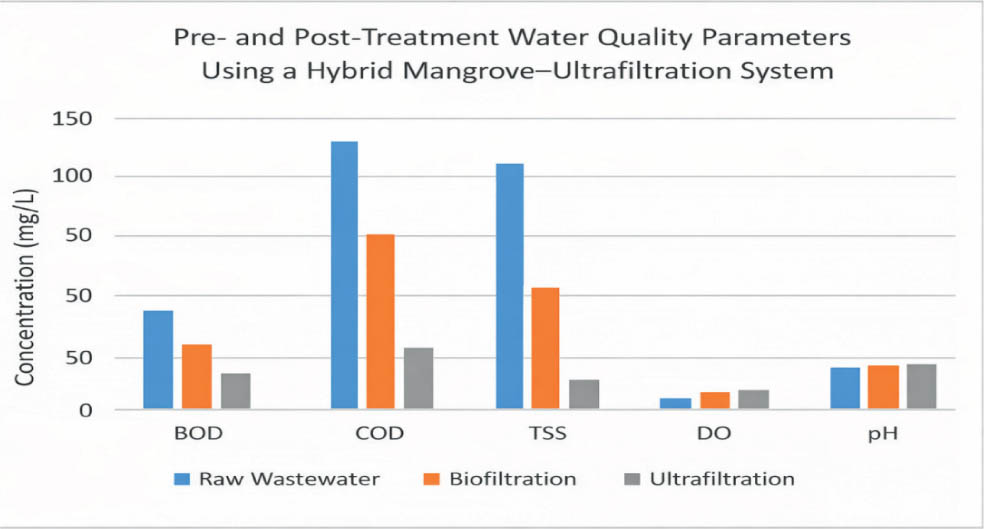
FIGURE 1.
Pre- and post-treatment water quality parameters using a hybrid mangrove-ultrafiltration system
Source: own work.
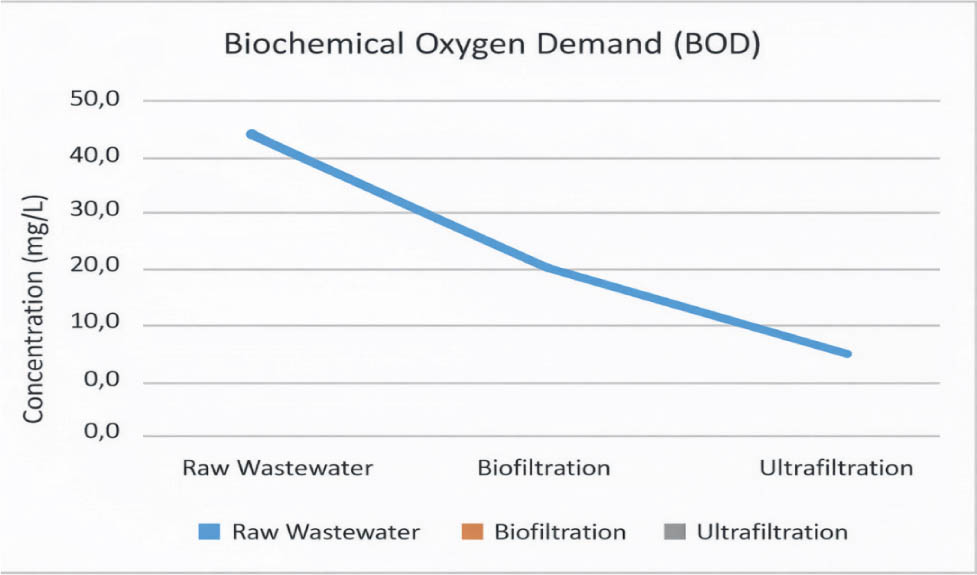
FIGURE 2.
Performance of biochemical oxygen demand reduction using mangrove-ultrafiltration system
Source: own work.
The BOD value decreased significantly from 46.5 mg·l−1 to 6.1 mg·l−1, demonstrating that the hybrid wastewater treatment system, comprising mangrove leaf powder biofiltration and membrane ultrafiltration, effectively removed organic matter by up to 86.88%. This efficiency is corroborated by the presence of active compounds, such as tannins and polyphenols, which possess adsorbent properties, and by the biological activity of Bacillus coagulans within the biofilter. The ultrafiltration process further enhances removal efficacy by removing fine particles and residual compounds. The final BOD value complies with standards for freshwater fish farming (above 10 mg·l−1), making the treated water suitable for use in aquaculture systems (Zhao et al., 2021). In comparison, Fei et al. (2020) achieved 79.2% BOD removal using mangrove powder in batch reactors, indicating that this system attained an 86.88% removal rate under continuous low-pressure flow, reflecting enhanced contact efficiency.
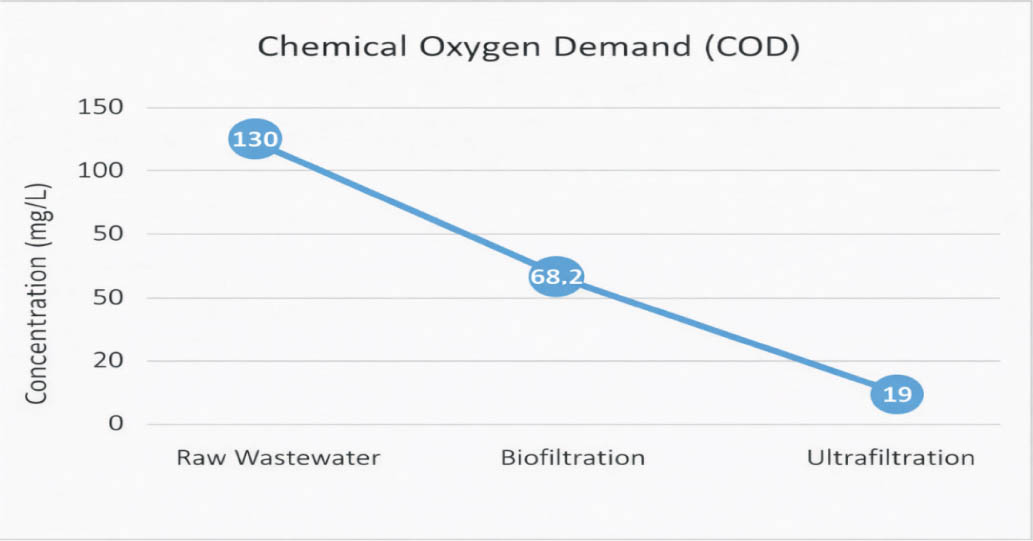
FIGURE 3.
Chemical oxygen demand reduction during biofiltration and ultrafiltration processes
Source: own work.
The COD decreased from 130 mg·l−1 to 19 mg·l−1, with a removal efficiency of 85.38%, highlighting the effectiveness of the hybrid wastewater treatment system in eliminating complex organic pollutants. During biofiltration, Rhizophora mucronata leaf powder serves both as an adsorbent and a microbial substrate. Its removal processes include adsorption of organic compounds via active functional groups, such as tannins and polyphenols, and biological degradation by microbes. The subsequent ultrafiltration stage acts as a physical barrier, removing residual dissolved and colloidal COD fractions post-biofiltration using five-micron filter bags in parallel under low pressure (Mentari et al., 2022).
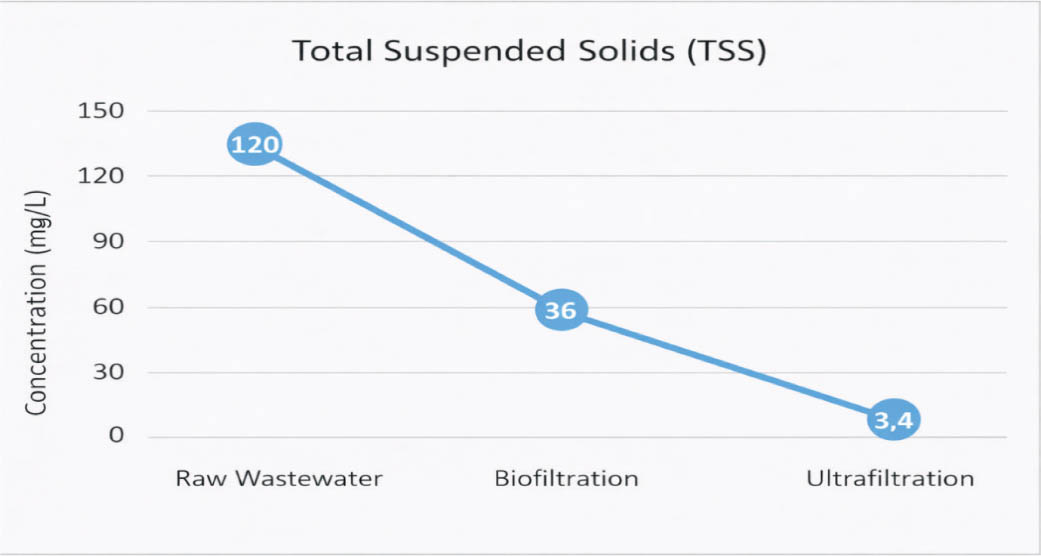
FIGURE 4.
Total suspended solids reduction during biofiltration and ultrafiltration processes
Source: own work.
The TSS level decreased markedly from 120 mg·l−1 to 3.4 mg·l−1, achieving a removal efficiency of 97.17%. This improvement directly enhances water clarity, a vital parameter in aquaculture (Adjovu et al., 2023). Elevated TSS concentrations can impede light penetration, hinder phytoplankton photosynthesis, and induce gill irritation in fish. In this system, mangrove leaf powder used in the biofiltration stage captures suspended solids through its porous packing matrix, while ultrafiltration effectively removes finer particles (Spence et al., 2023). The resulting clear effluent complies with Indonesian good aquaculture practices (CBIB) and the National Standardization Agency of Indonesia's technical standards (SNI) for freshwater fish culture and supports an aquatic environment conducive to sustainable reuse in aquaculture (Roy et al., 2021).
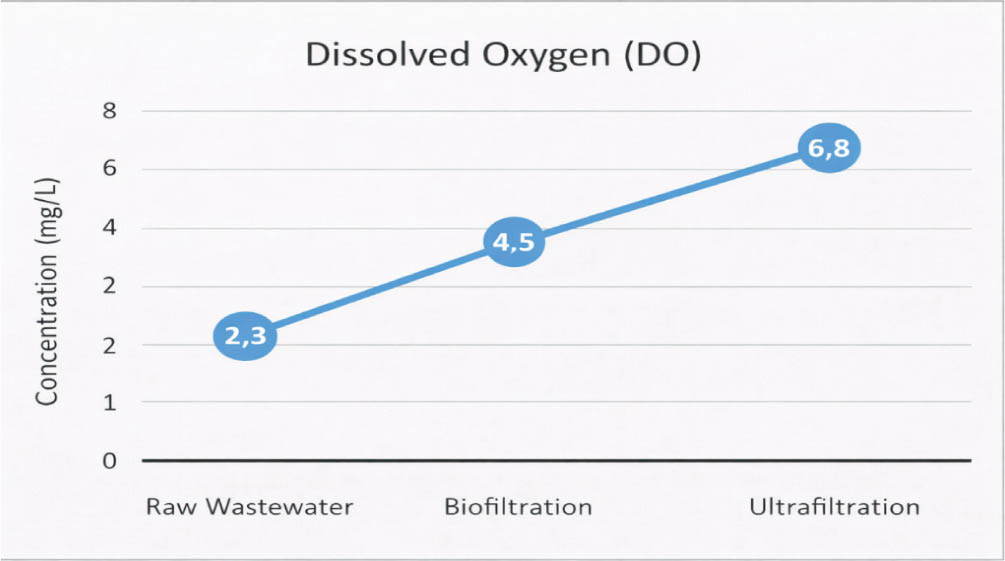
FIGURE 5.
Dissolved oxygen during biofiltration and ultrafiltration processes
Source: own work.
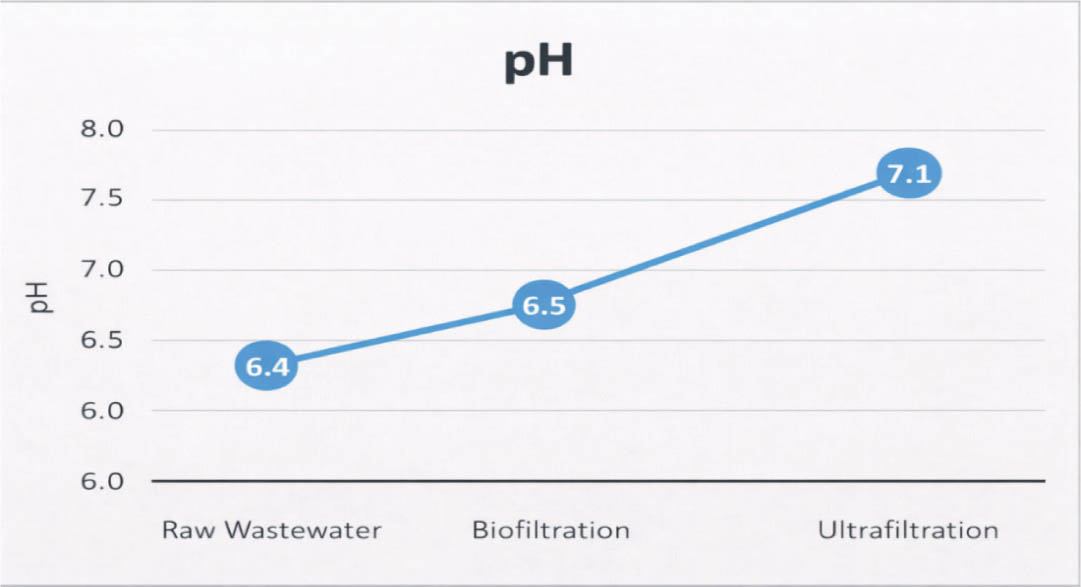
FIGURE 6.
Changes in pH at each stage of the treatment process
Source: own work.
The DO concentration increased from 2.3 mg·l−1 to 6.8 mg·l−1 following biofiltration and ultrafiltration. This enhancement was attributed to the slow vertical flow and interstitial spaces between the filter media, which facilitated passive oxygen diffusion. Notable reductions in BOD and TSS levels also reduced microbial oxygen consumption, thereby increasing DO availability. Aerobic microbial activity within the biofilter further contributed to the development of semi-aerobic conditions, thereby supporting oxygen enrichment. A final DO level exceeding 5 mg·l−1 meets aquaculture standards, thereby ensuring optimal conditions for fish respiration, growth, and overall health (Abdulgani et al., 2025).
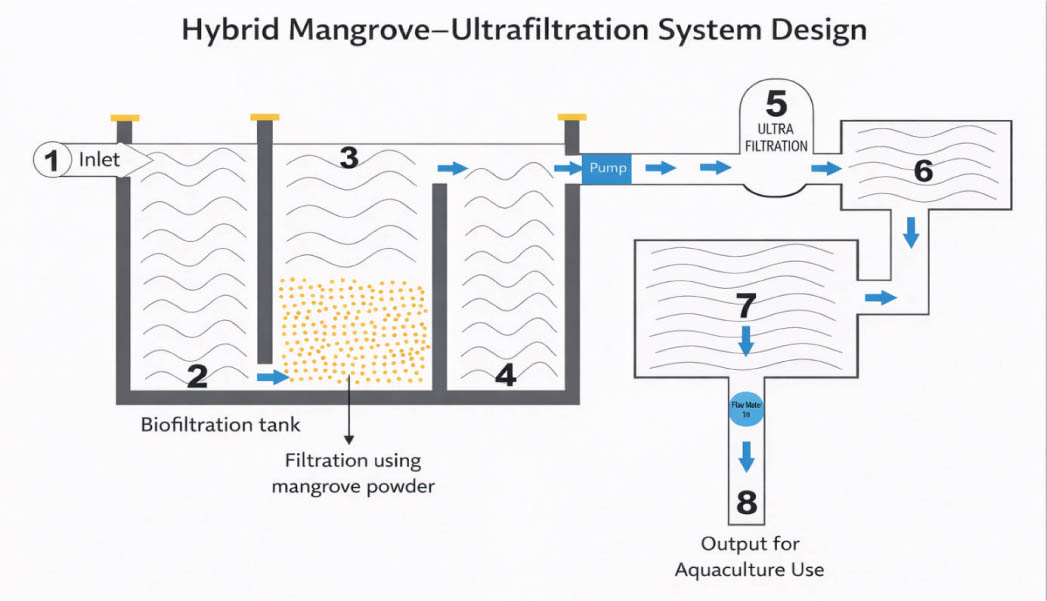
FIGURE 7.
Wastewater treatment design with mangroves and ultrafiltration
Source: own work.
Wastewater enters at Point 1 and flows into Tank 2, the initial sedimentation stage. The water then moves to Tank 3, followed by Tank 4, which contains mangrove leaf powder as a biofiltration medium to reduce organic load and contaminants. After biofiltration, the water is pumped into the ultrafiltration unit (Point 5) and filtered through the filter bags in Tank 6 to remove fine suspended particles and residual pollutants. The filtered water then flows to Point 7, the internal outlet. Finally, it exits at Point 8 as treated water that meets quality standards and is suitable for reuse in fish culture or safe discharge into the environment.
The findings of this investigation demonstrate that the hybrid mangrove-ultrafiltration system enhances water quality across all evaluated parameters (Verâne et al., 2020). The BOD decreased by 88%, indicating effective biological degradation and adsorption of organic substances (Zhu & Shin, 2021). Meanwhile, the COD decreased by approximately 85%, reflecting the removal of biodegradable and persistent organic compounds. The removal of TSS reached approximately 97%, underscoring the system's capacity to physically retain fine particles. The DO increased from 2.3 mg·l−1 to 6.8 mg·l−1, demonstrating the reoxygenation of processed water to levels sufficient to support aquatic life. Elevated dissolved oxygen levels correlate with improved water quality. The pH remained stable within the optimal range of 6.8–7.1, and TDS remained significantly below the permissible limit. These findings affirm the synergistic effect of biofiltration and ultrafiltration processes, supported by natural adsorbents and microbial activity, in producing high-quality effluent suitable for sustainable aquaculture (Abdulgani et al., 2025).
Conclusions
The hybrid wastewater treatment system, integrating mangrove leaf powder biofiltration and membrane ultrafiltration, has demonstrated efficacy in improving effluent quality in the AMDK industry. The system achieved over 85% reductions in BOD, COD, and TSS, while raising DO levels to 6.8 mg·l−1, thereby meeting the water quality standards required for freshwater aquaculture. Featuring a two-stage modular design, an HRT of 4 h, and utilizing cost-effective local materials, the system effectively addresses the demand for an efficient IMO-plant WWTP configuration. Furthermore, it confirms that the treated water is suitable for reuse as aquaculture water. This hybrid system offers a novel and scalable engineering solution for decentralized wastewater treatment.
Acknowledgments
The authors express their sincere gratitude to the Ministry of Higher Education, Science, and Technology for providing funding for this research through the Regular Fundamental Research (PFR) scheme under contracts 129/C3/DT.05.00/PL/2025, 2166/LL8/AL.04/2025, and 30/PMFHM.4/P.01.00/2025. This grant facilitated the project titled “Hybrid Mangrove-Ultrafiltration System: An Innovative Approach for Air Minum Dalam Kemasan (AMDK) Industrial Wastewater Treatment (Instalasi Pengolahan Air Limbah – IPAL) Toward Sustainable Aquaculture.” The financial support was pivotal in the successful execution of the study and the preparation of this publication.