
Introduction
Population control is commonly recognised as one of the keys to national growth and the welfare of women and children (Cleland et al., 2006) and for over half a century, developing countries have sought the benefits through implementing health programmes and family planning services for women (Hardee et al., 2017; Greene and Biddlecom, 2000; Hasan et al.. 2015). Bypassing the obvious fact that fertility decisions are influenced by both partners, women were largely assumed to have a stronger motivation to control fertility and embrace birth control due to the higher opportunity cost of childbirth. Given frequent interaction with the health system in managing children’s health needs, superior range of contraceptive technology available for women and fewer employment demands, women further proved to be an easy target for family planning services (Becker, 1996; Cockcroft et al., 2011). This focus on women is even more readily justified by painting a simplistic view of man’s world of either support or resistance towards family planning with limited space for alternative perspectives (Greene and Biddlecom, 2000; Becker, 1996; Hasan et al., 2015).
However, researchers have begun to look to the couple as the core for family planning decisions (Becker, 1996; Jejeebhoy et al., 2015; Lundgren et al., 2012; El-Khoury et al., 2016), and men’s sexual and reproductive health rights are being acknowledged more (United Nations, 1994; Hawkes and Collumbien, 2007). The embeddedness of population control in broader social structures is also gaining momentum, as recent studies on diffusion have shown that fertility choices often are made within a social network (Behrman et al., 2002; Kincaid, 2000; Montgomery and Casterline, 1993; Rutenberg and Watkins, 1997; Perkins et al., 2015). Even so, few studies have focused on the role of men enmeshed within social and institutional structures. This is especially wanting in the fertility studies in the South Asian context, which is characterised by pervasive patriarchal structures, in which men often play a dominant role in both the private and public domain (Hasan et al. 2015).
This study is the first to focus on male society in Bangladesh in the context of fertility regulation from a relational perspective.1 Bangladesh is a classic example of a strong patrilineal setting, in which men are the main decision makers and women are expected to produce the family’s desired number of children, which is often set without regard for the women’s preferences (Balk 1997). The historically skewed focus on women has been further reinforced in the design of Bangladesh’s national family planning programme. For nearly half a century, women have been targeted in their homes with motivational messages, contraceptive supplies, and counselling, while formally engaging men through community leaders to gain acceptance for the cause or addressing the needs of resistant men on an ad hoc basis (Cleland et al., 1994; Hardee et al., 2017). The cost intensive program has been largely credited for lower fertility rates in Bangladesh, from 6.3 births per woman in 1975 to 2.3 in 2011 (NIPORT et al., 2016; Cleland et al. 2006; Cleland et al. 1994). However, Bangladesh is still far from achieving its target total fertility rate of 1.7 children per woman by 2021 (NIPORT and ICF International, 2016). Further, many women continue to report an unmet need for contraceptives and high discontinuation rates are an issue (NIPORT et al. 2016). Given the significant cost of reaching women in homes, Bangladeshi family planning programmes are struggling to meet the demand for care and are facing low uptake of male contraceptive methods (DGFP 2014; NIPORT et al. 2016). All the while men and socio-structural factors continue to exert important influences on Bangladeshi’s women’s fertility choices (Kamal, 2000; Kincaid, 2000; Gayen and Raeside, 2010; Greene et al., 2006).
Trapped in theoretical perspectives of microeconomic models focussing on individual demand for children, family planning programmes in Bangladesh are unable to break the impasse by formulating a more inclusive and balanced approach. Demand based theories argue that fertility changes are a result of changing economic circumstances and dropping mortality rates; such that costs of fertility regulation must be counterbalanced with the benefits of having fewer children. Within these narratives, based on individualistic decision-making, there has been limited space to form socially contested and negotiated attitudes towards birth control. The diffusion perspective takes a more nuanced view, where men and women are both immersed in, and consequently influenced by, social processes (Behrman et al., 2002). Through this lens, social processes are seen as the primary driver of fertility change by invoking the spread of ideas through a social network. However, while there is a great deal of supporting evidence about women’s networks and their relationship with contraception, little is known about the structure and content of men’s social ties (Behrman et al., 2002; Kincaid, 2000; Montgomery and Casterline, 1993; Rutenberg and Watkins, 1997; Perkins et al., 2015). Fundamental questions of whether Bangladeshi men discuss birth control have not been posed. Hence, the aim of this study is to provide the first-ever view of men’s social interactions in the context of fertility control in Bangladesh using social network analysis. The results of this analysis reveal new avenues for action in population policy where dwindling funding demands greater programme efficiency (Cleland et al., 2006) and concrete actions to further engage men in family planning programmes continues to evade policymakers (Hasan et al. 2015; Hardee et al., 2017).
Networks, Diffusion and Family Planning
Firmly grounded in the tenants of classical sociology, the diffusion perspective focuses on the structure of relationships. According to diffusion theory, family planning is an innovation that may spread through a variety of channels, such as interpersonal or central sources like the media (Alvergne et al., 2011; Valente et al., 1997). Within this context, social learning and social influence are two important, but separate, elements of diffusion theory.
In social learning, individuals acquire and evaluate new information from networks, and the type of network governs the level of social learning derived (Alvergne et al., 2011; Behrman et al., 2002). Tie strength in social network analysis is used to invoke a general sense of closeness in relations – strong ties refer to connections, such as close friends, whereas weak connections refer to connections of acquaintances (Granovetter, 1973; Granovetter, 1983). Diffuse and heterogeneous networks typically draw on richer sources of information, which enhances social learning, because they are characterised by weak connections between a diverse set of individuals (Granovetter, 1973; Granovetter, 1983; Alvergne et al., 2011; Behrman et al., 2002).
In social influence, more commonly known as peer group pressure, conformist behaviour arises when norms of behaviour are altered or reinforced by an individual’s social networks. Dense social networks, where typically similar individuals in close relations share connections with many of the same people, are especially prone to conformist behaviour, because peer group pressure is often exerted by multiple sources (Behrman et al., 2002). Weak ties, on the other hand, result in low-density or diffuse/sparse networks, because respective contacts are less likely to be “socially involved with one another than our close friends” (Granovetter 1983: 201).2
Moreover, from a broader theoretical lens, sexuality and procreation are deeply impacted by notions of gender identity, which are formed through hierarchal relationship structures (Agadjanian, 2002). Gender is enacted in relationship structures; informing many social practices including sexuality, division of labour and fertility choices (Connell, 2012; Jamieson et al., 2010). Notions of masculinity and femininity have a deep bearing on the relationship between partners, as well as in interactions with the broader social structure (Jamieson et al., 2010). Therefore, a richer view of diffusion can be derived by incorporating male and female perspectives within the context of gender relations.
Macro-level studies have inspired the diffusion hypothesis for many decades. Diffusion effects have been supported in the Asian fertility transition in a variety of socio-economic conditions, with lower fertility rates diffusing across geographic borders (Freedman, 1987). Using data on 361 Taiwanese townships over 20 years, Montgomery and Casterline (1993) produced some of the strongest evidence for a within-township diffusion of birth control practices.
Large-scale diffusion of birth control practices mainly occurs through interactions between family, friends and neighbours (Munshi and Myaux, 2002; Perkins et al., 2015; Behrman et al., 2002). Kincaid (2000) found women in Bangladesh are five times more likely to use contraception if they engage in group family planning discussions. Recent evidence from Bangladesh shows that perceptions of support from women in peer networks are one of the primary determinants of contraceptive use (Gayen and Raeside 2011). Robust support for large-scale diffusion effects through social networks have also been confirmed using longitudinal data from Kenya that show, after successfully controlling for most confounding influences, the odds “of a woman currently using contraceptives increases by a factor of more than 2 … if she has at least one contraceptive user among her network partners” (Behrman et al. 2002, p. 728). Group interactions are important not only in fertility; they impact a range of health behaviours (Wemrell et al., 2016; Perkins et al., 2015).
Much research on the diffusion of fertility practices recognises the importance of social relationships, but fails to employ a socially integrated view of men’s role (Greene and Biddlecom, 2000). Yet, studies show that men often require support when using modern methods of birth control, and, in the absence of adequate support, men rely solely on friends for help and information (Chimbiri, 2007; Shattuck et al., 2011; Drennan, 1998; Karra et al., 1997; Brown et al. 2017). For example, men in Malawi consistently seek advice on how to use a condom both within and outside marital bonds (Chimbiri, 2007) while issues of family size and marriage are discussed more in Pakistani men’s networks (Brown et al. 2017). In Kenyan men’s networks, interactions regarding family planning is noted to be even more frequent than among women’s networks. (Behrman et al., 2002: 732). These qualitative observations have also been supported by regression analyses, which show the comparatively stronger effect of social networks on men than women (Behrman et al., 2002). Early results from experiments in group meetings in Pakistan reveal that men are optimistic about disseminating contraceptive information through social networks, and their attitudes toward birth control improve after participating in peer discussion groups (Ashfaq and Sadiq, 2015).
In a wide-ranging context in Africa, where community-based family planning programmes have been more inclusive of both sexes, health workers have been able to penetrate men’s networks more deeply to disseminate contraceptives knowledge (Stoebenau and Valente, 2003); to successfully influence men’s preferences toward birth control (McCarthy, 2015); and to stimulate greater uptake of contraception (Shattuck et al., 2011). In fact, South Asian research stresses that community health workers are essential to men undertaking child bearing responsibilities (Ali et al., 2004). Furthermore, these efforts complement, rather than eliminate, the importance of peer interactions (Stoebenau and Valente, 2003).
Men also play a key role in their partner’s choices about birth control (Karra et al., 1997; Lasee and Becker, 1997; Shattuck et al., 2011; El-Khoury et al., 2016). Many studies have found that a husband’s approval of family planning is a primary determinant in a woman’s decision to use contraceptives (Kamal, 2000; Kincaid, 2000; Gayen and Raeside, 2010). Kincaid (2000), for example, found that women in Bangladesh are twice as likely to practise family planning if their husbands approve. Similarly, spousal disapproval can be a major impediment to contraceptive use, though these attitudes are not always insurmountable (Drennan, 1998; Greene and Biddlecom, 2000; McCarthy, 2015; Shattuck et al., 2011; El-Khoury et al., 2016; Ali et al., 2004). In reality, most men and women do not have a fixed position on family planning issues. Hence, a more nuanced approach to exploring ideas about fertility in a socially interactive world with multi-layered relationship structures is required.
Bargaining within a marriage is common, and couples often navigate key decisions by negotiating with each other (Greene and Biddlecom, 2000), and contraceptive use is no exception (Ali et al., 2004; Shattuck et al., 2011; Drennan, 1998). Furthermore, fertility transition challenges gender roles in itself (McDonald, 2000; Wang and Pillai, 2001), creating space for new identities to emerge. Falling fertility rates have been shown to strengthen gender equality, which further drive changes in preferences that lead to renegotiations about family size (McDonald, 2000). It is, therefore, not surprising that communication and the power dynamics within a marriage have been found to be instrumental in dispelling misconceptions and changing attitudes about family planning in several contexts (El-Khoury et al., 2016; Lasee and Becker, 1997; Shattuck et al., 2011; McCarthy, 2015).
Power dynamics are also important to interactions between men. In Bangladesh, masculine notions of virility often rule out vasectomy as a form of contraception (Shahjahan and Kabir, 2006). Notions of weak men are found to coincide with poverty and the inability to provide for one’s family in Pakistan; thereby, relying on fertility control. Strong, educated men are not only expected to be good providers, but also demonstrate modern values, such as maintaining a small family. Thus, adoption of birth control practices coincides with both negative and positive perception of manhood creating confounding beliefs (Brown et al., 2017). Interactions with spouse, peers and health workers prove to be important influences on men and women, but diffusion studies call for a more integrated decision-making framework that brings social networks to the forefront of those choices. Accepting health services is as much a social process as it is an individual one and cannot be reduced to simple demand-side decisions. However, little has been done, beyond qualitative observations, to make men’s communication structures explicit (for an important exception see, Alvergne et al., 2011 and Behrman et al. 2002).
Bangladesh provides an interesting context to study men’s social networks. Its patriarchal structure affords men significant power, yet they remain peripheral to the national family planning programme (Cleland et al., 1994; Hardee et al., 2017). Some suggest that involving men in family planning may only serve to increase their control over women’s sexual health and reproductive rights (Cornwall, 1998, as cited in Sternberg and Hubley, 2004). However, the success of the Bangladeshi programme in the patriarchal context implicitly suggests a shift in community sentiments from resistance to support (Munshi and Myaux, 2002). Recent evidence further indicates that men have substantial potential to play a supportive role in family planning programmes in Bangladesh (Barker and Das, 2004; Kamal, 2000; Kincaid, 2000; Gayen and Raeside, 2010; Dorman and Bishai, 2012). These accounts are yet to be integrated with relational dynamics being explored in the diffusion theory. By analysing and quantifying men’s social networks, the aim of this study is to map the contemporary social space in which Bangladeshi men form and contest their opinions.
Methodology
This research focuses on mapping the structure of men’s interactions in the context of fertility and family planning using insights from social network analysis. Social network analysis explores the relationships between members of a social network by representing relationships as network structures. These, often hierarchical, structures determine the content of social relationships (Mizruchi, 1994).
Data Collection and Context
The data for this study was collected from select Bangladeshi villages in a rural community in the Matlab region totalling nearly 150 villages. The ethics approval for the research was granted by Macquarie University.
The Matlab population consists primarily of agricultural community with Islam being the predominant religion followed by Hinduism. The questionnaire was designed to determine men’s family planning network. Interspousal communication at a dyadic level, although extremely important, has been covered in previous studies and was not included in the scope of this study.3
The villages of Matlab have long been the subject of demographic research (Bhatia et al., 1980), and this history of experimentation has divided the community into two regions. Half the region has participated in an intensive health and family planning programme run by the International Centre for Diarrhoeal Disease Research, Bangladesh (ICDDR,B). The other half has only received government services. The women in both programmes have access to contraceptives and counselling via the ‘home delivery model’. However, the ICDDR,B programme includes more visits by community health workers, and its health care centres are more accessible (Bhatia et al., 1980). Except for a sterilisation scheme introduced in 1976 by the government that targeted men, but that was abandoned in 1983, neither programme systemically incorporates men through field visits or through specialised clinics (Rob, Khuda and Chowdhury 1996 as cited in Hossain 2003).
The long presence of ICDDR,B in select regions of Matlab may create opportunities for distinct networking patterns to emerge by influencing the attitude to contraceptive practices. Fertility trends in the Matlab area are similar to the rest of Bangladesh. However, villages participating in the ICDDR,B programme have seen a much faster drop in fertility rates than areas with access to only the government programme. Both areas are currently plateauing at 2.6 births per woman (ICDDR,B 2016).
To capture the systemic difference in program delivery, the snowball survey method employed began with initial seeds in four different villages – two of which were in ICDDR,B area and the remaining in the government area. In the initial round, a random sample of 1% was drawn from a pool of all married women aged 15-49 in each village. Women were chosen as the initial seeds due to the availability of data. If a woman’s spouse did not live in the village, another married woman of relevant age was selected, again at random. Each spouse was then contacted for an interview and was asked to name up to five people with whom they discuss family planning issues excluding their spouse along with questions about their socio-economic characteristics. In round two, each of the five nominated people was interviewed and asked for the same information. New contacts identified in round three were also contacted, but their nominees were only noted, not contacted. In total, the final sample comprised 430 respondents. Several men nominated people in neighbouring villages. 90% of these contacts were followed and successfully interviewed. However, those residing outside of the Matlab region could not be interviewed due to budgetary constraints. Spatial data was compiled with the assistance of ICDDR,B.
Data Analysis
Network structures for both men and women were constructed according to the concepts of social networks analysis using Ucinet software (Borgatti et al., 2002). These network or relationship structures are mapped using graphs, such that points are used to represent actors, and lines are used to represent social connections/ties/relationships between the respondents.
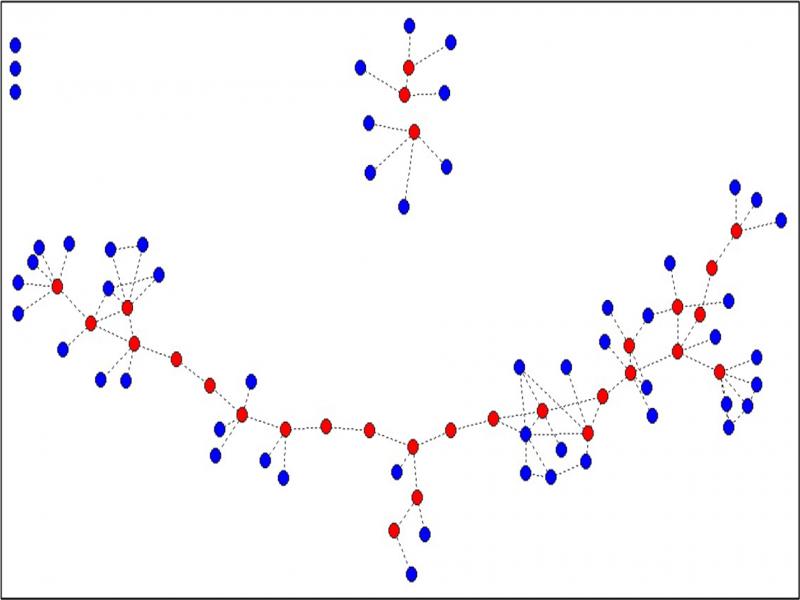
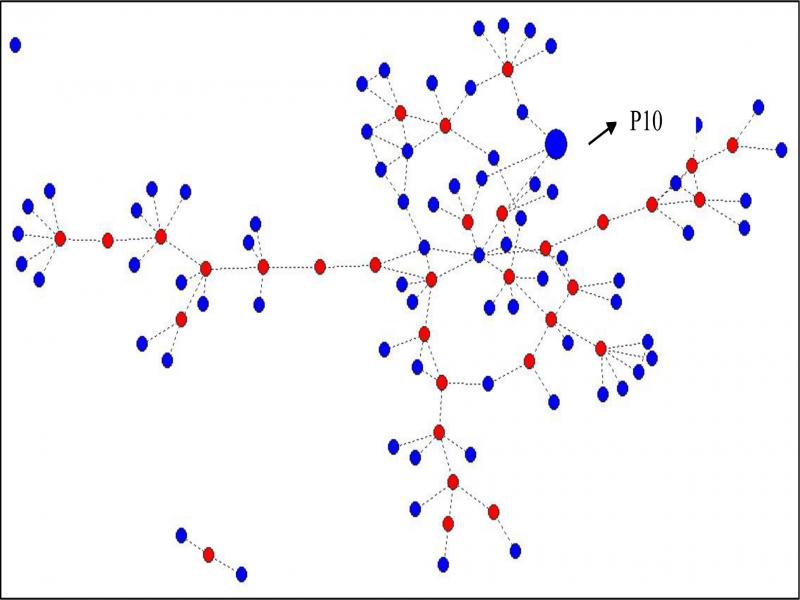
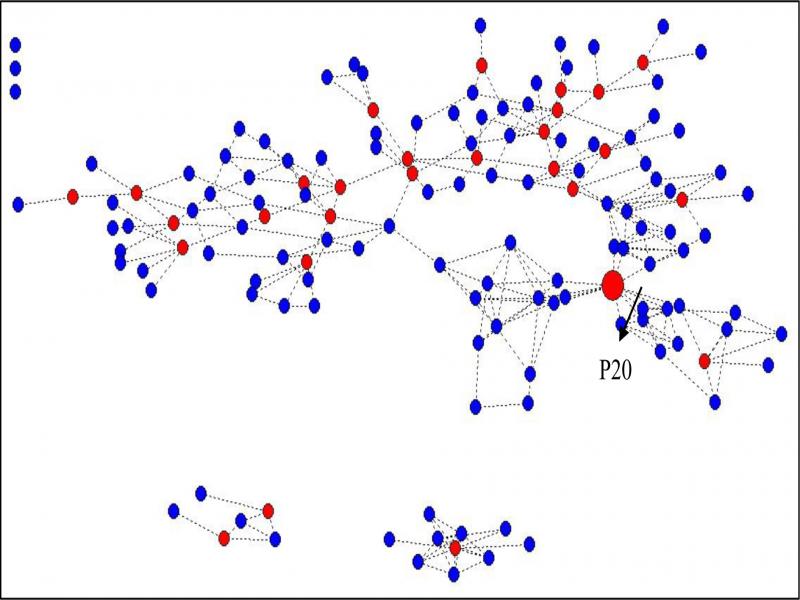
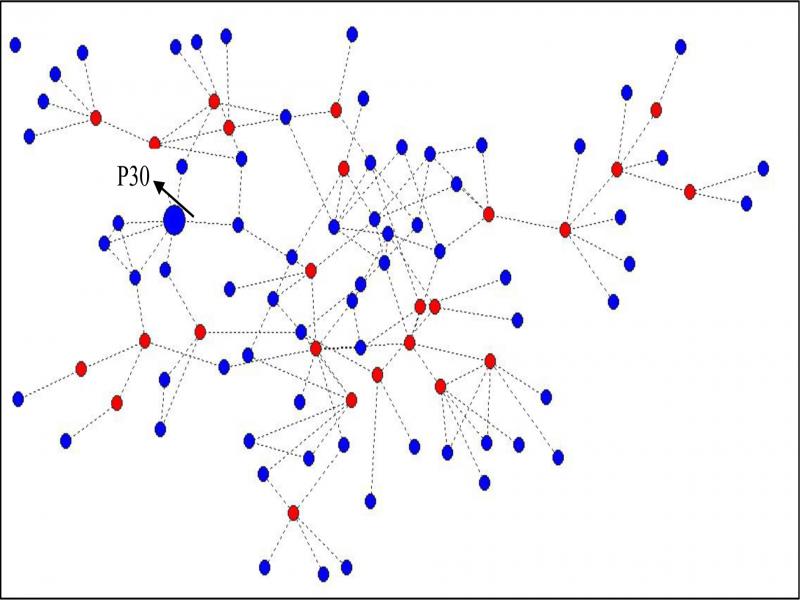
This study started with respondents in four separate villages, but the contacts quickly expanded outside the village boundaries due to snowball sampling techniques – resulting in four distinct social network structures with minimal overlap. The geographic location of each of the network structures is, thus, spread over a cluster of villages (referred to as Clusters A-D, respectively).
The resulting network structures were graphed and analysed using four criteria: subgroups, density, centrality and homophily. Subgroups and density were used as the main structural measures for capturing network cohesion. Centrality was used to measure the power distributions in each cluster. Additionally, an analysis of homophily was conducted to complement the insights derived from network theory. Concepts of homophily were used to examine socio-economic similarities between network partners. Given the interviews targeted discussions about family planning and the direction of those discussions does not convey any particular meaning in this context, each measure was based on symmetrised data, that is, A and B were assumed to be in a reciprocal relationship. Age and education homophily was measured through standard Pearson’s correlations. The significance test was based on 10,000 randomised trials (Hanneman and Riddle, 2005). No direct measure of economic status was available, but some inferences can be derived from household locations. Many rural Bangladeshi live in multi-level compounds, referred to as bari, that house several branches of an extended family. The socio-economic classification of kinship groups is controlled through marriage norms discouraging connections between different classes. Thus, the location of the bari, or baris in this case, provides some indication of social status and socioeconomic similarity as families related along kinship lines congregate around each other and usually share similar social status (Aziz 1979; Ishrat 2015). This captures the most basic source of homophily patterns of interaction – kinship structure and geographic location. Living in the same bari also makes communication easier in regions where technology is not ubiquitous. Analyses of bari locations further highlights the confounding influences of institutional parameters on the patterns of ties observed. No other socio-economic data was available for analysis. To aid readership across wide-ranging disciplines, each measure is described in greater detail below along with the results.
Results
The survey results showed support for contraceptive initiatives. On average, men desired a small family of 2.2 children. There was minimal difference between the average number of sons and daughters preferred in the ICDDR,B area, but a marginally higher proportion of sons were desired in the government area (1.34 sons vs 1.09 sons in ICDDR,B area). Few men reported using male contraceptive methods (less than 5% in each cluster).4
The sampling strategy led to four distinct network structures. Each network cluster was predominantly composed of men, but some clusters had more notable cross-gender communication. Close to 20 percent of respondents in Clusters B and C were female (Table 1) with approximately 10% of men across the sample nominating at least one female in their network. However, when contacted, most of those females nominated other women as members of their social network, creating the illusion of more cross-gender interaction than actually existed. Nevertheless, the data from both programmes shows that, even in a conservative rural setting, there is potential to incorporate cross gender communication channels beyond the spouse into family planning programmes. Overwhelmingly, respondents perceived their network relations to support contraceptive use, where nearly 95% of their nominated contacts were reported to approve of the use of birth control methods. Thus, this challenges the perception of resistant men in family planning.
Table 1.
Percentage of females in each male social network
| Government programme | % of females | ICDDRB programme | % of females | |
|---|---|---|---|---|
| Cluster A | 2.40% | Cluster C | 22.06% | |
| Cluster B | 20.80% | Cluster D | 5.20% | |
| Government programme | ICDDR,B programme | |||
|---|---|---|---|---|
| Cluster A | Cluster B | Cluster C | Cluster D | |
| Observation | 83 | 106 | 145 | 96 |
| Isolates | 3 | 1 | 3 | 1 |
| Number of components (>2 actors) | 3 | 2 | 3 | 1 |
| Mean no. of connections | 2.2 | 2.3 | 3.5 | 2.7 |
| Proportion of actors with one connection* | 47.0% | 50.0% | 23.4% | 36.5% |
| Density (std. dev.) | 0.3 | 0.2 | 0.4 | 0.2 |
| (0.4) | (0.3) | (0.3) | (0.3) | |
| Total number of bi-components > 2 actors | 5 | 4 | 8 | 4 |
| % of actors in bi-components of > 2 actors | 32.5% | 36.8% | 74.5% | 56.3% |
| No. of nodes acting as cut points in bi-components of > 2 actors | 1 | 1 | 3 | 3 |
| No. of nodes acting as cut points | 29 | 32 | 28 | 25 |
| Government programme | ICDDR,B programme | |||
|---|---|---|---|---|
| Cluster A | Cluster B | Cluster C | Cluster D | |
| Degree centrality (std. dev.) | 2.2 (1.6) | 2.3 (1.7) | 3.5 (2.3) | 2.7 (1.8) |
| Max. degree centrality score | 6 | 7 | 12 | 9 |
| Group degree centrality | 4.7% | 4.6% | 3.0% | 6.8% |
| Government programme | ICDDR,B programme | |||
|---|---|---|---|---|
| Cluster A | Cluster B | Cluster C | Cluster D | |
| Pearson’s correlation between age and social connections | −0.13* | −0.09* | −0.08* | −0.06* |
| Pearson’s correlation between education and social connections | −0.04** | −0.01 | −0.05* | −0.06* |
| Proportion of connections to non-relatives | 66% | 53% | 50% | 64% |
| Proportion of connections outside the village | 29% | 41% | 32% | 33% |
| Pearson’s correlation between a bari residence and social connections | 0.14* | 0.13* | 0.30* | 0.13* |