Beech leaf disease (BLD) is an emerging tree disease in the Northeast for American beech (Fagus grandifolia) trees in Ohio, Pennsylvania, New York and Connecticut. It was discovered first in 2012 near Lake Erie in the Cleveland Metroparks, region of Ohio (Pogacnik and Macy, 2016). The leaves that host BLD have noticeable symptoms of banded dark green to chlorotic lesions between veins that increase in intensity and nematode numbers from summer to autumn. Many American beech trees with BLD may die eventually and this loss would devastate the beech-maple forest ecosystems of the eastern USA. The etiology was not understood (Ewing et al., 2019) until recently when a nematode was demonstrated to be necessary for experimental symptom production (Carta et al., 2020). As the disease spreads, accurate identification of nematodes in new symptomatic trees is more important than ever to delimit and potentially contain the spread of the disease and to identify the nematode in surveys outside the USA where related species may exist.
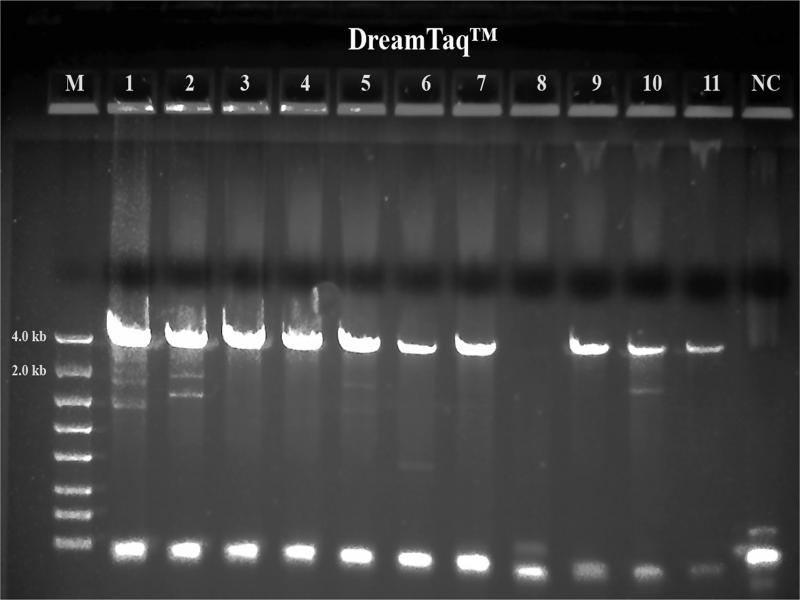
Molecular and morphological taxonomic identifications were conducted in our lab with the nematodes isolated from the lesions of the BLD leaves collected in Fall, 2017 from Perry, Lake County, Ohio, USA by an Ohio Department of Agriculture nursery inspector from ailing American beech trees Fagus grandifolia (Fall specimens). Their ribosomal DNA (rDNA) loci were amplified by PCR with the one primer set and an enhanced DNA polymerase system, and the resulting 3.5 kb (18 S, ITS and 28 S) rDNA amplicons were directly sequenced (Carta and Li, 2019). Morphological evaluation and an initial GenBank search revealed that this was an unknown species in the genus Litylenchus. Shortly after this discovery, a Litylenchus nematode from leaf galls of Fagus crenata in Japan was described as Litylenchus crenatae (Kanzaki et al., 2019), showing a few different DNA base pairs from the nematode population we sequenced. Based on these molecular, morphological and host range differences, a new subspecies Litylenchus crenatae mccannii was described (Carta et al., 2020).
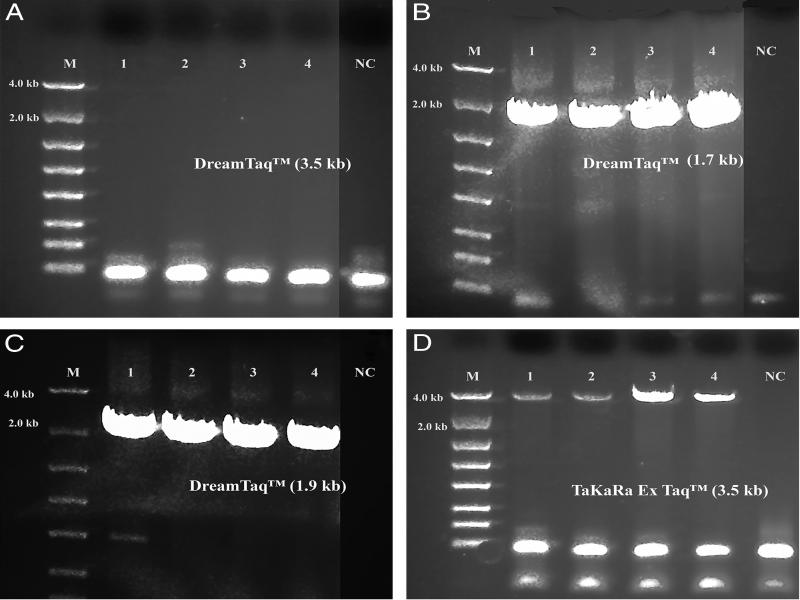
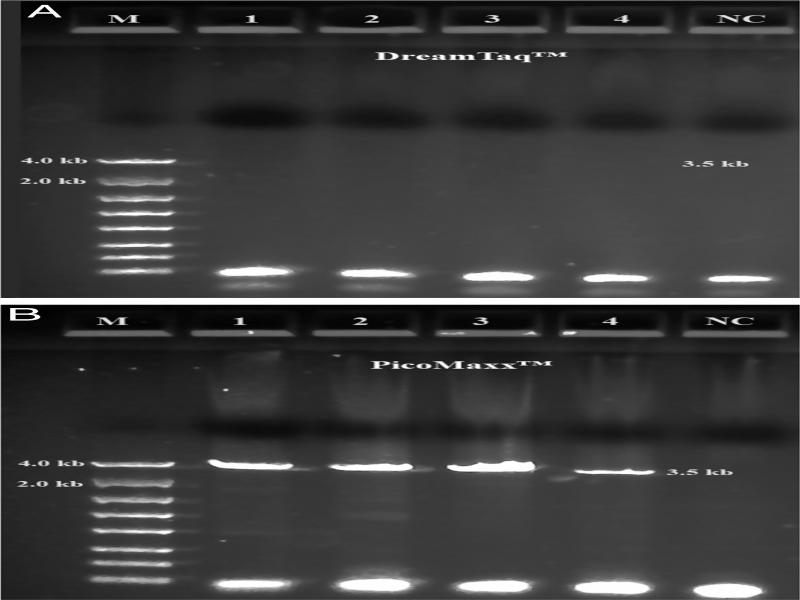
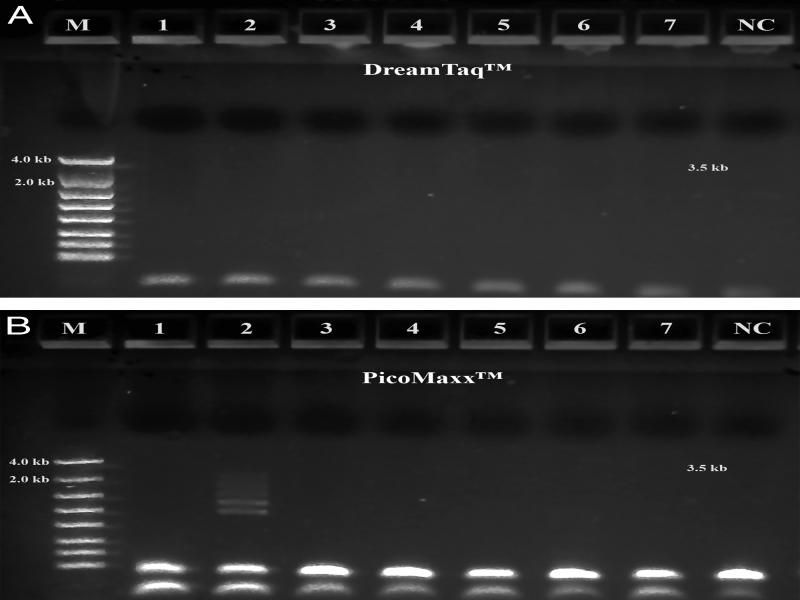
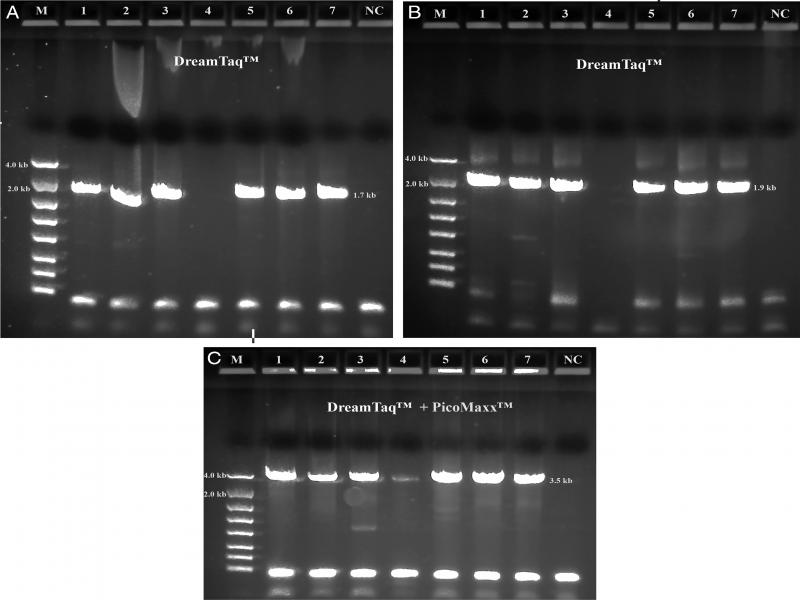
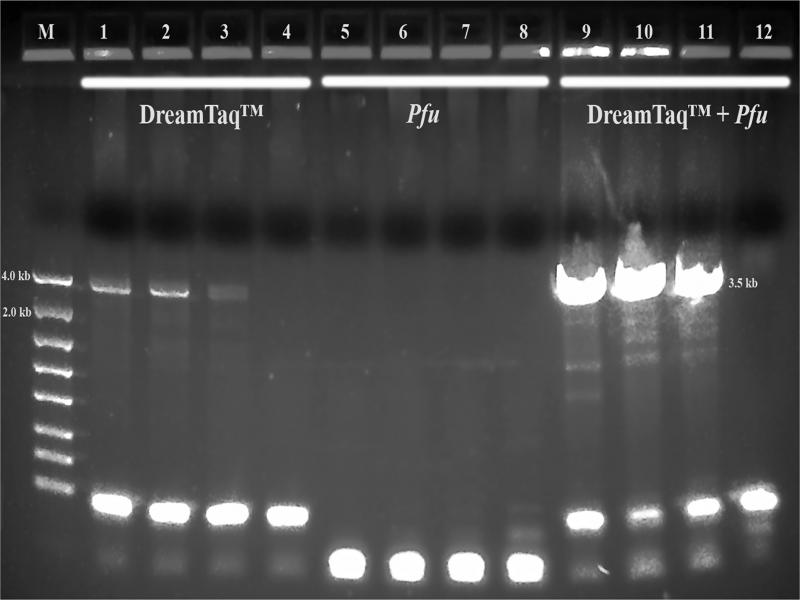
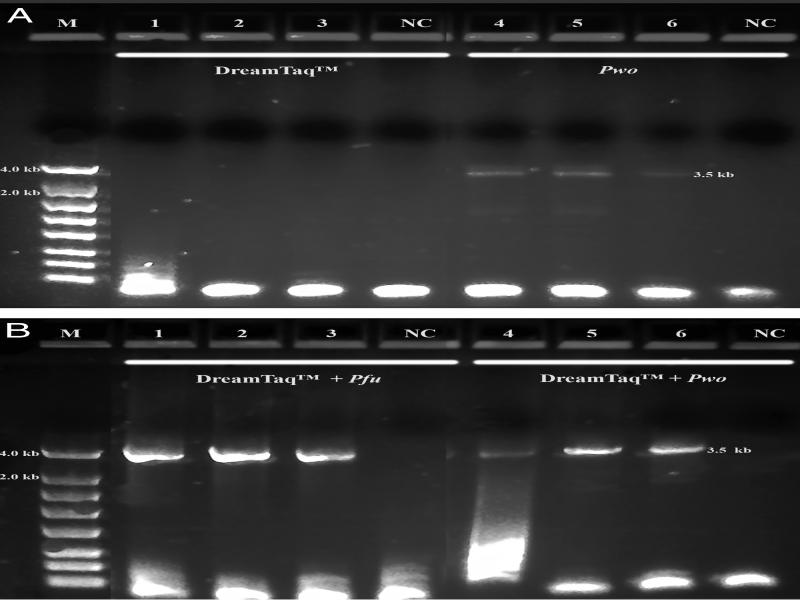
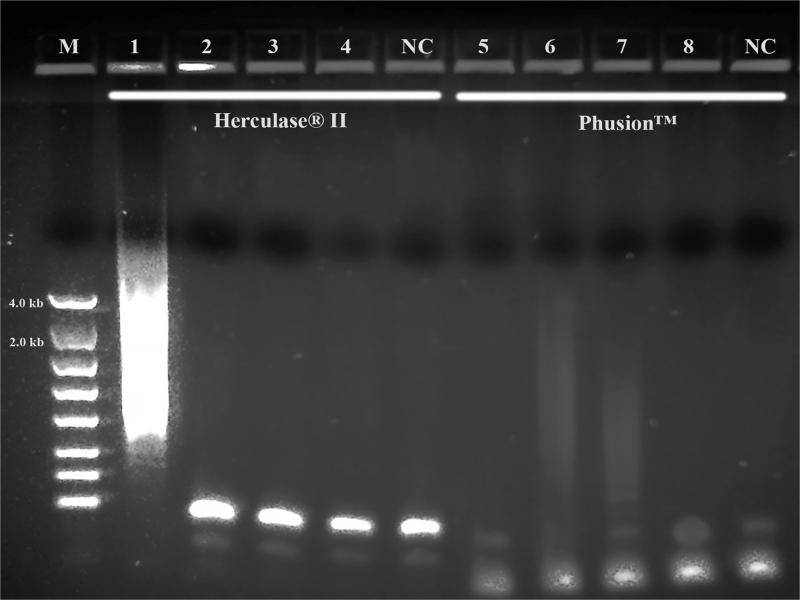
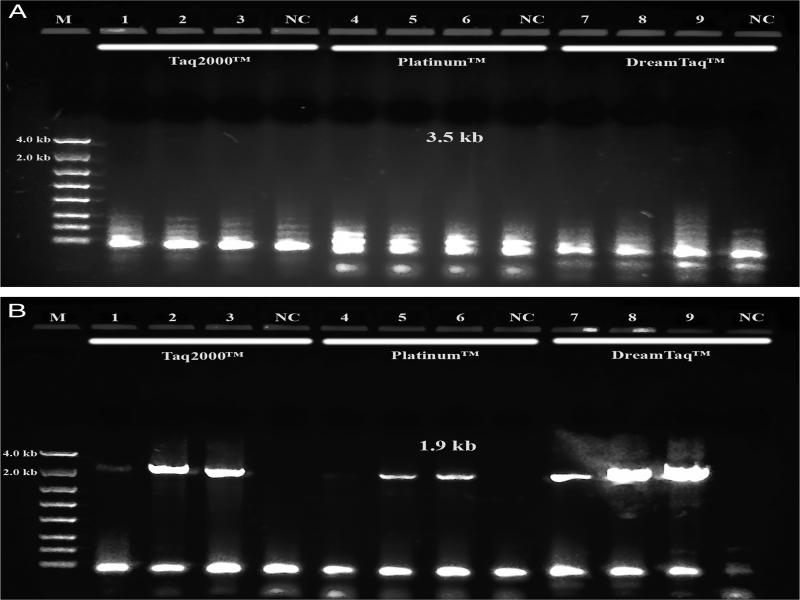
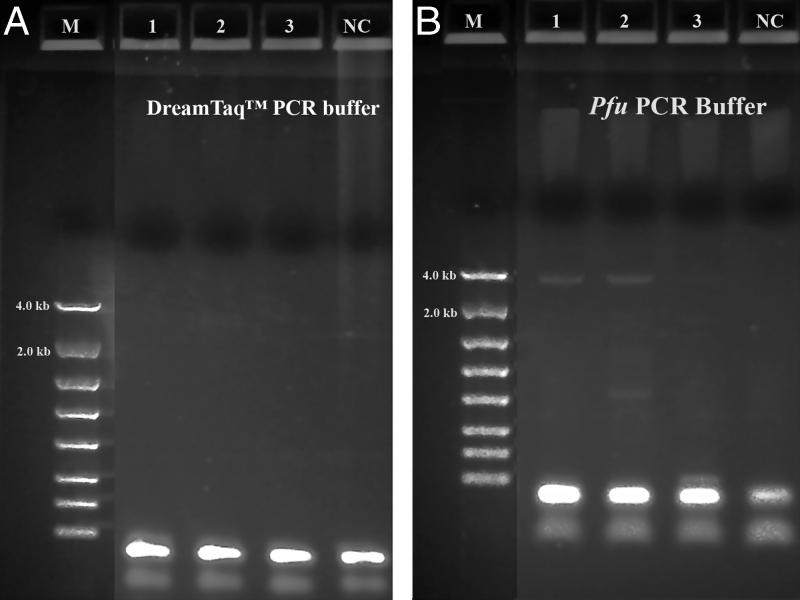
Special handling of nematodes in PCR reactions is needed because of potential molecular marker variation within and between individual nematodes, plus their often tiny size and chemically resistant cuticle that may create unexpected challenges. Among more than 40 Litylenchus specimens from the samples collected from Ohio and Pennsylvania during the summer of 2018, 35 specimens with no PCR bands for the 3.5 kb target were observed, and the rest failed to yield a long enough target for downstream sequencing. This report describes a significant technical improvement beyond previous efforts (Carta and Li, 2018, 2019) to more reliably amplify the 3.5 kb long rDNA target and increase the PCR yield for the crude, unpurified DNA extracts of single nematodes by utilizing proofreading DNA polymerase in an optimized solution. This is important because it is impractical in a nematode diagnostic laboratory to efficiently produce very clean DNA with a kit from only one or a few specimens.
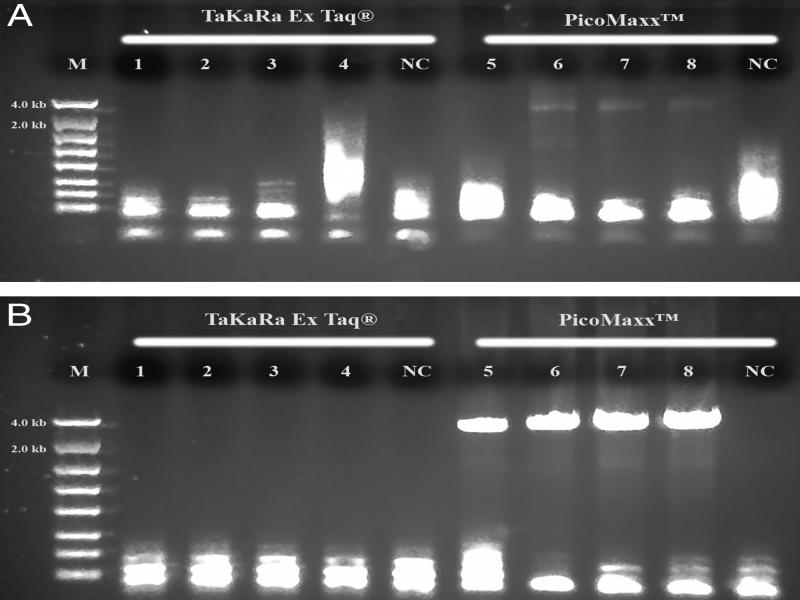
Commonly used Taq DNA polymerase lacks proofreading ability, which limits the length of the amplicon, usually up to 2.9 kb (Arezi et al., 2003; Tindall and Kunkel, 1988). It has been demonstrated that long template DNA could be amplified successfully by adding a thermal proofreading DNA polymerase with 3’ to 5’ exonuclease activity to a Taq PCR system (Barnes, 1994; Cheng et al., 1995). As a result, many PCR amplification systems have been developed and made commercially available by blending a Taq polymerase and a thermal proofreading DNA polymerase supplied with a specially optimized PCR buffer. Two Taq-based blend systems, TaKaRa Ex Taq® DNA Polymerase (a blend of TaKaRa Taq® DNA Polymerase and an unspecified proofreading DNA polymerase) and PicoMaxx™ High Fidelity PCR System (a blend of Taq2000™ DNA polymerase, cloned Pfu DNA polymerase and ArchaeMaxx® polymerase enhancing factor) were selected and tested in this study.
Materials and methods
Live Litylenchus specimens were isolated from the banding lesions of American beech leaves with BLD as described in Table 1, after the leaves were dissected, and followed by water extraction. Some of the specimens were also imaged as vouchers for morphological and morphometrical analysis. The preparation of the crude and unpurified genomic DNA from a live single Litylenchus and the visualization, cleanup and direct DNA sequencing, including sequencing primers, of the PCR products were performed by using the procedures described in previous studies (Carta and Li, 2018, 2019).
Table 1.
Litylenchus crenatae specimens from American beech trees (Fagus grandifolia) with BLD tested in this study.
| Specimens | Locality | Part | Session | |||||||
|---|---|---|---|---|---|---|---|---|---|---|
| 104H78, 104H81, 104H82, 104H83, 104H84, 104H85, 104H86, 104H87, 104H88, 104H89 and 104H90 | Lake County, Ohio | Leaf | Fall (November, 2017) | |||||||
| 104J54, 104J55, 104J56 and 104J57 | Cuyahoga County, Ohio | Leaf | Summer (May, 2018) | |||||||
| 104K17, 104K18, 104K19 and 104K20 | The Holden Arboretum, Kirtland, Ohio | Leaf | Summer (August, 2018) | |||||||
| 104K25, 104K26, 104K27, 104K28, 104K29, 104K30 and 104K31 | Potter County, Pennsylvania | Leaf | Summer (August, 2018) | |||||||
| 104K37, 104K38 and 104K39 | Crawford County, Pennsylvania | Leaf | Summer (August, 2018) | |||||||
| 104N95, 104N96 and 104N97 | The Holden Arboretum, Kirtland, Ohio | Bud | Spring (March, 2019) | |||||||
| Platinum™ Taq (10 units/μl) | Taq2000™ (5 units/μl) | DreamTaq™ (5 units/μl) | TaKaRa Ex Taq™ (5 units/μl) or combined with DreamTaq™ (5 units/μl) | PicoMaxx™ System (5 units/μl) or combined with DreamTaq™ (5 units/μl) | pfu DNA polymerase (2.5 units/μl) or combined with DreamTaq™ (5 units/μl) | Herculase® II Fusion DNA polymerase | Phusion™ High-Fidelity DNA Polymerase (2 units/μl) | Pwo DNA polymerase (5 units/μl) or combined with DreamTaq™ (5 units/μl) | ||
|---|---|---|---|---|---|---|---|---|---|---|
| Water (μl) | Mixture A: 7.6 | |||||||||
| Water (μl) | 15.375 | 16 | 16.375/16.25 | 15.875 or 15.75 | 17.3 or 17.175 | 17.05/17.55 or 16.925/17.425 | 16 | 14.5 | Mixture B: 9.875 (or 9.75) | |
| 10 or 5x proprietary buffer (μl) | 2.5 | 2.5 | 2.5 | 2.5 | 2.5 | 2.5 | 5 | 5 | Mixture A: 2.5 | |
| 50 mM MgCl2 (μl) | 1 | 0.25 | ||||||||
| 100 mM dNTP (25 mM each) (μl) | 0.2 | 0.2 | 0.25 | Mixture B: 0.4 | ||||||
| 10 mM dNTP (2.5 mM each) (μl) | 2 | 0.5 | ||||||||
| 8 mM dNTP (2 mM each) (μl) | 2.5 | 2.5 | 2.5 | |||||||
| 10 μm Forward primer (μl) | 0.75 | 0.75 | 0.75 | 1.25 | 1.25 | 1.25 | 0.625 | 1.25 | Mixture B: 1.25 | |
| 10 μm Reverse primer (μl) | 0.75 | 0.75 | 0.75 | 1.25 | 1.25 | 1.25 | 0.625 | 1.25 | Mixture B: 1.25 | |
| DMSO | 0.25 | |||||||||
| DNA template (μl) | 2 | 2 | 2 | 2 | 2 | 2 | 2 | 2 | Mixture B: 2 | |
| Proprietary DNA polymerase(s) (μl) | 0.125 | 0.25 | 0.125/0.25 | 0.125 or plus DreamTaq™: 0.125 | 0.5 or plus DreamTaq™: 0.125 | 0.75/0.25 or plus DreamTaq™: 0.125 | 0.5 | 0.25 | Mixture A: 0.125 or plus DreamTaq™: 0.125 | |
| Total reaction volume (μl) | 25 | 25 | 25 | 25 | 25 | 25 | 25 | 25 | 12.5 each mixture | |
| Platinum™ Taq | Taq2000™ | DreamTaq™ | TaKaRa Ex Taq™ or combined with DreamTaq™ | PicoMaxx™ System or combined with DreamTaq™ | ||||||
|---|---|---|---|---|---|---|---|---|---|---|
| 1. Initial denaturation | 95°C for 3 min | Sep 1: 1 cycle | 95°C for 3 min | Step 1: 1 cycle | 95°C for 3 min | Step 1: 1 cycle | 98°C for 30 sec | Step 1: 1 cycle | 95°C for 2 min | Step 1: 1 cycle |
| 2. Denaturation | 95°C for 30 sec | Step 2, 3 and 4: 36 cycles | 95°C for 30 sec | Step 2, 3 and 4: 36 cycles | 95°C for 30 sec | Step 2, 3 and 4: 36 cycles | 98°C for 10 sec | Step 2 and 4: 36 cycles | 95°C for 30 sec | Step 2, 3 and 4: 36 cycles |
| 3. Annealing | 50°C for 45 sec | 50°C for 45 sec | 50°C for 45 sec | 55°C for 45 sec | ||||||
| 4. Extension | 72°C for 3 min | 72°C for 3 min | 72°C for 3 min | 68°C for 5 min | 72°C for 5 min | |||||
| 5. Final extension | 72°C for 7 min | Step 5: 1 cycle | 72°C for 7 min | Step 5: 1 cycle | 72°C for 7 min | Step 5: 1 cycle | 72°C for 7 min | Step 5: 1 cycle | 72°C for 7 min | Step 5: 1 cycle |
| No. Step | pfu or combined with DreamTaq™ | Herculase® II | Phusion™ | Pwo or combined with DreamTaq™ | ||||||
|---|---|---|---|---|---|---|---|---|---|---|
| 1. Initial denaturation | 95°C for 2 min | Step 1: 1 cycle | 95°C for 2 min | Step 1: 1 cycle | 95°C for 2 min | Step 1: 1 cycle | 95°C for 2 min | Step 1: 1 cycle | ||
| 2. Denaturation | 95°C for 30 sec | Step 2, 3 and 4: 36 cycles | 95°C for 20 sec | Step 2, 3 and 4: 36 cycles | 95°C for 20 sec | Step 2, 3 and 4: 36 cycles | 95°C for 30 sec | Step 2, 3 and 4: 36 cycles | ||
| 3. Annealling | 55°C for 45 sec | 55°C for 20 sec | 55°C for 20 sec | 57°C for 45 sec | ||||||
| 4. Extension | 72°C for 5 min | 72°C for 2 min 15 sec | 72°C for 2 min 15 sec | 72°C for 5 min | ||||||
| 5. Final extension | 72°C for 7 min | Step 5: 1 cycle | 72°C for 7 min | Step 5: 1 cycle | 72°C for 7 min | Step 5: 1 cycle | 72°C for 7 min | Step 5: 1 cycle | ||
| Platinum™ Taq | Taq2000™ | DreamTaq™ | TaKaRa Ex Taq™ | PicoMaxx™ System | pfu | Pwo | Herculase® II | Phusion™ | ||
|---|---|---|---|---|---|---|---|---|---|---|
| Spring specimens | 3.5 kb: X; 1.9 kb: √/X | 3.5 kb: X; 1.9 kb: √√√√/X | 3.5 kb: X; 1.9 kb: √√√√ | na | na | na | na | na | na | |
| Summer specimens | na | 3.5 kb: X (DNS); 1.9 kb: √√√ (DNS) | 3.5 kb: X or X/√ (DNS); 1.7Kb: √√√√/X; 1.9 kb: √√√√/X | 3.5 kb: √√/X or X | 3.5 kb: √√/X or X | 3.5 kb: X (DNS) | 3.5 kb: X (DNS) | 3.5 kb: X | 3.5 kb: X | |
| Fall specimens | na | na | 3.5 kb: √√√/X; 1.9 kb: NA | na | na | na | na | na | na |
| TaKaRa Ex Taq™ combined with DreamTaq™ in TaKaRa Ex buffer | PicoMaxx™ System combined with DreamTaq™ in PicoMaxx™ buffer | DreamTaq™ in PicoMaxx™ buffer | pfu in PicoMaxx™ buffer | Pfu combined with DreamTaq™ in PicoMaxx™ buffer | pfu combined with DreamTaq™ in DreamTaq™ buffer | pfu combined with DreamTaq™ in pfu buffer | Pwo in PicoMaxx™ buffer | Pwo combined with DreamTaq™ in Pwo buffer | Pwo combined with DreamTaq™ in PicoMaxx buffer | |
|---|---|---|---|---|---|---|---|---|---|---|
| Spring specimens | na | na | na | na | na | na | na | na | na | na |
| Summer specimens | 3.5 kb: X | 3.5 kb: √√√/X | 3.5 kb: √/X or X | 3.5 kb: X | 3.5 kb: √√√√ or √√ | 3.5 kb: X | 3.5 kb: X | 3.5 kb: X | 3.5 kb: X (DNS) | 3.5 kb: √/X |
| Fall specimens | na | na | na | na | na | na | na | na | na | na |