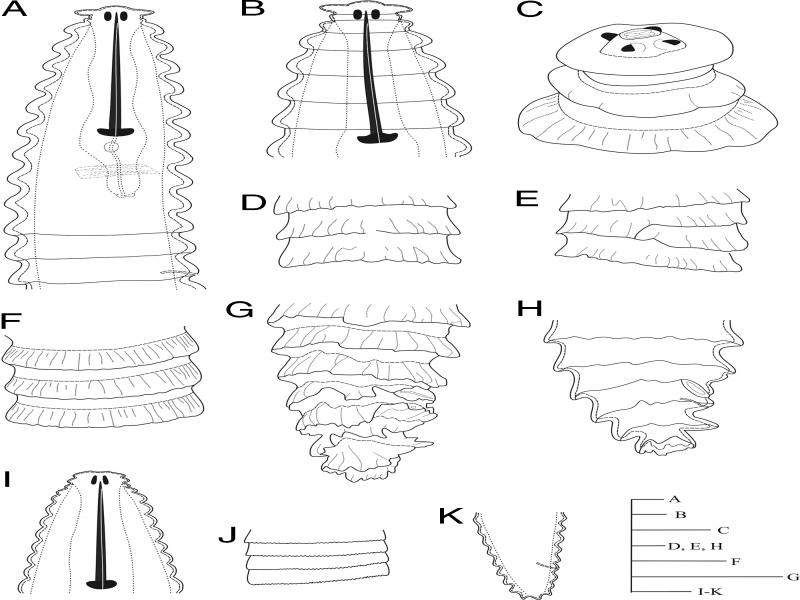
The Criconematidae family is commonly referred as ring nematodes. The family contains 5 subfamilies and 17 genera (Geraert, 2010). Unlike other plant-parasitic nematodes, this group of nematodes has received less attention from nematologists. There are many criconematid genera and species that following formal descriptions are seldom mentioned again in the scientific literature. One such example is the genus Nothocriconemoides (Maas et al., 1971). The genus name was derived from the Greek words nothos meaning false, krikos meaning ring, nema meaning nematodes, and oides meaning shape (Siddiqi, 2000). The important diagnostic characteristics of this genus include body annuli with fine longitudinal striae making margins that look finely crenated; the second cephalic annulus of female is offset and collar like. Lips have four distinct submedian lobes. Vulva is closed, and anterior lip overhanging in type species. Tail is conoid tapering to acute or sub-acute terminus. Juveniles have crenate annuli and the first annulus is not offset collar like. So far, the genus contains only two species i.e. Nothocriconemoides crenulatus (Ivanova, 1984) and Nothocriconemoides lineolatus (Maas et al., 1971) that were described from Tadzhikistan and Suriname, respectively. Both species were found associated with forest soils; however, no association has been reported from soils of cultivated areas(Geraert, 2010).
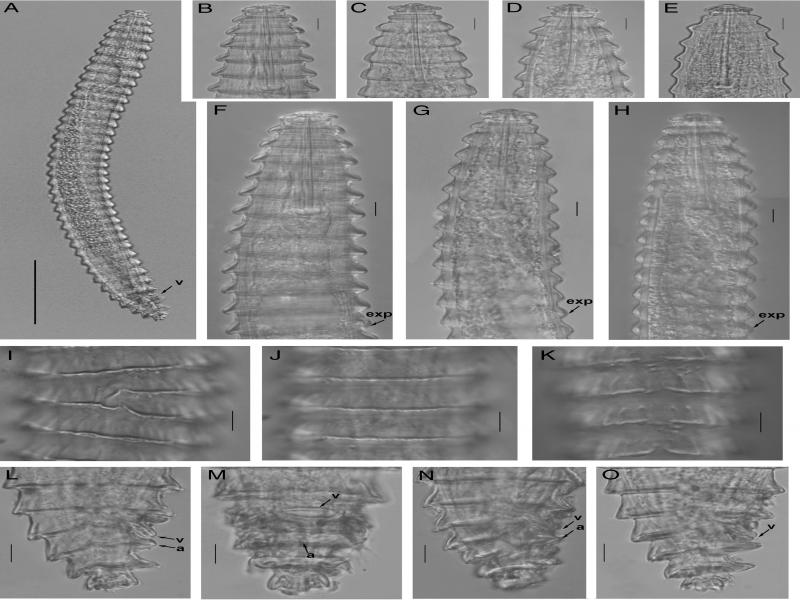
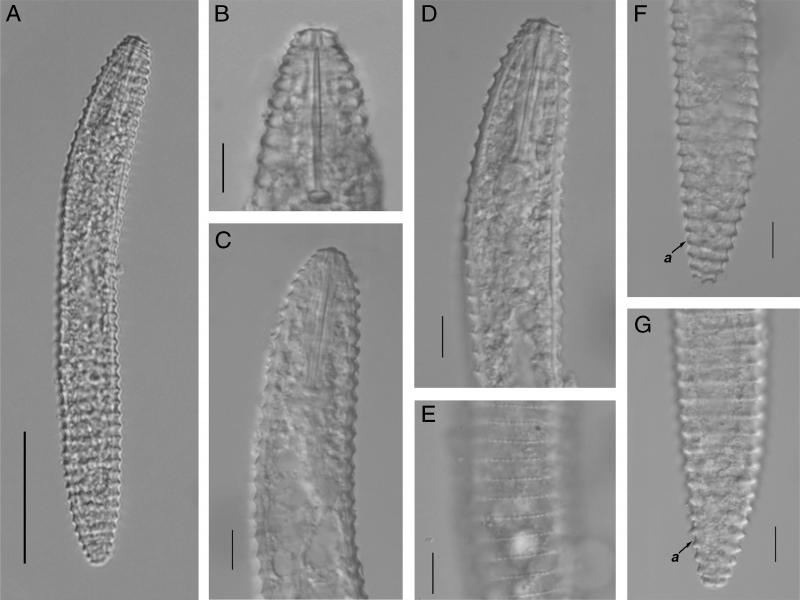
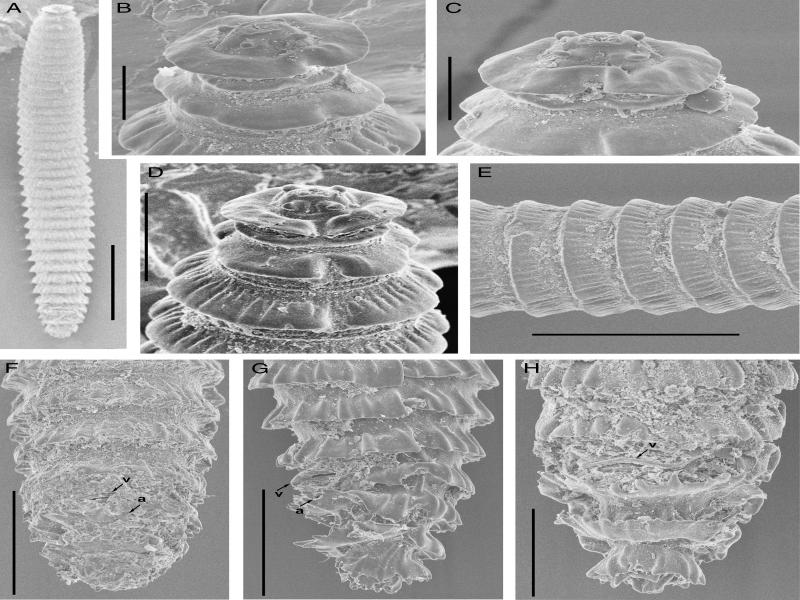
During our nematode inventory survey, a population of Nothocriconemoides was detected in the rhizosphere of elm tree. As Nothocriconemoides was never reported from China, the present work was undertaken to identify the species status. The morpho-molecular characterization and SEM data of this population were compared with the existing species of the genus. Careful examination revealed that the species under investigation presents unique characteristics and is a new member of the genus Nothocriconemoides. Therefore, the paper describes a new Nothocriconemoides species with the following objectives: to provide a morphological and molecular characterization of the new species; to elucidate important morphological details through SEM observations; and to study the phylogenetic relationships of these species with other related criconematids species.
Materials and methods
Nematode samplings, extraction and morphological study
Nematodes were extracted from soil and root samples using the modified Cobb sieving and flotation-centrifugation method (Jenkins, 1964). For morphometric studies, nematodes were killed and fixed in hot formalin (4% with 1% glycerol) and processed in glycerin (Seinhorst, 1959). The measurements and light micrographs of nematodes were made with a Nikon Eclipse Ni-U 931845 compound microscope. For the SEM examination, the nematodes were fixed in a mixture of 2.5% paraformaldehyde and 2.5% glutaraldehyde, washed three times in 0.1 M cacodylate buffer, post-fixation in 1% osmium tetroxide, dehydrated in a series of ethanol solutions and critical point-dried with CO2. After mounting on stubs, the samples were coated with gold with 6 to 10-nanometer thickness and the micrographs were made with 3 to 5 kV operating system (Maria et al., 2018a).
Molecular analyses
DNA was extracted by transferring individual nematodes into the Eppendorf tube containing 16 μL ddH2O. Nematodes were crushed using a sterilized pipette tip, the tubes were centrifuged at 12,000 rpm for 1 min and frozen at −68°C for at least 30 min. Tubes were heated to 85°C for 2 min, and then, 2 μL proteinase K and PCR buffer solution were added. The tubes were incubated at 56°C for 1 to 2 hr and, then, at 95°C for 10 min. After incubation, these tubes were cooled to 4°C and used for conducting PCR (Zheng et al., 2003). Several sets of primers (synthesized by Invitrogen, Shanghai, China) were used in the PCR analyses to amplify the partial 18 S, ITS region, D2–D3 of 28 S of rDNA and partial coxI fragments. Primers for amplification of partial 18 S were 18s900–18s1713 (Olson et al., 2017). Primers for amplification of ITS were TW81-AB28 (Joyce et al., 1994). The primers for amplification of D2–D3 of 28 S were D2A and D3B (De Ley et al., 1999). And, finally, the primers used for coxI amplification were COI-F5 (5’-AATWTWGGTGTTGGAACTTCTTGAAC-3’) and COI-R9 (5’-CTTAAAACATAATGRAAATGWGCWAC WACATAATAAGTATC-3’) (Powers et al. 2014). PCR conditions were as described by Ye et al. (2007) and Powers et al. (2010). PCR products were evaluated on 1% agarose gels stained with ethidium bromide. PCR products of sufficiently high quality were sent for sequencing by Invitrogen (Shanghai, China).
Phylogenetic analysis
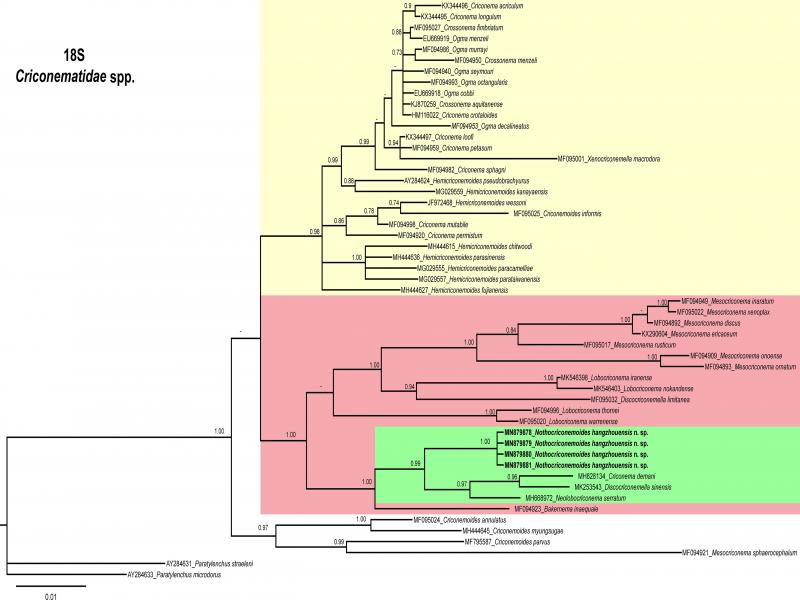
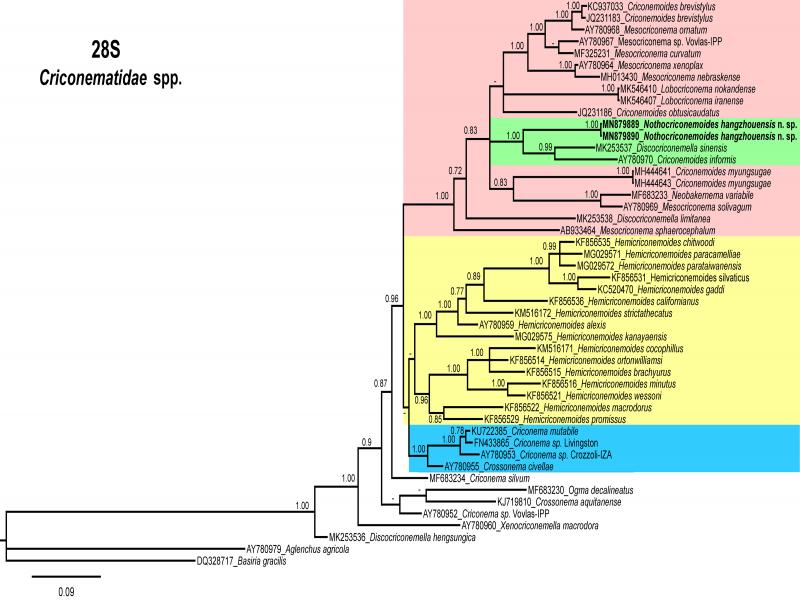
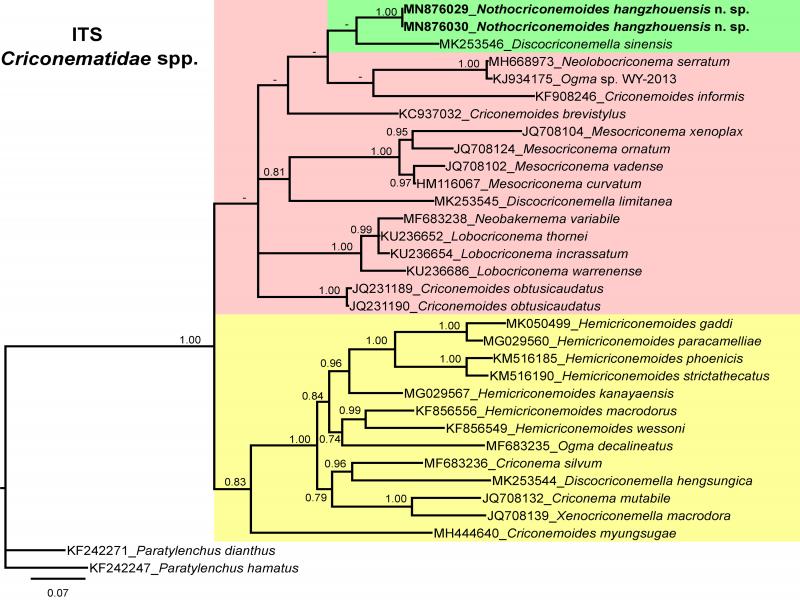
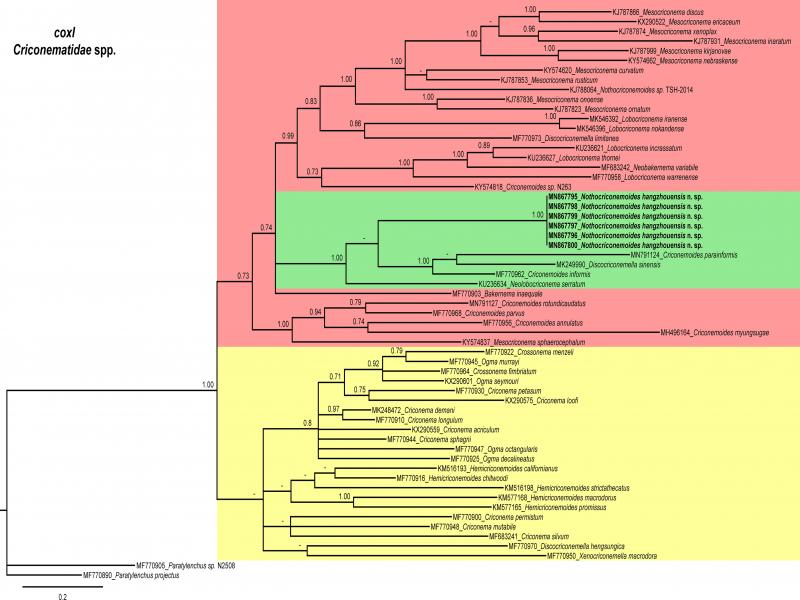
Newly obtained sequences of Nothocriconemoides hangzhouensis n. sp. (D2-D3 expansion segments of 28 S, ITS, partial 18 S rRNA, and partial coxI) and the available sequences of other criconematid nematodes obtained from NCBI were used for phylogenetic analyses. Outgroup taxa for the dataset were chosen according to previous published data (Afshar et al., 2019; Maria et al. 2019). Multiple alignments of the different sequences were made using the FFT-NS-2 algorithm of MAFFT v. 7.205 (Katoh and Standley 2013). Sequence alignments were manually visualized using BioEdit (Hall 1999) and edited by Gblocks ver. 0.91b (Castresana 2000) in the Castresana Laboratory server (http://molevol.cmima.csic.es/castresana/Gblocks_server.html) using options for a less stringent selection (minimum number of sequences for a conserved or a flanking position: 50% of the number of sequences +1; maximum number of contiguous non-conserved positions: 8; minimum length of a block: 5; allowed gap positions: with half). Phylogenetic analyses of the sequence datasets were based on Bayesian inference (BI) using MrBayes 3.1.2 (Ronquist et al., 2012). The best-fit model of DNA evolution was obtained using JModelTest V.2.1.7 (Darriba et al. 2012) with the Akaike Information Criterion (AIC). The best-fit model, the base frequency, the proportion of invariable sites, and the gamma distribution shape parameters and substitution rates in the AIC were then given to MrBayes for the phylogenetic analyses. An unlinked general time-reversible model with invariable sites and a gamma-shaped distribution (GTR fo li + G) was used for the D2-D3 expansion segments of 28 S rRNA, ITS, partial 18 S, and partial coxI. These BI analyses were run separately per dataset using four chains for 2 × 10⁶ generations for all of the molecular markers. A combined analysis of the three genes was not undertaken due to some sequences not being available for all species. The Markov chains were sampled at intervals of 100 generations. Two runs were conducted for each analysis. After discarding burn-in samples and evaluating convergence, the remaining samples were retained for further analyses. The topologies were used to generate a 50% majority-rule consensus tree. Bayesian posterior probabilities (BPP) are given on appropriate clades. Trees from all analyses were visualized using FigTree software V.1.42 (http://tree.bio.ed.ac.uk/software/figtree/).
Results and description
Systematics
Nothocriconemoides hangzhouensis n. sp.
Table 1.
Morphometric data for Nothocriconemoides hangzhouensis n. sp.
| Holotype | Paratype | |
|---|---|---|
| n | 17 | |
| Body Length | 494.0 | 487.1±43.8 (419.6-572.3) |
| R | 36.0 | 37.2±1.2 (35.0-39.0) |
| Rst | 7.0 | 6.5±0.5 (6.0-7.0) |
| Rex | 15.0 | 14.7±0.6 (13.0-15.0) |
| RV | 3.0 | 2.9±0.2 (2.0-3.0) |
| Rvan | 0.0 | 0.0±0.0 (0.0-0.0) |
| Ran | 3.0 | 2.9±0.2 (2.0-3.0) |
| a | 8.2 | 7.9±0.7 (6.3-9.4) |
| b | 4.2 | 4.1±0.3 (3.5-4.5) |
| c | 18.6 | 17.3±1.7 (14.2-20.0) |
| c' | 0.8 | 0.9±0.1 (0.7-1.1) |
| V | 93.2 | 92.6±0.9 (90.5-94.0) |
| VL/VB | 0.9 | 1.0±0.1 (0.9-1.2) |
| Lip height | 8.8 | 9.5±0.7 (7.8-10.6) |
| Lip diam. | 18.4 | 20.2±1.4 (17.2-22.1) |
| Stylet length | 71.0 | 71.1±3.0 (64.4-75.5) |
| Stylet percentage | 14.4 | 14.7±1.2 (13.1-17.4) |
| Pharynx length | 117.5 | 118.9±5.0 (111.8-129.6) |
| Body width | 60.3 | 61.8±5.3 (52.0-69. 4) |
| Vulval body diam. | 37.0 | 35.7±2.5 (31.8-38.5) |
| Anal body diam. | 31.9 | 32.1±3.1 (26.4-37.4) |
| Vulva to tail terminus | 33.4 | 36.0±4.0 (29.8-41.7) |
| Tail length | 26.5 | 28.3±1.9 (23.3-30.5) |
| Annuli width | 13.1 | 14.5±1.2 (13.1-16.9) |