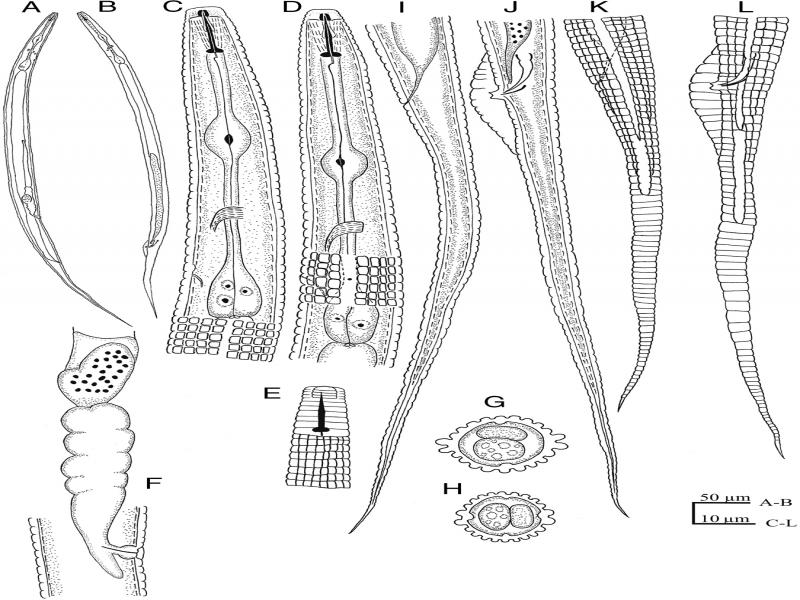
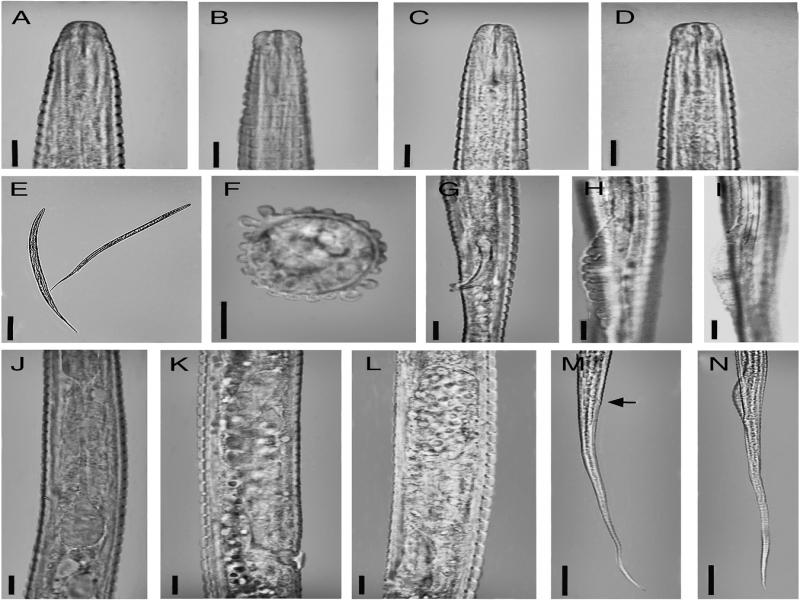
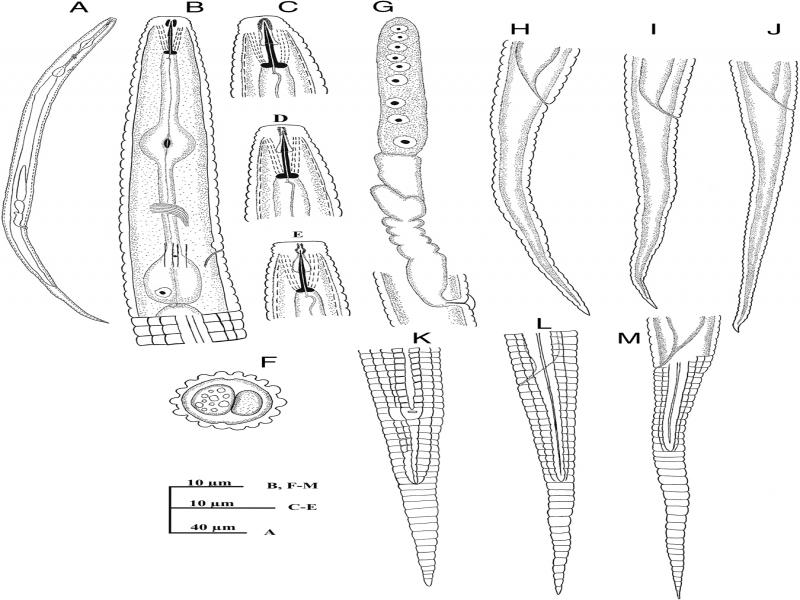
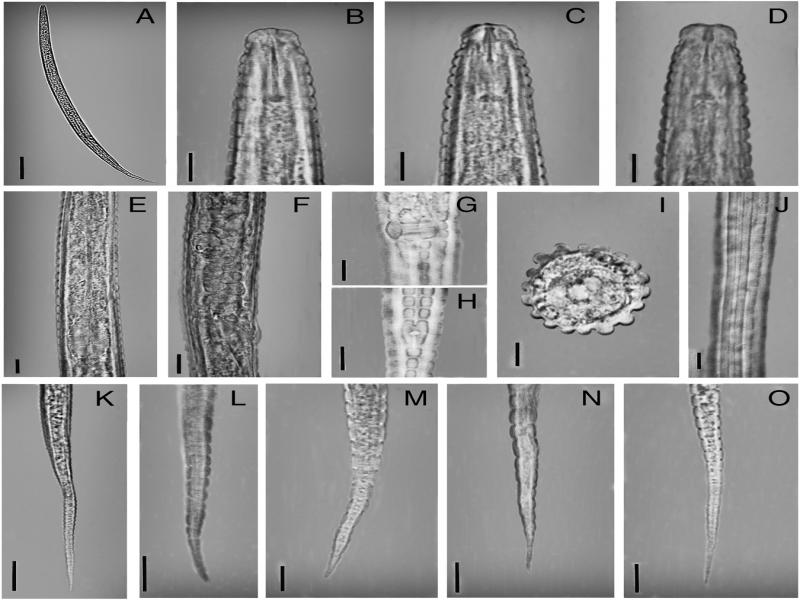
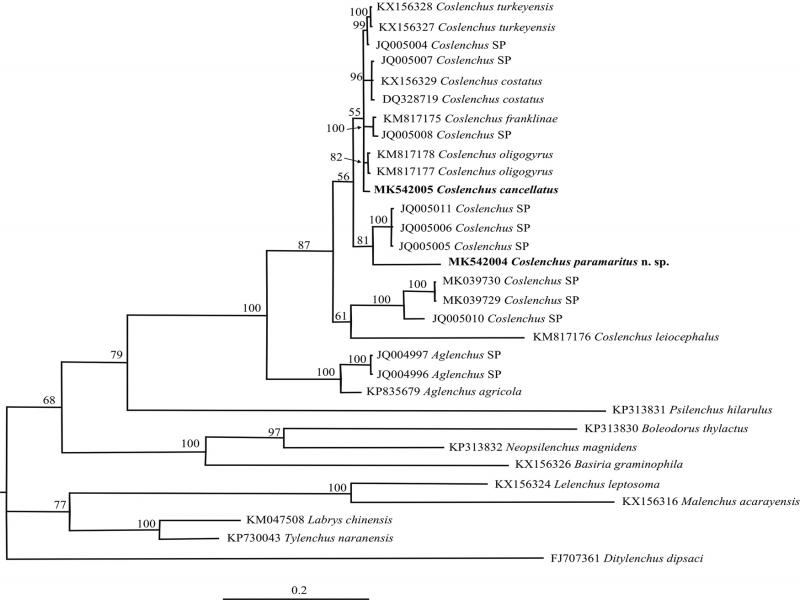
The genus Coslenchus was originally proposed by Siddiqi (1978) to consider of four species in the family Tylenchidae Örley, 1880 with the following main diagnostic characters: “body cuticle coarsely annulated, the presence of longitudinal ridges, labial plate dumbbell-shaped, with round, pore-like amphid apertures not extending on lateral sides of cephalic region, vulva with thick lips and lateral membranes in females, and cloacal lips forming a short tube in males”.
The type species of the genus, C. costatus (de Man, 1921) (Siddiqi, 1978) was described on the basis of specimens obtained from moist soil associated with plants on River Mark bank in a suburb of Breda, the Netherlands. This genus currently includes 38 valid species (Geraert, 2008), with 15 species of Coslenchus reported from Iran (Karegar, 2018). An undescribed species and a new record for Iranian nematode fauna, recovered from natural habitats, during a survey in Dezful, Khuzestan province, are described.
Materials and methods
Sampling, processing and morphological characterization
Soil samples were collected from the rhizosphere of different plants and localities in Iran. Nematodes were extracted by the tray method (Whitehead and Hemming, 1965), killed and fixed by hot FPG (4: 1: 1, formaldehyde: propionic acid: glycerol) and processed to anhydrous glycerol (de Grisse, 1969). Nematodes were mounted in glycerol on permanent slides using paraffin wax and studied using a light microscope, equipped with a Dino-eye microscope eye-piece camera in conjunction with its Dino Capture version 2.0 software. Specimens were identified at species level using available identification keys (Geraert, 2008).
DNA extraction, PCR and sequencing
Nematode DNA was extracted from single individuals and stored at −20°C until used as PCR template. DNA extraction was performed using the protocols described by Tanha Maafi et al. (2003). The D2–D3 expansion fragments of 28S rRNA were amplified using the forward D2A (5'-ACAAGTACCGTGAGGGAAAGT-3') and reverse D3B (5'-TCGGAAGGAACCAGCTACTA-3') primers (Subbotin et al., 2006). The 30 μ l PCR contained 15 μ l 2× Taq DNA polymerase mix (Ampliqon, Denmark), 1 μ l (10 pmol μ l−1) each of forward and reverse primers, 2 μ l of DNA template and 11 μ l deionized water. PCR cycling conditions were as follows: denaturation at 95 °C for 4 min, then 33 cycles of denaturation at 94 °C for 30 sec, annealing at 57°C for 30 sec, and extension at 72°C for 90 sec, with a final extension was performed at 72°C for 10 min. The quality of PCR was checked by electrophoresis of 4 μ l of the PCR reaction in 1% agarose gel containing ethidium bromide and products were visualized and photographed under UV light. The length and concentration of each PCR product were measured by comparison with a low DNA mass ladder (Invitrogen, Carlsbad, CA). The PCR product was purified and sequenced directly for both strands using the same primers with an ABI 3730XL sequencer (Bioneer, Seoul, South Korea). The newly obtained sequences were submitted to GenBank database under accession numbers MK542004 for C. paramaritus n. sp. and MK542005 for C. cancellatus.
Phylogenetic analyses
For phylogenetic relationships, analyses were based on D2–D3 expansion fragments of the 28S rRNA gene sequences. The newly obtained sequences were edited and aligned with another segments of 28S rRNA gene sequences available in GenBank using MUSCLE alignment tool implemented in the MEGA7 (Kumar et al., 2016). The best-fit model of nucleotide substitution used for the phylogenetic analysis was statistically selected using jModelTest 2.1.10 (Darriba et al., 2012) and phylogenetic tree was generated with the Bayesian inference method using MrBayes 3.2.6 (Huelsenbeck and Ronquist, 2001; Ronquist et al., 2012). The analysis under GTR+I+G model was initiated with a random starting tree and run with the Markov Chain Monte Carlo (MCMC) for 1 × 10⁶ generations. The tree was visualized and saved with FigTree 1.4.3 (Rambaut, 2014) and edited with Adobe® Acrobat® XI Pro 11.0.1. A sequence of Ditylenchus dipsaci (FJ707361) was chosen as outgroup for 28S tree.
Results
Systematics
Coslenchus paramaritus n. sp.
Table 1.
Morphometric characters of Coslenchus paramaritus n. sp. and C. cancellatus from Iran (measurements are in µm).
| C. paramaritus n. sp. | C. cancellatus | ||||||
|---|---|---|---|---|---|---|---|
| Character\Species | Holotype | Females | Males | Females | |||
| n | – | 10 | CV | 8 | CV | 12 | CV |
| L | 519 | 537 ± 22.3 (508–572) | 4.2 | 529 ± 31.4 (474–571) | 5.9 | 446 ± 29.9 (388–481) | 6.7 |
| a | 26.6 | 27.3 ± 3 (22.5–33.6) | 11.1 | 36 ± 1.6 (33.7–38.2) | 4.6 | 25.6 ± 1.8 (23.2–28.1) | 7.3 |
| b | 5.9 | 5.4 ± 0.3 (5.1–6.1) | 5.9 | 14.8 ± 0.4 (14–15.3) | 2.9 | 4.7 ± 0.4 (3.4–5.1) | 10.6 |
| c | 4.5 | 4.7 ± 0.4 (4.3–5.7) | 9.6 | 4.6 ± 0.1 (4.3–4.9) | 4.0 | 5.8 ± 0.5 (4.9–6.5) | 9.1 |
| c′ | 11.9 | 10.7 ± 1.2 (7.8–11.8) | 11.5 | 11.3 ± 0.9 (10.1–13) | 8.6 | 7.5 ± 0.7 (6.5–8.4) | 9.6 |
| V or T | 62.6 | 63.8 ± 2.3 (61.8–69.6) | 3.7 | 34 ± 4.1 (28.6–39.4) | 12.1 | 66.4 ± 1.5 (64.6–69.9) | 2.3 |
| V' | 80.4 | 80.5 ± 1.9 (76.7–83.2) | 2.4 | – | – | 80.2 ± 1.8 (77–82.9) | 2.3 |
| Stylet | 13.5 | 12.8 ± 0.6 (12–13.9) | 5.2 | 12.4 ± 0.2 (12–12.9) | 2.3 | 10.9 ± 0.3 (10.5–11.4) | 2.8 |
| m (conus/stylet %) | 45.3 | 46.1 ± 1.8 (43.2–48.3) | 3.9 | 47.8 ± 1.3 (45.8–49.5) | 2.7 | 44.8 ± 2 (42.2–48.5) | 4.7 |
| Pharynx | 90 | 97.9 ± 5.8 (85–107) | 6.0 | 97.1 ± 4.4 (92–103) | 4.6 | 95.4 ± 9 (85–112) | 9.5 |
| Median bulb | 44.5 | 44.6 ± 2.1 (41–47) | 4.9 | 44.6 ± 2.2 (42–49) | 5.1 | 41.9 ± 3.8 (38–50) | 9.3 |
| MB | 47 | 45.6 ± 2.5 (42.4–51.7) | 5.6 | 45.9 ± 1.1 (44.5–47.5) | 2.4 | 43.9 ± 1.4 (41.8–46.6) | 3.2 |
| Excretory pore | 79 | 81 ± 3.3 (76–86) | 4.2 | 79.9 ± 3 (74–83) | 3.8 | 75.6 ± 12 (59–103) | 15.9 |
| Head-vulva | 325 | 340 ± 17.6 (314–370) | 5.2 | – | – | 296 ± 18.2 (257–319) | 6.2 |
| Head-anus | 404 | 423 ± 22.7 (394–459) | 5.4 | 414 ± 24.1 (373–442) | 5.8 | 369 ± 28 (310–401) | 7.6 |
| Vulva–anus | 89 | 82.6 ± 10.5 (71–104) | 12.8 | – | – | 73 ± 11.5 (53–92) | 15.8 |
| Body width | 19 | 19.6 ± 1.6 (17–22) | 8.6 | 14.7 ± 1.1 (12.5–15.8) | 7.5 | 17.4 ± 2.1 (14.2–20.7) | 12.5 |
| Vulval body width | 16 | 17.1 ± 1 (15.5–19) | 6.3 | – | – | 15.2 ± 1.5 (13–17) | 10.3 |
| Anal body width | 9.7 | 10.6 ± 0.6 (9.7–12) | 5.8 | 10.1 ± 0.2 (10–10.6) | 2.3 | 10.2 ± 0.6 (9–11) | 6.5 |
| Tail/Vulva–Anus | 1.3 | 1.4 ± 0.2 (0.9–1.8) | 17.4 | – | – | 1 ± 0.1 (0.7–1.4) | 17.6 |
| Annulus width | 2.8 | 2.8 ± 0.1 (2.6–3) | 5.1 | 2.8 ± 0.2 (2.4–3) | 7.2 | 2.9 ± 0.2 (2.4–3.3) | 7.6 |
| Tail length | 115 | 114 ± 9.9 (94–128) | 8.7 | 115 ± 8.9 (101–130) | 7.7 | 76.8 ± 6.9 (65–87) | 9.0 |
| R | 216 | 222.4 ± 10 (210–240) | 4.5 | 214.6 ± 10.7 (201–233) | 5.0 | 188.5 ± 13.8 (170–210) | 7.3 |
| Rv | 85 | 86 ± 5.8 (76–96) | 6.7 | – | – | 65.6 ± 7.5 (58–83) | 11.5 |
| Ran | 54 | 53.2 ± 6.4 (41–59) | 12.2 | 53.8 ± 4 (48–60) | 7.5 | 31.7 ± 2.8 (28–36) | 9.0 |
| Rvan | 30 | 32.8 ± 4.5 (26–40) | 13.9 | – | – | 33.9 ± 6.3 (27–47) | 18.7 |
| Gubernaculum | – | – | – | 5.1 ± 0.3 (4.5–5.5) | 6.7 | – | – |
| Spicules | – | – | – | 14.3 ± 0.8 (13–15.5) | 6.3 | – | – |