Pine wilt disease is a highly destructive epidemic disease of pine trees that can rapidly spread from infected to healthy trees. The disease affects a variety of pine species in Asia, Europe, America, and Africa and has become a severe worldwide threat to forest resources (Mota et al., 1999; Abelleira et al., 2011; Fonseca et al., 2012). The pine wood nematode (PWN), Bursaphelenchus xylophilus, is causal pathogen of pine wilt and its control is crucial for management of the disease (Mamiya, 1983; Wingfield et al., 1986; Mota et al., 1999; Cheng et al., 2017). However, insect resistance, environmental pollution, and off-target lethality of synthetic nematicides used for disease treatment indicate that alternative and ecofriendly nematicides are needed (Zhao, 2008; Andres et al., 2010; Seo et al., 2014; Cheng et al., 2017).
Phytonematicides as natural products are considered popular candidates. Many plants have been reported to provide potential nematotoxic constituents including essential oils, alkaloids, and other constituents (Matsuda et al., 1989, 1991; Zhao, 1999; Choi et al., 2006, 2007, 2008; Kong et al., 2006, 2007; Andrrk et al., 2007; Park et al., 2007; Kim et al., 2008; Wang et al., 2008; Faria et al., 2010, 2013; Ntalli and Caboni, 2012; Cui et al., 2014; Guo et al., 2016, 2017). The plant Angelica pubescens Maxim. f. biserrata Shan et Yuan is distributed in the Hubei, Sichuan, and Shaanxi provinces of China. Its roots (Duhuo) are used in traditional Chinese herbal medicine for the treatment of arthralgia, rheumatic arthritis, headaches, and limb contracture (Zhang et al., 2008; Zaugg et al., 2011). In this study, we explored the nematotoxic constituents of Duhuo and their effects on the pine wood nematode.
Materials and methods
The roots of A. pubescens were purchased from the Qingdao Jianlian Pharmacy, Qingdao, China, in March 2016. Nematodes were isolated from chips of infected pine wood collected in Nanjing, Jiangsu Province, China using the Baermann funnel technique (Viglierchio and Schmit, 1983). The isolated nematodes were cultured on a lawn of Botrytis cinerea grown on potato dextrose agar (PDA) in the dark at 26°C for 7 d. An aqueous suspension of 2,000/mL was used for testing. Freeze-dried processing of the samples was carried out in Freezone lyophilizer (Labconco, Kansas City, MO, USA). Silica gel for column chromatography (200-300 mesh) was purchased from Qingdao Marine Chemical, Qingdao, China. Thin-layer chromatography (TLC) was performed on silica gel plates containing fluorescent indicator F-254 (Yantai Jiangyou Silica Gel Development, Yantai, China) and observed under UV light at 254 nm or by iodine fumigation. Electron-impact mass spectra (EIMS) were measured on a Bruker maXis UHR-TOF mass spectrometer. Nuclear magnetic resonance (NMR) spectra were obtained on a Bruker Avance-500 spectrometer operating at 500 MHz for 1H NMR and 125 MHz for 13C NMR in chloroform-d (CDCl3) with tetramethylsilane (TMS) as internal standard. Nematode morphology was observed using a Hitachi S-4800 scanning electron microscope (SEM) and a Hitachi H-7650 transmission electron microscope (TEM).
Isolation of nematotoxic compounds
Duhuo (50 g) was mashed and extracted with ethanol (1 L×2) using intermittent ultrasonic oscillation for 48 hr at room temperature. The ethanol extract was concentrated under vacuum to a brown paste (6.3 g) and then partitioned between ethyl acetate and distilled water three times. The ethyl acetate-soluble fraction was concentrated to dryness (2.5 g), and the aqueous fraction was freeze-dried into a powder (3.6 g). The ethyl acetate extract was fractionated by silica gel column chromatography for active components. The column was eluted with a stepwise gradient of hexane: ethyl acetate at 15:1, 10:1; 9:1; 8:1; 6:1; 5:1; 4:1, 2:1, 1:1, 1:3, 1:4, 1:6, 1:8, 1:10, and 0:1 (v/v). We obtained nine fractions as judged by TLC. Fractions 5 and 6 possessed high nematotoxic activity against pine wood nematodes and were further purified. Fraction 5 was chromatographed on a silica gel column eluted with hexane: ethyl acetate (8:1, v/v) to yield two active compounds, osthole (73 mg) and columbianadin (11 mg). Fraction 6 was subjected to silica gel column chromatography eluted with hexane: ethyl acetate (6:1, v/v) and two active compounds bergapten (7 mg) and xanthotoxin (3 mg) were obtained.
Chemical structure elucidation
7-methoxy-8-(3-methylbut-2-enyl)-2-chromenone (Osthole, 1). White needle-like crystals, EIMS m/z: 244 [M]+. 1H NMR (CDCl3, 500 MHz): δ 6.26 (1 H, d, J = 9.5 Hz, H-3), 7.63 (1 H, d, J = 9.5 Hz, H-4), 7.29 (1 H, d, J = 8.6, H-5), 6.85(1 H, d, J = 8.6, H-6), 3.94 (3 H, s, OCH 3 ), 5.24 (1 H, m, H-2’), 3.56 (2 H, d, J = 7.2 Hz, H-1’), 1.84 (3 H, s, H-4’), 1.67 (3 H, s, H-5’). 13C NMR (CDCl3, 125 MHz): δ 160.30 (C-2), 113.08 (C-3), 143.68 (C-4), 126.18 (C-5), 107.40 (C-6), 161.32 (C-7), 107.40 (C-8), 152.93 (C-9), 118.14 (C-10), 21.97 (C-1’), 121.1(C-2’), 132.64 (C-3’), 25.76 (C-4’), 17.93 (C-5’), 56.08 (OCH 3 ). The EIMS and NMR data conformed to those of osthole reported previously (Fujioka et al., 1999; Zhang et al., 2008).
(S)-8-[1-[(Z)-2-Methyl-2-butenoyloxy]-1-methylethyl]-8,9-dihydro-2H-furo(2,3-h)-1-benzop yran-2-one (Columbianadin, 2 ). White crystals, EIMS m/z : 328[M]+. 1H NMR (CDCl 3 , 500 MHz): δ 6.23 (1 H, d, J = 9.6 Hz, H-3), 7.65 (1 H, d, J = 9.6 Hz, H-4), 7.28 (1 H, d, J = 8.3 Hz, H-5), 6.76 (1 H, d, J = 8.3 Hz, H-6), 5.14 (1 H, m, H-2’), 3.40 (2 H, m, H-3’), 1.66 (3 H, m, H-5’), 1.60 (3 H, m, H-6’), 5.99 (1 H, m, H-8’), 1.69 (3 H, dd, J = 1.7 Hz, 7.3 Hz, H-10), 1.90 (3 H, dd, J = 1.3 Hz, 7.2 Hz, H-11’). 13C NMR (CDCl3, 125 MHz): δ 161.00 (C-2), 112.23 (C-3), 143.95 (C-4), 128.82 (C-5), 106.66 (C-6), 164.05 (C-7), 112.23 (C-8), 151.34 (C-9), 113.57 (C-10), 89.30 (C-2’), 27.67 (C-3’), 82.07(C-4’), 21.25 (C-5’), 22.36 (C-6’), 167.12 (C-7’), 128.74 (C-8’), 137.53 (C-9’), 15.59 (C-10’), 20.5 (C-11’). The EIMS and NMR data coincided with previous reports (Zhang et al., 2008).
4-Methoxy-7H-furo(3,2-g)-1-benzopyran-7-one (Bergapten, 3). White crystals, EIMS m/z: 216 [M]+. 1H NMR (CDCl3, 500 MHz): δ 4.27 (s, 3, OCH 3 ), 6.27 (1 H, d, J = 9.8 Hz, H-3), 8.15 (1 H, d, J = 9.8 Hz, H-4), 7.60 (1 H, d, J = 2.4 Hz, H-2’), 7.03 (1 H, d, J = 2.4 Hz, H-3’), 7.13 (1 H, s, H-8). 13C NMR (CDCl3, 125 MHz): δ 60.01 (C-OCH 3 ), 93.90 (C-8), 105.09 (C-3’), 106.43 (C-10), 112.58 (C-3), 112.72 (C-6), 139.39 (C-4), 144.88 (C-2’), 149.50 (C-5), 152.73 (C-9), 158.31 (C-7), 161.4 (C-2). The EIMS and NMR data coincided with those reported for bergapten (Kislev et al., 2006; Yu et al., 2010).
9-Methoxy-7H-furo(3,2-g)chromen-7-one (Xanthotoxin, 4 ). White needle-like crystals, EIMS m/z: 216[M]+. 1H NMR (CDCl3, 500 MHz): δ 6.39 (1 H, d, J = 9.7 Hz, H-3), 7.78 (1 H, d, J = 9.7 Hz, H-4), 7.37 (1 H, s, H-5), 4.32 (3 H, s, OCH 3 ), 6.84 (1 H, d, J = 2.2 Hz, H-2’), 7.71 (1 H, d, J = 2.2 Hz, H-3’). 13C NMR (CDCl3, 125 MHz): δ 160.41 (C-2), 114.84 (C-3), 144.27 (C-4), 112.91 (C-5), 126.16 (C-6), 147.81 (C-7), 132.92 (C-8), 143.13 (C-9), 116.58 (C-10),c 61.35 (OCH3), 146.65 (C-2’), 106.74 (C-3’). The above data were consistent with previous reports of xanthotoxin (Fujioka et al., 1999; Zhang et al., 2008).
Chemical structures of compounds 1-4 are shown in Figure 1.
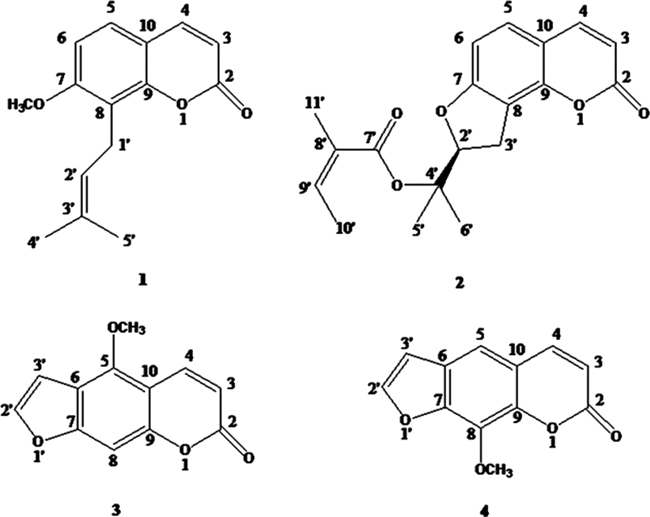
Figure 1
Chemical structures of nematicidal compounds 1-4 isolated from Roots of Angelica pubescens Maxim. f. biserrata Shan et Yuan (Duhuo).
Nematotoxic assay
The extracts of Duhuo and the column fractions 1-9 were dissolved in 5% dimethylsulphoxide (DMSO) aqueous solution containing 0.5% Triton X-100 at a concentration of 1 mg/mL and used as test solutions. Compounds 1-4 were dissolved with DMSO at 20 mg/mL and then diluted with 0.5% Triton X-100 aqueous solution to 200-1,000 μM for testing in for nematotoxic assays. Each test solution (50 [xL) and aqueous suspension of nematodes (50 μL) were introduced into the wells of 96-well plates. In each well, the concentration of nematodes was about one nematode per μL solution. Nematodes were mixtures of juveniles and adults with males, females, and juveniles at a ratio of approximately 1:1:2. Each treatment was replicated four times using the same solvent as negative controls and aloperine as a positive control. Dead and active nematodes in each well were observed under a stereo microscope and their numbers were recorded after incubation at 26°C for 24, 48, and 72 hr.
Nematode mortality was corrected using the Schneider–Orelli formula (Puntener, 1981; Ntalli et al., 2010): Corrected mortality (%) = ((Mortality % in treatment − Mortality% in negative control)/(100% − Mortality % in negative control)) × 100.
SEM and TEM
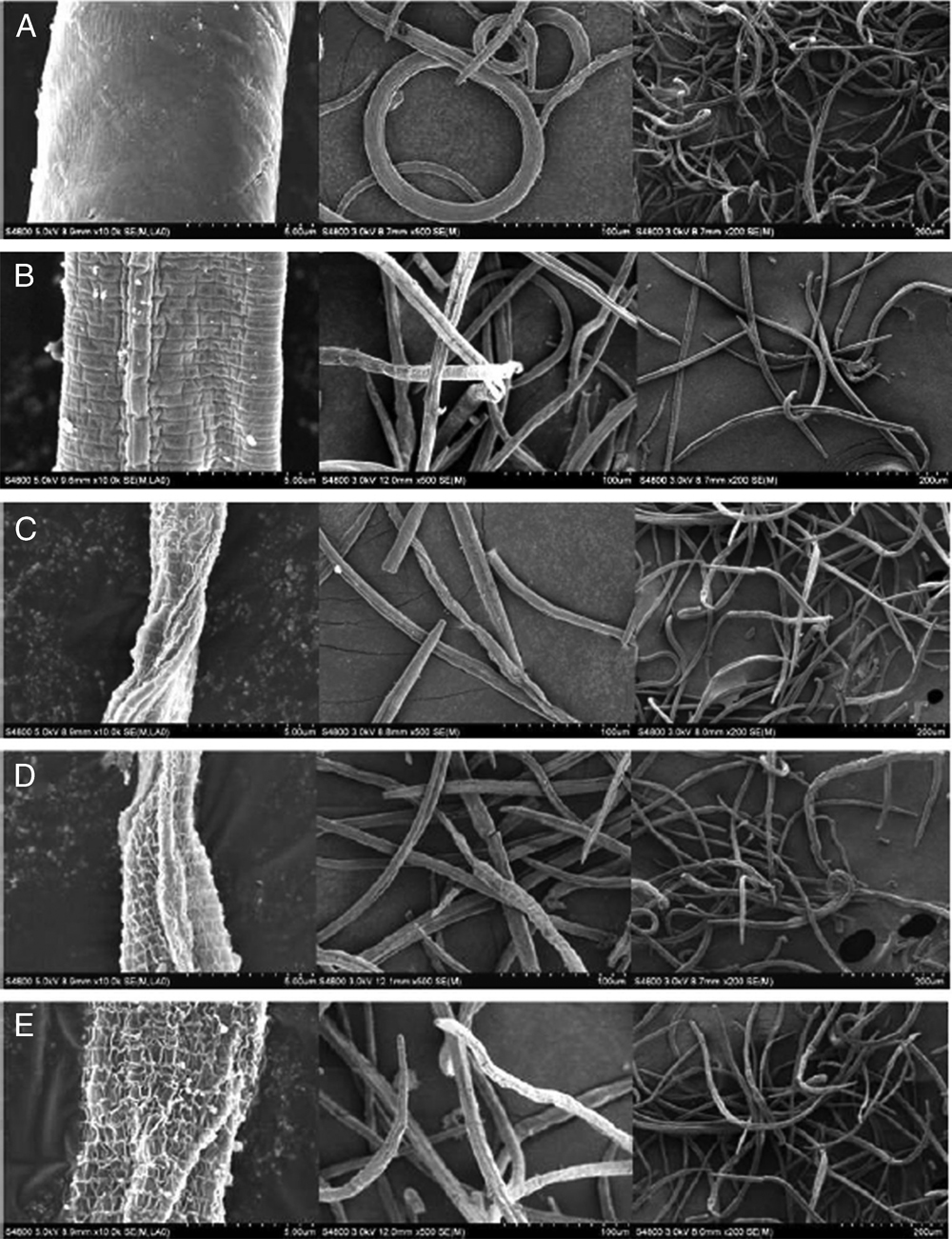
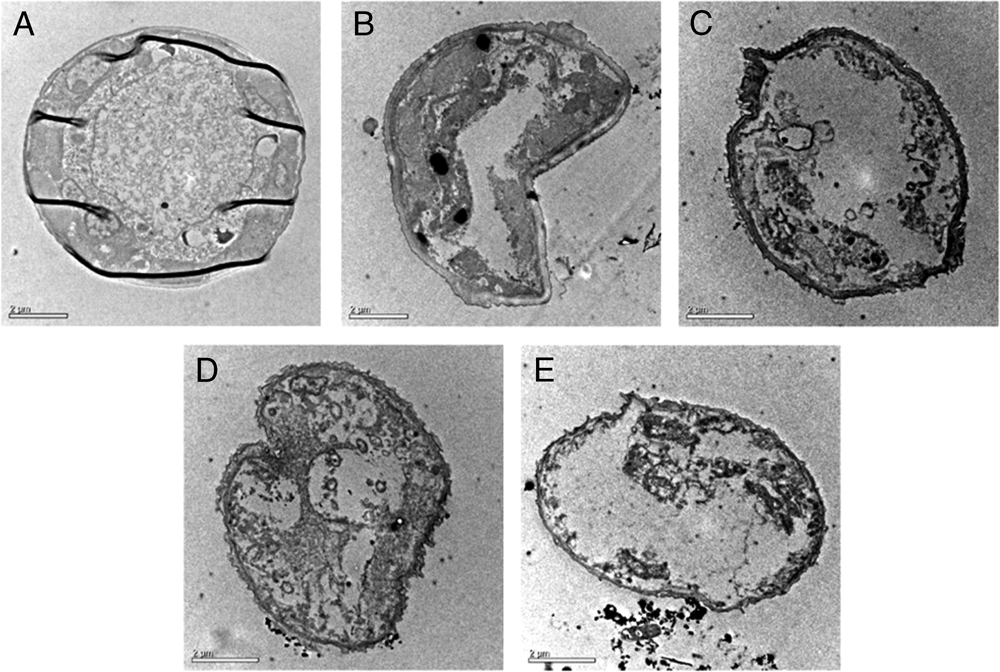
Approximately 5,000 pine wood nematodes were treated with compounds 1-4 at 500 μM in 5% DMSO containing 0.5% Triton X-100 at 26°C for 48 hr. Controls were treated with 5% DMSO containing 0.5% TritonX-100 under the same conditions. Nematodes were washed with 0.1 M phosphate buffer saline (PBS, pH 7.4) three times and then fixed with 2.5% glutaraldehyde overnight at 4°C and then with 1.0% osmium tetroxide for 1 hr after washing with PBS three times each for 15 min. The fixed nematodes were dehydrated in an ethanol series (30, 50, 70, 80, and 90%), two changes of 100% ethanol, ethanol: tertiary butyl alcohol (1:1, v/v) and two changes of 100% tertiary butyl alcohol for 10 min each treatment. The nematodes were then incubated with 100% tertiary butyl alcohol at −18°C and vacuum freeze-dried. They were sputter-coated with 1 to 2 nm platinum for SEM.
The fixed nematodes were also dehydrated in an acetone series (30, 50, 70, 80, and 90%) and three changes of 100% acetone (each treatment for 10 min). The dehydrated nematodes were embedded in acetone-Spurr resin (Polysciences, US) at 3:1 (v/v) for 4 hr, 1:1 for 6 hr, 1:3 for 12 hr, and in Spurr resin for 24 hr. They were then sectioned for TEM.
In vitro assays of compounds 1-4
Healthy pine wood nematodes were mixed with physiological saline at 1:5 (w/v) and then homogenized on ice. The homogenates were centrifuged at 4°C, 12,000 × g for 30 min and the supernatants were collected as enzyme solutions used for assays. Protein concentrations were determined using the Bradford method with bovine serum albumin as the standard (Bradford, 1976). Different amounts of each tested compound were mixed with 5 mL enzyme solution to obtain the treated enzyme solutions containing 2.0, 1.5, 1.0, 0.75, and 0.5 mM of the test compound. The enzyme solutions treated with galanthamine hydrobromide (0.20-0.05 mM), acarbose (2.0-0.5 mM), and copper sulfate-ammonia complexion (50-5 mM) to measure inhibitory effects on acetylcholinesterase (AchE), amylase, and cellulase, respectively. The enzyme solution without any treatment served as the negative control. All of the treated enzyme solutions were preincubated at 37°C for 15 min for enzyme activity assays. Each treatment was replicated three times.
AchE and amylase activities were measured using commercial kits (Nanjing Jiancheng Bioengineering Institute, China). One unit of AchE was defined as the amount of enzyme that hydrolyzed 1.0 xmol acetylcholine in 6 min under assay conditions. One unit of amylase was defined as the amount of enzyme that hydrolyzed 10 mg starch in 30 min. Cellulase activity was also measured using a commercial kit (Beijing Solarbio, China). One unit of cellulase was defined as the amount of enzyme that catalyzed cellulose degradation in the reaction system to obtain 1.0 × g glucose per minute. Each experiment was performed in triplicate. Inhibitory effects were expressed as the percentage of enzyme inhibition in the above assays and calculated as (1−B/A) × 100: where A is the activity of the enzyme in negative control and B is the activity of the treated enzyme.
In vivo assays of compounds 1-4
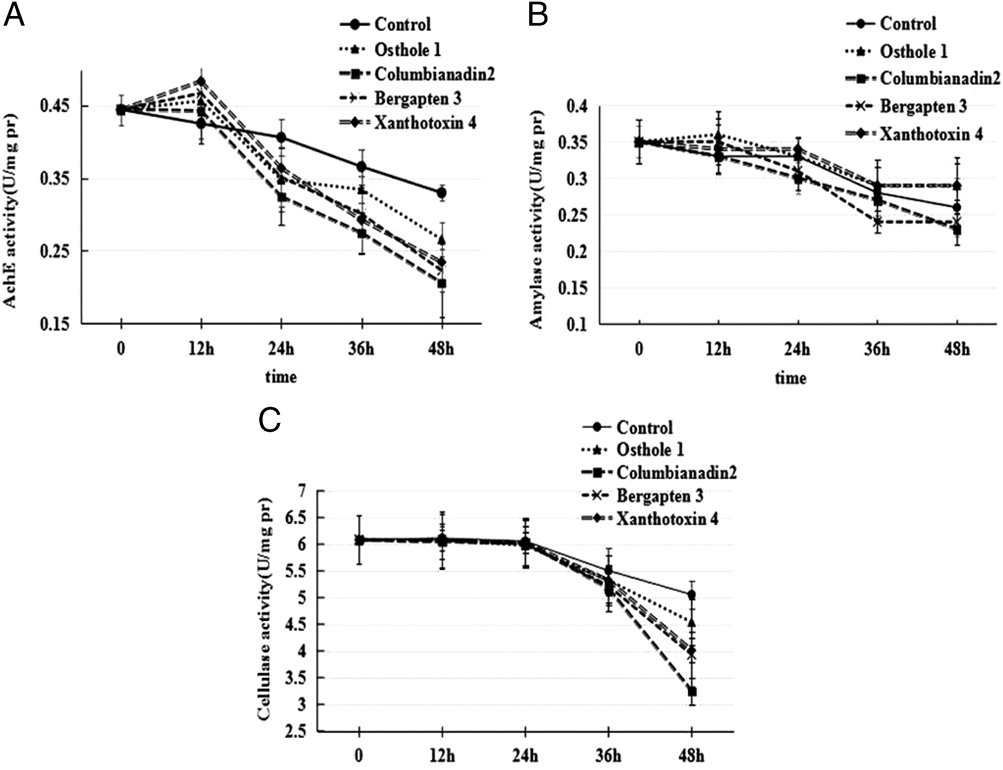
Approximately 100,000 pine wood nematodes were introduced into 5 mL solutions of compounds 1-4 at 500 μM in 5% DMSO containing 0.5% Triton X-100 and cultured in the dark at 26°C. Nematodes cultured in 5% DMSO containing 0.5% Triton X-100 at the same condition were used as the negative control. Each treatment was replicated three times. The same amount of nematode suspension was removed from each treatment at 12, 24, 36, and 48 hr and were then homogenized as per above in physiological saline. The AchE, amylase, and cellulase activities were tested as described above.
Statistical analysis
Analysis of variance (ANOVA) was performed on the data of corrected mortality and the means were compared and separated by Duncan’s multiple-range test at the a = 0.05 level. The median lethal concentrations (LC 50 ) and the median inhibitory concentrations (IC 50 ) on enzymes were obtained according to Probit analysis. All of the data were analyzed with SPSS version 17.0 software.
Results
Nematotoxic activity
The Duhuo ethanol extract had a relatively strong nematotoxic activity with a corrected mortality of 85.83% in 72 hr at 1.0 mg/mL. The ethyl acetate-soluble fraction derived from the ethanol extract was more active with a corrected mortality of 95.25% compared with 36.55% for the aqueous fraction in 72 hr at 1.0 mg/mL (Table 1). The four compounds osthole 1 , columbianadin 2 , bergapten 3, and xanthotoxin 4 from the most active column chromatography fractions (5 and 6) all showed nematotoxic activity (Table 2).
Table 1
Nematotoxic activities of the root extracts of Angelica pubescens Maxim. f. biserrata Shan et Yuan against the Pine Wood nematode B. xylophilus.
| Corrected mortalitya (%, Mean ± SD) | ||||
|---|---|---|---|---|
| Sample (1.0 mg/mL) | 24 hr | 48 hr | 72 hr | |
| Ethanol extract | 32.50 ± 1.95 c | 57.47 ± 1.56 c | 85.83 ± 1.60 b | |
| Ethyl acetate fraction | 46.93 ± 2.10 c | 80.06 ± 1.01 b | 95.25 ± 1.16 ab | |
| Aqueous fraction | 16.59 ± 0.45 f | 27.26 ± 0.99 g | 36.55 ± 1.33 e | |
| Fr.1 | 3.28 ± 0.71 i | 10.74 ± 1.11 i | 15.48 ± 1.25 h | |
| Fr.2 | 4.73 ± 1.13 hi | 12.78 ± 0.71 i | 17.48 ± 1.50 h | |
| Fr.3 | 10.74 ± 1.27 g | 15.54 ± 1.45 h | 23.19 ± 1.05 f | |
| Fr.4 | 20.53 ± 0.66 e | 35.68 ± 1.46 e | 40.89 ± 0.40 d | |
| Fr.5 | 56.97 ± 0.94 a | 83.78 ± 1.48 a | 96.37 ± 1.24 a | |
| Fr.6 | 49.89 ± 1.19b | 76.41 ± 1.22 c | 93.58 ± 1.35 b | |
| Fr.7 | 21.27 ± 1.35 e | 33.14 ± 0.39 f | 40.76 ± 0.66 d | |
| Fr.8 | 10.69 ± 1.41 g | 17.36 ± 1.60 h | 20.27 ± 1.20 g | |
| Fr.9 | 6.01 ± 80.76 h | 11.52 ± 1.49 i | 16.74 ± 1.53 h | |
| Compound (200-1,000 μm) | LC 50 (72 hr, μM) | 95% CLa (μM) | χ 2 | |
|---|---|---|---|---|
| Osthole 1 | 489.17 | 459.09-527.01 | 1.25 | |
| Columbianadin 2 | 406.74 | 387.61-422.06 | 2.14 | |
| Bergapten 3 | 430.08 | 401.51-458.02 | 1.13 | |
| Xanthotoxin 4 | 435.66 | 410.47-459.20 | 2.02 | |
| Aloperineb | 369.76 | 350.07-388.93 | 2.85 |
| Enzyme | Compound | IC 50 (μM) | 95% CLa (μM) | χ 2 |
|---|---|---|---|---|
| Osthole 1 | 3.24 | 3.01–3.49 | 2.35 | |
| Columbianadin 2 | 1.62 | 1.42–1.85 | 1.01 | |
| AchE | Bergapten 3 | 2.28 | 2.08–2.55 | 2.93 |
| Xanthotoxin 4 | 2.40 | 2.16–2.71 | 1.86 | |
| Galanthamine Hydrobromideb | 0.079 | 0.071–0.086 | 3.10 | |
| Osthole 1 | 4.89 | 4.15–5.51 | 2.12 | |
| Columbianadin 2 | 1.35 | 1.12–1.59 | 1.82 | |
| Amylase | Bergapten 3 | 1.72 | 1.64–1.83 | 0.40 |
| Xanthotoxin 4 | 3.25 | 2.79–3.65 | 3.51 | |
| Acarboseb | 1.74 | 1.63–1.88 | 1.17 | |
| Osthole 1 | 6.13 | 5.85–6.42 | 3.01 | |
| Columbianadin 2 | 4.25 | 3.94–4.49 | 1.68 | |
| Cellulase | Bergapten 3 | 2.09 | 1.97–2.23 | 2.21 |
| Xanthotoxin 4 | 2.35 | 2.01–2.65 | 4.01 | |
| Copper Sulfate-Ammonia Complexionb | 20.10 | 19.75–20.49 | 1.82 |