Dagger nematodes (Xiphinema Cobb, 1913) contain more than 260 species (Palomares-Rius et al., 2017). They are polyphagous and ectoparasites on a variety of cultivated and wild plants. Their feeding behavior causes considerable mechanical damage to plants due to its excessive long stylet. The root symptoms include darkening of tissues, cortical hyperplasia, lateral root proliferation, tip galling, and necrosis (Hunt, 1993). In addition, nine Xiphinema species, three species from Xiphinema non-americanum group including X. index (Thorne and Allen, 1950), X. diversicaudatum (Micoletzky, 1927) (Thorne, 1939), and X. italiae (Meyl, 1953) and six putative species in the X. americanum group including X. americanum s. str., X. californicum (Lamberti and Bleve-Zacheo, 1979), X. bricolense (Ebsary et al., 1989, X. intermedium (Lamberti and Bleve-Zacheo, 1979), X. revesi (Dalmaso, 1969), and X. tarjanense (Lamberti and Bleve-Zacheo, 1979) are known to transmit nepoviruses, which cause additional indirect damages to plants (Hunt, 1993; Decraemer and Robbins, 2007). Because of their economic importance, species in Xiphinema have received considerable attention. Virus-transmitting Xiphinema species are listed as quarantine pests in many countries including China.
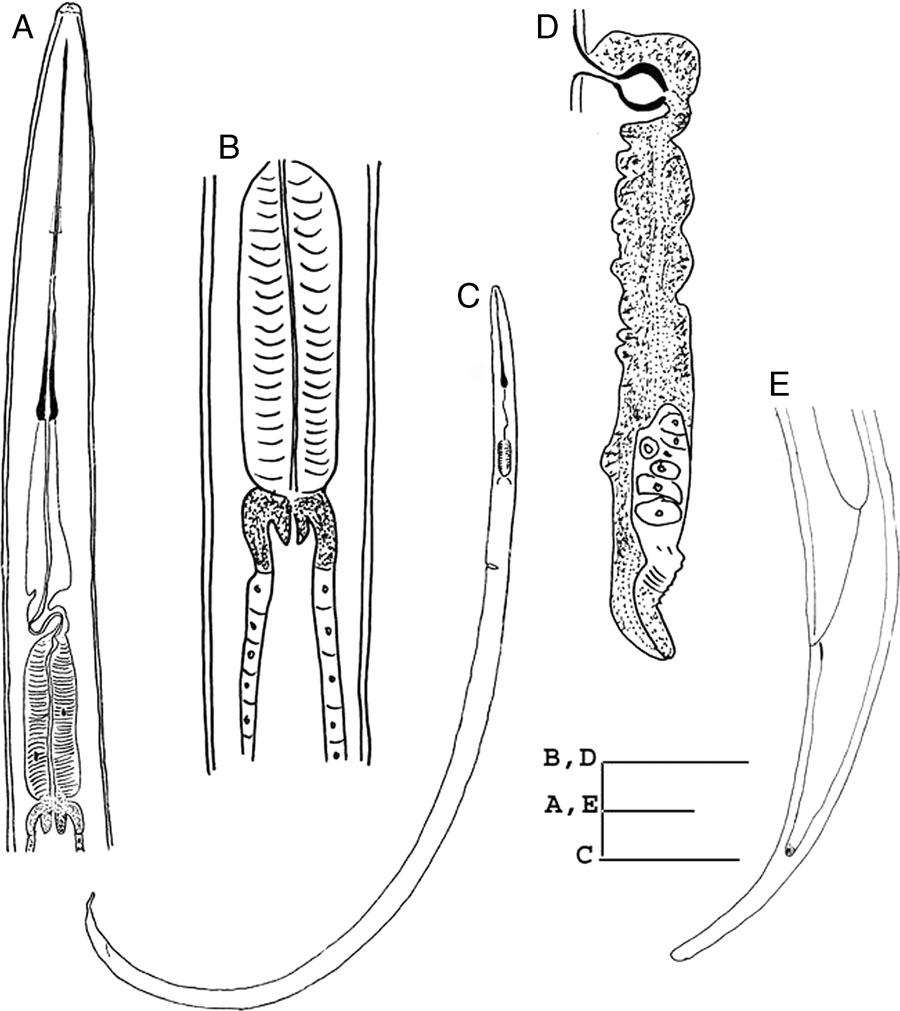
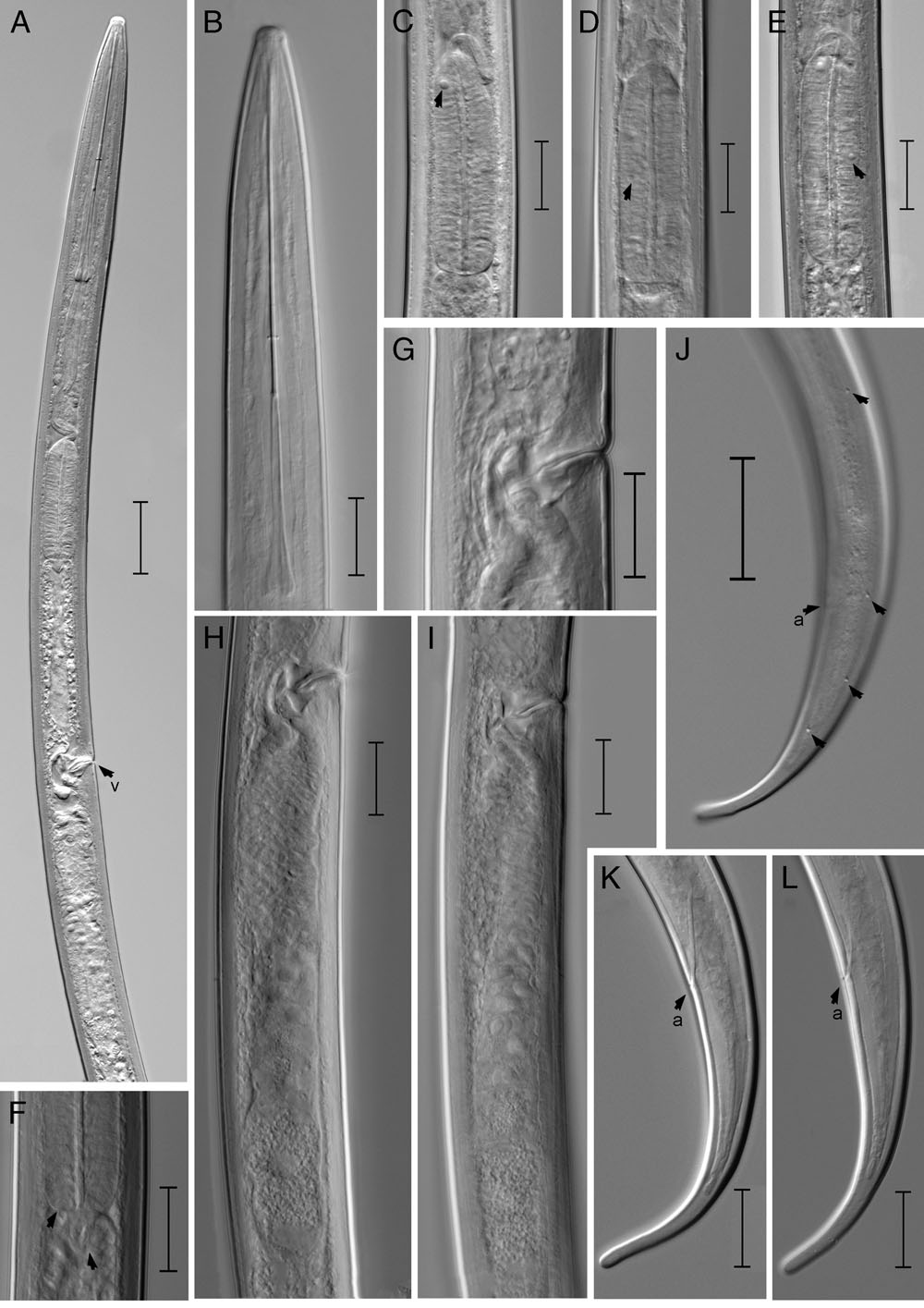
During a routine quarantine inspection, a Xiphinema population was detected from the soil samples from imported ornamental plants, Gardenia jasminoides J. Ellis and Euonymus hamiltonianus Wall. from Japan. The preliminary morphological investigation revealed that the species has a medium size body, opisthodelphic reproductive system, anteriorly located vulva and elongated tail, very similar to North American species X. chambersi (Thorne, 1939).
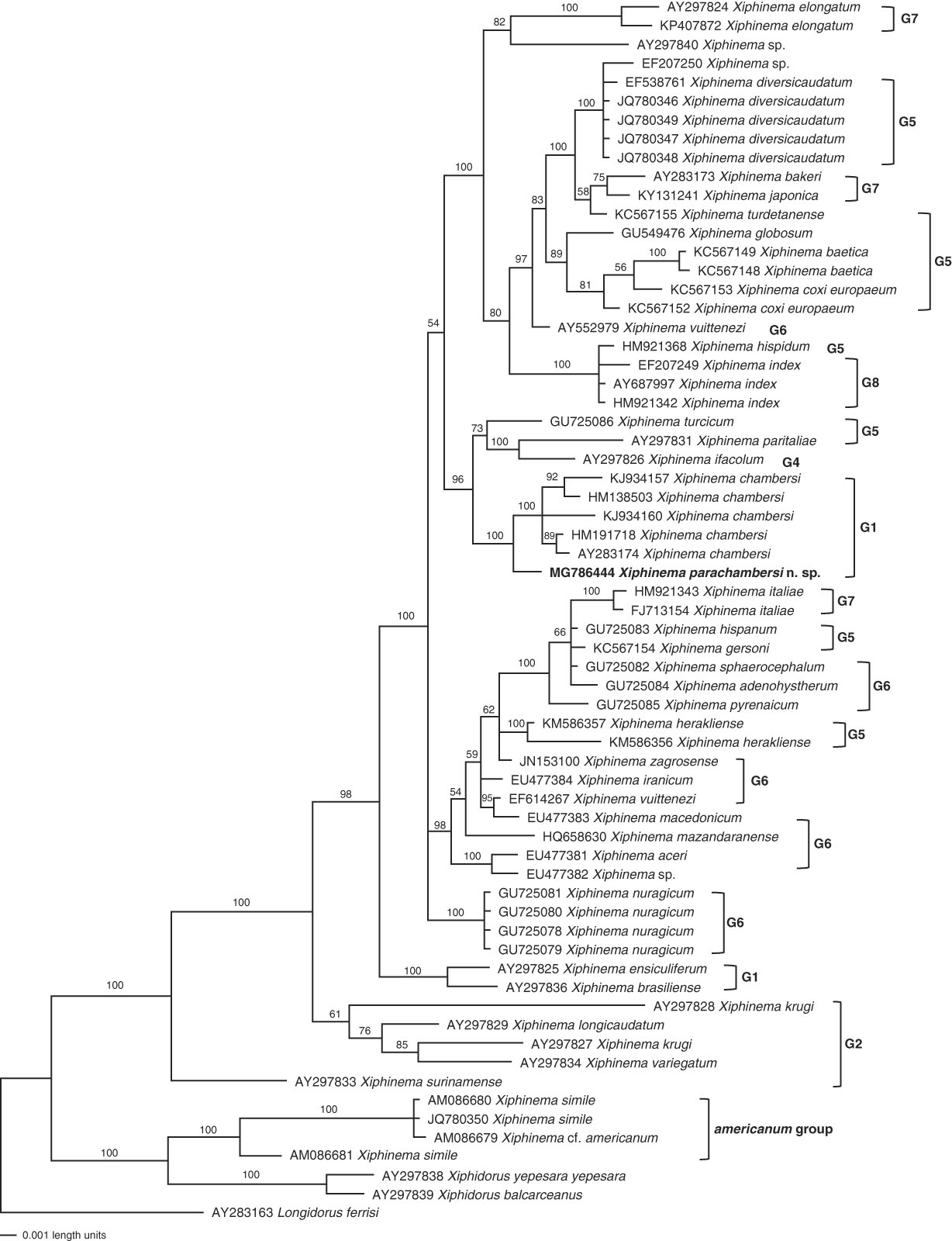
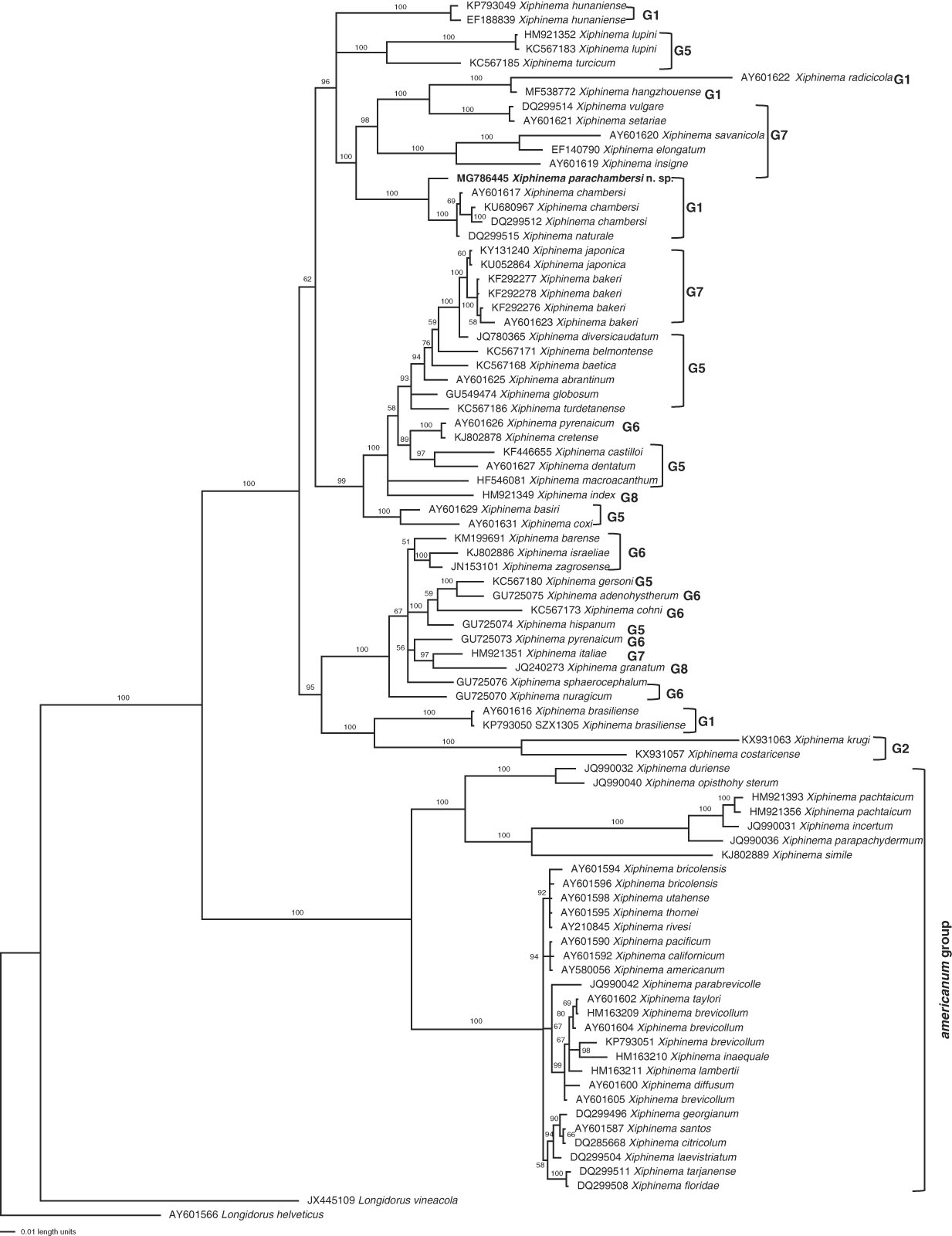
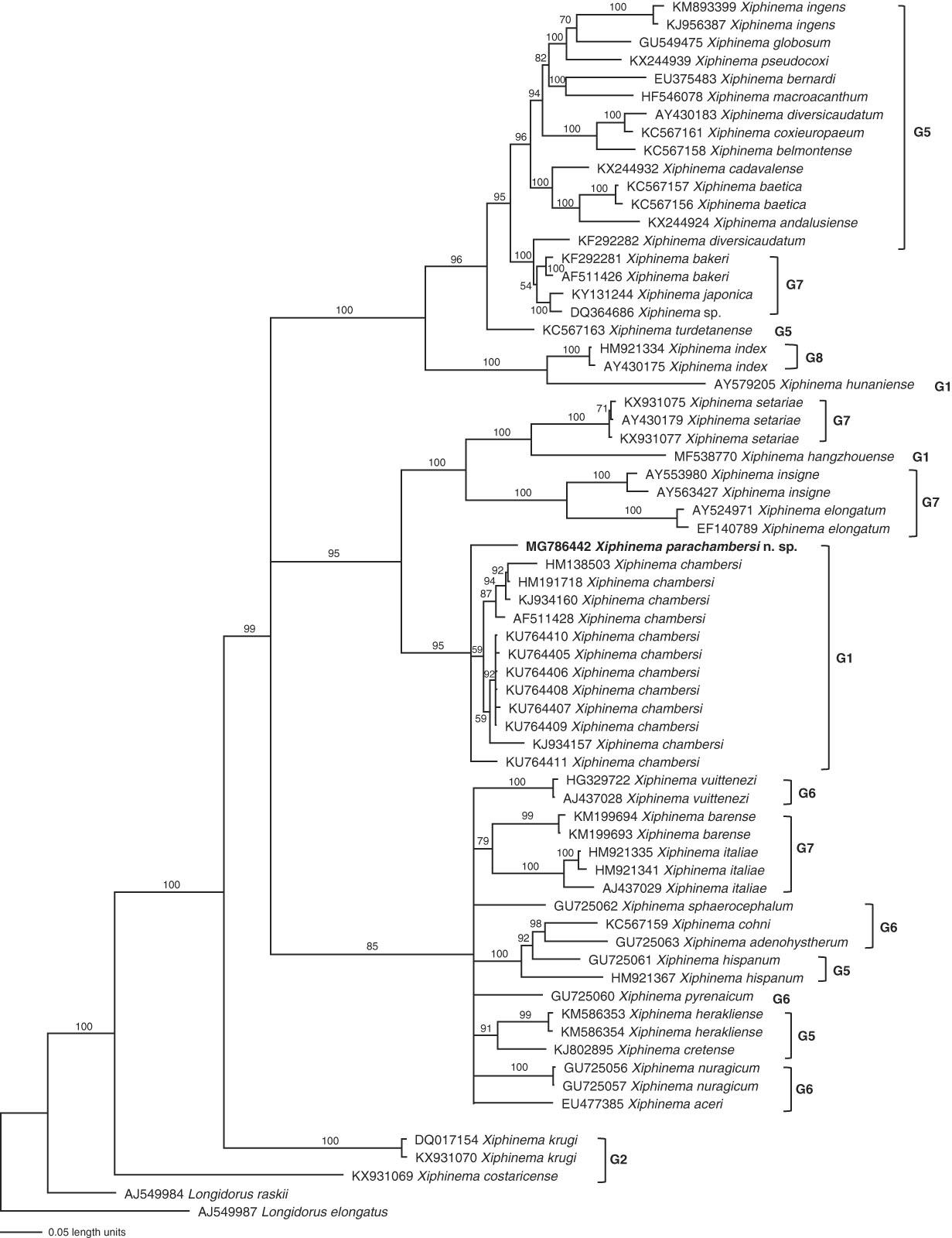
In order to make the final species identification, a detailed morphological and DNA sequencing analysis was conducted which resulted in a new species and was herein described as X. parachambersi n. sp. The objectives of the present study were to: (i) provide a morphological description of the new species and compare it with other similar species; (ii) characterize the species molecularly, using three DNA markers, 18S, ITS1, and 28S D2/D3 ribosomal (iii) examine the phylogenetic relationships of the new species with other species in Xiphinema.
Materials and methods
Nematode samplings, extraction, and morphological study
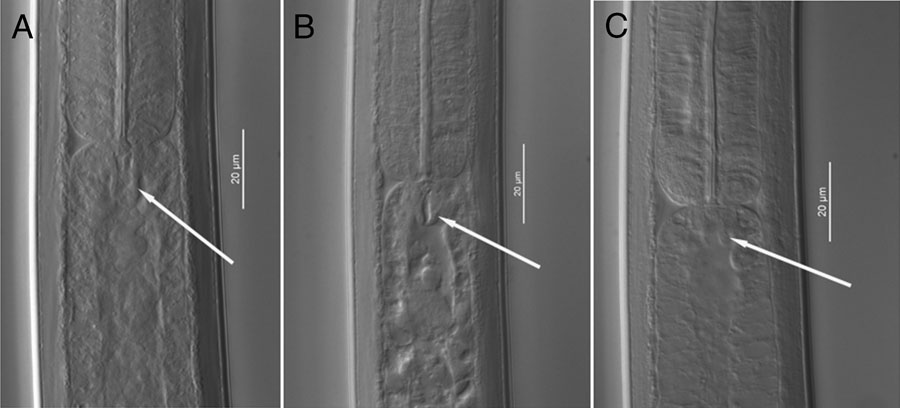
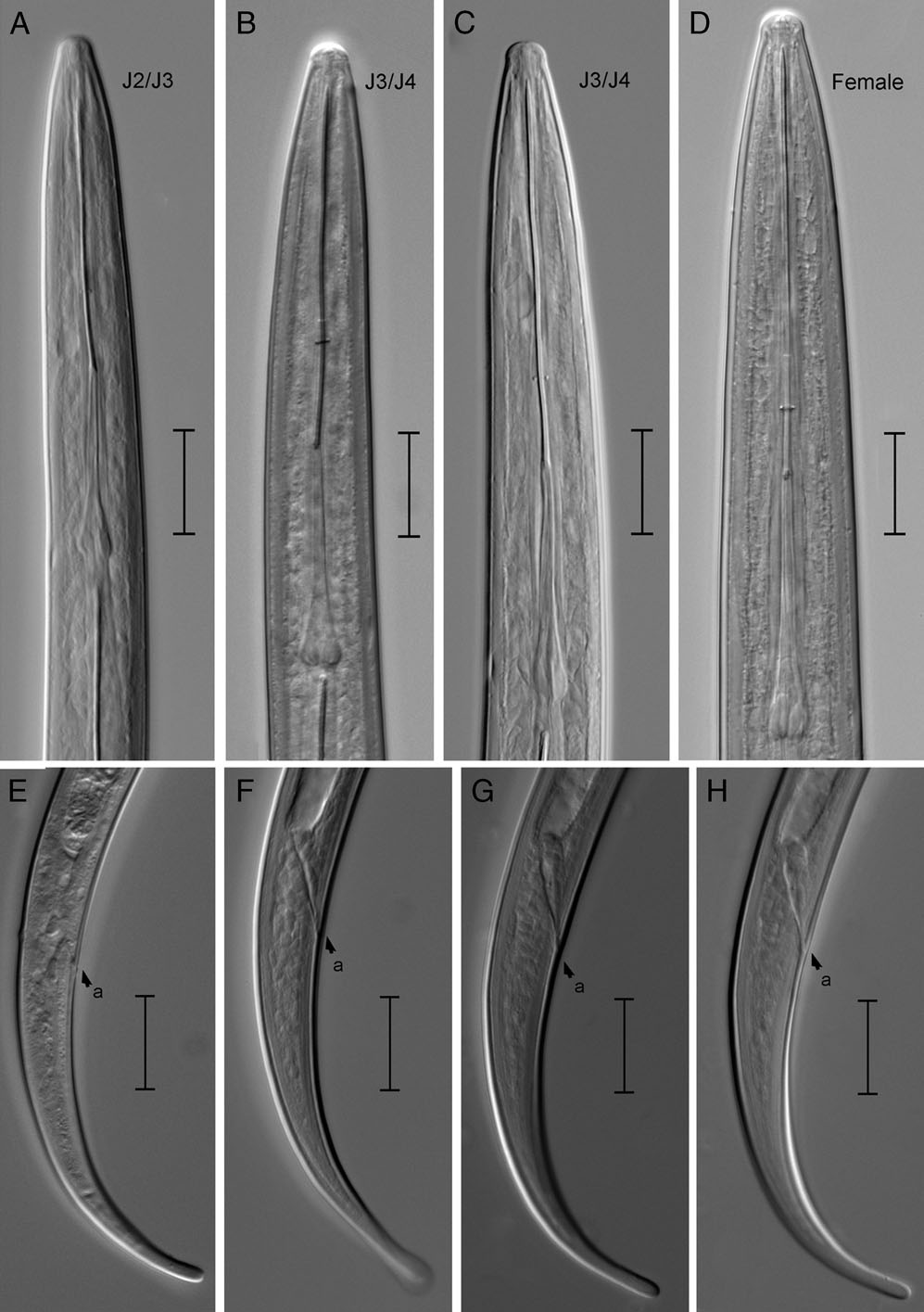
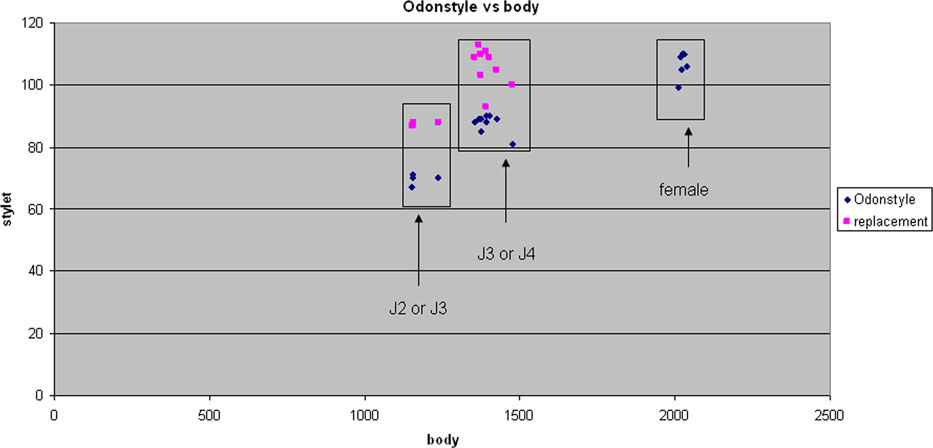
Xiphinema specimens were collected from the rhizosphere of Gardenia jasminoides (sample number: 2186-1) and Euonymus hamiltonianus (sample number: 2186-2) from the same container using modified Baermann funnel method for 24 to 48 hr. Measurements were made on specimens fixed in TAF and processed to glycerin following the method of Seinhorst’s (1959). The nematodes were measured using AxioVs40 (v4.6.3.0) of Zeiss company. All the abbreviations used are as defined in Decraemer and Hunt (2006). Light micrographs were made using a Zeiss Imager Z1 microscope equipped with a Zeiss AxioCam MRm CCD camera. Drawings were made with a drawing tube. Juvenile stages were determined by a plot with scattergraph method of the lengths of odontostyles and replacements.
Molecular analyses
For DNA extraction, a single nematode was transferred to worm lysis buffer (WLB: 20 mM Tris-HCl pH 8.0, 100 mM KCl, 3.0 mM Mg2Cl, 2.0 mM DTT, 0.9% Tween) and crushed with a sterilized pipette tip. The crushed nematode was pipetted into 8 µl ddH2O with 2 µl proteinase K (60 µg/ml) in an Eppendorf tube, which was then briefly spun and stored at −70°C for at least 10 min. Subsequently, the Eppendorf tube was incubated at 65°C for 1 to 2 h and the proteinase K was denatured at 95°C for 10 min. Finally, the DNA suspension was cooled to 4°C and used for conducting PCR (Li et al., 2008). Three sets of primers (synthesized by Invitrogen, Shanghai, China) were used in the PCR analyses to amplify the partial 18S, ITS1, and 28S rDNA D2/D3. Primers for amplification of 18S were forward primer K4f and reverse primer K1r (Penas et al., 2006). Primers for amplification of ITS1 were forward primer V1 (Ferris et al., 1993) and reverse primer 5.8S (Cherry et al., 1997). Primers for amplification of 28S D2/D3 were forward primer D2A and reverse primer D3B (De Ley et al., 1999). The 25-µl PCR was performed using Master Mix DNA polymerase (Invitrogen, Shanghai, China) according to the manufacturer’s protocol in a thermocycler. The thermal cycler program for 28S was as follows: denaturation at 95 °C for 5 min, followed by 35 cycles of denaturation at 94 °C for 30 s, annealing at 55 °C for 45 s, and extension at 72 °C for 2 min. A final extension was performed at 72 °C for 10 min. The thermal cycler program for 18S and ITS was as follows: denaturation at 95 °C for 5 min, followed by 35 cycles of denaturation at 95 °C for 60 s, annealing at 55 °C for 60 s, and extension at 72 °C for 2 min. A final extension was performed at 72 °C for 5 min as described by Ye et al. (2007) and Li et al. (2008). PCR products were separated and visualized on 1% agarose gels and stained with ethidium bromide. PCR products of sufficiently high quality were sequenced by Invitrogen (Shanghai, China).
Phylogenetic analysis
The sequences were deposited into the GenBank database. DNA sequences were aligned by MEGA7 (Kumar et al., 2016.) using default settings. The DNA sequences were compared with those of the other nematode species available at the GenBank sequence database using the BLAST homology search program. The model of base substitution was evaluated using MODELTEST (Posada and Criandall, 1998; Huelsenbeck and Ronquist, 2001). The Akaike-supported model, the base frequencies, the proportion of invariable sites and the gamma distribution shape parameters and substitution rates were used in phylogenetic analyses. Bayesian analysis was performed to confirm the tree topology for each gene separately using MrBayes 3.1.0 (Huelsenbeck and Ronquist, 2001) running the chain for 1 × 10⁶ generations and setting the “burnin” at 2,500. We used the Markov Chain Monte Carlo (MCMC) method within a Bayesian framework to estimate the posterior probabilities of the phylogenetic trees (Larget and Simon, 1999) using 50% majority rule.
Results
SYSTEMATICS
Xiphinema parachambersi n. sp.
Table 1
Morphometrics data for Xiphinema parachambersi n. sp. All measurements are in µm and in the form of mean ± s.d. (range).
| Holotype | Paratype | |||
|---|---|---|---|---|
| Character/ratios | Female | Female | J2 or J3 | J3 or J4 |
| n | 1 | 15 | 5 | 11 |
| L | 1,918 | 2008.9±78.7 (1,830.0-2,109.0) | 1,127.0±52.6 (1,046.0-1,210.0) | 1,419.6±38.5 (1,349.0-1,587.0) |
| a | 45.6 | 47.2±2.3 (44.2-53.1) | 42.7±3.6 (36.7-46.3) | 48.3±3.5 (41.60-55.5) |
| b | 5.4 | 5.5±0.2 (5.1-6.0) | 3.9±0.5 (3.0-4.4) | 4.7±0.3 (4.2-5.0) |
| c | 18.1 | 18.0±1.0 (16.1-19.6) | 11.8±1.0 (10.5-12.8) | 13.2±0.6 (12.0-15.1) |
| c’ | 4.4 | 4.9±0.4 (4.2-6.0) | 6.4±0.3 (5.9-6.8) | 5.9±0.4 (5.2-6.9) |
| V | 27 | 26.2±0.6 (25.2-27.7) | — | — |
| Lip diam. | 10 | 10.3±0.6 (8.8-11.2) | 8.6±0.3 (8.2-9.0) | 8.9±0.5 (8.2-10.1) |
| Lip height | 5 | 4.1±0.7 (2.9-5.2) | 3.6±0.4 (3.0-4.2) | 3.8±0.4 (3.1-4.7) |
| Odontostyle | 115 | 110.4±2.6 (105-115.6) | 71.0±3.8 (64.4-75.6) | 85.5±2.0 (79.5-90.0) |
| Odontophore | 67 | 65.5±1.6 (61.0-68.1) | 46.1±1.4 (44.5-47.8) | 53.8±1.0 (52.2-54.8) |
| Replacement odontostyle | — | — | 88.0±2.5 (85.0-92.0) | 107.0±7.9 (90.5-116.3) |
| Total stylet | 173 | 176±2.9 (169.0-181.2) | 116.6±4.7 (109.0-120.5) | 140.0±2.2 (137.2-142.5) |
| Flanges width | 10 | 10.4±0.7 (8.8-11.5) | 8.1±0.4 (7.7-8.7) | 9.0±0.6 (7.6-10.8) |
| Esophagus | 358 | 366.6±10.6 (348.4-387.2) | 289.6±28.2 (272.2-345.6) | 311.4±14.7 (275.0-344.2) |
| Esophageal bulb length | 78 | 81.5±2.1 (77.4-85.1) | 63.7±2.2 (60.1-66.1) | 70.4±3.0 (64.8-76.5) |
| Esophageal bulb diam. | 24 | 24.5±1.1 (22.5-26.5) | 16.5±1.4 (14.1-17.9) | 18.6±0.6 (17.6-23.0) |
| Body diam. | 42 | 42.7±2.0 (38.8-46.7) | 27.2±1.9 (24.3-29.8) | 29.6±1.5 (26.4-35.1) |
| Anterior genital branch length | 11 | 10.6±1.3 (8.4-12.3) | — | — |
| G1% | 0.5 | 0.5±0.1 (0.4-0.6) | — | — |
| Posterior genital branch length | 240 | 218.3±40.9 (119.2-292.1) | — | — |
| G2% | 8.9 | 10.7±1.9 (5.8-13.9) | — | — |
| Distance from anterior end to vulva | 522 | 525.2±15.9 (493.0-548.3) | — | — |
| Anal body width. | 24 | 23.1±1.5 (20.1-25.0) | 15.2±1.0 (14.0-16.4) | 18.7±0.7 (16.8-20.3) |
| Tail | 106 | 112.2±6.3 (98.0-120.3) | 98.0±6.0 (88.0-104.0) | 109.0±1.4 (103.5-116.0) |
| Hyaline tail part | 44 | 43.0±2.2 (39.4-47.2) | 19.3±1.2 (17.9-20.7) | 26.1±2.7 (20.2-32.0) |
| H% | 41 | 38.5±2.4 (34.4-43.4) | 19.5±2.0 (17.5-23.1)) | 23.8±2.9 (17.4-28.2) |
| Rectum | 38 | 35.2±2.7 (30.4-40.8) | 20.0±4.5 (16.4-27.6) | 28.4±2.3 (23.1-30.8) |
| Species | 18S | 28S D2-D3 | ITS |
|---|---|---|---|
| Xiphinema abrantinum | - | AY601625 | - |
| Xiphinema andalusiense | - | - | KX244924 |
| Xiphinema aceri | EU477381 | - | EU477385 |
| Xiphinema adenohytherum | GU725084 | GU725075 | GU725063 |
| Xiphinema baetica | KC567149 | KC567168 | KC567157 |
| KC567148 | - | KC567156 | |
| Xiphinema bakeri | AY283173 | KF292277 | KF292281 |
| - | KF292278 | AF511426 | |
| - | KF292276 | - | |
| - | AY601623 | - | |
| Xiphinema barense | - | KM199691 | KM199694 |
| - | - | KM199693 | |
| Xiphinema basiri | - | AY601629 | - |
| Xiphinema belmontense | - | KC567171 | KC567158 |
| Xiphinema bernardi | - | - | EU375483 |
| Xiphinema brasiliense | AY297836 | AY601616 | - |
| - | KP793050 | - | |
| Xiphinema cadavalense | - | - | KX244932 |
| Xiphinema castilloi | - | KF446655 | - |
| Xiphinema chambersi | AY283174 | AY601617 | HM138503 |
| HM138503 | KU680967 | HM191718 | |
| HM191718 | DQ299512 | KJ934160 | |
| KJ934157 | - | KJ934157 | |
| KJ934160 | - | AF511428 | |
| - | - | KU764410 | |
| - | - | KU764405 | |
| - | - | KU764406 | |
| - | - | KU764407 | |
| - | - | KU764408 | |
| - | - | KU764409 | |
| - | - | KU764411 | |
| Xiphinema cohni | - | KC567173 | KC567159 |
| Xiphinema costaricense | - | KX931057 | KX931069 |
| Xiphinema coxi | - | AY601631 | - |
| Xiphinema coxi europaeum | KC567152 | - | KC567161 |
| KC567153 | - | - | |
| Xiphinema cretense | - | KJ802878 | KJ802895 |
| Xiphinema dentatum | - | AY601627 | - |
| Xiphinema diversicaudatum | EF538761 | JQ780365 | KF292282 |
| JQ780349 | - | - | |
| JQ780348 | - | - | |
| JQ780347 | - | - | |
| JQ780346 | - | - | |
| Xiphinema ensiculiferum | AY297825 | - | - |
| Xiphinema elongatum | AY297824 | EF140790 | AY524971 |
| KP407872 | - | EF140789 | |
| Xiphinema gersoni | KC567154 | KC567180 | - |
| Xiphinema globosum | GU549476 | GU549474 | GU549475 |
| Xiphinema granatum | - | JQ240273 | - |
| Xiphinema hangzhouense | - | MF538772 | MF538770 |
| Xiphinema herakliense | KM586356 | - | KM586353 |
| KM586357 | - | KM586354 | |
| Xiphinema hispidum | HM921368 | - | - |
| Xiphinema hispanum | GU725083 | GU725074 | GU725061 |
| - | - | HM821367 | |
| Xiphinema hunaniense | - | KP793049 | AY579205 |
| - | EF188839 | - | |
| Xiphinema ifacolum | AY297826 | - | - |
| Xiphinema index | EF207249 | HM921349 | HM921334 |
| AY687997 | - | AY430175 | |
| HM921342 | - | - | |
| Xiphinema ingens | - | - | KM893399 |
| - | - | KJ9566387 | |
| Xiphinema insigne | - | AY601619 | AY553980 |
| - | - | AY563427 | |
| Xiphinema iranicum | EU477384 | - | - |
| Xiphinema israeliae | - | KJ802886 | |
| Xiphinema italiae | HM921343 | HM921351 | HM921335 |
| FJ713154 | - | HM921341 | |
| - | - | AJ437029 | |
| Xiphinema japonica | KY131241 | KY131240 | KY131244 |
| - | KU052864 | - | |
| Xiphinema krugi | AY297827 | KX931063 | DQ017154 |
| AY297828 | - | KX931070 | |
| Xiphinema longicaudatum | AY297829 | - | - |
| Xiphinema lupini | - | HM921352 | - |
| - | KC567183 | - | |
| Xiphinema mazandaranense | HQ658630 | - | - |
| Xiphinema macedonicum | EU477383 | - | - |
| Xiphinema macroacanthum | - | HF546081 | HF546078 |
| Xiphinema naturale | - | DQ299515 | - |
| Xiphinema nuragicum | GU725078 | GU725070 | GU725056 |
| GU725079 | - | GU725057 | |
| GU725080 | - | - | |
| GU725081 | - | - | |
| Xiphinema parachambersi n. sp. | MG786444 | MG7866445 | MG786442 |
| Xiphinema paritaliae | AY297831 | - | - |
| Xiphinema pseudocoxi | - | - | KX244939 |
| Xiphinema pyrenaicum | GU725085 | AY601626 | GU725060 |
| - | GU725073 | - | |
| Xiphinema radicicola | - | AY601622 | - |
| Xiphinema savanicola | - | AY601620 | - |
| Xiphinema setariae | - | AY601621 | KX931075 |
| - | - | AY430179 | |
| - | - | KX931077 | |
| Xiphinema sphaerocephalum | GU725082 | GU725076 | GU725062 |
| Xiphinema surinamense | AY297833 | - | - |
| Xiphinema turcicum | GU725086 | KC567185 | - |
| Xiphinema turdetanense | KC567155 | KC567186 | KC567163 |
| Xiphinema variegatum | AY297834 | - | - |
| Xiphinema vulgare | - | DQ299514 | - |
| Xiphinema vuittenezi | AY552979 | - | HG329722 |
| EF614267 | - | AJ437028 | |
| Xiphinema zagrosense | JN153100 | JN153101 | - |
| Xiphinema sp. | AY297840 | - | DQ364686 |
| EF207250 | - | - | |
| EU477382 | - | - | |
| Xiphinema amercanum group | |||
| Xiphinema cf. americanum | AM086679 | - | - |
| Xiphinema americanum | - | AY580056 | - |
| Xiphinema brevicollum | - | HM163209 | - |
| - | AY601604 | - | |
| - | KP793051 | - | |
| - | AY601605 | - | |
| Xiphinema bricolensis | - | AY601594 | - |
| - | AY601596 | - | |
| Xiphinema californicum | - | AY601592 | - |
| Xiphinema citricolum | - | DQ285668 | - |
| Xiphinema diffusum | - | AY601600 | - |
| Xiphinema duriense | - | JQ990032 | - |
| Xiphinema floridae | - | DQ299508 | - |
| Xiphinema georgianum | - | DQ299496 | - |
| Xiphinema incertum | - | JQ990031 | - |
| Xiphinema inaequale | - | HM163210 | - |
| Xiphinema laevistriatum | - | DQ299504 | - |
| Xiphinema lambertii | - | HM163211 | - |
| Xiphinema opisthohysterum | - | JQ990040 | - |
| Xiphinema pachtaicum | - | HM921393 | - |
| - | HM921356 | - | |
| Xiphinema pacificum | - | AY601590 | - |
| Xiphinema parabrevicolle | - | JQ990042 | - |
| Xiphinema parapachydemum | - | JQ990036 | - |
| Xiphinema rivesi | - | AY210845 | - |
| Xiphinema santos | - | AY601587 | - |
| Xiphinema simile | AM086680 | KJ802889 | - |
| AM086681 | - | - | |
| JQ780350 | - | - | |
| Xiphinema tarjanense | - | DQ299511 | - |
| Xiphinema taylori | - | AY601602 | - |
| Xiphinema thornei | - | AY601595 | - |
| Xiphinema utahense | - | AY601598 | - |
| Xiphidorus yepesara yepesara | AY297838 | - | - |
| Xiphidorus balcarceanus | AY297839 | - | - |
| Longidorus ferrisi | AY283163 | - | - |
| Longidorus raskii | - | - | AJ549984 |
| Longidorus elongatus | - | - | AJ549987 |