
Military veterans and service members face significant challenges when transitioning to civilian life, including physical, psychological, and social difficulties (Geraci et al., 2023). Approximately 20% of veterans who return from Iraq and Afghanistan are diagnosed with posttraumatic stress disorder (PTSD), while over 30% experience comorbid conditions such as depression, which further complicates reintegration efforts (Acierno et al., 2021; Schnurr et al., 2022). Chronic health conditions are also widespread, with 45% of veterans reporting at least one service-related disability limiting daily activities (Damschroder et al., 2020). Furthermore, 60% of transitioning veterans encounter issues with employment, reestablishing familial connections, or forming meaningful social networks (Bond et al., 2022). The problem is that veterans and service members face interconnected challenges, including PTSD, social reintegration struggles, and economic instability (Acierno et al., 2021; Bond et al., 2022; Davis et al., 2018b) and fragmented interventions often fail to address these multifaceted needs comprehensively, leaving critical gaps in support for long-term reintegration into civilian life.
While systematic reviews and meta-analyses typically focus on quantifying intervention effects through statistical aggregation, they often exclude the qualitative dimensions that reveal how veterans experience and engage with these interventions. In contrast, this evidence integration review employed a mixed methods approach to synthesize quantitative outcomes and qualitative insights (e.g., barriers to participation, cultural considerations, perceptions of impact) to provide a more holistic understanding of intervention efficacy and feasibility within the real-world contexts of veteran reintegration.
Multimodal interventions are essential for addressing these interconnected challenges. Physical activity programs help alleviate chronic conditions and reduce stress. Mindfulness-based interventions target symptoms of PTSD and depression. Social support initiatives promote connection, enhance economic stability, and support successful reintegration (Davis et al., 2018a; Kearney et al., 2021). In the context of this Evidence Integration Review (EIR), multimodal interventions are defined as approaches that integrate two or more distinct therapeutic modalities, such as psychological therapies, physical activity programs, social support mechanisms, and vocational readiness training, to address multiple dimensions of veteran well-being simultaneously. Single interventions that target multiple psychological outcomes without combining different intervention types were not classified as multimodal. For example, a combined mindfulness and employment-readiness program evaluated by Bond et al. (2022) significantly increased monthly income by $703 and employment stability by 20% while simultaneously improving PTSD symptom management and social connectedness. This highlights how integrating psychological and vocational supports can produce synergistic outcomes.
Individual studies demonstrate the efficacy of tailored interventions, including improvements in PTSD symptoms, depression, and reintegration outcomes (Bond et al., 2022; Kearney et al., 2021). However, variability in study designs, inclusion criteria, and measurement tools limited the generalizability of findings. Furthermore, the underrepresentation of female veterans, racial minorities, and individuals with complex comorbidities constrains the applicability of existing research. A comprehensive synthesis is needed to evaluate the effectiveness of multimodal interventions and their ability to address veterans’ challenges holistically. This EIR synthesized findings from randomized controlled trials (RCTs), cross-sectional studies, and qualitative analyses to bridge these gaps. By incorporating quantitative and qualitative evidence, the review contextualizes intervention outcomes and veterans’ lived experiences, providing a nuanced understanding of their effectiveness.
Methods
This EIR synthesized findings from 40 studies, including randomized controlled trials, cross-sectional studies, and qualitative analyses, to evaluate the effectiveness of multimodal interventions targeting physical, psychological, and social outcomes in military veterans. Quantitative methods adhered to PRISMA guidelines to ensure systematic and transparent data collection, synthesis, and reporting (Sohrabi et al., 2021). Julius.ai software facilitated the filtering and extraction of quantitative data, enhancing efficiency and accuracy. Qualitative analyses were conducted using ATLAS.ti software to support inductive thematic analysis. Full-text qualitative and mixed-methods studies were uploaded and coded line-by-line to identify recurring concepts. Codes were developed iteratively based on the data, with emergent patterns categorized into higher-order themes such as barriers to engagement, psychological benefits, and social reintegration. Thematic saturation was determined when no new themes emerged across additional sources. This process ensured that qualitative findings reflected veterans’ lived experiences across diverse intervention settings and populations.
Searches were conducted in PsycINFO, Medline, CINAHL, and Web of Science using Boolean operators and targeted keywords. Inclusion criteria focused on US-based studies published in English from January 2014 to November 2024, evaluating exercise, mindfulness, or social support interventions. Studies with a high risk of bias or those focused on non-military populations or pharmacological treatments were excluded. A PRISMA flowchart summarizing the study identification and selection process is presented in Figure 1, and detailed search strategies and information about excluded studies are available upon request. By integrating quantitative outcomes with qualitative insights, this review provided a holistic understanding of intervention effectiveness and veterans’ lived experiences.
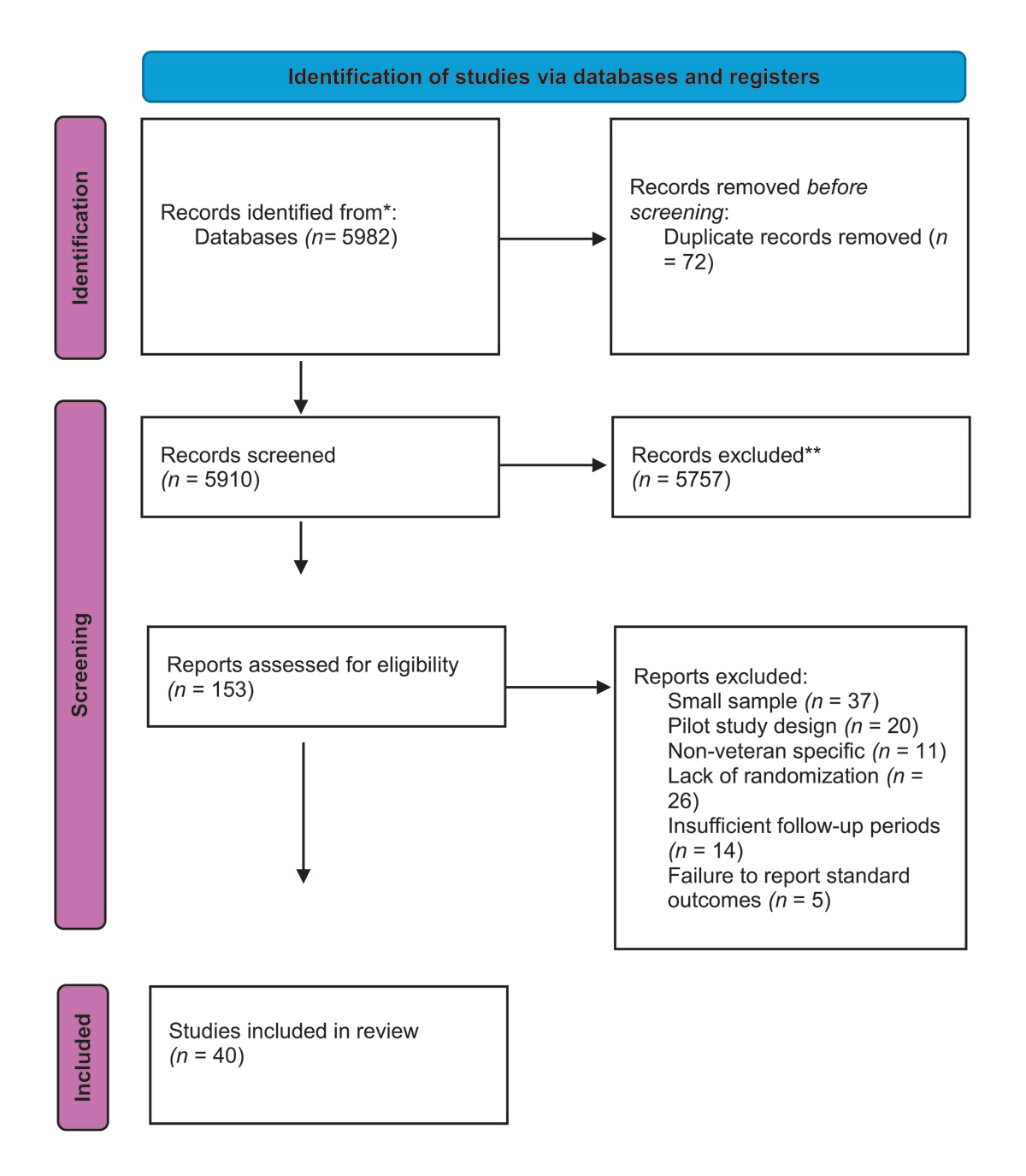
Figure 1
PRISMA 2020 Flow Diagram of Study Selection.
Note. This flow diagram depicts the identification, screening, eligibility and inclusion stages for the 40 studies synthesized in this Evidence Integration Review. Adapted from PRISMA 2020 guidelines; n = sample size.
Results
Article Selection
This EIR applied a rigorous process to ensure the inclusion of high-quality studies. An initial search identified 5,982 studies across multiple databases. After removing 72 duplicates, 5,910 studies underwent title and abstract screening, resulting in the exclusion of 5,757 studies that did not meet the inclusion criteria. Subsequently, 153 full-text articles were assessed for eligibility, leading to the exclusion of 113 studies for reasons such as small sample sizes in quantitative studies (n = 37), pilot designs (n = 20), non-veteran-specific populations (n = 11), lack of randomization (n = 26), insufficient follow-up durations (n = 14), and unreported standardized outcomes (n = 5). Despite these exclusions, two small-sample studies were retained due to their unique insights into specific subpopulations of veterans. Ultimately, 40 studies were included in the final analysis.
Characteristics of Included Studies
The 40 studies reviewed exclusively focused on US veterans and were published between 2014 and 2024. Study designs included RCTs, cross-sectional studies, and qualitative analyses. Sample sizes ranged from 21 to 916 participants, totaling 7,364 individuals. The studies predominantly involved male veterans (81.8%), with four studies specifically targeting female veterans. Participant ages ranged from 28.1 to 57.1 years, capturing both younger veterans transitioning to civilian life and older veterans with chronic conditions. This demographic profile is generally consistent with national data indicating that the US veteran population remains majority male (approximately 89%), spans a similar age distribution, and is consistent with female veterans and racial/ethnic minorities remaining underrepresented in research relative to their presence in the broader veteran population (U.S. Department of Veterans Affairs, 2023). Consequently, while the sample reflects some key demographic trends, caution is warranted when generalizing findings to underrepresented veteran subgroups.
Interventions varied across psychological, physical, and social domains. Psychological interventions included mindfulness-based therapies, trauma-focused approaches, and cognitive-behavioral strategies addressing PTSD, depression, and anxiety. Physical interventions featured exercise regimens, yoga, and mobility programs, while social interventions encompassed peer-led support groups, employment readiness programs, and community-based initiatives. Most studies were conducted in Veterans Affairs Medical Centers (VAMCs), while others employed remote or community-based settings, enhancing accessibility for rural or underserved populations. Follow-up durations ranged from immediate post-intervention assessments to 24 months. Validated instruments such as the PTSD Checklist for DSM-5 (PCL-5), Beck Depression Inventory-II (BDI-II), and Clinician-Administered PTSD Scale for DSM-5 (CAPS-5) were used to measure outcomes.
Comprehensiveness of Reporting
The included studies adhered to high methodological standards, frequently aligning with the guidelines of CONSORT (Consolidated Standards of Reporting Trials). Essential study elements were consistently detailed, including recruitment strategies, randomization procedures, intervention protocols, and statistical analyses. Many studies described intervention fidelity, with reports of facilitator training, adherence monitoring, and fidelity rates often exceeding 90%. However, only a subset of studies systematically reported adverse events or unintended outcomes, limiting the ability to evaluate intervention safety comprehensively. If this subset were excluded, the overall strength of the safety-related conclusions would be significantly diminished, as much of the qualitative and quantitative data on intervention harms would be lost. Although the omission of adverse event data did not affect the thematic conclusions about efficacy, it introduced uncertainty regarding the comparative safety of interventions—a critical consideration for clinicians and policymakers. As such, future studies should prioritize consistent reporting of both benefits and potential risks to enable more balanced and actionable synthesis.
Validated instruments were routinely used to assess primary and secondary outcomes, and most studies provided effect sizes, confidence intervals, and p-values to ensure robust statistical reporting. Adjustments for baseline differences and potential confounders enhanced the validity of the findings. Attrition rates and dropout reasons were often reported, though some studies lacked detailed explanations. Variability in follow-up durations presented a challenge in systematically comparing long-term outcomes across studies.
Limitations in Reporting
Despite generally high reporting standards, certain limitations were evident. Variability in follow-up durations and inconsistent reporting of adverse events challenged the ability to systematically evaluate long-term efficacy and safety. Additionally, the underrepresentation of diverse populations, such as female veterans and racial or ethnic minorities, highlighted the need for more inclusive research designs. Expanding demographic representation in future studies is critical to ensuring interventions are equitable and broadly applicable to the veteran population.
Themes
The analysis identified recurring themes across the studies included in this EIR, shedding light on the impacts, challenges, and outcomes of interventions targeting physical, psychological, and social well-being among military veterans and service members. These themes provided a comprehensive understanding of the multifaceted effects of these interventions and the contextual factors influencing their success. The key themes that emerged from the review (Table 1) include psychological benefits, social support and connection, barriers to engagement, improvements in physical activity, employment, reintegration, and technology’s role. These themes underscore the complex interplay between individual and structural factors in achieving meaningful improvements in veterans’ quality of life.
Table 1
Integration of Quantitative and Qualitative Findings Across Thematic Domains.
| THEME | QUANTITATIVE FINDINGS | QUALITATIVE INSIGHTS |
|---|---|---|
| Psychological Benefits |
|
|
| Social Support & Connection |
|
|
| Barriers to Engagement |
|
|
| Physical Activity Improvements |
|
|
[i] Note. CAPS-5 = Clinician-Administered PTSD Scale for DSM-5; BDI-II = Beck Depression Inventory-II; PCL-5 = PTSD Checklist for DSM-5; MBCT-S = Mindfulness-Based Cognitive Therapy for Self-compassion; MHSU = Mental Health Service Utilization; SSOSH = Self-Stigma of Seeking Help Scale. d = Cohen’s d; f2 = effect size; p = probability value; CI = confidence interval.
Psychological Benefits
Quantitative findings showed that mindfulness-based interventions led to meaningful reductions in PTSD symptoms. For example, Kearney et al. (2021) found that participants experienced a large decrease in PTSD symptoms, with an effect size considered clinically significant (d = 0.8). Kearney et al.’s trial represents one of the most comprehensive evaluations of mindfulness-based interventions for veterans with PTSD, integrating robust sample sizes and validated symptom measures. Similarly, exposure-based therapies such as those evaluated by Castillo et al. (2016) led to a 24-point improvement on the Clinician-Administered PTSD Scale (CAPS)—a gold-standard measure of PTSD severity—reflecting substantial symptom relief (p < 0.001). Castillo et al. (2016) is particularly notable for its focus on gender-specific trauma groups, addressing the unique psychological profiles of female veterans affected by military sexual trauma. Grief-focused therapies were also effective. Acierno et al. (2021) reported reductions in PTSD, depression, and complicated grief scores that were both statistically and clinically meaningful.
Other interventions focused on specific psychological skills. Seppälä et al. (2014) found that breathing-based meditation improved veterans’ ability to regulate emotions, while Stephenson et al. (2017) identified that mindfulness traits (e.g., staying present, reacting less to distress) were linked to greater reductions in PTSD symptoms. Dahm et al. (2015) emphasized the importance of self-compassion, showing it helped decrease both psychological distress and limitations in daily functioning, further supporting the role of emotional regulation in recovery.
Qualitative insights illuminated the context behind these statistical outcomes. For example, although exposure therapies and mindfulness interventions were effective in reducing symptoms, participants often struggled with sustained engagement due to stigma and emotional discomfort.
Veterans expressed the need for interventions that were trauma-informed, personalized, and culturally sensitive. Goldstein et al. (2018) and Castillo et al. (2016) both highlighted the compounded challenges rural veterans face, including limited access to care and higher levels of stigma. Saban et al. (2022) reported that while many participants dropped out of mindfulness-based stress reduction (MBSR) programs, those who completed them experienced not only reductions in perceived stress (p < 0.05) and loneliness but also increased emotional resilience.
Interventions that produced measurable psychological benefits often aligned with veterans’ subjective reports of emotional relief and improved coping. These intersections support the use of multimodal and contextually adaptive interventions that address both measurable symptoms and lived experiences. However, divergences also emerged. For instance, while quantitative data demonstrated statistically significant symptom reductions, qualitative feedback revealed ongoing emotional distress among some veterans, particularly related to stigma, trauma processing, and challenges maintaining long-term engagement (Castillo et al., 2016; Saban et al., 2022). These insights underscore the importance of complementing standardized measures with narrative data to capture the full spectrum of psychological recovery.
Social Support and Connection
Social support programs significantly improved reintegration scores, with structured employment interventions such as the National Career Coach Program (NCCP) (Bond et al., 2022), which increased monthly earnings by $703 and the percentage of months employed by 20% (p < 0.01). Davis et al. (2018a) reported a 20% improvement in reintegration scores through peer mentorship programs, emphasizing the role of social connection in promoting psychological stability and economic well-being. Davis et al. (2018a) contributed critical evidence by operationalizing reintegration success through employment metrics and psychosocial measures of community reintegration, broadening the conceptualization of veteran recovery. Group-based interventions, such as those evaluated by Sautter et al. (2015), fostered camaraderie and reduced isolation, improving mental health outcomes. Barr and Kintzle (2019) found that mindfulness-based group settings increased mental health service utilization (MHSU) by 27% (p < 0.05) among veterans with PTSD, further highlighting the role of structured social connections in facilitating access to care.
Qualitative feedback underscored the emotional and relational benefits of peer-led and family-inclusive programs. Veterans frequently reported feeling less isolated and more connected to their communities through these initiatives (Reger et al., 2024). Bond et al. (2022) highlighted how social mentoring enhanced resilience and self-efficacy, particularly for veterans transitioning to civilian roles. Colgan et al. (2017) emphasized the importance of active coping skills and shared experiences within mindfulness-based group settings, which veterans reported as critical in fostering trust and reducing emotional distress.
Areas of intersection between the quantitative and qualitative findings were evident; interventions that improved measurable reintegration and employment outcomes were often accompanied by veterans’ subjective reports of increased resilience, trust, and community belonging. These alignments reinforce the value of social connection as a critical mechanism underlying reintegration success. However, divergences were also observed. While reintegration scores and employment rates improved quantitatively, some veterans described lingering feelings of disconnection, anxiety, or unmet emotional needs—complexities that standard outcome measures may not fully capture.
Barriers to Engagement
Despite their efficacy, interventions often faced significant barriers to engagement, with dropout rates ranging from 24% (Castillo et al., 2016) to 40% (Bond et al., 2022). Qualitative feedback identified logistical challenges such as scheduling conflicts, transportation difficulties, and financial constraints as key obstacles, disproportionately affecting rural and underserved veterans (Reinhardt et al., 2018). Goldstein et al. (2018) observed that stigma surrounding mental health care further inhibited participation, particularly among male veterans and those with severe PTSD. Saban et al. (2022) reported a 33% attrition rate in MBSR programs, citing accessibility challenges as a significant factor in dropout, especially among diverse veteran populations.
Program designs that required frequent in-person attendance often posed additional challenges for veterans balancing work and family commitments. Veterans emphasized the need for flexible, hybrid models that combine in-person and virtual sessions to enhance accessibility (Agarwal et al., 2021). Barr and Kintzle (2019) further highlighted self-stigma as a significant barrier to mental health service utilization (β = –0.34, p < 0.001), particularly for veterans with PTSD, emphasizing the importance of stigma-reduction strategies.
There was a clear intersection between the quantitative and qualitative data. Statistically significant dropout rates and barriers to service utilization were supported by veterans’ narratives describing real-world constraints such as stigma, time burdens, and geographic inaccessibility. These aligned findings underscore the importance of designing contextually responsive interventions. At the same time, divergence was noted in the scope of barriers captured. While quantitative data documented dropout rates and stigma indices, qualitative accounts revealed deeper layers of emotional and cultural disengagement, including mistrust in institutional systems and fears of re-traumatization—factors not always reflected in numeric metrics.
Physical Activity Improvements
Physical activity interventions demonstrated measurable benefits, including increased mobility, reduced chronic pain, and enhanced mental health. For example, gamification strategies increased daily step counts (+1,224 steps with financial incentives, p = 0.005) during the intervention phase (Agarwal et al., 2021) although engagement often declined after the intervention concluded. Agarwal et al. (2021) stands out for applying behavioral economics principles to physical activity interventions in veterans, highlighting the innovative potential of gamification strategies combined with financial incentives. Damschroder et al. (2020) found that veterans with high baseline physical activity experienced moderate increases in weekly active minutes, suggesting that adaptive programs tailored to individual fitness levels may optimize outcomes. Roseen et al. (2023) reported that yoga interventions significantly improved satisfaction and perceptions of global improvement (39% in the yoga group vs. 19% in the control group, p = 0.01) among participants, even though no significant differences were observed in primary outcomes such as pain or disability.
Qualitative feedback emphasized veterans’ appreciation for gamification strategies, which enhanced motivation and adherence during interventions (Agarwal et al., 2021). Participants in the yoga interventions reported that the tailored and group-based nature of the programs provided a sense of community and support (Roseen et al., 2023). However, veterans highlighted difficulty maintaining engagement after program completion, underscoring the need for ongoing support and personalized feedback to sustain physical activity. Veterans also suggested integrating social components into physical activity programs to foster accountability and peer support.
This theme revealed a strong intersection between quantitative and qualitative data, with measurable increases in physical activity reinforced by veterans’ reported motivation, enjoyment, and sense of connection. These aligned findings suggest that both outcomes and experiences benefit when programs are adaptive, socially engaging, and motivationally enriched. However, divergence also emerged. While quantitative data showed temporary improvements, qualitative feedback underscored the challenge of sustaining behavior change once structured support ends. This discrepancy highlights the importance of designing interventions that extend beyond the intervention window and incorporate continuity of care.
Gender-Specific Insights
Quantitative findings highlighted the effectiveness of gender-specific interventions, particularly for female veterans with histories of military sexual trauma (MST). Castillo et al. (2016) reported significant PTSD reductions (d = 1.72) in women participating in MST-focused group therapies (i.e., CAPS improvement). Similarly, Lehavot et al. (2021) found that online, coach-assisted self-management interventions tailored for women veterans led to significant improvements in PTSD symptoms with an average reduction of 12 points on the PTSD Checklist for DSM-5 (PCL-5), with a standard deviation of 10.2 (p < .001). The Lehavot et al. (2021) study is a landmark contribution as one of the first large-scale, digitally delivered interventions specifically tailored to address the complex mental health needs of female veterans. Saban et al. (2022) added that mindfulness-based stress reduction (MBSR) interventions significantly improved psychological well-being among diverse female veteran populations. Participants in the MBSR group experienced a 4.7-point reduction in perceived loneliness (SD = 7.1; p < 0.5), alongside a significant decline in diurnal salivary cortisol levels (p = 0.3). These findings suggest both psychological and emotional benefits of trauma-sensitive, gender-specific mindfulness programming.
Qualitative insights highlighted the importance of creating safe, gender-specific environments where female veterans could share experiences and receive targeted support. Castillo et al. (2016) noted that women-only groups fostered trust and safety, which were critical for addressing trauma-related symptoms. Saban et al. (2022) echoed this, emphasizing that such spaces facilitated open discussions about unique stressors, such as MST and military culture. Veterans consistently emphasized the need for inclusive, culturally sensitive approaches to enhance engagement and retention among diverse populations.
This theme showed a clear intersection between data types: quantitative reductions in PTSD and stress markers were supported by qualitative accounts of increased emotional safety, trust, and cultural relevance in gender-specific settings. Together, these findings reinforce the importance of tailoring interventions to the lived experiences of female veterans. However, divergence also surfaced. While the metrics captured symptom reduction, they did not fully reflect the nuanced challenges related to identity, stigma, and institutional mistrust articulated in veteran narratives. This underscores the value of mixed methods in exposing dimensions of trauma recovery that extend beyond symptomatology.
Employment and Reintegration
Quantitative findings emphasized the efficacy of employment-focused interventions in improving veterans’ reintegration into civilian life. Bond et al. (2022), one of the largest employment intervention trials for post-9/11 veterans, reported that participants in structured employment programs earned $703 more per month and were employed for 56.5% of months compared to 42.8% in the control group (p < 0.01). Similarly, Davis et al. (2018a) found that supported employment programs led to higher job retention rates and greater satisfaction with civilian work environments. Breneman et al. (2023) further demonstrated that combined mindfulness and acupuncture interventions (VR-36 MCS) improved mental health functioning (p < 0.05) and reduced PROMIS-Fatigue scores (p < 0.05), which supported reintegration goals by addressing psychological and physical barriers to employment. Employment-focused programs also enhanced financial well-being and reduced financial distress (Bond et al., 2022).
Qualitative feedback further emphasized the importance of structured employment programs in providing veterans with purpose and stability during reintegration. Peer coaching and mentorship, as described by Bond et al. (2022), enhanced veterans’ confidence in navigating civilian work environments. Breneman et al. (2023) highlighted the value of integrative health interventions, which veterans described as helping them build resilience and sustain engagement with vocational goals. However, logistical barriers—such as limited access to job training resources and continued mental health support—restricted participation and long-term stability. Veterans emphasized the need for follow-up career coaching, accessible vocational pathways, and integrated mental health resources to sustain employment gains and promote long-term success.
In this theme, a strong intersection emerged between quantitative gains in employment metrics and qualitative reports of improved confidence, purpose, and psychological readiness for civilian roles. These aligned findings suggest that vocational interventions are most effective when they address both skill acquisition and emotional reintegration. However, divergences were also noted. While quantitative data demonstrated clear economic and employment improvements, qualitative narratives revealed that these gains were often fragile depending on sustained support, mentorship, and wraparound services. This indicates that short-term statistical success may mask long-term vulnerabilities.
Role of Technology
Agarwal et al. (2021) and Damschroder et al. (2020) highlighted the potential of technology in enhancing intervention accessibility and engagement. Damschroder et al. (2020) provided a particularly nuanced understanding of how digital interventions can mitigate geographic and mobility barriers, offering insights critical to designing future telehealth models for underserved veteran populations. Virtual platforms, telehealth services, and wearable activity trackers addressed logistical barriers and increased participation rates. Saban et al. (2022) further emphasized the value of online adaptations for MBSR programs, which were recommended to mitigate high attrition rates and improve accessibility, particularly for rural and underserved veterans. However, challenges such as technological literacy and inconsistent user engagement limited their efficacy.
Veterans suggested that technology-enabled interventions could be more effective if designed with user-friendliness and adaptability. Saban et al. (2022) also noted that personalized support and feedback during online interventions enhanced user satisfaction and outcomes. Providing regular feedback and incorporating veterans’ input into developing these tools would further strengthen their alignment with user needs and preferences. This theme demonstrated a clear intersection between quantitative and qualitative findings increased participation rates and reduced attrition in some technology-based interventions were supported by veterans’ reports of convenience, flexibility, and personalized engagement. These aligned results suggest that digital tools can effectively reduce common barriers such as geographic distance and scheduling conflicts when properly designed and implemented. However, important divergences also emerged. While participation metrics showed improvements, qualitative feedback revealed that digital exclusion—driven by limited access to broadband, unfamiliarity with digital tools, or low technological confidence—prevented some veterans from engaging at all. These disparities are not always captured in usage statistics but have meaningful implications for equity and generalizability.
Barriers to digital access may also affect the interpretation of this review’s findings, as studies with strong digital components may inadvertently exclude veterans who are most in need but least digitally equipped. This limitation underscores the need for future research to explore not just digital engagement but also digital exclusion, particularly among older veterans, rural populations, and those with cognitive impairments. Designing inclusive technology platforms and evaluating hybrid intervention models may help ensure that digital innovations advance, rather than restrict, veteran care.
Discussion
This Evidence Integration Review synthesized findings from 40 studies, comprising RCTs, cross-sectional surveys, and qualitative analyses, to evaluate interventions targeting physical, psychological, and social outcomes for military veterans and service members. The review highlighted key themes, including psychological benefits, social support and connection, barriers to engagement, physical activity improvements, employment and reintegration, and the role of technology. These findings offer a comprehensive understanding of intervention efficacy while addressing the multifaceted challenges experienced by veterans.
The Integration Matrix used in this review bridged quantitative outcomes, such as PTSD symptom reductions and dropout rates, with qualitative insights, including barriers to engagement and participant experiences. This mixed-methods approach emphasized the value of integrating veterans’ lived experiences into intervention assessments. For instance, mindfulness interventions demonstrated statistically significant reductions in PTSD symptoms (d = 0.8) (Kearney et al., 2021), while qualitative data contextualized these findings by highlighting stigma and logistical barriers that impact engagement. This underscores the need for multimodal strategies that address measurable outcomes alongside the complexities of veterans’ reintegration journeys.
Main Findings and Implications
Interventions targeting psychological well-being, such as Mindfulness-Based Cognitive Therapy (MBCT) and Behavioral Activation for Grief (Acierno et al., 2021), yielded significant improvements in PTSD, depression, and anxiety symptoms. However, challenges such as comorbid mental health conditions and persistent symptoms highlight the necessity for sustained psychological care. Social support emerged as a critical determinant of intervention success, with peer-led and family-inclusive programs fostering connection and facilitating care-seeking behaviors (Sautter et al., 2015). Despite these promising results, geographical disparities and logistical barriers persist, suggesting the need for hybrid models combining virtual and in-person components to enhance accessibility.
Physical activity interventions, including gamification strategies and yoga programs, demonstrated benefits in mobility, chronic pain reduction, and energy levels (Damschroder et al., 2020; Roseen et al., 2023). These findings indicate that personalized fitness plans incorporating mindfulness and social support may enhance adherence and outcomes. Employment-focused initiatives significantly improved economic stability and life satisfaction, but the sustainability of these benefits requires continued vocational support and integrated mental health care (Bond et al., 2022; Breneman et al., 2023).
These findings are broadly consistent with prior systematic reviews and meta-analyses evaluating veteran-focused interventions. For instance, Hilton et al. (2017) concluded that mindfulness-based approaches yield moderate-to-large effects in reducing PTSD and depression symptoms among veterans, aligning with the positive psychological outcomes reported in this review. Similarly, Cramer et al. (2018) observed small-to-moderate effects of yoga on PTSD symptoms, though they emphasized methodological heterogeneity and limited sample sizes—challenges echoed in this synthesis. In the domain of employment, this review’s findings reinforced and expanded upon those presented by Hutcheon et al. (2025), who found that employment and vocational-based interventions positively affect veterans’ health and well-being, while also noting a lack of diversity and methodological rigor in the existing literature. However, this EIR differs from these prior reviews by pairing quantitative outcome data with qualitative narratives; thus, uncovering not only what works, but also why certain interventions succeed or falter across different subpopulations. In this way, it offers a more holistic perspective on the effectiveness, feasibility, and contextual relevance of multimodal interventions for veterans.
Strengths and Limitations
The inclusion of diverse methodologies, from RCTs to qualitative analyses, provided a nuanced understanding of interventions and their outcomes. The use of PRISMA guidelines and advanced tools such as ATLAS.ti and Julius AI enhanced the rigor of this review. However, limitations included high attrition rates in certain studies, underrepresentation of female veterans and minorities, and variability in intervention designs and follow-up durations. These gaps underscore the importance of prioritizing inclusive research designs and long-term evaluations.
Future Directions
The findings from this review provide a foundation for developing a holistic framework for veteran reintegration that addresses psychological, physical, and social dimensions. Future interventions should aim to integrate multimodal strategies, leveraging technological advancements such as telehealth and wearable devices to enhance accessibility and personalization. Stigma-reduction initiatives are essential to increase participation among veterans hesitant to seek care. Although stigma-reduction strategies have shown preliminary success in some populations, including veterans, the evidence remains mixed. Peer-led programs, public health campaigns that normalize help-seeking, and narrative exposure therapies have demonstrated promise in reducing self-stigma and increasing service utilization (Sharp et al., 2015). However, the development and rigorous evaluation of veteran-specific stigma-reduction models remain important areas for future research. Moreover, targeted efforts to include diverse populations, such as female veterans and racial minorities, are critical to ensuring equity in intervention outcomes.
Longitudinal studies are necessary to assess the sustainability of intervention benefits over time. As noted by Liese and Monley (2023), hybrid models combining brief, multimodal interventions with ongoing support can mitigate logistical barriers while maintaining efficacy. This approach aligns with the need to construct a flexible and inclusive framework that addresses the interconnected challenges of reintegration into civilian life (see Table 2 for practical implications by intervention type). Importantly, future research must also address digital access disparities that limit participation in technology-enabled interventions. Several studies included in this review noted that veterans from rural, low-income, or older age groups faced challenges related to broadband access, technological literacy, and device usability. These barriers not only skew participation data but risk reinforcing inequities in care delivery. Research agendas should therefore evaluate the reach and equity of digital interventions across different demographic groups and integrate adaptive solutions (e.g., tech coaching, low-bandwidth options, offline-accessible resources) to ensure that technological innovation does not become a new source of exclusion.
Table 2
Practical Implications for Implementation by Intervention Type.
| INTERVENTION TYPE | TARGET OUTCOMES | PRACTICAL IMPLICATIONS |
|---|---|---|
| Mindfulness Practices | PTSD, Depression, Anxiety | Offer mindfulness-based stress reduction (MBSR) in group settings or as online modules to increase accessibility and address stigma. |
| Exercise Programs | Physical Health, Chronic Pain, Mental Health | Implement tailored fitness programs using wearable technology and gamification strategies to sustain engagement post-intervention. |
| Social Support Groups | Social Connection, Reintegration | Develop peer-led and family-inclusive support groups to foster connection, targeting both urban and rural veterans for equitable access. |
| Employment-Focused Initiatives | Economic Stability, Reintegration | Integrate job coaching and career readiness programs into veteran services; collaborate with local employers to create veteran-specific job opportunities. |
| Telehealth Platforms | Accessibility, Mental Health | Invest in telehealth platforms with user-friendly interfaces; include technical support and training to reduce technological barriers. |
| Gender-Specific Programs | PTSD (Women Veterans) | Design interventions tailored for women veterans, including safe spaces to discuss MST and coach-assisted online modules for flexibility. |
[i] Note. MST = Military Sexual Trauma; MBSR = Mindfulness–Based Stress Reduction; PTSD = Posttraumatic Stress Disorder.
A preliminary pattern emerged when examining studies conducted outside of VAMCs, including those implemented in remote or community-based settings. These studies, though fewer in number, tended to emphasize barriers to engagement, the role of technology, and psychological accessibility more often than those delivered within institutional VA settings. For example, remote interventions were more likely to integrate participant-driven feedback and highlight issues related to digital access, stigma, or logistical challenges. In contrast, studies based in VAMCs more frequently focused on structured clinical outcomes, such as symptom reduction and employment-based reintegration. While this review did not conduct a formal subgroup analysis by setting, the thematic differences suggest that intervention context may influence both implementation and the types of outcomes prioritized. Future research should intentionally examine how setting impacts engagement, accessibility, and sustainability—particularly as hybrid and community-based models become more prominent in veteran care.
The insights from this review offer actionable guidance for policymakers, clinicians, and researchers. By addressing current gaps in the literature and leveraging evidence-based practices, future research and interventions can enhance veterans’ quality of life and promote sustainable reintegration.
Conclusion
This Evidence Integration Review synthesized findings from 40 studies evaluating multimodal interventions targeting PTSD, depression, anxiety, physical resilience, social connections, and reintegration outcomes among military veterans. Results demonstrated that mindfulness practices, physical activity programs, and social support initiatives each significantly improved psychological and social well-being, reinforcing the value of integrated, multimodal approaches. These findings underscore the necessity of accessible, culturally sensitive interventions tailored to veterans’ diverse needs and lived experiences. Despite these promising outcomes, critical gaps persist, including inconsistent adherence rates, digital access disparities, and the underrepresentation of female veterans and racial minorities. Addressing these challenges requires the development of inclusive, sustainable intervention frameworks that extend beyond symptom reduction to promote long-term reintegration and quality of life. By pairing quantitative outcomes with qualitative insights, this review advances the existing literature and highlights the need for future multimodal strategies that are contextually adaptive, socially inclusive, and technologically accessible to all veterans.
Data Accessibility Statement
No new data were generated for this review. All data analyzed were obtained from publicly available, peer-reviewed studies cited in the reference list. Supplementary materials, including search strategies and the PRISMA flowchart, are available upon request from the corresponding author.
Ethics and Consent
This review synthesized previously published, peer-reviewed studies and did not involve human subjects or original data collection. Therefore, ethical approval and informed consent were not required. All sources were properly cited and analyzed in accordance with academic standards for research integrity.
Competing Interests
The author has no competing interests to declare.