
Introduction
Contextualising Subjectivity in Technology, Engineering and Design Education
The global community of educators and researchers in technology, engineering, and/or design (TED) education continues to expand and mature. Consequently, the methods employed within this field require increasing rigour and trustworthiness. Research in TED education often addresses complex, multifaceted phenomena, including human perspectives, opinions, and beliefs (Desing & Kajfez, 2020). Understanding these subjective dimensions is crucial for comprehending how individuals perceive educational experiences, new technologies, and pedagogical approaches (Hagan & Williams, 2016). Subjectivity, conventionally considered a challenge in educational research due to its perceived lack of objectivity, is gaining increasing recognition for its importance in understanding teacher expertise and student learning processes.
A 2011 expert review for the Department for Education identified that the epistemological foundations of design and technology were considerably less established than those of long-standing STEM subjects, such as mathematics and science (DfE, 2011). These weaknesses related not only to an underdeveloped theoretical knowledge base, but also to inconsistent conceptual clarity around the purposes, disciplinary boundaries, and forms of knowledge that underpin D&T as a school subject. Additional critiques, including those by McGimpsey (2011) and Miller (2011), highlighted concerns about the lack of explicit epistemic structure, uneven curriculum coherence, and ambiguity regarding the kinds of technological reasoning, design judgement, and practical capability students were expected to develop. Together, these analyses underscored the need for more robust, precise and transparent scholarship to strengthen the subject’s intellectual foundations and justify its academic legitimacy within the broader educational landscape. Q methodology offers a robust means of addressing these epistemological uncertainties by systematically revealing the diverse subjective beliefs and conceptualisations that underpin D&T/TED practice, thereby helping to clarify and strengthen the field’s theoretical foundations.
Pragmatism, TED Educational Research and Q Methodology
Pragmatism aligns closely with Q methodology as both prioritise practical understanding and the meaningful interpretation of subjective experiences (Gillespie et al., 2024; Watts & Stenner, 2012). Q methodology, grounded in a pragmatic philosophy, seeks to reveal patterns of thought by emphasising the usefulness of perspectives rather than their objective truth. This approach facilitates an exploration of diverse viewpoints within TED education, enabling researchers to address complex, real-world issues by focusing on how individuals make sense of their experiences and beliefs in context. Consequently, pragmatism provides a philosophical foundation that supports the flexible and interpretive nature of Q studies.
Relatively few Q methodology studies have been conducted within the field of TED education. For example, in the International Journal of Technology and Design Education (arguably the leading journal in the field) there are four articles published that utilise the approach: two of which are by the author of this article focussing on educators views of the demonstration and a signature pedagogy in D&T (McLain, 2021; McLain, 2018); one on sciences teachers’ views on the nature of technology (Yenilmez Turkoglu, Aydin & Es, 2022); and one on design students’ perceptions of agency (Guerra et al., 2025). This highlights a gap in the methodological literature for approaches that explore and group diverse views and beliefs rather than presenting a single answer to a research problem. This article provides a primer for researchers who wish to use Q methodology in TED education settings.
Objectives and Structure
This article introduces Q methodology, contextualising its application within TED educational research. Q methodology offers a distinctive approach to investigating subjective views and beliefs. It originated in psychology and has expanded its use across various disciplines, including education (Desing & Kajfez, 2020). The methodology operates within a pragmatic framework and comprises a seven-stage process. This process gathers qualitative data and analyses the results using factor analysis and interpretative techniques (Desing & Kajfez, 2020). The distinct advantage of Q methodology over other approaches to studying subjectivities resides in its capacity to generate a plurality of views, rather than a single consensus perspective. This feature acknowledges the variety of experiences prevalent in a diverse international subject area like TED education. It accommodates micro (e.g., local context), meso (e.g., regional or national), and macro (e.g., international) level variations without compromising the meaning or integrity of participants’ views or beliefs (Hagan & Williams, 2016). The subsequent sections of this article will first review existing methodological approaches to subjectivity in TED research. Following this, the theoretical and philosophical underpinnings of Q methodology are detailed. A practical guide to the seven-stage Q method process is then presented, alongside critical considerations for study design and implementation. The discussion concludes with an analysis of Q methodology’s implications for TED education research, including its value for policy development, curriculum design, and the broader epistemological foundations of the field.
Thematic Overview
The Evolution of Technology, Engineering and Design Education Research
The historical trajectory of TED education reveals a notable shift from vocational training to a broader emphasis on technological literacy and creative problem-solving. Early research in these fields often mirrored a positivist epistemological stance, focusing on measurable outcomes, skill acquisition, and industrial relevance. This approach frequently employed quantitative methods, such as surveys and experimental designs, to assess the efficacy of specific teaching interventions or curricula. The objective was typically to establish generalisable findings regarding skill development and knowledge transfer. As the fields evolved, so too did the epistemological perspectives of their research. A growing recognition of the social, cultural, and individual dimensions of learning prompted an increased engagement with constructivist and interpretivist paradigms. This shift fostered the adoption of qualitative methods, including interviews, ethnography, and case studies, to explore the nuanced experiences and perceptions of learners and educators. The focus expanded to include understanding how individuals construct meaning from their design and technological experiences, and how their beliefs influence learning processes.
Despite progress, TED education research continues to face challenges in consolidating its academic legitimacy within the broader educational landscape. This is partly due to the interdisciplinary nature of the field, which draws from engineering, art, social sciences, and education itself. Such interdisciplinarity can sometimes lead to methodological fragmentation or a perception of lacking a singular, coherent research tradition. Furthermore, the emphasis on practical application and innovation in TED can sometimes overshadow the need for rigorous theoretical and empirical investigation. While practical utility remains central, the field requires sophisticated research approaches to articulate its unique contributions and justify its position alongside more theoretically entrenched disciplines. Demonstrating methodological rigour, particularly in capturing complex subjective phenomena, stands as a key means to address these challenges and solidify the field’s academic standing.
Conceptualising Subjectivity: Theoretical Foundations
Subjectivity, within educational contexts, refers to the individual’s unique perceptions, interpretations, beliefs, attitudes, and values that shape their understanding of and engagement with learning experiences. These subjective elements are not merely idiosyncratic thoughts; they are often shaped by social, cultural, and personal histories, influencing how individuals interact with curricula, technologies, and their peers. For instance, a student’s prior experiences with design thinking or engineering challenges can profoundly affect their motivation and approach to new tasks. Understanding these internal frameworks is essential because they mediate the impact of external pedagogical interventions. Ignoring the subjective landscape risks implementing educational strategies that fail to resonate with learners or address their underlying conceptualisations. Subjective views can encompass a range of perspectives, from how students perceive the relevance of a subject to their self-efficacy in mastering particular skills.
Traditional quantitative approaches, such as large-scale surveys, typically operationalise subjective constructs through Likert-type scales or other closed-ended instruments (Reutzel, 2013). While these methods provide broad statistical insights and allow for generalisation to larger populations, they can sometimes oversimplify complex individual perspectives, forcing them into predefined categories (Vecchio et al., 2020). For example, a survey might reveal that 75% of students agree with a statement about technology’s benefits, but it offers limited insight into the diverse reasons for that agreement or the specific nuances of their understanding. Qualitative methods, including in-depth interviews and focus groups, excel at capturing the richness and depth of subjective experience. They allow participants to articulate their views in their own words, providing detailed narratives and uncovering underlying motivations. However, qualitative studies are typically labour-intensive and often involve smaller sample sizes, which can limit the generalisability of their findings to broader populations (Zabala et al., 2018). A mixed methods approach seeks to combine the strengths of both quantitative and qualitative paradigms, providing a more comprehensive understanding of phenomena. These designs can involve sequential or concurrent integration of data. While powerful, designing and executing effective mixed-methods studies requires careful consideration of how the different data types are integrated and interpreted to form a cohesive picture (Showunmi & Fox, 2018). Q methodology represents a distinctive mixed methods approach that specifically addresses the challenge of systematically studying subjectivity (Desing & Kajfez, 2020; Rost, 2020; Zabala et al., 2018).
Q Methodology
Theoretical Underpinnings
Q methodology, developed by William Stephenson in the 1930s, offers a systematic approach for investigating human subjectivity (Rost, 2020). It is a pragmatic, mixed-methods technique designed to identify and describe shared viewpoints or typologies of perspectives within a group (Desing & Kajfez, 2020). Unlike conventional R-methodology, which correlates variables across a large sample of individuals, Q methodology correlates individual participants (or P-sets) across a large sample of variables (or Q-Set statements) (Rost, 2020). This inversion allows for the identification of distinct patterns of thought or subjective positions, rather than merely measuring traits (Zabala et al., 2018).
The theoretical foundation of Q methodology rests on the principle that subjective experiences, while individual, often cluster into shared perspectives. Individuals who sort a set of statements similarly are understood to hold a common viewpoint on the topic under investigation. The methodology explicitly embraces and quantifies subjectivity, making it a powerful tool for exploring complex human opinions, attitudes, and beliefs.
Q methodology’s distinctiveness arises from several features. Firstly, it focuses on the ‘operant subjectivity’ of participants, meaning it examines how individuals actively structure their understanding of a particular topic. This is achieved through the Q-sort, where participants rank-order a set of statements based on their agreement or disagreement, thereby revealing their unique perspective (Zabala et al., 2018). Secondly, Q methodology integrates both qualitative and quantitative techniques. The initial development of statements and the post-sort interviews provide rich qualitative data, while the factor analysis of Q-sorts offers a quantitative means to identify patterns and typologies (Desing & Kajfez, 2020). This convergent mixed-methods design explains quantitative results with qualitative findings, offering a comprehensive understanding.
Advantages
Philosophically, Q methodology aligns with a pragmatic tradition, emphasising the practical utility of understanding diverse viewpoints for addressing real-world problems. It acknowledges that multiple valid perspectives can exist on an issue, moving beyond a search for a single objective truth (Nilsson, 2018). This makes it particularly suitable for fields like TED education, where different stakeholders (students, teachers, policymakers) may hold varied, yet equally valid, understandings of curriculum, pedagogy, and educational goals (Willmott, 2020). Unlike similar approaches, such as the Delphi method which aims to reach a consensus on a particular matter, Q methodology reveals different consensuses and distinguishing characteristics. Thus, is ideally suited to complex social and societal issues where there are different views, recognising and including views that might be obscured or excluded using consensus driven approaches.
Applying Q Methodology
The Seven-Stage Q Method Process in Practice
Q methodology involves a systematic, seven-stage process for investigating subjective viewpoints (Figure 1). This structured approach ensures rigour and facilitates the identification of distinct perspectives (Watts & Stenner, 2012). Deignan (2016) provides a useful 5-minute animation of the Q methodology procedure.
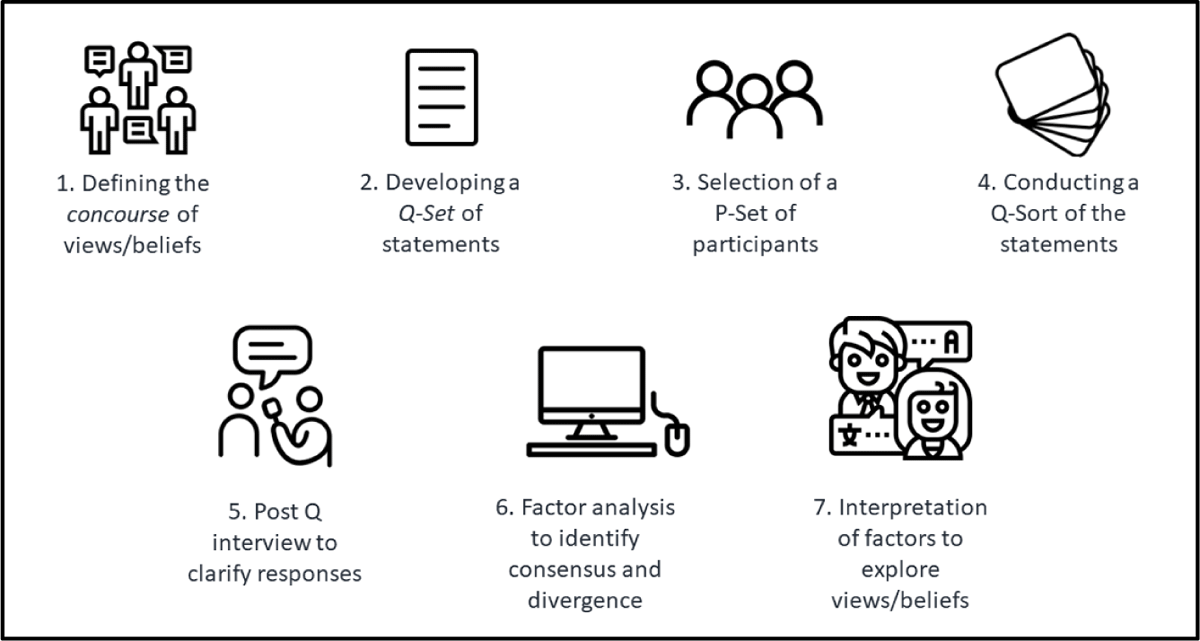
Figure 1
The seven stages of Q Methodology Research, © Matt McLain 2025
Stage 1: Constructing the Concourse
The initial stage involves defining the concourse, which represents the full range of potential views and beliefs surrounding a specific topic. For TED education, this might involve collecting statements about curriculum relevance, teaching methods, technology integration, or student engagement. Sources for concourse statements can include academic literature, interviews with experts and practitioners, focus group discussions, media reports, and policy documents. The goal is to capture the breadth of opinion, not necessarily to endorse any particular view.
Stage 2: Developing the Q-Set
From the extensive concourse, a smaller, manageable set of statements, known as the Q-set, is developed. This Q-set typically consists of 30 to 60 statements, each representing a distinct facet of the topic. The selection process ensures that the Q-set is representative of the concourse’s diversity, balancing controversial, consensual, and neutral statements. Each statement is typically printed on a separate card for ease of manipulation by participants.
Stage 3: Selecting the P-Set
The P-set refers to the sample of participants who will perform the Q-sort. Unlike traditional survey research, Q methodology employs a relatively small, (typically) purposive sample, usually between 20 and 60 individuals. Purposive approaches are used intentionally to deliberately capture a diverse range of viewpoints relevant to the research questions, thereby reducing the potential bias associated with the substantial degree of researcher judgement inherent in Q methodology.
The selection criterion is not statistical representativeness of a population, but rather a representation of diverse viewpoints relevant to the research question (Vecchio et al., 2020). For example, a P-set in TED education research might include students, teachers, curriculum developers, and industry professionals. When selecting a P-Set, the researcher should consider the research aims and questions when identifying suitable participants. Q methodology comes into its own where there are contrasting and conflicting views. So, the P-Set should ideally include participants representing a diversity of views, beliefs and experiences, within the defined population (i.e. the aforementioned students, teachers, etc.).
Stage 4: Conducting the Q-Sort
Participants perform the Q-sort by arranging the Q-set statements onto a forced-choice distribution grid (Figure 2).
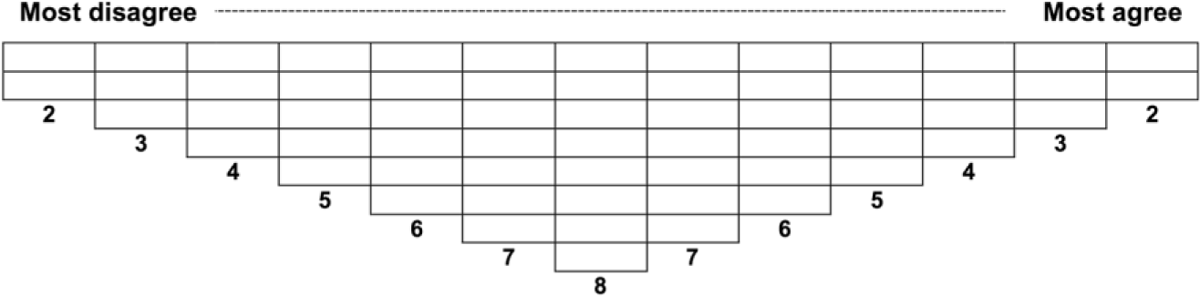
Figure 2
Example forced quasi-normal distribution grid (McLain, 2021)
This grid typically ranges from “most agree” to “most disagree” (e.g., +5 to -5), with a quasi-normal or normal distribution dictating how many statements can be placed at each point on the continuum. This forced distribution compels participants to make comparative judgments, revealing their subjective preferences and priorities. Each completed Q-sort constitutes a unique expression of a participant’s viewpoint.
Stage 5: Post-Sort Interviews for Interpretative Depth
Following the Q-sort, participants are typically interviewed. These post-sort interviews serve to clarify the reasoning behind their sorting decisions, particularly for statements placed at the extremes of the continuum. This qualitative data provides crucial contextual information, explaining the subjective meaning participants attribute to the statements and enriching the subsequent interpretation of factors. The interviews also offer an opportunity for participants to elaborate on any statements they found ambiguous or particularly salient.
Stage 6: Factor Analysis of Q-Sorts
The completed Q-sorts are subjected to by-person factor analysis. This statistical technique identifies groups of participants who have sorted the statements in a similar way, indicating shared viewpoints or factors (Figures 3 & 4).
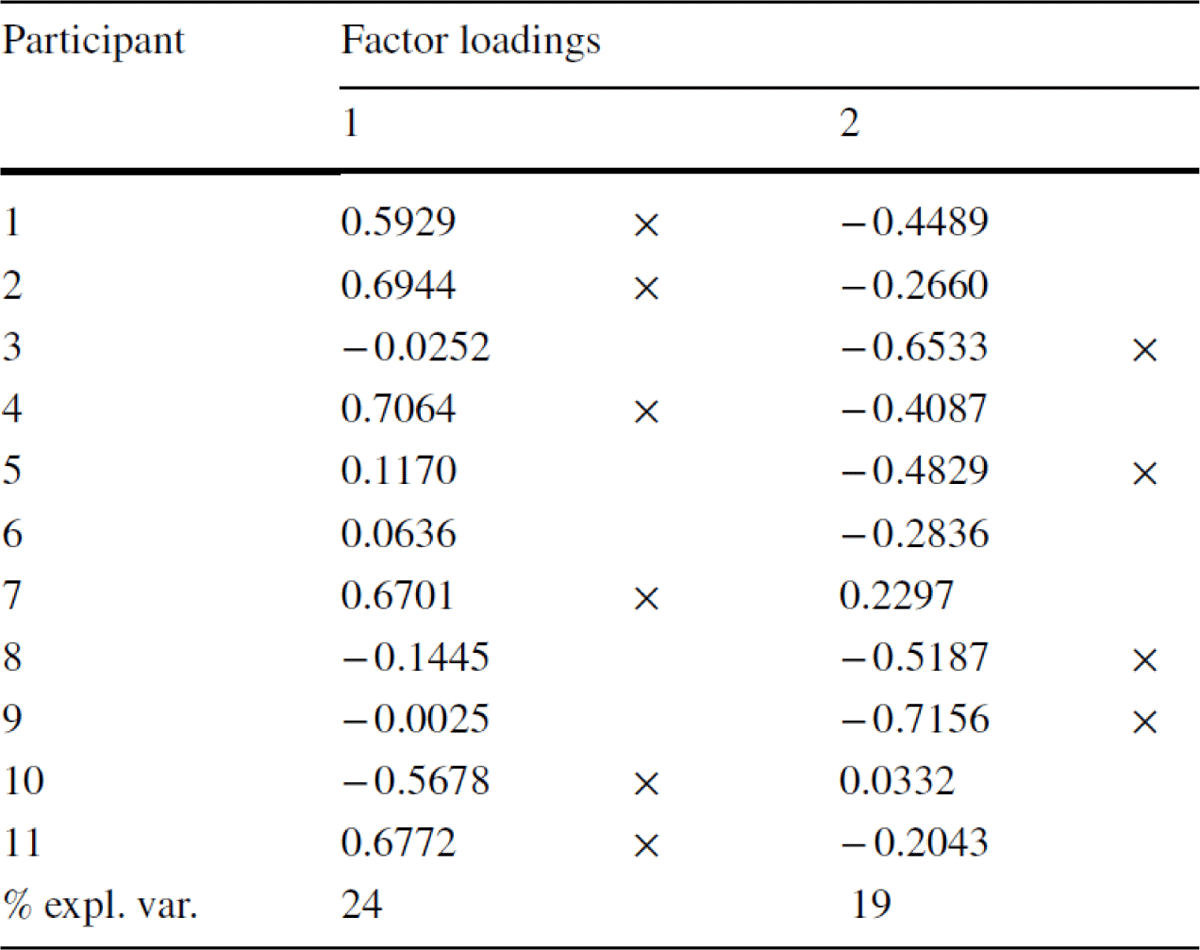
Figure 3
Factor loadings with an × indicating a defining sort (McLain, 2021)
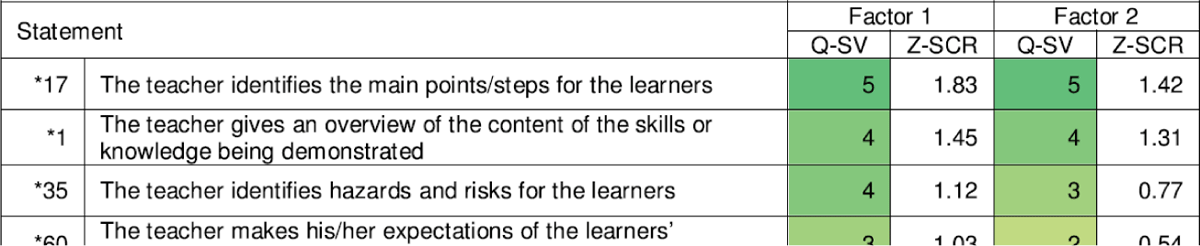
Figure 4
Excerpt of Factor Array and Ranking Table (McLain, 2021)
Each factor represents a distinct subjective perspective on the topic. The analysis typically involves principal component analysis followed by a Varimax rotation to achieve orthogonal (uncorrelated). Standard software packages like PQMethod (Schmolck, 2014), an open access DOS-based programme which operates on Windows and has become the de facto analysis tool for Q methodology, are commonly used for this stage. For researchers using operating systems (OS) other than Windows, DOS emulators are freely available, and the PQMethod website includes guidance for Mac and Linux users. However, there are other options that include a cloud-based package Ken-Q Analysis (Banasick, 2023), which also has a multiple OS desktop version called KADE (Banasick, 2019).
Stage 7: Interpreting Factors and Generating Typologies
The final stage involves interpreting the identified factors and generating typologies of viewpoint. For each factor, a factor array is constructed, representing the ideal sort for that particular viewpoint. Researchers then analyse the statements that define each factor, paying close attention to those ranked at the extremes and those that distinguish one factor from others. The qualitative data from the post-sort interviews are integrated at this stage to provide a rich, narrative description of each viewpoint. The outcome is a set of distinct, interpretable perspectives that collectively represent the diversity of opinion within the P-set.
Critical Considerations in Study Design and Implementation
Sampling Strategies and Statement Selection
While the P-set in Q methodology is small and purposive, its selection is not arbitrary. Researchers aim for a diverse P-set that encompasses individuals representing different known or hypothesised perspectives on the topic (Zabala et al., 2018). The goal is to capture the full range of subjective variability, not to be statistically representative of a larger population in the traditional sense. For instance, in TED education, this might involve recruiting students from different year groups, teachers with varying levels of experience, or professionals from diverse engineering disciplines. Statement selection for the Q-set is equally critical. The statements must collectively cover the breadth of the concourse, avoiding redundancy while ensuring clarity and conciseness. Poorly constructed or ambiguous statements can compromise the validity of the Q-sorts. Pilot testing the Q-set with a small group of individuals can help refine statements and ensure they are understood as intended (Zabala et al., 2018).
Ensuring Reliability and Validity
Reliability and validity in Q methodology are achieved through systematic design and transparent reporting across each stage of the research process. Reliability is strengthened by carefully constructing the concourse and Q-set to reflect the full range of relevant perspectives, supported by clear documentation and, where appropriate, pilot testing to ensure that statements are interpreted consistently. Validity is enhanced through the forced-choice Q-sort procedure, which requires participants to make meaningful distinctions between statements, and through by-person factor analysis, which provides a structured and replicable basis for identifying shared viewpoints. Post-sort interviews further support interpretative validity by grounding factor interpretations in participants’ own explanations of their choices. Together, these strategies contribute to the overall trustworthiness of Q studies. Transparent reporting of methodological decisions (such as Q-set development, sampling rationale, factor extraction methods, and the integration of interview data) is essential for demonstrating rigour within TED education research.
Comparison with Alternative Approaches to Investigating Subjectivity
Advantages of Q Methodology over Survey and Interview Methods
Q methodology offers several advantages when compared to traditional survey or interview methods for investigating subjectivity. Unlike surveys, which often constrain responses to predefined scales and may force participants into categories that do not fully capture their views, Q methodology allows participants to express their subjective understanding holistically through the ranking process (Rost, 2020). The forced-choice distribution in the Q-sort compels participants to prioritise statements, revealing their internal frame of reference rather than merely endorsing or rejecting isolated items.
Furthermore, while qualitative interviews provide rich data, their analysis can be highly interpretative and challenging to systematise across a group of individuals (Zabala et al., 2018). Q methodology overcomes this by combining the qualitative depth of individual sorting and post-sort interviews with the systematic identification of shared patterns through factor analysis. This integration provides a statistically derived, yet qualitatively interpretable, typology of viewpoints (Desing & Kajfez, 2020). It uniquely bridges the gap between individual qualitative expression and broader patterns of subjective understanding (Rost, 2020). The output of a Q study is a set of distinct factors or groups of participants with broadly similar rankings. This generates a plurality of views rather than a single consensus view, making it particularly useful for understanding complex, contested issues in TED education where diverse perspectives are common.
Limitations and Potential Pitfalls
Despite its strengths, Q methodology is not without limitations. The construction of the concourse and Q-set requires careful attention to ensure comprehensive coverage of the topic, and any bias in statement selection can affect the results (Zabala et al., 2018). The small P-set size means that findings are not generalisable in the statistical sense to a larger population but rather represent a typology of viewpoints present within the selected sample. Another potential pitfall lies in the interpretation of factors. While statistical methods identify the factors, the naming and narrative description of each factor heavily rely on the researcher’s qualitative interpretation of the defining statements and interview data (Nilsson, 2018). This requires a deep understanding of the research context and a commitment to avoid imposing pre-conceived notions. The methodology also demands a certain level of statistical literacy for appropriate factor analysis and interpretation.
Methodology in TED Education
Q methodology has already been applied in several areas of TED education research, offering useful illustrations of how the seven-stage process can reveal diverse subjective viewpoints in practice. For example, studies by McLain (2018; 2021) explored educators’ differing perspectives on the demonstration as a signature pedagogy in D&T, identifying distinct viewpoints that illuminated the varied pedagogical values teachers attribute to this practice. Other applications include Yenilmez Turkoglu, Aydin and Es (2022), who used Q methodology to examine science teachers’ perceptions of the nature of technology, revealing contrasting epistemological positions with direct implications for curriculum design and teacher development. More recently, Guerra et al. (2025) applied Q methodology to understand engineering design students’ perceptions of agency for sustainability within a problem- and project-based learning context, identifying distinct learner typologies that illustrated how students differently interpret their role and influence within sustainable design processes. Collectively, these studies demonstrate the practical utility of Q methodology for uncovering nuanced subjective positions across a variety of TED contexts, providing concrete examples of how the method can be used to investigate complex belief structures directly relevant to teaching, learning, and curriculum development.
Implications for TED Education Research
The Value of Plurality in Understanding Diverse Perspectives
Q methodology’s capacity to uncover a plurality of subjective viewpoints represents a significant asset for TED education research. Educational contexts are inherently diverse, populated by individuals with varied backgrounds, learning styles, and motivations. Acknowledging and understanding this diversity is crucial for developing effective pedagogical strategies and curricula. Rather than seeking a single, universal perspective, Q methodology allows researchers to map out the different ways of thinking about an issue, providing a nuanced understanding of the landscape of opinions (Desing & Kajfez, 2020). For instance, a study could reveal distinct student perspectives on the value of hands-on projects versus theoretical instruction, offering educators specific insights into how different groups engage with learning activities.
Micro, Meso, and Macro-Level Applications
The insights gained from Q methodology can be applied across various levels within TED education. At the micro-level, understanding the subjective experiences of individual students or small groups can inform tailored instructional approaches or mentorship strategies. For example, identifying student typologies regarding their motivations for pursuing engineering can help instructors address specific needs and foster engagement (Desing & Kajfez, 2020). At the meso-level, Q methodology can reveal shared perspectives among faculty within a department, teachers across a school district, or industry partners collaborating with educational institutions. This can facilitate more effective communication and alignment of goals among stakeholders. For instance, uncovering different teacher perspectives on integrating new design software can guide professional development initiatives. At the macro-level, Q findings can illuminate diverse national or international perspectives on educational policy or curriculum reform, considering cultural nuances and differing priorities. This allows for the development of policies that are more sensitive to the varied contexts in which TED education operates globally.
Impact on Policy Development and Curriculum Design
By articulating distinct subjective viewpoints, Q methodology offers a robust evidence base for policy development and curriculum design in TED education. Policymakers often grapple with competing interests and diverse public opinions. Q findings can clarify the underlying perspectives driving these opinions, allowing for more targeted and acceptable policy interventions. For instance, understanding the varying perspectives of parents on TED education can inform public engagement campaigns or resource allocation decisions. In curriculum design, identifying student or teacher typologies concerning pedagogical approaches or content relevance can inform the creation of more adaptable and inclusive learning experiences. A curriculum responsive to diverse subjective positions is more likely to achieve its objectives and foster deeper engagement. For example, if distinct student groups hold different views on the importance of theoretical knowledge versus practical skills, curriculum designers can design learning that explicitly address these variations.
Enhancing Epistemological Foundations in TED through Robust Methodology
The application of Q methodology contributes to strengthening the epistemological foundations of TED education research. It provides a systematic, rigorous approach to understanding phenomena that are inherently subjective, moving beyond anecdotal evidence or broad generalisations. By integrating qualitative depth with quantitative analysis, it offers a verifiable method for discerning patterns of thought and belief, thereby adding a layer of scientific credibility to the study of subjective experiences (Desing & Kajfez, 2020). This method allows researchers to categorise and describe subjective views with clarity, making these often-intangible aspects of human experience amenable to scholarly inquiry. Such an approach fosters a more comprehensive and robust understanding of the complex interplay between individual perceptions and educational outcomes in TED fields. It enables the field to generate evidence-based insights into how beliefs shape practice and learning, moving beyond simplistic cause-and-effect models.
Challenges to Integration and Future Directions
Despite its utility, integrating Q methodology more broadly into TED education research faces challenges. These include a lack of widespread familiarity with the method among researchers in the field, as well as perceptions regarding its methodological complexity. Addressing these challenges necessitates increased training, methodological guidance, and exemplary case studies showcasing Q methodology’s value within TED contexts (Desing & Kajfez, 2020). Future directions for Q methodology in TED education could involve longitudinal studies to observe how subjective views evolve over time, or comparative studies across different cultural contexts. Further methodological innovations, such as combining Q methodology with other qualitative methods like discourse analysis, could provide even richer insights into the formation and expression of subjective views (Hagan & Williams, 2016). Additionally, exploring the use of digital tools for Q-sorting could streamline data collection and enhance accessibility for a broader range of participants.
Conclusion
Synthesising Insights on Q Methodology in TED Research
This article has presented Q methodology as a robust and valuable approach for investigating subjective views and beliefs within TED education research. It has detailed the seven-stage process, from concourse development to factor interpretation, highlighting how this method systematically identifies distinct typologies of perspectives (Zabala et al., 2018). The unique integration of qualitative and quantitative techniques in Q methodology allows for a deep, nuanced understanding of human subjectivity, moving beyond the limitations of traditional survey or interview methods (Desing & Kajfez, 2020; Rost, 2020). By revealing a plurality of viewpoints rather than a singular consensus, Q methodology accurately represents the complexity inherent in educational contexts. This capacity for uncovering diverse perspectives is particularly pertinent for TED education, a field characterised by its dynamic nature and varied stakeholder experiences across micro, meso, and macro levels.
Limitations and Challenges for Q Methodology in TED research
While Q methodology offers substantial strengths for investigating subjective viewpoints in TED education, its application also presents several limitations and challenges. The construction of the concourse and Q-set requires careful judgement, and any imbalance or ambiguity in the selected statements may influence the viewpoints that emerge. The small, purposive nature of P-set samples, although methodologically appropriate, means that findings are not statistically generalisable beyond the study context. In addition, interpreting factors relies heavily on the researcher’s qualitative sensitivity and contextual understanding, which introduces the possibility of interpretive bias. Practical challenges (such as securing sufficient diversity in the P-set, conducting post-sort interviews, or ensuring participant engagement with complex Q-sort tasks) may further affect implementation. Acknowledging these limitations, and adopting transparent reporting and reflexive research practices, can help strengthen the methodological rigour and practical value of Q studies in TED education.
Recommendations for Researchers and Practitioners
For researchers in TED education, incorporating Q methodology into their methodological repertoire can yield significant benefits. It offers a powerful tool for exploring complex issues such as student motivation, teacher perceptions of new technologies, or industry perspectives on curriculum relevance. TED education researchers should:
thoroughly develop the concourse, ensuring the Q-set statements comprehensively capture the diversity of opinions on the topic,
select a purposive P-set, choosing participants who represent the range of relevant viewpoints, not just a statistically large sample,
integrate post-sort interviews, using qualitative data to enrich the interpretation of factors and provide context for the statistical findings, and
report transparently, clearly articulating methodological decisions and the interpretation process to enhance trustworthiness.
For practitioners and policymakers, the typologies of views identified through Q methodology can inform more responsive policy development and curriculum design. Understanding the distinct subjective positions held by different groups allows for the creation of targeted interventions and more effective communication strategies that resonate with specific audiences.
Future Pathways for Methodological Innovation
Future research could explore the application of Q methodology in longitudinal studies to track shifts in subjective views over time, particularly in response to educational reforms or technological advancements. Comparative studies using Q methodology across diverse cultural and educational systems could also yield valuable cross-cultural insights into TED education. Combining Q methodology with other research paradigms, such as critical theory or design-based research, could provide even deeper analytical perspectives on subjective experiences in educational transformation. Continuous exploration of methodological innovations will strengthen the academic rigour and practical relevance of TED education research.
Acknowledgements
This article was written by the human author and refined in collaboration with specialist academic GenAI software (Paperguide, 2024).