
INTRODUCTION
The literature on food security has shifted from Neo-Malthusian scarcity-centered explanations (Malthus, 1798; Ehrlich, 1997) toward a multidimensional framework emphasizing access, institutions, and socio-economic entitlements (Sen, 1981; De Schutter, 2014). While the Green Revolution demonstrated that technological change can substantially expand food supply (Evenson, 2003; Dalrymple, 2021), contemporary evidence suggests that hunger persists primarily due to unequal access rather than aggregate scarcity. The dominant analytical framework now structures food security into four pillars – availability, access, utilization, and stability (FAO, 1996; 2023) – which collectively highlight how food insecurity is a systemic rather than purely production-related issue.
Across developing contexts, including Indonesia, national food availability is generally sufficient, with dietary energy supply exceeding minimum requirements, yet food insecurity persists due to income inequality, labor informality, and spatial disparities (FAO et al., 2023; Gundersen & Ziliak, 2015). Utilization outcomes reflect a persistent double burden of malnutrition, combining undernutrition, micronutrient deficiencies, and rising overweight prevalence (Popkin et al., 2020). Stability is increasingly constrained by climate variability, global price shocks, and geopolitical disruptions such as COVID-19 and the Russia–Ukraine conflict (Clapp & Moseley, 2020; World Bank, 2022).
In Indonesia specifically, structural transformations in land use, labor markets, and consumption intensify these dynamics. Agricultural expansion of export-oriented plantations has supported growth but raised sustainability trade-offs (Margono et al., 2019; Austin et al., 2021). Meanwhile, agriculture remains a major, albeit highly informal, employment sector, limiting income security and food access (BPS, 2022). Dietary patterns show gradual diversification alongside persistent rural–urban inequality in nutrition outcomes and vulnerability to shocks (Popkin et al., 2020; Asian Development Bank, 2023).
Overall, the literature converges on the view that Indonesia’s food insecurity is primarily structural and distributional rather than production driven. Sustainable food security therefore requires integrated interventions addressing inequality, labor formalization, nutrition quality, and environmental sustainability within a coherent food systems approach (FAO, 2023a; UN, 2015).
Despite the growing body of literature on food security in Indonesia, previous studies generally focus on individual dimensions such as agricultural production, nutrition, poverty, or food consumption separately. Few studies integrate the four pillars of food security with structural changes in agriculture and food consumption within the Sustainable Development Goal 2 framework. This study addresses this gap by providing an integrated assessment that combines food security indicators, agricultural structure, and dietary transformation to evaluate Indonesia’s progress toward sustainable food security.
Therefore, this study aims to evaluate Indonesia’s food security through the four-pillar framework while integrating agricultural structure and food consumption analysis to assess progress toward Sustainable Development Goal 2.
MATERIALS AND METHODS
This research employs a descriptive analytical approach based entirely on the use of secondary data. The methodological design follows internationally recognized practices in food security analysis to ensure consistency, reliability, and comparability.
The research draws on authoritative secondary sources, including international databases and reports from the Food and Agriculture Organization (FAO) – particularly FAOSTAT Food Balance Sheets and the Suite of Food Security Indicators – as well as national statistical data from Indonesia’s Central Bureau of Statistics (Badan Pusat Statistik). Additional contextual data are obtained from reports published by international organizations such as the World Bank, Asian Development Bank, UNICEF, WFP, and UNDP, alongside peer-reviewed academic literature relevant to food security, agriculture, and sustainable development.
Analytically, the research is structured around the four pillars of food security – availability, access, utilization, and stability. Descriptive statistical analysis is applied to nationally aggregated indicators, including dietary energy supply adequacy, prevalence of food insecurity, nutrition outcomes, and food system stability measures. For the stability dimension, governance conditions are represented using the Political Stability and Absence of Violence/Terrorism Index from the World Bank’s Worldwide Governance Indicators (WGI). The index ranges from approximately −2.5 (weak political stability) to +2.5 (strong political stability), where higher values indicate greater political stability and a lower risk of political violence or government instability. This indicator is included in the FAO Suite of Food Security Indicators because governance conditions influence the resilience and stability of food systems. To reduce short-term volatility and emphasize structural trends, selected indicators are analyzed using three-year averages, in line with FAO methodological guidelines.
The research further incorporates sectoral analysis of Indonesia’s agricultural structure and descriptive assessment of food consumption patterns and socio-economic characteristics. The findings are synthesized and interpreted within a sustainable development framework, with reference to Sustainable Development Goal 2 (Zero Hunger). While the study does not aim to establish causal relationships, it does provide an integrated and evidence-based assessment of the factors influencing sustainable food security in Indonesia.
LITERATURE REVIEW
The literature on food security consistently positions the concept as a multidimensional and structurally embedded outcome of interacting demographic, economic, environmental, and political forces rather than a simple function of food supply (FAO, 1996; 2023a; Sen, 1981). Across classical and contemporary economic thought, the debate is anchored in competing interpretations of scarcity and innovation. Neo-Malthusian perspectives emphasize structural limits imposed by population growth and ecological constraints (Malthus, 1798; Ehrlich, 1997), yet this view is repeatedly challenged by empirical evidence of technological progress and institutional adaptation, particularly demonstrated during and after the Green Revolution (Evenson, 2003; Dalrymple, 2021). The literature therefore converges on a more balanced understanding: food insecurity is not primarily driven by absolute scarcity but by distributional inefficiencies, entitlement failures, and systemic inequality (Sen, 1981; De Schutter, 2014).
A second major strand of the literature reframes food security through the four pillars – availability, access, utilization, and stability – which collectively shift the analytical focus from aggregate production to individual and household welfare outcomes (FAO, 1996; 2023a). Evidence across global and Asian contexts shows that availability is increasingly less binding than access and utilization, as many countries achieve caloric sufficiency despite still facing persistent malnutrition, dietary imbalance, and inequitable food distribution (FAO et al., 2023; Gundersen and Ziliak, 2015). This reinforces Sen’s entitlement approach, which emphasizes how hunger emerges from constrained capabilities rather than insufficient supply alone (Sen, 1981). The literature also underscores that stability is increasingly undermined by climate variability, geopolitical shocks, and market volatility, making food systems structurally more fragile under globalization (Clapp and Moseley, 2020; World Bank, 2022).
Measurement frameworks such as the Food Insecurity Experience Scale (FIES), Household Food Security Survey Module (HFSSM), Global Food Security Index (GFSI), and Integrated Food Security Phase Classification (IPC) further reveal that food security is inherently context-dependent and methodologically complex, with each instrument capturing different dimensions and levels of analysis (FAO, 2023; Rabbitt et al., 2023; Economist Impact, 2022; IPC Global Partners, 2023). Among these frameworks, the Food Insecurity Experience Scale (FIES) categorizes food insecurity into moderate and severe levels according to the intensity of individuals’ experiences in accessing food. Moderate food insecurity reflects situations in which people face uncertainty about obtaining sufficient food and are often forced to compromise the quality, variety, or quantity of their diets due to limited resources. In contrast, severe food insecurity refers to conditions where individuals may skip meals, go without eating for an entire day, or completely run out of food because they cannot access adequate food (FAO et al., 2023). This classification provides a standardized approach to monitoring the severity of food access constraints and assessing progress toward Sustainable Development Goal 2. However, the literature also exposes a persistent limitation: fragmentation in measurement often obscures comparability and can underrepresent intra-national inequalities, particularly among marginalized populations (FAO, 2023; Sen, 1981).
In synthesis, the literature suggests that global and Asian food insecurity persists not because the world is unable to produce sufficient food, but because food systems are unevenly structured, environmentally stressed, and institutionally fragmented (FAO et al., 2023; Popkin et al., 2020). Despite extensive literature on food security, relatively few studies integrate the four pillars of food security with agricultural structural transformation and food consumption patterns within the Sustainable Development Goal 2 framework. This provides a clear justification for country-specific, multidimensional analyses such as the one undertaken in this study.
RESULTS AND DISCUSSION
Indonesia’s food security landscape reflects a structural transformation in both dietary composition and the functional allocation of food commodities. At the aggregate level, dietary energy availability remains dominated by carbohydrates, although its relative importance has declined over time. In 2015, cereals and starchy staples accounted for approximately 73% of total dietary energy supply, but this share fell to around 58% in 2023. This decline signals a gradual transition characterized by reduced dependence on staple foods and increasing dietary diversification.
In contrast, the contribution of fats and oils increased substantially from approximately 5% to 15%, while animal-based protein rose from 6% to 9% over the same period (FAO, 2015; 2023b). This shift indicates a move toward more energy-dense diets, a trend consistent with broader patterns of structural transformation and income-driven dietary change observed in developing economies (Popkin, 2006; Pingali, 2006). However, the relatively low contribution of fruits, vegetables, and dairy reflects persistent gaps in diet quality and micronutrient intake.
Beyond consumption structure, Indonesia’s food system also exhibits a significant reconfiguration in food use allocation. In 2015, food distribution was strongly oriented toward direct human consumption, particularly for cereals such as rice, which remained the dominant staple due to long-standing policy emphasis on self-sufficiency and price stabilization (Timmer, 2010). Starchy roots such as cassava played a complementary role, functioning both as food and as a buffer crop in times of staple scarcity (Naylor et al., 2007).
Figures 2 and 3 present the baseline year (2015) and the most recent year with complete data (2023). Both figures were generated using identical FAOSTAT Food Balance Sheet classifications and allocation categories, allowing direct comparison of structural changes in food use allocation.
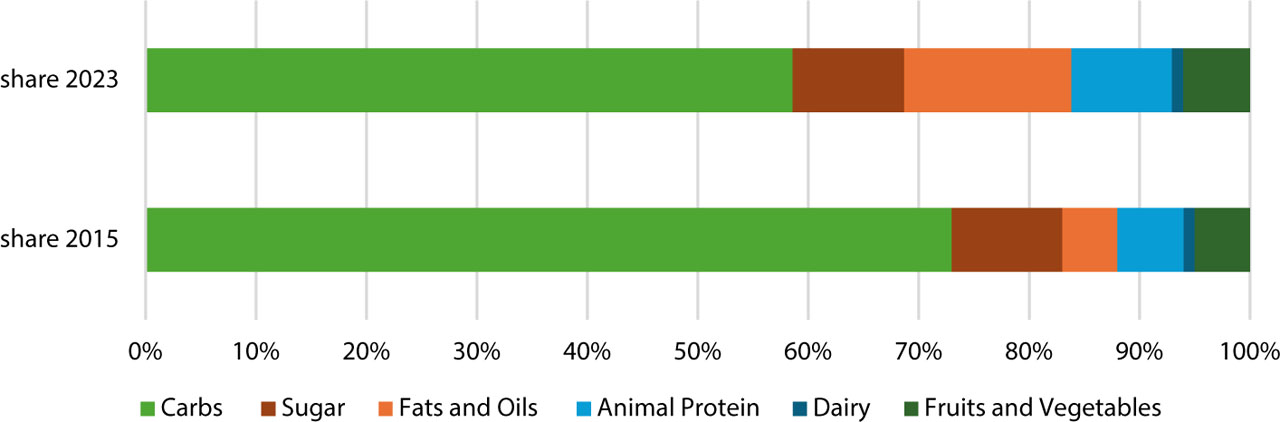
Fig. 1.
Structure of day food consumption in Indonesia based on kcal/capita
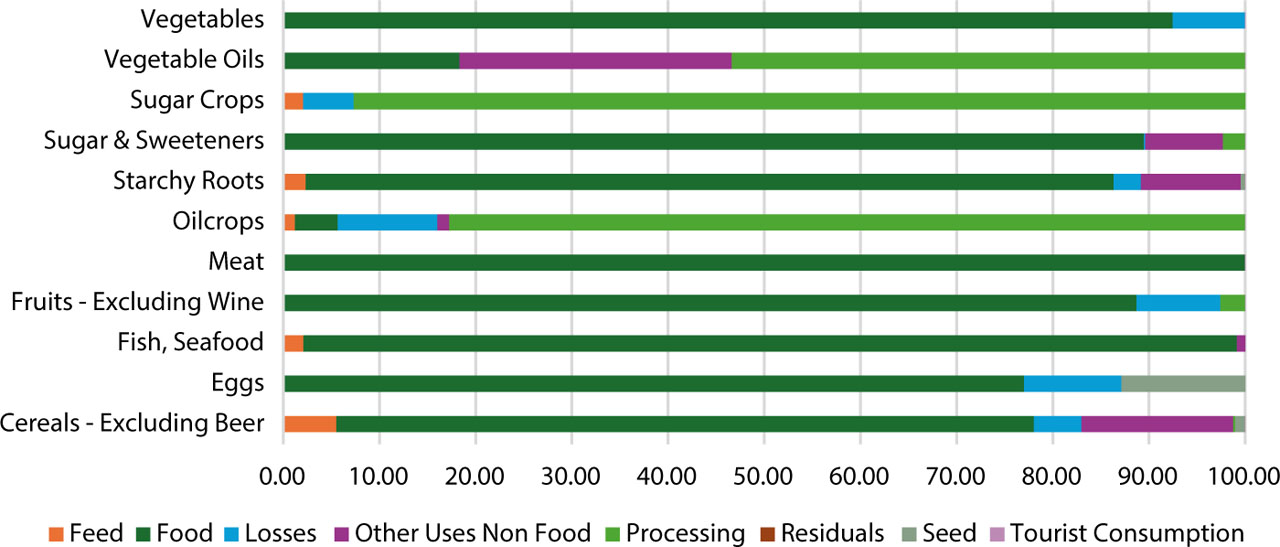
Fig. 2.
Share of food use directions by food product category in Indonesia, 2015
Source: FAO, 2015.
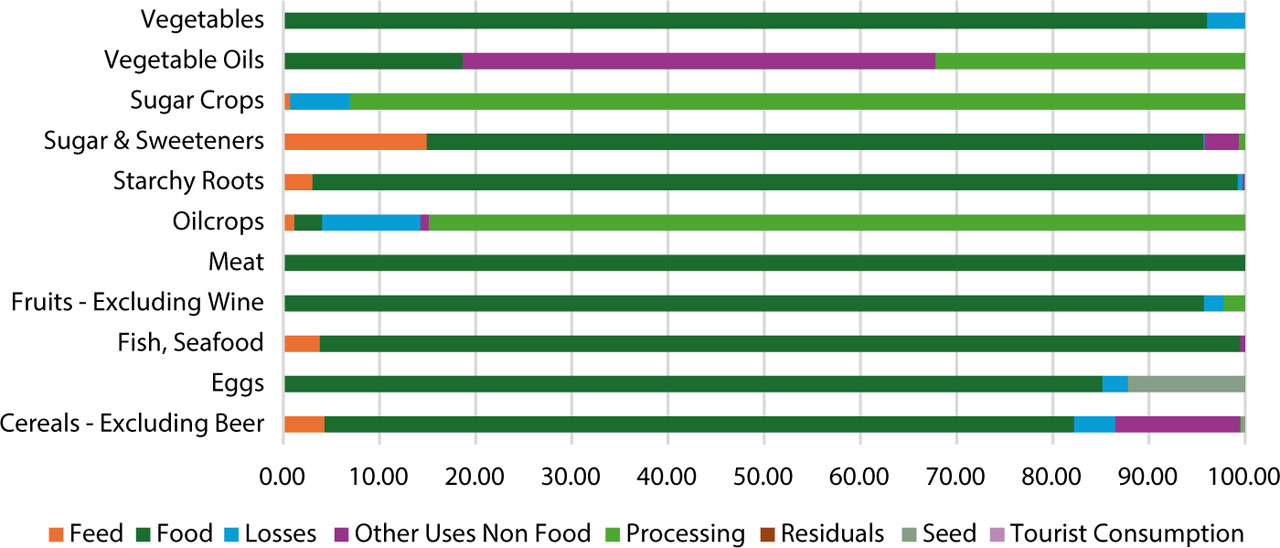
Fig. 3.
Share of food use directions in Indonesia, 2023
Source: FAO, 2023b.
Animal-source foods accounted for high shares of direct food use, particularly poultry and eggs, reflecting affordability and rapid supply cycles. Fish and seafood also contributed significantly to food consumption, underscoring their central role in Indonesia’s protein intake (Pauly et al., 2005). Meanwhile, palm oil and sugar crops increasingly entered processing channels, reflecting the expansion of agro-industrial systems and demand for processed food (Sheil et al., 2009; Popkin, 2017).
By 2023, the food system had seen a clearer structural shift. While cereals remained central, a growing share was diverted to feed use, reflecting the expansion of livestock production systems and the increasing integration between crop and animal sectors (Delgado, 2003). Cassava and other starchy crops similarly had an expanded role in feed and industrial uses, highlighting their growing multifunctionality in the food system.
A particularly notable transformation is now observed in oil crops. Palm oil allocation increasingly shifted toward non-food uses, driven largely by Indonesia’s biodiesel policy (B35), which has redefined palm oil as both a food and energy commodity (IRENA, 2023; USDA, 2024). This represents a structural policy-driven reallocation rather than a consumption-led shift.
Fish continues to be primarily consumed as food, but a rising share is now directed toward fishmeal and aquaculture feed, reflecting industrialization in the fisheries sector and resource pressure on capture fisheries (Cheung et al., 2013). Fruits and vegetables remain largely consumed directly, although persistent post-harvest losses indicate infrastructural inefficiencies in cold chain and logistics systems (Gustavsson et al., 2011).
Overall, the evolution from 2015 to 2023 reflects a transition from a consumption-centered food system to a multifunctional agrifood economy shaped by three simultaneous forces: (i) dietary diversification, (ii) livestock intensification, and (iii) energy and industrial policy integration.
These findings are consistent with previous studies on nutrition transition in developing countries. Popkin (2006) argues that economic growth and urbanization gradually shift diets away from staple carbohydrates toward higher consumption of fats, animal-source foods, and processed products. Similarly, Pingali (2006) explains that rising household income and structural transformation encourage dietary diversification and drive demand for livestock products. The Indonesian case follows this broader pattern, although the relatively low contribution of fruits, vegetables, and dairy suggests that dietary diversification has not yet been accompanied by proportional improvements in nutritional quality. This finding also supports the observation made by Popkin et al. (2020) that many middle-income countries experience a double burden of malnutrition during the nutrition transition.
Based on indicators presented in Figures 4–7 and Table 1, Indonesia’s food security performance, when assessed through the four pillars of availability, access, stability, and utilization, presents a broadly positive but structurally uneven picture.
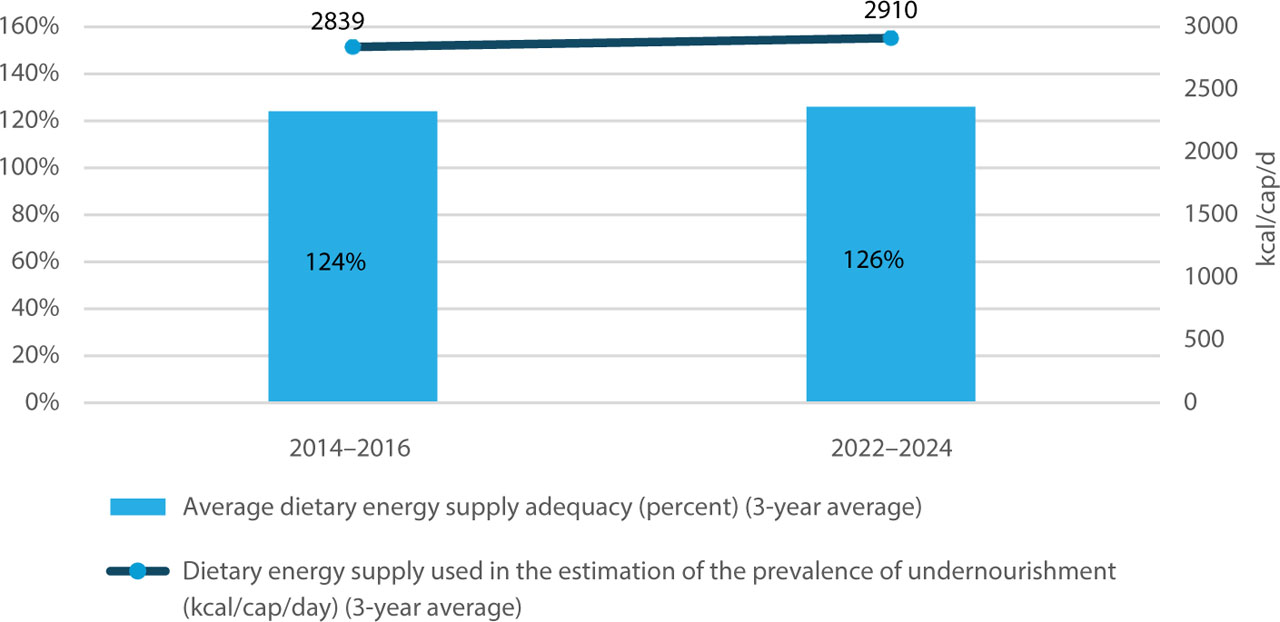
Fig. 4.
Average dietary energy supply adequacy and dietary energy supply in Indonesia (3-year average) in 2014–2016 and 2022–2024
Source: FAO, 2025.
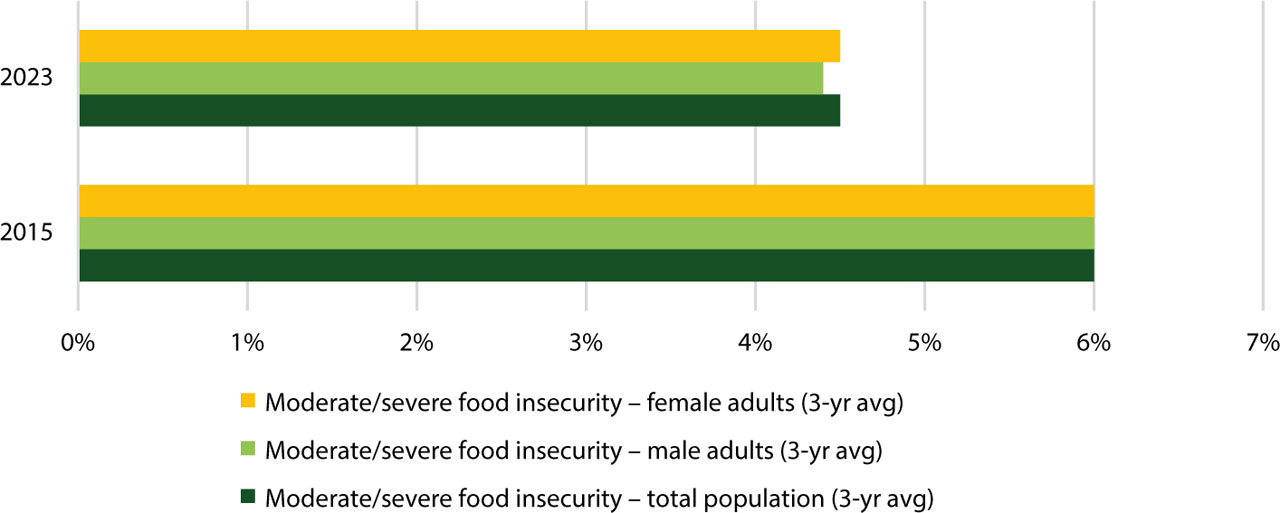
Fig. 5.
Prevalence of moderate or severe food insecurity by sex and total population (3-year average) of Indonesia in 2015 and 2023
Source: FAO, 2025.
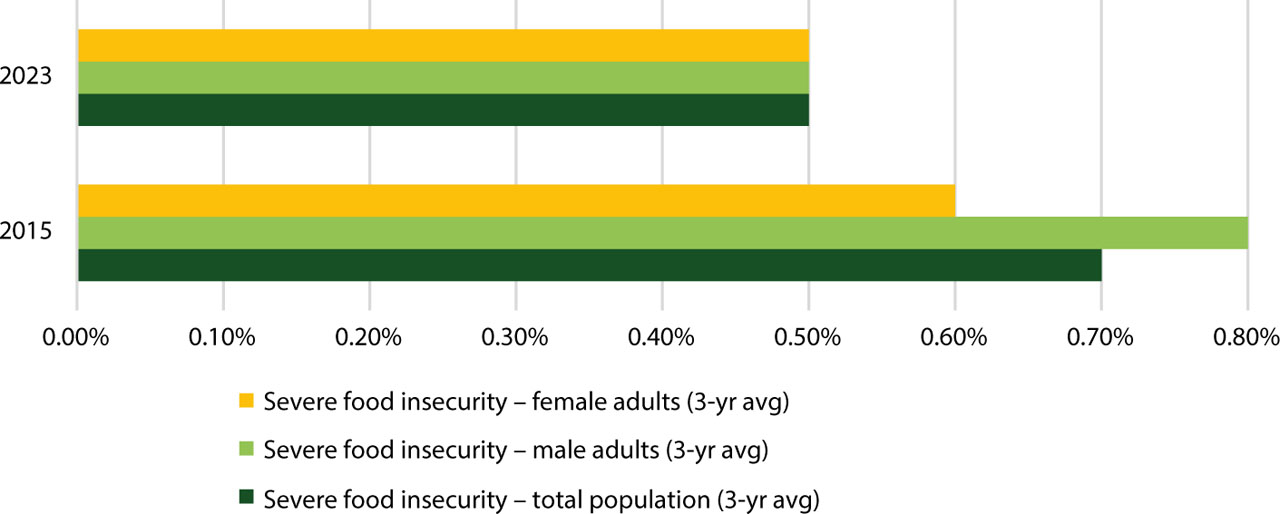
Fig. 6.
Prevalence of severe food insecurity by sex and total population (3-year average) of Indonesia in 2015 and 2023
Source: FAO, 2025.
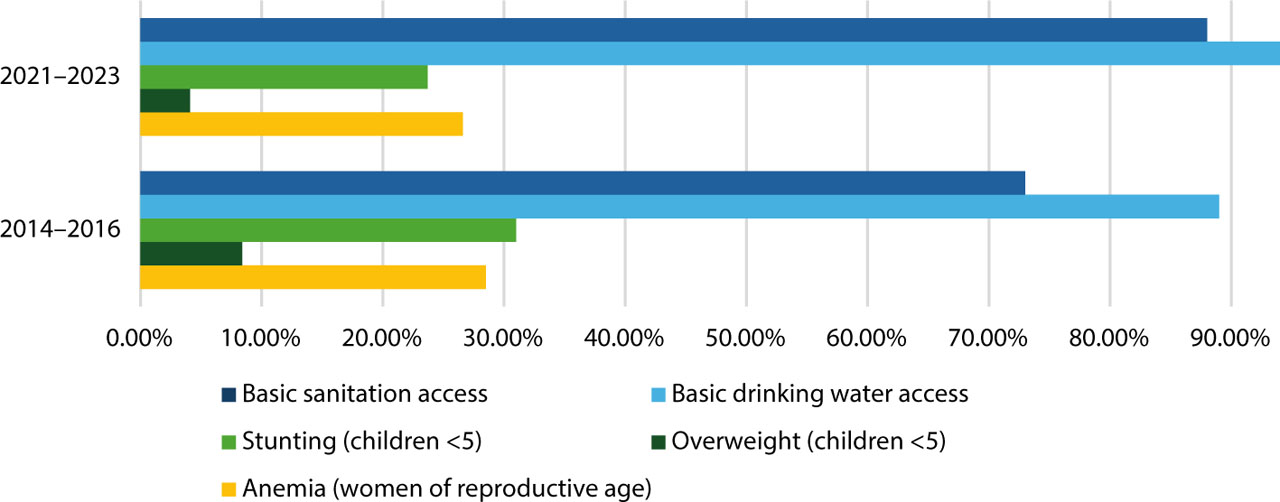
Fig. 7.
Selected food utilization indicators in Indonesia (3-year average)
Source: FAO, 2025.
Table 1.
Selected food stability indicators in Indonesia
| Category | 2014–2016 | 2021–2023 |
|---|---|---|
| Cereal import dependency ratio (%)* | 14.20 | 15.70 |
| Percent of arable land equipped for irrigation (%)* | 3.60 | 3.60 |
| Political stability and absence of violence/terrorism (index) | –0.62 | –0.55 |
| Per capita day food supply variability (kcal/cap) | 21 | 52 |
Source: FAO, 2025.
From an availability perspective, Indonesia consistently records an Average Dietary Energy Supply Adequacy (ADESA) above 120%, increasing slightly from 124% (2014–2016) to 126% (2022–2024). This indicates that national food energy supply exceeds the population’s requirements, suggesting that aggregate food shortages are not the primary constraint in Indonesia’s food system (FAOSTAT, 2025). Correspondingly, per capita dietary energy supply increased from approximately 2,840 kcal/day to 2,910 kcal/day over the same period, reinforcing the conclusion of sufficient national-level food availability.
These findings are consistent with FAO et al. (2023), who report that many middle-income countries have achieved adequate national food availability while continuing to experience food insecurity among vulnerable populations. However, the Indonesian case further demonstrates that sufficient calorie availability does not automatically translate into equitable food access or improved nutritional outcomes. This finding reinforces Sen’s (1981) entitlement theory, which argues that hunger is primarily driven by unequal access rather than insufficient food supply.
However, the access dimension reveals more nuanced inequalities. While severe food insecurity declined significantly to around 0.5% across all population groups by 2023, moderate or severe food insecurity still affects approximately 4.5% of the population. These indicators suggest that although extreme deprivation has largely been reduced, economic and structural barriers to food access persist, particularly among vulnerable households (FAO, 2019).
The stability dimension presents a more mixed trajectory. Cereal import dependency increased from 14.2% to 15.7%, indicating growing exposure to global markets. At the same time, food supply variability increased from 21 to 52 kcal/capita/day, indicating growing instability in national food availability. This increase is closely associated with Indonesia’s exposure to climate-related hazards, including prolonged droughts linked to El Niño events, irregular rainfall patterns, floods, and rising temperatures. These climatic shocks reduce crop yields, delay planting seasons, and increase harvest uncertainty, particularly for rice production. The absence of significant irrigation expansion (remaining at only 3.6% of arable land) limits farmers’ capacity to adapt to rainfall variability, thereby amplifying production instability and increasing dependence on imports during adverse climatic conditions (FAO, 2025).
The decline in severe food insecurity is broadly consistent with the global trend reported in the FAO’s State of Food Security and Nutrition reports, which document gradual improvements in extreme food deprivation across several Southeast Asian countries. Nevertheless, the persistence of moderate food insecurity suggests that economic vulnerability remains an important structural challenge. Gundersen and Ziliak (2015) similarly argue that food insecurity increasingly reflects unstable income, insecure employment, and purchasing power rather than absolute food shortages. This explanation is particularly relevant in Indonesia, where a substantial proportion of workers remain employed in the informal sector with fluctuating incomes.
These findings are consistent with Clapp and Moseley (2020), who argue that contemporary food security is increasingly shaped by climate variability and global market disruptions rather than domestic production alone. Similar observations are reported by the World Bank (2022), which highlights that climate-related disasters, supply chain disruptions, and international commodity price shocks have increased food system vulnerability in many developing countries. Indonesia’s increasing food supply variability and continued dependence on cereal imports therefore reflect broader structural challenges affecting food system resilience rather than country-specific conditions alone.
In contrast, utilization indicators show relatively strong improvements. Access to safe drinking water rose to 90%, while sanitation access increased sharply to 88%. These improvements are reflected in declining child stunting rates (31% to 24%) and modest reductions in anemia among women of reproductive age (28% to 26%). However, persistent malnutrition burdens indicate incomplete nutritional transitions and continued inequality in health and diet quality outcomes (UNICEF, 2019).
These findings are broadly consistent with previous studies emphasizing that improvements in water, sanitation, and healthcare contribute significantly to better nutritional outcomes. UNICEF (2023) and Black et al. (2013) similarly report that expanded access to basic sanitation and safe drinking water is associated with reductions in child stunting. However, the persistence of anemia among women of reproductive age indicates that improvements in public health infrastructure alone are insufficient to eliminate micronutrient deficiencies. This finding also supports that of Popkin et al. (2020), who describe the nutrition transition in many middle-income countries as a coexistence of declining undernutrition with persistent micronutrient deficiencies and increasing dietary imbalance. Therefore, Indonesia’s progress in the utilization pillar reflects substantial improvements in basic services while also highlighting the need for nutrition-sensitive interventions that improve dietary quality in addition to healthcare access.
Taken together, Indonesia demonstrates a clear structural paradox: food availability is sufficient, and utilization is improving, but access inequality and system instability continue to constrain overall food security outcomes. This suggests that future policy priorities should shift from production-centric strategies toward integrated interventions addressing affordability, distribution efficiency, and nutrition-sensitive social protection.
Indonesia’s food security system reflects a structural transition in which aggregate caloric sufficiency coexists with persistent distributional, nutritional, and systemic constraints. At the macro level, food availability is no longer binding, as indicated by consistently high dietary energy supply adequacy exceeding 120% and rising per capita caloric availability (FAO, 2025). This confirms a shift from scarcity-driven conditions toward a surplus-calorie regime. However, this quantitative adequacy conceals the deeper qualitative restructuring of the food system.
Dietary patterns have progressively diversified away from carbohydrate dominance toward higher shares of fats, oils, and animal-source foods, which is consistent with nutrition transition theory and structural transformation dynamics (Pingali, 2006; Popkin, 2006). In parallel, food allocation has become increasingly multifunctional: cereals are progressively redirected into livestock feed systems, while palm oil is increasingly allocated to industrial and biofuel uses, reflecting the growing integration of food, feed, and energy systems (Delgado, 2003; IRENA, 2023; USDA, 2024). These shifts indicate that food systems are no longer organized primarily around direct consumption but embedded within broader agro-industrial and energy economies, where competing end-uses structurally shape allocation outcomes.
Despite improvements in aggregate supply and system complexity, structural constraints persist across the other pillars of food security. Food access remains uneven, as reflected in the persistence of moderate food insecurity despite declining severe deprivation. This highlights the role of income inequality and labor informality in shaping consumption outcomes (FAO, 2019). While food utilization reveals partial gains, particularly in sanitation and child nutrition, it remains constrained by persistent micronutrient deficiencies, including anemia and residual stunting burdens (Black et al., 2013; UNICEF, 2023). Meanwhile, food stability is increasingly challenged by rising import dependence and higher food supply variability, indicating greater exposure to global price volatility and climate-induced production shocks (Clapp and Moseley, 2020; FAO, 2025).
Taken together, these patterns suggest that Indonesia’s food security challenge has shifted from aggregate scarcity to structural asymmetry. The binding constraints are no longer national-level food shortages but uneven translation of availability into equitable access, adequate nutrition, and systemic resilience. Food insecurity therefore emerges from interacting failures across income distribution, dietary quality, and risk exposure rather than from insufficient supply.
From the sustainability and SDG 2 perspective, this implies uneven progress: strong gains in availability-related targets but lagging outcomes in nutrition equity and system resilience. Accordingly, the evidence supports policy reorientation away from production-centric approaches toward integrated food system governance that simultaneously strengthens affordability, dietary quality, and shock-resilient infrastructure (FAO, 2023; WFP, 2022).
These findings are broadly consistent with those of previous studies arguing that food security in developing countries is increasingly shaped by structural and institutional factors rather than food availability alone. Sen (1981) emphasizes that food insecurity primarily results from unequal entitlements and limited economic access, while FAO (2023) and De Schutter (2014) argue that sustainable food security requires integrated governance across agricultural, social, nutritional, and environmental sectors. The Indonesian case supports these perspectives by demonstrating that sufficient national food availability coexists with persistent inequalities in food access, nutrition, and resilience. However, unlike many previous studies that examine food security through individual dimensions such as agricultural production, poverty, or nutrition separately, this study integrates the four pillars of food security with agricultural structural transformation and changing food consumption patterns within the Sustainable Development Goal 2 framework. This integrated approach provides a more comprehensive explanation of Indonesia’s food security challenges and highlights how future policy priorities should focus on improving equity, resilience, and institutional coordination rather than increasing food production alone.
The principal contribution of this study therefore lies in integrating the four pillars of food security with agricultural structural transformation and dietary transition within a single SDG 2 analytical framework, providing a more comprehensive understanding of Indonesia’s food security than previous single-dimension studies.
CONCLUSIONS
This study evaluates Indonesia’s food security within the Sustainable Development Goal 2 framework by integrating the four pillars of food security – availability, access, utilization, and stability – alongside structural analysis of agricultural systems and dietary patterns using nationally aggregated secondary data. The findings indicate that Indonesia has achieved strong structural adequacy in food availability, with dietary energy supply consistently exceeding population requirements. However, due to persistent structural inequalities, this aggregate sufficiency does not translate into universal food security.
Food access has improved in terms of declining severe food insecurity, yet moderate food insecurity remains concentrated among informal workers and income-vulnerable households, reflecting the central role of income volatility, labor informality, and regional disparities. Food utilization shows partial progress, with improvements in water, sanitation, and a reduction in child stunting; however, persistent micronutrient deficiencies, particularly anemia among women, and the coexistence of under- and overnutrition indicate an ongoing nutrition transition driven by dietary quality constraints. Food stability presents a mixed pattern, as modest gains in political stability and moderate import dependency are offset by rising food supply variability, limited irrigation coverage, and increasing exposure to climate and global market shocks.
Overall, Indonesia’s food security system is characterized by a structural paradox: sufficient national-level food availability alongside persistent inequalities in access, nutrition, and resilience. The results suggest that achieving SDG 2 requires a shift from production-centric policies toward integrated strategies that bolster integrated social protection through targeted food assistance (Program Sembako), conditional cash transfers under the Family Hope Program (PKH), expansion of subsidized food reserves managed by BULOG, and nutrition-sensitive interventions for vulnerable households. These measures should be integrated with farmer support programs, climate-resilient irrigation investments, and local government coordination to improve long-term food system resilience.