
INTRODUCTION
Global agriculture faces the dual challenge of increasing food production while simultaneously mitigating environmental degradation and adapting to accelerating climate change. Fertilizer subsidy programmes have long been central instruments in agricultural policy, particularly in developing regions, where financial constraints limit farmers’ access to essential inputs (Tafakresnanto et al., 2024). By lowering input costs, such programmes have contributed to yield growth and short-term food security gains. At the same time, extensive reliance on subsidized fertilizers, especially inorganic inputs, has been associated with a range of environmental concerns, including soil degradation, nutrient imbalances, and increased greenhouse gas emissions (Putri et al., 2025; Wang et al., 2025; Yu et al., 2025). These trade-offs have intensified scholarly and policy debates on how fertilizer subsidies intersect with broader sustainability objectives.
Historically, fertilizer subsidy programmes have predominantly focused on inorganic fertilizers due to their immediate yield effects, standardized application, and well-established supply chains (Khonje et al., 2022a; Li and Shen, 2024). In contrast, organic fertilizers, bio-based inputs, and integrated nutrient management approaches, despite their documented potential to improve soil health and reduce environmental externalities, have received comparatively less explicit attention in both policy-oriented and academic discussions (Hidayat et al., 2024; Kusmiyati et al., 2023). Rather than indicating definitive policy bias, this pattern reflects a longer-standing orientation of agricultural research toward productivity-driven input systems. As a result, questions remain as to how clearly and consistently different fertilizer types are differentiated and analysed within the subsidy-related literature.
Against this background, the growing volume and diversity of research on fertilizer subsidies has produced a fragmented and increasingly complex body of scholarship. Bibliometric analysis offers a systematic and transparent approach to synthesizing such extensive literature by mapping publication trends, thematic structures, and collaboration networks (Donthu et al., 2021; Zupic and Čater, 2014). By quantitatively examining patterns of knowledge production, bibliometric methods enable researchers to identify dominant research emphases, emerging topics, and areas where conceptual clarity or thematic integration remains limited. This approach is particularly valuable in fields where conventional narrative reviews are constrained by scale and disciplinary heterogeneity (Katon et al., 2023).
The relevance of mapping fertilizer subsidy research is further underscored by global policy developments following the 2008 food crisis, which renewed scholarly interest in subsidy programmes across regions heavily dependent on smallholder agriculture, such as sub-Saharan Africa and Southeast Asia (Nurbudiati and Wulandari, 2020; Vondolia and Stage, 2021). Subsequent studies demonstrated that the outcomes of subsidy interventions vary widely across agroecological and socio-economic contexts, thereby highlighting the importance of localized evidence and comparative analysis. Within this evolving landscape, understanding how scholarly research has framed, prioritized and differentiated fertilizer types over time is essential for clarifying the current state of knowledge and identifying directions for future inquiry.
Against this backdrop, the present study conducts a systematic bibliometric analysis of global scholarly literature on fertilizer subsidies published between 1994 and 2024. Rather than evaluating the effectiveness or normative balance of subsidy policies themselves, the study focuses on mapping how fertilizer subsidies have been discussed within academic research, with particular attention to the representation of organic and inorganic fertilizers. By analysing publication growth, thematic structures, and international collaboration patterns, this study seeks to clarify the intellectual structure of fertilizer subsidy research, identify dominant thematic emphases, and highlight areas where differentiation between fertilizer types remains limited. In doing so, the study contributes a structured overview of the existing knowledge base and delineates avenues for future research on fertilizer subsidies and sustainable agriculture.
This study aims to systematically map and synthesize the global scholarly literature on fertilizer subsidies from 1994 to 2024 by examining publication trends, thematic structures, and international collaboration networks, with particular attention to how organic and inorganic fertilizers are represented within subsidy-related research. In doing so, it poses the following research questions:
1) How has the global literature on fertilizer subsidies evolved in terms of publication growth, geographic distribution, and international collaboration over the period 1994–2024?
2) How are organic and inorganic fertilizers represented within the fertilizer subsidy literature, and what dominant themes, emphases, and gaps emerge across time and regions?
METHODOLOGY
This study adopts a systematic bibliometric approach to examine the global academic discourse on fertilizer subsidies and agricultural financial support mechanisms between 1994 and 2024. The methodological objective is to map the intellectual structure of the field, trace long-term research trajectories, and analyse collaboration patterns that characterize scholarly discussions on subsidized fertilizers. Particular attention is given to how organic and inorganic fertilizers are represented within subsidy-related literature over time, which aligns with the study’s analytical focus.
To ensure analytical rigour and enhance global relevance, only peer-reviewed journal articles published in English were included. Bibliometric analysis provides a robust quantitative framework for synthesizing extensive bodies of literature, enabling the identification of thematic clusters, citation structures, and co-authorship dynamics (Donthu et al., 2021; Zupic and Čater, 2014). The methodological workflow consists of five sequential steps: (1) defining the analytical scope, (2) retrieving and refining bibliographic data, (3) cleaning and organizing the dataset, (4) generating science-mapping visualizations such as co-authorship and keyword networks, and (5) interpreting observed patterns through qualitative synthesis. This process is summarized in Fig. 1.
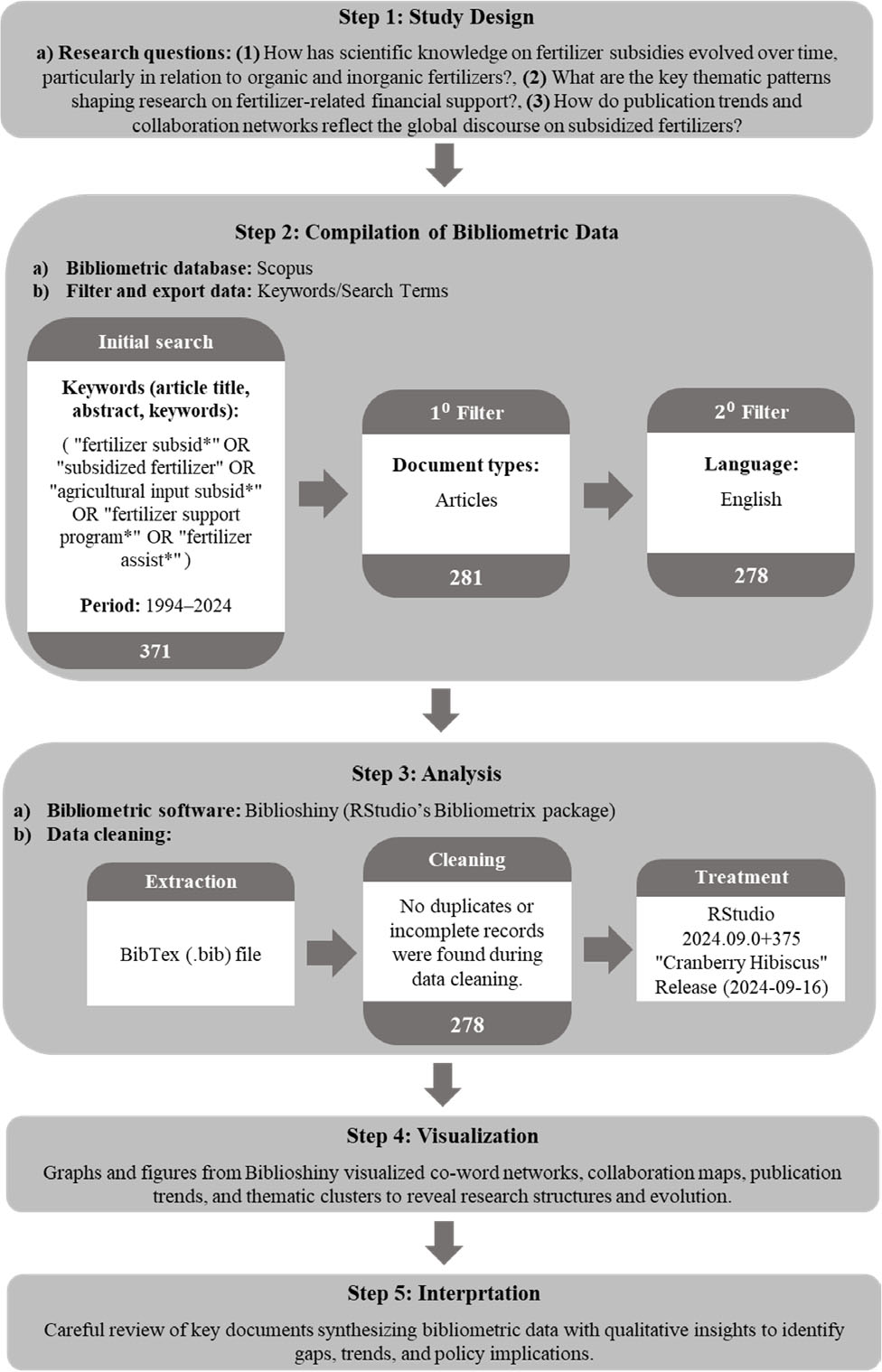
Fig. 1.
Workflow of the bibliometric analysis procedure
Source: own elaboration based on Donthu et al. (2021), Zupic and Čater (2014).
Bibliographic data were extracted from the Scopus database using a Boolean search query applied to article titles, abstracts, and keywords:
“fertilizer” AND (“fertilizer subsid” OR “subsidized fertilizer” OR “agricultural input subsid” OR “fertilizer support program*” OR “fertilizer assist*”) OR “fertiliser subsid*”.**
This comprehensive query was designed to capture the broadest possible range of publications on fertilizer subsidies, irrespective of fertilizer type. The initial search retrieved 371 documents, subsequently filtered to 281 peer-reviewed articles. After screening for language and data completeness, a final set of 278 English-language journal articles was retained for analysis.
The final dataset comprises 278 articles published across 173 journals between 1994 and 2024, authored by 790 researchers, with an average of 2.84 co-authors per article. The international co-authorship rate of 40.29% reflects substantial cross-border collaboration within the field. On average, each article received 23 citations, indicating moderate scholarly visibility. Annual publication growth reached 5.27%, while the mean document age was eight years. These bibliometric indicators are summarized in Table 1.
Table 1.
Key characteristics of the bibliometric dataset
| Document and source | Value | Author and collaboration | Value |
|---|---|---|---|
| Document type | Article | Time period | 1994–2024 |
| Number of documents | 278 | Total authors | 790 |
| Sources (journals, etc.) | 173 | Co-authors per document | 2.84 |
| Average citations per document | 23 | International co-authorships (%) | 40.29 |
| Document average age (years) | 8 | Annual growth rate of publications (%) | 5.27 |
These indicators provide important contextual insights into the structure of the literature. The field exhibits steady long-term growth and moderate citation influence, suggesting sustained scholarly interest despite its relatively specialized scope. The diversity of journals and contributing authors highlights the multidisciplinary character of fertilizer subsidy research, spanning agronomy, development economics, public policy, and environmental sustainability. Meanwhile, the substantial level of international co-authorship underscores the global nature of scholarly engagement with fertilizer subsidy issues.
Although the Boolean search strategy did not explicitly target organic fertilizers, thematic classification was conducted during the analytical stage to categorize articles into organic, inorganic, or mixed fertilizer types. This classification was based on author keywords and Keywords Plus, which appeared 802 and 953 times respectively across the dataset. This approach allows for an assessment of how fertilizer types are represented and differentiated within the literature, rather than serving as an evaluation of policy implementation or effectiveness. The resulting categorization facilitates comparative thematic analysis across disciplines, regions, and publication periods.
RESULTS AND DISCUSSION
The Results and Discussion section presents a detailed analysis of key findings derived from a bibliometric and thematic review of fertilizer subsidy research over the period 1994–2024. It systematically examines trends in scientific output, thematic developments, global collaboration networks, and the comparative emphasis on organic versus inorganic fertilizers. By combining quantitative publication data with qualitative interpretation of research themes and international partnerships, this section clarifies the evolving structure and focus of the scholarly literature on fertilizer subsidies. The results indicate growing academic engagement with issues related to fertilizer subsidies while also identifying areas of limited thematic differentiation and underexplored research directions within the field.
Scientific Productivity and Temporal Evolution of Fertilizer Subsidy Research
The scientific output on fertilizer subsidy research between 1994 and 2024 demonstrates a steady rise in scholarly attention, particularly in relation to discussions surrounding fertilizer use and subsidy mechanisms. As illustrated in Fig. 2, publication activity remained limited throughout the 1990s but began accelerating after 2010, reaching its highest point in 2024 with 28 articles. The compound annual growth rate (CAGR) of approximately 9.1% over the 30-year period indicates a sustained and expanding research trajectory. Citation patterns also fluctuated over time, with a notable peak in 2011 when publications averaged 94.14 citations, reflecting the emergence of highly influential studies that played a central role in shaping subsequent academic discourse. Collectively, these trends signal a maturing research field that increasingly responds to shifts in agricultural research priorities and global food security concerns.
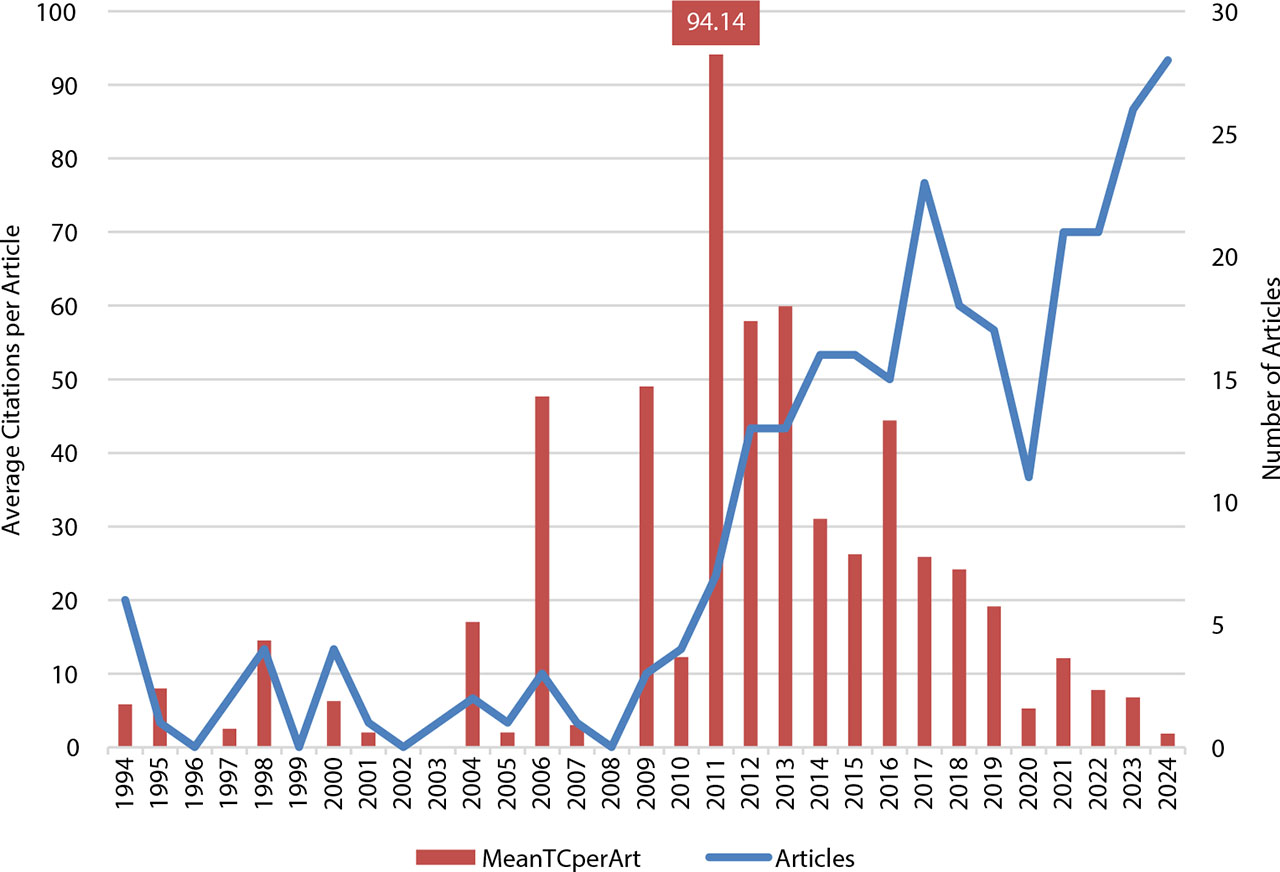
Fig. 2.
Annual number of publications and average citations per article on fertilizer subsidy research (1994–2024)
Source: authors’ elaboration via Biblioshiny.
The sharp escalation in research activity after 2010 aligns with global efforts to reform fertilizer subsidy programmes in response to escalating food security challenges. The 2008 global food crisis, in particular, acted as a turning point. Governments in regions such as sub-Saharan Africa – most notably Malawi and Ghana – revitalized fertilizer subsidies to stabilize food prices and enhance smallholder production (Sibande et al., 2017; Vondolia and Stage, 2021). This period stimulated renewed academic scrutiny, with scholars increasingly examining how subsidy programmes have been framed and analysed within empirical research, including discussions of productivity outcomes and longer-term sustainability considerations (Jayne and Rashid, 2013; Ricker-Gilbert and Jayne, 2016).
Country-specific agricultural challenges further shaped research trajectories. Variations in poverty incidence, soil fertility constraints, and institutional capacity influenced the intensity and focus of scholarly work. Much of the literature from sub-Saharan Africa evaluates subsidies as instruments to enhance smallholder productivity and reduce vulnerability under persistent structural challenges (Harou et al., 2017; Jayne and Rashid, 2013). The publication peak around 2011 coincides with the proliferation of influential policy-oriented analyses synthesizing empirical evidence on subsidy performance (Jayne and Rashid, 2013; Ricker-Gilbert et al., 2011). These foundational works catalysed subsequent investigations into market dynamics, including issues such as crowding out private fertilizer demand, shifts in cropping patterns, and the distributive impacts of subsidy targeting (Frempong, 2023; Holden and Lunduka, 2012).
The global distribution of research output, summarized in Table 2, underscores the international and interdisciplinary nature of fertilizer subsidy studies. The United States leads with 123 publications, reflecting its strong academic presence in agricultural development and policy-related research. Indonesia (57), India (34), the United Kingdom (32), and Ghana (30) also contribute substantially, driven by diverse combinations of donor engagement, emerging market agricultural concerns, and local production challenges. Key scholars, including Jayne TS, Mason NM, and Ricker-Gilbert J, have shaped the field through sustained empirical contributions, reinforcing the prominence of these countries within the scholarly landscape.
Table 2.
Top 5 countries and authors by scientific output over time
| Rank | Country | Number of Publications | Rank | Author | Number of Publications |
|---|---|---|---|---|---|
| 1 | USA | 123 | 1 | JAYNE TS | 9 |
| 2 | INDONESIA | 57 | 2 | MASON NM | 9 |
| 3 | INDIA | 34 | 3 | RICKER-GILBERT J | 9 |
| 4 | UK | 32 | 4 | SMALE M | 8 |
| 5 | GHANA | 30 | 5 | LIVERPOOL-TASIE LSO | 5 |
It is important to interpret these findings with consideration for database limitations. Because the dataset relies exclusively on Scopus-indexed publications, research published in non-English or local-language journals, particularly from developing regions, may be underrepresented. Despite this constraint, the upward trajectory in scientific productivity provides a robust foundation for deeper thematic exploration and cross-country comparisons discussed in subsequent sections. The expanding volume of literature also supports the emergence of specialized research topics and a growing network of international collaborations, both of which are essential for understanding the evolving contours of fertilizer subsidy scholarship.
Thematic Structure of Fertilizer Financial Support Literature
The analysis of the 278 articles published between 1994 and 2024, processed using the Bibliometrix package, reveals a thematic landscape shaped by recurring concerns regarding subsidy systems, fertilizer application, crop productivity, and food security. These dominant themes underscore the long-standing centrality of financial mechanisms in enhancing agricultural output. Keyword frequency patterns show that terms such as “subsidy system” (78 occurrences), “fertilizer” (54), and “fertilizer application” (40) appear most frequently, indicating that discussions of subsidy frameworks are closely tied to practical questions about fertilizer use and crop responses. Socioeconomic dimensions also feature prominently through terms including “smallholder” and “agricultural policy”, reflecting the importance of rural livelihoods and institutional arrangements in shaping how subsidy-related issues are framed and analysed in academic research (Donthu et al., 2021).
To further elucidate the intellectual structure of these themes, the thematic map in Figure 4 organizes topics along two axes – centrality and density – indicating their strategic importance and developmental maturity within the field. Themes situated in the Basic Themes quadrant, including subsidy, crop production, and smallholder, represent foundational areas that are essential but not yet fully mature. These themes align with longstanding concerns about how subsidies influence small-scale farmers’ productivity and economic resilience (Jayne and Rashid, 2013). In contrast, the Motor Themes quadrant contains well-developed and highly influential topics such as fertilizer, fertilizer application, and food security, which dominate empirical analyses and conceptual discussions within the fertilizer subsidy literature (Vondolia and Stage, 2021). These thematic concentrations are visually represented in Fig. 3, which maps the dominant concepts across the literature.
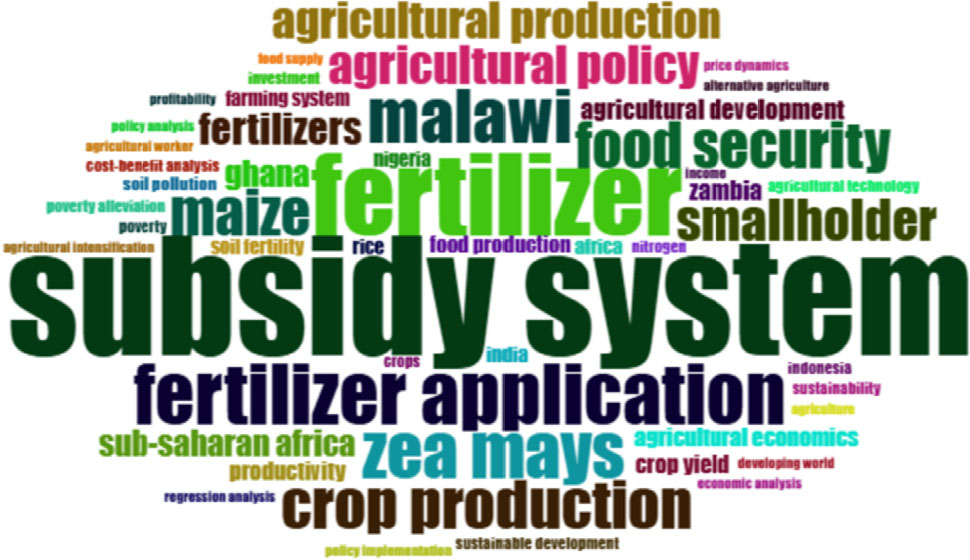
Fig. 3.
WordCloud illustrating the most frequent keywords in the fertilizer financial support literature
Source: authors’ elaboration via Biblioshiny.
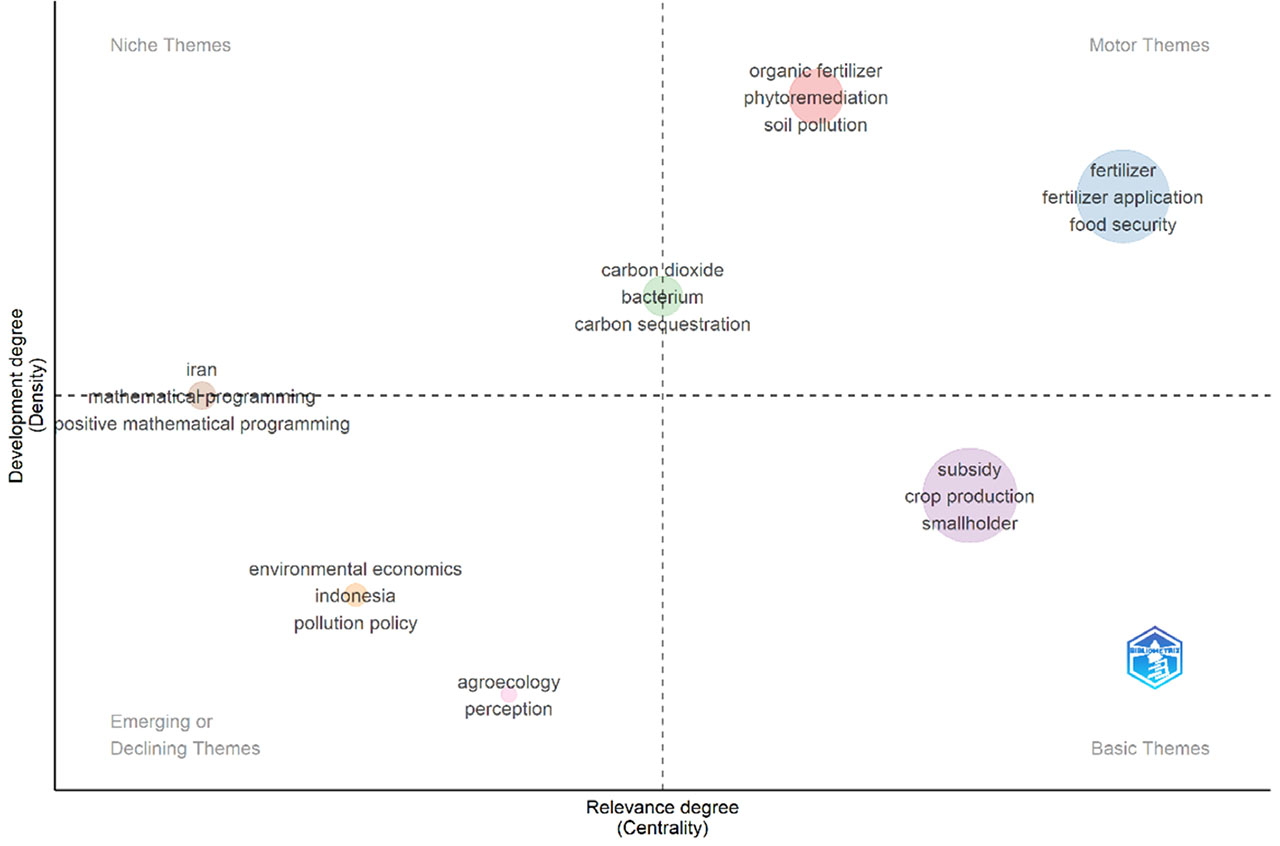
Fig. 4.
Thematic map illustrating the development and relevance of key research themes in fertilizer financial support literature from 1994 to 2024
Source: authors’ development via Biblioshiny.
Figure 4 shows that the Niche Themes quadrant highlights specialized but less central topics including organic fertilizer, phytoremediation, and soil pollution that reflect emerging scholarly engagement with environmental sustainability and bio-based input alternatives within subsidy-related research (Sane et al., 2021; Zafar and Tarique, 2024). Meanwhile, the Emerging or Declining Themes quadrant includes areas such as perception and agroecology, suggesting growing but still fragmented attention to public attitudes, ecological farming systems, and socially embedded approaches in the literature. The presence of themes clustered around Indonesia and environmental economics further illustrates the strong influence of geographic and economic contexts in shaping research emphases and thematic development (Scheiterle and Birner, 2018).
Over the past three decades, the thematic focus of fertilizer subsidy research has transitioned from broad concerns about productivity and poverty reduction toward more diversified discussions incorporating environmental sustainability, climate resilience, and policy implementation. Increasingly, studies explore how subsidy mechanisms are discussed in relation to resilient farming systems and environmental outcomes, rather than focusing exclusively on short-term productivity gains (Harou et al., 2017; Ricker-Gilbert et al., 2011). This interconnected thematic evolution is visualized in Fig. 5, which maps relationships among leading authors, key terms, and national research hubs, thereby highlighting dynamic linkages between geographic focus and conceptual development within the literature.
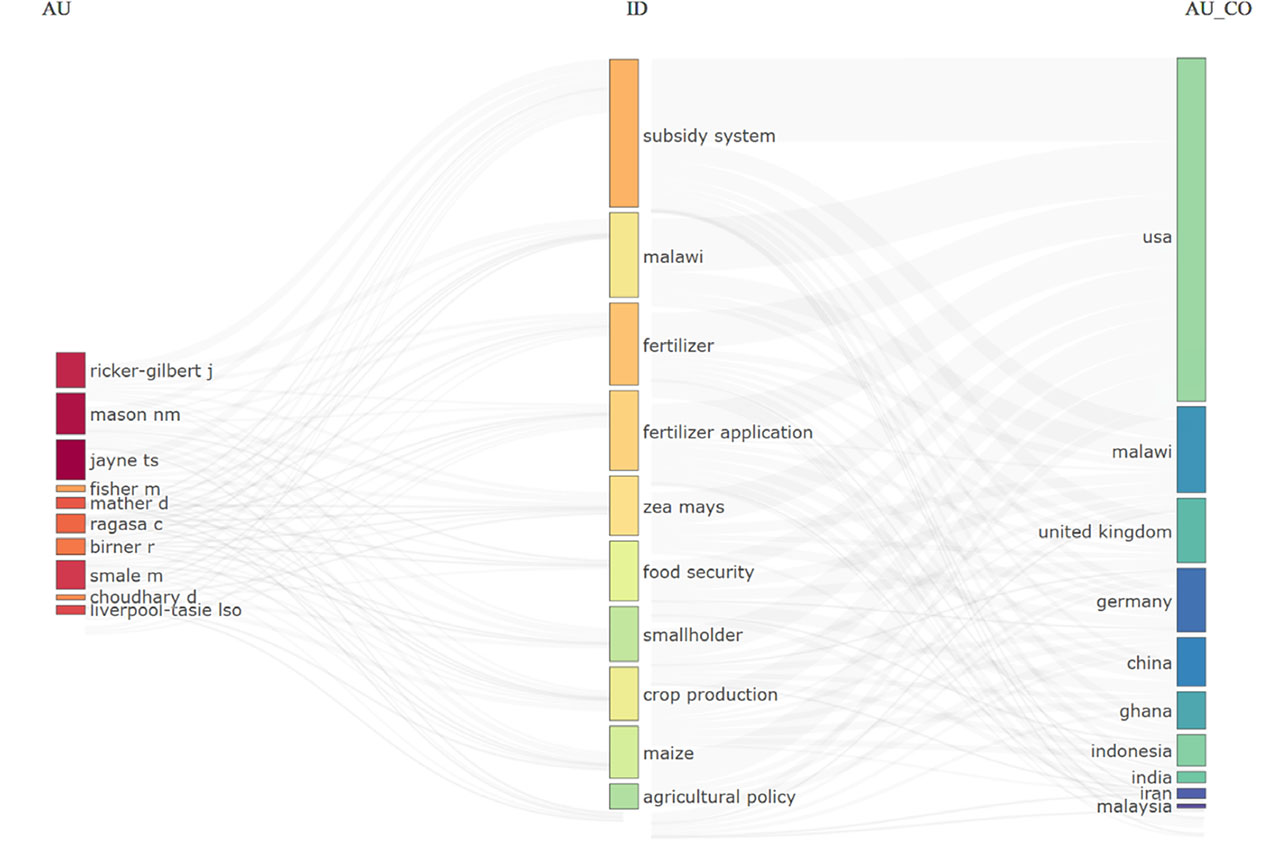
Fig. 5.
Three-field plot showing relationships among leading authors, key terms, and countries in fertilizer subsidy research
Source: authors’ elaboration via Biblioshiny.
Complementing this thematic mapping, regional case studies provide empirical nuance to the broader trends. In Malawi, fertilizer subsidy programmes have boosted maize yields but also raised concerns about dependence and long-term fiscal sustainability, exemplifying the complex socio-economic implications of subsidy interventions (Dorward and Chirwa, 2015; Ricker-Gilbert et al., 2013). Ghanaian research emphasizes the importance of adapting subsidy mechanisms to local soil conditions and farming practices, reinforcing the critical role of targeted, context-sensitive policy design (Scheiterle and Birner, 2018; Zakaria et al., 2021). In Indonesia, a growing emphasis on organic agriculture and sustainability broadens the subsidy discourse to incorporate environmental priorities, reflecting national commitments to climate adaptation and ecological farming (Sane et al., 2021). Collectively, these cases illustrate how thematic emphases in the literature intersect with regional contexts to shape research trajectories.
While the thematic analysis provides substantive insights, it is essential to acknowledge the limitations arising from a reliance on Scopus-indexed publications. Such dependence may introduce language and regional coverage biases, potentially excluding relevant scholarship published in non-English or local outlets. These limitations should be considered when interpreting the thematic and geographical distributions identified.
In sum, the thematic structure of fertilizer financial support literature reveals a dynamic and evolving research field characterized by concentrated attention on productivity-oriented themes alongside emerging but less integrated sustainability-related topics. This thematic configuration provides a valuable basis for advancing interdisciplinary inquiry and identifying underexplored areas for future research, rather than serving as a direct evaluation of subsidy policy effectiveness.
Global Distribution and Collaboration Networks in Fertilizer Subsidy Research
Global collaboration patterns play a central role in shaping the production, visibility, and policy relevance of fertilizer subsidy research. Because subsidy programmes are implemented across diverse agroecological and socio-economic settings, cross-border partnerships enable the exchange of empirical knowledge, methodological innovations, and context-specific insights (Ricker-Gilbert and Jayne, 2016). Such collaborations support comparative inquiry across regions, broaden the analytical scope of individual studies, and enhance the visibility and circulation of research findings across disciplinary and geographic boundaries (Koppmair et al., 2017).
Figure 6 visualizes the global co-authorship network derived from the 278 Scopus-indexed articles analysed in this study. The network was constructed using Biblioshiny within the Bibliometrix framework, based on three principal metrics: betweenness centrality, which measures the extent to which a country serves as a bridge between others; closeness centrality, reflecting how efficiently a country connects to the broader network; and PageRank, capturing the relative influence of countries within the collaboration structure based on both direct and indirect co-authorship links.
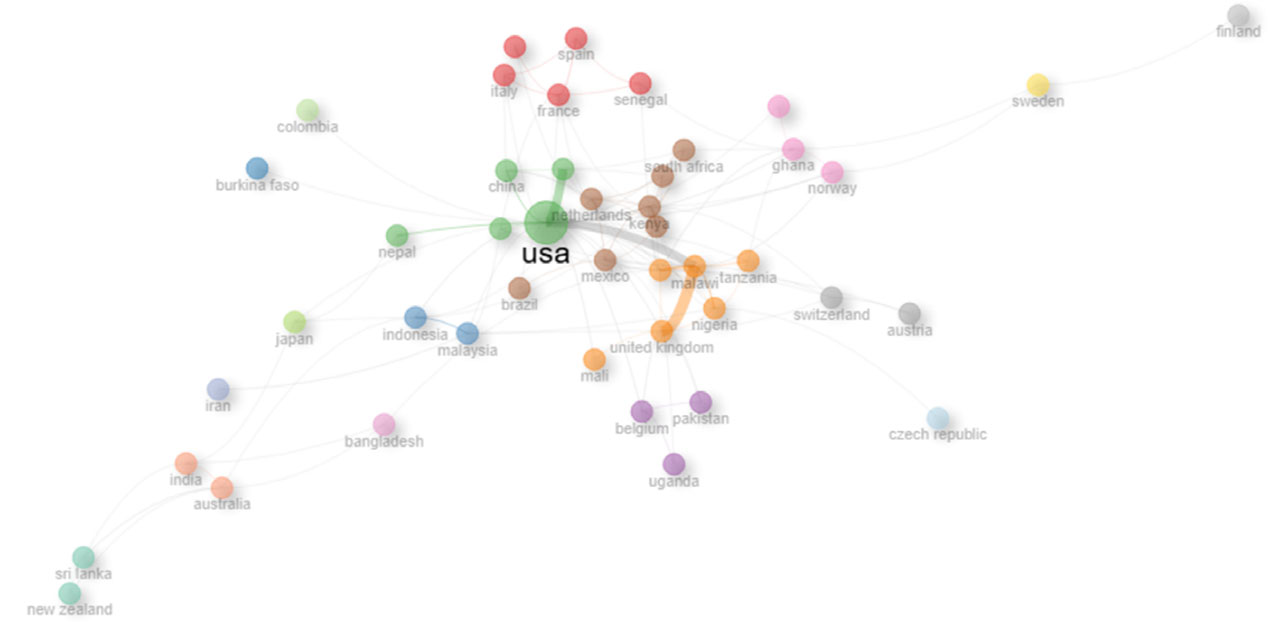
Fig. 6.
Global collaboration network illustrating key international partnerships in fertilizer subsidy research. The size of each node reflects the PageRank score; the thickness of links represents collaboration intensity
Source: authors’ elaboration via Biblioshiny.
The United States emerges as the dominant hub within the global network, with the highest betweenness centrality (497.2) and PageRank (0.138), underscoring its role as a major knowledge broker connecting research clusters across Africa, South Asia, and Europe. Germany (135.1), the United Kingdom (61.7), and Malaysia (50.9) also exhibit high centrality, indicating their structural importance in facilitating transregional knowledge flows and sustaining international research collaborations within the fertilizer subsidy literature. These countries not only contribute substantial academic output but also foster linkages that integrate research perspectives from regions where subsidy programmes are frequently examined.
Cluster analysis reveals distinct geographic and thematic groupings. Cluster 2, comprising Indonesia (betweenness: 101.9) and Malaysia, reflects strong Southeast Asian partnerships centred on themes of organic fertilizer, sustainable agriculture, and environmental management. Cluster 5, linking Germany, Malawi, Nigeria, and the UK, highlights North–South collaborations that are particularly influential in empirical evaluations of large-scale subsidy reforms in Africa.
These citation patterns further reinforce the association between collaboration centrality and scholarly impact. Table 3 shows that countries with dense international research ties, such as the USA, the UK, and Germany, not only exhibit high publication output but also produce highly cited studies that exert substantial influence within the academic discourse on fertilizer subsidies. Emerging contributors like Indonesia and Malawi appear to benefit from these partnerships through the increased visibility of region-specific research, including Indonesia’s growing emphasis on sustainability-oriented studies and Malawi’s extensive empirical literature on maize-centred input programmes.
Table 3.
Most cited countries and citation metrics
| Country | Total citations | Average article citations | Country | Total citations | Average article citations |
|---|---|---|---|---|---|
| USA | 1 966 | 37.10 | ETHIOPIA | 139 | 46.30 |
| UNITED KINGDOM | 707 | 70.70 | NETHERLANDS | 134 | 33.50 |
| CHINA | 502 | 83.70 | GHANA | 133 | 13.30 |
| INDIA | 217 | 16.70 | MALAWI | 114 | 16.30 |
| NORWAY | 147 | 49.00 | GERMANY | 112 | 16.00 |
The role of regional hubs warrants particular attention. Countries such as Indonesia and Ghana, which are identified as influential nodes in both collaboration networks and thematic development, occupy intermediate positions that connect global research agendas with region-specific empirical contexts. Their participation contributes to the localization and contextualization of scholarly debates, facilitating the circulation of insights across scales and research communities.
In conclusion, the global distribution and collaboration networks underlying fertilizer subsidy research reveal a dynamic yet unevenly connected scholarly ecosystem. Leading countries such as the USA, Germany, and the United Kingdom function as global knowledge brokers within the academic literature, while nations such as Indonesia, Malawi, and Ghana act as regional centres that contextualize and extend global research themes. These collaboration patterns align closely with the productivity trends and the thematic structures outlined above. From the bibliometric perspective, strengthening inclusive and cross-regional research collaborations represents an important avenue for broadening the scope and diversity of future fertilizer subsidy scholarship.
Organic vs Inorganic Fertilizer Focus: Comparative Insights from Thematic Filtering
A comparative review of the fertilizer subsidy literature reveals an uneven representation of fertilizer types within scholarly discussions, with studies focusing explicitly on inorganic fertilizers appearing more frequently than those addressing organic alternatives. Of the 278 documents reviewed, 72 articles (25.9%) focus specifically on inorganic fertilizers, while only 29 studies (10.4%) examine organic fertilizers. A further 36 articles (12.9%) address both types, whereas 141 studies (50.7%) remain unclassified due to insufficient specificity in abstracts or keywords (see Table 4). Rather than indicating definitive policy imbalance, this distribution highlights limited thematic differentiation within the literature itself, particularly with respect to explicit categorization of fertilizer types.
Table 4.
Classification of Documents by Fertilizer Type Focus
| Fertilizer type | Number of documents | Percentage (%) |
|---|---|---|
| Inorganic | 72 | 25.90% |
| Organic | 29 | 10.40% |
| Mixed | 36 | 12.90% |
| Unclassified | 141 | 50.70% |
| Total | 278 | 100.00% |
Several historical and institutional factors help contextualize this asymmetric scholarly emphasis. The widespread diffusion of inorganic fertilizers during the Green Revolution established them as effective and scalable tools for rapidly increasing yields and addressing food insecurity (Khonje et al., 2022b; Tadesse and Molla, 2021). Over time, global supply chains and donor-supported agricultural programmes reinforced the prominence of synthetic inputs within both research agendas and empirical analyses (Li and Shen, 2024). As a result, academic inquiry has more frequently centred on inorganic fertilizers, while studies addressing organic fertilizer systems have tended to emerge in more specialized or environmentally oriented research streams (Kim et al., 2021; Koppmair et al., 2017).
The thematic structure of the literature, illustrated in the co-occurrence network (Fig. 7), further demonstrates how research attention has been concentrated around productivity-oriented narratives. Core terms such as “subsidy,” “fertilizer,” and “food security” form tightly connected clusters, indicating a dominant conceptual focus on crop output, input access, and subsidy mechanisms. In contrast, keywords related to “organic fertilizer” appear more weakly connected to these central clusters, suggesting limited integration of organic fertilizer–related studies within the dominant research discourse. Rather than reflecting deliberate exclusion, this pattern points to the compartmentalization of research themes, with organic and inorganic fertilizers often examined within separate analytical contexts.
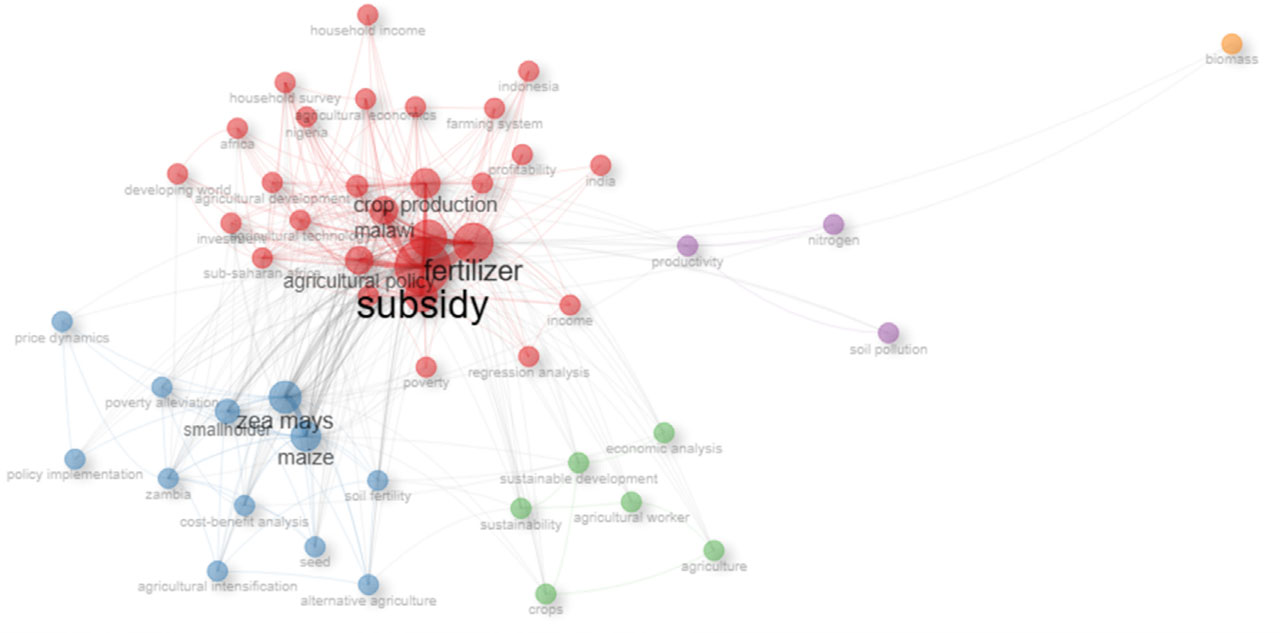
Fig. 7.
Co-occurrence network of fertilizer-related terms
Source: authors’ elaboration via Biblioshiny.
Factorial analysis in Fig. 8 reinforces these observations. Highly cited studies, such as Ju et al. (2016) and Ricker-Gilbert et al. (2011), cluster along a primary conceptual axis dominated by economic analyses of fertilizer adoption and subsidy performance, predominantly associated with inorganic inputs. Meanwhile, studies addressing organic or integrated nutrient management approaches are more dispersed across the factorial space, indicating a less consolidated and more fragmented body of scholarship. This dispersion suggests that research on organic fertilizers remains emergent rather than absent, occupying diverse disciplinary niches without yet forming a unified analytical framework.
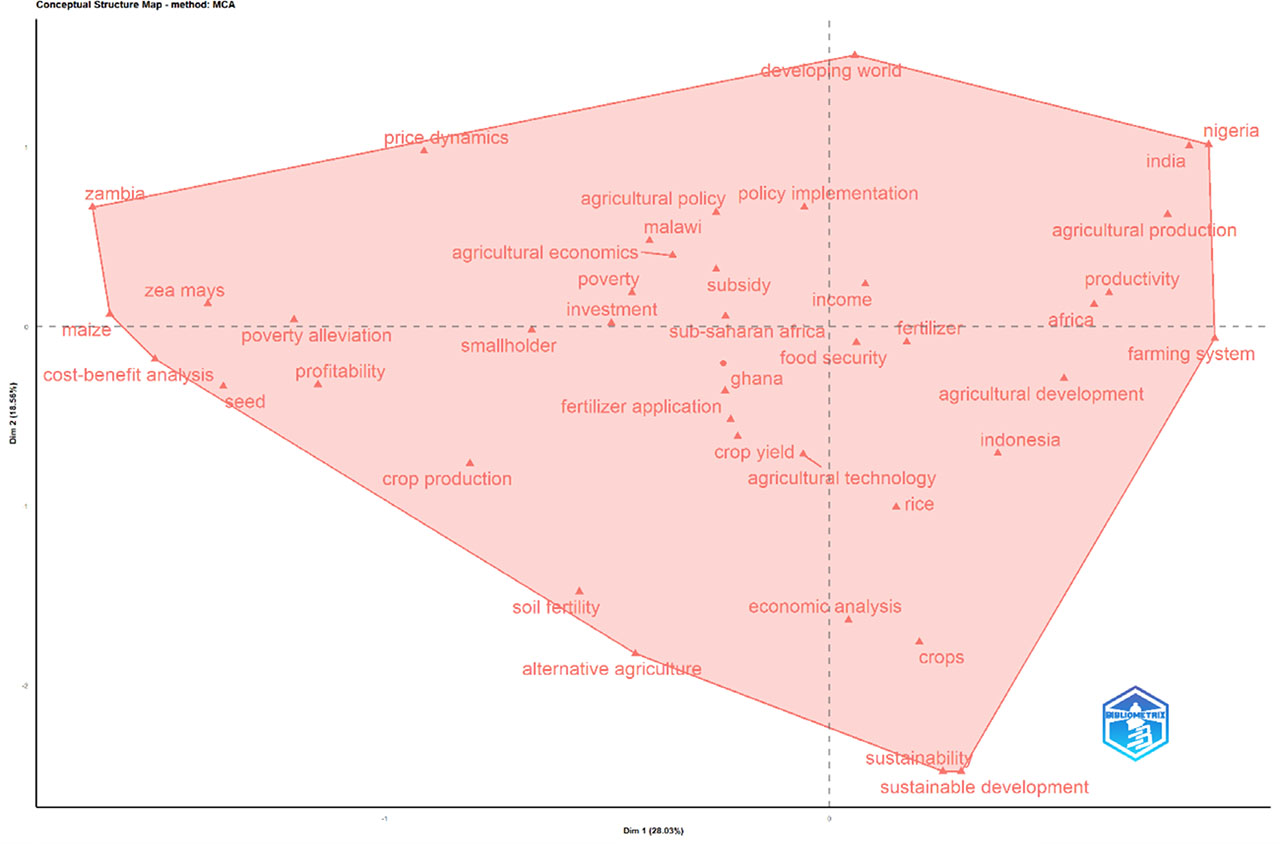
Fig. 8.
Factorial analysis map of conceptual relationships
Source: authors’ elaboration via Biblioshiny.
From the bibliometric perspective, these patterns highlight opportunities for future research development rather than definitive conclusions about subsidy effectiveness or policy priorities. The limited consolidation of organic fertilizer research points to scope for greater thematic integration, particularly through studies that examine complementarities between organic and inorganic inputs. Future scholarship may benefit from methodological pluralism, combining agronomic experimentation, ecological assessment, and socio-economic analysis to explore fertilizer systems in a more holistic manner (Fahmid et al., 2022; Silberg et al., 2024). Participatory approaches involving farmers, extension agents, and local institutions could further enrich understanding of context-specific adoption dynamics that are not fully captured in existing quantitative studies.
By strengthening interdisciplinary and integrative research approaches, future studies can contribute to a more comprehensive understanding of fertilizer systems and their treatment within subsidy-related scholarship. Such efforts would enhance conceptual coherence within the literature, enabling clearer differentiation between fertilizer types while supporting more nuanced discussions of sustainability, productivity, and resilience in agricultural research. Importantly, these implications pertain to the evolution of academic inquiry rather than direct evaluation of subsidy policy outcomes, aligning with the bibliometric scope of the present study.
CONCLUSION
This study provides a comprehensive bibliometric assessment of the global scholarly literature on fertilizer subsidies and agricultural financial support from 1994 to 2024, offering a systematic mapping of research trends, collaboration structures, and thematic developments across 278 peer-reviewed journal articles. By examining how organic and inorganic fertilizers are represented within subsidy-related research, the analysis captures the evolution of scholarly attention and research priorities over three decades.
The results indicate a clear upward trajectory in fertilizer subsidy research, which is associated with heightened academic interest following major global developments affecting agricultural input systems, including the 2008 food crisis. The growth in publication output, the diversity of contributing countries, and the expansion of international co-authorship reflect the emergence of a broad and increasingly interconnected research community. Countries such as the United States, the United Kingdom, Germany and Indonesia function as prominent nodes within this scholarly network, facilitating cross-regional exchange and shaping the structure and visibility of academic discourse on fertilizer subsidies.
Thematic analysis demonstrates that the literature remains strongly oriented toward subsidy mechanisms, crop productivity, and food security. At the same time, the representation of fertilizer types within the literature is uneven, with research explicitly focusing on inorganic fertilizers appearing more frequently than studies addressing organic or integrated nutrient management approaches. Rather than indicating definitive policy imbalance, this pattern reflects differences in thematic consolidation and analytical focus within the scholarly record. Although sustainability-oriented themes – such as organic agriculture, agroecology, and climate resilience – have gained increasing attention, they remain comparatively fragmented and have not yet coalesced into a cohesive research stream.
Nonetheless, the findings point to gradual thematic diversification, with a growing body of scholarship exploring linkages between productivity, environmental sustainability, and socio-economic conditions. Regionally grounded studies from Malawi, Ghana, and Indonesia illustrate how local empirical contexts contribute to broader academic discussions, underscoring the value of geographically diverse evidence in enriching fertilizer subsidy research. Collaboration network analysis further highlights that transnational research partnerships play a key role in enhancing scholarly visibility and facilitating the circulation of knowledge across agricultural systems.
Several limitations should be acknowledged. The exclusive reliance on Scopus-indexed, English-language publications may underrepresent locally produced or non-English scholarship, particularly from regions where fertilizer subsidy programmes are most prevalent. As such, the findings reflect patterns in indexed academic discourse rather than a comprehensive account of all relevant research. Future studies could expand this scope by incorporating additional databases, multilingual sources, and qualitative approaches to deepen understanding of research gaps and emerging themes.
Overall, the global scholarly discourse on fertilizer subsidies is dynamic yet characterized by uneven thematic development and geographic representation. From a bibliometric perspective, advancing the field will require more interdisciplinary and integrative research efforts that explicitly examine relationships between different fertilizer types and sustainability dimensions. Strengthening inclusive international collaboration and encouraging research that bridges currently fragmented themes may help broaden the analytical scope of fertilizer subsidy scholarship and support more coherent future inquiry into sustainable agricultural systems.
Notes
[5] Financial disclosure FUNDING STATEMENT
This work was supported by the Indonesian Education Scholarship (Beasiswa Pendidikan Indonesia), under the Center for Higher Education Funding and Assessment, Ministry of Higher Education, Science, and Technology of the Republic of Indonesia, and the Endowment Fund for Education Agency (Lembaga Pengelola Dana Pendidikan), Ministry of Finance of the Republic of Indonesia (Grant number: 01116/J5.2.3./BPI.06/9/2022).
ACKNOWLEDGEMENTS
AI tools such as ChatGPT were used exclusively for language editing and structural improvement, while all data analysis and interpretation were performed independently by the authors.