
Introduction
Cerebral palsy (CP) is a neurological disorder that affects movement, muscle tone, posture, and cognitive function, which often leads to developmental delays and various challenges for children and their families (Guimaraes et al. 2023; Patel et al. 2020). To meet the unique needs of each child with CP, intervention programs must be tailored accordingly with early involvement from a multidisciplinary team of healthcare professionals to support the child’s functional abilities and participation in daily life (Rosenbaum 2022). In contrast to earlier treatment paradigms, current approaches to treating children with CP reflect a growing international consensus, emerging over the past two decades, on addressing not only biomedical impairments but also the child’s overall well-being and participation in everyday life. This shift also emphasizes engaging families as active partners in care, rather than passive recipients, which empowers them, reduces stress, and contributes to improved outcomes. This change in perspective is exemplified by Rosenbaum and Gorter’s (2012) ‘F-words’ framework (Rosenbaum and Gorter 2012) and supported by international guidelines (Morgan et al. 2021).
Mental health challenges faced by parents of children with CP are significant: they often experience increased stress, anxiety, depression, (Barreto et al. 2020; Davis et al. 2010) and reduced well-being (Cheshire, Barlow and Powell 2010; Pousada et al. 2013) compared to parents of typically developing children. These challenges can affect family participation in caregiving routines, decision-making, and engagement in the child’s daily activities (Rentinck et al. 2009). They may also have a lasting impact on the well-being of both the child and the parents, highlighting the importance of addressing psychosocial constructs in parents when supporting the child’s development (Xia et al. 2023). Furthermore, the severity of the child’s disability has been considered a variable that affects stress (Arnaud et al. 2008; Park 2021).
Family-centered care emphasizes the involvement of families in care and decision-making processes related to the child’s disability (King et al. 2004; McCarthy and Guerin 2022). Such approaches focus on supporting the child’s functional development within learning environments that are embedded into the family’s daily routines and activities. In addition, the focus is on strengthening the family’s capacity to manage the child’s specific needs and challenges (Hughes-Scholes and Gavidia-Payne 2019; King et al. 2004). Moreover, the concept of family resilience underscores the significance of social networks and collective strengths as protective factors in families’ adapting to challenges (Walsh 2016). At the same time, insufficient societal and economic support may constrain the impact of parent-focused interventions, thereby underlining the essential role of social workers in facilitating families’ access to appropriate support and resources (Anderson et al. 2007). Family-centered interventions have been associated with an improved ability of parents to understand the child’s diagnosis and needs as well as with increased self-efficacy, empowerment, and quality of life (QoL) for both parents and child (Hughes-Scholes and Gavidia-Payne 2019; Jackman et al. 2022; Kalleson, Jahnsen, and Ostensjo 2019; McCarthy and Guerin 2022). The term ‘self-efficacy’ refers to the belief in one’s ability to perform tasks successfully (Bandura 1977), while ‘a sense of coherence (SOC)’ is the ability to make sense of one’s experiences and organize them in a way that fosters self-efficacy and promotes mental well-being (Eriksson and Mittelmark 2017). ‘Empowerment’ involves feeling capable and confident in managing the challenges of caregiving (Tønnesen et al. 2005), and ‘well-being’ encompasses the overall ‘QoL’ experienced by the caregiver (Guillamon et al. 2013). Previous studies suggest a positive relationship between SOC, well-being, and QoL (Eriksson and Lindstrom 2005). However, only a limited number of studies explicitly focus on children with CP in relation to these abilities and emotions; instead, they address a broad range of disabilities across various age groups. Current literature lacks a comprehensive understanding of constructs, such as sense of coherence and empowerment, among parents raising a child with CP as a distinct group. To the authors’ knowledge, no studies have investigated the impact of family-centered early intervention programs on the psychosocial constructs related to QoL in parents with children diagnosed with CP in Denmark. This further highlights the need for research in this area, since evaluating the impacts of such programs on the psychosocial constructs related to parenting can contribute to the development of family-centered early intervention programs and thereby improve the well-being of both the caregivers and their children. The ‘Good Start’ program, developed by the Elsass Foundation in Denmark, is a family-centered intervention program specifically tailored for families of children with CP aged six months to four years. The program aims to improve the overall QoL for families by increasing empowerment and parenting sense of competence (Johansen et al. 2023).
Compared to internationally recognized family-centered programs such as ENVISAGE (ENabling VISions And Growing Expectations) (Miller et al. 2023) and COPCA (Coping with and Caring for Infants with Special Needs) (Hielkema et al. 2020), the Good Start program is a short, intensive four-day intervention designed to provide targeted support to families within a condensed timeframe. As part of the program, parents, acknowledged as experts on their children, received education from professionals on CP, neuroplasticity, and enriched environments to support motivating, functional training in daily routines. They were also offered psychological support and guided in applying these strategies at home.
In the sections that follow, we outline the rigorous pre-post follow-up design and methodology, present the main findings on validated outcomes measuring constructs related to the psychosocial quality of life of parents, and discuss their implications in light of existing research on family-centered interventions for families of children with CP.
Aim
The aim of the current study was to evaluate the impact of the intensive four-day, family-centered early intervention program Good Start on psychosocial constructs related to QoL, including well-being, life satisfaction, sense of coherence, efficacy in parenting, and family empowerment, among parents of children with CP.
Methods
Study design
A pre-post-follow-up intervention study was used to evaluate the impact over time of the early intervention program Good Start among parents of children with CP, from baseline (before participation) to post-program at three weeks and follow-up at six months after the program. The overall evaluation employed a combination of quantitative and qualitative methods, including surveys, observations, and interviews. Results from the observations and interviews are published elsewhere (Skovgaard et al., submitted). A timeline of the evaluation process is presented in Figure 1. The study is reported with reference to the STROBE checklist for cohort studies (STrengthening the Reporting of OBservational studies in Epidemiology) (Von Elm et al. 2007), although with adaptations of the headings to suit the reporting of this study.
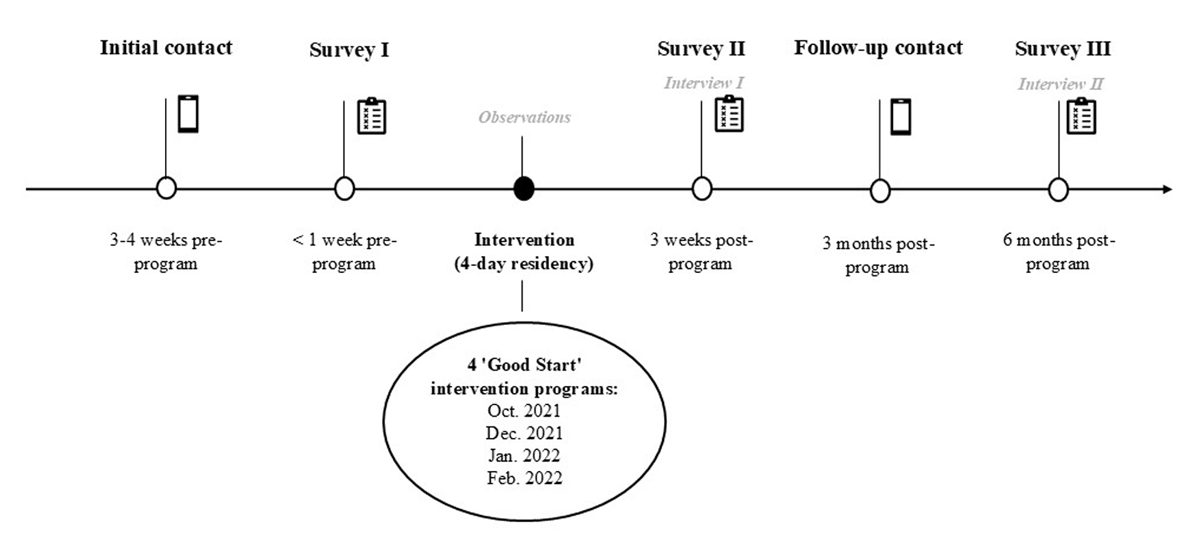
Figure 1
Timeline of evaluation.
*Intervention refers to the four-day intensive residency at the Elsass Foundation’s location.
Context – Study setting
Good Start is a four-day, family-centered intervention program that targets families of children aged six months to four years diagnosed with CP. It has been developed and is administered by the Elsass Foundation, a privately funded nonprofit organization in Charlottenlund, Denmark, which provides the entire program at no cost to the families. The intensive nature of the program is unique, and families can find and enroll in the program themselves without assistance from the public healthcare system. During the four-day program, families reside in housing provided by the Elsass Foundation. This includes parents, the child with CP, siblings, and extra babysitter(s), who are typically grandparents. Prior to residency, a telephone conversation takes place between the Elsass Foundation and one or both parents to identify and assess activity-related challenges and goals. Approximately three months after the program, the Elsass Foundation initiates a follow-up telephone contact with the family. The entire intervention therefore encompasses the initial call to the follow-up contact three months later, with the primary focus being the four-day program at the Elsass Foundation (Figure 1). Families are assigned to an interdisciplinary team comprising a physiotherapist, an occupational therapist, and a psychologist. Together with the parents, this team tailors specific interventions for each family. The intervention includes presentations, individually tailored training activities, and networking events. The intervention is conducted alongside up to five other families approximately matched based on their children’s levels of gross motor function. Any training activities emphasize the integration of training tasks into the family’s daily routines through play and the child’s everyday activities. The activities are designed to address the specific desires and needs of each family, which are either communicated before the program or emerge during the course of the program (Johansen et al. 2023; Præst and Larsen 2023).
Evaluation design
The design of the evaluation was based on a logic model that was collaboratively developed with the personnel of the Elsass Foundation during two workshops in the spring of 2021. A logic model serves as a methodological tool that provides a structured overview of how an intervention is expected to lead to a sequence of outcomes for a specific target group (Funnell and Rogers 2011). The model illustrates the proposed interrelatedness of psychosocial constructs of quality of life, including well-being, life satisfaction, sense of coherence, parenting efficacy, and family empowerment within the family. These constructs capture both the internal (emotional, psychological) and relational (intra-family social) aspects of parental experience (Irwin, Jesmont and Basu 2019), but do not include the physical health domain. During the formulation of the logic model, discussions and identifications were undertaken regarding the concrete activities of the intervention, the expected immediate, intermediate, and ultimate outcomes, as well as the target audience for the intervention. In addition, a set of key assumptions concerning the relationships between activities and presumed outcomes in the logic model were outlined. These provided guidance for the specific selection of the means for outcome measurement. Further information regarding the logic model can be found in Appendix 1 and elsewhere (Johansen et al. 2023; Præst and Larsen 2023).
Participants, data collection, and variables
This pre-post-follow-up study recruited participants from four Good Start programs between January 2021 and December 2022. The Elsass Foundation personnel randomly selected four out of eight possible Good Start programs to be included in the evaluation. All potential participants (38 parents) who were to take part in one of these four Good Start programs received a cover letter containing information about the evaluation study and a link to a web-based questionnaire, which was sent out along with the information about the program (with the option for inquiries in case of questions). If the web-based questionnaire had not been filled out prior to the start of the program, parents were also allowed to complete a paper-based questionnaire upon arriving at the four-day program. Three weeks and six months after attending the program, the parents received the same web-based questionnaire, excluding questions related to sociodemographic factors and information about the child. If the parents had not returned their questionnaire within approximately two weeks of the initial posting, up to two reminders were sent at intervals of approximately seven to 10 days.
Outcome measures
Short Warwick-Edinburgh Mental Well-being Scale (SWEMWBS)
The Short Warwick-Edinburgh Mental Well-being Scale (SWEMWBS) is a validated and widely used instrument to assess positive mental well-being (Koushede et al. 2019). Developed using Rasch modeling techniques to enhance its suitability as a brief, interval-level instrument for assessing mental well-being, SWEMWBS is a shortened version of the original 14-item scale (Tennant et al. 2007). It comprises seven items that capture different dimensions of well-being, including positive affect, relationships, and self-realization. Respondents rate their experiences over the past two weeks on a five-point scale ranging from 1 = ‘none of the time’ to 5 = ‘all the time’. Raw scores are converted into metric values and summed for a total score (Koushede et al. 2019).
Life-Satisfaction measure
Life Satisfaction measures how people evaluate their lives as a whole and is commonly used as an indicator of quality of life (QoL) (Bonke et al. 2017). Satisfaction with life in general is measured on a 1–10 scale (1 = ‘very dissatisfied’ and 10 = ‘very satisfied’). A higher mean value of life satisfaction indicates greater overall satisfaction for each respondent.
Sense of Coherence Scale (SOC-4)
Antonovsky (1987) developed the 29-item Orientation to Life Questionnaire to measure respondents’ sense of coherence (SOC-29) (Antonovsky 1987; Eriksson and Mittelmark 2017). The questionnaire measures the three dimensions of comprehensibility, manageability, and meaningfulness. A shorter version of the questionnaire was later developed with 13 items, called SOC-13, and an even shorter one with 3 items, called SOC-3 (Lundberg and Peck 1995). A Danish version of SOC-3 has been developed with four items and four response categories, called SOC-4 (Nielsen et al. 2017), with a Likert scale ranging from 1 point to 4 points (1 = ‘always’, 4 = ‘never’). To calculate a total score, the respondent’s response values are summed, with a score ranging from 4 to 16 points. Higher scores indicate lower SOC. No psychometric testing has been done of the SOC-4, but the SOC-3 has been shown to be a valid, low-loading instrument for research purposes (Chiesi et al. 2018).
Efficacy Subscale from Parenting Sense of Competence Scale (PSOC)
The Parenting Sense of Competence (PSOC) scale is a 16-item questionnaire that measures overall parenting sense of competence. It includes two sub-scales that measure parenting satisfaction and parenting efficacy (Johnston and Mash 1989; Ohan, Leung and Johnston 2000). Research on the PSOC has demonstrated adequate reliability and validity in relation to studies of parents of young children (Johnston and Mash 1989). The PSOC instrument has been translated into three Danish versions, and for the purpose of this study, we have used the version from Trillingsgaard (Simonsen and Trillingsgaard 2019). Further data on the psychometric properties of the Danish versions are not available. The Efficacy subscale used in this study is composed of eight items rated on a six-point Likert-type scale from 1 = ‘Strongly agree’ to 6 = ‘Strongly disagree’. To calculate a total score, the response values are summed together.
Family Subscale (FS) from Family Empowerment Scale (FES)
The Family Empowerment Scale (FES) is composed of 34 items on a Likert-type scale, including two dimensions of empowerment, i.e., training and competences. Both dimensions are included in three subscales that focus on family, services, and the community. The FES was originally developed to measure the empowerment status of parents of children with emotional disabilities, with results indicating robust psychometric properties (Koren, DeChillo and Friesen 1992). For the purpose and relevance of this study, we used the Family Subscale (FS) to assess family empowerment. The subscale is composed of 12 items with a Likert-type scale ranging from 1 point to 5 points (1 = ‘never’, 5 = ‘always’). Scores for the subscales are calculated means divided by the number of questions. The subscale was translated into Danish and assessed for face validity (Johansen et al. 2023). In the present context, both parenting efficacy and empowerment are presumed to have a positive impact on the QoL of parents (Guillamon et al. 2013).
Family situation measure
A measure consisting of six supplementary questions related to the family situation and the child in general was also included (Johansen et al. 2023), with five response categories on a Likert scale. The response categories for the questions differ because they depend on the question asked. The questions concerned 1) well-being of the child, 2) the family, 3) child-rearing, 4) supporting the child, 5) coping, and 6) conflicts, with a higher score indicating a better situation. To calculate a total score, response values are summed and divided by the number of questions.
Statistics
Continuous variables were tested for normality (Shapiro-Wilk test, histogram, and quantile-quantile (Q-Q) plots). Descriptive statistics (mean and standard deviation) were calculated for all variables (Table 2). A linear mixed model was used to detect any overall differences between related means for each dependent variable at baseline, after three weeks, and after six months, with ‘subject’ and ‘family cluster’ as random effects. This model takes into consideration the interdependence between measurements and the unequal number of data points across time points. The dependent variables were treated as continuous variables. The independent variable ‘time’ consisted of three categorical, related groups. These analyses were performed and reported as unadjusted differences (beta coefficients with 95% confidence intervals (CIs)) at each time point (Table 3). The residuals of the linear mixed models were checked for normal distribution. The significance level was considered to be p < 0.05. To illustrate the predicted outcomes, we used margin plots for each outcome (Figures 2 and Appendix 1). All analyses were performed in the statistical software STATA BE 17 (StataCorp 2021).
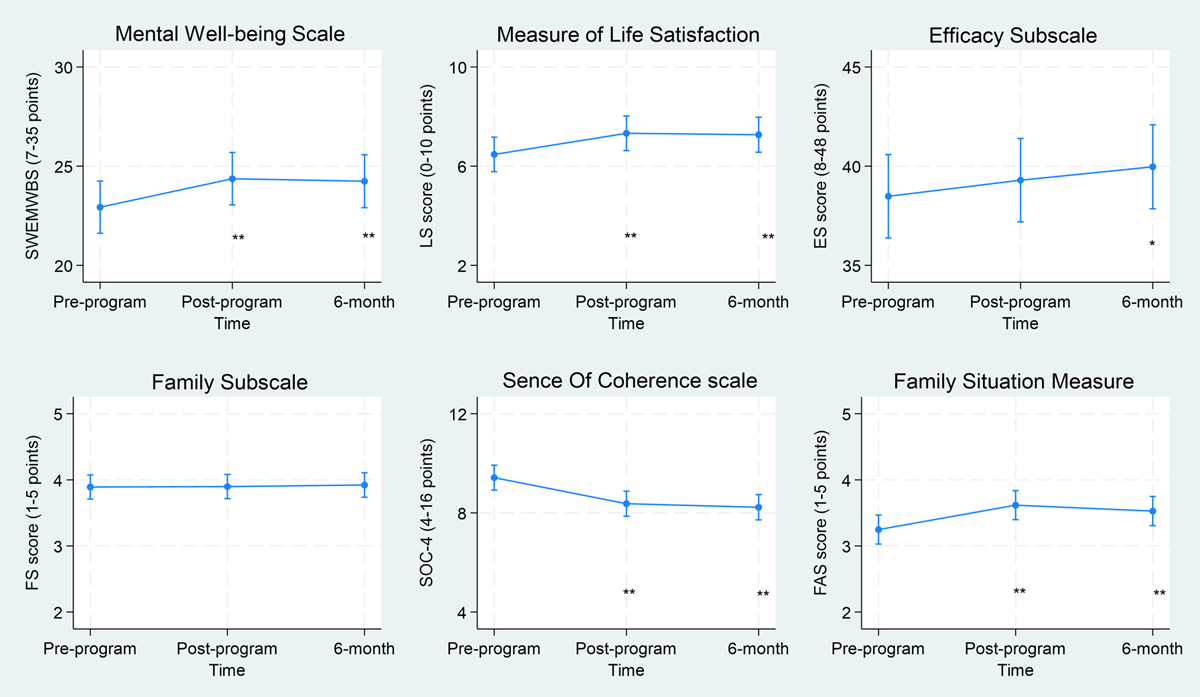
Figure 2
Margins plots illustrating predicted mean scores with 95% confidence intervals. Outcomes include parenting well-being (Short Warwick-Edinburgh Mental Well-being Scale), life satisfaction (Measure of Life Satisfaction), sense of coherence (Sense of Coherence Scale), parenting efficacy (Efficacy Subscale), family empowerment (Family Subscale), and family situation (Family Situation Measure) at each time point. Asterisks indicate statistically significant differences: p < 0.05 (*), p < 0.01 (**).
Ethics
According to Danish legislation (LBK no. 1338 of September 1, 2020) (LBK 2020), formal ethical review was not mandated, as the study did not involve the collection of human biological material. Nonetheless, institutional approval for the study and its data management procedures was obtained from the Research and Innovation Organization (RIO) at the University of Southern Denmark (journal nr. 11.260). Participants gave informed consent to participate in accordance with the Declaration of Helsinki (Vollmann and Winau 1996; World Medical 2013). Expert and parent representatives were actively involved in the preparation of the information materials for the participating parents and in the pre-testing of the questionnaire. Participation in the study was voluntary, with informed consent obtained in electronic form from all participants prior to data collection. Participants and their families were fully informed about the study’s objectives, procedures, and their rights, including the option to withdraw at any stage without repercussions. Personal identifiers were removed or anonymized to ensure participant confidentiality, and all data were handled with strict attention to privacy and security.
Results
Participant characteristics
In the context of our study, a total of 19 families, comprising 38 parents, participated in the four separate Good Start programs. The response rates for outcome measures at pre-program, post-program, and six-month follow-up assessments were 100% (n = 38), 97% (n = 37), and 92% (n = 35), respectively. Half of the parents who filled in the questionnaire were female, and all parent couples cohabited. In addition, 12 out of 19 families (63% of the sample) included siblings living at home with the child diagnosed with CP (not shown in table). The parents’ ages ranged from 24 to 50 years, with the majority being between 29 and 40 years old (84%). Furthermore, more than half of the parents (63%) reported having attained either a medium (bachelor-level) or long-term higher education (master’s-level or above), and 84% were employed, with 66% holding full-time positions (Table 1). Parents’ education was categorized according to the International Standard Classification of Education (ISCED) as short-cycle tertiary (e.g., post-secondary vocational programs), medium-cycle (bachelor’s level and professional bachelor’s level such as nursing or teaching), and long-cycle (master’s or doctoral level) education (Statistics 2012).
Table 1
Descriptive characteristics of parents and their children with cerebral palsy.
| VARIABLE | N |
|---|---|
| Characteristics of parents | n = 38 |
| Role | |
| Mother/father, n (%) | 19 (50) /19 (50) |
| Age groups, n (%) | |
| ≤40 | 32 (84) |
| >40 | 6 (16) |
| Highest level of education, n (%) | |
| Vocational Education or Short-cycle higher education | 14 (37) |
| Medium or long-cycle higher education | 24 (63) |
| Employment, n (%) | |
| Full-time | 25 (66) |
| Part-time | 7 (18) |
| Unemployed, leave, homemaker | 6 (16) |
| Characteristics of children | n = 19 |
| Sex, n (%) | |
| Girl, boy, n (%) | 8 (42)/11 (58) |
| Age group, n (%) | |
| 0–1 years | 13 (68) |
| 2–3 years | 3 (16) |
| 4–5 years | 3 (16) |
| 6 years | 0 (0) |
| Severity of cerebral palsy | |
| GMFCS Levels I | 5 (26) |
| GMFCS Levels II & III | 11 (58) |
| GMFCS Levels IV & V | 3 (16) |
[i] GMFCS, Gross Motor Function Classification System.
In the families, eight children with CP were girls (42%) and 11 were boys (58%), and the majority were aged 1 to 2 years (68%). A significant proportion of the children (58%) exhibited a moderate level of gross motor functional impairment due to their CP diagnosis, resulting in compromised balance and coordination and necessitating the use of assistive devices to support mobility (Table 1).
Changes in outcome measures
Linear mixed model analyses revealed significant effects of time for all outcome measures except for parenting efficacy and family empowerment in post-program compared to pre-program measures. Table 2 displays means, standard deviations, and range for outcome measures at pre- and post-program and at the six-month follow-up assessment.
Table 2
Means, standard deviations, and range for outcome measures at pre-, post-program and six-month follow-up assessment.
| VARIABLE | n | MEAN | SD | RANGE (MIN, MAX.) |
|---|---|---|---|---|
| Short version of Warwick-Edinburgh Mental Well-being Scale (SWEMWBS) (7–35) | ||||
| Baseline (pre-program) | 38 | 22.9 | 3.6 | 17.4–32.6 |
| Post (three weeks) | 37 | 24.5 | 3.1 | 18.6–32.6 |
| Six-month follow-up | 35 | 24.3 | 3.1 | 19.3–35.0 |
| Life Satisfaction (0–10) | ||||
| Baseline (pre-program) | 38 | 6.5 | 2.2 | 2.0–10.0 |
| Post (three weeks) | 37 | 7.4 | 1.6 | 4.0–10.0 |
| Six-month follow-up | 35 | 7.3 | 1.6 | 4.0–10.0 |
| Parenting Sence Of Competence Scale (PSOC) | ||||
| Efficacy Subscale (8–48) | ||||
| Baseline (pre-program) | 37 | 38.6 | 6.3 | 19.0–45.0 |
| Post (three weeks) | 37 | 39.4 | 4.9 | 22.0–48.0 |
| Six-month follow-up | 35 | 39.9 | 4.8 | 26.0–47.0 |
| Family Empowerment Scale (FES) | ||||
| Family Subscale (1–5) | ||||
| Baseline (pre-program) | 37 | 3.9 | 0.5 | 2.8–4.8 |
| Post (three weeks) | 37 | 3.9 | 0.4 | 3.0–5.0 |
| Six-month follow-up | 35 | 3.9 | 0.4 | 2.9–4.8 |
| Sense Of Coherence scale (SOC-4) (4–16) | ||||
| Baseline (pre-program) | 38 | 9.4 | 1.2 | 7.0–12.0 |
| Post (three weeks) | 37 | 8.3 | 1.6 | 5.0–12.0 |
| Six-month follow-up | 35 | 8.2 | 1.3 | 4.0–11.0 |
| Family situation measure | ||||
| How is the situation in the family and around the child in general? (1–5) | ||||
| Baseline (pre-program) | 37 | 3.3 | 0.5 | 1.5–4.2 |
| Post (three weeks) | 37 | 3.6 | 0.5 | 2.0–4.7 |
| Six-month follow-up | 35 | 3.5 | 0.6 | 2.3–4.7 |
At the six-month follow-up, a statistically significant effect of time was observed for all outcomes compared to pre-program measures, apart from family empowerment (Table 3). Among all outcomes, the percentages of change ranged from 0.3% to 13.9%, with three outcome measures exhibiting changes exceeding 10% (Table 3).
Table 3
Changes in outcome measures over time. The table presents beta coefficients, confidence intervals, p-values for changes, and percentage changes from pre- to post-program at three-week and six-month follow-up assessments.
| VARIABLE | BETA COEFFICIENTS (β) | CONFIDENCE INTERVALS (95%CI) | P VALUE | CHANGE % |
|---|---|---|---|---|
| Short version of Warwick-Edinburgh Mental Well-being Scale (SWEMWBS) (7–35) | ||||
| Baseline (pre-program) | 22.9 (reference) | |||
| Post (three weeks) | 1.5 | 0.7; 2.4 | <0.001 | 6.6 |
| Six-month follow-up | 1.3 | 0.4; 2.2 | 0.004 | 5.7 |
| Life Satisfaction (0–10) | ||||
| Baseline (pre-program) | 6.5 (reference) | |||
| Post (three weeks) | 0.9 | 0.3; 1.4 | 0.001 | 13.9 |
| Six-month follow-up | 0.8 | 0.3; 1.3 | 0.004 | 12.3 |
| Parenting Sence Of Competence Scale (PSOC) | ||||
| Efficacy Subscale (8–48) | ||||
| Baseline (pre-program) | 38.6 (reference) | |||
| Post (three weeks) | 0.8 | –0.3; 2.0 | 0.166 | 2.1 |
| Six-month follow-up | 1.5 | 0.3; 2.7 | 0.015 | 3.9 |
| Family Empowerment Scale (FES) | ||||
| Family Subscale (1–5) | ||||
| Baseline (pre-program) | 3.9 (reference) | |||
| Post (three weeks) | 0.01 | –0.12; 0.10 | 0.902 | 0.3 |
| Six-month follow-up | 0.03 | –0.16; 0.11 | 0.668 | 0.8 |
| Sense Of Coherence scale (SOC-4) | ||||
| Baseline (pre-program) | 9.4 (reference) | |||
| Post (three weeks) | –1.1 | –1.4; –0.7 | <0.001 | 11.7 |
| Six-month follow-up | –1.2 | –1.6; –0.8 | <0.001 | 12.8 |
| Family situation measure | ||||
| How is the situation in the family and around the child in general? (1–5) | ||||
| Baseline (pre-program) | 3.3 (reference) | |||
| Post (three weeks) | 0.4 | 0.3; 0.5 | <0.001 | 12.1 |
| Six-month follow-up | 0.3 | 0.2; 0.4 | <0.001 | 9.1 |
The margins plots presented in Figure 2 visually represent the results of the linear mixed model analysis by displaying the predicted mean scores for participants at each time point across the six outcome measures. As illustrated in Figure 2, there is a notable upward trend in the predicted mean scores for parenting well-being, life satisfaction, sense of coherence (downward trend), and the family situation. These trends indicate significant improvements from baseline to post-program, and these gains are sustained at the six-month follow-up. For parenting efficacy, while the improvement was not statistically significant from pre- to post-program, it became statistically significant at the six-month follow-up. However, the Family Subscale shows no significant change, which indicates that family empowerment remained stable throughout the intervention program.
Discussion
This study has demonstrated that the family-centered early intervention program Good Start is associated with positive changes in psychosocial constructs related to QoL, including well-being, life satisfaction, sense of coherence, and parenting efficacy among parents of children with CP. In addition, indications of improvement in the family situation were found after the family had attended the Good Start program. No changes were seen in scores regarding family empowerment.
Most recent systematic reviews have underscored the importance of family-centered approaches to enhancing the QoL in families, including children with disabilities (Jimenez-Arberas et al. 2024; Mestre et al. 2024). However, only a limited number of intervention studies have reported on changes in the psychosocial constructs related to QoL as a result of early family-centered intervention programs in parents or caregivers of children with CP.
Well-being and life satisfaction
In one randomized early intervention trial for infants at very high risk of CP (Hielkema et al. 2020), the family-centered intervention program (COPCA) and the typical infant physiotherapy resulted in similar family outcomes. However, specific elements of the COPCA intervention, such as ‘caregiver coaching’, were associated with increased family empowerment and improved QoL.
Similar findings were reported in another intervention trial involving families with children with CP aged three to six years (Myrhaug et al. 2018). In this study, parents received three weeks of conductive education in addition to conventional practice, and this was compared to conventional practice alone. Although there were no significant differences in QoL scores between the groups, the intervention group showed notable improvements. Specifically, the percentage change in QoL scores was ~12%, which indicates positive outcomes consistent with those observed in the ‘Good Start’ program. The results from the Good Start program ranged from 6% to 14%, depending on which aspect of QoL was being measured (well-being, life satisfaction), which is likely to be of clinical relevance. One meta-analysis of a limited number of randomized controlled trials (Irwin, Jesmont and Basu 2019) aiming to improve caregiver well-being (anxiety, competence, stress, etc.) through educational, psychological, or supportive interventions indicates that such interventions can enhance the well-being of parents of children with CP, which supports the results of the present study.
Sense of coherence
In our study, we found short- and long-term improvements in relation to coherence (12–13%) and to the family situation (9–12%) after attending Good Start. The positive direction of these results is in line with those of a single one-year intensified habilitation program that included parents of preschool children with CP (Damgård et al. 2016). Although the sense of coherence and optimism scores did not change significantly during the intervention period in the study, many parents reported clinically relevant changes, with a minimum of 5% change. Specifically, 67% of the mothers who reported clinically relevant changes experienced increased optimism (Damgård et al. 2016).
Parenting efficacy
The findings of sustained improvement in parenting efficacy are consistent with previous research, as shown by pre- and post-intervention measures from an early childhood intervention program lasting more than one year (Hughes-Scholes and Gavidia-Payne 2019) and one meta-analysis of intervention studies on parent training programs, which identified a moderate positive effect size in enhancing parenting efficacy (Hohlfeld, Harty and Engel 2018). Although interventions and measures of efficacy differed between these studies, both included caregivers of young children with various neurodevelopmental disabilities, with a minor focus specifically on CP. As no established minimal clinically important difference (MCID) exists for the Efficacy Subscale, we cannot determine whether the observed changes are clinically meaningful.
Family empowerment
Only limited knowledge exists regarding the trajectories of parenting empowerment over time among parents of children with CP who attend early intervention programs. A cohort study of 58 families (Kalleson, Jahnsen and Ostensjo 2019) with children aged four years and under, who were offered follow-up by the Norwegian Cerebral Palsy Follow-up Program over three years and received support from a multidisciplinary team, a coordinator, training, and/or an intensive rehabilitation program, found consistently high scores (with mean scores above 4 out of 5) in the Family Subscale measuring empowerment during the daily management of home activities. This result is similar to the findings of the present study, which indicates robust family capacity, with most parents having further education, being employed, and living together as couples. However, previous intervention studies have reported modest increases in family empowerment: ~8% in a single-group early family-centered intervention study conducted over a two-year period in India involving children with developmental delays (Muthukaruppan et al. 2022), and ~5–8% in a larger feasibility study of the ENVISAGE program, which involved continuous workshops over a five-week period for caregivers of children with neurodisabilities (Miller et al. 2023). Notably, there was variation in baseline levels of empowerment among participants across studies.
The logic model underpinning the Good Start program provides a theoretical foundation for understanding how various psychosocial constructs, such as parental well-being, life satisfaction, sense of coherence, parenting efficacy, and family empowerment, are interrelated in parents of children with CP. While definitive causal pathways cannot be claimed, the model suggests plausible connections supported by prior research. As parents gain knowledge, emotional support, and confidence, their perceived sense of coherence, parenting efficacy, and sense of empowerment are strengthened (Damgård et al. 2016; Hohlfeld, Harty and Engel 2018; Miller et al. 2023). These factors, in turn, have been linked to improvements in both individual well-being and family quality of life (Eriksson and Mittelmark 2017; Irwin, Jesmont and Basu 2019; Kalleson, Jahnsen and Ostensjo 2019). Importantly, these constructs appear to reinforce one another in a dynamic process, rather than operate in isolation.
The overall assumption of a perceived improvement in participating parents’ sense of competence and QoL after attending the Good Start program, which was stated in the logic model, is supported by qualitative findings (Skovgaard et al., submitted).
Study comparability and implications
The comparability of studies investigating the changes in psychosocial constructs related to QoL arising from family-centered care interventions in families with children with CP is limited due to variations in intervention durations, study designs, measurement instruments, follow-up periods, and cultural contexts. Despite these differences, the findings reviewed above demonstrate similar trends. The addition of a short yet intensive intervention to this body of research, such as the Good Start program, adds to the growing evidence of the positive impacts of a family-centered care approach on parents of young children with disabilities. This underscores its relevance in clinical practice and supports its consideration in informing best practices and policy decisions in early intervention for families of children with CP.
Strengths and limitations
Several limitations must be acknowledged that may affect the interpretation of the results of the current study. Firstly, potential influences of parental gender and age were not investigated, which leaves open the possibility that these factors may impact the perceived effects of the intervention. Secondly, the lack of a control group comparison prevents us from ruling out that the observed changes may be attributed to general developmental trends or external factors; however, it is also conceivable that in the absence of intervention, parenting outcomes, such as well-being or efficacy, could have worsened over time due to ongoing caregiving challenges. Thirdly, despite utilizing standardized outcome measures previously employed with parents of children with various disabilities, these measures have not been specifically validated for the population under study, and no statistical power calculations were performed as part of the study design. Fourth, the relatively small sample size combined with the number of outcomes tested is a limitation of this study, increasing the risk of spurious positive findings. The strengths of this study lie in its prospective design, which captures observations and reduces bias within a usual practice context, thereby enhancing the real-world relevance of the findings (Concato, Shah and Horwitz 2000). Furthermore, the development of a logic model to guide the selection of outcome assessment instruments enhances transparency and ensures that they align with the objectives of the Good Start program.
Conclusion
The four-day family-centered early intervention program Good Start for parents of children with CP is associated with positive changes in parental well-being, life satisfaction, sense of coherence, and efficacy, indicating a beneficial impact on families of children with CP. However, no statistically significant change was found in family empowerment, which was relatively high at baseline, suggesting a solid foundation of perceived capacity and confidence among families. Despite its short and intensive format, the Good Start program shows positive trends comparable to other, longer intervention programs in enhancing psychosocial constructs related to parenting quality of life, highlighting the value of a family-centered approach. These findings suggest that even brief, intensive interventions may be feasible and potentially beneficial, supporting their consideration in clinical practice and informing best practices and policy decisions in early intervention for families of children with CP. However, further research with larger sample sizes and controlled, longitudinal study designs is needed to validate the findings of this study and strengthen the evidence base for the Good Start program.
Data Accessibility Statement
Due to ethical restrictions, the data are not publicly available; however, they may be obtained from the corresponding author upon reasonable request.
Appendices
Appendix 1
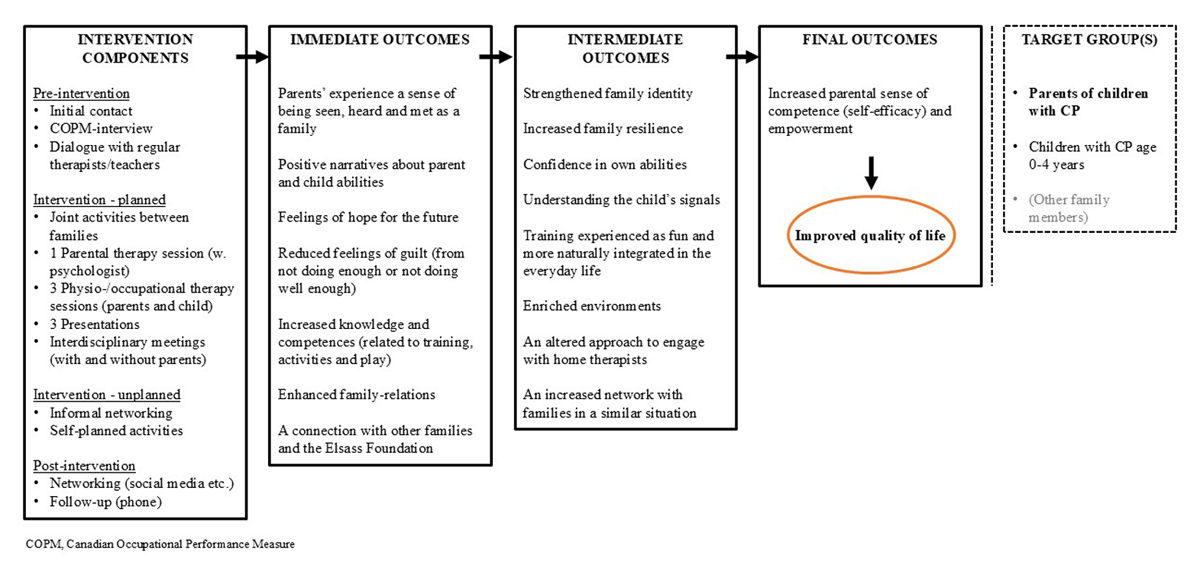
Appendix 1
A condensed version of the logical model used in evaluating the family-centered program good Start.
Acknowledgement
The authors wish to thank all participating families and the professionals at the Elsass Foundation for their valuable contributions to the evaluation of the Good Start program.
Competing interests
The authors have no competing interests to declare.
Author contributions
All authors contributed to the study design, data interpretation, and discussions of the results, shaping the study’s framework and conclusions. They provided critical feedback during manuscript drafts and approved the final version. CML, as the first author, took the lead in drafting and revising the manuscript. The remaining authors (CBP, JDLN, TS, and LBC) provided reviews and refinements to ensure academic rigor, methodological precision, and clarity.