
Introduction
Deafblindness (DB) is a condition that restricts sight and hearing. There are several implications of DB, and ‘it affects social life, communication, access to information, and orientation’ (Nordic Welfare Center 2021). Individuals with DB represent an especially vulnerable group of people due to the disability and its consequences (Simcock 2017; World Federation of the Deafblind 2018). Furthermore, some individuals with DB have intellectual and communicative limitations, which make their situation even more demanding (Dammeyer 2011).
The condition DB is defined as ‘a combined vision and hearing impairment of such severity that it is hard for the impaired senses to compensate for each other’ (Nordic Welfare Center 2021). To compensate for the challenges associated with DB, interventions and adaptations of the environment are needed. Although adaptations of social interaction are of particular importance, only a few studies address this issue. The present study will analyze naturally occurring interactions among persons with congenital DB (CDB) and support persons (SP) in residential homes using the framework of Conversation Analysis (CA). The aim of the study is to demonstrate how an adult with CDB and his SPs co-construct mutual understanding in interaction concerning everyday matters such as what will happen, when and who will take part in certain activities, and how predictability of these events is achieved. The study is guided by the research question: What interactional practices and resources do the person with CDB and his SPs use to achieve a mutual understanding of activities, time, space, and people? The study sheds light on interaction that concerns a small and often neglected group. We hope that the results from the study will help to strengthen everyday-life interaction for people with DB and their communication partners.
Deafblindness and Communication
DB may be caused by congenital brain damage, a syndrome such as Usher, or by restricted senses later in life. The condition may thus be congenital or acquired (Möller 2003). If a person has some or a sufficient degree of hearing left, they may use vocal/auditive speech to communicate. In some cases, when the ability to see allows it, lip reading may afford communication with others. Some individuals prefer to receive loud speech close to their ear (Berge & Raanes 2013) in combination with a hearing aid, such as a cochlear implant (Möller 2003). If a person has sufficient vision left, it could be possible to learn sign language through sight. The vision can facilitate the development of a symbolic language and the association between a sign and the symbol it refers to.
Nevertheless, for individuals with CDB, it is challenging to perceive and express language, dependent on their level of vision and hearing, which vary greatly among these individuals (Dammeyer & Ask-Larsen 2016). Communicative expressions and actions by persons with CDB may be hard to interpret and understand for their communication partners (Hersh 2013). To reach an understanding of what someone is talking about, i.e., to achieve reciprocal interaction, is often challenging for persons with CDB and their communication partners (cf. Dalby et al. 2009; Damen et al. 2014; Damen et al. 2015). People with restricted sight and hearing mainly percieve the world through their bodily-tactile senses (for example tactile sign language). In some cases they have not experience in how to make use of visual impressions and cues to interact. This, in turn, may result in expressions that may be perceived as stereotypical and/or atypical for people who can see and hear (Bjerkan 1996; Dammeyer 2015).
The communication of deaf individuals growing up in non-signing environments has been studied under the label of ‘homesign’ or ‘homesigns’ (for a review, see Goico & Horton 2023). Homesigns are often developed based on gestural communication and used within a restricted family context (for further description, see Goldin-Meadow 2005; Goldin-Meadow 2012). As an example, homesigns are typically used within families where the deaf children are living with hearing caregivers without access to conventional sign language. Homesigns may be used effectively within the family, but they are often not transmitted outside of the family. In the present study on communication between a person with CDB and his SPs, some aspects of the interaction are dependent upon Swedish Sign Language (STS). However, to some extent, communication is restricted, and the concept of homesigns is used to describe the non-conventional signs that are used in the interaction.
The structure of conventional visual sign languages allows for simultaneous non-manual features such as facial and body expressions to accompany manual signing. For example, a variety of facial expressions are used to mark sentence types as interrogative clauses, relative clauses, etc. (Sandler and Lillo-Martin 2006). Many signs are accompanied by mouth actions or mouthing for lexical or grammatical purposes (Boyes Braem and Sutton-Spence 2001). As people with DB have restricted sight, how to perceive visual cues in sign language is challenged. For example, in sign language, embodied adjustments indicate that an expression is a question, with raised eyebrows and the torso leaning forward (Liddell 2003). The visual cues in sign language (for example, raised eyebrows) become an issue when signing with individuals with CDB since they cannot easily see such adjustments.
Similar to all languages, conventional sign languages are influenced by and accommodated to cultural aspects. An example is that a person’s name can be fingerspelled letter by letter, but the person can also be given a personal sign—a name sign that reflects a person’s character or something significant for the person (Börstell 2017; Supalla 1990).
In summary, interaction involving people with DB or CDB depends on language that is largely individually adapted. Conventional signs and language resources can be used if visual and auditive skills allow it. For people with CDB in particular, systems and resources often need to be highly individualized (with homesigns, tactile language, and other means), developed, and understood by themselves and their communication partners over time but can often be very hard for outsiders to understand.
Conversation Analysis as a Theoretical and Methodological Tool
For the study, naturally occurring interactions were analyzed using CA (e.g., Sidnell & Stivers 2013) in its multimodal form (cf., Mondada 2014; Mondada 2016). The analysis in CA starts with an ‘unmotivated’ examination (Sacks 1984, 27) of a video corpus. This means that the interaction is scrutinized without any preconceptual ideas of what to look for. Multimodal resources are particularly important in interactions involving people who have a disability that affects language and interaction (Antaki & Wilkinson 2012; Wilkinson, Rae and Rasmussen 2020). Multimodal resources (Mondada 2014; Mondada 2016) include embodied actions such as body movement (Haddington et al. 2013), gaze, body posture, facial expressions, gestures, and meaningful use of the material surroundings, like the manipulation of objects (Goodwin 2018; Mondada 2019; Streeck et al. 2011).
The organization of sequences is central in CA (Sidnell and Stivers 2013), deriving from an assumption that nothing happens in a social vacuum. Social interaction is thus manifested by actions built by sequences that constitute as well as renew the context in which they take place (Heritage 1984; Linell 2011). ‘Paired sequences’ (Hutchby and Wooffitt 2008, 42), or ‘paired action sequences’ (Wooffitt 2005, 32), i.e., contributions to interaction that conventionally come in pairs, such as greetings and return-greetings, questions and answers, etc., are of particular importance for the current study. This organization of pairs proposed by Schegloff and Sacks (1973), known as adjacency pairs, has a recognizable difference in the first part (for example, a question) from the second part (for example, an answer), and the parts should ideally be produced following each other in the sequence. However, in relation to people with CDB who use tactile sign language, adjacency pairs tend to function differently than in conversation among people who hear and see. For example, interactional feedback and co-reference are often challenged (Ask Larsen 2003). The distance between the first part and its potential second part in the action sequence is thereby prolonged by several turns, a feature commonly noticed also in relation to other forms of communicative disabilities (Wilkinson et al. 2020). In this latter respect, participants often engage in ‘repair’, i.e., practices to overcome problems in achieving mutual understanding in spoken interaction (cf., Hutchby and Wooffitt 2008; Schegloff, Jefferson and Sacks 1977; Sidnell and Stivers 2013), as well as in tactile signed interaction (Willoughby et al. 2014). Repetition of signs (and freezing) is also a way to express prosody in tactile language (Iwasaki et al. 2022). In the current study, however, the term ‘repetition’ has been used rather than ‘repair’ in analyses of participants’ step-by-step construction of sequences.
In social interaction, people recurrently repeat themselves when talking (Anward 2004; Tannen 1987; Tannen 1989). As mentioned above, repetitions can be used to address potential problems in the progression of interaction, but they can also be used to carry out actions such as affiliating or disaffiliating with the person who expressed something. By means of repetition, coherence in social interaction is enhanced and social relations accomplished. For people with CDB, repetition of signs and/or tactile language resources is particularly important. Some studies have demonstrated how repetitions, also of body movement (or a bodily-tactile sensation), depicting a prior experience may contribute to a sense of trust and to the recognizability of prior events (e.g., Lindström 2019; Linell 2017).
It is noteworthy that participants do not ordinarily produce entirely identical repetitions. Affiliative turns are, however, more similar in shape to the prior speaker’s turn than disaffiliating ones, albeit one or several linguistic elements are repeated in both cases (Anward 2004; Tannen 1989). Differences in the format of a turn containing a repetition may thus be used to mark a person’s individual stance, at the same time as displaying that the prior statement was perceived, confirmed, and built upon (see ‘recycling with différence’ in Anward 2004).
Throughout this study, the analyses are based on the notion ‘next-turn proof procedure’ (Sacks et al. 1974, 45). This means that in a pair of actions, it is a participant’s response that forms the basis for how something is interpreted from the interlocutors’ as well as the analyst’s point of view. Next-turn proof is also a tool used to follow topic shifts in interaction, also known as footing shift (Goffman 1981).
A Visual Schedule
In interactions involving people with CDB, physical objects are important resources for understanding, alongside signs and tactile means. In the interaction investigated in this study, a visual schedule was sometimes used by the person with CDB and his SPs. This was based on an approach called Treatment and Education of Autistic and related Communication Handicapped Children Schedule (TEACCH) (Schopler and Reichler 1971). Such visual schedules can help explain what will happen at a given moment in time (Siegel 2003, 353). An example would be a weekly calendar with columns for each day (Mesibov and Shea 2010). In Sweden, for a calendar of that kind, weekdays are coded by a specific, conventional color for each day (see Figure 1 below).
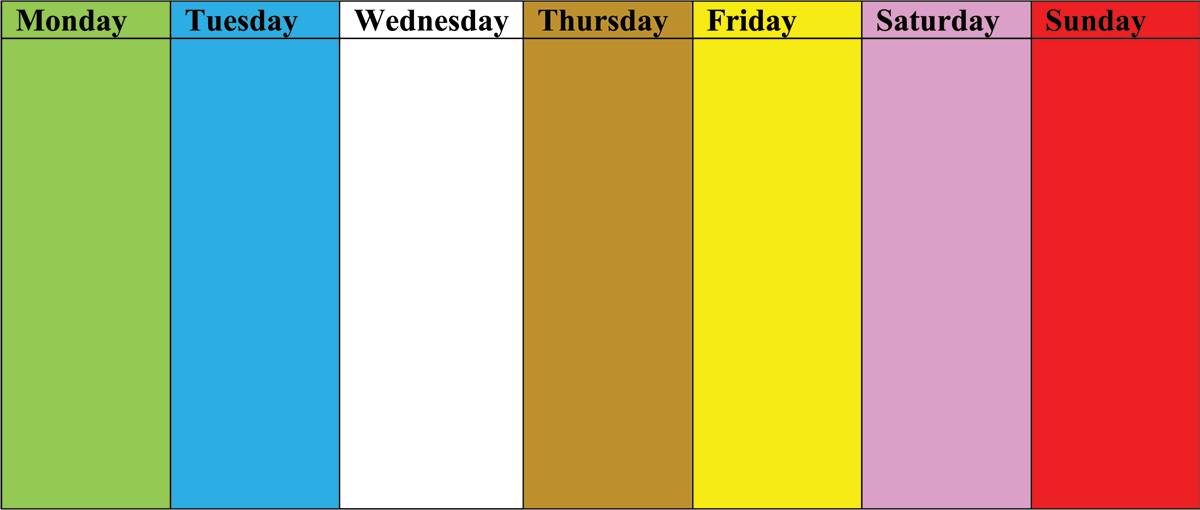
Figure 1
A conventional TEACCH schedule.
On the schedule, pictures that represent things or activities are placed in chronological order, i.e., from the top to the bottom of the day at hand. The schedule may be modified to adapt to personal needs. Although the program of TEACCH and the schedule were initially designed for children with autism within an educational setting, the program has also been successfully evaluated for adults with special needs who live in residential homes (Siaperas and Beadle-Brown 2006).
Material and Method
Data for this study consists of video recordings collected from an intervention that aimed to improve communication for individuals with CDB. In the intervention, SPs were instructed to make ten-minute video recordings of social interaction, one of a joyful situation and one of a meal situation, every second week over a period of approximately 40 weeks. In some cases, when the interlocutors interacted in a specific physical setting during the full interactional event, the camera was set up steadily, and nobody except the two interlocutors were recorded. In other situations, for example, when interlocutors were moving around, another SP recorded the interaction with a hand-held device. The intervention was based on CA and included five video-feedback sessions where SPs met individually with a coach skilled in STS and tactile communication. Before the start of the intervention, researchers in the intervention group (coaches, the principal investigator, other project members, and, occasionally, other specialists in CDB) were involved in pre-intervention data sessions to build a mutual, CA-informed ‘professional vision’ (Goodwin 1994). The data sessions were guided by three experienced CA scholars.
The coach analyzed all recordings of the everyday activities in the residential home and prepared for each of the five video-feedback sessions by selecting video clips that were relevant to discuss with the SP to improve interaction. In the selection of clips, the coach focused on sequences in which the interaction seemed unproblematic (i.e., problems were solved), could be improved, or was problematic. Documents with written descriptions of the selected clips from the recordings were sent to the two other CA researchers in the intervention group, who scrutinized and provided feedback on the selections made until consensus was reached about which clips to use in the intervention. Video-feedback sessions with the coaches and the SPs were then performed via Zoom in five sessions lasting 60–90 minutes. Data for the current study derives from what the SPs wanted to strengthen in interaction when taking part in the intervention. It consists of clips from the intervention, with a focus on how an adult with CDB, Jim, and his SPs co-construct a mutual understanding and predictability in his daily life.
The recorded material from Jim consists of 99 videos of various lengths, ranging from three to 20 minutes, collected by Jim’s SPs. All in all, 15 hours and 25 minutes of video recording were analyzed for the purpose of the present study. The phenomena investigated are illustrated by means of five representative (typical for recurring features of interaction) transcriptions and four pictures. The transcriptions are influenced by the Jeffersonian system (Jefferson 2004) and multimodal interaction analytic conventions (Mondada 2006). To make the transcriptions reader-friendly, adaptations have been made in relation to the complexity of interaction involving people with CDB. For example, what is signed or verbally expressed in the original language, in this case STS or spoken Swedish, is (when assessed to be necessary) translated into English. The translations are written in italics below the signed or spoken utterances. To identify the difference between conventional signs and homesigns, the latter are colored red. Details about transcription conventions are found in Table 1 below.
Table 1
Transcription key.
| UPPER CASE | conventional STS sign |
| UPPER CASE IN RED | homesign |
| UPPER CASE IN GREEN | personal sign for a name |
| lower case | spoken Swedish utterance |
| italics | translation into English |
| UNDERLINED | stressed sign |
| ((…)) | significant gesture |
| […] | overlapping or concomitant sign/speech from a speaker/signer |
| = | latching utterances |
| points in box | pointing on/toward the schedule |
The participants in the present study are thus Jim (pseudonym) and two SPs who worked with him: one woman and one man, Mira and Ben (pseudonyms). At the time of the recordings, Jim was approximately 50 years old and had been born with a syndrome that causes DB. He was likely born deaf and had some vision left in one eye. He had been living in the same residential home for people with CDB for approximately twenty years. Jim communicated by visual sign language, using a variety of conventional signs and homesigns. Many of the homesigns that he used were derived from STS, i.e., they were signs based on the STS lexicon but with invented meanings that had been conventionalized in interactions with him. Mira was 45 years old and a skilled STS user who had worked with Jim for more than ten years. Ben was a 30-year-old man who knew some STS and had worked with Jim for just over a year. Both SPs were familiar with Jim’s signing.
Ethical Considerations
The project of which the present study is a part has been approved by the Swedish Ethical Review Authority (no. 2020-02256 and 2020-06437) and follows the ethical principles of the Declaration of Helsinki (World Medical Association 1964). The SPs have given their written informed consent for participation in the study, whereas written informed consent for Jim was provided by one of his relatives.
Results
Jim and his SPs communicate using sign language with STS as a basis. Some of the signs are conventional STS signs, and some are homesigns. The conversations mainly deal with what will happen, in what order things will happen, and which SPs are working at a specific time or on a certain day. Initiatives in interaction are taken alternately by Jim and his SPs. The interlocutors thereby co-create opportunities for potential understanding and predictability through several practices, which are explored here.
Analyses revealed that a prominent and highly frequent practice to achieve mutual understanding in conversations between Jim and his SPs was the use of repetitions in various formats. In the analysis, five examples are used to illustrate the following three practices:
Repetitions in a second turn to identify and confirm a reciprocally understood subject (Examples 1a; b; c)
Repetition of a sign placed first in the second part of a question-answer adjacency pair (Example 2)
Using a schedule as a resource to achieve mutual understanding (Example 3)
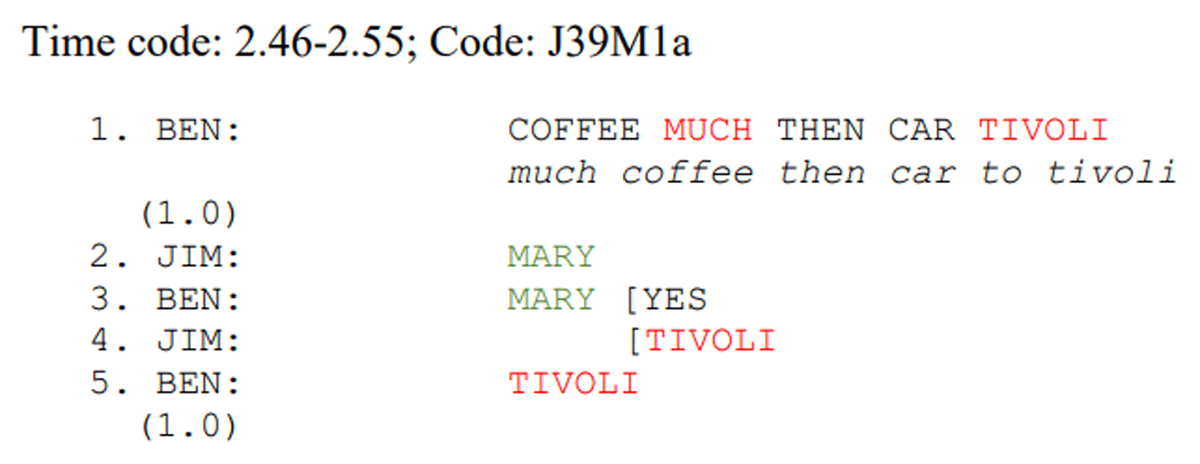
Example 1a
Repetition as an answer to identify who and where.
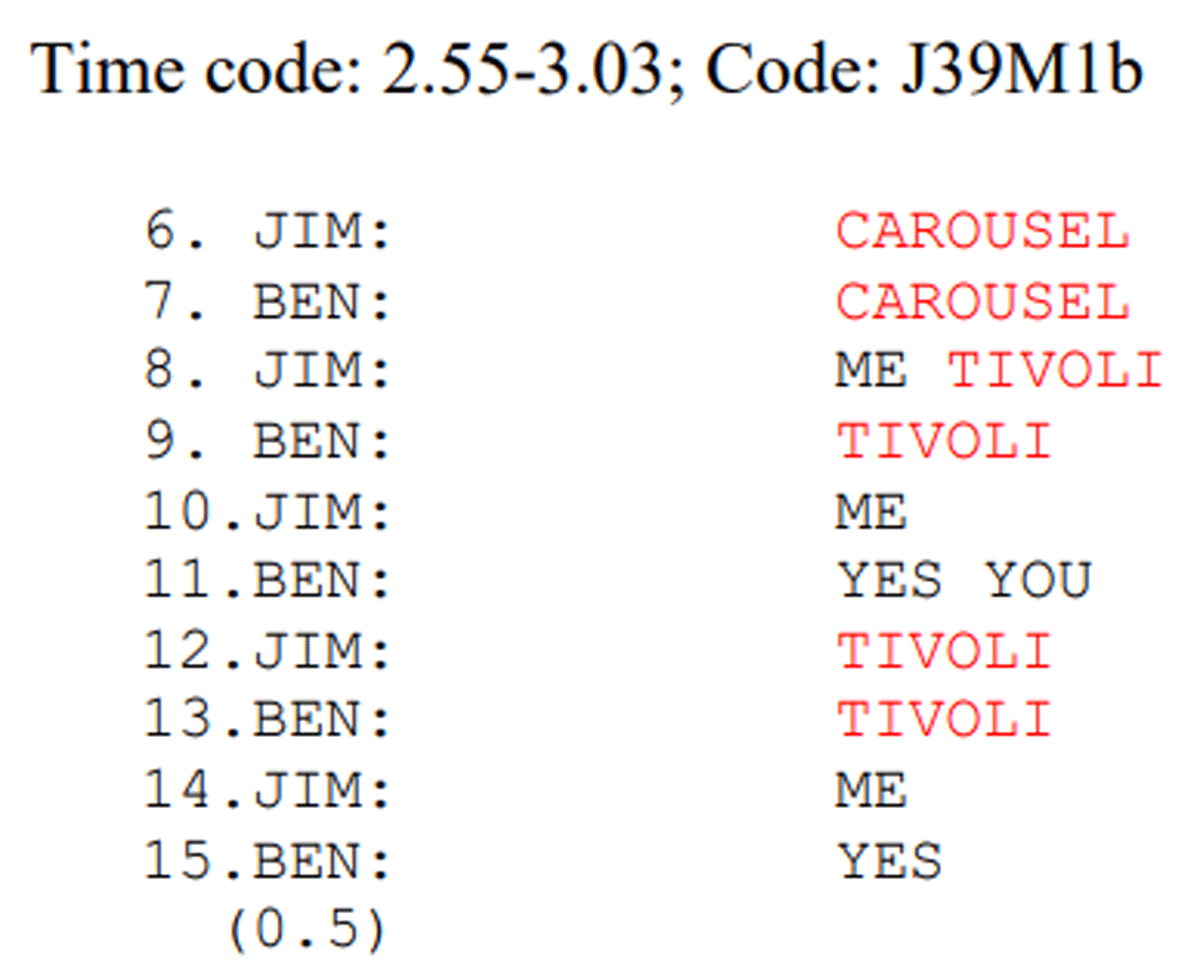
Example 1b
Repeated signs of activity, and where to go.
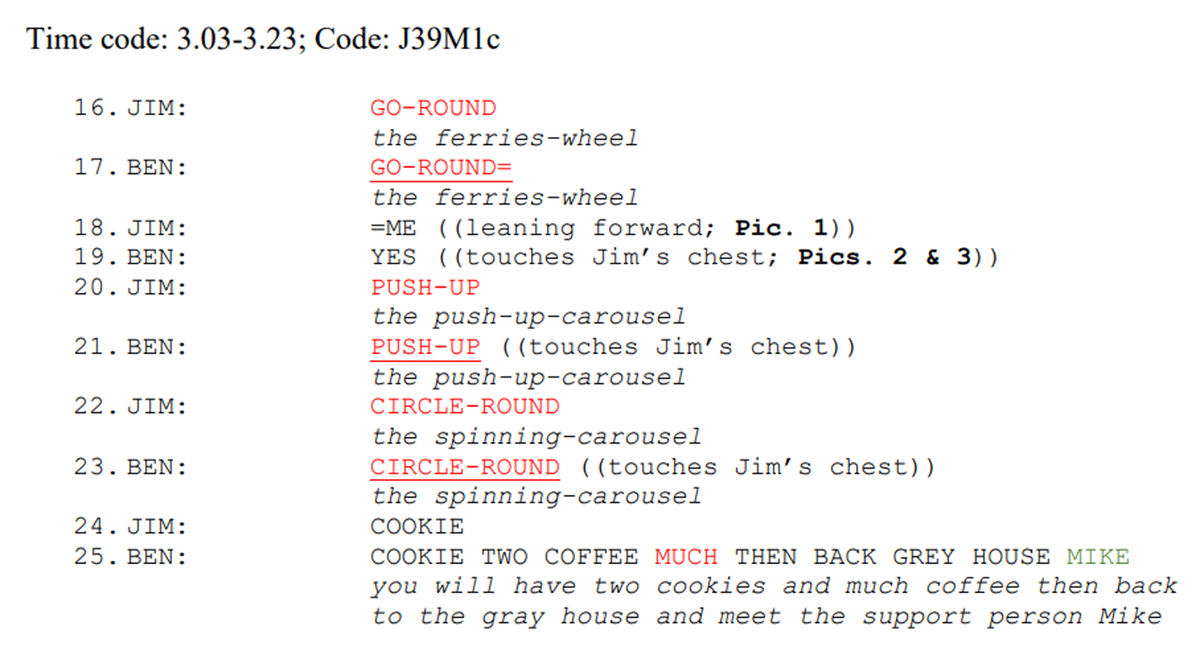
Example 1c
Repeated signs of activities combined with tactility.
Example 2
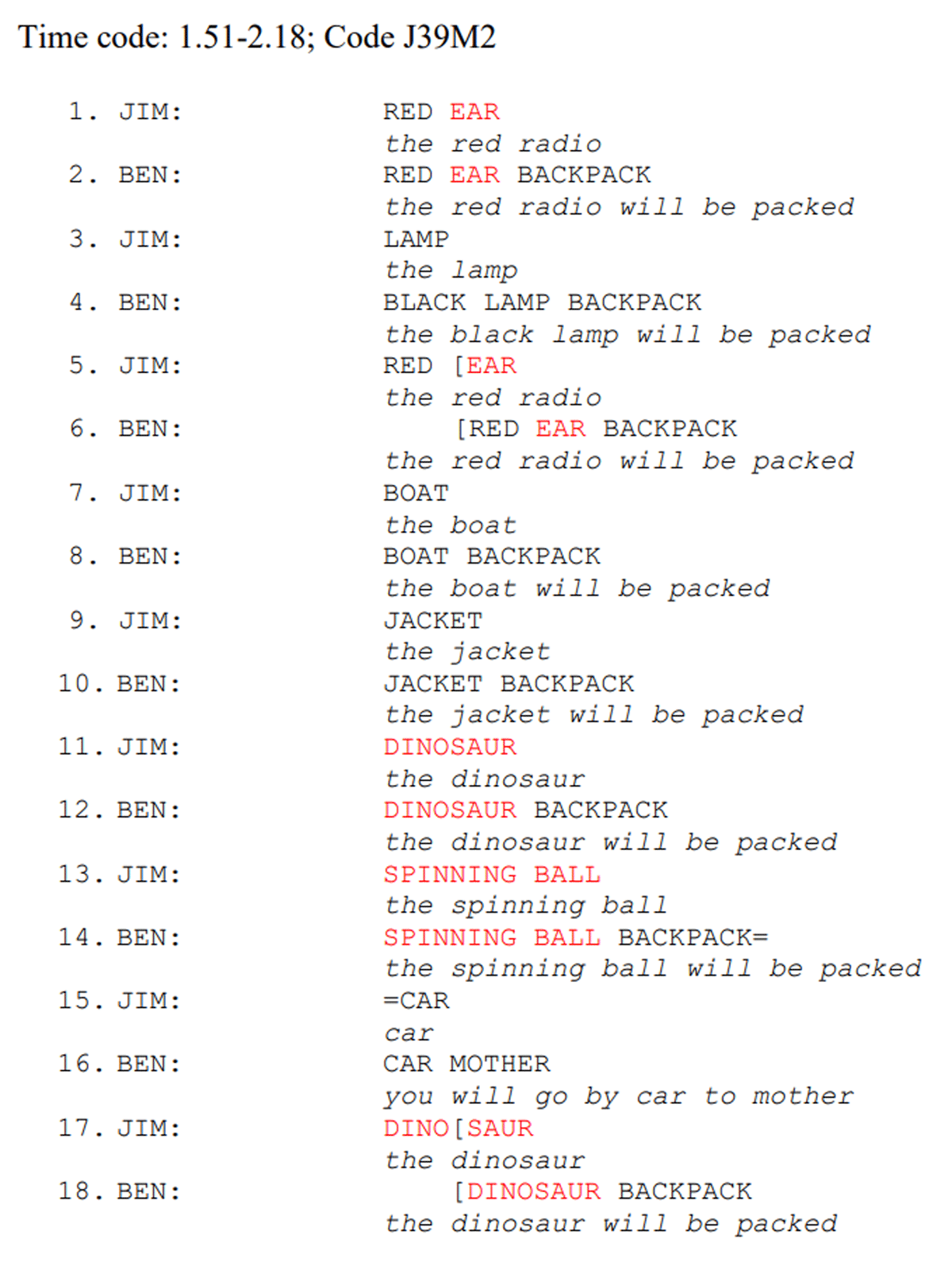
Repetition of a sign placed first in the second part of a question-answer adjacency pair.
Example 3
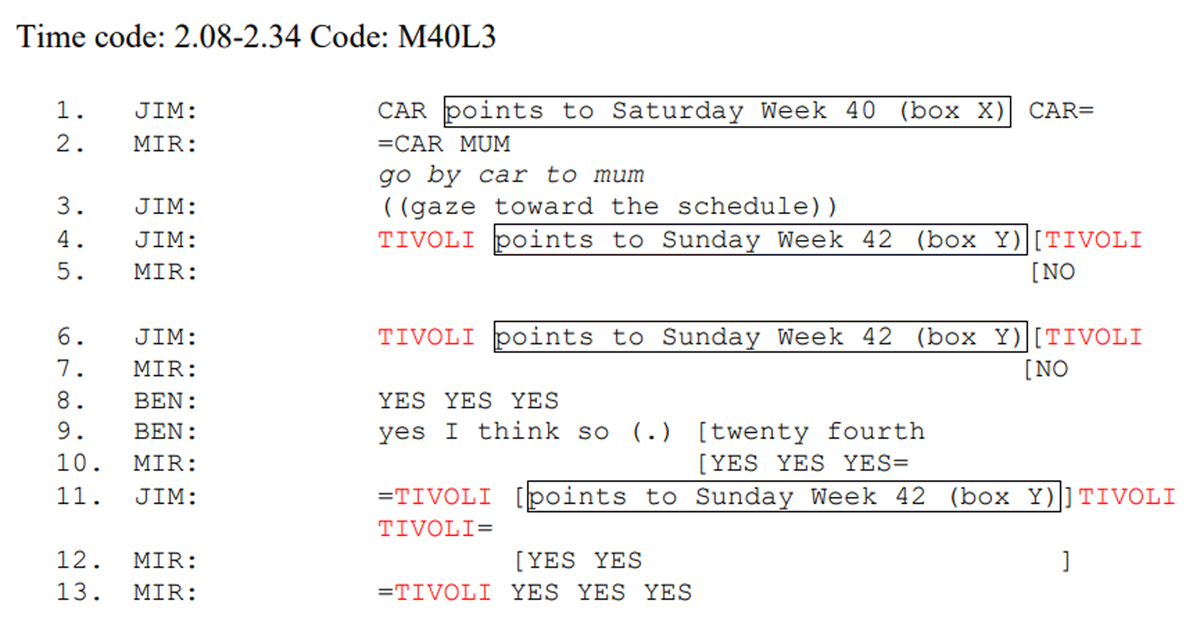
Using a schedule as a resource to achieve mutual understanding.
Repetitions in a Second Turn to Identify and Confirm a Reciprocally Understood Subject
The repeated signs made by the SPs conventionally had a more distinct and larger movement compared to Jim’s original signs (see Examples 1a, b, c, and 2). Some of the repeated signs were followed by the addition of an evaluating answer or a sign for an activity.
First, in the series of three examples below, a pleasurable activity—going to Tivoli—is identified step-by-step in terms of who, where, and what will happen (Examples 1a, 1b) and which detailed activities (i.e., carousels) will be attended (1c).
In the example above (Example 1a), the SP, Ben, states that it is coffee and that a car is going to the Tivoli (Line 1). Jim replies with a conventional STS sign for ‘clean’, which is the name sign for an SP named ‘MARY’ (Line 2). In this situation, Ben answers with a repetition of the name sign for Mary and a positive answer, i.e., ‘YES’ (Line 3). However, without the mouth being shaped in conjunction with the sign ‘clean’, it is difficult for someone who does not know Jim to understand that this is a name sign. Jim continues signing ‘TIVOLI’ (Line 4), which is repeated, i.e., a confirmation by Ben (Line 5), and followed by a pause. Consistently, longer pauses occur when Jim seems satisfied with an answer, followed by switches to another topic of conversation or activity (such as starting to eat). The repeated sign and answer have afforded an understanding of who is going (to come with Jim) and where they are going (i.e., to Tivoli).
The conversation proceeds with Jim initiating possible questions about the activity and whether he is the one who will attend the activity. The SP continues to use repeated signs as a practice that functions as a confirmation of the fact that they refer to the same thing. Thus, Jim and Ben collaboratively identify and systematically specify what is going to happen.
After identifying the SP Mary and the location, i.e., Tivoli (Example 1a), in Example 1b, Jim signs ‘CAROUSEL’ as a possible statement or question (Line 6). Ben repeats the sign, which confirms a potential mutual understanding (Line 7), so the conversation proceeds in a steady fashion. Jim points to himself and signs ‘TIVOLI’ (Line 8), and then Ben repeats ‘TIVOLI’ (Line 9) in a confirmatory way. Once again, Jim points to himself, to which Ben responds with a ‘YES’ and a pointing toward Jim (Line 11). After determining the place (Tivoli) and that Jim is identified as the one who will go there (Lines 12–15), a pause follows. Furthermore, the focus of the communication changes after the break, from where to go to what will happen, i.e., which different types of carousels that Jim will ride. The types of carousels are dealt with throughout a long episode of interaction (Example 1c).
The signs for the different carousels do not follow conventional (fixed) signs. The signs are (possibly) descriptive ones for how the carousel moves. In the example above (1c), Jim displays three signs for different carousels: one that moves like a fast ‘Ferris-wheel’ (Line 16); one that is pushed up (Line 20); and one that goes like a roller coaster (Line 22). Jim takes the initiative of signing the movement of the carousel, and the SP repeats the sign with a more intensive movement (Lines 17, 21, and 23). In this way, they could appear to achieve a reciprocal understanding of the different carousels. Ben signs the ‘Ferries-wheel-carousel’ and the ‘push-up-carousel’ in Lines 17, 21, and 23 faster, larger, and with greater intensity compared to Jim’s signs. Since Jim has limited vision and hearing and appreciates the carousels, there is reason to believe that the feeling of riding the carousels has provided Jim with bodily tactile experiences. Ben’s repetition of the signs for carousels with a more intensive movement may be described as an expression of a mutual projection of shared content (Anward 2004).
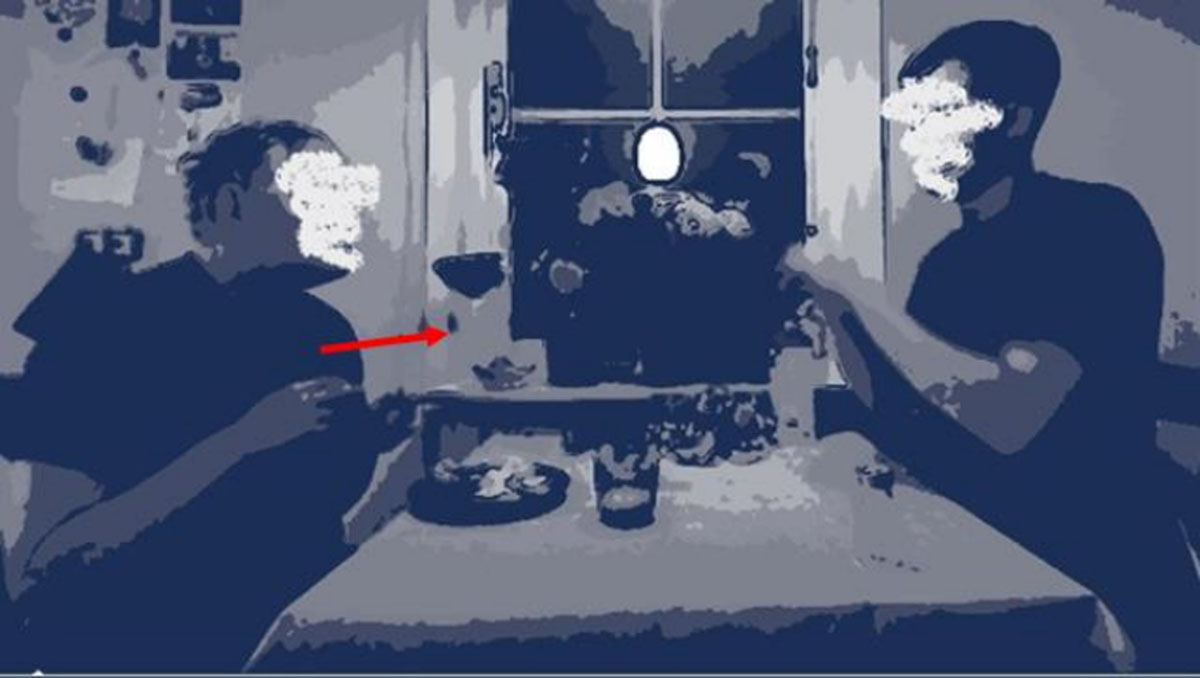
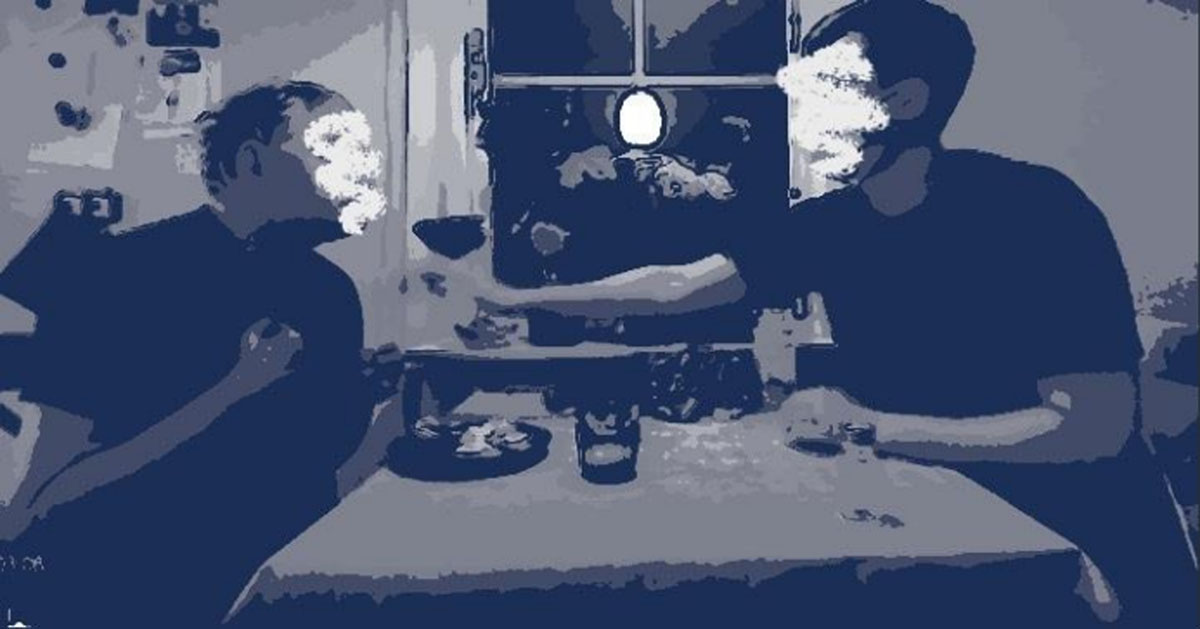
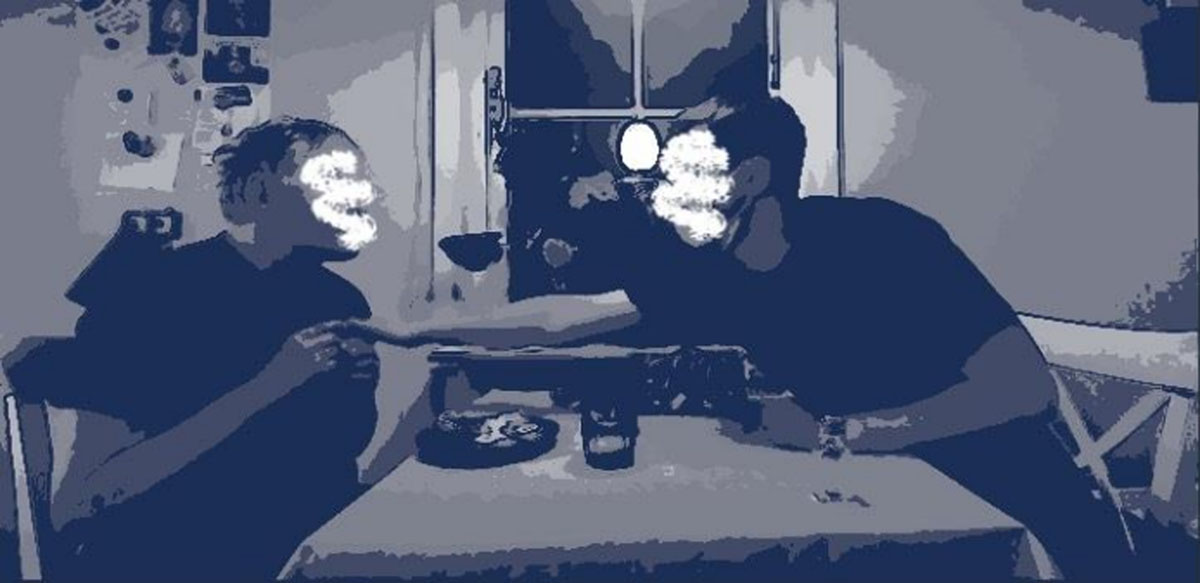
When producing the sign for the ‘Ferries-wheel’, Jim points to himself and leans forward with his chest against Ben (Line 18, Picture 1). Ben signs ‘YES’ and leans forward with his hand toward Jim (Picture 2). He also touches Jim’s chest (Picture 3). This is in line with findings among people with acquired DB who use tactile sign language; the duration of a pointing towards an interlocutor underlines the function of being a request (Mesch and Raanes 2023, 142), and that pointing may go all the way into touching the other’s chest.
Picture 1
(time code: 3.06): Jim moves forword.
Picture 2
(time code: 3.07): Ben moves his hand towards Jim’s chest.
Picture 3
Ben touches Jim’s chest.
In the signing about the other carousels, Ben repeats the signs for them (Lines 21 and 23) and touches Jim’s chest directly afterwards. Finally, the sequence ends with Jim changing topic to ‘COOKIE’ (Line 24). Ben follows this topic shift (cf. Goffman 1981) and explains what will happen when having cookies (Line 25). Ben thus shows his compliance with Jim’s change of topic.
Repetition of a Sign Placed First in the Second Part of a Question-Answer Adjacency Pair
As demonstrated above, repetition is a useful practice for Jim and Ben in order to establish a mutual understanding about a topic, person, or activity. In 1a, b, and c, repetition of a sign with variation in speed, movement, and body positions served confirmatory purposes. In Example 2, the repetition of a sign is placed first in the second part of a question-answer adjacency pair.
Before the example starts, Jim has been told that he is to go on a trip. After this, Jim appears to ask what to pack. As mentioned, Jim does not have a conventional way of asking questions. However, Ben’s repetition displays that he is treating Jim’s initiatives as questions, and as can be observed, Jim is also happy with Ben’s answers. After each of Ben’s answers, Jim continues producing a list about things to be packed for the trip. Thus, Jim’s signs deal with his personal things, and Ben repeats the things that Jim goes through, with the addition of ‘BACKPACK’ (i.e., will be packed). Ben’s confirmation may be viewed as a case of ‘recycling with différence’ (c.f., Anward 2004). In Example 2, repetition is used to display affiliation and to confirm that the interlocutors are on the same page about the proceeding topic.
Jim’s signs of his personal belongings are a mix of conventional STS signs and homesigns. Throughout the example, Jim takes the initiative to use the signs for a personal thing or piece of clothing. After collaboratively producing seven adjacency pairs concerning what to pack, Jim returns to the topic of the travel activity. In Line 15, Jim signs ‘CAR’. Notably, Ben does not respond to the sign for car as a thing to be packed. Instead, Ben responds to this topic shift by telling Jim what will happen. Jim and Ben thereby construct a reciprocal idea of what the signs concern, i.e., whether it is a matter of packing things for the trip or about the travel activity to come. This orientation by Jim and Ben is manifested by Ben’s responding to Jim’s sign ‘CAR’ (Line 15), with Ben signing ‘CAR MOTHER’, i.e., that Jim will go by car to his mother (Line 16). The description of the activity is followed by Jim returning to producing a sign for another personal thing, his dinosaur (Line 17), to which Ben responds as in the previously established question-answer pairs about things: a repeated sign with an addition of the sign for backpack. No other notable differences than the sign ‘CAR’ (e.g., change in rhythm or body position) are found in relation to the topic shift in Example 2.
Using a Schedule as a Resource to Achieve Mutual Understanding
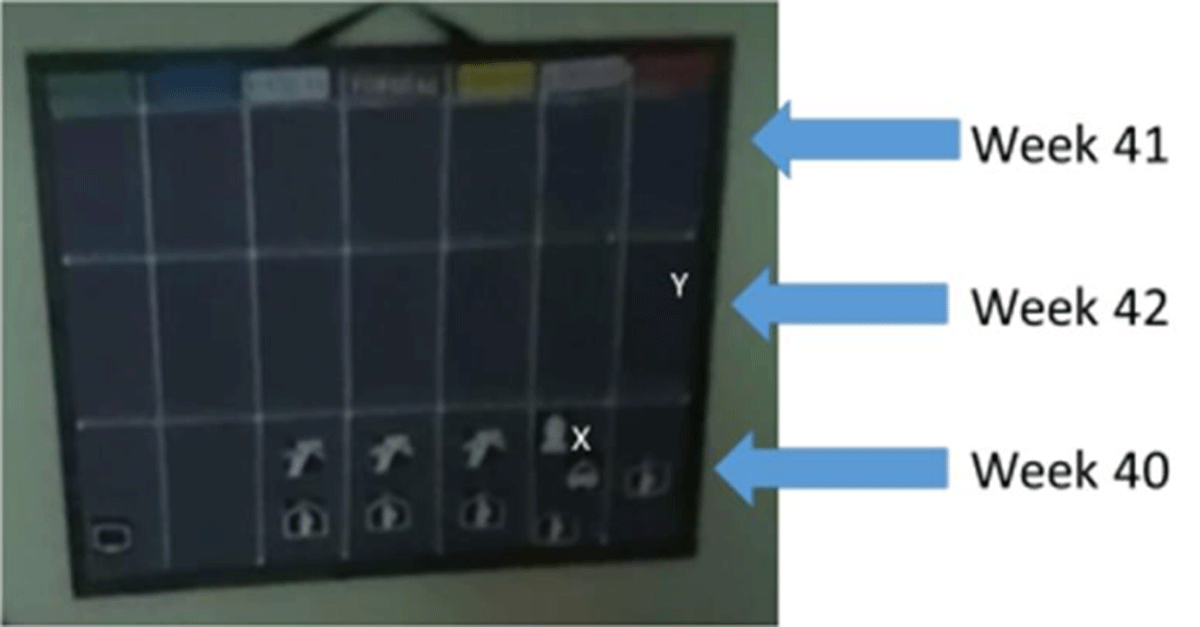
In Jim’s apartment in the residential home, a visual activity schedule—a version of a TEACCH schedule—is placed in a central spot. Jim’s schedule is a customized version; a box with the name of the day is colored in accordance with the original TEACCH schedule, whereas the rest of the schedule has a dark background in the columns. The dark background provides a greater contrast, which probably makes it easier for Jim to see the pictures of activities that are placed on the board. Another difference from a conventional TEACCH schedule is that Jim’s schedule has an overview of three weeks horizontally instead of one week on the entire schedule. When an activity represented on a picture on Jim’s schedule is finished, it is removed. Every third week, the pictures on the board are updated. At the point of the recording (Example 3 below), Jim and his SPs had reached the third and final week (Week 40), and the upcoming weeks, above the row of the third week, had not yet been updated (i.e., Weeks 41 and 42). Both Jim and his SPs take the initiative to use the schedule (see Picture 4).
Picture 4
Jim’s TEACCH schedule (actual setup in Example 3).
The following example (Example 3) demonstrates how the schedule is used and how it affords the interaction. Jim and his SP Mira talked earlier that day about Jim going to visit his mother on Saturday. When they are about to bake cookies (Jim enjoys baking), Jim suddenly turns around and stops with his back towards Mira. Mira calls for Jim’s attention by tapping on his arm and asks ‘WHAT’. Jim walks away, and Mira follows him to the schedule, which is placed in another part of Jim’s apartment. The situation is captured by Ben, who walks around filming. The example below starts when Jim and Mira communicate about when Jim is going to visit his mother.
Jim relates to the schedule with his first sign ‘CAR’, followed by a pointing toward Saturday (Picture 4; Week 40, Box X), and then repeats the sign ‘CAR’ (Line 1). Mira responds by signing ‘CAR MUM’ (Line 2), a statement that means that Jim will go by car to visit his mother. Jim gazes toward the schedule (Line 3). Then, he continues by signing ‘TIVOLI’, followed by pointing to Sunday (Picture 4; Week 42, Box Y) and repeating ‘TIVOLI’ (Line 4). It should be noticed that no pictures have been set up for the upcoming two weeks (Weeks 41 and 42) yet. In Line 4, Jim is thus referring to an upcoming Sunday two weeks ahead (Week 42, Box Y). The third week on the schedule is the current one, and there are only activity pictures on Wednesday to Saturday, as the prior days have already passed and pictures for these days have been removed. The action by Jim displays that he is familiar with how the schedule is used. However, Mira does not seem to know when Jim is going to the Tivoli and responds ‘NO’ (Line 5). This makes Jim initiate a repetition, and once more, he signs ‘TIVOLI’ (Line 6) and points to Sunday (Week 42, Box Y), whereupon Mira gives the same answer, ‘NO’ (Line 7). At this point, Ben’s hand, who is holding the camera and recording, appears in front of the lens, signing: ‘YES YES YES’ (Line 8). Ben says aloud, ‘Yes, I think so’, with a short pause, and then continues with, ‘Twenty fourth’ (Line 9). Ben is here assisting Jim in his attempts to make Mira understand that going to the Tivoli is indeed an upcoming event on Sunday the 24th (Week 42), the day Jim has pointed to on the schedule twice. Ben’s contribution is on the verge of being of a corrective nature (cf., Jefferson 1987) but is mitigated somewhat by him adding ‘I think so’ (Line 9). The turning point is when Mira directs her gaze towards the camera (i.e., towards Ben), then back to Jim and signs ‘YES’ three times (Line 10), and yet another two times (Line 12) as a response to Jim’s repeated signing of ‘TIVOLI’ and pointing to Sunday in Line 11. Mira’s confirmation is also upgraded, adding the sign for Tivoli: ‘TIVOLI YES YES YES’ (Line 13).
In summary, using the schedule, Jim, Mira, and Ben manage to successfully co-construct a reciprocal understanding of when certain activities will take place, despite the fact that the schedule has not yet been updated with pictures for upcoming events/weeks. The schedule affords Jim the opportunity to orient himself in time and activities, even activities not yet put on the schedule. Repetition connected to topics afforded by the schedule is thus efficiently employed by Jim as well as his SPs to secure understanding.
Discussion
In the data used for the current study, repetitions were systematically used in interactional action sequences. The sequenced actions were, for example, to establish what topic the interaction concerned, such as when and where something was to happen and who would be involved. A parallel to tactile signing interaction among people with DB or CDB is that the first part of an adjacency pair (e.g., a question) may be formed step-by-step when a response from the person addressed is absent (Mesch and Raanes 2023). Through this step-by-step methodical conquering of reciprocity, clarity emerges, like in Jim’s case. In the interaction, repetition and sequence prolongation do not signal a problem of some kind but are viewed as resources to co-construct a mutual understanding (cf. Iwasaki et al. 2022; Willoughby et al. 2014). Repetition was thus a collaborative means to achieve an understanding of the situation, predictability, and create a sense of security of recognizable actions for Jim as well as for his SPs.
Research on repetitions as repairs in the field of Atypical Interaction (Wilkinson et al. 2020) has demonstrated that difficulties in speaking, hearing, or understanding due to various communicative or cognitive disabilities often result in lengthy sequences of clarification work. Attempts to repair are sometimes even abandoned in cases when an interlocutor is unable to decipher what a prior speaker tries to say or a person is unable to find or produce a certain word, which is often the case in aphasia, for example. In the data explored here, it is interesting to note that sequences of actions between Jim and his SPs regularly came as pairs, beginning as an initiative by Jim, followed by a confirmation by his SP in the next turn (e.g., Examples 1a, b, c, and 2), or as a question that was answered by a repetition with an addition (Example 2). What made the interaction stand out as unique for CDB, in contrast to interaction between typical interlocutors, was the high frequency of repetitions employed, both by Jim and by his SPs, to secure a sufficient level of mutual understanding for their social purposes. A similar prolongation in typical interaction would be perceived as highly problematic and potentially challenging. Here, the extended sequence is a natural part of an orderly and socially rewarding encounter based on the interactional resources that participants have access to.
The interaction between the interlocutors is linguistically complex since the person with CDB, Jim, uses a mix of homesigns and conventional signs alongside other resources (e.g., pointing, body posture, movement, tactility, etc.). As mentioned, a very important resource in the interaction between Jim and his SPs was their frequent repetition of signs. The repetitions were usually slightly transformed, i.e., recycled with an addition of some kind (‘différence’, Anward 2004) by the SPs. With Jim’s restricted vision, it might be difficult for him to read other people’s faces (and, as mentioned, sign languages partly rely on mimics and mouthing).
Interaction between Jim and his SPs was primarily, but not only, linked to topics connected to the close environment. When discussing activities, time, space, and people out of the very close context, several interactional resources were needed and used due to the challenges associated with Jim’s CDB. One such resource was pointing towards, and at his schedule. The schedule was also used for orienting in time that was not present and represented by a picture on the schedule. Proof of Jim’s ability to predict an upcoming event was demonstrated in Example 3, where Jim used the schedule to communicate about a future activity two weeks ahead. Thus, the schedule afforded communication about and preparation for activities in relation to (future) time.
A mutual understanding of signs was achieved, for example, by the interlocutors’ recycling of signs that Jim had used. Jim’s signs are, however, not always conventional signs. Instead, they may refer to actions, thoughts, feelings (cf. constructed action; Metzger 1995), or, occasionally, signs that become a form of homesigns. As demonstrated in the data, homesigns were used for several purposes, such as referring to weekdays, Jim’s personal things, places (Tivoli), activities (go to the Tivoli and ride various carousels), and persons (Jim’s mum and SPs). The homesigns thus become conventionalized, but only for the persons with CDB and the persons who know them; this is, in a sense, a ‘local’ conventionality. To obtain local conventionality skills and knowledge and to stay up to date with changes are processes that take place over lengthy periods of time. This aspect of local conventionality is a prerequisite for effective communication and mutual understanding needed for social participation, relations, and quality of life. These qualities are vulnerable and compromised by frequent staff turnovers, unfortunately too common a feature of the kind of housing that is offered to people with CDB.
Conclusion
Living with CDB affects access to the surrounding world and relations with others in many ways. Here, we have demonstrated how a person with CDB and his SPs achieve a mutual understanding of activities, time, space, and people by an established use of certain interactional practices and resources. The practices consisted of repetitions in a second turn to identify and confirm a reciprocally understood subject, repetition of a sign placed first in the second part of a question-answer adjacency pair, and using a schedule.
Repeated signs were a linguistic resource employed by all participants to co-construct mutual understanding. The repetitions were needed for the progression of the interaction and facilitated a co-constructed orientation to common features and activities in the daily life for the person with CDB.
Communication of what might happen was afforded by the use of a schedule. Pictures were set up for specific activities in a period covering three weeks and removed continuously. By using pictures for upcoming activities and people, the schedule functioned as a resource to orient to and communicate about the present and the future. As shown, this also made interaction about events not yet put up as pictures on the schedule possible.
The use of homesigns specific for an individual person with CDB raises high demands on the SPs to acquire them. However, considering the restrictions related to CDB and the great variation in the resources used by different individuals who live with the condition, it is also important that SPs have some knowledge of sign language structure and that they develop a profound knowledge of various signed and tactile modalities. Such knowledge is needed for SPs to be able to pick up, be sensitive to, notice, and understand initiatives taken by individuals by CDB. An important implication of the present study is that continuity and stability in SPs of people with CDB are important for their abilities to live well, for their opportunities to develop as persons, and for creating meaningful social interaction and relations.
Acknowledgements
We wish to thank all the interlocutors who generously have participated in the study.
Funding Information
This work was supported by Forte under Grant number 2018-01840_Forte.
Competing Interests
The authors have no competing interests to declare.