
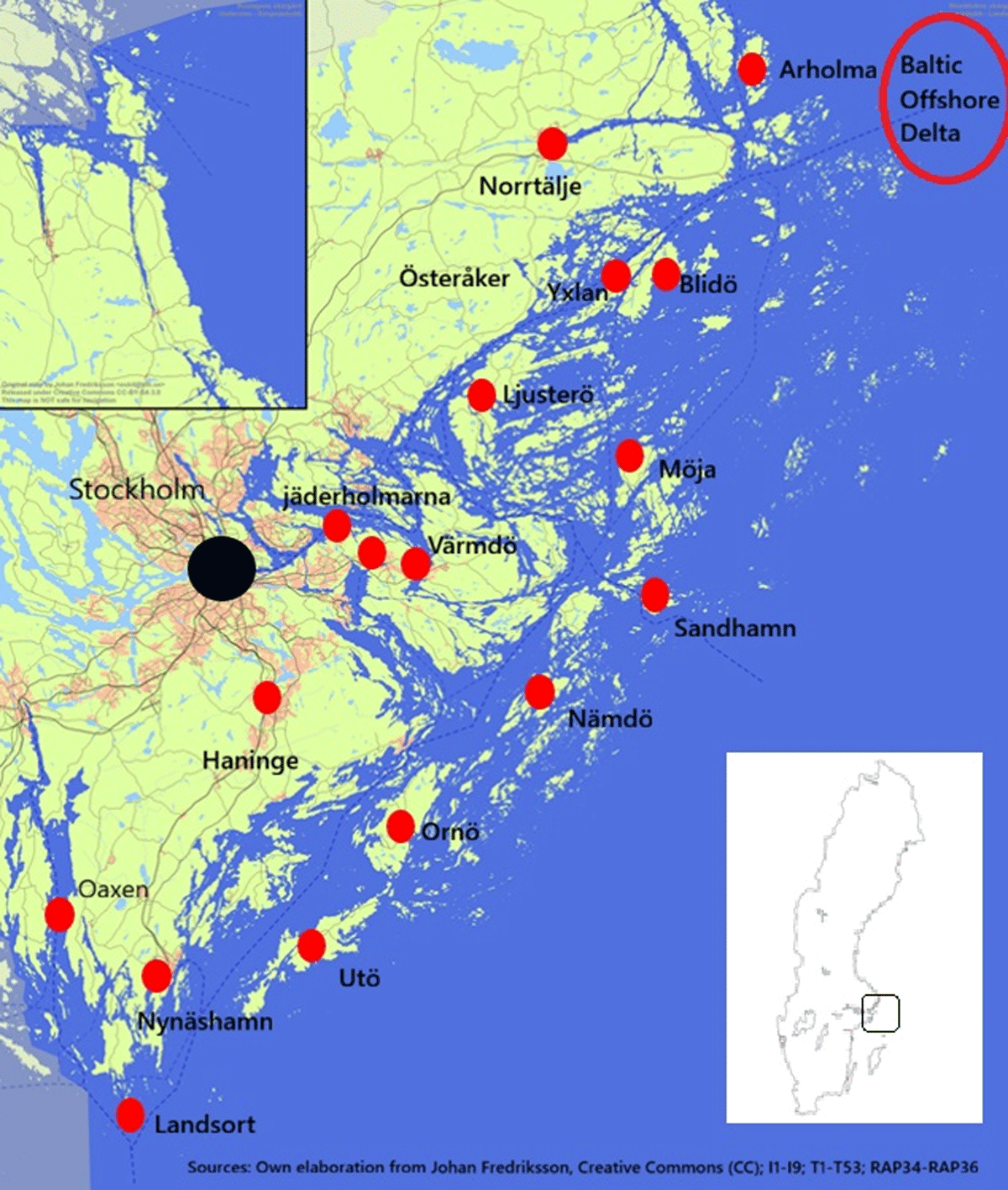
Figure 1
Map over Stockholm archipelago and places mentioned in the article.
Source: Own elaboration.
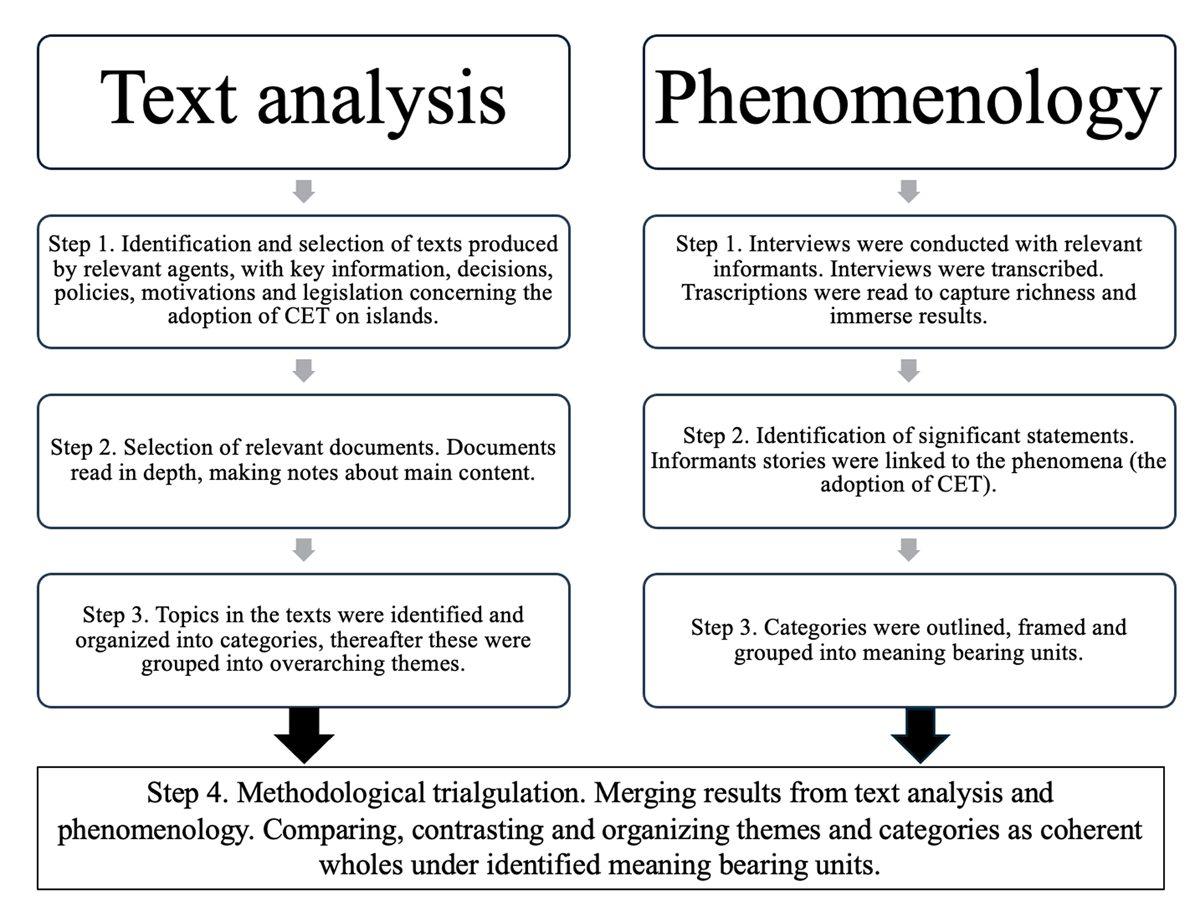
Figure 2
Data analysis workflow.
Table 1
Overview of the data, origin of informants and codes.
| INTERVIEWS | CODE | WORKSHOPS | CODE | REPORTS AND DOCUMENTS | CODE | ARTICLES TIDNINGEN SKÄRGÄRDEN | CODE |
|---|---|---|---|---|---|---|---|
| Municipality officials | I1 (Österåker) I2 (Norrtälje) I3 (Värmdö) | Workshop 1 | WS1 | EU level | RAP1-RAP8+RAP10-RAP12 | Articles with examples of locations and different uses of CET | T1-T52 |
| National Energy Agency (Energimyndigheten) | I4, I5, I6 (all from national agencies) | Workshop 2 | WS2 | State level | RAP13-RAP15+RAP17-RAP20+RAP23-RAP25 | ||
| Island entrepreneurs | I7 (Möja) I8 (Ljusterö) I9 (Nämdö) | Workshop 3 | WS3 | Regional level | RAP21-RAP22+RAP26-RAP30+RAP35-RAP37 | ||
| Municipal level | RAP34 |
[i] Note: I-interview, WS-workshop, RAP-reports and documents, T-articles from Tidningen Skärgården.
Table 2
Overview of results from text analysis and phenomenology analysis – theoretical concepts, themes, and categories.
| THEORETICAL CONCEPTS | MEANING-BEARING UNITS | EMPIRICAL CATEGORIES |
|---|---|---|
| Technological context | Systemic issues | Grid and off grid; grid capacity, existing and incipient grid solutions. Large-scale vs. small-scale. Feasible solutions, capital issues. Types of energy. Seasonal variations in consumption and production. |
| Industrial context | Energy monopoly (Vattenfall) | Energy types. Power in the energy industry. Land ownership. Stakeholder perspectives: Archipelago Foundation; Swedish Fortifications Agency; Swedish Church; private landowners. Archipelago businesses – push and pull factors. |
| Institutional context | Government, governance, formal and informal institutions | Government structures: EU, state, region, 7 municipalities, island organizations, other key stakeholders – Vattenfall, Waxholmsbolaget transport company, National Traffic Authority. Monopoly regulations. Shoreline Protection Act. Building regulations. Energy regulations and permits. Territorial organization rules (e.g., core islands). Local, regional, national and EU government, directives, governance and implementation of energy legislation, directives and regulations. |
| Social context | Networks, social capital and agency | Variations in the organizational degree of civil society. Conflicting interests including conservatism. Decision-making gaps. Polarization (mainland versus island). |
| Spatial context | Geography and infrastructure | Geographical fragmentation. Distance to the mainland. Infrastructural variations and grid capacity. |
[i] Sources: Own elaboration of I1-I9, WS1-WS3, RAP1-RAP37, T1-T52.
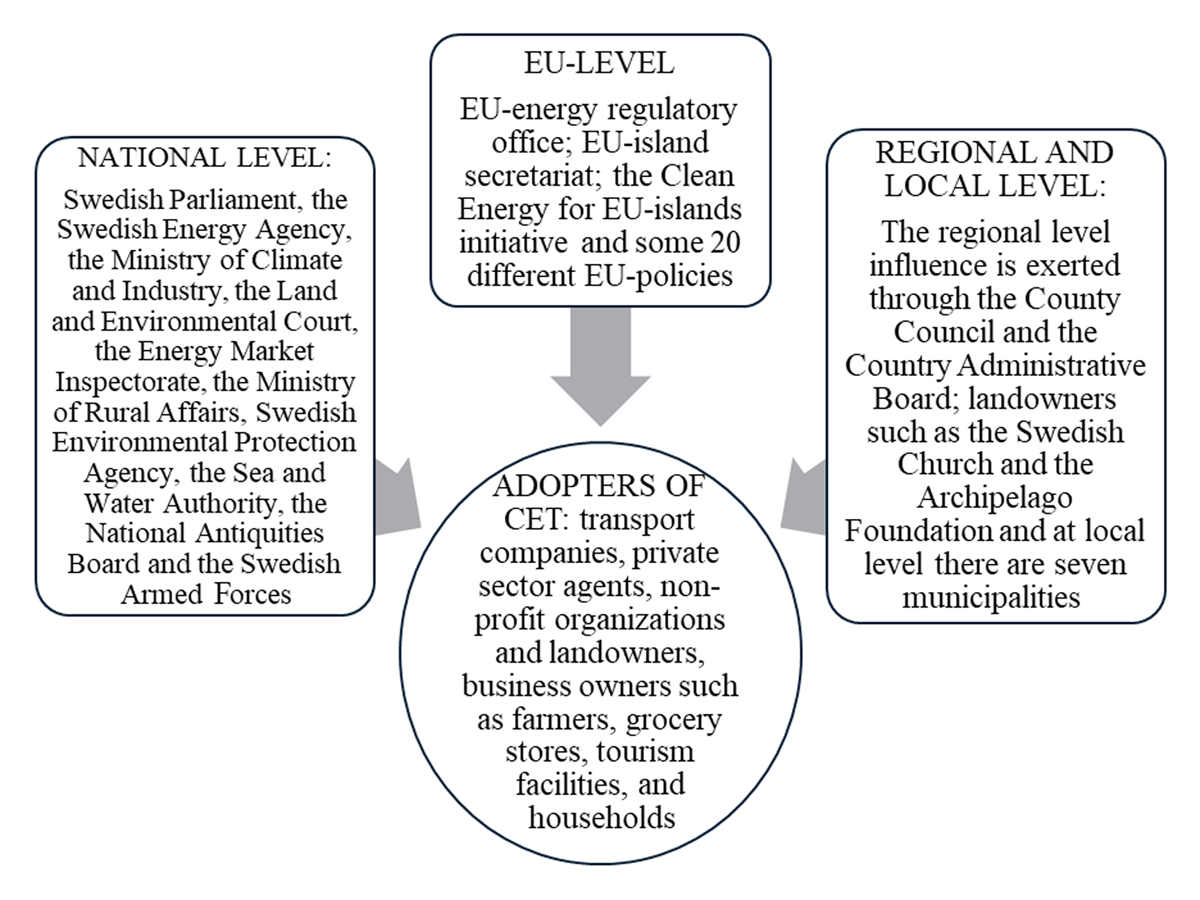
Figure 3
Overview of regulatory bodies and policies involved in CET-adoption processes and permits.
Source: I1-I9, WS1-3, RAP1-RAP8.