
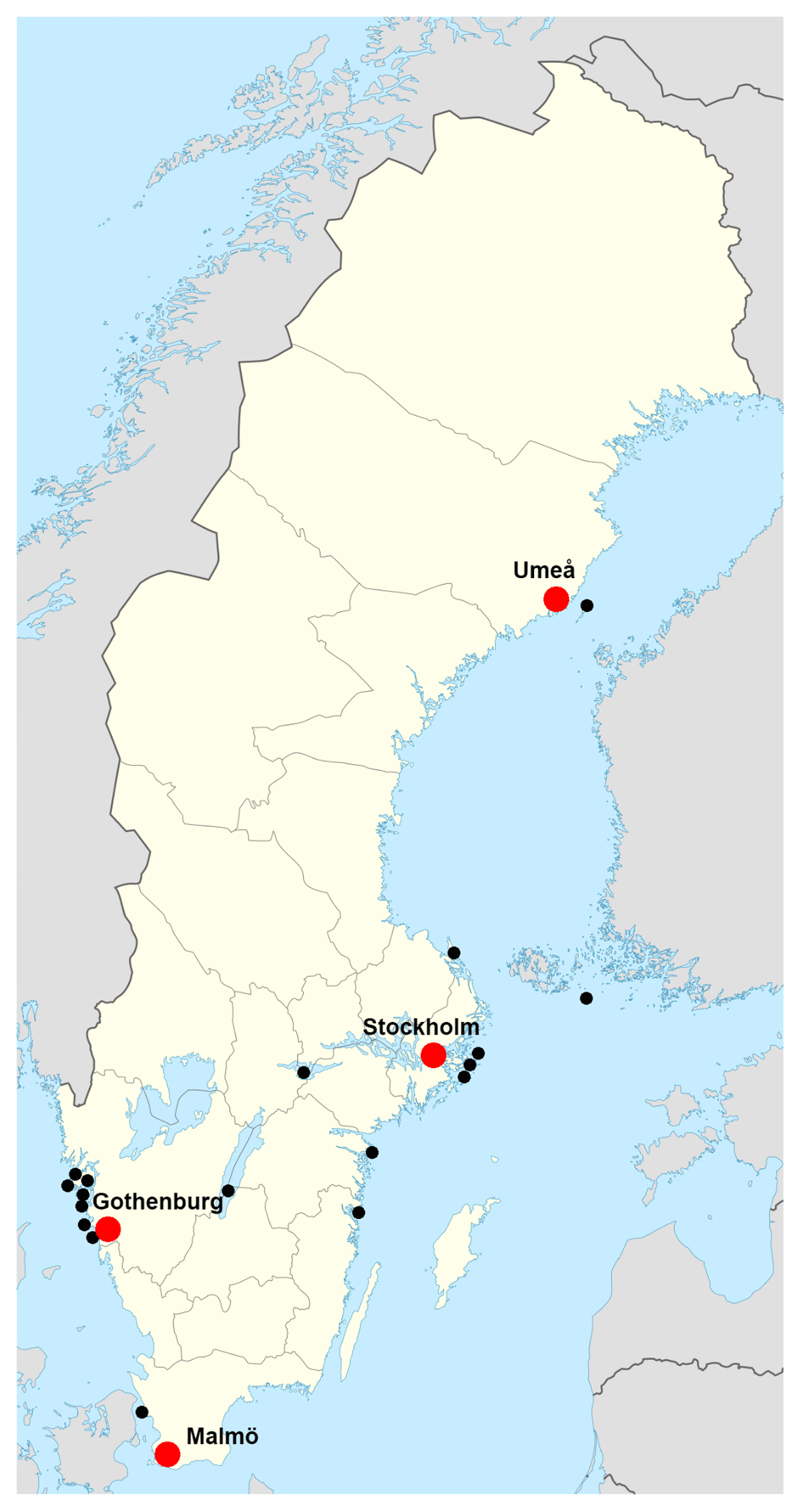
Figure 1
Map over Sweden. Black dots represent islands of residence of island participants and red dots some reference cities. Illustration: H. Tunón).
Table 1
Identified themes and categories.
| THEMES | CATEGORIES |
|---|---|
| Democracy deficit | Fragmented government |
| Lack of island policies | |
| Dialogues and lack of dialogue | |
| Marginalization, justice, and social capital | Institutions |
| Health care and welfare | |
| Environmental issues | Climate change, islands as future habitats |
| Natural resources, knowledge, and citizen research | |
| Island culture | Changing livelihoods |
| Identities and cultural diversity | |
| Perspectives | Image and perceptions |
| Knowledge gaps | |
| Tourism, for better and worse | |
| Seasonality and schizotopic aspects of islands |
[i] Source: Own elaboration.
Table 2
Commonality and variation between theory and results.
| CONCEPTS | FOCUS ON | COMMONALITY | VARIATION |
|---|---|---|---|
| Islandness | Peripherality and remoteness | Social and economic peripherality is influenced by various degrees of accessibility. | Peripherality can be addressed through dialogue built on mutual benefit. |
| Easily solved issues, for example gathering information and data to help island societies prepare for climate change are left without action. | Schizotopic aspects of islandness cause infrastructural, social, and economic challenges. | ||
| Local knowledge about social, economic, and especially environmental issues and natural processes, remains unrecognized. | |||
| Physical, cultural, and economic distance to mainland-areas | Lack of island policies reinforces the democracy deficit. | Democracy deficit and justice have not really been addressed before. | |
| Archipelagic relations | Relations within islands | Social capital, local agency and in-depth knowledge of local problems and potential solutions | Multilevel decision-making tends to neutralize islander’s agency and put islanders on the sideline. |
| Relations between islands | n.a. | n.a. | |
| Relations between island/islands and mainland. | Causes fragmentation. Mutually beneficial relations increase in the presence of only one mainland authority and decrease in the presence of many partners. | Misunderstanding, lack of knowledge and democratic deficit influence negatively. | |
| Polycentric governance | Polycentric decision-making | Fuels fragmentation regarding public and private investments, resource optimization and hampers local development. | |
| Multilevel governance | Lack of coordination between levels of governance. | Local agency can partly counteract inefficient decision-making. | |
| Centre-periphery (CP) relations | Lack of island policies reinforces island participant’s perception of dichotomous relations. | True dialogue and mutual knowledge exchange can counteract CP relations. |