
1. Introduction
We live in the Anthropocene era, in which human societies rely on many of the Earth’s properties to satisfy their needs (Mathevet et al., 2018). However, destructive human activities have caused the loss of biodiversity and degradation of ecosystems and landscapes on a large scale (Callicott, 2013; Corlett, 2015; Smith et al., 2016; Steffen et al., 2007). Therefore, the human footprint on Earth is now greater than ever (Turnbull et al., 2021). This undesirable situation partly arises from the gap between individuals’ attitudes and behaviour towards the environment and sub-optimal consideration of social values (e.g., landscape) in institutional and decision-making processes (Beckmann et al., 1997). However, such values are crucial for sustainable development and improving the relationship between humans and nature (Pascual et al., 2017). In this context, this study aimed to make a meaningful contribution to the literature by identifying the main socio-ecological landscape values of olive groves in the context of Akdeniz Protected Area located in Northern Cyprus, providing a database for future studies to evaluate value changes, and offering a valuable tool for policymakers in terms of landscape stewardship.
‘Landscape means an area, as perceived by people, whose character is the result of the action and interaction of natural and/or human factors’, or, it is a common good that provides ecological, economic, and socio-cultural values for societies (Council of Europe, 2000). The term ‘landscape’ is also recognised as a social-ecological system resulting from the interaction between nature and humans (Bieling et al., 2020; Ciftcioglu et al., 2016; Opdam, 2017; Plieninger et al., 2015; Sayer et al. 2013; Smith et al., 2016; Spash, 2012). Within this context, landscape interacts in a feedback loop in which culture structures landscapes, and landscapes influence culture (Nassauer, 1995). Several definitions have been proposed for the term ‘cultural landscape’ (Müller, 2008). According to UNESCO’s World Heritage Committee, cultural landscape means a geographical area that represents the intersection of culture and nature, a group identity, serves as a living space for human societies in urban and rural settings, and functions as a basis of the culture, identity and beliefs of the people who live within them (Rössler, 2002). Cultural landscapes have been designed, shaped and managed throughout history to provide a range of benefits for human wellbeing (e.g., food and cultural heritage). They include diverse tangible (e.g., buildings) and intangible (e.g., memories) elements that have led to the formation of values and accumulation of traditional knowledge—two fundamental elements of cultural landscapes (UNESCO World Heritage Centre, 2003). However, the most relevant studies have focused on either the ecological or economic values of landscapes. In other words, their socio-cultural values have been neglected in planning and policy. A detailed understanding of these values is important for the development of policies and decision-making processes (Gerber and Hess, 2017).
The word ‘value’ refers to the importance or usefulness of something, regardless of its material or monetary worth (Smith et al., 2016). It is indirectly related to behaviour or a principle associated with a given worldview or cultural context (Beckmann et al., 1997; Grunert and Juhl, 1995; Pascual et al., 2017; Smith et al., 2016). Values are patterns by which individuals and groups interpret their social world and adapt themselves to their environment (Beckmann et al., 1997; Milbrath, 1984; Schwartz and Bilsky, 1987). They are situation and place-specific and hold spatial and temporal dimensions (Brown, 1984; Farber et al., 2002; Jorgensen and Stedman, 2006). Values derive from different inputs (e.g., nature, culture, media, education, socio-economic and political context), and play a crucial role in building sustainable societies (Beckmann et al., 1997; Bieling et al., 2020; Horcea-Milcu et al., 2018). They are mostly the results of personal and collective choices and vary between users, residents, outsiders and policy-makers (Bardi et al. 2008; Farber et al. 2002; Leiserowitz et al., 2006; Smith et al., 2016). Values can be assigned to different components of the environment, such as places, lands and landscapes.
Landscape values refer to the perceived attributes of places, and locations for people, which can be used as important guiding principles for landscape management (Ciftcioglu, 2021). They develop as a result of the interactions between landscapes and people. They emerge in people’s minds as a collective perception that reflects the interests of communities and their shared knowledge (Kenter et al., 2015). These values can be divided into use (e.g., food) and non-use (e.g., aesthetics), tangible (e.g., food) and intangible (e.g., recreation) (Zografos and Mart, 2009), ecological, economic, and socio-cultural values (Plieninger et al., 2013). The socio-ecological landscape values, which represent biodiversity and socio-cultural aspects (Torralba et al., 2023), were the specific focus of this study. They provide a sense of connectedness or emotional attachment and cultural ties to places (Penning-Rowsell, 1981; Gerber and Hess, 2017). The characteristics of landscape values can vary depending on demographic variables (e.g., gender, age, and education), socio-cultural, economic, and natural contexts (Shi et al., 2020). Landscapes also include various natural resources (e.g., wild plants) that provide essential goods and services for humans. People hold values for natural resources (Adamowicz, 2004; Seymour et al., 2008; Tarrant and Cordell, 2002), which represent the use, experiences and traditional knowledge of individuals or groups for specific natural resources at local and regional scales (Seymour et al., 2010). Understanding landscape values (e.g., socio-ecological values) is crucial for designing effective communication strategies, supporting conflict resolution, and developing effective response strategies (Lockwood, 1999; Seymour et al., 2008). Within this context, landscape stewardship is an innovative approach to ensure the sustainable management of landscapes, associated natural resources, and values (Turnbull et al., 2021).
Over the last four decades, the concept of “environmental stewardship” has emerged as a key tool to define the environmental ethics of different organisations (e.g., governments and NGOs) at different levels of decision-making (Welchman, 2012). Various stewardship programs were developed in the 1990s, particularly in North America (Callicott et al., 1999; Chapin et al., 2010) and Western Europe (Raymond et al., 2015; Sang and Tveit, 2013). Environmental stewardship means the responsible management of human activities and their impacts on nature to better protect natural resources, biodiversity, and associated values for the needs of future generations (Mathevet et al., 2018). There is a growing interest in the concept of stewardship, particularly in sustainability science, and conservation (e.g., natural resources) (Welchman, 2012). As an ethical concept, it emphasises responsibility, collaboration, participation, plurality, and communication (Bieling et al., 2020; Brown and Mitchell, 2000; Cockburn et al., 2019; García-Martín et al., 2018; Seymour et al., 2010; van Riper and Kyle, 2014). Landscape stewardship focuses on restoring natural systems, improving human well-being, and social-ecological resilience (Bennett et al., 2018). People are central to stewardship, whether they act as individuals, community groups, or as part of an organisation, and, therefore, it requires the assessment of human behaviour that can be guided or motivated by intrinsic factors such as values and beliefs (Bennett et al., 2018). Landscape stewardship compasses three main dimensions (people, place and policy) that require a better understanding of the relationship between them (Turnbull et al., 2021). The people dimension focuses on the sustainability of the site, associated resources, values and memories (García-Martín et al., 2018; Krasny et al., 2014; Turnbull et al., 2021). The place dimension focuses on place attachment and monitoring the natural condition of the site and taking actions to conserve and restore it. The policy dimension focuses on the implementation of legal policy through informal enforcement of regulations. The overarching goal of the dimensions is to ensure better protection of the area and associated resources (Lokocz et al., 2011; Ryan et al., 2001). Landscape values are the key elements of the people dimension that affect the place and policy dimensions. In addition, the improvement of landscape values is one of the fundamental principles of landscape stewardship. Within this context, Akdeniz Protected Area can be a particular case study.
The purpose of this study was to explore the crucial role of the socio-ecological values of olive groves in landscape stewardship in the context of Akdeniz Protected Area, located in Northern Cyprus. The objectives of the study were (i) to identify the main socio-ecological landscape values of olive groves, (ii) to explore the traditional knowledge of olive groves and associated resources, and (iii) to evaluate the crucial role of the socio-ecological values in landscape stewardship. The main motivations for pursuing this study were the lack of empirical research on the socio-ecological landscape values of olive groves in the literature and deep interest in the subject of landscape values. Moreover, the results of this study can assist in the development of a responsible management strategy for olive groves in the region.
2. Material and Methods
2.1. Study area: Akdeniz Protected Area in Northern Cyprus
The olive tree (Olea europaea L.) is an ancient crop species that has been cultivated in the Mediterranean region since 4800 BC. It is one of the most suitable species for the Mediterranean climate with long, warm and dry summers and mild and humid winters (Fraga et al., 2021). There have been more than 1000 cultivars of the olive species worldwide. However, two variants are known in the Mediterranean region: Olea europaea L. var. sylvestris Brot., which is the wild form growing in natural woody plant communities, and Olea europaea L. var. europaea, which is mostly cultivated in large numbers (Anestiadou et al., 2017; Fekete et al., 2023). Both cultivars are cultivated on the hillsides and man-made terraces in the region (Loumou and Giourga, 2003). Olive cultivation (e.g., pruning, grafting, fertilizing, picking and processing the olive fruits) is one of the main agricultural activities of local communities, and plays an important role in the local economy, conservation of natural resources, traditional lifestyle and culture in the Mediterranean region (Fraga et al., 2021; Loumou and Giourga, 2003). For example, Loumou and Giourga (2003) highlighted the importance of olive cultivation in retaining water, protecting the soil, reducing erosion and sequestering carbon. Fekete et al. (2023) emphasised that olive groves contribute to biodiversity conservation (e.g., richness and abundance of orchid species) in the Mediterranean region. The harvested olive fruits are used for a variety of purposes (e.g., oil, food, medicine, fuel, timber and aesthetic quality) (Aumeeruddy-Thomas et al., 2018; Neves and Pires, 2018). Olive oil and fruits play an important role in the healthy Mediterranean diet system and are closely linked to religions (Loumou and Giourga, 2003). Furthermore, the olive tree is the symbolic species of the region because of it is importance for ecology, economy and culture (Anestiadou et al., 2017). Olive groves in the region can be classified into two main groups based on their management practices: intensively managed conventional olive groves and extensively managed traditional olive groves (Fekete et al., 2023). The scholars also pointed out that the primary aim of conventional farming is to increase production by utilizing intensive monocultures and treatments (e.g., pesticides and irrigation). In contrast, the traditional olive groves are managed with a low intensity (e.g., limited pesticides and irrigation), which contributes to biodiversity in the region. The focus of this study was on traditional olive groves, which are stands of olive trees with minimal inputs and management. Within this context, Cyprus is a significant contributor to the cultivation and production of olives in the Mediterranean region.
Cyprus is located in the eastern Mediterranean Basin and has been a distribution route for the olive tree (Anestiadou et al., 2017). The island has been an important place for its minerals (e.g., copper, silver and gold) (Akansu and Gertik, 2018), wines, and natural beauty (e.g., coastal, marine and forest ecosystems) since ancient times (Raddato, 2019). Today, the island is recognised as a ‘biodiversity hotspot’ (Gücel et al., 2008). Olive cultivation has been practiced on the island since ancient times (Avraamides and Fatta, 2008). Olive oil and fruits are an essential part of the island’s traditional food system. In addition, throughout history, the island has been a crossroads between the West and the East; therefore, there has been a great mixture of cultures on the island (de Frenne, 2019), such as the Turkish, Greek and Maronite Cypriots. Within this context, Akdeniz Protected Area, located in the Kyrenia region of Northern Cyprus, was selected as a study site because of its cultural and biological diversity, and traditional olive groves (Figure 1).
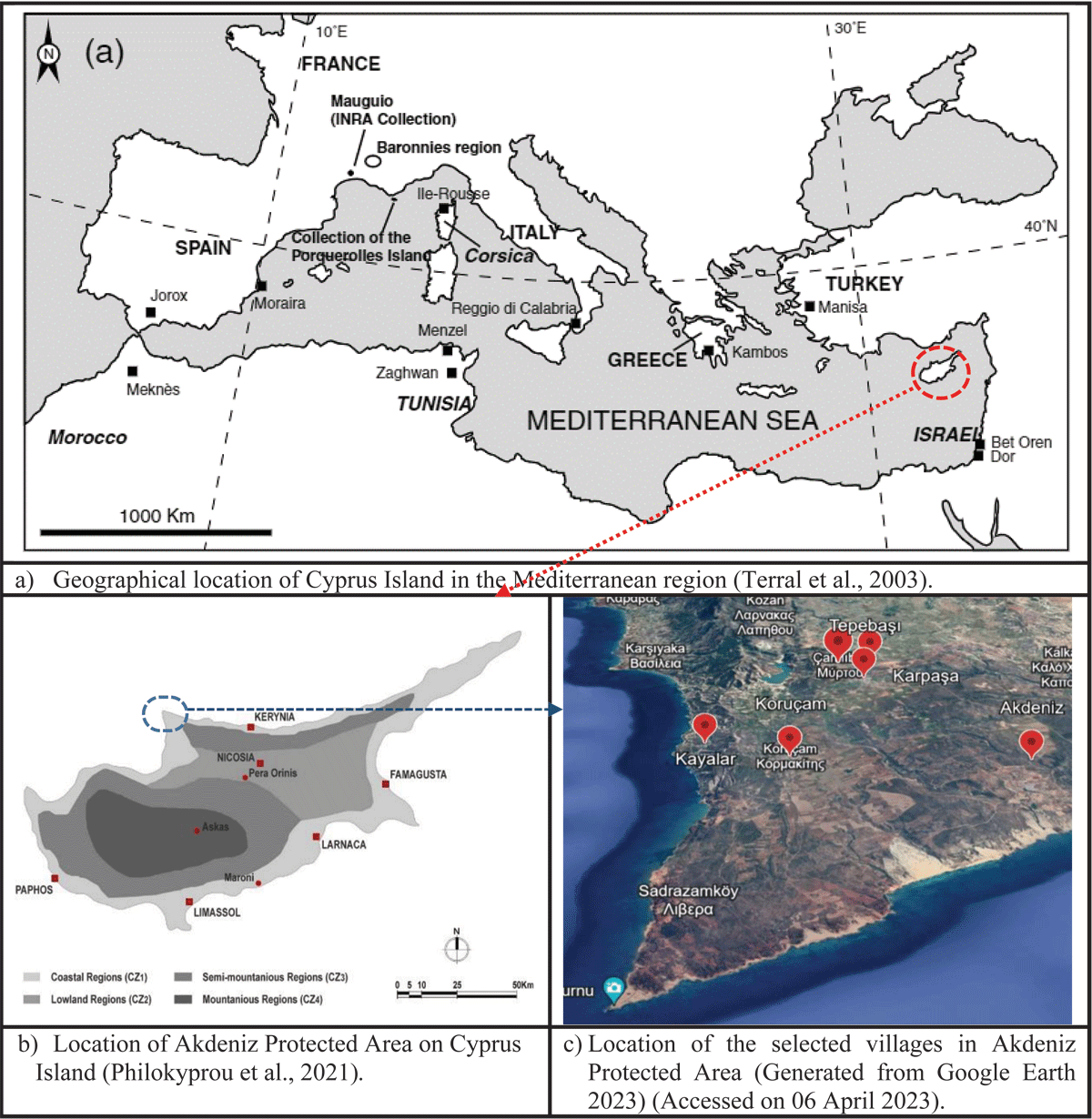
Figure 1
Location of Akdeniz Protected Area.
Figure 1b shows that Akdeniz Protected Area is located in the north-western part of Northern Cyprus and covers 143.28 sq km2. The area was recognised as a “Special Environmentally Protected Area” in 2008 due to the existence of nationally and internationally important flora and fauna species (Fuller et al., 2010). The scholars also noted that the protected area is composed of a mixture of marine and coastal ecosystems, pine forests (Pinus brutia and Pinus pinea), olive groves and farmlands (irrigated and non-irrigated agriculture). The olive groves in the region are traditional olive groves that require minimal management. The Mediterranean maquis formation surrounds most of them (Figure 2). Therefore, the olive groves are also used for animal grazing. The olive groves play an important role in shaping the physical structure of the regional landscape and influencing the traditional lifestyle. During the focus group discussions, the local people pointed out that the olive groves mostly comprise the wild and local cultivars. They harvest and use the olive fruits for a variety of purposes (e.g., olive oil). Furthermore, Akdeniz Protected Area hosts four major cultural groups (Table 1).
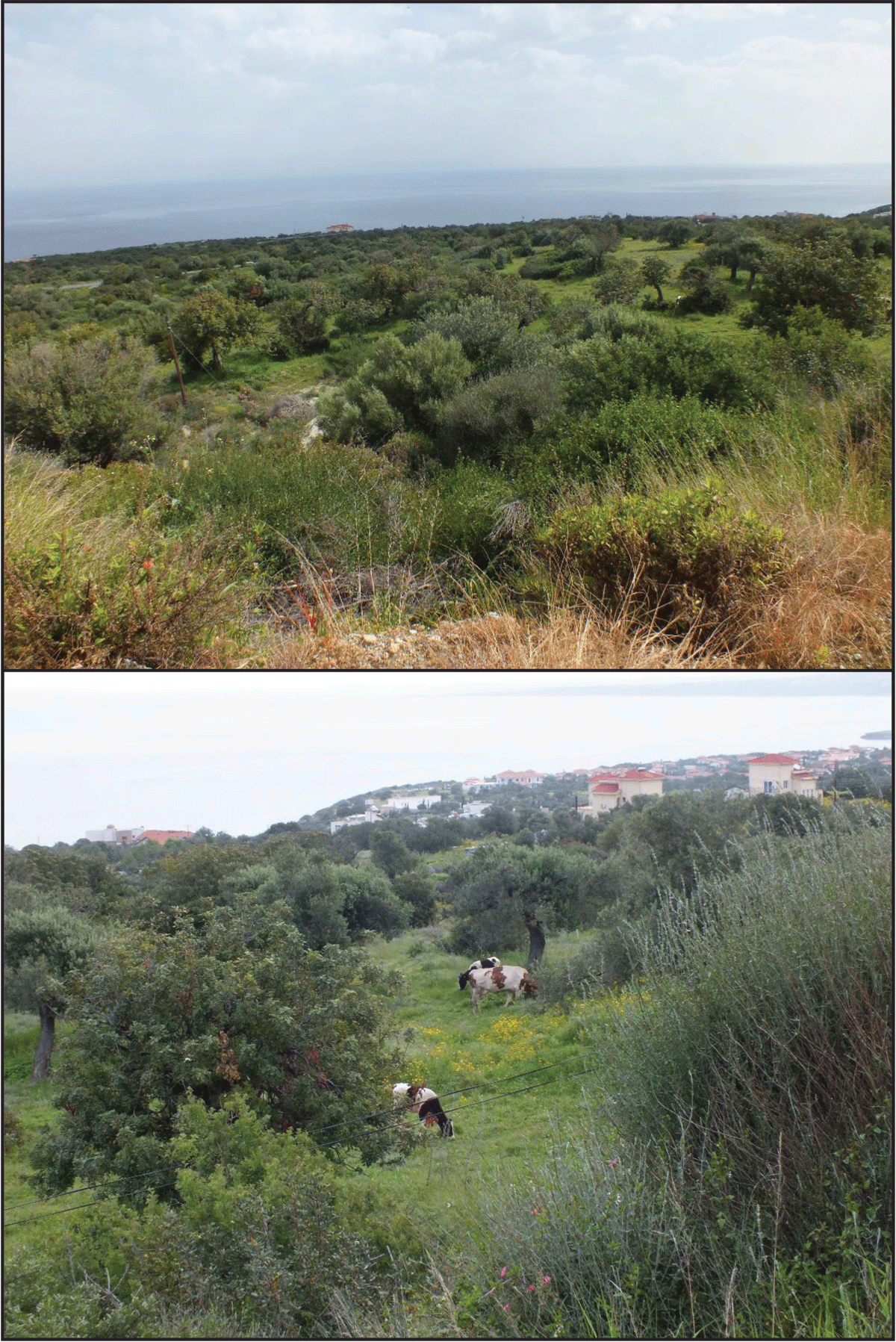
Figure 2
Examples of the olive groves in Akdeniz Protected Area.
Table 1
The main cultural groups living in Akdeniz Protected Area.
| NAME OF VILLAGE | CULTURAL GROUP | CHARACTERISTICS |
|---|---|---|
| Akdeniz | The permanent Turkish Cypriots mixed with the Turkish immigrants. | The Turkish Cypriots have always lived in these villages. However, they mixed with the Turkish immigrants, who moved to the villages in 1975. |
| Tepebaşı | ||
| Koruçam | The Maronite Cypriots | The Maronite Cypriots have lived in the region for hundreds of years. |
| Karpaşa | ||
| Çamlıbel | The Turkish Cypriots migrated from South Cyprus | The Turkish Cypriots of this village migrated from South Cyprus to Çamlıbel village in 1974. |
| Kayalar | The Turkish immigrants | The local people of this village migrated from Turkey to the region in 1975. |
Table 1 indicates that four major cultural groups live in Akdeniz Protected Area. The major cultural groups were Turkish, Greek and Maronite Cypriots in the region before 1974. However, the island of Cyprus was divided into two parts, according to language, culture and overall religion, in 1974 (Sadıkoglu, 2021). The Greek Cypriots, living in Akdeniz and Kayalar villages, moved to Southern Cyprus in 1974. The Turkish Cypriots, who were residing in Southern Cyprus, moved to Çamlıbel village in 1974. In addition, a group of Turkish people migrated to Kayalar village in 1975. The majority of Maronite Cypriots have relocated to Southern Cyprus since 1974 in search of better economic and living conditions. However, some still reside in the villages of Koruçam and Karpaşa. Today, most of the local people are engaged in irrigated (e.g., tomato and zucchini) and non-irrigated (e.g., wheat and barley) agriculture, and animal husbandry (e.g., goat and sheep) in the region. However, the majority of the younger generation works in the public or private sectors in the cities of Kyrenia or Nicosia. Nowadays, the local communities mostly deal with olive cultivation as a second job to meet their own needs.
2.2. Methods
The method of this study consisted of three parts: identification of a value typology for olive groves, design of focus group discussions, and a preference-based value questionnaire (on a 1–5 scale).
Identification of the value typology
A value typology for the olive groves was identified by reviewing the relevant literature and considering the characteristics of the region (Table 2).
Table 2
The typology of the socio-ecological landscape values associated with the olive groves in Akdeniz Protected Area.
| VALUE DOMAIN | TYPE OF VALUE | DESCRIPTION | REFERENCE |
|---|---|---|---|
| Ecological-economic domain | Life-sustaining value | Olive groves provide vital goods and services (e.g., food and olive oil) for local communities. | Bieling et al. (2020), Brown (2004), Eser et al. (2014), Mathevet et al. (2018), Seymour et al. (2008), Tarrant and Cordell (2002). |
| Socio-cultural domain | Aesthetic value | Olive groves are valuable because of their scenic beauty. | Rolston (1994), Satterfield (2001), Seymour et al. (2008), Tarrant and Cordell (2002). |
| Recreational value | Olive groves provide opportunities for recreational activities. | Rolston (1994), Satterfield (2001), Seymour et al. (2008). | |
| Learning value | Olive groves provide opportunities for learning about the environment and its components and accumulating relevant traditional knowledge. | Brown (2004), Seymour et al. (2008). | |
| Future generations value | The rights of future generations are recognised for a healthy and productive environment. | Rolston (1994), Satterfield (2001), Seymour et al. (2008). | |
| Therapeutic value | Olive groves contribute to people feeling better physically and spiritually. | Brown (2004), Seymour et al. (2008). | |
| Historical value | Olive groves provide the opportunity to connect us to our human history. | Rolston (1994), Satterfield (2001), Seymour et al. (2008). | |
| Symbolic value | The olive tree represents the island of Cyprus and peace. | Ciftcioglu (2021). | |
| Spiritual value | The olive tree is spiritually valuable. | Ciftcioglu (2021), Tarrant and Cordell (2002). | |
| Cultural heritage value | Traditional olive groves are our cultural heritage. | Ciftcioglu (2021). |
Table 2 shows that the socio-ecological landscape values of olive groves comprised two value domains. The ecological-economic value domain reflected the life-sustaining values of olive groves (e.g., olive fruits and oil, income generation). The socio-cultural domain represented several tangible and intangible socio-cultural values of olive groves.
Sampling participants
The local contacts and/or the village headmen were previously contacted to reach the potential participants. They were involved in sampling participants and organizing focus group discussions. The selection of participants was based on four criteria: (i) having spent a significant part of their lives in the region, (ii) being landowners of olive groves, (iii) engaging in olive cultivation and/or production, (iv) interacting with the olive grows through actions and practices (e.g., collection of wild plants and recreation activities in the olive groves). In line with the criteria and recommendations of the village headmen, the participants were sampled without taking into account their socio-demographic characteristics. The population sample comprised four cultural groups from six villages (see Table 1).
The preference survey method and design of a preference-based value questionnaire
The preference survey method was used to collect data on the participants’ preferences and information by asking them questions about the research objectives. Moreover, the method was easy to apply due to the socio-demographic characteristics of the participants (e.g., low education level). Within this context, a preference-based value questionnaire on a scale of 1–5 was designed to collect data on the socio-ecological landscape values of olive groves from four cultural groups living in the region. The questionnaire consisted of three sections. The first two sections comprised closed questions. The first section focused on the participants’ characteristics (e.g., age, gender and occupation). The second section consisted of 11 questions about the socio-ecological landscape values of olive groves (including the ecological-economic and socio-cultural value domains), where the participants rated the values on a scale of 1–5 points (5 indicates very high importance, 4 shows high importance, 3 presents medium importance, 2 shows low importance, and 1 indicates very low importance). The final section comprised open-ended questions, in which natural resources collected from the surrounding natural areas of the olive groves (e.g., wild plants) and relevant traditional knowledge were uncovered. The responses obtained from the participants were recorded on the questionnaire sheet. The preference-based value questionnaire was implemented with the participants during the focus group discussions. Consequently, both methods were conducted simultaneously.
Designing and conducting focus group discussions
The participatory research method of focus group discussions was employed as an ideal and well-suited technique to identify the natural resources collected from the surrounding natural areas of the olive groves. The purpose, objectives, scope, instructions for its application, and consent for the publication of the outcomes were explained to the participants at the beginning of the focus group discussions. Then, the preference-based value questionnaire on a scale of 1–5 was conducted with the participants. They discussed and determined together the socio-ecological landscape values of olive groves on a scale of 1–5 scale. Finally, the harvested species around the olive groves were identified. The participants from different cultural groups were visited or invited to attend the focus group discussions. The meetings were mostly held over weekends in the home gardens of the participants and lasted approximately 40–60 minutes. The participants participated voluntarily in the focus group discussions and the preference-based value questionnaire. The two research tools were conducted in the selected villages from August 13, 2022, to October 29, 2022. A total of 60 community members from six villages took part in 11 focus group discussions in the region (Table 3). The number of participants was limited to 60 due to the migration of Maronite Cypriots to southern Cyprus and the younger generations of Turkish Cypriots to the cities of Kyreina and Nicosia Cities in Northern Cyprus for employment.
Table 3
Socio-demographic characteristics of the participants (n: 60).
| CATEGORY OF PARTICIPANTS’ CHARACTERISTICS | SAMPLE SIZE | PERCENTAGE |
|---|---|---|
| Age groups | ||
| Younger (15–34) | 7 | 11.6 |
| Middle-aged (35–54) | 21 | 35.0 |
| Older (55 and above) | 32 | 53.3 |
| Gender | ||
| Male | 39 | 65.0 |
| Female | 21 | 35.0 |
| Education | ||
| Illiterate | 11 | 18.3 |
| Elementary school | 20 | 33.3 |
| High school | 19 | 31.7 |
| University or college | 10 | 16.7 |
| Occupation | ||
| Housewife | 16 | 26.7 |
| Farmer | 13 | 21.7 |
| Retired | 11 | 18.3 |
| Student | 4 | 6.7 |
| Landowner | 1 | 1.7 |
| Self-employed (e.g., shop- keepers) | 9 | 15.0 |
| Office clerk | 4 | 6.7 |
| Private sector (e.g., tourism) | 2 | 3.3 |
Table 3 shows that a total of 39 males and 21 females participated in the focus group discussions and preference-based value questionnaires. Fifty percent of the participants were over the age of 55. They were mostly farmers, housewives, or retired individuals with an elementary or high school degrees. Despite their different occupations (e.g., private sector and self-employed), the local people engage in olive cultivation during their free time and on weekends, since it represents the socio-economic and cultural lifestyle of the region.
Data analysis
The collected data on the research questions were analysed by using the Statistical Package for Social Science (SPSS version 15.0). The descriptive statistics were run to analyse the average degree of the socio-ecological landscape values of olive groves. The t-test was operated to determine the value differences based on the gender factor. The one-way ANOVA and post hoc tests were performed to compare the differences between the values of different cultural groups. Finally, a reliability analysis was performed on the base of 19 questions. The results showed that the reliability was acceptable, with 0.612 indicating the consistency between the questions, which was interpreted using Cronbach’s alpha. According to Forero (2014), Cronbach’s alpha value ranges from 0 to 1.
3. Results
3.1. The socio-ecological landscape values of olive groves in Akdeniz Protected Area
This part of the study focused on the socio-ecological landscape values of olive groves evaluated by the SPSS Descriptive Statistics Test (Table 4). The relevant data were obtained from four cultural groups living in Akdeniz Protected Area of Northern Cyprus.
Table 4
The socio-ecological landscape values of olive groves in Akdeniz Protected Area (n: 60).
| VALUE DOMAIN | TYPE OF VALUE | GENDER | MEAN VALUE (1–5 SCALE) | STD. DEVIATION | DEGREE OF VALUE | RANK | |
|---|---|---|---|---|---|---|---|
| MALE (n: 39) | FEMALE (n: 21) | ||||||
| Ecological-economic | Life-sustaining value | 4.79 | 4.85 | 4.81 | 0.536 | High | 1 |
| Biological diversity | 2.76 | 3.23 | 2.93 | 1.02 | Low | 10 | |
| The average mean value | 3.77 | 4.04 | 3.87 | Medium | |||
| Socio-cultural | Aesthetic value | 4.71 | 4.61 | 4.68 | 0.791 | High | 3 |
| Recreational value | 1.76 | 3.38 | 2.33 | 1.643 | Low | 11 | |
| Learning value | 3.02 | 3.28 | 3.11 | 1.785 | Medium | 8 | |
| Future generations value | 3.20 | 4.28 | 3.58 | 1.543 | Medium | 6 | |
| Therapeutic value | 4.71 | 4.76 | 4.73 | 0.445 | High | 2 | |
| Historical value | 4.23 | 4.52 | 4.33 | 1.002 | High | 4 | |
| Symbolic value | 2.89 | 4.09 | 3.31 | 1.741 | Medium | 7 | |
| Spiritual value | 3.94 | 3.61 | 3.83 | 1.277 | Medium | 5 | |
| Cultural heritage | 2.66 | 3.76 | 3.05 | 1.731 | Medium | 9 | |
| The average mean value | 3.45 | 4.03 | 3.66 | Medium | |||
| The total average mean value | 3.51 | 4.02 | 3.69 | Medium | |||
Table 4 shows that the socio-ecological landscape values of olive groves were evaluated within two value domains. The evaluation results revealed that four cultural groups mostly appreciate the life-sustaining value of olive groves with 4.81 points (high) falling within the ecological-economic value domain. During the focus group discussions, the participants emphasised that olive fruits and olive oil play a significant role in their traditional diet, and also provide some income and limited employment. Therefore, this landscape value was calculated with the highest degree. Secondly, the participants were more likely to appreciate the therapeutic value of olive groves with 4.73 points falling in the socio-cultural value domain. In this sense, the participants highlighted that the olive groves contribute to their mental and physical empowerment, healing, improving their positivity, motivation, concentration and mood, and quality of life as a whole. Thirdly, the participants valued the importance of the aesthetic value of olive groves at 4.68 points (high). In this sense, the participants highlighted the importance of pleasing and beautiful features, and the calming atmosphere of olive groves, which contribute to their wellbeing and socio-cultural connection with the place, land, and landscape. Furthermore, they emphasised the historical value of olive groves with 4.33 points (high). The recreational value of olive groves was estimated to have the lowest degree with 2.33 points (low importance). The total average mean value of the socio-ecological landscape values of olive groves was estimated to be intermediate, at 3.69 points.
The results of the assessment showed that the degree of several mean values, such as recreational, symbolic, cultural and future-generation values, varied between males and females. The focus group discussions revealed that the females primarily harvested and processed the olive-based products, as well as gathered wild plants from the surrounding areas of olive groves. They mostly harvested olive fruits by helping each other with their neighbours and family members. Such social cooperation provides opportunities for socialisation and strengthens social bonds. For that reason, the average mean values of females for the indicated variables were estimated to be greater than males. Furthermore, the Independent Samples t-test was conducted to examine whether there was a statistically significant difference between the mean values of males and females. The result showed that the p-value is 0.10> 0.05. Although a significant statistical difference was not found between the mean values for males and females according to the T-Test, the females appreciated the values of olive groves more than males with 4.02 points according to the results of the SPSS Descriptive Statistics Test. Finally, the influence of culture on the socio-ecological landscape values of olive groves was evaluated via the One-Way Anova Test (Table 5).
Table 5
The result of the one-way ANOVA Test.
| GROUP OF VILLAGES | CULTURAL CHARACTERISTICS OF THE GROUPS | N | MEAN | RANK | P | SIGNIFICANT DIFFERENCE |
|---|---|---|---|---|---|---|
| Group 1 (Akdeniz & Tepebaşı villages) | The permanent Turkish Cypriots mixed with Turkish immigrants. | 18 | 3.10 | 4 | 0.000 | 1–2, 1–3, 1–4 |
| Group 2 (Koruçam & Karpaşa villages) | The Maronite Cypriots | 15 | 4.09 | 1 | ||
| Group 3 (Kayalar village) | The Turkish immigrants | 16 | 3.93 | 2 | ||
| Group 4 (Çamlıbel village | The Turkish Cypriots migrated from South Cyprus | 11 | 3.80 | 3 | ||
| Total | 60 | 3.70 | ||||
[i] The mean difference is significant at the 0.05 level.
Table 5 shows that the Maronite Cypriots mostly valued the socio-cultural values of olive groves due to the importance of the olive tree for their religion. Consequently, culture was identified as an important factor that influences the landscape socio-ecological values in the region.
3.2. Traditional knowledge of the olive groves and associated resources in Akdeniz Protected Area
This section of the study focused on the traditional knowledge of olive groves and relevant natural resources, the wild plant and mushroom species collected from the surrounding natural areas of olive groves, and their usage. The relevant data were recorded during the focus group discussions held in Akdeniz Protected Area (Table 6).
Table 6
Traditional knowledge of olive groves and associated natural resources in Akdeniz Protected Area (n: 60).
| PART OF THE OLIVE TREE USED | PURPOSE OF USAGE | TYPE OF PROCESSING | NAME OF VILLAGE | PERCENTAGE OF PARTICIPANTS |
|---|---|---|---|---|
| Fruit | Olive oil | The collected olive fruits are processed in the olive oil factories (Kalkanlı and Karşıyaka), and then olive oil is produced. | All villages | 100 |
| The traditional olive food ‘Çakistes’ (a kind of pickled green olive). | The collected green olive fruits are previously crushed with a stone. To eliminate their bitterness, the olive fruits are kept in fresh water for three days. Freshwater is changed every morning and evening during this process. Finally, the olive fruits are filtered and filled in a jar, and a little coarse salt, thyme, lemon, and olive oil are added. | Çamlıbel, Kayalar, Akdeniz, Koruçam | 81.7 | |
| Black olives | When olive fruits are ripe, they are harvested, washed, salted, and then filled in a jar to be consumed during the year. | Akdeniz, Tepebaşı, Koruçam | 50 | |
| Bread | Black olives are used in traditional bread. | All villages | 100 | |
| Appetizer | Black olives are barbecued and then eaten as an appetizer. | Tepebaşı | 13.3 | |
| Leaf | Incense | Olive leaves are burned to be used as incense. | Çamlıbel, Akdeniz | 35 |
| Medicine | The raw olive leaves are chewed to heal mouth wounds. | Çamlıbel | 18.3 | |
| Herbal tea | The olive leaves are boiled in water and consumed as herbal tea. One of the benefits of this tea is to lower blood sugar. | Çamlıbel, Tepebaşı, Karpaşa | 36.6 | |
| Olive branches | Belief | The olive branches are burned against the evil eye. | Kayalar, Karpaşa, Koruçam | 51.7 |
| Timber | Furniture | The timber obtained from the olive tree was used to make tables in the past. | Çamlıbel | 18.3 |
| Dried olive branches | Fuelwood | Dried olive branches are used as fuelwood. | Kayalar | 26.7 |
Table 6 shows that the local communities use the olive groves and associated natural resources for a variety of purposes (e.g., food, herbal tea, belief and medicine) in Akdeniz Protected Area. Over the centuries, this knowledge has been accumulated and passed down between generations. During the focus group discussions, it was uncovered that the Maronite and Turkish Cypriots most likely used olive leaves and branches for medicine, belief, and herbal tea. The local communities also collect 18 wild plants and 3 mushroom species in the natural surrounding areas of olive groves (Table 7).
Table 7
The wild plants and mushroom species collected from the surrounding natural areas of olive groves in Akdeniz Protected Area.
| NO. | FAMILY NAME | SCIENTIFIC NAME | LOCAL NAME | ENGLISH NAME | PURPOSE OF COLLECTION | LOCATION OF COLLECTION | PERCENTAGE OF PARTICIPANTS |
|---|---|---|---|---|---|---|---|
| The wild plant species collected | |||||||
| 1 | Anacardiaceae | Pistacia lentiscus L. | Şinya | Mastic tree | Food | Çamlıbel | 1.3 |
| 2 | Apiaceae | Eryngium creticum L. | Gazayağı | Eryngo, sea holly | All villages | 100 | |
| 3 | Asteraceae/Compositae | Cynara cornigera Lindley. | Hostes | Artichokes | Kayalar, Akdeniz | 43.4 | |
| 4 | Cynara cardunculus L. | Yabani enginar | Wild artichoke | Karpaşa, Koruçam | 25 | ||
| 5 | Scolymus hispanicus L. | Gara diken | Spanish oyster-plant | Tepebaşı | 13.3 | ||
| 6 | Centaurea hyalolepis Boiss. | Kadın kasığı | Centaury | Akdeniz | 16.7 | ||
| 7 | Brassicaceae | Sinapis alba L. | Lapsana | Mustard | All villages | 100 | |
| 8 | Capparaceae | Capparis spinosa L. | Gabbar | Caper bush | Pickle and appetizer | Çamlıbel, Kayalar, Koruçam | 65 |
| 9 | Caryophyllaceae | Silene vulgaris (Moench) Garcke | Yumurta otu | Bladder campion, maidenstears | Food | Kayalar, Akdeniz, Tepebaşı, Karpaşa, Koruçam | 81.7 |
| 10 | Leguminosae/Fabaceae | Ceratonia siliqua L. | Harnup | Carob | Fruit and carob syrup | Çamlıbel | 18.3 |
| 11 | Lamiaceae/Labiatae | Saliva fruticosa Miller | Adaçayı | Sage | Herbal tea | Çamlıbel | 18.3 |
| 12 | Liliaceae | Asparagus stipularis Forrsk. | Ayrelli | Wild asparagus | Food | All villages | 100 |
| 13 | Asparagus officinalis | Asparagus | |||||
| 14 | Allium ampeloprasum var. PORRUM (L.) Gay | Yabani pırasa, dağ pırasası | Wild leek | Food | Çamlıbel, Kayalar, Tepebaşı | 58.3 | |
| 15 | Allium neapolitanum | Yabani sarmısak | Wild garlic | Spice | Çamlıbel | 18.3 | |
| 16 | Malvaceae | Malva sylvestris L. | Gömeç | Mallow | Food | Kayalar, Akdeniz | 43.4 |
| 17 | Polygonaceae | Rumex conglomeratus Murray. | Yabani ıspanak | Clustered dock | Food | Çamlıbel | 18.3 |
| 18 | Rosaceae | Crataegus azarolus L. | Alıç | Azarole | Fruit | Kayalar, Çamlıbel | 45 |
| The mushroom species collected | |||||||
| 1 | Pleurotaceae | Pleurotus eryngii var. ferulae | Gavcar mantarı | King trumpet mushroom | Food | Kayalar, Çamlıbel, Tepebaşı, Karpaşa, Koruçam | 83.3 |
| 2 | Russulaceae | Lactarius deliciosus | Kırmızı mantar | Saffron milkcap mushroom | Kayalar | 26.7 | |
| 3 | Russulaceae | Russula delica | Beyaz mantar, vuni | Milk-white brittlegill | Akdeniz, Koruçam | 36.7 | |
Table 7 shows that the cultural groups collect wild edible plants and mushrooms for a variety of purposes (e.g., food, herbal tea, pickles and appetizers) in the region. However, the relevant traditional practices and knowledge have declined in the region due to the impacts of several drivers of change (aging of the society, out-migration of the younger generation for employment, and their lack of interest in traditional practices and knowledge). Nonetheless, the relevant traditional knowledge and practices are still in use in the region.
3.3. The crucial role of the socio-ecological values in landscape stewardship in Akdeniz Protected Area
This part of the study explored the crucial role of the socio-ecological values of olive groves in landscape stewardship in the context of Akdeniz Protected Area by considering the different perspectives of four cultural groups and reviewing the relevant literature (e.g., Chan et al., 2016; Gottwald and Stedman, 2020; Raymond et al., 2016). The assessment results showed that landscape stewardship has emerged as an innovative governance approach due to the impacts of globalisation, urbanisation, climate change and rapid landscape change. The scholars also highlighted that landscape stewardship places people as the main factor at the centre of actions, as opposed to traditional hierarchical landscape management, in which governments mostly take responsibility for management. Thus, landscape stewardship requires that governments make space for self-organisation, intellectual ownership and trust-building (Opdam, 2017). The approach also combines adaptive and network governance, social learning, participation, communication and building a sense of place (Bennett et al., 2018; Gooch, 2003; Gottwald and Stedman, 2020; Opdam, 2017). Within this context, landscape stewardship should be applied as a place-based management approach, which requires the responsible management of the landscapes, associated natural assets and services, community actions and practices, and their values for the benefit of ecosystems and communities in Akdeniz Protected Area. Accordingly, the approach of landscape stewardship in Akdeniz Protected Area should take into account three major dimensions: people, place and policy (Figure 3).
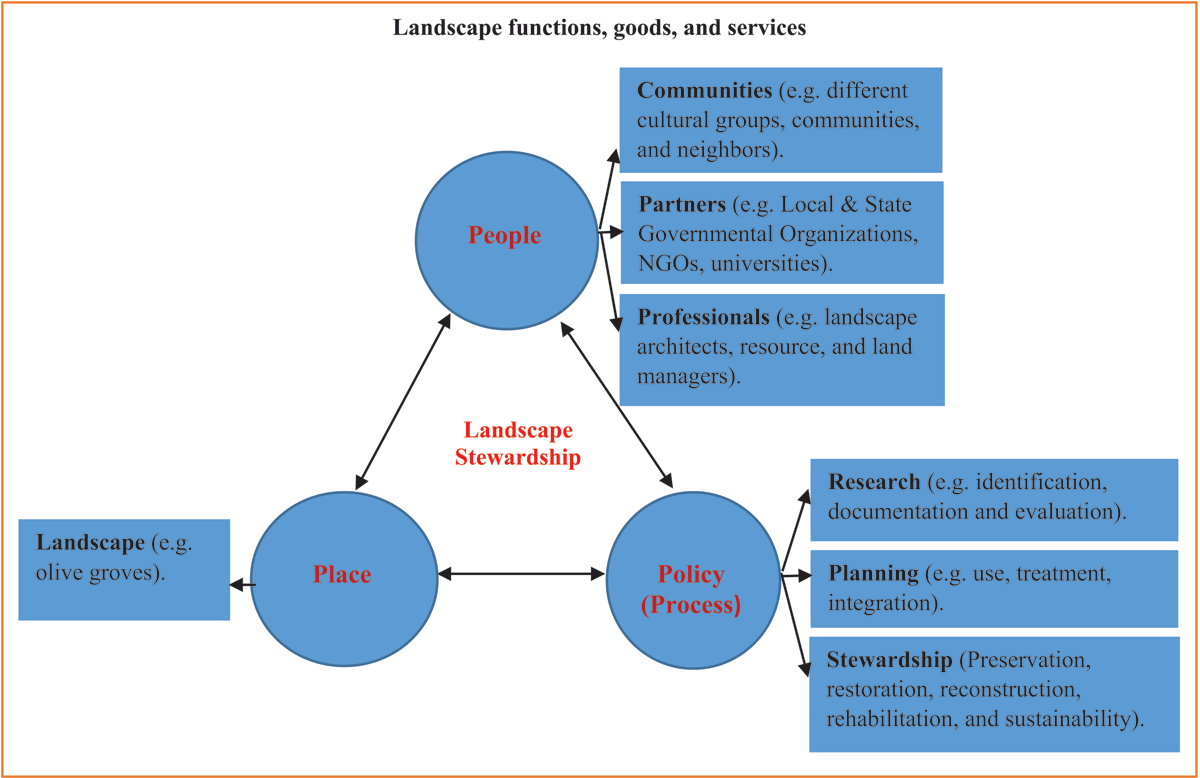
Figure 3
The dimensions of landscape stewardship and relevant drivers in the context of Akdeniz Protected Area. (Developed from U.S. National Park Services, 2021; Brown and Mitchell, 2000; Chan et al., 2016; Conrad, 2017; Raymond et al., 2016; Brown and Raymond, 2007; Eser et al., 2014).
Figure 3 shows that place is one of the fundamental dimensions of landscape stewardship. The results of the assessment of the socio-ecological landscape values of olive groves revealed that the local communities have developed positive emotional bonds and connections with their lands, olive groves, and relevant natural resources. Such connections have contributed to the formation of important drivers of landscape stewardship including ‘place dependence’ and ‘sense of place’, as explicitly stated in the studies of Brown et al. (2002), Chan et al. (2016), Conrad (2017), and Raymond et al. (2016). The results also uncovered that the local people mostly depend on the life-sustaining and socio-cultural values of olive groves, as their activities tend to take place within the olive groves. This finding indicates the importance of olive groves as a ‘place’ in the lives of the local communities. In this sense, the socio-ecological landscape values of olive groves are the key predictors of ‘place attachment’ and ‘place dependence’. For example, the participants highly pointed out the aesthetic value of olive groves. On the other hand, the relationship between the local communities and olive cultivation (e.g., pruning, grafting, harvesting and processing) has stimulated the accumulation of traditional knowledge of olive assets, wild plants, and mushrooms in the region. Although the cultivation of olive groves, as an agricultural system, can comprise a large body of ecological and agronomic knowledge, relevant traditional knowledge was only determined within the scope of this study. For this reason, the place dimension of landscape stewardship should focus on the improvement of place attachment and dependence, documentation of traditional ecological and agronomic knowledge, and monitoring human actions and practices (e.g., land abandonment and aging of the society), which can help policymakers and landscape and resource managers to identify the required conservation, protection, restoration and sustainable use actions for the olive groves in the region.
People are co-creators of landscapes. A set of variables (e.g., nature, culture, values, religion, education, gender, socio-economic and political contexts) influence people’s characteristics. For that reason, the dimension of people in landscape stewardship should consider the communities and their characteristics, the key partners (e.g., the local and state governmental organisations), and relevant professionals (e.g., landscape and land managers), who can design and manage together the landscape stewardship for the olive groves in Akdeniz Protected Area. Recent studies by Brown and Mitchell (2000) and Chan et al. (2016) suggested that the concept of landscape stewardship should greatly rely on the drivers of landscape values, raising awareness, and personal responsibility for sustainable landscape management, and the use of natural, and socio-cultural resources. The findings of Chan et al. (2016) also highlighted that personal responsibility is important for controlling the adverse effects of communities’ actions by involving them in various practices (e.g., decision-making and landscape care activities) and acknowledging their role in the protection of olive groves, landscape functions and services. Furthermore, the socio-ecological landscape values of olive groves are an important driver of the dimension of people. The olive groves and relevant natural assets contribute to the formation of tangible (e.g., life-sustaining values) and intangible (e.g., traditional lifestyle and recreation) landscape values. The people and place dimensions of landscape stewardship are interrelated within this context. In other words, deterioration in one dimension can adversely affect the other dimension. Therefore, both dimensions should be improved, monitored and managed by relevant policy instruments. Thus, the three landscape stewardship dimensions require a set of relevant actions (e.g., education, protection and advocacy) to achieve the fundamental outcomes of landscape stewardship in Akdeniz Protected Area. As several recent studies (Abson et al., 2015; Chan et al., 2016; Garcia-Martin et al., 2018; Seymour et al., 2008; Seymour et al., 2010; van Riper and Kyle, 2014) have emphasised, significant attention should be given to the socio-ecological landscape values of olive groves in the relevant actions. On the other hand, the findings of the study showed that the socio-ecological landscape values are shaped by a set of variables, including gender and culture. The role of socio-ecological landscape values in landscape stewardship was evaluated by considering the relevant literature and focus group discussions (Table 8).
Table 8
The role of socio-ecological values in landscape stewardship.
| VALUE DOMAIN | TYPE OF VALUE | VALUE OF NATURE | STEWARDSHIP PRINCIPLE | EXAMPLES OF HUMAN ACTIVITIES |
|---|---|---|---|---|
| Ecological-economic domain | Life-sustaining value | Instrumental | Prudence | Collection of olive fruits, production of olive oil, and income generation. |
| Ecological biodiversity | Prudence, ecological solidarity | Collection of wild plants and mushrooms. | ||
| Socio-cultural domain | Aesthetic value | Eudemonic/Relational values’ | Good life | Sights, sounds, smells, etc. |
| Recreational value | Hiking, site-seeing, etc. | |||
| Learning value | Awareness | Education activities. | ||
| Future generations value | Justice | Conservation of olive groves. | ||
| Therapeutic value | Good life | Walking in the olive groves. | ||
| Historical value | The local people have developed emotional bonds with their ancestors through the olive tree and olive groves. | |||
| Symbolic value | The olive tree represents the island of Cyprus and peace; therefore, it is valued. | |||
| Spiritual value | The olive leaf is used against the evil eye. | |||
| Cultural heritage | The local communities recognise the cultural heritage value of olive groves. |
Table 8 shows that the nature of the socio-ecological values for olive groves varies between instrumental (values that are directly obtained from the olive groves e.g., food) and eudemonic/relational (values that are indirectly obtained from the olive groves e.g., aesthetic pleasing) values. The conceptual framework of the Intergovernmental Platform on Biodiversity and Ecosystem Services (IPBES) highlighted that the interaction between humans and nature comprises three inclusive elements: nature, nature’s benefits to people, and good quality of life (Pascual et al., 2017). Within this context, the olive groves, as nature, provide a range of socio-ecological landscape values that contribute to the communities’ good quality of life (achievement of a fulfilled human life), prudence (the essential role of olive groves for human survival), and ecological solidarity (the local communities are part of the social-ecological landscape system). Therefore, the local communities should have a responsibility to understand their impacts on the olive groves and associated biodiversity and to develop response actions. In addition, they should be fair about the needs of future generations, as explicitly argued in the studies of Bieling et al. (2020), Himes and Muraca (2018), Mathevet et al. (2018), and Pascual et al. (2017).
Policy is the prerequisite dimension for the successful implementation of landscape stewardship (Chan et al., 2016). It is a process-based dimension that involves the stages of research, planning and stewardship. All kinds of relationships between the local communities, olive groves, natural resources, local values, traditional knowledge and perceptions should be considered in the dimension of policy. In addition, recent studies by Eser et al. (2014) and Chan et al. (2016) indicated that the policy dimension should comprise participation, education and communication—key to the implementation of the UN Convention on Biological Diversity (CBD). The scholars also emphasised that close cooperation between all relevant groups is necessary to convince and change the daily practices of communities in favour of biodiversity. The conservation, protection and restoration of olive groves should require the active participation of local communities through relevant educational programs. Such an approach can help to strengthen care their places, olive groves and associated resources.
Assessment of the dimensions of landscape stewardship showed that all dimensions are interrelated with each other. The interactions between the dimensions and their drivers contribute to the formation and generation of landscape functions (e.g., soil formation, water cycling, habitat formation and biodiversity), which provide essential goods (e.g., food and other local products) and services (e.g., beauty, recreation and cultural heritage) for the local communities in the region. Therefore, as suggested by Plieninger and Bieling (2017), landscape functions should be at the centre of landscape stewardship.
4. Discussion
In this study, the crucial role of the socio-ecological values of olive groves in landscape stewardship was explored in the context of Akdeniz Protected Area located in the Kyrenia region of Northern Cyprus. The following key questions were raised in this context:
What are the major socio-ecological landscape values associated with the olive groves?
What is the impact of the drivers of culture and gender on the values identified?
What is the current situation of traditional knowledge associated with the olive groves and associated natural resources?
What is the crucial role of socio-ecological values in landscape stewardship?
The research methods of a preference-based value questionnaire with a scale of 1–5 and focus group discussions were employed to collect and analyse the data on the research objectives. Both research tools proved to be very effective in terms of efficient use of time and financial resources.
The results of the study revealed that the olive groves constitute the dominant cultural landscape in Akdeniz Protected Area. Over the past centuries, the local people have shaped and managed the olive groves to obtain a variety of goods and services. The interaction between the local communities and the olive groves has led to the development of socio-ecological landscape values and associated traditional knowledge in the region (Figure 4).
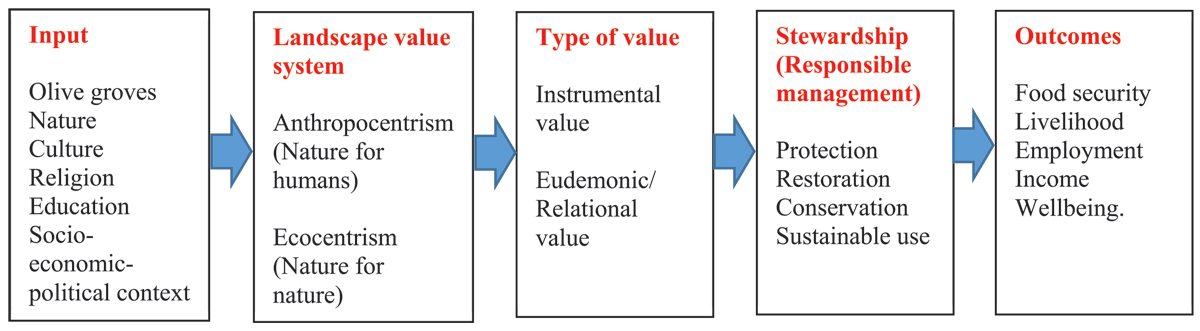
Figure 4
The process of the socio-ecological landscape values for olive groves in landscape stewardship in Akdeniz Protected Area.
Figure 4 indicates that the socio-ecological landscape values of olive groves process at certain stages in landscape stewardship. The main inputs of the socio-ecological landscape values vary according to a range of variables (e.g., culture and gender). The findings of the study showed that the four cultural groups represent both ecocentric and anthropocentric perspectives on the olive groves and associated values. For that reason, the landscape socio-ecological landscape values of olive groves should be considered as a value system and incorporated into the management plans, relevant institutions and decision making, as explicitly suggested in the study of Smith et al. (2016). The main actors of the socio-ecological landscape values are different cultural groups that have different motivations and actions (e.g., olive cultivation, collection of wild plants and mushrooms) for providing a set of goods and services (e.g., food security, employment and wellbeing). However, the findings of the study showed that the socio-ecological landscape values of olive groves vary among different cultural groups based on their connections with the land, resources, olive groves and the overall landscape. In the focus group discussions, it was uncovered that the Maronite Cypriots tend to respect the socio-ecological landscape values of olive groves and attach more importance to them in comparison to the Turkish groups. This is particularly due to the religious beliefs of the Maronite Cypriots. According to their belief system, when Jesus was crucified, he was either carrying an olive branch on his head or an olive tree next to him. Therefore, the olive tree is sacred to the Maronite Cypriots. Moreover, they have lived on the same land for hundreds of years and practised the same traditional activities as their ancestors. Therefore, the Maronite Cypriots appreciate the indicated values more than other cultural groups. It was also found that females are more likely to appreciate the socio-cultural values of olive groves than men. This result indicates that culture and gender play a crucial role in landscape stewardship; therefore, they should be recognised in biodiversity, protected areas, agricultural policies and management plans. This promising result is supported by the arguments of Ives and Kendal (2014) and Pascual et al. (2017).
On the other hand, the results of the study revealed that the local people hold traditional knowledge about olive groves, associated resources, wild plants and mushrooms collected in the surrounding natural areas of the olive groves. This knowledge plays a particularly important role in the traditional diet system and lifestyle of the local communities. The relevant knowledge is still used and passed on by the community members. Sharing this knowledge offers the opportunity to promote dialogue between different cultural groups. Within this context, the socio-ecological landscape values should be recognised as a complex system influenced by the perspectives, opinions, traditional knowledge, culture and religion of local communities.
The assessment of the role of values in landscape stewardship revealed that four cultural groups care for, respect and value the olive groves to different degrees. Furthermore, the olive groves play a crucial role in the life of the communities due to ‘place attachment’ and ‘place dependence’. The landscape values, including instrumental (e.g., olive fruit) and eudemonic (e.g., spiritual and aesthetic) values, contribute to survival, a good quality of life, awareness and justice in communities. Within this context, all cultural groups are responsible for the conservation, protection and good management of olive groves in the region. This finding confirms the arguments of several recent studies (Bieling et al., 2020; Himes and Muraca, 2018; Mathevet et al., 2018).
Finally, the main limitation of this study was the small sample size of local people who participated in this study (n: 60). This limitation was mainly due to factors such as the migration of the younger generation to the cities for employment opportunities and the ageing of society. To avoid biases, future studies should include a larger sample size of the population to improve the validity of the research.
5. Conclusions
This study sought to understand the crucial role of the socio-ecological values of olive groves in landscape stewardship in the context of Akdeniz Protected Area in Northern Cyprus. The results showed that four cultural groups (e.g., the Turkish and Maronite Cypriots) living in the protected area appreciated the socio-ecological landscape values of olive groves to different degrees. Also, the values varied between males and females. Therefore, the socio-ecological landscape values of olive groves and the drivers of culture and gender should be taken into account in the management plan of Akdeniz Protected Area and other relevant policies (e.g., agriculture) to successfully protect and manage the olive cultural landscape and related resources in the region. In addition, similar studies, even comparative studies, should be conducted in different parts of the Mediterranean region to gain a comprehensive understanding of the various socio-ecological landscape values of olive groves, to explore the key drivers of change, their impacts and potential policy responses, as well as to reduce biases. Furthermore, the socio-ecological landscape values of olive groves have developed throughout history. These values have contributed to the development of cultural identity in the region. Therefore, these values and associated traditional knowledge should be considered and managed as part of the rural cultural heritage at the institutional level.
The findings of the study revealed that the interaction of the local communities with the olive groves has led to the accumulation of traditional knowledge about olive groves and associated resources, wild plants and mushroom species, which play a significant role in the traditional diet system of the local communities in the region. Today, this knowledge is widely shared and used by the community members. Also, this knowledge and the relevant practises play a significant role in the development of cultural identity and historical bonds. However, this knowledge is at risk of deterioration due to the impacts of migration of the younger generation out of the region for employment reasons, the ageing of society, and land abandonment. For that reason, this knowledge should be regarded as a cultural heritage. In addition, detailed documentation of traditional knowledge of olive groves and associated species is necessary to contribute to the ex-situ conservation and maintenance of this knowledge system at the institutional level. Furthermore, this knowledge should be integrated into the ecotourism and/or agro-tourism festivals and the educational program to raise the awareness of society and schoolchildren about healthy and traditional food systems. Such instruments can be promising approaches to sustaining the relevant traditional knowledge and practices and enhancing the cultural identity of the region.
On the other hand, the interaction of the local communities with the olive groves has led to the formation of human perceptions, actions, and decisions that have been directly and/or indirectly influenced by various political and economic issues in Northern Cyprus (e.g., conflicts between the South and North Cyprus and the economic crisis in North Cyprus). Land abandonment has emerged as an important driver of the olive landscape change in the region. Within this context, landscape stewardship can be a promising approach to giving more responsibility to the local people in terms of management, decision-making and participation in all activities and actions that have direct and/or indirect impacts on the region.
Acknowledgments
I am grateful to the community members of Akdeniz Protected Area, who voluntarily participated in the surveys. I would also thank two anonymous referees for their constructive comments in terms of significantly improving the early version of this paper.
Competing Interests
The author has no competing interests to declare.