
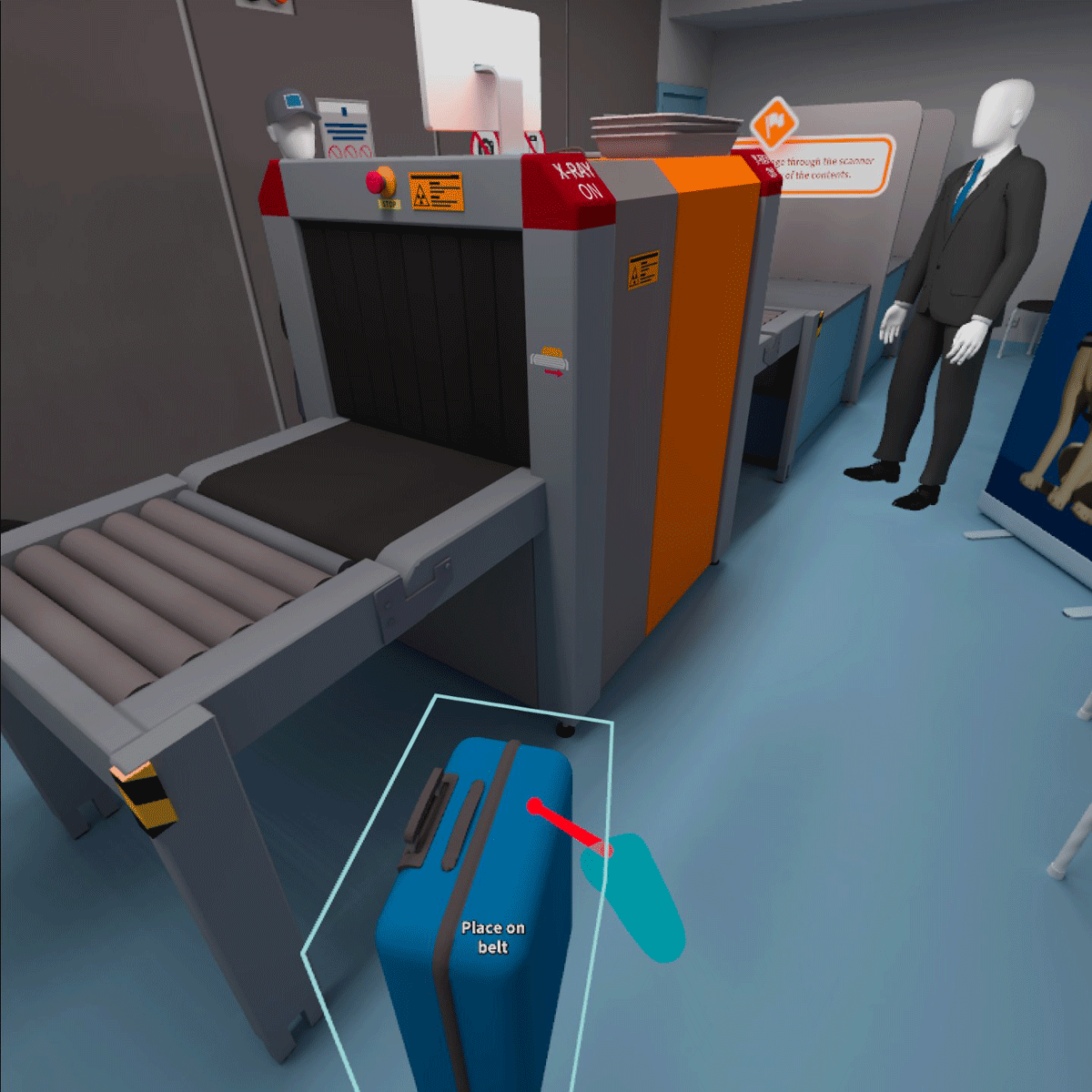
Figure 1
A screenshot of an IVR training scenario on X-ray baggage inspection. An X-ray machine stands in a room, and a cabin bag sits on the floor next to the machine’s conveyor belt. A red pointer connects the bag to a blue shape that indicates the placement of the user’s right-hand controller. Floating text on the bag says ‘Place on the belt’ to inform the user of the action that will follow from clicking on it—picture courtesy of Finnish Institute of Occupational Health.
Table 1
Findings on the trainers’ perceptions of the training goals arranged by theme and category.
| THEME | CATEGORY | n | f |
|---|---|---|---|
| Organizational goals | Maintain organizational safety culture | 17 | 27 |
| Comply with external regulations | 7 | 10 | |
| Minimize cost of safety incidents | 2 | 4 | |
| Trainers’ goals | Maintain safe work practices | 17 | 41 |
| Apply organizational safety guidelines | 10 | 10 | |
| Deliver high-quality training | 8 | 19 | |
| Learners’ goals | Learn to work safely | 17 | 41 |
| Motivation to learn | 14 | 28 | |
| Comply with external pressure to participate in training | 6 | 6 | |
| Modify attitudes and safety behavior | 3 | 5 |
[i] Note. n = number of trainer interviews with coded units; f = number of coded units in category.
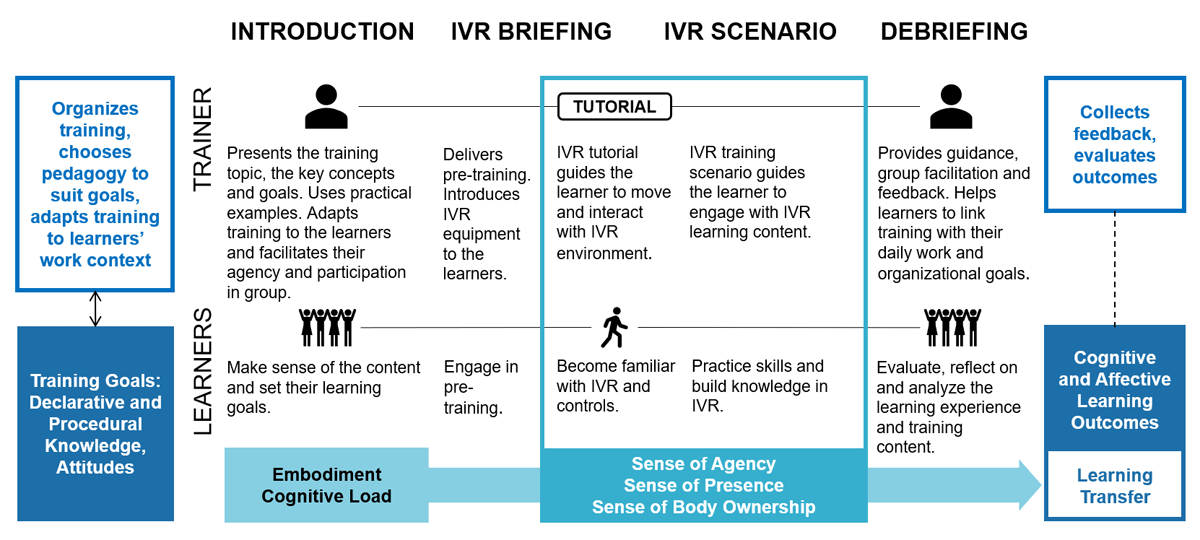
Figure 2
The pedagogical model for IVR safety training (Lehikko, Nykänen, & Ruokamo, 2025).