
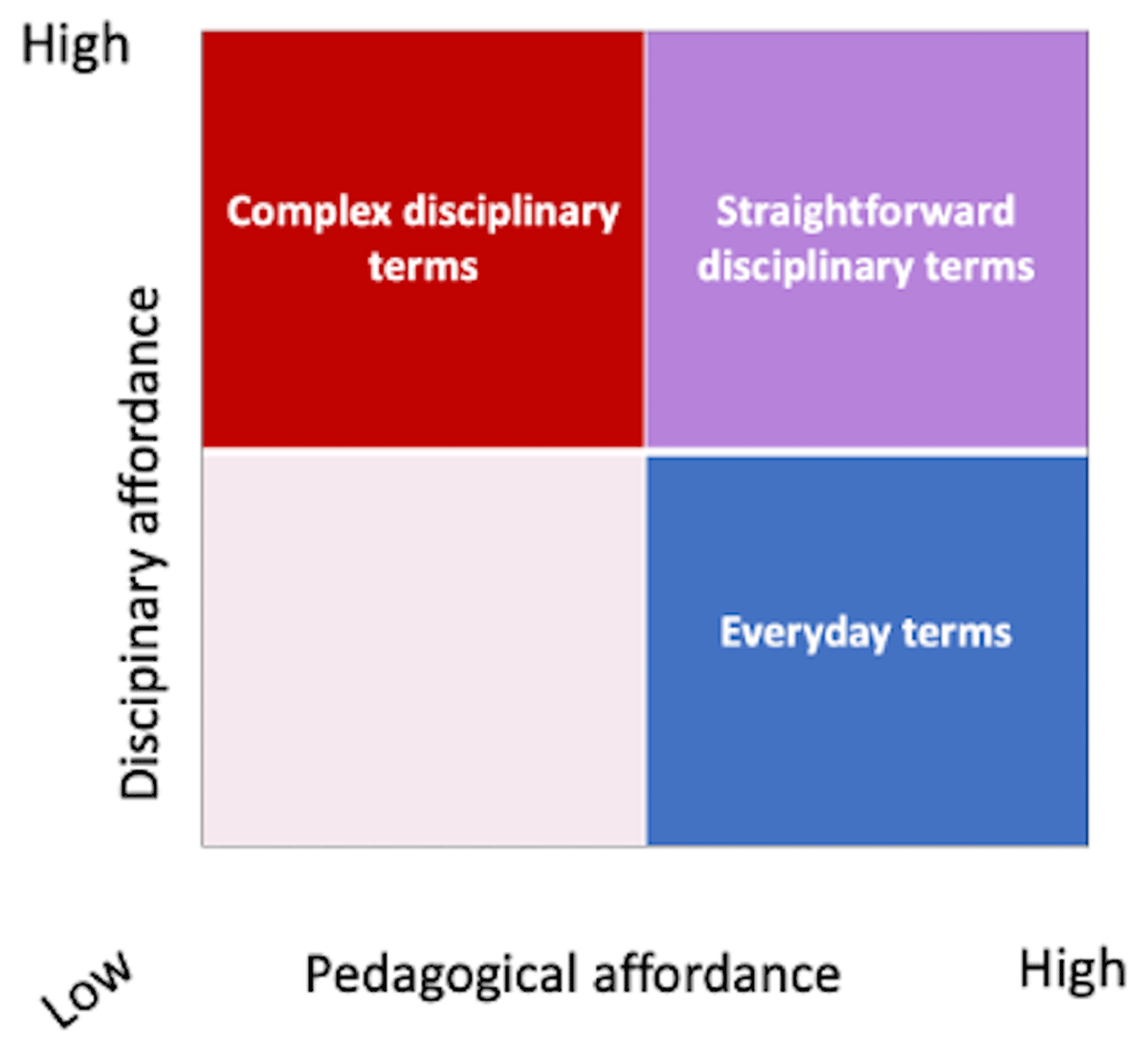
Figure 1
Scientific terms and everyday expressions as part of disciplinary and pedagogical affordance (developed from Airey & Eriksson, 2019).
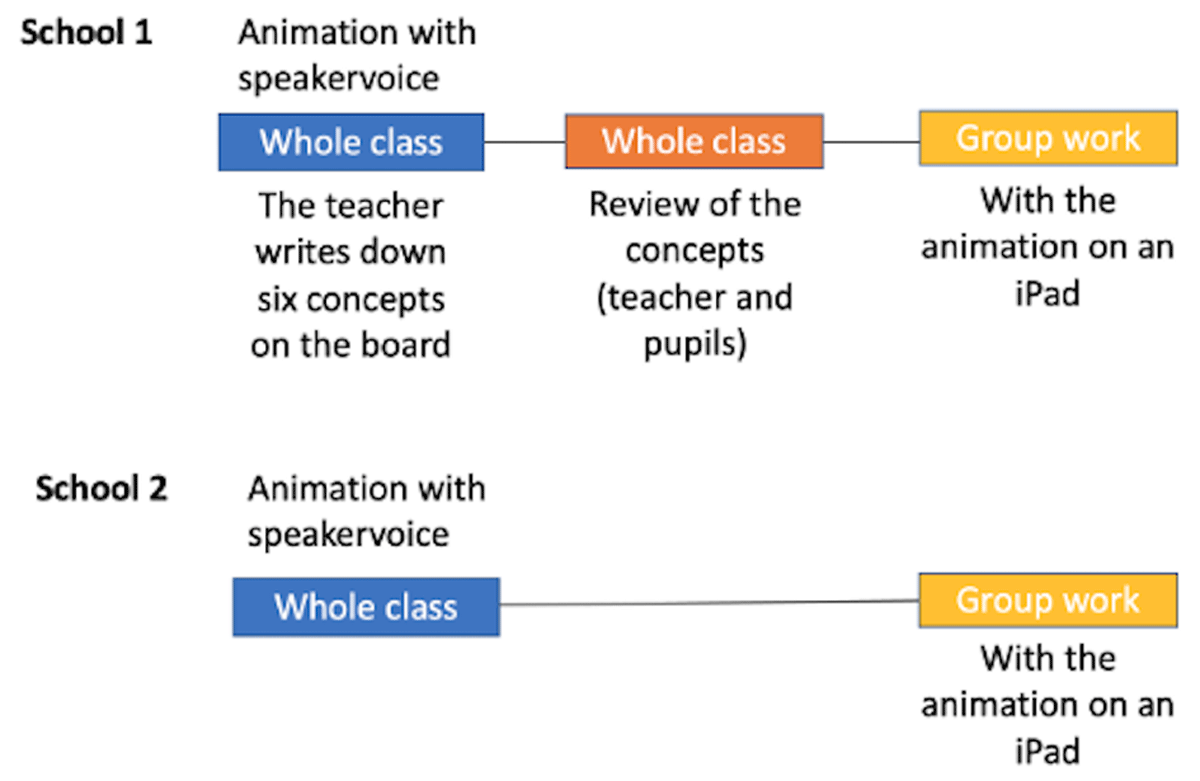
Figure 2
The teaching design.
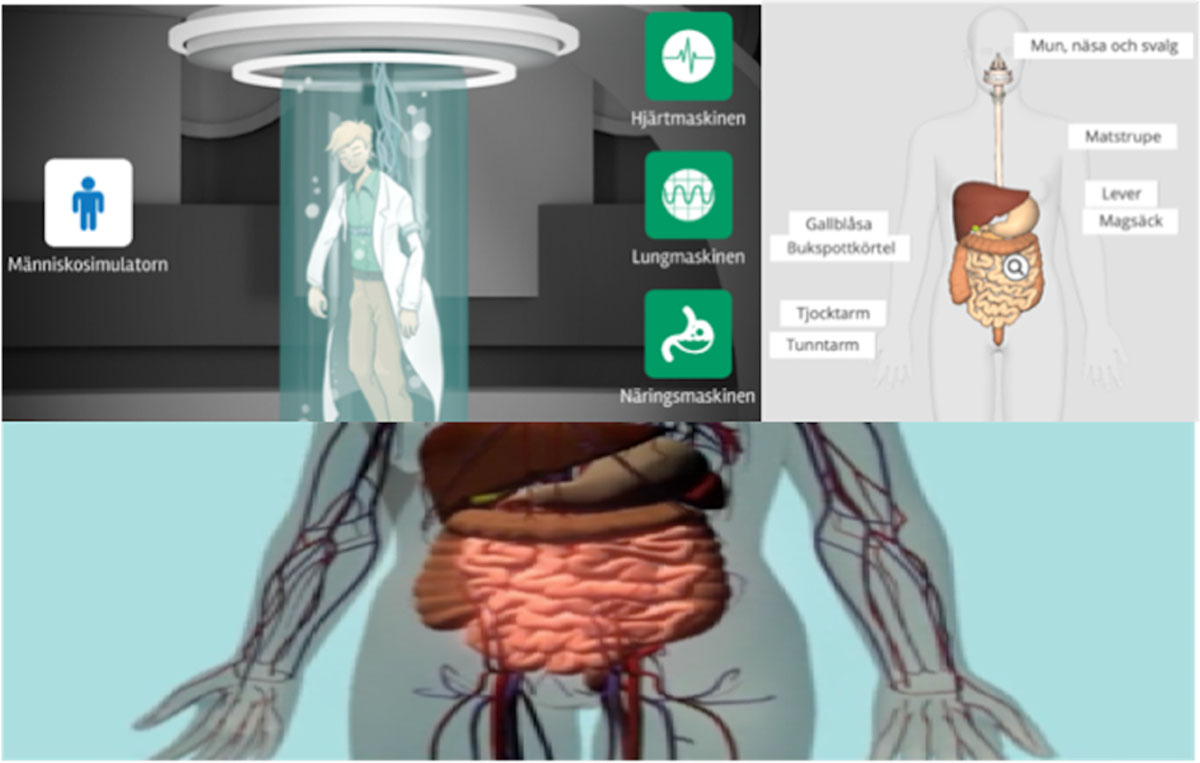
Figure 3
The model and digital platform of NTA-digital (NTA Skolutveckling, 2021).
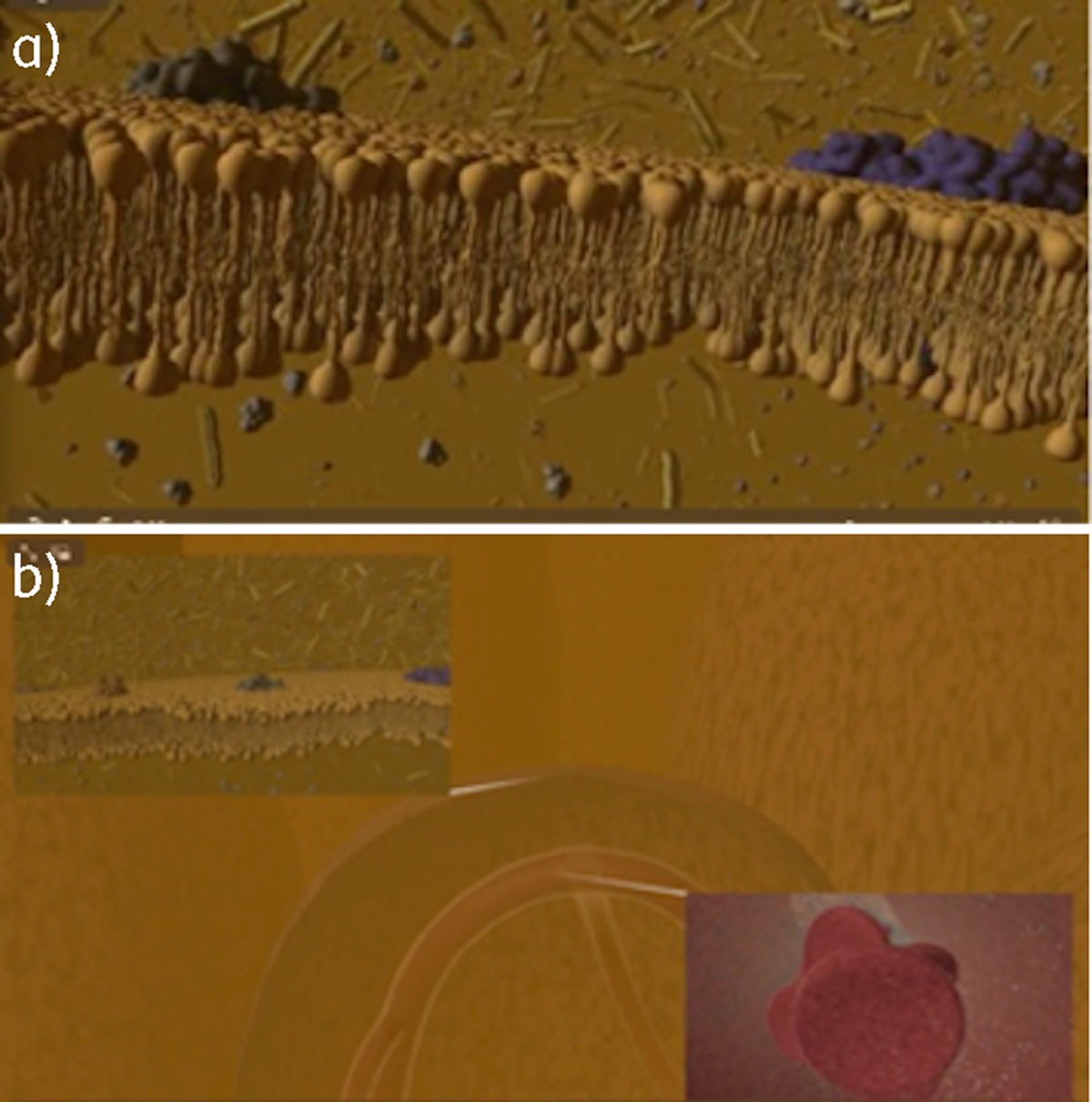
Figure 4
a) Screenshot from the animation where the image shows the cell membrane, i.e. a double layer of fat molecules with membrane proteins (NTA Skolutveckling, 2021). b) Screenshot from the animation where the image at the top left shows how the nutrient molecules are transported through the cell membranes in the intestinal cell and the capillaries and into the blood capillary (the image at the bottom right). The background image is intended to give an overview of one enlarged microvilli (NTA Skolutveckling, 2021).
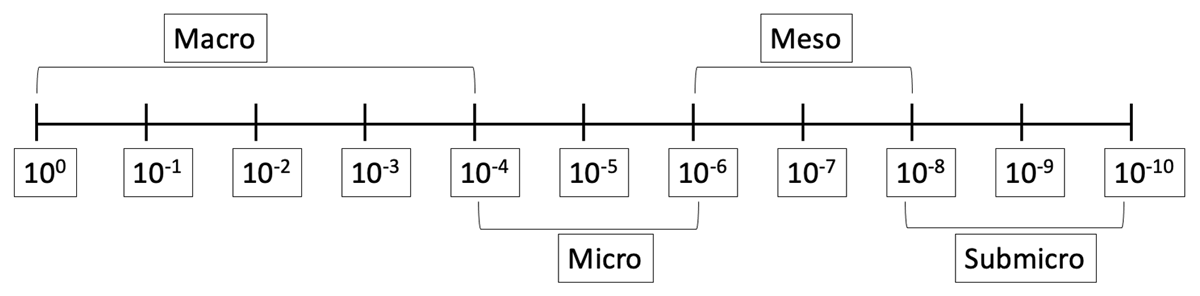
Figure 5
The scale (in meters) of the organizational levels in biological systems recognized in this article.
Table 1
Analytical tool for identification of everyday and scientific terms based on organizational levels.
| TYPE OF TERM | MESO | SUBMICRO |
|---|---|---|
| 10–6 – 10–8 m | 10–8 – 10–10 m | |
| Scientific term | Microvilli | Nutrient molecules |
| Corresponding everyday expression | Fluff on fluff/protrusion on protrusion | Building blocks |
| Scientific term | Membrane proteins | Phospholipid molecule |
| Corresponding everyday expression | Gate/Channel/Entry/Door/Transport thing | Cotton swabs |
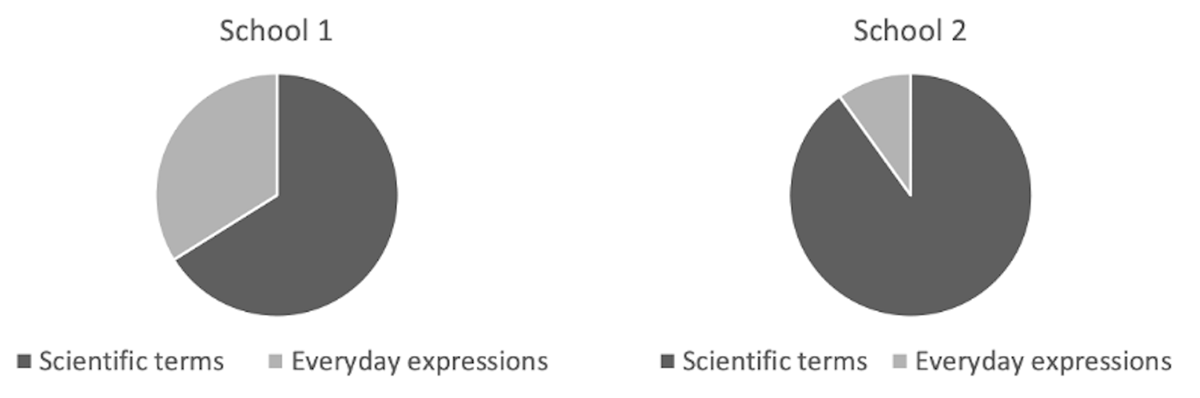
Figure 6
Proportion of scientific terms and everyday expressions used to explain the science content in the group discussions in school 1 and 2.
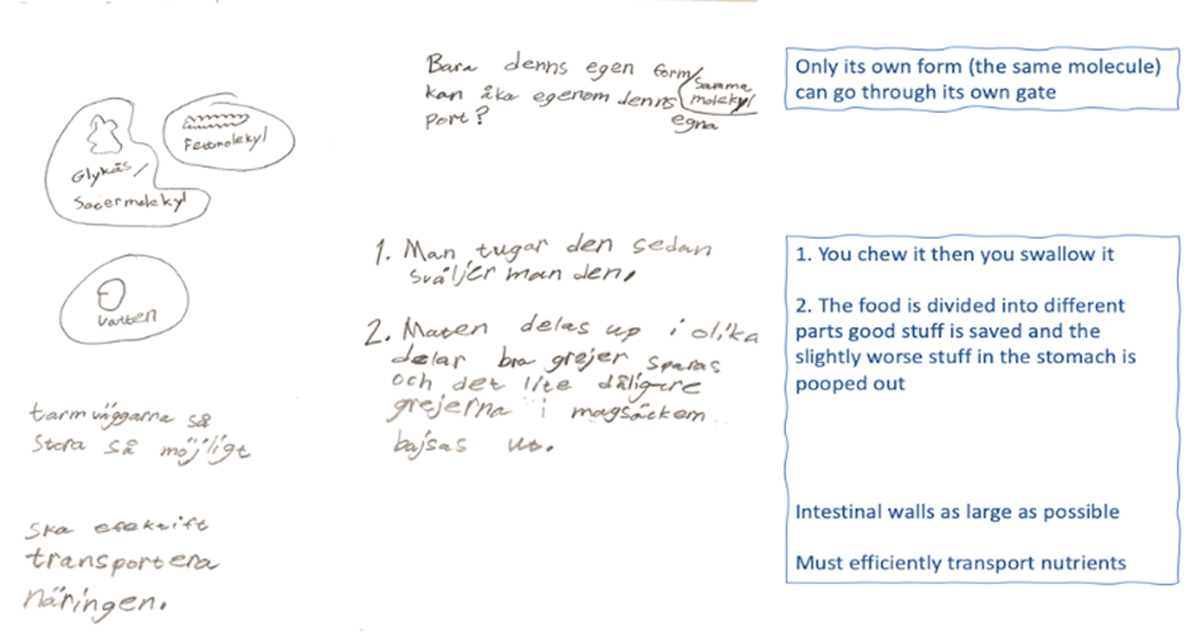
Figure 7
Written description with drawings by students from school 1.
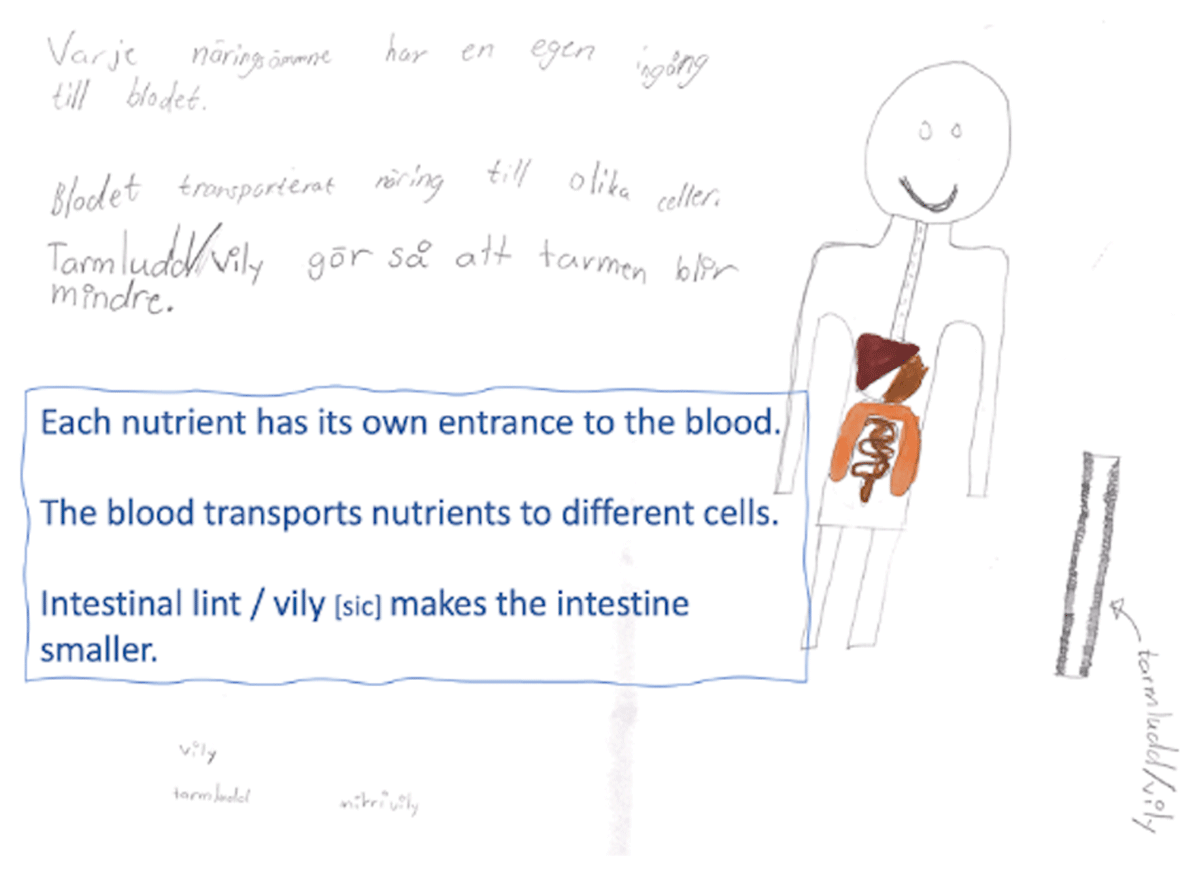
Figure 8
Students’ group discussions without a preceding teacher review.
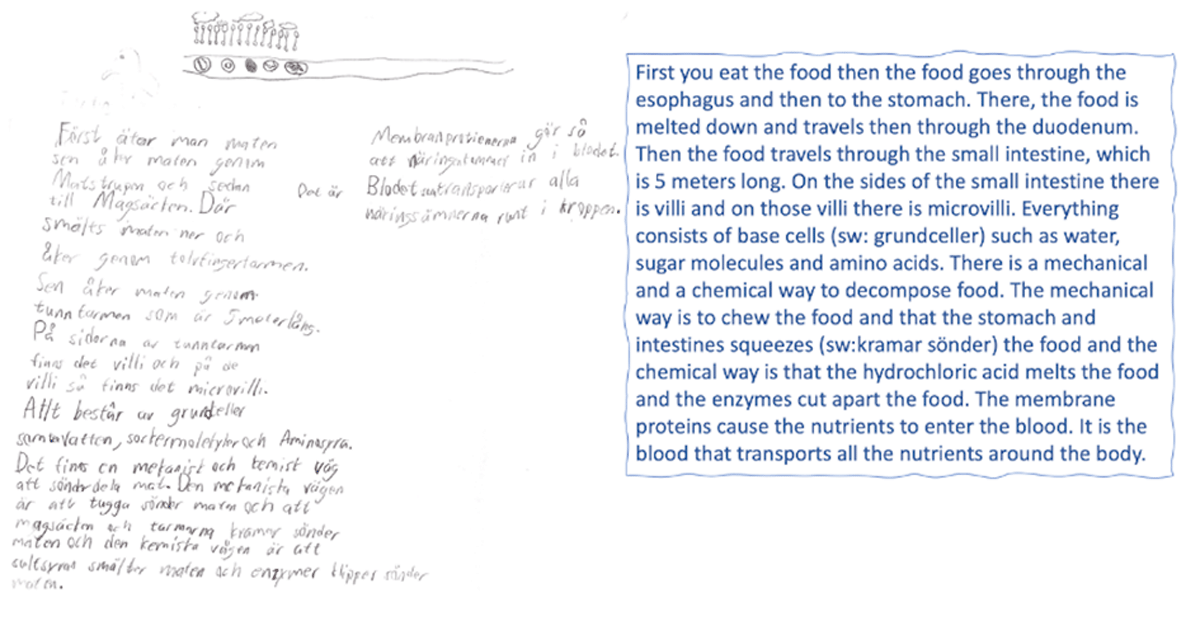
Figure 9
Students’ group discussions with a preceding teacher review.
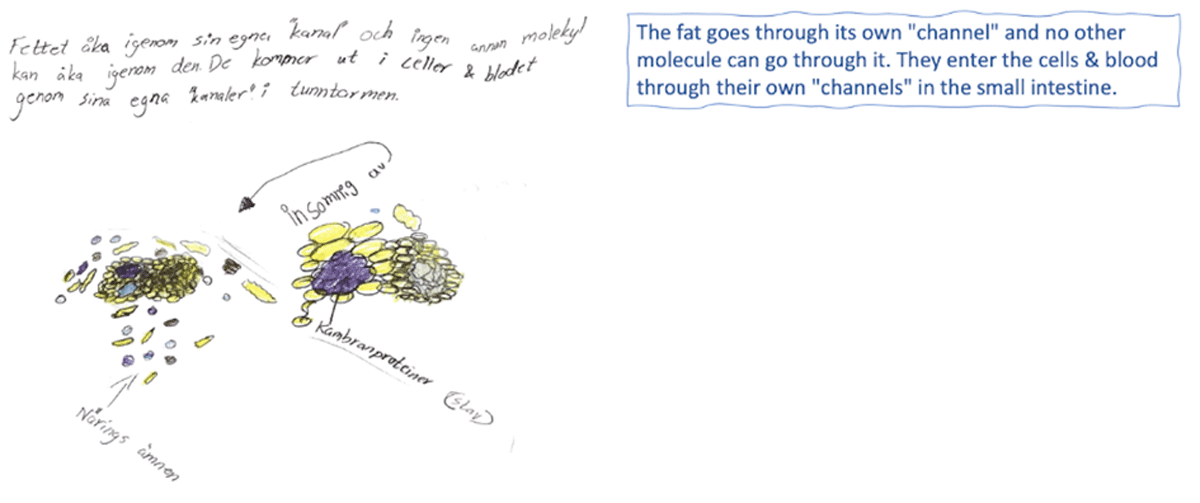
Figure 10
Written description with drawings by students from school 2. The students point out nutrients in the picture and they zoom in from one picture to the other where they point out the membrane proteins, however misspelled, but referred to as a rod in parentheses in the drawing.
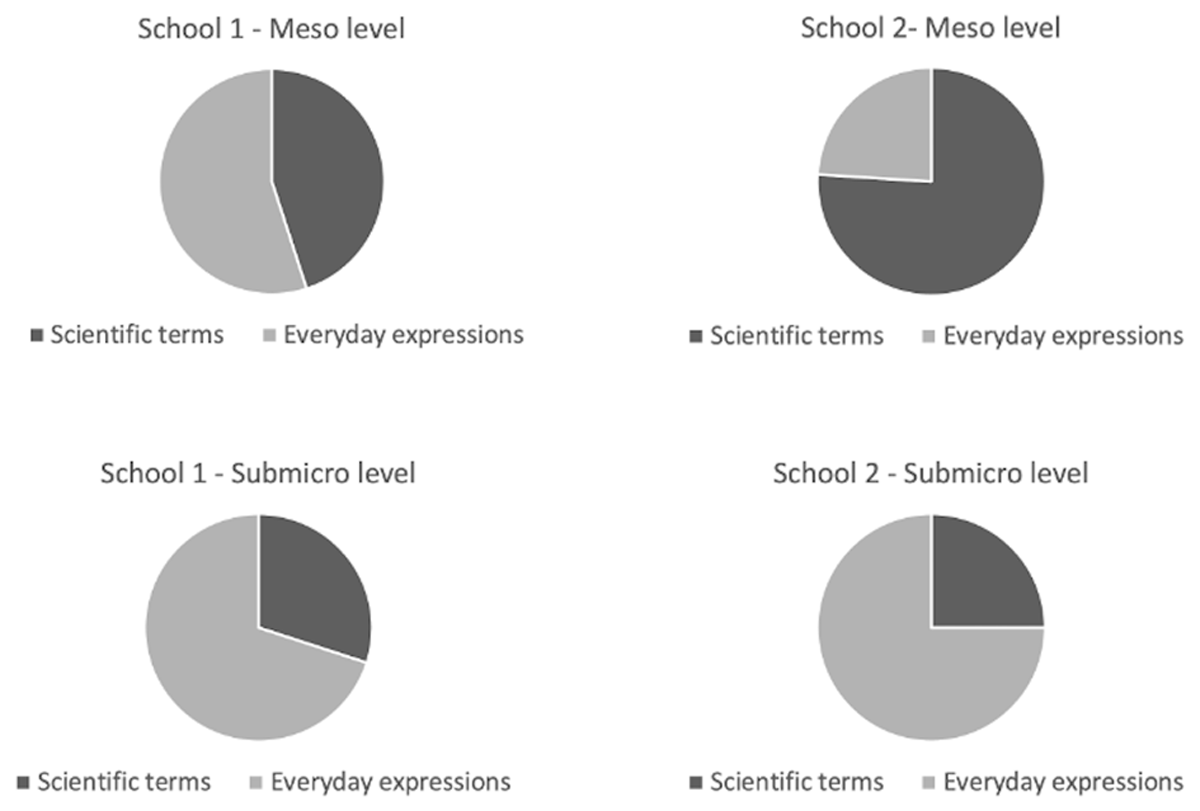
Figure 11
Proportion of scientific terms and everyday expressions at the meso- and sub-micro levels used in the group discussions.