
Table 1
Participant breakdown for all sessions.
| Students | Parents | Teachers | Administrators | Total participants per session | |
|---|---|---|---|---|---|
| Session 1 | 13 | 3 | 3 | 1 | 20 |
| Session 2 | 8 | 4 | 0 | 1 | 13 |
| Session 3 | 4 | 3 | 2 | 1 | 10 |
| Session 4 | 9 | 3 | 2 | 0 | 14 |
| Total participants per category | 34 | 15 | 5 | 3 | 57 |

Figure 1
The process used to identify the Spheres of Influence.
Table 2
Definitions and examples of Spheres of Influence, expanded from: Coenraad et al., 2020.
| Sphere of Influence | Definition | Proportion of Results and Examples Generated by Youth during Design Sessions | Relation to Original Framework |
|---|---|---|---|
| Home and Family | The people, activities, and beliefs that surround a person’s family and home including their neighborhood and broader community | 11% of Youth Ideas “Family reunion,” “cousins,” “motivated by mother” | Unchanged |
| School and Work | People and activities specifically related to school or school programs as well as focus on future schools and careers | 15% of Youth Ideas “good high school,” “teachers,” “Spanish class,” “wants to be an Olympian” | Expanded (formerly School) |
| Hobbies and Leisure | The things that students do such as arts, sports, or interacting with media forms such as music and video games | 19% of Youth Ideas “sleep,” “dancer,” “cooking,” “Saturday science group” | Unchanged |
| Media | Things that youth consume including social media, television, movies, books, videos games, and characters/locations from these media sources | 12% of Youth Ideas “Cardi B,” “Mario Kart,” “Anime,” “Tomato Town” (location in the video game Fortnite) | Expanded (formerly TV) |
| Interests | Things that attract youth attention but are not an activity that can be done such as animals, sports teams, locations, and things like hair and fashion. | 24% of Youth Ideas “Marley hair styles,” “zodiac sign,” “Titanic,” “White Sox” (a baseball team) | New |
| Peers | Activities referenced as done with a peer or people considered to be peers including neighbors, classmates, and online “friends”. | 6% of Youth Ideas “people on social media,” “talking to my friends,” “video games with friends,” “best friend” | New |
| Identity | Learner characteristics such as gender, age, and appearance, views of themselves such as “beauty girl” and “vegetarian,” and personal qualities. | 9% of Youth Ideas “follows her own mind,” “thinkers,” “curly hair,” “fast” | New |
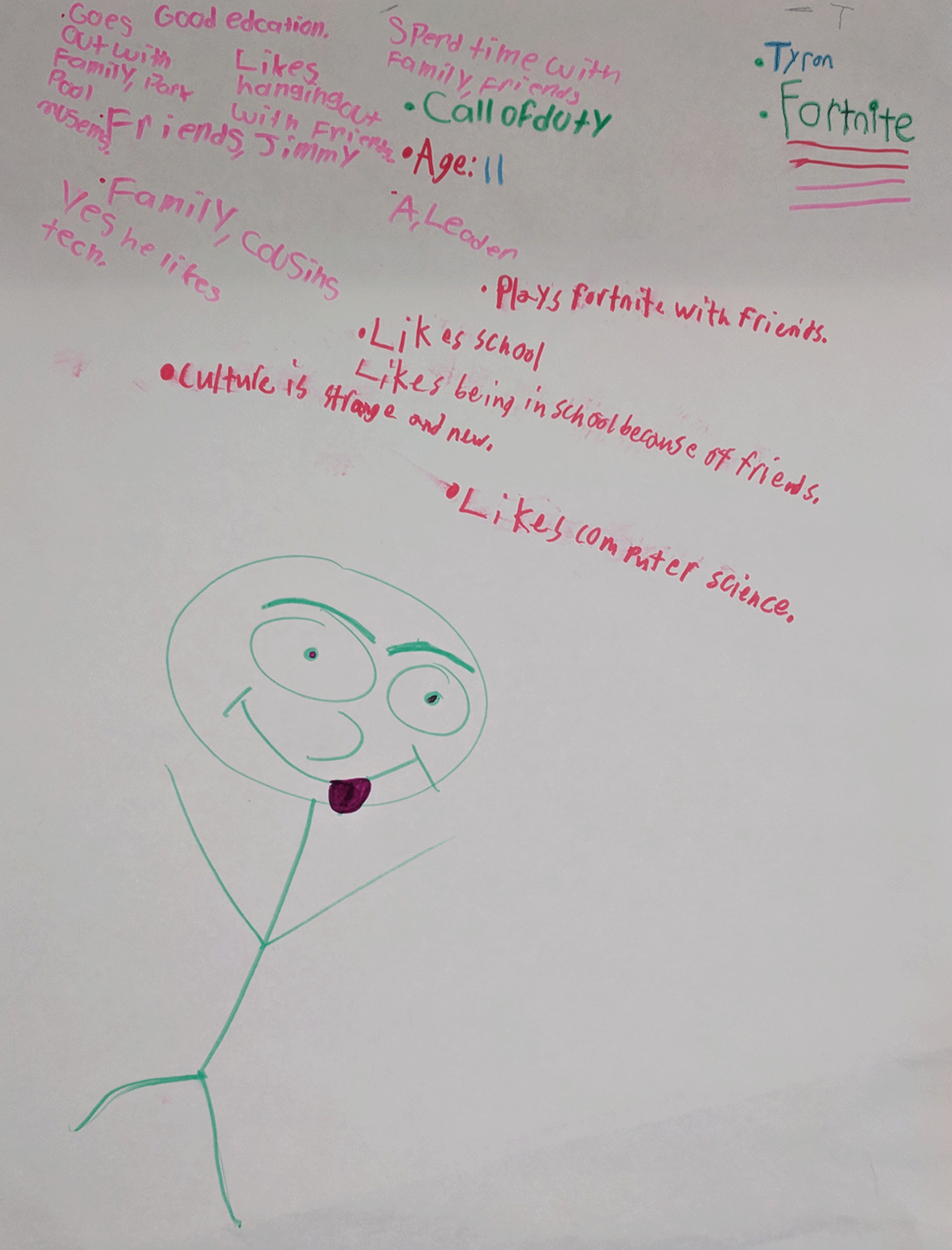
Figure 2
Likely Learner Participatory Design Artifacts: Tyrone.
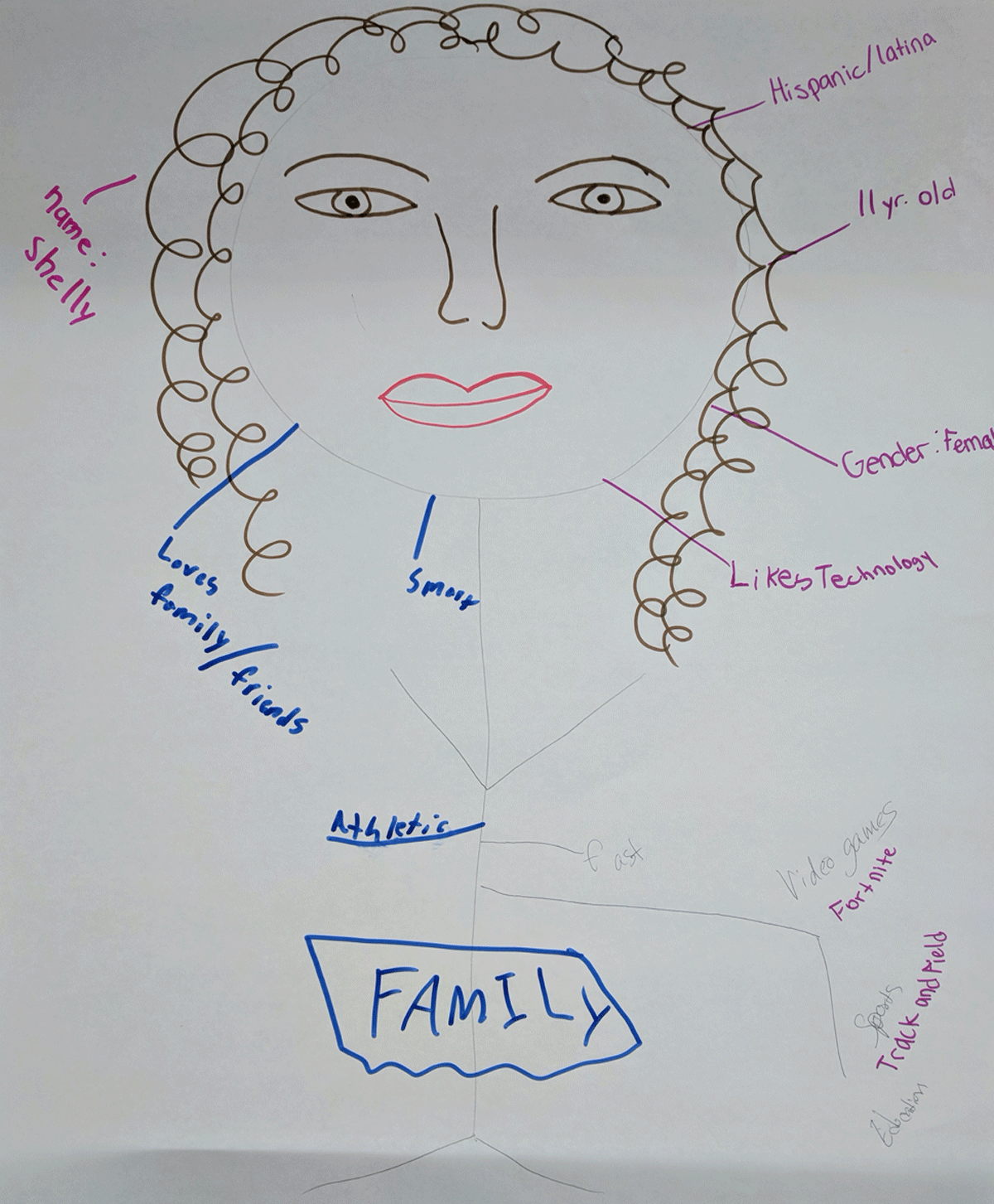
Figure 3
Likely Learner Participatory Design Artifacts: Shelly.
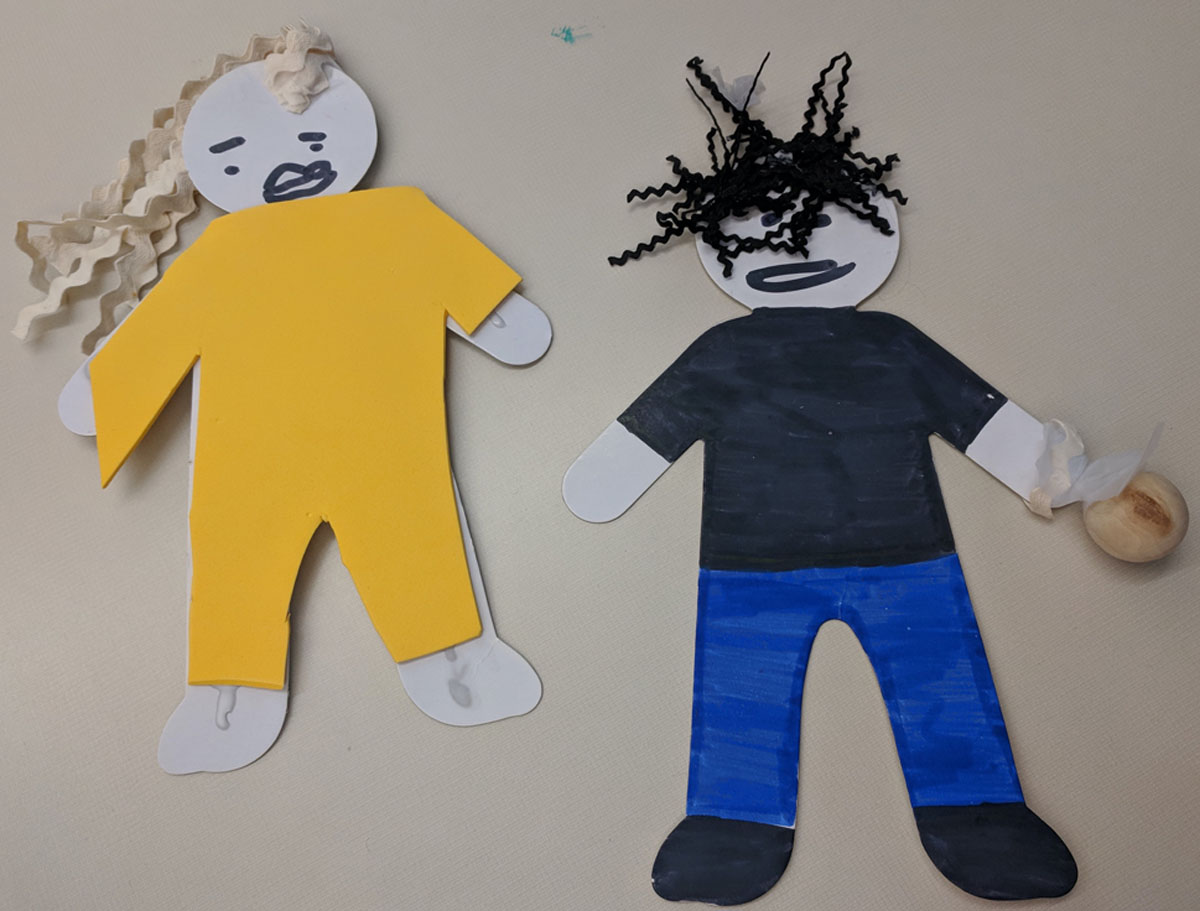
Figure 4
Bags of Stuff Participatory Design Artifacts: Cardi B and Offset Proposal.
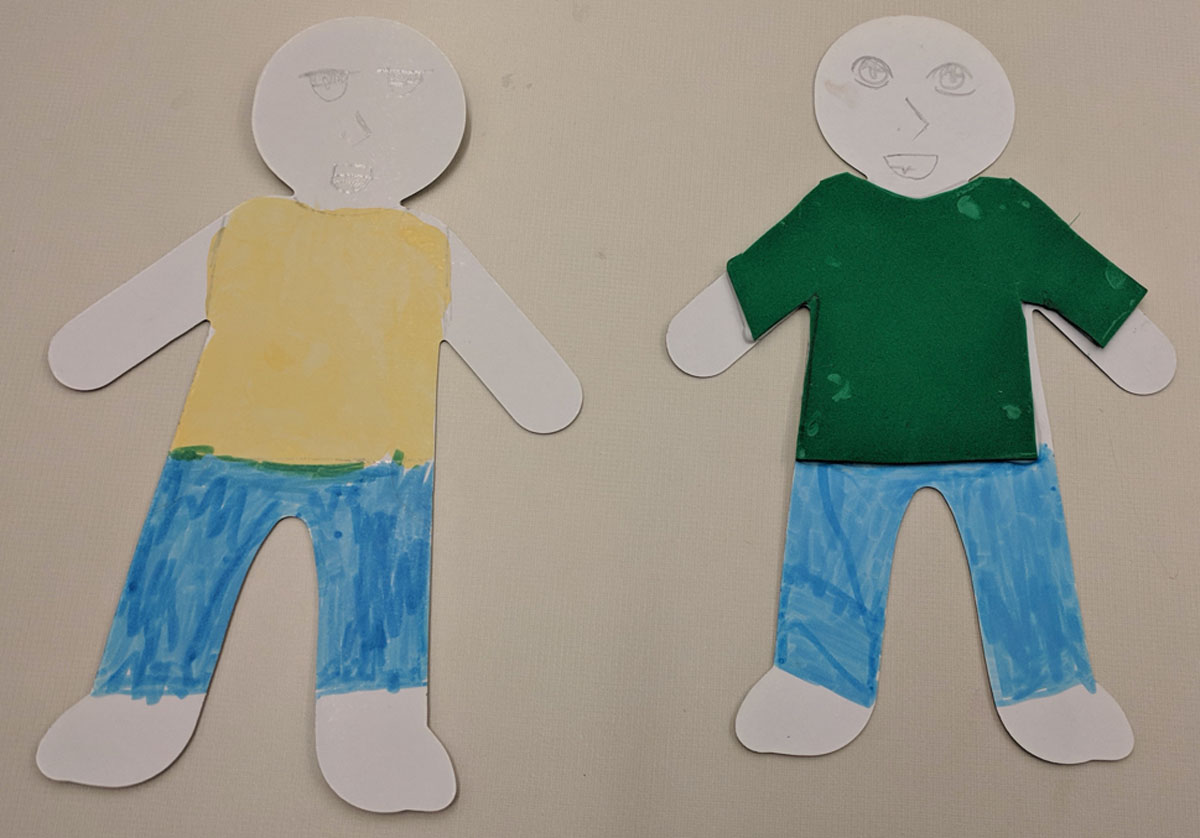
Figure 5
Bags of Stuff Participatory Design Artifacts: Two boys “just chillin’”.
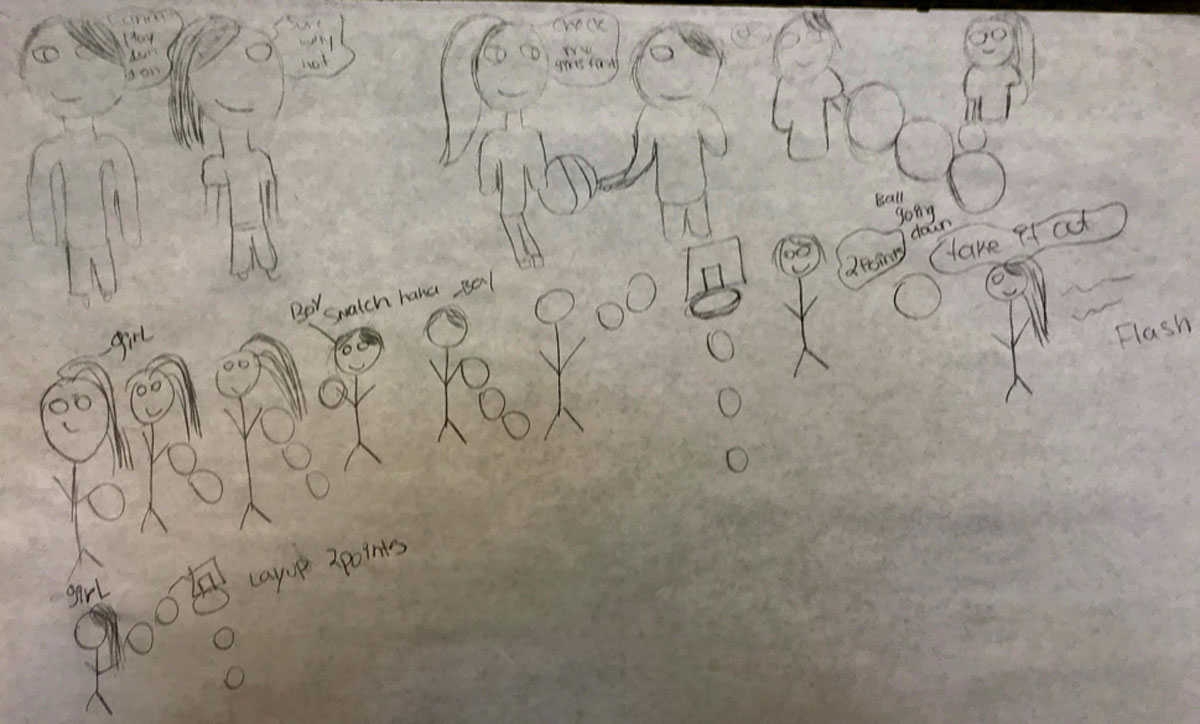
Figure 6
Module Design Participatory Design Artifacts: One on One Basketball Game Big Paper.
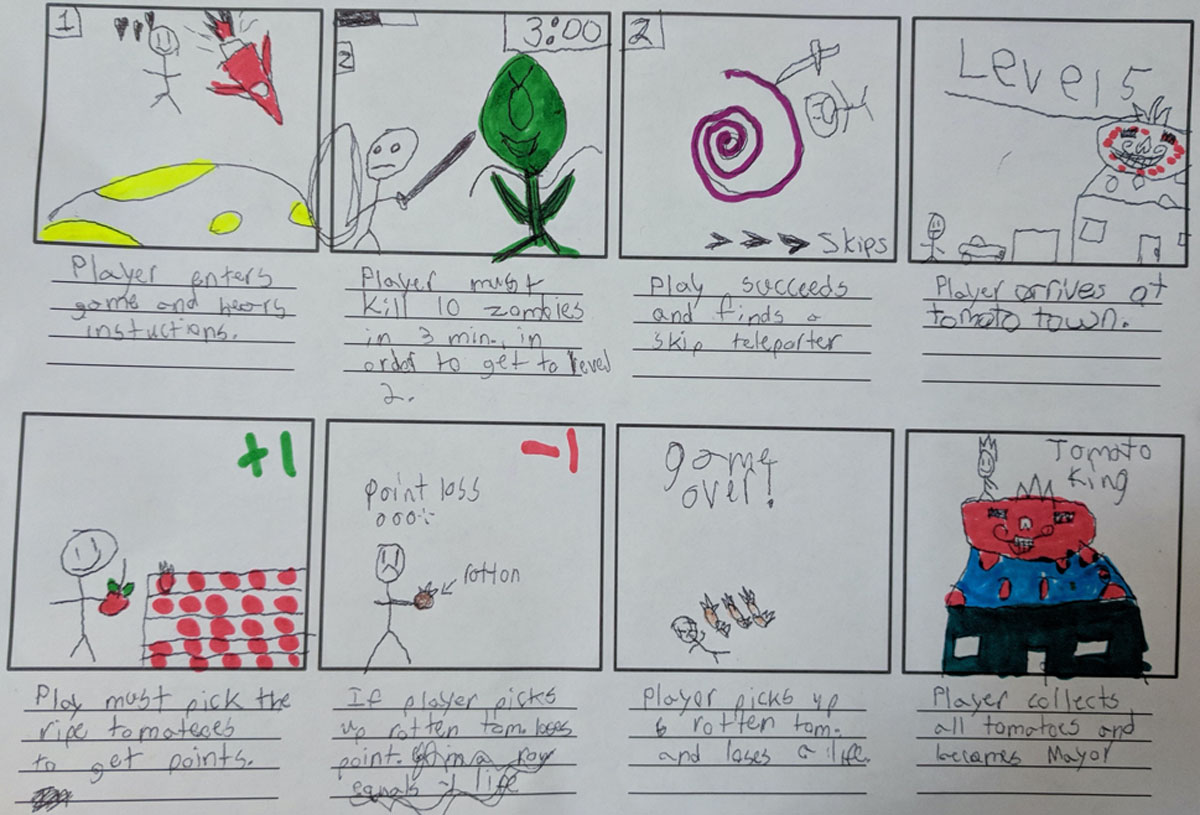
Figure 7
Module Design Participatory Design Artifacts: Tomato Town Storyboard.