Have a personal or library account? Click to login
Comparison of sonographic hepatorenal ratio and the degree of hepatic steatosis in magnetic resonance imaging-proton density fat fraction Cover

Comparison of sonographic hepatorenal ratio and the degree of hepatic steatosis in magnetic resonance imaging-proton density fat fraction

Open Access
|Sep 2020

Figures & Tables

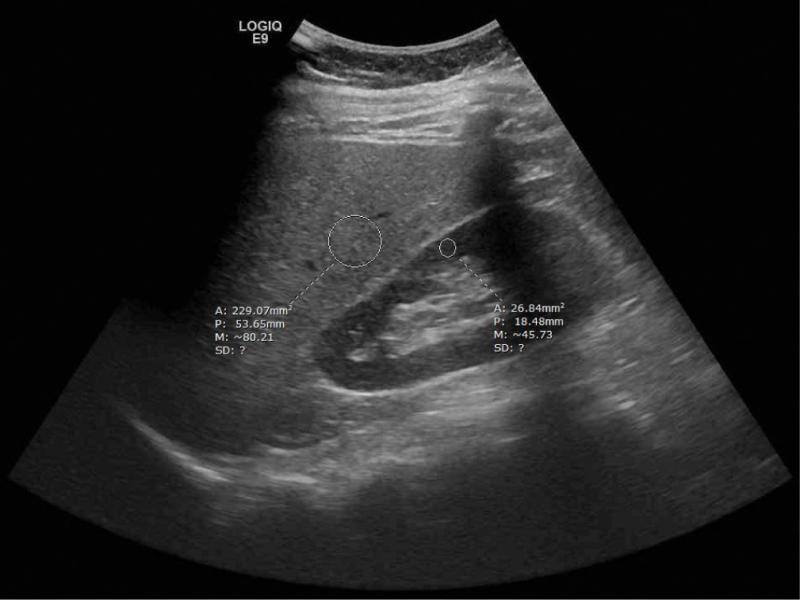
Fig. 1.

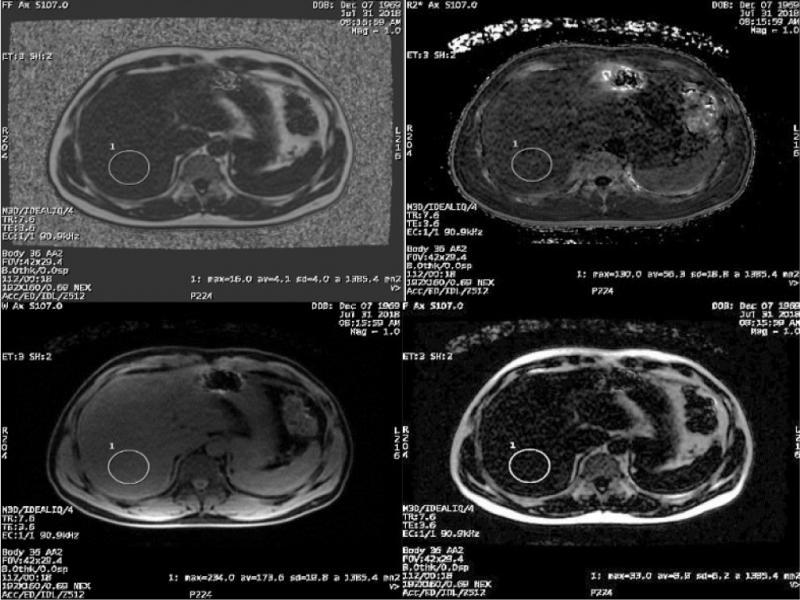
Fig. 2.

The images were processed by using the software provided by the manufacturer (IDEAL-IQ; GE Healthcare) which created water, fat, R2* maps and PDFF parametric map representing fat mapping of the entire liver. ROI was placed in hepatic segment VI

Fig. 3.

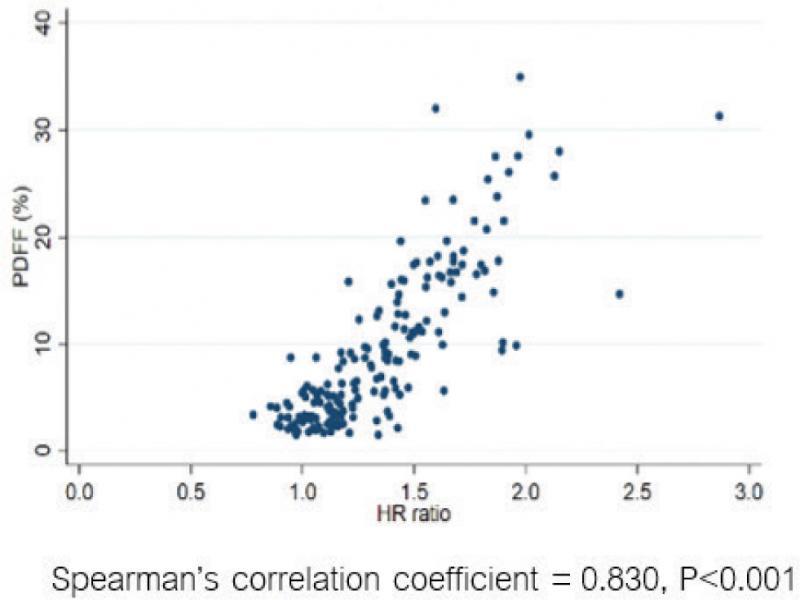
Spearman’s correlation between HR ratio and fat fraction quantified by MRI-PDFF 3T (N = 179)

Fig. 4.

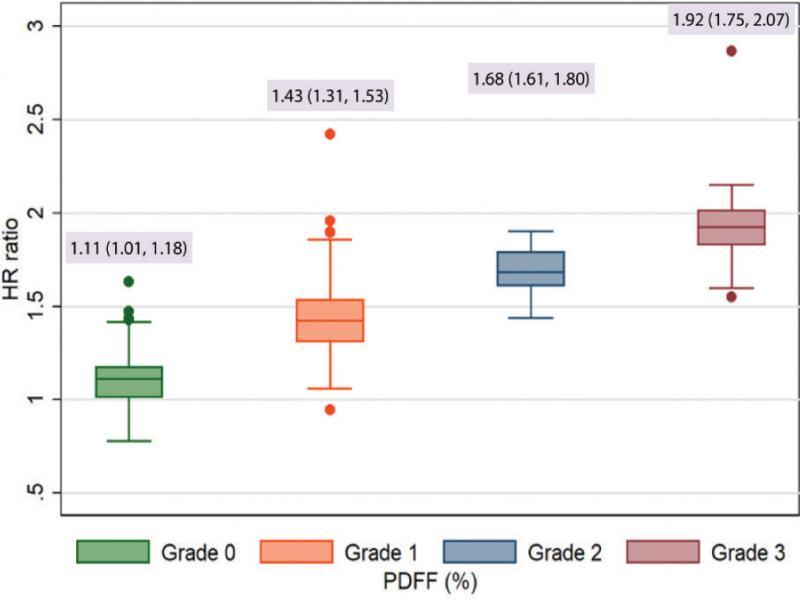
Distribution of hepatorenal ratio in patients according to categories of steatosis; none, grade 1, grade 2 and grade 3 steatosis

Fig. 5.

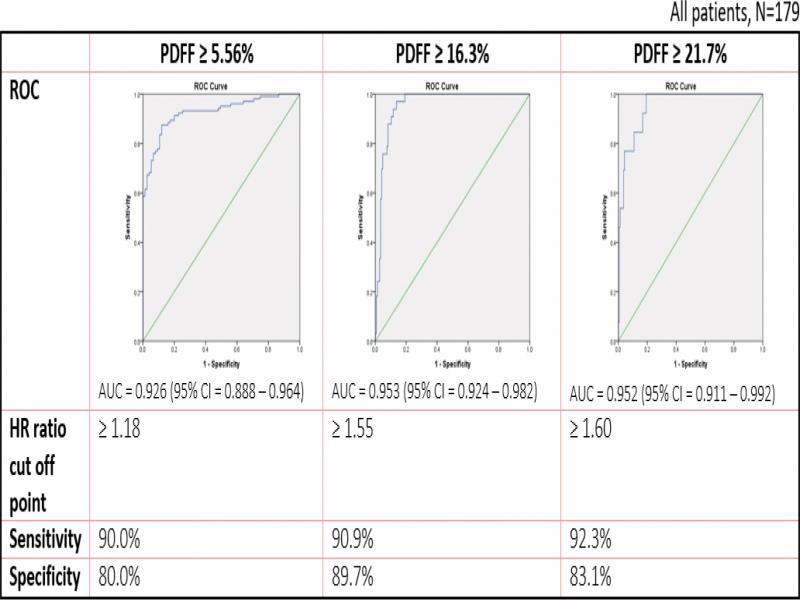
ROC curve of sensitivity (true-positive fraction) plotted against 1-specificity (false-positive fraction) of hepatorenal ratio for the diagnosis of different levels of steatosis quantified by MRI-PDFF

Fig. 6.

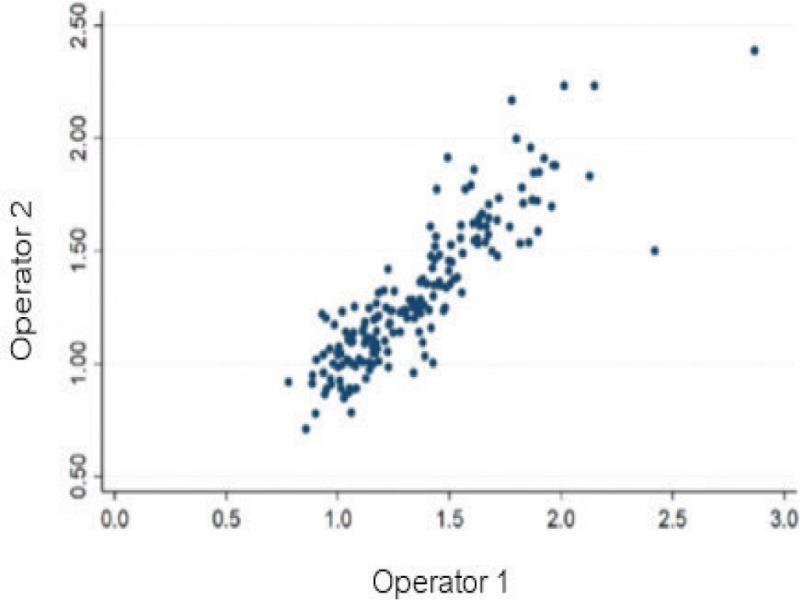
Hepatorenal ratio interobserver reliability. Intraclass correlation coefficient = 0.882, p <0.001. Spearman’s correlation coefficient = 0.889, p <0.001

Correlation between hepatorenal ratio and MRI-PDFF by liver stiffness (n = 179)

Liver stiffness by MRE (kPa)NSpearman’s correlation coefficient p-value
<2.5870.874<0.001
2.5–2.8180.849<0.001
2.9–3.4260.832<0.001
≥3.5–5480.591<0.001

Demographic data of the 179 patients in the study sample

CharacteristicsNon-steatosis group (N = 75)Steatosis group (N = 104) p-value
Age (y), median (IQR)58 (49–64)51 (41–60) 0.007
BMI (kg/m2), mean (SD)23.7 (3.5)26.9 (3.4) <0.001
TC, mean (SD)189.9 (41.0)201.8 (40.6)0.111
TG, median (IQR)117 (82–141)137 (97–187) 0.033
LDL (mg/dL), mean (SD)113.7 (38.4)121.2 (38.5)0.11
Albumin, median (IQR)4.1 (3.8–4.3)4.2 (4.0–4.4)0.059
TB, median (IQR)0.78 (0.56–1.30)0.73 (0.57–0.94)0.884
SGPT, median (IQR)32.5 (19–55)45 (29–64) 0.033
ALP, median (IQR)79.0 (61–101)77 (61–88)0.557
HR ratio, median (IQR)1.11 (1.01–1.18)1.49 (1.34–1.68) <0.001
DOI: https://doi.org/10.15557/jou.2020.0028 | Journal eISSN: 2451-070X | Journal ISSN: 2084-8404
Language: English
Page range: 169 - 175
Submitted on: Apr 25, 2019
Accepted on: Jul 13, 2020
Published on: Sep 28, 2020
Published by: MEDICAL COMMUNICATIONS Sp. z o.o.
In partnership with: Paradigm Publishing Services
Publication frequency: 4 issues per year

© 2020 Natthaporn Tanpowpong, Sineenart Panichyawat, published by MEDICAL COMMUNICATIONS Sp. z o.o.
This work is licensed under the Creative Commons Attribution-NonCommercial-NoDerivatives 3.0 License.