Have a personal or library account? Click to login
A twin pregnancy with a hydatidiform mole and a coexisting live fetus: prenatal diagnosis, treatment, and follow-up Cover

A twin pregnancy with a hydatidiform mole and a coexisting live fetus: prenatal diagnosis, treatment, and follow-up

Open Access
|Dec 2017

Figures & Tables

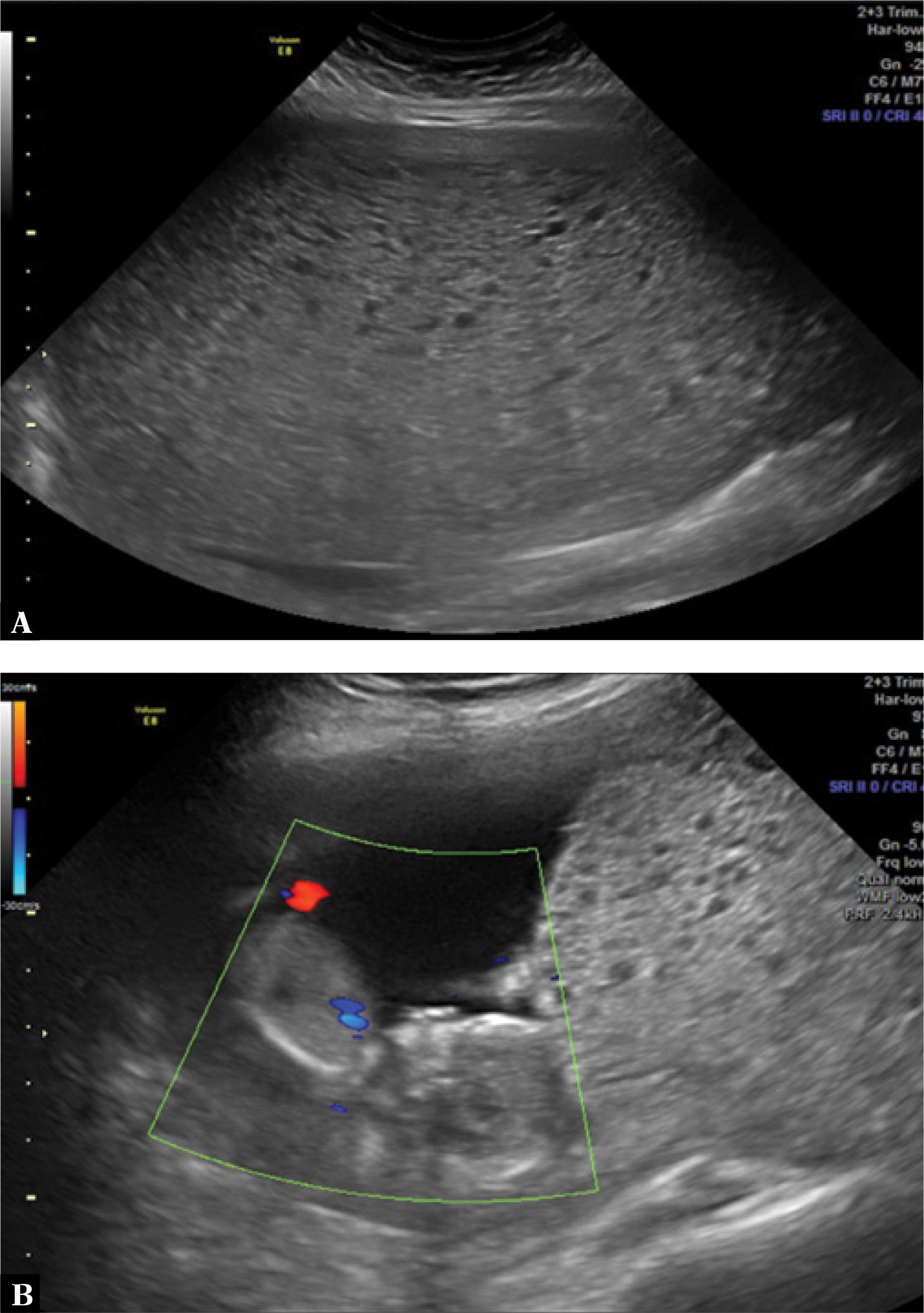
Fig. 1

A. A two-dimensional (2D) ultrasound scan shows a uterus filled with heterogeneous echogenic material. B. A 2D ultrasound scan with color Doppler shows a fetus of a gestational age of 14 weeks and a molar aspect of the placenta

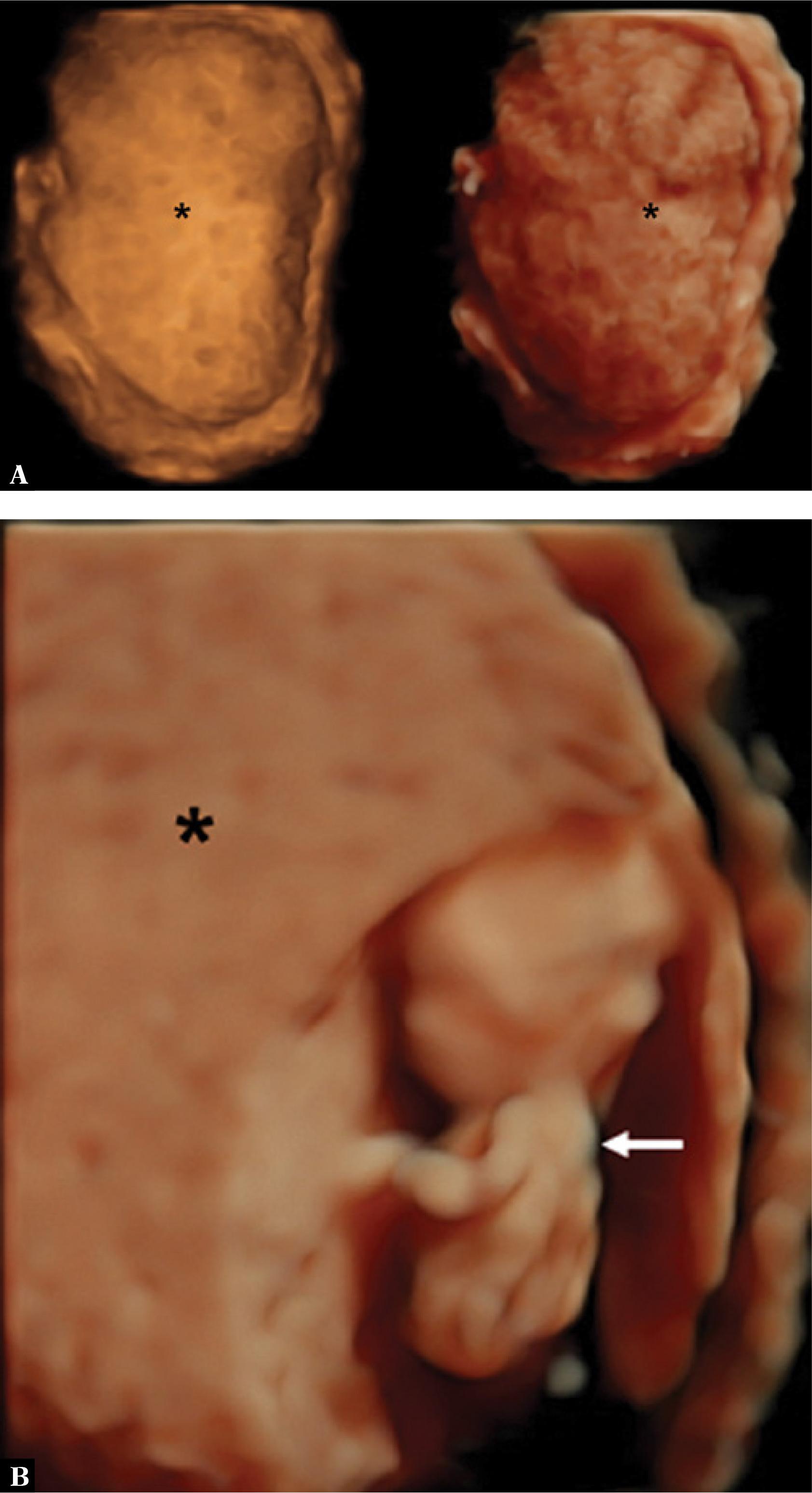
Fig. 2

A. A three-dimensional (3D) ultrasound using HDlive rendering mode shows a molar pregnancy (*). B. A 3D ultrasound with HDlive showing a fetus with a gestational age of 14 weeks (arrow) and molar degeneration (*)

Fig. 3

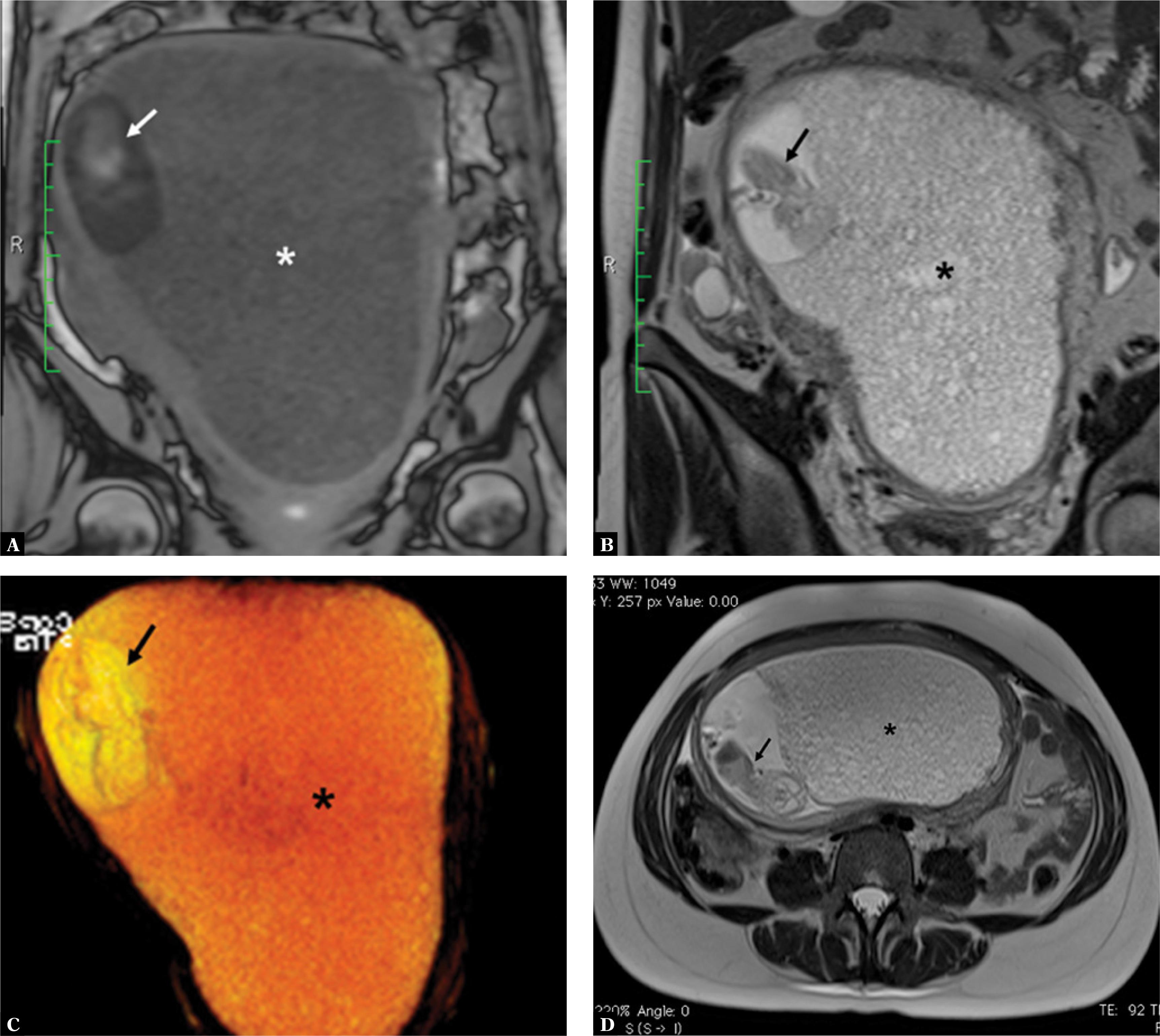
A. Magnetic resonance imaging (MRI; coronal T1-weighted image) shows placental molar degeneration (*) and the fetus (arrow). B. MRI (coronal T2-weighted image) shows placental molar degeneration (*) and the fetus (arrow). C. Three-dimensional (3D) reconstruction from a T2-weighted true FISP sequence (coronal view) showing placental molar degeneration (*) and the fetus (arrow). D. An MRI (axial T2-weighted image) scan shows placental molar degeneration (*) and the fetus (arrow)

Fig. 4

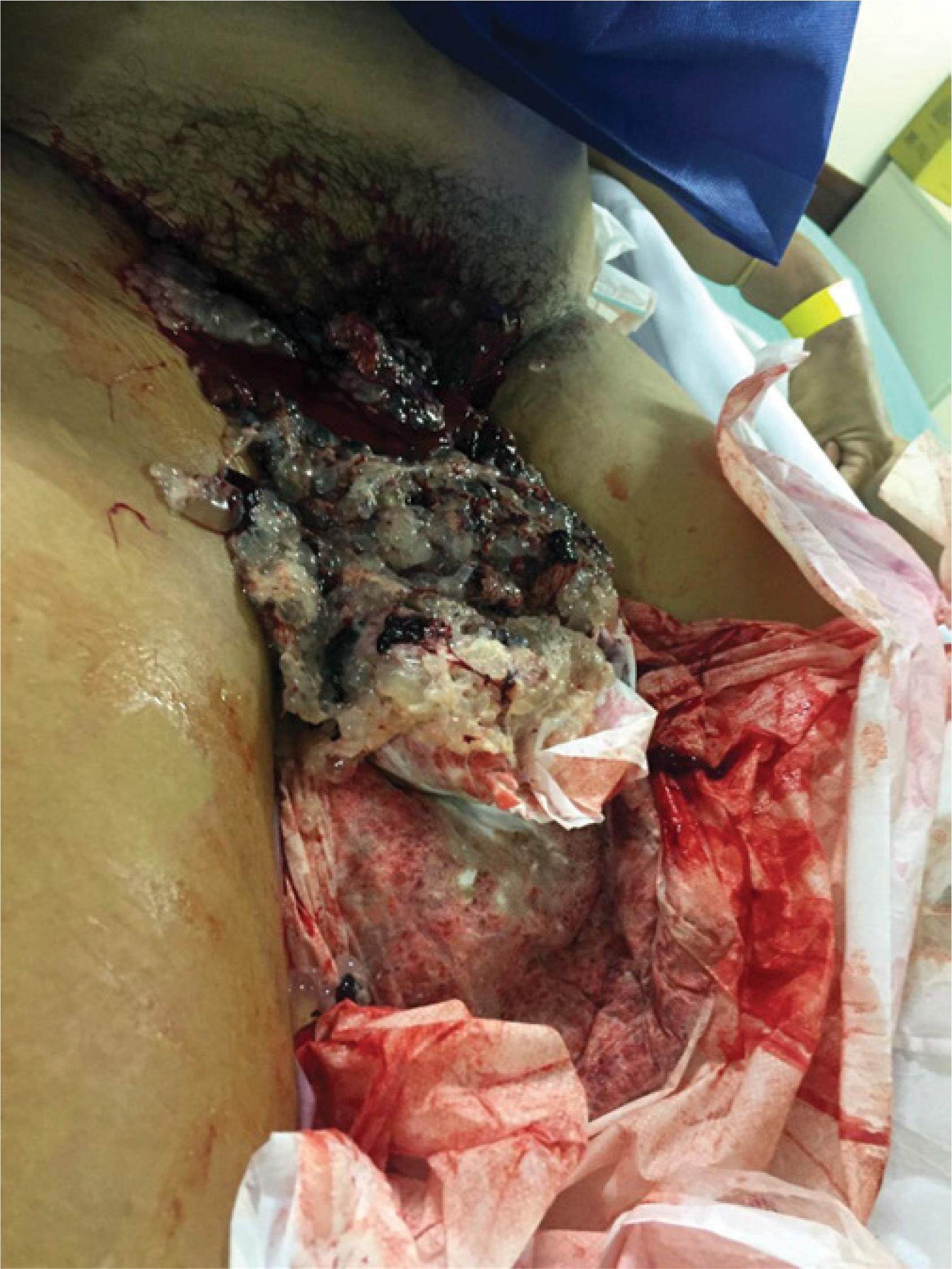
The material removed from the vagina, with macroscopy compatible with the diagnosis of a complete hydatidiform mole

Fig. 5

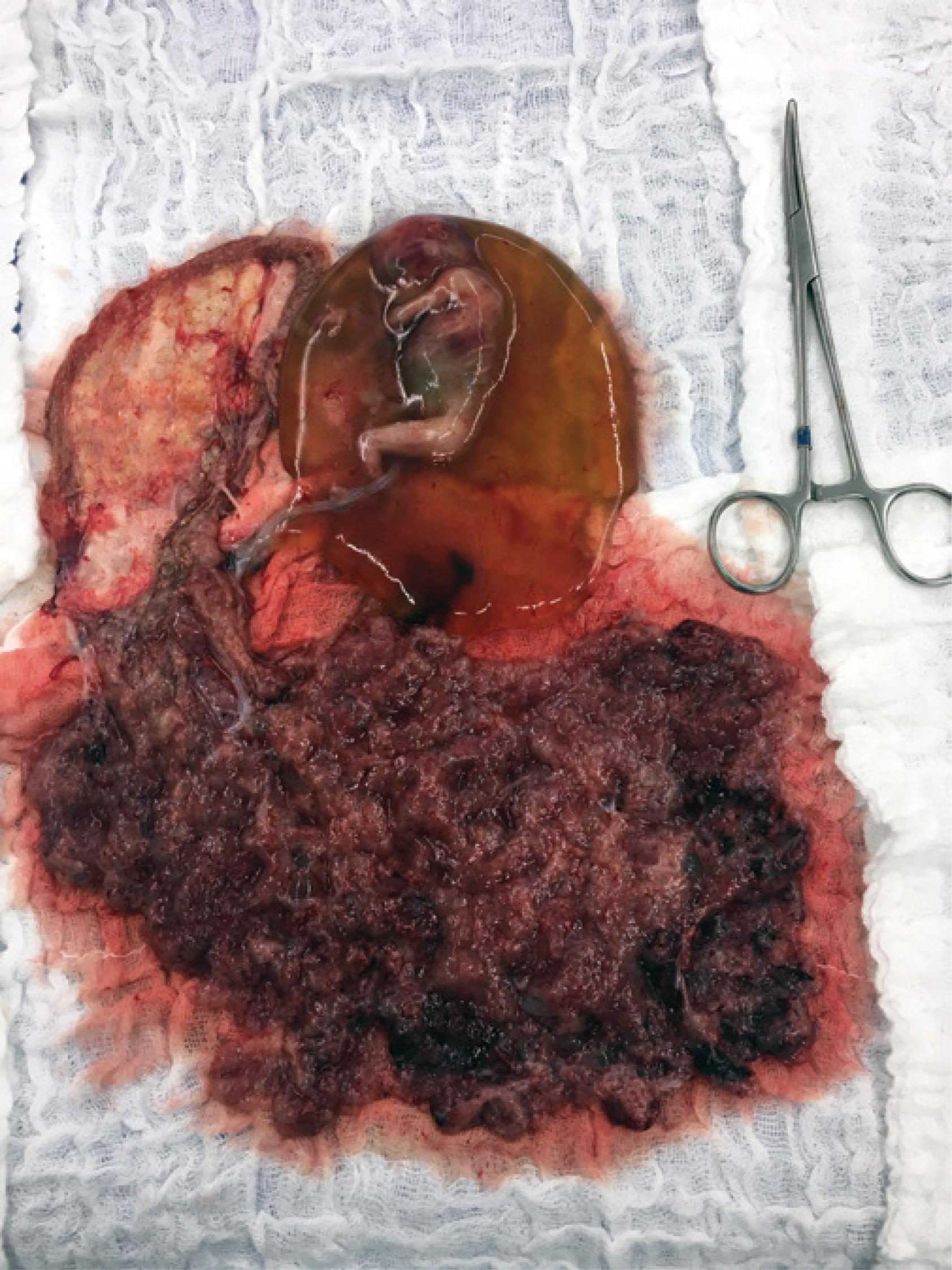
Macroscopy of a twin molar pregnancy. We observed a fertilized ovum represented by normal gestation and another ovum represented by a molar placenta without a conceptual product and appendices, suggesting a complete hydatidiform mole

Fig. 6

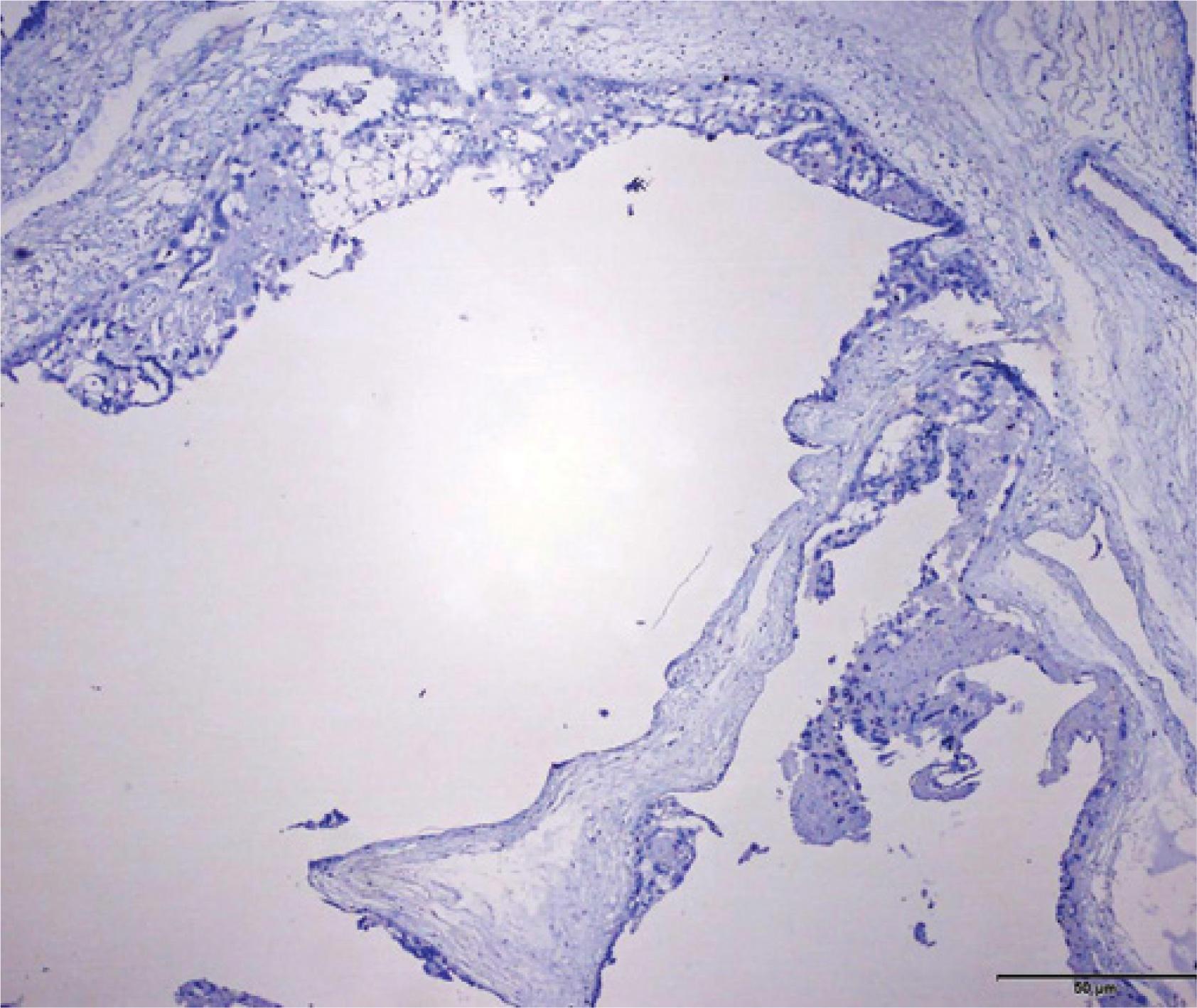
Photomicrography compatible with a complete hydatidiform mole at different magnifications, compatible with a total absence of p57kip2 (Neomarkers, Fremont, CA, USA) expression in villous stromal cells and the cytotrophoblast, which are a product of diandry
DOI: https://doi.org/10.15557/jou.2017.0044 | Journal eISSN: 2451-070X | Journal ISSN: 2084-8404
Language: English
Page range: 299 - 305
Submitted on: Jun 28, 2017
Accepted on: Aug 16, 2017
Published on: Dec 29, 2017
Published by: MEDICAL COMMUNICATIONS Sp. z o.o.
In partnership with: Paradigm Publishing Services
Publication frequency: 4 issues per year

© 2017 Antonio Braga, Bruna Obeica, Heron Werner, Sue Yazaki Sun, Joffre Amim Júnior, Jorge Rezende Filho, Edward Araujo Júnior, published by MEDICAL COMMUNICATIONS Sp. z o.o.
This work is licensed under the Creative Commons Attribution-NonCommercial 3.0 License.