
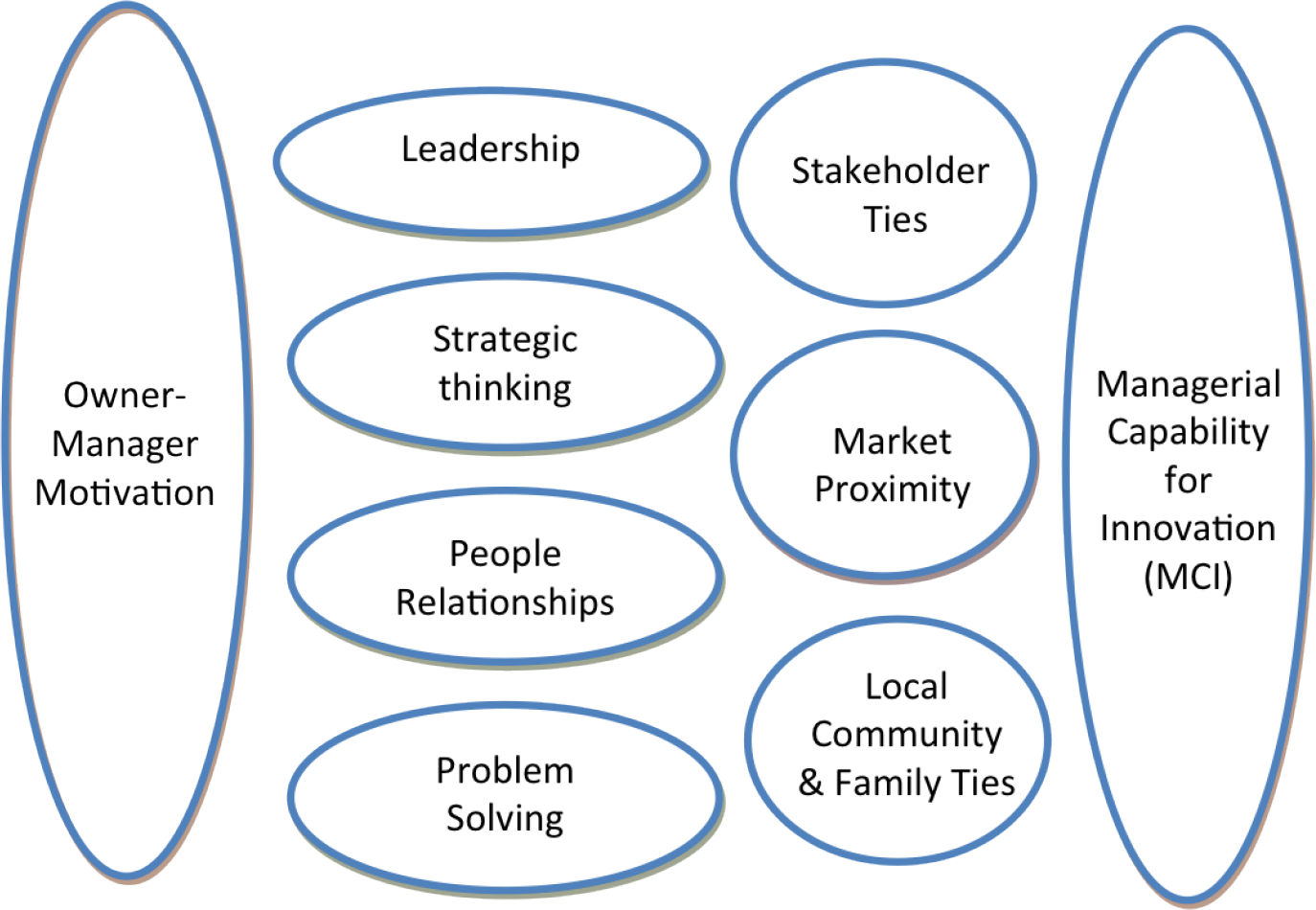
Model of microfirm managerial capability for innovation. Source: Kearney et al. (2014)
Table 1
Motivation of microfirm owner/managers
| Motivation | Nature of owner/manager motivation | Literary source |
|---|---|---|
| Business philosophy | The firm driven by business philosophy - the application of business and tools to problems and a motivation based on profitability; trade off between profitability and life style; changing motivation over life cycle of business | Beaver (2007); Nybakk and Hansen (2008); Phillipson et al. (2004) |
| Entrepreneurial and lifestyle interaction | Dynamic entrepreneurs based on lifestyle motivation where business concerns may be secondary; niche marketing/business motivation and lifestyle motivation not always in conflict - they may converge | Ateljevic (2007); Marchant and Mottiar (2011); Vaugeois and Rollins (2007); Vernon et al. (2003) |
| Multiple business roles | Lifestyle motivation supports the owner/manager in multiple business roles sustaining seasonality | Baum and Szivas (2008); Carlsen et al. (2008); Goulding et al. (2008) |
Table 2
Pilot study emerging findings
| Theme | Nature of emerging theme |
|---|---|
| Innovation in the microfirm context | Limited awareness by owner/managers Owner/manager dominant role Incremental innovation and potential for development |
| The role of the external environment - articulation of change | Environmental determinism Marketing technology Owner/manager direct market sensing |
| Mental models and imaginative strategy | Emergence from business community Surfacing of mental models New markets |
| People relationships and customer service | Owner/manager shares local expertise Owner/manager shares hobby Owner/manager symbolic representation of firm |
| Operational capability | Opportunities through craft capability and market sensing via market proximity Challenges of over immersion in operational work to neglect of strategy |
| Nature of micro firm leadership | Culture shaping limited evidence/possibly tacit in nature Paternalism utilising employees as resource Delegation - limits and opportunities Resilience |
| Resource pools | Family as potential resource yet barrier to innovation Gap between policy makers and owner/managers Resource limits and limited managerial capability to leverage resources Stakeholder ties and opportunities and limits |
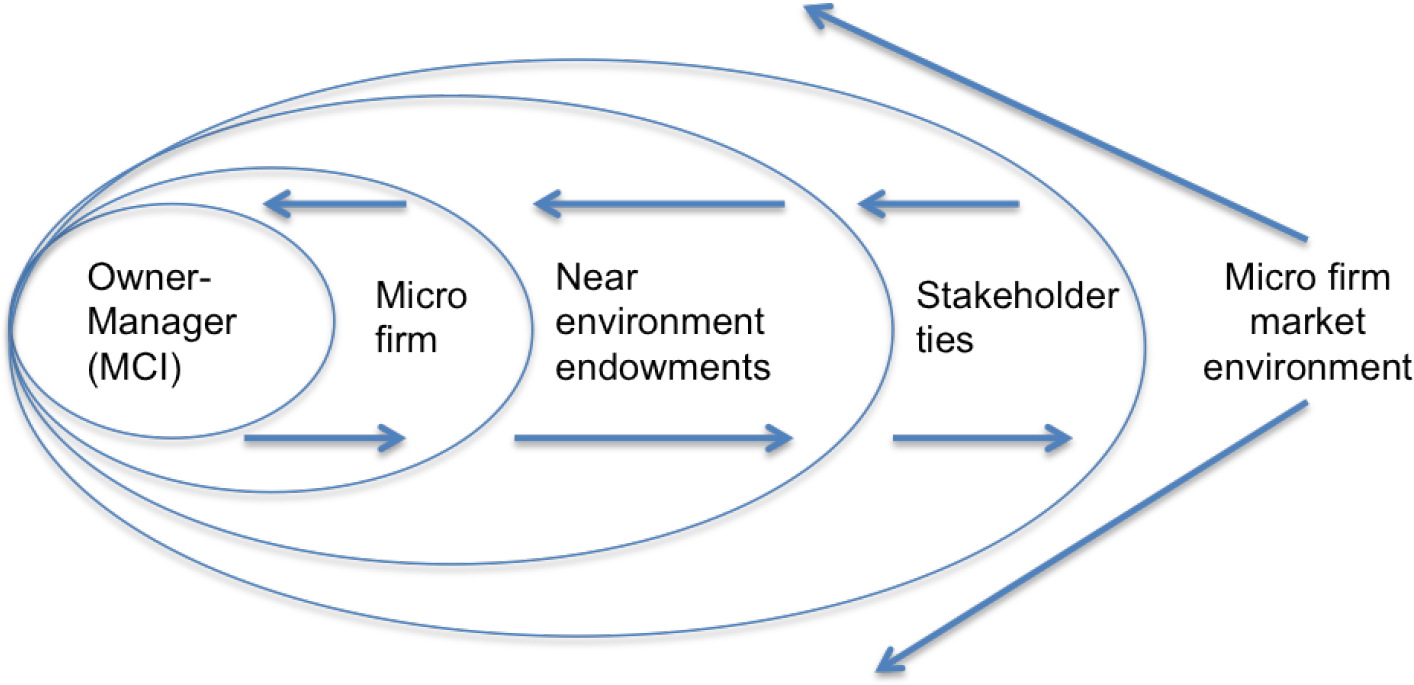
Refined model of microfirm managerial capability for innovation