
Introduction
Since 2017, Poland has experienced a significant strengthening of the North Atlantic Treaty Organization (NATO) military presence, significantly affecting the functioning of nearby local communities. Despite considerable scholarly attention given to the international dimensions of NATO’s or U.S. military presence (Vine 2009, Yeo 2017, Allen et al. 2020), this phenomenon has not been sufficiently examined, particularly in the context of local development.
Foreign military bases (FMBs) influence multiple aspects of local community life, including the labour market, service structures, social and infrastructural dynamics, and landscape transformation. The research problem addressed in this article focuses on how foreign military presence (FMP) shapes local and regional development – both as a potential development impulse (Hultquist, Petras 2012) and as a risk factor that may lead to economic dependence, social tensions, and constraints on alternative development trajectories.
The aim of this study is to identify the key spheres of influence of FMBs in Poland at local level and to assess the attitudes of host communities towards FMP. The research gap arises from the limited attention devoted to the contemporary stationing of foreign troops in Central and Eastern Europe, as well as from the lack of analyses addressing the effects of FMBs on local and regional development.
In this context, I place particular emphasis on the rotational model of FMBs, whereby deployed military units are replaced every 6–9 months. I argue that this model constitutes a crucial factor shaping the dynamics under study and serves as the conceptual framework for the subsequent analysis. Accordingly, I approach this study as exploratory in nature, aiming to identify key dynamics, provide empirical evidence, and outline conceptual directions for future research on FMBs.
To address this problem, I adopt an interdisciplinary approach that integrates theories of regional development and behavioural geography, while also advancing the concept of spatial militarisation as a process involving both the material presence of military infrastructure and the inscription of military values and power in everyday local life (Woodward 2005). I underscore the role of geographic factors, offering a novel perspective on the dynamics of local development in the context of foreign troop deployments. Finally, I examine possible scenarios for affected regions and analyse the relations between local communities and FMB personnel.
Specifically, my study focuses on three interrelated objectives. First, I evaluate the social, economic, and environmental impacts of FMP at local level, identifying which domains benefit or are adversely affected, and how these effects differ depending on the location. Second, drawing on frameworks from spatial behaviour studies and cognitive geography (Domański 1989, Montello 2018), I explore social attitudes towards FMBs and what factors shape them. Third, I analyse how geographical proximity to military installations influences public perceptions and impacts of FMBs, assessing the overall scope and scale of its effect on the surrounding communities.
Therefore, in this article, I argue that understanding these impacts is crucial not only for civil-military relations but also for regional development and for broader debates on spatial militarisation.
Current situation
Studies on how military installations in Poland impact local development mainly examine the role of national armed forces and their relations with local communities (Sirko 2013, Sirko et al. 2019). The military is depicted as a public good that supports national security and contributes to local communities – socially through educational and civic engagement, and economically as a key employer. However, research on FMBs in this area remains limited and has primarily focused on the U.S. base in Redzikowo – highlighting local concerns related to the so-called ‘missile shield’ (Materka 2012, Lipińska 2021) – and on strategic analyses of the Powidz area, where the FMB is considered a significant factor in local development (Kołsut 2018).
Most recent studies on FMBs in global literature have focused on the deployment of U.S. armed forces abroad (Allen et al. 2023, Horiuchi, Tago 2023, Kim, Arrington 2023, Oshiro 2024), reflecting the global scale of the U.S. FMBs network. Meanwhile, the research on former Warsaw Pact countries remains limited, where NATO presence has been growing since 2016 (Kacprzyk 2022). The most recent research demonstrates how support for U.S. military presence is strongly conditioned by the frontline security context and perceptions of Russian threat (Allen et al. 2025). This study situates Poland within the broader literature as a unique case of a frontline ally where public endorsement of allied troops remains exceptionally high.
Since 1989 – the time of the geopolitical shift – the dominant research themes emerging in the FMB’s related literature have included anti-base movements (ABMs), base politics1, international relations, economic implications, security, geopolitics, and environmental concerns (Smułek 2024). Despite the growing interest in geopolitics and regional development, including the impact of specific investments on their surroundings, there is still a noticeable deficit of in-depth empirical analyses aimed at better understanding how such institutions shape the dynamics of social life or economic development.
Nonetheless, this impact is highly diverse and varies depending on factors such as scale, duration, and the nature of civil-military relations in a host country. Drawing from the existing literature, I examine the local impact across three key domains:
Social structure and culture – including demographics, education, and security. Enloe (2014) argues that FMBs disrupt social structures and fuel tensions. They may also marginalise local cultures and shape local administration strategies (Lutz 2009, Hikotani et al. 2023)
Local economy – including services, trade, labour markets, and technology. FMBs drive local economies but can cause instability if downsized (Cooley, Marten 2006, Davis et al. 2007, Heo, Ye 2019, Calia et al. 2021, Wang 2023).
Landscape and infrastructure changes – base expansions reshape land use and infrastructure through road and facility investments, while also contributing to erosion, pollution, and habitat loss (Williams 2013, Harris 2015, Havlick 2016, Colgan 2018).
I approach FMP as a form of militarisation, understood as the penetration of military structures, norms, and values into civilian life and spatial organisation (Geyer 1989, Graham 2011). FMBs may function as growth poles, stimulating local development (Perroux 1950), but also carry the risk of growth traps when regional economies become overly dependent on military functions (Lutz 2009, Gavrilă-Paven, Bele 2017). Additionally, they may influence local socialisation processes (Woodward 2005) and contribute to environmental degradation (Dalby 2002). This process may reflect historical legacies when past militarisation or conflict have led to a more cautious remilitarisation path (Cooley, Nexon 2013).
By focusing on perception and public attitudes, I align my analysis with the framework of behavioural geography. Of particular relevance is the concept of place perception (Golledge, Stimson 1997), which refers to the meaning individuals assign to space based on subjective and emotional experience (Tuan 1977). This perspective is particularly relevant in under-researched regional contexts such as Eastern Europe, where the rotational deployment of NATO forces intersects with the historical legacy of FMP and spatial militarisation.
Design of the study
Drawing on previous research concerning the impact of the Polish armed forces on local development (Sirko et al. 2019), I conducted my analyses across three dimensions: social, economic, and environmental. The research process unfolded in six stages (Fig. 1). In the first stage, I analysed the existing literature on the subject, identified the research gap, and defined the study’s objectives. I then carried out a pilot study that included field observations and preliminary interviews in ten FMB locations identified using Polish governmental documents (gov.pl/web/obrona-narodowa).

Fig. 1.
Stages of the scientific process.
To assess the scale of spatial changes, I analysed secondary data from the Local Data Bank of Statistics Poland (2013–2022) across social, economic, and environmental indicators (Local Data Bank). The analysis revealed no noticeable and significant impacts in municipalities adjacent to FMBs, either over time or relative to nearby control areas. Any observed differences could not be conclusively linked to the FMP, as they may result from economic activities unrelated to the bases. The limited availability of detailed data further highlights the localised and selective nature of the FMB’s impact, underscoring the need for more indepth qualitative and quantitative research.
Based on these preliminary insights, I selected four research sites for detailed analysis (Table 1). My selection criteria included the intensity of military presence, variation in base characteristics, and contextual diversity – such as municipality type, settlement structure, population size – enabling comparative insights into diverse local experiences. I conducted 24 semi-structured in-depth interviews with local community leaders identified through pilot studies and online sources. Interviews averaged 50 minutes; recordings were made with consent, otherwise detailed notes were taken due to the topic’s sensitivity. Following visual geography principles (Rose 2016), I used photographic documentation to complement core methods and aid interpretation of how spaces around FMBs are perceived.
Table 1.
Research areas with the selected characteristics and factors, based on US embassy in Poland and Statistics Poland.
| Research area | Bemowo Piskie-Orzysz | Powidz | Redzikowo | Żagań |
|---|---|---|---|---|
| FMB | Enhanced Forward Presence (eFP) Battlegroup | Forward Operating Site (FOS) Powidz | Naval Support Facility (NSF) | Armored Brigade Combat Team (ABCT) Element |
| Estimated unit size* | 1300 | 1200 | 300 | 500 |
| FMP (since) | January 2017 | January 2017 | ~2008 | January 2017 |
| Municipality type | urban-rural | rural | suburban-rural | urban |
| Municipality size** | 18,721 | 2230 | 19,571 | 23,462 |
| Area description | Region with a diverse landscape of lakes, forests, and farmland; economy relies on tourism, agriculture, and forestry; former part of Germany - annexed to Poland in 1945; major military training area; until 2022, the closest FMB to Russia and Belarus | Village in the lake area; popular recreational destination; flat landscape includes forests and farmland; local economy based on tourism, agriculture, and light industry; high soldier-to-resident ratio | Located on the outskirts of regional capital; former part of Germany – annexed to Poland in 1945; ex-military Air Force zone; flat area of forests and fields; previously dominated by large-scale state farms | Area with strong military tradition; hosted Soviet troops after WWII; reflects both Polish and German heritage known for POW camp during WWII; economy based on industry and trade; covered mainly by forests |
In the subsequent stage, I administered a survey in both electronic and paper form. Before distribution, I tested the questionnaire form on a pilot group (n = 10), which led to adjustments aimed at improving clarity and relevance. A total of 470 individuals completed the survey, all of whom were assured anonymity. This sample represented approximately 1% of the adult population in each of the surveyed municipalities.
In parallel with the quantitative survey, I repeated in-depth interviews with community leaders (or their deputies). This enabled the observation of changes over time – particularly those associated with the Russian Federation’s invasion of Ukraine in 2022. All data was securely stored, ensuring confidentiality and ethical compliance.
To summarise key features of the dataset and identify patterns, I conducted exploratory data analysis (EDA). Using MAXQDA 2024 (VERBI Software GmbH), I identified key social, economic, and environmental impacts. I analysed local leaders’ assessments on a five-point scale (very negative [–2] to very positive [2]), mirroring the questionnaire format to capture recurring themes and broader patterns. I interpreted identified social attitudes using the ABC model of attitudes (Maio et al. 2019), which conceptualises attitudes as comprising cognitive, emotional, and behavioural components.
Finally, using RStudio (Posit PBC), I assessed the significance of the quantitative data and ensured the reliability of the findings through robust analytical methods. I employed response frequency analysis to examine how often various respondent groups selected specific answers and I used statistical significance tests to identify differences in perceptions of FMP. To determine which demographic variables influenced public opinions towards FMP, I applied a chi-square test.
Results
Contact with foreign soldiers varied widely and likely influenced how residents perceived FMP. While 75% of respondents reported frequent visual contact (several times per month or more), only 19% had direct interactions as often. Visual encounters occurred mainly in shops (57.5%), traffic (51.5%), and food venues (48.9%), while personal contact was most common in shops (32.1%), local events (26.6%), and eateries (26.3%). The most frequent contact was reported in Powidz and the least in Redzikowo.
The study group consisted mainly of people with higher education (47%) and economically active people (54%), with a slight predominance of women (59%). The largest age category was made up of people aged 36–50 (34%). The vast majority of respondents (or their relatives) have no business (84%) or social activities (85%) associated with allied militaries. The high proportion of respondents claiming to speak English (78%) may be relevant to their attitudes and openness towards the issues under study.
Influence on social life and local perception of FMP
While the social impact of FMBs is generally perceived positively, responses reveal a nuanced picture (Fig. 2). Many residents acknowledge cultural enrichment (58.5%) and improved cultural offerings (49.4%), with a majority describing foreign soldiers as friendly (53.4%). FMP is also associated with enhanced security (60.8%) and, to a lesser extent, education (36%). Nonetheless, concerns persist – particularly regarding limited community involvement by soldiers (28.5%), opposition to base expansion (28.9%), and fears of increased vulnerability in the event of conflict (45.7%). Negative perceptions most often relate to traffic disruptions (42.4%), while areas such as healthcare (68.8%) and personal development (64.1%) are commonly seen as unaffected.
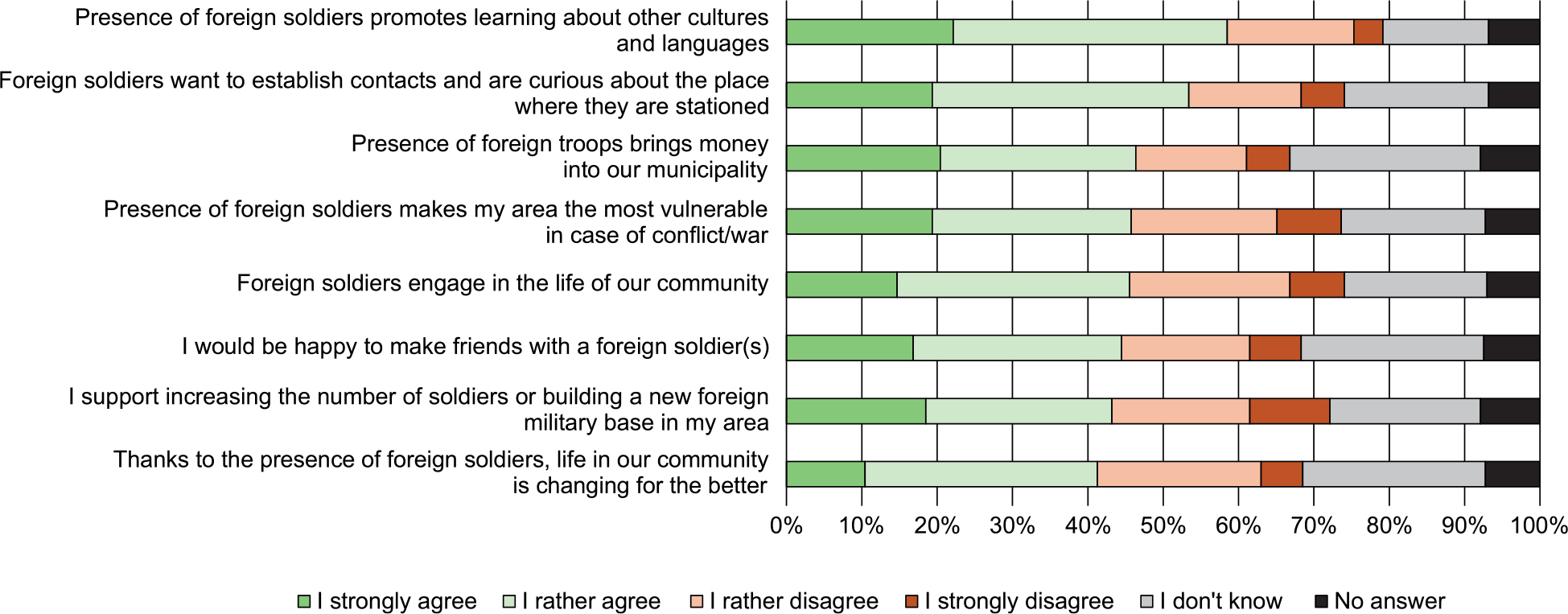
Fig. 2.
Distribution of assessments on the impact of FMP on selected statements. FMP – foreign military presence.
Distinct local patterns emerge across sites (Table 2). In Powidz, social benefits are broadly acknowledged, yet support for further FMP expansion remains low (−0.37). Conversely, despite overall scepticism in Redzikowo (−0.07), residents there more often expressed openness to building relationships with foreign soldiers (0.68).
Table 2.
Average resident assessment* of selected statements regarding FMP.
| Statement | Orzysz | Powidz | Redzikowo | Żagań | Total |
|---|---|---|---|---|---|
| Presence of foreign soldiers promotes learning about other cultures and languages | 0.56 | 0.94 | 0.51 | 0.53 | 0.60 |
| Foreign soldiers want to establish contacts and are curious about the place where they are stationed | 0.55 | 0.54 | 0.38 | 0.51 | 0.50 |
| Presence of foreign troops brings money into our municipality | 0.64 | 0.46 | 0.23 | 0.38 | 0.44 |
| I would be happy to make friends with a foreign soldier(s) | 0.31 | 0.23 | 0.63 | 0.18 | 0.33 |
| Presence of foreign soldiers makes my area the most vulnerable in case of conflict/war | 0.38 | 1.11 | 0.16 | –0.09 | 0.31 |
| Foreign soldiers engage in the life of our community | 0.50 | 0.69 | –0.04 | 0.01 | 0.26 |
| I support increasing the number of soldiers or building a new foreign military base in my area | 0.44 | –0.37 | 0.33 | 0.3 | 0.24 |
| Thanks to the presence of foreign soldiers, life in our community is changing for the better | 0.53 | 0.33 | –0.07 | 0.01 | 0.20 |
Average ratings (Table 3) highlight positive perceptions of FMP influence on security (0.69), cultural offerings (0.57), and the role of local authorities (0.52). Cultural exchange (0.60) and soldiers’ attitudes towards residents (0.50) are also viewed favourably. Nonetheless, the overall sense of improved quality of life remains modest (0.20), and these perceived benefits do not translate into broader support for FMP expansion (0.24).
Table 3.
Average resident assessment* of areas of social impact.
| Sphere | Area of impact | Orzysz | Powidz | Redzikowo | Żagań | Total |
|---|---|---|---|---|---|---|
| Social | Security | 1.08 | 0.00 | 0.99 | 0.37 | 0.69 |
| Cultural offer (events) | 0.86 | 0.63 | 0.32 | 0.43 | 0.57 | |
| Activities of local authorities | 0.80 | 0.53 | 0.40 | 0.31 | 0.52 | |
| Education | 0.53 | 0.38 | 0.39 | 0.21 | 0.38 | |
| Opportunities for personal development | 0.30 | 0.26 | 0.26 | 0.26 | 0.27 | |
| Healthcare | 0.32 | 0.16 | 0.07 | –0.06 | 0.12 | |
| Traffic conditions | –0.12 | –0.50 | –0.05 | –0.58 | –0.29 |
Statistically significant associations (p <0.05) indicate that perceptions of FMBs’ impact on quality of life are shaped by socio-demographic factors. Positive assessments were more common among respondents of working age (p = 0.033; χ2 = 39.48), women (p = 0.004; χ2 = 25.83), those in permanent employment (p = 0.027; χ2 = 58.92) – particularly individuals not affiliated with the military (p = 0.006; χ2 = 24.68) – as well as residents of Powidz and Orzysz (p <0.0001; χ2 = 40.27).
I found that willingness to interact with foreign soldiers differed significantly by location (p = 0.024; χ2 = 27.69), with the highest levels reported in Redzikowo. However, interest in such contact declined with age (p <0.0001; χ2 = 57.18) and education level (p = 0.043; χ2 = 32.01), indicating greater openness among younger and more educated respondents. Students viewed soldiers’ attitudes towards local communities more favourably (p = 0.006; χ2 = 24.77), though contact willingness generally decreased with age (p = 0.002; χ2 = 50.70). Interestingly, despite high declared openness in Redzikowo, the location showed the weakest overall social impact. Interviews suggest this is due to the nature of the missile defence base, the limited number of stationed personnel (approx. 300), and its proximity to Słupsk, which reduces the perceived FMP presence in the local community.
Furthermore, awareness of and openness to cultural exchange – as a potential benefit stemming from FMP – was significantly higher among employed individuals (p <0.0001; χ2 = 78.64), women (p = 0.011; χ2 = 22.98), those with higher education (p = 0.026; χ2 = 34.10), and respondents with very good English language proficiency (p = 0.002; χ2 = 51.13). This suggests that, despite age differences, educational level and language competence are more strongly correlated with greater awareness and more favourable attitudes towards FMP.
On the other hand, I observed that concerns about potential threats in the event of armed conflict were more frequently expressed by women (p = 0.004; χ2 = 25.83), while men were more likely to downplay such risks – possibly reflecting gendered perceptions shaped by military culture. In Żagań, residents tended to reject those fears, which may relate to prior experiences with Soviet military presence. Feelings of insecurity also increased with age (p = 0.004; χ2 = 47.54), suggesting that older individuals are more sensitive to the perceived risks of militarisation.
In Powidz, where the soldier-to-resident ratio is highest (approx. 1500 to 900) and proximity to housing is close, frequent interaction was observed. Yet, despite recognising potential benefits, residents there expressed the strongest opposition to FMB expansion (p <0.0001; χ2 = 48.35). Resistance was also notable among permanently employed individuals (p = 0.049; χ2 = 55.84), while support for expansion declined with age (p = 0.019; χ2 = 41.77) and education level (p = 0.046; χ2> = 31.72). These patterns suggest that more frequent contact does not equate to broader acceptance. In contrast, individuals working in military-related sectors were significantly more supportive of FMP development (p = 0.001; χ2 = 30.23).
My interview findings and field observations largely support the survey results, particularly regarding perceptions of the social impact of FMP (Fig. 3). Local leaders emphasised that FMP has occasionally led to social tensions, particularly in connection with gatherings involving alcohol consumption by foreign soldiers. Some incidents escalated into aggression or physical conflict. Although such occurrences have declined over time, each new rotation tends to temporarily raise tension levels. Notably, some contingents – depending on cultural background or command style – have a much lower level of engagement with the local community.
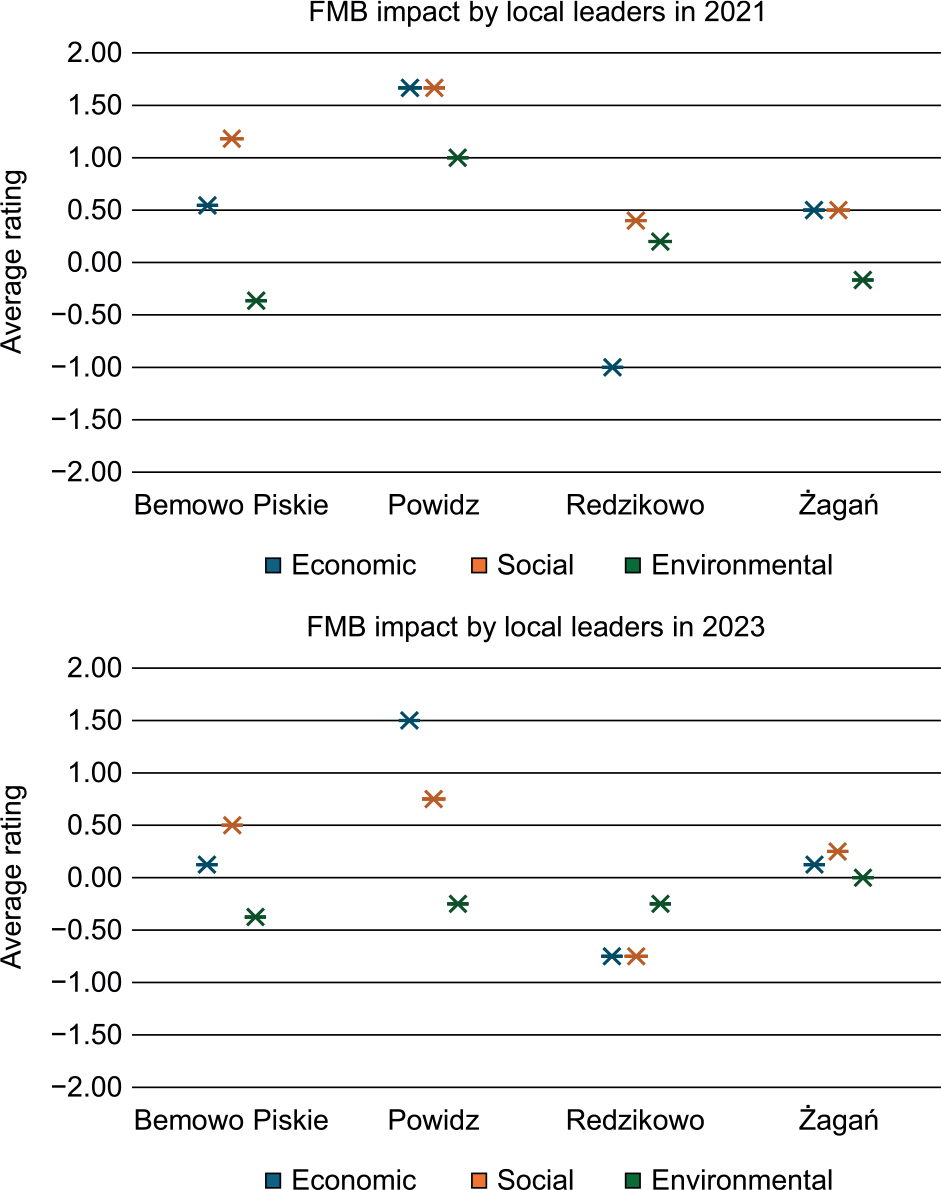
Fig. 3.
Average rating of conducted interviews with local leaders in 2021 and 2023.
I also documented signs of negative social impact on the landscape. For example, graffiti stating ‘We don’t want to be the USA’s shield’ (Photo 1) reflected early opposition to FMBs. Such spatial expressions align with Enloe’s (2000) notion of militarised space and the embedding of militarisation into the everyday environment, as also noted in the Philippines (Martin 2018). FMP activities may contribute to the erosion of local spatial identity or limit certain civilian uses of space.

Photo 1.
ABM graffiti ‘We don’t want to be the USA’s shield’ in Słupsk downtown (Redzikowo FMB).
At the same time, local leaders reported various administrative challenges, notably strained relations with higher levels of government and limited institutional support during the early stages of FMP. I found similar dynamics in comparative literature, such as South Korea (Kim 2017) and Central Asia (Cooley 2008), where local authorities depended on external decision-making. Nonetheless, local actors also stressed that FMP enhanced the region’s strategic importance and contributed to infrastructure investment.
My interviews further highlighted how the rotational nature of military deployments shapes spatial dynamics. Each new contingent brings distinct cultural habits, influencing daily routines and consumption patterns. For instance, the arrival of a Spanish-speaking unit from Puerto Rico in Powidz in 2022 noticeably altered the local cultural landscape. Over time, such rotations produce layered, human-modified spaces – a process reminiscent of Sauer’s (2008) concept of cultural landscape transformation.
The analysis on social sphere and social attitudes towards FMP demonstrates multidimensional perception shaped by location, individual experiences, economic interests, historical context, and broader social functions. Residents respond to the presence of foreign troops in ways that are positive, but also critical, reflecting the complexity of the role that FMBs play in the life of local communities and the scale of transformation in the local social landscape.
Despite differences across sites, I consistently identified several positive effects: development of gastronomy and transport services, engagement in education (e.g., English lessons, school workshops), support for charitable and sporting events, and efforts to break down stereotypes and promote internationalisation.
Interpreted through the ABC model, cognitive attitudes included both positive expectations (e.g., economic gains, cultural exchange) and concerns (e.g., noise, traffic, environmental impact). Emotional responses ranged from enthusiasm and pride to indifference, adaptation, or even resentment. Behavioural attitudes manifested as either opposition to base expansion or active support for civil-military cooperation. I also found that these orientations and interaction levels were shaped by cultural and linguistic factors, aligning with Ben-Ari and Elron’s (2001) finding that younger, multilingual individuals show greater openness to FMP.
While Allen et al. (2025) highlight broad national-level support for U.S. military presence in Poland as a frontline ally, the findings presented here reveal that, at local level, such presence generates ambivalent dynamics. Host communities respond not only by institutionalising short-term economic opportunities but also by expressing increasing frustration and fatigue, especially with regard to the rotational deployment model.
Economic impact
Four of the five highest-rated areas of FMB impact relates to the economy (Fig. 4). Respondents most frequently emphasised positive effects on food services (69.7%), employment (60.2%), and infrastructure (53.1%). Mean impact values (Table 4) also underscore the role of FMP in creating conditions for new businesses (0.65), referring both to sectoral expansion and the emergence of entirely new industries, as supported by qualitative data.
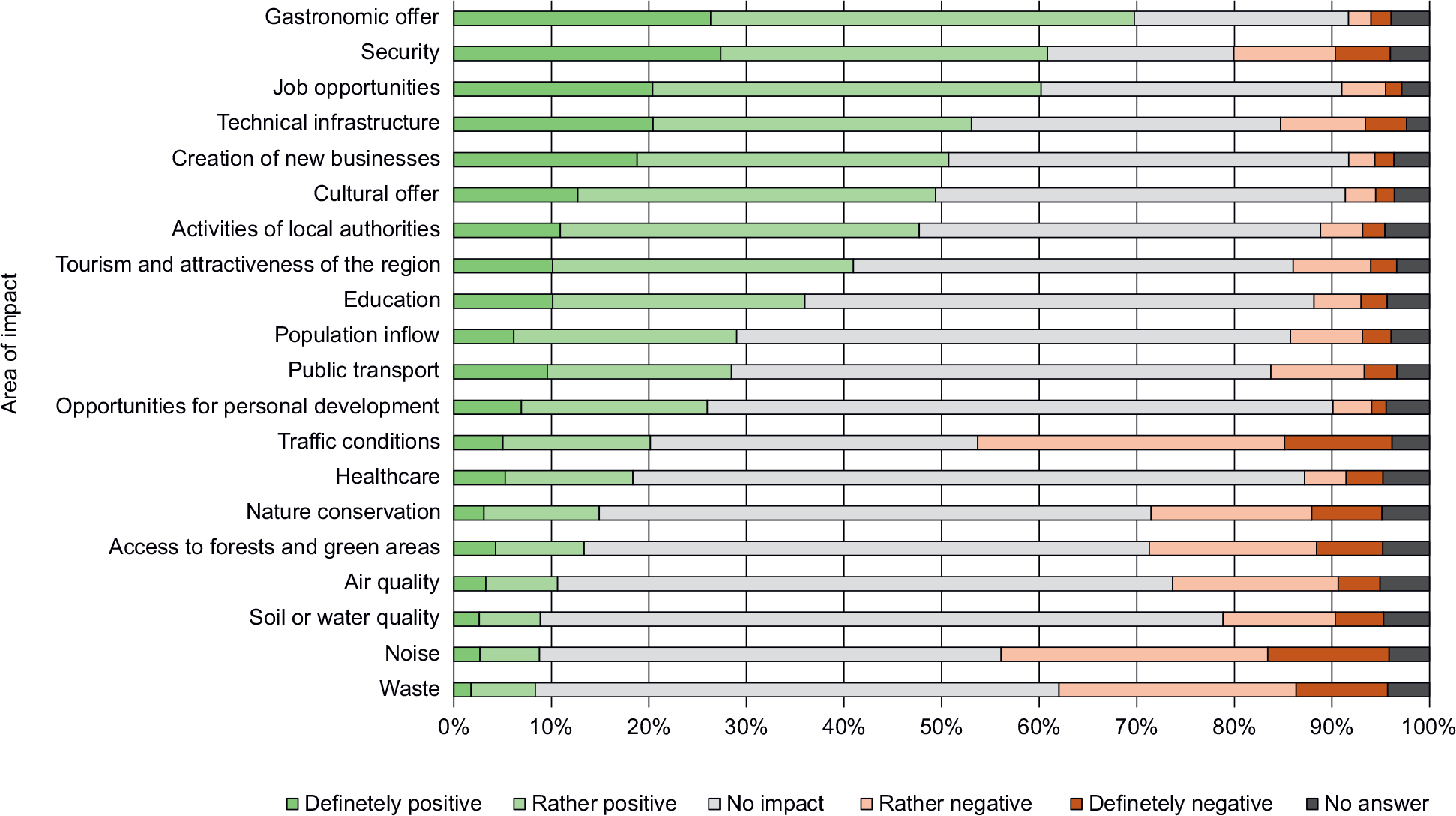
Fig. 4
Distribution of assessments on the impact of FMP on selected elements in the studied areas. FMP – foreign military presence.
Table 4.
Average resident assessment* of areas of economic impact.
| Sphere | Area of impact | Orzysz | Powidz | Redzikowo | Żagań | Total |
|---|---|---|---|---|---|---|
| Economic | Gastronomic offer | 1.12 | 1.19 | 0.49 | 0.92 | 0.93 |
| Job opportunities | 0.91 | 1.13 | 0.56 | 0.50 | 0.75 | |
| Creation of new businesses | 0.95 | 0.95 | 0.39 | 0.35 | 0.65 | |
| Technical infrastructure | 0.73 | 1.00 | 0.40 | 0.31 | 0.58 | |
| Tourism and attractiveness of region | 0.68 | 0.36 | 0.10 | 0.36 | 0.39 | |
| Public transport | 0.47 | 0.17 | 0.15 | 0.07 | 0.23 | |
| Population inflow | 0.44 | 0.08 | 0.20 | 0.08 | 0.22 |
The most common negative assessment concerned FMP impact on public transport (12.9%), alongside a high share of respondents reporting no noticeable effect (55.3%) – likely reflecting preexisting transport limitations in peripheral areas. The lowest average score was recorded for population influx (0.22), with 56.8% of respondents unable to assess this aspect, suggesting either minimal demographic change or low public awareness.
Owing to the specific nature of FMBs, detailed data on local military spending remain limited. Nonetheless, 46.4% of respondents perceived a financial inflow into their municipality, suggesting a possible link between FMP and improved living standards. Still, over one-third (33.2%) were unable to assess this impact, possibly due to limited information or external factors. Positive financial effects were more often noted by women (p = 0.016; χ2 = 21.40) and employed individuals (p <0.0001; χ2 = 79.50), while negative views were more common among those with limited English skills (p = 0.006; χ2 = 46.27), though such opinions declined with age (p <0.0001; χ2 = 76.70). The high share of neutral responses may reflect a broader disengagement from financial or budgetary issues.
The growth of the food service sector was especially emphasised by self-employed and formally employed respondents (p = 0.003; χ2 = 79.40), reflecting both perceived job opportunities and potential for sectoral cooperation. This view was echoed by local leaders, who noted resident employment in FMB-related services such as cleaning, laundry, and catering.
I found that aspects such as population influx and regional tourism were largely viewed as unaffected by FMP, with both women and men indicating limited impact (p = 0.003; χ2 = 29.57). My analysis suggests that the phenomenon remains localised and contained, with minimal influence on migration. Notably, the positive views I recorded came disproportionately from younger respondents, indicating that age may shape perceptions of FMP promotional and service potential.
The most visible and lasting economic changes occurred near FMBs, where new services – such as food trucks, bars, personal care shops, and small businesses like salons or tattoo parlours (Photo 2) – emerged to serve foreign soldiers. These developments introduce city-like infrastructure and urban traits into smaller towns. Public spaces also reflect FMP through military-themed billboards and advertisements, indicating broader spatial transformations and processes of internationalisation, akin to those observed near FMBs in Asia (Martin 2018).
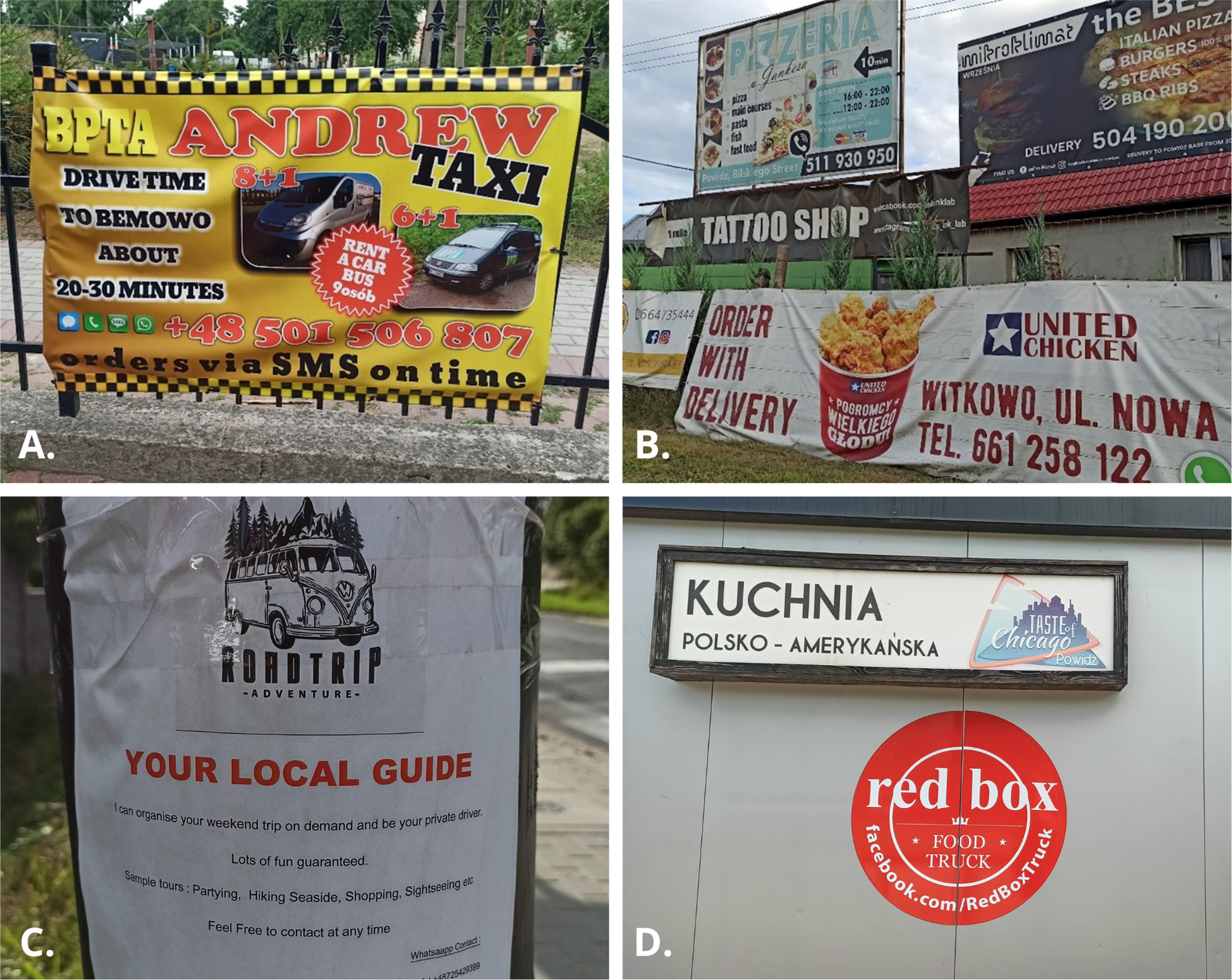
Photo 2.
Identified landscape elements indicating the economic influence of FMP (photos taken by the author): A – advertisements for transport services near the base in Bemowo Piskie; B – area opposite the entrance to the FMB in Powidz; C – tourism and free time guidance offer; D – restaurant with Polish-American cuisine in the neighbourhood of the FMB in Powidz.
FMP – foreign military presence; FMB – foreign military base.
The nature and intensity of economic transformations varied by location. In areas with concentrated FMP, distinct functional zones emerged, differing in accessibility and integration with local communities. As in the social sphere, I observed that the rotational model of FMBs also affected local economies. Successive contingents often adopt the preferences of their predecessors, favouring larger urban centres for leisure, which reduces local engagement and may contribute to social fatigue over time (Lutz 2009).
Some changes also reflect informal aspects of the local economy. One local leader noted an increase in advertisements for erotic services near bases, suggesting that ‘FMP drives up prices in this sector.’ This observation aligns with Moon (1997) findings on the growth of the grey economy (analyses of sexual economies) near U.S. bases in South Korea.
My research further shows that perceptions of FMBs’ economic impact varied spatially, though certain structural changes appeared consistently across host communities. Positive effects included: (a) diversification of local services – especially in food, retail, and hospitality; (b) emergence of new businesses; (c) introduction of previously absent industries; (d) increased employment; and (e) selective infrastructure improvements. At the same time, I observed negative externalities such as pressure on infrastructure and housing in areas where FMP-related demand exceeded local capacity. Importantly, public attitudes indicated that economic gains alone were insufficient to generate broader support for expanded military presence and did not decisively shape social perceptions.
Impact on the natural environment
Despite overall approval of FMP socio-economic effects, environmental concerns remain a major source of criticism and a potential trigger for social conflict – especially in areas with a high concentration of military activity. The environmental impact was most often assessed as negative or negligible. Respondents cited increased noise (39.8%) and littering (33.7%) most frequently, along with reduced access to green spaces (23.9%) and concerns about nature protection (23.7%). At the same time, a significant share reported no perceived impact or no knowledge regarding water and soil quality (70%), and air quality (63%).
Of all assessed domains, I recorded the most negative evaluations for the natural environment, with all average scores falling below zero (Table 5). Noise pollution (–0.42) and littering (–0.34) were identified as the most harmful effects. Interestingly, many negative responses came from individuals who withheld sociodemographic information or selected ‘other’, possibly reflecting hesitation to voice criticism due to perceived social or institutional risks.
Table 5.
Average resident assessment* of areas of environmental impact.
| Sphere | Area of impact | Orzysz | Powidz | Redzikowo | Żagań | Total |
|---|---|---|---|---|---|---|
| Environmental | Soil or water quality | 0.00 | –0.27 | –0.15 | –0.09 | –0.01 |
| Air quality | 0.05 | –0.25 | –0.21 | –0.17 | –0.12 | |
| Access to forests and green areas | 0.02 | –0.52 | –0.20 | –0.03 | –0.14 | |
| Nature conservation | 0.06 | –0.54 | –0.22 | –0.04 | –0.14 | |
| Waste | –0.22 | –0.72 | –0.28 | –0.31 | –0.34 | |
| Noise | –0.29 | –0.81 | –0.29 | –0.44 | –0.42 |
Statistical analysis shows that perceptions of the environmental impact of FMP vary significantly by location. Residents of Powidz expressed the most critical views, citing declines in soil and water quality (p = 0.001; χ2 = 59.38) and air quality (p = 0.003; χ2 = 39.29). These assessments likely reflect the close proximity of the base to residential areas, consistent with the broader NIMBY effect.
In interviews, however, these concerns were less prominent, suggesting a disconnect between residents’ and local leaders’ perceptions of FMP environmental impact. Leaders most often described the impact as neutral, though they occasionally mentioned both positive outcomes (e.g., forest and park cleanups) and negative effects (e.g., littering, noise). Survey respondents also reported limited forest access and heightened fire risk near training areas.
Besides all those domains, the temporal dimension was also found to play a role. Across all sites, a comparison of the two interview rounds revealed a clear decrease in perceived economic, social, and cultural benefits over time (Fig. 5).
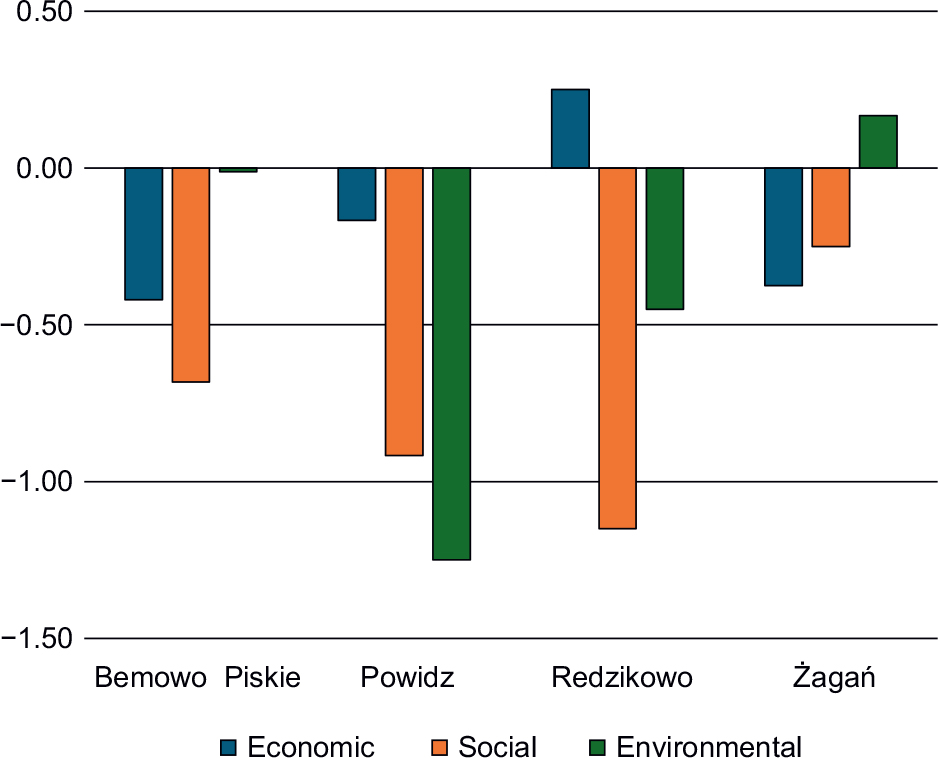
Fig. 5.
Average rating differences between conducted interviews in 2021 and 2023.
The level and dynamics of civil-military integration may decline over time as FMP becomes embedded in the local landscape, despite the rotational nature of FMBs, which significantly shapes local interactions. Notably, the period between the two interview rounds coincided with the outbreak of an international conflict in Ukraine, potentially heightening residents’ concerns about the military infrastructure in their vicinity.
Discussion
In this study, I have demonstrated that FMP exerts a complex and multidimensional impact on local communities, shaped by spatial, historical, and socio-economic factors. I found that residents expressed both support and criticism, reflecting a dynamic often associated with the NIMBY effect – where general approval of FMP coexists with local resistance to its immediate implications. Respondents acknowledged economic, social, and cultural benefits, but also voiced concerns about environmental degradation and security risks.
Socio-economic factors
My findings reveal clear socio-demographic differences in perceptions of FMP, which interact with regional contexts to shape attitudes towards FMBs. First of all, gendered concerns about security and conflict reflect broader structural inequalities and echo Enloe’s (2000) argument that militarisation is experienced differently by men and women. The generational divide further illustrates how historical memory continues to shape contemporary perceptions of NATO deployments in Central and Eastern Europe. Secondly, differences linked to education and language skills indicate that openness to FMP is strongly mediated by cultural capital. Those with higher education and English proficiency see greater potential for exchange, yet their more critical reflections on long-term development also reveal the limits of purely economic arguments. This suggests that the sustainability of civil-military relations depends not only on economic benefits but also on the ability to foster inclusive cultural interactions. Finally, employment-based differences underline how economic dependence and sectoral ties can produce divergent narratives about FMP. Support among individuals linked to military-related sectors contrasts with scepticism in civilian domains, reflecting Lutz’s (2009) notion of ‘military–economic enclaves’ that risk fragmenting local economies. These dynamics suggest that FMBs reproduce existing social inequalities, rather than generating uniform local benefits.
However, I consistently observed that local leaders tend to offer more favourable assessments of military presence – likely shaped by political or economic interests – while residents more frequently report immediate negative consequences. This reveals a ‘narrative split’ in civil-military relations (Tillberg et al. 2025), marked by asymmetries in knowledge, perceptions, and expectations between civilian and military actors. Notably, some respondents withheld their demographic information, potentially indicating reluctance or fear of expressing open criticism.
Public sentiment towards FMP was initially positive, with residents perceiving the arrival of foreign troops as a development opportunity – similar to perceptions observed in the case of national military installations (Sirko 2013). However, limited support from the central government hindered the realisation of expected benefits, leading to growing disillusionment and a perceived decline in value. This trajectory mirrors global patterns, where early economic optimism often fades in the absence of sustained engagement and tangible outcomes (Calder 2007, Cooley 2008). In some cases, however, I observed that FMBs spurred domestic investment, especially in infrastructure, due to the area’s strategic importance – a dynamic I describe as creating ‘upside-down possibilities’.
Economically, I observed that benefits linked to FMP – particularly in gastronomy and infrastructure – were most visible in Powidz and Orzysz, yet rarely translated into support for base expansion. This pattern suggests the emergence of closed ‘military–economic enclaves’, which reinforce social stratification and separation, in line with growth pole or core–periphery theories. Although FMBs have supported service-sector growth and local entrepreneurship, investment limitations and real estate barriers restrict broader economic inclusion. Positive impacts do not guarantee public support, especially when offset by perceived social and environmental costs. Due to limited data, the extent of structural economic dependence on the FMP remains unclear.
In some locations, I observed that new military-driven service sectors reshaped local identities into quasi-military spaces (Spanu 2023), while fragmented enclaves reinforce spatial and social divisions. These zones operate within global military networks, forming ‘global villages’ (Martin 2018), and, as seen in Camp Humphreys, South Korea, may foster informal economies – including erotic services – that reshape local socio-economic dynamics (Moon 1997).
I argue that military–economic enclaves, governance imbalances, and spatial fragmentation risk deepening local inequalities and weakening social cohesion. Effective civil-military coexistence, therefore, demands localised, institutional, and participatory frameworks that reflect host community realities and address underlying tensions.
Environmental concerns emerged as one of the most frequent criticisms. Respondents raised issues such as noise pollution, declining air and soil quality, littering, and restricted access to green spaces. I interpret these findings through the lens of the ‘militarisation of space’ (Enloe 2000, Martin 2018), in which physical space becomes a symbol of control and military dominance, losing its social or communal value. While many respondents viewed environmental impacts as moderate, perceptions varied by location, with rural residents reporting stronger disruption. Importantly, respondents often found it difficult to distinguish whether specific impacts stemmed from foreign or domestic forces, since training grounds were shared.
I argue that the militarisation – understood as the dominance of military rhythms over civilian patterns – of daily life across these domains risks eroding the distinctiveness of place through processes of imposed meaning-making (Hall 1997). This transformation risks producing ‘non-places’ (Relph 1976), where local identity is overshadowed by standardised military functions. Conversely, resistance to FMBs may generate grassroots initiatives that reconstruct local identities and foster ‘autonomous geographies’ of opposition to militarism (Fois, Paragano 2011).
Regional diversity
My findings also underscore the importance of local context, as each community experienced distinct challenges and opportunities that shaped perceptions of FMP (Table 6). At the same time, I identified several common areas of impact – both positive and negative – that consistently influence how FMBs are viewed across different localities.
Table 6.
Characteristics of the main impact elements of FMBs in research areas.
| Area of impact | Bemowo Piskie – Orzysz | Powidz | Redzikowo | Żagań |
|---|---|---|---|---|
| Social | support for local events; breaking stereotypes; military-civilian integration | active contact with residents; international exposure; personal interactions | limited interaction; few cultural initiatives; low civilian engagement | moderate involvement in community life; structured military presence |
| Economic | expansion of gastronomy and service sector; new small businesses | growth in gastronomy and services; stronger financial inflow | housing price increases; limited local investment opportunities | road infrastructure improvements; moderate effect on local businesses |
| Environmental | restricted access to forests; increased noise | general environmental concerns; low awareness of specific effects | negative impact (general) | noise and emissions linked to training areas and mobility |
In Powidz – where the base is located near residential areas – residents reported both the highest recognition of benefits and the strongest opposition to further expansion, indicating symptoms of over-militarisation. These findings align with earlier research (Kołsut 2018), where residents feared that FMB expansion might reduce the Polish military unit and negatively impact local employment, given the large number of locals working at the Powidz base. In contrast, Redzikowo hosts a relatively small and spatially isolated base, where the social impact of FMP remains minimal – an example of early-stage militarisation. Żagań, a town with a legacy of Soviet military presence, shows more neutral attitudes, possibly influenced by path dependency and processes of remilitarisation. These cases may suggest that local context plays a key role in shaping civil–military relations, with prior exposure to FMP facilitating smoother acceptance (David 2001).
I contend that sustainable civil-military integration requires long-term, participatory strategies that cultivate enduring, mutually beneficial relationships. As summarised in Table 7, I provide practical recommendations to assist local governments in developing strategic responses. Given the specific local contexts, it is crucial to minimise risks stemming from cultural differences while maximising opportunities for inclusive economic development.
Table 7.
Implications for civil–foreign military cooperation on different scales.
| Scale | Activity | Description |
|---|---|---|
| Local | Social research | Conducting surveys and assessments to diagnose needs, opportunities, and concerns of local communities |
| Information campaign | Implementing educational and informational activities to enhance public awareness of FMB role | |
| Education and training for residents | Organising courses and workshops on cooperation with foreign soldiers with preventive measures to address potential risks | |
| Community engagement events | Supporting social and educational initiatives in cultural institutions and schools, as well as organising events such as ‘open FMB days’ and ‘local days’ | |
| Environmental protection measures | Common environment carrying initiatives | |
| Support for local economy | Facilitating cooperation between local businesses and FMBs by improving partnership process and possibilities transparency | |
| Regional | Promotion of positive civil-military cooperation image | Developing advertising campaigns and cohesive branding strategy for municipalities hosting FMBs to enhance public perception and foster local engagement. |
| Support for regional integration efforts | Initiating and financing activities that promote cooperation between municipalities hosting FMBs | |
| National/International | Report and guide for local governments | Creating structured document outlining tools and methods for effective civil-military cooperation, tailored to local conditions and operational specifics of rotationally deployed military bases. |
| Agreements on use of local resources | Advocating for intergovernmental agreements aimed at increasing utilisation of local suppliers and social capital |
While regional variation is acknowledged as an important contextual factor – since each locality demonstrates unique socio-economic, cultural, and environmental conditions – the central argument of this study does not rest on regional differences alone. Rather, the emphasis is placed on the multidimensional character of FMP impacts, which simultaneously encompass social relations, economic development, and environmental pressures. By highlighting this multidimensionality, the analysis demonstrates that the effects of FMP cannot be reduced to regional variation but instead represent a complex set of interrelated processes that cut across different local contexts.
Considering development trajectories of these areas it appears to be shaped by critical historical junctures and local adaptation processes (Mahoney 2000). However, in other localities, ongoing militarisation has led to economic dependency and reinforced weak institutional capacity, contributing to social and economic marginalisation. These divergent outcomes risk exacerbating regional disparities, particularly in the absence of locally tailored adaptation strategies. Local authorities reported tensions and insufficient institutional support, particularly in the early stages before FMBs became operational. Other dynamic reflects the complexities of multi-level governance, where divided authority contributes to policy incoherence and implementation gaps (Hooghe, Marks 2001, Dimitriadis et al. 2021).
Key factor – rotation
One of the most important outcomes of this study is that the rotational nature of foreign military deployments introduces instability into civil-military relations. The cyclical replacement of stationed units directly influenced residents’ attitudes towards FMP, leading to shifting perceptions over time (Fig. 6). My data show that variables such as unit composition, soldiers’ country of origin, and command style further shaped these perceptions. Each new contingent brought a different group of service users, which could temporarily stimulate the local economy, but also created uncertainty that hampered long-term planning. This recurring instability reinforced the broader trend of social fatigue observed across host communities. I also observed that successive units often inherited behavioural patterns from their predecessors, typically favouring larger urban centres for leisure and services.
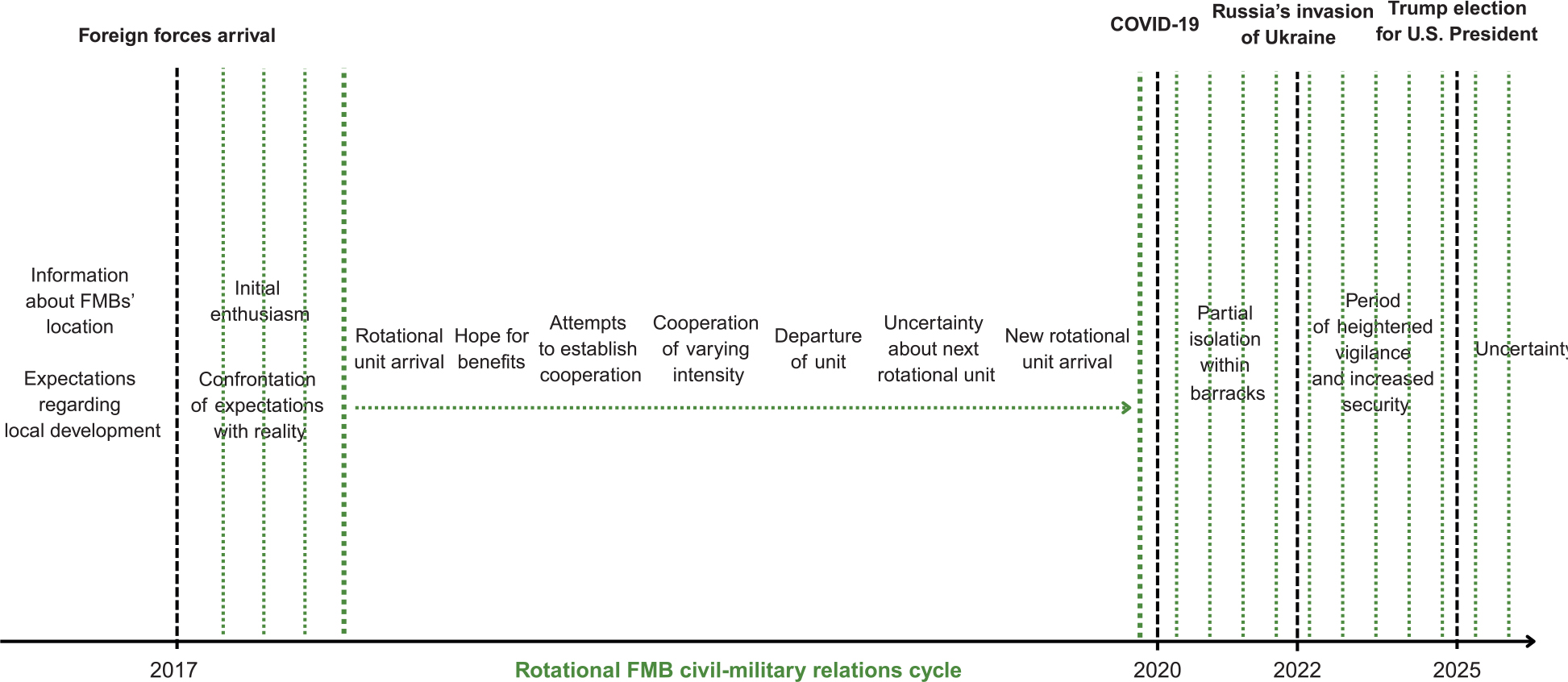
Fig. 6.
Illustrative time model of FMP depicting a detailed rotational FMB civil-military cycle. FMB – foreign military base.
Recent studies indicate that military public diplomacy influences host communities’ perceptions of allied forces (Sutton, Lim 2024). This underscores the importance of communication strategies in building civil-military relations. However, beyond the communicational dimension, the everyday socio-economic and spatial effects of military base presence, as well as the patterns of interaction among local actors, remain insufficiently examined. My research shows that while some local actors (Fig. 7) adapt by institutionalising short-term economic opportunities, others experience growing frustration and disillusionment. As a result, I observed that civil-military relationships evolve over time, displaying fluctuating dynamics and varying degrees of engagement. Comparative data between 2021 and 2023 indicate a decline in overall acceptance of FMP. I argue that a key factor behind this trend is the rotational deployment model, which disrupts continuity and fosters social fatigue. These shifting patterns, in turn, affect the cultural and functional character of host areas (Lutz 2009).
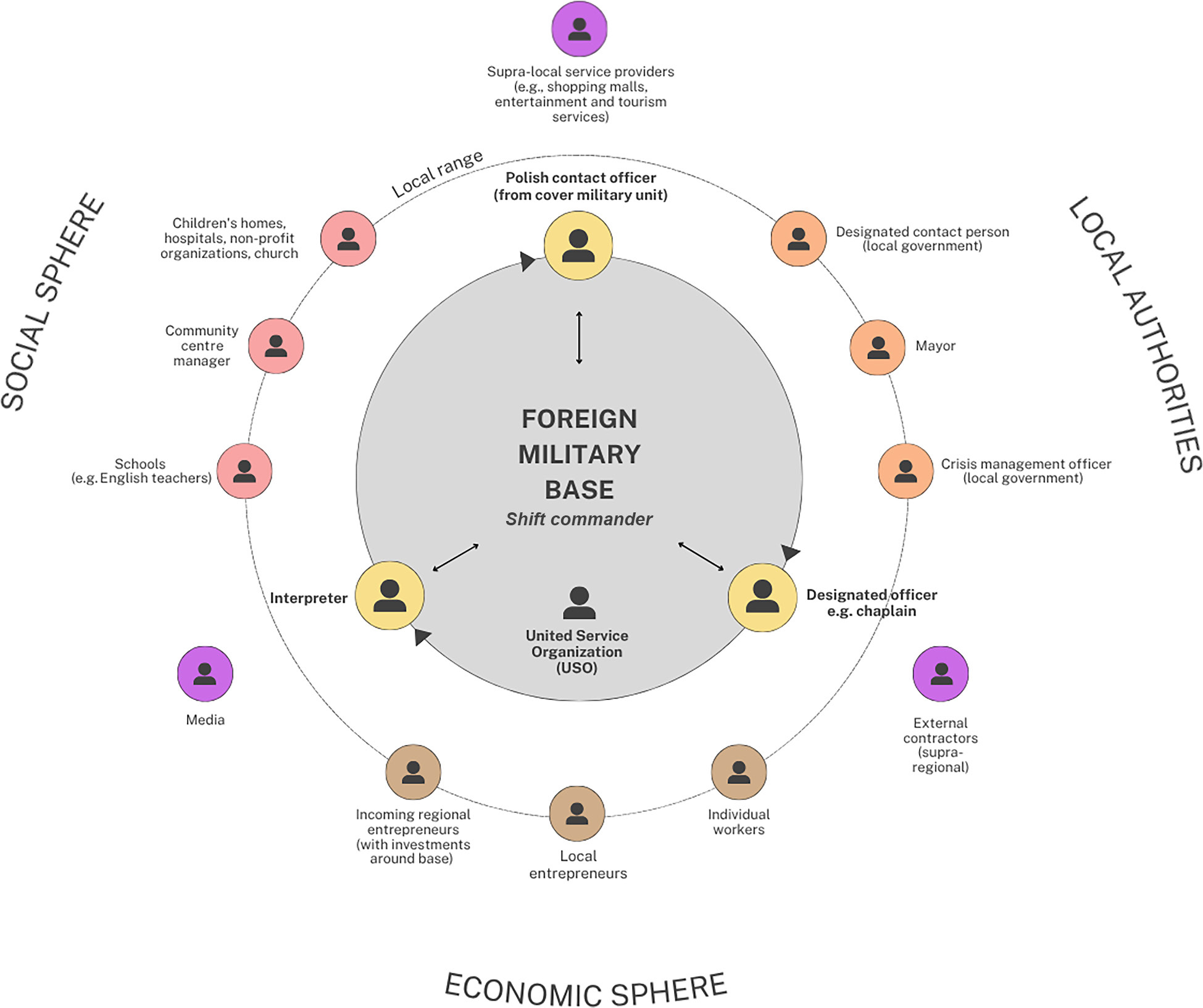
Fig. 7.
General model of local relations between FMBs and local communities. FMB – foreign military base.
FMP influences local social capital, yet interactions between soldiers and residents remain largely superficial, institutional, and short-lived. While frequent rotations limit the formation of deeper social bonds and mutual understanding, each new rotational unit also renews local expectations and may include individuals more open to engagement. As a result, civil-military coexistence remains fragmented, typically confined to administrative or symbolic interactions. These findings align with Ben-Ari and Elron (2001), who argue that multinational military deployments rarely foster meaningful social integration.
At a broader scale, the presence of FMBs raises fundamental dilemmas about balancing governance at different levels. As FMBs operate within a globalised security infrastructure, a ‘battle of scale’ emerges, centring on whether stability and security should be prioritised at local, national, or global levels.
I acknowledge that the sensitive nature of the topic limited access to data and generated some respondent mistrust, narrowing the scope of the study. Future research should therefore explore municipal strategies towards FMBs, integrate military actors’ perspectives, and include comparative analyses of other former Warsaw Pact countries to deepen understanding of civil-military dynamics in post-socialist contexts.
Conclusions
In this study, I have shown that FMBs are perceived both as sources of economic and infrastructural gains and as triggers of social tensions, environmental harm, and spatial change – perceptions shaped by spatial, historical, and socio-demographic contexts.
I found that rotational deployments disrupt social continuity, causing fatigue and limiting engagement, especially when local expectations remain unmet. Demographic factors also shaped perceptions, with key criticisms focusing on environmental impact and weak civil-military integration. My findings demonstrate that sustaining long-term support for FMP requires more than temporary economic benefits.
This study demonstrates that the impact of FMP in Poland cannot be examined solely through the lens of security or infrastructure. Instead, it requires nuanced attention to complex local contexts. In this way, I contribute to the existing literature by providing empirical evidence from Central and Eastern Europe and by advancing a theoretical understanding of spatial militarisation and narrative asymmetry in civil-military relations.
Finally, I emphasise that the long-term consequences of the rotational FMB model remain unresolved, highlighting the need for further comparative research, particularly in peripheral areas of other Central European countries. Future studies should also explore cross-national comparisons, local strategies, and the long-term impacts of militarised development in formerly peripheral regions.
Acknowledgements
I thank the reviewers for their work, constructive criticism, and helpful suggestions.