
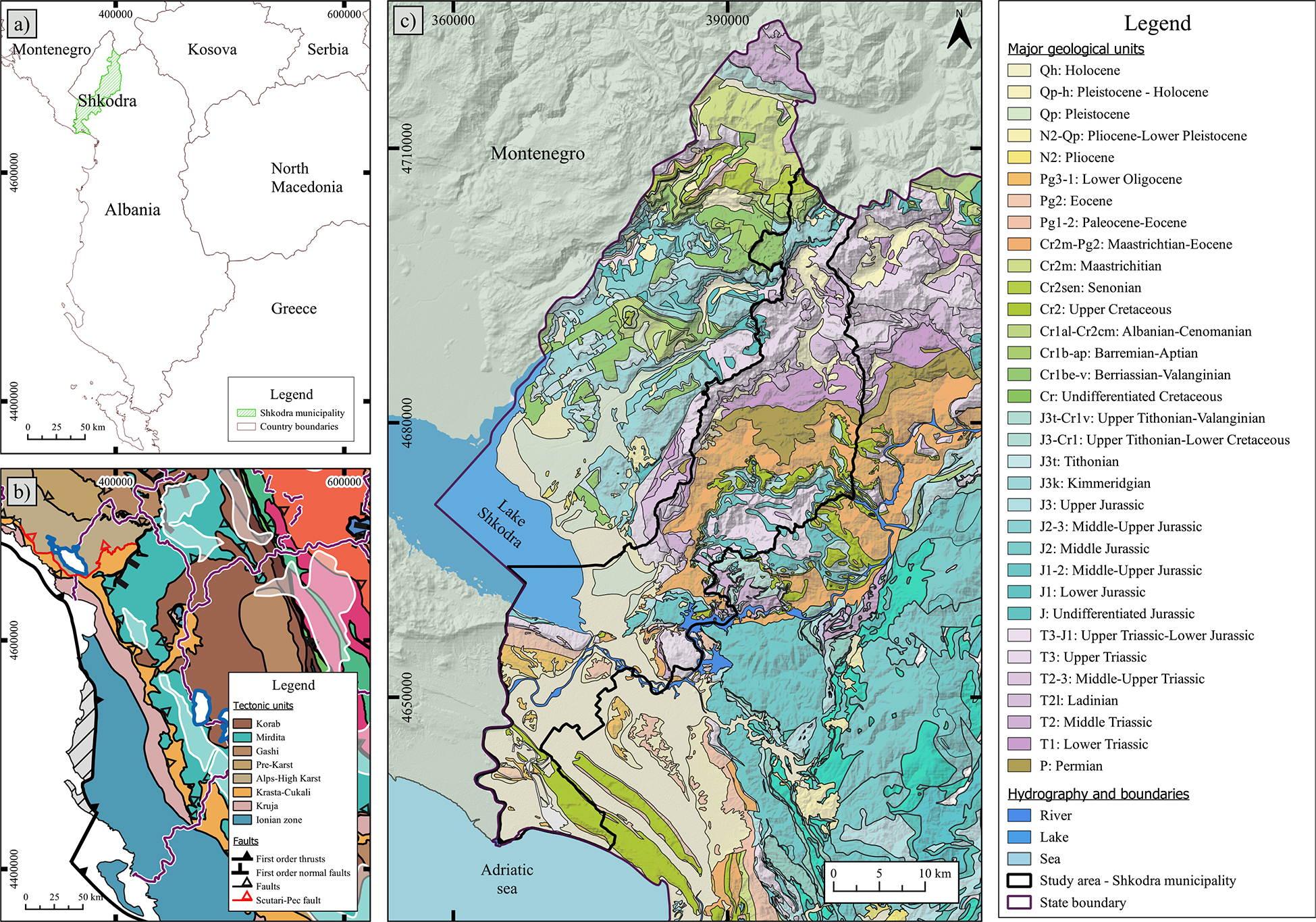
Fig. 1.
a) – Overview of the study area, b) – Tectonic map of Albania (Schmid et al. 2020), c) – Geological map of the study area (Xhomo et al. 2002).
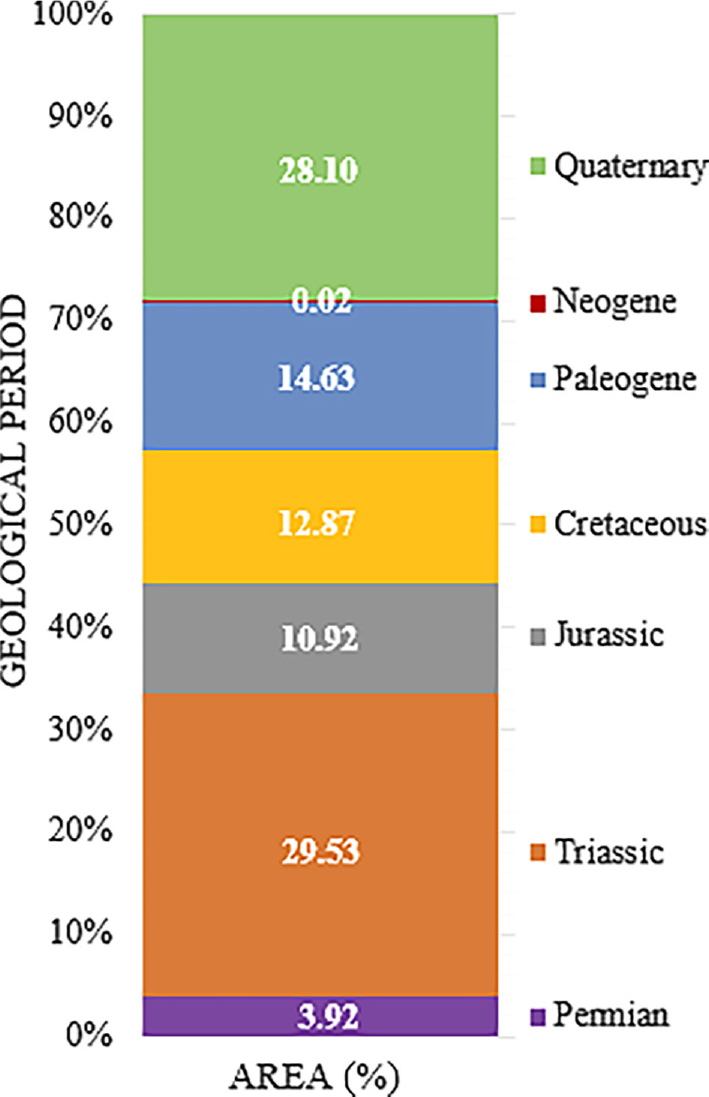
Fig. 2.
The relative proportion of formations belonging to different geological periods in the study area.
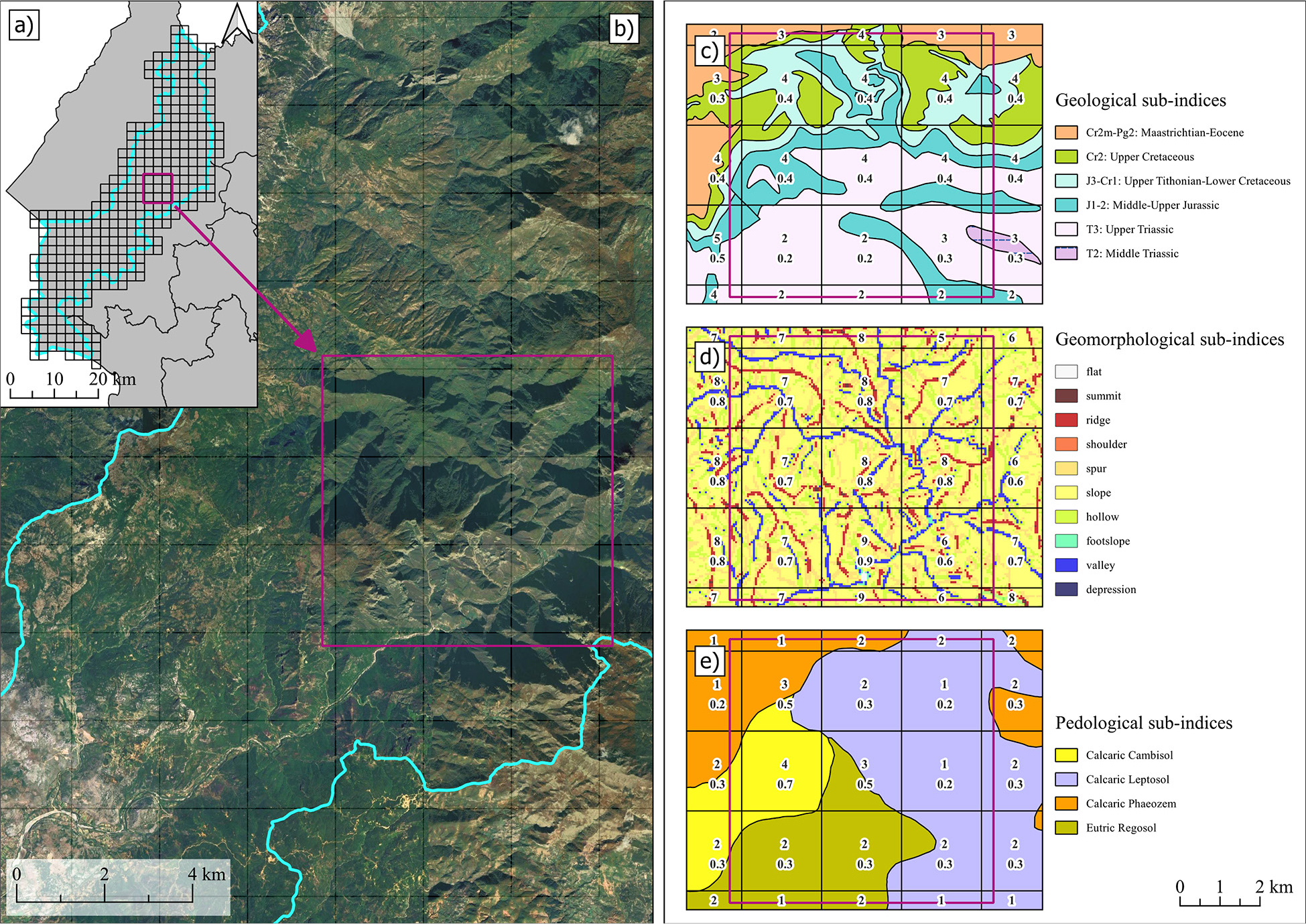
Fig. 3.
a) – 2 km × 2 km cells of a grid system of Shkodra Municipality, b) – a random area featuring c) – geological, d) – geomorphological, e) – pedological data, with geodiversity sub-index (above) and normalised geodiversity sub-index (below).
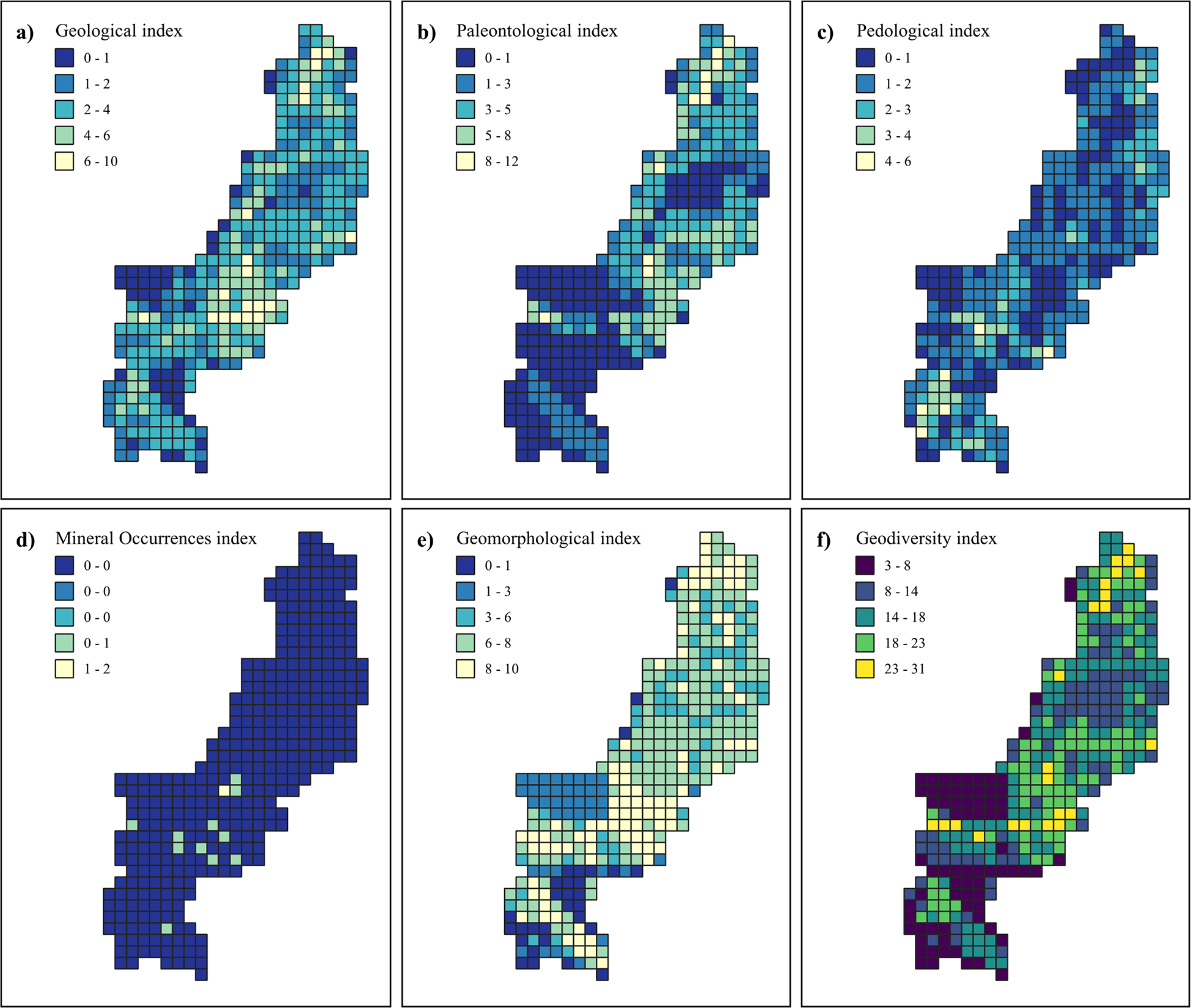
Fig. 4.
All the sub-indices calculated for the study area: a) – geological, b) – palaeontological, c) – pedological, d) – mineral occurrences, e) – geomorphological (relief & hydrography), f) – geodiversity index (a sum of all sub-indices).
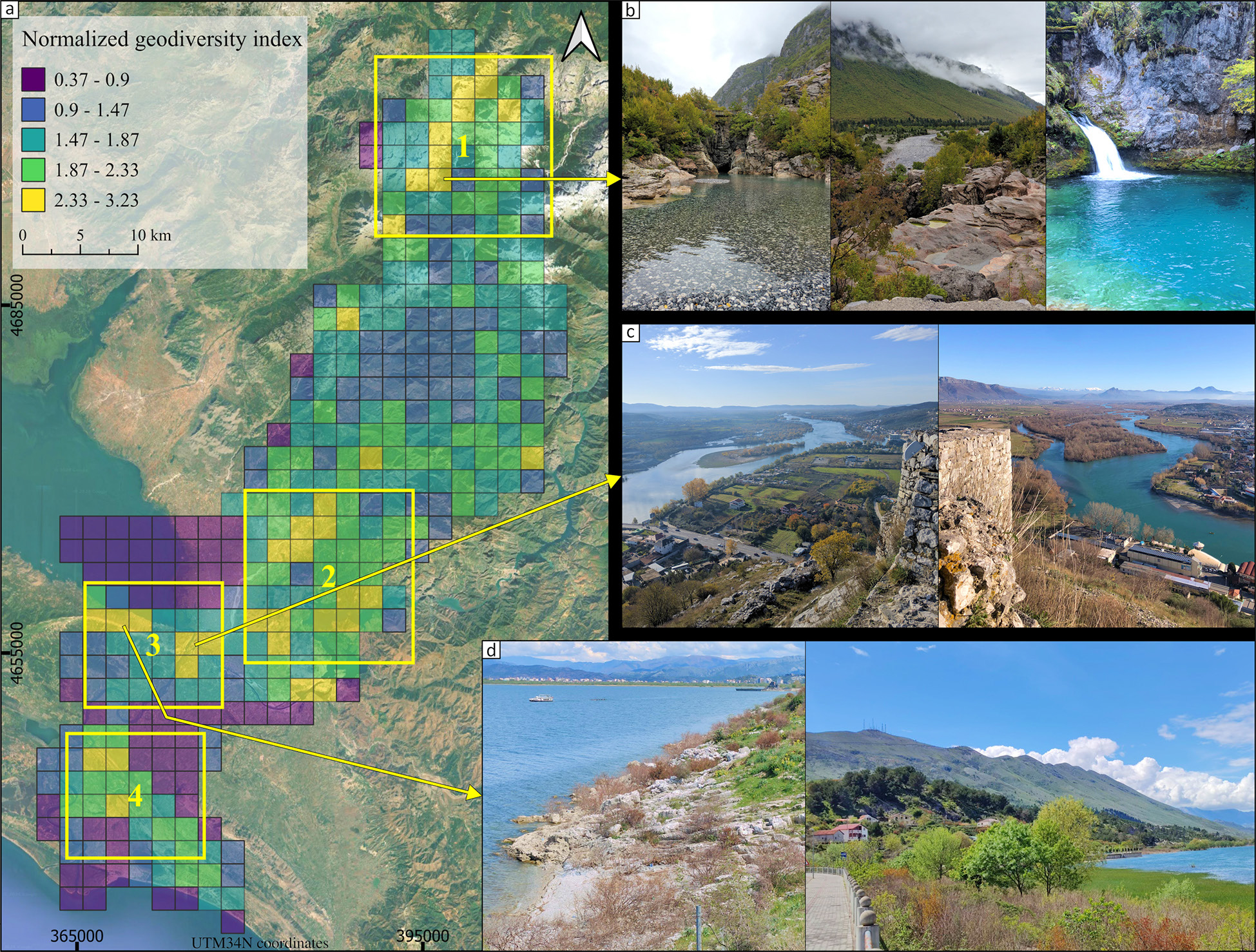
Fig. 5.
Normalised geodiversity index map with pictures attached. On the left, a – the yellow squares indicate the areas with high geodiversity index values: 1 – Theth National Park; 2 – Drin River Basin near the Vau i Dejёs reservoir; 3 – Lake Shkodra together with Shiroka and Zogaj settlements; 4 – Buna River protected landscape. On the right, there are some illustrations of high geodiversity areas mentioned in the study: b – Theth National Park; c – the point where the Buna, Drini and Kiri rivers join, which can be captured from Rozafa Castle; d – Shiroka and Zogaj settlements, located in the central part of the Shkodra Municipality.
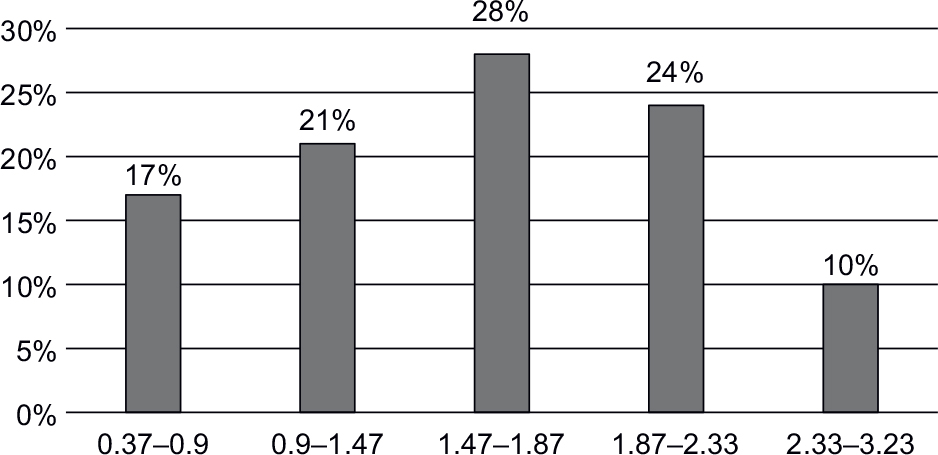
Fig. 6.
Distribution of the normalised geodiversity indexes in the study area.