
Introduction
Geodiversity, as an interdisciplinary concept, is relatively new, with its conceptualisation beginning in the 1990s. It is typically defined as the natural variety (diversity) of geological (rocks, minerals, fossils), geomorphological (landforms, topography, physical processes), soil and hydrological features (Gray 2013). Geodiversity is regarded as the backbone of geoheritage, geocon-servation and modern society (Gray 2018).
Albania is a relatively small country situated in south-eastern Europe on the Balkan Peninsula, comprising a total area of 28,748 km2. Despite this, it has a very high occurrence and diversity of natural resources (geological formations, minerals, raw materials, habitats, animal and plant species, geomorphological features) per unit area (Xhomo et al. 2002, Metaj 2007, Shuka et al. 2017). The UNESCO guidelines have long established the protection of natural heritage, but this is usually understood as the protection of living organisms. However, biodiversity and geodiversity are interlinked phenomena (Tukiainen et al. 2017), and a growing number of studies point to the need to conserve geodiversity to maintain biodiversity (Hjort et al. 2015, Gordon et al. 2022). In Albania, there are numerous national parks, but no UNESCO Global Geopark has been established yet; however, geotourism and its possible target areas are being tackled recently (Braholli, Menkshi 2021, Braholli et al. 2023). Recognising this, Serjani (2020) had proposed the establishment of a geopark, but a geodiversity assessment of the area was not carried out at the time. The institution of geoparks promotes the preservation and sustainable economic use of the geological values of the area, including, for example, geotourism and local industrial activity (Catana, Brilha 2020), which are already present in Shkodra Municipality.
There is a significant absence of geodiversity assessments in Albania, particularly at the regional level. Albania’s geodiversity remains largely unknown in the broader scientific literature. This research brings attention to an area that holds potential for international geoconservation interest. Shkodra region includes varied landscapes (mountains, valleys, karst systems, lakes and deltas) with rich geological, geomorphological and hydrological features, making it an ideal area for geodiversity analysis. By identifying geodiversity hotspots, the study supports national efforts to propose Albania’s first UNESCO Global Geopark, contributing to both scientific and policy-level planning.
The protected areas within Shkodra Municipality, including the Albanian Alps, Shala Valley, Lake Shkodra and the Buna River – Velipoja Protected Landscape, have a high significance for geodiversity and geotourism potential. Theth National Park covers a significant area of the Albanian Alps and its rich geological heritage provides a favourable environment for tourism, especially geotourism, enabling visitors to explore its unique geological features and landscapes (Dollma 2019). Shala Valley is located south-east of Theth Valley and represents the continuation of the Shala River. Geomorphologically, the valley has been shaped by Quaternary glaciations and the river’s flow through various rock types and tectonic faults (Dollma 2019). Lake Shkodra, the largest lake in the Balkan Peninsula, is a tectonic lake known for its rich geodiversity, including diverse karst features, sedimentary landscapes and hydrogeological phenomena. Its connection with the Buna River, which flows for 44 km and drains the lake towards the Adriatic Sea, forms an important hydrological system that shapes a dynamic landscape of riverbeds, deltas, floodplains and lagoons (Fanelli et al. 2015). Established as a protected area in 2005, Buna River – Velipoja Protected Landscape further enhances the municipality’s geomorphological and ecological complexity.
Geodiversity can be calculated using base data from the geosciences disciplines, processed by geographic information operations (Serrano, Ruiz-Flaño 2007, Pellitero et al. 2015, Zwoliński et al. 2018, 2026). The result is a map showing the value of the diversity index per unit area (cell). The cell size depends on the resolution of the basic data and the size of the area, and for regional scale studies, a regular grid of 1 km × 1 km-25 km × 25 km is most commonly used (Pereira et al. 2013, Bétard, Peulvast 2019, Dias et al. 2021, Carrión-Mero et al. 2022, Scammacca et al. 2022, Pál, Albert 2023). In geodiversity studies, the aim is to ensure that the indicator is a good representation of the abiotic ‘geo’ factors that could play a role in shaping the diverse landscape (Serrano, Ruiz-Flaño 2007). There are several methods for calculating the index, of which map-algebraic methods are the most common (Hjort, Luoto 2010, Pereira et al. 2013, Tukiainen et al. 2017, Zwoliński et al. 2018, 2026, Pál, Albert 2021). The optimal methods to investigate the link to social processes (geotourism, industry) are those that consider the geoscientific factors that are of high importance to visitors and the local industry in general. Examples of such factors include the occurrence of palaeontological remains and mineral deposits, which may play a role in geodiversity calculations (Pereira et al. 2013, Pál, Albert 2021). In the present research, the calculation method of Pál and Albert (2021) was used, as our primary objective was to provide a scientific basis for the establishment of a geopark in the area. To achieve this, we have created a geodiversity map of the area and analysed the occurrence of high geodiversity areas.
Study area and its geological and geomorphological setting
Albania is located on the western part of the Balkan Peninsula in south-eastern Europe. In the country’s northern region lies Shkodra Municipality, one of the oldest and most historically significant areas in Albania. The region has a Mediterranean climate, with hot, humid summers and mild, wet winters. These climatic conditions, combined with the presence of Lake Shkodra, the largest lake in the Balkans, the Adriatic Sea and the river networks of Drini, Buna, Kiri, Shala and Cemi, contribute to a dynamic hydrological system. The interaction of these climatic and hydrological conditions has shaped a diverse range of soils across the area. According to the European Soil Database, predominant soil types in Shkodra Municipality include fluvisols, typically found in river valleys and floodplains. In more elevated or rugged terrain, cambisols and leptosols are common, characterised by shallow profiles, often influenced by erosion and the underlying geology (Zdruli et al. 2005). This variability in soil types reflects both the geomorphological complexity of the area and the dynamic processes shaped by climate and water systems.
Shkodra Municipality, at the junction of the Albanides (northern Hellenides) and the Dinarides mountain ranges (Figs 1A, B), has a complex geological history shaped by tectonic activity and surface erosion. It is part of the Mediterranean Alpine belt, formed by the convergence of the African and European plates during Alpine orogenesis (Speranza et al. 1995, Xhomo et al. 2002). Cretaceous and Cenozoic orogenic phases created a stacked nappe structure consisting of heavily folded and thrusted sequences, and due to the different dynamics of the plate fragments containing the Dinarides and the Albanides, a large-scale oblique-dextral transform zone developed (Scutari-Pec), separating the northern High Karst Nappe from the southern Mirdita ophiolites (van Hinsbergen et al. 2020). The intense and still active tectonism has resulted in the formation of mountains of folded strata and valleys parallel to the structural lines, but due to the intense uplift of the area, karst landforms are also abundant. Based on the development of tectogenesis phases and structural features, several tectonostratigraphic zones have been identified (Fig. 1B), which are separated into Dinarides, and external (western) and internal (eastern) Albanides (Robertson, Shallo 2000, Schmid et al. 2008, van Hinsbergen et al. 2020):
Dinarides: Albanian Alps
External Albanides: Pre-Adriatic Depression, Sazani, Ionian, Kruja, Krast-Cukali
Internal Albanides: Gashi, Mirdita and Korabi
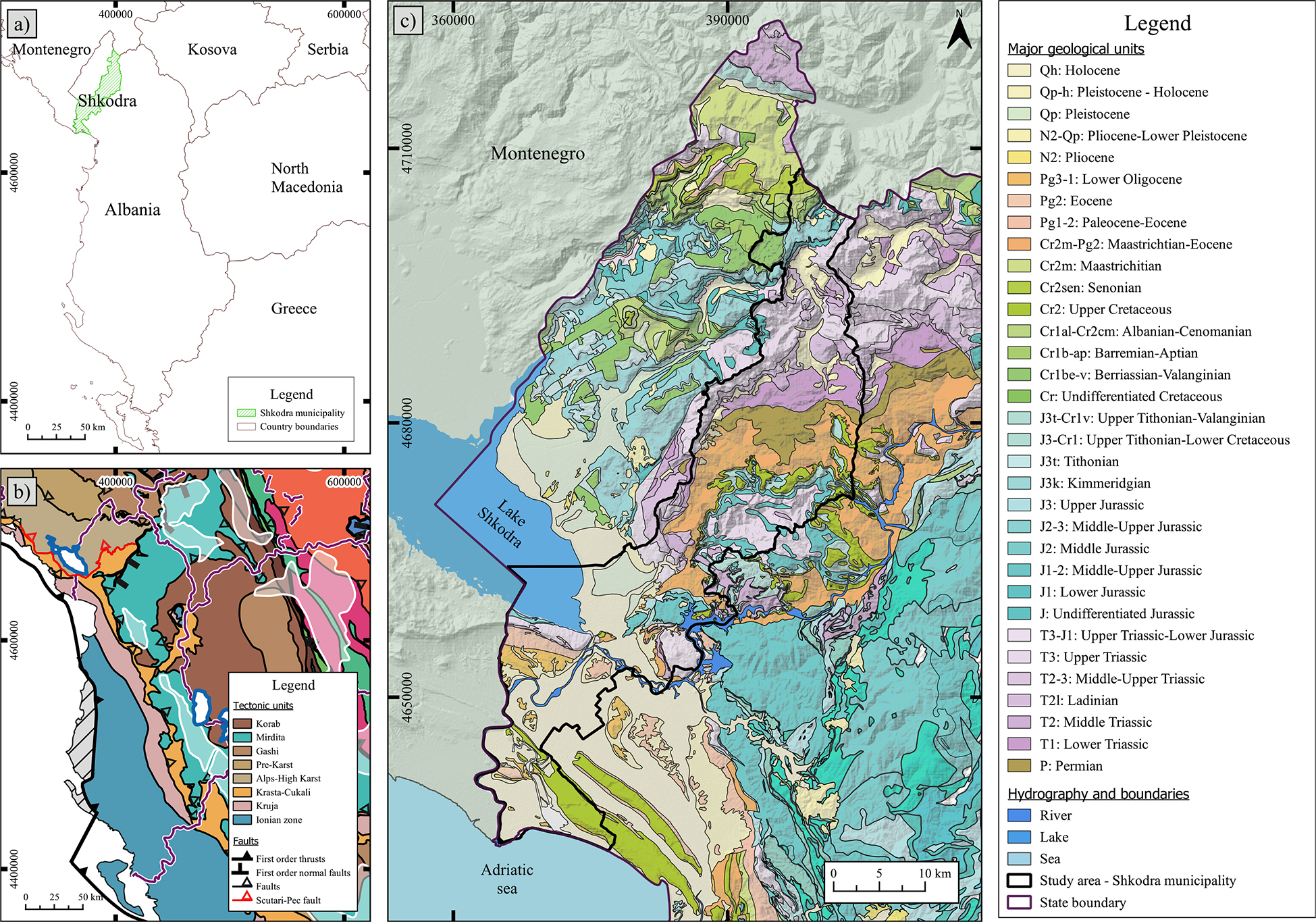
Fig. 1.
a) – Overview of the study area, b) – Tectonic map of Albania (Schmid et al. 2020), c) – Geological map of the study area (Xhomo et al. 2002).
A significant proportion of Shkodra Municipality is located in the northern part of the Albanian Alps, which is known for its rugged mountain terrain, deep gorges, caves and other karst forms, and pristine lakes and rivers. The Albanian Alps are mainly built of Mesozoic marine sediments, such as Triassic carbonates, Jurassic limestone and Cretaceous flysch (Fig. 1C), but the oldest sediments date from the Permian period, consisting of fossiliferous limestones, sandstones, conglomerates and shales (Gaetani et al. 2015). At the beginning of the Late Triassic the carbonate platform sediments of the Adriatic region started to develop (Vlahović et al. 2005, Gawlick, Schlagintweit 2019). The Jurassic sequence of the Albanian Alps was differentiated into two main subzones, the north-western ‘Malёsi e Madhe’ and the south-eastern ‘Valbona’ subzones, having different characteristics (Meço, Aliaj 2000). In the Malёsi e Madhe subzone, a continuous sedimentation of neritic limestones follows up to the Maastrichtian, and it is interpreted as a shallow-marine carbonate platform. In the Valbona subzone, after sedimentation of the Late Triassic platform carbonates, pelagic limestone deposits occur in the Jurassic to Early Cretaceous. This part represents the transition to the uplifted deep-marine deposits of the Albanian Alps (Vermosh flysch), which covers the period from the Maastrichtian to the Eocene (Robertson, Shallo 2000).
By the end of the Eocene, the Albanian Alps zone was deformed and thrust south-westward over the Krast-Cukali zone, part of the external Albanides, which represented a more distal marine environment throughout the Cretaceous (Meshi et al. 2014). In Shkodra Municipality, the sequence contains Cretaceous turbiditic sandstones and mudstones, followed by Late Cretaceous pelagic facies, which is overlain by the Maastrichtian–Eocene deep marine turbiditic deposits (Meço, Aliaj 2000, Robertson, Shallo 2000).
The underlying Kruja Unit forms the most external onshore tectonostratigraphic unit in the region (Robertson, Shallo 2000, Schmitz et al. 2020). It represents a folded and thrusted succession of Cretaceous shallow marine carbonates and evaporites, followed by terrestrial deposits (bauxite) in the Palaeocene. Middle Eocene nummulitic limestones and the Oligocene deep marine turbiditic deposits are also present (Schmitz et al. 2020).
The Mirdita ophiolites are exposed in the area east of Shkodra, representing a thick succession of oceanic crust, with primary seafloor spreading structures and extrusive volcanic rocks ranging from basalts to dacites from the Triassic–Late Jurassic (Dilek et al. 2005). This region is structurally very complex, as the Scutari-Pec transform fault and the south-west-vergent nappe thrusts simultaneously deformed the stratigraphic sequence of the area since the Cretaceous (Dilek et al. 2005, van Hinsbergen et al. 2020). The most recent tectonic activity is characterised by a SW–NE shortening and the reactivation of the structurally lower thrust faults, which results in intense earthquakes in the area, such as the devastating 6.6 magnitude earthquake in Shkodra in 1906 (Biermanns et al. 2019).
The lowlands are covered by Quaternary sediments, forming extensive alluvial plains, with deposits of silt, sand, gravel, marsh and lagoon sediments between the city of Shkodra and the coast (Fig. 1C). This area is dominated by Lake Shkodra, a relatively young (~6000 years) freshwater lake and marsh environment where human activity dates to prehistoric times (Mazzini et al. 2016).
The municipality’s geodiversity is reflected in landforms shaped by karstification, glacial erosion and tectonic uplift. Although geological units from seven different geological periods, ranging from the Permian up to the Quaternary are present, Triassic formations (29.53%) and Quaternary sediments (28.10%) are the most widespread on the surface in the study area (Fig. 2). During the Triassic period, the formation of limestones with megalodontes, stromatholith limestones and dolomites took place. The Quaternary period is characterised by the presence of the most recent materials and processes, revealing alluvial sediments (silts, sands, gravels), proluvial–alluvial sediments (sands, gravels, silts), marshy-lake sediments (clays, silts, peats), lagoon sediments (clays, silts, sands, organic remnants) and marine sediments (mainly sands). The formations of both periods give a particular variety of landforms: in the Triassic formations, karstic features provide the majority of landforms, while in the Quaternary formations, alluvial plains, marshes and coastlines enrich the landforms. The erosional landforms dominating the mountainous region are created by flowing water and ice (Hoxha 2021).
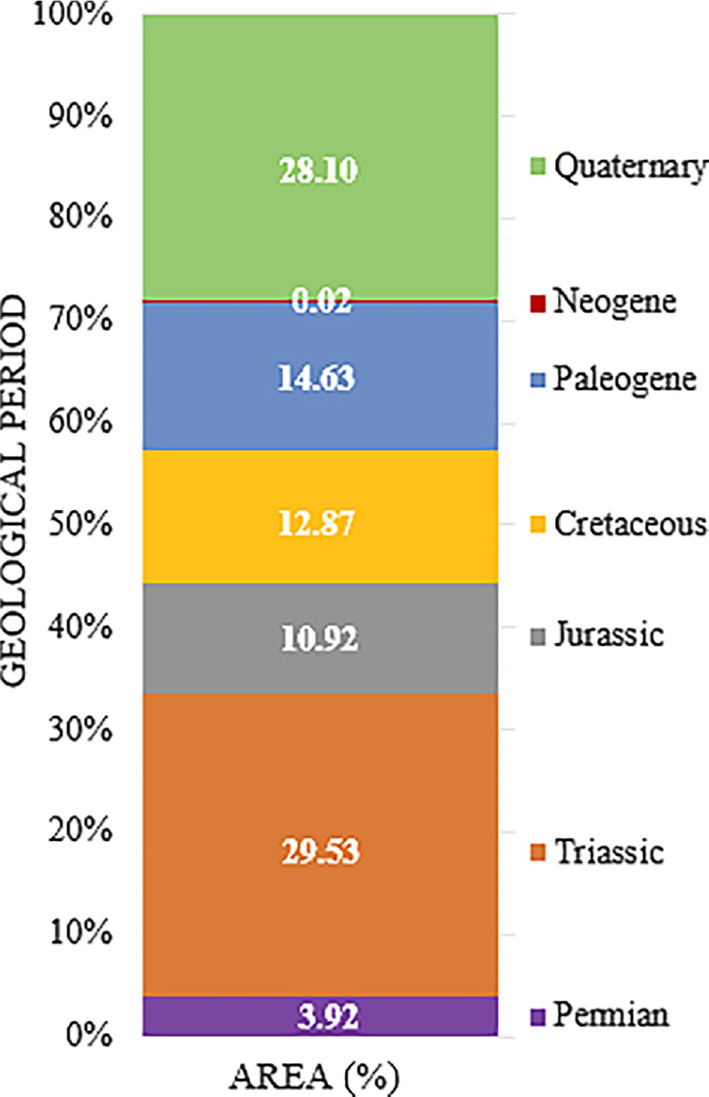
Fig. 2.
The relative proportion of formations belonging to different geological periods in the study area.
In the mountainous area, Mesozoic marine sediments (Triassic carbonates and shales, Jurassic limestone, marl, and Cretaceous carbonates and siliciclastic deposits) and Palaeogene flysch make up a significant part of the surface geology, and their folded layers form a spectacular variety of shapes, but deformed Late Permian and younger Cenozoic sediments are also present in the area. The Albanian Alps are also rich in glacial landforms such as moraines, cirques and mass movements associated with frost heaving (Milivojević et al. 2008). Such a variety of geological and geomorphological features can be best described in terms of geodiversity.
The geodiversity of an area is also reflected in the abundance of geosites, that is, distinct geological features such as cliffs, caves and rock outcrops that have well-defined locations and scientific significance (Melelli 2014, Pál, Albert 2023). Shkodra Municipality contains several geosites, such as Lake Shkodra, the Taraboshi stratigraphic section, several underground karstic springs, the Kopliku karstic field, Jubani cave and the Triassic lithotamnic limestones around Rozafa castle (Serjani 2020). These sites provide valuable information about the geological history of the municipality, mainly due to a combination of tectonic activity and karstification processes.
Methodology and systematisation of data
The research collected and analysed geological, palaeontological, pedological (soil), mineral occurrences and geomorphological (hydrological and relief) data for the Shkodra Municipality in Albania, using a quantitative methodology established in previous studies by Pereira et al. (2013) and Pál and Albert (2021). Unlike more qualitative or site-specific approaches, this method provides quantitative, grid-based outputs that are suitable for regional planning, conservation prioritisation and geotourism development. The result of the assessment is the geodiversity index, which is derived from the combined value of the identified sub-indices. The aim of the Geodiversity Index is therefore to express, in the most balanced way possible, all these aspects without emphasising any particular geodiversity elements (Pereira et al. 2013).
The evaluation is calculated by using different data, such as existing geological, palaeontological and soil maps, multi-error-removed improved-terrain (MERIT) Hydro Digital Elevation Model (DEM) and spatial databases such as the European Geological Data Infrastructure (EGDI). The assessment requires five sub-indices to be calculated, each of which corresponds to the components of geodiversity, specifically geology, palaeontology, pedology, mineral occurrences and geomorphology. The geodiversity index is the aggregate of these sub-indices, defined by a grid.
Taking into consideration the various map scales and the area of 953.64 km2, Shkodra Municipality was divided into 2 km × 2 km cells of a grid system (Fig. 3A). This system is an important and basic tool for assessing the geodiversity of any region. The grid resolution depends on the scale of the available data and the surface area. If the grid is too dense and we have a small-scale thematic dataset, the relations between the thematic features are not correctly detected; if the grid cells are big and the data large-scale, each grid cell gets large index values, but it does not correctly represent the diversity; if the cells are too small or the data too small-scale, the value of the indices will be too low, and again we will not get a meaningful picture of the diversity (Pál, Albert 2021). Each cell was assigned a sub-index value based on the variety of formations within it. Consequently, a total of 367 cells were created. Open-access software, such as QGIS 3.32.3, SAGA GIS 9.4.0, GRASS GIS (7.8.4) and the UTM Zone 34N (WGS 1984 datum) coordinate system, was used while calculating the five sub-indices and the final geodiversity index.
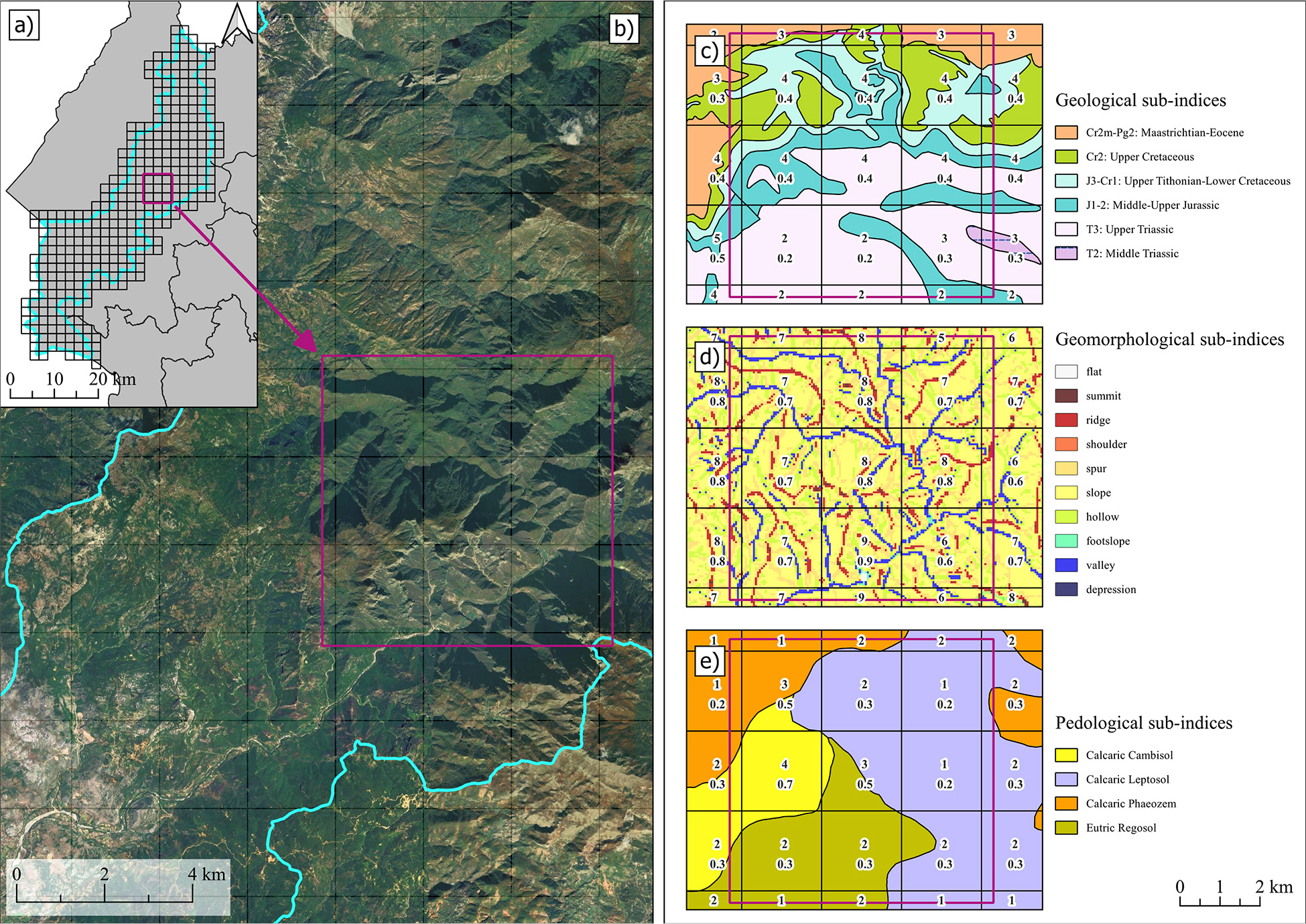
Fig. 3.
a) – 2 km × 2 km cells of a grid system of Shkodra Municipality, b) – a random area featuring c) – geological, d) – geomorphological, e) – pedological data, with geodiversity sub-index (above) and normalised geodiversity sub-index (below).
The geological sub-index was calculated using the 1:200,000 scale geological map of Albania (Xhomo et al. 2002). This sub-index was calculated by counting the number of different lithological and stratigraphical units within each grid cell. It was relatively difficult to calculate the palaeontological sub-index due to the absence of an available fossil database or map. Nevertheless, the geological map played a crucial role in calculating this sub-index. The geological map database, along with the information provided in the ‘Geology of Albania’ explanatory book by Xhomo et al. (2002), contained useful information regarding the fossils. This allowed us to determine the number of major fossil groups (e.g. corals, ammonites, bivalves and gastropods) occurring in the different lithological and stratigraphic units depicted on the map. A unit could contain several groups, and obviously, some units did not contain fossils. The palaeontological sub-index was calculated with the same principle that was used in the geological sub-index, by counting the number of different fossil types in each grid cell.
The pedological sub-index was calculated using the 1:250,000 scale soil map of Albania (Zdruli et al. 2005), according to the World Reference Base for Soil Resources. The sub-index was calculated by counting the number of different soil units within each grid cell. The mineral occurrences sub-index was calculated using the EGDI. The Pan-European Mineral occurrence points (EGDI/MIN4EU) layer provide the data as follows: (1) Precious stones – agate, diamond, silver, gold; (2) Metallic minerals – lead, copper, zinc, titanium; (3) Industrial minerals – quartz sand, clay, calcite, gypsum; (4) Geological energy sources – anthracite, oil shale, natural gas; (5) Mineral waters and springs. The mineral occurrences sub-index was calculated by counting all the various elements in each grid cell.
The geomorphological sub-index presents a higher level of complexity, as it consists of two key components: hydrology and relief. For both sub-indices, MERIT was used. It is a medium-resolution (~70 m on this latitude) global DEM that is an upgraded version of the Shuttle Radar Topography Mission (SRTM) 3 surface model (Yamazaki et al. 2017). The hydrological sub-index was calculated as half of the maximum hierarchical level of the rivers present in each square, with the result rounded up to the nearest unit, following the Strahler Order (Strahler 1957) methodology. As for the relief sub-index, the MERIT DEM data was used. The geomorphon classification method that was used to calculate the relief sub-index was developed by Jasiewicz and Stepinski (2013). The open-source software GRASS GIS (7.8.4) has this method implemented under the extension of ‘r.geomorphon’. In this way, a map of the 10 most prevalent landform features classification was created. From this map, the relief sub-index was calculated using the ‘Zonal Statistics’ feature, where the number of different categories (variety) was assigned to the cells, so the range of values was 0–10. After separately calculating the hydrological and relief sub-indices, the next step was to add these two sub-indices together to get the geomorphological sub-index.
In summary, each 2 × 2 km cell of the grid system (Fig. 3A) represents a specific number of different lithostratigraphic, fossil, soil, geomorphological units and mineral elements. To provide a visual example of how the assessment is applied at the grid–cell level, a randomly selected 2 × 2 km cell is shown in Fig. 3B. Sub-indices were calculated from the different base maps based on the various classes within the 2 × 2 km cells (Figs 3C–E). Working with base maps of different scales can give significant challenges due to the varying levels of complexity. To account for this, the sub-indices were normalised. In this case, the values will range from 0 to 1, and none of the diversity components will be over- or un-derrepresented compared with the others.
Once all the sub-index parameters have been calculated and normalised, they were summed up to create a normalised geodiversity index. This normalised geodiversity index provides an overall measure of the diversity of geological, palaeontological, pedological, mineral occurrences and geomorphological (hydrological and relief indices) features for the grid cells in the research area that can be compared with other regions.
Results and discussion
The results are primarily represented as maps (Fig. 4), but a detailed explanation and analysis of the five sub-indices and the main geodiversity index are also presented and discussed. On the visualised maps, the ‘Natural Breaks’ method was used to create five cluster groups, which aided in minimising each class’s average deviation from the class mean, while maximising each class’s deviation from the means of the other classes (Jenks 1967, McMaster 1997).
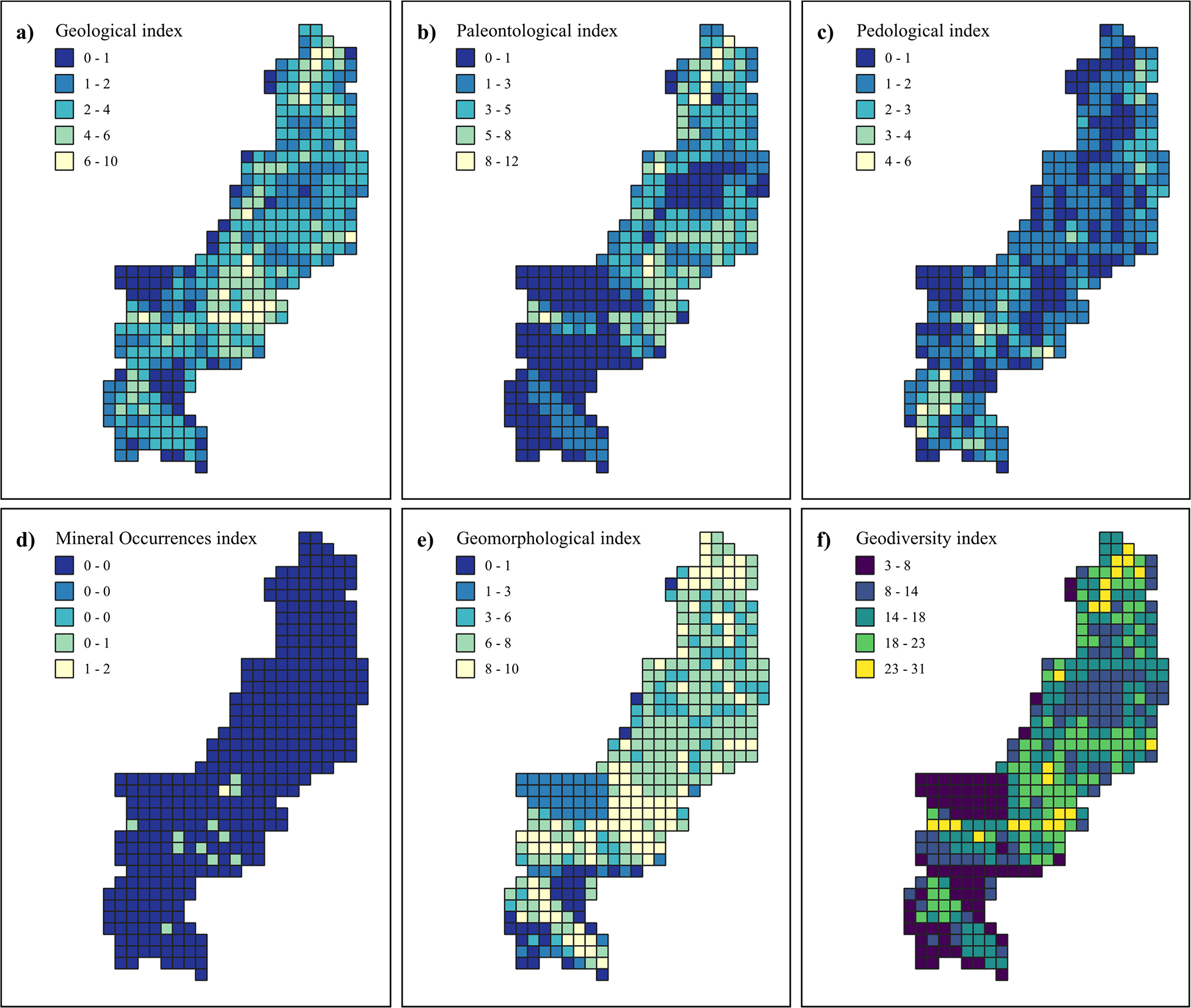
Fig. 4.
All the sub-indices calculated for the study area: a) – geological, b) – palaeontological, c) – pedological, d) – mineral occurrences, e) – geomorphological (relief & hydrography), f) – geodiversity index (a sum of all sub-indices).
Geological Index ranges from 1 to 10 (Fig. 4A), where the highest indices were noted in the area corresponding to the Theth National Park, the central part of Drin River Basin near the Vau i Dejёs reservoir, where a noticeable diversity of lithological and stratigraphical units is presented. Theth National Park features limestones, including nodular, siliceous, oolitic limestones and dolomites. In the Drin River Basin near the Vau i Dejёs reservoir, the geology consists of mixed alluvial–proluvial sediments, ophiolite conglobreccia, marl, sandstone and conglomerate intercalations. Around the settlements of Shiroka and Zogaj, oolitic limestones and dolomites are typically found, while in the Buna River protected landscape, alluvial–marshy sediments, including mud, sand and gravel, are abundant.
Palaeontological Index ranges from 0 to 12 (Fig. 4B), with the highest values recorded in the area corresponding to the Theth National Park, where Clypeina jurassica, gastropods, hydrozoa, corals and algae are present, and in the Drin River Basin near the Vau i Dejёs reservoir, where rudists, foraminifera (I. liassica and Protoglobigerina), radiolarites and megalodontes are found.
Pedological Index ranges from 1 to 6 (Fig. 4C), where the highest indices were noted in the eastern part of Theth National Park, Shiroka and Zogaj settlements, and Buna River protected landscape.
Mineral Occurrences Index ranges from 0 to 2 (Fig. 4D), but this index could only be calculated in a few places due to the scarcity of data. The highest indices were noted in the area corresponding to the Drin River Basin near the Vau i Dejёs reservoir, mainly with very large and medium-sized deposits of ceramic and refractory minerals, medium-sized deposits of dimension stones and medium-sized deposits of industrial rocks and minerals.
Geomorphological Index ranges from 1 to 10 (Fig. 4E). It shows a relatively even distribution, but the highest values were noted in ridge landforms of dissected mountain ranges, particularly in Theth National Park, and near the junction of foothills and large water bodies. It is noteworthy to refer to areas such as the Drin River Basin near the Vau i Dejёs reservoir, Lake Shkodra and the large rivers, the Drini, Buna and Kiri.
The overall results indicate that Shkodra Municipality is characterised by many areas with medium and high geodiversity index, but four hotspots can be distinguished, where the highest values appear (Fig. 5). These are Theth National Park; Drin River Basin near the Vau i Dejёs reservoir; Lake Shkodra and settlements like Shiroka and Zogaj; and the Buna River protected landscape. Areas with high geodiversity may be prioritised for protection or designated as areas of ecological or cultural significance. Identifying which indices contribute most significantly to the geodiversity of the area is an important part of the assessment, as it helps prioritise the main natural features that define the character and value of the landscape.
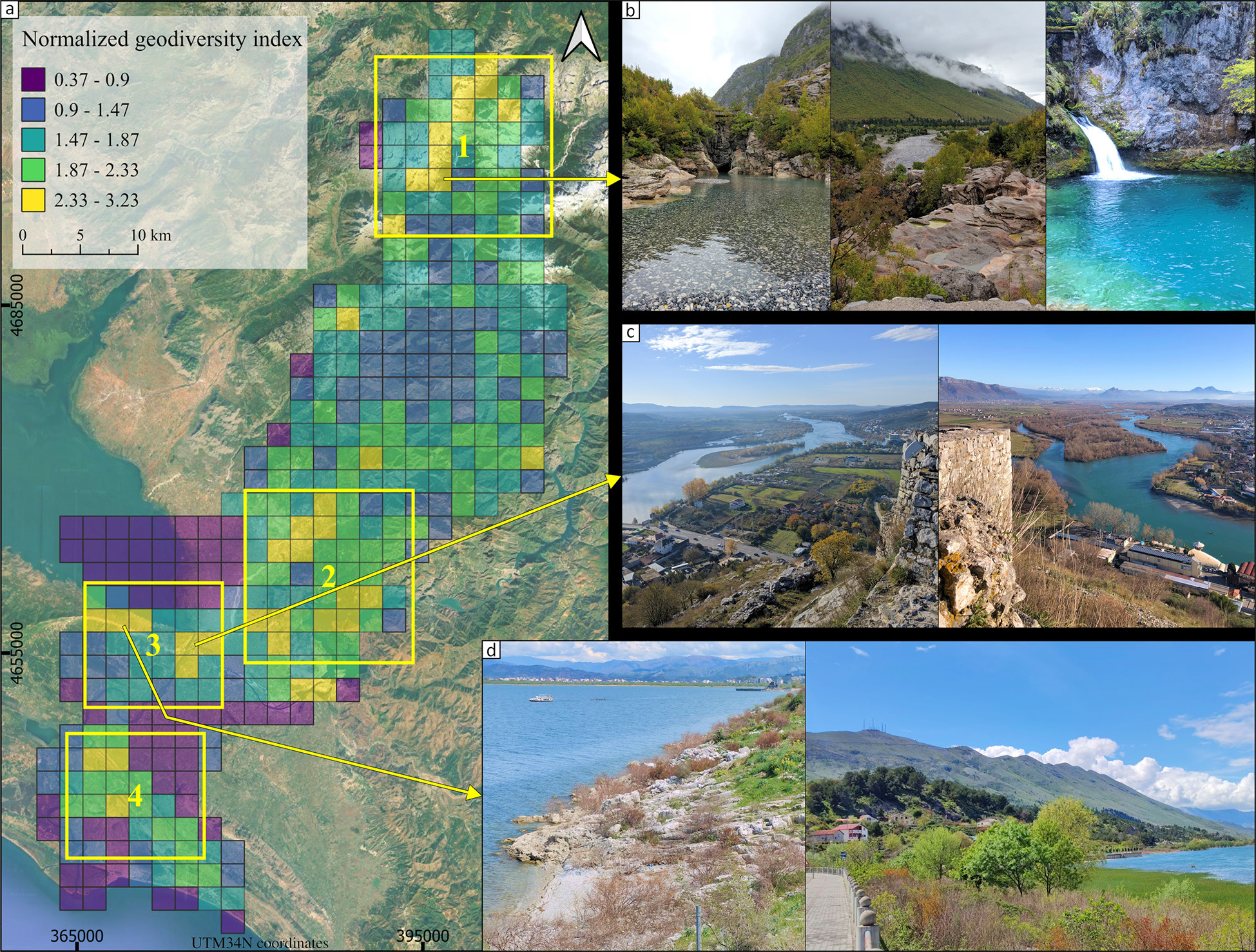
Fig. 5.
Normalised geodiversity index map with pictures attached. On the left, a – the yellow squares indicate the areas with high geodiversity index values: 1 – Theth National Park; 2 – Drin River Basin near the Vau i Dejёs reservoir; 3 – Lake Shkodra together with Shiroka and Zogaj settlements; 4 – Buna River protected landscape. On the right, there are some illustrations of high geodiversity areas mentioned in the study: b – Theth National Park; c – the point where the Buna, Drini and Kiri rivers join, which can be captured from Rozafa Castle; d – Shiroka and Zogaj settlements, located in the central part of the Shkodra Municipality.
Theth National Park (Fig. 5.1), situated in the Albanian Alps, is a key geodiversity hotspot. The geodiversity index in Theth National Park is high due to the region’s varied and complex geological features, shaped by tectonic, glacial and karst processes. Theth lies within the tectonic zone of the Alps, where faulting and uplifting have created a diverse landscape of mountain ranges and valleys, mentioning here Theth Valley, which is a basin surrounded by high mountain peaks like Jezerca and Radohima (Dollma 2019). The valley’s morphology is characterised by steep slopes, limestone precipices and the stunning Grunas Canyon, formed by tectonic faults and karstic processes (Dollma 2019). Theth is rich in natural attractions (Fig. 5B), including glacial lakes, caves, waterfalls and alpine meadows, making it a prime destination for outdoor tourism activities such as hiking, climbing and mountain biking.
The Drin River (Fig. 5.2), flowing through Albania and neighbouring countries, is a key hydrographic feature with complex flow dynamics influenced by multiple hydropower plants (Almulla et al. 2023). The Vau i Dejёs Reservoir, part of the Drin cascade in Albania, plays a crucial role in water storage, hydroelectric power generation and flood control. The high geodiversity index in the Drin River Basin close to Vau i Dejёs Reservoir can be attributed to its diverse landforms and geological features, including the variety of sedimentary rock formations. The basin’s complex hydrography, with dynamic water flow patterns, further enhances its geodiversity. Additionally, the presence of hydropower infrastructure like the Vau i Dejёs Reservoir influences the river’s dynamics and the area’s overall geodiversity.
Lake Shkodra, the largest lake in the Balkan Peninsula, along with settlements like Shiroka and Zogaj (Fig. 5.3), forms another important geodiversity area. Its geological significance arises from its origins as a tectonic lake, with sediment deposition creating a diverse landscape (Mazzini et al. 2016). This area is characterised by a diverse range of karst features, including both minor landforms and large karst depressions, along with networks of underground caves and conduits (Pešić et al. 2018). It also displays various hydrogeological phenomena commonly found in karst areas. It is crucial to focus on protecting the water in this area, as it is one of the most important natural resources of the region. Recognising this, the entire area of the lake is a nature reserve on both the Albanian and Montenegrin sides. It should be noted that the area contains significant natural resources, including mineral deposits such as limestone, which have shaped the landscape and historically supported local industries. Located on the lakeshore, Shiroka and Zogaj settlements hold significant importance. The high index of geodiversity is attributed to the unique geological and natural features. The settlements are surrounded by mountainous terrain, including parts of the Albanian Alps, which are characterised by different rock types and landforms shaped by tectonic activity and long-term erosional processes. Rozafa Castle, the largest and most significant monument of cultural heritage on the shores of Lake Shkodra, is also worthy of mention. The castle is situated on a hill that offers a strategic location, 130 m above sea level (Fig. 5C). The castle dates to the Illyrian period, around the 4th or early 3rd century BC, making it a key historical site in the area (Tukaj, Ayers 2002). The high geodiversity index at Rozafa Castle is attributed mostly to its geological and geomorphological features (Kraja, Albert 2024). Three rivers, the Buna, Drin and Kiri, flow through the area, shaping the landscape around the castle and creating a rich variety of geological and geomorphological features.
The Buna River protected landscape (Figs 4, 5) also shapes the local landscape, as its riverbed formations and nearby ecosystems contribute to the area’s diverse geological and hydrological features. With a total length of around 44 km, this river originates from Lake Shkodra and flows into the Adriatic Sea. In 2005, as part of its conservation strategy, the Albanian government established this high geodiversity area as the Buna River Protected Landscape (Fanelli et al. 2015), which also includes the delta area and the Viluni Lagoon. The Buna River Protected Landscape covers the area where the Buna River flows, continuing to the point where it meets with the Drini and Kiri Rivers (Fig. 5D), up until its delta on the Adriatic Sea. The river’s course, deltas, flood-plains, islands and riverbanks form a diverse network of habitats. The area’s high geodiversity is mainly due to its dynamic geological and hydrological processes, diverse landforms and the relationship between rivers, deltas and coastal environments.
A statistical evaluation of the distribution of the normalised geodiversity values of the 367 cells is shown on the histogram (Fig. 6). In terms of normalised geodiversity indexes, most of Shkodra Municipality has medium (28%) and high (24%) indexes. Very high indexes (10%) are relatively rare and are only present in some localised areas, which are considered geodiversity hotspots.
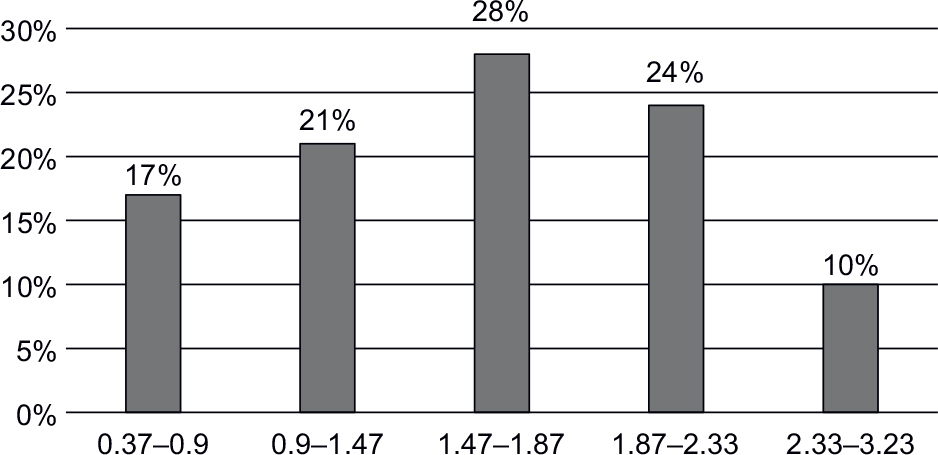
Fig. 6.
Distribution of the normalised geodiversity indexes in the study area.
Integrating all abiotic elements was important to create a complete and accurate assessment of geodiversity in Shkodra Municipality. Since the main objective of this paper is to identify areas of high geodiversity with potential for geotourism or future geopark development, it was necessary to consider all contributing factors, like geology, geomorphology, palaeontology, soil and mineral resources. Considering all the mentioned abiotic elements separately would result in an incomplete understanding of the geodiversity of an area. Excluding one or more of these elements could result in missing significant geoheritage or environmental values. For this reason, the consideration of all abiotic elements ensures a comprehensive assessment of geodiversity.
There is a correspondence between the identified geodiversity hotspots and the known geosite in Shkodra Municipality. Taking Theth National Park as an example, geosites like the Grunas Canyon and the Blue Eye of Theth are located and recognised for their significant geotouristic and scientific value. Similar to another geodiversity hotspot, the Vau i Dejёs Reservoir features geosites such as the Shurdhah Island, which holds historical and geological importance. This alignment between geodiversity hotspots and known geosites showed that our method for assessing geodiversity works well in identifying areas of geoscientific interest.
Nevertheless, several lesser known sites within Shkodra Municipality hold strong potential for geotourism development. Besides the well-established areas like Theth National Park and Buna River protected landscape, there are opportunities to explore parts of the Drin River Basin near the Vau i Dejёs reservoir that are not yet widely visited. The dynamic river channels and delta ecosystems of the Buna River protected landscape offer unique geological and hydrological features. Boat excursions could be combined with interpretative information about the geological history and ongoing geomorphological changes of the delta. Additionally, small karst formations and caves around Lake Shkodra remain unexplored, especially near the settlements of Shiroka and Zogaj, as well as around Taraboshi Mountain. Despite its geological and cultural significance, the Vau i Dejёs Reservoir remains an underexplored area in terms of geotourism development. Key features such as Shurdhah Island, with its historical ruins and geological context, are not yet fully promoted or integrated into visitors’ experience. The surrounding slopes, formed by sedimentary and karst formations, have valuable potential, but a lack of interpretation of the infrastructure. As such, the Vau i Dejёs area holds considerable untapped potential for geotourism.
At the same time, it is important to emphasise that tourism has an impact on both living and non-living natural assets, which should be considered in geotourism development. A geodiversity study and vegetation cover study of the area revealed a close but variable relationship between abiotic and biotic natural values depending on the elevation (Albert, Kraja 2025), which may suggest a different strategy for the management of the hotspots identified in this study.
Conclusions
Shkodra Municipality in Albania has a unique geology, which includes diverse landscapes and geological features, making it a fascinating area for geologists and tourists alike. Despite its small geographic extent, Shkodra Municipality has a great variety of natural and cultural features of international importance. This wide variety is largely due to its geological and geomorphological heritage. This makes it a potential destination for geotourism, which could promote sustainable tourism development while also conserving and protecting the area. Theth National Park, Drin River Basin near the Vau i Dejёs reservoir, Lake Shkodra and settlements (Shiroka and Zogaj) and the Buna River protected landscape have shown to have high values in multiple geodiversity indices, including geological, palaeontological, pedological, mineral and geomorphological aspects. Each of these areas has a unique combination of landforms, rock types, sedimentary features and ecosystems, all of which contribute to the richness of Shkodra Municipality. Generally, the Theth National Park stands out due to its complex tectonic, glacial and karst processes; the Vau i Dejёs Reservoir and Drin River Basin provide significant examples of the relationship between geological diversity and hydropower infrastructure; Lake Shkodra, with its tectonic origin and karstic features and the Buna River, with its diverse riverbed and deltaic landforms, further illustrate the dynamic relationship between geological and hydrological systems.
This research involved numerous activities such as data collecting/processing/analysing, and literature interpreting and reviewing in Shkodra Municipality. This study represents the first quantitative geodiversity assessment of the municipality in Albania and provides data that can be used to further develop existing geotourism sites. Many of the identified geodiversity hotspots, such as Theth National Park, Shiroka and Zogaj settlements and Rozafa Castle, are already popular tourist destinations.
The study also provides valuable insights for conservation efforts, tourism development and future geodiversity research in Albania. Protection of these areas is crucial, not only to preserve their unique geological features but also to preserve the region’s ecological and cultural heritage. As Shkodra Municipality continues to face difficulties from development, tourism and climate change, prioritising the protection of these geodiversity hotspots will be key to ensuring their sustainability. In conclusion, the high geodiversity areas in Shkodra Municipality may make it an attractive destination for geotourism, where visitors could learn about and appreciate the area’s unique geology and landscapes. To achieve this, public education and awareness of the importance of protecting geoheritage is also necessary to ensure its preservation in the future.
Acknowledgements
The authors would like to thank the anonymous reviewers and editor Prof. Dr. Zbigniew Zwoliński for their insightful feedback, which improved the quality of this manuscript. This study was financially supported by the Stipendium Hungaricum Scholarship.
Notes
[1] Contributed by Author’s contribution
DK: writing - original draft preparation, resources, visualisation, data curation, validation. DK, GA: conceptualisation, methodology, formal analysis, investigation. GA: supervision, writing – review & editing, final approval, project administration, funding acquisition.