Have a personal or library account? Click to login
Efficient Coverage Path Planning via Gradient-Based Rectangular Segmentation Cover

Efficient Coverage Path Planning via Gradient-Based Rectangular Segmentation

Open Access
|Sep 2026
Read online

Figures & tables

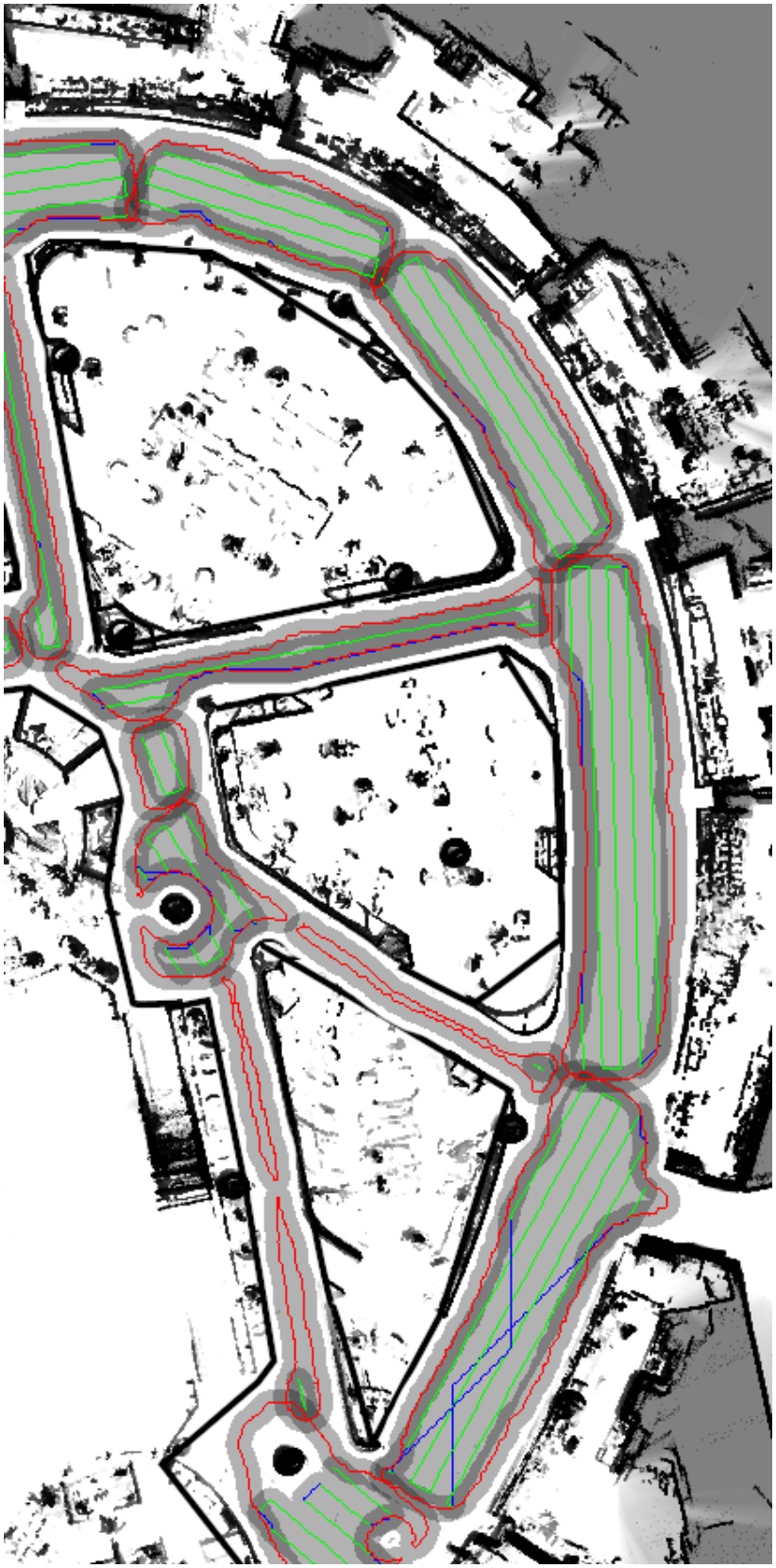
Figure 1.

Coverage paths generated by the Gradient-Based Rectangular Segmentation method. Red, green, and blue lines represent wall-following, boustrophedon, and A* paths, respectively. Grayscale intensity indicates coverage frequency, with darker regions representing areas covered multiple times
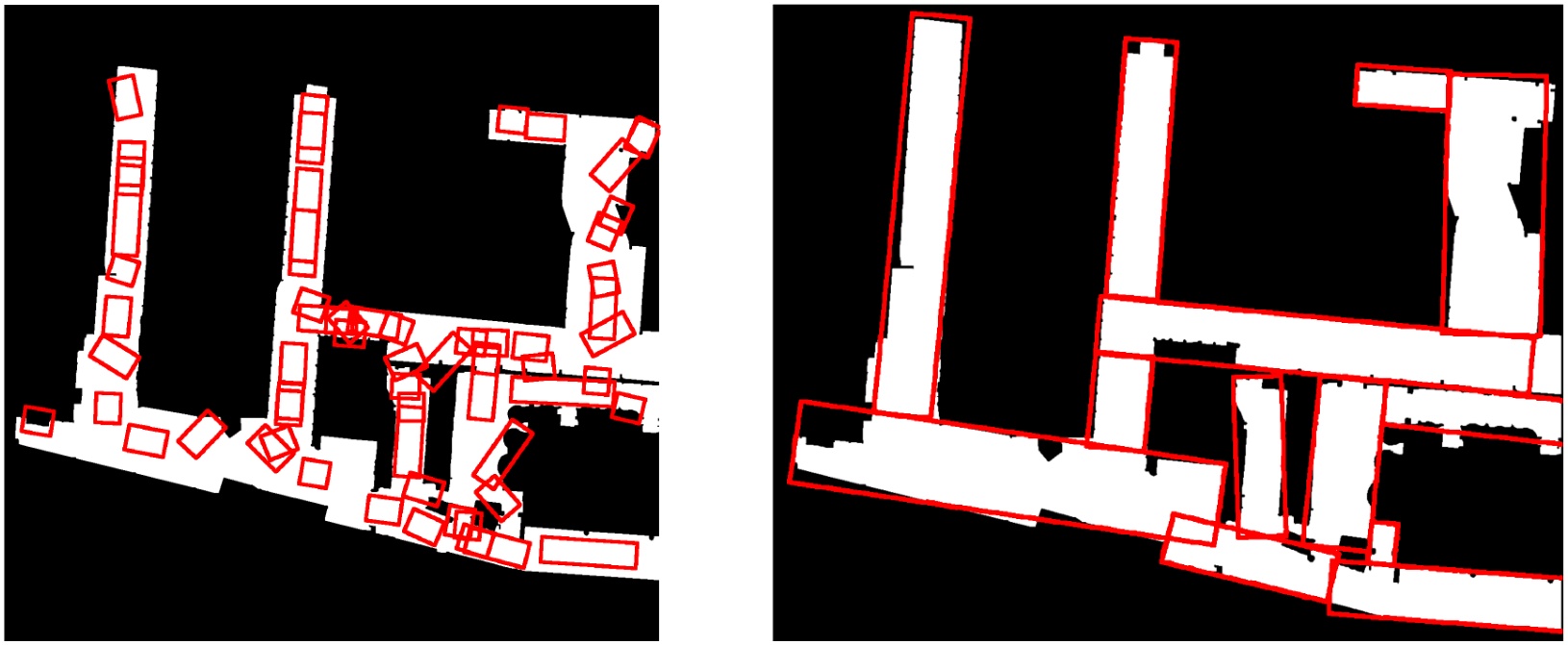
Figure 2.

Comparison of initial (left) and regressed (right) rectangles
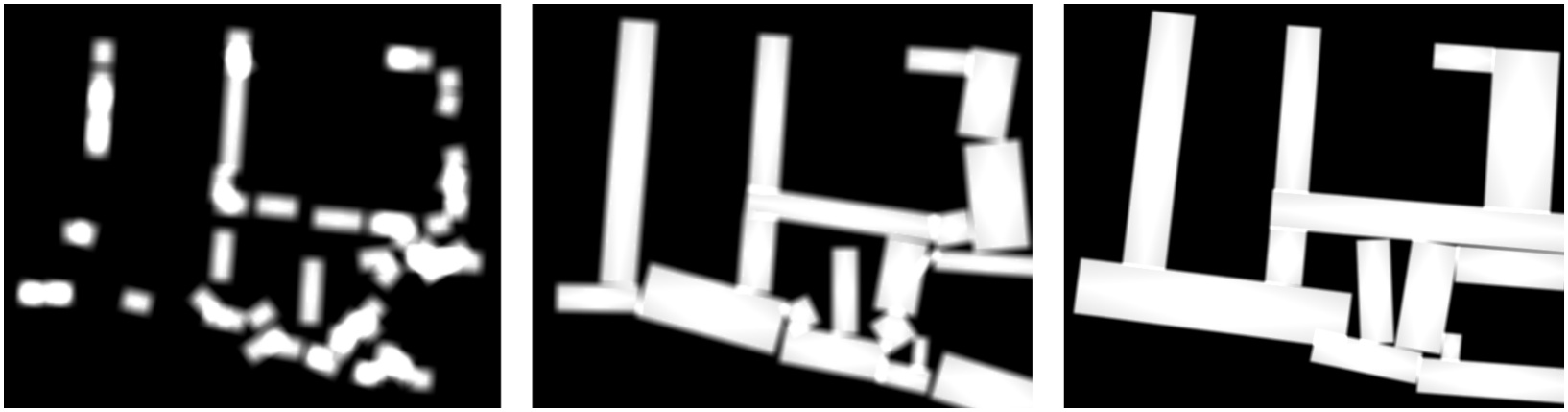
Figure 3.

Progression of rectangle representation during optimization steps after 3 steps (left), 30 steps (middle), 300 steps (right)
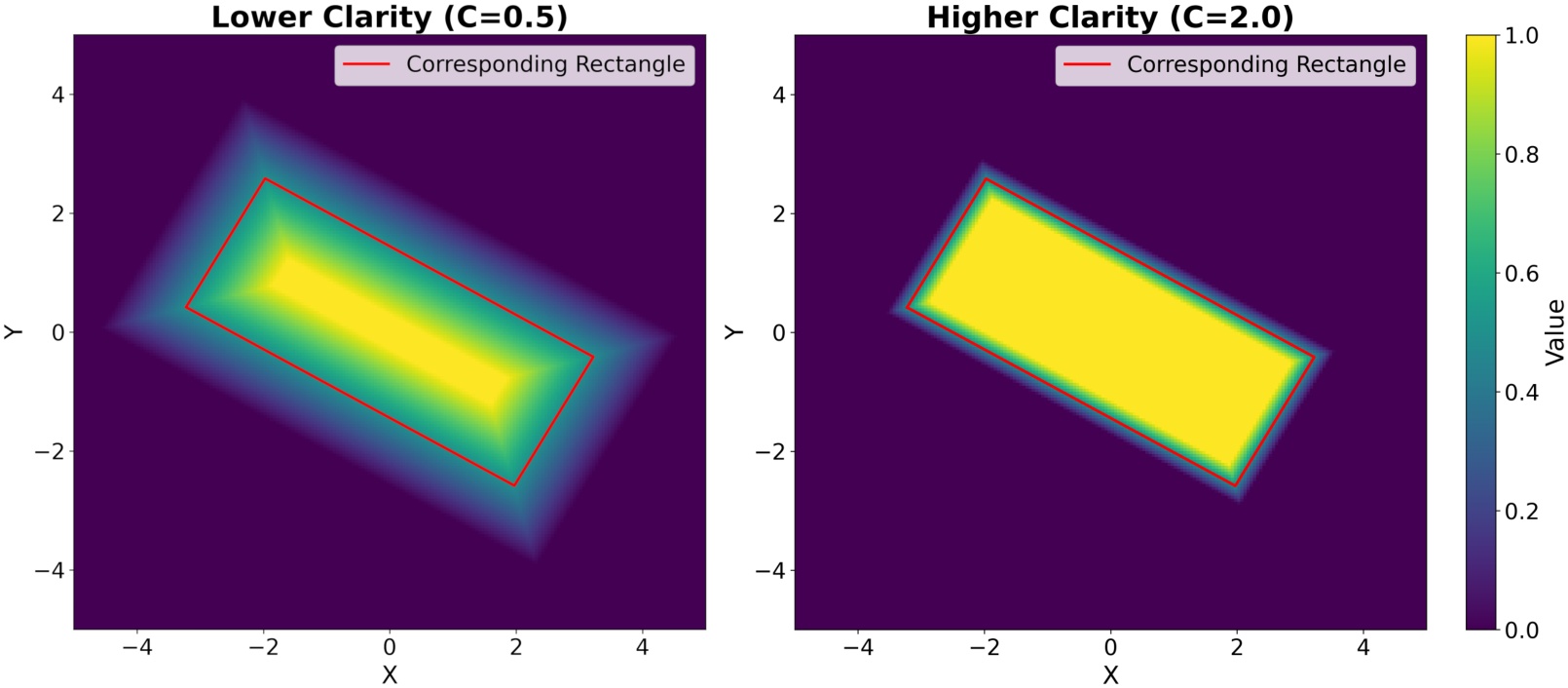
Figure 4.

Comparison of rectangle function with different sharpness parameters. Both plots show a rectangle with dimensions 6.0 × 2.5 and rotation angle 30°. Left: Lower clarity (C=0.5) produces smoother transitions. Right: Higher clarity (C=2.0) produces sharper edges. The heatmaps display the continuous function values ri,j, with the red outline showing the corresponding rectangle boundaries. The boundaries of the corresponding rectangle lie in the middle of the transition region
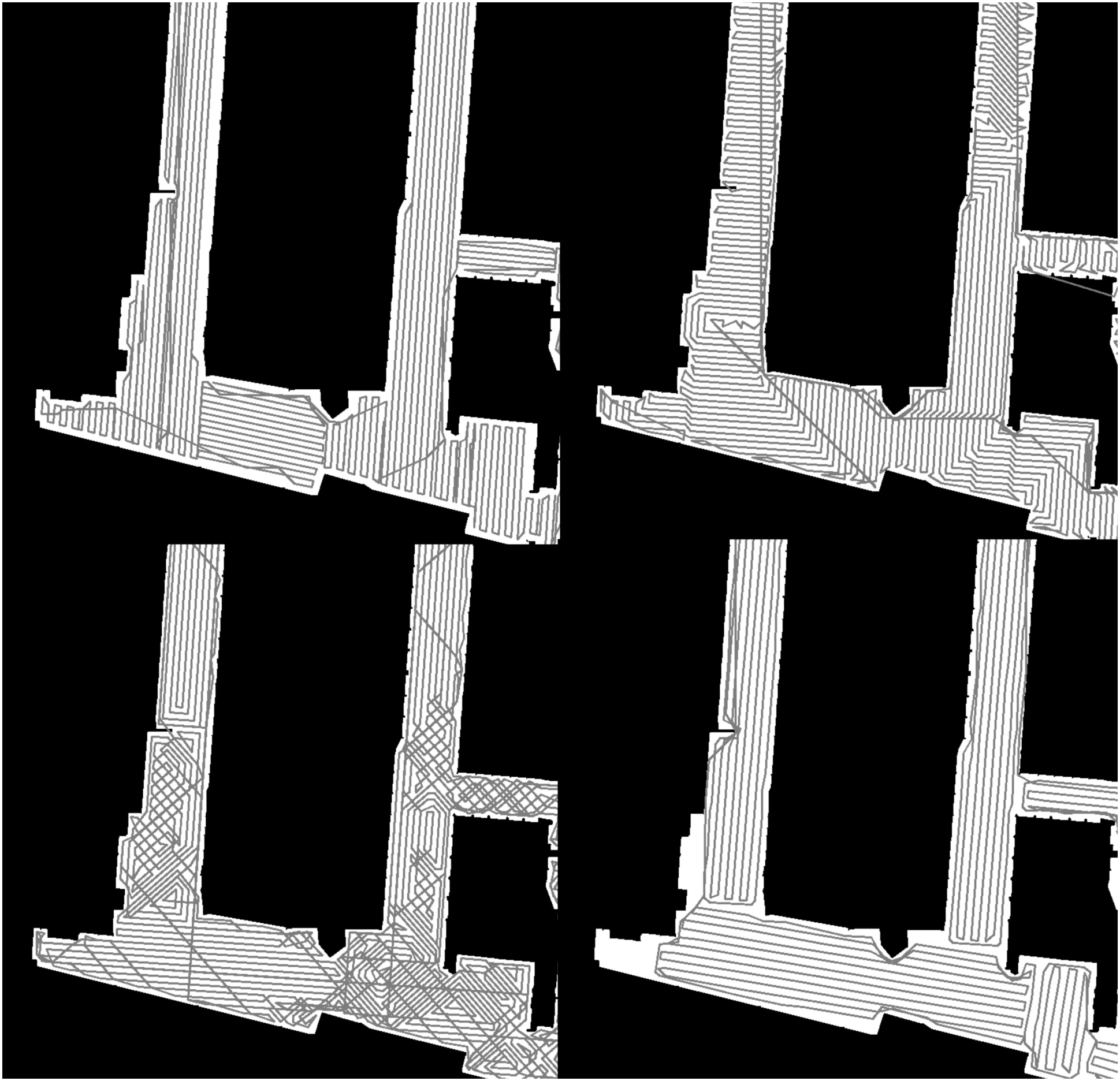
Table 1.

Summary of results for different methods

Methodavg. Length per m2avg. Coverageavg. Curvature per m2avg. Time per m2
Boustrophedon [3]2.8610.87131.0016.893
Neural Network [32]5.1100.87131.88012.907
Energy Functional [33]2.5630.98312.52010.863
Gradient-Based Segmentation2.0940.86640.4744.594
Figure 5.

Visual comparison of coverage paths generated by different algorithms. Boustrophedon (top left), Energy Functional (top right), Neural Network (bottom left), Gradient-Based Rectangular Segmentation (bottom right)

DOI: https://doi.org/10.14313/jamris-2026-041 | Journal eISSN: 2080-2145 | Journal ISSN: 1897-8649
Language: English
Page range: 94 - 104
Submitted on: Aug 5, 2025
Accepted on: Mar 2, 2026
Published on: Sep 30, 2026
Published by: Łukasiewicz Research Network – Industrial Research Institute for Automation and Measurements PIAP
In partnership with: Paradigm Publishing Services
Publication frequency: 4 issues per year

© 2026 Hubert Baraniak, Konrad Cop, Morteza Haghbeigi, published by Łukasiewicz Research Network – Industrial Research Institute for Automation and Measurements PIAP
This work is licensed under the Creative Commons Attribution-NonCommercial-NoDerivatives 4.0 License.