

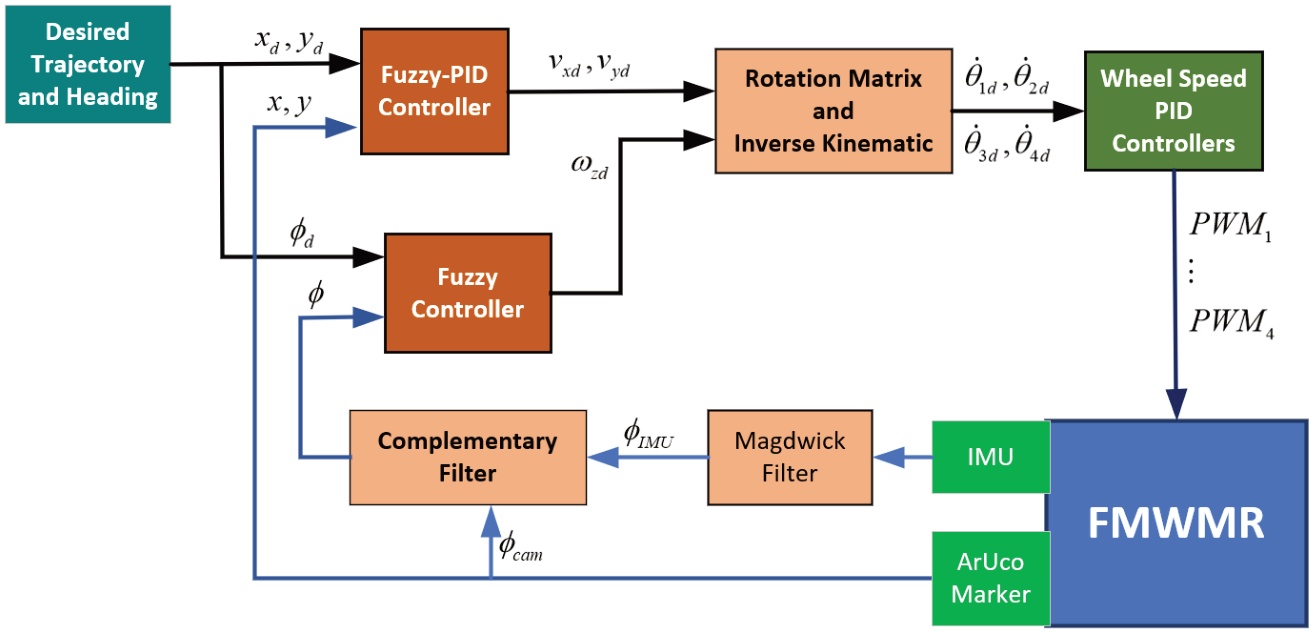
Figure 1.
Overall structure of the proposed control system
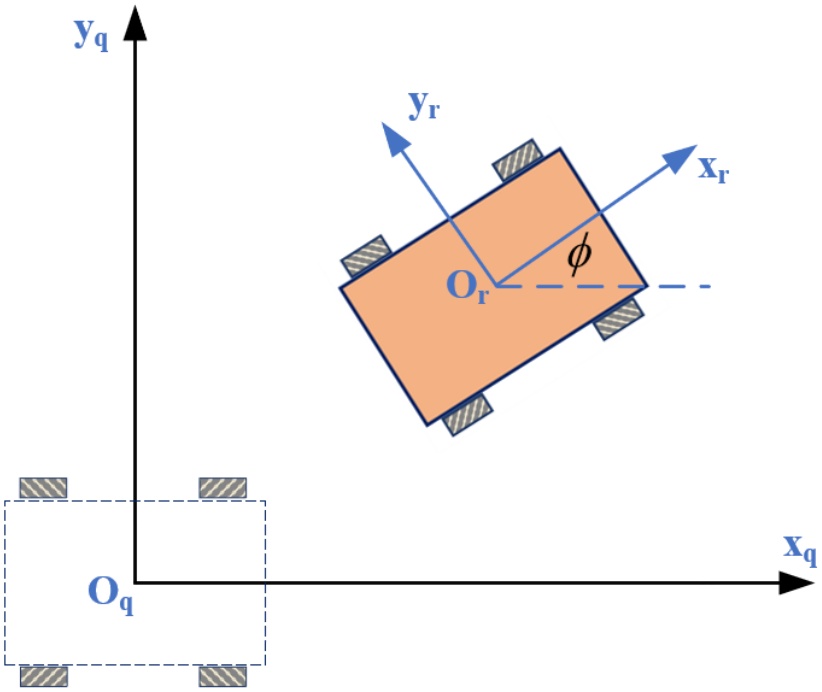
Figure 2.
Robot in world frame and robot frame
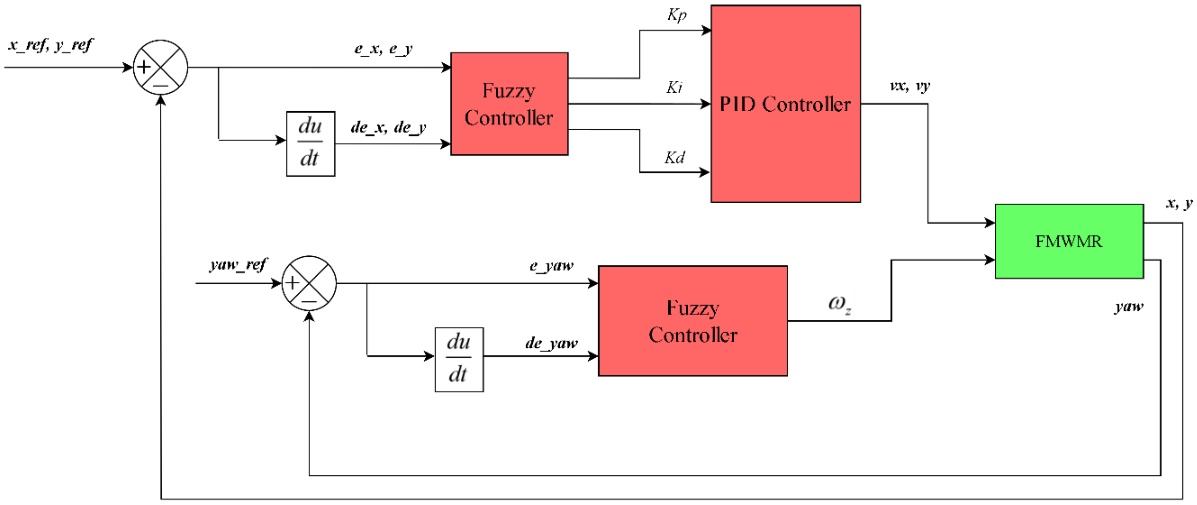
Figure 3.
Block diagram of the control system
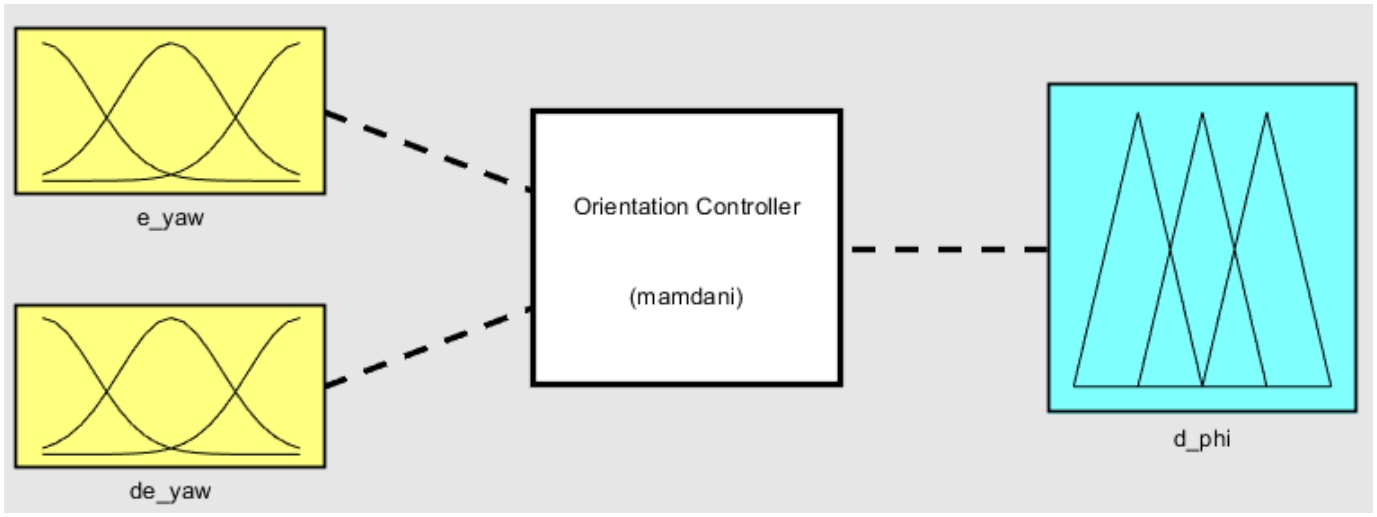
Figure 4.
Inputs and output of heading angle Fuzzy logic controller
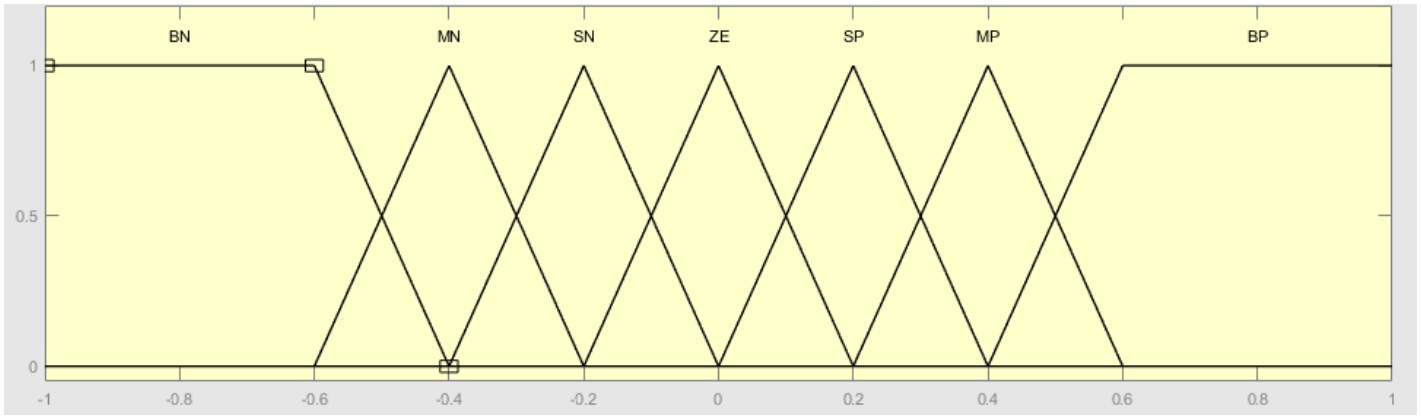
Figure 5.
Design of membership functions for heading angle error’s fuzzy input
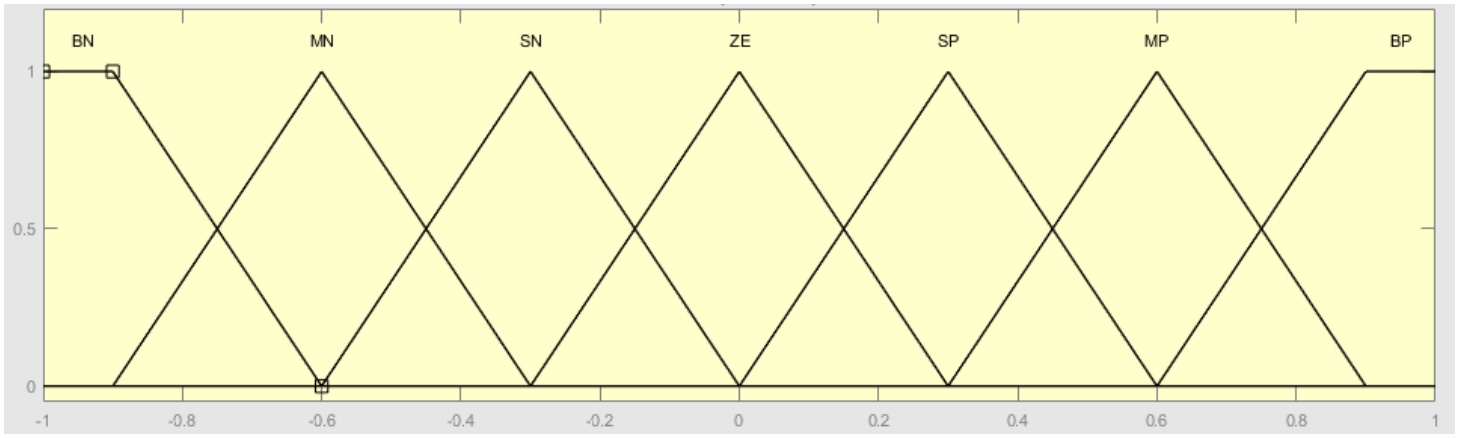
Figure 6.
Design of membership functions for derivative of heading angle error fuzzy input
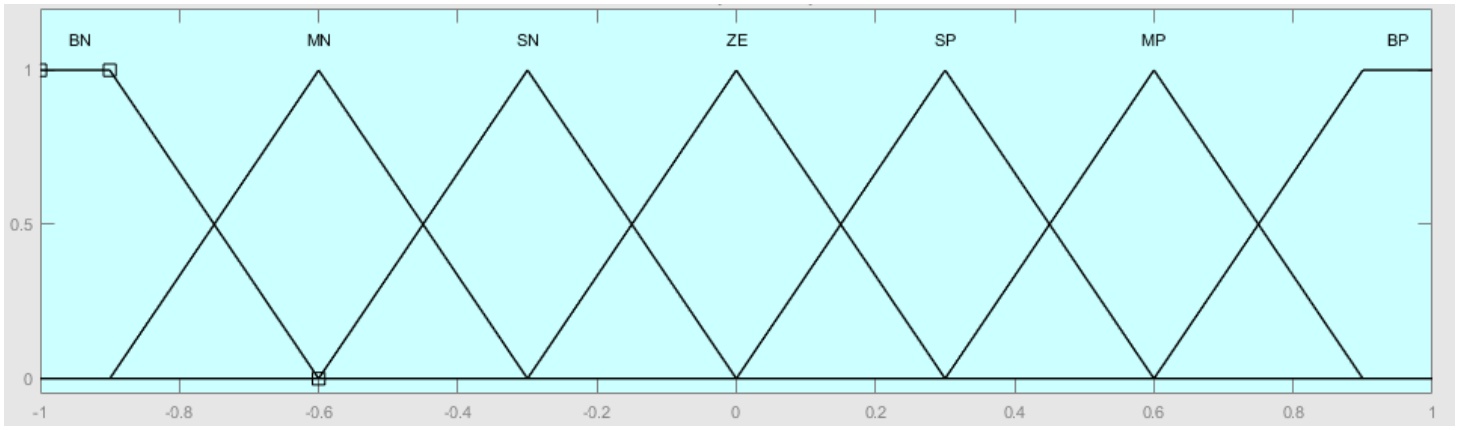
Figure 7.
Design of membership functions for angular velocity fuzzy output
Table 1.
Normalization gains of orientation fuzzy controller
| Gain | Description | Value |
|---|---|---|
| Ke−yaw | Orientation error fuzzy input normalization gain | |
| Kde−yaw | Orientation derivative of error fuzzy input normalization gain | |
| Kω | Angular speed’s fuzzy output normalization gain |
Table 2.
Fuzzy rule base for heading angle control
| ωz | E | |||||||
| BN | MN | SN | ZE | SP | MP | BP | ||
| de | BN | BN | BN | BN | BN | MN | SN | ZE |
| MN | BN | BN | MN | MN | SN | ZE | SP | |
| SN | BN | BN | SN | SN | ZE | SP | MP | |
| ZE | MN | MN | SN | ZE | SP | MP | MP | |
| SP | MN | SN | ZE | SP | SP | BP | BP | |
| MP | SN | ZE | SP | MP | MP | BP | BP | |
| BP | ZE | SP | MP | BP | BP | BP | BP | |
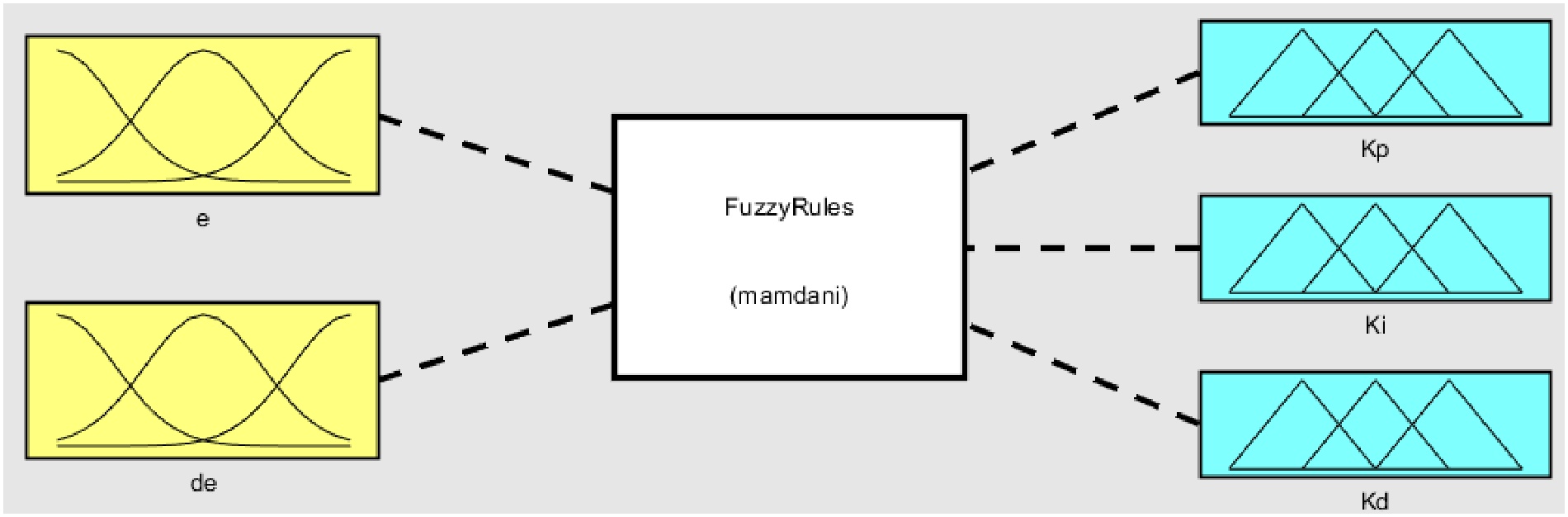
Figure 8.
Structure of inputs and outputs Fuzzy logic design
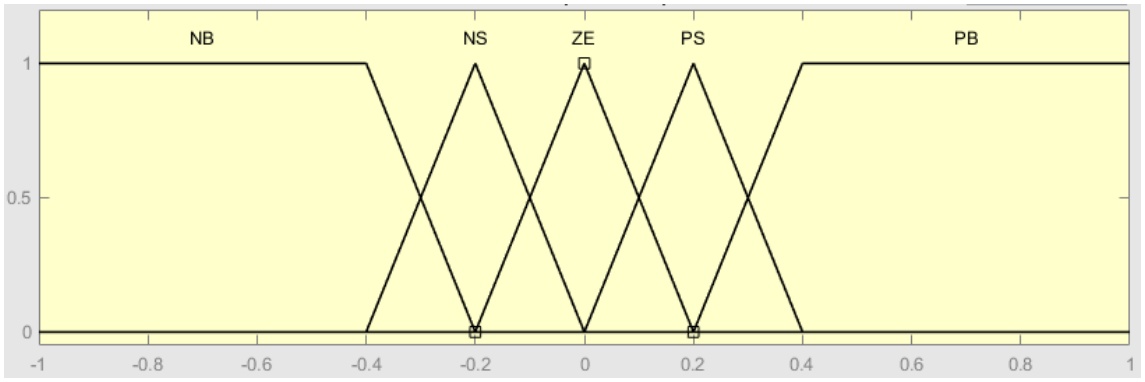
Figure 9.
Position error’s membership function
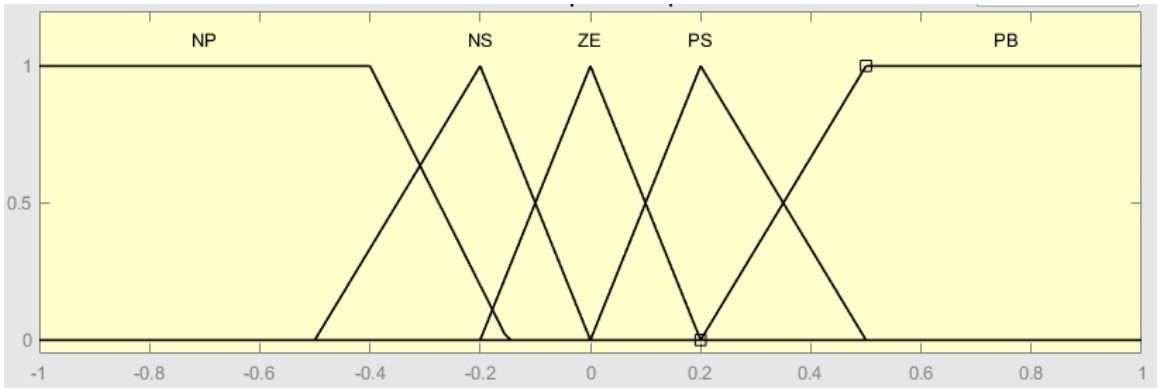
Figure 10.
Derivative of position error’s membership function
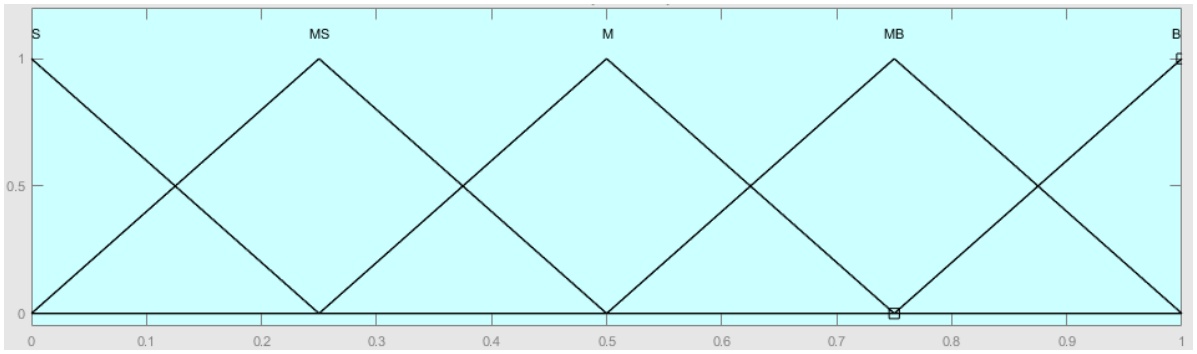
Figure 11.
Membership function for fuzzy outputs - the PID normalized gains
Table 3.
Fuzzy rule base for controlling Kp, Ki, Kd
| e | ||||||
| NB | NS | ZE | PS | PB | ||
| de | ||||||
| NB | B | MB | S | S | M | |
| NS | B | M | S | MS | MB | |
| ZE | MB | MS | S | MS | MB | |
| PS | MB | MS | S | M | B | |
| PB | M | S | S | MB | B | |
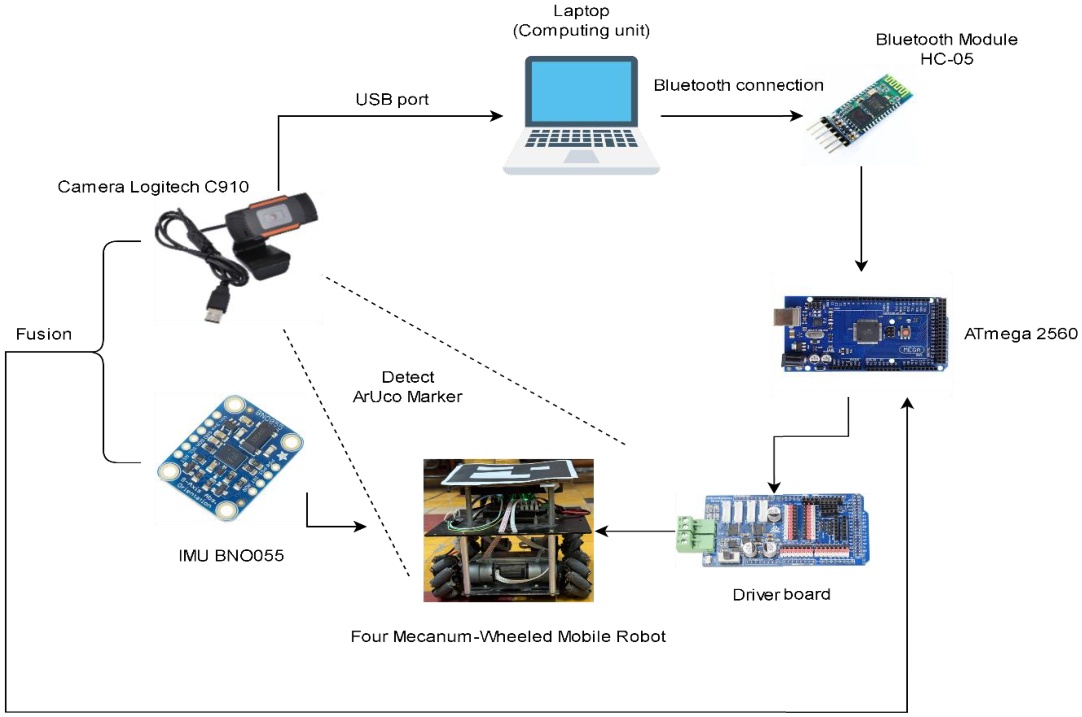
Figure 12.
Structure of the experimental execution
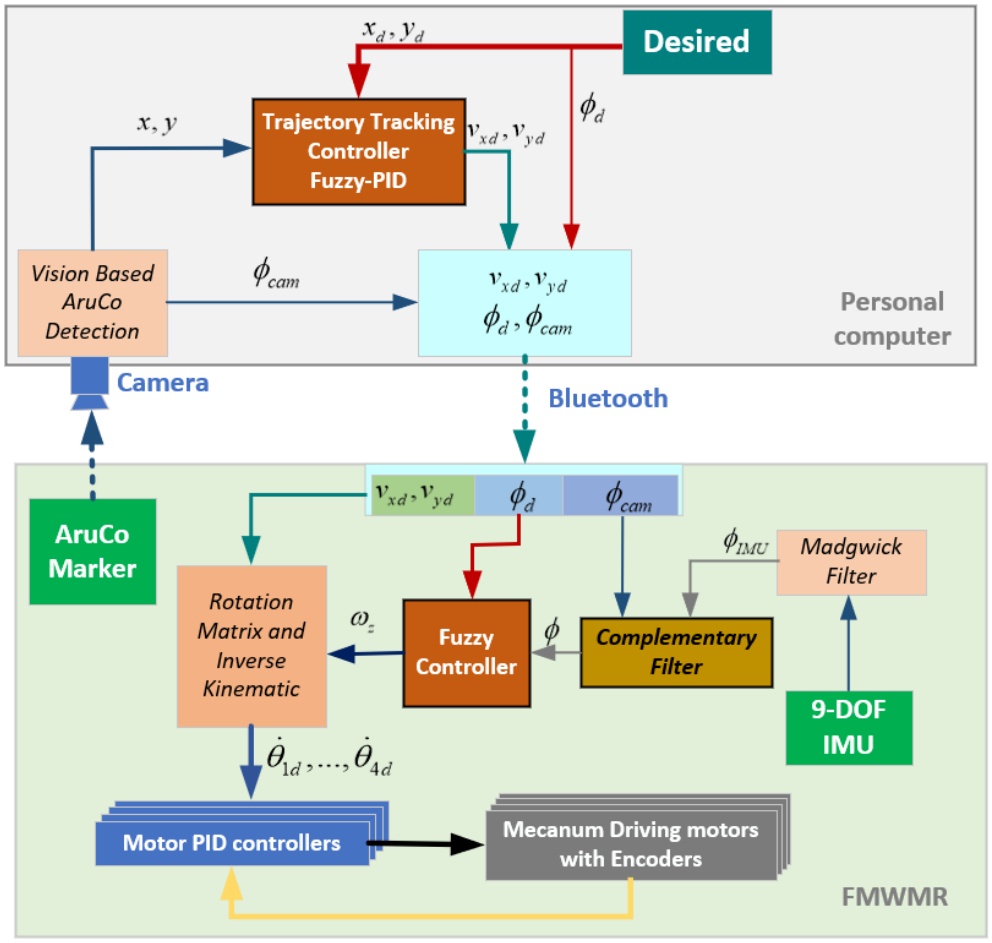
Figure 13.
Overall block diagram of real-life FMWMR control
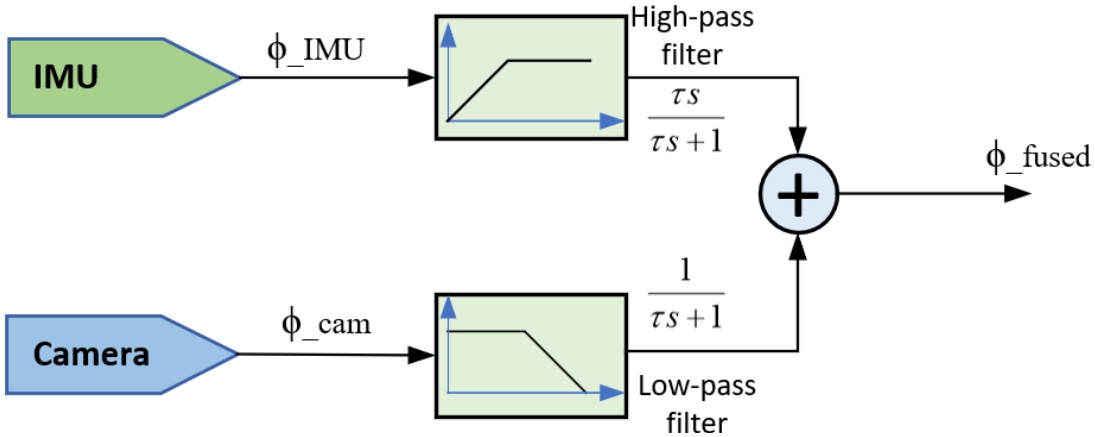
Figure 14.
Block diagram of heading angle fusion using complementary filter
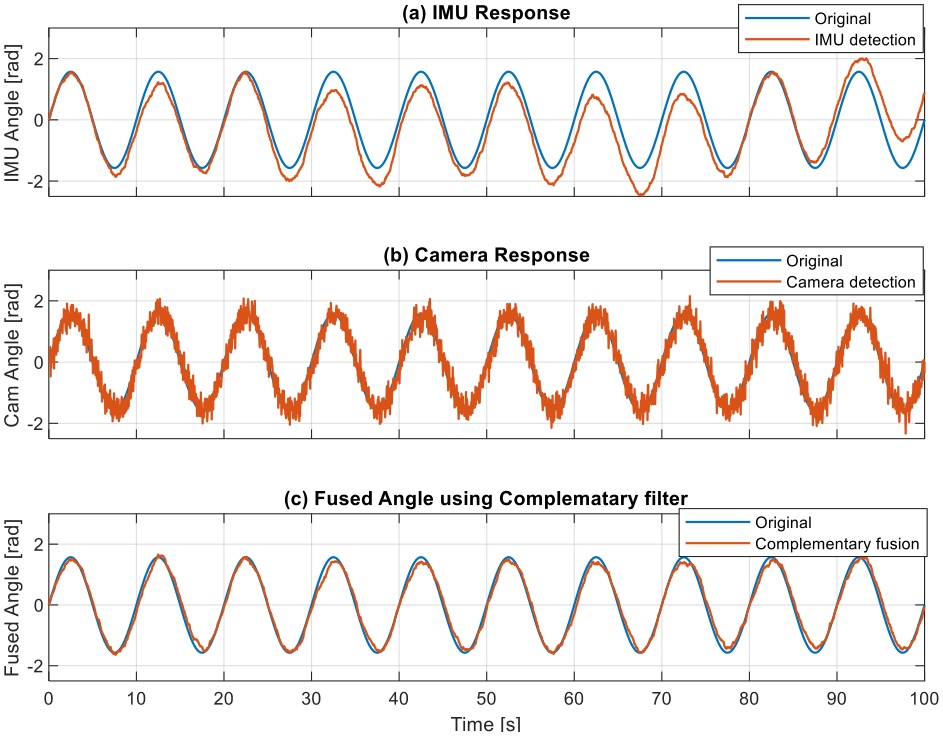
Figure 15.
Heading angle detection using IMU, Vision- ArUco marker and Complementary filter fusion
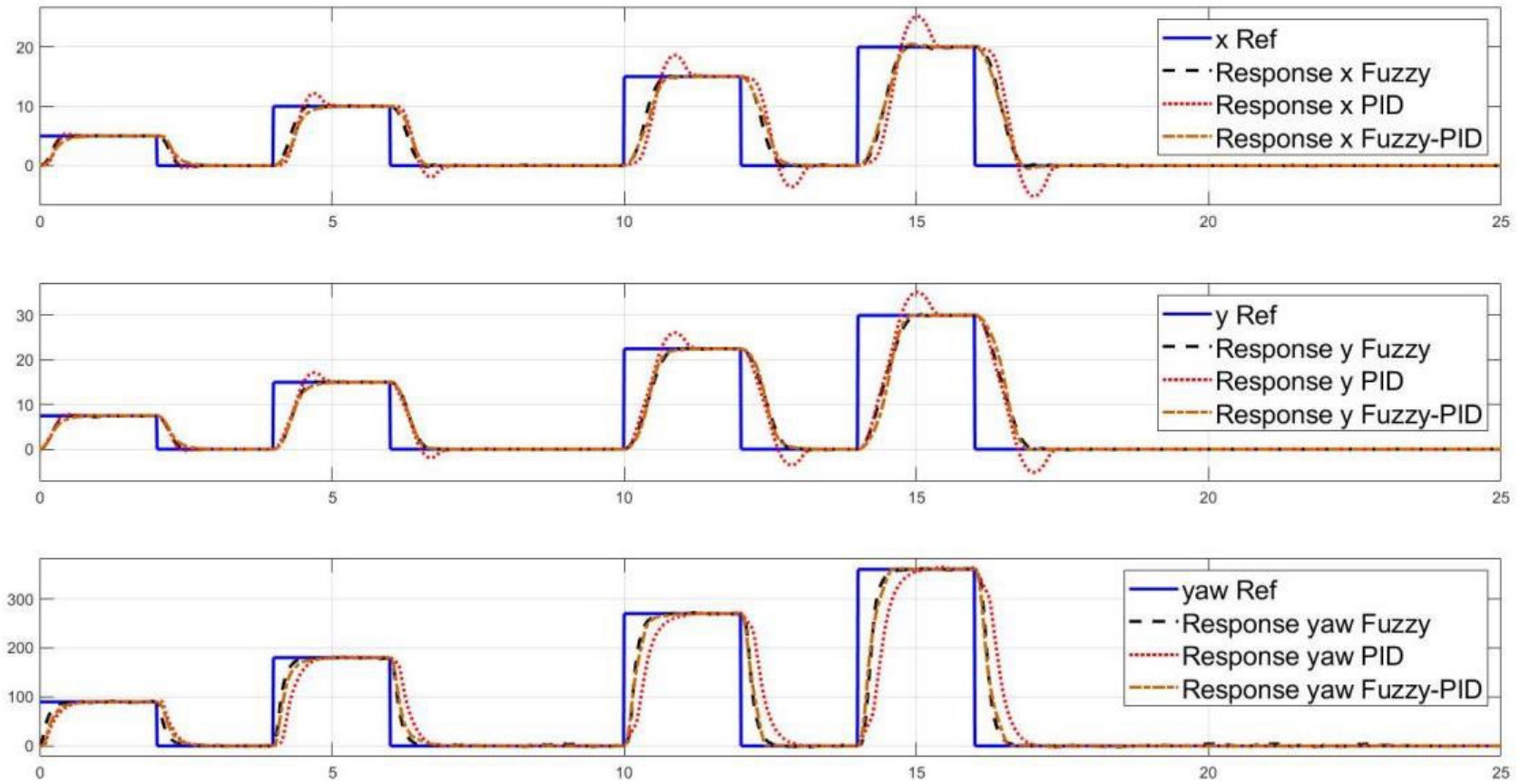
Figure 16.
Position responses with respect to multi-step reference in simulation
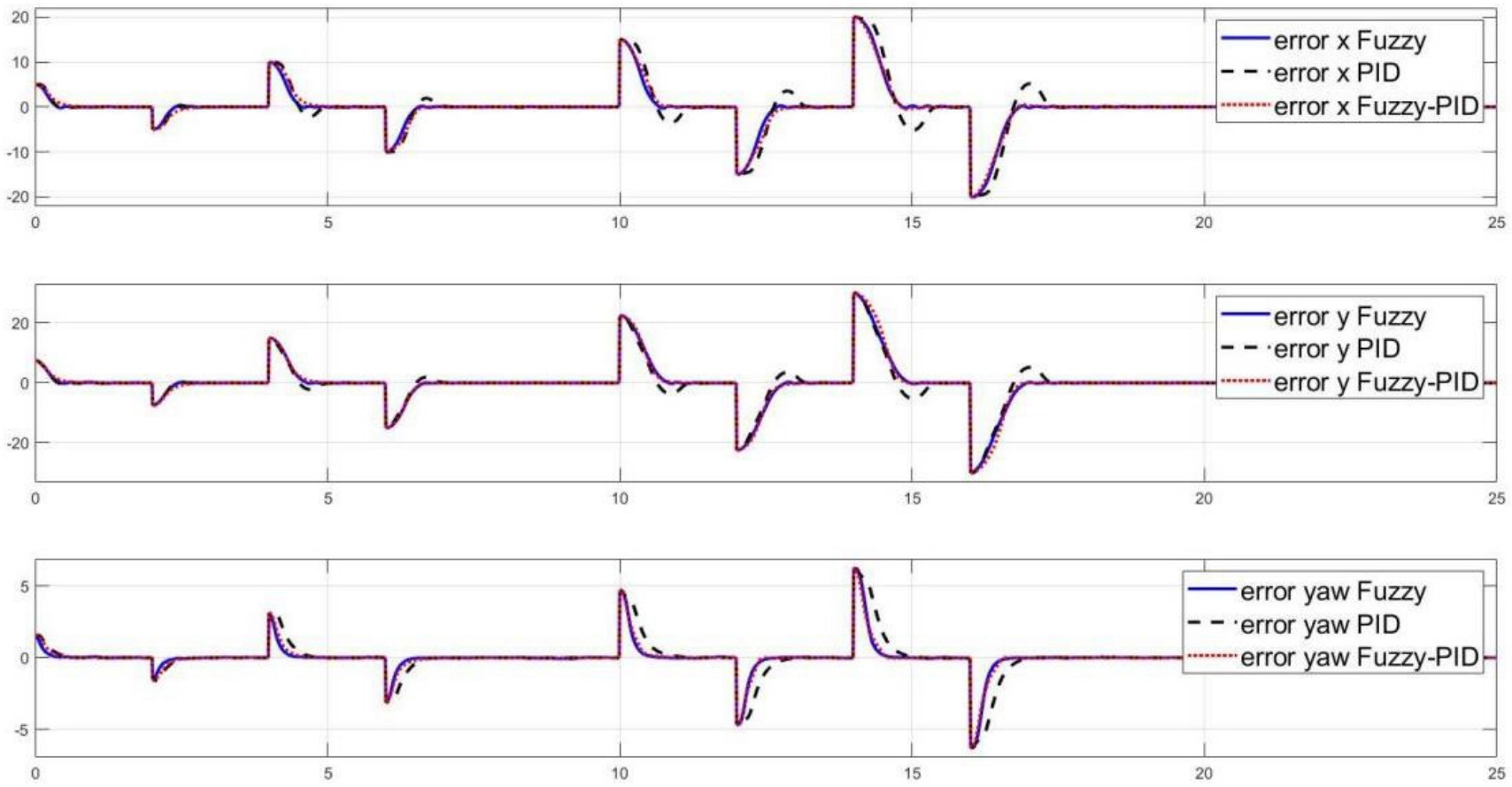
Figure 17.
Position control errors with respect to multi-step reference in simulation
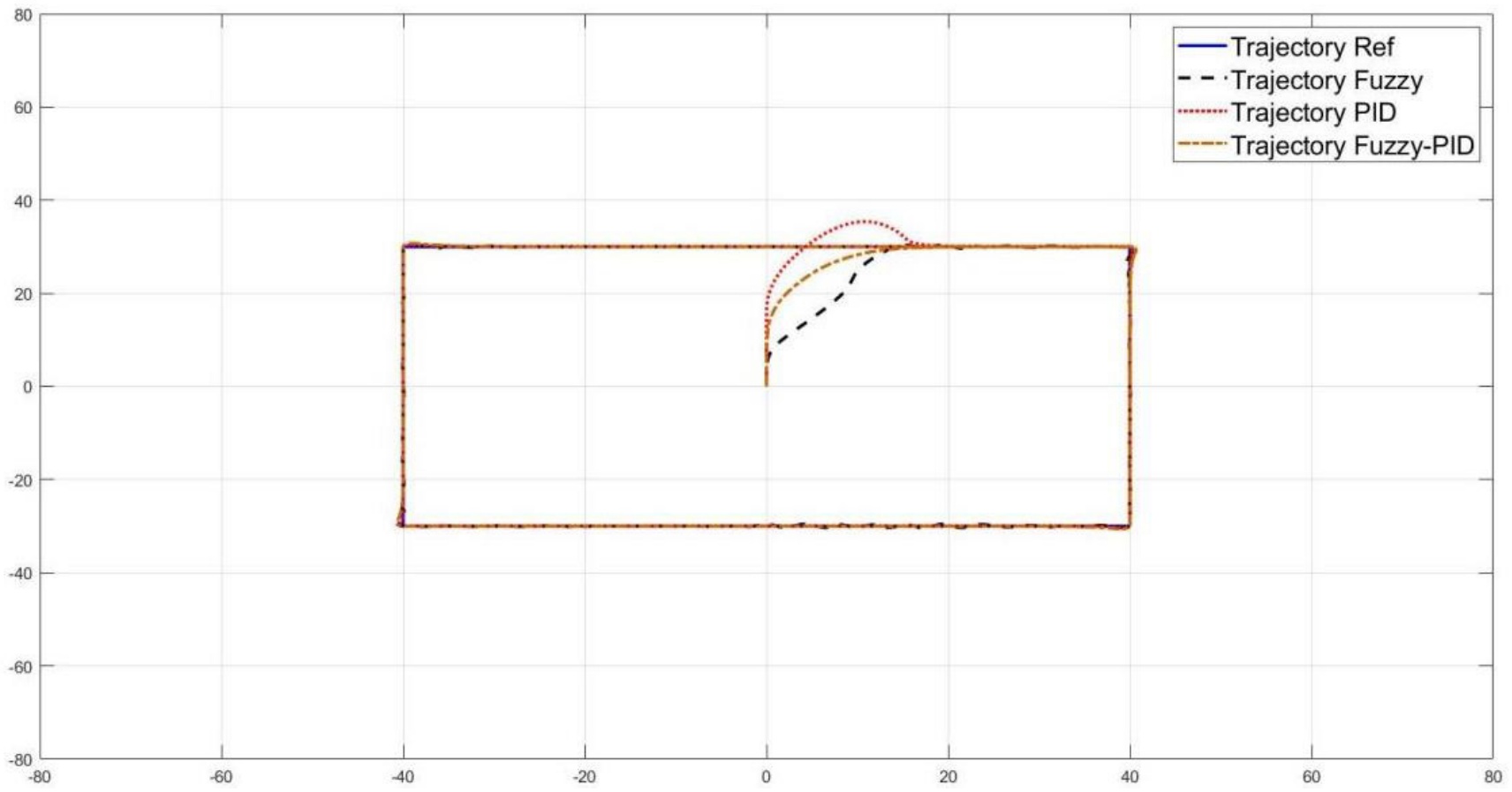
Figure 18.
Rectangular path trajectory tracking control responses in simulation
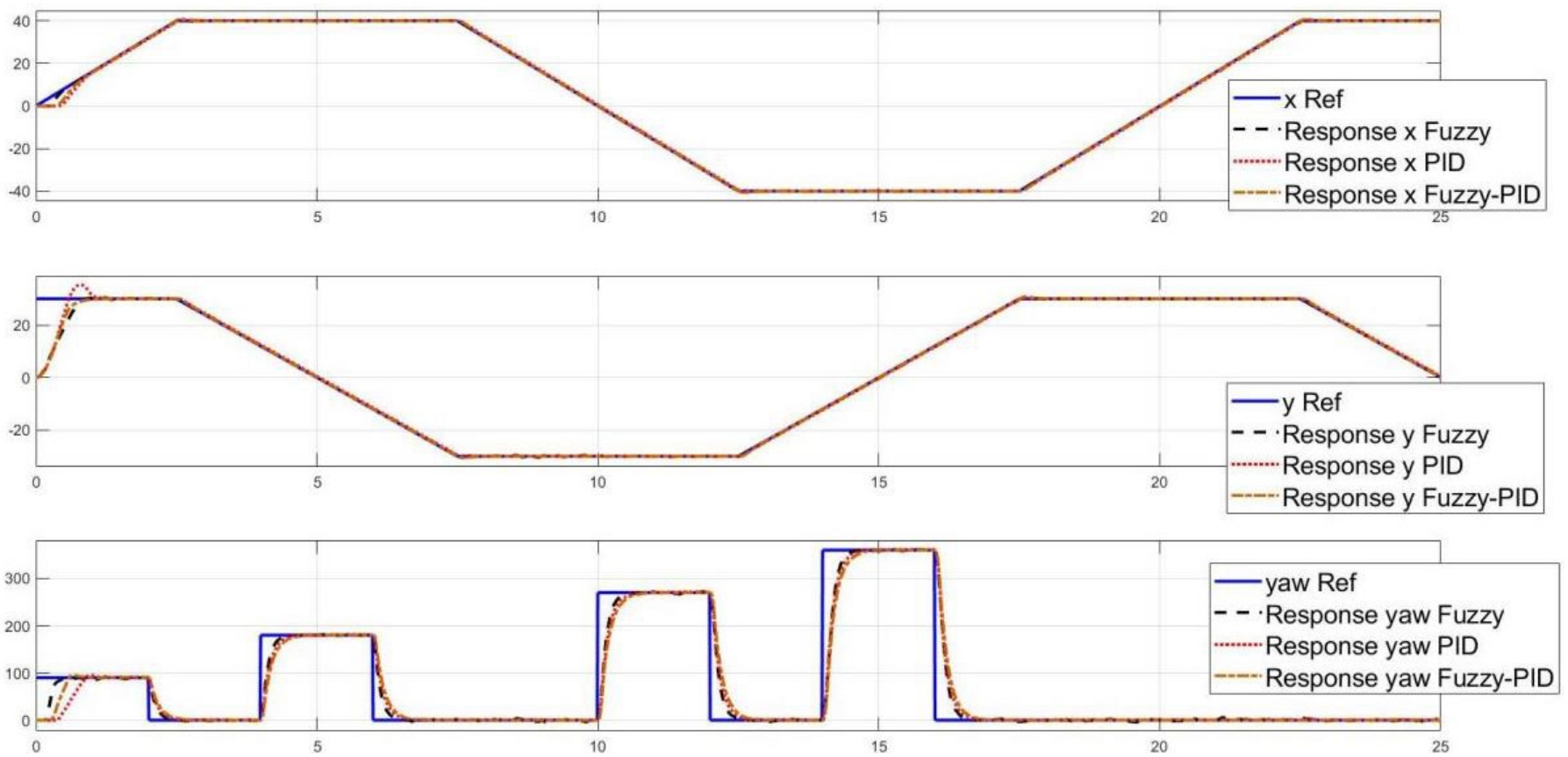
Figure 19.
Control responses with respect to rectangular path trajectory tracking control in simulation
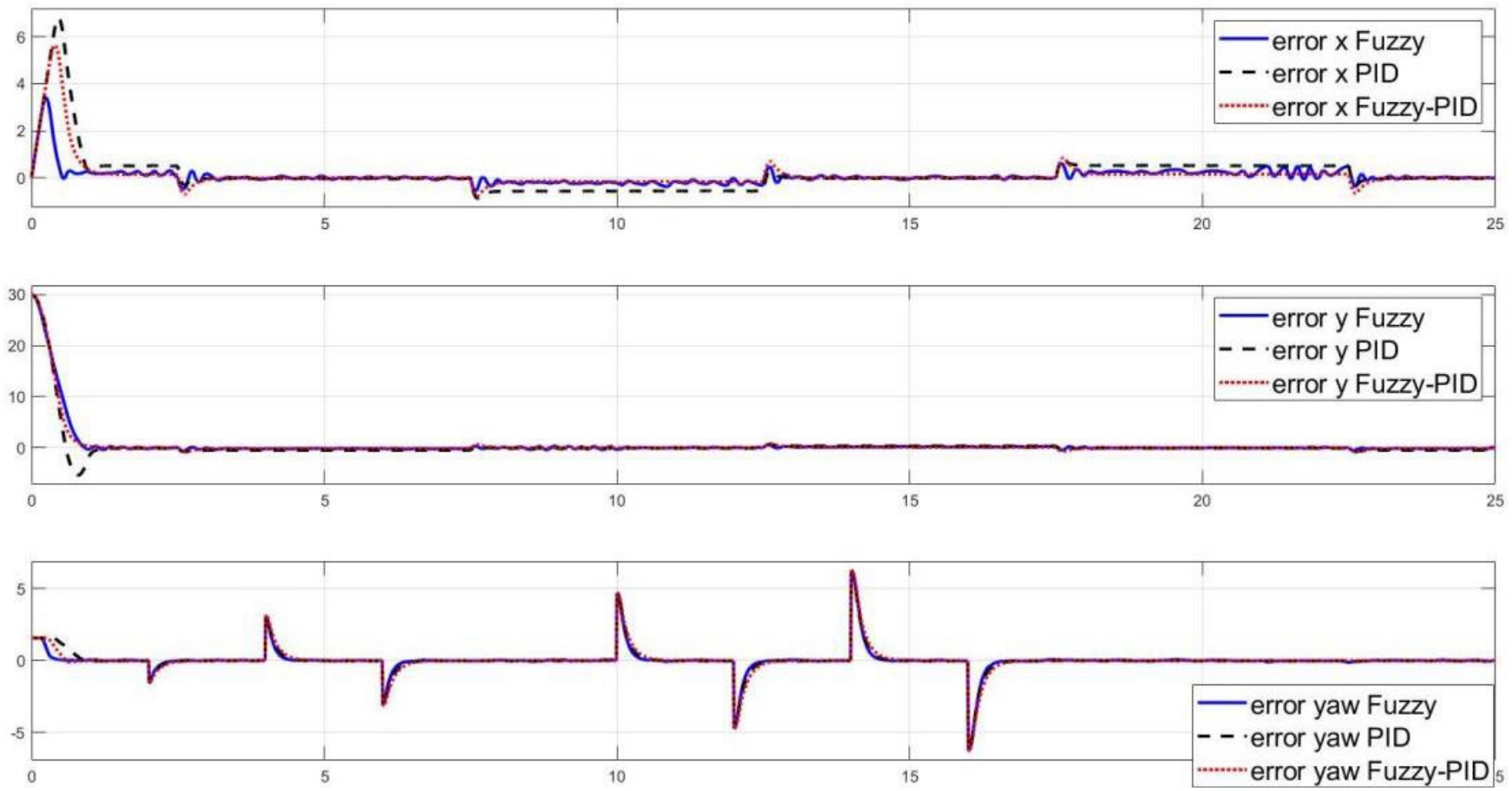
Figure 20.
Control errors with respect to rectangular path trajectory tracking control in simulation
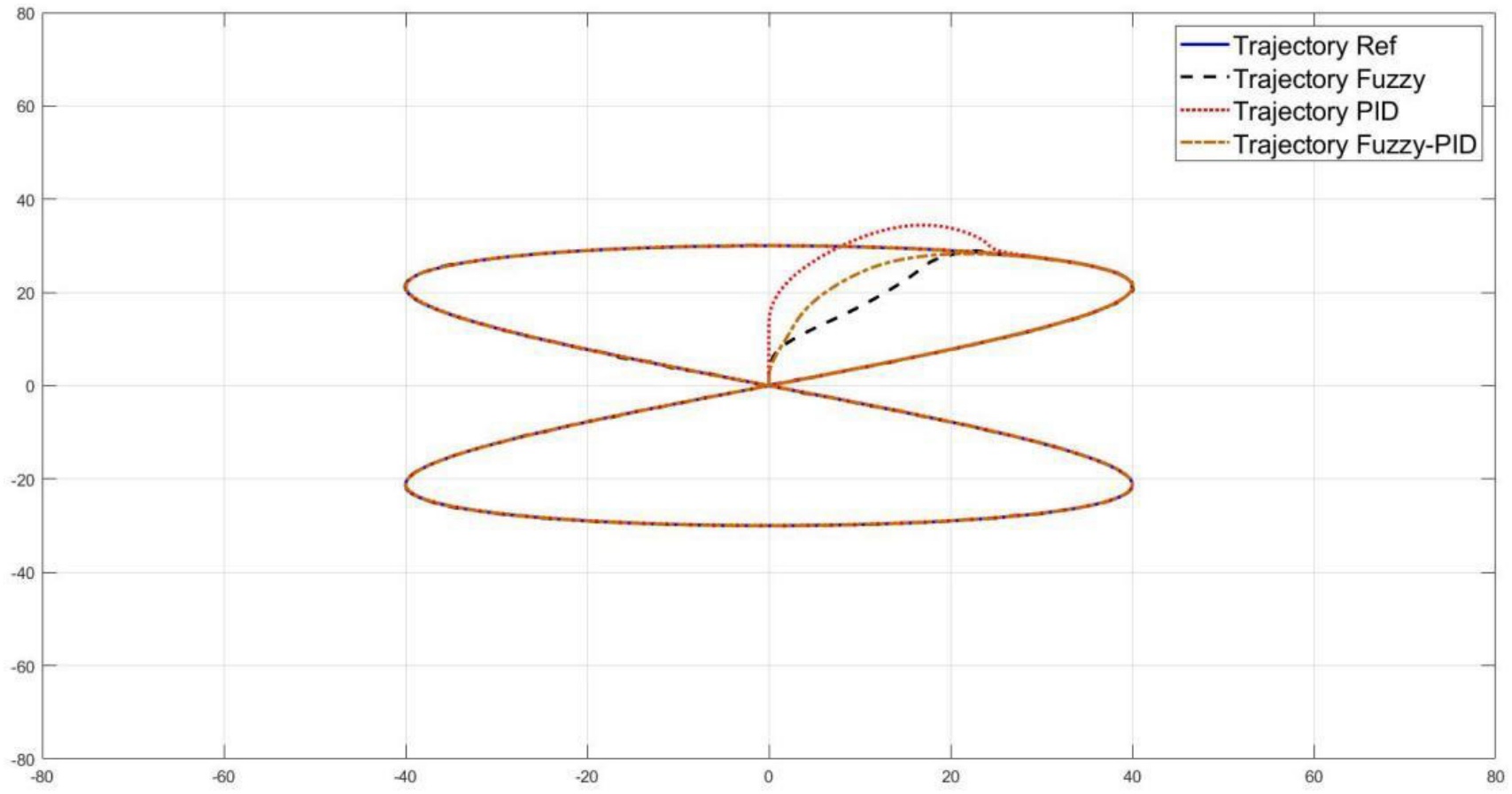
Figure 21.
8-shaped path trajectory tracking control results in simulation
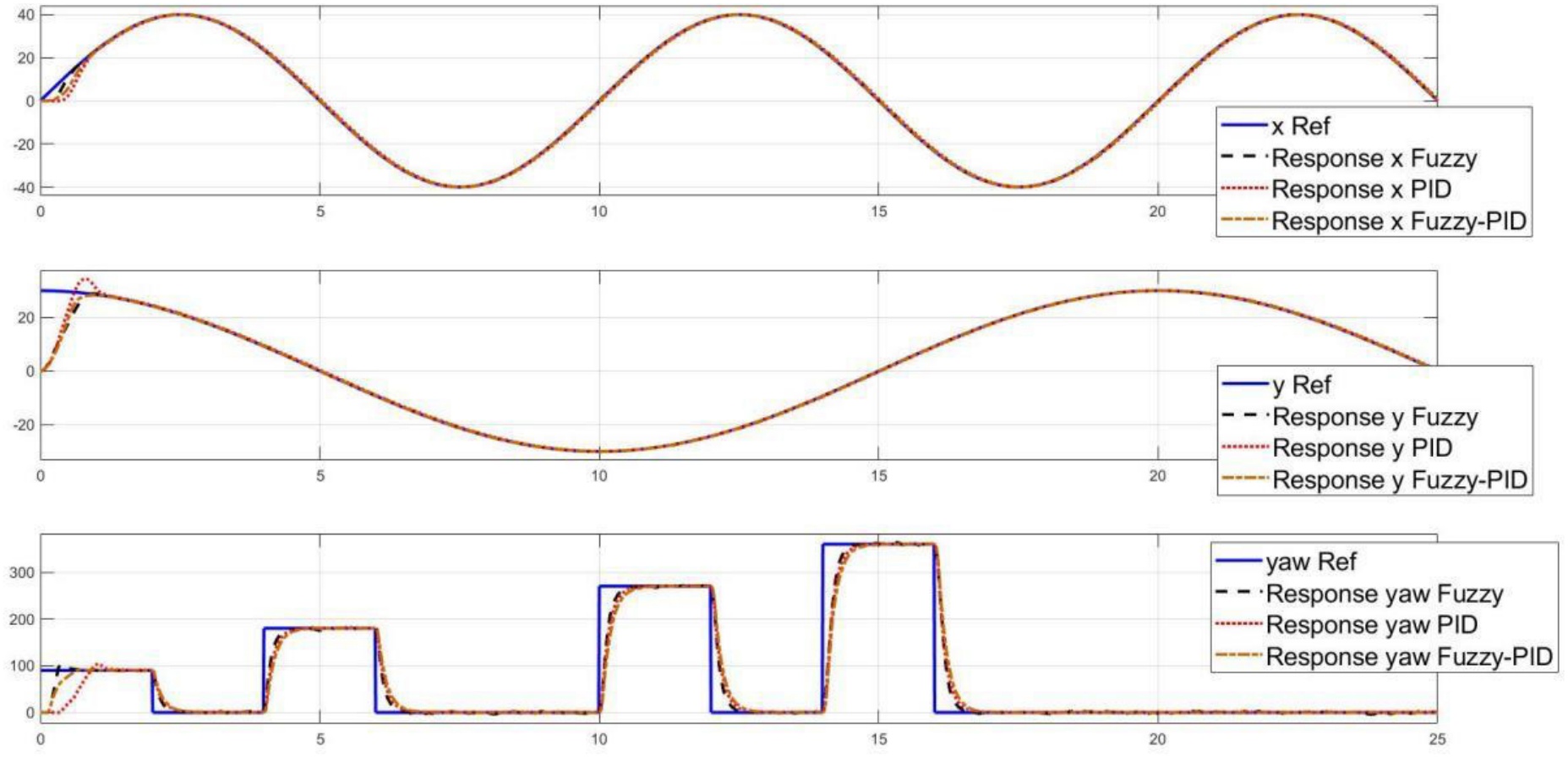
Figure 22.
Control responses with respect to 8-shape path trajectory tracking control in simulation
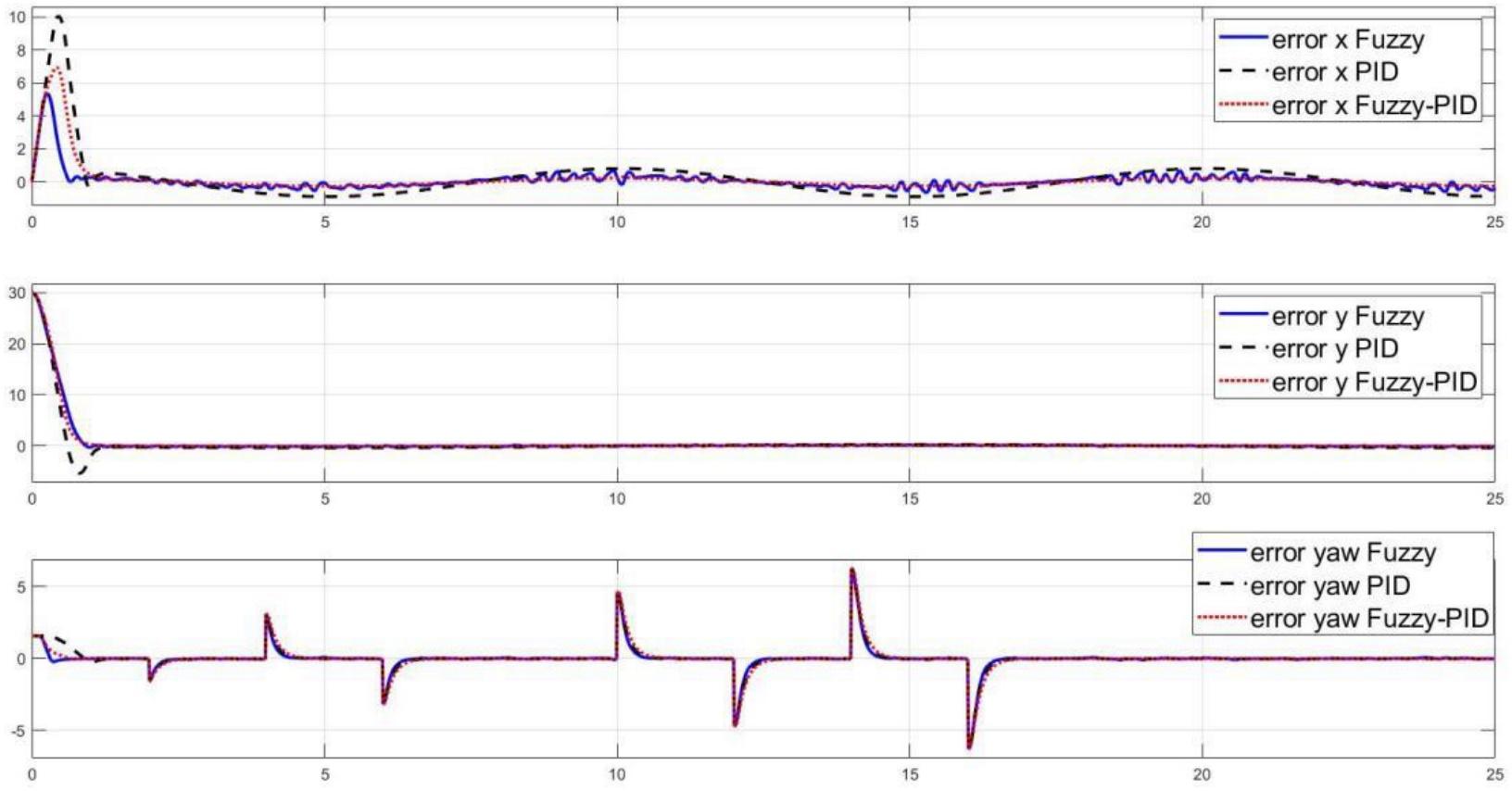
Figure 23.
Control response error with respect to 8-shape path trajectory tracking control in simulation
Table 4.
Comparison among the x responses of each controllers
| Setpoint | Parameters | PID | Fuzzy | Fuzzy-PID |
|---|---|---|---|---|
| 5 | Overshoot (%) | 8.02 | 5.07 | 0 |
| Rise time (s) | 0.31 | 0.24 | 0.37 | |
| Steady state error | 0.0273 | 0.0089 | 0 | |
| Settling time (s) | 0.63 | 0.5 | 0.77 | |
| 10 | Overshoot (%) | 21.8 | 1.43 | 0 |
| Rise time (s) | 0.26 | 0.34 | 0.44 | |
| Steady state error | 0.0318 | 0.006 | 0 | |
| Settling time (s) | 1.01 | 0.55 | 0.87 | |
| 15 | Overshoot (%) | 24.07 | 2.09 | 0 |
| Rise time (s) | 0.31 | 0.22 | 0.47 | |
| Steady state error | 0.0585 | 0.0007 | 0 | |
| Settling time (s) | 1.19 | 0.66 | 0.74 | |
| 20 | Overshoot (%) | 26.05 | 0.8 | 2.05 |
| Rise time (s) | 0.35 | 0.48 | 0.51 | |
| Steady state error | 0.0722 | 0.0002 | 0.0002 | |
| Settling time (s) | 1.36 | 0.81 | 0.79 |
Table 5.
Comparison among the yaw responses of each controllers
| Setpoint | Parameters | PID | Fuzzy | Fuzzy-PID |
|---|---|---|---|---|
| 90 | Overshoot (%) | 1.24 | 1.11 | 0.06 |
| Rise time (s) | 0.39 | 0.25 | 0.33 | |
| Steady state error | 0.2911 | 1.23 | 0.07 | |
| Settling time (s) | 0.93 | 0.61 | 0.69 | |
| 180 | Overshoot (%) | 0.55 | 0.27 | 0 |
| Rise time (s) | 0.4 | 0.26 | 0.34 | |
| Steady state error | 1.167 | 0.386 | 0.32 | |
| Settling time (s) | 0.78 | 0.48 | 0.72 | |
| 270 | Overshoot (%) | 0.4 | 0.39 | 0 |
| Rise time (s) | 0.52 | 0.25 | 0.31 | |
| Steady state error | 1.48 | 0.756 | 0.126 | |
| Settling time (s) | 1 | 0.55 | 0.63 | |
| 360 | Overshoot (%) | 1.2 | 0.03 | 0 |
| Rise time (s) | 0.54 | 0.27 | 0.37 | |
| Steady state error | 2.76 | 1.35 | 0.57 | |
| Settling time (s) | 0.94 | 0.56 | 0.54 |
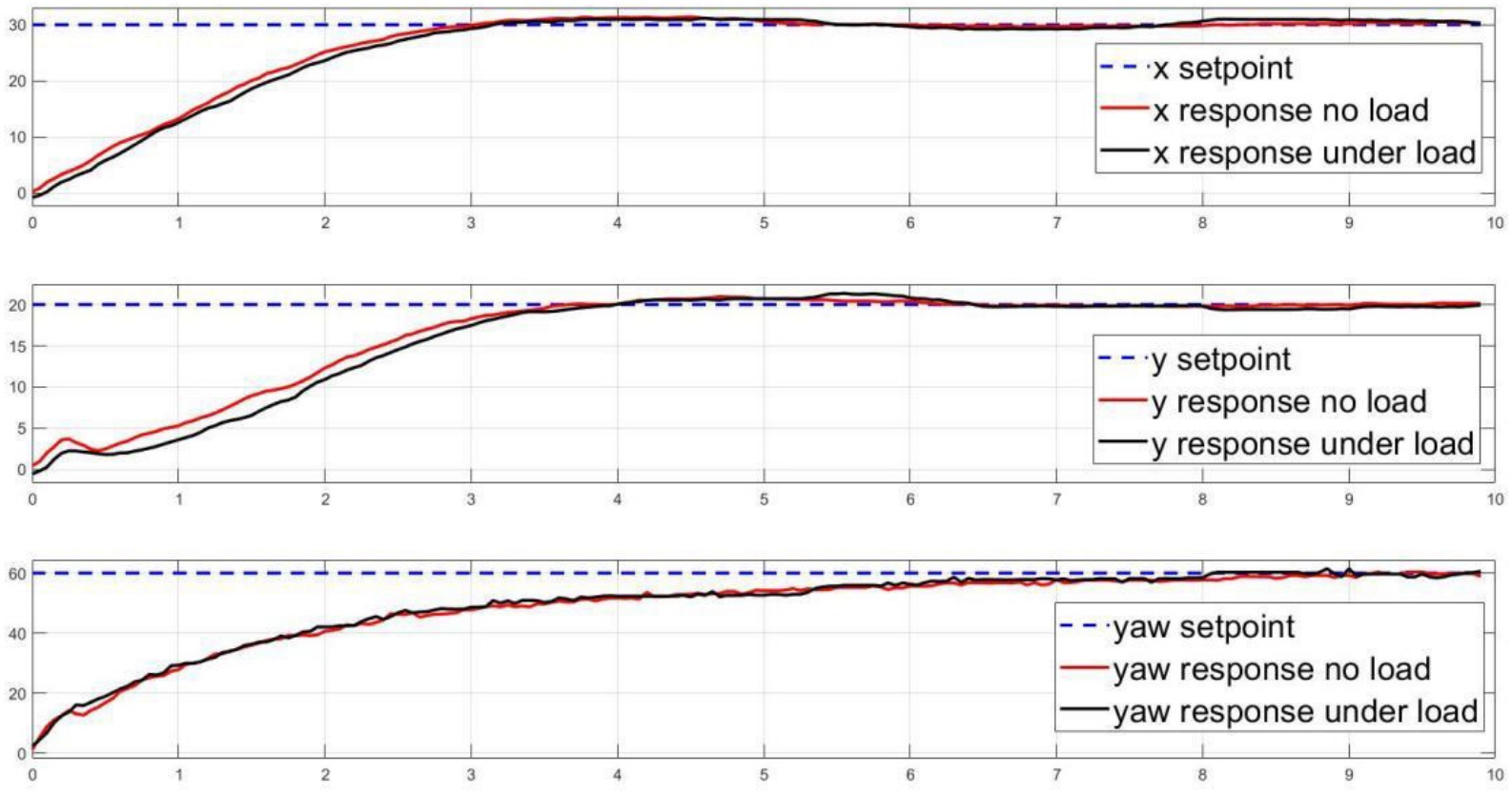
Figure 24.
Responses of robot with respect to target setpoint
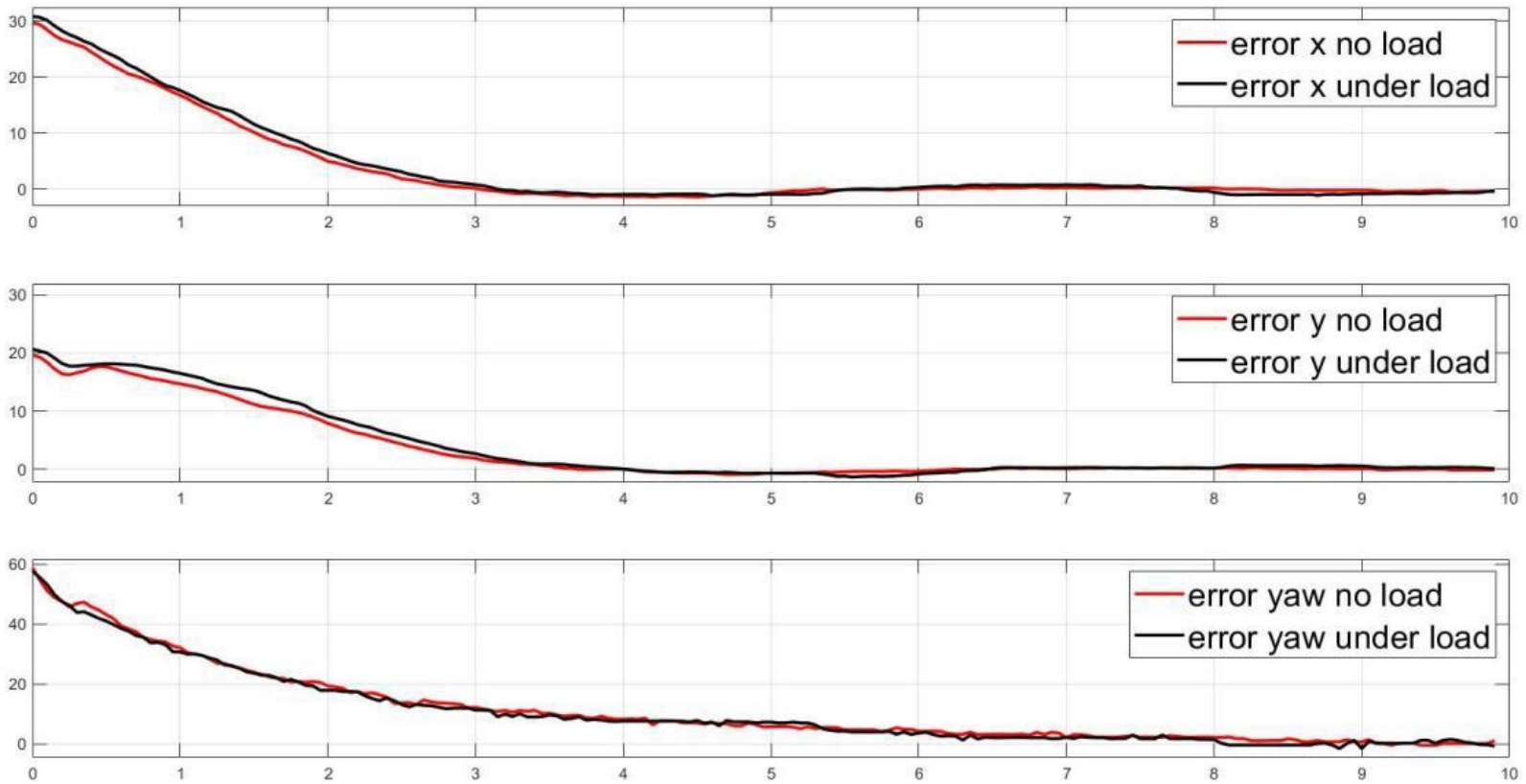
Figure 25.
Errors of robot with respect to target setpoint
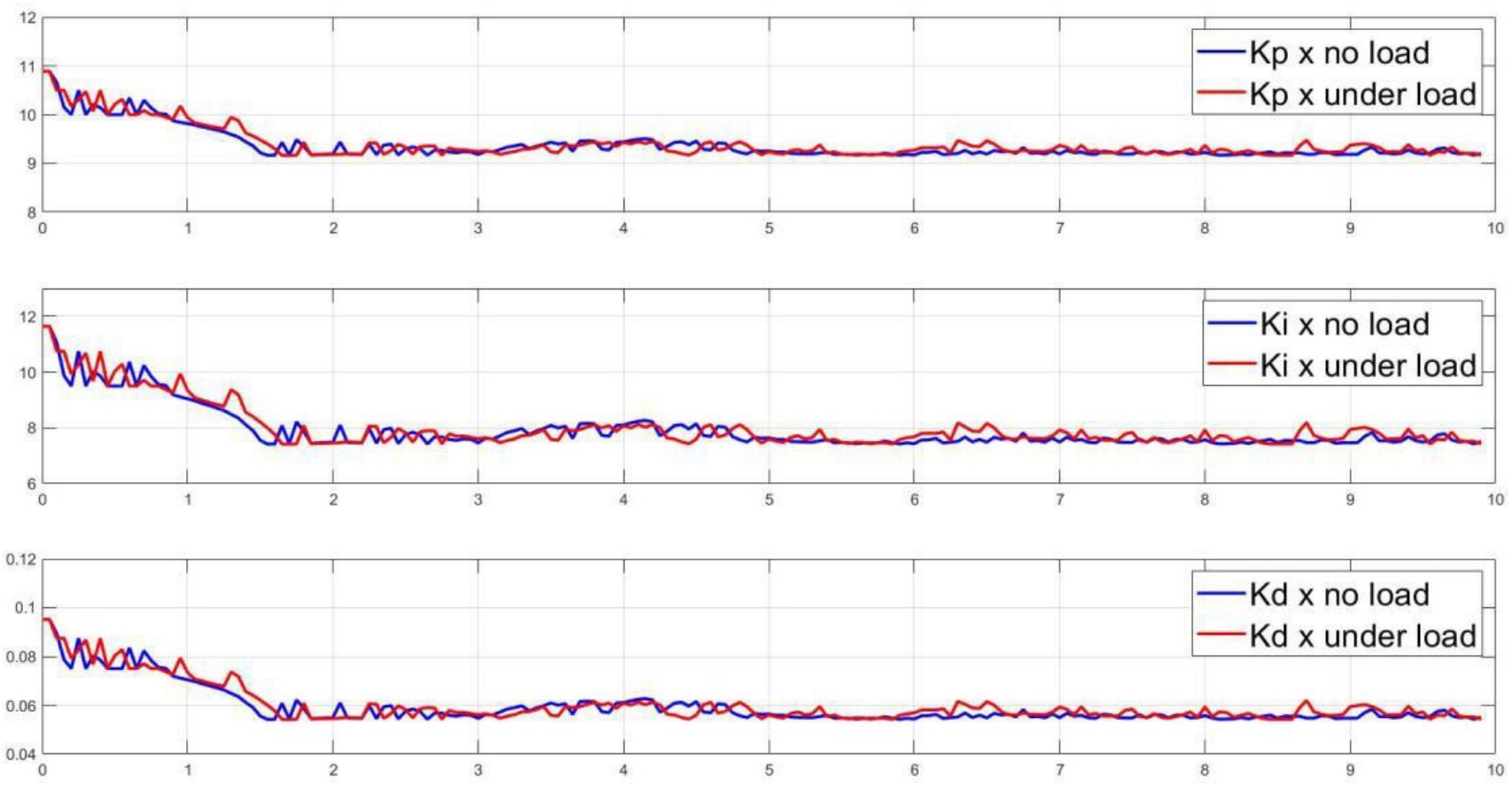
Figure 26.
PID Gains tuning results with respect target setpoint in x-dimension
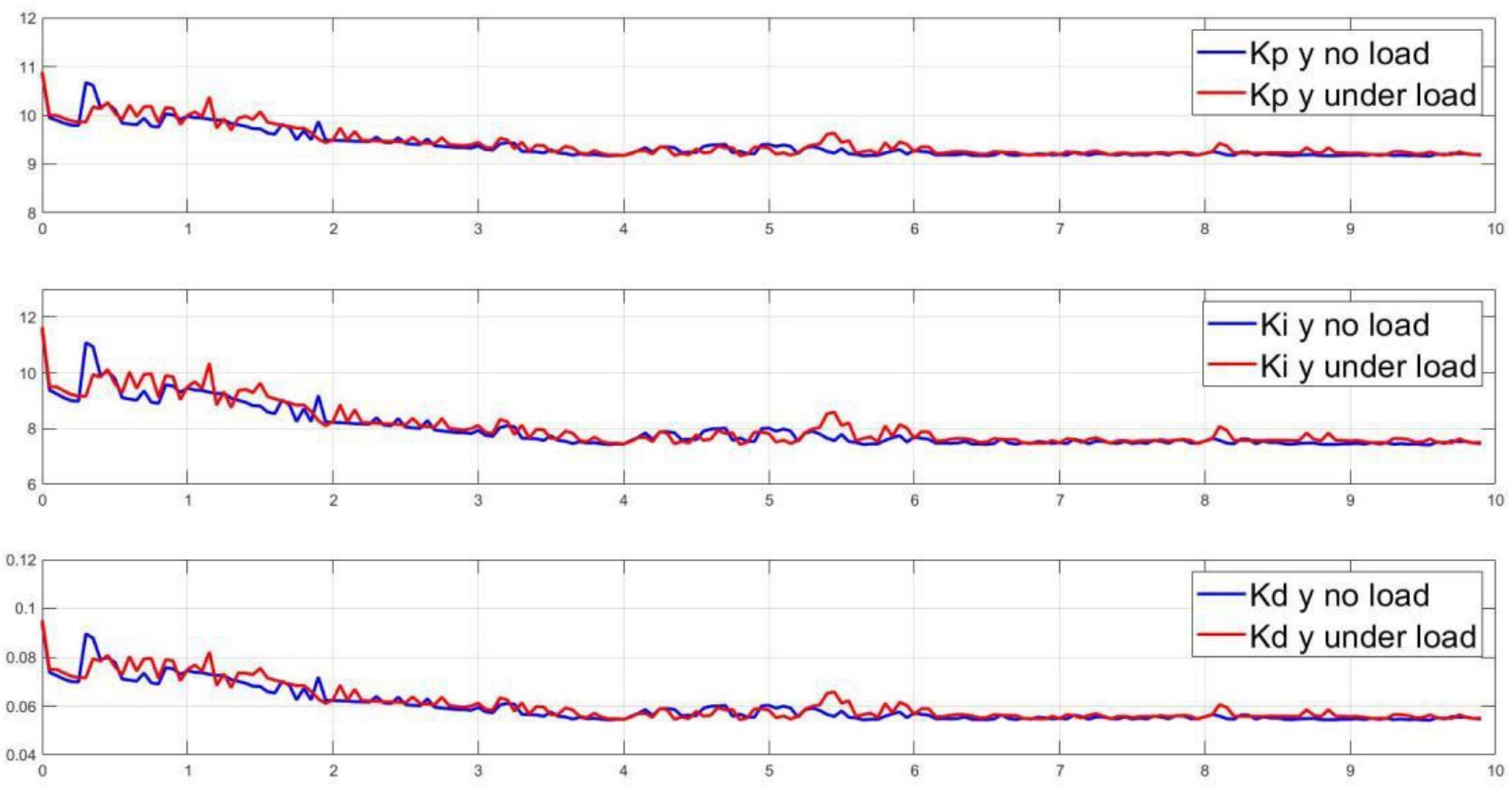
Figure 27.
PID Gains tuning results with respect to target setpoint y-dimension
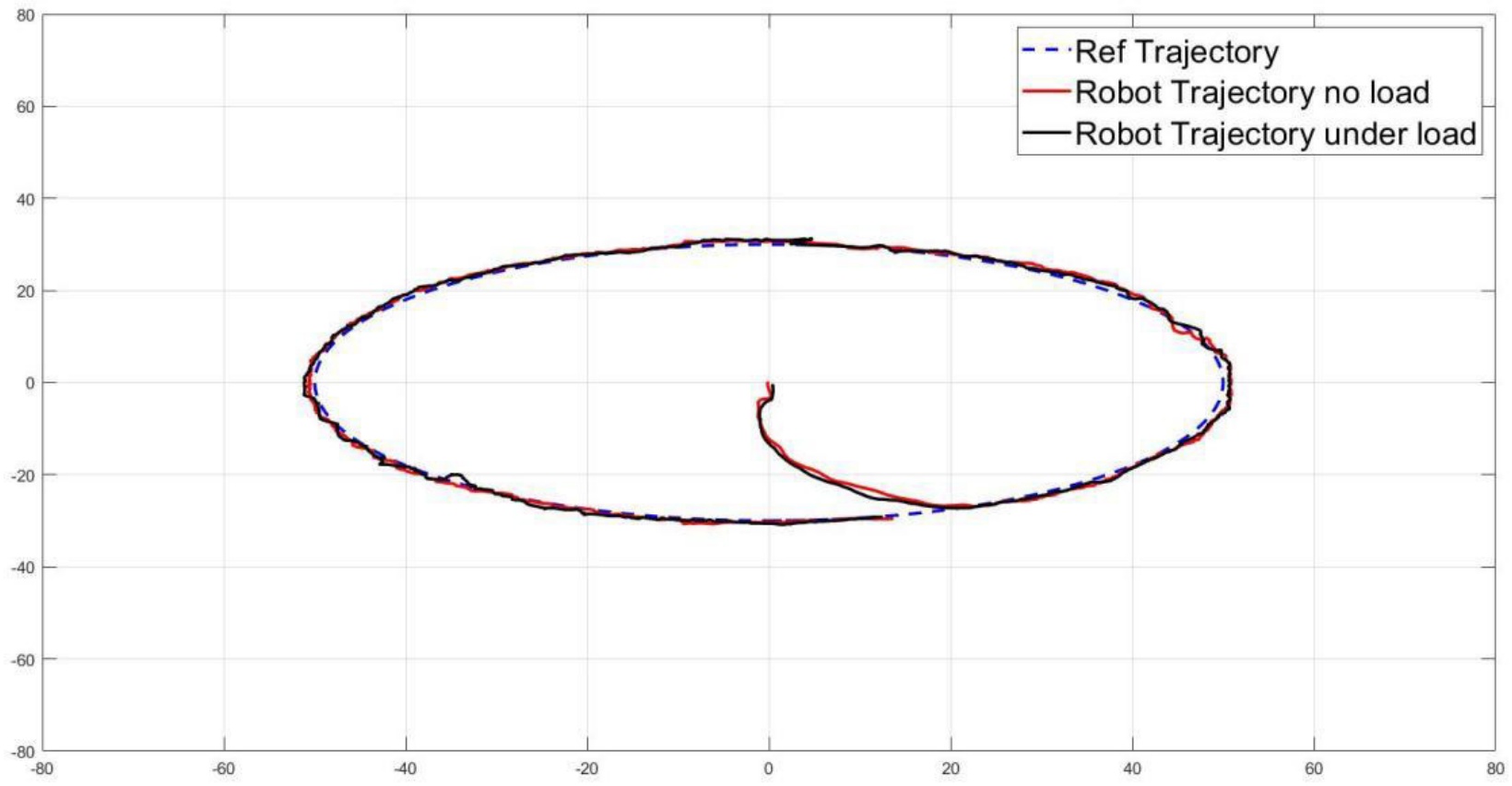
Figure 28.
Trajectory tracking responses with respect to elliptical trajectory in x-y plant
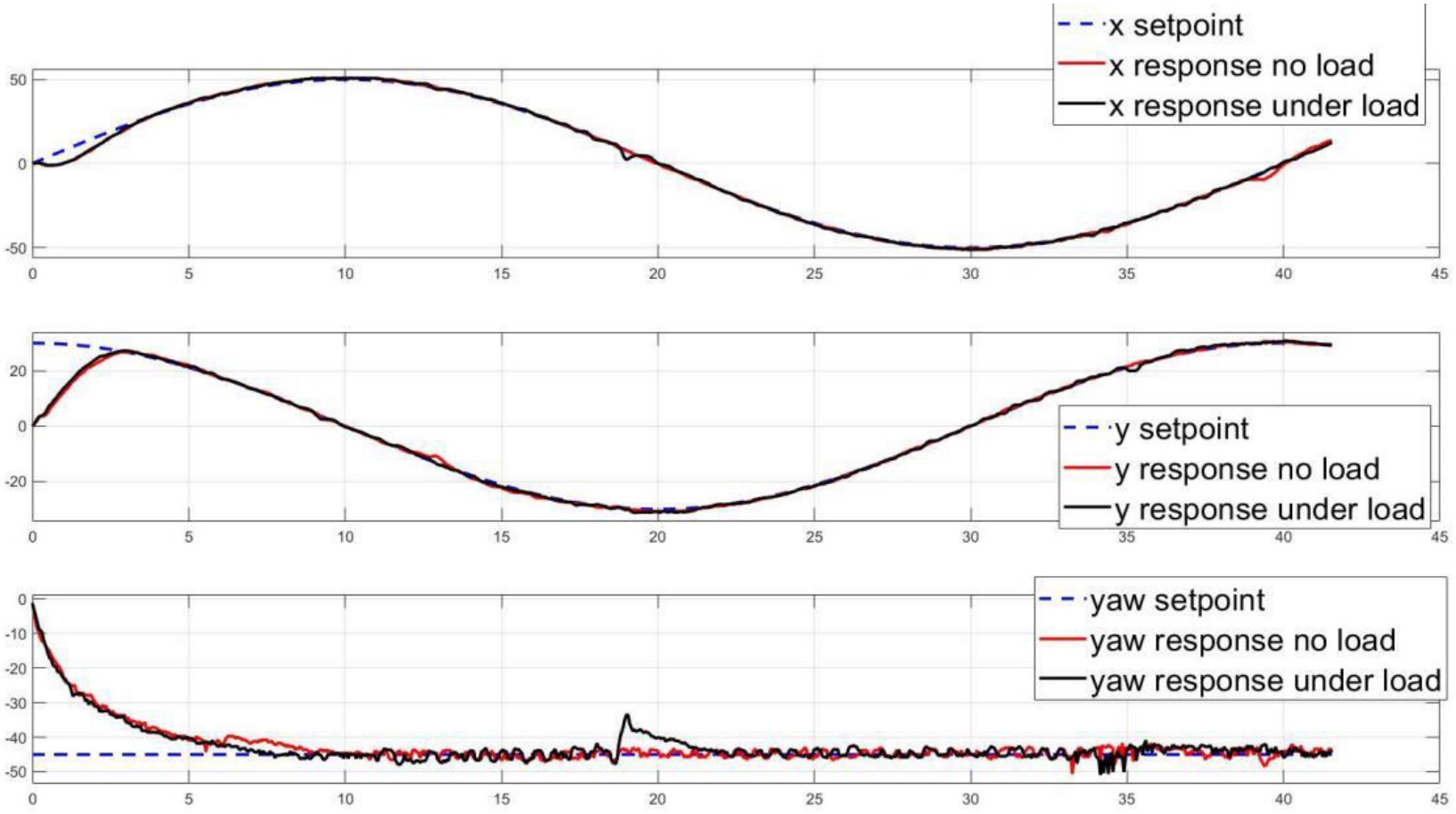
Figure 29.
Robot position responses with respect to elliptical trajectory
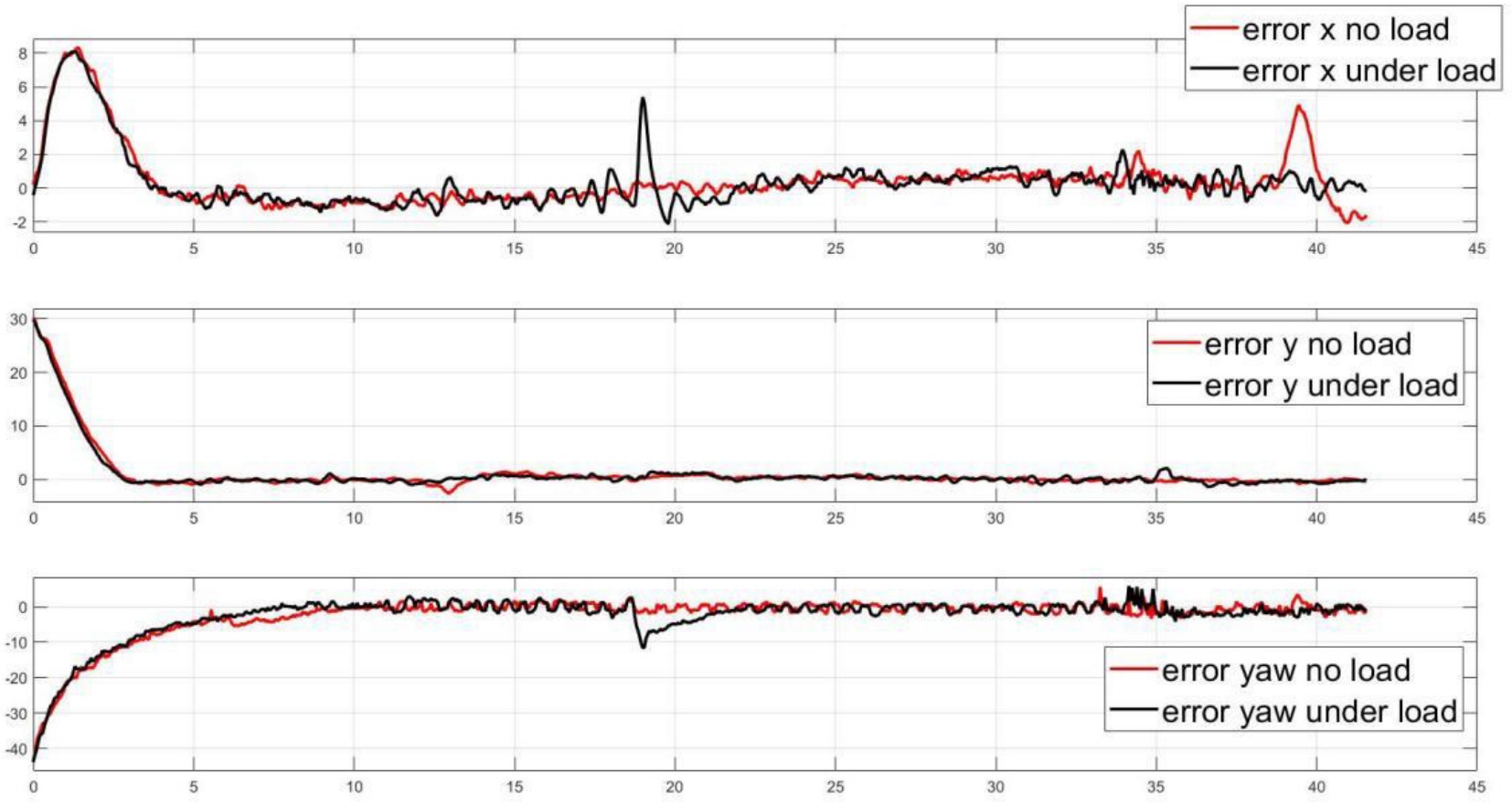
Figure 30.
Robot position tracking errors with respect to elliptical trajectory
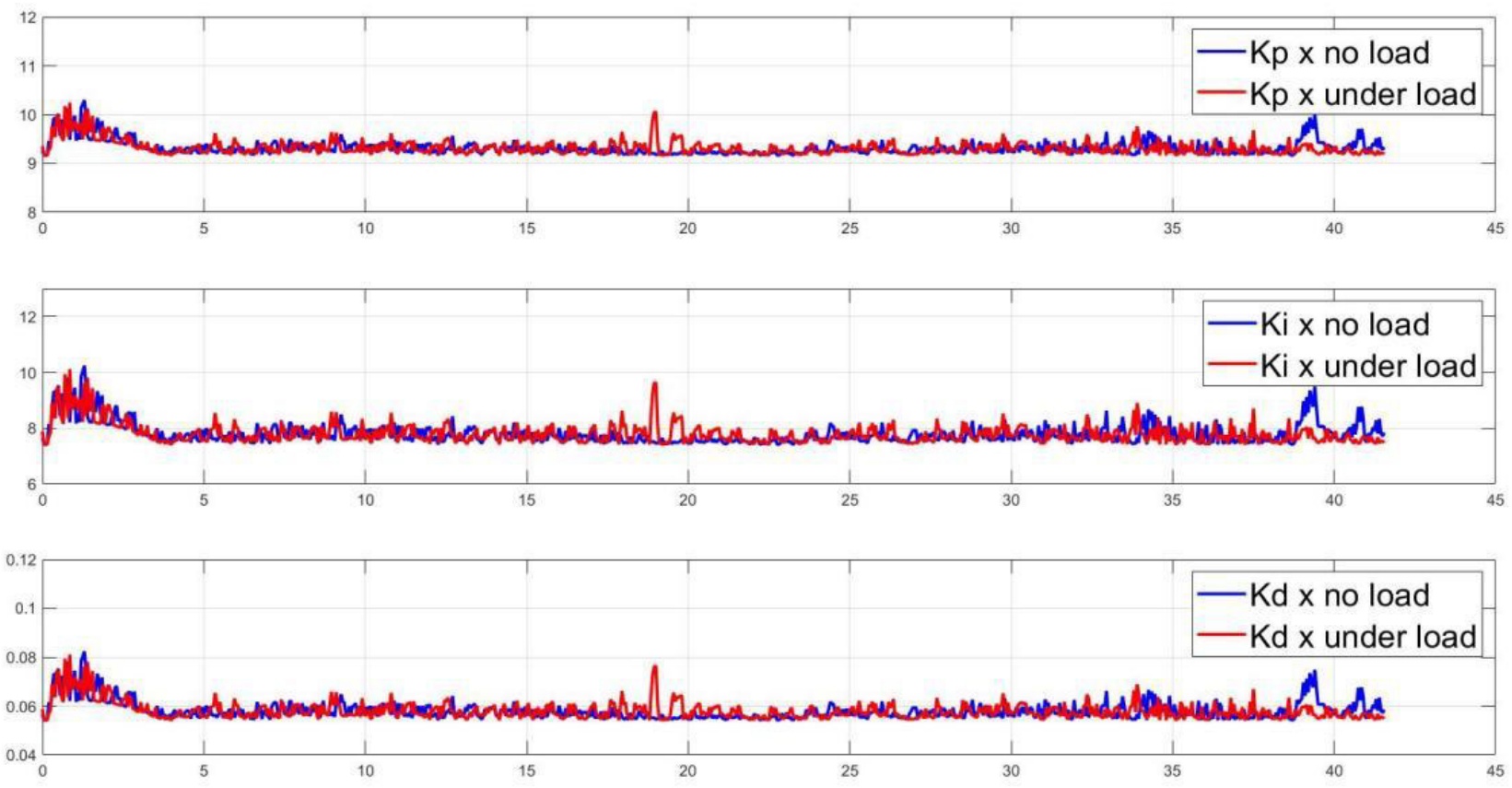
Figure 31.
PID gains tuning results with respect to elliptical trajectory in x dimension
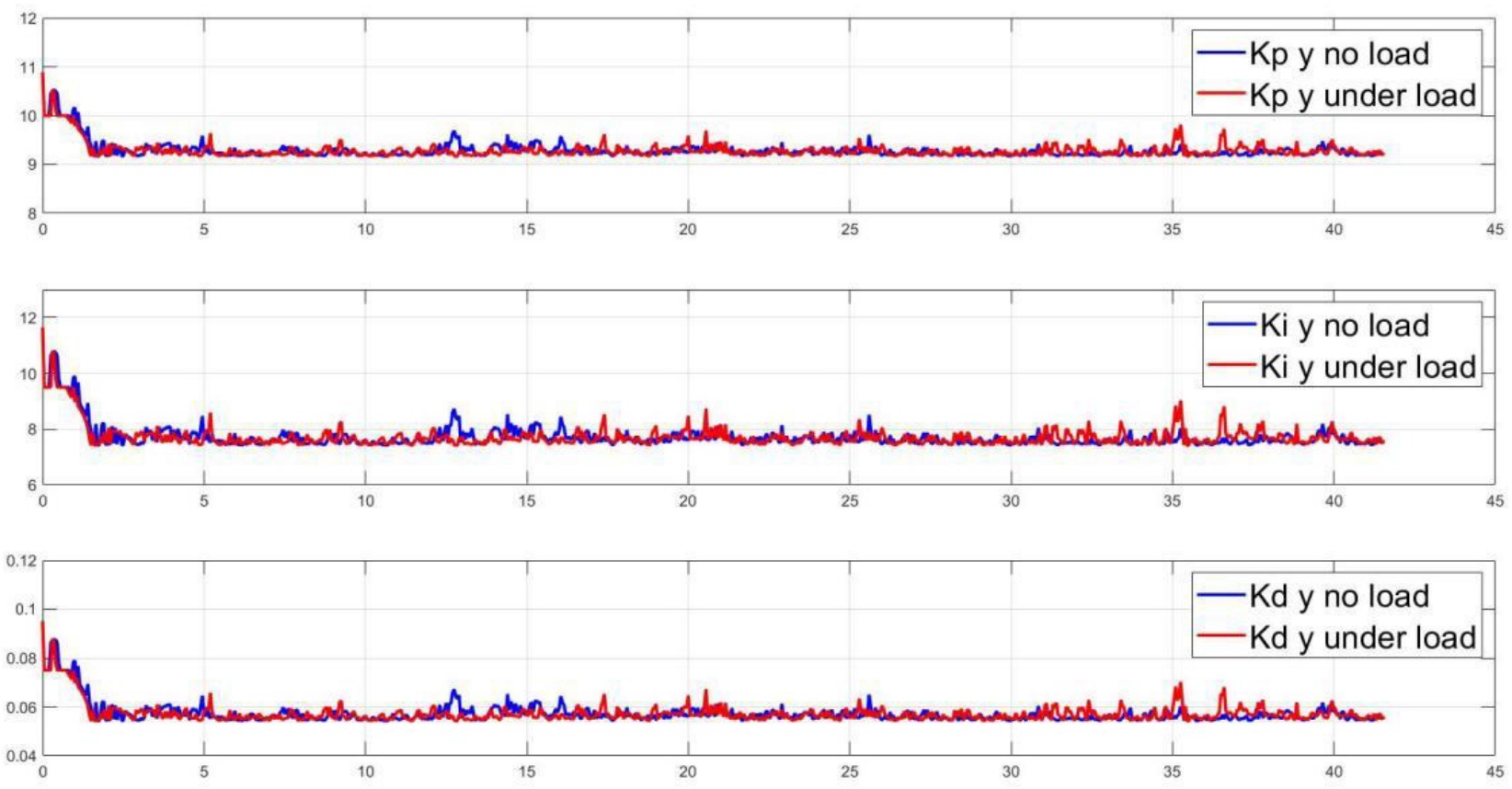
Figure 32.
PID gains tuning results with respect to elliptical trajectory in y dimension
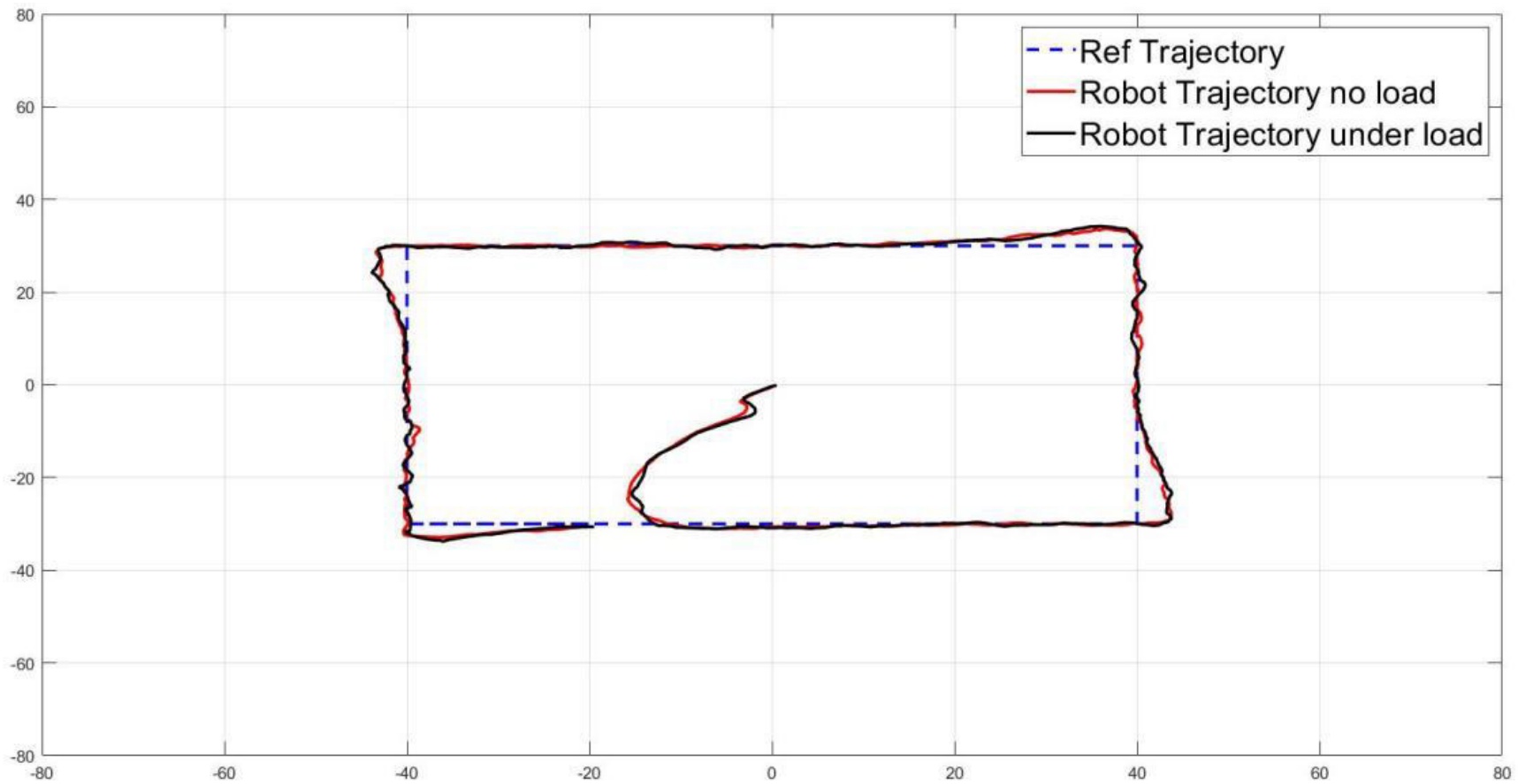
Figure 33.
Trajectory tracking responses with respect to rectangular trajectory in x-y plant
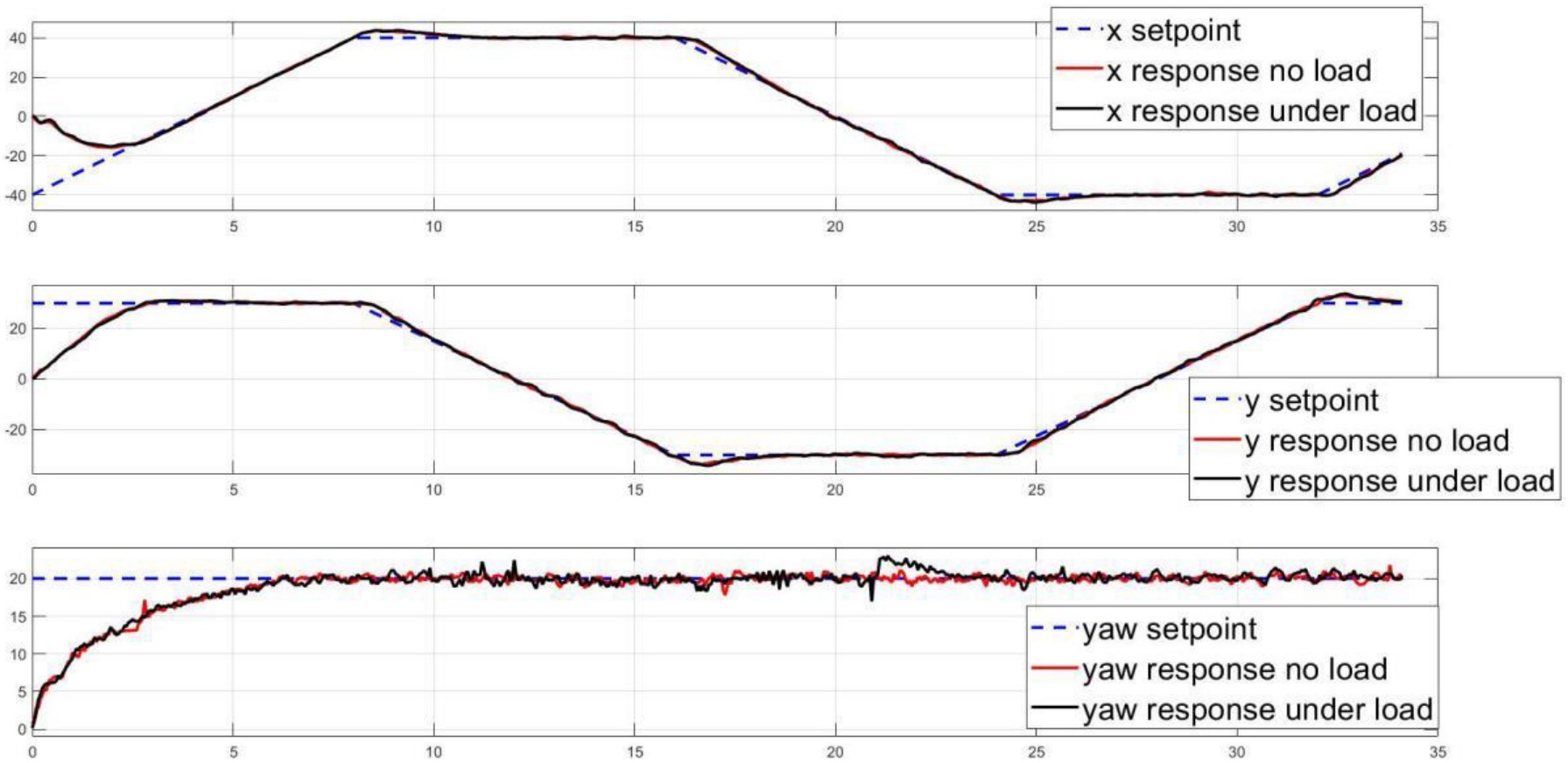
Figure 34.
Robot position responses with respect to rectangular trajectory
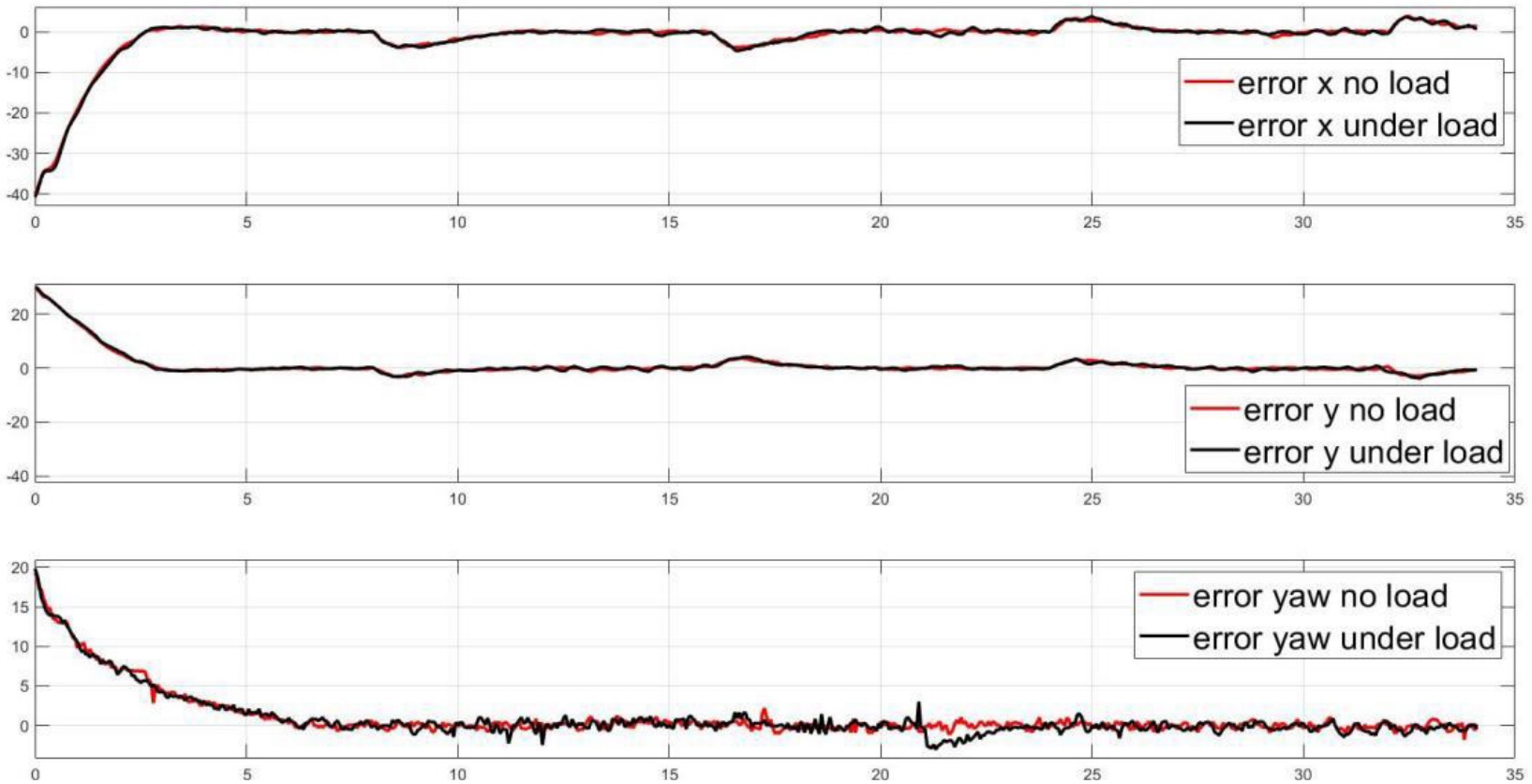
Figure 35.
Robot position tracking errors with respect to rectangular trajectory
Table 6.
RMSE values of tracking error
| RMSE value | Target Setpoint | Elliptical Trajectory | Rectangular Trajectory | |||
| Without Load | With Load | Without Load | With Load | Without Load | With Load | |
| (cm) | 0.5859 | 0.7273 | 0.9443 | 0.8152 | 1.4152 | 1.421 |
| (cm) | 0.3483 | 0.5684 | 0.5421 | 0.5366 | 1.1642 | 1.1629 |
| (degree) | 1.583 | 1.8294 | 1.163 | 2.0261 | 0.4476 | 0.7072 |
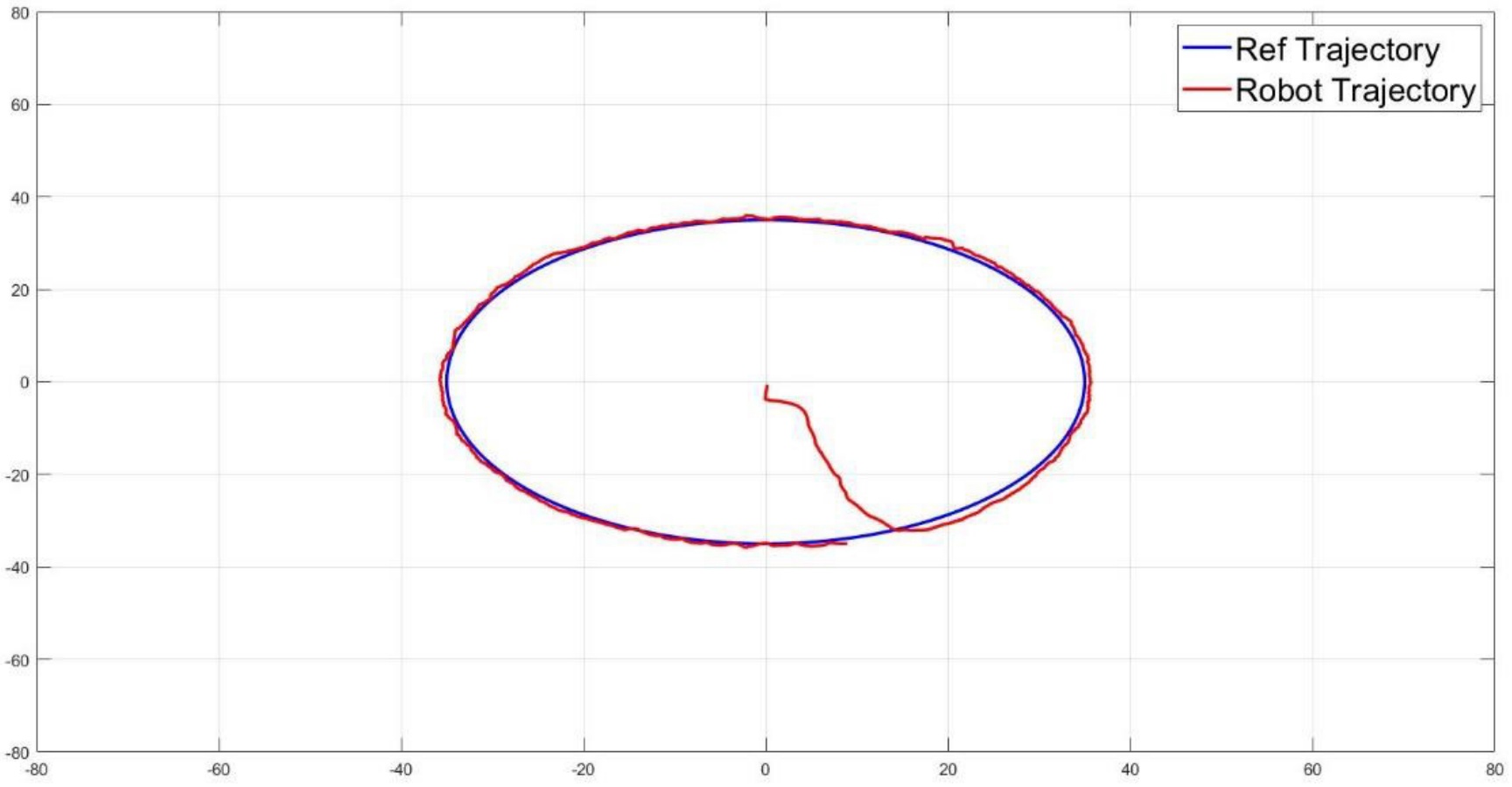
Figure 36.
Trajectory tracking response with respect to circular trajectory in x-y plant
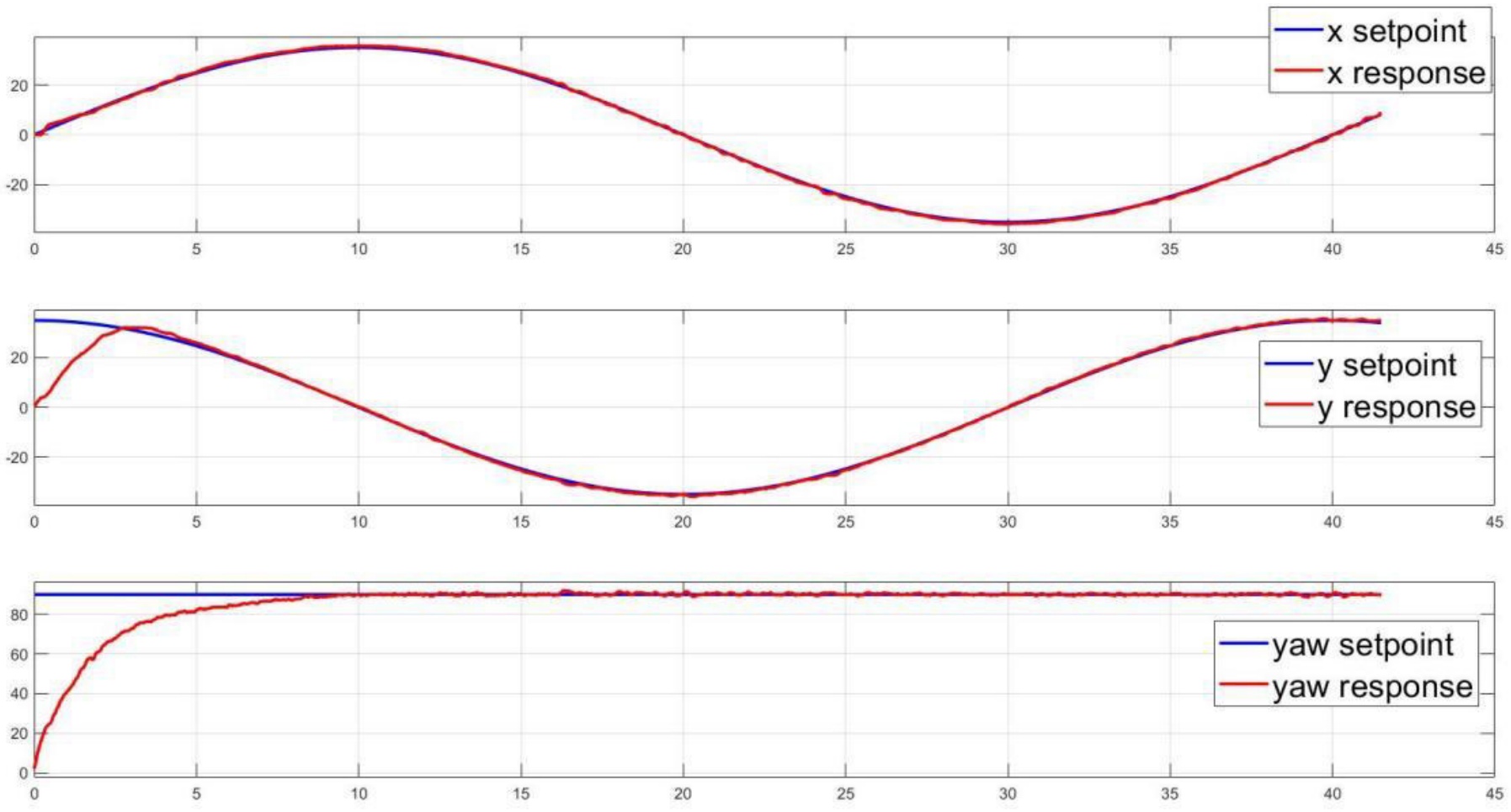
Figure 37.
x-y positions and yaw angle tracking control responses with respect to circular trajectory
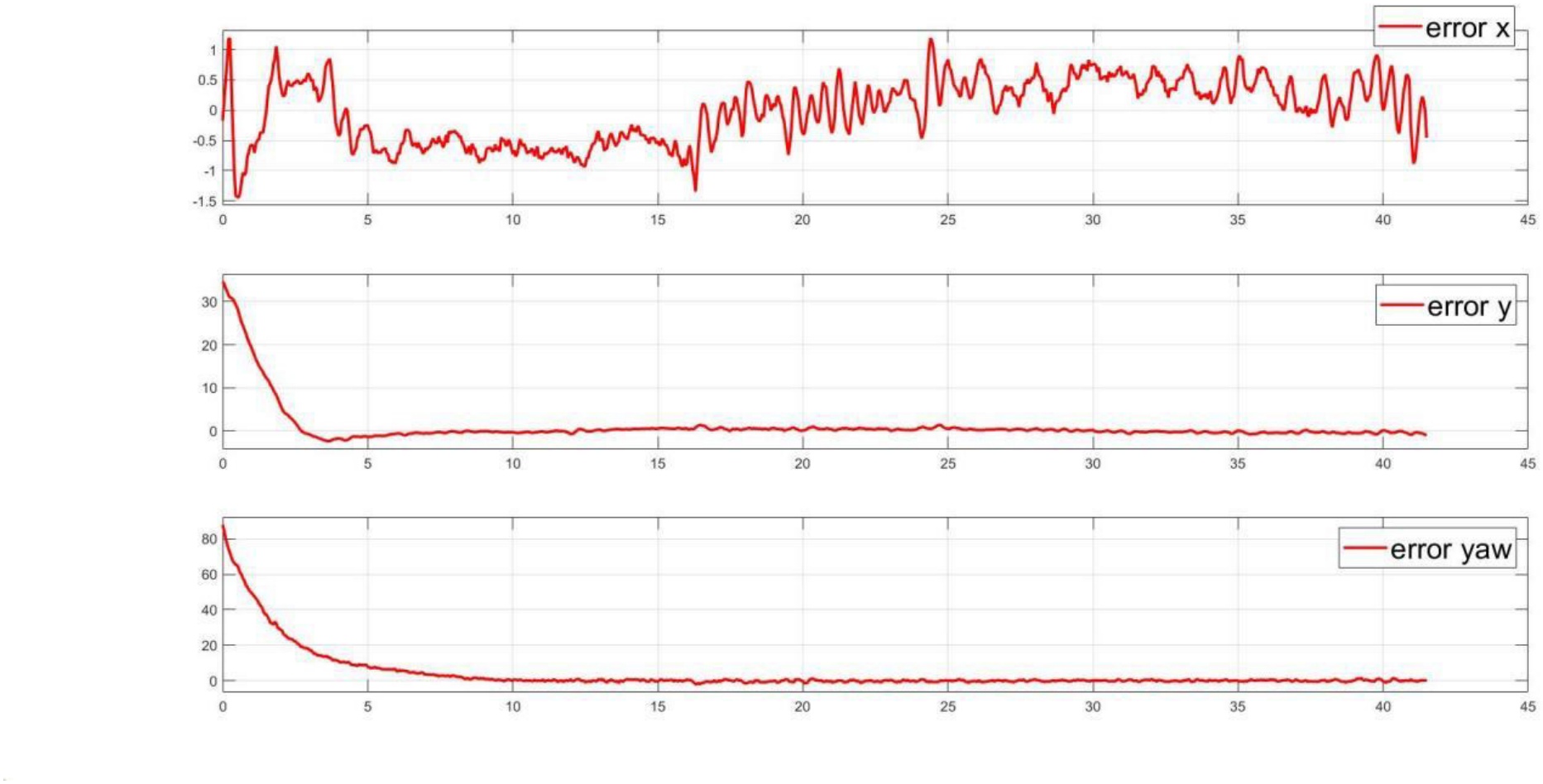
Figure 38.
Tracking errors with respect to circular trajectory
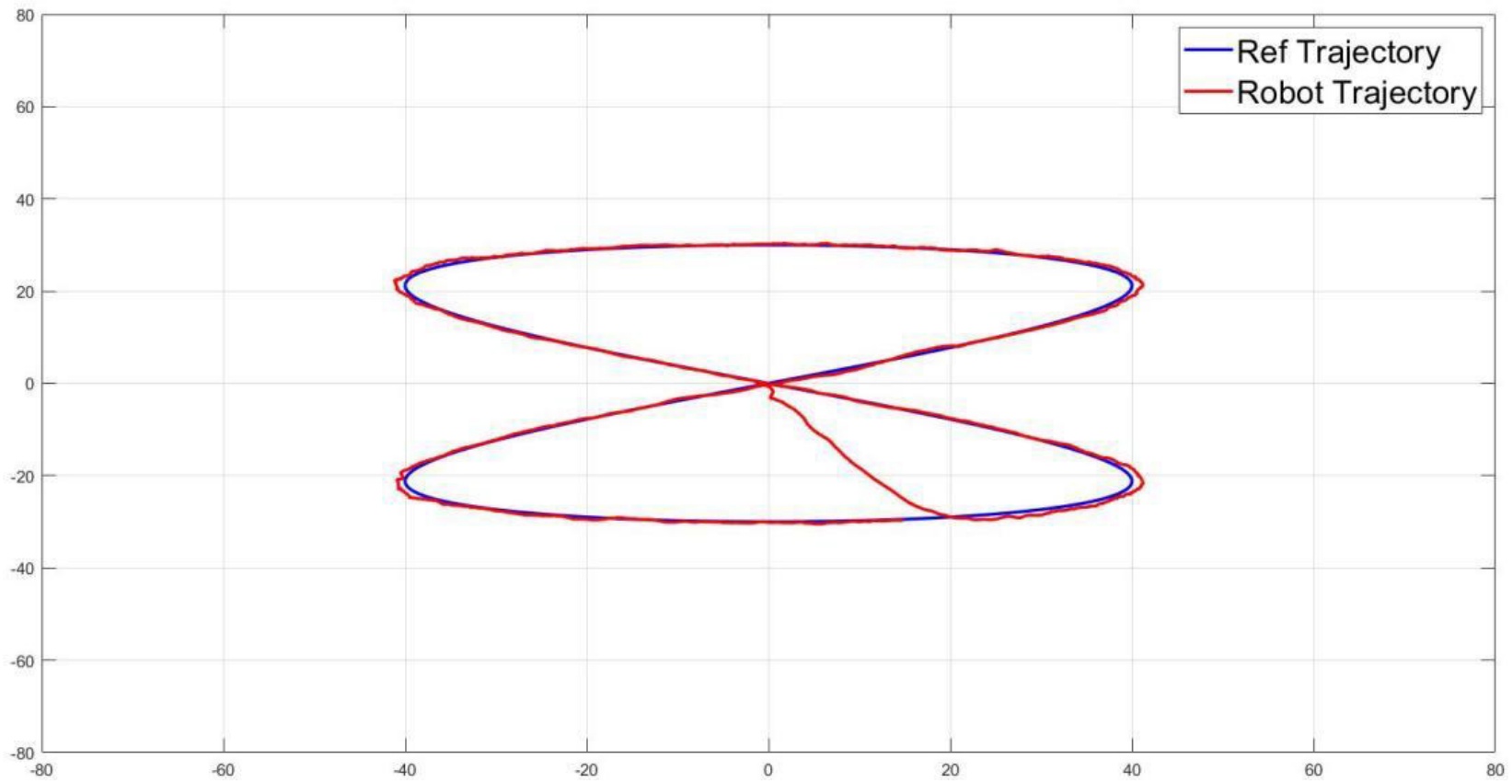
Figure 39.
Trajectory tracking response with respect to eight-shape trajectory in x-y plant
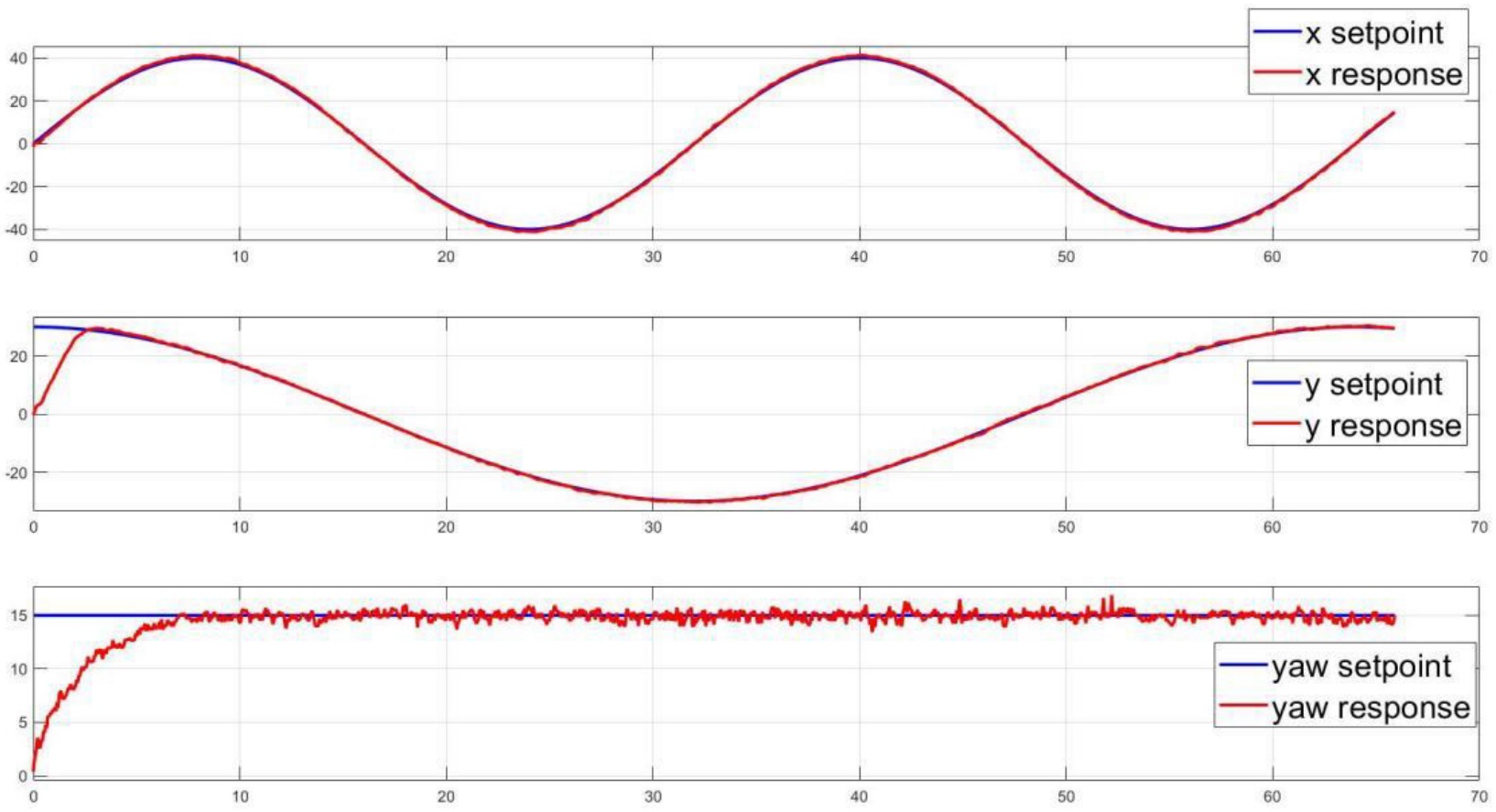
Figure 40.
x-y positions and yaw angle tracking control with respect to eight-shape trajectory
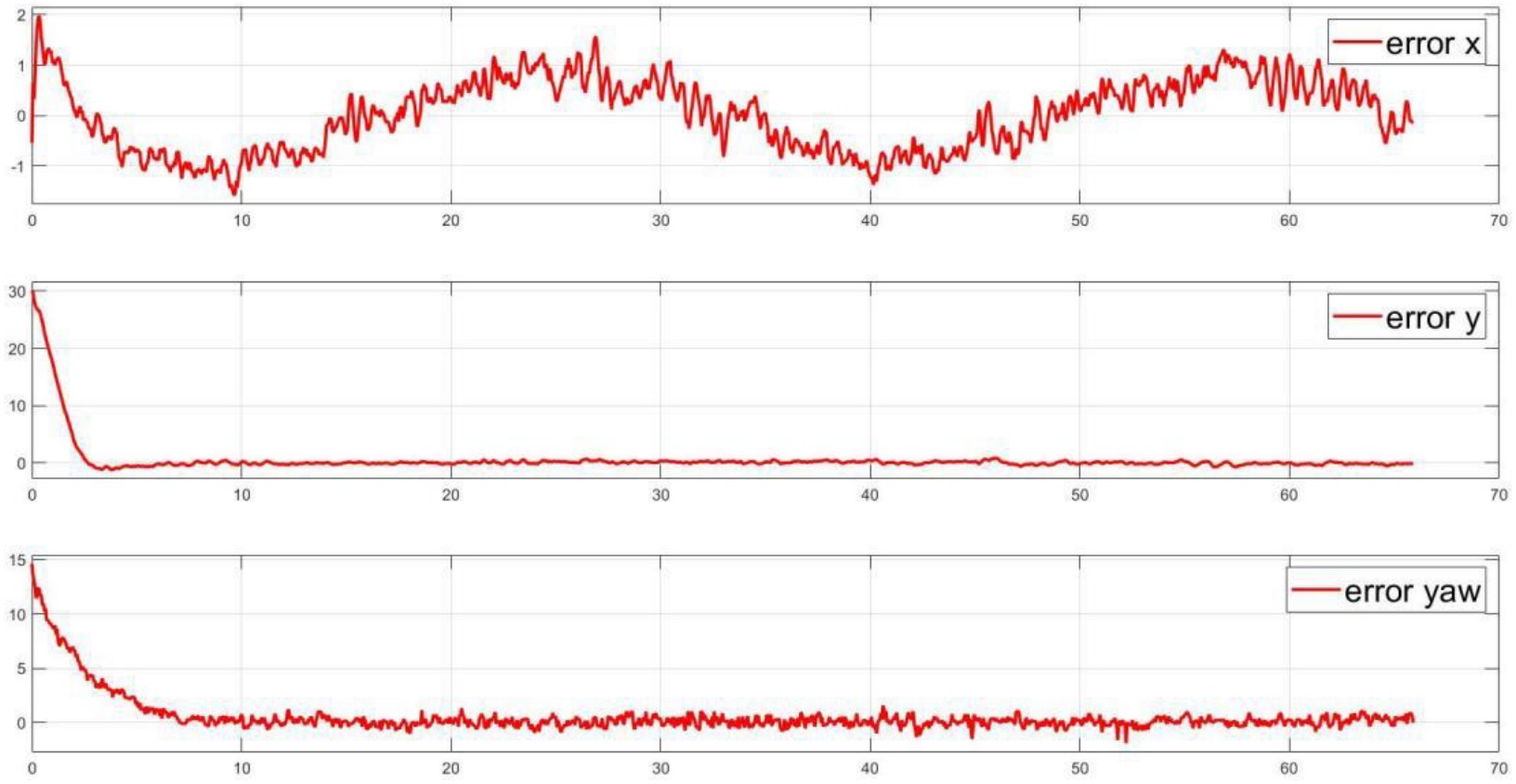
Figure 41.
Tracking errors with respect to eight-shape trajectory